[
{
"path": "5-Pillars.md",
"content": "# Hey There!\n\n**This document spawned an entire website. Check it out at: [DFIRmadness.com](https://dfirmadness.com). We have labs, articles and resources like this! See you over there.**\n\n# The Five Pillars of an Information/Cyber Security Professional\n\n## TLD;DR:\n\n\"Mastering the basics will make you exceptional.\"\n\nMaster the basics and then specialize to be an invaluable asset to your team.\n\nTo start, or level up, a career in Information Security (aka Cyber) Security you need to be proficient in five key areas of technical skills. You don't have to *master* each one of them, but you need to have a good understanding of them. Whether you want to go offense or defense you will need to be functional in these five areas:\n\n1. General Computing\n2. Computer Networking\n3. Scripting and Programming\n4. Linux / MacOS\n5. Windows\n\n**Note**: I did not come up with the 5 pillars idea on my own. I *believe* I heard this originally during a conference call with someone from SANS the CyberStart program. I am not entirely sure of that or if the 5 above are the original 5 laid out. I *do* remember hearing the 5 areas (or close to these) laid out and it immediately fit into my believe system of mastering the basics to become exceptional. That idea was hammered home during a good butt chewing delivered during Special Forces training where the instructor told us between flutter kicks and sprints, \"We look special because we master the basics\". I have applied to this every complex task I have learned from flying helicopters to hacking and it has served me well.\n\nDon't be scared! While you won't learn it all over night you only need the fundamentals.\n\nIf you want to accel in this industry you must also **love** learning. While it takes a lot of dedication a healthy balance is key. Make sure your family and friends get time with you, or that you make time to do hobbies you love.\n\n***\n## Quick FAQ(ish)\n\n### Wait! Wait! Wait! Where is the hacking!? No where in the list is there hacking or security\n\nCorrect. These are the fundamentals that both defense and offense require! More focused security paths are added to the second section of this document. Build the foundation and then the house. \n\n### A Note about Certifaction Pipelines / Schools\n\nThe cert farms that tell you A+, Net+, Sec+ and CEH in 6 weeks will get you a career are stealing your money. Certs are important and you will need some most likely, but you DO NOT need 5 in 5 weeks or 5 in 5 months.\n\n### A Note about College Degrees\n\nYou do not need a degree in cyber security. You do not need a degree in cyber security. If you just have to get a degree- get it in Computer Science. There are sadly an over whelming amount of people with Cyber Security degrees who do not know their way around a keyboard and only know academic theory... they can only talk the talk without being able to walk the walk. Most degree programs do not provide nearly enough hands on fundamentals to set someone up for sucess.\n\n### Typical Career Path\n\nThere is no typical career path currently. Some of the best Cyber Security Pro's were musicians prior! If you have the talent and drive you can work your way in. That said, a good path would be something like this:\n\nIT Help Desk -> Systems Administrator -> Security Admin -> Specialized Security Role\n\nYou can absolutely skip right into security but you will have to study hard and practice a lot of labs that ensure you really have the 5 Pillars well cemented.\n\n### A Note About the Image and Attraction of PenTesting\n\nBefore you start: Perhaps Penetration Testing is all that interests you - or \"catching bad guys\" is the only thing you want in life. Remember that learning both sides of the force will benefit you. The better your understanding of defense the more lethal you can be on offense. **There are probably 10 Blue (defense) jobs to Red (offense). There are a lot of fun jobs outside of Penetration Testing.** That said, Penetration testing is a blast and is addicting. It is also a lot of work and not simply pwning networks and dropping mic's.\n\nNow on to the document...\n\n********\n\n## readme.txt\n\nThis document is a path forward for new, and experienced, cyber professionals to obtaining a concrete foundation of knowledge to enable them for success in the industry. Mastering the basics of each functional area is required to operate on a cyber team (or alone) in a meaningful and effective way. A lack of fundamentals in any one pillar can quickly render a team member ineffective during dynamic and rapidly evolving situations. Conversely, no one person on the team should be, or can be, a cyber unicorn.\n\nIdeally, everyone will have a specialty they excel at in addition to a solid baseline in the fundamentals. It should not be expected that every one completely master each pillar. The intent is to master the fundamentals. The fundamentals are simply primal blocks of knowledge of each topic; somewhere between the absolute basics and intermediate. As an example, a team member should understand: sub-netting, routing, internetworking, OSI model, packet capture, DNS and analysis basics. This does not mean they need to be Cisco network engineer with a CCNA.\n\nLayout of the document (roughly):\n\n1. Fundamentals and getting started\n2. Lab Set Up Advice\n3. Security Focused Training and Immersion\n4. Security Career Pathways\n\n***\nwhoami\n\nTwitter: @DFIRmadness\n\n- Veteran\n- Former pilot\n- Senior Information Security Professional\n- Perpetual n00b (always learning)\n- Adjunct Professor\n- Aspiring SANS Instructor\n\nI have seen folks in multiple industries who would be rockstars if they had a solid mastery of all the basics and not simply pigeon holed into one niche of the field.\n\n***\n\n## Security Tips to Get Started\n\nAs you dive into security you should start with good security practices.\n\n1. Don't pirate software.\n2. Always have your Admin Account seperate from your daily driver account.\n3. Never click a link you didn't ask for.\n4. Never use a free VPN (OK - except maybe Proton's).\n5. Always check executables and files from others at virustotal.com.\n6. Use time based multi-factor on critical accounts like e-mail.\n7. Use a password manager and have unique passwords for everything.\n8. Use passphrases when able. Example: 1DeerCloudSubmarine91* [XKCD Password Generator](https://xkpasswd.net/s/).\n\n***\n\n## What You Need (Equipment)\n\nYou do not need a $3000 Gaming Laptop or a Desktop with 2 GPU's and 10 TB SSD. This is completely based on your budget. You can get away with a $500 laptop if needed. I will explain.\n\n|Level|Explaination|\n|---|---|\n|Good ($500)|A computer capable of web browsing and reading books. Seriously. The trade off is you will need to pay for web accessible labs versus building a small virtualized environment.|\n|Better ($1100ish)|A laptop capable of building a small lab of 2-3 Virtual Machines. Something like an i7, 16 Gigs or RAM and 500 Gigs storage.|\n|Best|The sky is the limit. Something capable of cracking passwords decently (read a mid tier GPU), i9, 32 Gigs, and 1 TB storage.|\n\n**Note**: A GPU is mentioned for password cracking. You absolutely DO NOT NEED ONE to learn or level up cyber security. Keep in mind this document is about learning and labs you encounter will be geared towards this anyhow. You get the same training value in cracking a simple password with your CPU as you do with letting a GPU pound on a hash for 2 weeks.\n\n***\n\n## The Five Pillars (Functional Areas) of Cyber Security\n\n1. General Computing\n2. Computer Networking\n3. Programming and Scripting\n4. Windows\n5. Linux\n\n### Fundamentals Breakdown\n\nThe following are key skill sets within each pillar. It is not an exhaustive list.\n\n|Pillar aka Functional Area|Skills|\n|---|---|\n|**General Computing (Basic Computer Science)**|Hardware Components: CPURAMSSD/HDD
Science:
ThreadsProcessesProcess TreesMemory (RAM)CachingBuffers|\n|**Networking**|OSI ModelTCP/IP ModelTCP vs UDPPacket AnalysisPacket CaptureRoutingDNSARPSubnetsVLANS|\n|**Programming and Scripting**|PythonPowershellBASHBonus: C++ or C#|\n|**Windows**|Registry (5 Hives)Volume Shadow CopiesUACMemory Paging.msi vs .exeDLLsRIDsSIDsTokensNetwork ProfilesServer vs. WorkstationCommands: NetstatwhoamipingipconfigPowershell RemotingTools: SysinternalsProcess Hacker.|\n|**Linux**|Directory Hierarchysudo accounts/etc/shadow and /etc/passwdsshtelnetftpSoftware RepositoriesBe Familiar with Distributions: Kali, Debian, Ubuntu, CentOS, RedHatCommands: w, find, whoami, which, who, ss, watch, ssh, lsof, ssh-add, top, htop, sudo, nano and vim.|\n\nYes. That is a lot. First, to be good in this industry you will want to be *familiar* with each of these things and beyond. You will not learn it all over night nor should you try. Just refer back to this often as a guide. Be patient. Enjoy the journey.\n\n### Desired Endstate of Each Pillar\n\nThe following are goals to shoot for in each area. If you can meet each of these you will be a competent professional ready to shine at interviews and be an asset to any team you join.\n\n|Pillar aka Functional Area|Skills|\n|---|---|\n|**General Computing (Basic Computer Science)**|Explain the difference between something being stored in memory vs. something stored on disk. Explain the basics of process injection. Explain the difference between killing a thread and killing a process.|\n|**Networking**|Using all 7 layers of the OSI model explain how a piece of information flows from your computer to google.com and back when you type `ping google.com`. Explain what a VLAN is and why they are used.Explain what a subnet is and why they are used.Explain the security protections offered by subnets and VLANs|\n|**Programming and Scripting**|Be able to write a basic script to automate a simple task; and be able to read and understand the overall idea of what someone else’s script is attempting to do.|\n|**Windows**|Be able to explain the function of the registry, the UAC, and tokens. Be able to maneuver the OS with command line only and look for network connections and their related processes. Possess basic PowerShell (a.k.a PoSh) abilities|\n|**Linux**|Be able to explain sudo, shadow and passwd files, user groups and proper installation and maintenance of software (repos).Be able to maneuver the OS with command line only and look for network connections and their related processes.|\n\n*Remember you have to know how things work to exploit them. You have to know what right looks like to find the gaps in security.*\n\nThese goals above are a good measure of when you are ready to deep dive into a specific security path of learning (and of course have fun and sprinkle in security lessons along the way).\n\n### A Note About Certifications\n\nCertifications are a necessity in this industry. They are far more valuable than a college degree. That said, don't be a paper tiger where you have a list of certifications and no idea what you are actually doing. Also- do not fall for the cert farm trap. These companies that promise you a career is only 5 weeks (or even a few months) away, and that for $20K they will get you there by ram rodding you through A+, Net+, Sec+, and CEH. They are practically stealing your money. If you find a place that will teach you essentially the fundamentals laid out here ask to talk to alumni and ensure the instructors are actual industry professionals.\n\nThere will be certs listed in this document at times. For general studies understand that most of the certs mentioned are just great bodies of knowledge to get materials from but the cert itself is not necessary.\n\n#### Certs to Shoot for Early On\n\nGSEC or Sec+.\n\n**NOT A+**. Friends don't let friends actually get the A+ cert.\n\n**GSEC or Sec+**: If you live around a lot of Department of Defense facilities that are hiring there is a set of requirements known as [8570](https://www.giac.org/certifications/dodd-8570). You will basically need GSEC or Security + for anyone to touch you during the hiring process. SANS GSEC is the recommended cert here. It is much more expensive to go through the course but well worth it.\n\n**CEH**: Certified Ethical Hacker does not make you a penetration tester and doesn't go very far outside of DoD circles. For the same price you can get the course material for [Penetration Testing with Kali Linux from Offensive Security](https://www.offensive-security.com/pwk-oscp/). Even if you can't pass the OSCP challenge the material and labs are well worth the $800 or so - certainly *more* so than CEH.\n\nThe trick when you are first starting out is to find an employer willing to pay for the certs you need or want. Get it in writing. If you can't then understand than the investment of paying for an initial cert or two to get a job will be an investment that will almost certainly have great returns.\n\n***\n\n## Resources: How Do We Get 'There'?\n\nNow may be a good time to think on *how* you approach learning this mountain of information. [How to learn anything...fast by Josh Kaufman](https://www.youtube.com/watch?v=EtJy69cEOtQ).\n\n### General Approach\n\n- Start free and cheap to see if you like it. You may find it isn't for you.\n- While studying the five functional areas ensure you are getting hands on keyboard and not just your nose in a book. Do both! Also - sprinkle in security lessons along with your general studies. Also, try and rotate through the five continuously so you are leveling up in them all somewhat evenly. Of course, you can do it in a serial fashion (in order one through five) if you want. However, these skills are perishable. This means if you go through in order and haven't touched networking in 5 months (or 2 books ago) it is going to be rusty and you will have to relearn it!!!\n- Try and have fun!\n- Keep an eye out for things you think you may be passionate about! You will want to specialize later on.\n\n### Recommended Security Focused Resources to go with General Studies\n\n### Hack and Detect: Leveraging the Cyber Kill Chain for Practical Hacking and its Detection via Network Forensics\n\n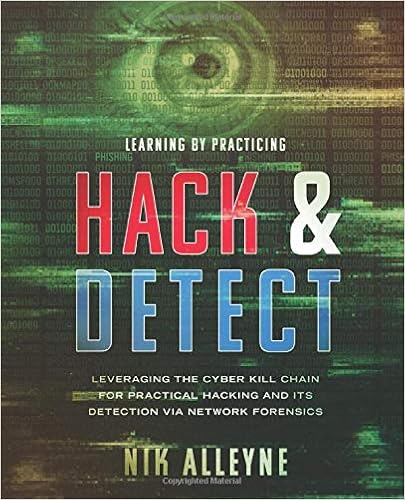\n\nThe book to start with: [Hack and Detect](https://www.amazon.com/Learning-Practicing-Leveraging-Practical-Detection/dp/1731254458) ! by Nik Alleyne. This book can be purchased or viewed free with a Kindle Unlimited account. This book can't be recommended enough for beginners and experienced folks alike. It is amazing in its presentation of both offense and defense methodologies with break downs and explanations of each and every command. **This is a great book to sprinkle in along with the 5 pillars studies. Consider it the quick start guide into security.**\n\n### The Cyber Mentor\n\n\n\n[The Cyber Mentor](https://www.thecybermentor.com/beginner-linux-for-ethical-hackers): hands down is one of the first people you should start watching as you build your skill sets. He focuses on Penetration Testing. He, along with the community he has created in discord etc., will be a great place to find motivation, knowledge and support. Even if you want to go blue side / foreniscs etc. you will need an understanding of how people pentrating networks etc. move through the network and he does a superb job of teaching and explaining.\n\n### General Studies Resources\n\nThese resources will have materials for all or multiple pillars.\n\n- [Safari Books Online](https://www.safaribooksonline.com/topics) Free for military members and families\n- [Humble Bundle Books](https://www.humblebundle.com/books) They often (every few weeks) have cheap (12 dollars) bundles of books\n- [packtpub daily free book give away](https://www.packtpub.com/free-learning) Free IT and Security books given away daily! Some really good ones on occassion.\n-  [ITPro.tv](https://www.itpro.tv/) is one of **the best** resources out there if you can afford it. They have tiered pricing models that start as **low as $30 bucks a month!** That is a crazy cheap investment to get into a career with a potential to get you to between 65K and 100K+ annually. This is the first item on the list that you are required to pay for if you choose to use them. They have current, and constantly updated, video series on everything in the five pillars and beyond. Additionally, they offer virtual labs you can remote into with step by step guides, test question banks and more. Its an amazing resource.\n- [CBT Nuggets](https://www.cbtnuggets.com/) - A direct competitor with ITPro.TV. They have comparable pricing, virtual labs and *really* good instructional videos. Their video library does not seem as extensive as that of ITPro.tv.\n- [Professor Messer](https://www.professormesser.com/) Another solid instructor that gives A LOT for free. The community there is also a great resource to connected to. He sells \"notes\" for 10 bucks a piece for each cert that are great overviews and resources to keep in your kit bag.\n- [Computerphile](https://www.youtube.com/user/Computerphile) an epic youtube channel of PhDs explaining computer science and security concepts.\n- [Twitter](https://www.twitter.com) Later there will be a list of people to follow but essentially you can get started with #infosec and #dfir and start a daily ingest of what is going on in the community. Immerse yourself!\n\nThere are so many more amazing people and channels that I will list later in the *Security Specific* Section later.\n\n### Pillar Specific Resources\n\nA Quick Table. Certs listed here are only pointers to good sources of learning material. In most cases the first few chapters are probably what you need and then specific topic lookups.\n\n|Pillar|Resources|\n|---|---|\n|General Computing (Basic Computer Science)| A+ Cert videos from [Professor Messer](https://www.professormesser.com/) and [ITPro.tv](https://www.itpro.tv/). Remember the objectives from above. You aren't actually getting the cert.[Threads v Processes](https://www.youtube.com/watch?v=O3EyzlZxx3g) video from udacity/Georgia Tech[Professor Messer A+](https://www.professormesser.com/free-a-plus-training/220-901/comptia-220-900-course/)Assosciated Certifications (Good references): A+|\n|Networking|[Professor Messer Network+](https://www.professormesser.com/network-plus/n10-007/n10-007-training-course/)[malware-traffic-analysis.net](https://www.malware-traffic-analysis.net/) - Collection of PCAPs filled with evil along free tutorials on how to find it with WireSharkAny CCENT (Cisco Certified Entry Networking Technician) Materials in ITPro.TV, Safari Books etc. Typically the first few chapters. Once it gets deep into iOS (Cisco Op System) specific material you’ve hit the limit of the fundamentals[Todd Lammle Internetworking on ITPro](https://app.itpro.tv/course-library/ccent-updated-2016/internetworking/?tagcategory=course-library&tag=legacy) - Todd Lammle gives an amazing internetworking fundamentals course in 15 minutes. Watch this often.[ITPro 2018 CCENT Course](https://app.itpro.tv/course-library/ccent-updated-2018/overview-ccent2018/?tagcategory=course-library&tag=cisco) - Remember you aren't getting the cert here, but watch the first few hours.[Microsoft Network Fundamentals](https://www.youtube.com/playlist?list=PLsrZV8shpwjMbK0ElithYzT4dGuunT40U) - Concise and to the point! Excellent videos.Assosciated Certifications (Good references): Net+, CCENT, CCNA[Cisco Packet Tracer](https://www.netacad.com/courses/packet-tracer) - Not only is this software free for personal use but they have some free intro courses there too.|\n|Programming and Scripting|[Learn Python.org](https://www.learnpython.org/)[Under The Wire](https://underthewire.tech) - An awesome CTF to learn PowerShell. Walkthroughs littered through out the internet if you get stuck.[Python for Beginners with Mosh](https://www.youtube.com/watch?v=_uQrJ0TkZlc&t=8500s) - Programming with Mosh. He gets you functional in Python in 6 hours! Looks like a great course.[Code School Season 1](https://www.youtube.com/playlist?list=PLcKpytGyWm9rYbF9URFAjKy2MyWKZe0KS) - Learn to code by following along to make a video game! [Season 2](https://www.youtube.com/watch?v=a_8lfRDls3Y). You don't need to do both seasons or even all of season 1. Remember we are going for the fundamentals. The more you watch and learn the better, but its not necessary to be a developer to get into Cyber Security.[Microsoft Instructional videos on programming with Python](https://www.youtube.com/playlist?list=PLsrZV8shpwjMbK0ElithYzT4dGuunT40U)[EdX Python Course](https://www.edx.org/learn/python) - Free course from top academic and industry leaders. A good dive into the science behind it. [Googles Python Course](https://developers.google.com/edu/python/)[Learn Python The Hardway](https://learnpythonthehardway.org/book/)|\n|Windows|[ITPro.tv Windows Server Windows 101](https://app.itpro.tv/course-library/server-101/overview-server101/) - GREAT intro course into Windows Servers and Administration. Comes with the assosciated E-Book - ITPro's take on PowerShell. Great course.[PoSh-Hunter](https://posh-hunter.com/) - A jeopardy style Capture The Flag game to learn PowerShell for InfoSec nerds.[Microsoft Video Series on PowerShell](https://www.youtube.com/playlist?list=PLsrZV8shpwjMXYBmmGodMMQV86xsSz1si) - Another great video series on PowerShell.[Microsoft Virtual Academy Active Directory Course](https://www.youtube.com/watch?v=RPzcxdiyVCM&list=PLsrZV8shpwjOtIz4LFKFQ6uoCt7RowYUZ) - A video series on Active Directory from Microsoft.[Cyber Mentors Active Directory Hacking Lab](https://youtu.be/_OseTyfXr3Q) - Admittedly outside the \"general studies\" path here but a good one on setting the AD lab up and quick intro, then hacking it. Remember the targeted fundamentals here... you do not need to be an MCSA (Msoft Certified Systems Admin.) to get started.|\n|Linux|**Recommended Linux Distro to Start With is: Ubuntu**[Over The Wire Bandit](https://overthewire.org/wargames/bandit/) - The most fun way to learn Linux. This site has many other goodies beyond Bandit games. Levels 0-10 are a solid intro into linux.[Kali Linux Revealed Free Legit PDF Downlaod](https://kali.training/downloads/Kali-Linux-Revealed-1st-edition.pdf) - An extensive and **FREE** professional book on using linux - A great video series to level up zero's, beginners and intermediate users. [TCM's Linux Course](https://youtu.be/rZsJieGi8os) - The TCM does it again. A well thought out course in linux to get you started.[Linux Journey](https://linuxjourney.com/) - An amazing resource! With HTML labs you can do this anywhere on the go.|\n\n***\n\n## Lab Set Ups and Advice\n\nThere are two approaches to having a lab environment:\n\n1. Local\n2. Remote\n\n### Local Lab\n\nA local lab is built either on your laptop or home built server. Again, budget dependent. Building a local lab is actually pretty easy and the process alone will teach you quite a bit. The world is using a lot of virtualized systems and networks. Any progress in learning you make here will be a win either way.\n\nTo build a local lab on your laptop you will need either of the following (yes there are many more but these are the main staples and finding walk throughs and tutorials are easy) pieces of software:\n\n1. (Paid) VMware Workstation Pro or VMware Fusion for MacOS\n2. (Free) VirtualBox\n\nSadly, you get what you pay for here. While Virtual Box works fine enough it is certainly no VMware. You will save hours of troubleshooting and work arounds with VMWare. It is expensive. Though its probably a legal gray area, you can find keys for cheap on E-Bay. The [Cyber Mentors Active Directory Hacking Lab](https://youtu.be/_OseTyfXr3Q) is good crash course on setting up a security lab. There are a ton of youtube walk throughs and blogs on how to do this. More will be added here in the future.\n\n#### Local Lab Cyber Range Set-Up Overview\n\nA well outfitted local cyber range that can run on a laptop may look something like this:\n\n|Subnet|Hosts|\n|---|---|\n|Internal| Windows Domain Controller (D.C.)Windows Client machine on the domain connected to file share on the D.C.Google Rapid Response ServerVulnerable Web Server that in both networks (this allows you to learn to pivot into the network)|\n|External| Kali MachineOther Network Connection of the Vulnerable Web Server|\n\nThe Kali machine can be moved into the Internal Subnet for \"Internal Pentesting\" etc.\n\n#### Where to Get Vulnerable VM's\n\n[Vuln Hub](https://www.vulnhub.com/) - A collection of vulnerable virtual machines for your home lab given for free and include a lot of awesome walk-through's to learn from.\n\n[Vuln Hubs Guide to Building A Lab](https://www.vulnhub.com/lab/) - A guided tour on building a home pentesting lab.\n\n### Remote Labs\n\nAnother great resource are lab networks set-up and maintained for you to VPN into and go after vulnerable servers or follow along with exercises.\n\n[Hack The Box](https://www.hackthebox.eu/) - One of the most popular pentesting lab environments. In addition, they have forensics challenges etc with stand alone files. The community can be very welcoming and educational. You have to hack your way in to get a membership. Just follow their directions and have fun! They have free and paid tier memberships. Paid memberships are something like 12 bucks a month. Their Discord community is top notch.\n\n[PenTester Academy](https://www.pentesteracademy.com/) - The video quality isn't amazing, but the write-ups, walk throughs and lab environment are great. You can catch great deals on the membership from time to time. The pricing is between $49 and $69 a month depending on when you catch them. Well worth it for the [Attack and Defense Labs](https://www.pentesteracademy.com/).\n\n[PenTester Labs](https://pentesterlab.com/) - These are great labs! They are pentesting focused but they have a lot other skills and labs for building your base knowledge. Once you get a membership you download walkthroughs and an accompanying ISO (a virtual machine image).\n\n***\n\n## Security Specific Studies and InfoSec Immersion\n\n**Start your immersion immediately!**\n\nOnce you have a good handle on fundamentals or need some movtivation (or just a break from the more basic \nstuff)\n\n[Vuln Hubs List of Resources](https://www.vulnhub.com/) - A great list of security specific resources!\n\n### Training Companies\n\n[SANS!](https://www.sans.org/) - Hands down the best security training on the planet! Instructors are highly vetted security professionals with time in the trenches in the area of studies that they teach. They are pricey. **HINT**: If you can't afford $6-8K a course then look up how to become a [SANS facilitator](https://www.sans.org/work-study/). By volunteering your time and efforts to help the classes happen you can get a course for about $1500 which is a steal!\n\nA SANS cert is recognized immediately by members of the industry as truly demonstrating that the beholder really understands the topic and can execute the skills assosciated.\n\n### Youtube Channels and Personalities\n\n- [Live Overflow](https://www.youtube.com/channel/UClcE-kVhqyiHCcjYwcpfj9w) - This guy breaks down complex hacking concepts into smaller easier concepts. He is a good teacher and entertaining.\n- [IPPSec](https://www.youtube.com/channel/UCa6eh7gCkpPo5XXUDfygQQA) - One *the* best at cracking open boxes on Hack The Box and a great teacher.\n- [Cyber Mentor](https://www.youtube.com/channel/UC0ArlFuFYMpEewyRBzdLHiw) - One the best teachers of penetration testing on the internet. He really gears his videos towards beginners with plenty of new tricks for more experienced folks to pick up.\n- [Pauls Security Weekly](https://www.youtube.com/channel/UCg--XBjJ50a9tUhTKXVPiqg) - Security Weekly is one the best podcasts to watch. The Friday shows have great tech segments. The entire show is informative and entertaining.\n- [Brakeing Down Security \\(BDS\\) Podcast](https://www.youtube.com/channel/UCZFjAqFb4A60M1TMa0t1KXw) - The BDS Podcast is one of the best places to stay up with current security trends.\n- [BDS Videos](https://www.youtube.com/playlist?list=PLqJHxwXNn7guMA6hnzex-c12q0eqsIV_K) - Look around here. There are a ton of free training courses and other gems buried through out.\n- [Tyler Hudak Reverse Engineer Training](https://www.youtube.com/watch?v=GYam_nJKr6E) - A great class that is free! Tyler Hudak is one of the best in the industry and is also a great teacher.\n- [NahamSec](https://www.youtube.com/channel/UCCZDt7MuC3Hzs6IH4xODLBw) - A very talented and successful bug bounty hunter and hacker who loves to share techniques with his audiences.\n\n### Twitter Accounts and Personalites\n\nNo particular order.\n\n- Cyber Mentor (@thecybermentor)\n- Jake Williams (@MalwareJake)\n- Derek Root (@\\_r00k\\_)\n- Tyler Hudak (@SecShoggoth)\n- Live Overflow (@LiveOverflow)\n- Brad from malware traffic (@malware_traffic)\n- IPPSec (@ippsec)\n- Azeria (@Fox0x01)\n- Kody Kinzie (@KodyKinzie)\n- Tinker (@TinkerSec)\n- Jack Rhysider (@JackRhysider)\n- Cyber Gibbons (@cybergibbons)\n- Lesley Carhart (@hacks4pancakes)\n- Paul Asadoorian (@securityweekly)\n- Rob Lee (@robtlee)\n- Ed Skoudis (@edskoudis)\n- SANS DFIR (@sansforensics)\n- MalwareTech (@MalwareTechBlog)\n- Malware Unicorn (@malwareunicorn)\n- Malware Breakdown (@DynamicAnalysis)\n- SANS Institute (@SANSInstitute)\n- Ben Sadeghipour (@NahamSec)\n\nThere are a ton more I am not recognizing here but this will get you started. Welcome to the community! And it is a community. Most hackers out there are some of the best primates on the planet who are willing to help, teach and share.\n\n### Slack Channels\n\n- **Brakeing Down Security**(BDS) - One the best collections of hackers on the planet. This is easily one of the best places to hang out and chat, learn and share. You're never alone with the Internet nearby. You may soon find that your friends and family have little interest in your new passion.\n\n### Discord Channels\n\n- Cyber Mentor\n- Hack the Box\n\n### Podcasts\n\n- Darknet Diaries\n- Pauls Security Weekly\n- Security Now\n- Brakeing Down Security\n- Brakeing Down Incident Response (It seems dead now but still worth listening to over and over again)\n- SANS Internet Storm Center\n- The Cyber Wire\n- Smashing Security\n- Hackable?\n- Breach\n***\n
[ITPro.tv](https://www.itpro.tv/) is one of **the best** resources out there if you can afford it. They have tiered pricing models that start as **low as $30 bucks a month!** That is a crazy cheap investment to get into a career with a potential to get you to between 65K and 100K+ annually. This is the first item on the list that you are required to pay for if you choose to use them. They have current, and constantly updated, video series on everything in the five pillars and beyond. Additionally, they offer virtual labs you can remote into with step by step guides, test question banks and more. Its an amazing resource.\n- [CBT Nuggets](https://www.cbtnuggets.com/) - A direct competitor with ITPro.TV. They have comparable pricing, virtual labs and *really* good instructional videos. Their video library does not seem as extensive as that of ITPro.tv.\n- [Professor Messer](https://www.professormesser.com/) Another solid instructor that gives A LOT for free. The community there is also a great resource to connected to. He sells \"notes\" for 10 bucks a piece for each cert that are great overviews and resources to keep in your kit bag.\n- [Computerphile](https://www.youtube.com/user/Computerphile) an epic youtube channel of PhDs explaining computer science and security concepts.\n- [Twitter](https://www.twitter.com) Later there will be a list of people to follow but essentially you can get started with #infosec and #dfir and start a daily ingest of what is going on in the community. Immerse yourself!\n\nThere are so many more amazing people and channels that I will list later in the *Security Specific* Section later.\n\n### Pillar Specific Resources\n\nA Quick Table. Certs listed here are only pointers to good sources of learning material. In most cases the first few chapters are probably what you need and then specific topic lookups.\n\n|Pillar|Resources|\n|---|---|\n|General Computing (Basic Computer Science)| A+ Cert videos from [Professor Messer](https://www.professormesser.com/) and [ITPro.tv](https://www.itpro.tv/). Remember the objectives from above. You aren't actually getting the cert.[Threads v Processes](https://www.youtube.com/watch?v=O3EyzlZxx3g) video from udacity/Georgia Tech[Professor Messer A+](https://www.professormesser.com/free-a-plus-training/220-901/comptia-220-900-course/)Assosciated Certifications (Good references): A+|\n|Networking|[Professor Messer Network+](https://www.professormesser.com/network-plus/n10-007/n10-007-training-course/)[malware-traffic-analysis.net](https://www.malware-traffic-analysis.net/) - Collection of PCAPs filled with evil along free tutorials on how to find it with WireSharkAny CCENT (Cisco Certified Entry Networking Technician) Materials in ITPro.TV, Safari Books etc. Typically the first few chapters. Once it gets deep into iOS (Cisco Op System) specific material you’ve hit the limit of the fundamentals[Todd Lammle Internetworking on ITPro](https://app.itpro.tv/course-library/ccent-updated-2016/internetworking/?tagcategory=course-library&tag=legacy) - Todd Lammle gives an amazing internetworking fundamentals course in 15 minutes. Watch this often.[ITPro 2018 CCENT Course](https://app.itpro.tv/course-library/ccent-updated-2018/overview-ccent2018/?tagcategory=course-library&tag=cisco) - Remember you aren't getting the cert here, but watch the first few hours.[Microsoft Network Fundamentals](https://www.youtube.com/playlist?list=PLsrZV8shpwjMbK0ElithYzT4dGuunT40U) - Concise and to the point! Excellent videos.Assosciated Certifications (Good references): Net+, CCENT, CCNA[Cisco Packet Tracer](https://www.netacad.com/courses/packet-tracer) - Not only is this software free for personal use but they have some free intro courses there too.|\n|Programming and Scripting|[Learn Python.org](https://www.learnpython.org/)[Under The Wire](https://underthewire.tech) - An awesome CTF to learn PowerShell. Walkthroughs littered through out the internet if you get stuck.[Python for Beginners with Mosh](https://www.youtube.com/watch?v=_uQrJ0TkZlc&t=8500s) - Programming with Mosh. He gets you functional in Python in 6 hours! Looks like a great course.[Code School Season 1](https://www.youtube.com/playlist?list=PLcKpytGyWm9rYbF9URFAjKy2MyWKZe0KS) - Learn to code by following along to make a video game! [Season 2](https://www.youtube.com/watch?v=a_8lfRDls3Y). You don't need to do both seasons or even all of season 1. Remember we are going for the fundamentals. The more you watch and learn the better, but its not necessary to be a developer to get into Cyber Security.[Microsoft Instructional videos on programming with Python](https://www.youtube.com/playlist?list=PLsrZV8shpwjMbK0ElithYzT4dGuunT40U)[EdX Python Course](https://www.edx.org/learn/python) - Free course from top academic and industry leaders. A good dive into the science behind it. [Googles Python Course](https://developers.google.com/edu/python/)[Learn Python The Hardway](https://learnpythonthehardway.org/book/)|\n|Windows|[ITPro.tv Windows Server Windows 101](https://app.itpro.tv/course-library/server-101/overview-server101/) - GREAT intro course into Windows Servers and Administration. Comes with the assosciated E-Book - ITPro's take on PowerShell. Great course.[PoSh-Hunter](https://posh-hunter.com/) - A jeopardy style Capture The Flag game to learn PowerShell for InfoSec nerds.[Microsoft Video Series on PowerShell](https://www.youtube.com/playlist?list=PLsrZV8shpwjMXYBmmGodMMQV86xsSz1si) - Another great video series on PowerShell.[Microsoft Virtual Academy Active Directory Course](https://www.youtube.com/watch?v=RPzcxdiyVCM&list=PLsrZV8shpwjOtIz4LFKFQ6uoCt7RowYUZ) - A video series on Active Directory from Microsoft.[Cyber Mentors Active Directory Hacking Lab](https://youtu.be/_OseTyfXr3Q) - Admittedly outside the \"general studies\" path here but a good one on setting the AD lab up and quick intro, then hacking it. Remember the targeted fundamentals here... you do not need to be an MCSA (Msoft Certified Systems Admin.) to get started.|\n|Linux|**Recommended Linux Distro to Start With is: Ubuntu**[Over The Wire Bandit](https://overthewire.org/wargames/bandit/) - The most fun way to learn Linux. This site has many other goodies beyond Bandit games. Levels 0-10 are a solid intro into linux.[Kali Linux Revealed Free Legit PDF Downlaod](https://kali.training/downloads/Kali-Linux-Revealed-1st-edition.pdf) - An extensive and **FREE** professional book on using linux - A great video series to level up zero's, beginners and intermediate users. [TCM's Linux Course](https://youtu.be/rZsJieGi8os) - The TCM does it again. A well thought out course in linux to get you started.[Linux Journey](https://linuxjourney.com/) - An amazing resource! With HTML labs you can do this anywhere on the go.|\n\n***\n\n## Lab Set Ups and Advice\n\nThere are two approaches to having a lab environment:\n\n1. Local\n2. Remote\n\n### Local Lab\n\nA local lab is built either on your laptop or home built server. Again, budget dependent. Building a local lab is actually pretty easy and the process alone will teach you quite a bit. The world is using a lot of virtualized systems and networks. Any progress in learning you make here will be a win either way.\n\nTo build a local lab on your laptop you will need either of the following (yes there are many more but these are the main staples and finding walk throughs and tutorials are easy) pieces of software:\n\n1. (Paid) VMware Workstation Pro or VMware Fusion for MacOS\n2. (Free) VirtualBox\n\nSadly, you get what you pay for here. While Virtual Box works fine enough it is certainly no VMware. You will save hours of troubleshooting and work arounds with VMWare. It is expensive. Though its probably a legal gray area, you can find keys for cheap on E-Bay. The [Cyber Mentors Active Directory Hacking Lab](https://youtu.be/_OseTyfXr3Q) is good crash course on setting up a security lab. There are a ton of youtube walk throughs and blogs on how to do this. More will be added here in the future.\n\n#### Local Lab Cyber Range Set-Up Overview\n\nA well outfitted local cyber range that can run on a laptop may look something like this:\n\n|Subnet|Hosts|\n|---|---|\n|Internal| Windows Domain Controller (D.C.)Windows Client machine on the domain connected to file share on the D.C.Google Rapid Response ServerVulnerable Web Server that in both networks (this allows you to learn to pivot into the network)|\n|External| Kali MachineOther Network Connection of the Vulnerable Web Server|\n\nThe Kali machine can be moved into the Internal Subnet for \"Internal Pentesting\" etc.\n\n#### Where to Get Vulnerable VM's\n\n[Vuln Hub](https://www.vulnhub.com/) - A collection of vulnerable virtual machines for your home lab given for free and include a lot of awesome walk-through's to learn from.\n\n[Vuln Hubs Guide to Building A Lab](https://www.vulnhub.com/lab/) - A guided tour on building a home pentesting lab.\n\n### Remote Labs\n\nAnother great resource are lab networks set-up and maintained for you to VPN into and go after vulnerable servers or follow along with exercises.\n\n[Hack The Box](https://www.hackthebox.eu/) - One of the most popular pentesting lab environments. In addition, they have forensics challenges etc with stand alone files. The community can be very welcoming and educational. You have to hack your way in to get a membership. Just follow their directions and have fun! They have free and paid tier memberships. Paid memberships are something like 12 bucks a month. Their Discord community is top notch.\n\n[PenTester Academy](https://www.pentesteracademy.com/) - The video quality isn't amazing, but the write-ups, walk throughs and lab environment are great. You can catch great deals on the membership from time to time. The pricing is between $49 and $69 a month depending on when you catch them. Well worth it for the [Attack and Defense Labs](https://www.pentesteracademy.com/).\n\n[PenTester Labs](https://pentesterlab.com/) - These are great labs! They are pentesting focused but they have a lot other skills and labs for building your base knowledge. Once you get a membership you download walkthroughs and an accompanying ISO (a virtual machine image).\n\n***\n\n## Security Specific Studies and InfoSec Immersion\n\n**Start your immersion immediately!**\n\nOnce you have a good handle on fundamentals or need some movtivation (or just a break from the more basic \nstuff)\n\n[Vuln Hubs List of Resources](https://www.vulnhub.com/) - A great list of security specific resources!\n\n### Training Companies\n\n[SANS!](https://www.sans.org/) - Hands down the best security training on the planet! Instructors are highly vetted security professionals with time in the trenches in the area of studies that they teach. They are pricey. **HINT**: If you can't afford $6-8K a course then look up how to become a [SANS facilitator](https://www.sans.org/work-study/). By volunteering your time and efforts to help the classes happen you can get a course for about $1500 which is a steal!\n\nA SANS cert is recognized immediately by members of the industry as truly demonstrating that the beholder really understands the topic and can execute the skills assosciated.\n\n### Youtube Channels and Personalities\n\n- [Live Overflow](https://www.youtube.com/channel/UClcE-kVhqyiHCcjYwcpfj9w) - This guy breaks down complex hacking concepts into smaller easier concepts. He is a good teacher and entertaining.\n- [IPPSec](https://www.youtube.com/channel/UCa6eh7gCkpPo5XXUDfygQQA) - One *the* best at cracking open boxes on Hack The Box and a great teacher.\n- [Cyber Mentor](https://www.youtube.com/channel/UC0ArlFuFYMpEewyRBzdLHiw) - One the best teachers of penetration testing on the internet. He really gears his videos towards beginners with plenty of new tricks for more experienced folks to pick up.\n- [Pauls Security Weekly](https://www.youtube.com/channel/UCg--XBjJ50a9tUhTKXVPiqg) - Security Weekly is one the best podcasts to watch. The Friday shows have great tech segments. The entire show is informative and entertaining.\n- [Brakeing Down Security \\(BDS\\) Podcast](https://www.youtube.com/channel/UCZFjAqFb4A60M1TMa0t1KXw) - The BDS Podcast is one of the best places to stay up with current security trends.\n- [BDS Videos](https://www.youtube.com/playlist?list=PLqJHxwXNn7guMA6hnzex-c12q0eqsIV_K) - Look around here. There are a ton of free training courses and other gems buried through out.\n- [Tyler Hudak Reverse Engineer Training](https://www.youtube.com/watch?v=GYam_nJKr6E) - A great class that is free! Tyler Hudak is one of the best in the industry and is also a great teacher.\n- [NahamSec](https://www.youtube.com/channel/UCCZDt7MuC3Hzs6IH4xODLBw) - A very talented and successful bug bounty hunter and hacker who loves to share techniques with his audiences.\n\n### Twitter Accounts and Personalites\n\nNo particular order.\n\n- Cyber Mentor (@thecybermentor)\n- Jake Williams (@MalwareJake)\n- Derek Root (@\\_r00k\\_)\n- Tyler Hudak (@SecShoggoth)\n- Live Overflow (@LiveOverflow)\n- Brad from malware traffic (@malware_traffic)\n- IPPSec (@ippsec)\n- Azeria (@Fox0x01)\n- Kody Kinzie (@KodyKinzie)\n- Tinker (@TinkerSec)\n- Jack Rhysider (@JackRhysider)\n- Cyber Gibbons (@cybergibbons)\n- Lesley Carhart (@hacks4pancakes)\n- Paul Asadoorian (@securityweekly)\n- Rob Lee (@robtlee)\n- Ed Skoudis (@edskoudis)\n- SANS DFIR (@sansforensics)\n- MalwareTech (@MalwareTechBlog)\n- Malware Unicorn (@malwareunicorn)\n- Malware Breakdown (@DynamicAnalysis)\n- SANS Institute (@SANSInstitute)\n- Ben Sadeghipour (@NahamSec)\n\nThere are a ton more I am not recognizing here but this will get you started. Welcome to the community! And it is a community. Most hackers out there are some of the best primates on the planet who are willing to help, teach and share.\n\n### Slack Channels\n\n- **Brakeing Down Security**(BDS) - One the best collections of hackers on the planet. This is easily one of the best places to hang out and chat, learn and share. You're never alone with the Internet nearby. You may soon find that your friends and family have little interest in your new passion.\n\n### Discord Channels\n\n- Cyber Mentor\n- Hack the Box\n\n### Podcasts\n\n- Darknet Diaries\n- Pauls Security Weekly\n- Security Now\n- Brakeing Down Security\n- Brakeing Down Incident Response (It seems dead now but still worth listening to over and over again)\n- SANS Internet Storm Center\n- The Cyber Wire\n- Smashing Security\n- Hackable?\n- Breach\n***\n
\n\n## Beyond here is in the early stages of fleshing out\n\n1. Career Paths and Guidance\n2. Materials for Moving Beyond Foundations (to the Hacking!!)\n***\n\n## Career Paths and Guidance\n\n### How to Decide\n\nAs you work on the fundamentals you will almost certainly come across various aspects of security that interest you. All of the following are simply a different flavor of hacker. They are all vital for any team to function. A ***general*** lay out of the roles in the security field are (no particular order):\n\n#### Red (Offensive Security):\n- **Penetration Tester** - They find and validate vulnerabilities in networks and web applications by demonstrating an attack on that vulnerability.\n- **Exploit Developer** - They find vulnerabilities in software and develop exploits to give an attacker unauthorized access to the software or the underlying system.\n- **Red Team** - Similar to Penetration Testers except the aim is to not simply validate a vulnerability, but to emulate a realistic threat to that particular environment. Most likely this means a longer time period for them to operate low and slow to avoid detection and remain in the network for a long(er) period of time.\n\n**Note**: Offensive teams (white hat and black hat alike) are typically made up of specialists. A rough outline of that looks something like this:\n\n- Entry Team - The initial exploitation to team to get access.\n- Developers - The team ready to develop custom malware as needed\n- Post Exploitation Team - A collection of folks who are fast at Privilege Escalation and lateral movement.\n\n#### Blue (Defensive Security):\n- **Security Operations Center Analyst** - They analyze alerts from intrusion detection sensors and find the root cause of the issue to detect if it is an anomaly or a malicious actor.\n- **Security Engineer** - They design and build solutions to support security objectives and requirements.\n- **Developer** - Often just another blend of Engineer or even the same title; they automate defesnse systems and things like forensics triage.\n- **Forensic Analyst** - \n- **Incident Responder** - \n- **Threat Hunter** - \n\n### General Bodies of Knowledge Per Role\n\nNone of this is \"law\".\n\nRecommended certs below are merely recommendations and in now way should this list be taken as all inclusive or a rule to be followed. It also in no way guaruntees successful employment in the respective fields.\n\n**You do not need every cert listed to work in that field!**\n\nFor the SANS recommended pathway you should see [their official guidance](https://www.sans.org/cyber-security-career-roadmap). They have a recommended [road map](https://www.sans.org/cyber-security-skills-roadmap).\n\n### Engineering\n\n|Recommendation|List|\n|---|---|\n|**CERTIFICATIONS**|SANS Security 401 (GSEC)Linux +|\n|**SKILLSETS**|Linux Power User and AdministrationBASHPythonNetworkingCloud Technologies (AWS and or Azure)|\n\n### Defensive Forensics and Incident Response (DFIR)\n\n|Recommendation|List|\n|---|---|\n|**CERTIFICATIONS**|SANS Security 401 (GSEC)SANS Forensics 500 (GCFE)SANS Forensics 508 (GCFA)SNAS Forensics 501 (GCED)SANS Forensics 504 (GCIH)SANS Forensics 503 (GCIA)SEC +CySA +|\n|**SKILLSETS**|Linux Power UserLinux SecurityWindows Power UserWindows SecurityDigital ForensicsWindows Systems InternalsMemory ForenicsNetworking|\n\n### Threat Hunting\n\n|Recommendation|List|\n|---|---|\n|**CERTIFICATIONS**|SANS Security 401 (GSEC)SANS Forensics 504 (GCIH)SANS Forensics 500 (GCFE)SANS Forensics 508 (GCFA)SANS Forensics 572 (GNFA)SANS Forensics 503 (GCIA)SEC +CySA +|\n|**SKILLSETS**|Linux Power UserLinux SecurityWindows Power UserWindows SecurityDigital ForensicsWindows Systems InternalsMemory ForenicsThreat Intelligence ConsumptionSecurity AutomationNetworking|\n\n### Malware Reverse Engineer\n\n|Recommendation|List|\n|---|---|\n|**CERTIFICATIONS**|SANS Security 610 (GREM)|\n|**SKILLSETS**|Assembly CodeWindows SecurityLinux SecurityPythonJavaCHTML|\n\n## Penetration Testing\n\n|Recommendation|List|\n|---|---|\n|**CERTIFICATIONS**|SANS Security 401 (GSEC)Offensive Security Certified ProfessionalOffesnive Security Certified EngineerSANS Network Penetration Testing SEC560 (GPEN)SANS Web Application Penetration Testing SEC542 (GWAPT)Penetration Test +|\n|**SKILLSETS**|Linux Power UserLinux SecurityWindows SecurityPythonBASHNetworkingWindows SecurityWindows Sys Internals|\n\n***\n## Beyond Foundations and Onto Hacking!\n\nIt seems that if you want to become an offensive focused hacker there are a ton of free lab materials and instruction. If you want to focus on the blue team / defensive skillsets it seems to come down to paying a lot of money or reading a lot of books. E-Learn Security has some Blue Team focused courses that look appealing but I have not personally tested them.\n\n1. Red\n2. Blue\n\n### Red\n\nTopic|Links\n---|---\nLabs / Vulnerable Machines | [Hack The Box](https://www.hackthebox.eu/) - Seriously one of the best places to hang out, learn, have fun, and meet other hackers - oh... and loads of vulnerable machines. Their discord is invaluable. [Vulnhub](https://www.vulnhub.com/) - Clearing house of vulnerable machines. [Juice Shop](https://www2.owasp.org/www-project-juice-shop/) - One of the greatest projects to teach you Web App Hacking. The VulnWeb App for your own range along with walkthroughs. [Lesser Known Web Attack lab (LKWA)](https://github.com/weev3/LKWA) [Damn Vulnerable Web App DVWA](https://github.com/ethicalhack3r/DVWA)\nWiFi Hacking | .\nWeb Application Hacking | .\nScanning | .\nUsing Exploits |.\nDevelopiong Exploits | .\nPrivilege Escalation | .\nPersistence | .\nLateral Movement | .\n\n### Blue\n\nTopic|Links\n---|---\nInfrastructure Build Out | .\nSIEM Building | .\nLogs Analysis | .\nThreat Intel | .\nThreat Hunting | .\nIncident Response | .\n"
},
{
"path": "LICENSE",
"content": " GNU GENERAL PUBLIC LICENSE\n Version 3, 29 June 2007\n\n Copyright (C) 2007 Free Software Foundation, Inc. \n Everyone is permitted to copy and distribute verbatim copies\n of this license document, but changing it is not allowed.\n\n Preamble\n\n The GNU General Public License is a free, copyleft license for\nsoftware and other kinds of works.\n\n The licenses for most software and other practical works are designed\nto take away your freedom to share and change the works. By contrast,\nthe GNU General Public License is intended to guarantee your freedom to\nshare and change all versions of a program--to make sure it remains free\nsoftware for all its users. We, the Free Software Foundation, use the\nGNU General Public License for most of our software; it applies also to\nany other work released this way by its authors. You can apply it to\nyour programs, too.\n\n When we speak of free software, we are referring to freedom, not\nprice. Our General Public Licenses are designed to make sure that you\nhave the freedom to distribute copies of free software (and charge for\nthem if you wish), that you receive source code or can get it if you\nwant it, that you can change the software or use pieces of it in new\nfree programs, and that you know you can do these things.\n\n To protect your rights, we need to prevent others from denying you\nthese rights or asking you to surrender the rights. Therefore, you have\ncertain responsibilities if you distribute copies of the software, or if\nyou modify it: responsibilities to respect the freedom of others.\n\n For example, if you distribute copies of such a program, whether\ngratis or for a fee, you must pass on to the recipients the same\nfreedoms that you received. You must make sure that they, too, receive\nor can get the source code. And you must show them these terms so they\nknow their rights.\n\n Developers that use the GNU GPL protect your rights with two steps:\n(1) assert copyright on the software, and (2) offer you this License\ngiving you legal permission to copy, distribute and/or modify it.\n\n For the developers' and authors' protection, the GPL clearly explains\nthat there is no warranty for this free software. For both users' and\nauthors' sake, the GPL requires that modified versions be marked as\nchanged, so that their problems will not be attributed erroneously to\nauthors of previous versions.\n\n Some devices are designed to deny users access to install or run\nmodified versions of the software inside them, although the manufacturer\ncan do so. This is fundamentally incompatible with the aim of\nprotecting users' freedom to change the software. The systematic\npattern of such abuse occurs in the area of products for individuals to\nuse, which is precisely where it is most unacceptable. Therefore, we\nhave designed this version of the GPL to prohibit the practice for those\nproducts. If such problems arise substantially in other domains, we\nstand ready to extend this provision to those domains in future versions\nof the GPL, as needed to protect the freedom of users.\n\n Finally, every program is threatened constantly by software patents.\nStates should not allow patents to restrict development and use of\nsoftware on general-purpose computers, but in those that do, we wish to\navoid the special danger that patents applied to a free program could\nmake it effectively proprietary. To prevent this, the GPL assures that\npatents cannot be used to render the program non-free.\n\n The precise terms and conditions for copying, distribution and\nmodification follow.\n\n TERMS AND CONDITIONS\n\n 0. Definitions.\n\n \"This License\" refers to version 3 of the GNU General Public License.\n\n \"Copyright\" also means copyright-like laws that apply to other kinds of\nworks, such as semiconductor masks.\n\n \"The Program\" refers to any copyrightable work licensed under this\nLicense. Each licensee is addressed as \"you\". \"Licensees\" and\n\"recipients\" may be individuals or organizations.\n\n To \"modify\" a work means to copy from or adapt all or part of the work\nin a fashion requiring copyright permission, other than the making of an\nexact copy. The resulting work is called a \"modified version\" of the\nearlier work or a work \"based on\" the earlier work.\n\n A \"covered work\" means either the unmodified Program or a work based\non the Program.\n\n To \"propagate\" a work means to do anything with it that, without\npermission, would make you directly or secondarily liable for\ninfringement under applicable copyright law, except executing it on a\ncomputer or modifying a private copy. Propagation includes copying,\ndistribution (with or without modification), making available to the\npublic, and in some countries other activities as well.\n\n To \"convey\" a work means any kind of propagation that enables other\nparties to make or receive copies. Mere interaction with a user through\na computer network, with no transfer of a copy, is not conveying.\n\n An interactive user interface displays \"Appropriate Legal Notices\"\nto the extent that it includes a convenient and prominently visible\nfeature that (1) displays an appropriate copyright notice, and (2)\ntells the user that there is no warranty for the work (except to the\nextent that warranties are provided), that licensees may convey the\nwork under this License, and how to view a copy of this License. If\nthe interface presents a list of user commands or options, such as a\nmenu, a prominent item in the list meets this criterion.\n\n 1. Source Code.\n\n The \"source code\" for a work means the preferred form of the work\nfor making modifications to it. \"Object code\" means any non-source\nform of a work.\n\n A \"Standard Interface\" means an interface that either is an official\nstandard defined by a recognized standards body, or, in the case of\ninterfaces specified for a particular programming language, one that\nis widely used among developers working in that language.\n\n The \"System Libraries\" of an executable work include anything, other\nthan the work as a whole, that (a) is included in the normal form of\npackaging a Major Component, but which is not part of that Major\nComponent, and (b) serves only to enable use of the work with that\nMajor Component, or to implement a Standard Interface for which an\nimplementation is available to the public in source code form. A\n\"Major Component\", in this context, means a major essential component\n(kernel, window system, and so on) of the specific operating system\n(if any) on which the executable work runs, or a compiler used to\nproduce the work, or an object code interpreter used to run it.\n\n The \"Corresponding Source\" for a work in object code form means all\nthe source code needed to generate, install, and (for an executable\nwork) run the object code and to modify the work, including scripts to\ncontrol those activities. However, it does not include the work's\nSystem Libraries, or general-purpose tools or generally available free\nprograms which are used unmodified in performing those activities but\nwhich are not part of the work. For example, Corresponding Source\nincludes interface definition files associated with source files for\nthe work, and the source code for shared libraries and dynamically\nlinked subprograms that the work is specifically designed to require,\nsuch as by intimate data communication or control flow between those\nsubprograms and other parts of the work.\n\n The Corresponding Source need not include anything that users\ncan regenerate automatically from other parts of the Corresponding\nSource.\n\n The Corresponding Source for a work in source code form is that\nsame work.\n\n 2. Basic Permissions.\n\n All rights granted under this License are granted for the term of\ncopyright on the Program, and are irrevocable provided the stated\nconditions are met. This License explicitly affirms your unlimited\npermission to run the unmodified Program. The output from running a\ncovered work is covered by this License only if the output, given its\ncontent, constitutes a covered work. This License acknowledges your\nrights of fair use or other equivalent, as provided by copyright law.\n\n You may make, run and propagate covered works that you do not\nconvey, without conditions so long as your license otherwise remains\nin force. You may convey covered works to others for the sole purpose\nof having them make modifications exclusively for you, or provide you\nwith facilities for running those works, provided that you comply with\nthe terms of this License in conveying all material for which you do\nnot control copyright. Those thus making or running the covered works\nfor you must do so exclusively on your behalf, under your direction\nand control, on terms that prohibit them from making any copies of\nyour copyrighted material outside their relationship with you.\n\n Conveying under any other circumstances is permitted solely under\nthe conditions stated below. Sublicensing is not allowed; section 10\nmakes it unnecessary.\n\n 3. Protecting Users' Legal Rights From Anti-Circumvention Law.\n\n No covered work shall be deemed part of an effective technological\nmeasure under any applicable law fulfilling obligations under article\n11 of the WIPO copyright treaty adopted on 20 December 1996, or\nsimilar laws prohibiting or restricting circumvention of such\nmeasures.\n\n When you convey a covered work, you waive any legal power to forbid\ncircumvention of technological measures to the extent such circumvention\nis effected by exercising rights under this License with respect to\nthe covered work, and you disclaim any intention to limit operation or\nmodification of the work as a means of enforcing, against the work's\nusers, your or third parties' legal rights to forbid circumvention of\ntechnological measures.\n\n 4. Conveying Verbatim Copies.\n\n You may convey verbatim copies of the Program's source code as you\nreceive it, in any medium, provided that you conspicuously and\nappropriately publish on each copy an appropriate copyright notice;\nkeep intact all notices stating that this License and any\nnon-permissive terms added in accord with section 7 apply to the code;\nkeep intact all notices of the absence of any warranty; and give all\nrecipients a copy of this License along with the Program.\n\n You may charge any price or no price for each copy that you convey,\nand you may offer support or warranty protection for a fee.\n\n 5. Conveying Modified Source Versions.\n\n You may convey a work based on the Program, or the modifications to\nproduce it from the Program, in the form of source code under the\nterms of section 4, provided that you also meet all of these conditions:\n\n a) The work must carry prominent notices stating that you modified\n it, and giving a relevant date.\n\n b) The work must carry prominent notices stating that it is\n released under this License and any conditions added under section\n 7. This requirement modifies the requirement in section 4 to\n \"keep intact all notices\".\n\n c) You must license the entire work, as a whole, under this\n License to anyone who comes into possession of a copy. This\n License will therefore apply, along with any applicable section 7\n additional terms, to the whole of the work, and all its parts,\n regardless of how they are packaged. This License gives no\n permission to license the work in any other way, but it does not\n invalidate such permission if you have separately received it.\n\n d) If the work has interactive user interfaces, each must display\n Appropriate Legal Notices; however, if the Program has interactive\n interfaces that do not display Appropriate Legal Notices, your\n work need not make them do so.\n\n A compilation of a covered work with other separate and independent\nworks, which are not by their nature extensions of the covered work,\nand which are not combined with it such as to form a larger program,\nin or on a volume of a storage or distribution medium, is called an\n\"aggregate\" if the compilation and its resulting copyright are not\nused to limit the access or legal rights of the compilation's users\nbeyond what the individual works permit. Inclusion of a covered work\nin an aggregate does not cause this License to apply to the other\nparts of the aggregate.\n\n 6. Conveying Non-Source Forms.\n\n You may convey a covered work in object code form under the terms\nof sections 4 and 5, provided that you also convey the\nmachine-readable Corresponding Source under the terms of this License,\nin one of these ways:\n\n a) Convey the object code in, or embodied in, a physical product\n (including a physical distribution medium), accompanied by the\n Corresponding Source fixed on a durable physical medium\n customarily used for software interchange.\n\n b) Convey the object code in, or embodied in, a physical product\n (including a physical distribution medium), accompanied by a\n written offer, valid for at least three years and valid for as\n long as you offer spare parts or customer support for that product\n model, to give anyone who possesses the object code either (1) a\n copy of the Corresponding Source for all the software in the\n product that is covered by this License, on a durable physical\n medium customarily used for software interchange, for a price no\n more than your reasonable cost of physically performing this\n conveying of source, or (2) access to copy the\n Corresponding Source from a network server at no charge.\n\n c) Convey individual copies of the object code with a copy of the\n written offer to provide the Corresponding Source. This\n alternative is allowed only occasionally and noncommercially, and\n only if you received the object code with such an offer, in accord\n with subsection 6b.\n\n d) Convey the object code by offering access from a designated\n place (gratis or for a charge), and offer equivalent access to the\n Corresponding Source in the same way through the same place at no\n further charge. You need not require recipients to copy the\n Corresponding Source along with the object code. If the place to\n copy the object code is a network server, the Corresponding Source\n may be on a different server (operated by you or a third party)\n that supports equivalent copying facilities, provided you maintain\n clear directions next to the object code saying where to find the\n Corresponding Source. Regardless of what server hosts the\n Corresponding Source, you remain obligated to ensure that it is\n available for as long as needed to satisfy these requirements.\n\n e) Convey the object code using peer-to-peer transmission, provided\n you inform other peers where the object code and Corresponding\n Source of the work are being offered to the general public at no\n charge under subsection 6d.\n\n A separable portion of the object code, whose source code is excluded\nfrom the Corresponding Source as a System Library, need not be\nincluded in conveying the object code work.\n\n A \"User Product\" is either (1) a \"consumer product\", which means any\ntangible personal property which is normally used for personal, family,\nor household purposes, or (2) anything designed or sold for incorporation\ninto a dwelling. In determining whether a product is a consumer product,\ndoubtful cases shall be resolved in favor of coverage. For a particular\nproduct received by a particular user, \"normally used\" refers to a\ntypical or common use of that class of product, regardless of the status\nof the particular user or of the way in which the particular user\nactually uses, or expects or is expected to use, the product. A product\nis a consumer product regardless of whether the product has substantial\ncommercial, industrial or non-consumer uses, unless such uses represent\nthe only significant mode of use of the product.\n\n \"Installation Information\" for a User Product means any methods,\nprocedures, authorization keys, or other information required to install\nand execute modified versions of a covered work in that User Product from\na modified version of its Corresponding Source. The information must\nsuffice to ensure that the continued functioning of the modified object\ncode is in no case prevented or interfered with solely because\nmodification has been made.\n\n If you convey an object code work under this section in, or with, or\nspecifically for use in, a User Product, and the conveying occurs as\npart of a transaction in which the right of possession and use of the\nUser Product is transferred to the recipient in perpetuity or for a\nfixed term (regardless of how the transaction is characterized), the\nCorresponding Source conveyed under this section must be accompanied\nby the Installation Information. But this requirement does not apply\nif neither you nor any third party retains the ability to install\nmodified object code on the User Product (for example, the work has\nbeen installed in ROM).\n\n The requirement to provide Installation Information does not include a\nrequirement to continue to provide support service, warranty, or updates\nfor a work that has been modified or installed by the recipient, or for\nthe User Product in which it has been modified or installed. Access to a\nnetwork may be denied when the modification itself materially and\nadversely affects the operation of the network or violates the rules and\nprotocols for communication across the network.\n\n Corresponding Source conveyed, and Installation Information provided,\nin accord with this section must be in a format that is publicly\ndocumented (and with an implementation available to the public in\nsource code form), and must require no special password or key for\nunpacking, reading or copying.\n\n 7. Additional Terms.\n\n \"Additional permissions\" are terms that supplement the terms of this\nLicense by making exceptions from one or more of its conditions.\nAdditional permissions that are applicable to the entire Program shall\nbe treated as though they were included in this License, to the extent\nthat they are valid under applicable law. If additional permissions\napply only to part of the Program, that part may be used separately\nunder those permissions, but the entire Program remains governed by\nthis License without regard to the additional permissions.\n\n When you convey a copy of a covered work, you may at your option\nremove any additional permissions from that copy, or from any part of\nit. (Additional permissions may be written to require their own\nremoval in certain cases when you modify the work.) You may place\nadditional permissions on material, added by you to a covered work,\nfor which you have or can give appropriate copyright permission.\n\n Notwithstanding any other provision of this License, for material you\nadd to a covered work, you may (if authorized by the copyright holders of\nthat material) supplement the terms of this License with terms:\n\n a) Disclaiming warranty or limiting liability differently from the\n terms of sections 15 and 16 of this License; or\n\n b) Requiring preservation of specified reasonable legal notices or\n author attributions in that material or in the Appropriate Legal\n Notices displayed by works containing it; or\n\n c) Prohibiting misrepresentation of the origin of that material, or\n requiring that modified versions of such material be marked in\n reasonable ways as different from the original version; or\n\n d) Limiting the use for publicity purposes of names of licensors or\n authors of the material; or\n\n e) Declining to grant rights under trademark law for use of some\n trade names, trademarks, or service marks; or\n\n f) Requiring indemnification of licensors and authors of that\n material by anyone who conveys the material (or modified versions of\n it) with contractual assumptions of liability to the recipient, for\n any liability that these contractual assumptions directly impose on\n those licensors and authors.\n\n All other non-permissive additional terms are considered \"further\nrestrictions\" within the meaning of section 10. If the Program as you\nreceived it, or any part of it, contains a notice stating that it is\ngoverned by this License along with a term that is a further\nrestriction, you may remove that term. If a license document contains\na further restriction but permits relicensing or conveying under this\nLicense, you may add to a covered work material governed by the terms\nof that license document, provided that the further restriction does\nnot survive such relicensing or conveying.\n\n If you add terms to a covered work in accord with this section, you\nmust place, in the relevant source files, a statement of the\nadditional terms that apply to those files, or a notice indicating\nwhere to find the applicable terms.\n\n Additional terms, permissive or non-permissive, may be stated in the\nform of a separately written license, or stated as exceptions;\nthe above requirements apply either way.\n\n 8. Termination.\n\n You may not propagate or modify a covered work except as expressly\nprovided under this License. Any attempt otherwise to propagate or\nmodify it is void, and will automatically terminate your rights under\nthis License (including any patent licenses granted under the third\nparagraph of section 11).\n\n However, if you cease all violation of this License, then your\nlicense from a particular copyright holder is reinstated (a)\nprovisionally, unless and until the copyright holder explicitly and\nfinally terminates your license, and (b) permanently, if the copyright\nholder fails to notify you of the violation by some reasonable means\nprior to 60 days after the cessation.\n\n Moreover, your license from a particular copyright holder is\nreinstated permanently if the copyright holder notifies you of the\nviolation by some reasonable means, this is the first time you have\nreceived notice of violation of this License (for any work) from that\ncopyright holder, and you cure the violation prior to 30 days after\nyour receipt of the notice.\n\n Termination of your rights under this section does not terminate the\nlicenses of parties who have received copies or rights from you under\nthis License. If your rights have been terminated and not permanently\nreinstated, you do not qualify to receive new licenses for the same\nmaterial under section 10.\n\n 9. Acceptance Not Required for Having Copies.\n\n You are not required to accept this License in order to receive or\nrun a copy of the Program. Ancillary propagation of a covered work\noccurring solely as a consequence of using peer-to-peer transmission\nto receive a copy likewise does not require acceptance. However,\nnothing other than this License grants you permission to propagate or\nmodify any covered work. These actions infringe copyright if you do\nnot accept this License. Therefore, by modifying or propagating a\ncovered work, you indicate your acceptance of this License to do so.\n\n 10. Automatic Licensing of Downstream Recipients.\n\n Each time you convey a covered work, the recipient automatically\nreceives a license from the original licensors, to run, modify and\npropagate that work, subject to this License. You are not responsible\nfor enforcing compliance by third parties with this License.\n\n An \"entity transaction\" is a transaction transferring control of an\norganization, or substantially all assets of one, or subdividing an\norganization, or merging organizations. If propagation of a covered\nwork results from an entity transaction, each party to that\ntransaction who receives a copy of the work also receives whatever\nlicenses to the work the party's predecessor in interest had or could\ngive under the previous paragraph, plus a right to possession of the\nCorresponding Source of the work from the predecessor in interest, if\nthe predecessor has it or can get it with reasonable efforts.\n\n You may not impose any further restrictions on the exercise of the\nrights granted or affirmed under this License. For example, you may\nnot impose a license fee, royalty, or other charge for exercise of\nrights granted under this License, and you may not initiate litigation\n(including a cross-claim or counterclaim in a lawsuit) alleging that\nany patent claim is infringed by making, using, selling, offering for\nsale, or importing the Program or any portion of it.\n\n 11. Patents.\n\n A \"contributor\" is a copyright holder who authorizes use under this\nLicense of the Program or a work on which the Program is based. The\nwork thus licensed is called the contributor's \"contributor version\".\n\n A contributor's \"essential patent claims\" are all patent claims\nowned or controlled by the contributor, whether already acquired or\nhereafter acquired, that would be infringed by some manner, permitted\nby this License, of making, using, or selling its contributor version,\nbut do not include claims that would be infringed only as a\nconsequence of further modification of the contributor version. For\npurposes of this definition, \"control\" includes the right to grant\npatent sublicenses in a manner consistent with the requirements of\nthis License.\n\n Each contributor grants you a non-exclusive, worldwide, royalty-free\npatent license under the contributor's essential patent claims, to\nmake, use, sell, offer for sale, import and otherwise run, modify and\npropagate the contents of its contributor version.\n\n In the following three paragraphs, a \"patent license\" is any express\nagreement or commitment, however denominated, not to enforce a patent\n(such as an express permission to practice a patent or covenant not to\nsue for patent infringement). To \"grant\" such a patent license to a\nparty means to make such an agreement or commitment not to enforce a\npatent against the party.\n\n If you convey a covered work, knowingly relying on a patent license,\nand the Corresponding Source of the work is not available for anyone\nto copy, free of charge and under the terms of this License, through a\npublicly available network server or other readily accessible means,\nthen you must either (1) cause the Corresponding Source to be so\navailable, or (2) arrange to deprive yourself of the benefit of the\npatent license for this particular work, or (3) arrange, in a manner\nconsistent with the requirements of this License, to extend the patent\nlicense to downstream recipients. \"Knowingly relying\" means you have\nactual knowledge that, but for the patent license, your conveying the\ncovered work in a country, or your recipient's use of the covered work\nin a country, would infringe one or more identifiable patents in that\ncountry that you have reason to believe are valid.\n\n If, pursuant to or in connection with a single transaction or\narrangement, you convey, or propagate by procuring conveyance of, a\ncovered work, and grant a patent license to some of the parties\nreceiving the covered work authorizing them to use, propagate, modify\nor convey a specific copy of the covered work, then the patent license\nyou grant is automatically extended to all recipients of the covered\nwork and works based on it.\n\n A patent license is \"discriminatory\" if it does not include within\nthe scope of its coverage, prohibits the exercise of, or is\nconditioned on the non-exercise of one or more of the rights that are\nspecifically granted under this License. You may not convey a covered\nwork if you are a party to an arrangement with a third party that is\nin the business of distributing software, under which you make payment\nto the third party based on the extent of your activity of conveying\nthe work, and under which the third party grants, to any of the\nparties who would receive the covered work from you, a discriminatory\npatent license (a) in connection with copies of the covered work\nconveyed by you (or copies made from those copies), or (b) primarily\nfor and in connection with specific products or compilations that\ncontain the covered work, unless you entered into that arrangement,\nor that patent license was granted, prior to 28 March 2007.\n\n Nothing in this License shall be construed as excluding or limiting\nany implied license or other defenses to infringement that may\notherwise be available to you under applicable patent law.\n\n 12. No Surrender of Others' Freedom.\n\n If conditions are imposed on you (whether by court order, agreement or\notherwise) that contradict the conditions of this License, they do not\nexcuse you from the conditions of this License. If you cannot convey a\ncovered work so as to satisfy simultaneously your obligations under this\nLicense and any other pertinent obligations, then as a consequence you may\nnot convey it at all. For example, if you agree to terms that obligate you\nto collect a royalty for further conveying from those to whom you convey\nthe Program, the only way you could satisfy both those terms and this\nLicense would be to refrain entirely from conveying the Program.\n\n 13. Use with the GNU Affero General Public License.\n\n Notwithstanding any other provision of this License, you have\npermission to link or combine any covered work with a work licensed\nunder version 3 of the GNU Affero General Public License into a single\ncombined work, and to convey the resulting work. The terms of this\nLicense will continue to apply to the part which is the covered work,\nbut the special requirements of the GNU Affero General Public License,\nsection 13, concerning interaction through a network will apply to the\ncombination as such.\n\n 14. Revised Versions of this License.\n\n The Free Software Foundation may publish revised and/or new versions of\nthe GNU General Public License from time to time. Such new versions will\nbe similar in spirit to the present version, but may differ in detail to\naddress new problems or concerns.\n\n Each version is given a distinguishing version number. If the\nProgram specifies that a certain numbered version of the GNU General\nPublic License \"or any later version\" applies to it, you have the\noption of following the terms and conditions either of that numbered\nversion or of any later version published by the Free Software\nFoundation. If the Program does not specify a version number of the\nGNU General Public License, you may choose any version ever published\nby the Free Software Foundation.\n\n If the Program specifies that a proxy can decide which future\nversions of the GNU General Public License can be used, that proxy's\npublic statement of acceptance of a version permanently authorizes you\nto choose that version for the Program.\n\n Later license versions may give you additional or different\npermissions. However, no additional obligations are imposed on any\nauthor or copyright holder as a result of your choosing to follow a\nlater version.\n\n 15. Disclaimer of Warranty.\n\n THERE IS NO WARRANTY FOR THE PROGRAM, TO THE EXTENT PERMITTED BY\nAPPLICABLE LAW. EXCEPT WHEN OTHERWISE STATED IN WRITING THE COPYRIGHT\nHOLDERS AND/OR OTHER PARTIES PROVIDE THE PROGRAM \"AS IS\" WITHOUT WARRANTY\nOF ANY KIND, EITHER EXPRESSED OR IMPLIED, INCLUDING, BUT NOT LIMITED TO,\nTHE IMPLIED WARRANTIES OF MERCHANTABILITY AND FITNESS FOR A PARTICULAR\nPURPOSE. THE ENTIRE RISK AS TO THE QUALITY AND PERFORMANCE OF THE PROGRAM\nIS WITH YOU. SHOULD THE PROGRAM PROVE DEFECTIVE, YOU ASSUME THE COST OF\nALL NECESSARY SERVICING, REPAIR OR CORRECTION.\n\n 16. Limitation of Liability.\n\n IN NO EVENT UNLESS REQUIRED BY APPLICABLE LAW OR AGREED TO IN WRITING\nWILL ANY COPYRIGHT HOLDER, OR ANY OTHER PARTY WHO MODIFIES AND/OR CONVEYS\nTHE PROGRAM AS PERMITTED ABOVE, BE LIABLE TO YOU FOR DAMAGES, INCLUDING ANY\nGENERAL, SPECIAL, INCIDENTAL OR CONSEQUENTIAL DAMAGES ARISING OUT OF THE\nUSE OR INABILITY TO USE THE PROGRAM (INCLUDING BUT NOT LIMITED TO LOSS OF\nDATA OR DATA BEING RENDERED INACCURATE OR LOSSES SUSTAINED BY YOU OR THIRD\nPARTIES OR A FAILURE OF THE PROGRAM TO OPERATE WITH ANY OTHER PROGRAMS),\nEVEN IF SUCH HOLDER OR OTHER PARTY HAS BEEN ADVISED OF THE POSSIBILITY OF\nSUCH DAMAGES.\n\n 17. Interpretation of Sections 15 and 16.\n\n If the disclaimer of warranty and limitation of liability provided\nabove cannot be given local legal effect according to their terms,\nreviewing courts shall apply local law that most closely approximates\nan absolute waiver of all civil liability in connection with the\nProgram, unless a warranty or assumption of liability accompanies a\ncopy of the Program in return for a fee.\n\n END OF TERMS AND CONDITIONS\n\n How to Apply These Terms to Your New Programs\n\n If you develop a new program, and you want it to be of the greatest\npossible use to the public, the best way to achieve this is to make it\nfree software which everyone can redistribute and change under these terms.\n\n To do so, attach the following notices to the program. It is safest\nto attach them to the start of each source file to most effectively\nstate the exclusion of warranty; and each file should have at least\nthe \"copyright\" line and a pointer to where the full notice is found.\n\n \n Copyright (C) \n\n This program is free software: you can redistribute it and/or modify\n it under the terms of the GNU General Public License as published by\n the Free Software Foundation, either version 3 of the License, or\n (at your option) any later version.\n\n This program is distributed in the hope that it will be useful,\n but WITHOUT ANY WARRANTY; without even the implied warranty of\n MERCHANTABILITY or FITNESS FOR A PARTICULAR PURPOSE. See the\n GNU General Public License for more details.\n\n You should have received a copy of the GNU General Public License\n along with this program. If not, see .\n\nAlso add information on how to contact you by electronic and paper mail.\n\n If the program does terminal interaction, make it output a short\nnotice like this when it starts in an interactive mode:\n\n Copyright (C) \n This program comes with ABSOLUTELY NO WARRANTY; for details type `show w'.\n This is free software, and you are welcome to redistribute it\n under certain conditions; type `show c' for details.\n\nThe hypothetical commands `show w' and `show c' should show the appropriate\nparts of the General Public License. Of course, your program's commands\nmight be different; for a GUI interface, you would use an \"about box\".\n\n You should also get your employer (if you work as a programmer) or school,\nif any, to sign a \"copyright disclaimer\" for the program, if necessary.\nFor more information on this, and how to apply and follow the GNU GPL, see\n.\n\n The GNU General Public License does not permit incorporating your program\ninto proprietary programs. If your program is a subroutine library, you\nmay consider it more useful to permit linking proprietary applications with\nthe library. If this is what you want to do, use the GNU Lesser General\nPublic License instead of this License. But first, please read\n.\n"
},
{
"path": "README.md",
"content": "# Hey There!\nThis document spawned an entire website. **Check it out at: [DFIRmadness.com](https://dfirmadness.com).** We have labs, articles and resources like this! See you over there.\n\n# 5pillars\nA guide on how to become an Information (or Cyber) Security Professional. With resources from free to expensive. If you're on mobile and new to github select the 'View Code' link and open the [5-Pillars.md or just click here](https://github.com/ED-209-MK7/5pillars/blob/master/5-Pillars.md).\n"
}
]