Showing preview only (245K chars total). Download the full file or copy to clipboard to get everything.
Repository: bubbliiiing/ssd-keras
Branch: master
Commit: 39ed284fe670
Files: 22
Total size: 196.5 KB
Directory structure:
gitextract_3q2ovx2k/

├── .gitignore
├── LICENSE
├── README.md
├── get_map.py
├── nets/
│   ├── __init__.py
│   ├── ssd.py
│   ├── ssd_training.py
│   └── vgg.py
├── predict.py
├── requirements.txt
├── ssd.py
├── summary.py
├── train.py
├── utils/
│   ├── __init__.py
│   ├── anchors.py
│   ├── callbacks.py
│   ├── dataloader.py
│   ├── utils.py
│   ├── utils_bbox.py
│   └── utils_map.py
├── voc_annotation.py
└── 常见问题汇总.md
================================================
FILE CONTENTS
================================================
================================================
FILE: .gitignore
================================================
# ignore map, miou, datasets
map_out/
miou_out/
VOCdevkit/
datasets/
Medical_Datasets/
lfw/
logs/
model_data/
.temp_map_out/
# Byte-compiled / optimized / DLL files
__pycache__/
*.py[cod]
*$py.class
# C extensions
*.so
# Distribution / packaging
.Python
build/
develop-eggs/
dist/
downloads/
eggs/
.eggs/
lib/
lib64/
parts/
sdist/
var/
wheels/
pip-wheel-metadata/
share/python-wheels/
*.egg-info/
.installed.cfg
*.egg
MANIFEST
# PyInstaller
# Usually these files are written by a python script from a template
# before PyInstaller builds the exe, so as to inject date/other infos into it.
*.manifest
*.spec
# Installer logs
pip-log.txt
pip-delete-this-directory.txt
# Unit test / coverage reports
htmlcov/
.tox/
.nox/
.coverage
.coverage.*
.cache
nosetests.xml
coverage.xml
*.cover
*.py,cover
.hypothesis/
.pytest_cache/
# Translations
*.mo
*.pot
# Django stuff:
*.log
local_settings.py
db.sqlite3
db.sqlite3-journal
# Flask stuff:
instance/
.webassets-cache
# Scrapy stuff:
.scrapy
# Sphinx documentation
docs/_build/
# PyBuilder
target/
# Jupyter Notebook
.ipynb_checkpoints
# IPython
profile_default/
ipython_config.py
# pyenv
.python-version
# pipenv
# According to pypa/pipenv#598, it is recommended to include Pipfile.lock in version control.
# However, in case of collaboration, if having platform-specific dependencies or dependencies
# having no cross-platform support, pipenv may install dependencies that don't work, or not
# install all needed dependencies.
#Pipfile.lock
# PEP 582; used by e.g. github.com/David-OConnor/pyflow
__pypackages__/
# Celery stuff
celerybeat-schedule
celerybeat.pid
# SageMath parsed files
*.sage.py
# Environments
.env
.venv
env/
venv/
ENV/
env.bak/
venv.bak/
# Spyder project settings
.spyderproject
.spyproject
# Rope project settings
.ropeproject
# mkdocs documentation
/site
# mypy
.mypy_cache/
.dmypy.json
dmypy.json
# Pyre type checker
.pyre/
================================================
FILE: LICENSE
================================================
MIT License
Copyright (c) 2020 JiaQi Xu
Permission is hereby granted, free of charge, to any person obtaining a copy
of this software and associated documentation files (the "Software"), to deal
in the Software without restriction, including without limitation the rights
to use, copy, modify, merge, publish, distribute, sublicense, and/or sell
copies of the Software, and to permit persons to whom the Software is
furnished to do so, subject to the following conditions:
The above copyright notice and this permission notice shall be included in all
copies or substantial portions of the Software.
THE SOFTWARE IS PROVIDED "AS IS", WITHOUT WARRANTY OF ANY KIND, EXPRESS OR
IMPLIED, INCLUDING BUT NOT LIMITED TO THE WARRANTIES OF MERCHANTABILITY,
FITNESS FOR A PARTICULAR PURPOSE AND NONINFRINGEMENT. IN NO EVENT SHALL THE
AUTHORS OR COPYRIGHT HOLDERS BE LIABLE FOR ANY CLAIM, DAMAGES OR OTHER
LIABILITY, WHETHER IN AN ACTION OF CONTRACT, TORT OR OTHERWISE, ARISING FROM,
OUT OF OR IN CONNECTION WITH THE SOFTWARE OR THE USE OR OTHER DEALINGS IN THE
SOFTWARE.
================================================
FILE: README.md
================================================
## SSD: Single-Shot MultiBox Detector目标检测模型在Keras当中的实现
---
## 目录
1. [仓库更新 Top News](#仓库更新)
2. [相关仓库 Related code](#相关仓库)
3. [性能情况 Performance](#性能情况)
4. [所需环境 Environment](#所需环境)
5. [文件下载 Download](#文件下载)
6. [训练步骤 How2train](#训练步骤)
7. [预测步骤 How2predict](#预测步骤)
8. [评估步骤 How2eval](#评估步骤)
9. [参考资料 Reference](#Reference)
## Top News
**`2022-04`**:**支持多GPU训练,新增各个种类目标数量计算。**
**`2022-03`**:**进行了大幅度的更新,支持step、cos学习率下降法、支持adam、sgd优化器选择、支持学习率根据batch_size自适应调整、新增图片裁剪。**
BiliBili视频中的原仓库地址为:https://github.com/bubbliiiing/ssd-keras/tree/bilibili
**`2021-10`**:**进行了大幅度的更新,增加了大量注释、增加了大量可调整参数、对代码的组成模块进行修改、增加fps、视频预测、批量预测等功能。**
## 相关仓库
| 模型 | 路径 |
| :----- | :----- |
ssd-keras | https://github.com/bubbliiiing/ssd-keras
mobilenet-ssd-keras | https://github.com/bubbliiiing/mobilenet-ssd-keras
Mobilenet-SSD-Essay | https://github.com/bubbliiiing/Mobilenet-SSD-Essay
## 性能情况
| 训练数据集 | 权值文件名称 | 测试数据集 | 输入图片大小 | mAP 0.5:0.95 | mAP 0.5 |
| :-----: | :-----: | :------: | :------: | :------: | :-----: |
| VOC07+12 | [ssd_weights.h5](https://github.com/bubbliiiing/ssd-keras/releases/download/v1.0/ssd_weights.h5) | VOC-Test07 | 300x300| - | 77.1
| VOC07++12+COCO | [ssd_weights_coco_07+12.h5](https://github.com/bubbliiiing/ssd-keras/releases/download/v1.0/ssd_weights_coco_07+12.h5) | VOC-Test12 | 300x300| - | 79.4
## 所需环境
tensorflow-gpu==1.13.1
keras==2.1.5
## 文件下载
训练所需的ssd_weights.h5和主干的权值可以在百度云下载。
链接: https://pan.baidu.com/s/1A3pHj4dy49Q6HurYfXP9KQ
提取码: h5wm
VOC数据集下载地址如下,里面已经包括了训练集、测试集、验证集(与测试集一样),无需再次划分:
链接: https://pan.baidu.com/s/1-1Ej6dayrx3g0iAA88uY5A
提取码: ph32
## 训练步骤
### a、训练VOC07+12数据集
1. 数据集的准备
**本文使用VOC格式进行训练,训练前需要下载好VOC07+12的数据集,解压后放在根目录**
2. 数据集的处理
修改voc_annotation.py里面的annotation_mode=2,运行voc_annotation.py生成根目录下的2007_train.txt和2007_val.txt。
3. 开始网络训练
train.py的默认参数用于训练VOC数据集,直接运行train.py即可开始训练。
4. 训练结果预测
训练结果预测需要用到两个文件,分别是ssd.py和predict.py。我们首先需要去ssd.py里面修改model_path以及classes_path,这两个参数必须要修改。
**model_path指向训练好的权值文件,在logs文件夹里。
classes_path指向检测类别所对应的txt。**
完成修改后就可以运行predict.py进行检测了。运行后输入图片路径即可检测。
### b、训练自己的数据集
1. 数据集的准备
**本文使用VOC格式进行训练,训练前需要自己制作好数据集,**
训练前将标签文件放在VOCdevkit文件夹下的VOC2007文件夹下的Annotation中。
训练前将图片文件放在VOCdevkit文件夹下的VOC2007文件夹下的JPEGImages中。
2. 数据集的处理
在完成数据集的摆放之后,我们需要利用voc_annotation.py获得训练用的2007_train.txt和2007_val.txt。
修改voc_annotation.py里面的参数。第一次训练可以仅修改classes_path,classes_path用于指向检测类别所对应的txt。
训练自己的数据集时,可以自己建立一个cls_classes.txt,里面写自己所需要区分的类别。
model_data/cls_classes.txt文件内容为:
```python
cat
dog
...
```
修改voc_annotation.py中的classes_path,使其对应cls_classes.txt,并运行voc_annotation.py。
3. 开始网络训练
**训练的参数较多,均在train.py中,大家可以在下载库后仔细看注释,其中最重要的部分依然是train.py里的classes_path。**
**classes_path用于指向检测类别所对应的txt,这个txt和voc_annotation.py里面的txt一样!训练自己的数据集必须要修改!**
修改完classes_path后就可以运行train.py开始训练了,在训练多个epoch后,权值会生成在logs文件夹中。
4. 训练结果预测
训练结果预测需要用到两个文件,分别是ssd.py和predict.py。在ssd.py里面修改model_path以及classes_path。
**model_path指向训练好的权值文件,在logs文件夹里。
classes_path指向检测类别所对应的txt。**
完成修改后就可以运行predict.py进行检测了。运行后输入图片路径即可检测。
## 预测步骤
### a、使用预训练权重
1. 下载完库后解压,在百度网盘下载,放入model_data,运行predict.py,输入
```python
img/street.jpg
```
2. 在predict.py里面进行设置可以进行fps测试和video视频检测。
### b、使用自己训练的权重
1. 按照训练步骤训练。
2. 在ssd.py文件里面,在如下部分修改model_path和classes_path使其对应训练好的文件;**model_path对应logs文件夹下面的权值文件,classes_path是model_path对应分的类**。
```python
_defaults = {
#--------------------------------------------------------------------------#
# 使用自己训练好的模型进行预测一定要修改model_path和classes_path!
# model_path指向logs文件夹下的权值文件,classes_path指向model_data下的txt
# 如果出现shape不匹配,同时要注意训练时的model_path和classes_path参数的修改
#--------------------------------------------------------------------------#
"model_path" : 'model_data/ssd_weights.h5',
"classes_path" : 'model_data/voc_classes.txt',
#---------------------------------------------------------------------#
# 用于预测的图像大小,和train时使用同一个即可
#---------------------------------------------------------------------#
"input_shape" : [300, 300],
#---------------------------------------------------------------------#
# 只有得分大于置信度的预测框会被保留下来
#---------------------------------------------------------------------#
"confidence" : 0.5,
#---------------------------------------------------------------------#
# 非极大抑制所用到的nms_iou大小
#---------------------------------------------------------------------#
"nms_iou" : 0.45,
#---------------------------------------------------------------------#
# 用于指定先验框的大小
#---------------------------------------------------------------------#
'anchors_size' : [30, 60, 111, 162, 213, 264, 315],
#---------------------------------------------------------------------#
# 该变量用于控制是否使用letterbox_image对输入图像进行不失真的resize,
# 在多次测试后,发现关闭letterbox_image直接resize的效果更好
#---------------------------------------------------------------------#
"letterbox_image" : False,
}
```
3. 运行predict.py,输入
```python
img/street.jpg
```
4. 在predict.py里面进行设置可以进行fps测试和video视频检测。
## 评估步骤
### a、评估VOC07+12的测试集
1. 本文使用VOC格式进行评估。VOC07+12已经划分好了测试集,无需利用voc_annotation.py生成ImageSets文件夹下的txt。
2. 在ssd.py里面修改model_path以及classes_path。**model_path指向训练好的权值文件,在logs文件夹里。classes_path指向检测类别所对应的txt。**
3. 运行get_map.py即可获得评估结果,评估结果会保存在map_out文件夹中。
### b、评估自己的数据集
1. 本文使用VOC格式进行评估。
2. 如果在训练前已经运行过voc_annotation.py文件,代码会自动将数据集划分成训练集、验证集和测试集。如果想要修改测试集的比例,可以修改voc_annotation.py文件下的trainval_percent。trainval_percent用于指定(训练集+验证集)与测试集的比例,默认情况下 (训练集+验证集):测试集 = 9:1。train_percent用于指定(训练集+验证集)中训练集与验证集的比例,默认情况下 训练集:验证集 = 9:1。
3. 利用voc_annotation.py划分测试集后,前往get_map.py文件修改classes_path,classes_path用于指向检测类别所对应的txt,这个txt和训练时的txt一样。评估自己的数据集必须要修改。
4. 在ssd.py里面修改model_path以及classes_path。**model_path指向训练好的权值文件,在logs文件夹里。classes_path指向检测类别所对应的txt。**
5. 运行get_map.py即可获得评估结果,评估结果会保存在map_out文件夹中。
## Reference
https://github.com/Cartucho/mAP
https://github.com/pierluigiferrari/ssd_keras
https://github.com/kuhung/SSD_keras
================================================
FILE: get_map.py
================================================
import os
import xml.etree.ElementTree as ET
from PIL import Image
from tqdm import tqdm
from ssd import SSD
from utils.utils import get_classes
from utils.utils_map import get_coco_map, get_map
if __name__ == "__main__":
'''
Recall和Precision不像AP是一个面积的概念,因此在门限值(Confidence)不同时,网络的Recall和Precision值是不同的。
默认情况下,本代码计算的Recall和Precision代表的是当门限值(Confidence)为0.5时,所对应的Recall和Precision值。
受到mAP计算原理的限制,网络在计算mAP时需要获得近乎所有的预测框,这样才可以计算不同门限条件下的Recall和Precision值
因此,本代码获得的map_out/detection-results/里面的txt的框的数量一般会比直接predict多一些,目的是列出所有可能的预测框,
'''
#------------------------------------------------------------------------------------------------------------------#
# map_mode用于指定该文件运行时计算的内容
# map_mode为0代表整个map计算流程,包括获得预测结果、获得真实框、计算VOC_map。
# map_mode为1代表仅仅获得预测结果。
# map_mode为2代表仅仅获得真实框。
# map_mode为3代表仅仅计算VOC_map。
# map_mode为4代表利用COCO工具箱计算当前数据集的0.50:0.95map。需要获得预测结果、获得真实框后并安装pycocotools才行
#-------------------------------------------------------------------------------------------------------------------#
map_mode = 0
#--------------------------------------------------------------------------------------#
# 此处的classes_path用于指定需要测量VOC_map的类别
# 一般情况下与训练和预测所用的classes_path一致即可
#--------------------------------------------------------------------------------------#
classes_path = 'model_data/voc_classes.txt'
#--------------------------------------------------------------------------------------#
# MINOVERLAP用于指定想要获得的mAP0.x,mAP0.x的意义是什么请同学们百度一下。
# 比如计算mAP0.75,可以设定MINOVERLAP = 0.75。
#
# 当某一预测框与真实框重合度大于MINOVERLAP时,该预测框被认为是正样本,否则为负样本。
# 因此MINOVERLAP的值越大,预测框要预测的越准确才能被认为是正样本,此时算出来的mAP值越低,
#--------------------------------------------------------------------------------------#
MINOVERLAP = 0.5
#--------------------------------------------------------------------------------------#
# 受到mAP计算原理的限制,网络在计算mAP时需要获得近乎所有的预测框,这样才可以计算mAP
# 因此,confidence的值应当设置的尽量小进而获得全部可能的预测框。
#
# 该值一般不调整。因为计算mAP需要获得近乎所有的预测框,此处的confidence不能随便更改。
# 想要获得不同门限值下的Recall和Precision值,请修改下方的score_threhold。
#--------------------------------------------------------------------------------------#
confidence = 0.02
#--------------------------------------------------------------------------------------#
# 预测时使用到的非极大抑制值的大小,越大表示非极大抑制越不严格。
#
# 该值一般不调整。
#--------------------------------------------------------------------------------------#
nms_iou = 0.5
#---------------------------------------------------------------------------------------------------------------#
# Recall和Precision不像AP是一个面积的概念,因此在门限值不同时,网络的Recall和Precision值是不同的。
#
# 默认情况下,本代码计算的Recall和Precision代表的是当门限值为0.5(此处定义为score_threhold)时所对应的Recall和Precision值。
# 因为计算mAP需要获得近乎所有的预测框,上面定义的confidence不能随便更改。
# 这里专门定义一个score_threhold用于代表门限值,进而在计算mAP时找到门限值对应的Recall和Precision值。
#---------------------------------------------------------------------------------------------------------------#
score_threhold = 0.5
#-------------------------------------------------------#
# map_vis用于指定是否开启VOC_map计算的可视化
#-------------------------------------------------------#
map_vis = False
#-------------------------------------------------------#
# 指向VOC数据集所在的文件夹
# 默认指向根目录下的VOC数据集
#-------------------------------------------------------#
VOCdevkit_path = 'VOCdevkit'
#-------------------------------------------------------#
# 结果输出的文件夹,默认为map_out
#-------------------------------------------------------#
map_out_path = 'map_out'
image_ids = open(os.path.join(VOCdevkit_path, "VOC2007/ImageSets/Main/test.txt")).read().strip().split()
if not os.path.exists(map_out_path):
os.makedirs(map_out_path)
if not os.path.exists(os.path.join(map_out_path, 'ground-truth')):
os.makedirs(os.path.join(map_out_path, 'ground-truth'))
if not os.path.exists(os.path.join(map_out_path, 'detection-results')):
os.makedirs(os.path.join(map_out_path, 'detection-results'))
if not os.path.exists(os.path.join(map_out_path, 'images-optional')):
os.makedirs(os.path.join(map_out_path, 'images-optional'))
class_names, _ = get_classes(classes_path)
if map_mode == 0 or map_mode == 1:
print("Load model.")
ssd = SSD(confidence = confidence, nms_iou = nms_iou)
print("Load model done.")
print("Get predict result.")
for image_id in tqdm(image_ids):
image_path = os.path.join(VOCdevkit_path, "VOC2007/JPEGImages/"+image_id+".jpg")
image = Image.open(image_path)
if map_vis:
image.save(os.path.join(map_out_path, "images-optional/" + image_id + ".jpg"))
ssd.get_map_txt(image_id, image, class_names, map_out_path)
print("Get predict result done.")
if map_mode == 0 or map_mode == 2:
print("Get ground truth result.")
for image_id in tqdm(image_ids):
with open(os.path.join(map_out_path, "ground-truth/"+image_id+".txt"), "w") as new_f:
root = ET.parse(os.path.join(VOCdevkit_path, "VOC2007/Annotations/"+image_id+".xml")).getroot()
for obj in root.findall('object'):
difficult_flag = False
if obj.find('difficult')!=None:
difficult = obj.find('difficult').text
if int(difficult)==1:
difficult_flag = True
obj_name = obj.find('name').text
if obj_name not in class_names:
continue
bndbox = obj.find('bndbox')
left = bndbox.find('xmin').text
top = bndbox.find('ymin').text
right = bndbox.find('xmax').text
bottom = bndbox.find('ymax').text
if difficult_flag:
new_f.write("%s %s %s %s %s difficult\n" % (obj_name, left, top, right, bottom))
else:
new_f.write("%s %s %s %s %s\n" % (obj_name, left, top, right, bottom))
print("Get ground truth result done.")
if map_mode == 0 or map_mode == 3:
print("Get map.")
get_map(MINOVERLAP, True, score_threhold = score_threhold, path = map_out_path)
print("Get map done.")
if map_mode == 4:
print("Get map.")
get_coco_map(class_names = class_names, path = map_out_path)
print("Get map done.")
================================================
FILE: nets/__init__.py
================================================
#
================================================
FILE: nets/ssd.py
================================================
import keras.backend as K
import numpy as np
from keras.engine.topology import InputSpec, Layer
from keras.layers import (Activation, Concatenate, Conv2D, Flatten, Input,
Reshape)
from keras.models import Model
from nets.vgg import VGG16
class Normalize(Layer):
def __init__(self, scale, **kwargs):
self.axis = 3
self.scale = scale
super(Normalize, self).__init__(**kwargs)
def build(self, input_shape):
self.input_spec = [InputSpec(shape=input_shape)]
shape = (input_shape[self.axis],)
init_gamma = self.scale * np.ones(shape)
self.gamma = K.variable(init_gamma, name='{}_gamma'.format(self.name))
self.trainable_weights = [self.gamma]
def call(self, x, mask=None):
output = K.l2_normalize(x, self.axis)
output *= self.gamma
return output
def SSD300(input_shape, num_classes=21):
#---------------------------------#
# 典型的输入大小为[300,300,3]
#---------------------------------#
input_tensor = Input(shape=input_shape)
#------------------------------------------------------------------------#
# net变量里面包含了整个SSD的结构,通过层名可以找到对应的特征层
#------------------------------------------------------------------------#
net = VGG16(input_tensor)
#-----------------------将提取到的主干特征进行处理---------------------------#
# 对conv4_3的通道进行l2标准化处理
# 38,38,512
net['conv4_3_norm'] = Normalize(20, name='conv4_3_norm')(net['conv4_3'])
num_anchors = 4
# 预测框的处理
# num_anchors表示每个网格点先验框的数量,4是x,y,h,w的调整
net['conv4_3_norm_mbox_loc'] = Conv2D(num_anchors * 4, kernel_size=(3,3), padding='same', name='conv4_3_norm_mbox_loc')(net['conv4_3_norm'])
net['conv4_3_norm_mbox_loc_flat'] = Flatten(name='conv4_3_norm_mbox_loc_flat')(net['conv4_3_norm_mbox_loc'])
# num_anchors表示每个网格点先验框的数量,num_classes是所分的类
net['conv4_3_norm_mbox_conf'] = Conv2D(num_anchors * num_classes, kernel_size=(3,3), padding='same',name='conv4_3_norm_mbox_conf')(net['conv4_3_norm'])
net['conv4_3_norm_mbox_conf_flat'] = Flatten(name='conv4_3_norm_mbox_conf_flat')(net['conv4_3_norm_mbox_conf'])
# 对fc7层进行处理
# 19,19,1024
num_anchors = 6
# 预测框的处理
# num_anchors表示每个网格点先验框的数量,4是x,y,h,w的调整
net['fc7_mbox_loc'] = Conv2D(num_anchors * 4, kernel_size=(3,3),padding='same',name='fc7_mbox_loc')(net['fc7'])
net['fc7_mbox_loc_flat'] = Flatten(name='fc7_mbox_loc_flat')(net['fc7_mbox_loc'])
# num_anchors表示每个网格点先验框的数量,num_classes是所分的类
net['fc7_mbox_conf'] = Conv2D(num_anchors * num_classes, kernel_size=(3,3),padding='same',name='fc7_mbox_conf')(net['fc7'])
net['fc7_mbox_conf_flat'] = Flatten(name='fc7_mbox_conf_flat')(net['fc7_mbox_conf'])
# 对conv6_2进行处理
# 10,10,512
num_anchors = 6
# 预测框的处理
# num_anchors表示每个网格点先验框的数量,4是x,y,h,w的调整
net['conv6_2_mbox_loc'] = Conv2D(num_anchors * 4, kernel_size=(3,3), padding='same',name='conv6_2_mbox_loc')(net['conv6_2'])
net['conv6_2_mbox_loc_flat'] = Flatten(name='conv6_2_mbox_loc_flat')(net['conv6_2_mbox_loc'])
# num_anchors表示每个网格点先验框的数量,num_classes是所分的类
net['conv6_2_mbox_conf'] = Conv2D(num_anchors * num_classes, kernel_size=(3,3), padding='same',name='conv6_2_mbox_conf')(net['conv6_2'])
net['conv6_2_mbox_conf_flat'] = Flatten(name='conv6_2_mbox_conf_flat')(net['conv6_2_mbox_conf'])
# 对conv7_2进行处理
# 5,5,256
num_anchors = 6
# 预测框的处理
# num_anchors表示每个网格点先验框的数量,4是x,y,h,w的调整
net['conv7_2_mbox_loc'] = Conv2D(num_anchors * 4, kernel_size=(3,3), padding='same',name='conv7_2_mbox_loc')(net['conv7_2'])
net['conv7_2_mbox_loc_flat'] = Flatten(name='conv7_2_mbox_loc_flat')(net['conv7_2_mbox_loc'])
# num_anchors表示每个网格点先验框的数量,num_classes是所分的类
net['conv7_2_mbox_conf'] = Conv2D(num_anchors * num_classes, kernel_size=(3,3), padding='same',name='conv7_2_mbox_conf')(net['conv7_2'])
net['conv7_2_mbox_conf_flat'] = Flatten(name='conv7_2_mbox_conf_flat')(net['conv7_2_mbox_conf'])
# 对conv8_2进行处理
# 3,3,256
num_anchors = 4
# 预测框的处理
# num_anchors表示每个网格点先验框的数量,4是x,y,h,w的调整
net['conv8_2_mbox_loc'] = Conv2D(num_anchors * 4, kernel_size=(3,3), padding='same',name='conv8_2_mbox_loc')(net['conv8_2'])
net['conv8_2_mbox_loc_flat'] = Flatten(name='conv8_2_mbox_loc_flat')(net['conv8_2_mbox_loc'])
# num_anchors表示每个网格点先验框的数量,num_classes是所分的类
net['conv8_2_mbox_conf'] = Conv2D(num_anchors * num_classes, kernel_size=(3,3), padding='same',name='conv8_2_mbox_conf')(net['conv8_2'])
net['conv8_2_mbox_conf_flat'] = Flatten(name='conv8_2_mbox_conf_flat')(net['conv8_2_mbox_conf'])
# 对conv9_2进行处理
# 1,1,256
num_anchors = 4
# 预测框的处理
# num_anchors表示每个网格点先验框的数量,4是x,y,h,w的调整
net['conv9_2_mbox_loc'] = Conv2D(num_anchors * 4, kernel_size=(3,3), padding='same',name='conv9_2_mbox_loc')(net['conv9_2'])
net['conv9_2_mbox_loc_flat'] = Flatten(name='conv9_2_mbox_loc_flat')(net['conv9_2_mbox_loc'])
# num_anchors表示每个网格点先验框的数量,num_classes是所分的类
net['conv9_2_mbox_conf'] = Conv2D(num_anchors * num_classes, kernel_size=(3,3), padding='same',name='conv9_2_mbox_conf')(net['conv9_2'])
net['conv9_2_mbox_conf_flat'] = Flatten(name='conv9_2_mbox_conf_flat')(net['conv9_2_mbox_conf'])
# 将所有结果进行堆叠
net['mbox_loc'] = Concatenate(axis=1, name='mbox_loc')([net['conv4_3_norm_mbox_loc_flat'],
net['fc7_mbox_loc_flat'],
net['conv6_2_mbox_loc_flat'],
net['conv7_2_mbox_loc_flat'],
net['conv8_2_mbox_loc_flat'],
net['conv9_2_mbox_loc_flat']])
net['mbox_conf'] = Concatenate(axis=1, name='mbox_conf')([net['conv4_3_norm_mbox_conf_flat'],
net['fc7_mbox_conf_flat'],
net['conv6_2_mbox_conf_flat'],
net['conv7_2_mbox_conf_flat'],
net['conv8_2_mbox_conf_flat'],
net['conv9_2_mbox_conf_flat']])
# 8732,4
net['mbox_loc'] = Reshape((-1, 4), name='mbox_loc_final')(net['mbox_loc'])
# 8732,21
net['mbox_conf'] = Reshape((-1, num_classes), name='mbox_conf_logits')(net['mbox_conf'])
net['mbox_conf'] = Activation('softmax', name='mbox_conf_final')(net['mbox_conf'])
# 8732,25
net['predictions'] = Concatenate(axis =-1, name='predictions')([net['mbox_loc'], net['mbox_conf']])
model = Model(net['input'], net['predictions'])
return model
================================================
FILE: nets/ssd_training.py
================================================
import math
from functools import partial
import tensorflow as tf
class MultiboxLoss(object):
def __init__(self, num_classes, alpha=1.0, neg_pos_ratio=3.0,
background_label_id=0, negatives_for_hard=100.0):
self.num_classes = num_classes
self.alpha = alpha
self.neg_pos_ratio = neg_pos_ratio
if background_label_id != 0:
raise Exception('Only 0 as background label id is supported')
self.background_label_id = background_label_id
self.negatives_for_hard = negatives_for_hard
def _l1_smooth_loss(self, y_true, y_pred):
abs_loss = tf.abs(y_true - y_pred)
sq_loss = 0.5 * (y_true - y_pred)**2
l1_loss = tf.where(tf.less(abs_loss, 1.0), sq_loss, abs_loss - 0.5)
return tf.reduce_sum(l1_loss, -1)
def _softmax_loss(self, y_true, y_pred):
y_pred = tf.maximum(y_pred, 1e-7)
softmax_loss = -tf.reduce_sum(y_true * tf.log(y_pred),
axis=-1)
return softmax_loss
def compute_loss(self, y_true, y_pred):
# --------------------------------------------- #
# y_true batch_size, 8732, 4 + self.num_classes + 1
# y_pred batch_size, 8732, 4 + self.num_classes
# --------------------------------------------- #
num_boxes = tf.to_float(tf.shape(y_true)[1])
# --------------------------------------------- #
# 分类的loss
# batch_size,8732,21 -> batch_size,8732
# --------------------------------------------- #
conf_loss = self._softmax_loss(y_true[:, :, 4:-1],
y_pred[:, :, 4:])
# --------------------------------------------- #
# 框的位置的loss
# batch_size,8732,4 -> batch_size,8732
# --------------------------------------------- #
loc_loss = self._l1_smooth_loss(y_true[:, :, :4],
y_pred[:, :, :4])
# --------------------------------------------- #
# 获取所有的正标签的loss
# --------------------------------------------- #
pos_loc_loss = tf.reduce_sum(loc_loss * y_true[:, :, -1],
axis=1)
pos_conf_loss = tf.reduce_sum(conf_loss * y_true[:, :, -1],
axis=1)
# --------------------------------------------- #
# 每一张图的正样本的个数
# num_pos [batch_size,]
# --------------------------------------------- #
num_pos = tf.reduce_sum(y_true[:, :, -1], axis=-1)
# --------------------------------------------- #
# 每一张图的负样本的个数
# num_neg [batch_size,]
# --------------------------------------------- #
num_neg = tf.minimum(self.neg_pos_ratio * num_pos, num_boxes - num_pos)
# 找到了哪些值是大于0的
pos_num_neg_mask = tf.greater(num_neg, 0)
# --------------------------------------------- #
# 如果所有的图,正样本的数量均为0
# 那么则默认选取100个先验框作为负样本
# --------------------------------------------- #
has_min = tf.to_float(tf.reduce_any(pos_num_neg_mask))
num_neg = tf.concat(axis=0, values=[num_neg, [(1 - has_min) * self.negatives_for_hard]])
# --------------------------------------------- #
# 从这里往后,与视频中看到的代码有些许不同。
# 由于以前的负样本选取方式存在一些问题,
# 我对该部分代码进行重构。
# 求整个batch应该的负样本数量总和
# --------------------------------------------- #
num_neg_batch = tf.reduce_sum(tf.boolean_mask(num_neg, tf.greater(num_neg, 0)))
num_neg_batch = tf.to_int32(num_neg_batch)
# --------------------------------------------- #
# 对预测结果进行判断,如果该先验框没有包含物体
# 那么它的不属于背景的预测概率过大的话
# 就是难分类样本
# --------------------------------------------- #
confs_start = 4 + self.background_label_id + 1
confs_end = confs_start + self.num_classes - 1
# --------------------------------------------- #
# batch_size,8732
# 把不是背景的概率求和,求和后的概率越大
# 代表越难分类。
# --------------------------------------------- #
max_confs = tf.reduce_sum(y_pred[:, :, confs_start:confs_end], axis=2)
# --------------------------------------------------- #
# 只有没有包含物体的先验框才得到保留
# 我们在整个batch里面选取最难分类的num_neg_batch个
# 先验框作为负样本。
# --------------------------------------------------- #
max_confs = tf.reshape(max_confs * (1 - y_true[:, :, -1]), [-1])
_, indices = tf.nn.top_k(max_confs, k=num_neg_batch)
neg_conf_loss = tf.gather(tf.reshape(conf_loss, [-1]), indices)
# 进行归一化
num_pos = tf.where(tf.not_equal(num_pos, 0), num_pos, tf.ones_like(num_pos))
total_loss = tf.reduce_sum(pos_conf_loss) + tf.reduce_sum(neg_conf_loss) + tf.reduce_sum(self.alpha * pos_loc_loss)
total_loss /= tf.reduce_sum(num_pos)
return total_loss
def get_lr_scheduler(lr_decay_type, lr, min_lr, total_iters, warmup_iters_ratio = 0.05, warmup_lr_ratio = 0.1, no_aug_iter_ratio = 0.05, step_num = 10):
def yolox_warm_cos_lr(lr, min_lr, total_iters, warmup_total_iters, warmup_lr_start, no_aug_iter, iters):
if iters <= warmup_total_iters:
# lr = (lr - warmup_lr_start) * iters / float(warmup_total_iters) + warmup_lr_start
lr = (lr - warmup_lr_start) * pow(iters / float(warmup_total_iters), 2
) + warmup_lr_start
elif iters >= total_iters - no_aug_iter:
lr = min_lr
else:
lr = min_lr + 0.5 * (lr - min_lr) * (
1.0
+ math.cos(
math.pi
* (iters - warmup_total_iters)
/ (total_iters - warmup_total_iters - no_aug_iter)
)
)
return lr
def step_lr(lr, decay_rate, step_size, iters):
if step_size < 1:
raise ValueError("step_size must above 1.")
n = iters // step_size
out_lr = lr * decay_rate ** n
return out_lr
if lr_decay_type == "cos":
warmup_total_iters = min(max(warmup_iters_ratio * total_iters, 1), 3)
warmup_lr_start = max(warmup_lr_ratio * lr, 1e-6)
no_aug_iter = min(max(no_aug_iter_ratio * total_iters, 1), 15)
func = partial(yolox_warm_cos_lr ,lr, min_lr, total_iters, warmup_total_iters, warmup_lr_start, no_aug_iter)
else:
decay_rate = (min_lr / lr) ** (1 / (step_num - 1))
step_size = total_iters / step_num
func = partial(step_lr, lr, decay_rate, step_size)
return func
================================================
FILE: nets/vgg.py
================================================
from keras.layers import Conv2D, MaxPooling2D, ZeroPadding2D
def VGG16(input_tensor):
#----------------------------主干特征提取网络开始---------------------------#
# SSD结构,net字典
net = {}
# Block 1
net['input'] = input_tensor
# 300,300,3 -> 150,150,64
net['conv1_1'] = Conv2D(64, kernel_size=(3,3),
activation='relu',
padding='same',
name='conv1_1')(net['input'])
net['conv1_2'] = Conv2D(64, kernel_size=(3,3),
activation='relu',
padding='same',
name='conv1_2')(net['conv1_1'])
net['pool1'] = MaxPooling2D((2, 2), strides=(2, 2), padding='same',
name='pool1')(net['conv1_2'])
# Block 2
# 150,150,64 -> 75,75,128
net['conv2_1'] = Conv2D(128, kernel_size=(3,3),
activation='relu',
padding='same',
name='conv2_1')(net['pool1'])
net['conv2_2'] = Conv2D(128, kernel_size=(3,3),
activation='relu',
padding='same',
name='conv2_2')(net['conv2_1'])
net['pool2'] = MaxPooling2D((2, 2), strides=(2, 2), padding='same',
name='pool2')(net['conv2_2'])
# Block 3
# 75,75,128 -> 38,38,256
net['conv3_1'] = Conv2D(256, kernel_size=(3,3),
activation='relu',
padding='same',
name='conv3_1')(net['pool2'])
net['conv3_2'] = Conv2D(256, kernel_size=(3,3),
activation='relu',
padding='same',
name='conv3_2')(net['conv3_1'])
net['conv3_3'] = Conv2D(256, kernel_size=(3,3),
activation='relu',
padding='same',
name='conv3_3')(net['conv3_2'])
net['pool3'] = MaxPooling2D((2, 2), strides=(2, 2), padding='same',
name='pool3')(net['conv3_3'])
# Block 4
# 38,38,256 -> 19,19,512
net['conv4_1'] = Conv2D(512, kernel_size=(3,3),
activation='relu',
padding='same',
name='conv4_1')(net['pool3'])
net['conv4_2'] = Conv2D(512, kernel_size=(3,3),
activation='relu',
padding='same',
name='conv4_2')(net['conv4_1'])
net['conv4_3'] = Conv2D(512, kernel_size=(3,3),
activation='relu',
padding='same',
name='conv4_3')(net['conv4_2'])
net['pool4'] = MaxPooling2D((2, 2), strides=(2, 2), padding='same',
name='pool4')(net['conv4_3'])
# Block 5
# 19,19,512 -> 19,19,512
net['conv5_1'] = Conv2D(512, kernel_size=(3,3),
activation='relu',
padding='same',
name='conv5_1')(net['pool4'])
net['conv5_2'] = Conv2D(512, kernel_size=(3,3),
activation='relu',
padding='same',
name='conv5_2')(net['conv5_1'])
net['conv5_3'] = Conv2D(512, kernel_size=(3,3),
activation='relu',
padding='same',
name='conv5_3')(net['conv5_2'])
net['pool5'] = MaxPooling2D((3, 3), strides=(1, 1), padding='same',
name='pool5')(net['conv5_3'])
# FC6
# 19,19,512 -> 19,19,1024
net['fc6'] = Conv2D(1024, kernel_size=(3,3), dilation_rate=(6, 6),
activation='relu', padding='same',
name='fc6')(net['pool5'])
# x = Dropout(0.5, name='drop6')(x)
# FC7
# 19,19,1024 -> 19,19,1024
net['fc7'] = Conv2D(1024, kernel_size=(1,1), activation='relu',
padding='same', name='fc7')(net['fc6'])
# x = Dropout(0.5, name='drop7')(x)
# Block 6
# 19,19,512 -> 10,10,512
net['conv6_1'] = Conv2D(256, kernel_size=(1,1), activation='relu',
padding='same',
name='conv6_1')(net['fc7'])
net['conv6_2'] = ZeroPadding2D(padding=((1, 1), (1, 1)), name='conv6_padding')(net['conv6_1'])
net['conv6_2'] = Conv2D(512, kernel_size=(3,3), strides=(2, 2),
activation='relu',
name='conv6_2')(net['conv6_2'])
# Block 7
# 10,10,512 -> 5,5,256
net['conv7_1'] = Conv2D(128, kernel_size=(1,1), activation='relu',
padding='same',
name='conv7_1')(net['conv6_2'])
net['conv7_2'] = ZeroPadding2D(padding=((1, 1), (1, 1)), name='conv7_padding')(net['conv7_1'])
net['conv7_2'] = Conv2D(256, kernel_size=(3,3), strides=(2, 2),
activation='relu', padding='valid',
name='conv7_2')(net['conv7_2'])
# Block 8
# 5,5,256 -> 3,3,256
net['conv8_1'] = Conv2D(128, kernel_size=(1,1), activation='relu',
padding='same',
name='conv8_1')(net['conv7_2'])
net['conv8_2'] = Conv2D(256, kernel_size=(3,3), strides=(1, 1),
activation='relu', padding='valid',
name='conv8_2')(net['conv8_1'])
# Block 9
# 3,3,256 -> 1,1,256
net['conv9_1'] = Conv2D(128, kernel_size=(1,1), activation='relu',
padding='same',
name='conv9_1')(net['conv8_2'])
net['conv9_2'] = Conv2D(256, kernel_size=(3,3), strides=(1, 1),
activation='relu', padding='valid',
name='conv9_2')(net['conv9_1'])
#----------------------------主干特征提取网络结束---------------------------#
return net
================================================
FILE: predict.py
================================================
#-----------------------------------------------------------------------#
# predict.py将单张图片预测、摄像头检测、FPS测试和目录遍历检测等功能
# 整合到了一个py文件中,通过指定mode进行模式的修改。
#-----------------------------------------------------------------------#
import time
import cv2
import numpy as np
from PIL import Image
from ssd import SSD
if __name__ == "__main__":
ssd = SSD()
#----------------------------------------------------------------------------------------------------------#
# mode用于指定测试的模式:
# 'predict' 表示单张图片预测,如果想对预测过程进行修改,如保存图片,截取对象等,可以先看下方详细的注释
# 'video' 表示视频检测,可调用摄像头或者视频进行检测,详情查看下方注释。
# 'fps' 表示测试fps,使用的图片是img里面的street.jpg,详情查看下方注释。
# 'dir_predict' 表示遍历文件夹进行检测并保存。默认遍历img文件夹,保存img_out文件夹,详情查看下方注释。
#----------------------------------------------------------------------------------------------------------#
mode = "predict"
#-------------------------------------------------------------------------#
# crop 指定了是否在单张图片预测后对目标进行截取
# count 指定了是否进行目标的计数
# crop、count仅在mode='predict'时有效
#-------------------------------------------------------------------------#
crop = False
count = False
#----------------------------------------------------------------------------------------------------------#
# video_path 用于指定视频的路径,当video_path=0时表示检测摄像头
# 想要检测视频,则设置如video_path = "xxx.mp4"即可,代表读取出根目录下的xxx.mp4文件。
# video_save_path 表示视频保存的路径,当video_save_path=""时表示不保存
# 想要保存视频,则设置如video_save_path = "yyy.mp4"即可,代表保存为根目录下的yyy.mp4文件。
# video_fps 用于保存的视频的fps
#
# video_path、video_save_path和video_fps仅在mode='video'时有效
# 保存视频时需要ctrl+c退出或者运行到最后一帧才会完成完整的保存步骤。
#----------------------------------------------------------------------------------------------------------#
video_path = 0
video_save_path = ""
video_fps = 25.0
#----------------------------------------------------------------------------------------------------------#
# test_interval 用于指定测量fps的时候,图片检测的次数。理论上test_interval越大,fps越准确。
# fps_image_path 用于指定测试的fps图片
#
# test_interval和fps_image_path仅在mode='fps'有效
#----------------------------------------------------------------------------------------------------------#
test_interval = 100
fps_image_path = "img/street.jpg"
#-------------------------------------------------------------------------#
# dir_origin_path 指定了用于检测的图片的文件夹路径
# dir_save_path 指定了检测完图片的保存路径
#
# dir_origin_path和dir_save_path仅在mode='dir_predict'时有效
#-------------------------------------------------------------------------#
dir_origin_path = "img/"
dir_save_path = "img_out/"
if mode == "predict":
'''
1、如果想要进行检测完的图片的保存,利用r_image.save("img.jpg")即可保存,直接在predict.py里进行修改即可。
2、如果想要获得预测框的坐标,可以进入ssd.detect_image函数,在绘图部分读取top,left,bottom,right这四个值。
3、如果想要利用预测框截取下目标,可以进入ssd.detect_image函数,在绘图部分利用获取到的top,left,bottom,right这四个值
在原图上利用矩阵的方式进行截取。
4、如果想要在预测图上写额外的字,比如检测到的特定目标的数量,可以进入ssd.detect_image函数,在绘图部分对predicted_class进行判断,
比如判断if predicted_class == 'car': 即可判断当前目标是否为车,然后记录数量即可。利用draw.text即可写字。
'''
while True:
img = input('Input image filename:')
try:
image = Image.open(img)
except:
print('Open Error! Try again!')
continue
else:
r_image = ssd.detect_image(image, crop = crop, count=count)
r_image.show()
elif mode == "video":
capture = cv2.VideoCapture(video_path)
if video_save_path!="":
fourcc = cv2.VideoWriter_fourcc(*'XVID')
size = (int(capture.get(cv2.CAP_PROP_FRAME_WIDTH)), int(capture.get(cv2.CAP_PROP_FRAME_HEIGHT)))
out = cv2.VideoWriter(video_save_path, fourcc, video_fps, size)
ref, frame = capture.read()
if not ref:
raise ValueError("未能正确读取摄像头(视频),请注意是否正确安装摄像头(是否正确填写视频路径)。")
fps = 0.0
while(True):
t1 = time.time()
# 读取某一帧
ref, frame = capture.read()
if not ref:
break
# 格式转变,BGRtoRGB
frame = cv2.cvtColor(frame,cv2.COLOR_BGR2RGB)
# 转变成Image
frame = Image.fromarray(np.uint8(frame))
# 进行检测
frame = np.array(ssd.detect_image(frame))
# RGBtoBGR满足opencv显示格式
frame = cv2.cvtColor(frame,cv2.COLOR_RGB2BGR)
fps = ( fps + (1./(time.time()-t1)) ) / 2
print("fps= %.2f"%(fps))
frame = cv2.putText(frame, "fps= %.2f"%(fps), (0, 40), cv2.FONT_HERSHEY_SIMPLEX, 1, (0, 255, 0), 2)
cv2.imshow("video",frame)
c= cv2.waitKey(1) & 0xff
if video_save_path!="":
out.write(frame)
if c==27:
capture.release()
break
print("Video Detection Done!")
capture.release()
if video_save_path!="":
print("Save processed video to the path :" + video_save_path)
out.release()
cv2.destroyAllWindows()
elif mode == "fps":
img = Image.open(fps_image_path)
tact_time = ssd.get_FPS(img, test_interval)
print(str(tact_time) + ' seconds, ' + str(1/tact_time) + 'FPS, @batch_size 1')
elif mode == "dir_predict":
import os
from tqdm import tqdm
img_names = os.listdir(dir_origin_path)
for img_name in tqdm(img_names):
if img_name.lower().endswith(('.bmp', '.dib', '.png', '.jpg', '.jpeg', '.pbm', '.pgm', '.ppm', '.tif', '.tiff')):
image_path = os.path.join(dir_origin_path, img_name)
image = Image.open(image_path)
r_image = ssd.detect_image(image)
if not os.path.exists(dir_save_path):
os.makedirs(dir_save_path)
r_image.save(os.path.join(dir_save_path, img_name.replace(".jpg", ".png")), quality=95, subsampling=0)
else:
raise AssertionError("Please specify the correct mode: 'predict', 'video', 'fps' or 'dir_predict'.")
================================================
FILE: requirements.txt
================================================
scipy==1.2.1
numpy==1.17.0
Keras==2.1.5
matplotlib==3.1.2
opencv_python==4.1.2.30
tensorflow_gpu==1.13.2
tqdm==4.60.0
Pillow==8.2.0
h5py==2.10.0
================================================
FILE: ssd.py
================================================
import colorsys
import os
import time
import numpy as np
from keras.applications.imagenet_utils import preprocess_input
from PIL import ImageDraw, ImageFont
from nets.ssd import SSD300
from utils.anchors import get_anchors
from utils.utils import cvtColor, get_classes, resize_image, show_config
from utils.utils_bbox import BBoxUtility
'''
训练自己的数据集必看!
'''
class SSD(object):
_defaults = {
#--------------------------------------------------------------------------#
# 使用自己训练好的模型进行预测一定要修改model_path和classes_path!
# model_path指向logs文件夹下的权值文件,classes_path指向model_data下的txt
#
# 训练好后logs文件夹下存在多个权值文件,选择验证集损失较低的即可。
# 验证集损失较低不代表mAP较高,仅代表该权值在验证集上泛化性能较好。
# 如果出现shape不匹配,同时要注意训练时的model_path和classes_path参数的修改
#--------------------------------------------------------------------------#
"model_path" : 'model_data/ssd_weights.h5',
"classes_path" : 'model_data/voc_classes.txt',
#---------------------------------------------------------------------#
# 用于预测的图像大小,和train时使用同一个即可
#---------------------------------------------------------------------#
"input_shape" : [300, 300],
#---------------------------------------------------------------------#
# 只有得分大于置信度的预测框会被保留下来
#---------------------------------------------------------------------#
"confidence" : 0.5,
#---------------------------------------------------------------------#
# 非极大抑制所用到的nms_iou大小
#---------------------------------------------------------------------#
"nms_iou" : 0.45,
#---------------------------------------------------------------------#
# 用于指定先验框的大小
#---------------------------------------------------------------------#
'anchors_size' : [30, 60, 111, 162, 213, 264, 315],
#---------------------------------------------------------------------#
# 该变量用于控制是否使用letterbox_image对输入图像进行不失真的resize,
# 在多次测试后,发现关闭letterbox_image直接resize的效果更好
#---------------------------------------------------------------------#
"letterbox_image" : False,
}
@classmethod
def get_defaults(cls, n):
if n in cls._defaults:
return cls._defaults[n]
else:
return "Unrecognized attribute name '" + n + "'"
#---------------------------------------------------#
# 初始化ssd
#---------------------------------------------------#
def __init__(self, **kwargs):
self.__dict__.update(self._defaults)
for name, value in kwargs.items():
setattr(self, name, value)
#---------------------------------------------------#
# 计算总的类的数量
#---------------------------------------------------#
self.class_names, self.num_classes = get_classes(self.classes_path)
self.anchors = get_anchors(self.input_shape, self.anchors_size)
self.num_classes = self.num_classes + 1
#---------------------------------------------------#
# 画框设置不同的颜色
#---------------------------------------------------#
hsv_tuples = [(x / self.num_classes, 1., 1.) for x in range(self.num_classes)]
self.colors = list(map(lambda x: colorsys.hsv_to_rgb(*x), hsv_tuples))
self.colors = list(map(lambda x: (int(x[0] * 255), int(x[1] * 255), int(x[2] * 255)), self.colors))
self.bbox_util = BBoxUtility(self.num_classes, nms_thresh=self.nms_iou)
self.generate()
show_config(**self._defaults)
#---------------------------------------------------#
# 载入模型
#---------------------------------------------------#
def generate(self):
model_path = os.path.expanduser(self.model_path)
assert model_path.endswith('.h5'), 'Keras model or weights must be a .h5 file.'
#-------------------------------#
# 载入模型与权值
#-------------------------------#
self.ssd = SSD300([self.input_shape[0], self.input_shape[1], 3], self.num_classes)
self.ssd.load_weights(self.model_path, by_name=True)
print('{} model, anchors, and classes loaded.'.format(model_path))
#---------------------------------------------------#
# 检测图片
#---------------------------------------------------#
def detect_image(self, image, crop = False, count = False):
# 计算输入图片的高和宽
image_shape = np.array(np.shape(image)[0:2])
#---------------------------------------------------------#
# 在这里将图像转换成RGB图像,防止灰度图在预测时报错。
# 代码仅仅支持RGB图像的预测,所有其它类型的图像都会转化成RGB
#---------------------------------------------------------#
image = cvtColor(image)
#---------------------------------------------------------#
# 给图像增加灰条,实现不失真的resize
# 也可以直接resize进行识别
#---------------------------------------------------------#
image_data = resize_image(image, (self.input_shape[1], self.input_shape[0]), self.letterbox_image)
#---------------------------------------------------------#
# 添加上batch_size维度,图片预处理,归一化。
#---------------------------------------------------------#
image_data = preprocess_input(np.expand_dims(np.array(image_data, dtype='float32'), 0))
preds = self.ssd.predict(image_data)
#-----------------------------------------------------------#
# 将预测结果进行解码
#-----------------------------------------------------------#
results = self.bbox_util.decode_box(preds, self.anchors, image_shape,
self.input_shape, self.letterbox_image, confidence=self.confidence)
#--------------------------------------#
# 如果没有检测到物体,则返回原图
#--------------------------------------#
if len(results[0])<=0:
return image
top_label = np.array(results[0][:, 4], dtype = 'int32')
top_conf = results[0][:, 5]
top_boxes = results[0][:, :4]
#---------------------------------------------------------#
# 设置字体与边框厚度
#---------------------------------------------------------#
font = ImageFont.truetype(font='model_data/simhei.ttf', size=np.floor(3e-2 * np.shape(image)[1] + 0.5).astype('int32'))
thickness = max((np.shape(image)[0] + np.shape(image)[1]) // self.input_shape[0], 1)
#---------------------------------------------------------#
# 计数
#---------------------------------------------------------#
if count:
print("top_label:", top_label)
classes_nums = np.zeros([self.num_classes])
for i in range(self.num_classes):
num = np.sum(top_label == i)
if num > 0:
print(self.class_names[i], " : ", num)
classes_nums[i] = num
print("classes_nums:", classes_nums)
#---------------------------------------------------------#
# 是否进行目标的裁剪
#---------------------------------------------------------#
if crop:
for i, c in list(enumerate(top_boxes)):
top, left, bottom, right = top_boxes[i]
top = max(0, np.floor(top).astype('int32'))
left = max(0, np.floor(left).astype('int32'))
bottom = min(image.size[1], np.floor(bottom).astype('int32'))
right = min(image.size[0], np.floor(right).astype('int32'))
dir_save_path = "img_crop"
if not os.path.exists(dir_save_path):
os.makedirs(dir_save_path)
crop_image = image.crop([left, top, right, bottom])
crop_image.save(os.path.join(dir_save_path, "crop_" + str(i) + ".png"), quality=95, subsampling=0)
print("save crop_" + str(i) + ".png to " + dir_save_path)
#---------------------------------------------------------#
# 图像绘制
#---------------------------------------------------------#
for i, c in list(enumerate(top_label)):
predicted_class = self.class_names[int(c)]
box = top_boxes[i]
score = top_conf[i]
top, left, bottom, right = box
top = max(0, np.floor(top).astype('int32'))
left = max(0, np.floor(left).astype('int32'))
bottom = min(image.size[1], np.floor(bottom).astype('int32'))
right = min(image.size[0], np.floor(right).astype('int32'))
label = '{} {:.2f}'.format(predicted_class, score)
draw = ImageDraw.Draw(image)
label_size = draw.textsize(label, font)
label = label.encode('utf-8')
print(label, top, left, bottom, right)
if top - label_size[1] >= 0:
text_origin = np.array([left, top - label_size[1]])
else:
text_origin = np.array([left, top + 1])
for i in range(thickness):
draw.rectangle([left + i, top + i, right - i, bottom - i], outline=self.colors[c])
draw.rectangle([tuple(text_origin), tuple(text_origin + label_size)], fill=self.colors[c])
draw.text(text_origin, str(label,'UTF-8'), fill=(0, 0, 0), font=font)
del draw
return image
def get_FPS(self, image, test_interval):
image_shape = np.array(np.shape(image)[0:2])
#---------------------------------------------------------#
# 在这里将图像转换成RGB图像,防止灰度图在预测时报错。
# 代码仅仅支持RGB图像的预测,所有其它类型的图像都会转化成RGB
#---------------------------------------------------------#
image = cvtColor(image)
#---------------------------------------------------------#
# 给图像增加灰条,实现不失真的resize
# 也可以直接resize进行识别
#---------------------------------------------------------#
image_data = resize_image(image, (self.input_shape[1], self.input_shape[0]), self.letterbox_image)
#---------------------------------------------------------#
# 添加上batch_size维度,图片预处理,归一化。
#---------------------------------------------------------#
image_data = preprocess_input(np.expand_dims(np.array(image_data, dtype='float32'), 0))
preds = self.ssd.predict(image_data)
#-----------------------------------------------------------#
# 将预测结果进行解码
#-----------------------------------------------------------#
results = self.bbox_util.decode_box(preds, self.anchors, image_shape,
self.input_shape, self.letterbox_image, confidence=self.confidence)
t1 = time.time()
for _ in range(test_interval):
preds = self.ssd.predict(image_data)
#-----------------------------------------------------------#
# 将预测结果进行解码
#-----------------------------------------------------------#
results = self.bbox_util.decode_box(preds, self.anchors, image_shape,
self.input_shape, self.letterbox_image, confidence=self.confidence)
t2 = time.time()
tact_time = (t2 - t1) / test_interval
return tact_time
def get_map_txt(self, image_id, image, class_names, map_out_path):
f = open(os.path.join(map_out_path, "detection-results/"+image_id+".txt"),"w")
image_shape = np.array(np.shape(image)[0:2])
#---------------------------------------------------------#
# 在这里将图像转换成RGB图像,防止灰度图在预测时报错。
# 代码仅仅支持RGB图像的预测,所有其它类型的图像都会转化成RGB
#---------------------------------------------------------#
image = cvtColor(image)
#---------------------------------------------------------#
# 给图像增加灰条,实现不失真的resize
# 也可以直接resize进行识别
#---------------------------------------------------------#
image_data = resize_image(image, (self.input_shape[1], self.input_shape[0]), self.letterbox_image)
#---------------------------------------------------------#
# 添加上batch_size维度,图片预处理,归一化。
#---------------------------------------------------------#
image_data = preprocess_input(np.expand_dims(np.array(image_data, dtype='float32'), 0))
preds = self.ssd.predict(image_data)
#-----------------------------------------------------------#
# 将预测结果进行解码
#-----------------------------------------------------------#
results = self.bbox_util.decode_box(preds, self.anchors, image_shape,
self.input_shape, self.letterbox_image, confidence=self.confidence)
#--------------------------------------#
# 如果没有检测到物体,则返回原图
#--------------------------------------#
if len(results[0])<=0:
return
top_label = results[0][:, 4]
top_conf = results[0][:, 5]
top_boxes = results[0][:, :4]
for i, c in list(enumerate(top_label)):
predicted_class = self.class_names[int(c)]
box = top_boxes[i]
score = str(top_conf[i])
top, left, bottom, right = box
if predicted_class not in class_names:
continue
f.write("%s %s %s %s %s %s\n" % (predicted_class, score[:6], str(int(left)), str(int(top)), str(int(right)),str(int(bottom))))
f.close()
return
================================================
FILE: summary.py
================================================
#--------------------------------------------#
# 该部分代码用于看网络结构
#--------------------------------------------#
from nets.ssd import SSD300
from utils.utils import net_flops
if __name__ == "__main__":
input_shape = [300, 300]
num_classes = 21
model = SSD300([input_shape[0], input_shape[1], 3], num_classes)
#--------------------------------------------#
# 查看网络结构网络结构
#--------------------------------------------#
model.summary()
#--------------------------------------------#
# 计算网络的FLOPS
#--------------------------------------------#
net_flops(model, table=False)
#--------------------------------------------#
# 获得网络每个层的名称与序号
#--------------------------------------------#
# for i,layer in enumerate(model.layers):
# print(i,layer.name)
================================================
FILE: train.py
================================================
import datetime
import os
import keras.backend as K
import tensorflow as tf
from keras.callbacks import (EarlyStopping, LearningRateScheduler,
ModelCheckpoint, TensorBoard)
from keras.layers import Conv2D, Dense, DepthwiseConv2D
from keras.optimizers import SGD, Adam
from keras.regularizers import l2
from keras.utils.multi_gpu_utils import multi_gpu_model
from nets.ssd import SSD300
from nets.ssd_training import MultiboxLoss, get_lr_scheduler
from utils.anchors import get_anchors
from utils.callbacks import (EvalCallback, ExponentDecayScheduler, LossHistory,
ParallelModelCheckpoint)
from utils.dataloader import SSDDatasets
from utils.utils import get_classes, show_config
tf.logging.set_verbosity(tf.logging.ERROR)
'''
训练自己的目标检测模型一定需要注意以下几点:
1、训练前仔细检查自己的格式是否满足要求,该库要求数据集格式为VOC格式,需要准备好的内容有输入图片和标签
输入图片为.jpg图片,无需固定大小,传入训练前会自动进行resize。
灰度图会自动转成RGB图片进行训练,无需自己修改。
输入图片如果后缀非jpg,需要自己批量转成jpg后再开始训练。
标签为.xml格式,文件中会有需要检测的目标信息,标签文件和输入图片文件相对应。
2、损失值的大小用于判断是否收敛,比较重要的是有收敛的趋势,即验证集损失不断下降,如果验证集损失基本上不改变的话,模型基本上就收敛了。
损失值的具体大小并没有什么意义,大和小只在于损失的计算方式,并不是接近于0才好。如果想要让损失好看点,可以直接到对应的损失函数里面除上10000。
训练过程中的损失值会保存在logs文件夹下的loss_%Y_%m_%d_%H_%M_%S文件夹中
3、训练好的权值文件保存在logs文件夹中,每个训练世代(Epoch)包含若干训练步长(Step),每个训练步长(Step)进行一次梯度下降。
如果只是训练了几个Step是不会保存的,Epoch和Step的概念要捋清楚一下。
'''
if __name__ == "__main__":
#---------------------------------------------------------------------#
# train_gpu 训练用到的GPU
# 默认为第一张卡、双卡为[0, 1]、三卡为[0, 1, 2]
# 在使用多GPU时,每个卡上的batch为总batch除以卡的数量。
#---------------------------------------------------------------------#
train_gpu = [0,]
#---------------------------------------------------------------------#
# classes_path 指向model_data下的txt,与自己训练的数据集相关
# 训练前一定要修改classes_path,使其对应自己的数据集
#---------------------------------------------------------------------#
classes_path = 'model_data/voc_classes.txt'
#----------------------------------------------------------------------------------------------------------------------------#
# 权值文件的下载请看README,可以通过网盘下载。模型的 预训练权重 对不同数据集是通用的,因为特征是通用的。
# 模型的 预训练权重 比较重要的部分是 主干特征提取网络的权值部分,用于进行特征提取。
# 预训练权重对于99%的情况都必须要用,不用的话主干部分的权值太过随机,特征提取效果不明显,网络训练的结果也不会好
#
# 如果训练过程中存在中断训练的操作,可以将model_path设置成logs文件夹下的权值文件,将已经训练了一部分的权值再次载入。
# 同时修改下方的 冻结阶段 或者 解冻阶段 的参数,来保证模型epoch的连续性。
#
# 当model_path = ''的时候不加载整个模型的权值。
#
# 此处使用的是整个模型的权重,因此是在train.py进行加载的。
# 如果想要让模型从主干的预训练权值开始训练,则设置model_path为主干网络的权值,此时仅加载主干。
# 如果想要让模型从0开始训练,则设置model_path = '',Freeze_Train = Fasle,此时从0开始训练,且没有冻结主干的过程。
# 一般来讲,从0开始训练效果会很差,因为权值太过随机,特征提取效果不明显。
#
# 网络一般不从0开始训练,至少会使用主干部分的权值,有些论文提到可以不用预训练,主要原因是他们 数据集较大 且 调参能力优秀。
# 如果一定要训练网络的主干部分,可以了解imagenet数据集,首先训练分类模型,分类模型的 主干部分 和该模型通用,基于此进行训练。
#----------------------------------------------------------------------------------------------------------------------------#
model_path = 'model_data/ssd_weights.h5'
#------------------------------------------------------#
# input_shape 输入的shape大小
#------------------------------------------------------#
input_shape = [300, 300]
#------------------------------------------------------#
# 可用于设定先验框的大小,默认的anchors_size
# 是根据voc数据集设定的,大多数情况下都是通用的!
# 如果想要检测小物体,可以修改anchors_size
# 一般调小浅层先验框的大小就行了!因为浅层负责小物体检测!
# 比如anchors_size = [21, 45, 99, 153, 207, 261, 315]
#------------------------------------------------------#
anchors_size = [30, 60, 111, 162, 213, 264, 315]
#----------------------------------------------------------------------------------------------------------------------------#
# 训练分为两个阶段,分别是冻结阶段和解冻阶段。设置冻结阶段是为了满足机器性能不足的同学的训练需求。
# 冻结训练需要的显存较小,显卡非常差的情况下,可设置Freeze_Epoch等于UnFreeze_Epoch,此时仅仅进行冻结训练。
#
# 在此提供若干参数设置建议,各位训练者根据自己的需求进行灵活调整:
# (一)从整个模型的预训练权重开始训练:
# Adam:
# Init_Epoch = 0,Freeze_Epoch = 50,UnFreeze_Epoch = 100,Freeze_Train = True,optimizer_type = 'adam',Init_lr = 6e-4,weight_decay = 0。(冻结)
# Init_Epoch = 0,UnFreeze_Epoch = 100,Freeze_Train = False,optimizer_type = 'adam',Init_lr = 6e-4,weight_decay = 0。(不冻结)
# SGD:
# Init_Epoch = 0,Freeze_Epoch = 50,UnFreeze_Epoch = 200,Freeze_Train = True,optimizer_type = 'sgd',Init_lr = 2e-3,weight_decay = 5e-4。(冻结)
# Init_Epoch = 0,UnFreeze_Epoch = 200,Freeze_Train = False,optimizer_type = 'sgd',Init_lr = 2e-3,weight_decay = 5e-4。(不冻结)
# 其中:UnFreeze_Epoch可以在100-300之间调整。
# (二)从主干网络的预训练权重开始训练:
# Adam:
# Init_Epoch = 0,Freeze_Epoch = 50,UnFreeze_Epoch = 100,Freeze_Train = True,optimizer_type = 'adam',Init_lr = 6e-4,weight_decay = 0。(冻结)
# Init_Epoch = 0,UnFreeze_Epoch = 100,Freeze_Train = False,optimizer_type = 'adam',Init_lr = 6e-4,weight_decay = 0。(不冻结)
# SGD:
# Init_Epoch = 0,Freeze_Epoch = 50,UnFreeze_Epoch = 200,Freeze_Train = True,optimizer_type = 'sgd',Init_lr = 2e-3,weight_decay = 5e-4。(冻结)
# Init_Epoch = 0,UnFreeze_Epoch = 200,Freeze_Train = False,optimizer_type = 'sgd',Init_lr = 2e-3,weight_decay = 5e-4。(不冻结)
# 其中:由于从主干网络的预训练权重开始训练,主干的权值不一定适合目标检测,需要更多的训练跳出局部最优解。
# UnFreeze_Epoch可以在200-300之间调整,YOLOV5和YOLOX均推荐使用300。
# Adam相较于SGD收敛的快一些。因此UnFreeze_Epoch理论上可以小一点,但依然推荐更多的Epoch。
# (三)batch_size的设置:
# 在显卡能够接受的范围内,以大为好。显存不足与数据集大小无关,提示显存不足(OOM或者CUDA out of memory)请调小batch_size。
# 受到BatchNorm层影响,batch_size最小为2,不能为1。
# 正常情况下Freeze_batch_size建议为Unfreeze_batch_size的1-2倍。不建议设置的差距过大,因为关系到学习率的自动调整。
#----------------------------------------------------------------------------------------------------------------------------#
#------------------------------------------------------------------#
# 冻结阶段训练参数
# 此时模型的主干被冻结了,特征提取网络不发生改变
# 占用的显存较小,仅对网络进行微调
# Init_Epoch 模型当前开始的训练世代,其值可以大于Freeze_Epoch,如设置:
# Init_Epoch = 60、Freeze_Epoch = 50、UnFreeze_Epoch = 100
# 会跳过冻结阶段,直接从60代开始,并调整对应的学习率。
# (断点续练时使用)
# Freeze_Epoch 模型冻结训练的Freeze_Epoch
# (当Freeze_Train=False时失效)
# Freeze_batch_size 模型冻结训练的batch_size
# (当Freeze_Train=False时失效)
#------------------------------------------------------------------#
Init_Epoch = 0
Freeze_Epoch = 50
Freeze_batch_size = 16
#------------------------------------------------------------------#
# 解冻阶段训练参数
# 此时模型的主干不被冻结了,特征提取网络会发生改变
# 占用的显存较大,网络所有的参数都会发生改变
# UnFreeze_Epoch 模型总共训练的epoch
# SGD需要更长的时间收敛,因此设置较大的UnFreeze_Epoch
# Adam可以使用相对较小的UnFreeze_Epoch
# Unfreeze_batch_size 模型在解冻后的batch_size
#------------------------------------------------------------------#
UnFreeze_Epoch = 200
Unfreeze_batch_size = 8
#------------------------------------------------------------------#
# Freeze_Train 是否进行冻结训练
# 默认先冻结主干训练后解冻训练。
# 如果设置Freeze_Train=False,建议使用优化器为sgd
#------------------------------------------------------------------#
Freeze_Train = True
#------------------------------------------------------------------#
# 其它训练参数:学习率、优化器、学习率下降有关
#------------------------------------------------------------------#
#------------------------------------------------------------------#
# Init_lr 模型的最大学习率
# 当使用Adam优化器时建议设置 Init_lr=6e-4
# 当使用SGD优化器时建议设置 Init_lr=2e-3
# Min_lr 模型的最小学习率,默认为最大学习率的0.01
#------------------------------------------------------------------#
Init_lr = 2e-3
Min_lr = Init_lr * 0.01
#------------------------------------------------------------------#
# optimizer_type 使用到的优化器种类,可选的有adam、sgd
# 当使用Adam优化器时建议设置 Init_lr=6e-4
# 当使用SGD优化器时建议设置 Init_lr=2e-3
# momentum 优化器内部使用到的momentum参数
# weight_decay 权值衰减,可防止过拟合
# adam会导致weight_decay错误,使用adam时建议设置为0。
#------------------------------------------------------------------#
optimizer_type = "sgd"
momentum = 0.937
weight_decay = 5e-4
#------------------------------------------------------------------#
# lr_decay_type 使用到的学习率下降方式,可选的有'step'、'cos'
#------------------------------------------------------------------#
lr_decay_type = 'cos'
#------------------------------------------------------------------#
# save_period 多少个epoch保存一次权值
#------------------------------------------------------------------#
save_period = 10
#------------------------------------------------------------------#
# save_dir 权值与日志文件保存的文件夹
#------------------------------------------------------------------#
save_dir = 'logs'
#------------------------------------------------------------------#
# eval_flag 是否在训练时进行评估,评估对象为验证集
# 安装pycocotools库后,评估体验更佳。
# eval_period 代表多少个epoch评估一次,不建议频繁的评估
# 评估需要消耗较多的时间,频繁评估会导致训练非常慢
# 此处获得的mAP会与get_map.py获得的会有所不同,原因有二:
# (一)此处获得的mAP为验证集的mAP。
# (二)此处设置评估参数较为保守,目的是加快评估速度。
#------------------------------------------------------------------#
eval_flag = True
eval_period = 10
#------------------------------------------------------------------#
# num_workers 用于设置是否使用多线程读取数据,1代表关闭多线程
# 开启后会加快数据读取速度,但是会占用更多内存
# keras里开启多线程有些时候速度反而慢了许多
# 在IO为瓶颈的时候再开启多线程,即GPU运算速度远大于读取图片的速度。
#------------------------------------------------------------------#
num_workers = 1
#------------------------------------------------------#
# train_annotation_path 训练图片路径和标签
# val_annotation_path 验证图片路径和标签
#------------------------------------------------------#
train_annotation_path = '2007_train.txt'
val_annotation_path = '2007_val.txt'
#------------------------------------------------------#
# 设置用到的显卡
#------------------------------------------------------#
os.environ["CUDA_VISIBLE_DEVICES"] = ','.join(str(x) for x in train_gpu)
ngpus_per_node = len(train_gpu)
print('Number of devices: {}'.format(ngpus_per_node))
#----------------------------------------------------#
# 获取classes和anchor
#----------------------------------------------------#
class_names, num_classes = get_classes(classes_path)
num_classes += 1
anchors = get_anchors(input_shape, anchors_size)
K.clear_session()
model_body = SSD300((input_shape[0], input_shape[1], 3), num_classes)
if model_path != '':
#------------------------------------------------------#
# 载入预训练权重
#------------------------------------------------------#
print('Load weights {}.'.format(model_path))
model_body.load_weights(model_path, by_name=True, skip_mismatch=True)
if ngpus_per_node > 1:
model = multi_gpu_model(model_body, gpus=ngpus_per_node)
else:
model = model_body
#---------------------------#
# 读取数据集对应的txt
#---------------------------#
with open(train_annotation_path, encoding='utf-8') as f:
train_lines = f.readlines()
with open(val_annotation_path, encoding='utf-8') as f:
val_lines = f.readlines()
num_train = len(train_lines)
num_val = len(val_lines)
show_config(
classes_path = classes_path, model_path = model_path, input_shape = input_shape, \
Init_Epoch = Init_Epoch, Freeze_Epoch = Freeze_Epoch, UnFreeze_Epoch = UnFreeze_Epoch, Freeze_batch_size = Freeze_batch_size, Unfreeze_batch_size = Unfreeze_batch_size, Freeze_Train = Freeze_Train, \
Init_lr = Init_lr, Min_lr = Min_lr, optimizer_type = optimizer_type, momentum = momentum, lr_decay_type = lr_decay_type, \
save_period = save_period, save_dir = save_dir, num_workers = num_workers, num_train = num_train, num_val = num_val
)
#---------------------------------------------------------#
# 总训练世代指的是遍历全部数据的总次数
# 总训练步长指的是梯度下降的总次数
# 每个训练世代包含若干训练步长,每个训练步长进行一次梯度下降。
# 此处仅建议最低训练世代,上不封顶,计算时只考虑了解冻部分
#----------------------------------------------------------#
wanted_step = 5e4 if optimizer_type == "sgd" else 1.5e4
total_step = num_train // Unfreeze_batch_size * UnFreeze_Epoch
if total_step <= wanted_step:
if num_train // Unfreeze_batch_size == 0:
raise ValueError('数据集过小,无法进行训练,请扩充数据集。')
wanted_epoch = wanted_step // (num_train // Unfreeze_batch_size) + 1
print("\n\033[1;33;44m[Warning] 使用%s优化器时,建议将训练总步长设置到%d以上。\033[0m"%(optimizer_type, wanted_step))
print("\033[1;33;44m[Warning] 本次运行的总训练数据量为%d,Unfreeze_batch_size为%d,共训练%d个Epoch,计算出总训练步长为%d。\033[0m"%(num_train, Unfreeze_batch_size, UnFreeze_Epoch, total_step))
print("\033[1;33;44m[Warning] 由于总训练步长为%d,小于建议总步长%d,建议设置总世代为%d。\033[0m"%(total_step, wanted_step, wanted_epoch))
for layer in model_body.layers:
if isinstance(layer, DepthwiseConv2D):
layer.add_loss(l2(weight_decay)(layer.depthwise_kernel))
elif isinstance(layer, Conv2D) or isinstance(layer, Dense):
layer.add_loss(l2(weight_decay)(layer.kernel))
#------------------------------------------------------#
# 主干特征提取网络特征通用,冻结训练可以加快训练速度
# 也可以在训练初期防止权值被破坏。
# Init_Epoch为起始世代
# Freeze_Epoch为冻结训练的世代
# Unfreeze_Epoch总训练世代
# 提示OOM或者显存不足请调小Batch_size
#------------------------------------------------------#
if True:
if Freeze_Train:
freeze_layers = 17
for i in range(freeze_layers): model_body.layers[i].trainable = False
print('Freeze the first {} layers of total {} layers.'.format(freeze_layers, len(model_body.layers)))
#-------------------------------------------------------------------#
# 如果不冻结训练的话,直接设置batch_size为Unfreeze_batch_size
#-------------------------------------------------------------------#
batch_size = Freeze_batch_size if Freeze_Train else Unfreeze_batch_size
start_epoch = Init_Epoch
end_epoch = Freeze_Epoch if Freeze_Train else UnFreeze_Epoch
#-------------------------------------------------------------------#
# 判断当前batch_size,自适应调整学习率
#-------------------------------------------------------------------#
nbs = 64
lr_limit_max = 1e-3 if optimizer_type == 'adam' else 5e-2
lr_limit_min = 3e-4 if optimizer_type == 'adam' else 5e-5
Init_lr_fit = min(max(batch_size / nbs * Init_lr, lr_limit_min), lr_limit_max)
Min_lr_fit = min(max(batch_size / nbs * Min_lr, lr_limit_min * 1e-2), lr_limit_max * 1e-2)
optimizer = {
'adam' : Adam(lr = Init_lr_fit, beta_1 = momentum),
'sgd' : SGD(lr = Init_lr_fit, momentum = momentum, nesterov=True)
}[optimizer_type]
model.compile(optimizer=optimizer, loss = MultiboxLoss(num_classes, neg_pos_ratio=3.0).compute_loss)
#---------------------------------------#
# 获得学习率下降的公式
#---------------------------------------#
lr_scheduler_func = get_lr_scheduler(lr_decay_type, Init_lr_fit, Min_lr_fit, UnFreeze_Epoch)
epoch_step = num_train // batch_size
epoch_step_val = num_val // batch_size
if epoch_step == 0 or epoch_step_val == 0:
raise ValueError('数据集过小,无法进行训练,请扩充数据集。')
train_dataloader = SSDDatasets(train_lines, input_shape, anchors, batch_size, num_classes, train = True)
val_dataloader = SSDDatasets(val_lines, input_shape, anchors, batch_size, num_classes, train = False)
#-------------------------------------------------------------------------------#
# 训练参数的设置
# logging 用于设置tensorboard的保存地址
# checkpoint 用于设置权值保存的细节,period用于修改多少epoch保存一次
# lr_scheduler 用于设置学习率下降的方式
# early_stopping 用于设定早停,val_loss多次不下降自动结束训练,表示模型基本收敛
#-------------------------------------------------------------------------------#
time_str = datetime.datetime.strftime(datetime.datetime.now(),'%Y_%m_%d_%H_%M_%S')
log_dir = os.path.join(save_dir, "loss_" + str(time_str))
logging = TensorBoard(log_dir)
loss_history = LossHistory(log_dir)
if ngpus_per_node > 1:
checkpoint = ParallelModelCheckpoint(model_body, os.path.join(save_dir, "ep{epoch:03d}-loss{loss:.3f}-val_loss{val_loss:.3f}.h5"),
monitor = 'val_loss', save_weights_only = True, save_best_only = False, period = save_period)
checkpoint_last = ParallelModelCheckpoint(model_body, os.path.join(save_dir, "last_epoch_weights.h5"),
monitor = 'val_loss', save_weights_only = True, save_best_only = False, period = 1)
checkpoint_best = ParallelModelCheckpoint(model_body, os.path.join(save_dir, "best_epoch_weights.h5"),
monitor = 'val_loss', save_weights_only = True, save_best_only = True, period = 1)
else:
checkpoint = ModelCheckpoint(os.path.join(save_dir, "ep{epoch:03d}-loss{loss:.3f}-val_loss{val_loss:.3f}.h5"),
monitor = 'val_loss', save_weights_only = True, save_best_only = False, period = save_period)
checkpoint_last = ModelCheckpoint(os.path.join(save_dir, "last_epoch_weights.h5"),
monitor = 'val_loss', save_weights_only = True, save_best_only = False, period = 1)
checkpoint_best = ModelCheckpoint(os.path.join(save_dir, "best_epoch_weights.h5"),
monitor = 'val_loss', save_weights_only = True, save_best_only = True, period = 1)
early_stopping = EarlyStopping(monitor='val_loss', min_delta = 0, patience = 10, verbose = 1)
lr_scheduler = LearningRateScheduler(lr_scheduler_func, verbose = 1)
eval_callback = EvalCallback(model_body, input_shape, anchors, class_names, num_classes, val_lines, log_dir, \
eval_flag=eval_flag, period=eval_period)
callbacks = [logging, loss_history, checkpoint, checkpoint_last, checkpoint_best, lr_scheduler, eval_callback]
if start_epoch < end_epoch:
print('Train on {} samples, val on {} samples, with batch size {}.'.format(num_train, num_val, batch_size))
model.fit_generator(
generator = train_dataloader,
steps_per_epoch = epoch_step,
validation_data = val_dataloader,
validation_steps = epoch_step_val,
epochs = end_epoch,
initial_epoch = start_epoch,
use_multiprocessing = True if num_workers > 1 else False,
workers = num_workers,
callbacks = callbacks
)
#---------------------------------------#
# 如果模型有冻结学习部分
# 则解冻,并设置参数
#---------------------------------------#
if Freeze_Train:
batch_size = Unfreeze_batch_size
start_epoch = Freeze_Epoch if start_epoch < Freeze_Epoch else start_epoch
end_epoch = UnFreeze_Epoch
#-------------------------------------------------------------------#
# 判断当前batch_size,自适应调整学习率
#-------------------------------------------------------------------#
nbs = 64
lr_limit_max = 1e-3 if optimizer_type == 'adam' else 5e-2
lr_limit_min = 3e-4 if optimizer_type == 'adam' else 5e-5
Init_lr_fit = min(max(batch_size / nbs * Init_lr, lr_limit_min), lr_limit_max)
Min_lr_fit = min(max(batch_size / nbs * Min_lr, lr_limit_min * 1e-2), lr_limit_max * 1e-2)
#---------------------------------------#
# 获得学习率下降的公式
#---------------------------------------#
lr_scheduler_func = get_lr_scheduler(lr_decay_type, Init_lr_fit, Min_lr_fit, UnFreeze_Epoch)
lr_scheduler = LearningRateScheduler(lr_scheduler_func, verbose = 1)
callbacks = [logging, loss_history, checkpoint, checkpoint_last, checkpoint_best, lr_scheduler, eval_callback]
for i in range(len(model_body.layers)):
model_body.layers[i].trainable = True
model.compile(optimizer=optimizer, loss = MultiboxLoss(num_classes, neg_pos_ratio=3.0).compute_loss)
epoch_step = num_train // batch_size
epoch_step_val = num_val // batch_size
if epoch_step == 0 or epoch_step_val == 0:
raise ValueError("数据集过小,无法继续进行训练,请扩充数据集。")
train_dataloader.batch_size = Unfreeze_batch_size
val_dataloader.batch_size = Unfreeze_batch_size
print('Train on {} samples, val on {} samples, with batch size {}.'.format(num_train, num_val, batch_size))
model.fit_generator(
generator = train_dataloader,
steps_per_epoch = epoch_step,
validation_data = val_dataloader,
validation_steps = epoch_step_val,
epochs = end_epoch,
initial_epoch = start_epoch,
use_multiprocessing = True if num_workers > 1 else False,
workers = num_workers,
callbacks = callbacks
)
================================================
FILE: utils/__init__.py
================================================
#
================================================
FILE: utils/anchors.py
================================================
import numpy as np
class AnchorBox():
def __init__(self, input_shape, min_size, max_size=None, aspect_ratios=None, flip=True):
self.input_shape = input_shape
self.min_size = min_size
self.max_size = max_size
self.aspect_ratios = []
for ar in aspect_ratios:
self.aspect_ratios.append(ar)
self.aspect_ratios.append(1.0 / ar)
def call(self, layer_shape, mask=None):
# --------------------------------- #
# 获取输入进来的特征层的宽和高
# 比如38x38
# --------------------------------- #
layer_height = layer_shape[0]
layer_width = layer_shape[1]
# --------------------------------- #
# 获取输入进来的图片的宽和高
# 比如300x300
# --------------------------------- #
img_height = self.input_shape[0]
img_width = self.input_shape[1]
box_widths = []
box_heights = []
# --------------------------------- #
# self.aspect_ratios一般有两个值
# [1, 1, 2, 1/2]
# [1, 1, 2, 1/2, 3, 1/3]
# --------------------------------- #
for ar in self.aspect_ratios:
# 首先添加一个较小的正方形
if ar == 1 and len(box_widths) == 0:
box_widths.append(self.min_size)
box_heights.append(self.min_size)
# 然后添加一个较大的正方形
elif ar == 1 and len(box_widths) > 0:
box_widths.append(np.sqrt(self.min_size * self.max_size))
box_heights.append(np.sqrt(self.min_size * self.max_size))
# 然后添加长方形
elif ar != 1:
box_widths.append(self.min_size * np.sqrt(ar))
box_heights.append(self.min_size / np.sqrt(ar))
# --------------------------------- #
# 获得所有先验框的宽高1/2
# --------------------------------- #
box_widths = 0.5 * np.array(box_widths)
box_heights = 0.5 * np.array(box_heights)
# --------------------------------- #
# 每一个特征层对应的步长
# --------------------------------- #
step_x = img_width / layer_width
step_y = img_height / layer_height
# --------------------------------- #
# 生成网格中心
# --------------------------------- #
linx = np.linspace(0.5 * step_x, img_width - 0.5 * step_x,
layer_width)
liny = np.linspace(0.5 * step_y, img_height - 0.5 * step_y,
layer_height)
centers_x, centers_y = np.meshgrid(linx, liny)
centers_x = centers_x.reshape(-1, 1)
centers_y = centers_y.reshape(-1, 1)
# 每一个先验框需要两个(centers_x, centers_y),前一个用来计算左上角,后一个计算右下角
num_anchors_ = len(self.aspect_ratios)
anchor_boxes = np.concatenate((centers_x, centers_y), axis=1)
anchor_boxes = np.tile(anchor_boxes, (1, 2 * num_anchors_))
# 获得先验框的左上角和右下角
anchor_boxes[:, ::4] -= box_widths
anchor_boxes[:, 1::4] -= box_heights
anchor_boxes[:, 2::4] += box_widths
anchor_boxes[:, 3::4] += box_heights
# --------------------------------- #
# 将先验框变成小数的形式
# 归一化
# --------------------------------- #
anchor_boxes[:, ::2] /= img_width
anchor_boxes[:, 1::2] /= img_height
anchor_boxes = anchor_boxes.reshape(-1, 4)
anchor_boxes = np.minimum(np.maximum(anchor_boxes, 0.0), 1.0)
return anchor_boxes
#---------------------------------------------------#
# 用于计算共享特征层的大小
#---------------------------------------------------#
def get_img_output_length(height, width):
filter_sizes = [3, 3, 3, 3, 3, 3, 3, 3]
padding = [1, 1, 1, 1, 1, 1, 0, 0]
stride = [2, 2, 2, 2, 2, 2, 1, 1]
feature_heights = []
feature_widths = []
for i in range(len(filter_sizes)):
height = (height + 2*padding[i] - filter_sizes[i]) // stride[i] + 1
width = (width + 2*padding[i] - filter_sizes[i]) // stride[i] + 1
feature_heights.append(height)
feature_widths.append(width)
return np.array(feature_heights)[-6:], np.array(feature_widths)[-6:]
def get_anchors(input_shape = [300,300], anchors_size = [30, 60, 111, 162, 213, 264, 315]):
feature_heights, feature_widths = get_img_output_length(input_shape[0], input_shape[1])
aspect_ratios = [[1, 2], [1, 2, 3], [1, 2, 3], [1, 2, 3], [1, 2], [1, 2]]
anchors = []
for i in range(len(feature_heights)):
anchors.append(AnchorBox(input_shape, anchors_size[i], max_size = anchors_size[i+1],
aspect_ratios = aspect_ratios[i]).call([feature_heights[i], feature_widths[i]]))
anchors = np.concatenate(anchors, axis=0)
return anchors
if __name__ == '__main__':
import matplotlib.pyplot as plt
class AnchorBox_for_Vision():
def __init__(self, input_shape, min_size, max_size=None, aspect_ratios=None, flip=True):
# 获得输入图片的大小,300x300
self.input_shape = input_shape
# 先验框的短边
self.min_size = min_size
# 先验框的长边
self.max_size = max_size
# [1, 2] => [1, 1, 2, 1/2]
# [1, 2, 3] => [1, 1, 2, 1/2, 3, 1/3]
self.aspect_ratios = []
for ar in aspect_ratios:
self.aspect_ratios.append(ar)
self.aspect_ratios.append(1.0 / ar)
def call(self, layer_shape, mask=None):
# --------------------------------- #
# 获取输入进来的特征层的宽和高
# 比如3x3
# --------------------------------- #
layer_height = layer_shape[0]
layer_width = layer_shape[1]
# --------------------------------- #
# 获取输入进来的图片的宽和高
# 比如300x300
# --------------------------------- #
img_height = self.input_shape[0]
img_width = self.input_shape[1]
box_widths = []
box_heights = []
# --------------------------------- #
# self.aspect_ratios一般有两个值
# [1, 1, 2, 1/2]
# [1, 1, 2, 1/2, 3, 1/3]
# --------------------------------- #
for ar in self.aspect_ratios:
# 首先添加一个较小的正方形
if ar == 1 and len(box_widths) == 0:
box_widths.append(self.min_size)
box_heights.append(self.min_size)
# 然后添加一个较大的正方形
elif ar == 1 and len(box_widths) > 0:
box_widths.append(np.sqrt(self.min_size * self.max_size))
box_heights.append(np.sqrt(self.min_size * self.max_size))
# 然后添加长方形
elif ar != 1:
box_widths.append(self.min_size * np.sqrt(ar))
box_heights.append(self.min_size / np.sqrt(ar))
print("box_widths:", box_widths)
print("box_heights:", box_heights)
# --------------------------------- #
# 获得所有先验框的宽高1/2
# --------------------------------- #
box_widths = 0.5 * np.array(box_widths)
box_heights = 0.5 * np.array(box_heights)
# --------------------------------- #
# 每一个特征层对应的步长
# 3x3的步长为100
# --------------------------------- #
step_x = img_width / layer_width
step_y = img_height / layer_height
# --------------------------------- #
# 生成网格中心
# --------------------------------- #
linx = np.linspace(0.5 * step_x, img_width - 0.5 * step_x, layer_width)
liny = np.linspace(0.5 * step_y, img_height - 0.5 * step_y, layer_height)
# 构建网格
centers_x, centers_y = np.meshgrid(linx, liny)
centers_x = centers_x.reshape(-1, 1)
centers_y = centers_y.reshape(-1, 1)
if layer_height == 3:
fig = plt.figure()
ax = fig.add_subplot(111)
plt.ylim(-50,350)
plt.xlim(-50,350)
plt.scatter(centers_x,centers_y)
# 每一个先验框需要两个(centers_x, centers_y),前一个用来计算左上角,后一个计算右下角
num_anchors_ = len(self.aspect_ratios)
anchor_boxes = np.concatenate((centers_x, centers_y), axis=1)
anchor_boxes = np.tile(anchor_boxes, (1, 2 * num_anchors_))
# 获得先验框的左上角和右下角
anchor_boxes[:, ::4] -= box_widths
anchor_boxes[:, 1::4] -= box_heights
anchor_boxes[:, 2::4] += box_widths
anchor_boxes[:, 3::4] += box_heights
print(np.shape(anchor_boxes))
if layer_height == 3:
rect1 = plt.Rectangle([anchor_boxes[4, 0],anchor_boxes[4, 1]],box_widths[0]*2,box_heights[0]*2,color="r",fill=False)
rect2 = plt.Rectangle([anchor_boxes[4, 4],anchor_boxes[4, 5]],box_widths[1]*2,box_heights[1]*2,color="r",fill=False)
rect3 = plt.Rectangle([anchor_boxes[4, 8],anchor_boxes[4, 9]],box_widths[2]*2,box_heights[2]*2,color="r",fill=False)
rect4 = plt.Rectangle([anchor_boxes[4, 12],anchor_boxes[4, 13]],box_widths[3]*2,box_heights[3]*2,color="r",fill=False)
ax.add_patch(rect1)
ax.add_patch(rect2)
ax.add_patch(rect3)
ax.add_patch(rect4)
plt.show()
# --------------------------------- #
# 将先验框变成小数的形式
# 归一化
# --------------------------------- #
anchor_boxes[:, ::2] /= img_width
anchor_boxes[:, 1::2] /= img_height
anchor_boxes = anchor_boxes.reshape(-1, 4)
anchor_boxes = np.minimum(np.maximum(anchor_boxes, 0.0), 1.0)
return anchor_boxes
# 输入图片大小为300, 300
input_shape = [300, 300]
# 指定先验框的大小,即宽高
anchors_size = [30, 60, 111, 162, 213, 264, 315]
# feature_heights [38, 19, 10, 5, 3, 1]
# feature_widths [38, 19, 10, 5, 3, 1]
feature_heights, feature_widths = get_img_output_length(input_shape[0], input_shape[1])
# 对先验框的数量进行一个指定 4,6
aspect_ratios = [[1, 2], [1, 2, 3], [1, 2, 3], [1, 2, 3], [1, 2], [1, 2]]
anchors = []
for i in range(len(feature_heights)):
anchors.append(AnchorBox_for_Vision(input_shape, anchors_size[i], max_size = anchors_size[i+1],
aspect_ratios = aspect_ratios[i]).call([feature_heights[i], feature_widths[i]]))
anchors = np.concatenate(anchors, axis=0)
print(np.shape(anchors))
================================================
FILE: utils/callbacks.py
================================================
import os
import math
import keras
import matplotlib
matplotlib.use('Agg')
from matplotlib import pyplot as plt
import scipy.signal
import shutil
import numpy as np
from keras import backend as K
from keras.applications.imagenet_utils import preprocess_input
from PIL import Image
from tqdm import tqdm
from .utils import cvtColor, resize_image
from .utils_bbox import BBoxUtility
from .utils_map import get_coco_map, get_map
class LossHistory(keras.callbacks.Callback):
def __init__(self, log_dir):
self.log_dir = log_dir
self.losses = []
self.val_loss = []
os.makedirs(self.log_dir)
def on_epoch_end(self, epoch, logs={}):
if not os.path.exists(self.log_dir):
os.makedirs(self.log_dir)
self.losses.append(logs.get('loss'))
self.val_loss.append(logs.get('val_loss'))
with open(os.path.join(self.log_dir, "epoch_loss.txt"), 'a') as f:
f.write(str(logs.get('loss')))
f.write("\n")
with open(os.path.join(self.log_dir, "epoch_val_loss.txt"), 'a') as f:
f.write(str(logs.get('val_loss')))
f.write("\n")
self.loss_plot()
def loss_plot(self):
iters = range(len(self.losses))
plt.figure()
plt.plot(iters, self.losses, 'red', linewidth = 2, label='train loss')
plt.plot(iters, self.val_loss, 'coral', linewidth = 2, label='val loss')
try:
if len(self.losses) < 25:
num = 5
else:
num = 15
plt.plot(iters, scipy.signal.savgol_filter(self.losses, num, 3), 'green', linestyle = '--', linewidth = 2, label='smooth train loss')
plt.plot(iters, scipy.signal.savgol_filter(self.val_loss, num, 3), '#8B4513', linestyle = '--', linewidth = 2, label='smooth val loss')
except:
pass
plt.grid(True)
plt.xlabel('Epoch')
plt.ylabel('Loss')
plt.title('A Loss Curve')
plt.legend(loc="upper right")
plt.savefig(os.path.join(self.log_dir, "epoch_loss.png"))
plt.cla()
plt.close("all")
class ExponentDecayScheduler(keras.callbacks.Callback):
def __init__(self,
decay_rate,
verbose=0):
super(ExponentDecayScheduler, self).__init__()
self.decay_rate = decay_rate
self.verbose = verbose
self.learning_rates = []
def on_epoch_end(self, batch, logs=None):
learning_rate = K.get_value(self.model.optimizer.lr) * self.decay_rate
K.set_value(self.model.optimizer.lr, learning_rate)
if self.verbose > 0:
print('Setting learning rate to %s.' % (learning_rate))
class WarmUpCosineDecayScheduler(keras.callbacks.Callback):
def __init__(self, T_max, eta_min=0, verbose=0):
super(WarmUpCosineDecayScheduler, self).__init__()
self.T_max = T_max
self.eta_min = eta_min
self.verbose = verbose
self.init_lr = 0
self.last_epoch = 0
def on_train_begin(self, batch, logs=None):
self.init_lr = K.get_value(self.model.optimizer.lr)
def on_epoch_end(self, batch, logs=None):
learning_rate = self.eta_min + (self.init_lr - self.eta_min) * (1 + math.cos(math.pi * self.last_epoch / self.T_max)) / 2
self.last_epoch += 1
K.set_value(self.model.optimizer.lr, learning_rate)
if self.verbose > 0:
print('Setting learning rate to %s.' % (learning_rate))
class ParallelModelCheckpoint(keras.callbacks.ModelCheckpoint):
def __init__(self, model, filepath, monitor='val_loss', verbose=0,
save_best_only=False, save_weights_only=False,
mode='auto', period=1):
self.single_model = model
super(ParallelModelCheckpoint,self).__init__(filepath, monitor, verbose,save_best_only, save_weights_only,mode, period)
def set_model(self, model):
super(ParallelModelCheckpoint,self).set_model(self.single_model)
class EvalCallback(keras.callbacks.Callback):
def __init__(self, model_body, input_shape, anchors, class_names, num_classes, val_lines, log_dir,\
map_out_path=".temp_map_out", max_boxes=100, confidence=0.05, nms_iou=0.5, letterbox_image=True, MINOVERLAP=0.5, eval_flag=True, period=1):
super(EvalCallback, self).__init__()
self.model_body = model_body
self.input_shape = input_shape
self.anchors = anchors
self.class_names = class_names
self.num_classes = num_classes
self.val_lines = val_lines
self.log_dir = log_dir
self.map_out_path = map_out_path
self.max_boxes = max_boxes
self.confidence = confidence
self.nms_iou = nms_iou
self.letterbox_image = letterbox_image
self.MINOVERLAP = MINOVERLAP
self.eval_flag = eval_flag
self.period = period
#---------------------------------------------------------#
# 在yolo_eval函数中,我们会对预测结果进行后处理
# 后处理的内容包括,解码、非极大抑制、门限筛选等
#---------------------------------------------------------#
self.bbox_util = BBoxUtility(self.num_classes, nms_thresh=self.nms_iou)
self.maps = [0]
self.epoches = [0]
if self.eval_flag:
with open(os.path.join(self.log_dir, "epoch_map.txt"), 'a') as f:
f.write(str(0))
f.write("\n")
def get_map_txt(self, image_id, image, class_names, map_out_path):
f = open(os.path.join(map_out_path, "detection-results/"+image_id+".txt"),"w")
image_shape = np.array(np.shape(image)[0:2])
#---------------------------------------------------------#
# 在这里将图像转换成RGB图像,防止灰度图在预测时报错。
# 代码仅仅支持RGB图像的预测,所有其它类型的图像都会转化成RGB
#---------------------------------------------------------#
image = cvtColor(image)
#---------------------------------------------------------#
# 给图像增加灰条,实现不失真的resize
# 也可以直接resize进行识别
#---------------------------------------------------------#
image_data = resize_image(image, (self.input_shape[1], self.input_shape[0]), self.letterbox_image)
#---------------------------------------------------------#
# 添加上batch_size维度,图片预处理,归一化。
#---------------------------------------------------------#
image_data = preprocess_input(np.expand_dims(np.array(image_data, dtype='float32'), 0))
preds = self.model_body.predict(image_data)
#-----------------------------------------------------------#
# 将预测结果进行解码
#-----------------------------------------------------------#
results = self.bbox_util.decode_box(preds, self.anchors, image_shape,
self.input_shape, self.letterbox_image, confidence=self.confidence)
#--------------------------------------#
# 如果没有检测到物体,则返回原图
#--------------------------------------#
if len(results[0])<=0:
return
top_label = results[0][:, 4]
top_conf = results[0][:, 5]
top_boxes = results[0][:, :4]
top_100 = np.argsort(top_conf)[::-1][:self.max_boxes]
top_boxes = top_boxes[top_100]
top_conf = top_conf[top_100]
top_label = top_label[top_100]
for i, c in list(enumerate(top_label)):
predicted_class = self.class_names[int(c)]
box = top_boxes[i]
score = str(top_conf[i])
top, left, bottom, right = box
if predicted_class not in class_names:
continue
f.write("%s %s %s %s %s %s\n" % (predicted_class, score[:6], str(int(left)), str(int(top)), str(int(right)),str(int(bottom))))
f.close()
return
def on_epoch_end(self, epoch, logs=None):
temp_epoch = epoch + 1
if temp_epoch % self.period == 0 and self.eval_flag:
if not os.path.exists(self.map_out_path):
os.makedirs(self.map_out_path)
if not os.path.exists(os.path.join(self.map_out_path, "ground-truth")):
os.makedirs(os.path.join(self.map_out_path, "ground-truth"))
if not os.path.exists(os.path.join(self.map_out_path, "detection-results")):
os.makedirs(os.path.join(self.map_out_path, "detection-results"))
print("Get map.")
for annotation_line in tqdm(self.val_lines):
line = annotation_line.split()
image_id = os.path.basename(line[0]).split('.')[0]
#------------------------------#
# 读取图像并转换成RGB图像
#------------------------------#
image = Image.open(line[0])
#------------------------------#
# 获得预测框
#------------------------------#
gt_boxes = np.array([np.array(list(map(int,box.split(',')))) for box in line[1:]])
#------------------------------#
# 获得预测txt
#------------------------------#
self.get_map_txt(image_id, image, self.class_names, self.map_out_path)
#------------------------------#
# 获得真实框txt
#------------------------------#
with open(os.path.join(self.map_out_path, "ground-truth/"+image_id+".txt"), "w") as new_f:
for box in gt_boxes:
left, top, right, bottom, obj = box
obj_name = self.class_names[obj]
new_f.write("%s %s %s %s %s\n" % (obj_name, left, top, right, bottom))
print("Calculate Map.")
try:
temp_map = get_coco_map(class_names = self.class_names, path = self.map_out_path)[1]
except:
temp_map = get_map(self.MINOVERLAP, False, path = self.map_out_path)
self.maps.append(temp_map)
self.epoches.append(temp_epoch)
with open(os.path.join(self.log_dir, "epoch_map.txt"), 'a') as f:
f.write(str(temp_map))
f.write("\n")
plt.figure()
plt.plot(self.epoches, self.maps, 'red', linewidth = 2, label='train map')
plt.grid(True)
plt.xlabel('Epoch')
plt.ylabel('Map %s'%str(self.MINOVERLAP))
plt.title('A Map Curve')
plt.legend(loc="upper right")
plt.savefig(os.path.join(self.log_dir, "epoch_map.png"))
plt.cla()
plt.close("all")
print("Get map done.")
shutil.rmtree(self.map_out_path)
================================================
FILE: utils/dataloader.py
================================================
import math
from random import shuffle
import cv2
import keras
import numpy as np
from keras.applications.imagenet_utils import preprocess_input
from PIL import Image
from utils.utils import cvtColor
class SSDDatasets(keras.utils.Sequence):
def __init__(self, annotation_lines, input_shape, anchors, batch_size, num_classes, train, overlap_threshold = 0.5):
self.annotation_lines = annotation_lines
self.length = len(self.annotation_lines)
self.input_shape = input_shape
self.anchors = anchors
self.num_anchors = len(anchors)
self.batch_size = batch_size
self.num_classes = num_classes
self.train = train
self.overlap_threshold = overlap_threshold
def __len__(self):
return math.ceil(len(self.annotation_lines) / float(self.batch_size))
def __getitem__(self, index):
image_data = []
box_data = []
for i in range(index * self.batch_size, (index + 1) * self.batch_size):
i = i % self.length
#---------------------------------------------------#
# 训练时进行数据的随机增强
# 验证时不进行数据的随机增强
#---------------------------------------------------#
image, box = self.get_random_data(self.annotation_lines[i], self.input_shape, random = self.train)
if len(box)!=0:
boxes = np.array(box[:,:4] , dtype=np.float32)
# 进行归一化,调整到0-1之间
boxes[:, [0, 2]] = boxes[:,[0, 2]] / self.input_shape[1]
boxes[:, [1, 3]] = boxes[:,[1, 3]] / self.input_shape[0]
# 对真实框的种类进行one hot处理
one_hot_label = np.eye(self.num_classes - 1)[np.array(box[:,4], np.int32)]
box = np.concatenate([boxes, one_hot_label], axis=-1)
box = self.assign_boxes(box)
image_data.append(image)
box_data.append(box)
return preprocess_input(np.array(image_data, np.float32)), np.array(box_data)
def on_epoch_end(self):
shuffle(self.annotation_lines)
def rand(self, a=0, b=1):
return np.random.rand()*(b-a) + a
def get_random_data(self, annotation_line, input_shape, jitter=.3, hue=.1, sat=0.7, val=0.4, random=True):
line = annotation_line.split()
#------------------------------#
# 读取图像并转换成RGB图像
#------------------------------#
image = Image.open(line[0])
image = cvtColor(image)
#------------------------------#
# 获得图像的高宽与目标高宽
#------------------------------#
iw, ih = image.size
h, w = input_shape
#------------------------------#
# 获得预测框
#------------------------------#
box = np.array([np.array(list(map(int,box.split(',')))) for box in line[1:]])
if not random:
scale = min(w/iw, h/ih)
nw = int(iw*scale)
nh = int(ih*scale)
dx = (w-nw)//2
dy = (h-nh)//2
#---------------------------------#
# 将图像多余的部分加上灰条
#---------------------------------#
image = image.resize((nw,nh), Image.BICUBIC)
new_image = Image.new('RGB', (w,h), (128,128,128))
new_image.paste(image, (dx, dy))
image_data = np.array(new_image, np.float32)
#---------------------------------#
# 对真实框进行调整
#---------------------------------#
if len(box)>0:
np.random.shuffle(box)
box[:, [0,2]] = box[:, [0,2]]*nw/iw + dx
box[:, [1,3]] = box[:, [1,3]]*nh/ih + dy
box[:, 0:2][box[:, 0:2]<0] = 0
box[:, 2][box[:, 2]>w] = w
box[:, 3][box[:, 3]>h] = h
box_w = box[:, 2] - box[:, 0]
box_h = box[:, 3] - box[:, 1]
box = box[np.logical_and(box_w>1, box_h>1)] # discard invalid box
return image_data, box
#------------------------------------------#
# 对图像进行缩放并且进行长和宽的扭曲
#------------------------------------------#
new_ar = iw/ih * self.rand(1-jitter,1+jitter) / self.rand(1-jitter,1+jitter)
scale = self.rand(.25, 2)
if new_ar < 1:
nh = int(scale*h)
nw = int(nh*new_ar)
else:
nw = int(scale*w)
nh = int(nw/new_ar)
image = image.resize((nw,nh), Image.BICUBIC)
#------------------------------------------#
# 将图像多余的部分加上灰条
#------------------------------------------#
dx = int(self.rand(0, w-nw))
dy = int(self.rand(0, h-nh))
new_image = Image.new('RGB', (w,h), (128,128,128))
new_image.paste(image, (dx, dy))
image = new_image
#------------------------------------------#
# 翻转图像
#------------------------------------------#
flip = self.rand()<.5
if flip: image = image.transpose(Image.FLIP_LEFT_RIGHT)
image_data = np.array(image, np.uint8)
#---------------------------------#
# 对图像进行色域变换
# 计算色域变换的参数
#---------------------------------#
r = np.random.uniform(-1, 1, 3) * [hue, sat, val] + 1
#---------------------------------#
# 将图像转到HSV上
#---------------------------------#
hue, sat, val = cv2.split(cv2.cvtColor(image_data, cv2.COLOR_RGB2HSV))
dtype = image_data.dtype
#---------------------------------#
# 应用变换
#---------------------------------#
x = np.arange(0, 256, dtype=r.dtype)
lut_hue = ((x * r[0]) % 180).astype(dtype)
lut_sat = np.clip(x * r[1], 0, 255).astype(dtype)
lut_val = np.clip(x * r[2], 0, 255).astype(dtype)
image_data = cv2.merge((cv2.LUT(hue, lut_hue), cv2.LUT(sat, lut_sat), cv2.LUT(val, lut_val)))
image_data = cv2.cvtColor(image_data, cv2.COLOR_HSV2RGB)
#---------------------------------#
# 对真实框进行调整
#---------------------------------#
if len(box)>0:
np.random.shuffle(box)
box[:, [0,2]] = box[:, [0,2]]*nw/iw + dx
box[:, [1,3]] = box[:, [1,3]]*nh/ih + dy
if flip: box[:, [0,2]] = w - box[:, [2,0]]
box[:, 0:2][box[:, 0:2]<0] = 0
box[:, 2][box[:, 2]>w] = w
box[:, 3][box[:, 3]>h] = h
box_w = box[:, 2] - box[:, 0]
box_h = box[:, 3] - box[:, 1]
box = box[np.logical_and(box_w>1, box_h>1)]
return image_data, box
def iou(self, box):
#---------------------------------------------#
# 计算出每个真实框与所有的先验框的iou
# 判断真实框与先验框的重合情况
#---------------------------------------------#
inter_upleft = np.maximum(self.anchors[:, :2], box[:2])
inter_botright = np.minimum(self.anchors[:, 2:4], box[2:])
inter_wh = inter_botright - inter_upleft
inter_wh = np.maximum(inter_wh, 0)
inter = inter_wh[:, 0] * inter_wh[:, 1]
#---------------------------------------------#
# 真实框的面积
#---------------------------------------------#
area_true = (box[2] - box[0]) * (box[3] - box[1])
#---------------------------------------------#
# 先验框的面积
#---------------------------------------------#
area_gt = (self.anchors[:, 2] - self.anchors[:, 0])*(self.anchors[:, 3] - self.anchors[:, 1])
#---------------------------------------------#
# 计算iou
#---------------------------------------------#
union = area_true + area_gt - inter
iou = inter / union
return iou
def encode_box(self, box, return_iou=True, variances = [0.1, 0.1, 0.2, 0.2]):
#---------------------------------------------#
# 计算当前真实框和先验框的重合情况
# iou [self.num_anchors]
# encoded_box [self.num_anchors, 5]
#---------------------------------------------#
iou = self.iou(box)
encoded_box = np.zeros((self.num_anchors, 4 + return_iou))
#---------------------------------------------#
# 找到每一个真实框,重合程度较高的先验框
# 真实框可以由这个先验框来负责预测
#---------------------------------------------#
assign_mask = iou > self.overlap_threshold
#---------------------------------------------#
# 如果没有一个先验框重合度大于self.overlap_threshold
# 则选择重合度最大的为正样本
#---------------------------------------------#
if not assign_mask.any():
assign_mask[iou.argmax()] = True
#---------------------------------------------#
# 利用iou进行赋值
#---------------------------------------------#
if return_iou:
encoded_box[:, -1][assign_mask] = iou[assign_mask]
#---------------------------------------------#
# 找到对应的先验框
#---------------------------------------------#
assigned_anchors = self.anchors[assign_mask]
#---------------------------------------------#
# 逆向编码,将真实框转化为ssd预测结果的格式
# 先计算真实框的中心与长宽
#---------------------------------------------#
box_center = 0.5 * (box[:2] + box[2:])
box_wh = box[2:] - box[:2]
#---------------------------------------------#
# 再计算重合度较高的先验框的中心与长宽
#---------------------------------------------#
assigned_anchors_center = (assigned_anchors[:, 0:2] + assigned_anchors[:, 2:4]) * 0.5
assigned_anchors_wh = (assigned_anchors[:, 2:4] - assigned_anchors[:, 0:2])
#------------------------------------------------#
# 逆向求取ssd应该有的预测结果
# 先求取中心的预测结果,再求取宽高的预测结果
# 存在改变数量级的参数,默认为[0.1,0.1,0.2,0.2]
#------------------------------------------------#
encoded_box[:, :2][assign_mask] = box_center - assigned_anchors_center
encoded_box[:, :2][assign_mask] /= assigned_anchors_wh
encoded_box[:, :2][assign_mask] /= np.array(variances)[:2]
encoded_box[:, 2:4][assign_mask] = np.log(box_wh / assigned_anchors_wh)
encoded_box[:, 2:4][assign_mask] /= np.array(variances)[2:4]
return encoded_box.ravel()
def assign_boxes(self, boxes):
#---------------------------------------------------#
# assignment分为3个部分
# :4 的内容为网络应该有的回归预测结果
# 4:-1 的内容为先验框所对应的种类,默认为背景
# -1 的内容为当前先验框是否包含目标
#---------------------------------------------------#
assignment = np.zeros((self.num_anchors, 4 + self.num_classes + 1))
assignment[:, 4] = 1.0
if len(boxes) == 0:
return assignment
# 对每一个真实框都进行iou计算
encoded_boxes = np.apply_along_axis(self.encode_box, 1, boxes[:, :4])
#---------------------------------------------------#
# 在reshape后,获得的encoded_boxes的shape为:
# [num_true_box, num_anchors, 4 + 1]
# 4是编码后的结果,1为iou
#---------------------------------------------------#
encoded_boxes = encoded_boxes.reshape(-1, self.num_anchors, 5)
#---------------------------------------------------#
# [num_anchors]求取每一个先验框重合度最大的真实框
#---------------------------------------------------#
best_iou = encoded_boxes[:, :, -1].max(axis=0)
best_iou_idx = encoded_boxes[:, :, -1].argmax(axis=0)
best_iou_mask = best_iou > 0
best_iou_idx = best_iou_idx[best_iou_mask]
#---------------------------------------------------#
# 计算一共有多少先验框满足需求
#---------------------------------------------------#
assign_num = len(best_iou_idx)
# 将编码后的真实框取出
encoded_boxes = encoded_boxes[:, best_iou_mask, :]
#---------------------------------------------------#
# 编码后的真实框的赋值
#---------------------------------------------------#
assignment[:, :4][best_iou_mask] = encoded_boxes[best_iou_idx,np.arange(assign_num),:4]
#----------------------------------------------------------#
# 4代表为背景的概率,设定为0,因为这些先验框有对应的物体
#----------------------------------------------------------#
assignment[:, 4][best_iou_mask] = 0
assignment[:, 5:-1][best_iou_mask] = boxes[best_iou_idx, 4:]
#----------------------------------------------------------#
# -1表示先验框是否有对应的物体
#----------------------------------------------------------#
assignment[:, -1][best_iou_mask] = 1
# 通过assign_boxes我们就获得了,输入进来的这张图片,应该有的预测结果是什么样子的
return assignment
================================================
FILE: utils/utils.py
================================================
import numpy as np
from PIL import Image
#---------------------------------------------------------#
# 将图像转换成RGB图像,防止灰度图在预测时报错。
# 代码仅仅支持RGB图像的预测,所有其它类型的图像都会转化成RGB
#---------------------------------------------------------#
def cvtColor(image):
if len(np.shape(image)) == 3 and np.shape(image)[2] == 3:
return image
else:
image = image.convert('RGB')
return image
#---------------------------------------------------#
# 对输入图像进行resize
#---------------------------------------------------#
def resize_image(image, size, letterbox_image):
iw, ih = image.size
w, h = size
if letterbox_image:
scale = min(w/iw, h/ih)
nw = int(iw*scale)
nh = int(ih*scale)
image = image.resize((nw,nh), Image.BICUBIC)
new_image = Image.new('RGB', size, (128,128,128))
new_image.paste(image, ((w-nw)//2, (h-nh)//2))
else:
new_image = image.resize((w, h), Image.BICUBIC)
return new_image
#---------------------------------------------------#
# 获得类
#---------------------------------------------------#
def get_classes(classes_path):
with open(classes_path, encoding='utf-8') as f:
class_names = f.readlines()
class_names = [c.strip() for c in class_names]
return class_names, len(class_names)
def show_config(**kwargs):
print('Configurations:')
print('-' * 70)
print('|%25s | %40s|' % ('keys', 'values'))
print('-' * 70)
for key, value in kwargs.items():
print('|%25s | %40s|' % (str(key), str(value)))
print('-' * 70)
#-------------------------------------------------------------------------------------------------------------------------------#
# From https://github.com/ckyrkou/Keras_FLOP_Estimator
# Fix lots of bugs
#-------------------------------------------------------------------------------------------------------------------------------#
def net_flops(model, table=False, print_result=True):
if (table == True):
print("\n")
print('%25s | %16s | %16s | %16s | %16s | %6s | %6s' % (
'Layer Name', 'Input Shape', 'Output Shape', 'Kernel Size', 'Filters', 'Strides', 'FLOPS'))
print('=' * 120)
#---------------------------------------------------#
# 总的FLOPs
#---------------------------------------------------#
t_flops = 0
factor = 1e9
for l in model.layers:
try:
#--------------------------------------#
# 所需参数的初始化定义
#--------------------------------------#
o_shape, i_shape, strides, ks, filters = ('', '', ''), ('', '', ''), (1, 1), (0, 0), 0
flops = 0
#--------------------------------------#
# 获得层的名字
#--------------------------------------#
name = l.name
if ('InputLayer' in str(l)):
i_shape = l.get_input_shape_at(0)[1:4]
o_shape = l.get_output_shape_at(0)[1:4]
#--------------------------------------#
# Reshape层
#--------------------------------------#
elif ('Reshape' in str(l)):
i_shape = l.get_input_shape_at(0)[1:4]
o_shape = l.get_output_shape_at(0)[1:4]
#--------------------------------------#
# 填充层
#--------------------------------------#
elif ('Padding' in str(l)):
i_shape = l.get_input_shape_at(0)[1:4]
o_shape = l.get_output_shape_at(0)[1:4]
#--------------------------------------#
# 平铺层
#--------------------------------------#
elif ('Flatten' in str(l)):
i_shape = l.get_input_shape_at(0)[1:4]
o_shape = l.get_output_shape_at(0)[1:4]
#--------------------------------------#
# 激活函数层
#--------------------------------------#
elif 'Activation' in str(l):
i_shape = l.get_input_shape_at(0)[1:4]
o_shape = l.get_output_shape_at(0)[1:4]
#--------------------------------------#
# LeakyReLU
#--------------------------------------#
elif 'LeakyReLU' in str(l):
for i in range(len(l._inbound_nodes)):
i_shape = l.get_input_shape_at(i)[1:4]
o_shape = l.get_output_shape_at(i)[1:4]
flops += i_shape[0] * i_shape[1] * i_shape[2]
#--------------------------------------#
# 池化层
#--------------------------------------#
elif 'MaxPooling' in str(l):
i_shape = l.get_input_shape_at(0)[1:4]
o_shape = l.get_output_shape_at(0)[1:4]
#--------------------------------------#
# 池化层
#--------------------------------------#
elif ('AveragePooling' in str(l) and 'Global' not in str(l)):
strides = l.strides
ks = l.pool_size
for i in range(len(l._inbound_nodes)):
i_shape = l.get_input_shape_at(i)[1:4]
o_shape = l.get_output_shape_at(i)[1:4]
flops += o_shape[0] * o_shape[1] * o_shape[2]
#--------------------------------------#
# 全局池化层
#--------------------------------------#
elif ('AveragePooling' in str(l) and 'Global' in str(l)):
for i in range(len(l._inbound_nodes)):
i_shape = l.get_input_shape_at(i)[1:4]
o_shape = l.get_output_shape_at(i)[1:4]
flops += (i_shape[0] * i_shape[1] + 1) * i_shape[2]
#--------------------------------------#
# 标准化层
#--------------------------------------#
elif ('BatchNormalization' in str(l)):
for i in range(len(l._inbound_nodes)):
i_shape = l.get_input_shape_at(i)[1:4]
o_shape = l.get_output_shape_at(i)[1:4]
temp_flops = 1
for i in range(len(i_shape)):
temp_flops *= i_shape[i]
temp_flops *= 2
flops += temp_flops
#--------------------------------------#
# 全连接层
#--------------------------------------#
elif ('Dense' in str(l)):
for i in range(len(l._inbound_nodes)):
i_shape = l.get_input_shape_at(i)[1:4]
o_shape = l.get_output_shape_at(i)[1:4]
temp_flops = 1
for i in range(len(o_shape)):
temp_flops *= o_shape[i]
if (i_shape[-1] == None):
temp_flops = temp_flops * o_shape[-1]
else:
temp_flops = temp_flops * i_shape[-1]
flops += temp_flops
#--------------------------------------#
# 普通卷积层
#--------------------------------------#
elif ('Conv2D' in str(l) and 'DepthwiseConv2D' not in str(l) and 'SeparableConv2D' not in str(l)):
strides = l.strides
ks = l.kernel_size
filters = l.filters
bias = 1 if l.use_bias else 0
for i in range(len(l._inbound_nodes)):
i_shape = l.get_input_shape_at(i)[1:4]
o_shape = l.get_output_shape_at(i)[1:4]
if (filters == None):
filters = i_shape[2]
flops += filters * o_shape[0] * o_shape[1] * (ks[0] * ks[1] * i_shape[2] + bias)
#--------------------------------------#
# 逐层卷积层
#--------------------------------------#
elif ('Conv2D' in str(l) and 'DepthwiseConv2D' in str(l) and 'SeparableConv2D' not in str(l)):
strides = l.strides
ks = l.kernel_size
filters = l.filters
bias = 1 if l.use_bias else 0
for i in range(len(l._inbound_nodes)):
i_shape = l.get_input_shape_at(i)[1:4]
o_shape = l.get_output_shape_at(i)[1:4]
if (filters == None):
filters = i_shape[2]
flops += filters * o_shape[0] * o_shape[1] * (ks[0] * ks[1] + bias)
#--------------------------------------#
# 深度可分离卷积层
#--------------------------------------#
elif ('Conv2D' in str(l) and 'DepthwiseConv2D' not in str(l) and 'SeparableConv2D' in str(l)):
strides = l.strides
ks = l.kernel_size
filters = l.filters
for i in range(len(l._inbound_nodes)):
i_shape = l.get_input_shape_at(i)[1:4]
o_shape = l.get_output_shape_at(i)[1:4]
if (filters == None):
filters = i_shape[2]
flops += i_shape[2] * o_shape[0] * o_shape[1] * (ks[0] * ks[1] + bias) + \
filters * o_shape[0] * o_shape[1] * (1 * 1 * i_shape[2] + bias)
#--------------------------------------#
# 模型中有模型时
#--------------------------------------#
elif 'Model' in str(l):
flops = net_flops(l, print_result=False)
t_flops += flops
if (table == True):
print('%25s | %16s | %16s | %16s | %16s | %6s | %5.4f' % (
name[:25], str(i_shape), str(o_shape), str(ks), str(filters), str(strides), flops))
except:
pass
t_flops = t_flops * 2
if print_result:
show_flops = t_flops / factor
print('Total GFLOPs: %.3fG' % (show_flops))
return t_flops
================================================
FILE: utils/utils_bbox.py
================================================
import numpy as np
import tensorflow as tf
import keras.backend as K
class BBoxUtility(object):
def __init__(self, num_classes, nms_thresh=0.45, top_k=300):
self.num_classes = num_classes
self._nms_thresh = nms_thresh
self._top_k = top_k
self.boxes = K.placeholder(dtype='float32', shape=(None, 4))
self.scores = K.placeholder(dtype='float32', shape=(None,))
self.nms = tf.image.non_max_suppression(self.boxes, self.scores, self._top_k, iou_threshold=self._nms_thresh)
self.sess = K.get_session()
def ssd_correct_boxes(self, box_xy, box_wh, input_shape, image_shape, letterbox_image):
#-----------------------------------------------------------------#
# 把y轴放前面是因为方便预测框和图像的宽高进行相乘
#-----------------------------------------------------------------#
box_yx = box_xy[..., ::-1]
box_hw = box_wh[..., ::-1]
input_shape = np.array(input_shape)
image_shape = np.array(image_shape)
if letterbox_image:
#-----------------------------------------------------------------#
# 这里求出来的offset是图像有效区域相对于图像左上角的偏移情况
# new_shape指的是宽高缩放情况
#-----------------------------------------------------------------#
new_shape = np.round(image_shape * np.min(input_shape/image_shape))
offset = (input_shape - new_shape)/2./input_shape
scale = input_shape/new_shape
box_yx = (box_yx - offset) * scale
box_hw *= scale
box_mins = box_yx - (box_hw / 2.)
box_maxes = box_yx + (box_hw / 2.)
boxes = np.concatenate([box_mins[..., 0:1], box_mins[..., 1:2], box_maxes[..., 0:1], box_maxes[..., 1:2]], axis=-1)
boxes *= np.concatenate([image_shape, image_shape], axis=-1)
return boxes
def decode_boxes(self, mbox_loc, anchors, variances):
# 获得先验框的宽与高
anchor_width = anchors[:, 2] - anchors[:, 0]
anchor_height = anchors[:, 3] - anchors[:, 1]
# 获得先验框的中心点
anchor_center_x = 0.5 * (anchors[:, 2] + anchors[:, 0])
anchor_center_y = 0.5 * (anchors[:, 3] + anchors[:, 1])
# 真实框距离先验框中心的xy轴偏移情况
decode_bbox_center_x = mbox_loc[:, 0] * anchor_width * variances[0]
decode_bbox_center_x += anchor_center_x
decode_bbox_center_y = mbox_loc[:, 1] * anchor_height * variances[1]
decode_bbox_center_y += anchor_center_y
# 真实框的宽与高的求取
decode_bbox_width = np.exp(mbox_loc[:, 2] * variances[2])
decode_bbox_width *= anchor_width
decode_bbox_height = np.exp(mbox_loc[:, 3] * variances[3])
decode_bbox_height *= anchor_height
# 获取真实框的左上角与右下角
decode_bbox_xmin = decode_bbox_center_x - 0.5 * decode_bbox_width
decode_bbox_ymin = decode_bbox_center_y - 0.5 * decode_bbox_height
decode_bbox_xmax = decode_bbox_center_x + 0.5 * decode_bbox_width
decode_bbox_ymax = decode_bbox_center_y + 0.5 * decode_bbox_height
# 真实框的左上角与右下角进行堆叠
decode_bbox = np.concatenate((decode_bbox_xmin[:, None],
decode_bbox_ymin[:, None],
decode_bbox_xmax[:, None],
decode_bbox_ymax[:, None]), axis=-1)
# 防止超出0与1
decode_bbox = np.minimum(np.maximum(decode_bbox, 0.0), 1.0)
return decode_bbox
def decode_box(self, predictions, anchors, image_shape, input_shape, letterbox_image, variances = [0.1, 0.1, 0.2, 0.2], confidence=0.5):
#---------------------------------------------------#
# :4是回归预测结果
#---------------------------------------------------#
mbox_loc = predictions[:, :, :4]
#---------------------------------------------------#
# 获得种类的置信度
#---------------------------------------------------#
mbox_conf = predictions[:, :, 4:]
results = []
#----------------------------------------------------------------------------------------------------------------#
# 对每一张图片进行处理,由于在predict.py的时候,我们只输入一张图片,所以for i in range(len(mbox_loc))只进行一次
#----------------------------------------------------------------------------------------------------------------#
for i in range(len(mbox_loc)):
results.append([])
#--------------------------------#
# 利用回归结果对先验框进行解码
#--------------------------------#
decode_bbox = self.decode_boxes(mbox_loc[i], anchors, variances)
for c in range(1, self.num_classes):
#--------------------------------#
# 取出属于该类的所有框的置信度
# 判断是否大于门限
#--------------------------------#
c_confs = mbox_conf[i, :, c]
c_confs_m = c_confs > confidence
if len(c_confs[c_confs_m]) > 0:
#-----------------------------------------#
# 取出得分高于confidence的框
#-----------------------------------------#
boxes_to_process = decode_bbox[c_confs_m]
confs_to_process = c_confs[c_confs_m]
#-----------------------------------------#
# 进行iou的非极大抑制
#-----------------------------------------#
idx = self.sess.run(self.nms, feed_dict={self.boxes: boxes_to_process, self.scores: confs_to_process})
#-----------------------------------------#
# 取出在非极大抑制中效果较好的内容
#-----------------------------------------#
good_boxes = boxes_to_process[idx]
confs = confs_to_process[idx][:, None]
labels = (c - 1) * np.ones((len(idx), 1))
#-----------------------------------------#
# 将label、置信度、框的位置进行堆叠。
#-----------------------------------------#
c_pred = np.concatenate((good_boxes, labels, confs), axis=1)
# 添加进result里
results[-1].extend(c_pred)
if len(results[-1]) > 0:
results[-1] = np.array(results[-1])
box_xy, box_wh = (results[-1][:, 0:2] + results[-1][:, 2:4])/2, results[-1][:, 2:4] - results[-1][:, 0:2]
results[-1][:, :4] = self.ssd_correct_boxes(box_xy, box_wh, input_shape, image_shape, letterbox_image)
return results
================================================
FILE: utils/utils_map.py
================================================
import glob
import json
import math
import operator
import os
import shutil
import sys
try:
from pycocotools.coco import COCO
from pycocotools.cocoeval import COCOeval
except:
pass
import cv2
import matplotlib
matplotlib.use('Agg')
from matplotlib import pyplot as plt
import numpy as np
'''
0,0 ------> x (width)
|
| (Left,Top)
| *_________
| | |
| |
y |_________|
(height) *
(Right,Bottom)
'''
def log_average_miss_rate(precision, fp_cumsum, num_images):
"""
log-average miss rate:
Calculated by averaging miss rates at 9 evenly spaced FPPI points
between 10e-2 and 10e0, in log-space.
output:
lamr | log-average miss rate
mr | miss rate
fppi | false positives per image
references:
[1] Dollar, Piotr, et al. "Pedestrian Detection: An Evaluation of the
State of the Art." Pattern Analysis and Machine Intelligence, IEEE
Transactions on 34.4 (2012): 743 - 761.
"""
if precision.size == 0:
lamr = 0
mr = 1
fppi = 0
return lamr, mr, fppi
fppi = fp_cumsum / float(num_images)
mr = (1 - precision)
fppi_tmp = np.insert(fppi, 0, -1.0)
mr_tmp = np.insert(mr, 0, 1.0)
ref = np.logspace(-2.0, 0.0, num = 9)
for i, ref_i in enumerate(ref):
j = np.where(fppi_tmp <= ref_i)[-1][-1]
ref[i] = mr_tmp[j]
lamr = math.exp(np.mean(np.log(np.maximum(1e-10, ref))))
return lamr, mr, fppi
"""
throw error and exit
"""
def error(msg):
print(msg)
sys.exit(0)
"""
check if the number is a float between 0.0 and 1.0
"""
def is_float_between_0_and_1(value):
try:
val = float(value)
if val > 0.0 and val < 1.0:
return True
else:
return False
except ValueError:
return False
"""
Calculate the AP given the recall and precision array
1st) We compute a version of the measured precision/recall curve with
precision monotonically decreasing
2nd) We compute the AP as the area under this curve by numerical integration.
"""
def voc_ap(rec, prec):
"""
--- Official matlab code VOC2012---
mrec=[0 ; rec ; 1];
mpre=[0 ; prec ; 0];
for i=numel(mpre)-1:-1:1
mpre(i)=max(mpre(i),mpre(i+1));
end
i=find(mrec(2:end)~=mrec(1:end-1))+1;
ap=sum((mrec(i)-mrec(i-1)).*mpre(i));
"""
rec.insert(0, 0.0) # insert 0.0 at begining of list
rec.append(1.0) # insert 1.0 at end of list
mrec = rec[:]
prec.insert(0, 0.0) # insert 0.0 at begining of list
prec.append(0.0) # insert 0.0 at end of list
mpre = prec[:]
"""
This part makes the precision monotonically decreasing
(goes from the end to the beginning)
matlab: for i=numel(mpre)-1:-1:1
mpre(i)=max(mpre(i),mpre(i+1));
"""
for i in range(len(mpre)-2, -1, -1):
mpre[i] = max(mpre[i], mpre[i+1])
"""
This part creates a list of indexes where the recall changes
matlab: i=find(mrec(2:end)~=mrec(1:end-1))+1;
"""
i_list = []
for i in range(1, len(mrec)):
if mrec[i] != mrec[i-1]:
i_list.append(i) # if it was matlab would be i + 1
"""
The Average Precision (AP) is the area under the curve
(numerical integration)
matlab: ap=sum((mrec(i)-mrec(i-1)).*mpre(i));
"""
ap = 0.0
for i in i_list:
ap += ((mrec[i]-mrec[i-1])*mpre[i])
return ap, mrec, mpre
"""
Convert the lines of a file to a list
"""
def file_lines_to_list(path):
# open txt file lines to a list
with open(path) as f:
content = f.readlines()
# remove whitespace characters like `\n` at the end of each line
content = [x.strip() for x in content]
return content
"""
Draws text in image
"""
def draw_text_in_image(img, text, pos, color, line_width):
font = cv2.FONT_HERSHEY_PLAIN
fontScale = 1
lineType = 1
bottomLeftCornerOfText = pos
cv2.putText(img, text,
bottomLeftCornerOfText,
font,
fontScale,
color,
lineType)
text_width, _ = cv2.getTextSize(text, font, fontScale, lineType)[0]
return img, (line_width + text_width)
"""
Plot - adjust axes
"""
def adjust_axes(r, t, fig, axes):
# get text width for re-scaling
bb = t.get_window_extent(renderer=r)
text_width_inches = bb.width / fig.dpi
# get axis width in inches
current_fig_width = fig.get_figwidth()
new_fig_width = current_fig_width + text_width_inches
propotion = new_fig_width / current_fig_width
# get axis limit
x_lim = axes.get_xlim()
axes.set_xlim([x_lim[0], x_lim[1]*propotion])
"""
Draw plot using Matplotlib
"""
def draw_plot_func(dictionary, n_classes, window_title, plot_title, x_label, output_path, to_show, plot_color, true_p_bar):
# sort the dictionary by decreasing value, into a list of tuples
sorted_dic_by_value = sorted(dictionary.items(), key=operator.itemgetter(1))
# unpacking the list of tuples into two lists
sorted_keys, sorted_values = zip(*sorted_dic_by_value)
#
if true_p_bar != "":
"""
Special case to draw in:
- green -> TP: True Positives (object detected and matches ground-truth)
- red -> FP: False Positives (object detected but does not match ground-truth)
- orange -> FN: False Negatives (object not detected but present in the ground-truth)
"""
fp_sorted = []
tp_sorted = []
for key in sorted_keys:
fp_sorted.append(dictionary[key] - true_p_bar[key])
tp_sorted.append(true_p_bar[key])
plt.barh(range(n_classes), fp_sorted, align='center', color='crimson', label='False Positive')
plt.barh(range(n_classes), tp_sorted, align='center', color='forestgreen', label='True Positive', left=fp_sorted)
# add legend
plt.legend(loc='lower right')
"""
Write number on side of bar
"""
fig = plt.gcf() # gcf - get current figure
axes = plt.gca()
r = fig.canvas.get_renderer()
for i, val in enumerate(sorted_values):
fp_val = fp_sorted[i]
tp_val = tp_sorted[i]
fp_str_val = " " + str(fp_val)
tp_str_val = fp_str_val + " " + str(tp_val)
# trick to paint multicolor with offset:
# first paint everything and then repaint the first number
t = plt.text(val, i, tp_str_val, color='forestgreen', va='center', fontweight='bold')
plt.text(val, i, fp_str_val, color='crimson', va='center', fontweight='bold')
if i == (len(sorted_values)-1): # largest bar
adjust_axes(r, t, fig, axes)
else:
plt.barh(range(n_classes), sorted_values, color=plot_color)
"""
Write number on side of bar
"""
fig = plt.gcf() # gcf - get current figure
axes = plt.gca()
r = fig.canvas.get_renderer()
for i, val in enumerate(sorted_values):
str_val = " " + str(val) # add a space before
if val < 1.0:
str_val = " {0:.2f}".format(val)
t = plt.text(val, i, str_val, color=plot_color, va='center', fontweight='bold')
# re-set axes to show number inside the figure
if i == (len(sorted_values)-1): # largest bar
adjust_axes(r, t, fig, axes)
# set window title
fig.canvas.set_window_title(window_title)
# write classes in y axis
tick_font_size = 12
plt.yticks(range(n_classes), sorted_keys, fontsize=tick_font_size)
"""
Re-scale height accordingly
"""
init_height = fig.get_figheight()
# comput the matrix height in points and inches
dpi = fig.dpi
height_pt = n_classes * (tick_font_size * 1.4) # 1.4 (some spacing)
height_in = height_pt / dpi
# compute the required figure height
top_margin = 0.15 # in percentage of the figure height
bottom_margin = 0.05 # in percentage of the figure height
figure_height = height_in / (1 - top_margin - bottom_margin)
# set new height
if figure_height > init_height:
fig.set_figheight(figure_height)
# set plot title
plt.title(plot_title, fontsize=14)
# set axis titles
# plt.xlabel('classes')
plt.xlabel(x_label, fontsize='large')
# adjust size of window
fig.tight_layout()
# save the plot
fig.savefig(output_path)
# show image
if to_show:
plt.show()
# close the plot
plt.close()
def get_map(MINOVERLAP, draw_plot, score_threhold=0.5, path = './map_out'):
GT_PATH = os.path.join(path, 'ground-truth')
DR_PATH = os.path.join(path, 'detection-results')
IMG_PATH = os.path.join(path, 'images-optional')
TEMP_FILES_PATH = os.path.join(path, '.temp_files')
RESULTS_FILES_PATH = os.path.join(path, 'results')
show_animation = True
if os.path.exists(IMG_PATH):
for dirpath, dirnames, files in os.walk(IMG_PATH):
if not files:
show_animation = False
else:
show_animation = False
if not os.path.exists(TEMP_FILES_PATH):
os.makedirs(TEMP_FILES_PATH)
if os.path.exists(RESULTS_FILES_PATH):
shutil.rmtree(RESULTS_FILES_PATH)
else:
os.makedirs(RESULTS_FILES_PATH)
if draw_plot:
try:
matplotlib.use('TkAgg')
except:
pass
os.makedirs(os.path.join(RESULTS_FILES_PATH, "AP"))
os.makedirs(os.path.join(RESULTS_FILES_PATH, "F1"))
os.makedirs(os.path.join(RESULTS_FILES_PATH, "Recall"))
os.makedirs(os.path.join(RESULTS_FILES_PATH, "Precision"))
if show_animation:
os.makedirs(os.path.join(RESULTS_FILES_PATH, "images", "detections_one_by_one"))
ground_truth_files_list = glob.glob(GT_PATH + '/*.txt')
if len(ground_truth_files_list) == 0:
error("Error: No ground-truth files found!")
ground_truth_files_list.sort()
gt_counter_per_class = {}
counter_images_per_class = {}
for txt_file in ground_truth_files_list:
file_id = txt_file.split(".txt", 1)[0]
file_id = os.path.basename(os.path.normpath(file_id))
temp_path = os.path.join(DR_PATH, (file_id + ".txt"))
if not os.path.exists(temp_path):
error_msg = "Error. File not found: {}\n".format(temp_path)
error(error_msg)
lines_list = file_lines_to_list(txt_file)
bounding_boxes = []
is_difficult = False
already_seen_classes = []
for line in lines_list:
try:
if "difficult" in line:
class_name, left, top, right, bottom, _difficult = line.split()
is_difficult = True
else:
class_name, left, top, right, bottom = line.split()
except:
if "difficult" in line:
line_split = line.split()
_difficult = line_split[-1]
bottom = line_split[-2]
right = line_split[-3]
top = line_split[-4]
left = line_split[-5]
class_name = ""
for name in line_split[:-5]:
class_name += name + " "
class_name = class_name[:-1]
is_difficult = True
else:
line_split = line.split()
bottom = line_split[-1]
right = line_split[-2]
top = line_split[-3]
left = line_split[-4]
class_name = ""
for name in line_split[:-4]:
class_name += name + " "
class_name = class_name[:-1]
bbox = left + " " + top + " " + right + " " + bottom
if is_difficult:
bounding_boxes.append({"class_name":class_name, "bbox":bbox, "used":False, "difficult":True})
is_difficult = False
else:
bounding_boxes.append({"class_name":class_name, "bbox":bbox, "used":False})
if class_name in gt_counter_per_class:
gt_counter_per_class[class_name] += 1
else:
gt_counter_per_class[class_name] = 1
if class_name not in already_seen_classes:
if class_name in counter_images_per_class:
counter_images_per_class[class_name] += 1
else:
counter_images_per_class[class_name] = 1
already_seen_classes.append(class_name)
with open(TEMP_FILES_PATH + "/" + file_id + "_ground_truth.json", 'w') as outfile:
json.dump(bounding_boxes, outfile)
gt_classes = list(gt_counter_per_class.keys())
gt_classes = sorted(gt_classes)
n_classes = len(gt_classes)
dr_files_list = glob.glob(DR_PATH + '/*.txt')
dr_files_list.sort()
for class_index, class_name in enumerate(gt_classes):
bounding_boxes = []
for txt_file in dr_files_list:
file_id = txt_file.split(".txt",1)[0]
file_id = os.path.basename(os.path.normpath(file_id))
temp_path = os.path.join(GT_PATH, (file_id + ".txt"))
if class_index == 0:
if not os.path.exists(temp_path):
error_msg = "Error. File not found: {}\n".format(temp_path)
error(error_msg)
lines = file_lines_to_list(txt_file)
for line in lines:
try:
tmp_class_name, confidence, left, top, right, bottom = line.split()
except:
line_split = line.split()
bottom = line_split[-1]
right = line_split[-2]
top = line_split[-3]
left = line_split[-4]
confidence = line_split[-5]
tmp_class_name = ""
for name in line_split[:-5]:
tmp_class_name += name + " "
tmp_class_name = tmp_class_name[:-1]
if tmp_class_name == class_name:
bbox = left + " " + top + " " + right + " " +bottom
bounding_boxes.append({"confidence":confidence, "file_id":file_id, "bbox":bbox})
bounding_boxes.sort(key=lambda x:float(x['confidence']), reverse=True)
with open(TEMP_FILES_PATH + "/" + class_name + "_dr.json", 'w') as outfile:
json.dump(bounding_boxes, outfile)
sum_AP = 0.0
ap_dictionary = {}
lamr_dictionary = {}
with open(RESULTS_FILES_PATH + "/results.txt", 'w') as results_file:
results_file.write("# AP and precision/recall per class\n")
count_true_positives = {}
for class_index, class_name in enumerate(gt_classes):
count_true_positives[class_name] = 0
dr_file = TEMP_FILES_PATH + "/" + class_name + "_dr.json"
dr_data = json.load(open(dr_file))
nd = len(dr_data)
tp = [0] * nd
fp = [0] * nd
score = [0] * nd
score_threhold_idx = 0
for idx, detection in enumerate(dr_data):
file_id = detection["file_id"]
score[idx] = float(detection["confidence"])
if score[idx] >= score_threhold:
score_threhold_idx = idx
if show_animation:
ground_truth_img = glob.glob1(IMG_PATH, file_id + ".*")
if len(ground_truth_img) == 0:
error("Error. Image not found with id: " + file_id)
elif len(ground_truth_img) > 1:
error("Error. Multiple image with id: " + file_id)
else:
img = cv2.imread(IMG_PATH + "/" + ground_truth_img[0])
img_cumulative_path = RESULTS_FILES_PATH + "/images/" + ground_truth_img[0]
if os.path.isfile(img_cumulative_path):
img_cumulative = cv2.imread(img_cumulative_path)
else:
img_cumulative = img.copy()
bottom_border = 60
BLACK = [0, 0, 0]
img = cv2.copyMakeBorder(img, 0, bottom_border, 0, 0, cv2.BORDER_CONSTANT, value=BLACK)
gt_file = TEMP_FILES_PATH + "/" + file_id + "_ground_truth.json"
ground_truth_data = json.load(open(gt_file))
ovmax = -1
gt_match = -1
bb = [float(x) for x in detection["bbox"].split()]
for obj in ground_truth_data:
if obj["class_name"] == class_name:
bbgt = [ float(x) for x in obj["bbox"].split() ]
bi = [max(bb[0],bbgt[0]), max(bb[1],bbgt[1]), min(bb[2],bbgt[2]), min(bb[3],bbgt[3])]
iw = bi[2] - bi[0] + 1
ih = bi[3] - bi[1] + 1
if iw > 0 and ih > 0:
ua = (bb[2] - bb[0] + 1) * (bb[3] - bb[1] + 1) + (bbgt[2] - bbgt[0]
+ 1) * (bbgt[3] - bbgt[1] + 1) - iw * ih
ov = iw * ih / ua
if ov > ovmax:
ovmax = ov
gt_match = obj
if show_animation:
status = "NO MATCH FOUND!"
min_overlap = MINOVERLAP
if ovmax >= min_overlap:
if "difficult" not in gt_match:
if not bool(gt_match["used"]):
tp[idx] = 1
gt_match["used"] = True
count_true_positives[class_name] += 1
with open(gt_file, 'w') as f:
f.write(json.dumps(ground_truth_data))
if show_animation:
status = "MATCH!"
else:
fp[idx] = 1
if show_animation:
status = "REPEATED MATCH!"
else:
fp[idx] = 1
if ovmax > 0:
status = "INSUFFICIENT OVERLAP"
"""
Draw image to show animation
"""
if show_animation:
height, widht = img.shape[:2]
white = (255,255,255)
light_blue = (255,200,100)
green = (0,255,0)
light_red = (30,30,255)
margin = 10
# 1nd line
v_pos = int(height - margin - (bottom_border / 2.0))
text = "Image: " + ground_truth_img[0] + " "
img, line_width = draw_text_in_image(img, text, (margin, v_pos), white, 0)
text = "Class [" + str(class_index) + "/" + str(n_classes) + "]: " + class_name + " "
img, line_width = draw_text_in_image(img, text, (margin + line_width, v_pos), light_blue, line_width)
if ovmax != -1:
color = light_red
if status == "INSUFFICIENT OVERLAP":
text = "IoU: {0:.2f}% ".format(ovmax*100) + "< {0:.2f}% ".format(min_overlap*100)
else:
text = "IoU: {0:.2f}% ".format(ovmax*100) + ">= {0:.2f}% ".format(min_overlap*100)
color = green
img, _ = draw_text_in_image(img, text, (margin + line_width, v_pos), color, line_width)
# 2nd line
v_pos += int(bottom_border / 2.0)
rank_pos = str(idx+1)
text = "Detection #rank: " + rank_pos + " confidence: {0:.2f}% ".format(float(detection["confidence"])*100)
img, line_width = draw_text_in_image(img, text, (margin, v_pos), white, 0)
color = light_red
if status == "MATCH!":
color = green
text = "Result: " + status + " "
img, line_width = draw_text_in_image(img, text, (margin + line_width, v_pos), color, line_width)
font = cv2.FONT_HERSHEY_SIMPLEX
if ovmax > 0:
bbgt = [ int(round(float(x))) for x in gt_match["bbox"].split() ]
cv2.rectangle(img,(bbgt[0],bbgt[1]),(bbgt[2],bbgt[3]),light_blue,2)
cv2.rectangle(img_cumulative,(bbgt[0],bbgt[1]),(bbgt[2],bbgt[3]),light_blue,2)
cv2.putText(img_cumulative, class_name, (bbgt[0],bbgt[1] - 5), font, 0.6, light_blue, 1, cv2.LINE_AA)
bb = [int(i) for i in bb]
cv2.rectangle(img,(bb[0],bb[1]),(bb[2],bb[3]),color,2)
cv2.rectangle(img_cumulative,(bb[0],bb[1]),(bb[2],bb[3]),color,2)
cv2.putText(img_cumulative, class_name, (bb[0],bb[1] - 5), font, 0.6, color, 1, cv2.LINE_AA)
cv2.imshow("Animation", img)
cv2.waitKey(20)
output_img_path = RESULTS_FILES_PATH + "/images/detections_one_by_one/" + class_name + "_detection" + str(idx) + ".jpg"
cv2.imwrite(output_img_path, img)
cv2.imwrite(img_cumulative_path, img_cumulative)
cumsum = 0
for idx, val in enumerate(fp):
fp[idx] += cumsum
cumsum += val
cumsum = 0
for idx, val in enumerate(tp):
tp[idx] += cumsum
cumsum += val
rec = tp[:]
for idx, val in enumerate(tp):
rec[idx] = float(tp[idx]) / np.maximum(gt_counter_per_class[class_name], 1)
prec = tp[:]
for idx, val in enumerate(tp):
prec[idx] = float(tp[idx]) / np.maximum((fp[idx] + tp[idx]), 1)
ap, mrec, mprec = voc_ap(rec[:], prec[:])
F1 = np.array(rec)*np.array(prec)*2 / np.where((np.array(prec)+np.array(rec))==0, 1, (np.array(prec)+np.array(rec)))
sum_AP += ap
text = "{0:.2f}%".format(ap*100) + " = " + class_name + " AP " #class_name + " AP = {0:.2f}%".format(ap*100)
if len(prec)>0:
F1_text = "{0:.2f}".format(F1[score_threhold_idx]) + " = " + class_name + " F1 "
Recall_text = "{0:.2f}%".format(rec[score_threhold_idx]*100) + " = " + class_name + " Recall "
Precision_text = "{0:.2f}%".format(prec[score_threhold_idx]*100) + " = " + class_name + " Precision "
else:
F1_text = "0.00" + " = " + class_name + " F1 "
Recall_text = "0.00%" + " = " + class_name + " Recall "
Precision_text = "0.00%" + " = " + class_name + " Precision "
rounded_prec = [ '%.2f' % elem for elem in prec ]
rounded_rec = [ '%.2f' % elem for elem in rec ]
results_file.write(text + "\n Precision: " + str(rounded_prec) + "\n Recall :" + str(rounded_rec) + "\n\n")
if len(prec)>0:
print(text + "\t||\tscore_threhold=" + str(score_threhold) + " : " + "F1=" + "{0:.2f}".format(F1[score_threhold_idx])\
+ " ; Recall=" + "{0:.2f}%".format(rec[score_threhold_idx]*100) + " ; Precision=" + "{0:.2f}%".format(prec[score_threhold_idx]*100))
else:
print(text + "\t||\tscore_threhold=" + str(score_threhold) + " : " + "F1=0.00% ; Recall=0.00% ; Precision=0.00%")
ap_dictionary[class_name] = ap
n_images = counter_images_per_class[class_name]
lamr, mr, fppi = log_average_miss_rate(np.array(rec), np.array(fp), n_images)
lamr_dictionary[class_name] = lamr
if draw_plot:
plt.plot(rec, prec, '-o')
area_under_curve_x = mrec[:-1] + [mrec[-2]] + [mrec[-1]]
area_under_curve_y = mprec[:-1] + [0.0] + [mprec[-1]]
plt.fill_between(area_under_curve_x, 0, area_under_curve_y, alpha=0.2, edgecolor='r')
fig = plt.gcf()
fig.canvas.set_window_title('AP ' + class_name)
plt.title('class: ' + text)
plt.xlabel('Recall')
plt.ylabel('Precision')
axes = plt.gca()
axes.set_xlim([0.0,1.0])
axes.set_ylim([0.0,1.05])
fig.savefig(RESULTS_FILES_PATH + "/AP/" + class_name + ".png")
plt.cla()
plt.plot(score, F1, "-", color='orangered')
plt.title('class: ' + F1_text + "\nscore_threhold=" + str(score_threhold))
plt.xlabel('Score_Threhold')
plt.ylabel('F1')
axes = plt.gca()
axes.set_xlim([0.0,1.0])
axes.set_ylim([0.0,1.05])
fig.savefig(RESULTS_FILES_PATH + "/F1/" + class_name + ".png")
plt.cla()
plt.plot(score, rec, "-H", color='gold')
plt.title('class: ' + Recall_text + "\nscore_threhold=" + str(score_threhold))
plt.xlabel('Score_Threhold')
plt.ylabel('Recall')
axes = plt.gca()
axes.set_xlim([0.0,1.0])
axes.set_ylim([0.0,1.05])
fig.savefig(RESULTS_FILES_PATH + "/Recall/" + class_name + ".png")
plt.cla()
plt.plot(score, prec, "-s", color='palevioletred')
plt.title('class: ' + Precision_text + "\nscore_threhold=" + str(score_threhold))
plt.xlabel('Score_Threhold')
plt.ylabel('Precision')
axes = plt.gca()
axes.set_xlim([0.0,1.0])
axes.set_ylim([0.0,1.05])
fig.savefig(RESULTS_FILES_PATH + "/Precision/" + class_name + ".png")
plt.cla()
if show_animation:
cv2.destroyAllWindows()
if n_classes == 0:
print("未检测到任何种类,请检查标签信息与get_map.py中的classes_path是否修改。")
return 0
results_file.write("\n# mAP of all classes\n")
mAP = sum_AP / n_classes
text = "mAP = {0:.2f}%".format(mAP*100)
results_file.write(text + "\n")
print(text)
shutil.rmtree(TEMP_FILES_PATH)
"""
Count total of detection-results
"""
det_counter_per_class = {}
for txt_file in dr_files_list:
lines_list = file_lines_to_list(txt_file)
for line in lines_list:
class_name = line.split()[0]
if class_name in det_counter_per_class:
det_counter_per_class[class_name] += 1
else:
det_counter_per_class[class_name] = 1
dr_classes = list(det_counter_per_class.keys())
"""
Write number of ground-truth objects per class to results.txt
"""
with open(RESULTS_FILES_PATH + "/results.txt", 'a') as results_file:
results_file.write("\n# Number of ground-truth objects per class\n")
for class_name in sorted(gt_counter_per_class):
results_file.write(class_name + ": " + str(gt_counter_per_class[class_name]) + "\n")
"""
Finish counting true positives
"""
for class_name in dr_classes:
if class_name not in gt_classes:
count_true_positives[class_name] = 0
"""
Write number of detected objects per class to results.txt
"""
with open(RESULTS_FILES_PATH + "/results.txt", 'a') as results_file:
results_file.write("\n# Number of detected objects per class\n")
for class_name in sorted(dr_classes):
n_det = det_counter_per_class[class_name]
text = class_name + ": " + str(n_det)
text += " (tp:" + str(count_true_positives[class_name]) + ""
text += ", fp:" + str(n_det - count_true_positives[class_name]) + ")\n"
results_file.write(text)
"""
Plot the total number of occurences of each class in the ground-truth
"""
if draw_plot:
window_title = "ground-truth-info"
plot_title = "ground-truth\n"
plot_title += "(" + str(len(ground_truth_files_list)) + " files and " + str(n_classes) + " classes)"
x_label = "Number of objects per class"
output_path = RESULTS_FILES_PATH + "/ground-truth-info.png"
to_show = False
plot_color = 'forestgreen'
draw_plot_func(
gt_counter_per_class,
n_classes,
window_title,
plot_title,
x_label,
output_path,
to_show,
plot_color,
'',
)
# """
# Plot the total number of occurences of each class in the "detection-results" folder
# """
# if draw_plot:
# window_title = "detection-results-info"
# # Plot title
# plot_title = "detection-results\n"
# plot_title += "(" + str(len(dr_files_list)) + " files and "
# count_non_zero_values_in_dictionary = sum(int(x) > 0 for x in list(det_counter_per_class.values()))
# plot_title += str(count_non_zero_values_in_dictionary) + " detected classes)"
# # end Plot title
# x_label = "Number of objects per class"
# output_path = RESULTS_FILES_PATH + "/detection-results-info.png"
# to_show = False
# plot_color = 'forestgreen'
# true_p_bar = count_true_positives
# draw_plot_func(
# det_counter_per_class,
# len(det_counter_per_class),
# window_title,
# plot_title,
# x_label,
# output_path,
# to_show,
# plot_color,
# true_p_bar
# )
"""
Draw log-average miss rate plot (Show lamr of all classes in decreasing order)
"""
if draw_plot:
window_title = "lamr"
plot_title = "log-average miss rate"
x_label = "log-average miss rate"
output_path = RESULTS_FILES_PATH + "/lamr.png"
to_show = False
plot_color = 'royalblue'
draw_plot_func(
lamr_dictionary,
n_classes,
window_title,
plot_title,
x_label,
output_path,
to_show,
plot_color,
""
)
"""
Draw mAP plot (Show AP's of all classes in decreasing order)
"""
if draw_plot:
window_title = "mAP"
plot_title = "mAP = {0:.2f}%".format(mAP*100)
x_label = "Average Precision"
output_path = RESULTS_FILES_PATH + "/mAP.png"
to_show = True
plot_color = 'royalblue'
draw_plot_func(
ap_dictionary,
n_classes,
window_title,
plot_title,
x_label,
output_path,
to_show,
plot_color,
""
)
return mAP
def preprocess_gt(gt_path, class_names):
image_ids = os.listdir(gt_path)
results = {}
images = []
bboxes = []
for i, image_id in enumerate(image_ids):
lines_list = file_lines_to_list(os.path.join(gt_path, image_id))
boxes_per_image = []
image = {}
image_id = os.path.splitext(image_id)[0]
image['file_name'] = image_id + '.jpg'
image['width'] = 1
image['height'] = 1
#-----------------------------------------------------------------#
# 感谢 多学学英语吧 的提醒
# 解决了'Results do not correspond to current coco set'问题
#-----------------------------------------------------------------#
image['id'] = str(image_id)
for line in lines_list:
difficult = 0
if "difficult" in line:
line_split = line.split()
left, top, right, bottom, _difficult = line_split[-5:]
class_name = ""
for name in line_split[:-5]:
class_name += name + " "
class_name = class_name[:-1]
difficult = 1
else:
line_split = line.split()
left, top, right, bottom = line_split[-4:]
class_name = ""
for name in line_split[:-4]:
class_name += name + " "
class_name = class_name[:-1]
left, top, right, bottom = float(left), float(top), float(right), float(bottom)
if class_name not in class_names:
continue
cls_id = class_names.index(class_name) + 1
bbox = [left, top, right - left, bottom - top, difficult, str(image_id), cls_id, (right - left) * (bottom - top) - 10.0]
boxes_per_image.append(bbox)
images.append(image)
bboxes.extend(boxes_per_image)
results['images'] = images
categories = []
for i, cls in enumerate(class_names):
category = {}
category['supercategory'] = cls
category['name'] = cls
category['id'] = i + 1
categories.append(category)
results['categories'] = categories
annotations = []
for i, box in enumerate(bboxes):
annotation = {}
annotation['area'] = box[-1]
annotation['category_id'] = box[-2]
annotation['image_id'] = box[-3]
annotation['iscrowd'] = box[-4]
annotation['bbox'] = box[:4]
annotation['id'] = i
annotations.append(annotation)
results['annotations'] = annotations
return results
def preprocess_dr(dr_path, class_names):
image_ids = os.listdir(dr_path)
results = []
for image_id in image_ids:
lines_list = file_lines_to_list(os.path.join(dr_path, image_id))
image_id = os.path.splitext(image_id)[0]
for line in lines_list:
line_split = line.split()
confidence, left, top, right, bottom = line_split[-5:]
class_name = ""
for name in line_split[:-5]:
class_name += name + " "
class_name = class_name[:-1]
left, top, right, bottom = float(left), float(top), float(right), float(bottom)
result = {}
result["image_id"] = str(image_id)
if class_name not in class_names:
continue
result["category_id"] = class_names.index(class_name) + 1
result["bbox"] = [left, top, right - left, bottom - top]
result["score"] = float(confidence)
results.append(result)
return results
def get_coco_map(class_names, path):
GT_PATH = os.path.join(path, 'ground-truth')
DR_PATH = os.path.join(path, 'detection-results')
COCO_PATH = os.path.join(path, 'coco_eval')
if not os.path.exists(COCO_PATH):
os.makedirs(COCO_PATH)
GT_JSON_PATH = os.path.join(COCO_PATH, 'instances_gt.json')
DR_JSON_PATH = os.path.join(COCO_PATH, 'instances_dr.json')
with open(GT_JSON_PATH, "w") as f:
results_gt = preprocess_gt(GT_PATH, class_names)
json.dump(results_gt, f, indent=4)
with open(DR_JSON_PATH, "w") as f:
results_dr = preprocess_dr(DR_PATH, class_names)
json.dump(results_dr, f, indent=4)
if len(results_dr) == 0:
print("未检测到任何目标。")
return [0, 0, 0, 0, 0, 0, 0, 0, 0, 0, 0, 0]
cocoGt = COCO(GT_JSON_PATH)
cocoDt = cocoGt.loadRes(DR_JSON_PATH)
cocoEval = COCOeval(cocoGt, cocoDt, 'bbox')
cocoEval.evaluate()
cocoEval.accumulate()
cocoEval.summarize()
return cocoEval.stats
================================================
FILE: voc_annotation.py
================================================
import os
import random
import xml.etree.ElementTree as ET
import numpy as np
from utils.utils import get_classes
#--------------------------------------------------------------------------------------------------------------------------------#
# annotation_mode用于指定该文件运行时计算的内容
# annotation_mode为0代表整个标签处理过程,包括获得VOCdevkit/VOC2007/ImageSets里面的txt以及训练用的2007_train.txt、2007_val.txt
# annotation_mode为1代表获得VOCdevkit/VOC2007/ImageSets里面的txt
# annotation_mode为2代表获得训练用的2007_train.txt、2007_val.txt
#--------------------------------------------------------------------------------------------------------------------------------#
annotation_mode = 0
#-------------------------------------------------------------------#
# 必须要修改,用于生成2007_train.txt、2007_val.txt的目标信息
# 与训练和预测所用的classes_path一致即可
# 如果生成的2007_train.txt里面没有目标信息
# 那么就是因为classes没有设定正确
# 仅在annotation_mode为0和2的时候有效
#-------------------------------------------------------------------#
classes_path = 'model_data/voc_classes.txt'
#--------------------------------------------------------------------------------------------------------------------------------#
# trainval_percent用于指定(训练集+验证集)与测试集的比例,默认情况下 (训练集+验证集):测试集 = 9:1
# train_percent用于指定(训练集+验证集)中训练集与验证集的比例,默认情况下 训练集:验证集 = 9:1
# 仅在annotation_mode为0和1的时候有效
#--------------------------------------------------------------------------------------------------------------------------------#
trainval_percent = 0.9
train_percent = 0.9
#-------------------------------------------------------#
# 指向VOC数据集所在的文件夹
# 默认指向根目录下的VOC数据集
#-------------------------------------------------------#
VOCdevkit_path = 'VOCdevkit'
VOCdevkit_sets = [('2007', 'train'), ('2007', 'val')]
classes, _ = get_classes(classes_path)
#-------------------------------------------------------#
# 统计目标数量
#-------------------------------------------------------#
photo_nums = np.zeros(len(VOCdevkit_sets))
nums = np.zeros(len(classes))
def convert_annotation(year, image_id, list_file):
in_file = open(os.path.join(VOCdevkit_path, 'VOC%s/Annotations/%s.xml'%(year, image_id)), encoding='utf-8')
tree=ET.parse(in_file)
root = tree.getroot()
for obj in root.iter('object'):
difficult = 0
if obj.find('difficult')!=None:
difficult = obj.find('difficult').text
cls = obj.find('name').text
if cls not in classes or int(difficult)==1:
continue
cls_id = classes.index(cls)
xmlbox = obj.find('bndbox')
b = (int(float(xmlbox.find('xmin').text)), int(float(xmlbox.find('ymin').text)), int(float(xmlbox.find('xmax').text)), int(float(xmlbox.find('ymax').text)))
list_file.write(" " + ",".join([str(a) for a in b]) + ',' + str(cls_id))
nums[classes.index(cls)] = nums[classes.index(cls)] + 1
if __name__ == "__main__":
random.seed(0)
if " " in os.path.abspath(VOCdevkit_path):
raise ValueError("数据集存放的文件夹路径与图片名称中不可以存在空格,否则会影响正常的模型训练,请注意修改。")
if annotation_mode == 0 or annotation_mode == 1:
print("Generate txt in ImageSets.")
xmlfilepath = os.path.join(VOCdevkit_path, 'VOC2007/Annotations')
saveBasePath = os.path.join(VOCdevkit_path, 'VOC2007/ImageSets/Main')
temp_xml = os.listdir(xmlfilepath)
total_xml = []
for xml in temp_xml:
if xml.endswith(".xml"):
total_xml.append(xml)
num = len(total_xml)
list = range(num)
tv = int(num*trainval_percent)
tr = int(tv*train_percent)
trainval= random.sample(list,tv)
train = random.sample(trainval,tr)
print("train and val size",tv)
print("train size",tr)
ftrainval = open(os.path.join(saveBasePath,'trainval.txt'), 'w')
ftest = open(os.path.join(saveBasePath,'test.txt'), 'w')
ftrain = open(os.path.join(saveBasePath,'train.txt'), 'w')
fval = open(os.path.join(saveBasePath,'val.txt'), 'w')
for i in list:
name=total_xml[i][:-4]+'\n'
if i in trainval:
ftrainval.write(name)
if i in train:
ftrain.write(name)
else:
fval.write(name)
else:
ftest.write(name)
ftrainval.close()
ftrain.close()
fval.close()
ftest.close()
print("Generate txt in ImageSets done.")
if annotation_mode == 0 or annotation_mode == 2:
print("Generate 2007_train.txt and 2007_val.txt for train.")
type_index = 0
for year, image_set in VOCdevkit_sets:
image_ids = open(os.path.join(VOCdevkit_path, 'VOC%s/ImageSets/Main/%s.txt'%(year, image_set)), encoding='utf-8').read().strip().split()
list_file = open('%s_%s.txt'%(year, image_set), 'w', encoding='utf-8')
for image_id in image_ids:
list_file.write('%s/VOC%s/JPEGImages/%s.jpg'%(os.path.abspath(VOCdevkit_path), year, image_id))
convert_annotation(year, image_id, list_file)
list_file.write('\n')
photo_nums[type_index] = len(image_ids)
type_index += 1
list_file.close()
print("Generate 2007_train.txt and 2007_val.txt for train done.")
def printTable(List1, List2):
for i in range(len(List1[0])):
print("|", end=' ')
for j in range(len(List1)):
print(List1[j][i].rjust(int(List2[j])), end=' ')
print("|", end=' ')
print()
str_nums = [str(int(x)) for x in nums]
tableData = [
classes, str_nums
]
colWidths = [0]*len(tableData)
len1 = 0
for i in range(len(tableData)):
for j in range(len(tableData[i])):
if len(tableData[i][j]) > colWidths[i]:
colWidths[i] = len(tableData[i][j])
printTable(tableData, colWidths)
if photo_nums[0] <= 500:
print("训练集数量小于500,属于较小的数据量,请注意设置较大的训练世代(Epoch)以满足足够的梯度下降次数(Step)。")
if np.sum(nums) == 0:
print("在数据集中并未获得任何目标,请注意修改classes_path对应自己的数据集,并且保证标签名字正确,否则训练将会没有任何效果!")
print("在数据集中并未获得任何目标,请注意修改classes_path对应自己的数据集,并且保证标签名字正确,否则训练将会没有任何效果!")
print("在数据集中并未获得任何目标,请注意修改classes_path对应自己的数据集,并且保证标签名字正确,否则训练将会没有任何效果!")
print("(重要的事情说三遍)。")
================================================
FILE: 常见问题汇总.md
================================================
问题汇总的博客地址为[https://blog.csdn.net/weixin_44791964/article/details/107517428](https://blog.csdn.net/weixin_44791964/article/details/107517428)。
# 问题汇总
## 1、下载问题
### a、代码下载
**问:up主,可以给我发一份代码吗,代码在哪里下载啊?
答:Github上的地址就在视频简介里。复制一下就能进去下载了。**
**问:up主,为什么我下载的代码提示压缩包损坏?
答:重新去Github下载。**
**问:up主,为什么我下载的代码和你在视频以及博客上的代码不一样?
答:我常常会对代码进行更新,最终以实际的代码为准。**
### b、 权值下载
**问:up主,为什么我下载的代码里面,model_data下面没有.pth或者.h5文件?
答:我一般会把权值上传到Github和百度网盘,在GITHUB的README里面就能找到。**
### c、 数据集下载
**问:up主,XXXX数据集在哪里下载啊?
答:一般数据集的下载地址我会放在README里面,基本上都有,没有的话请及时联系我添加,直接发github的issue即可**。
## 2、环境配置问题
### a、20系列及以下显卡环境配置
**pytorch代码对应的pytorch版本为1.2,博客地址对应**[https://blog.csdn.net/weixin_44791964/article/details/106037141](https://blog.csdn.net/weixin_44791964/article/details/106037141)。
**keras代码对应的tensorflow版本为1.13.2,keras版本是2.1.5,博客地址对应**[https://blog.csdn.net/weixin_44791964/article/details/104702142](https://blog.csdn.net/weixin_44791964/article/details/104702142)。
**tf2代码对应的tensorflow版本为2.2.0,无需安装keras,博客地址对应**[https://blog.csdn.net/weixin_44791964/article/details/109161493](https://blog.csdn.net/weixin_44791964/article/details/109161493)。
**问:你的代码某某某版本的tensorflow和pytorch能用嘛?
答:最好按照我推荐的配置,配置教程也有!其它版本的我没有试过!可能出现问题但是一般问题不大。仅需要改少量代码即可。**
### b、30系列显卡环境配置
30系显卡由于框架更新不可使用上述环境配置教程。
当前我已经测试的可以用的30显卡配置如下:
**pytorch代码对应的pytorch版本为1.7.0,cuda为11.0,cudnn为8.0.5,博客地址对应**[https://blog.csdn.net/weixin_44791964/article/details/120668551](https://blog.csdn.net/weixin_44791964/article/details/120668551)。
**keras代码无法在win10下配置cuda11,在ubuntu下可以百度查询一下,配置tensorflow版本为1.15.4,keras版本是2.1.5或者2.3.1(少量函数接口不同,代码可能还需要少量调整。)**
**tf2代码对应的tensorflow版本为2.4.0,cuda为11.0,cudnn为8.0.5,博客地址对应为**[https://blog.csdn.net/weixin_44791964/article/details/120657664](https://blog.csdn.net/weixin_44791964/article/details/120657664)。
### c、CPU环境配置
**pytorch代码对应的pytorch-cpu版本为1.2,博客地址对应**[https://blog.csdn.net/weixin_44791964/article/details/120655098](https://blog.csdn.net/weixin_44791964/article/details/120655098)
**keras代码对应的tensorflow-cpu版本为1.13.2,keras版本是2.1.5,博客地址对应**[https://blog.csdn.net/weixin_44791964/article/details/120653717](https://blog.csdn.net/weixin_44791964/article/details/120653717)。
**tf2代码对应的tensorflow-cpu版本为2.2.0,无需安装keras,博客地址对应**[https://blog.csdn.net/weixin_44791964/article/details/120656291](https://blog.csdn.net/weixin_44791964/article/details/120656291)。
### d、GPU利用问题与环境使用问题
**问:为什么我安装了tensorflow-gpu但是却没用利用GPU进行训练呢?
答:确认tensorflow-gpu已经装好,利用pip list查看tensorflow版本,然后查看任务管理器或者利用nvidia命令看看是否使用了gpu进行训练,任务管理器的话要看显存使用情况。**
**问:up主,我好像没有在用gpu进行训练啊,怎么看是不是用了GPU进行训练?
答:查看是否使用GPU进行训练一般使用NVIDIA在命令行的查看命令。在windows电脑中打开cmd然后利用nvidia-smi指令查看GPU利用情况**
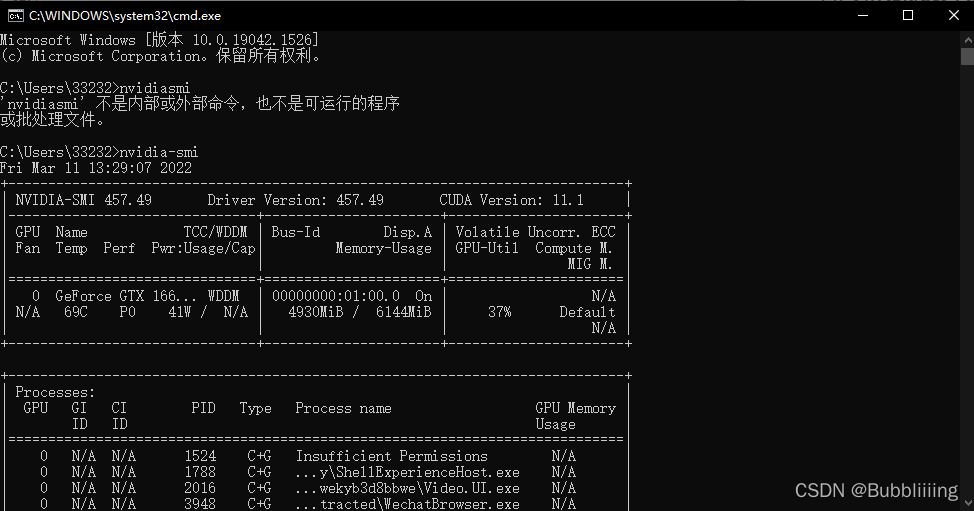
**如果要一定看任务管理器的话,请看性能部分GPU的显存是否利用,或者查看任务管理器的Cuda,而非Copy。**
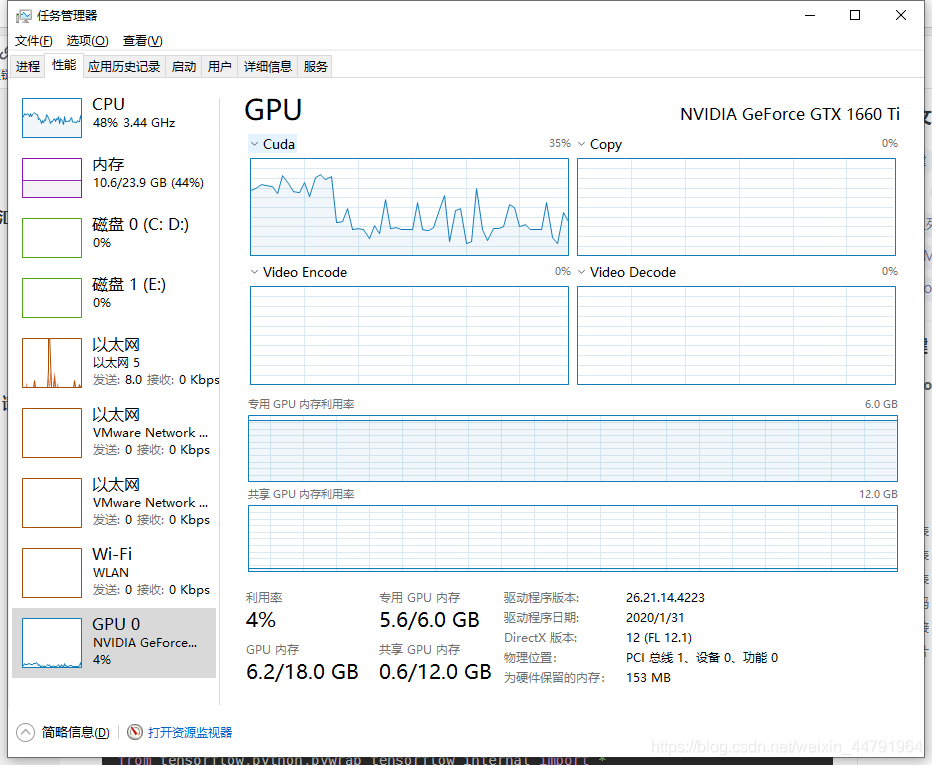
### e、DLL load failed: 找不到指定的模块
**问:出现如下错误**
```python
Traceback (most recent call last):
File "C:\Users\focus\Anaconda3\ana\envs\tensorflow-gpu\lib\site-packages\tensorflow\python\pywrap_tensorflow.py", line 58, in <module>
from tensorflow.python.pywrap_tensorflow_internal import *
File "C:\Users\focus\Anaconda3\ana\envs\tensorflow-gpu\lib\site-packages\tensorflow\python\pywrap_tensorflow_internal.py", line 28, in <module>
pywrap_tensorflow_internal = swig_import_helper()
File "C:\Users\focus\Anaconda3\ana\envs\tensorflow-gpu\lib\site-packages\tensorflow\python\pywrap_tensorflow_internal.py", line 24, in swig_import_helper
_mod = imp.load_module('_pywrap_tensorflow_internal', fp, pathname, description)
File "C:\Users\focus\Anaconda3\ana\envs\tensorflow-gpu\lib\imp.py", line 243, in load_modulereturn load_dynamic(name, filename, file)
File "C:\Users\focus\Anaconda3\ana\envs\tensorflow-gpu\lib\imp.py", line 343, in load_dynamic
return _load(spec)
ImportError: DLL load failed: 找不到指定的模块。
```
**答:如果没重启过就重启一下,否则重新按照步骤安装,还无法解决则把你的GPU、CUDA、CUDNN、TF版本以及PYTORCH版本私聊告诉我。**
### f、no module问题(no module name utils.utils、no module named 'matplotlib' )
**问:为什么提示说no module name utils.utils(no module name nets.yolo、no module name nets.ssd等一系列问题)啊?
答:utils并不需要用pip装,它就在我上传的仓库的根目录,出现这个问题的原因是根目录不对,查查相对目录和根目录的概念。查了基本上就明白了。**
**问:为什么提示说no module name matplotlib(no module name PIL,no module name cv2等等)?
答:这个库没安装打开命令行安装就好。pip install matplotlib**
**问:为什么我已经用pip装了opencv(pillow、matplotlib等),还是提示no module name cv2?
答:没有激活环境装,要激活对应的conda环境进行安装才可以正常使用**
**问:为什么提示说No module named 'torch' ?
答:其实我也真的很想知道为什么会有这个问题……这个pytorch没装是什么情况?一般就俩情况,一个是真的没装,还有一个是装到其它环境了,当前激活的环境不是自己装的环境。**
**问:为什么提示说No module named 'tensorflow' ?
答:同上。**
### g、cuda安装失败问题
一般cuda安装前需要安装Visual Studio,装个2017版本即可。
### h、Ubuntu系统问题
**所有代码在Ubuntu下可以使用,我两个系统都试过。**
### i、VSCODE提示错误的问题
**问:为什么在VSCODE里面提示一大堆的错误啊?
答:我也提示一大堆的错误,但是不影响,是VSCODE的问题,如果不想看错误的话就装Pycharm。
最好将设置里面的Python:Language Server,调整为Pylance。**
### j、使用cpu进行训练与预测的问题
**对于keras和tf2的代码而言,如果想用cpu进行训练和预测,直接装cpu版本的tensorflow就可以了。**
**对于pytorch的代码而言,如果想用cpu进行训练和预测,需要将cuda=True修改成cuda=False。**
### k、tqdm没有pos参数问题
**问:运行代码提示'tqdm' object has no attribute 'pos'。
答:重装tqdm,换个版本就可以了。**
### l、提示decode(“utf-8”)的问题
**由于h5py库的更新,安装过程中会自动安装h5py=3.0.0以上的版本,会导致decode("utf-8")的错误!
各位一定要在安装完tensorflow后利用命令装h5py=2.10.0!**
```
pip install h5py==2.10.0
```
### m、提示TypeError: __array__() takes 1 positional argument but 2 were given错误
可以修改pillow版本解决。
```
pip install pillow==8.2.0
```
### n、如何查看当前cuda和cudnn
**window下cuda版本查看方式如下:
1、打开cmd窗口。
2、输入nvcc -V。
3、Cuda compilation tools, release XXXXXXXX中的XXXXXXXX即cuda版本。**
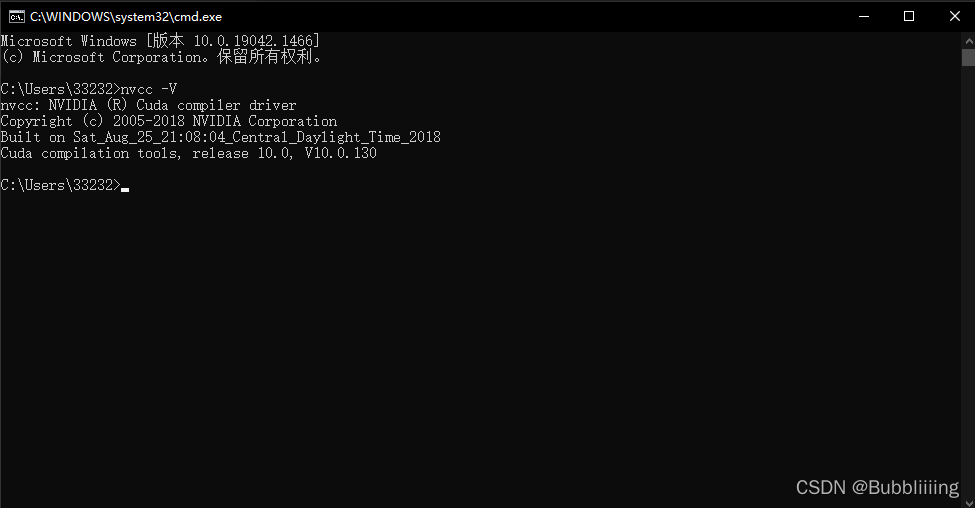
window下cudnn版本查看方式如下:
1、进入cuda安装目录,进入incude文件夹。
2、找到cudnn.h文件。
3、右键文本打开,下拉,看到#define处可获得cudnn版本。
```python
#define CUDNN_MAJOR 7
#define CUDNN_MINOR 4
#define CUDNN_PATCHLEVEL 1
```
代表cudnn为7.4.1。
### o、为什么按照你的环境配置后还是不能使用
**问:up主,为什么我按照你的环境配置后还是不能使用?
答:请把你的GPU、CUDA、CUDNN、TF版本以及PYTORCH版本B站私聊告诉我。**
### p、其它问题
**问:为什么提示TypeError: cat() got an unexpected keyword argument 'axis',Traceback (most recent call last),AttributeError: 'Tensor' object has no attribute 'bool'?
答:这是版本问题,建议使用torch1.2以上版本**
**其它有很多稀奇古怪的问题,很多是版本问题,建议按照我的视频教程安装Keras和tensorflow。比如装的是tensorflow2,就不用问我说为什么我没法运行Keras-yolo啥的。那是必然不行的。**
## 3、目标检测库问题汇总(人脸检测和分类库也可参考)
### a、shape不匹配问题。
#### 1)、训练时shape不匹配问题。
**问:up主,为什么运行train.py会提示shape不匹配啊?
答:在keras环境中,因为你训练的种类和原始的种类不同,网络结构会变化,所以最尾部的shape会有少量不匹配。**
#### 2)、预测时shape不匹配问题。
**问:为什么我运行predict.py会提示我说shape不匹配呀。**
##### i、copying a param with shape torch.Size([75, 704, 1, 1]) from checkpoint
在Pytorch里面是这样的:

##### ii、Shapes are [1,1,1024,75] and [255,1024,1,1]. for 'Assign_360' (op: 'Assign') with input shapes: [1,1,1024,75], [255,1024,1,1].
在Keras里面是这样的:
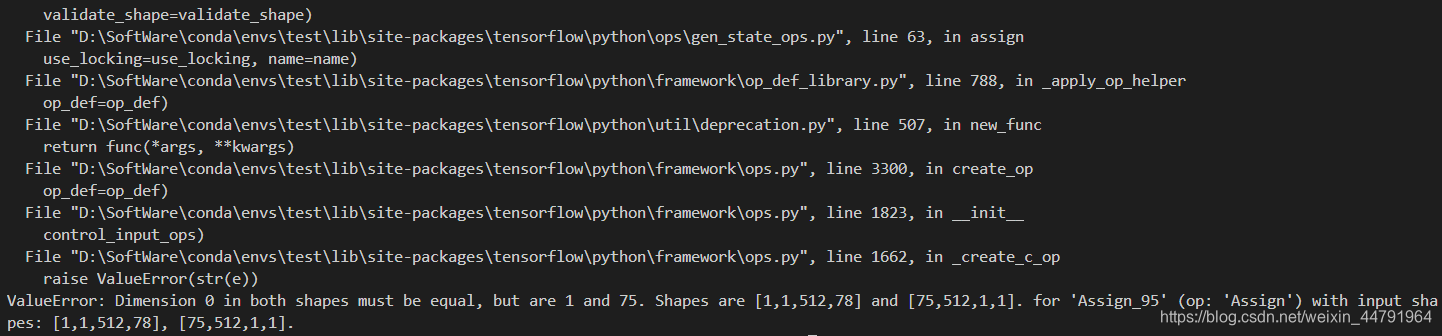
**答:原因主要有仨:
1、训练的classes_path没改,就开始训练了。
2、训练的model_path没改。
3、训练的classes_path没改。
请检查清楚了!确定自己所用的model_path和classes_path是对应的!训练的时候用到的num_classes或者classes_path也需要检查!**
### b、显存不足问题(OOM、RuntimeError: CUDA out of memory)。
**问:为什么我运行train.py下面的命令行闪的贼快,还提示OOM啥的?
答:这是在keras中出现的,爆显存了,可以改小batch_size,SSD的显存占用率是最小的,建议用SSD;
2G显存:SSD、YOLOV4-TINY
4G显存:YOLOV3
6G显存:YOLOV4、Retinanet、M2det、Efficientdet、Faster RCNN等
8G+显存:随便选吧。**
**需要注意的是,受到BatchNorm2d影响,batch_size不可为1,至少为2。**
**问:为什么提示 RuntimeError: CUDA out of memory. Tried to allocate 52.00 MiB (GPU 0; 15.90 GiB total capacity; 14.85 GiB already allocated; 51.88 MiB free; 15.07 GiB reserved in total by PyTorch)?
答:这是pytorch中出现的,爆显存了,同上。**
**问:为什么我显存都没利用,就直接爆显存了?
答:都爆显存了,自然就不利用了,模型没有开始训练。**
### c、为什么要进行冻结训练与解冻训练,不进行行吗?
**问:为什么要冻结训练和解冻训练呀?
答:可以不进行,本质上是为了保证性能不足的同学的训练,如果电脑性能完全不够,可以将Freeze_Epoch和UnFreeze_Epoch设置成一样,只进行冻结训练。**
**同时这也是迁移学习的思想,因为神经网络主干特征提取部分所提取到的特征是通用的,我们冻结起来训练可以加快训练效率,也可以防止权值被破坏。**
在冻结阶段,模型的主干被冻结了,特征提取网络不发生改变。占用的显存较小,仅对网络进行微调。
在解冻阶段,模型的主干不被冻结了,特征提取网络会发生改变。占用的显存较大,网络所有的参数都会发生改变。
### d、我的LOSS好大啊,有问题吗?(我的LOSS好小啊,有问题吗?)
**问:为什么我的网络不收敛啊,LOSS是XXXX。
答:不同网络的LOSS不同,LOSS只是一个参考指标,用于查看网络是否收敛,而非评价网络好坏,我的yolo代码都没有归一化,所以LOSS值看起来比较高,LOSS的值不重要,重要的是是否在变小,预测是否有效果。**
### e、为什么我训练出来的模型没有预测结果?
**问:为什么我的训练效果不好?预测了没有框(框不准)。
答:**
考虑几个问题:
1、目标信息问题,查看2007_train.txt文件是否有目标信息,没有的话请修改voc_annotation.py。
2、数据集问题,小于500的自行考虑增加数据集,同时测试不同的模型,确认数据集是好的。
3、是否解冻训练,如果数据集分布与常规画面差距过大需要进一步解冻训练,调整主干,加强特征提取能力。
4、网络问题,比如SSD不适合小目标,因为先验框固定了。
5、训练时长问题,有些同学只训练了几代表示没有效果,按默认参数训练完。
6、确认自己是否按照步骤去做了,如果比如voc_annotation.py里面的classes是否修改了等。
7、不同网络的LOSS不同,LOSS只是一个参考指标,用于查看网络是否收敛,而非评价网络好坏,LOSS的值不重要,重要的是是否收敛。
8、是否修改了网络的主干,如果修改了没有预训练权重,网络不容易收敛,自然效果不好。
### f、为什么我计算出来的map是0?
**问:为什么我的训练效果不好?没有map?
答:**
首先尝试利用predict.py预测一下,如果有效果的话应该是get_map.py里面的classes_path设置错误。如果没有预测结果的话,解决方法同e问题,对下面几点进行检查:
1、目标信息问题,查看2007_train.txt文件是否有目标信息,没有的话请修改voc_annotation.py。
2、数据集问题,小于500的自行考虑增加数据集,同时测试不同的模型,确认数据集是好的。
3、是否解冻训练,如果数据集分布与常规画面差距过大需要进一步解冻训练,调整主干,加强特征提取能力。
4、网络问题,比如SSD不适合小目标,因为先验框固定了。
5、训练时长问题,有些同学只训练了几代表示没有效果,按默认参数训练完。
6、确认自己是否按照步骤去做了,如果比如voc_annotation.py里面的classes是否修改了等。
7、不同网络的LOSS不同,LOSS只是一个参考指标,用于查看网络是否收敛,而非评价网络好坏,LOSS的值不重要,重要的是是否收敛。
8、是否修改了网络的主干,如果修改了没有预训练权重,网络不容易收敛,自然效果不好。
### g、gbk编码错误('gbk' codec can't decode byte)。
**问:我怎么出现了gbk什么的编码错误啊:**
```python
UnicodeDecodeError: 'gbk' codec can't decode byte 0xa6 in position 446: illegal multibyte sequence
```
**答:标签和路径不要使用中文,如果一定要使用中文,请注意处理的时候编码的问题,改成打开文件的encoding方式改为utf-8。**
### h、我的图片是xxx*xxx的分辨率的,可以用吗?
**问:我的图片是xxx*xxx的分辨率的,可以用吗!**
**答:可以用,代码里面会自动进行resize与数据增强。**
### i、我想进行数据增强!怎么增强?
**问:我想要进行数据增强!怎么做呢?**
**答:可以用,代码里面会自动进行resize与数据增强。**
### j、多GPU训练。
**问:怎么进行多GPU训练?
答:pytorch的大多数代码可以直接使用gpu训练,keras的话直接百度就好了,实现并不复杂,我没有多卡没法详细测试,还需要各位同学自己努力了。**
### k、能不能训练灰度图?
**问:能不能训练灰度图(预测灰度图)啊?
答:我的大多数库会将灰度图转化成RGB进行训练和预测,如果遇到代码不能训练或者预测灰度图的情况,可以尝试一下在get_random_data里面将Image.open后的结果转换成RGB,预测的时候也这样试试。(仅供参考)**
### l、断点续练问题。
**问:我已经训练过几个世代了,能不能从这个基础上继续开始训练
答:可以,你在训练前,和载入预训练权重一样载入训练过的权重就行了。一般训练好的权重会保存在logs文件夹里面,将model_path修改成你要开始的权值的路径即可。**
### m、我要训练其它的数据集,预训练权重能不能用?
**问:如果我要训练其它的数据集,预训练权重要怎么办啊?**
**答:数据的预训练权重对不同数据集是通用的,因为特征是通用的,预训练权重对于99%的情况都必须要用,不用的话权值太过随机,特征提取效果不明显,网络训练的结果也不会好。**
### n、网络如何从0开始训练?
**问:我要怎么不使用预训练权重啊?
答:看一看注释、大多数代码是model_path = '',Freeze_Train = Fasle**,如果设置model_path无用,**那么把载入预训练权重的代码注释了就行。**
### o、为什么从0开始训练效果这么差(修改了网络主干,效果不好怎么办)?
**问:为什么我不使用预训练权重效果这么差啊?
答:因为随机初始化的权值不好,提取的特征不好,也就导致了模型训练的效果不好,voc07+12、coco+voc07+12效果都不一样,预训练权重还是非常重要的。**
**问:up,我修改了网络,预训练权重还能用吗?
答:修改了主干的话,如果不是用的现有的网络,基本上预训练权重是不能用的,要么就自己判断权值里卷积核的shape然后自己匹配,要么只能自己预训练去了;修改了后半部分的话,前半部分的主干部分的预训练权重还是可以用的,如果是pytorch代码的话,需要自己修改一下载入权值的方式,判断shape后载入,如果是keras代码,直接by_name=True,skip_mismatch=True即可。**
权值匹配的方式可以参考如下:
```python
# 加快模型训练的效率
print('Loading weights into state dict...')
device = torch.device('cuda' if torch.cuda.is_available() else 'cpu')
model_dict = model.state_dict()
pretrained_dict = torch.load(model_path, map_location=device)
a = {}
for k, v in pretrained_dict.items():
try:
if np.shape(model_dict[k]) == np.shape(v):
a[k]=v
except:
pass
model_dict.update(a)
model.load_state_dict(model_dict)
print('Finished!')
```
**问:为什么从0开始训练效果这么差(我修改了网络主干,效果不好怎么办)?
答:一般来讲,网络从0开始的训练效果会很差,因为权值太过随机,特征提取效果不明显,因此非常、非常、非常不建议大家从0开始训练!如果一定要从0开始,可以了解imagenet数据集,首先训练分类模型,获得网络的主干部分权值,分类模型的 主干部分 和该模型通用,基于此进行训练。
网络修改了主干之后也是同样的问题,随机的权值效果很差。**
**问:怎么在模型上从0开始训练?
答:在算力不足与调参能力不足的情况下从0开始训练毫无意义。模型特征提取能力在随机初始化参数的情况下非常差。没有好的参数调节能力和算力,无法使得网络正常收敛。**
如果一定要从0开始,那么训练的时候请注意几点:
- 不载入预训练权重。
- 不要进行冻结训练,注释冻结模型的代码。
**问:为什么我不使用预训练权重效果这么差啊?
答:因为随机初始化的权值不好,提取的特征不好,也就导致了模型训练的效果不好,voc07+12、coco+voc07+12效果都不一样,预训练权重还是非常重要的。**
### p、你的权值都是哪里来的?
**问:如果网络不能从0开始训练的话你的权值哪里来的?
答:有些权值是官方转换过来的,有些权值是自己训练出来的,我用到的主干的imagenet的权值都是官方的。**
### q、视频检测与摄像头检测
**问:怎么用摄像头检测呀?
答:predict.py修改参数可以进行摄像头检测,也有视频详细解释了摄像头检测的思路。**
**问:怎么用视频检测呀?
答:同上**
### r、如何保存检测出的图片
**问:检测完的图片怎么保存?
答:一般目标检测用的是Image,所以查询一下PIL库的Image如何进行保存。详细看看predict.py文件的注释。**
**问:怎么用视频保存呀?
答:详细看看predict.py文件的注释。**
### s、遍历问题
**问:如何对一个文件夹的图片进行遍历?
答:一般使用os.listdir先找出文件夹里面的所有图片,然后根据predict.py文件里面的执行思路检测图片就行了,详细看看predict.py文件的注释。**
**问:如何对一个文件夹的图片进行遍历?并且保存。
答:遍历的话一般使用os.listdir先找出文件夹里面的所有图片,然后根据predict.py文件里面的执行思路检测图片就行了。保存的话一般目标检测用的是Image,所以查询一下PIL库的Image如何进行保存。如果有些库用的是cv2,那就是查一下cv2怎么保存图片。详细看看predict.py文件的注释。**
### t、路径问题(No such file or directory、StopIteration: [Errno 13] Permission denied: 'XXXXXX')
**问:我怎么出现了这样的错误呀:**
```python
FileNotFoundError: 【Errno 2】 No such file or directory
StopIteration: [Errno 13] Permission denied: 'D:\\Study\\Collection\\Dataset\\VOC07+12+test\\VOCdevkit/VOC2007'
……………………………………
……………………………………
```
**答:去检查一下文件夹路径,查看是否有对应文件;并且检查一下2007_train.txt,其中文件路径是否有错。**
关于路径有几个重要的点:
**文件夹名称中一定不要有空格。
注意相对路径和绝对路径。
多百度路径相关的知识。**
**所有的路径问题基本上都是根目录问题,好好查一下相对目录的概念!**
### u、和原版比较问题,你怎么和原版不一样啊?
**问:原版的代码是XXX,为什么你的代码是XXX?
答:是啊……这要不怎么说我不是原版呢……**
**问:你这个代码和原版比怎么样,可以达到原版的效果么?
答:基本上可以达到,我都用voc数据测过,我没有好显卡,没有能力在coco上测试与训练。**
**问:你有没有实现yolov4所有的tricks,和原版差距多少?
答:并没有实现全部的改进部分,由于YOLOV4使用的改进实在太多了,很难完全实现与列出来,这里只列出来了一些我比较感兴趣,而且非常有效的改进。论文中提到的SAM(注意力机制模块),作者自己的源码也没有使用。还有其它很多的tricks,不是所有的tricks都有提升,我也没法实现全部的tricks。至于和原版的比较,我没有能力训练coco数据集,根据使用过的同学反应差距不大。**
### v、我的检测速度是xxx正常吗?我的检测速度还能增快吗?
**问:你这个FPS可以到达多少,可以到 XX FPS么?
答:FPS和机子的配置有关,配置高就快,配置低就慢。**
**问:我的检测速度是xxx正常吗?我的检测速度还能增快吗?
答:看配置,配置好速度就快,如果想要配置不变的情况下加快速度,就要修改网络了。**
**问:为什么我用服务器去测试yolov4(or others)的FPS只有十几?
答:检查是否正确安装了tensorflow-gpu或者pytorch的gpu版本,如果已经正确安装,可以去利用time.time()的方法查看detect_image里面,哪一段代码耗时更长(不仅只有网络耗时长,其它处理部分也会耗时,如绘图等)。**
**问:为什么论文中说速度可以达到XX,但是这里却没有?
答:检查是否正确安装了tensorflow-gpu或者pytorch的gpu版本,如果已经正确安装,可以去利用time.time()的方法查看detect_image里面,哪一段代码耗时更长(不仅只有网络耗时长,其它处理部分也会耗时,如绘图等)。有些论文还会使用多batch进行预测,我并没有去实现这个部分。**
### w、预测图片不显示问题
**问:为什么你的代码在预测完成后不显示图片?只是在命令行告诉我有什么目标。
答:给系统安装一个图片查看器就行了。**
### x、算法评价问题(目标检测的map、PR曲线、Recall、Precision等)
**问:怎么计算map?
答:看map视频,都一个流程。**
**问:计算map的时候,get_map.py里面有一个MINOVERLAP是什么用的,是iou吗?
答:是iou,它的作用是判断预测框和真实框的重合成度,如果重合程度大于MINOVERLAP,则预测正确。**
**问:为什么get_map.py里面的self.confidence(self.score)要设置的那么小?
答:看一下map的视频的原理部分,要知道所有的结果然后再进行pr曲线的绘制。**
**问:能不能说说怎么绘制PR曲线啥的呀。
答:可以看mAP视频,结果里面有PR曲线。**
**问:怎么计算Recall、Precision指标。
答:这俩指标应该是相对于特定的置信度的,计算map的时候也会获得。**
### y、coco数据集训练问题
**问:目标检测怎么训练COCO数据集啊?。
答:coco数据训练所需要的txt文件可以参考qqwweee的yolo3的库,格式都是一样的。**
### z、UP,怎么优化模型啊?我想提升效果
**问:up,怎么修改模型啊,我想发个小论文!
答:建议看看yolov3和yolov4的区别,然后看看yolov4的论文,作为一个大型调参现场非常有参考意义,使用了很多tricks。我能给的建议就是多看一些经典模型,然后拆解里面的亮点结构并使用。**
### aa、UP,有Focal LOSS的代码吗?怎么改啊?
**问:up,YOLO系列使用Focal LOSS的代码你有吗,有提升吗?
答:很多人试过,提升效果也不大(甚至变的更Low),它自己有自己的正负样本的平衡方式**。改代码的事情,还是自己好好看看代码吧。
### ab、部署问题(ONNX、TensorRT等)
我没有具体部署到手机等设备上过,所以很多部署问题我并不了解……
## 4、语义分割库问题汇总
### a、shape不匹配问题
#### 1)、训练时shape不匹配问题
**问:up主,为什么运行train.py会提示shape不匹配啊?
答:在keras环境中,因为你训练的种类和原始的种类不同,网络结构会变化,所以最尾部的shape会有少量不匹配。**
#### 2)、预测时shape不匹配问题
**问:为什么我运行predict.py会提示我说shape不匹配呀。**
##### i、copying a param with shape torch.Size([75, 704, 1, 1]) from checkpoint
在Pytorch里面是这样的:

##### ii、Shapes are [1,1,1024,75] and [255,1024,1,1]. for 'Assign_360' (op: 'Assign') with input shapes: [1,1,1024,75], [255,1024,1,1].
在Keras里面是这样的:

**答:原因主要有二:
1、train.py里面的num_classes没改。
2、预测时num_classes没改。
3、预测时model_path没改。
请检查清楚!训练和预测的时候用到的num_classes都需要检查!**
### b、显存不足问题(OOM、RuntimeError: CUDA out of memory)。
**问:为什么我运行train.py下面的命令行闪的贼快,还提示OOM啥的?
答:这是在keras中出现的,爆显存了,可以改小batch_size。**
**需要注意的是,受到BatchNorm2d影响,batch_size不可为1,至少为2。**
**问:为什么提示 RuntimeError: CUDA out of memory. Tried to allocate 52.00 MiB (GPU 0; 15.90 GiB total capacity; 14.85 GiB already allocated; 51.88 MiB free; 15.07 GiB reserved in total by PyTorch)?
答:这是pytorch中出现的,爆显存了,同上。**
**问:为什么我显存都没利用,就直接爆显存了?
答:都爆显存了,自然就不利用了,模型没有开始训练。**
### c、为什么要进行冻结训练与解冻训练,不进行行吗?
**问:为什么要冻结训练和解冻训练呀?
答:可以不进行,本质上是为了保证性能不足的同学的训练,如果电脑性能完全不够,可以将Freeze_Epoch和UnFreeze_Epoch设置成一样,只进行冻结训练。**
**同时这也是迁移学习的思想,因为神经网络主干特征提取部分所提取到的特征是通用的,我们冻结起来训练可以加快训练效率,也可以防止权值被破坏。**
在冻结阶段,模型的主干被冻结了,特征提取网络不发生改变。占用的显存较小,仅对网络进行微调。
在解冻阶段,模型的主干不被冻结了,特征提取网络会发生改变。占用的显存较大,网络所有的参数都会发生改变。
### d、我的LOSS好大啊,有问题吗?(我的LOSS好小啊,有问题吗?)
**问:为什么我的网络不收敛啊,LOSS是XXXX。
答:不同网络的LOSS不同,LOSS只是一个参考指标,用于查看网络是否收敛,而非评价网络好坏,我的yolo代码都没有归一化,所以LOSS值看起来比较高,LOSS的值不重要,重要的是是否在变小,预测是否有效果。**
### e、为什么我训练出来的模型没有预测结果?
**问:为什么我的训练效果不好?预测了没有框(框不准)。
答:**
**考虑几个问题:
1、数据集问题,这是最重要的问题。小于500的自行考虑增加数据集;一定要检查数据集的标签,视频中详细解析了VOC数据集的格式,但并不是有输入图片有输出标签即可,还需要确认标签的每一个像素值是否为它对应的种类。很多同学的标签格式不对,最常见的错误格式就是标签的背景为黑,目标为白,此时目标的像素点值为255,无法正常训练,目标需要为1才行。
2、是否解冻训练,如果数据集分布与常规画面差距过大需要进一步解冻训练,调整主干,加强特征提取能力。
3、网络问题,可以尝试不同的网络。
4、训练时长问题,有些同学只训练了几代表示没有效果,按默认参数训练完。
5、确认自己是否按照步骤去做了。
6、不同网络的LOSS不同,LOSS只是一个参考指标,用于查看网络是否收敛,而非评价网络好坏,LOSS的值不重要,重要的是是否收敛。**
**问:为什么我的训练效果不好?对小目标预测不准确。
答:对于deeplab和pspnet而言,可以修改一下downsample_factor,当downsample_factor为16的时候下采样倍数过多,效果不太好,可以修改为8。**
### f、为什么我计算出来的miou是0?
**问:为什么我的训练效果不好?计算出来的miou是0?。**
答:
与e类似,**考虑几个问题:
1、数据集问题,这是最重要的问题。小于500的自行考虑增加数据集;一定要检查数据集的标签,视频中详细解析了VOC数据集的格式,但并不是有输入图片有输出标签即可,还需要确认标签的每一个像素值是否为它对应的种类。很多同学的标签格式不对,最常见的错误格式就是标签的背景为黑,目标为白,此时目标的像素点值为255,无法正常训练,目标需要为1才行。
2、是否解冻训练,如果数据集分布与常规画面差距过大需要进一步解冻训练,调整主干,加强特征提取能力。
3、网络问题,可以尝试不同的网络。
4、训练时长问题,有些同学只训练了几代表示没有效果,按默认参数训练完。
5、确认自己是否按照步骤去做了。
6、不同网络的LOSS不同,LOSS只是一个参考指标,用于查看网络是否收敛,而非评价网络好坏,LOSS的值不重要,重要的是是否收敛。**
### g、gbk编码错误('gbk' codec can't decode byte)。
**问:我怎么出现了gbk什么的编码错误啊:**
```python
UnicodeDecodeError: 'gbk' codec can't decode byte 0xa6 in position 446: illegal multibyte sequence
```
**答:标签和路径不要使用中文,如果一定要使用中文,请注意处理的时候编码的问题,改成打开文件的encoding方式改为utf-8。**
### h、我的图片是xxx*xxx的分辨率的,可以用吗?
**问:我的图片是xxx*xxx的分辨率的,可以用吗!**
**答:可以用,代码里面会自动进行resize与数据增强。**
### i、我想进行数据增强!怎么增强?
**问:我想要进行数据增强!怎么做呢?**
**答:可以用,代码里面会自动进行resize与数据增强。**
### j、多GPU训练。
**问:怎么进行多GPU训练?
答:pytorch的大多数代码可以直接使用gpu训练,keras的话直接百度就好了,实现并不复杂,我没有多卡没法详细测试,还需要各位同学自己努力了。**
### k、能不能训练灰度图?
**问:能不能训练灰度图(预测灰度图)啊?
答:我的大多数库会将灰度图转化成RGB进行训练和预测,如果遇到代码不能训练或者预测灰度图的情况,可以尝试一下在get_random_data里面将Image.open后的结果转换成RGB,预测的时候也这样试试。(仅供参考)**
### l、断点续练问题。
**问:我已经训练过几个世代了,能不能从这个基础上继续开始训练
答:可以,你在训练前,和载入预训练权重一样载入训练过的权重就行了。一般训练好的权重会保存在logs文件夹里面,将model_path修改成你要开始的权值的路径即可。**
### m、我要训练其它的数据集,预训练权重能不能用?
**问:如果我要训练其它的数据集,预训练权重要怎么办啊?**
**答:数据的预训练权重对不同数据集是通用的,因为特征是通用的,预训练权重对于99%的情况都必须要用,不用的话权值太过随机,特征提取效果不明显,网络训练的结果也不会好。**
### n、网络如何从0开始训练?
**问:我要怎么不使用预训练权重啊?
答:看一看注释、大多数代码是model_path = '',Freeze_Train = Fasle**,如果设置mode
gitextract_3q2ovx2k/ ├── .gitignore ├── LICENSE ├── README.md ├── get_map.py ├── nets/ │ ├── __init__.py │ ├── ssd.py │ ├── ssd_training.py │ └── vgg.py ├── predict.py ├── requirements.txt ├── ssd.py ├── summary.py ├── train.py ├── utils/ │ ├── __init__.py │ ├── anchors.py │ ├── callbacks.py │ ├── dataloader.py │ ├── utils.py │ ├── utils_bbox.py │ └── utils_map.py ├── voc_annotation.py └── 常见问题汇总.md
SYMBOL INDEX (79 symbols across 11 files)

FILE: nets/ssd.py
  class Normalize (line 10) | class Normalize(Layer):
    method __init__ (line 11) | def __init__(self, scale, **kwargs):
    method build (line 16) | def build(self, input_shape):
    method call (line 23) | def call(self, x, mask=None):
  function SSD300 (line 28) | def SSD300(input_shape, num_classes=21):

FILE: nets/ssd_training.py
  class MultiboxLoss (line 7) | class MultiboxLoss(object):
    method __init__ (line 8) | def __init__(self, num_classes, alpha=1.0, neg_pos_ratio=3.0,
    method _l1_smooth_loss (line 18) | def _l1_smooth_loss(self, y_true, y_pred):
    method _softmax_loss (line 24) | def _softmax_loss(self, y_true, y_pred):
    method compute_loss (line 30) | def compute_loss(self, y_true, y_pred):
  function get_lr_scheduler (line 118) | def get_lr_scheduler(lr_decay_type, lr, min_lr, total_iters, warmup_iter...

FILE: nets/vgg.py
  function VGG16 (line 4) | def VGG16(input_tensor):

FILE: ssd.py
  class SSD (line 17) | class SSD(object):
    method get_defaults (line 53) | def get_defaults(cls, n):
    method __init__ (line 62) | def __init__(self, **kwargs):
    method generate (line 88) | def generate(self):
    method detect_image (line 102) | def detect_image(self, image, crop = False, count = False):
    method get_FPS (line 203) | def get_FPS(self, image, test_interval):
    method get_map_txt (line 238) | def get_map_txt(self, image_id, image, class_names, map_out_path):

FILE: utils/anchors.py
  class AnchorBox (line 4) | class AnchorBox():
    method __init__ (line 5) | def __init__(self, input_shape, min_size, max_size=None, aspect_ratios...
    method call (line 16) | def call(self, layer_shape, mask=None):
  function get_img_output_length (line 99) | def get_img_output_length(height, width):
  function get_anchors (line 113) | def get_anchors(input_shape = [300,300], anchors_size = [30, 60, 111, 16...
  class AnchorBox_for_Vision (line 126) | class AnchorBox_for_Vision():
    method __init__ (line 127) | def __init__(self, input_shape, min_size, max_size=None, aspect_ratios...
    method call (line 143) | def call(self, layer_shape, mask=None):

FILE: utils/callbacks.py
  class LossHistory (line 22) | class LossHistory(keras.callbacks.Callback):
    method __init__ (line 23) | def __init__(self, log_dir):
    method on_epoch_end (line 30) | def on_epoch_end(self, epoch, logs={}):
    method loss_plot (line 45) | def loss_plot(self):
  class ExponentDecayScheduler (line 73) | class ExponentDecayScheduler(keras.callbacks.Callback):
    method __init__ (line 74) | def __init__(self,
    method on_epoch_end (line 82) | def on_epoch_end(self, batch, logs=None):
  class WarmUpCosineDecayScheduler (line 88) | class WarmUpCosineDecayScheduler(keras.callbacks.Callback):
    method __init__ (line 89) | def __init__(self, T_max, eta_min=0, verbose=0):
    method on_train_begin (line 97) | def on_train_begin(self, batch, logs=None):
    method on_epoch_end (line 100) | def on_epoch_end(self, batch, logs=None):
  class ParallelModelCheckpoint (line 108) | class ParallelModelCheckpoint(keras.callbacks.ModelCheckpoint):
    method __init__ (line 109) | def __init__(self, model, filepath, monitor='val_loss', verbose=0,
    method set_model (line 115) | def set_model(self, model):
  class EvalCallback (line 118) | class EvalCallback(keras.callbacks.Callback):
    method __init__ (line 119) | def __init__(self, model_body, input_shape, anchors, class_names, num_...
    method get_map_txt (line 152) | def get_map_txt(self, image_id, image, class_names, map_out_path):
    method on_epoch_end (line 205) | def on_epoch_end(self, epoch, logs=None):

FILE: utils/dataloader.py
  class SSDDatasets (line 13) | class SSDDatasets(keras.utils.Sequence):
    method __init__ (line 14) | def __init__(self, annotation_lines, input_shape, anchors, batch_size,...
    method __len__ (line 26) | def __len__(self):
    method __getitem__ (line 29) | def __getitem__(self, index):
    method on_epoch_end (line 54) | def on_epoch_end(self):
    method rand (line 57) | def rand(self, a=0, b=1):
    method get_random_data (line 60) | def get_random_data(self, annotation_line, input_shape, jitter=.3, hue...
    method iou (line 175) | def iou(self, box):
    method encode_box (line 202) | def encode_box(self, box, return_iou=True, variances = [0.1, 0.1, 0.2,...
    method assign_boxes (line 260) | def assign_boxes(self, boxes):

FILE: utils/utils.py
  function cvtColor (line 9) | def cvtColor(image):
  function resize_image (line 19) | def resize_image(image, size, letterbox_image):
  function get_classes (line 37) | def get_classes(classes_path):
  function show_config (line 43) | def show_config(**kwargs):
  function net_flops (line 56) | def net_flops(model, table=False, print_result=True):

FILE: utils/utils_bbox.py
  class BBoxUtility (line 5) | class BBoxUtility(object):
    method __init__ (line 6) | def __init__(self, num_classes, nms_thresh=0.45, top_k=300):
    method ssd_correct_boxes (line 15) | def ssd_correct_boxes(self, box_xy, box_wh, input_shape, image_shape, ...
    method decode_boxes (line 42) | def decode_boxes(self, mbox_loc, anchors, variances):
    method decode_box (line 77) | def decode_box(self, predictions, anchors, image_shape, input_shape, l...

FILE: utils/utils_map.py
  function log_average_miss_rate (line 31) | def log_average_miss_rate(precision, fp_cumsum, num_images):
  function error (line 72) | def error(msg):
  function is_float_between_0_and_1 (line 79) | def is_float_between_0_and_1(value):
  function voc_ap (line 95) | def voc_ap(rec, prec):
  function file_lines_to_list (line 142) | def file_lines_to_list(path):
  function draw_text_in_image (line 153) | def draw_text_in_image(img, text, pos, color, line_width):
  function adjust_axes (line 170) | def adjust_axes(r, t, fig, axes):
  function draw_plot_func (line 185) | def draw_plot_func(dictionary, n_classes, window_title, plot_title, x_la...
  function get_map (line 276) | def get_map(MINOVERLAP, draw_plot, score_threhold=0.5, path = './map_out'):
  function preprocess_gt (line 800) | def preprocess_gt(gt_path, class_names):
  function preprocess_dr (line 870) | def preprocess_dr(dr_path, class_names):
  function get_coco_map (line 894) | def get_coco_map(class_names, path):

FILE: voc_annotation.py
  function convert_annotation (line 45) | def convert_annotation(year, image_id, list_file):
  function printTable (line 126) | def printTable(List1, List2):
Condensed preview — 22 files, each showing path, character count, and a content snippet. Download the .json file or copy for the full structured content (252K chars).
[
  {
    "path": ".gitignore",
    "chars": 1925,
    "preview": "# ignore map, miou, datasets\nmap_out/\nmiou_out/\nVOCdevkit/\ndatasets/\nMedical_Datasets/\nlfw/\nlogs/\nmodel_data/\n.temp_map_"
  },
  {
    "path": "LICENSE",
    "chars": 1065,
    "preview": "MIT License\n\nCopyright (c) 2020 JiaQi Xu\n\nPermission is hereby granted, free of charge, to any person obtaining a copy\no"
  },
  {
    "path": "README.md",
    "chars": 6004,
    "preview": "## SSD: Single-Shot MultiBox Detector目标检测模型在Keras当中的实现\n---\n\n## 目录\n1. [仓库更新 Top News](#仓库更新)\n2. [相关仓库 Related code](#相关仓库"
  },
  {
    "path": "get_map.py",
    "chars": 6804,
    "preview": "import os\r\nimport xml.etree.ElementTree as ET\r\n\r\nfrom PIL import Image\r\nfrom tqdm import tqdm\r\n\r\nfrom ssd import SSD\r\nfr"
  },
  {
    "path": "nets/__init__.py",
    "chars": 1,
    "preview": "#"
  },
  {
    "path": "nets/ssd.py",
    "chars": 7124,
    "preview": "import keras.backend as K\r\nimport numpy as np\r\nfrom keras.engine.topology import InputSpec, Layer\r\nfrom keras.layers imp"
  },
  {
    "path": "nets/ssd_training.py",
    "chars": 6659,
    "preview": "import math\nfrom functools import partial\n\nimport tensorflow as tf\n\n\nclass MultiboxLoss(object):\n    def __init__(self, "
  },
  {
    "path": "nets/vgg.py",
    "chars": 6657,
    "preview": "from keras.layers import Conv2D, MaxPooling2D, ZeroPadding2D\r\n\r\n\r\ndef VGG16(input_tensor):\r\n    #-----------------------"
  },
  {
    "path": "predict.py",
    "chars": 6527,
    "preview": "#-----------------------------------------------------------------------#\r\n#   predict.py将单张图片预测、摄像头检测、FPS测试和目录遍历检测等功能\r\n"
  },
  {
    "path": "requirements.txt",
    "chars": 154,
    "preview": "scipy==1.2.1\r\nnumpy==1.17.0\r\nKeras==2.1.5\r\nmatplotlib==3.1.2\r\nopencv_python==4.1.2.30\r\ntensorflow_gpu==1.13.2\r\ntqdm==4.6"
  },
  {
    "path": "ssd.py",
    "chars": 14012,
    "preview": "import colorsys\r\nimport os\r\nimport time\r\n\r\nimport numpy as np\r\nfrom keras.applications.imagenet_utils import preprocess_"
  },
  {
    "path": "summary.py",
    "chars": 847,
    "preview": "#--------------------------------------------#\r\n#   该部分代码用于看网络结构\r\n#--------------------------------------------#\r\nfrom n"
  },
  {
    "path": "train.py",
    "chars": 22643,
    "preview": "import datetime\r\nimport os\r\n\r\nimport keras.backend as K\r\nimport tensorflow as tf\r\nfrom keras.callbacks import (EarlyStop"
  },
  {
    "path": "utils/__init__.py",
    "chars": 1,
    "preview": "#"
  },
  {
    "path": "utils/anchors.py",
    "chars": 10942,
    "preview": "import numpy as np\r\n\r\n\r\nclass AnchorBox():\r\n    def __init__(self, input_shape, min_size, max_size=None, aspect_ratios=N"
  },
  {
    "path": "utils/callbacks.py",
    "chars": 11298,
    "preview": "import os\r\n\r\nimport math\r\nimport keras\r\nimport matplotlib\r\nmatplotlib.use('Agg')\r\nfrom matplotlib import pyplot as plt\r\n"
  },
  {
    "path": "utils/dataloader.py",
    "chars": 13194,
    "preview": "import math\r\nfrom random import shuffle\r\n\r\nimport cv2\r\nimport keras\r\nimport numpy as np\r\nfrom keras.applications.imagene"
  },
  {
    "path": "utils/utils.py",
    "chars": 10711,
    "preview": "import numpy as np\r\nfrom PIL import Image\r\n\r\n\r\n#---------------------------------------------------------#\r\n#   将图像转换成RG"
  },
  {
    "path": "utils/utils_bbox.py",
    "chars": 6793,
    "preview": "import numpy as np\r\nimport tensorflow as tf\r\nimport keras.backend as K\r\n\r\nclass BBoxUtility(object):\r\n    def __init__(s"
  },
  {
    "path": "utils/utils_map.py",
    "chars": 37794,
    "preview": "import glob\r\nimport json\r\nimport math\r\nimport operator\r\nimport os\r\nimport shutil\r\nimport sys\r\ntry:\r\n    from pycocotools"
  },
  {
    "path": "voc_annotation.py",
    "chars": 6585,
    "preview": "import os\nimport random\nimport xml.etree.ElementTree as ET\n\nimport numpy as np\n\nfrom utils.utils import get_classes\n\n#--"
  },
  {
    "path": "常见问题汇总.md",
    "chars": 23456,
    "preview": "问题汇总的博客地址为[https://blog.csdn.net/weixin_44791964/article/details/107517428](https://blog.csdn.net/weixin_44791964/articl"
  }
]
About this extraction
This page contains the full source code of the bubbliiiing/ssd-keras GitHub repository, extracted and formatted as plain text for AI agents and large language models (LLMs). The extraction includes 22 files (196.5 KB), approximately 57.4k tokens, and a symbol index with 79 extracted functions, classes, methods, constants, and types. Use this with OpenClaw, Claude, ChatGPT, Cursor, Windsurf, or any other AI tool that accepts text input. You can copy the full output to your clipboard or download it as a .txt file.
Extracted by GitExtract — free GitHub repo to text converter for AI. Built by Nikandr Surkov.