Repository: cporter202/lovable-for-beginners
Branch: main
Commit: 12302a5d83e9
Files: 20
Total size: 285.0 KB
Directory structure:
gitextract_6lz4cf5l/
├── README.md
├── module-01-welcome-to-lovable.md
├── module-02-starting-your-first-project.md
├── module-03-understanding-lovable-modes.md
├── module-04-editing-and-refining.md
├── module-05-prompt-engineering.md
├── module-06-adding-fullstack-capabilities.md
├── module-07-code-mode.md
├── module-08-deploying-and-publishing.md
├── module-09-real-world-project.md
├── module-10-debugging-and-testing.md
├── module-11-advanced-prompt-patterns.md
├── module-12-performance-and-optimization.md
├── module-13-advanced-api-integration.md
├── module-14-version-control-github.md
├── module-15-deploying-to-custom-clouds.md
├── supplement-challenge-solutions.md
├── supplement-pricing-and-plans.md
├── supplement-quick-reference.md
└── supplement-troubleshooting.md
================================================
FILE CONTENTS
================================================
================================================
FILE: README.md
================================================
# ✨ Lovable for Beginners
**Your Complete Beginner's Course to Mastering Lovable Vibe Coding**
**💚 This course is 100% free!** You do not have to pay anything to view or learn from this course.
All content is freely available for everyone.



[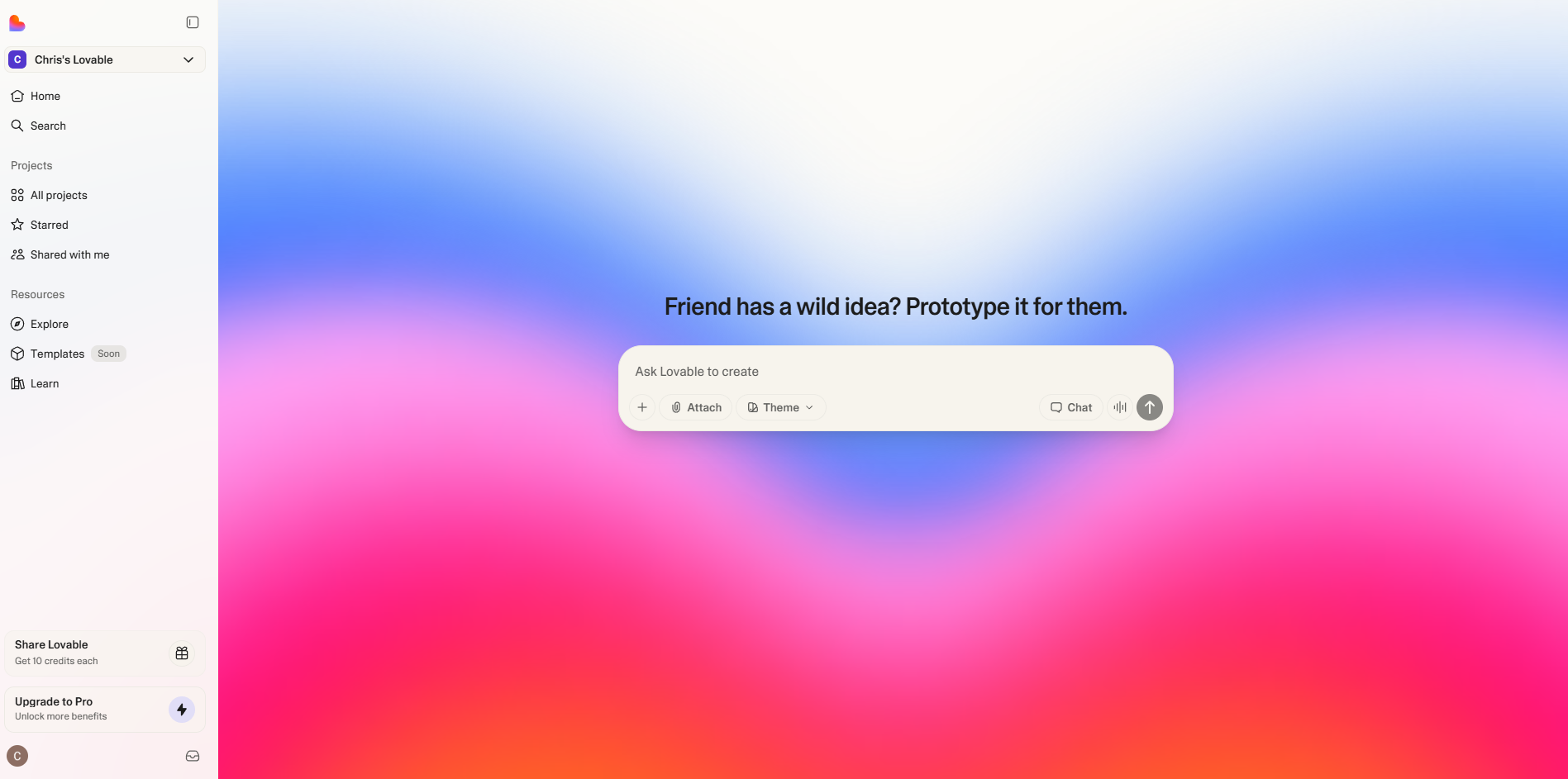](https://lovable.dev?via=chris-porter)
[](https://buymeacoffee.com/viralwavestudio)
**💚 If this repo has helped you, consider buying me a coffee!** Your support keeps me creating valuable content and keeping everything up to date!
---
## 🎯 What is Lovable?
**Lovable is an AI-powered platform that lets you create full-stack websites and applications by simply describing what you want in natural language. No coding experience required!**
Instead of writing code line by line, you chat with AI, and Lovable builds your app for you. It's like having a conversation with a developer who understands exactly what you mean.
**[🚀 Get Started with Lovable →](https://lovable.dev?via=chris-porter)**
---
## 👥 Who is This Course For?
- **🎓 Complete Beginners** - Never coded before? Perfect! No technical background needed.
- **💼 Entrepreneurs** - Build MVPs quickly and validate ideas fast.
- **🎨 Designers** - Turn designs into apps and showcase portfolios.
- **📊 Marketers** - Create landing pages and marketing sites easily.
---
## 🎓 What Will You Learn?
By the end of this course, you'll be able to:
✅ Create full-stack applications using just your words
✅ Communicate effectively with AI to build what you want
✅ Add powerful features like authentication, databases, and payments
✅ Deploy applications to the web
✅ Build real-world projects from scratch
✅ Understand Lovable's features and when to use them
✅ Master prompt engineering for better results
✅ Feel confident building your own projects
---
## 📚 Course Structure
**10 Core Modules + 5 Advanced Modules | Self-Paced Learning | Project-Based**
---
### 📖 [Module 1: Welcome to Lovable - Your First Steps](module-01-welcome-to-lovable.md)
**🎯 Goal:** Get comfortable with Lovable and understand what it can do
**📝 What you'll learn:**
- ✨ What is "Vibe Coding" and why it's revolutionary
- 🔐 How to create your Lovable account
- 📊 Understanding the Lovable dashboard
- 👀 Your first look at the interface
- 📖 Basic terminology you need to know
**🛠️ Hands-on:** Create your first simple project (a basic landing page)
---
### 🚀 [Module 2: Starting Your First Project](module-02-starting-your-first-project.md)
**🎯 Goal:** Learn all the different ways to begin building in Lovable
**📝 What you'll learn:**
- 💬 **Starting from a prompt:** Simply describe what you want
- 🔄 **Remixing existing projects:** Learn from what others have built
- 🎨 **Using Figma designs:** Turn your designs into working apps
- ✏️ **Using sketches:** Upload drawings and turn them into code
- 🌐 **Cloning websites:** Recreate existing sites you like
**🛠️ Hands-on:** Try each method and see which works best for you
---
### 🤖 [Module 3: Understanding Lovable's Modes - How to Talk to AI](module-03-understanding-lovable-modes.md)
**🎯 Goal:** Master the different ways to interact with Lovable
**📝 What you'll learn:**
#### 🤖 Agent Mode (The Autonomous Builder)
- 🧠 AI thinks, plans, and builds on its own
- ⚡ Perfect for complex tasks that need multiple steps
- 🔍 AI explores your code, fixes errors, and searches the web
- 💰 Usage-based pricing (many messages cost less than 1 credit)
#### 💬 Chat Mode (Your Development Partner)
- 🤔 Helps you think through problems and plan
- 🐛 Perfect for asking questions, debugging, and planning
- 🔑 Key difference: Chat Mode doesn't change code - it helps you understand
- 🔗 The "Implement the plan" button connects Chat Mode to Agent Mode
**💡 Best use cases:**
- 🐛 Debugging issues before fixing them
- 🗄️ Planning database structures
- 💡 Getting implementation tips
- 🔍 Understanding how features will work
**🛠️ Hands-on:** Practice using both modes for different tasks
---
### ✏️ [Module 4: Editing and Refining Your Project](module-04-editing-and-refining.md)
**🎯 Goal:** Learn how to make changes and improvements to your app
**📝 What you'll learn:**
- 🎨 **Visual Edits:** Make changes by clicking and editing directly
- 📚 **Adding custom knowledge:** Teach Lovable about your specific needs
- ↩️ **Reverting changes:** Undo mistakes and try different approaches
- 📄 **Adding new pages:** Expand your application
- 🔧 **Refactoring code:** Improve your app's structure (for paid plans)
- 🖼️ **Adding images:** Include visuals in your prompts
- 🔗 **Connecting to GitHub:** Save your code to GitHub
**🛠️ Hands-on:** Take a basic project and improve it using these techniques
---
### 💬 [Module 5: Prompt Engineering - How to Get What You Want](module-05-prompt-engineering.md)
**🎯 Goal:** Master the art of communicating with AI effectively
**📝 What you'll learn:**
- ❓ **The power of asking questions:** Let Lovable ask you clarifying questions
- 🎯 **Being specific:** How to describe features clearly
- 📋 **Providing context:** Why details matter
- 🔄 **Iterative improvement:** Refining your prompts for better results
- 📝 **Common prompt patterns:** Templates that work well
> **💡 Pro Tip:** Add *"Ask me any questions you need to fully understand what I want"* to your prompts - this helps Lovable build exactly what you envision!
**🛠️ Hands-on:** Practice writing effective prompts for different features
---
### 🔌 [Module 6: Adding Full-Stack Capabilities](module-06-adding-fullstack-capabilities.md)
**🎯 Goal:** Add powerful backend features to your applications
**📝 What you'll learn:**
#### ☁️ Lovable Cloud (Built-in Backend)
- 🔐 Authentication, database, and storage
- 🎯 Perfect for most backend needs
- ⚙️ Simple configuration process
#### 🔗 Connectors (Add External Services)
- 🗄️ **Supabase:** User authentication and data storage
- 💳 **Stripe:** Payment processing and subscriptions
- 🛒 **Shopify:** E-commerce operations
- 📧 **Resend:** Email capabilities
- 🔌 They're like plugins your app can use
#### 📊 MCP Servers (Provide Context)
- 🔧 Give Lovable access to your existing tools
- 📋 Examples: Linear, Notion, Atlassian, n8n
- 🎯 Use when building apps based on your real workflows
#### 🌐 Any API (Maximum Flexibility)
- 🌍 Integrating public APIs: No authentication needed
- 🔒 Integrating private APIs: Using secrets and Edge Functions
- 📡 Examples: Weather APIs, custom services, third-party tools
**🛠️ Hands-on:** Add authentication and a database to a project
---
### 💻 [Module 7: Code Mode - Viewing and Editing Code Directly](module-07-code-mode.md)
**🎯 Goal:** Understand how to work with code when you need to (Optional for beginners)
**📝 What you'll learn:**
- 👁️ What Code Mode is: View and edit your project's raw code
- 🎯 When you might need it: Advanced customization
- ⚠️ Important note: Available on paid plans
- 🤔 When to use it vs. when to use prompts
> **📌 Note:** This module is optional for complete beginners - you can build amazing apps without ever touching code!
---
### 🚀 [Module 8: Deploying and Publishing Your App](module-08-deploying-and-publishing.md)
**🎯 Goal:** Get your application live on the internet
**📝 What you'll learn:**
- 🔍 **Setting up SEO:** Make your app discoverable
- 🌐 **Adding a custom domain:** Use your own website address
- 📢 **Publishing your project:** Make it live for the world to see
- ☁️ **Understanding hosting:** How Lovable hosts your app
- 📤 **Sharing your work:** Getting your app in front of users
**🛠️ Hands-on:** Deploy your first complete application
---
### 🏗️ [Module 9: Real-World Project - Building a Complete App](module-09-real-world-project.md)
**🎯 Goal:** Apply everything you've learned in a full project
**🎨 Project Options:**
- ✅ **Task Manager App:** Create, assign, and track tasks
- 🎨 **Portfolio Website:** Showcase your work professionally
- 📝 **Blog Platform:** Create a content publishing site
- 🛒 **E-commerce Store:** Build an online shop
- 🎉 **Event Platform:** Create an event registration system
**🏗️ What you'll build:**
- 🔐 User authentication (sign up, login, logout)
- 🗄️ Database for storing information
- 📄 Multiple pages and navigation
- ⚡ Interactive features
- 🎨 Beautiful, modern design
- 🚀 Fully deployed and live
**📋 Step-by-step process:**
1. 📝 Planning your app
2. ⚙️ Setting up the backend
3. 🎨 Building the user interface
4. ➕ Adding features one by one
5. 🧪 Testing and refining
6. 🚀 Deploying to production
---
### 🐛 [Module 10: Debugging and Testing](module-10-debugging-and-testing.md)
**🎯 Goal:** Learn how to find and fix problems, and test your apps thoroughly
**📝 What you'll learn:**
- 🔍 **Reading error messages:** Understanding what went wrong
- 💬 **Using Chat Mode for debugging:** Get help fixing issues
- ⏪ **Using History to revert:** Go back to working versions
- ✏️ **Editing messages:** Fix mistakes in your prompts
- 🧪 **Testing strategies:** Ensure everything works
- 🔧 **Common debugging scenarios:** Real-world problem solving
**🛠️ Hands-on:** Practice debugging workflows and testing your apps
---
## 🚀 Advanced Modules (Optional)
*These modules are for learners who want to go deeper after completing the core course.*
---
### 🎨 [Module 11: Advanced Prompt Patterns](module-11-advanced-prompt-patterns.md)
**🎯 Goal:** Master advanced techniques for complex applications
**📝 What you'll learn:**
- 🔄 **Dynamic content generation:** Creating data-driven pages
- 🔀 **Conditional logic:** Showing different content based on conditions
- 🔁 **Loops and iterations:** Displaying multiple items efficiently
- 🌊 **Complex user flows:** Multi-step processes and workflows
- 🎯 **Advanced prompt structures:** Patterns for sophisticated apps
**🛠️ Hands-on:** Build complex features using advanced patterns
---
### ⚡ [Module 12: Performance and Optimization](module-12-performance-and-optimization.md)
**🎯 Goal:** Learn how to make your apps fast and efficient
**📝 What you'll learn:**
- 🖼️ **Image optimization:** Compressing and sizing images
- 📦 **Code splitting:** Loading code efficiently
- 💾 **Caching strategies:** Speeding up your app
- 🗄️ **Database optimization:** Fast queries and pagination
- 📊 **Measuring performance:** Understanding speed metrics
**🛠️ Hands-on:** Optimize an existing project for better performance
---
### 🔌 [Module 13: Advanced API Integration](module-13-advanced-api-integration.md)
**🎯 Goal:** Master integrating external APIs beyond basic connectors
**📝 What you'll learn:**
- 🖥️ **Server-side vs. client-side:** Understanding API call types
- 🌐 **Public API integration:** Weather, news, and other public APIs
- 🔐 **Private API integration:** Securely using APIs with keys
- ⏳ **Asynchronous data handling:** Loading states and error handling
- 📊 **Displaying API data:** Presenting external data effectively
**🛠️ Hands-on:** Build a complete weather app with API integration
---
### 📦 [Module 14: Version Control with GitHub](module-14-version-control-github.md)
**🎯 Goal:** Learn how to use GitHub with Lovable for version control and collaboration
**📝 What you'll learn:**
- 📚 **Understanding version control:** Why it matters
- 🔗 **Connecting to GitHub:** Linking your projects
- 💾 **Commits and branches:** Managing code history
- 🤝 **Collaboration:** Working with others
- 📂 **Portfolio building:** Showcasing your work
**🛠️ Hands-on:** Connect a project to GitHub and practice version control
---
### ☁️ [Module 15: Deploying to Custom Clouds](module-15-deploying-to-custom-clouds.md)
**🎯 Goal:** Understand deployment options beyond Lovable's built-in hosting
**📝 What you'll learn:**
- 🏠 **Lovable's hosting:** Understanding built-in options
- 🤔 **When to consider alternatives:** Custom cloud scenarios
- 📤 **Exporting your code:** Getting your code out
- 🚀 **Deploying to Vercel/Netlify:** Alternative platforms
- 🔄 **Migration considerations:** What to think about
**🛠️ Hands-on:** Deploy a project to an alternative platform (optional)
---
## 🛠️ Prerequisites
**Absolutely None!** 🎉
This course assumes you:
- ❌ Have never written code before
- ✅ Are comfortable using a web browser
- ✅ Can type and communicate in English
- ✅ Have curiosity and enthusiasm
**That's it! No technical background needed.**
---
## 📖 Learning Resources
### 📚 Official Lovable Resources
- **📖 Documentation:** [docs.lovable.dev](https://docs.lovable.dev?via=chris-porter) - Complete guides and reference
- **🎥 Video Library:** [lovable.dev/videos](https://lovable.dev/videos?via=chris-porter) - Tutorials and demonstrations
- **🎨 Templates:** [lovable.dev/templates](https://lovable.dev/templates?via=chris-porter) - Pre-built examples to start from
- **📝 Guides:** [lovable.dev/guides](https://lovable.dev/guides?via=chris-porter) - Step-by-step tutorials
- **💬 Discord:** Join the community for support and help
### 🔑 Key Documentation Pages
- [Getting Started Guide](https://docs.lovable.dev/introduction/getting-started?via=chris-porter)
- [Features Overview](https://docs.lovable.dev/features?via=chris-porter)
- [Prompt Engineering Tips](https://docs.lovable.dev/prompting?via=chris-porter)
- [Integrations Guide](https://docs.lovable.dev/integrations/introduction?via=chris-porter)
---
## 💡 Key Concepts for Beginners
### 🎨 What is "Vibe Coding"?
> **Vibe Coding** is Lovable's approach to building apps. Instead of writing code line by line, you describe what you want in natural language, and AI builds it for you. It's like having a conversation with a developer who understands exactly what you mean.
### 💰 Understanding Credits
**Chat Mode:**
- Cost: 1 credit per message
- Best for: Planning, debugging, questions
**Agent Mode:**
- Cost: Usage-based (often less than 1 credit)
- Best for: Complex tasks, building features
**Code Mode:**
- Cost: Included in paid plans
- Best for: Advanced customization
**💡 Tip:** Many simple tasks cost very little, while complex tasks may cost more.
### 🎯 Modes Explained Simply
- **Agent Mode** → "Build this for me" → AI does the work autonomously
- **Chat Mode** → "Help me understand" → AI helps you plan and debug
- **Code Mode** → "Show me the code" → View/edit code directly (paid plans)
### 🎨 Templates vs. Starting from Scratch
- **🎨 Templates:** Pre-built apps you can customize (great for beginners!)
- **🚀 From Scratch:** Describe your idea and build it fresh
Both approaches are valid - choose what feels right!
---
## 🎓 Course Outcomes
After completing this course, you will:
✅ Understand how Lovable works and when to use different features
✅ Be able to create full-stack applications without writing code
✅ Know how to add authentication, databases, and payments
✅ Have deployed at least one complete application
✅ Feel confident building your own projects
✅ Understand how to communicate effectively with AI
✅ Have a portfolio project to showcase
---
## 🚀 Getting Started
**Ready to Begin Your Journey?**
1. **🔐 Create your Lovable account:** Go to [lovable.dev](https://lovable.dev?via=chris-porter) and sign up
2. **📊 Explore the dashboard:** Get familiar with the interface
3. **📖 Start Module 1:** Begin with the basics
4. **💬 Join the community:** Connect with other learners on Discord
---
## 📝 Course Structure Notes
- **⏱️ Self-paced:** Learn at your own speed
- **🛠️ Project-based:** Each module includes hands-on practice
- **📈 Progressive:** Each module builds on the previous one
- **🔄 Flexible:** Skip ahead if you're comfortable, or spend extra time on challenging topics
---
## 💰 Pricing and Plans
**Understanding what you can build on free vs. paid plans:**
- **📊 [Pricing and Plans Guide](supplement-pricing-and-plans.md)** - Complete breakdown of free vs. paid features
- **💳 [Official Pricing](https://lovable.dev/pricing?via=chris-porter)** - Current pricing and plan details
- **💡 Key Point:** You can build almost everything on the free plan using prompts!
---
## 🎯 Module Challenges
**Practice and consolidate your learning with progressive challenges!**
Each module includes hands-on challenges that get progressively harder:
- **Beginner challenges** - Basic concepts and single features
- **Intermediate challenges** - Combining concepts and multiple steps
- **Advanced challenges** - Security, complex features, best practices
- **Expert challenges** - Complete systems and production-ready features
**📚 [Challenge Solutions](supplement-challenge-solutions.md)** - Suggested solutions and hints for self-assessment
**💡 Tip:** Try each challenge yourself first, then check the solutions to compare approaches!
---
## 🤝 Need Help?
- **📖 Documentation:** Check [docs.lovable.dev](https://docs.lovable.dev?via=chris-porter) for detailed guides
- **🔧 Troubleshooting Guide:** [Common issues and solutions](supplement-troubleshooting.md)
- **⚡ Quick Reference:** [Cheat sheet for common tasks](supplement-quick-reference.md)
- **💬 Community Discord:** Ask questions and share your progress
- **🆘 Support:** Reach out through Lovable's support channels
- **🎥 Videos:** Watch tutorials on [lovable.dev/videos](https://lovable.dev/videos?via=chris-porter)
---
## 🎯 Next Steps After This Course
Once you've completed this course, you can:
- 🏗️ Build your own custom applications
- 🚀 Explore advanced Lovable features
- 🔌 Integrate with more APIs and services
- 💼 Build apps for clients or your business
- 📚 Continue learning through Lovable's advanced resources
- 🎓 Share your knowledge with other beginners
---
## 📚 Additional Learning Paths
### 💼 For Entrepreneurs
- 🚀 Building MVPs quickly
- ✅ Validating business ideas
- 🎨 Creating landing pages
- 🧪 Prototyping products
### 🎨 For Designers
- 🎨 Turning Figma designs into code
- 🖼️ Creating interactive prototypes
- 📱 Building portfolio sites
- 🧪 Testing design concepts
### 📊 For Marketers
- 🎯 Creating landing pages
- 🌐 Building marketing sites
- 📝 Creating lead capture forms
- 📢 Building campaign pages
---
---
## 🌟 Remember
**You don't need to know how to code to build amazing things!**
Lovable makes it possible for anyone to create professional, full-stack applications. This course will guide you every step of the way, from your first prompt to your first deployed app.
**Let's build something Lovable together!** 🚀
**[Get Started Now →](https://lovable.dev?via=chris-porter)**
---
*Last updated: Based on Lovable documentation as of December 2024*
================================================
FILE: module-01-welcome-to-lovable.md
================================================
# Module 1: Welcome to Lovable - Your First Steps
**Goal:** Get comfortable with Lovable and understand what it can do
**Estimated Time:** 15-20 minutes
---
## 🎯 What You'll Learn in This Module
By the end of this module, you will:
- Understand what "Vibe Coding" is and why it's revolutionary
- Know how to create your Lovable account
- Be familiar with the Lovable dashboard
- Understand the basic interface
- Know the essential terminology you need
---
## 📖 Lesson 1: What is "Vibe Coding"?
### Understanding the Concept
**Vibe Coding** is Lovable's unique approach to building applications. Let's break this down in the simplest way possible:
**Traditional Coding (The Old Way):**
- You need to learn programming languages (like JavaScript, Python, etc.)
- You write code line by line
- You need to understand complex technical concepts
- It takes months or years to learn
- One small mistake can break everything
**Vibe Coding (The Lovable Way):**
- You describe what you want in plain English
- AI understands what you mean and builds it for you
- No programming knowledge needed
- You can start building immediately
- It's like having a conversation with a developer
### Real-World Example
**Instead of writing this code:**
```javascript
function createButton() {
const button = document.createElement('button');
button.textContent = 'Click Me';
button.onclick = function() { alert('Hello!'); };
return button;
}
```
**You simply say:**
> "Create a button that says 'Click Me' and shows a message when clicked"
And Lovable builds it for you! That's the power of Vibe Coding.
---
## 📖 Lesson 2: Creating Your Lovable Account
### Step-by-Step Guide
#### Step 1: Go to Lovable
1. Open your web browser (Chrome, Firefox, Safari, or Edge - any browser works!)
2. Type in the address bar: `lovable.dev`
3. Press Enter
**What you'll see:** The Lovable homepage with a search box in the middle
#### Step 2: Click "Get Started"
1. Look for a button that says **"Get started"** (usually in the top right corner)
2. Click on it
**What happens:** You'll be taken to a sign-up page
#### Step 3: Choose How to Sign Up
Lovable offers several ways to create an account. Choose the one that's easiest for you:
**Option A: Sign up with Google**
- Click the "Continue with Google" button
- Select your Google account
- That's it! You're in.
**Option B: Sign up with Email**
- Enter your email address
- Create a password (make it strong but something you'll remember)
- Click "Sign up"
- Check your email for a verification link
- Click the link in the email
**Option C: Sign up with GitHub** (if you have a GitHub account)
- Click "Continue with GitHub"
- Authorize Lovable to access your GitHub account
- Done!
**💡 Beginner Tip:** If you're completely new, we recommend using Google - it's the fastest and easiest option!
#### Step 4: Complete Your Profile (Optional)
After signing up, you might be asked to:
- Enter your name (you can use your real name or a nickname)
- Choose your experience level (select "Beginner" - that's why you're here!)
- Set your preferences
**Don't worry:** You can skip most of this and come back to it later if you want.
---
## 📖 Lesson 3: Understanding the Lovable Dashboard
### What is a Dashboard?
Think of a **dashboard** like the main control center of Lovable. It's where you see all your projects and can start new ones.
### Your First Look at the Dashboard
When you first log in, you'll see:
#### The Top Navigation Bar
At the very top of the page, you'll see:
- **Lovable logo** (on the left) - Click this to go back to the dashboard
- **Search bar** (in the middle) - This is where you'll type what you want to build
- **Your profile/account** (on the right) - Click to see your settings
#### The Main Area
In the center, you'll see:
- **A big search box** - This is where the magic happens! You'll type what you want to build here
- **"From the Community"** section - Shows projects other people have built (you can browse these for inspiration)
- **Project cards** - If you've created any projects, they'll show up here as cards
### Understanding the Search Box
The search box is your main tool. It's like talking to a friend who can build anything you describe.
**Example of what you might type:**
- "Create a landing page for my coffee shop"
- "Build a todo list app"
- "Make a portfolio website"
**💡 Beginner Tip:** Don't worry about being perfect with your description. You can always refine it later!
---
## 📖 Lesson 4: Basic Terminology You Need to Know
Let's learn the essential words you'll see in Lovable. Don't worry - we'll explain everything in simple terms!
### Essential Terms
**Project**
- **What it means:** A project is one application or website you're building
- **Think of it like:** A folder that contains everything for one app
- **Example:** "My Portfolio Website" is one project, "My Todo App" is another project
**Prompt**
- **What it means:** The message you send to Lovable describing what you want
- **Think of it like:** Instructions you give to a builder
- **Example:** "Create a contact form with name, email, and message fields"
**Remix**
- **What it means:** Taking someone else's project and making it your own
- **Think of it like:** Using a recipe but changing the ingredients to make it yours
- **Example:** You see a portfolio website you like, click "Remix," and now you can customize it
**Deploy / Publish**
- **What it means:** Making your app live on the internet so others can see it
- **Think of it like:** Publishing a book - once it's published, people can read it
- **Example:** After you build your website, you "deploy" it so people can visit it online
**Template**
- **What it means:** A pre-built project you can start from
- **Think of it like:** A coloring book page - the outline is there, you just add your colors
- **Example:** A "Restaurant Website Template" gives you a starting point for a restaurant site
**Chat Mode**
- **What it means:** A way to talk to Lovable to ask questions and plan
- **Think of it like:** Having a conversation with a helpful friend
- **Example:** "How should I organize my app?" or "What's the best way to add a login?"
**Agent Mode**
- **What it means:** A mode where Lovable builds things for you automatically
- **Think of it like:** Giving instructions to a worker who does the job for you
- **Example:** "Add a navigation menu to my site" - Agent Mode will add it automatically
**💡 Beginner Tip:** Don't try to memorize all of these right now! You'll learn them naturally as you use Lovable. Just refer back to this list if you see a word you don't understand.
---
## 🛠️ Hands-On Practice: Create Your First Simple Project
Now let's actually build something! This will be very simple - we're just getting you comfortable with the process.
### Your First Project: A Simple Landing Page
#### Step 1: Start a New Project
1. On the Lovable dashboard, find the big search box in the center
2. Click inside the search box
3. You'll see it's ready for you to type
#### Step 2: Type Your First Prompt
Type exactly this (or something similar):
```
Create a simple landing page for a coffee shop called "Morning Brew" with a hero section, menu section, and contact information
```
**💡 What's happening:** You're telling Lovable what you want to build. Don't worry about being perfect - we'll learn to improve prompts later!
#### Step 3: Send Your Prompt
1. After typing your prompt, press **Enter** or click the send button (usually an arrow or paper plane icon)
2. **Wait a moment** - Lovable is now building your page!
**What you'll see:**
- A loading indicator (Lovable is working)
- Then your page will appear!
#### Step 4: Explore Your Creation
Once your page is built, you'll see:
- **The preview** - Your actual website on the right side
- **The code/chat area** - On the left side where you can make changes
**Try this:**
- Scroll through your page
- Click around to see what's interactive
- Look at the different sections
#### Step 5: Make a Small Change
Let's practice making a change:
1. In the chat/input area, type:
```
Change the coffee shop name to "Sunrise Coffee"
```
2. Press Enter
3. Watch as Lovable updates your page!
**🎉 Congratulations!** You just built and modified your first project!
---
## ✅ Module 1 Checklist
Before moving to Module 2, make sure you can:
- [ ] Explain what "Vibe Coding" is in your own words
- [ ] Successfully log into your Lovable account
- [ ] Navigate the Lovable dashboard
- [ ] Understand basic terms like "project," "prompt," and "remix"
- [ ] Create a simple project using a prompt
- [ ] Make a change to your project
---
## 🤔 Common Questions (FAQ)
### Q: Do I need to know how to code?
**A:** No! That's the whole point of Lovable. You describe what you want, and it builds it for you.
### Q: Is Lovable free?
**A:** Lovable has a free tier that lets you try it out. Some features require credits, but you'll get some free credits to start with. You can build almost everything on the free plan using prompts! See the [Pricing and Plans Guide](supplement-pricing-and-plans.md) for complete details.
### Q: What if I make a mistake?
**A:** No problem! You can always ask Lovable to change things, or you can start over. Nothing is permanent until you publish.
### Q: Can I delete a project?
**A:** Yes! You can delete projects anytime from your dashboard.
### Q: How long does it take to build something?
**A:** Simple projects can be built in seconds! More complex projects might take a minute or two. It's much faster than traditional coding!
---
## 🎯 What's Next?
Great job completing Module 1! You now understand:
- What Lovable is and how it works
- How to create an account
- How to navigate the dashboard
- How to create your first project
**Ready for Module 2?** In the next module, we'll learn all the different ways you can start projects in Lovable - from prompts to templates to remixing existing projects!
---
## 💡 Pro Tips for Beginners
1. **Don't be afraid to experiment** - You can't break anything! Try different prompts and see what happens.
2. **Start simple** - Begin with basic projects and gradually try more complex things.
3. **Use the examples** - Look at what others have built for inspiration.
4. **Ask questions** - If something doesn't make sense, ask Lovable in Chat Mode!
5. **Have fun!** - Building with Lovable should be enjoyable. Don't stress about perfection.
---
*Module 1 Complete! 🎉*
================================================
FILE: module-02-starting-your-first-project.md
================================================
# Module 2: Starting Your First Project
**Goal:** Learn all the different ways to begin building in Lovable
**Estimated Time:** 20-30 minutes
---
## 🎯 What You'll Learn in This Module
By the end of this module, you will:
- Know how to start a project from a prompt
- Understand how to remix existing projects
- Learn how to use Figma designs
- Know how to upload sketches
- Understand how to clone websites
- Be able to choose the best method for your needs
---
## 📖 Lesson 1: Starting from a Prompt (The Most Common Way)
### What is a Prompt?
A **prompt** is simply the message you send to Lovable describing what you want to build. Think of it like giving instructions to a builder.
### How to Write Your First Prompt
#### Step 1: Think About What You Want
Before you type, think about:
- **What type of app/website?** (portfolio, blog, e-commerce, etc.)
- **What should it do?** (showcase work, sell products, collect emails, etc.)
- **What should it look like?** (modern, colorful, minimal, etc.)
**💡 Beginner Tip:** Don't worry about being perfect! You can always refine and improve your project later.
#### Step 2: Write Your Prompt
Go to the Lovable dashboard and click in the search box. Then type what you want.
**Example Prompts:**
**Simple:**
```
Create a personal portfolio website
```
**More Detailed:**
```
Create a modern portfolio website for a photographer with a gallery section, about page, and contact form. Use a dark theme with elegant typography.
```
**Very Detailed:**
```
Build a restaurant website for "Sunset Bistro" with:
- A hero section showing the restaurant
- Menu page with categories (appetizers, mains, desserts)
- About page telling the restaurant's story
- Contact page with location and hours
- Online reservation form
Use warm colors and elegant design.
```
#### Step 3: Send Your Prompt
1. After typing, press **Enter** or click the send button
2. Wait while Lovable builds your project (usually 10-30 seconds)
3. Your project will appear!
#### Step 4: Review What Was Built
Once your project is created:
- **Look at the preview** on the right side
- **Check if it matches what you wanted**
- **Note what you like and what you'd like to change**
#### Step 5: Refine Your Project
If something isn't quite right, you can ask for changes:
**Examples:**
```
Make the colors brighter
Add a navigation menu at the top
Change the font to something more modern
Add a footer with social media links
```
**💡 Beginner Tip:** It's normal to go back and forth a few times to get it perfect. That's part of the process!
---
## 📖 Lesson 2: Remixing Existing Projects (Learn from Others)
### What is Remixing?
**Remixing** means taking someone else's project and making it your own. It's like using a recipe but changing the ingredients to suit your taste.
### Why Remix?
- **Learn from examples** - See how others built things
- **Save time** - Start from something that already works
- **Get inspiration** - Discover new ideas and designs
- **Understand patterns** - Learn common structures
### How to Remix a Project
#### Step 1: Browse the Community
1. On the Lovable dashboard, scroll down to see **"From the Community"** section
2. You'll see cards showing different projects people have built
3. Click on any project that looks interesting
#### Step 2: Preview the Project
1. Click on a project card
2. You'll see a preview of the project
3. Look around - check out the design, features, and layout
#### Step 3: Remix It
1. If you like what you see, look for a **"Remix"** button (usually in the top right)
2. Click the **"Remix"** button
3. Lovable will create a copy of that project for you!
**What happens:** You now have your own version that you can edit and customize however you want.
#### Step 4: Customize Your Remix
Now make it yours! Try:
```
Change the colors to match my brand
Update all the text with my information
Add my logo
Modify the layout to fit my needs
```
**💡 Beginner Tip:** Remixing is a great way to learn! Look at how the project is structured, then customize it to understand how it works.
---
## 📖 Lesson 3: Using Figma Designs (For Designers)
### What is Figma?
**Figma** is a popular design tool where designers create mockups (visual designs) of websites and apps before they're built.
### Why Use Figma with Lovable?
If you or a designer has created a design in Figma, you can turn that design into a working website in minutes!
### How to Use Figma Designs
#### Step 1: Get Your Figma Design
You need:
- A Figma account (free to sign up)
- A design file in Figma
- The ability to share the design
#### Step 2: Share Your Figma Design
1. In Figma, open your design
2. Click the **"Share"** button (usually top right)
3. Copy the share link
4. Make sure the link allows "Anyone with the link can view"
#### Step 3: Use It in Lovable
1. In Lovable, start a new project
2. In the prompt box, type something like:
```
Build this website based on my Figma design: [paste your Figma link here]
```
Or you can:
1. Look for an **"Attach"** button near the prompt box
2. Click it and paste your Figma link
3. Then describe what you want built
#### Step 4: Review and Refine
Lovable will analyze your Figma design and build a working version. You can then ask for adjustments:
```
Make the spacing match the Figma design exactly
Use the exact colors from the design
Match the typography from Figma
```
**💡 Beginner Tip:** If you don't have a Figma design, that's okay! You can skip this method and use prompts or templates instead.
---
## 📖 Lesson 4: Using Sketches (Turn Drawings into Code)
### What is This?
You can upload a **sketch** (a drawing or mockup) of what you want, and Lovable will turn it into a working website!
### What Counts as a Sketch?
- A drawing on paper (take a photo)
- A digital sketch (saved as an image)
- A wireframe (simple layout drawing)
- A mockup (visual design)
- A screenshot of something you like
### How to Use Sketches
#### Step 1: Create or Find Your Sketch
You can:
- Draw something on paper and take a photo
- Create a simple sketch in any drawing app
- Use a screenshot of a website you like
- Find an image online that shows what you want
#### Step 2: Upload Your Sketch
1. In Lovable, look for the **"Attach"** button near the prompt box
2. Click **"Attach"**
3. Select **"Upload Image"** or **"Upload File"**
4. Choose your sketch/image from your computer
5. The image will attach to your prompt
#### Step 3: Describe What You Want
After attaching, type something like:
```
Build a website that looks like this sketch. Make it modern and responsive.
```
Or be more specific:
```
Create a landing page based on this design. Use the layout shown but update the colors to blue and white, and change the text to be about my coffee shop.
```
#### Step 4: Let Lovable Build It
1. Send your prompt with the attached image
2. Lovable will analyze your sketch and build a working version
3. Review and ask for any adjustments
**💡 Beginner Tip:** Even a rough sketch works! Lovable is good at understanding what you mean, even if the drawing isn't perfect.
---
## 📖 Lesson 5: Cloning Websites (Recreate What You Like)
### What is Cloning?
**Cloning** means recreating an existing website or app. You see a website you like, and you want to build something similar.
### Why Clone?
- **Learn from the best** - See how successful sites are built
- **Save design time** - Start with a proven layout
- **Understand patterns** - Learn what works well
- **Create similar functionality** - Replicate features you like
### How to Clone a Website
#### Step 1: Find a Website You Like
Browse the internet and find a website you'd like to recreate or use as inspiration.
**Examples:**
- A portfolio site you admire
- A landing page with great design
- An app interface you like
- A blog layout that works well
#### Step 2: Take a Screenshot or Get the URL
You can:
- Take a screenshot of the website
- Copy the website's URL (address)
- Describe what you see
#### Step 3: Use It in Lovable
**Option A: With a Screenshot**
1. Attach the screenshot to your prompt
2. Type: `Build a website similar to this design`
**Option B: With a URL**
1. In your prompt, include the URL:
```
Create a website similar to https://example.com but for my business
```
**Option C: With a Description**
```
Build a landing page similar to Apple's website - clean, minimal, with a hero section and product showcase
```
#### Step 4: Customize It
After Lovable builds it, make it yours:
```
Change the colors to match my brand
Update all the content with my information
Modify the layout slightly
Add my logo and branding
```
**💡 Beginner Tip:** Cloning is great for learning! Study what makes the original site work, then adapt it for your needs.
---
## 🛠️ Hands-On Practice: Try Each Method
Let's practice! Try creating a project using each method:
### Practice 1: Prompt Method
**Task:** Create a simple blog homepage
**Your prompt:**
```
Create a blog homepage with a header, featured post section, and list of recent posts. Use a clean, modern design.
```
**What to do:**
1. Type the prompt
2. Send it
3. Review what was built
4. Ask for one change (like "make the header darker")
### Practice 2: Remix Method
**Task:** Remix a community project
**What to do:**
1. Browse the "From the Community" section
2. Find a project you like
3. Click "Remix"
4. Make at least 3 changes to make it yours:
- Change the colors
- Update the text
- Add or remove a section
### Practice 3: Sketch Method (Optional)
**Task:** Create from a simple sketch
**What to do:**
1. Draw a simple website layout on paper (or create a digital sketch)
- Draw a header at the top
- Draw a main content area
- Draw a footer at the bottom
2. Take a photo or save it as an image
3. Upload it to Lovable
4. Ask Lovable to build it
### Practice 4: Clone Method
**Task:** Clone a simple website
**What to do:**
1. Find a simple website you like (try a portfolio or landing page)
2. Take a screenshot
3. Upload it to Lovable
4. Ask: "Build a website similar to this but for [your topic]"
---
## 🎯 Which Method Should You Use?
Here's a simple guide:
| Method | Best For | When to Use |
|--------|----------|-------------|
| **Prompt** | Most situations | When you have a clear idea of what you want |
| **Remix** | Learning and inspiration | When you see something you like and want to customize |
| **Figma** | Designers | When you have a professional design ready |
| **Sketch** | Visual thinkers | When you've drawn or sketched your idea |
| **Clone** | Learning from examples | When you want to recreate something that exists |
**💡 Beginner Tip:** Start with **Prompts** - it's the easiest and most flexible method. Try the others as you get more comfortable!
---
## 🎯 Module 2 Challenges
**Practice starting projects with these challenges!**
### Challenge 1: Start from Prompt (Beginner)
**Your Task:** Create a project using a prompt for a simple landing page.
**Requirements:**
- Create a landing page for a local coffee shop
- Include: hero section, menu preview, location, hours
- Use warm, inviting colors
- Make it mobile-friendly
**💡 Hints:**
- Be specific about what you want
- Include design preferences
- Mention target audience
**Check your solution:** See [Challenge Solutions](supplement-challenge-solutions.md#module-2-challenge-1)
---
### Challenge 2: Remix and Customize (Intermediate)
**Your Task:**
1. Find a portfolio template in the community
2. Remix it
3. Customize it for a photographer
**Requirements:**
- Change all colors to match photography theme
- Update all text with photographer information
- Add a new "Pricing" page
- Modify the gallery layout
**💡 Hints:**
- Browse community projects first
- Make at least 5 significant changes
- Test each change as you go
**Check your solution:** See [Challenge Solutions](supplement-challenge-solutions.md#module-2-challenge-2)
---
### Challenge 3: Use Multiple Methods (Advanced)
**Your Task:** Combine methods to create a project:
1. Start with a prompt for basic structure
2. Attach a sketch/image for design inspiration
3. Remix a component you like from community
**Requirements:**
- Create a restaurant website
- Use prompt for structure
- Attach a design reference
- Incorporate a menu component from a remix
**💡 Hints:**
- Start with prompt for foundation
- Then add visual references
- Finally, remix specific components
**Check your solution:** See [Challenge Solutions](supplement-challenge-solutions.md#module-2-challenge-3)
---
**💡 Pro Tip:** Try each challenge and compare your approach to the solutions. There's no single "right" way!
---
## ✅ Module 2 Checklist
Before moving to Module 3, make sure you can:
- [ ] Create a project using a prompt
- [ ] Remix an existing project
- [ ] Understand when to use each method
- [ ] Upload and use an image/sketch
- [ ] Clone or recreate a website design
- [ ] Choose the best method for different situations
---
## 🤔 Common Questions (FAQ)
### Q: Which method is best for beginners?
**A:** Start with **prompts** - they're the easiest and most flexible. Once you're comfortable, try the others!
### Q: Can I combine methods?
**A:** Yes! For example, you can remix a project AND attach a sketch to guide the changes.
### Q: What if my prompt doesn't work?
**A:** Try being more specific, or break it into smaller requests. You can always refine and adjust!
### Q: Can I use multiple images?
**A:** Yes! You can attach multiple images to give Lovable more context.
### Q: How detailed should my prompt be?
**A:** Start simple, then add details as needed. You can always ask for changes!
---
## 🎯 What's Next?
Excellent work! You now know all the different ways to start projects in Lovable. You can:
- Start from scratch with prompts
- Learn from others by remixing
- Use your designs from Figma
- Turn sketches into reality
- Clone and customize existing sites
**Ready for Module 3?** In the next module, we'll learn about Lovable's different modes (Chat Mode and Agent Mode) and how to use them effectively!
---
## 💡 Pro Tips for Beginners
1. **Start simple** - Begin with basic prompts, then get more detailed as you learn
2. **Experiment** - Try different methods to see which you prefer
3. **Learn from remixes** - Study how others built things to improve your skills
4. **Don't be afraid to start over** - Sometimes it's easier to begin fresh than fix something
5. **Save your favorites** - Keep track of projects you like for future inspiration
---
*Module 2 Complete! 🎉*
================================================
FILE: module-03-understanding-lovable-modes.md
================================================
# Module 3: Understanding Lovable's Modes - How to Talk to AI
**Goal:** Master the different ways to interact with Lovable
**Estimated Time:** 25-30 minutes
---
## 🎯 What You'll Learn in This Module
By the end of this module, you will:
- Understand what Chat Mode is and when to use it
- Understand what Agent Mode is and when to use it
- Know the key differences between the two modes
- Be able to choose the right mode for different tasks
- Understand how credits work for each mode
- Know how to switch between modes
---
## 📖 Lesson 1: Introduction to Modes
### What Are Modes?
Think of **modes** as different ways to talk to Lovable, each designed for different purposes. It's like having two different tools - one for planning and one for building.
### The Two Main Modes
Lovable has two main modes:
1. **Chat Mode** - For talking, planning, and understanding
2. **Agent Mode** - For building and making changes automatically
**💡 Beginner Tip:** Don't worry about understanding everything right away. We'll explain each mode in detail, and you'll get the hang of it quickly!
---
## 📖 Lesson 2: Chat Mode - Your Development Partner
### What is Chat Mode?
**Chat Mode** is like having a conversation with a helpful developer friend. You can ask questions, get advice, plan your project, and understand how things work - but Chat Mode **doesn't make changes to your code automatically**.
### When to Use Chat Mode
Use Chat Mode when you want to:
✅ **Ask questions** - "How should I organize my app?"
✅ **Get advice** - "What's the best way to add user authentication?"
✅ **Plan features** - "How should I structure my database?"
✅ **Debug problems** - "Why isn't my button working?"
✅ **Understand code** - "What does this code do?"
✅ **Get suggestions** - "What features should I add next?"
### How Chat Mode Works
#### Step 1: Activate Chat Mode
1. Look at the input box where you type messages
2. You'll see a button or toggle that says **"Chat"** or shows a chat icon
3. Click it to activate Chat Mode
4. The button will highlight or change to show Chat Mode is active
**Visual indicator:** You might see "Chat" highlighted or a different color when Chat Mode is active.
#### Step 2: Ask Your Question
Type your question or request, just like having a conversation:
**Examples:**
```
How should I organize my portfolio website?
```
```
What's the best way to add a contact form?
```
```
Can you explain how authentication works?
```
```
Help me plan the structure for my e-commerce site
```
#### Step 3: Get Helpful Responses
Chat Mode will:
- Answer your questions in detail
- Provide step-by-step guidance
- Explain concepts clearly
- Suggest best practices
- Help you think through problems
#### Step 4: The "Implement the Plan" Button
After Chat Mode helps you plan, you might see a button that says **"Implement the plan"**.
**What this does:**
- Chat Mode switches to Agent Mode
- Agent Mode then builds what you discussed
- It's like saying "Okay, now actually build this!"
**Example Flow:**
1. **You (Chat Mode):** "How should I add a navigation menu?"
2. **Chat Mode:** Explains the best approach and asks clarifying questions
3. **You:** Answer the questions
4. **Chat Mode:** Provides a detailed plan
5. **You:** Click "Implement the plan"
6. **Agent Mode:** Actually adds the navigation menu to your project
### Chat Mode Pricing
- **Cost:** 1 credit per message
- **What this means:** Each question or message you send costs 1 credit
- **Is it worth it?** Yes! Getting help and planning saves time and prevents mistakes
**📊 For complete pricing information:** See the [Pricing and Plans Guide](supplement-pricing-and-plans.md) for details on credits, plans, and how to monitor usage.
**💡 Beginner Tip:** Use Chat Mode liberally when you're learning. It's like having a tutor who never gets tired of your questions!
---
## 📖 Lesson 3: Agent Mode - The Autonomous Builder
### What is Agent Mode?
**Agent Mode** is like having a developer who works for you. You give instructions, and Agent Mode **automatically makes changes to your code** to build what you want.
### When to Use Agent Mode
Use Agent Mode when you want to:
✅ **Build features** - "Add a login page"
✅ **Make changes** - "Change the colors to blue"
✅ **Fix bugs** - "Fix the button that's not working"
✅ **Add functionality** - "Add a search feature"
✅ **Create new pages** - "Create an about page"
✅ **Implement complex features** - "Add user authentication"
### How Agent Mode Works
#### Step 1: Activate Agent Mode
1. Look at the input box where you type messages
2. You'll see a button or toggle for **"Agent"** or an agent icon
3. Click it to activate Agent Mode
4. The button will highlight or change to show Agent Mode is active
**Visual indicator:** You might see "Agent" highlighted or a different color when Agent Mode is active.
#### Step 2: Give Your Instructions
Type what you want built, clearly and specifically:
**Examples:**
```
Add a navigation menu at the top with links to Home, About, and Contact
```
```
Create a contact form with fields for name, email, and message
```
```
Change the background color to dark blue and the text to white
```
```
Add a footer with social media icons
```
#### Step 3: Watch Agent Mode Work
Agent Mode will:
- Understand your request
- Explore your codebase to understand the structure
- Make the necessary changes
- Test to make sure it works
- Show you what was changed
**What you'll see:**
- A loading indicator while Agent Mode works
- Changes appearing in your project
- A summary of what was done
#### Step 4: Review the Changes
After Agent Mode finishes:
- **Check the preview** - See if it looks right
- **Test functionality** - Make sure it works as expected
- **Ask for adjustments** - If something isn't quite right, ask for changes
---
## 📖 Lesson 3.5: Agent Mode for Complex Operations
### Understanding Complex Operations
**Complex operations** are multi-step tasks that require Agent Mode to:
- Work on multiple files
- Make coordinated changes
- Build interconnected features
- Handle dependencies between features
### How Agent Mode Handles Complex Tasks
When you give Agent Mode a complex task, it:
1. **Analyzes the request** - Understands what needs to be built
2. **Explores your codebase** - Reads relevant files to understand structure
3. **Creates a plan** - Decides the order of operations
4. **Executes step by step** - Makes changes systematically
5. **Tests as it goes** - Ensures each step works before moving on
6. **Reports progress** - Shows you what it's doing
**What you'll see during complex operations:**
- Progress updates
- Files being modified
- Steps being completed
- Any issues encountered
### Multi-Step Planning Examples
#### Example 1: Building Authentication System
**Single Complex Request:**
```
Add complete user authentication: sign up page, login page, logout functionality, and protect the dashboard so only logged-in users can access it.
```
**What Agent Mode does:**
1. Creates sign up page with form
2. Creates login page with form
3. Sets up authentication backend
4. Adds logout button
5. Protects dashboard route
6. Updates navigation to show different items for logged-in users
7. Tests the flow
**Better Approach - Step by Step:**
**Step 1:**
```
Create a sign up page with email and password fields, and connect it to authentication
```
**Step 2:**
```
Create a login page that matches the sign up page design
```
**Step 3:**
```
Add logout functionality and update the navigation to show user name and logout button when logged in
```
**Step 4:**
```
Protect the dashboard page so only logged-in users can access it. Redirect others to login.
```
**Why step-by-step is better:**
- ✅ You can review each step
- ✅ Easier to catch issues early
- ✅ More control over the process
- ✅ Can adjust direction if needed
#### Example 2: Building E-commerce Features
**Complex Request:**
```
Add e-commerce functionality: product listing page, product detail page, shopping cart, and checkout with Stripe payment integration.
```
**What Agent Mode does:**
1. Creates product database structure
2. Builds product listing page
3. Creates product detail pages
4. Implements shopping cart
5. Connects Stripe
6. Builds checkout flow
7. Tests payment processing
**Better Approach - Incremental:**
**Step 1:**
```
Create a product listing page that displays products from a database
```
**Step 2:**
```
Add product detail pages that show full product information
```
**Step 3:**
```
Add a shopping cart that stores selected products
```
**Step 4:**
```
Integrate Stripe and create a checkout page for payment processing
```
#### Example 3: Refining UI After Building Features
**Workflow:**
1. **Build the feature** (Agent Mode)
2. **Review the result** (You)
3. **Refine the UI** (Agent Mode)
4. **Add polish** (Agent Mode)
**Example:**
**Step 1 - Build:**
```
Add user authentication with sign up and login pages
```
**Step 2 - Review:**
You check the pages and notice they're functional but need design improvements.
**Step 3 - Refine:**
```
Improve the design of the sign up and login pages: add better spacing, improve colors, make the forms more visually appealing, and add error message styling
```
**Step 4 - Polish:**
```
Add smooth animations to the authentication forms and improve the user experience with loading states
```
### Best Practices for Writing Instructions to Agent Mode
#### 1. Break Tasks into Smaller Steps
**❌ Too Complex:**
```
Build a complete blog with posts, categories, tags, comments, author profiles, search, and admin panel
```
**✅ Better - Broken Down:**
```
Step 1: Create a blog post database and listing page
Step 2: Add individual post pages
Step 3: Add categories and filtering
Step 4: Add comments functionality
Step 5: Create author profile pages
Step 6: Add search feature
Step 7: Build admin panel for managing posts
```
#### 2. Be Specific About Requirements
**❌ Vague:**
```
Add a form
```
**✅ Specific:**
```
Create a contact form with:
- Name field (required, text input)
- Email field (required, email validation)
- Message field (required, textarea)
- Submit button
- Success message after submission
- Error handling for invalid inputs
Make it match the design of the rest of the site
```
#### 3. Provide Context
**❌ No Context:**
```
Add authentication
```
**✅ With Context:**
```
Add user authentication for my task manager app. Users need to sign up and login to access their tasks. The authentication should work with the existing database structure and match the app's blue and white color scheme.
```
#### 4. Review Intermediate Changes
**Best Practice:**
- Build one feature
- Test it
- Review it
- Then build the next feature
**Example:**
```
1. "Add a navigation menu" → Test → Review
2. "Add a hero section" → Test → Review
3. "Add a footer" → Test → Review
```
#### 5. Use Clear, Action-Oriented Language
**❌ Unclear:**
```
Maybe make the page better
```
**✅ Clear:**
```
Improve the homepage by:
- Increasing spacing between sections
- Making headings larger and bolder
- Adding hover effects to buttons
- Improving color contrast for readability
```
#### 6. Specify What NOT to Change
**Example:**
```
Add a new "Services" page, but don't change the existing navigation or homepage design
```
#### 7. Ask for Confirmation on Major Changes
**Example:**
```
I want to restructure the entire navigation. Before you do it, can you show me what the new structure will look like?
```
### How to Cancel or Roll Back Agent Operations
#### Canceling an Operation
**If Agent Mode is still working:**
1. **Look for a "Cancel" or "Stop" button** - Usually near the progress indicator
2. **Click it** - Agent Mode will stop what it's doing
3. **Review what was done** - Check what changes were made before canceling
4. **Decide next steps** - Continue, revert, or try a different approach
**What happens:**
- Agent Mode stops immediately
- Changes made so far remain (unless you revert)
- You can start a new operation
#### Rolling Back Changes
**If Agent Mode completed but you don't like the result:**
**Option 1: Use History**
1. Go to **History** or **Version History**
2. Find the version before Agent Mode made changes
3. Click **"Revert"** or **"Restore"**
4. Your project goes back to that version
**Option 2: Ask to Undo**
```
Revert the last change Agent Mode made
```
or
```
Undo the changes you just made to the navigation
```
**Option 3: Edit Your Message**
1. Find the message that triggered the change
2. Edit or delete it
3. Lovable will adjust accordingly
**Option 4: Ask for the Opposite**
```
Remove the feature I just added
```
or
```
Change it back to how it was before
```
### Monitoring Agent Mode Progress
**What to watch for:**
1. **Progress indicators** - Shows what step Agent Mode is on
2. **File changes** - See which files are being modified
3. **Status messages** - Read what Agent Mode is doing
4. **Error messages** - If something goes wrong, you'll see it
**If something seems wrong:**
- **Cancel the operation** - Stop it before more changes
- **Check error messages** - Read what went wrong
- **Ask Chat Mode** - "What went wrong with that operation?"
- **Try a different approach** - Break it into smaller steps
### Working with Agent Mode on Large Projects
**For complex, multi-feature projects:**
1. **Plan in Chat Mode first**
```
I want to build an e-commerce site. Can you help me plan the features and order?
```
2. **Build incrementally**
- One feature at a time
- Test each feature
- Review before moving on
3. **Use version control**
- Save good versions in History
- Mark milestones
- Easy to revert if needed
4. **Review regularly**
- Check what Agent Mode built
- Test functionality
- Request adjustments before building more
5. **Communicate clearly**
- Be specific about what you want
- Provide context
- Specify constraints
### Agent Mode Pricing
- **Cost:** Usage-based (varies by complexity)
- **What this means:** Simple tasks might cost less than 1 credit, complex tasks might cost more
- **Why it varies:** More complex tasks require more AI processing
**📊 For complete pricing information:** See the [Pricing and Plans Guide](supplement-pricing-and-plans.md) for details on credits, plans, and how to monitor usage.
**💡 Beginner Tip:** Don't worry about credits too much when starting. Focus on learning - you'll get a feel for what costs what as you use Lovable more. Most simple tasks cost very little!
---
## 📖 Lesson 4: Key Differences Between Chat and Agent Mode
### Quick Comparison
| Feature | Chat Mode | Agent Mode |
|---------|-----------|------------|
| **Makes changes?** | ❌ No - just talks | ✅ Yes - builds automatically |
| **Best for** | Questions, planning | Building, implementing |
| **Cost** | 1 credit per message | Varies by complexity |
| **Speed** | Instant responses | Takes time to build |
| **Use when** | You need help/advice | You want something built |
### Real-World Examples
#### Example 1: Adding a Contact Form
**Using Chat Mode:**
```
You: "How should I add a contact form?"
Chat Mode: Explains the best approach, asks about fields, suggests design
You: Get advice and understand the process
Result: You understand how to do it, but nothing is built yet
```
**Using Agent Mode:**
```
You: "Add a contact form with name, email, and message fields"
Agent Mode: Builds the form automatically
Result: Contact form is added to your project
```
#### Example 2: Fixing a Bug
**Using Chat Mode:**
```
You: "My button isn't working. Why?"
Chat Mode: Investigates, explains the problem, suggests solutions
You: Understand what's wrong
Result: You know how to fix it
```
**Using Agent Mode:**
```
You: "Fix the button that's not working"
Agent Mode: Finds the problem, fixes it automatically
Result: Button is fixed
```
### When to Use Which Mode
**Use Chat Mode when:**
- You're not sure what you want
- You need to understand something
- You want to plan before building
- You're learning and asking questions
- You want advice on best practices
**Use Agent Mode when:**
- You know exactly what you want
- You're ready to build something
- You want changes made automatically
- You're implementing a feature
- You're fixing something specific
**💡 Beginner Tip:** A common workflow is: Use Chat Mode to plan, then use Agent Mode (or click "Implement the plan") to build it!
---
## 📖 Lesson 5: Switching Between Modes
### How to Switch
Switching between modes is easy:
1. **Look at the input box** - You'll see buttons or toggles for Chat and Agent
2. **Click the mode you want** - Click "Chat" for Chat Mode, "Agent" for Agent Mode
3. **The active mode will be highlighted** - You'll see which mode is currently selected
### When to Switch
**Switch to Chat Mode when:**
- You're stuck and need help
- You want to understand something
- You need to plan before building
- You want advice
**Switch to Agent Mode when:**
- You're ready to build something
- You have clear instructions
- You want changes made
- You're implementing a feature
### Using Both Modes Together
A great workflow is to use both modes:
1. **Start in Chat Mode** - Ask questions and plan
2. **Get advice** - Understand what you need to do
3. **Switch to Agent Mode** - Actually build it
4. **Go back to Chat Mode** - If you need to understand or adjust
**Example Workflow:**
```
1. Chat Mode: "How should I add user authentication?"
2. Chat Mode: Explains the process, asks questions
3. You: Answer questions
4. Chat Mode: Provides a plan
5. Click "Implement the plan" OR switch to Agent Mode
6. Agent Mode: Builds the authentication system
7. Chat Mode: "Can you explain how this works?"
8. Chat Mode: Explains the authentication system
```
---
## 🛠️ Hands-On Practice
Let's practice using both modes!
### Practice 1: Using Chat Mode
**Task:** Get help planning a feature
1. **Activate Chat Mode** (click the Chat button)
2. **Ask this question:**
```
I want to create a blog. How should I structure it? What pages do I need?
```
3. **Read the response** - Chat Mode will explain and ask questions
4. **Answer any questions** it asks
5. **Review the plan** it provides
**What you learned:** Chat Mode helps you think through and plan your project.
### Practice 2: Using Agent Mode
**Task:** Build a simple feature
1. **Activate Agent Mode** (click the Agent button)
2. **Give this instruction:**
```
Add a header to my page with a logo on the left and navigation menu on the right
```
3. **Watch Agent Mode work** - It will build the header
4. **Check the result** - See if it looks good
5. **Ask for adjustments if needed:**
```
Make the header background darker and the text white
```
**What you learned:** Agent Mode automatically builds what you ask for.
### Practice 3: Using Both Modes Together
**Task:** Plan and build a feature
1. **Start in Chat Mode:**
```
I want to add a testimonials section to my website. What's the best way to do this?
```
2. **Get advice** from Chat Mode
3. **Click "Implement the plan"** or switch to Agent Mode
4. **Watch it get built**
5. **Go back to Chat Mode** if you need to understand something:
```
How does this testimonials section work?
```
**What you learned:** Using both modes together gives you the best of both worlds - understanding and building.
### Practice 4: Complex Multi-Step Operation
**Task:** Build a feature incrementally using best practices
**Step 1 - Plan in Chat Mode:**
1. **Ask Chat Mode:**
```
I want to add a contact section with a form and a map. Can you help me plan how to build this step by step?
```
2. **Get a plan** from Chat Mode
3. **Review the plan** - Understand the steps
**Step 2 - Build Step by Step:**
**Step 2a: Build the form first**
1. **Switch to Agent Mode**
2. **Give this instruction:**
```
Create a contact form with name, email, phone, and message fields. Add form validation and a submit button.
```
3. **Wait for it to complete**
4. **Test the form** - Make sure it works
5. **Review** - Does it look good?
**Step 2b: Add the map**
1. **Still in Agent Mode**
2. **Give this instruction:**
```
Add a map section below the contact form showing our business location
```
3. **Wait for it to complete**
4. **Test** - Check if the map displays
5. **Review** - Does it look good?
**Step 2c: Refine the design**
1. **Still in Agent Mode**
2. **Give this instruction:**
```
Improve the contact section design: make the form and map side by side on desktop, stack them on mobile, and improve spacing and colors
```
3. **Wait for it to complete**
4. **Test on different screen sizes**
5. **Review** - Does it look good?
**What you learned:** Breaking complex features into steps gives you more control and better results.
### Practice 5: Canceling and Rolling Back
**Task:** Practice canceling and reverting operations
**Part A: Cancel an Operation (if needed)**
1. **Start Agent Mode** on a simple task
2. **If you change your mind** while it's working:
- Look for "Cancel" or "Stop" button
- Click it
- Operation stops
**Part B: Roll Back Changes**
1. **Make a change** with Agent Mode:
```
Change all the text colors to red
```
2. **Review the change** - See if you like it
3. **If you don't like it, revert:**
- Go to **History**
- Find the version before the change
- Click **"Revert"**
- Or ask: "Revert the last change"
**What you learned:** You can always undo changes, so don't be afraid to experiment!
---
## 🎯 Module 3 Challenges
**Master Chat and Agent Mode with these challenges!**
### Challenge 1: Plan Then Build (Beginner)
**Your Task:** Use Chat Mode to plan, then Agent Mode to build a feature.
**Feature:** Add a newsletter signup section to your homepage
**Steps:**
1. Use Chat Mode to plan the feature
2. Get advice on design and functionality
3. Click "Implement the plan" or switch to Agent Mode
4. Review what was built
5. Use Chat Mode to understand how it works
**💡 Hints:**
- Start with Chat Mode questions
- Let it ask you clarifying questions
- Review the plan before implementing
- Test after building
**Check your solution:** See [Challenge Solutions](supplement-challenge-solutions.md#module-3-challenge-1)
---
### Challenge 2: Complex Multi-Step Build (Intermediate)
**Your Task:** Build a complete feature using Agent Mode, breaking it into steps.
**Feature:** User profile system with avatar upload
**Requirements:**
- Build step 1: Create profile page
- Test and review
- Build step 2: Add avatar upload
- Test and review
- Build step 3: Add profile editing
- Test and review
**💡 Hints:**
- Don't build everything at once
- Test after each step
- Ask for adjustments if needed
- Use clear, specific instructions
**Check your solution:** See [Challenge Solutions](supplement-challenge-solutions.md#module-3-challenge-2)
---
### Challenge 3: Debug and Fix Workflow (Advanced)
**Your Task:** Practice the complete workflow of debugging and fixing.
**Scenario:** Your contact form isn't working properly
**Steps:**
1. Use Chat Mode to investigate the problem
2. Get explanation of what's wrong
3. Use Agent Mode to fix it
4. Test the fix
5. If needed, revert and try again
**💡 Hints:**
- Chat Mode for understanding
- Agent Mode for fixing
- Test thoroughly
- Use History if needed
**Check your solution:** See [Challenge Solutions](supplement-challenge-solutions.md#module-3-challenge-3)
---
**💡 Pro Tip:** These challenges help you practice the workflow you'll use in real projects!
---
## ✅ Module 3 Checklist
Before moving to Module 4, make sure you can:
- [ ] Explain the difference between Chat Mode and Agent Mode
- [ ] Know when to use Chat Mode
- [ ] Know when to use Agent Mode
- [ ] Successfully switch between modes
- [ ] Use Chat Mode to get help and plan
- [ ] Use Agent Mode to build features
- [ ] Understand the "Implement the plan" button
- [ ] Use both modes together effectively
- [ ] Break complex tasks into smaller steps
- [ ] Write clear, specific instructions for Agent Mode
- [ ] Cancel an Agent Mode operation if needed
- [ ] Roll back changes using History
- [ ] Review intermediate changes before building more
---
## 🤔 Common Questions (FAQ)
### Q: Which mode should I use most?
**A:** It depends! Use Chat Mode when learning and planning, Agent Mode when building. Many people use both throughout a project.
### Q: Can I use Chat Mode to build things?
**A:** Chat Mode doesn't build automatically, but it can help you plan, and then you can click "Implement the plan" to have Agent Mode build it.
### Q: What if Agent Mode doesn't build what I want?
**A:** That's okay! Ask for adjustments. You can say "That's not quite right, can you change it to..." and Agent Mode will fix it.
### Q: Do I need to switch modes manually?
**A:** Usually yes, but if you click "Implement the plan" in Chat Mode, it switches to Agent Mode automatically.
### Q: Can I use both modes in the same conversation?
**A:** Yes! You can switch back and forth as needed. That's actually a great way to work.
### Q: How do I know which mode I'm in?
**A:** Look at the mode buttons - the active one will be highlighted or shown differently.
### Q: How do I handle complex, multi-step features?
**A:** Break them into smaller steps! Build one feature at a time, test it, then build the next. This gives you more control and better results.
### Q: Can I cancel Agent Mode if it's doing something wrong?
**A:** Yes! Look for a "Cancel" or "Stop" button while Agent Mode is working. Click it to stop the operation immediately.
### Q: What if Agent Mode builds something I don't like?
**A:** You can roll it back! Go to History and revert to a previous version, or ask Agent Mode to undo the change.
### Q: Should I build everything at once or step by step?
**A:** Step by step is usually better! Build one feature, test it, review it, then build the next. This prevents issues and gives you more control.
### Q: How do I know if my instructions to Agent Mode are clear enough?
**A:** If Agent Mode builds what you want with minimal adjustments needed, your instructions were clear! If not, try being more specific or breaking it into smaller steps.
### Q: What if Agent Mode seems stuck or is taking too long?
**A:** Complex tasks take time. Check the progress indicators. If it's truly stuck, you can cancel and try breaking the task into smaller steps.
---
## 🎯 What's Next?
Fantastic! You now understand how to communicate with Lovable using both Chat Mode and Agent Mode. You can:
- Get help and advice with Chat Mode
- Build features automatically with Agent Mode
- Switch between modes as needed
- Use both modes together effectively
**Ready for Module 4?** In the next module, we'll learn how to edit and refine your projects - making changes, adding features, and improving your apps!
---
## 💡 Pro Tips for Beginners
1. **Start with Chat Mode** - When learning, use Chat Mode to understand things before building
2. **Don't be afraid to ask questions** - Chat Mode is there to help! Ask as many questions as you need
3. **Be specific with Agent Mode** - The clearer your instructions, the better the results
4. **Use "Implement the plan"** - It's a great way to go from planning to building seamlessly
5. **Switch modes freely** - Don't feel locked into one mode. Switch as needed!
6. **Learn from both** - Chat Mode teaches you, Agent Mode shows you how it's done
7. **Break complex tasks into steps** - Build incrementally for better control and results
8. **Review as you go** - Test each feature before building the next one
9. **Don't fear mistakes** - You can always cancel or roll back changes
10. **Plan before building** - Use Chat Mode to plan complex features, then build step by step
---
*Module 3 Complete! 🎉*
================================================
FILE: module-04-editing-and-refining.md
================================================
# Module 4: Editing and Refining Your Project
**Goal:** Learn how to make changes and improvements to your app
**Estimated Time:** 30-40 minutes
---
## 🎯 What You'll Learn in This Module
By the end of this module, you will:
- Know how to use Visual Edits to make quick changes
- Understand how to add custom knowledge to your project
- Learn how to revert changes when needed
- Know how to add new pages to your application
- Understand how to add images to your projects
- Learn how to connect your project to GitHub
- Be able to iteratively improve your projects
---
## 📖 Lesson 1: Visual Edits - Click and Edit Directly
### What are Visual Edits?
**Visual Edits** let you make changes to your website by clicking directly on elements and editing them, just like you might edit a document. No need to write code or even describe what you want - just click and change!
### When to Use Visual Edits
Use Visual Edits for:
- ✅ Quick text changes
- ✅ Color adjustments
- ✅ Spacing tweaks
- ✅ Simple layout changes
- ✅ Immediate visual feedback
### How to Use Visual Edits
#### Step 1: Enter Visual Edit Mode
1. Look at your project preview (the right side of the screen)
2. Look for a **"Visual Edit"** button or icon (usually near the preview)
3. Click it to activate Visual Edit Mode
4. Your preview will enter edit mode
**What you'll see:** Elements on your page become clickable and editable.
#### Step 2: Click on What You Want to Change
1. **Hover over elements** - You'll see them highlight
2. **Click on text** - It becomes editable
3. **Click on sections** - You can modify them
4. **Click on colors** - You can change them
#### Step 3: Make Your Changes
**For Text:**
- Click on any text
- Type your new text
- Press Enter or click outside to save
**For Colors:**
- Click on a colored element
- A color picker might appear
- Choose your new color
- The change applies immediately
**For Spacing:**
- Click on an element
- Look for spacing controls
- Adjust as needed
#### Step 4: Save Your Changes
Changes are usually saved automatically, but you might see:
- A "Save" button to confirm
- Changes appearing in real-time
- A notification that changes were saved
**💡 Beginner Tip:** Visual Edits are perfect for quick tweaks! For bigger changes, you might want to use prompts instead.
---
## 📖 Lesson 2: Adding Custom Knowledge
### What is Custom Knowledge?
**Custom Knowledge** lets you teach Lovable specific information about your project, brand, or preferences. It's like giving Lovable a reference guide so it understands your context better.
### Why Add Custom Knowledge?
- **Consistency** - Lovable will use your brand colors, fonts, and style
- **Context** - Lovable understands your business, goals, and audience
- **Efficiency** - You don't have to repeat information in every prompt
- **Accuracy** - Lovable builds things that match your needs better
### What Can You Add as Custom Knowledge?
- **Brand information** - Company name, mission, values
- **Design preferences** - Colors, fonts, style guidelines
- **Content guidelines** - Tone of voice, writing style
- **Technical requirements** - Specific features, integrations
- **User information** - Target audience, use cases
### How to Add Custom Knowledge
#### Step 1: Find the Custom Knowledge Section
1. Look for **"Settings"** or **"Project Settings"** (usually in the top menu or sidebar)
2. Click on it
3. Look for **"Custom Knowledge"** or **"Project Knowledge"** section
4. Click to open it
#### Step 2: Add Your Information
You can add information in several ways:
**Option A: Type It In**
1. Click "Add Knowledge" or similar button
2. Type your information in the text box
3. Save it
**Option B: Upload a Document**
1. Click "Upload" or "Add File"
2. Select a document (PDF, text file, etc.)
3. Lovable will read and understand it
**Option C: Paste Text**
1. Copy text from anywhere
2. Paste it into the knowledge section
3. Save it
#### Step 3: Organize Your Knowledge
You can organize knowledge into categories:
- **Brand Guidelines**
- **Design System**
- **Content Guidelines**
- **Technical Specs**
- **User Stories**
#### Example Custom Knowledge
```
Brand: Coffee Corner
Colors: Warm brown (#8B4513), cream (#FFF8DC), gold (#FFD700)
Font: Modern, friendly, readable
Tone: Welcoming, cozy, community-focused
Target Audience: Coffee lovers, remote workers, students
Mission: Create a welcoming space for everyone to enjoy great coffee
```
**💡 Beginner Tip:** Start simple! Add basic brand info first, then add more details as you go.
---
## 📖 Lesson 3: Reverting Changes - Undo Mistakes
### What is Reverting?
**Reverting** means going back to a previous version of your project. It's like the "undo" button, but for your entire project or specific changes.
### When to Revert
You might want to revert when:
- ❌ A change didn't work out as expected
- ❌ You made a mistake
- ❌ You want to try a different approach
- ❌ Something broke after a change
- ❌ You preferred the previous version
### How to Revert Changes
#### Step 1: Find the History
1. Look for **"History"** or **"Version History"** (usually in the menu or sidebar)
2. Click on it
3. You'll see a list of all changes made to your project
**💡 Tip:** You can also ask Lovable: "Show me the project history" or "What changes have I made?"
#### Step 2: View Previous Versions
1. **See the timeline** - Changes are listed chronologically (most recent first)
2. **Preview versions** - Click on a previous version to see what it looked like
3. **Read descriptions** - Each version shows what was changed
4. **Compare versions** - See what's different between versions
#### Step 3: Revert to a Previous Version
**Method 1: Revert from History**
1. **Find the version** you want to go back to
2. **Preview it** - Make sure it's the right one
3. **Click "Revert"** or "Restore" button
4. **Confirm** - You'll be asked to confirm
5. **Your project reverts** - It goes back to that version
**Method 2: Ask to Revert**
```
Revert to the version before I added the navigation menu
```
or
```
Go back to yesterday's version
```
or
```
Undo the last change I made
```
#### Step 4: Edit Messages to Revert (Alternative Method)
You can also revert by editing your message:
1. **Find the message** that made the change you don't like
2. **Edit the message** - Change what you asked for
- Example: Change "Make all buttons red" to "Keep buttons blue"
3. **Or delete it** - Remove that instruction entirely
4. **Lovable will adjust** - It will revert that specific change
### Complete Workflow: Make Mistake → Revert → Iterate
**Real Example:**
#### Step 1: Make a Change
```
Change the homepage layout to a three-column grid
```
**Result:** Layout breaks - columns overlap, content is misaligned
#### Step 2: Identify the Problem
- Layout looks wrong
- Content overlaps
- Mobile view is broken
#### Step 3: Use Chat Mode to Understand
```
The three-column layout I just added looks broken. Can you help me understand what went wrong?
```
**Chat Mode explains:** The grid needs better spacing and responsive breakpoints.
#### Step 4: Revert the Change
**Option A: Use History**
1. Go to History
2. Find version before grid change
3. Click "Revert"
4. Project restored!
**Option B: Ask to Revert**
```
Revert the last change - go back to before I changed the layout to three columns
```
#### Step 5: Try a Better Approach
```
Create a two-column layout with main content on left and sidebar on right. Make sure it's fully responsive and has proper spacing.
```
**Result:** Better layout that works!
#### Step 6: Iterate and Improve
```
The two-column layout works, but can you make the sidebar slightly narrower and add more spacing between columns?
```
**Result:** Perfect layout!
**What You Learned:**
- ✅ Made a mistake (that's okay!)
- ✅ Identified the problem
- ✅ Reverted safely
- ✅ Tried a better approach
- ✅ Iterated to perfection
**💡 Beginner Tip:** Don't be afraid to experiment! You can always revert if something doesn't work out. Reverting is a normal part of development.
---
## 📖 Lesson 4: Adding New Pages
### Why Add New Pages?
Most websites and apps have multiple pages:
- **Home page** - The main landing page
- **About page** - Information about you/your business
- **Contact page** - Ways to get in touch
- **Product/Service pages** - Details about what you offer
- **Blog pages** - Articles and content
### How to Add a New Page
#### Step 1: Ask Lovable to Add a Page
In Agent Mode or with a prompt, simply ask:
**Simple:**
```
Add an About page
```
**More Detailed:**
```
Create an About page with a hero section, our story, team members, and mission statement
```
**Very Detailed:**
```
Add a new page called "Services" with:
- A header explaining what we offer
- Three service cards with icons
- A call-to-action button
- Link it in the navigation menu
```
#### Step 2: Lovable Creates the Page
Lovable will:
- Create the new page
- Add it to your navigation (usually automatically)
- Style it to match your existing design
- Make it accessible from your site
#### Step 3: Customize the New Page
After the page is created, you can refine it:
```
Update the About page with our actual company story
Add team member photos to the About page
Change the Services page layout to show 4 services instead of 3
```
**💡 Beginner Tip:** Start with simple pages, then add more detail as you go. You can always improve them later!
---
## 📖 Lesson 5: Adding Images to Your Project
### Why Add Images?
Images make your website:
- **More engaging** - Visual content is more interesting
- **More professional** - Good images improve credibility
- **More informative** - Show instead of just tell
- **More memorable** - People remember visuals better
### How to Add Images
#### Method 1: Upload Images Directly
1. **Find the "Attach" button** - Usually near the prompt box
2. **Click "Attach"** or the image icon
3. **Select "Upload Image"** or "Choose File"
4. **Pick your image** from your computer
5. **The image uploads** - You'll see it attached
#### Method 2: Add Images in Your Prompt
1. **Upload the image first** (using Method 1)
2. **Then type your prompt:**
```
Use this image as the hero background on the homepage
```
or
```
Add this logo to the header
```
#### Method 3: Describe Images You Want
You can ask Lovable to find or create images:
```
Add a hero image - something modern and professional
Use stock photos for the team section
Create an icon for the services section
```
### Best Practices for Images
- **Use high-quality images** - Clear, not blurry
- **Optimize file size** - Large images slow down your site
- **Use appropriate formats** - JPG for photos, PNG for graphics
- **Consider copyright** - Use images you have rights to
- **Add alt text** - Describe images for accessibility
**💡 Beginner Tip:** Start with free stock photo sites like Unsplash or Pexels for high-quality, free images!
---
## 📖 Lesson 6: Connecting to GitHub
### What is GitHub?
**GitHub** is a platform where developers store and share code. Think of it like Google Drive, but specifically for code.
### Why Connect to GitHub?
- **Backup** - Your code is saved safely
- **Version control** - Track all changes
- **Collaboration** - Work with others
- **Portfolio** - Show your work
- **Learning** - See how your code evolves
### How to Connect to GitHub
#### Step 1: Have a GitHub Account
If you don't have one:
1. Go to **github.com**
2. Click **"Sign up"**
3. Create a free account
4. Verify your email
#### Step 2: Connect in Lovable
1. In Lovable, look for **"Settings"** or **"Project Settings"**
2. Find **"GitHub"** or **"Version Control"** section
3. Click **"Connect to GitHub"**
4. You'll be asked to authorize Lovable
5. Click **"Authorize"** or **"Allow"**
#### Step 3: Choose Repository Settings
1. **Create new repository** - Lovable can create one for you
2. **Or use existing** - Connect to one you already have
3. **Choose privacy** - Public (anyone can see) or Private (only you)
4. **Save settings**
#### Step 4: Your Code is Synced
Once connected:
- **Code syncs automatically** - Changes are saved to GitHub
- **You can see it on GitHub** - Visit github.com to view your code
- **Others can see it** - If it's public, people can view your work
**💡 Beginner Tip:** Connecting to GitHub is optional but recommended! It's like having a backup of your work.
---
## 🛠️ Hands-On Practice
Let's practice all these editing techniques!
### Practice 1: Visual Edits
**Task:** Make quick visual changes
1. **Open a project** (or create a simple one)
2. **Enter Visual Edit Mode**
3. **Change some text** - Click on text and edit it
4. **Change a color** - Click on a colored element and change it
5. **Save your changes**
### Practice 2: Add Custom Knowledge
**Task:** Teach Lovable about your project
1. **Go to Settings** → **Custom Knowledge**
2. **Add this information:**
```
Project: Personal Portfolio
Colors: Blue (#0066CC) and White
Style: Modern and minimal
Target: Potential employers
```
3. **Save it**
4. **Ask Lovable to make a change** - Notice how it uses your knowledge!
### Practice 3: Revert a Change
**Task:** Practice going back
1. **Make a change** to your project (any change)
2. **Check the History** - See your change listed
3. **Revert it** - Go back to the previous version
4. **See it restored** - Your project is back to how it was
### Practice 4: Add a New Page
**Task:** Expand your project
1. **Ask Lovable:**
```
Add a Contact page with a contact form
```
2. **See the new page created**
3. **Check the navigation** - It should be added automatically
4. **Customize it:**
```
Make the contact form have fields for name, email, phone, and message
```
### Practice 5: Add Images
**Task:** Make your project visual
1. **Find an image** (or take a screenshot)
2. **Upload it** using the Attach button
3. **Ask Lovable:**
```
Use this image as the background for the hero section
```
4. **See it added** to your project
---
## 🎯 Module 4 Challenges
**Practice editing and refining with these challenges!**
### Challenge 1: Visual Edits and Custom Knowledge (Beginner)
**Your Task:**
1. Create a simple landing page
2. Use Visual Edits to change colors and text
3. Add custom knowledge about your brand
4. Ask Lovable to make a change using that knowledge
**Requirements:**
- Make at least 3 visual edits
- Add brand colors, name, and style to custom knowledge
- Ask Lovable to update something using your brand info
- Verify it used your custom knowledge
**💡 Hints:**
- Start with a basic page
- Use Visual Edit mode for quick changes
- Add knowledge in Settings → Custom Knowledge
- Reference the knowledge in your next prompt
**Check your solution:** See [Challenge Solutions](supplement-challenge-solutions.md#module-4-challenge-1)
---
### Challenge 2: Iterative Refinement (Intermediate)
**Your Task:** Take a basic project and refine it through 5 iterations.
**Starting Point:** A simple homepage with header, hero, and footer
**Iterations:**
1. Add better spacing and colors
2. Add images to hero section
3. Add a new "Features" section
4. Improve mobile responsiveness
5. Add animations and polish
**Requirements:**
- Make one improvement per iteration
- Test after each change
- Use History to revert if needed
- Document what you changed each time
**💡 Hints:**
- Build incrementally
- Test as you go
- Don't try to do everything at once
- Use both Visual Edits and prompts
**Check your solution:** See [Challenge Solutions](supplement-challenge-solutions.md#module-4-challenge-2)
---
### Challenge 3: Multi-Page Expansion (Advanced)
**Your Task:** Start with a single-page site and expand it to 5 pages.
**Starting Point:** A simple landing page
**Requirements:**
- Add 4 new pages (About, Services, Portfolio, Contact)
- Each page should have unique content
- Navigation should work between all pages
- Maintain consistent design
- Add images to at least 2 pages
**💡 Hints:**
- Add pages one at a time
- Test navigation after each page
- Keep design consistent
- Use custom knowledge for brand consistency
**Check your solution:** See [Challenge Solutions](supplement-challenge-solutions.md#module-4-challenge-3)
---
**💡 Pro Tip:** These challenges help you practice the editing workflow you'll use in real projects!
---
## ✅ Module 4 Checklist
Before moving to Module 5, make sure you can:
- [ ] Use Visual Edits to make quick changes
- [ ] Add custom knowledge to your project
- [ ] Revert changes when needed
- [ ] Add new pages to your application
- [ ] Add images to your projects
- [ ] Understand how to connect to GitHub (even if you don't do it yet)
- [ ] Iteratively improve a project using these techniques
---
## 🤔 Common Questions (FAQ)
### Q: Can I use Visual Edits for everything?
**A:** Visual Edits are great for quick changes, but for complex features, prompts work better.
### Q: Do I need to add custom knowledge?
**A:** It's optional but helpful! Start simple and add more as you go.
### Q: What if I revert by mistake?
**A:** You can revert again! Just go back to the version you want.
### Q: How many pages can I add?
**A:** As many as you need! There's no strict limit.
### Q: What image formats work?
**A:** JPG, PNG, GIF, and WebP all work. JPG and PNG are most common.
### Q: Do I need GitHub?
**A:** No, it's optional. But it's good for backup and learning.
---
## 🎯 What's Next?
Excellent work! You now know how to:
- Make quick visual edits
- Add custom knowledge
- Revert changes
- Add new pages
- Add images
- Connect to GitHub
**Ready for Module 5?** In the next module, we'll learn the art of prompt engineering - how to communicate with Lovable effectively to get exactly what you want!
---
## 💡 Pro Tips for Beginners
1. **Start with Visual Edits** - They're the easiest way to make quick changes
2. **Add knowledge gradually** - Don't try to add everything at once
3. **Don't fear reverting** - It's a safety net that lets you experiment freely
4. **Build pages one at a time** - Start simple, then add detail
5. **Use good images** - They make a huge difference in how professional your site looks
6. **Iterate and improve** - Your first version doesn't have to be perfect!
---
*Module 4 Complete! 🎉*
================================================
FILE: module-05-prompt-engineering.md
================================================
# Module 5: Prompt Engineering - How to Get What You Want
**Goal:** Master the art of communicating with AI effectively
**Estimated Time:** 30-40 minutes
---
## 🎯 What You'll Learn in This Module
By the end of this module, you will:
- Understand what makes a good prompt
- Know how to be specific and clear
- Learn the power of asking questions
- Understand how to provide context
- Know how to iterate and improve prompts
- Learn common prompt patterns that work well
- Be able to get better results from Lovable
---
## 📖 Lesson 1: What is Prompt Engineering?
### Understanding Prompts
A **prompt** is simply the message you send to Lovable describing what you want. **Prompt Engineering** is the skill of writing prompts that get you exactly what you want.
Think of it like this:
- **Bad prompt** = Vague instructions = Confusing results
- **Good prompt** = Clear instructions = Great results
### Why Prompt Engineering Matters
Good prompts help you:
- ✅ Get better results faster
- ✅ Reduce back-and-forth
- ✅ Build exactly what you envision
- ✅ Save time and credits
- ✅ Learn more effectively
**💡 Beginner Tip:** Don't worry - you don't need to be perfect! Even small improvements to your prompts make a big difference.
---
## 📖 Lesson 2: The Power of Asking Questions
### Let Lovable Ask You Questions
One of the best prompt engineering techniques is to **let Lovable ask you clarifying questions** before it builds anything.
### How It Works
Instead of trying to think of everything yourself, you can add this magic phrase to your prompts:
> **"Ask me any questions you need to fully understand what I want"**
### Example: Without Asking Questions
**Your prompt:**
```
Create a landing page for my business
```
**What Lovable might build:**
- Generic landing page
- Might not match what you want
- You'll need to make many changes
### Example: With Asking Questions
**Your prompt:**
```
Create a landing page for my business. Ask me any questions you need to fully understand what I want.
```
**What Lovable does:**
- Asks: "What type of business?"
- Asks: "What's your target audience?"
- Asks: "What's the main goal of the page?"
- Asks: "What style do you prefer?"
**Then Lovable builds:**
- Exactly what you need
- Matches your vision
- Requires fewer changes
### When to Use This Technique
Use it when:
- ✅ You're not sure about all the details
- ✅ You want to explore options
- ✅ You're building something complex
- ✅ You want the best possible result
- ✅ You're learning and want guidance
**💡 Beginner Tip:** This is especially powerful in Chat Mode! Use Chat Mode to plan, then have Agent Mode build it.
---
## 📖 Lesson 3: Being Specific - The Key to Great Results
### Why Specificity Matters
**Vague prompts** lead to generic results. **Specific prompts** lead to exactly what you want.
### Examples: Vague vs. Specific
#### Example 1: Adding a Button
**Vague:**
```
Add a button
```
**Specific:**
```
Add a blue button in the header that says "Get Started" and links to the contact page. Make it stand out with a hover effect.
```
#### Example 2: Creating a Page
**Vague:**
```
Make an about page
```
**Specific:**
```
Create an About page with:
- A hero section with our company name and tagline
- A "Our Story" section with 2-3 paragraphs
- A "Meet the Team" section with 3 team member cards (name, photo, role)
- Use our brand colors (blue #0066CC and white)
- Make it match the style of our homepage
```
#### Example 3: Changing Colors
**Vague:**
```
Change the colors
```
**Specific:**
```
Change the primary color to #0066CC (blue) and the background to white. Update all buttons and links to use the new primary color.
```
### How to Be More Specific
Ask yourself:
1. **What exactly do I want?** (be precise)
2. **Where should it go?** (location matters)
3. **What should it look like?** (style, colors, size)
4. **How should it behave?** (interactions, functionality)
5. **Who is it for?** (target audience)
**💡 Beginner Tip:** Start with the basics, then add details. You can always refine!
---
## 📖 Lesson 4: Providing Context
### What is Context?
**Context** is background information that helps Lovable understand your situation, goals, and needs.
### Why Context Matters
Without context, Lovable makes assumptions. With context, Lovable builds exactly what you need.
### What Context to Provide
#### 1. Project Context
- What is this project for?
- Who is the target audience?
- What's the main goal?
#### 2. Brand Context
- What are your brand colors?
- What's your brand voice/tone?
- What's your brand style?
#### 3. User Context
- Who will use this?
- What do they need?
- What problems are you solving?
#### 4. Technical Context
- Any specific requirements?
- Integrations needed?
- Performance needs?
### Example: With and Without Context
**Without Context:**
```
Create a contact form
```
**With Context:**
```
Create a contact form for my photography business. My target audience is couples planning weddings. The form should feel elegant and trustworthy. Include fields for: event date, number of guests, budget range, and message. Use warm, romantic colors that match my brand (soft pink #FFB6C1 and gold #FFD700). Make it feel premium but approachable.
```
**See the difference?** The second prompt will create something much more tailored to your needs!
### How to Add Context
**Option 1: In Your Prompt**
```
[Context] I'm building a portfolio for a freelance designer targeting small businesses. [Request] Create a homepage that showcases my work professionally.
```
**Option 2: Use Custom Knowledge**
- Add context to your project's Custom Knowledge section
- Lovable will remember it for all future prompts
**Option 3: Reference Previous Context**
```
Using the same style and colors from my homepage, create an About page
```
**💡 Beginner Tip:** Start with basic context, then add more as you learn what matters most.
---
## 📖 Lesson 5: Iterative Improvement - Refining Your Prompts
### What is Iterative Improvement?
**Iterative improvement** means making small changes and improvements over time, rather than trying to be perfect from the start.
### The Process
1. **Start with a basic prompt**
2. **See what Lovable builds**
3. **Identify what you like and don't like**
4. **Refine your prompt**
5. **Repeat until perfect**
### Example: Iterative Process
#### Round 1: Basic Prompt
```
Create a landing page
```
**Result:** Generic landing page
#### Round 2: Add Details
```
Create a landing page for a coffee shop with a hero section and menu
```
**Result:** Better, but still generic
#### Round 3: Add More Specifics
```
Create a landing page for "Morning Brew" coffee shop. Hero section with the shop name and tagline "Fresh Coffee, Every Morning". Add a menu section showing coffee, pastries, and sandwiches. Use warm brown and cream colors.
```
**Result:** Much better, closer to what you want
#### Round 4: Fine-Tune
```
The landing page looks good, but make the hero section taller, add a "Visit Us" button, and make the menu items have images.
```
**Result:** Perfect!
### Tips for Iterative Improvement
1. **Start simple** - Don't try to include everything at once
2. **Build incrementally** - Add one feature at a time
3. **Test as you go** - Check if things work before adding more
4. **Be patient** - Good results take a few iterations
5. **Learn from each iteration** - Notice what works and what doesn't
**💡 Beginner Tip:** Don't expect perfection on the first try! Iteration is normal and part of the process.
---
## 📖 Lesson 6: Common Prompt Patterns That Work
### Pattern 1: The Structure Pattern
**Format:**
```
Create a [type of page/feature] with:
- [Feature 1]
- [Feature 2]
- [Feature 3]
```
**Example:**
```
Create a product page with:
- Product image gallery
- Product name and description
- Price and "Add to Cart" button
- Customer reviews section
- Related products
```
### Pattern 2: The Style Pattern
**Format:**
```
Create [something] in [style] using [colors/fonts/details]
```
**Example:**
```
Create a portfolio homepage in modern minimalist style using black, white, and gold colors with elegant typography
```
### Pattern 3: The Reference Pattern
**Format:**
```
Create [something] similar to [reference] but [your changes]
```
**Example:**
```
Create a landing page similar to Apple's website but for my tech startup, using blue and white instead of black and white
```
### Pattern 4: The Step-by-Step Pattern
**Format:**
```
First, [do this]. Then, [do that]. Finally, [do this other thing].
```
**Example:**
```
First, create a navigation menu at the top. Then, add a hero section below it. Finally, add a footer at the bottom.
```
### Pattern 5: The Question Pattern
**Format:**
```
[Describe what you want]. Ask me any questions you need to fully understand.
```
**Example:**
```
Create a blog homepage. Ask me any questions you need to fully understand what I want.
```
### Pattern 6: The Fix Pattern
**Format:**
```
[What's wrong] should [what it should do]. Fix it.
```
**Example:**
```
The contact form button should submit the form when clicked. Fix it.
```
**💡 Beginner Tip:** Try these patterns and see which ones work best for you. Mix and match as needed!
---
## 📖 Lesson 7: Common Mistakes to Avoid
### Mistake 1: Being Too Vague
**Bad:**
```
Make it better
```
**Good:**
```
Make the header darker, increase the font size, and add more spacing between elements
```
### Mistake 2: Asking for Too Much at Once
**Bad:**
```
Create a full e-commerce site with products, cart, checkout, user accounts, reviews, recommendations, and admin panel
```
**Good:**
```
Create a product listing page with product cards showing image, name, price, and "Add to Cart" button
```
(Then add other features one at a time)
### Mistake 3: Not Providing Context
**Bad:**
```
Create a homepage
```
**Good:**
```
Create a homepage for my photography business targeting wedding clients. Use elegant, romantic styling.
```
### Mistake 4: Using Technical Jargon Unnecessarily
**Bad:**
```
Implement a responsive flexbox grid layout with CSS Grid fallback
```
**Good:**
```
Make the layout work well on both desktop and mobile devices
```
### Mistake 5: Not Being Clear About What You Don't Want
**Bad:**
```
Create a contact form
```
**Good:**
```
Create a contact form with name, email, and message fields. Don't include phone number or company fields.
```
**💡 Beginner Tip:** If something doesn't work, try rephrasing. Sometimes a different way of saying the same thing works better!
---
## 🛠️ Hands-On Practice
Let's practice writing better prompts!
### Practice 1: Improve a Vague Prompt
**Original (Vague):**
```
Make a website
```
**Your Task:** Rewrite this to be specific. Include:
- Type of website
- Key features
- Style preferences
- Target audience
**Example Answer:**
```
Create a portfolio website for a graphic designer with:
- Homepage showcasing featured work
- About page with bio and skills
- Portfolio gallery page
- Contact page with form
Use modern, creative design with bold colors
Target audience: Potential clients and employers
```
### Practice 2: Add Context
**Basic Prompt:**
```
Add a navigation menu
```
**Your Task:** Add context to make it better. Include:
- Where it should go
- What links it should have
- How it should look
- Any special requirements
**Example Answer:**
```
Add a navigation menu at the top of the page with links to Home, About, Services, Portfolio, and Contact. Make it sticky (stays at top when scrolling), use our brand blue color (#0066CC), and include our logo on the left side.
```
### Practice 3: Use the Question Pattern
**Your Task:** Write a prompt that asks Lovable to ask you questions.
**Example:**
```
Create a blog homepage. Ask me any questions you need to fully understand what I want, such as layout preferences, color scheme, and content structure.
```
### Practice 4: Iterative Improvement
**Your Task:** Start with a basic prompt, then refine it through 3 iterations.
**Round 1:**
```
Create a product page
```
**Round 2:** (Add more details)
```
Create a product page for an online store with product image, name, description, and price
```
**Round 3:** (Add even more)
```
Create a product page for an online store with:
- Large product image on the left
- Product name, description, and price on the right
- "Add to Cart" button
- Size and color options
- Customer reviews section below
Use a clean, modern design
```
---
## 🎯 Module 5 Challenges
**Test your prompt engineering skills with these progressive challenges!**
### Challenge 1: Rewrite Vague Prompts (Beginner)
**Your Task:** Rewrite these three vague prompts using the techniques you learned. Make them specific, add context, and use best practices.
**Vague Prompt 1:**
```
Add a form
```
**Vague Prompt 2:**
```
Make it look better
```
**Vague Prompt 3:**
```
Add some features
```
**💡 Hints:**
- Be specific about what type of form/features
- Add context about your project
- Specify design preferences
- Include validation requirements
**Check your answers:** See [Challenge Solutions](supplement-challenge-solutions.md#module-5-challenge-1)
---
### Challenge 2: Add Context and Use Question Technique (Intermediate)
**Your Task:** Take this basic prompt and:
1. Add context about your project
2. Use the "ask questions" technique
3. Make it specific
**Basic Prompt:**
```
Create a user dashboard
```
**Requirements:**
- Your project is a task management app
- Target users are busy professionals
- You want it to be clean and efficient
- You're not sure about all the features yet
**Check your answer:** See [Challenge Solutions](supplement-challenge-solutions.md#module-5-challenge-2)
---
### Challenge 3: Iterative Improvement Practice (Advanced)
**Your Task:** Start with this prompt and improve it through 3 iterations, getting more specific each time.
**Starting Prompt:**
```
Build a blog
```
**Iteration 1:** Add basic details (type, audience, key features)
**Iteration 2:** Add design preferences and specific features
**Iteration 3:** Add technical requirements and edge cases
**Check your answer:** See [Challenge Solutions](supplement-challenge-solutions.md#module-5-challenge-3)
---
### Challenge 4: Real-World Application (Expert)
**Your Task:** You want to build a restaurant website. Write a comprehensive prompt that:
- Uses the question technique
- Provides context about the restaurant
- Specifies design preferences
- Lists key features
- Includes technical requirements
**Restaurant Info:**
- Name: "Sunset Bistro"
- Type: Fine dining, Italian cuisine
- Target: Couples, special occasions
- Needs: Menu, reservations, location, hours
**Check your answer:** See [Challenge Solutions](supplement-challenge-solutions.md#module-5-challenge-4)
---
**💡 Pro Tip:** Try these challenges yourself first, then check the solutions. Learning comes from practice!
---
## ✅ Module 5 Checklist
Before moving to Module 6, make sure you can:
- [ ] Write specific, clear prompts
- [ ] Use the "ask questions" technique
- [ ] Provide helpful context in prompts
- [ ] Iteratively improve prompts
- [ ] Use common prompt patterns
- [ ] Avoid common prompt mistakes
- [ ] Get better results from Lovable
---
## 🤔 Common Questions (FAQ)
### Q: How long should my prompts be?
**A:** As long as needed! Short prompts work for simple things, longer prompts work for complex features. Be clear, not necessarily brief.
### Q: What if Lovable doesn't understand my prompt?
**A:** Try rephrasing, adding more context, or breaking it into smaller requests.
### Q: Should I use technical terms?
**A:** Only if necessary. Plain English usually works better. Lovable understands both!
### Q: Can I use multiple prompts for one feature?
**A:** Yes! Breaking complex features into multiple prompts often works better.
### Q: What if I'm not sure what I want?
**A:** Use the "ask questions" technique! Let Lovable help you figure it out.
### Q: How do I know if my prompt is good?
**A:** If Lovable builds what you want with minimal changes needed, it's a good prompt!
---
## 🎯 What's Next?
Excellent work! You now understand how to communicate effectively with Lovable. You can:
- Write clear, specific prompts
- Use the question technique
- Provide helpful context
- Iteratively improve your prompts
- Use proven prompt patterns
- Avoid common mistakes
**Ready for Module 6?** In the next module, we'll learn how to add full-stack capabilities - authentication, databases, payments, and more powerful features!
---
## 💡 Pro Tips for Beginners
1. **Start simple, then add detail** - Don't try to include everything at once
2. **Use the question technique** - It's one of the most powerful tools!
3. **Provide context** - The more Lovable knows, the better it can help
4. **Iterate and improve** - Your first prompt doesn't have to be perfect
5. **Learn from what works** - Notice which prompts get good results
6. **Don't be afraid to experiment** - Try different ways of saying things
7. **Break complex requests into steps** - Multiple simple prompts often work better than one complex one
---
*Module 5 Complete! 🎉*
================================================
FILE: module-06-adding-fullstack-capabilities.md
================================================
# Module 6: Adding Full-Stack Capabilities
**Goal:** Add powerful backend features to your applications
**Estimated Time:** 45-60 minutes
---
## 🎯 What You'll Learn in This Module
By the end of this module, you will:
- Understand what "full-stack" means
- Know how to use Lovable Cloud for backend features
- Understand how to use Connectors (Supabase, Stripe, etc.)
- Learn about MCP Servers for context
- Know how to integrate any API
- Be able to add authentication to your apps
- Understand how to add databases and storage
- Follow security best practices
- Store API keys securely
- Understand public vs. private API keys
- Build a complete payment integration project
---
## 📖 Lesson 1: Understanding Full-Stack
### What Does "Full-Stack" Mean?
**Full-stack** means your application has both:
- **Frontend** - What users see and interact with (the website/app)
- **Backend** - What happens behind the scenes (data storage, authentication, etc.)
### Simple Analogy
Think of a restaurant:
- **Frontend** = The dining room (what customers see)
- **Backend** = The kitchen (where the work happens)
Both are needed for a complete restaurant!
### What Backend Features Do You Need?
Common backend needs:
- **User accounts** - Sign up, login, logout
- **Data storage** - Save information (user data, posts, products, etc.)
- **Authentication** - Verify who users are
- **Payments** - Process transactions
- **Email** - Send notifications
- **File storage** - Store images, documents, etc.
**💡 Beginner Tip:** Don't worry if this sounds complex! Lovable makes it much easier than traditional coding.
---
## 📖 Lesson 2: Lovable Cloud - Built-in Backend
### What is Lovable Cloud?
**Lovable Cloud** is Lovable's built-in backend service. It provides everything you need for most applications without setting up separate services.
### What Lovable Cloud Provides
- ✅ **Authentication** - User sign up, login, logout
- ✅ **Database** - Store and retrieve data
- ✅ **File Storage** - Store images and files
- ✅ **API** - Connect your frontend to backend
- ✅ **Hosting** - Deploy your app
### When to Use Lovable Cloud
Use Lovable Cloud when:
- You need user accounts
- You need to store data
- You need file uploads
- You want everything in one place
- You're building a standard web app
### How to Enable Lovable Cloud
#### Step 1: Check if Cloud is Available
1. In your project, look for **"Cloud"** or **"Backend"** in settings
2. Or simply ask Lovable:
```
Enable Lovable Cloud for this project
```
#### Step 2: Lovable Sets It Up
Lovable will:
- Create the backend infrastructure
- Set up the database
- Configure authentication
- Connect everything together
#### Step 3: Start Using It
Once enabled, you can ask for features:
```
Add user authentication - sign up, login, and logout
```
```
Create a database to store blog posts
```
```
Add file upload so users can upload profile pictures
```
**💡 Beginner Tip:** Lovable Cloud is the easiest way to add backend features. Start here!
---
## 📖 Lesson 3: Connectors - Add External Services
### What are Connectors?
**Connectors** are like plugins that connect your app to external services. They add powerful capabilities without you having to build them yourself.
### Popular Connectors
#### 1. Supabase - Authentication & Database
**What it does:**
- User authentication (sign up, login)
- Database for storing data
- Real-time updates
- File storage
**When to use:**
- You need a powerful database
- You want real-time features
- You need advanced authentication
**How to add:**
```
Connect Supabase to this project for authentication and database
```
#### 2. Stripe - Payments
**What it does:**
- Process payments
- Handle subscriptions
- Manage customers
- Process refunds
**When to use:**
- You're selling products
- You need subscriptions
- You're accepting payments
**How to add:**
```
Add Stripe payment processing to this project
```
#### 3. Shopify - E-commerce
**What it does:**
- Manage products
- Handle orders
- Process payments
- Manage inventory
**When to use:**
- Building an online store
- Selling products
- Need e-commerce features
**How to add:**
```
Connect Shopify for e-commerce functionality
```
#### 4. Resend - Email
**What it does:**
- Send emails
- Email notifications
- Transactional emails
- Marketing emails
**When to use:**
- Sending confirmation emails
- User notifications
- Contact form submissions
- Password resets
**How to add:**
```
Add Resend for email capabilities
```
### How Connectors Work
1. **Configure once** - Set up the connector in your workspace settings
2. **Use anywhere** - Use it in any project
3. **Lovable handles the connection** - You just ask for features
4. **Secure** - Credentials are stored safely
### Setting Up a Connector
#### Step 1: Get API Keys
Most connectors require API keys (like passwords for services):
1. Sign up for the service (Supabase, Stripe, etc.)
2. Get your API keys from their dashboard
3. Keep them safe (like passwords)
#### Step 2: Add to Lovable
1. Go to **Settings** → **Integrations** → **Connectors**
2. Click **"Add Connector"**
3. Select the service (Supabase, Stripe, etc.)
4. Enter your API keys
5. Save
#### Step 3: Use in Your Project
Once configured, just ask:
```
Add Stripe checkout to this product page
```
```
Use Supabase for user authentication
```
### Real Examples: Connecting Services
#### Example 1: Connecting Supabase
**Step 1: Get Supabase Credentials**
1. Sign up at [supabase.com](https://supabase.com)
2. Create a new project
3. Go to **Settings** → **API**
4. Copy your:
- **Project URL** (e.g., `https://yourproject.supabase.co`)
- **Anon/Public Key** (safe to use in frontend)
- **Service Role Key** (keep secret - for backend only)
**Step 2: Add to Lovable**
1. Go to **Settings** → **Integrations** → **Connectors**
2. Click **"Add Connector"**
3. Select **"Supabase"**
4. Enter your Project URL and API keys
5. Save
**Step 3: Use Supabase in Your Project**
**For Authentication:**
```
Use Supabase for user authentication. Create sign up and login pages that connect to Supabase Auth.
```
**For Database:**
```
Set up Supabase database for storing blog posts. Create a table called 'posts' with fields: id, title, content, author_id, created_at.
```
**For Storage:**
```
Use Supabase Storage for uploading user profile pictures. Add an upload component to the profile page.
```
#### Example 2: Connecting Stripe
**Step 1: Get Stripe Keys**
1. Sign up at [stripe.com](https://stripe.com)
2. Go to **Developers** → **API keys**
3. Copy your:
- **Publishable Key** (starts with `pk_` - safe for frontend)
- **Secret Key** (starts with `sk_` - keep secret!)
**⚠️ IMPORTANT:** Never share your Secret Key! It's like a password.
**Step 2: Add to Lovable**
1. Go to **Settings** → **Integrations** → **Connectors**
2. Click **"Add Connector"**
3. Select **"Stripe"**
4. Enter your **Publishable Key** and **Secret Key**
5. Save
**Step 3: Use Stripe in Your Project**
**For One-Time Payments:**
```
Add Stripe payment to this product page. When user clicks "Buy Now", show Stripe checkout for $29.99.
```
**For Subscriptions:**
```
Add Stripe subscription to this page. Create a monthly subscription plan for $9.99/month with Stripe Checkout.
```
**For Payment Forms:**
```
Create a payment form using Stripe Elements. Include card number, expiry, and CVC fields. Process payment when form is submitted.
```
**💡 Beginner Tip:** Start with Lovable Cloud. Add connectors only when you need specific features they provide.
---
## 📖 Lesson 4: MCP Servers - Provide Context
### What are MCP Servers?
**MCP Servers** (Model Context Protocol) give Lovable access to your existing tools and data. They help Lovable understand your context better.
### What MCP Servers Do
MCP Servers:
- Connect to your existing tools (Linear, Notion, etc.)
- Provide context during app creation
- Help Lovable understand your workflows
- Are used only while building (not in the final app)
### Popular MCP Servers
#### Linear - Project Management
**What it does:**
- Imports issues and specs
- Understands your project requirements
- Builds features based on your tickets
**When to use:**
- You use Linear for project management
- You want to build from your tickets
- You have detailed specs in Linear
#### Notion - Documentation
**What it does:**
- Reads your Notion pages
- Uses your documentation as context
- Builds based on your notes
**When to use:**
- You document in Notion
- You want to build from your docs
- You have requirements in Notion
#### Atlassian (Jira/Confluence)
**What it does:**
- Accesses Jira tickets
- Reads Confluence documentation
- Builds from your specs
**When to use:**
- Your team uses Atlassian tools
- You have specs in Jira/Confluence
- You want to build from tickets
### How MCP Servers Work
1. **Configure the server** - Connect it to your tool
2. **Lovable uses it while building** - Provides context
3. **Not included in final app** - Only used during development
4. **Helps build better apps** - Lovable understands your needs
**💡 Beginner Tip:** MCP Servers are advanced. You can skip them for now and add them later if needed.
---
## 📖 Lesson 5: Integrating Any API
### What is an API?
**API** (Application Programming Interface) is how different services talk to each other. Think of it like a menu at a restaurant - it tells you what you can order.
### Why Integrate APIs?
APIs let you:
- Use data from other services
- Add features you didn't build
- Connect to external tools
- Extend your app's capabilities
### Types of APIs
#### Public APIs (No Authentication)
These don't require passwords/keys:
**Examples:**
- Weather data
- Public information
- Free services
**How to use:**
```
Integrate the weather API: https://api.weather.com/forecast
```
Lovable detects no authentication needed and adds it directly!
#### Private APIs (Require Authentication)
These need API keys (like passwords):
**Examples:**
- Payment processing
- User data
- Private services
**How to use:**
1. **Ask Lovable to integrate:**
```
Integrate the OpenWeatherMap API for weather data.
Base URL: https://api.openweathermap.org/data/2.5
Auth: API key passed as appid parameter
```
2. **Enable Lovable Cloud** (if not already enabled)
3. **Add your API key:**
- Go to **Cloud** → **Secrets**
- Add your API key
- Save it securely
4. **Lovable creates the integration** - Uses Edge Functions to keep keys safe
### Understanding Public vs. Private API Keys
**Public API Keys:**
- ✅ Safe to use in frontend code
- ✅ Can be visible in browser
- ✅ Limited permissions
- ✅ Examples: Stripe Publishable Key (starts with `pk_`), Supabase Anon Key
- ⚠️ Still should be kept reasonably secure
**Private/Secret API Keys:**
- ❌ **NEVER** expose in frontend code
- ❌ **NEVER** put in prompts or code
- ❌ **MUST** be stored in secrets manager
- ✅ Full access to account
- ✅ Examples: Stripe Secret Key (starts with `sk_`), Supabase Service Role Key
**⚠️ CRITICAL RULE:** Private keys must ALWAYS be stored in Lovable's Secrets Manager, never in your code or prompts!
**How Lovable Protects Keys:**
- Keys stored in **Cloud → Secrets**
- Accessed only through **Edge Functions** (server-side)
- Never exposed to frontend
- Encrypted and secure
### Common APIs You Might Use
- **Weather APIs** - Show weather data
- **Maps APIs** - Show locations
- **Social Media APIs** - Share to social platforms
- **Payment APIs** - Process payments
- **Email APIs** - Send emails
- **Analytics APIs** - Track usage
**💡 Beginner Tip:** Start with simple, public APIs to learn. Then move to authenticated APIs when needed.
---
## 📖 Lesson 6: Security Best Practices
### Why Security Matters
**Security** protects your app and users from:
- Unauthorized access
- Data breaches
- Payment fraud
- Malicious attacks
**Building secure apps is essential!** Even beginners need to understand security basics.
### How Lovable Handles Security
**Good news:** Lovable handles many security concerns automatically! But you still need to follow best practices.
#### Automatic Security Features
Lovable automatically:
- ✅ **Hashes passwords** - Passwords are never stored in plain text
- ✅ **Protects API keys** - Keys stored securely in secrets manager
- ✅ **Uses HTTPS** - All connections are encrypted
- ✅ **Validates inputs** - Prevents common attacks
- ✅ **Manages sessions** - Secure user sessions
**You don't need to code these!** Lovable does it for you.
### Security Best Practices
#### 1. Protecting API Keys
**❌ NEVER Do This:**
```
Add my Stripe key: sk_live_1234567890
```
**❌ NEVER Put Keys in Prompts:**
```
Use API key abc123xyz in the code
```
**✅ ALWAYS Do This:**
1. **Store keys in Secrets Manager:**
- Go to **Cloud** → **Secrets**
- Add your key
- Give it a name (e.g., "STRIPE_SECRET_KEY")
- Save
2. **Reference keys by name:**
```
Use the Stripe connector I've configured in settings
```
3. **Lovable accesses keys securely:**
- Keys stay in secrets manager
- Accessed only server-side
- Never exposed to frontend
**Example - Correct Way:**
```
1. Add Stripe Secret Key to Cloud → Secrets (name it STRIPE_SECRET_KEY)
2. Then ask: "Add Stripe payment processing using the configured Stripe connector"
```
#### 2. Password Security
**How Lovable Handles Passwords:**
- ✅ **Automatic hashing** - Passwords are hashed (encrypted) before storage
- ✅ **Never stored in plain text** - You can't see actual passwords
- ✅ **Secure comparison** - Passwords verified securely
- ✅ **Best practices built-in** - No need to code this yourself
**What You Should Do:**
- ✅ Require strong passwords (Lovable can enforce this)
- ✅ Use password confirmation fields
- ✅ Add password reset functionality
- ✅ Never log or display passwords
**Example Prompt:**
```
Add password requirements: minimum 8 characters, must include uppercase, lowercase, and number
```
#### 3. Rate Limiting
**What is Rate Limiting?**
Rate limiting prevents abuse by limiting how many requests a user can make.
**Why It Matters:**
- Prevents spam
- Stops brute force attacks
- Protects your resources
- Keeps costs down
**How Lovable Handles It:**
Lovable Cloud includes rate limiting automatically:
- ✅ Limits login attempts
- ✅ Prevents API abuse
- ✅ Protects against attacks
- ✅ Configurable limits
**What You Can Do:**
```
Add rate limiting to the contact form: maximum 5 submissions per hour per user
```
#### 4. Input Validation
**What is Input Validation?**
Checking that user input is safe and correct before using it.
**Why It Matters:**
- Prevents malicious code injection
- Ensures data is correct format
- Protects your database
- Improves user experience
**How Lovable Handles It:**
Lovable automatically:
- ✅ Validates form inputs
- ✅ Sanitizes user data
- ✅ Prevents SQL injection
- ✅ Blocks malicious code
**What You Should Do:**
- ✅ Specify validation requirements in prompts
- ✅ Test forms with invalid data
- ✅ Add helpful error messages
**Example:**
```
Create a contact form with validation:
- Email must be valid email format
- Name must be at least 2 characters
- Message must be between 10 and 1000 characters
- Show clear error messages for invalid inputs
```
#### 5. User Authentication Security
**Best Practices:**
**✅ Do:**
- Use strong password requirements
- Implement session timeouts
- Add "Remember Me" securely
- Use HTTPS (automatic with Lovable)
- Log out users after inactivity
**❌ Don't:**
- Store passwords in plain text (Lovable prevents this)
- Show password errors that reveal if email exists
- Allow unlimited login attempts
- Store sensitive data in frontend
**Example Prompts:**
```
Add session timeout: log users out after 30 minutes of inactivity
```
```
Add login attempt limiting: lock account after 5 failed attempts
```
#### 6. Data Protection
**What to Protect:**
- User personal information
- Payment data
- API keys and secrets
- Authentication tokens
**How to Protect:**
**✅ Use Environment Variables:**
- Store sensitive config in secrets
- Never hard-code sensitive data
- Use different keys for development/production
**✅ Encrypt Sensitive Data:**
- Lovable encrypts data in transit (HTTPS)
- Database encryption handled automatically
- File storage is secure
**✅ Limit Data Access:**
```
Make sure users can only see and edit their own data, not other users' data
```
#### 7. API Security
**For Public APIs:**
- ✅ Usually safe to use directly
- ✅ No authentication needed
- ✅ Limited functionality
- ⚠️ Still validate responses
**For Private APIs:**
- ✅ **ALWAYS** use secrets manager
- ✅ **NEVER** put keys in code
- ✅ Use Edge Functions (Lovable does this)
- ✅ Validate all API responses
**Example - Secure API Integration:**
```
1. Add OpenWeatherMap API key to Cloud → Secrets (name it WEATHER_API_KEY)
2. Then: "Integrate OpenWeatherMap API using the key in secrets. Create a weather widget that fetches current weather for a city."
```
### Security Checklist
Before deploying your app, check:
- [ ] All API keys are in secrets manager (not in code)
- [ ] Passwords have requirements enforced
- [ ] User data is protected (users can't access others' data)
- [ ] Forms have validation
- [ ] Rate limiting is enabled (if needed)
- [ ] Error messages don't reveal sensitive info
- [ ] HTTPS is enabled (automatic with Lovable)
- [ ] Authentication is working correctly
- [ ] No sensitive data in frontend code
### Common Security Mistakes to Avoid
**❌ Mistake 1: Putting API Keys in Prompts**
```
Add Stripe with key sk_live_12345
```
**✅ Fix:** Store in secrets, reference by name
**❌ Mistake 2: No Input Validation**
```
Create a form (no validation mentioned)
```
**✅ Fix:** Always specify validation requirements
**❌ Mistake 3: Exposing User Data**
```
Show all users' data to everyone
```
**✅ Fix:** Restrict data access to owners
**❌ Mistake 4: Weak Passwords**
```
Allow any password
```
**✅ Fix:** Require strong passwords
**❌ Mistake 5: No Rate Limiting**
```
Allow unlimited form submissions
```
**✅ Fix:** Add rate limiting for public forms
### Getting Help with Security
If you're unsure about security:
1. **Ask Chat Mode:**
```
I'm adding payment processing. What security measures should I have in place?
```
2. **Check Documentation:**
- Lovable security docs
- Service-specific security guides (Stripe, Supabase, etc.)
3. **Test Thoroughly:**
- Try to break your own app
- Test with invalid inputs
- Check error handling
**💡 Beginner Tip:** Don't worry about implementing security code yourself! Lovable handles most of it. Just follow best practices in how you use it.
---
## 🛠️ Hands-On Practice: Adding Authentication
Let's add user authentication to a project!
### Practice: Add User Authentication
#### Step 1: Enable Backend
Ask Lovable:
```
Enable Lovable Cloud for this project
```
Or if using Supabase:
```
Connect Supabase for authentication and database
```
#### Step 2: Add Authentication
Ask Lovable:
```
Add user authentication with:
- Sign up page with email and password
- Login page
- Logout functionality
- Protected routes (pages only logged-in users can see)
```
#### Step 3: Test It
1. **Try signing up:**
- Go to the sign up page
- Enter email and password
- Submit
- You should be logged in!
2. **Try logging out:**
- Click logout
- You should be logged out
3. **Try logging in:**
- Go to login page
- Enter your credentials
- You should be logged in!
#### Step 4: Customize It
Ask for improvements:
```
Make the login page match my brand colors
Add "Remember me" checkbox to login
Add password reset functionality
```
**🎉 Congratulations!** You just added authentication to your app!
---
## 🛠️ Hands-On Practice: Adding a Database
Let's add a database to store data!
### Practice: Add Database for Blog Posts
#### Step 1: Enable Database
If using Lovable Cloud:
```
Add a database to store blog posts
```
If using Supabase:
```
Set up Supabase database for blog posts
```
#### Step 2: Define Your Data Structure
Ask Lovable:
```
Create a database table for blog posts with:
- Title (text)
- Content (text)
- Author (text)
- Date published (date)
- Featured image (image URL)
```
#### Step 3: Create Pages to Use the Database
Ask Lovable:
```
Create a blog listing page that shows all posts from the database
```
```
Create a blog post detail page that shows a single post
```
```
Create an admin page to add new blog posts to the database
```
#### Step 4: Test It
1. **Add a post:**
- Go to admin page
- Fill in the form
- Submit
- Post should be saved!
2. **View posts:**
- Go to blog listing page
- See your posts!
3. **View single post:**
- Click on a post
- See the full post!
**🎉 Congratulations!** You just added a database to your app!
---
## 🛠️ Mini-Project: Adding Stripe Subscription Payments
Let's build a complete subscription page with Stripe! This demonstrates connectors in practice.
### Project Goal
Create a subscription page where users can:
- See subscription plans
- Subscribe to a monthly plan
- Process payment securely with Stripe
- See subscription status
### Step 1: Set Up Stripe Account
**Before starting:**
1. Sign up at [stripe.com](https://stripe.com) (free to start)
2. Go to **Developers** → **API keys**
3. Get your **test keys** (for development):
- **Publishable Key** (starts with `pk_test_`)
- **Secret Key** (starts with `sk_test_`)
**💡 Note:** Use test keys for development. Switch to live keys when ready for production.
### Step 2: Configure Stripe in Lovable
1. **Go to Settings** → **Integrations** → **Connectors**
2. **Click "Add Connector"**
3. **Select "Stripe"**
4. **Enter your keys:**
- Publishable Key: `pk_test_...` (your test key)
- Secret Key: `sk_test_...` (your test key)
5. **Save**
**⚠️ Security Reminder:** Keys are stored securely in Lovable's secrets manager, not in your code!
### Step 3: Create Subscription Plans Page
Ask Lovable:
```
Create a subscription plans page with:
- Header: "Choose Your Plan"
- Three subscription tiers:
1. Basic - $9.99/month - "Perfect for individuals"
2. Pro - $19.99/month - "Best for professionals"
3. Enterprise - $49.99/month - "For teams and businesses"
- Each plan should have a "Subscribe" button
- Use a clean, modern card layout
- Make it responsive for mobile
```
### Step 4: Add Stripe Checkout
Ask Lovable:
```
Add Stripe Checkout to the subscription page. When a user clicks "Subscribe" on a plan:
- Open Stripe Checkout for that plan's price
- Use the Stripe connector I've configured
- After successful payment, redirect to a success page
- Store the subscription in the database with user ID and plan type
```
### Step 5: Create Success Page
Ask Lovable:
```
Create a subscription success page that:
- Shows a success message
- Displays the plan the user subscribed to
- Has a "Go to Dashboard" button
- Looks professional and celebratory
```
### Step 6: Add Subscription Management
Ask Lovable:
```
Create a "My Subscription" page that:
- Shows the user's current subscription plan
- Displays subscription status (active, canceled, etc.)
- Shows next billing date
- Has a "Manage Subscription" button that links to Stripe customer portal
- Only accessible to logged-in users
```
### Step 7: Secure the Implementation
Ask Lovable:
```
Make sure the subscription implementation is secure:
- All payment processing happens server-side
- Stripe keys are only accessed through secrets manager
- User can only see their own subscription
- Add proper error handling for failed payments
```
### Step 8: Test the Flow
**Testing Steps:**
1. **Test Subscription:**
- Go to subscription page
- Click "Subscribe" on a plan
- Use Stripe test card: `4242 4242 4242 4242`
- Use any future expiry date (e.g., 12/25)
- Use any 3-digit CVC
- Complete checkout
- Should redirect to success page
2. **Test Subscription Page:**
- Go to "My Subscription"
- Should show your active plan
- Should show next billing date
3. **Test Security:**
- Try accessing another user's subscription (should fail)
- Check that keys aren't in frontend code
- Verify payment processing is secure
### Step 9: Add Polish
Ask Lovable:
```
Improve the subscription experience:
- Add loading states during payment processing
- Show clear error messages if payment fails
- Add confirmation before subscribing
- Improve the design and user experience
- Add email confirmation after successful subscription
```
### What You Learned
This mini-project taught you:
- ✅ How to configure Stripe connector
- ✅ How to use connectors in prompts
- ✅ How to process payments securely
- ✅ How to store subscription data
- ✅ Security best practices for payments
- ✅ Real-world payment integration
### Common Issues and Solutions
**Issue: "Stripe not working"**
- Check that keys are in Connectors settings
- Verify you're using test keys for testing
- Make sure Lovable Cloud is enabled
**Issue: "Payment not processing"**
- Check Stripe dashboard for errors
- Verify keys are correct
- Test with Stripe test cards
**Issue: "Subscription not saving"**
- Check database is set up
- Verify user authentication is working
- Check that subscription data is being stored
**💡 Pro Tip:** Always test with Stripe test mode first! Use test cards and test keys before going live.
---
## 🎯 Module 6 Challenges
**Build your backend skills with these progressive challenges!**
### Challenge 1: Basic Database Feature (Beginner)
**Your Task:** Build a comments system for a blog using Lovable Cloud.
**Requirements:**
- Create a database table for comments
- Comments should have: author name, comment text, date, and post ID
- Create a form to add comments
- Display comments below blog posts
- Only show comments for the current post
**💡 Hints:**
- Enable Lovable Cloud first
- Define your database structure clearly
- Link comments to posts using post ID
- Test adding and viewing comments
**Check your solution:** See [Challenge Solutions](supplement-challenge-solutions.md#module-6-challenge-1)
---
### Challenge 2: Extend with Email Notifications (Intermediate)
**Your Task:** Extend the comments system from Challenge 1 by adding email notifications using Resend connector.
**Requirements:**
- When someone adds a comment, send an email to the blog post author
- Email should include: commenter name, comment text, link to the post
- Configure Resend connector properly
- Store email in secrets manager (not in code!)
**💡 Hints:**
- Set up Resend account and get API key
- Add Resend connector in Lovable settings
- Store API key in secrets manager
- Use Resend to send email when comment is created
**Check your solution:** See [Challenge Solutions](supplement-challenge-solutions.md#module-6-challenge-2)
---
### Challenge 3: Secure User Data (Advanced)
**Your Task:** Build a user profile system with proper security.
**Requirements:**
- Users can create profiles with: name, bio, avatar
- Users can only view and edit their own profile
- Add authentication (sign up/login)
- Protect profile pages (only owner can access)
- Store profile data securely
**💡 Hints:**
- Enable authentication first
- Link profiles to user IDs
- Add authorization checks
- Test that users can't access others' profiles
**Check your solution:** See [Challenge Solutions](supplement-challenge-solutions.md#module-6-challenge-3)
---
### Challenge 4: Complete Feature with API Integration (Expert)
**Your Task:** Build a "Contact Us" feature that:
- Has a contact form (name, email, message)
- Stores submissions in database
- Sends email notification using Resend
- Integrates with a maps API to show your location
- Has rate limiting (max 3 submissions per hour)
**💡 Hints:**
- Use Lovable Cloud for database
- Configure Resend connector
- Use a public maps API (like Google Maps)
- Add rate limiting to prevent spam
- Test the complete flow
**Check your solution:** See [Challenge Solutions](supplement-challenge-solutions.md#module-6-challenge-4)
---
**💡 Pro Tip:** Start with Challenge 1, test it thoroughly, then move to the next. Each challenge builds on the previous one!
---
## ✅ Module 6 Checklist
Before moving to Module 7, make sure you can:
- [ ] Explain what "full-stack" means
- [ ] Enable Lovable Cloud
- [ ] Understand what connectors are
- [ ] Know when to use different backend options
- [ ] Add authentication to a project
- [ ] Add a database to a project
- [ ] Understand how to integrate APIs
- [ ] Store API keys securely in secrets manager
- [ ] Understand the difference between public and private API keys
- [ ] Follow security best practices
- [ ] Configure and use connectors (Stripe, Supabase)
- [ ] Understand how Lovable handles security automatically
---
## 🤔 Common Questions (FAQ)
### Q: Do I need to know how to set up databases?
**A:** No! Lovable handles it for you. Just describe what data you want to store.
### Q: Which backend should I use?
**A:** Start with Lovable Cloud - it's the easiest. Add connectors if you need specific features.
### Q: Are API keys safe?
**A:** Yes! Lovable stores them securely and uses Edge Functions to protect them.
### Q: Do I need to pay for these services?
**A:** Many have free tiers to start. Check each service's pricing.
### Q: Can I use multiple backends?
**A:** Usually you pick one main backend, but you can use connectors for specific features.
### Q: What if I don't need a backend?
**A:** That's fine! Simple websites don't always need backends. Add one when you need user accounts or data storage.
### Q: Where should I store my API keys?
**A:** ALWAYS in Lovable's Secrets Manager (Cloud → Secrets). NEVER in your code or prompts. Lovable handles the security for you.
### Q: What's the difference between public and private API keys?
**A:** Public keys (like Stripe Publishable Key) are safe for frontend. Private keys (like Stripe Secret Key) must stay in secrets manager and never be exposed.
### Q: Does Lovable handle password security?
**A:** Yes! Lovable automatically hashes passwords, so they're never stored in plain text. You don't need to code this yourself.
### Q: How do I know if my app is secure?
**A:** Use the security checklist in this module. Lovable handles most security automatically, but you should follow best practices like storing keys in secrets.
### Q: Can I put my Stripe key directly in a prompt?
**A:** NO! Never put private keys in prompts. Store them in Secrets Manager, then reference the connector in your prompts.
### Q: What if I accidentally exposed an API key?
**A:** Immediately revoke it in the service's dashboard and create a new one. Then update it in Lovable's secrets manager.
---
## 🎯 What's Next?
Fantastic work! You now understand how to add powerful backend features to your applications. You can:
- Use Lovable Cloud for built-in backend
- Add connectors for external services
- Integrate APIs securely
- Add authentication
- Add databases
- Follow security best practices
- Build payment integrations
**Ready for Module 7?** In the next module, we'll learn about Code Mode - viewing and editing code directly (optional for beginners, but useful to know about)!
---
## 💡 Pro Tips for Beginners
1. **Start with Lovable Cloud** - It's the easiest way to add backend features
2. **Add features gradually** - Don't try to add everything at once
3. **Test as you go** - Make sure things work before adding more
4. **Use connectors when needed** - They add powerful features easily
5. **Keep API keys safe** - ALWAYS store in secrets manager, NEVER in code or prompts
6. **Start simple** - Basic authentication and database first, then add complexity
7. **Follow security practices** - Lovable handles most security, but you need to use it correctly
8. **Test with test keys first** - Always use test mode (Stripe test keys, etc.) before going live
9. **Understand public vs. private keys** - Know which keys are safe for frontend and which must stay secret
---
*Module 6 Complete! 🎉*
================================================
FILE: module-07-code-mode.md
================================================
# Module 7: Code Mode - Viewing and Editing Code Directly
**Goal:** Understand how to work with code when you need to (Optional for beginners)
**Estimated Time:** 20-30 minutes
**Note:** This module is optional for complete beginners. You can build amazing apps without ever touching code! This module is for those who want to understand or customize code directly.
---
## 🎯 What You'll Learn in This Module
By the end of this module, you will:
- Understand what Code Mode is
- Know when you might need to view code
- Understand when to use Code Mode vs. prompts
- Know how to view your project's code
- Understand how to make direct code edits (paid plans)
- Know when Code Mode is helpful vs. when prompts are better
---
## 📖 Lesson 1: What is Code Mode?
### Understanding Code Mode
**Code Mode** lets you view and edit your project's raw code directly in Lovable. It's like opening the hood of a car - you can see and modify how everything works under the surface.
### Important Note for Beginners
> **You don't need Code Mode to build amazing apps!** Lovable is designed so you can build everything using prompts. Code Mode is optional and mainly for:
> - Advanced customization
> - Learning how code works
> - Making precise technical changes
> - Understanding what Lovable built
**💡 Plan Information:** Code editing requires a paid plan, but viewing code is free. You can build everything using prompts on the free plan! See the [Pricing and Plans Guide](supplement-pricing-and-plans.md) for details.
### What You'll See in Code Mode
When you open Code Mode, you'll see:
- **File structure** - All the files in your project
- **Code files** - The actual code (HTML, CSS, JavaScript, etc.)
- **Configuration files** - Settings and configurations
- **Organized folders** - Everything organized logically
**💡 Beginner Tip:** Don't be intimidated by code! Even if you don't understand it, you can still use Lovable effectively with prompts.
---
## 📖 Lesson 2: When to Use Code Mode vs. Prompts
### Use Prompts When:
✅ **You want to build features** - "Add a contact form"
✅ **You want to make changes** - "Change the colors to blue"
✅ **You're learning** - Prompts help you understand
✅ **You want quick results** - Prompts are faster
✅ **You're not comfortable with code** - Prompts are easier
**Prompts are usually the better choice!**
### Use Code Mode When:
✅ **You need precise control** - Exact positioning, specific values
✅ **You want to learn code** - See how things are built
✅ **You're debugging** - Find and fix specific issues
✅ **You need advanced customization** - Things prompts can't do
✅ **You understand code** - You know what you're looking for
**Code Mode is for advanced users or learners.**
### The Best Approach
**For beginners:** Use prompts for everything. Only use Code Mode if you're curious about how things work or if a prompt isn't giving you the exact result you need.
**For advanced users:** Use prompts for most things, Code Mode for fine-tuning.
**💡 Beginner Tip:** Start with prompts! You can build entire apps without ever opening Code Mode.
---
## 📖 Lesson 3: Viewing Your Code
### How to Open Code Mode
#### Step 1: Find Code Mode
1. In your Lovable project, look for a **"Code"** button or tab
2. It might be in the top menu, sidebar, or as a toggle
3. Click it to enter Code Mode
**What you'll see:** Your project's file structure and code files.
#### Step 2: Explore the File Structure
You'll see folders and files organized like:
```
your-project/
├── src/
│ ├── components/
│ │ ├── Header.jsx
│ │ ├── Footer.jsx
│ │ └── Button.jsx
│ ├── pages/
│ │ ├── Home.jsx
│ │ └── About.jsx
│ └── App.jsx
├── public/
│ └── images/
└── package.json
```
**Don't worry if this looks confusing!** You don't need to understand it to use Lovable.
#### Step 3: Open a File
1. **Click on a file** - It opens in the editor
2. **See the code** - You'll see the actual code
3. **Read it** - Even if you don't understand, you can see what Lovable built
### Understanding What You See
**Common file types:**
- **.jsx or .js** - JavaScript/React code (the logic)
- **.css** - Styling code (how things look)
- **.html** - Structure code (the layout)
- **.json** - Configuration files (settings)
**💡 Beginner Tip:** You don't need to understand the code! Just knowing it exists and that Lovable created it is enough.
---
## 📖 Lesson 4: Making Code Edits (Paid Plans)
### Important: Code Editing Requires Paid Plan
> **Note:** Viewing code is available on all plans, but **editing code directly requires a paid plan**. You can still make all changes using prompts on the free plan!
**📊 For complete pricing details:** See the [Pricing and Plans Guide](supplement-pricing-and-plans.md) for a full breakdown of what's included in free vs. paid plans.
### How to Edit Code (If You Have Paid Plan)
#### Step 1: Open the File
1. Navigate to the file you want to edit
2. Click on it to open it
#### Step 2: Make Your Changes
1. **Click where you want to edit** - The cursor appears
2. **Type your changes** - Just like editing a document
3. **Save the file** - Usually auto-saves or click Save
#### Step 3: See Your Changes
- Changes appear in the preview
- Your app updates automatically
- You can test immediately
### When Direct Code Edits Help
- **Precise values** - "Change this exact number to 42"
- **Complex logic** - Advanced functionality
- **Quick tweaks** - Small changes faster than prompts
- **Learning** - Understanding how code works
**💡 Beginner Tip:** Even with a paid plan, prompts are usually easier and faster. Use code edits only when you need precise control.
---
## 📖 Lesson 5: Learning from Code
### Code as a Learning Tool
Even if you don't edit code, **viewing it can teach you a lot!**
### What You Can Learn
1. **How Lovable structures projects** - See the organization
2. **How features are built** - Understand the implementation
3. **Code patterns** - See common approaches
4. **Best practices** - Learn from Lovable's code quality
### Example: Learning from a Button
**You ask Lovable:**
```
Add a blue button that says "Click Me"
```
**Then in Code Mode, you can see:**
- How the button is created
- How the color is applied
- How the text is added
- The structure and style
**This teaches you** how buttons work in code!
### Using Code to Improve Prompts
After viewing code, you might understand:
- What's possible
- How to describe things better
- What to ask for in prompts
**💡 Beginner Tip:** Don't feel pressured to understand code! View it out of curiosity, but stick with prompts for building.
---
## 🛠️ Hands-On Practice
### Practice 1: View Your Code
**Task:** Explore your project's code structure
1. **Open Code Mode** - Click the Code button/tab
2. **Browse the files** - Click through different files
3. **Open a component** - Click on a file like "Header.jsx" or "Button.jsx"
4. **Look at the code** - See what Lovable created
5. **Don't worry about understanding** - Just observe!
**What you learned:** Your project has organized code files, even though you built it with prompts!
### Practice 2: Find a Specific Feature
**Task:** Locate code for a feature you built
1. **Think of a feature** - Like "the contact form" or "the navigation menu"
2. **Look for it in Code Mode** - Browse files to find it
3. **Open the file** - See how it's coded
4. **Notice the structure** - See how it's organized
**What you learned:** Every feature you build with prompts has corresponding code!
### Practice 3: Compare Prompt vs. Code (Optional)
**Task:** See how prompts translate to code
1. **Make a change with a prompt:**
```
Change the button color to red
```
2. **Open Code Mode** - Find the button file
3. **See the change** - Notice how the code changed
4. **Understand the connection** - Prompts modify code!
**What you learned:** Prompts and code are connected - prompts modify the code for you!
---
## ✅ Module 7 Checklist
Before moving to Module 8, make sure you can:
- [ ] Explain what Code Mode is
- [ ] Know when to use Code Mode vs. prompts
- [ ] View your project's code structure
- [ ] Open and view code files
- [ ] Understand that code editing requires a paid plan
- [ ] Know that prompts work for everything on free plans
- [ ] Use Code Mode as a learning tool (optional)
---
## 🤔 Common Questions (FAQ)
### Q: Do I need to learn code to use Lovable?
**A:** No! You can build entire apps using only prompts. Code Mode is optional.
### Q: Can I build everything with prompts?
**A:** Yes! Prompts can handle almost everything. Code Mode is mainly for advanced customization.
### Q: What if I want to learn code?
**A:** Code Mode is great for learning! View the code Lovable creates to see how things work.
### Q: Do I need a paid plan?
**A:** Only if you want to edit code directly. You can view code on all plans, and prompts work on all plans.
### Q: Is code editing hard?
**A:** It can be, but you don't need it! Prompts are much easier for beginners.
### Q: Should I use Code Mode or prompts?
**A:** Start with prompts! Only use Code Mode if you're curious, learning, or need precise control.
---
## 🎯 What's Next?
Great job! You now understand Code Mode and when (or if) you might want to use it. Remember:
- **Prompts are usually better** - Easier and faster
- **Code Mode is optional** - You can build everything without it
- **It's a learning tool** - Great for understanding how things work
**Ready for Module 8?** In the next module, we'll learn how to deploy and publish your applications - making them live on the internet for the world to see!
---
## 💡 Pro Tips for Beginners
1. **Stick with prompts** - They're easier and work for almost everything
2. **Don't be intimidated** - Code looks complex, but you don't need to understand it
3. **Use Code Mode to learn** - View code out of curiosity, not necessity
4. **Focus on building** - Prompts let you build without code knowledge
5. **Learn gradually** - If you're interested in code, learn slowly by viewing what Lovable creates
6. **Remember: You're not required to use Code Mode** - Many successful Lovable users never touch code!
---
*Module 7 Complete! 🎉*
================================================
FILE: module-08-deploying-and-publishing.md
================================================
# Module 8: Deploying and Publishing Your App
**Goal:** Get your application live on the internet
**Estimated Time:** 30-40 minutes
---
## 🎯 What You'll Learn in This Module
By the end of this module, you will:
- Understand what "deploying" means
- Know how to publish your project
- Understand how Lovable hosts your app
- Learn how to set up SEO
- Know how to add a custom domain
- Understand how to share your app
- Be able to make your app live on the internet
---
## 📖 Lesson 1: Understanding Deployment
### What Does "Deploy" Mean?
**Deploying** means making your app live on the internet so people can visit it. It's like publishing a book - once it's deployed, anyone with the link can see it!
### Before Deployment vs. After Deployment
**Before Deployment:**
- Only you can see it
- It's in "development" mode
- You're still building and testing
- It's not accessible to the public
**After Deployment:**
- Anyone can visit it
- It's live on the internet
- It has a public URL (web address)
- People can use it!
### Why Deploy?
- ✅ **Share your work** - Show others what you built
- ✅ **Get feedback** - Let people test it
- ✅ **Use it for real** - Actually use your app
- ✅ **Build your portfolio** - Showcase your skills
- ✅ **Launch your business** - Go live with your product
**💡 Beginner Tip:** Don't worry about deploying until your app is ready! You can work on it as long as you need before going live.
---
## 📖 Lesson 2: How Lovable Hosting Works
### What is Hosting?
**Hosting** means storing your website on servers (powerful computers) that are always connected to the internet, so people can access it anytime.
### Lovable's Built-in Hosting
Lovable provides hosting automatically! This means:
- ✅ **No setup needed** - Lovable handles everything
- ✅ **Always online** - Your app is always accessible
- ✅ **Fast and reliable** - Professional hosting
- ✅ **Automatic updates** - Changes deploy automatically
- ✅ **Free subdomain** - You get a free web address
### Your App's URL
When you deploy, Lovable gives you a URL like:
```
https://your-project-name.lovable.app
```
This is your app's address on the internet!
**💡 Beginner Tip:** The free URL is perfect for testing and sharing. You can add a custom domain later if you want.
---
## 📖 Lesson 3: Publishing Your Project
### How to Publish Your Project
#### Step 1: Make Sure Your Project is Ready
Before publishing, check:
- ✅ Does everything work?
- ✅ Are there any obvious bugs?
- ✅ Is the content complete?
- ✅ Does it look good on mobile?
- ✅ Are you happy with it?
**Don't worry about perfection!** You can always update it after publishing.
#### Step 2: Find the Publish Button
1. In your Lovable project, look for:
- **"Publish"** button
- **"Deploy"** button
- **"Go Live"** button
- Usually in the top menu or project settings
2. Click it!
#### Step 3: Configure Publishing Settings
You might be asked:
**Project Name:**
- Choose a name for your project
- This becomes part of your URL
- Make it descriptive but short
**Privacy Settings:**
- **Public** - Anyone can see it
- **Private** - Only people with the link can see it
**Description:**
- Add a brief description
- Helps people understand what your app does
#### Step 4: Publish!
1. **Click "Publish"** or "Deploy"
2. **Wait a moment** - Lovable is setting everything up
3. **Get your URL** - You'll receive your live link!
#### Step 5: Test Your Live App
1. **Click the link** - Opens your live app
2. **Test everything** - Make sure it works
3. **Check on mobile** - See how it looks on phones
4. **Share with friends** - Get feedback!
**💡 Beginner Tip:** Your first deployment is exciting! Don't stress - you can always update it.
---
## 📖 Lesson 4: Setting Up SEO
### What is SEO?
**SEO** (Search Engine Optimization) helps your website appear in search results when people search for relevant topics.
### Why SEO Matters
- ✅ **More visitors** - People find you through search
- ✅ **Better visibility** - Your app shows up in Google
- ✅ **Professional appearance** - Proper SEO looks professional
- ✅ **Better sharing** - Links look good when shared
### Basic SEO Setup
#### Step 1: Add a Title
The title appears in:
- Browser tabs
- Search results
- When shared on social media
**How to add:**
```
Set the page title to "My Awesome App - The Best Solution for [Your Topic]"
```
#### Step 2: Add a Description
The description appears in:
- Search results (under the title)
- Social media shares
- Helps people understand what your app does
**How to add:**
```
Add a meta description: "My Awesome App helps you [what it does]. [Brief benefit]. Try it free today!"
```
#### Step 3: Add Keywords (Optional)
Keywords help search engines understand your content:
**How to add:**
```
Add SEO keywords: [keyword1], [keyword2], [keyword3]
```
#### Step 4: Add Open Graph Tags (For Social Sharing)
Makes your links look good when shared:
**How to add:**
```
Add Open Graph tags for social media sharing with title, description, and image
```
**💡 Beginner Tip:** Start with title and description. That's enough for most apps!
---
## 📖 Lesson 5: Adding a Custom Domain
### What is a Custom Domain?
A **custom domain** is your own website address, like:
- `www.yourname.com`
- `yourbusiness.com`
- `yourapp.io`
Instead of the default:
- `your-project.lovable.app`
### Why Use a Custom Domain?
- ✅ **More professional** - Looks more credible
- ✅ **Brand recognition** - Matches your brand
- ✅ **Easier to remember** - Your own name
- ✅ **Better for business** - More trustworthy
### How to Add a Custom Domain
#### Step 1: Get a Domain
You need to buy a domain from a registrar like:
- **Namecheap** - Popular and affordable
- **GoDaddy** - Well-known
- **Google Domains** - Simple interface
- **Cloudflare** - Good prices
**Cost:** Usually $10-15 per year
#### Step 2: Configure DNS Settings
1. **Go to your domain registrar**
2. **Find DNS settings**
3. **Add a CNAME record:**
- Type: CNAME
- Name: www (or @ for root domain)
- Value: Your Lovable project URL
- Save
#### Step 3: Add Domain in Lovable
1. **Go to Project Settings** → **Domain**
2. **Click "Add Custom Domain"**
3. **Enter your domain** (e.g., `www.yourname.com`)
4. **Lovable verifies it** - Checks the DNS settings
5. **Once verified, it's live!**
#### Step 4: Wait for Propagation
DNS changes can take:
- **A few minutes** to **48 hours**
- Usually works within an hour
- Be patient!
**💡 Beginner Tip:** Custom domains are optional! The free Lovable URL works perfectly fine for most projects.
---
## 📖 Lesson 6: Sharing Your App
### How to Share Your Published App
#### Method 1: Share the Link Directly
1. **Copy your app's URL**
2. **Share it anywhere:**
- Email
- Social media
- Messages
- Forums
#### Method 2: Create a Share Card
When you share your link on social media, it should show:
- Your app's title
- Description
- Preview image
- Looks professional!
#### Method 3: Embed in Websites
You can embed your app in other websites:
**How to:**
```
Generate an embed code for this app
```
Then use the code on other sites!
### Best Practices for Sharing
- ✅ **Test the link first** - Make sure it works
- ✅ **Add context** - Tell people what it is
- ✅ **Ask for feedback** - Get opinions
- ✅ **Update regularly** - Keep improving
- ✅ **Monitor usage** - See how people use it
**💡 Beginner Tip:** Share with friends and family first! Get feedback before sharing widely.
---
## 🛠️ Hands-On Practice: Deploy Your First App
Let's actually deploy a project!
### Practice: Publish a Simple Project
#### Step 1: Create or Choose a Project
1. **Create a simple project** (or use one you already have)
2. **Make sure it works** - Test everything
3. **Add some content** - Make it presentable
#### Step 2: Set Up Basic SEO
Ask Lovable:
```
Add SEO:
- Title: "My First Lovable App"
- Description: "A simple app built with Lovable to showcase my skills"
```
#### Step 3: Publish
1. **Find the Publish button**
2. **Click it**
3. **Fill in the details:**
- Project name
- Description
- Privacy settings
4. **Click "Publish"**
#### Step 4: Get Your URL
1. **Copy your live URL**
2. **Open it in a new tab**
3. **Test everything**
4. **Celebrate!** 🎉
#### Step 5: Share It
1. **Share with a friend**
2. **Get feedback**
3. **Make improvements**
4. **Update and redeploy**
**🎉 Congratulations!** You just published your first app!
---
## ✅ Module 8 Checklist
Before moving to Module 9, make sure you can:
- [ ] Explain what "deploying" means
- [ ] Publish a project
- [ ] Understand how Lovable hosting works
- [ ] Set up basic SEO
- [ ] Understand how to add a custom domain (even if you don't do it)
- [ ] Share your published app
- [ ] Test a live app
---
## 🤔 Common Questions (FAQ)
### Q: Is publishing free?
**A:** Yes! Lovable provides free hosting with a free subdomain.
### Q: Can I update my app after publishing?
**A:** Yes! Make changes and republish. Updates are usually instant.
### Q: Do I need a custom domain?
**A:** No! The free Lovable URL works perfectly. Custom domains are optional.
### Q: Can I unpublish my app?
**A:** Yes! You can unpublish or make it private anytime.
### Q: How long does deployment take?
**A:** Usually just a few minutes! Sometimes instant.
### Q: Can I have multiple published apps?
**A:** Yes! You can publish as many projects as you want.
### Q: Will my app always be online?
**A:** Yes! Once published, it stays online unless you unpublish it.
---
## 🎯 What's Next?
Amazing work! You now know how to:
- Deploy your applications
- Set up SEO
- Add custom domains
- Share your work
**Ready for Module 9?** In the final module, we'll build a complete real-world project from start to finish - applying everything you've learned!
---
## 💡 Pro Tips for Beginners
1. **Don't wait for perfection** - Publish and iterate! You can always update.
2. **Test before sharing** - Make sure everything works on the live version.
3. **Start with free hosting** - Custom domains can come later.
4. **Get feedback early** - Share with friends to get opinions.
5. **Update regularly** - Keep improving your published apps.
6. **Celebrate your wins** - Publishing your first app is a big achievement!
---
*Module 8 Complete! 🎉*
================================================
FILE: module-09-real-world-project.md
================================================
# Module 9: Real-World Project - Building a Complete App
**Goal:** Apply everything you've learned in a full project
**Estimated Time:** 2-3 hours (take your time!)
---
## 🎯 What You'll Learn in This Module
By the end of this module, you will:
- Plan a complete application
- Build a full-stack app from scratch
- Add authentication
- Add a database
- Create multiple pages
- Deploy a complete project
- Have a portfolio-worthy project
---
## 🎯 Project Overview
We're going to build a **Task Manager App** - a complete application that demonstrates all the skills you've learned.
### What We'll Build
A task management application with:
- ✅ User authentication (sign up, login, logout)
- ✅ Task creation, editing, and deletion
- ✅ Task organization (categories, priorities)
- ✅ User dashboard
- ✅ Beautiful, modern design
- ✅ Fully deployed and live
### Why This Project?
This project includes:
- **Frontend** - What users see and interact with
- **Backend** - User accounts and data storage
- **Multiple pages** - Different views
- **Real functionality** - Actually works!
- **Professional design** - Looks great
**Perfect for your portfolio!**
---
## 📋 Step 1: Planning Your App
### Before We Build
Let's plan what we're creating:
#### Features List
1. **Authentication**
- Sign up page
- Login page
- Logout functionality
- Protected pages (only logged-in users)
2. **Task Management**
- Create new tasks
- View all tasks
- Edit tasks
- Delete tasks
- Mark tasks as complete
3. **Task Organization**
- Categories (Work, Personal, Shopping, etc.)
- Priorities (High, Medium, Low)
- Due dates
- Filtering and sorting
4. **User Dashboard**
- Overview of all tasks
- Statistics (total tasks, completed, pending)
- Quick actions
5. **Design**
- Modern, clean interface
- Responsive (works on mobile)
- Intuitive navigation
### Your Task
**Think about your app:**
- What colors do you want?
- What should it be called?
- Any specific features you want?
**Write it down** (optional, but helpful):
```
My Task Manager App:
- Name: [Your choice]
- Colors: [Your choice]
- Special features: [Any extras you want]
```
**💡 Beginner Tip:** Don't overthink it! We'll build the basics, and you can always add more later.
---
## 🛠️ Step 2: Setting Up the Project
### Create Your Project
#### Step 1: Start a New Project
1. **Go to Lovable dashboard**
2. **Click in the search box**
3. **Type your initial prompt:**
```
Create a task manager application called "[Your App Name]". Start with a modern, clean design using [your color choice] as the primary color. Include a landing page that explains what the app does.
```
**Example:**
```
Create a task manager application called "TaskMaster". Start with a modern, clean design using blue (#0066CC) as the primary color. Include a landing page that explains what the app does.
```
#### Step 2: Review What Was Built
1. **Look at your landing page**
2. **Check the design**
3. **See if you like the colors and style**
4. **Make adjustments if needed:**
```
Change the primary color to [your preferred color]
Make the design more [modern/minimal/colorful]
Update the app name to [your choice]
```
**💡 Beginner Tip:** Get the design right first! It's easier to build on a good foundation.
---
## 🛠️ Step 3: Setting Up the Backend
### Enable Authentication and Database
#### Step 1: Enable Backend
Ask Lovable:
```
Enable Lovable Cloud for this project to add user authentication and database storage
```
Or if you prefer Supabase:
```
Connect Supabase to this project for authentication and database
```
#### Step 2: Set Up the Database
Ask Lovable:
```
Create a database table for tasks with the following fields:
- id (unique identifier)
- title (text - the task name)
- description (text - task details)
- category (text - like Work, Personal, Shopping)
- priority (text - High, Medium, Low)
- dueDate (date - when it's due)
- completed (boolean - is it done?)
- userId (text - who owns this task)
- createdAt (date - when created)
- updatedAt (date - last updated)
```
#### Step 3: Verify Setup
Ask Lovable:
```
Show me that the database is set up correctly
```
**💡 Beginner Tip:** Don't worry if this seems technical! Lovable handles the complex parts. You're just describing what data you need to store.
---
## 🛠️ Step 4: Building the Authentication Pages
### Create Sign Up Page
Ask Lovable:
```
Create a sign up page with:
- Email and password fields
- Password confirmation field
- "Sign Up" button
- Link to login page ("Already have an account? Login")
- Error handling for invalid inputs
- Success message after sign up
Make it match the design of the landing page
```
### Create Login Page
Ask Lovable:
```
Create a login page with:
- Email and password fields
- "Login" button
- Link to sign up page ("Don't have an account? Sign up")
- "Forgot password?" link
- Error handling for wrong credentials
Make it match the sign up page design
```
### Add Navigation
Ask Lovable:
```
Add a navigation menu that shows:
- App logo/name (links to home)
- "My Tasks" link (only visible when logged in)
- "Login" button (when not logged in)
- "Sign Up" button (when not logged in)
- User name and "Logout" button (when logged in)
Make it sticky (stays at top when scrolling)
```
### Test Authentication
1. **Try signing up:**
- Go to sign up page
- Enter email and password
- Submit
- You should be logged in!
2. **Try logging out:**
- Click logout
- You should be logged out
3. **Try logging in:**
- Go to login page
- Enter your credentials
- You should be logged in!
**💡 Beginner Tip:** Test as you build! Make sure each piece works before moving on.
---
## 🛠️ Step 5: Building the Task Management Features
### Create the Tasks Dashboard
Ask Lovable:
```
Create a "My Tasks" page (dashboard) that:
- Only accessible to logged-in users
- Shows a welcome message with user's name
- Displays statistics: Total tasks, Completed tasks, Pending tasks
- Has a "Create New Task" button prominently
- Shows a list of all user's tasks
- Each task shows: title, category, priority, due date, and completion status
- Tasks can be clicked to view/edit
Make it visually appealing with cards or a clean list
```
### Create Task Form
Ask Lovable:
```
Create a "Create Task" page with a form that has:
- Task title (required)
- Description (optional, text area)
- Category dropdown (Work, Personal, Shopping, Health, Other)
- Priority dropdown (High, Medium, Low)
- Due date picker
- "Create Task" button
- "Cancel" button (goes back to dashboard)
- Form validation (title is required)
Make it user-friendly with clear labels
```
### Add Task Actions
Ask Lovable:
```
On the tasks list, add action buttons for each task:
- "Edit" button (opens edit form)
- "Delete" button (with confirmation)
- "Mark Complete/Incomplete" toggle
- Show tasks with completed ones visually different (grayed out or checked)
```
### Create Edit Task Page
Ask Lovable:
```
Create an "Edit Task" page that:
- Pre-fills the form with existing task data
- Allows editing all fields
- Has "Save Changes" button
- Has "Cancel" button
- Has "Delete Task" button
- Updates the task in the database
```
### Add Filtering and Sorting
Ask Lovable:
```
Add filtering and sorting to the tasks dashboard:
- Filter by category (All, Work, Personal, etc.)
- Filter by priority (All, High, Medium, Low)
- Filter by status (All, Completed, Pending)
- Sort by: Due date, Priority, Created date
- Show active filter/sort selections
Make the filters easy to use with dropdowns or buttons
```
**💡 Beginner Tip:** Build features one at a time. Test each one before adding the next!
---
## 🛠️ Step 6: Improving the Design
### Make It Beautiful
Ask Lovable:
```
Improve the design of the task manager:
- Use consistent spacing throughout
- Add hover effects on buttons and cards
- Make completed tasks visually distinct (strikethrough, different color)
- Add icons for categories and priorities
- Improve the color scheme for better contrast
- Make it feel modern and polished
- Ensure good readability
```
### Make It Responsive
Ask Lovable:
```
Make the task manager fully responsive:
- Works well on mobile phones
- Works well on tablets
- Works well on desktop
- Navigation adapts to screen size
- Forms are easy to use on mobile
- Touch-friendly buttons and interactions
```
### Add Polish
Ask Lovable:
```
Add finishing touches:
- Loading states (show spinner when loading data)
- Success messages (when task is created/updated)
- Empty states (nice message when no tasks)
- Smooth animations for transitions
- Better error messages
- Confirmation dialogs for destructive actions
```
**💡 Beginner Tip:** Good design makes a huge difference! Take time to make it look professional.
---
## 🛠️ Step 7: Testing and Debugging Your App
### Testing Strategy
**Test as you build!** Don't wait until the end. Test each feature after you build it.
### Comprehensive Testing Checklist
Test everything systematically:
#### Authentication Testing
- [ ] Can I sign up?
- [ ] Can I login?
- [ ] Can I logout?
- [ ] Are pages protected (can't access without login)?
- [ ] Does navigation show correctly based on login status?
- [ ] Do error messages work (wrong password, etc.)?
#### Task Management Testing
- [ ] Can I create a task?
- [ ] Can I view all my tasks?
- [ ] Can I edit a task?
- [ ] Can I delete a task?
- [ ] Can I mark tasks as complete?
- [ ] Do filters work?
- [ ] Does sorting work?
- [ ] Are tasks linked to the correct user?
#### Design Testing
- [ ] Does it look good?
- [ ] Does it work on mobile?
- [ ] Are buttons easy to click?
- [ ] Is text readable?
- [ ] Do colors work well together?
- [ ] Do images load correctly?
#### Functionality Testing
- [ ] Do statistics update correctly?
- [ ] Are tasks saved properly?
- [ ] Do changes persist after refresh?
- [ ] Are error messages helpful?
- [ ] Do confirmations work?
- [ ] Do loading states work?
### Debugging When Things Don't Work
#### If Something Breaks During Testing
**Step 1: Identify the Problem**
- What exactly isn't working?
- When does it happen?
- What were you doing?
- Any error messages?
**Step 2: Use Chat Mode to Investigate**
```
[Describe the problem]
Example: "My task creation form isn't saving tasks to the database. When I submit, nothing happens. Can you help me debug this?"
```
**Step 3: Understand the Issue**
- Read Chat Mode's explanation
- Understand what's wrong
- Learn why it's happening
**Step 4: Fix the Problem**
- Use Agent Mode to fix it
- Or follow Chat Mode's plan
- Test the fix
**Step 5: If Still Broken**
- Try a different approach
- Or revert and rebuild
- Don't give up!
### Using History During Testing
**When to Use History:**
- ✅ Something breaks after a change
- ✅ You want to compare versions
- ✅ You need to go back to a working state
- ✅ You want to try a different approach
**How to Use:**
1. Go to **History**
2. Find the last working version
3. Click **"Revert"**
4. Try again with a different approach
**Example Workflow:**
```
1. Build feature → Test → Works!
2. Make change → Test → Breaks!
3. Go to History → Revert → Back to working
4. Try different change → Test → Works!
```
### Editing Messages to Fix Issues
**If you realize you asked for the wrong thing:**
1. **Find the message** that caused the issue
2. **Edit it** to what you actually want
3. **Lovable adjusts** automatically
**Example:**
- **Original:** "Add a red button"
- **Realized:** You wanted blue
- **Edit message to:** "Add a blue button"
- **Result:** Button changes to blue
### Common Issues and How to Debug Them
#### Issue: Feature Not Working
**Debug Steps:**
1. **Check if it was built:**
- Use Chat Mode: "Did the [feature] get added correctly?"
2. **Check for errors:**
- Look for error messages
- Use Chat Mode: "Are there any errors with [feature]?"
3. **Test the feature:**
- Try using it
- Note what happens
4. **Fix it:**
- Use Chat Mode to understand
- Use Agent Mode to fix
#### Issue: Data Not Saving
**Debug Steps:**
1. **Check backend:**
- Is Lovable Cloud enabled?
- Use Chat Mode: "Is the database set up for saving tasks?"
2. **Check form connection:**
- Is form connected to database?
- Use Chat Mode: "Is the task form saving to the database?"
3. **Fix connection:**
- Reconnect form to database
- Test again
#### Issue: Design Looks Wrong
**Debug Steps:**
1. **Identify what's wrong:**
- Be specific: "Colors are wrong" or "Layout is broken"
2. **Use Chat Mode:**
- "Why doesn't the design match what I asked for?"
3. **Fix incrementally:**
- Fix one thing at a time
- Test after each fix
### Testing Workflow Example
**Complete Testing Process:**
1. **Build a feature**
```
Add task creation form
```
2. **Test immediately**
- Try creating a task
- Check if it saves
- Verify it appears in list
3. **If it works:**
- Move to next feature
- Continue building
4. **If it doesn't work:**
- Use Chat Mode to debug
- Fix the issue
- Test again
- Repeat until it works
5. **After all features:**
- Do comprehensive testing
- Fix any remaining issues
- Test on different devices
**💡 Beginner Tip:** Test thoroughly and debug as you go! It's better to find issues now than after publishing. Don't be afraid to revert and try again.
---
## 🛠️ Step 8: Deploying Your App
### Final Steps Before Publishing
#### Step 1: Add SEO
Ask Lovable:
```
Add SEO to this task manager app:
- Title: "[Your App Name] - Task Management Made Easy"
- Description: "Organize your life with [Your App Name]. Create, manage, and complete tasks effortlessly. Free task manager app."
- Keywords: task manager, todo list, productivity, organization
```
#### Step 2: Final Review
- [ ] Everything works
- [ ] Design looks good
- [ ] Content is complete
- [ ] No obvious bugs
- [ ] Ready to share!
#### Step 3: Publish!
1. **Click "Publish"**
2. **Fill in details:**
- Project name
- Description
- Privacy settings
3. **Click "Deploy"**
4. **Get your URL!**
#### Step 4: Test Live Version
1. **Open your live URL**
2. **Test everything again**
3. **Check on mobile**
4. **Share with friends!**
**🎉 Congratulations!** You just built and deployed a complete application!
---
## 🎯 Alternative Projects
If you want to build something different, here are other project ideas:
### Portfolio Website
- Homepage with your work
- About page
- Portfolio gallery
- Contact form
- Blog section (optional)
### Blog Platform
- Homepage with posts
- Individual post pages
- Categories
- Search functionality
- Admin panel to create posts
### E-commerce Store
- Product listing
- Product detail pages
- Shopping cart
- Checkout (with Stripe)
- User accounts
### Event Platform
- Event listing
- Event detail pages
- Registration form
- User dashboard
- Event management
**💡 Beginner Tip:** Choose a project that interests you! You'll learn more when you're excited about what you're building.
---
## ✅ Module 9 Checklist
You've completed the full course when you can:
- [ ] Plan a complete application
- [ ] Set up authentication
- [ ] Set up a database
- [ ] Create multiple pages
- [ ] Build interactive features
- [ ] Design a professional interface
- [ ] Test thoroughly
- [ ] Deploy a live application
- [ ] Share your work
---
## 🎓 Course Completion
### What You've Accomplished
You've learned:
- ✅ How to use Lovable from scratch
- ✅ How to communicate with AI effectively
- ✅ How to build full-stack applications
- ✅ How to add authentication and databases
- ✅ How to deploy and publish apps
- ✅ How to build complete projects
### Your Portfolio
You now have:
- ✅ A complete task manager app (or your chosen project)
- ✅ Skills to build more apps
- ✅ Understanding of full-stack development
- ✅ Ability to deploy applications
- ✅ Confidence to build anything!
### Next Steps
**Continue Learning:**
- Build more projects
- Try different types of apps
- Explore advanced features
- Join the Lovable community
- Help other beginners
**Build Your Portfolio:**
- Create 3-5 different apps
- Showcase different skills
- Deploy them all
- Share your work
**Keep Practicing:**
- Build something new every week
- Try new features
- Experiment
- Have fun!
---
## 🤔 Common Questions (FAQ)
### Q: What if my app doesn't work perfectly?
**A:** That's okay! Debugging is part of learning. Ask Lovable for help, test things, and fix issues one by one.
### Q: Can I build something different?
**A:** Absolutely! Use this as a template, but build whatever interests you.
### Q: How long should this take?
**A:** Take your time! 2-3 hours is a guide, but go at your own pace.
### Q: What if I get stuck?
**A:** Use Chat Mode to ask for help! Lovable can guide you through any issues.
### Q: Can I add more features?
**A:** Yes! This is just the foundation. Add whatever you want!
### Q: Is this good enough for a portfolio?
**A:** Yes! A complete, working, deployed app is excellent for your portfolio.
---
## 🌟 Final Thoughts
**You did it!** 🎉
You went from complete beginner to someone who can:
- Build full-stack applications
- Deploy them to the internet
- Create professional projects
- Solve problems with AI assistance
**Remember:**
- You don't need to know code to build amazing things
- Practice makes perfect
- Every expert was once a beginner
- Keep building and learning!
**Your journey is just beginning!** 🚀
---
## 💡 Final Pro Tips
1. **Keep building** - The more you build, the better you get
2. **Don't be afraid to experiment** - Try new things, see what works
3. **Ask for help** - Use Chat Mode, join communities, learn from others
4. **Build what excites you** - You'll learn more when you're passionate
5. **Share your work** - Get feedback, help others, build your reputation
6. **Celebrate your wins** - You've accomplished something amazing!
7. **Never stop learning** - Technology evolves, keep growing with it
---
**🎉 Congratulations on completing the Lovable for Beginners course! 🎉**
You're now a Lovable developer! Go build something amazing!
---
*Module 9 Complete! Course Complete! 🎉🎉🎉*
================================================
FILE: module-10-debugging-and-testing.md
================================================
# Module 10: Debugging and Testing Your Applications
**Goal:** Learn how to find and fix problems, and test your apps thoroughly
**Estimated Time:** 30-40 minutes
---
## 🎯 What You'll Learn in This Module
By the end of this module, you will:
- Understand how to read and interpret error messages
- Know how to use Chat Mode for debugging
- Master using History to revert changes
- Learn how to edit messages to undo mistakes
- Understand testing strategies
- Be able to debug common issues
- Know how to test your apps thoroughly
---
## 📖 Lesson 1: Understanding Error Messages
### What Are Error Messages?
**Error messages** are Lovable's way of telling you something went wrong. They might look scary at first, but they're actually helpful clues!
### Common Types of Errors
#### 1. Build Errors
**What they look like:**
- Red text or error indicators
- Messages like "Failed to build" or "Error in code"
- Line numbers or file names
**What they mean:**
- Something in your code has a problem
- Usually a syntax error or missing piece
**Example:**
```
Error: Missing closing bracket in Header.jsx line 15
```
**What to do:**
1. Read the error message carefully
2. Note the file and line number
3. Ask Chat Mode: "What does this error mean and how do I fix it?"
4. Or ask Agent Mode: "Fix the error in Header.jsx line 15"
#### 2. Runtime Errors
**What they look like:**
- Errors that happen when your app is running
- Messages in the browser console
- Things not working as expected
**What they mean:**
- Your app built successfully, but something breaks when used
- Usually a logic error or missing connection
**Example:**
```
Error: Cannot read property 'name' of undefined
```
**What to do:**
1. Check what action caused the error
2. Use Chat Mode to investigate: "Why is this error happening?"
3. Fix the underlying issue
#### 3. Connection Errors
**What they look like:**
- "Failed to connect" messages
- API errors
- Database connection issues
**What they mean:**
- Can't reach a service (database, API, etc.)
- Usually a configuration issue
**Example:**
```
Error: Failed to connect to database
```
**What to do:**
1. Check if backend is enabled
2. Verify API keys are set up
3. Ask Chat Mode: "Why can't I connect to the database?"
### How to Read Error Messages
**Step 1: Don't Panic!**
- Errors are normal
- They're clues, not failures
- Every developer gets errors
**Step 2: Read the Whole Message**
- Error messages usually tell you what's wrong
- Look for file names and line numbers
- Note any specific details
**Step 3: Understand the Context**
- What were you doing when it happened?
- What feature were you building?
- What changed recently?
**Step 4: Use Chat Mode**
```
[Paste the error message]
Can you help me understand what this error means and how to fix it?
```
**💡 Beginner Tip:** Error messages are your friends! They tell you exactly what's wrong. Learn to read them, and debugging becomes much easier.
---
## 📖 Lesson 2: Using Chat Mode for Debugging
### Why Chat Mode is Perfect for Debugging
Chat Mode is ideal for debugging because:
- ✅ It investigates without making changes
- ✅ It explains what's wrong
- ✅ It suggests solutions
- ✅ It helps you understand the problem
### Debugging Workflow with Chat Mode
#### Step 1: Describe the Problem
**Be specific:**
```
The contact form isn't submitting. When I click submit, nothing happens and I don't see any error message.
```
**Not helpful:**
```
It's broken
```
#### Step 2: Provide Context
**Include relevant information:**
```
I just added a contact form to my homepage. It has name, email, and message fields. When users click submit, nothing happens. The form validation seems to work (shows errors for empty fields), but submission doesn't work.
```
#### Step 3: Let Chat Mode Investigate
Chat Mode will:
- Look at your code
- Check the form setup
- Identify the problem
- Explain what's wrong
#### Step 4: Get the Solution
Chat Mode will:
- Explain the issue
- Suggest how to fix it
- Provide a plan
- You can then implement it
### Example Debugging Conversation
**You (Chat Mode):**
```
My login page isn't working. When I enter credentials and click login, nothing happens. Can you help me debug this?
```
**Chat Mode:**
- Investigates the login code
- Checks authentication setup
- Looks for issues
**Chat Mode Response:**
```
I found the issue. The login form isn't connected to the authentication backend. The form submits, but there's no handler to process it.
Here's what needs to be fixed:
1. Connect the form to the authentication service
2. Add error handling for wrong credentials
3. Add loading state during login
4. Redirect after successful login
Would you like me to implement this fix?
```
**You:**
```
Yes, please implement the fix
```
**Chat Mode:**
- Provides plan or switches to Agent Mode
- Fixes the issue
### Advanced Debugging with Chat Mode
#### Debugging Complex Issues
**Example:**
```
My task list isn't showing tasks. I can see tasks in the database, but they're not displaying on the page. Can you investigate why?
```
**Chat Mode will:**
- Check the database query
- Check the display component
- Check data flow
- Identify where the problem is
#### Debugging Performance Issues
**Example:**
```
My page is loading very slowly. Can you help me identify what's causing the slowdown?
```
**Chat Mode will:**
- Check for large images
- Look for inefficient code
- Suggest optimizations
#### Debugging Design Issues
**Example:**
```
On mobile, the navigation menu overlaps the content. Can you help me fix the responsive design?
```
**Chat Mode will:**
- Check CSS and layout
- Identify responsive issues
- Suggest fixes
**💡 Beginner Tip:** Chat Mode is like having a debugging partner. Use it liberally when things don't work!
---
## 📖 Lesson 3: Using History to Revert Changes
### What is History?
**History** is a record of all changes made to your project. It's like a time machine - you can go back to any previous version!
### Why History is Important
- ✅ **Safety net** - Undo mistakes easily
- ✅ **Experiment freely** - Try things without fear
- ✅ **Compare versions** - See what changed
- ✅ **Recover work** - Get back to a working state
### How to Access History
#### Step 1: Find History
1. Look for **"History"** or **"Version History"** in your project
2. Usually in:
- Top menu
- Sidebar
- Project settings
- Or ask Lovable: "Show me the project history"
#### Step 2: View History
You'll see:
- **Timeline** - Changes listed chronologically
- **Descriptions** - What was changed in each version
- **Timestamps** - When changes were made
- **Preview** - See what each version looked like
#### Step 3: Understand the Timeline
**Most recent at top:**
- Latest changes first
- Older changes below
- Easy to see progression
### How to Revert to a Previous Version
#### Method 1: Revert from History
1. **Open History**
2. **Find the version** you want to go back to
3. **Preview it** - Click to see what it looked like
4. **Click "Revert"** or "Restore"
5. **Confirm** - You'll be asked to confirm
6. **Your project reverts** - Goes back to that version
#### Method 2: Ask to Revert
```
Revert to the version before I added the navigation menu
```
or
```
Go back to yesterday's version
```
#### Method 3: Revert Specific Changes
```
Undo the last change I made
```
or
```
Remove the feature I just added
```
### Example Workflow: Make Mistake → Revert → Iterate
**Scenario:** You're building a homepage and make a change that breaks the layout.
#### Step 1: Make a Change
You ask:
```
Change the homepage layout to a three-column grid
```
**Result:** The layout breaks - columns are misaligned, content overlaps.
#### Step 2: Identify the Problem
You notice:
- Layout looks wrong
- Content is overlapping
- Mobile view is broken
#### Step 3: Use Chat Mode to Understand
**You (Chat Mode):**
```
The homepage layout I just changed looks broken. Can you help me understand what went wrong?
```
**Chat Mode:**
- Explains the issue
- Suggests the layout needs adjustment
- Recommends reverting and trying a different approach
#### Step 4: Revert the Change
**Option A: Use History**
1. Go to History
2. Find version before the grid change
3. Click "Revert"
4. Project goes back to working state
**Option B: Ask to Revert**
```
Revert the last change - go back to before I changed the layout to three columns
```
#### Step 5: Try a Different Approach
**You:**
```
The three-column grid didn't work. Let me try a different approach. Create a two-column layout with the main content on the left and sidebar on the right, but make sure it's responsive.
```
**Result:** Better layout that works!
#### Step 6: Iterate and Improve
**You:**
```
The two-column layout works, but can you add more spacing and make the sidebar slightly narrower?
```
**Result:** Perfect layout!
**What You Learned:**
- ✅ Made a mistake (that's okay!)
- ✅ Identified the problem
- ✅ Reverted safely
- ✅ Tried a better approach
- ✅ Iterated to perfection
**💡 Beginner Tip:** Reverting is not failure - it's learning! Every developer reverts changes regularly.
---
## 📖 Lesson 4: Editing Messages to Undo Mistakes
### What is Message Editing?
**Message editing** lets you modify or delete previous messages to change what Lovable did.
### When to Edit Messages
Edit messages when:
- ✅ You asked for something you don't want
- ✅ You want to refine a previous request
- ✅ You made a mistake in your prompt
- ✅ You want to try a different approach
### How to Edit Messages
#### Step 1: Find the Message
1. **Look at your message history** - Usually visible in the chat/input area
2. **Find the message** that made the change you want to undo
3. **Look for edit option** - Usually an edit icon or button
#### Step 2: Edit the Message
**Option A: Modify the Message**
- Click edit
- Change the text
- Save
- Lovable will adjust based on the new message
**Option B: Delete the Message**
- Click delete
- Remove the message
- Lovable will undo that change
#### Step 3: See the Result
- Changes update automatically
- Your project adjusts
- You can continue from there
### Example: Editing to Fix a Mistake
**Original Message:**
```
Change all buttons to red
```
**Result:** All buttons are now red, but you realize you only wanted one button red.
**Fix by Editing:**
1. **Find the message** "Change all buttons to red"
2. **Edit it to:**
```
Change only the "Submit" button to red, keep all other buttons blue
```
3. **Save** - Lovable updates accordingly
### Example: Refining a Request
**Original Message:**
```
Add a contact form
```
**Later, you realize you want more:**
1. **Find the message** "Add a contact form"
2. **Edit it to:**
```
Add a contact form with name, email, phone, and message fields. Include validation and a success message.
```
3. **Save** - Lovable enhances the form
**💡 Beginner Tip:** Don't be afraid to edit messages! It's a powerful way to refine and fix things.
---
## 📖 Lesson 5: Testing Strategies
### Why Testing Matters
**Testing** ensures your app:
- ✅ Works as expected
- ✅ Doesn't break
- ✅ Provides good user experience
- ✅ Is ready for users
### When to Test
**Test:**
- ✅ After building a new feature
- ✅ After making changes
- ✅ Before deploying
- ✅ When something seems wrong
- ✅ Regularly throughout development
### What to Test
#### 1. Functionality Testing
**Does it work?**
- ✅ All buttons work
- ✅ Forms submit correctly
- ✅ Links navigate properly
- ✅ Features function as intended
**How to test:**
- Click everything
- Fill out all forms
- Try all interactions
- Test edge cases
#### 2. Visual Testing
**Does it look right?**
- ✅ Layout is correct
- ✅ Colors are right
- ✅ Spacing is good
- ✅ Text is readable
**How to test:**
- View on different screen sizes
- Check all pages
- Verify images load
- Test on different browsers
#### 3. User Flow Testing
**Can users complete tasks?**
- ✅ Sign up works
- ✅ Login works
- ✅ Can create content
- ✅ Can navigate easily
**How to test:**
- Go through complete user journeys
- Test as a new user
- Test as a logged-in user
- Try different paths
#### 4. Error Testing
**What happens when things go wrong?**
- ✅ Error messages are helpful
- ✅ Forms validate correctly
- ✅ Invalid inputs are handled
- ✅ App doesn't crash
**How to test:**
- Submit empty forms
- Enter invalid data
- Try to break things
- Test error scenarios
### Testing Checklist
**Before deploying, test:**
**Functionality:**
- [ ] All buttons work
- [ ] All forms submit
- [ ] All links work
- [ ] Navigation works
- [ ] Features function correctly
**Visual:**
- [ ] Looks good on desktop
- [ ] Looks good on mobile
- [ ] Looks good on tablet
- [ ] Colors are correct
- [ ] Text is readable
**User Experience:**
- [ ] Easy to use
- [ ] Clear instructions
- [ ] Helpful error messages
- [ ] Fast loading
- [ ] Smooth interactions
**Security:**
- [ ] Authentication works
- [ ] Users can only access their data
- [ ] Forms are secure
- [ ] No sensitive data exposed
**💡 Beginner Tip:** Test as you build! Don't wait until the end. Catch issues early when they're easier to fix.
---
## 📖 Lesson 6: Common Debugging Scenarios
### Scenario 1: Feature Not Working
**Problem:** You added a feature, but it doesn't work.
**Debugging Steps:**
1. **Check if it was built:**
- Is the code there?
- Are the files created?
- Use Chat Mode: "Did the feature get added correctly?"
2. **Check for errors:**
- Look for error messages
- Check browser console
- Ask Chat Mode: "Are there any errors in this feature?"
3. **Test the feature:**
- Try using it
- See what happens
- Note any error messages
4. **Fix the issue:**
- Use Chat Mode to understand the problem
- Use Agent Mode to fix it
- Test again
### Scenario 2: Something Broke After a Change
**Problem:** Everything worked, you made a change, now something is broken.
**Debugging Steps:**
1. **Identify what changed:**
- Check History
- See what you modified
- Use Chat Mode: "What did I change that might have broken this?"
2. **Revert if needed:**
- Go back to working version
- Or revert just the problematic change
3. **Try a different approach:**
- Make the change differently
- Break it into smaller steps
- Test as you go
### Scenario 3: Data Not Saving
**Problem:** Users can submit forms, but data isn't being saved.
**Debugging Steps:**
1. **Check backend:**
- Is Lovable Cloud enabled?
- Is database set up?
- Ask Chat Mode: "Is the database configured correctly?"
2. **Check form connection:**
- Is form connected to backend?
- Are fields mapped correctly?
- Use Chat Mode: "Is the contact form saving to the database?"
3. **Check database:**
- Can you see data in database?
- Are fields correct?
- Test manually
4. **Fix the connection:**
- Reconnect form to database
- Verify field mapping
- Test again
### Scenario 4: Design Looks Wrong
**Problem:** The design doesn't match what you wanted.
**Debugging Steps:**
1. **Check what was built:**
- Compare to your request
- See what's different
- Use Chat Mode: "Why doesn't this match my design request?"
2. **Identify specific issues:**
- Colors wrong?
- Layout wrong?
- Spacing wrong?
- Be specific
3. **Fix incrementally:**
- Fix one issue at a time
- Test after each fix
- Iterate until perfect
### Scenario 5: Performance Issues
**Problem:** App is slow or laggy.
**Debugging Steps:**
1. **Identify the problem:**
- What's slow? (loading, interactions, etc.)
- When does it happen?
- Use Chat Mode: "Why is my app running slowly?"
2. **Check common issues:**
- Large images?
- Too many requests?
- Inefficient code?
- Chat Mode can identify these
3. **Optimize:**
- Fix identified issues
- Test performance
- Iterate
**💡 Beginner Tip:** Most problems have patterns. As you debug more, you'll recognize common issues faster.
---
## 🛠️ Hands-On Practice: Complete Debugging Workflow
Let's practice the complete debugging process!
### Practice: Debug a Broken Feature
**Scenario:** You have a contact form that isn't working.
#### Step 1: Identify the Problem
1. **Try to use the form:**
- Fill it out
- Submit it
- See what happens (or doesn't happen)
2. **Note the symptoms:**
- Does nothing happen?
- Shows an error?
- Submits but doesn't save?
#### Step 2: Investigate with Chat Mode
**Ask Chat Mode:**
```
My contact form isn't working. When I submit it, nothing happens. Can you investigate what's wrong?
```
**Chat Mode will:**
- Check the form code
- Check backend connection
- Identify the issue
- Explain what's wrong
#### Step 3: Understand the Problem
**Read Chat Mode's explanation:**
- What's the root cause?
- Why isn't it working?
- What needs to be fixed?
#### Step 4: Fix the Issue
**Option A: Use Agent Mode**
```
Fix the contact form based on what Chat Mode found. Connect it to the backend and make it save submissions.
```
**Option B: Use Chat Mode's Plan**
- Click "Implement the plan"
- Let Agent Mode fix it
#### Step 5: Test the Fix
1. **Try the form again:**
- Fill it out
- Submit it
- Check if it works
2. **Verify data is saved:**
- Check database
- Confirm submission was stored
3. **Test error handling:**
- Submit empty form
- Submit invalid data
- See if errors are handled
#### Step 6: If Still Broken
1. **Go back to Chat Mode:**
```
The form still isn't working. Can you check again?
```
2. **Or revert and try differently:**
- Go to History
- Revert to before the form
- Try a different approach
**What You Learned:**
- ✅ How to identify problems
- ✅ How to use Chat Mode for debugging
- ✅ How to fix issues
- ✅ How to test fixes
- ✅ How to iterate if needed
---
## 🛠️ Hands-On Practice: Revert and Iterate
Let's practice the revert workflow!
### Practice: Make a Mistake, Revert, and Fix
#### Step 1: Make an Intentional "Mistake"
**Ask Lovable:**
```
Change all the text on the homepage to bright pink and make the font size 8px
```
**Result:** Homepage is now unreadable (pink text, tiny font)
#### Step 2: Identify the Problem
- Text is too small to read
- Pink color is hard to read
- Design is broken
#### Step 3: Revert Using History
1. **Go to History**
2. **Find the version** before you changed the text
3. **Click "Revert"**
4. **Confirm**
5. **Homepage is restored!**
#### Step 4: Try a Better Approach
**Now ask:**
```
Improve the homepage typography: increase heading sizes slightly, improve line spacing for readability, and use a more readable font. Keep the existing color scheme.
```
**Result:** Much better! Readable and improved.
**What You Learned:**
- ✅ How to use History
- ✅ How to revert changes
- ✅ How to try better approaches
- ✅ That mistakes are okay - you can always fix them!
---
## ✅ Module 10 Checklist
Before moving to Module 9 (or completing the course), make sure you can:
- [ ] Read and understand error messages
- [ ] Use Chat Mode to debug problems
- [ ] Use History to revert changes
- [ ] Edit messages to fix mistakes
- [ ] Test your apps thoroughly
- [ ] Debug common issues
- [ ] Follow a debugging workflow
- [ ] Revert and iterate confidently
---
## 🤔 Common Questions (FAQ)
### Q: What if I can't understand an error message?
**A:** Use Chat Mode! Paste the error and ask: "Can you explain what this error means?"
### Q: How far back can I revert?
**A:** You can revert to any previous version in your History. There's no limit!
### Q: Will reverting delete my work?
**A:** Reverting goes back to a previous version, but you can always go forward again. Your work isn't permanently lost.
### Q: Should I test after every change?
**A:** It's a good practice! Test frequently to catch issues early.
### Q: What if Chat Mode can't find the problem?
**A:** Try being more specific, or break the problem into smaller parts. Sometimes you need to investigate step by step.
### Q: Can I revert just one feature?
**A:** Yes! You can revert to a specific version, or ask Lovable to remove just that feature.
---
## 🎯 What's Next?
Excellent work! You now know how to:
- Debug problems effectively
- Use Chat Mode for troubleshooting
- Revert changes safely
- Test your applications
- Fix issues confidently
**Ready for Module 9?** In the final module, you'll build a complete real-world project, applying everything you've learned including debugging and testing!
---
## 💡 Pro Tips for Beginners
1. **Don't fear errors** - They're learning opportunities!
2. **Use Chat Mode liberally** - It's your debugging partner
3. **Test as you build** - Catch issues early
4. **Revert freely** - It's not failure, it's learning
5. **Read error messages** - They tell you what's wrong
6. **Document what works** - Note successful approaches
7. **Be patient** - Debugging takes time, but you'll get better
---
*Module 10 Complete! 🎉*
================================================
FILE: module-11-advanced-prompt-patterns.md
================================================
# Module 11: Advanced Prompt Patterns
**Goal:** Master advanced techniques for complex applications
**Estimated Time:** 40-50 minutes
**Prerequisites:** Complete Modules 1-5 first
---
## 🎯 What You'll Learn in This Module
By the end of this module, you will:
- Understand advanced prompt patterns for complex flows
- Know how to create dynamic, data-driven content
- Learn conditional logic in prompts
- Understand how to handle loops and iterations
- Be able to build more sophisticated applications
- Know patterns for complex user interactions
---
## 📖 Lesson 1: Dynamic Content Generation
### What is Dynamic Content?
**Dynamic content** changes based on data, user input, or conditions. Instead of static pages, you create pages that adapt.
### Basic Dynamic Content
**Example:**
```
Create a blog post page that displays:
- Post title (from database)
- Post content (from database)
- Author name (from database)
- Publication date (from database)
- Related posts (based on category)
```
**What this does:** Creates a template that fills with different data for each post.
### Advanced Dynamic Patterns
#### Pattern 1: Conditional Display
**Example:**
```
On the product page, show different content based on product availability:
- If product is in stock: Show "Add to Cart" button and stock count
- If product is out of stock: Show "Notify Me" button and "Out of Stock" message
- If product is on sale: Show sale badge and discounted price
```
#### Pattern 2: Data-Driven Lists
**Example:**
```
Create a task list that:
- Shows all tasks from the database
- Displays different information based on task status:
- Pending tasks: Show in yellow with "Complete" button
- Completed tasks: Show in green with strikethrough
- Overdue tasks: Show in red with warning icon
- Updates automatically when tasks change
```
#### Pattern 3: User-Specific Content
**Example:**
```
Create a dashboard that shows:
- Personalized greeting with user's name
- Content based on user's role:
- Admin users: Show admin panel and all data
- Regular users: Show only their own data
- Guest users: Show limited preview
- Recommendations based on user's activity
```
**💡 Beginner Tip:** Start simple, then add conditions. Build the basic version first, then add the conditional logic.
---
## 📖 Lesson 2: Conditional Logic in Prompts
### What is Conditional Logic?
**Conditional logic** means "if this, then that" - showing different content or behavior based on conditions.
### Basic Conditional Patterns
#### Pattern 1: Simple If-Then
**Example:**
```
Create a user profile page that:
- If user is logged in: Show full profile with edit button
- If user is not logged in: Show limited preview with "Sign up to see more" message
```
#### Pattern 2: Multiple Conditions
**Example:**
```
Create a product card component that displays differently based on:
- Product availability (in stock, out of stock, pre-order)
- Product type (physical, digital, subscription)
- User's purchase history (new, previously purchased, in cart)
Show appropriate buttons and information for each combination
```
#### Pattern 3: Conditional Styling
**Example:**
```
Style the task list items based on priority:
- High priority tasks: Red background, bold text, urgent icon
- Medium priority tasks: Yellow background, normal text
- Low priority tasks: Gray background, lighter text
- Completed tasks: Green checkmark, strikethrough, grayed out
```
### Advanced Conditional Patterns
#### Pattern 4: Nested Conditions
**Example:**
```
Create a notification system that shows different messages based on:
- User type (admin, member, guest)
- If admin: Show all notifications including system alerts
- If member: Show user-specific notifications
- If guest: Show only public announcements
- Notification type (message, alert, update)
- Messages: Show sender and preview
- Alerts: Show with warning icon
- Updates: Show with info icon
- Read status (read, unread)
- Unread: Bold and highlighted
- Read: Normal styling
```
#### Pattern 5: Conditional Features
**Example:**
```
Add features to the dashboard based on subscription level:
- Free users: Basic features only
- Pro users: Add advanced analytics and export
- Enterprise users: Add team collaboration and API access
Show upgrade prompts for features locked to higher tiers
```
**💡 Beginner Tip:** Break complex conditions into smaller parts. Build one condition at a time, test it, then add the next.
---
## 📖 Lesson 3: Loops and Iterations
### What are Loops?
**Loops** repeat actions for multiple items. Like saying "do this for each item in the list."
### Basic Loop Patterns
#### Pattern 1: Display List Items
**Example:**
```
Create a blog listing page that:
- Fetches all blog posts from the database
- For each post, display:
- Post title (as clickable link)
- Featured image
- Excerpt (first 150 characters)
- Author name
- Publication date
- Read more button
- Show 10 posts per page with pagination
```
#### Pattern 2: Generate Multiple Components
**Example:**
```
Create a services page that displays:
- For each service in the database, create a service card showing:
- Service name
- Description
- Price
- "Learn More" button
- Arrange cards in a responsive grid (3 columns on desktop, 1 on mobile)
```
#### Pattern 3: Dynamic Forms
**Example:**
```
Create a dynamic survey form that:
- Loads questions from the database
- For each question, displays:
- Question text
- Appropriate input type (text, multiple choice, rating, etc.)
- Required/optional indicator
- Validates and submits all answers together
```
### Advanced Loop Patterns
#### Pattern 4: Nested Loops
**Example:**
```
Create a category page that shows:
- For each category:
- Category name and description
- For each product in that category:
- Product card with image, name, price
- "View All" link for the category
- Organize categories in sections
```
#### Pattern 5: Conditional Loops
**Example:**
```
Create a task dashboard that:
- For each task category (Work, Personal, Shopping):
- Show category header
- For each task in that category:
- If task is not completed: Show full task card
- If task is completed: Show collapsed/minimized card
- Show category statistics (total, completed, pending)
```
**💡 Beginner Tip:** Loops are powerful! Use them whenever you need to display multiple similar items.
---
## 📖 Lesson 4: Complex User Flows
### What are User Flows?
**User flows** are the paths users take through your app to complete tasks. Complex flows have multiple steps and decisions.
### Multi-Step Flow Patterns
#### Pattern 1: Wizard/Onboarding Flow
**Example:**
```
Create a multi-step onboarding wizard:
- Step 1: Welcome and account setup
- Step 2: Profile information (name, bio, preferences)
- Step 3: Choose interests/categories
- Step 4: Set preferences and notifications
- Step 5: Confirmation and completion
Each step should:
- Save progress (so users can go back)
- Show progress indicator
- Have "Next" and "Back" buttons
- Validate before proceeding
```
#### Pattern 2: Checkout Flow
**Example:**
```
Create a checkout process with steps:
- Step 1: Review cart items
- Step 2: Shipping information
- Step 3: Payment method
- Step 4: Order confirmation
- Each step validates before allowing next step
- Show progress: "Step 2 of 4"
- Allow going back to previous steps
- Save information as user progresses
```
#### Pattern 3: Approval Workflow
**Example:**
```
Create a content approval system:
- Author creates content → Status: "Draft"
- Author submits for review → Status: "Pending Review"
- Reviewer approves → Status: "Approved" → Published
- Reviewer rejects → Status: "Rejected" → Returned to author with comments
- Show different views based on status and user role
```
### State Management Patterns
#### Pattern 4: Form State Management
**Example:**
```
Create a complex form that:
- Saves progress automatically as user types
- Shows which fields are completed
- Validates fields in real-time
- Shows error messages immediately
- Allows saving as draft
- Prevents data loss if user navigates away
```
#### Pattern 5: Multi-Select with Dependencies
**Example:**
```
Create a product configuration form where:
- User selects product type → Shows relevant options
- User selects size → Updates available colors
- User selects color → Updates available materials
- Each selection updates what's available next
- Shows running total price
- Validates that all required selections are made
```
**💡 Beginner Tip:** Break complex flows into clear steps. Test each step before building the next.
---
## 📖 Lesson 5: Advanced Prompt Structures
### Pattern 1: Template-Based Generation
**Example:**
```
Create email templates for different scenarios:
- Welcome email (when user signs up)
- Password reset email
- Order confirmation email
- Newsletter email
Each template should:
- Use user's name dynamically
- Include relevant information
- Match brand styling
- Be responsive for email clients
```
### Pattern 2: Component Composition
**Example:**
```
Build a dashboard using reusable components:
- Header component (used on all pages)
- Stats card component (reused for different metrics)
- Chart component (used for different data visualizations)
- Action button component (consistent across app)
Each component should be flexible and reusable
```
### Pattern 3: Data Transformation
**Example:**
```
Create a data display that:
- Fetches raw data from API
- Transforms it: formats dates, calculates totals, groups by category
- Displays in user-friendly format:
- Charts for numerical data
- Tables for structured data
- Cards for individual items
- Updates when data changes
```
### Pattern 4: Event-Driven Patterns
**Example:**
```
Create an interactive app where:
- User actions trigger updates:
- Clicking "Like" updates like count immediately
- Adding to cart updates cart icon badge
- Submitting form shows success message
- Multiple components update based on same action
- Changes reflect immediately without page refresh
```
---
## 🛠️ Hands-On Practice
### Practice 1: Dynamic Product Display
**Challenge:** Create a product listing that shows different information based on product status.
**Requirements:**
- Display products from database
- Show "In Stock" badge for available products
- Show "Sale" badge for discounted products
- Show "New" badge for recently added products
- Different styling for each status
- Products can have multiple badges
**💡 Hint:** Use conditional logic in your prompt to handle different statuses.
### Practice 2: Multi-Step Form
**Challenge:** Create a registration form with 3 steps.
**Requirements:**
- Step 1: Basic info (name, email)
- Step 2: Preferences (interests, newsletter)
- Step 3: Confirmation
- Progress indicator
- Can go back to previous steps
- Validates each step
**💡 Hint:** Build one step at a time, then connect them.
### Practice 3: Conditional Dashboard
**Challenge:** Create a dashboard that changes based on user role.
**Requirements:**
- Admin users see: All users, system stats, admin tools
- Regular users see: Their own data, personal stats
- Guest users see: Limited preview, sign up prompt
- Same page, different content
**💡 Hint:** Use conditional logic to show/hide sections based on user role.
---
## ✅ Module 11 Checklist
Before moving to the next module, make sure you can:
- [ ] Create dynamic content that changes based on data
- [ ] Use conditional logic in prompts
- [ ] Create loops for displaying multiple items
- [ ] Build multi-step user flows
- [ ] Handle complex state management
- [ ] Use advanced prompt patterns effectively
---
## 🤔 Common Questions (FAQ)
### Q: How complex can prompts get?
**A:** Very complex! But start simple and build up. Break complex requests into smaller parts.
### Q: Should I use these patterns for simple projects?
**A:** Not always. Use simple prompts for simple projects. Use advanced patterns when you need the complexity.
### Q: What if my conditional logic doesn't work?
**A:** Break it down. Test each condition separately, then combine them.
### Q: Can I combine multiple patterns?
**A:** Yes! Advanced apps often use multiple patterns together.
---
## 🎯 What's Next?
Great work! You now understand advanced prompt patterns. These techniques help you build more sophisticated applications.
**Continue learning with:**
- Module 12: Performance and Optimization
- Module 13: Advanced API Integration
- Or go back to Module 9 to build your capstone project!
---
*Module 11 Complete! 🎉*
================================================
FILE: module-12-performance-and-optimization.md
================================================
# Module 12: Performance and Optimization
**Goal:** Learn how to make your apps fast and efficient
**Estimated Time:** 30-40 minutes
**Prerequisites:** Complete Modules 1-6 first
---
## 🎯 What You'll Learn in This Module
By the end of this module, you will:
- Understand why performance matters
- Know how to optimize images
- Learn about code splitting and lazy loading
- Understand caching strategies
- Be able to optimize database queries
- Know how to measure and improve performance
- Understand how to instruct Lovable to optimize
---
## 📖 Lesson 1: Why Performance Matters
### What is Performance?
**Performance** is how fast and efficiently your app works. Good performance means:
- ✅ Pages load quickly
- ✅ Interactions are smooth
- ✅ No lag or delays
- ✅ Works well on slower connections
- ✅ Uses resources efficiently
### Why It Matters
**User Experience:**
- Fast apps = Happy users
- Slow apps = Users leave
- Performance affects user satisfaction
**Business Impact:**
- Better performance = More users
- Faster sites = Better search rankings
- Optimized apps = Lower costs
**💡 Beginner Tip:** Don't worry about optimization at first! Build your app, then optimize. But it's good to know these concepts.
---
## 📖 Lesson 2: Image Optimization
### Why Optimize Images?
**Large images:**
- ❌ Slow down page loading
- ❌ Use lots of data
- ❌ Make mobile experience poor
- ❌ Increase hosting costs
**Optimized images:**
- ✅ Load quickly
- ✅ Use less data
- ✅ Better user experience
- ✅ Lower costs
### How to Optimize Images in Lovable
#### Method 1: Request Optimization in Prompts
**Example:**
```
Add images to the gallery, but make sure they are:
- Compressed and optimized for web
- Properly sized (not larger than needed)
- In modern formats (WebP when possible)
- Lazy loaded (load as user scrolls)
```
#### Method 2: Specify Image Requirements
**Example:**
```
Use images that are:
- Maximum 1200px wide for hero images
- Maximum 800px wide for gallery images
- Compressed to reduce file size
- With appropriate alt text for accessibility
```
#### Method 3: Request Responsive Images
**Example:**
```
Create responsive images that:
- Load smaller versions on mobile devices
- Load larger versions on desktop
- Use srcset for different screen sizes
- Maintain aspect ratio
```
### Image Optimization Checklist
When adding images, ask for:
- ✅ Compression and optimization
- ✅ Proper sizing (not too large)
- ✅ Lazy loading (load as needed)
- ✅ Responsive images (different sizes for different screens)
- ✅ Modern formats (WebP, AVIF when supported)
**💡 Beginner Tip:** Always ask Lovable to optimize images. It's easy to add to your prompts!
---
## 📖 Lesson 3: Code Splitting and Lazy Loading
### What is Code Splitting?
**Code splitting** means breaking your app into smaller pieces that load only when needed.
**Benefits:**
- ✅ Faster initial page load
- ✅ Load features on demand
- ✅ Better performance
- ✅ Lower data usage
### How to Request Code Splitting
**Example:**
```
Optimize the app performance by:
- Splitting code into smaller chunks
- Loading pages only when needed (lazy loading)
- Loading heavy components on demand
- Reducing initial bundle size
```
### Lazy Loading Components
**Example:**
```
Implement lazy loading for:
- Images (load as user scrolls)
- Heavy components (load when needed)
- Third-party scripts (load after page loads)
- Non-critical features (load on demand)
```
### Requesting Performance Optimizations
**Example:**
```
Optimize this page for performance:
- Split JavaScript into smaller chunks
- Lazy load images below the fold
- Defer non-critical scripts
- Minimize CSS and JavaScript
- Use code splitting for routes
```
**💡 Beginner Tip:** Lovable can handle most optimization automatically. Just ask for it!
---
## 📖 Lesson 4: Caching Strategies
### What is Caching?
**Caching** stores frequently used data so it loads faster next time.
**Types of caching:**
- **Browser caching** - Stores files in user's browser
- **CDN caching** - Stores files on servers closer to users
- **Database caching** - Stores query results
- **API caching** - Stores API responses
### How Lovable Handles Caching
Lovable automatically:
- ✅ Implements browser caching
- ✅ Uses CDN for static assets
- ✅ Optimizes asset delivery
- ✅ Handles caching headers
### Requesting Caching
**Example:**
```
Optimize caching for this app:
- Cache static assets (images, CSS, JS)
- Cache API responses when appropriate
- Set appropriate cache headers
- Implement cache invalidation for updates
```
**💡 Beginner Tip:** Lovable handles most caching automatically. Focus on building features, and Lovable optimizes delivery.
---
## 📖 Lesson 5: Database Optimization
### Why Optimize Database Queries?
**Slow queries:**
- ❌ Make pages load slowly
- ❌ Use too many resources
- ❌ Create poor user experience
**Optimized queries:**
- ✅ Fast data retrieval
- ✅ Efficient resource use
- ✅ Better performance
### How to Request Query Optimization
**Example:**
```
Optimize the database queries for the task list:
- Only fetch tasks for the current user
- Limit results to 20 per page (pagination)
- Only fetch necessary fields (not all data)
- Use indexes for faster lookups
- Cache frequently accessed data
```
### Pagination and Limits
**Example:**
```
Implement pagination for the blog post list:
- Show 10 posts per page
- Load more posts as user scrolls (infinite scroll)
- Or use page numbers for navigation
- Only load posts for current page
```
### Requesting Efficient Data Loading
**Example:**
```
Optimize data loading:
- Load data in batches (not all at once)
- Fetch only visible content initially
- Load additional data as needed
- Use pagination for large lists
- Cache frequently accessed data
```
**💡 Beginner Tip:** Always specify limits and pagination for lists. Loading everything at once is slow!
---
## 📖 Lesson 6: Measuring Performance
### How to Check Performance
#### Method 1: Use Browser Tools
1. **Open browser DevTools** (F12 or right-click → Inspect)
2. **Go to "Network" tab**
3. **Reload page**
4. **See load times** for each resource
#### Method 2: Ask Lovable
**Example:**
```
Can you analyze the performance of this page and suggest optimizations?
```
#### Method 3: Use Performance Tools
**Example:**
```
Add performance monitoring to track:
- Page load times
- Time to first content
- Largest contentful paint
- User interaction responsiveness
```
### Performance Metrics to Watch
- **Page Load Time** - How long page takes to load
- **Time to First Content** - When first content appears
- **Largest Contentful Paint** - When main content loads
- **Time to Interactive** - When page becomes usable
**💡 Beginner Tip:** Don't obsess over metrics at first. Build your app, then optimize based on real usage.
---
## 🛠️ Hands-On Practice
### Practice: Optimize an Existing Project
**Task:** Take a project you've built and optimize it.
**Steps:**
1. **Identify Performance Issues:**
```
Analyze this project for performance issues. What can be optimized?
```
2. **Optimize Images:**
```
Optimize all images: compress them, use appropriate sizes, implement lazy loading
```
3. **Optimize Code:**
```
Optimize the code: implement code splitting, lazy load components, minimize bundle size
```
4. **Optimize Data Loading:**
```
Optimize data loading: add pagination, limit queries, cache frequently accessed data
```
5. **Test Performance:**
- Check load times
- Test on mobile
- Verify improvements
**What You Learned:**
- ✅ How to identify performance issues
- ✅ How to request optimizations
- ✅ How to measure improvements
---
## ✅ Module 12 Checklist
Before completing the course, make sure you can:
- [ ] Understand why performance matters
- [ ] Request image optimization
- [ ] Understand code splitting and lazy loading
- [ ] Request database query optimization
- [ ] Measure basic performance
- [ ] Know how to instruct Lovable to optimize
---
## 🤔 Common Questions (FAQ)
### Q: Do I need to optimize everything?
**A:** Not at first! Build your app, then optimize based on real performance needs.
### Q: Will optimization make my app slower to build?
**A:** No! Lovable handles optimization efficiently. Just ask for it in your prompts.
### Q: How do I know if my app is slow?
**A:** Test it! If pages load quickly and feel responsive, you're probably fine. Optimize if you notice slowness.
### Q: Should I optimize from the start?
**A:** Focus on building features first. Optimize after you have a working app.
---
## 🎯 What's Next?
Excellent! You now understand performance optimization. Use these techniques to make your apps fast and efficient.
**Continue with:**
- Module 13: Advanced API Integration
- Or apply these concepts to Module 9's capstone project!
---
*Module 12 Complete! 🎉*
================================================
FILE: module-13-advanced-api-integration.md
================================================
# Module 13: Advanced API Integration
**Goal:** Master integrating external APIs beyond basic connectors
**Estimated Time:** 45-60 minutes
**Prerequisites:** Complete Modules 1-6 first
---
## 🎯 What You'll Learn in This Module
By the end of this module, you will:
- Understand server-side vs. client-side API calls
- Know how to integrate public APIs
- Learn how to securely integrate private APIs
- Understand asynchronous data handling
- Be able to display API data effectively
- Know how to handle API errors
- Build real API integrations
---
## 📖 Lesson 1: Server-Side vs. Client-Side API Calls
### What's the Difference?
**Client-Side API Calls:**
- Made from the browser (frontend)
- User's browser makes the request
- API key might be visible (if public key)
- Limited to public APIs or APIs with CORS enabled
**Server-Side API Calls:**
- Made from the server (backend)
- Your server makes the request
- API keys stay secret (in secrets manager)
- Can use any API (public or private)
### When to Use Each
**Use Client-Side When:**
- ✅ Public API (no authentication)
- ✅ API supports CORS
- ✅ Simple data fetching
- ✅ Real-time updates needed
**Use Server-Side When:**
- ✅ Private API (requires secret keys)
- ✅ Sensitive data
- ✅ Rate limiting needed
- ✅ Data transformation required
### How Lovable Handles This
**Lovable automatically chooses:**
- **Public APIs** → Client-side (direct from browser)
- **Private APIs** → Server-side (via Edge Functions)
**You just ask:**
```
Integrate the [API name] API
```
Lovable figures out the best approach!
**💡 Beginner Tip:** Don't worry about the technical details! Lovable handles it. Just know that private keys stay secure.
---
## 📖 Lesson 2: Integrating Public APIs
### What are Public APIs?
**Public APIs** don't require authentication. Anyone can use them.
**Examples:**
- Weather data
- Public information
- Free services
- Open data
### How to Integrate Public APIs
#### Example 1: Weather API
**Simple Integration:**
```
Integrate the Open-Meteo weather API to show current weather for a city.
API: https://api.open-meteo.com/v1/forecast
Display temperature, conditions, and a simple icon.
```
**More Detailed:**
```
Create a weather widget that:
- Uses Open-Meteo API (https://api.open-meteo.com/v1/forecast)
- Allows user to enter a city name
- Fetches current weather for that city
- Displays: temperature, conditions, humidity, wind speed
- Shows a weather icon based on conditions
- Updates when user searches for a new city
- Handles errors (city not found, API down)
```
#### Example 2: News API
**Integration:**
```
Integrate a news API to display recent articles:
- Fetch articles from https://newsapi.org/v2/top-headlines
- Display article title, description, image, and source
- Show 10 most recent articles
- Add "Load More" button for additional articles
- Handle API rate limits gracefully
```
#### Example 3: Random Data API
**Integration:**
```
Integrate the JSONPlaceholder API to create a demo data section:
- Fetch posts from https://jsonplaceholder.typicode.com/posts
- Display posts in a card layout
- Show post title and body
- Add pagination (10 posts per page)
```
### Best Practices for Public APIs
1. **Handle Errors:**
```
Add error handling for the API:
- Show message if API is down
- Handle invalid responses
- Display user-friendly error messages
```
2. **Add Loading States:**
```
Show loading indicator while fetching data from the API
```
3. **Cache When Appropriate:**
```
Cache API responses for 5 minutes to reduce API calls
```
**💡 Beginner Tip:** Public APIs are great for learning! Start with simple ones, then move to more complex integrations.
---
## 📖 Lesson 3: Integrating Private APIs Securely
### What are Private APIs?
**Private APIs** require authentication (API keys, tokens, etc.). They contain sensitive data or functionality.
**Examples:**
- Payment processing
- User data
- Email services
- Analytics
### How to Integrate Private APIs Securely
#### Step 1: Get Your API Key
1. Sign up for the service
2. Get your API key from their dashboard
3. **Keep it secret!** (Like a password)
#### Step 2: Store in Secrets Manager
**CRITICAL:** Never put API keys in prompts or code!
**✅ Correct Way:**
1. Go to **Cloud** → **Secrets**
2. Add your API key
3. Give it a name (e.g., "WEATHER_API_KEY")
4. Save
**❌ Wrong Way:**
```
Use API key: abc123xyz456
```
**NEVER DO THIS!**
#### Step 3: Reference in Your Prompt
**After storing in secrets:**
```
Integrate the OpenWeatherMap API using the key stored in secrets (WEATHER_API_KEY).
Create a weather widget that fetches current weather for a city.
Base URL: https://api.openweathermap.org/data/2.5
Endpoint: /weather?q={city}&appid={API_KEY}
```
**Lovable will:**
- Use the key from secrets
- Create Edge Function (server-side)
- Keep key secure
- Handle the API call
### Example: Secure API Integration
**Complete Workflow:**
1. **Add API Key to Secrets:**
- Go to Cloud → Secrets
- Add: `OPENWEATHER_API_KEY` = `your_key_here`
- Save
2. **Integrate the API:**
```
Integrate OpenWeatherMap API securely:
- Use the API key from secrets (OPENWEATHER_API_KEY)
- Create server-side function to fetch weather
- Endpoint: GET /weather?q={city}&appid={API_KEY}
- Create frontend widget that calls this function
- Display: temperature, conditions, icon
- Handle errors securely
```
3. **Lovable Creates:**
- Edge Function (server-side, secure)
- Frontend component (calls the function)
- Error handling
- All keys stay in secrets!
**💡 Beginner Tip:** Always use secrets manager for private APIs. It's the secure way!
---
## 📖 Lesson 4: Handling Asynchronous Data
### What is Asynchronous?
**Asynchronous** means things happen at different times, not all at once.
**Example:**
- User clicks button
- App requests data from API
- User can still interact (doesn't freeze)
- Data arrives later
- App updates with data
### How to Handle Async in Prompts
#### Pattern 1: Loading States
**Example:**
```
When fetching data from the API:
- Show loading spinner while fetching
- Display "Loading..." message
- Hide loading when data arrives
- Show data or error message
```
#### Pattern 2: Error Handling
**Example:**
```
Handle API errors gracefully:
- If API is down: Show "Service temporarily unavailable"
- If city not found: Show "City not found, please try another"
- If rate limited: Show "Too many requests, please wait"
- Always show user-friendly messages
```
#### Pattern 3: Retry Logic
**Example:**
```
If API call fails:
- Retry once after 2 seconds
- If still fails, show error message
- Allow user to manually retry
- Log errors for debugging
```
### Real Example: Weather Widget
**Complete Async Handling:**
```
Create a weather widget with:
- Input field for city name
- "Get Weather" button
- When clicked:
- Show loading spinner
- Fetch weather from API (async)
- Display weather when data arrives
- Show error if API fails
- Allow user to search again
- Handle all states: loading, success, error
```
**💡 Beginner Tip:** Always ask for loading states and error handling. It makes your app feel professional!
---
## 📖 Lesson 5: Displaying API Data
### Best Practices for Displaying API Data
#### Pattern 1: Format Data Nicely
**Example:**
```
Display the weather data in a user-friendly format:
- Temperature: Show in large, readable font with °C or °F
- Conditions: Show as text and icon
- Date/Time: Format as "Today, 3:00 PM"
- Make it visually appealing with cards or widgets
```
#### Pattern 2: Handle Empty States
**Example:**
```
When no data is available:
- Show friendly message: "No weather data available"
- Provide instructions: "Enter a city name to get weather"
- Don't show errors, show helpful guidance
```
#### Pattern 3: Update Data
**Example:**
```
Make the weather data update:
- Refresh button to get latest data
- Auto-refresh every 5 minutes
- Show "Last updated" timestamp
- Indicate when data is fresh vs. stale
```
### Example: Complete API Integration
**Weather Dashboard:**
```
Create a weather dashboard that:
- Fetches weather from OpenWeatherMap API (key in secrets)
- Shows current weather for user's location
- Displays: temperature, conditions, humidity, wind
- Shows 5-day forecast
- Updates every hour
- Handles errors gracefully
- Shows loading states
- Responsive design for mobile
```
---
## 🛠️ Hands-On Practice: Build a Weather App
Let's build a complete weather application!
### Step 1: Set Up API
1. **Get API Key:**
- Sign up at [openweathermap.org](https://openweathermap.org) (free tier available)
- Get your API key
2. **Store in Secrets:**
- Go to Cloud → Secrets
- Add: `OPENWEATHER_API_KEY` = `your_key`
- Save
### Step 2: Create Weather Widget
Ask Lovable:
```
Create a weather widget that:
- Has an input field for city name
- "Get Weather" button
- Fetches weather from OpenWeatherMap API using key from secrets
- Shows: temperature, conditions, humidity, wind speed
- Displays weather icon
- Shows loading state while fetching
- Handles errors (city not found, API down)
- Looks modern and clean
```
### Step 3: Add Forecast
Ask Lovable:
```
Add a 5-day weather forecast below the current weather:
- Show daily high/low temperatures
- Show conditions for each day
- Display in a horizontal scrollable list
- Make it visually appealing
```
### Step 4: Add Features
Ask Lovable:
```
Enhance the weather app:
- Add "Use My Location" button (gets weather for current location)
- Add favorite cities (save 3 favorite cities)
- Add unit toggle (Celsius/Fahrenheit)
- Improve error messages
- Add refresh functionality
```
### Step 5: Test and Debug
1. **Test with valid cities:**
- Enter "London"
- Enter "New York"
- Verify data displays
2. **Test error handling:**
- Enter invalid city
- See error message
- Verify it's user-friendly
3. **Test on mobile:**
- Check responsive design
- Test all features
**🎉 Congratulations!** You built a complete API integration!
---
## ✅ Module 13 Checklist
Before completing the course, make sure you can:
- [ ] Understand server-side vs. client-side API calls
- [ ] Integrate public APIs
- [ ] Securely integrate private APIs
- [ ] Store API keys in secrets manager
- [ ] Handle asynchronous data
- [ ] Display API data effectively
- [ ] Handle API errors
- [ ] Build complete API integrations
---
## 🤔 Common Questions (FAQ)
### Q: How do I know if an API is public or private?
**A:** Check the API documentation. If it requires an API key for all requests, it's private. If some endpoints work without keys, those are public.
### Q: Can I use multiple APIs in one app?
**A:** Yes! You can integrate as many APIs as you need. Just store each key in secrets.
### Q: What if an API requires OAuth?
**A:** That's more complex. Ask Chat Mode: "How do I integrate an API that requires OAuth authentication?"
### Q: How do I handle API rate limits?
**A:** Ask Lovable to implement rate limiting and caching. Also check the API's documentation for limits.
### Q: Can I test APIs before integrating?
**A:** Yes! Many APIs have test endpoints or sandbox modes. Test with those first.
---
## 🎯 What's Next?
Fantastic! You now understand advanced API integration. You can build apps that connect to external services securely and effectively.
**Continue with:**
- Module 14: Version Control with GitHub
- Or apply these skills to your capstone project!
---
*Module 13 Complete! 🎉*
================================================
FILE: module-14-version-control-github.md
================================================
# Module 14: Version Control with GitHub
**Goal:** Learn how to use GitHub with Lovable for version control and collaboration
**Estimated Time:** 30-40 minutes
**Prerequisites:** Complete Modules 1-4 first
---
## 🎯 What You'll Learn in This Module
By the end of this module, you will:
- Understand what version control is and why it matters
- Know how to connect Lovable to GitHub
- Understand commits, branches, and pull requests
- Learn how to collaborate with others
- Know how to manage your code history
- Be able to use GitHub for backup and portfolio
---
## 📖 Lesson 1: Understanding Version Control
### What is Version Control?
**Version control** is like a time machine for your code. It:
- ✅ Saves every version of your project
- ✅ Lets you go back to any point
- ✅ Tracks all changes
- ✅ Enables collaboration
- ✅ Provides backup
### Why Use Version Control?
**Benefits:**
- **Backup** - Your code is safe
- **History** - See how your project evolved
- **Collaboration** - Work with others
- **Experimentation** - Try things without fear
- **Portfolio** - Show your work
- **Recovery** - Get back lost work
### GitHub Basics
**GitHub** is a platform for version control. Think of it as:
- Google Drive for code
- Time machine for projects
- Collaboration platform
- Portfolio showcase
**💡 Beginner Tip:** You don't need to understand all the technical details! Lovable makes it easy.
---
## 📖 Lesson 2: Connecting Lovable to GitHub
### How to Connect
#### Step 1: Have a GitHub Account
If you don't have one:
1. Go to [github.com](https://github.com)
2. Click **"Sign up"**
3. Create a free account
4. Verify your email
#### Step 2: Connect in Lovable
1. **In your Lovable project**, go to **Settings**
2. **Find "GitHub"** or **"Version Control"** section
3. **Click "Connect to GitHub"**
4. **Authorize Lovable** - Click "Authorize" or "Allow"
5. **Choose repository settings:**
- Create new repository
- Or use existing one
- Choose public or private
- Save
#### Step 3: Your Code Syncs
Once connected:
- **Code syncs automatically** - Changes are saved to GitHub
- **You can see it on GitHub** - Visit github.com to view
- **Others can see it** - If public, people can view your work
**💡 Beginner Tip:** Start with a private repository if you're learning. Make it public later if you want to showcase it.
---
## 📖 Lesson 3: Understanding Commits
### What is a Commit?
A **commit** is like saving a snapshot of your project at a specific point in time.
**Think of it like:**
- Saving a document
- Taking a photo
- Creating a checkpoint
### How Commits Work in Lovable
**Lovable automatically:**
- ✅ Creates commits when you make changes
- ✅ Adds descriptive messages
- ✅ Saves to GitHub
- ✅ Keeps history organized
**You can also:**
- Create commits manually
- Add custom commit messages
- Control when commits happen
### Commit Messages
**Good commit messages:**
- Describe what changed
- Are clear and specific
- Help you understand history
**Examples:**
- "Add user authentication"
- "Fix contact form submission"
- "Update homepage design"
- "Add task filtering feature"
**💡 Beginner Tip:** Lovable creates good commit messages automatically. You can customize them if you want.
---
## 📖 Lesson 4: Branches
### What are Branches?
**Branches** are like parallel timelines. You can work on different features without affecting the main project.
**Think of it like:**
- Main branch = Published book
- Feature branch = Draft chapter
- You edit the draft, then merge it into the book
### When to Use Branches
**Use branches for:**
- ✅ Trying new features
- ✅ Experimenting
- ✅ Working on big changes
- ✅ Collaborating with others
### How to Create Branches
**In Lovable:**
```
Create a new branch called "feature-new-design" to work on redesigning the homepage
```
**Or in GitHub:**
1. Go to your repository
2. Click "main" branch dropdown
3. Type new branch name
4. Create branch
### Merging Branches
**When you're done:**
```
Merge the "feature-new-design" branch into main
```
**Or in GitHub:**
1. Go to your repository
2. Create a Pull Request
3. Review changes
4. Merge
**💡 Beginner Tip:** Start with just the main branch. Use branches when you're comfortable or working on big features.
---
## 📖 Lesson 5: Pull Requests
### What is a Pull Request?
A **Pull Request (PR)** is a way to:
- Review changes before merging
- Discuss changes with others
- Get feedback
- Merge branches safely
### How Pull Requests Work
1. **Make changes** in a branch
2. **Create Pull Request** - Propose merging into main
3. **Review changes** - See what's different
4. **Discuss** - Comment and get feedback
5. **Merge** - Combine into main branch
### Creating Pull Requests
**In GitHub:**
1. Go to your repository
2. Click "Pull Requests" tab
3. Click "New Pull Request"
4. Choose branches to compare
5. Add description
6. Create PR
**💡 Beginner Tip:** Pull Requests are great for collaboration. Even solo, they help you review your own changes!
---
## 📖 Lesson 6: Collaboration with GitHub
### Working with Others
**GitHub enables:**
- Multiple people working on same project
- Reviewing each other's code
- Discussing changes
- Merging work together
### Collaboration Workflow
1. **Clone repository** - Get a copy
2. **Create branch** - Work on feature
3. **Make changes** - Build your feature
4. **Commit changes** - Save your work
5. **Push to GitHub** - Upload your changes
6. **Create Pull Request** - Propose merging
7. **Review and merge** - Combine into main
### Using GitHub for Portfolio
**Showcase your work:**
- Make repositories public
- Add README files
- Include screenshots
- Document your projects
- Share with employers/clients
**💡 Beginner Tip:** GitHub is like a portfolio for developers. Keep your best work public!
---
## 🛠️ Hands-On Practice
### Practice 1: Connect and First Commit
**Task:** Connect a project to GitHub and make your first commit.
**Steps:**
1. **Connect to GitHub** (as described above)
2. **Make a small change** to your project
3. **Check GitHub** - See your change there
4. **View commit history** - See the commit
### Practice 2: Create a Branch
**Task:** Create a branch and make changes.
**Steps:**
1. **Create a branch:**
```
Create a new branch called "experiment-new-feature"
```
2. **Make changes** in that branch
3. **Check GitHub** - See the branch
4. **Switch back to main** - See it's unchanged
### Practice 3: Merge a Branch
**Task:** Merge your experimental branch.
**Steps:**
1. **Go to GitHub**
2. **Create Pull Request** from your branch
3. **Review changes**
4. **Merge** into main
5. **See changes** in main branch
---
## ✅ Module 14 Checklist
Before completing the course, make sure you can:
- [ ] Understand what version control is
- [ ] Connect Lovable to GitHub
- [ ] Understand commits and commit messages
- [ ] Create and use branches
- [ ] Create and merge pull requests
- [ ] Use GitHub for backup
- [ ] Understand basic collaboration
---
## 🤔 Common Questions (FAQ)
### Q: Do I need GitHub?
**A:** It's optional but recommended! Great for backup and learning.
### Q: Is GitHub free?
**A:** Yes! Free accounts have unlimited public repositories and some private ones.
### Q: Can I use GitHub without knowing Git?
**A:** Yes! Lovable handles most of it. You can use GitHub's web interface for the rest.
### Q: What's the difference between Git and GitHub?
**A:** Git is the tool, GitHub is the platform. Lovable uses Git and connects to GitHub.
### Q: Should I make my repos public or private?
**A:** Private for personal projects, public for portfolio pieces you want to showcase.
---
## 🎯 What's Next?
Great work! You now understand version control with GitHub. Use it to backup your work and build your portfolio.
**Continue with:**
- Module 15: Deploying to Custom Clouds
- Or apply these skills to manage your projects!
---
*Module 14 Complete! 🎉*
================================================
FILE: module-15-deploying-to-custom-clouds.md
================================================
# Module 15: Deploying to Custom Clouds
**Goal:** Understand deployment options beyond Lovable's built-in hosting
**Estimated Time:** 30-40 minutes
**Prerequisites:** Complete Modules 1-8 first
---
## 🎯 What You'll Learn in This Module
By the end of this module, you will:
- Understand Lovable's built-in hosting
- Know when to consider custom cloud deployment
- Learn about alternative hosting platforms
- Understand how to export your code
- Know how to deploy to Vercel, Netlify, etc.
- Understand migration considerations
---
## 📖 Lesson 1: Lovable's Built-in Hosting
### What Lovable Provides
**Lovable's hosting includes:**
- ✅ Automatic deployment
- ✅ Free subdomain (yourproject.lovable.app)
- ✅ HTTPS (secure connections)
- ✅ CDN (fast global delivery)
- ✅ Automatic updates
- ✅ No configuration needed
### When Lovable Hosting is Perfect
**Use Lovable hosting when:**
- ✅ You're learning and building
- ✅ You want simplicity
- ✅ Free subdomain is fine
- ✅ You want automatic updates
- ✅ You're building personal projects
**💡 Beginner Tip:** Lovable's hosting is excellent for most projects! Only consider alternatives if you have specific needs.
---
## 📖 Lesson 2: When to Consider Custom Clouds
### Reasons to Use Custom Clouds
**Consider custom deployment if you need:**
- Custom domain requirements
- Specific platform features
- Integration with existing infrastructure
- More control over deployment
- Different pricing model
- Team/organization requirements
### Popular Alternatives
#### Vercel
- **Best for:** Next.js, React apps
- **Features:** Automatic deployments, edge functions
- **Pricing:** Free tier available
#### Netlify
- **Best for:** Static sites, JAMstack
- **Features:** Forms, functions, split testing
- **Pricing:** Free tier available
#### AWS/Google Cloud/Azure
- **Best for:** Enterprise, complex needs
- **Features:** Full cloud infrastructure
- **Pricing:** Pay-as-you-go
**💡 Beginner Tip:** Most beginners don't need custom clouds. Lovable's hosting works great!
---
## 📖 Lesson 3: Exporting Your Code
### How to Get Your Code
**Option 1: From GitHub**
- If connected to GitHub, code is already there
- Clone repository
- Use the code anywhere
**Option 2: Download from Lovable**
- Go to project settings
- Look for "Export" or "Download"
- Download your code
**Option 3: Use Code Mode**
- View code in Code Mode
- Copy files you need
- (Requires paid plan for editing)
### What You Get
**Exported code includes:**
- All source files
- Configuration files
- Dependencies list
- Project structure
**💡 Beginner Tip:** If you're connected to GitHub, your code is already exported there!
---
## 📖 Lesson 4: Deploying to Vercel
### Why Vercel?
**Vercel is great for:**
- React/Next.js apps
- Fast deployments
- Automatic CI/CD
- Edge functions
- Great developer experience
### How to Deploy
#### Step 1: Prepare Your Code
1. **Connect to GitHub** (if not already)
2. **Ensure code is pushed** to GitHub
3. **Check that it builds** locally (optional)
#### Step 2: Deploy to Vercel
1. **Sign up at [vercel.com](https://vercel.com)**
2. **Import from GitHub:**
- Click "Import Project"
- Select your repository
- Vercel detects settings
3. **Configure:**
- Framework preset (if needed)
- Build settings
- Environment variables
4. **Deploy:**
- Click "Deploy"
- Wait for build
- Get your URL!
#### Step 3: Custom Domain (Optional)
1. **Add domain** in Vercel dashboard
2. **Configure DNS** as instructed
3. **Wait for propagation**
4. **Your app is live!**
**💡 Beginner Tip:** Vercel makes deployment easy! It auto-detects most settings.
---
## 📖 Lesson 5: Deploying to Netlify
### Why Netlify?
**Netlify is great for:**
- Static sites
- JAMstack apps
- Forms and functions
- Split testing
- Easy deployment
### How to Deploy
#### Step 1: Prepare Your Code
1. **Ensure code is in GitHub**
2. **Check build settings**
3. **Prepare environment variables** (if needed)
#### Step 2: Deploy to Netlify
1. **Sign up at [netlify.com](https://netlify.com)**
2. **Import from GitHub:**
- Click "New site from Git"
- Connect GitHub
- Select repository
3. **Configure:**
- Build command (if needed)
- Publish directory
- Environment variables
4. **Deploy:**
- Click "Deploy site"
- Wait for build
- Get your URL!
#### Step 3: Custom Domain
1. **Add domain** in Netlify
2. **Follow DNS instructions**
3. **Enable HTTPS** (automatic)
4. **Done!**
**💡 Beginner Tip:** Netlify is very beginner-friendly with great documentation!
---
## 📖 Lesson 6: Migration Considerations
### What to Consider
**Before migrating, think about:**
- ✅ Why are you migrating?
- ✅ What features do you need?
- ✅ What will you lose/gain?
- ✅ Is it worth the effort?
### What You Might Lose
**Lovable-specific features:**
- Visual editing in Lovable
- Some Lovable integrations
- Lovable's update system
- Easy re-deployment from Lovable
### What You Might Gain
**Custom platform features:**
- Platform-specific tools
- Different pricing
- More control
- Team features
### Migration Process
**If you decide to migrate:**
1. **Export your code** (from GitHub or Lovable)
2. **Set up new hosting** (Vercel, Netlify, etc.)
3. **Configure environment variables**
4. **Set up custom domain** (if needed)
5. **Test thoroughly**
6. **Update DNS** (if using custom domain)
7. **Monitor** for issues
**💡 Beginner Tip:** Most people don't need to migrate! Lovable's hosting is excellent. Only migrate if you have specific requirements.
---
## 🛠️ Hands-On Practice (Optional)
### Practice: Deploy to Vercel
**Task:** Deploy a Lovable project to Vercel.
**Steps:**
1. **Ensure GitHub connection:**
- Connect project to GitHub
- Verify code is synced
2. **Sign up for Vercel:**
- Go to vercel.com
- Sign up with GitHub
3. **Import project:**
- Click "Import Project"
- Select your repository
- Configure settings
- Deploy
4. **Test deployment:**
- Visit your Vercel URL
- Test all features
- Verify everything works
5. **Add custom domain (optional):**
- Add your domain
- Configure DNS
- Wait for propagation
**What You Learned:**
- ✅ How to export code
- ✅ How to deploy to alternative platform
- ✅ How to configure deployment
- ✅ How to add custom domain
---
## ✅ Module 15 Checklist
Before completing the course, make sure you can:
- [ ] Understand Lovable's hosting benefits
- [ ] Know when to consider alternatives
- [ ] Understand how to export code
- [ ] Know how to deploy to Vercel/Netlify
- [ ] Understand migration considerations
- [ ] Know when to stay with Lovable hosting
---
## 🤔 Common Questions (FAQ)
### Q: Should I use custom cloud or Lovable hosting?
**A:** For most beginners, Lovable hosting is perfect! Only use custom clouds if you have specific needs.
### Q: Can I use both?
**A:** Yes! You can deploy to multiple platforms. Some people use Lovable for development and custom cloud for production.
### Q: Will I lose my Lovable project if I deploy elsewhere?
**A:** No! Your project stays in Lovable. You're just deploying a copy elsewhere.
### Q: Is it hard to migrate?
**A:** It depends on your app's complexity. Simple apps are easy, complex apps with many integrations take more work.
### Q: Can I come back to Lovable hosting?
**A:** Yes! Your project is always in Lovable. You can deploy from Lovable anytime.
---
## 🎯 What's Next?
Excellent! You now understand deployment options. For most projects, Lovable's hosting is perfect. Custom clouds are there when you need them.
**You've completed all advanced modules!** 🎉
**Next steps:**
- Apply everything to Module 9's capstone project
- Build your own projects
- Continue learning and experimenting!
---
*Module 15 Complete! 🎉*
================================================
FILE: supplement-challenge-solutions.md
================================================
# Challenge Solutions and Hints
**Suggested solutions for module challenges. Try the challenges yourself first, then check these for guidance!**
---
## Module 2 Challenges
### Module 2 Challenge 1: Start from Prompt
**Suggested Solution:**
```
Create a landing page for "Morning Brew Coffee Shop" with:
- Hero section featuring the coffee shop name and tagline "Fresh Coffee, Every Morning"
- Menu preview section showing 4-5 popular items with prices
- Location section with address and map
- Hours section showing open times
- Contact information
Use warm brown (#8B4513) and cream (#FFF8DC) colors for a cozy, inviting feel
Make it fully responsive for mobile devices
Target audience: Local coffee lovers and morning commuters
```
**Key Improvements:**
- ✅ Specific business name and details
- ✅ Clear sections listed
- ✅ Color scheme specified
- ✅ Target audience mentioned
- ✅ Responsive design requested
---
### Module 2 Challenge 2: Remix and Customize
**Suggested Approach:**
1. **Browse and Remix:**
- Find a portfolio template you like
- Click "Remix" to create your copy
2. **Customization Prompts:**
```
Change all colors to a dark, moody theme suitable for photography (blacks, grays, whites)
Update all text to be about photographer "Sarah Johnson - Wedding & Portrait Photographer"
Replace placeholder images with photography-focused content
Add a new "Pricing" page with three photography packages
Modify the gallery to show larger images with a lightbox effect
Update the about section with photographer's story and equipment
```
3. **Test Each Change:**
- Review after each modification
- Ensure navigation still works
- Check mobile responsiveness
**Key Points:**
- ✅ Made significant changes (not just colors)
- ✅ Added new content and pages
- ✅ Maintained functionality
- ✅ Tested as you went
---
### Module 2 Challenge 3: Use Multiple Methods
**Suggested Approach:**
**Step 1: Start with Prompt**
```
Create a restaurant website structure for "Bella Italia" with:
- Homepage with hero section
- Menu page structure
- About page
- Contact page
- Navigation between pages
Use Italian-inspired colors (red, green, white)
```
**Step 2: Attach Design Reference**
- Upload a restaurant website screenshot you like
- Ask: "Update the design to match the style of this reference image, but keep our Italian theme"
**Step 3: Remix Menu Component**
- Find a menu component in community
- Remix it
- Ask: "Use this menu component style for our restaurant menu page"
**Key Points:**
- ✅ Combined methods effectively
- ✅ Used each method for its strength
- ✅ Built incrementally
- ✅ Maintained consistency
---
## Module 3 Challenges
### Module 3 Challenge 1: Plan Then Build
**Suggested Chat Mode Conversation:**
**You (Chat Mode):**
```
I want to add a newsletter signup section to my homepage. What's the best way to do this?
```
**Chat Mode might ask:**
- Where should it be placed?
- What information do you need to collect?
- What should happen after signup?
**You answer:**
```
Place it in the footer area. Just collect email addresses. After signup, show a success message and maybe send a welcome email.
```
**Chat Mode provides plan:**
- Explains the approach
- Suggests design
- Outlines functionality
**You:**
- Click "Implement the plan"
- Or switch to Agent Mode and say: "Implement the newsletter signup as we discussed"
**Review:**
- Check the result
- Test the form
- Ask Chat Mode: "How does this newsletter signup work?"
**Key Points:**
- ✅ Used Chat Mode for planning
- ✅ Answered clarifying questions
- ✅ Used "Implement the plan" button
- ✅ Reviewed and understood the result
---
### Module 3 Challenge 2: Complex Multi-Step Build
**Suggested Step-by-Step Approach:**
**Step 1: Create Profile Page**
```
Create a user profile page that displays:
- User's name
- Bio section
- Profile picture placeholder
- Edit button
Make it only accessible to logged-in users
```
**Test:** Can you access the profile page? Does it show user info?
**Step 2: Add Avatar Upload**
```
Add avatar upload functionality to the profile page:
- Upload button
- Image preview
- Save to user's profile
- Display uploaded avatar
```
**Test:** Can you upload an image? Does it save and display?
**Step 3: Add Profile Editing**
```
Add profile editing functionality:
- Click "Edit" to enter edit mode
- Edit name and bio
- Save changes
- Update displays immediately
```
**Test:** Can you edit and save? Do changes persist?
**Key Points:**
- ✅ Built incrementally
- ✅ Tested after each step
- ✅ Made adjustments as needed
- ✅ Clear, specific instructions
---
### Module 3 Challenge 3: Debug and Fix Workflow
**Suggested Workflow:**
**Step 1: Investigate (Chat Mode)**
```
My contact form isn't working. When I submit it, nothing happens. Can you help me understand what might be wrong?
```
**Chat Mode:**
- Investigates the form code
- Explains potential issues
- Suggests solutions
**Step 2: Understand the Problem**
```
So the form isn't connected to a backend handler. How should I fix this?
```
**Chat Mode:**
- Explains what's needed
- Provides a plan
**Step 3: Fix (Agent Mode)**
```
Fix the contact form: connect it to the backend so submissions are saved to the database and I receive email notifications
```
**Step 4: Test**
- Submit the form
- Check if it works
- Verify data is saved
**Step 5: If Still Broken**
- Go back to Chat Mode
- Ask for more help
- Or revert and try different approach
**Key Points:**
- ✅ Used Chat Mode for investigation
- ✅ Understood the problem first
- ✅ Used Agent Mode to fix
- ✅ Tested thoroughly
---
## Module 4 Challenges
### Module 4 Challenge 1: Visual Edits and Custom Knowledge
**Suggested Steps:**
**Step 1: Create Basic Page**
```
Create a simple landing page for "TechStart Solutions"
```
**Step 2: Visual Edits**
1. Enter Visual Edit mode
2. Click on heading → Change text to your brand name
3. Click on background → Change color
4. Click on button → Change color and text
**Step 3: Add Custom Knowledge**
Go to Settings → Custom Knowledge, add:
```
Brand: TechStart Solutions
Colors: Blue (#0066CC), White, Gray (#666666)
Style: Modern, professional, tech-focused
Target Audience: Small businesses looking for tech solutions
Mission: Help businesses grow with technology
```
**Step 4: Use Knowledge**
```
Update the homepage to use our brand colors and style from custom knowledge
```
**Verify:** Check if Lovable used your brand info!
**Key Points:**
- ✅ Made actual visual edits
- ✅ Added comprehensive custom knowledge
- ✅ Referenced knowledge in prompt
- ✅ Verified it was used
---
### Module 4 Challenge 2: Iterative Refinement
**Suggested Iterations:**
**Starting Point:**
```
Create a simple homepage with header, hero section, and footer
```
**Iteration 1:**
```
Improve spacing: add more padding between sections, increase line height for readability, add consistent margins
```
**Iteration 2:**
```
Add a hero image. Use a professional, modern image that represents our business. Make it full-width with overlay text
```
**Iteration 3:**
```
Add a "Features" section between hero and footer showing three key features with icons and descriptions
```
**Iteration 4:**
```
Make the entire page fully responsive: stack sections on mobile, adjust font sizes, make buttons touch-friendly, ensure images scale properly
```
**Iteration 5:**
```
Add polish: smooth scroll animations, hover effects on buttons, fade-in animations for sections, improve color contrast
```
**Key Points:**
- ✅ One improvement per iteration
- ✅ Tested after each change
- ✅ Built on previous improvements
- ✅ Documented changes
---
### Module 4 Challenge 3: Multi-Page Expansion
**Suggested Approach:**
**Starting Point:**
```
Create a simple landing page for my business
```
**Page 1: About**
```
Add an About page with:
- Company story section
- Team members section (3 people)
- Mission and values
Link it in the navigation
```
**Page 2: Services**
```
Add a Services page showing:
- Three main services with descriptions
- Pricing for each service
- Call-to-action buttons
Link it in navigation
```
**Page 3: Portfolio**
```
Add a Portfolio page with:
- Gallery of 6-8 project examples
- Project descriptions
- Filter by category
Link it in navigation
```
**Page 4: Contact**
```
Add a Contact page with:
- Contact form (name, email, message)
- Business address and phone
- Map showing location
Link it in navigation
```
**Add Images:**
```
Add professional images to the About page team section and Portfolio page gallery
```
**Key Points:**
- ✅ Added pages one at a time
- ✅ Tested navigation after each
- ✅ Maintained design consistency
- ✅ Added images as specified
---
## Module 5 Challenges
### Module 5 Challenge 1: Rewrite Vague Prompts
**Suggested Solutions:**
**Vague Prompt 1: "Add a form"**
**Improved:**
```
Create a contact form with:
- Name field (required, text input)
- Email field (required, email validation)
- Message field (required, textarea, min 10 characters)
- Submit button with loading state
- Success message after submission
- Error messages for invalid inputs
Place it on the Contact page
Style it to match our brand (blue and white colors)
```
**Vague Prompt 2: "Make it look better"**
**Improved:**
```
Improve the homepage design by:
- Increasing spacing between sections (add 40px padding)
- Making headings larger and bolder (h1: 48px, h2: 36px)
- Improving color contrast (dark text on light background)
- Adding hover effects to buttons (slight scale and color change)
- Making the layout more balanced and visually appealing
```
**Vague Prompt 3: "Add some features"**
**Improved:**
```
Add the following features to the dashboard:
- User statistics card showing total tasks, completed tasks, and pending tasks
- Quick action buttons: "Create Task", "View All", "Filter"
- Recent activity feed showing last 5 actions
- Search bar to find tasks quickly
Make these features functional and visually integrated with the existing design
```
**Key Improvements:**
- ✅ Specific about what type of form/features
- ✅ Added context and requirements
- ✅ Specified design preferences
- ✅ Included validation and functionality
---
### Module 5 Challenge 2: Add Context and Use Question Technique
**Suggested Solution:**
```
I want to create a user dashboard for my task management app.
Context:
- App name: TaskMaster
- Target users: Busy professionals who need to organize their work
- Style: Clean, efficient, minimal design
- Colors: Blue (#0066CC) and white
- Goal: Help users manage tasks quickly and easily
I'm not entirely sure about all the features yet. Ask me any questions you need to fully understand what I want for this dashboard, such as:
- What information should be displayed?
- What actions should users be able to take?
- How should tasks be organized?
- What's the priority of different features?
```
**Key Elements:**
- ✅ Provided context (app type, users, style)
- ✅ Used "ask questions" technique
- ✅ Listed example questions
- ✅ Gave Lovable guidance on what to ask
---
### Module 5 Challenge 3: Iterative Improvement
**Suggested Iterations:**
**Round 1: Basic Details**
```
Create a blog for a food blogger. The blog should have a homepage showing recent posts, individual post pages, and a way to navigate between posts. Target audience is home cooks interested in recipes.
```
**Round 2: Design and Features**
```
The blog homepage should have:
- Featured post section at the top
- Grid of recent posts (6 posts) with images and titles
- Category navigation (Breakfast, Lunch, Dinner, Desserts)
- Search functionality
- Clean, food-focused design with warm colors
- Mobile-responsive layout
```
**Round 3: Technical Requirements**
```
Add these technical features:
- Blog posts stored in database with: title, content, author, date, category, featured image
- Pagination (show 6 posts per page)
- SEO optimization (meta tags, descriptions)
- Social sharing buttons on posts
- Related posts section
- Comment system (basic, no moderation needed yet)
- Admin panel to create/edit posts (protected, login required)
```
**Key Points:**
- ✅ Each iteration adds more detail
- ✅ Builds on previous information
- ✅ Gets more specific
- ✅ Includes technical requirements
---
### Module 5 Challenge 4: Real-World Application
**Suggested Comprehensive Prompt:**
```
I want to build a restaurant website for "Sunset Bistro", a fine dining Italian restaurant.
Context:
- Restaurant: Sunset Bistro
- Cuisine: Italian fine dining
- Target audience: Couples, special occasions, romantic dinners
- Atmosphere: Elegant, sophisticated, warm and inviting
- Location: Downtown area
However, I want to make sure we get this right. Before you start building, ask me any questions you need to fully understand:
- What specific pages and features I want
- Design preferences and style details
- Content requirements
- Technical needs
- Any special functionality
Key features I'm thinking about:
- Menu page (appetizers, mains, desserts, wine list)
- Online reservation system
- Location and hours
- About the restaurant and chef
- Photo gallery of food and ambiance
- Contact information
Design preferences:
- Elegant, sophisticated feel
- Warm colors (maybe gold, burgundy, cream)
- High-quality food photography
- Easy navigation
- Mobile-friendly
Please ask me questions to clarify anything you need to know before building.
```
**Key Elements:**
- ✅ Comprehensive context
- ✅ Used question technique
- ✅ Listed key features
- ✅ Specified design preferences
- ✅ Gave guidance on what to ask
---
## Module 6 Challenges
### Module 6 Challenge 1: Basic Database Feature (Comments System)
**Suggested Solution:**
**Step 1: Enable Backend**
```
Enable Lovable Cloud for this project
```
**Step 2: Create Database Table**
```
Create a database table for blog post comments with the following fields:
- id (unique identifier, auto-generated)
- post_id (text - which blog post this comment belongs to)
- author_name (text - name of commenter)
- comment_text (text - the actual comment)
- created_at (date - when comment was posted)
- email (text - commenter's email, optional)
```
**Step 3: Create Comment Form**
```
Create a comment form component that:
- Has fields for: name (required), email (optional), comment (required)
- Includes a hidden field for post_id
- Has a submit button
- Shows validation errors
- Displays success message after submission
```
**Step 4: Display Comments**
```
On blog post pages, display all comments for that post:
- Show author name and comment text
- Show date posted
- Display in chronological order (newest first or oldest first)
- Style them nicely with proper spacing
```
**Step 5: Link Comments to Posts**
```
Make sure comments are properly linked to their blog posts. When viewing a post, only show comments for that specific post ID.
```
**Key Points:**
- ✅ Database structure defined
- ✅ Form created with validation
- ✅ Comments display correctly
- ✅ Properly linked to posts
---
### Module 6 Challenge 2: Extend with Email Notifications
**Suggested Solution:**
**Step 1: Set Up Resend**
1. Sign up at [resend.com](https://resend.com)
2. Get your API key
3. Go to Lovable Settings → Integrations → Connectors
4. Add Resend connector
5. Enter API key (stored in secrets manager)
**Step 2: Add Email on Comment**
```
When a new comment is added to a blog post, send an email notification to the blog post author using Resend. The email should include:
- Subject: "New comment on your post: [post title]"
- Commenter's name
- The comment text
- A link to view the post
- Professional email template
```
**Step 3: Test Email**
- Add a test comment
- Check if email is sent
- Verify email content is correct
**Key Points:**
- ✅ Resend configured properly
- ✅ API key in secrets (not in code!)
- ✅ Email sent automatically
- ✅ Email contains useful information
---
### Module 6 Challenge 3: Secure User Profile System
**Suggested Solution:**
**Step 1: Enable Authentication**
```
Enable Lovable Cloud and add user authentication with sign up and login pages
```
**Step 2: Create Profile Database**
```
Create a user profiles table with:
- user_id (text - links to authenticated user)
- name (text)
- bio (text, optional)
- avatar_url (text - image URL)
- created_at (date)
- updated_at (date)
```
**Step 3: Create Profile Page**
```
Create a user profile page that:
- Shows the logged-in user's profile information
- Displays name, bio, and avatar
- Has an "Edit Profile" button
- Only accessible to the profile owner (user can only see their own profile)
```
**Step 4: Add Authorization**
```
Make sure profile pages are protected:
- Users can only view their own profile
- If someone tries to access another user's profile, redirect them or show an error
- Profile data is linked to user ID from authentication
```
**Step 5: Add Profile Editing**
```
Add profile editing functionality:
- Edit name and bio
- Upload and change avatar
- Save changes
- Only the profile owner can edit
```
**Key Points:**
- ✅ Authentication enabled
- ✅ Profiles linked to user IDs
- ✅ Authorization checks in place
- ✅ Users can only access their own data
- ✅ Secure data storage
---
### Module 6 Challenge 4: Complete Feature with API Integration
**Suggested Solution:**
**Step 1: Create Contact Form**
```
Create a contact form page with:
- Name field (required)
- Email field (required, validated)
- Message field (required, min 10 characters)
- Submit button
- Form validation
- Success/error messages
```
**Step 2: Set Up Database**
```
Create a database table for contact form submissions with:
- id (unique identifier)
- name (text)
- email (text)
- message (text)
- submitted_at (date)
- status (text - new, replied, archived)
```
**Step 3: Connect Form to Database**
```
When the contact form is submitted:
- Save the submission to the database
- Show success message to user
- Clear the form
```
**Step 4: Add Email Notification (Resend)**
```
Configure Resend connector and send email notification when form is submitted:
- To: your business email
- Subject: "New contact form submission from [name]"
- Include: name, email, message, timestamp
- Professional email template
```
**Step 5: Add Maps Integration**
```
Add a Google Maps embed (or similar) to show your business location on the contact page. Use a public maps API that doesn't require authentication.
```
**Step 6: Add Rate Limiting**
```
Add rate limiting to the contact form:
- Maximum 3 submissions per hour per IP address
- Show friendly message if limit exceeded
- Prevent spam and abuse
```
**Key Points:**
- ✅ Complete feature with multiple components
- ✅ Database storage
- ✅ Email notifications
- ✅ API integration (maps)
- ✅ Security (rate limiting)
- ✅ All keys in secrets manager
---
## 💡 How to Use These Solutions
1. **Try the challenge first** - Don't look at solutions until you've attempted it
2. **Compare approaches** - Your solution might be different, and that's okay!
3. **Learn from differences** - See what you might have missed
4. **Adapt to your needs** - These are examples, not strict rules
5. **Practice variations** - Try similar challenges with different requirements
---
## 🎯 Challenge Difficulty Guide
- **Beginner:** Focus on basic concepts, single features
- **Intermediate:** Combine concepts, multiple steps
- **Advanced:** Security, complex features, best practices
- **Expert:** Complete systems, multiple integrations, production-ready
**Progress through challenges at your own pace!** There's no rush. Master each level before moving to the next.
---
*Last updated: December 2024*
================================================
FILE: supplement-pricing-and-plans.md
================================================
# Pricing and Plans Guide
**Understanding Lovable's pricing model and what you can do on each plan.**
---
## 📊 Plan Comparison
### Free Plan
**What's Included:**
- ✅ Create unlimited projects
- ✅ Use Chat Mode (1 credit per message)
- ✅ Use Agent Mode (usage-based pricing)
- ✅ View code in Code Mode
- ✅ All core features (prompts, remixing, templates)
- ✅ Visual Edits
- ✅ Deploy and publish apps
- ✅ Free hosting with Lovable subdomain
- ✅ Basic integrations
- ✅ Community support
**Limitations:**
- ❌ Cannot edit code directly (Code Mode is view-only)
- ❌ Limited credits per month (varies)
- ❌ Some advanced features may require credits
**Best For:**
- Learning and experimenting
- Building personal projects
- Testing ideas
- Building your portfolio
---
### Paid Plans
**What's Included (Everything in Free, Plus):**
- ✅ Direct code editing in Code Mode
- ✅ More credits per month
- ✅ Priority support
- ✅ Advanced features
- ✅ Custom domains
- ✅ Higher usage limits
- ✅ Advanced integrations
**Best For:**
- Professional development
- Building client projects
- Advanced customization needs
- Higher usage requirements
**💡 Note:** Check [Lovable's official pricing page](https://lovable.dev/pricing?via=chris-porter) for current pricing and detailed feature comparison.
---
## 💰 Understanding Credits
### What Are Credits?
**Credits** are Lovable's currency for using AI features. Different actions cost different amounts of credits.
### Credit Costs
| Action | Cost | Notes |
|-------|------|-------|
| **Chat Mode message** | 1 credit | Per message/question |
| **Agent Mode (simple)** | < 1 credit | Simple tasks cost less |
| **Agent Mode (complex)** | 1-5+ credits | Complex tasks cost more |
| **Code viewing** | Free | Viewing code costs nothing |
| **Code editing** | Included in paid plans | Free plan: view only |
### How Credits Work
- **Free plan:** You get a monthly credit allowance
- **Paid plans:** Higher credit allowances
- **Usage varies:** Simple tasks cost less, complex tasks cost more
- **Credits reset:** Monthly allowance refreshes each month
**💡 Beginner Tip:** Most simple tasks cost very little. You can build a lot with the free plan!
---
## 🎯 What You Can Build on Free Plan
### ✅ You CAN Build on Free:
- **Full-stack applications** - Complete apps with frontend and backend
- **User authentication** - Sign up, login, logout
- **Databases** - Store and retrieve data
- **Multiple pages** - As many pages as you need
- **Beautiful designs** - Professional-looking interfaces
- **Deploy and publish** - Make apps live on the internet
- **Use templates** - Start from pre-built examples
- **Remix projects** - Learn from others' work
- **Add integrations** - Connect external services
- **Everything with prompts** - Build anything using prompts
### ❌ You CANNOT Do on Free:
- **Edit code directly** - Code Mode is view-only
- **Unlimited usage** - Monthly credit limits apply
- **Some advanced features** - May require paid plan
**💡 Key Point:** You can build **almost everything** using prompts on the free plan! Code editing is optional and mainly for advanced users.
---
## 📈 Monitoring Your Usage
### How to Check Your Credits
1. **Go to your account settings**
2. **Look for "Credits" or "Usage" section**
3. **See your:**
- Current credit balance
- Monthly allowance
- Usage history
- When credits reset
### Tips for Managing Credits
**Save Credits:**
- ✅ Use Chat Mode efficiently (plan before building)
- ✅ Break complex tasks into smaller steps
- ✅ Test locally before deploying
- ✅ Use templates and remixes (saves building from scratch)
- ✅ Review before implementing (use Chat Mode to plan)
**Avoid Wasting Credits:**
- ❌ Don't make the same request multiple times
- ❌ Don't build features you'll delete
- ❌ Don't use Agent Mode for simple questions (use Chat Mode)
- ❌ Don't forget to test before asking for changes
**💡 Beginner Tip:** Start with Chat Mode to plan, then use Agent Mode to build. This saves credits!
---
## 🔒 Understanding Plan Limitations
### Code Editing
**Free Plan:**
- ✅ Can view code
- ✅ Can understand structure
- ❌ Cannot edit code directly
**Paid Plan:**
- ✅ Can view code
- ✅ Can edit code directly
- ✅ Full Code Mode access
**Workaround on Free Plan:**
- Use prompts to make code changes
- Ask Lovable to modify code
- Works for almost everything!
### Usage Limits
**Free Plan:**
- Monthly credit allowance
- May have project limits
- Basic support
**Paid Plan:**
- Higher credit allowance
- More projects
- Priority support
### Advanced Features
Some features may require:
- Paid plan
- Additional credits
- Specific connectors
**Always check:** If a feature doesn't work, it might be plan-related. Check the documentation or ask in Chat Mode.
---
## 💡 Making the Most of Free Plan
### Strategy 1: Plan Before Building
1. **Use Chat Mode** to plan (1 credit)
2. **Get a clear plan** from Lovable
3. **Then use Agent Mode** to build (more efficient)
### Strategy 2: Use Templates and Remixes
- **Start from templates** - Saves building from scratch
- **Remix existing projects** - Learn and customize
- **Saves credits** - Less building needed
### Strategy 3: Iterate Efficiently
- **Test before asking for changes** - Make sure you need the change
- **Be specific** - Reduces back-and-forth
- **Use "ask questions" technique** - Gets it right the first time
### Strategy 4: Build Incrementally
- **Start simple** - Basic features first
- **Add complexity gradually** - One feature at a time
- **Test as you go** - Catch issues early
---
## 🚀 When to Consider Upgrading
Consider upgrading to a paid plan if:
- ✅ You need to edit code directly
- ✅ You're building client projects professionally
- ✅ You need higher credit limits
- ✅ You want priority support
- ✅ You need advanced features
- ✅ You're using Lovable heavily
**💡 Beginner Tip:** Start with the free plan! You can always upgrade later when you need more features.
---
## 📚 Official Resources
For the most up-to-date pricing information:
- **Official Pricing:** [lovable.dev/pricing](https://lovable.dev/pricing?via=chris-porter)
- **Plans & Credits Docs:** [docs.lovable.dev/introduction/plans-and-credits](https://docs.lovable.dev/introduction/plans-and-credits?via=chris-porter)
- **Support:** Contact Lovable support for plan questions
---
## ✅ Quick Reference
### Free Plan Checklist
- [ ] Can build full-stack apps ✅
- [ ] Can use Chat Mode ✅
- [ ] Can use Agent Mode ✅
- [ ] Can view code ✅
- [ ] Can deploy apps ✅
- [ ] Cannot edit code directly ❌
- [ ] Has credit limits ⚠️
### Paid Plan Checklist
- [ ] Everything in free plan ✅
- [ ] Can edit code directly ✅
- [ ] Higher credit limits ✅
- [ ] Priority support ✅
- [ ] Advanced features ✅
---
## 🤔 Common Questions
### Q: Do I need a paid plan to build apps?
**A:** No! You can build complete apps on the free plan using prompts.
### Q: How many credits do I get?
**A:** Check your account settings or Lovable's pricing page for current limits.
### Q: Can I build everything with prompts?
**A:** Yes! Almost everything can be built with prompts. Code editing is optional.
### Q: What happens if I run out of credits?
**A:** You'll need to wait for the monthly reset or upgrade to a paid plan.
### Q: Should I upgrade?
**A:** Only if you need code editing or higher limits. Free plan works for most learners!
### Q: Can I downgrade later?
**A:** Yes, you can change plans anytime. Check Lovable's terms for details.
---
## 💡 Pro Tips
1. **Start free** - Learn on the free plan first
2. **Monitor usage** - Check credits regularly
3. **Use efficiently** - Plan before building
4. **Upgrade when needed** - Don't upgrade until you need paid features
5. **Read the docs** - Official pricing is always most accurate
---
**Remember:** The free plan is powerful! You can build amazing apps without paying. Only upgrade when you need specific paid features.
---
*Last updated: December 2024*
================================================
FILE: supplement-quick-reference.md
================================================
# Quick Reference Guide - Lovable Cheat Sheet
**Quick lookup for common tasks and prompts in Lovable.**
---
## 🚀 Getting Started
### Create Account
1. Go to [lovable.dev](https://lovable.dev?via=chris-porter)
2. Click "Get started"
3. Sign up with Google, Email, or GitHub
### Start New Project
```
Create a [type of app] called "[name]" with [key features]
```
---
## 💬 Common Prompts
### Basic Page Creation
```
Create a [page type] page with [features]
```
### Adding Features
```
Add [feature] to [location/page]
```
### Changing Design
```
Change [element] to [new style/color/size]
```
### Fixing Issues
```
Fix [problem] - [what should happen instead]
```
---
## 🎨 Design Prompts
### Colors
```
Change the primary color to #0066CC
Use [color1] and [color2] as the main colors
Make the background [color]
```
### Layout
```
Make the layout responsive for mobile
Add more spacing between elements
Center the content
Make it full-width
```
### Typography
```
Change the font to [font name]
Make the headings larger
Improve text readability
```
---
## 🔐 Authentication Prompts
### Enable Authentication
```
Enable Lovable Cloud for user authentication
```
### Create Auth Pages
```
Create a sign up page with email and password
Create a login page
Add logout functionality
```
### Protect Pages
```
Make this page only accessible to logged-in users
Redirect non-logged-in users to login
```
---
## 💾 Database Prompts
### Set Up Database
```
Create a database table for [data type] with fields: [list fields]
```
### Use Database
```
Save [data] to the database when [action]
Display all [items] from the database
Update [item] in the database
Delete [item] from the database
```
---
## 📄 Page Management
### Add New Page
```
Create a new [page type] page called "[name]"
Add it to the navigation menu
```
### Update Page
```
Update the [page name] page to include [features]
```
### Delete Page
```
Remove the [page name] page
```
---
## 🖼️ Images & Media
### Add Images
```
Add [image description] to [location]
Use [uploaded image] as [purpose]
```
### Image Optimization
```
Optimize images for faster loading
Add alt text to all images
```
---
## 🔗 Navigation
### Create Menu
```
Add a navigation menu with links to [pages]
Make the menu sticky (stays at top)
```
### Update Navigation
```
Add [page] to the navigation
Remove [page] from navigation
Update navigation to show [items] when logged in
```
---
## 📱 Responsive Design
### Mobile Optimization
```
Make this fully responsive for mobile devices
Fix the mobile layout for [element]
Improve touch targets for mobile
```
### Tablet Optimization
```
Ensure it works well on tablets
Adjust layout for medium screens
```
---
## 🎯 Forms
### Create Form
```
Create a [form type] form with fields: [list fields]
Add form validation
```
### Form Features
```
Add form validation
Show success message after submission
Add loading state to submit button
```
---
## 🔍 SEO Prompts
### Basic SEO
```
Add SEO:
- Title: "[title]"
- Description: "[description]"
```
### Advanced SEO
```
Add Open Graph tags for social sharing
Add meta keywords
Optimize for search engines
```
---
## 🚀 Deployment
### Publish
1. Click "Publish" button
2. Fill in project details
3. Click "Deploy"
4. Get your URL!
### Custom Domain
```
Add custom domain [yourdomain.com]
```
---
## 🛠️ Editing
### Visual Edits
1. Click "Visual Edit" mode
2. Click on element to edit
3. Make changes
4. Save
### Revert Changes
1. Go to History
2. Find previous version
3. Click "Revert"
---
## 💡 Pro Tips
### Better Prompts
- ✅ Be specific
- ✅ Provide context
- ✅ Use "Ask me questions" technique
- ✅ Break complex requests into steps
### Common Patterns
```
Create [thing] with:
- [Feature 1]
- [Feature 2]
- [Feature 3]
```
```
Make [thing] similar to [reference] but [your changes]
```
```
[Describe what you want]. Ask me any questions you need.
```
---
## 🆘 Getting Help
### Chat Mode
```
I'm stuck on [problem]. Can you help?
How do I [task]?
What's the best way to [goal]?
```
### Debugging
```
[Feature] isn't working. Can you check what's wrong?
Why is [problem] happening?
How can I fix [issue]?
```
---
## 📚 Quick Links
- **Documentation:** [docs.lovable.dev](https://docs.lovable.dev?via=chris-porter)
- **Templates:** [lovable.dev/templates](https://lovable.dev/templates?via=chris-porter)
- **Videos:** [lovable.dev/videos](https://lovable.dev/videos?via=chris-porter)
- **Guides:** [lovable.dev/guides](https://lovable.dev/guides?via=chris-porter)
---
## 🎯 Mode Quick Reference
### Chat Mode
- **Use for:** Questions, planning, debugging
- **Cost:** 1 credit per message
- **Does:** Helps you understand, doesn't change code
### Agent Mode
- **Use for:** Building, implementing, fixing
- **Cost:** Usage-based
- **Does:** Makes changes automatically
### Code Mode
- **Use for:** Viewing/editing code directly
- **Cost:** Free to view, paid to edit
- **Does:** Shows raw code
---
## ✅ Common Checklists
### Before Publishing
- [ ] Everything works
- [ ] Tested on mobile
- [ ] SEO added
- [ ] No obvious bugs
- [ ] Content complete
### Adding Authentication
- [ ] Backend enabled
- [ ] Sign up page created
- [ ] Login page created
- [ ] Logout works
- [ ] Pages protected
### Adding Database
- [ ] Database table created
- [ ] Fields defined
- [ ] Forms save data
- [ ] Data displays correctly
- [ ] User association works
---
**Keep this handy for quick reference while building!** 🚀
---
*Last updated: December 2024*
================================================
FILE: supplement-troubleshooting.md
================================================
# Troubleshooting Guide - Common Issues and Solutions
**Having trouble? You're not alone!** This guide helps you solve common problems when learning Lovable.
---
## 🔧 General Issues
### "I don't understand what Lovable built"
**Problem:** Lovable created something, but you're not sure what it is or how it works.
**Solutions:**
1. **Use Chat Mode** - Ask: "Can you explain what this does?"
2. **Ask for a walkthrough** - "Show me how this feature works"
3. **Break it down** - "What does each part of this page do?"
4. **Review the code** - Open Code Mode to see the structure (optional)
**Prevention:** Use the "ask questions" technique in your prompts to ensure Lovable explains what it's building.
---
### "Lovable didn't build what I wanted"
**Problem:** The result doesn't match what you envisioned.
**Solutions:**
1. **Be more specific** - Add more details to your prompt
2. **Use the question technique** - "Ask me questions to understand what I want"
3. **Break it into steps** - Instead of one big request, make several smaller ones
4. **Provide examples** - "Make it look like [reference website]"
5. **Iterate** - Ask for changes: "That's close, but can you change X to Y?"
**Prevention:** Start with detailed prompts and use the question technique.
---
### "I made a mistake and want to undo it"
**Problem:** You made a change you don't like.
**Solutions:**
1. **Use History** - Go to History and revert to a previous version
2. **Ask to undo** - "Revert the last change" or "Go back to before I added X"
3. **Edit your message** - Find the message that made the change and edit/delete it
4. **Ask for the opposite** - "Remove the feature I just added"
**Prevention:** Test changes on a copy or save important versions.
---
## 💬 Chat Mode Issues
### "Chat Mode isn't helping"
**Problem:** Chat Mode isn't giving useful answers.
**Solutions:**
1. **Be more specific** - Ask detailed questions
2. **Provide context** - Explain your situation
3. **Ask follow-up questions** - Dig deeper into the response
4. **Try rephrasing** - Sometimes a different way of asking helps
5. **Use examples** - "Like when I do X, I want Y to happen"
---
### "I don't know what to ask"
**Problem:** You're stuck and don't know how to proceed.
**Solutions:**
1. **Ask for guidance** - "I want to build X, but I don't know where to start. Can you help me plan?"
2. **Ask for options** - "What are different ways I could do this?"
3. **Ask for examples** - "Can you show me an example of how to do this?"
4. **Break it down** - "What are the steps to build this feature?"
---
## 🤖 Agent Mode Issues
### "Agent Mode didn't build what I asked for"
**Problem:** Agent Mode created something different than requested.
**Solutions:**
1. **Be more specific** - Add details about what you want
2. **Provide context** - Explain the purpose and requirements
3. **Ask for adjustments** - "That's not quite right. Can you change X to Y?"
4. **Break it down** - Request features one at a time
5. **Use references** - "Make it similar to [example]"
---
### "Agent Mode is taking too long"
**Problem:** Agent Mode seems stuck or is taking a very long time.
**Solutions:**
1. **Be patient** - Complex tasks take time
2. **Check if it's still working** - Look for progress indicators
3. **Simplify your request** - Break complex tasks into smaller ones
4. **Cancel and retry** - If truly stuck, cancel and try a simpler approach
---
## 🎨 Design Issues
### "The colors don't look right"
**Problem:** Colors aren't matching your vision.
**Solutions:**
1. **Be specific about colors** - Use color codes: "Use #0066CC for blue"
2. **Provide examples** - "Use colors similar to [website]"
3. **Ask for adjustments** - "Make the background darker" or "Use warmer colors"
4. **Use Visual Edits** - Click and change colors directly
---
### "It doesn't look good on mobile"
**Problem:** The design breaks or looks bad on phones.
**Solutions:**
1. **Ask for responsiveness** - "Make this fully responsive for mobile devices"
2. **Test and report** - "The menu doesn't work on mobile, can you fix it?"
3. **Request mobile-first** - "Design this to work well on mobile first"
4. **Ask for specific fixes** - "On mobile, the text is too small" or "Buttons are too close together"
---
## 🔐 Authentication Issues
### "I can't sign up"
**Problem:** Sign up isn't working.
**Solutions:**
1. **Check if backend is enabled** - "Is Lovable Cloud enabled for this project?"
2. **Ask Lovable** - "The sign up form isn't working, can you check it?"
3. **Test the form** - "Add validation to the sign up form"
4. **Check error messages** - "Show better error messages if sign up fails"
---
### "I'm logged in but can't access pages"
**Problem:** Protected pages aren't working correctly.
**Solutions:**
1. **Ask to check protection** - "Make sure only logged-in users can access the dashboard"
2. **Test the flow** - "If I'm not logged in and try to access X, redirect me to login"
3. **Check navigation** - "Update the navigation to show different items for logged-in vs logged-out users"
---
## 💾 Database Issues
### "My data isn't saving"
**Problem:** Information isn't being stored in the database.
**Solutions:**
1. **Verify database setup** - "Is the database set up correctly for storing tasks?"
2. **Check the form** - "Make sure the form submits data to the database"
3. **Test saving** - "When I create a task, it should save to the database"
4. **Ask for debugging** - "Data isn't saving, can you check what's wrong?"
---
### "I can't see my saved data"
**Problem:** Data is saved but not displaying.
**Solutions:**
1. **Check the query** - "Make sure the page loads data from the database"
2. **Verify user association** - "Show only tasks that belong to the logged-in user"
3. **Test the display** - "The tasks should appear in a list on the dashboard"
4. **Ask for debugging** - "My tasks aren't showing up, can you fix it?"
---
## 🚀 Deployment Issues
### "My app won't publish"
**Problem:** Publishing fails or gets stuck.
**Solutions:**
1. **Check for errors** - Look for error messages
2. **Fix obvious issues** - Resolve any errors shown
3. **Try again** - Sometimes it's a temporary issue
4. **Contact support** - If it keeps failing, reach out to Lovable support
---
### "My published app doesn't work"
**Problem:** The live version has issues.
**Solutions:**
1. **Test locally first** - Make sure it works before publishing
2. **Check the live URL** - Visit it and test everything
3. **Compare to local version** - See what's different
4. **Republish** - Make fixes and republish
5. **Clear cache** - Sometimes browser cache causes issues
---
## 🔗 Integration Issues
### "My API isn't working"
**Problem:** External API integration isn't functioning.
**Solutions:**
1. **Check API key** - Make sure it's set up correctly in secrets
2. **Verify the endpoint** - "Is the API endpoint correct?"
3. **Test the connection** - "Can you test if the API is accessible?"
4. **Check error messages** - Look for specific error information
5. **Ask for help** - "The weather API isn't working, can you debug it?"
---
### "Connector isn't connecting"
**Problem:** A connector (Stripe, Supabase, etc.) isn't working.
**Solutions:**
1. **Verify setup** - Check if connector is configured in settings
2. **Check API keys** - Make sure they're correct and active
3. **Test the connection** - "Can you test the Supabase connection?"
4. **Review documentation** - Check Lovable's integration docs
5. **Ask for help** - "Stripe isn't working, can you check the setup?"
---
## 📱 General Tips for Troubleshooting
### 1. Use Chat Mode First
When something doesn't work, start with Chat Mode:
- "Why isn't X working?"
- "Can you help me debug this?"
- "What might be causing this issue?"
### 2. Be Specific About Problems
Instead of "it's broken," say:
- "The button doesn't do anything when clicked"
- "The form doesn't submit"
- "The page shows an error message"
### 3. Test Incrementally
Build and test one feature at a time:
- Add a feature
- Test it
- Fix any issues
- Move to the next feature
### 4. Use the History Feature
If something breaks:
- Check what changed
- Revert if needed
- Try a different approach
### 5. Ask for Explanations
Don't just ask for fixes, ask to understand:
- "Why did this happen?"
- "How can I prevent this?"
- "What's the best way to do this?"
---
## 🆘 When to Get More Help
If you've tried troubleshooting and still stuck:
1. **Use Chat Mode** - Ask Lovable for help
2. **Check Documentation** - Visit docs.lovable.dev
3. **Join the Community** - Discord, Reddit, forums
4. **Contact Support** - Lovable's support team
5. **Search for Similar Issues** - Others might have had the same problem
---
## 💡 Prevention Tips
**Avoid problems before they happen:**
1. **Start simple** - Build basic features first, then add complexity
2. **Test frequently** - Check things as you build
3. **Use clear prompts** - Specific instructions prevent misunderstandings
4. **Save important versions** - Use History to mark good versions
5. **Read error messages** - They often tell you exactly what's wrong
6. **Ask questions early** - Don't wait until you're completely stuck
---
## 🎯 Quick Problem-Solving Checklist
When something doesn't work:
- [ ] Can I describe the problem clearly?
- [ ] Have I tried Chat Mode to understand it?
- [ ] Have I checked for error messages?
- [ ] Have I tested if it works in a simple case?
- [ ] Have I tried reverting to see if it worked before?
- [ ] Have I asked Lovable for help?
- [ ] Have I checked the documentation?
- [ ] Have I reached out to the community?
---
**Remember:** Every problem has a solution! Don't give up - use these troubleshooting techniques, and you'll get unstuck. 🚀
---
*Last updated: December 2024*