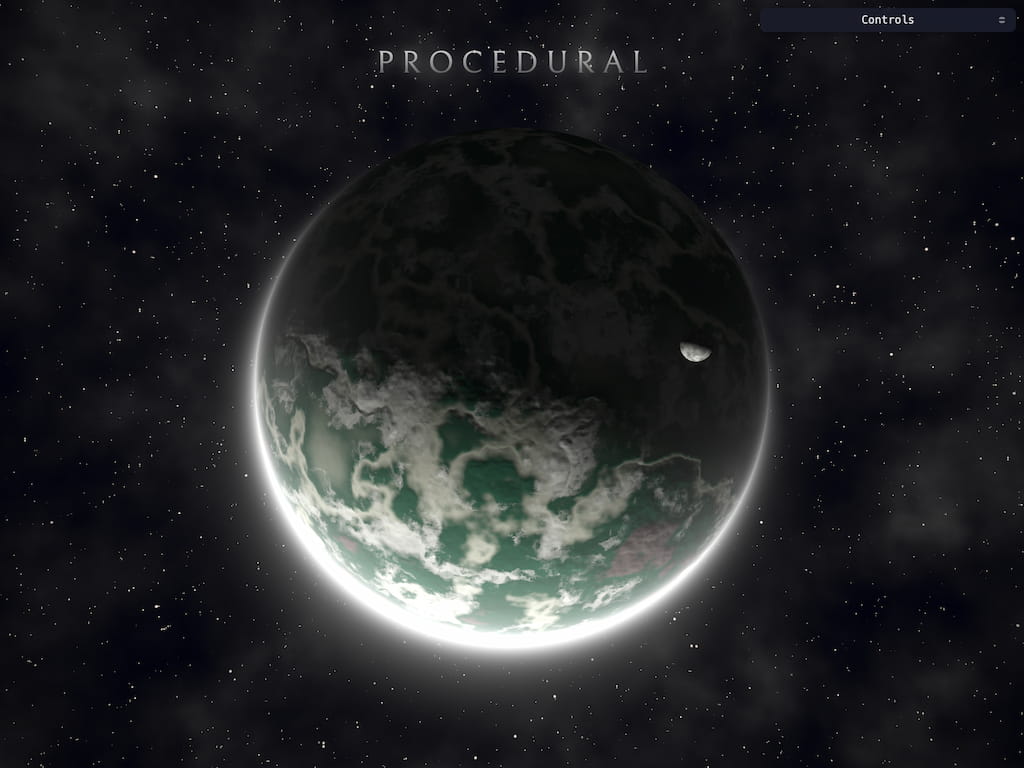
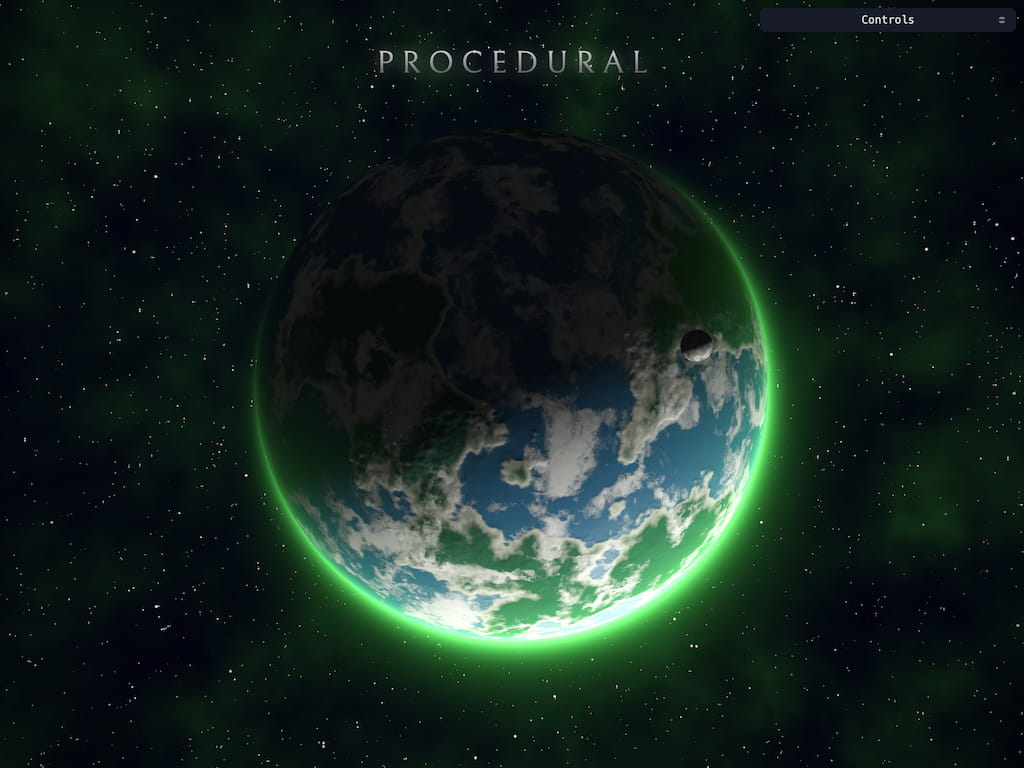
Repository: jsulpis/realtime-planet-shader Branch: main Commit: cfa2776033d3 Files: 43 Total size: 111.3 KB Directory structure: gitextract_0kdc7lbi/ ├── .github/ │ └── workflows/ │ └── deploy.yml ├── .gitignore ├── LICENSE ├── README.md ├── astro.config.ts ├── package.json ├── patches/ │ └── fourwastaken@0.2.0.patch ├── src/ │ ├── components/ │ │ ├── Author.astro │ │ ├── Canvas.astro │ │ ├── Footer.astro │ │ ├── GitHubIcon.astro │ │ ├── MainNavigation.astro │ │ ├── MainTitle.astro │ │ ├── Meta.astro │ │ └── TextureCredits.astro │ ├── controls/ │ │ ├── light.controls.ts │ │ ├── monitor.controls.ts │ │ ├── planet.controls.ts │ │ ├── quality.controls.ts │ │ ├── rotation.controls.ts │ │ └── setup.ts │ ├── env.d.ts │ ├── layouts/ │ │ └── Layout.astro │ ├── pages/ │ │ ├── earth.astro │ │ ├── jupiter.astro │ │ ├── mars.astro │ │ ├── mercury.astro │ │ ├── moon.astro │ │ ├── procedural.astro │ │ └── venus.astro │ └── webgl/ │ ├── loaders/ │ │ ├── noise.loader.ts │ │ ├── texture.loader.ts │ │ └── texture.types.ts │ ├── renderer.ts │ ├── settings/ │ │ ├── device.ts │ │ ├── quality.ts │ │ └── uniforms.ts │ ├── shaders/ │ │ ├── earth.fragment.glsl │ │ ├── planet.fragment.glsl │ │ ├── procedural.fragment.glsl │ │ └── vertex.glsl │ └── textures/ │ └── starsTexture.ts └── tsconfig.json ================================================ FILE CONTENTS ================================================ ================================================ FILE: .github/workflows/deploy.yml ================================================ name: Deploy to GitHub Pages on: push: branches: - main pull_request: branches: - main workflow_dispatch: permissions: contents: read pages: write id-token: write concurrency: group: "pages" cancel-in-progress: false jobs: build: runs-on: ubuntu-latest steps: - uses: actions/checkout@v3 - uses: pnpm/action-setup@v2 with: version: 8 - uses: actions/setup-node@v3 with: node-version: latest cache: pnpm - uses: actions/configure-pages@v3 - run: pnpm install - run: pnpm build - uses: actions/upload-pages-artifact@v2 with: path: dist deploy: runs-on: ubuntu-latest environment: name: github-pages url: ${{ steps.deployment.outputs.page_url }} needs: build steps: - name: Deploy to GitHub Pages id: deployment uses: actions/deploy-pages@v2 ================================================ FILE: .gitignore ================================================ # Logs logs *.log npm-debug.log* yarn-debug.log* yarn-error.log* pnpm-debug.log* lerna-debug.log* node_modules dist dist-ssr *.local /textures # Editor directories and files .vscode/* !.vscode/extensions.json .idea .DS_Store *.suo *.ntvs* *.njsproj *.sln *.sw? ================================================ FILE: LICENSE ================================================ GNU GENERAL PUBLIC LICENSE Version 3, 29 June 2007 Copyright (C) 2007 Free Software Foundation, Inc. Everyone is permitted to copy and distribute verbatim copies of this license document, but changing it is not allowed. Preamble The GNU General Public License is a free, copyleft license for software and other kinds of works. The licenses for most software and other practical works are designed to take away your freedom to share and change the works. By contrast, the GNU General Public License is intended to guarantee your freedom to share and change all versions of a program--to make sure it remains free software for all its users. We, the Free Software Foundation, use the GNU General Public License for most of our software; it applies also to any other work released this way by its authors. You can apply it to your programs, too. When we speak of free software, we are referring to freedom, not price. Our General Public Licenses are designed to make sure that you have the freedom to distribute copies of free software (and charge for them if you wish), that you receive source code or can get it if you want it, that you can change the software or use pieces of it in new free programs, and that you know you can do these things. To protect your rights, we need to prevent others from denying you these rights or asking you to surrender the rights. Therefore, you have certain responsibilities if you distribute copies of the software, or if you modify it: responsibilities to respect the freedom of others. For example, if you distribute copies of such a program, whether gratis or for a fee, you must pass on to the recipients the same freedoms that you received. You must make sure that they, too, receive or can get the source code. And you must show them these terms so they know their rights. Developers that use the GNU GPL protect your rights with two steps: (1) assert copyright on the software, and (2) offer you this License giving you legal permission to copy, distribute and/or modify it. For the developers' and authors' protection, the GPL clearly explains that there is no warranty for this free software. For both users' and authors' sake, the GPL requires that modified versions be marked as changed, so that their problems will not be attributed erroneously to authors of previous versions. Some devices are designed to deny users access to install or run modified versions of the software inside them, although the manufacturer can do so. This is fundamentally incompatible with the aim of protecting users' freedom to change the software. The systematic pattern of such abuse occurs in the area of products for individuals to use, which is precisely where it is most unacceptable. Therefore, we have designed this version of the GPL to prohibit the practice for those products. If such problems arise substantially in other domains, we stand ready to extend this provision to those domains in future versions of the GPL, as needed to protect the freedom of users. Finally, every program is threatened constantly by software patents. States should not allow patents to restrict development and use of software on general-purpose computers, but in those that do, we wish to avoid the special danger that patents applied to a free program could make it effectively proprietary. To prevent this, the GPL assures that patents cannot be used to render the program non-free. The precise terms and conditions for copying, distribution and modification follow. TERMS AND CONDITIONS 0. Definitions. "This License" refers to version 3 of the GNU General Public License. "Copyright" also means copyright-like laws that apply to other kinds of works, such as semiconductor masks. "The Program" refers to any copyrightable work licensed under this License. Each licensee is addressed as "you". "Licensees" and "recipients" may be individuals or organizations. To "modify" a work means to copy from or adapt all or part of the work in a fashion requiring copyright permission, other than the making of an exact copy. The resulting work is called a "modified version" of the earlier work or a work "based on" the earlier work. A "covered work" means either the unmodified Program or a work based on the Program. To "propagate" a work means to do anything with it that, without permission, would make you directly or secondarily liable for infringement under applicable copyright law, except executing it on a computer or modifying a private copy. Propagation includes copying, distribution (with or without modification), making available to the public, and in some countries other activities as well. To "convey" a work means any kind of propagation that enables other parties to make or receive copies. Mere interaction with a user through a computer network, with no transfer of a copy, is not conveying. An interactive user interface displays "Appropriate Legal Notices" to the extent that it includes a convenient and prominently visible feature that (1) displays an appropriate copyright notice, and (2) tells the user that there is no warranty for the work (except to the extent that warranties are provided), that licensees may convey the work under this License, and how to view a copy of this License. If the interface presents a list of user commands or options, such as a menu, a prominent item in the list meets this criterion. 1. Source Code. The "source code" for a work means the preferred form of the work for making modifications to it. "Object code" means any non-source form of a work. A "Standard Interface" means an interface that either is an official standard defined by a recognized standards body, or, in the case of interfaces specified for a particular programming language, one that is widely used among developers working in that language. The "System Libraries" of an executable work include anything, other than the work as a whole, that (a) is included in the normal form of packaging a Major Component, but which is not part of that Major Component, and (b) serves only to enable use of the work with that Major Component, or to implement a Standard Interface for which an implementation is available to the public in source code form. A "Major Component", in this context, means a major essential component (kernel, window system, and so on) of the specific operating system (if any) on which the executable work runs, or a compiler used to produce the work, or an object code interpreter used to run it. The "Corresponding Source" for a work in object code form means all the source code needed to generate, install, and (for an executable work) run the object code and to modify the work, including scripts to control those activities. However, it does not include the work's System Libraries, or general-purpose tools or generally available free programs which are used unmodified in performing those activities but which are not part of the work. For example, Corresponding Source includes interface definition files associated with source files for the work, and the source code for shared libraries and dynamically linked subprograms that the work is specifically designed to require, such as by intimate data communication or control flow between those subprograms and other parts of the work. The Corresponding Source need not include anything that users can regenerate automatically from other parts of the Corresponding Source. The Corresponding Source for a work in source code form is that same work. 2. Basic Permissions. All rights granted under this License are granted for the term of copyright on the Program, and are irrevocable provided the stated conditions are met. This License explicitly affirms your unlimited permission to run the unmodified Program. The output from running a covered work is covered by this License only if the output, given its content, constitutes a covered work. This License acknowledges your rights of fair use or other equivalent, as provided by copyright law. You may make, run and propagate covered works that you do not convey, without conditions so long as your license otherwise remains in force. You may convey covered works to others for the sole purpose of having them make modifications exclusively for you, or provide you with facilities for running those works, provided that you comply with the terms of this License in conveying all material for which you do not control copyright. Those thus making or running the covered works for you must do so exclusively on your behalf, under your direction and control, on terms that prohibit them from making any copies of your copyrighted material outside their relationship with you. Conveying under any other circumstances is permitted solely under the conditions stated below. Sublicensing is not allowed; section 10 makes it unnecessary. 3. Protecting Users' Legal Rights From Anti-Circumvention Law. No covered work shall be deemed part of an effective technological measure under any applicable law fulfilling obligations under article 11 of the WIPO copyright treaty adopted on 20 December 1996, or similar laws prohibiting or restricting circumvention of such measures. When you convey a covered work, you waive any legal power to forbid circumvention of technological measures to the extent such circumvention is effected by exercising rights under this License with respect to the covered work, and you disclaim any intention to limit operation or modification of the work as a means of enforcing, against the work's users, your or third parties' legal rights to forbid circumvention of technological measures. 4. Conveying Verbatim Copies. You may convey verbatim copies of the Program's source code as you receive it, in any medium, provided that you conspicuously and appropriately publish on each copy an appropriate copyright notice; keep intact all notices stating that this License and any non-permissive terms added in accord with section 7 apply to the code; keep intact all notices of the absence of any warranty; and give all recipients a copy of this License along with the Program. You may charge any price or no price for each copy that you convey, and you may offer support or warranty protection for a fee. 5. Conveying Modified Source Versions. You may convey a work based on the Program, or the modifications to produce it from the Program, in the form of source code under the terms of section 4, provided that you also meet all of these conditions: a) The work must carry prominent notices stating that you modified it, and giving a relevant date. b) The work must carry prominent notices stating that it is released under this License and any conditions added under section 7. This requirement modifies the requirement in section 4 to "keep intact all notices". c) You must license the entire work, as a whole, under this License to anyone who comes into possession of a copy. This License will therefore apply, along with any applicable section 7 additional terms, to the whole of the work, and all its parts, regardless of how they are packaged. This License gives no permission to license the work in any other way, but it does not invalidate such permission if you have separately received it. d) If the work has interactive user interfaces, each must display Appropriate Legal Notices; however, if the Program has interactive interfaces that do not display Appropriate Legal Notices, your work need not make them do so. A compilation of a covered work with other separate and independent works, which are not by their nature extensions of the covered work, and which are not combined with it such as to form a larger program, in or on a volume of a storage or distribution medium, is called an "aggregate" if the compilation and its resulting copyright are not used to limit the access or legal rights of the compilation's users beyond what the individual works permit. Inclusion of a covered work in an aggregate does not cause this License to apply to the other parts of the aggregate. 6. Conveying Non-Source Forms. You may convey a covered work in object code form under the terms of sections 4 and 5, provided that you also convey the machine-readable Corresponding Source under the terms of this License, in one of these ways: a) Convey the object code in, or embodied in, a physical product (including a physical distribution medium), accompanied by the Corresponding Source fixed on a durable physical medium customarily used for software interchange. b) Convey the object code in, or embodied in, a physical product (including a physical distribution medium), accompanied by a written offer, valid for at least three years and valid for as long as you offer spare parts or customer support for that product model, to give anyone who possesses the object code either (1) a copy of the Corresponding Source for all the software in the product that is covered by this License, on a durable physical medium customarily used for software interchange, for a price no more than your reasonable cost of physically performing this conveying of source, or (2) access to copy the Corresponding Source from a network server at no charge. c) Convey individual copies of the object code with a copy of the written offer to provide the Corresponding Source. This alternative is allowed only occasionally and noncommercially, and only if you received the object code with such an offer, in accord with subsection 6b. d) Convey the object code by offering access from a designated place (gratis or for a charge), and offer equivalent access to the Corresponding Source in the same way through the same place at no further charge. You need not require recipients to copy the Corresponding Source along with the object code. If the place to copy the object code is a network server, the Corresponding Source may be on a different server (operated by you or a third party) that supports equivalent copying facilities, provided you maintain clear directions next to the object code saying where to find the Corresponding Source. Regardless of what server hosts the Corresponding Source, you remain obligated to ensure that it is available for as long as needed to satisfy these requirements. e) Convey the object code using peer-to-peer transmission, provided you inform other peers where the object code and Corresponding Source of the work are being offered to the general public at no charge under subsection 6d. A separable portion of the object code, whose source code is excluded from the Corresponding Source as a System Library, need not be included in conveying the object code work. A "User Product" is either (1) a "consumer product", which means any tangible personal property which is normally used for personal, family, or household purposes, or (2) anything designed or sold for incorporation into a dwelling. In determining whether a product is a consumer product, doubtful cases shall be resolved in favor of coverage. For a particular product received by a particular user, "normally used" refers to a typical or common use of that class of product, regardless of the status of the particular user or of the way in which the particular user actually uses, or expects or is expected to use, the product. A product is a consumer product regardless of whether the product has substantial commercial, industrial or non-consumer uses, unless such uses represent the only significant mode of use of the product. "Installation Information" for a User Product means any methods, procedures, authorization keys, or other information required to install and execute modified versions of a covered work in that User Product from a modified version of its Corresponding Source. The information must suffice to ensure that the continued functioning of the modified object code is in no case prevented or interfered with solely because modification has been made. If you convey an object code work under this section in, or with, or specifically for use in, a User Product, and the conveying occurs as part of a transaction in which the right of possession and use of the User Product is transferred to the recipient in perpetuity or for a fixed term (regardless of how the transaction is characterized), the Corresponding Source conveyed under this section must be accompanied by the Installation Information. But this requirement does not apply if neither you nor any third party retains the ability to install modified object code on the User Product (for example, the work has been installed in ROM). The requirement to provide Installation Information does not include a requirement to continue to provide support service, warranty, or updates for a work that has been modified or installed by the recipient, or for the User Product in which it has been modified or installed. Access to a network may be denied when the modification itself materially and adversely affects the operation of the network or violates the rules and protocols for communication across the network. Corresponding Source conveyed, and Installation Information provided, in accord with this section must be in a format that is publicly documented (and with an implementation available to the public in source code form), and must require no special password or key for unpacking, reading or copying. 7. Additional Terms. "Additional permissions" are terms that supplement the terms of this License by making exceptions from one or more of its conditions. Additional permissions that are applicable to the entire Program shall be treated as though they were included in this License, to the extent that they are valid under applicable law. If additional permissions apply only to part of the Program, that part may be used separately under those permissions, but the entire Program remains governed by this License without regard to the additional permissions. When you convey a copy of a covered work, you may at your option remove any additional permissions from that copy, or from any part of it. (Additional permissions may be written to require their own removal in certain cases when you modify the work.) You may place additional permissions on material, added by you to a covered work, for which you have or can give appropriate copyright permission. Notwithstanding any other provision of this License, for material you add to a covered work, you may (if authorized by the copyright holders of that material) supplement the terms of this License with terms: a) Disclaiming warranty or limiting liability differently from the terms of sections 15 and 16 of this License; or b) Requiring preservation of specified reasonable legal notices or author attributions in that material or in the Appropriate Legal Notices displayed by works containing it; or c) Prohibiting misrepresentation of the origin of that material, or requiring that modified versions of such material be marked in reasonable ways as different from the original version; or d) Limiting the use for publicity purposes of names of licensors or authors of the material; or e) Declining to grant rights under trademark law for use of some trade names, trademarks, or service marks; or f) Requiring indemnification of licensors and authors of that material by anyone who conveys the material (or modified versions of it) with contractual assumptions of liability to the recipient, for any liability that these contractual assumptions directly impose on those licensors and authors. All other non-permissive additional terms are considered "further restrictions" within the meaning of section 10. If the Program as you received it, or any part of it, contains a notice stating that it is governed by this License along with a term that is a further restriction, you may remove that term. If a license document contains a further restriction but permits relicensing or conveying under this License, you may add to a covered work material governed by the terms of that license document, provided that the further restriction does not survive such relicensing or conveying. If you add terms to a covered work in accord with this section, you must place, in the relevant source files, a statement of the additional terms that apply to those files, or a notice indicating where to find the applicable terms. Additional terms, permissive or non-permissive, may be stated in the form of a separately written license, or stated as exceptions; the above requirements apply either way. 8. Termination. You may not propagate or modify a covered work except as expressly provided under this License. Any attempt otherwise to propagate or modify it is void, and will automatically terminate your rights under this License (including any patent licenses granted under the third paragraph of section 11). However, if you cease all violation of this License, then your license from a particular copyright holder is reinstated (a) provisionally, unless and until the copyright holder explicitly and finally terminates your license, and (b) permanently, if the copyright holder fails to notify you of the violation by some reasonable means prior to 60 days after the cessation. Moreover, your license from a particular copyright holder is reinstated permanently if the copyright holder notifies you of the violation by some reasonable means, this is the first time you have received notice of violation of this License (for any work) from that copyright holder, and you cure the violation prior to 30 days after your receipt of the notice. Termination of your rights under this section does not terminate the licenses of parties who have received copies or rights from you under this License. If your rights have been terminated and not permanently reinstated, you do not qualify to receive new licenses for the same material under section 10. 9. Acceptance Not Required for Having Copies. You are not required to accept this License in order to receive or run a copy of the Program. Ancillary propagation of a covered work occurring solely as a consequence of using peer-to-peer transmission to receive a copy likewise does not require acceptance. However, nothing other than this License grants you permission to propagate or modify any covered work. These actions infringe copyright if you do not accept this License. Therefore, by modifying or propagating a covered work, you indicate your acceptance of this License to do so. 10. Automatic Licensing of Downstream Recipients. Each time you convey a covered work, the recipient automatically receives a license from the original licensors, to run, modify and propagate that work, subject to this License. You are not responsible for enforcing compliance by third parties with this License. An "entity transaction" is a transaction transferring control of an organization, or substantially all assets of one, or subdividing an organization, or merging organizations. If propagation of a covered work results from an entity transaction, each party to that transaction who receives a copy of the work also receives whatever licenses to the work the party's predecessor in interest had or could give under the previous paragraph, plus a right to possession of the Corresponding Source of the work from the predecessor in interest, if the predecessor has it or can get it with reasonable efforts. You may not impose any further restrictions on the exercise of the rights granted or affirmed under this License. For example, you may not impose a license fee, royalty, or other charge for exercise of rights granted under this License, and you may not initiate litigation (including a cross-claim or counterclaim in a lawsuit) alleging that any patent claim is infringed by making, using, selling, offering for sale, or importing the Program or any portion of it. 11. Patents. A "contributor" is a copyright holder who authorizes use under this License of the Program or a work on which the Program is based. The work thus licensed is called the contributor's "contributor version". A contributor's "essential patent claims" are all patent claims owned or controlled by the contributor, whether already acquired or hereafter acquired, that would be infringed by some manner, permitted by this License, of making, using, or selling its contributor version, but do not include claims that would be infringed only as a consequence of further modification of the contributor version. For purposes of this definition, "control" includes the right to grant patent sublicenses in a manner consistent with the requirements of this License. Each contributor grants you a non-exclusive, worldwide, royalty-free patent license under the contributor's essential patent claims, to make, use, sell, offer for sale, import and otherwise run, modify and propagate the contents of its contributor version. In the following three paragraphs, a "patent license" is any express agreement or commitment, however denominated, not to enforce a patent (such as an express permission to practice a patent or covenant not to sue for patent infringement). To "grant" such a patent license to a party means to make such an agreement or commitment not to enforce a patent against the party. If you convey a covered work, knowingly relying on a patent license, and the Corresponding Source of the work is not available for anyone to copy, free of charge and under the terms of this License, through a publicly available network server or other readily accessible means, then you must either (1) cause the Corresponding Source to be so available, or (2) arrange to deprive yourself of the benefit of the patent license for this particular work, or (3) arrange, in a manner consistent with the requirements of this License, to extend the patent license to downstream recipients. "Knowingly relying" means you have actual knowledge that, but for the patent license, your conveying the covered work in a country, or your recipient's use of the covered work in a country, would infringe one or more identifiable patents in that country that you have reason to believe are valid. If, pursuant to or in connection with a single transaction or arrangement, you convey, or propagate by procuring conveyance of, a covered work, and grant a patent license to some of the parties receiving the covered work authorizing them to use, propagate, modify or convey a specific copy of the covered work, then the patent license you grant is automatically extended to all recipients of the covered work and works based on it. A patent license is "discriminatory" if it does not include within the scope of its coverage, prohibits the exercise of, or is conditioned on the non-exercise of one or more of the rights that are specifically granted under this License. You may not convey a covered work if you are a party to an arrangement with a third party that is in the business of distributing software, under which you make payment to the third party based on the extent of your activity of conveying the work, and under which the third party grants, to any of the parties who would receive the covered work from you, a discriminatory patent license (a) in connection with copies of the covered work conveyed by you (or copies made from those copies), or (b) primarily for and in connection with specific products or compilations that contain the covered work, unless you entered into that arrangement, or that patent license was granted, prior to 28 March 2007. Nothing in this License shall be construed as excluding or limiting any implied license or other defenses to infringement that may otherwise be available to you under applicable patent law. 12. No Surrender of Others' Freedom. If conditions are imposed on you (whether by court order, agreement or otherwise) that contradict the conditions of this License, they do not excuse you from the conditions of this License. If you cannot convey a covered work so as to satisfy simultaneously your obligations under this License and any other pertinent obligations, then as a consequence you may not convey it at all. For example, if you agree to terms that obligate you to collect a royalty for further conveying from those to whom you convey the Program, the only way you could satisfy both those terms and this License would be to refrain entirely from conveying the Program. 13. Use with the GNU Affero General Public License. Notwithstanding any other provision of this License, you have permission to link or combine any covered work with a work licensed under version 3 of the GNU Affero General Public License into a single combined work, and to convey the resulting work. The terms of this License will continue to apply to the part which is the covered work, but the special requirements of the GNU Affero General Public License, section 13, concerning interaction through a network will apply to the combination as such. 14. Revised Versions of this License. The Free Software Foundation may publish revised and/or new versions of the GNU General Public License from time to time. Such new versions will be similar in spirit to the present version, but may differ in detail to address new problems or concerns. Each version is given a distinguishing version number. If the Program specifies that a certain numbered version of the GNU General Public License "or any later version" applies to it, you have the option of following the terms and conditions either of that numbered version or of any later version published by the Free Software Foundation. If the Program does not specify a version number of the GNU General Public License, you may choose any version ever published by the Free Software Foundation. If the Program specifies that a proxy can decide which future versions of the GNU General Public License can be used, that proxy's public statement of acceptance of a version permanently authorizes you to choose that version for the Program. Later license versions may give you additional or different permissions. However, no additional obligations are imposed on any author or copyright holder as a result of your choosing to follow a later version. 15. Disclaimer of Warranty. THERE IS NO WARRANTY FOR THE PROGRAM, TO THE EXTENT PERMITTED BY APPLICABLE LAW. EXCEPT WHEN OTHERWISE STATED IN WRITING THE COPYRIGHT HOLDERS AND/OR OTHER PARTIES PROVIDE THE PROGRAM "AS IS" WITHOUT WARRANTY OF ANY KIND, EITHER EXPRESSED OR IMPLIED, INCLUDING, BUT NOT LIMITED TO, THE IMPLIED WARRANTIES OF MERCHANTABILITY AND FITNESS FOR A PARTICULAR PURPOSE. THE ENTIRE RISK AS TO THE QUALITY AND PERFORMANCE OF THE PROGRAM IS WITH YOU. SHOULD THE PROGRAM PROVE DEFECTIVE, YOU ASSUME THE COST OF ALL NECESSARY SERVICING, REPAIR OR CORRECTION. 16. Limitation of Liability. IN NO EVENT UNLESS REQUIRED BY APPLICABLE LAW OR AGREED TO IN WRITING WILL ANY COPYRIGHT HOLDER, OR ANY OTHER PARTY WHO MODIFIES AND/OR CONVEYS THE PROGRAM AS PERMITTED ABOVE, BE LIABLE TO YOU FOR DAMAGES, INCLUDING ANY GENERAL, SPECIAL, INCIDENTAL OR CONSEQUENTIAL DAMAGES ARISING OUT OF THE USE OR INABILITY TO USE THE PROGRAM (INCLUDING BUT NOT LIMITED TO LOSS OF DATA OR DATA BEING RENDERED INACCURATE OR LOSSES SUSTAINED BY YOU OR THIRD PARTIES OR A FAILURE OF THE PROGRAM TO OPERATE WITH ANY OTHER PROGRAMS), EVEN IF SUCH HOLDER OR OTHER PARTY HAS BEEN ADVISED OF THE POSSIBILITY OF SUCH DAMAGES. 17. Interpretation of Sections 15 and 16. If the disclaimer of warranty and limitation of liability provided above cannot be given local legal effect according to their terms, reviewing courts shall apply local law that most closely approximates an absolute waiver of all civil liability in connection with the Program, unless a warranty or assumption of liability accompanies a copy of the Program in return for a fee. END OF TERMS AND CONDITIONS How to Apply These Terms to Your New Programs If you develop a new program, and you want it to be of the greatest possible use to the public, the best way to achieve this is to make it free software which everyone can redistribute and change under these terms. To do so, attach the following notices to the program. It is safest to attach them to the start of each source file to most effectively state the exclusion of warranty; and each file should have at least the "copyright" line and a pointer to where the full notice is found. Copyright (C) This program is free software: you can redistribute it and/or modify it under the terms of the GNU General Public License as published by the Free Software Foundation, either version 3 of the License, or (at your option) any later version. This program is distributed in the hope that it will be useful, but WITHOUT ANY WARRANTY; without even the implied warranty of MERCHANTABILITY or FITNESS FOR A PARTICULAR PURPOSE. See the GNU General Public License for more details. You should have received a copy of the GNU General Public License along with this program. If not, see . Also add information on how to contact you by electronic and paper mail. If the program does terminal interaction, make it output a short notice like this when it starts in an interactive mode: Copyright (C) This program comes with ABSOLUTELY NO WARRANTY; for details type `show w'. This is free software, and you are welcome to redistribute it under certain conditions; type `show c' for details. The hypothetical commands `show w' and `show c' should show the appropriate parts of the General Public License. Of course, your program's commands might be different; for a GUI interface, you would use an "about box". You should also get your employer (if you work as a programmer) or school, if any, to sign a "copyright disclaimer" for the program, if necessary. For more information on this, and how to apply and follow the GNU GPL, see . The GNU General Public License does not permit incorporating your program into proprietary programs. If your program is a subroutine library, you may consider it more useful to permit linking proprietary applications with the library. If this is what you want to do, use the GNU Lesser General Public License instead of this License. But first, please read . ================================================ FILE: README.md ================================================ # Realtime planet shader in WebGL ## Procedural
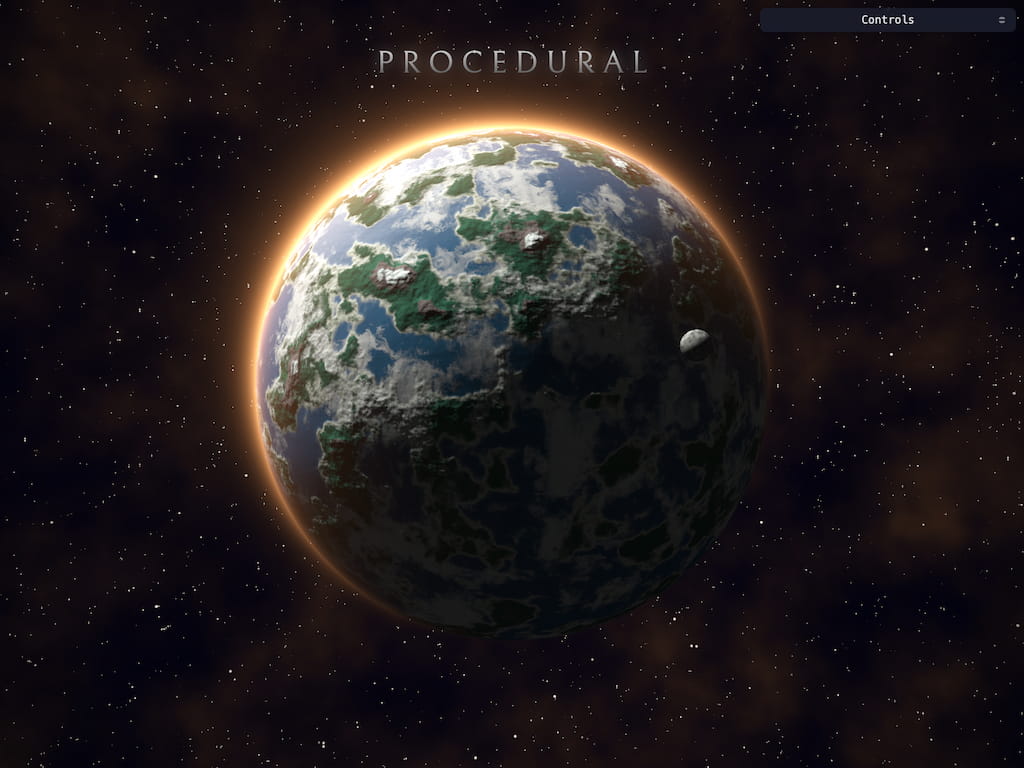
This is a GLSL fragment shader I originally made on [Shadertoy](https://www.shadertoy.com/view/Ds3XRl) when learning raymarching. Later I switched to analytic raycasting for better performance. It's made by raycasting simple spheres with a bunch of fbm noises used for the normals and colors, and a fake atmosphere computed with distance functions. I wanted to display it on a web page so that I can make a nice GUI to tweak the uniforms. Here it is ! It runs at 60fps on my old low-end phone, so it should also be quite smooth on whatever device you have.
## Textures
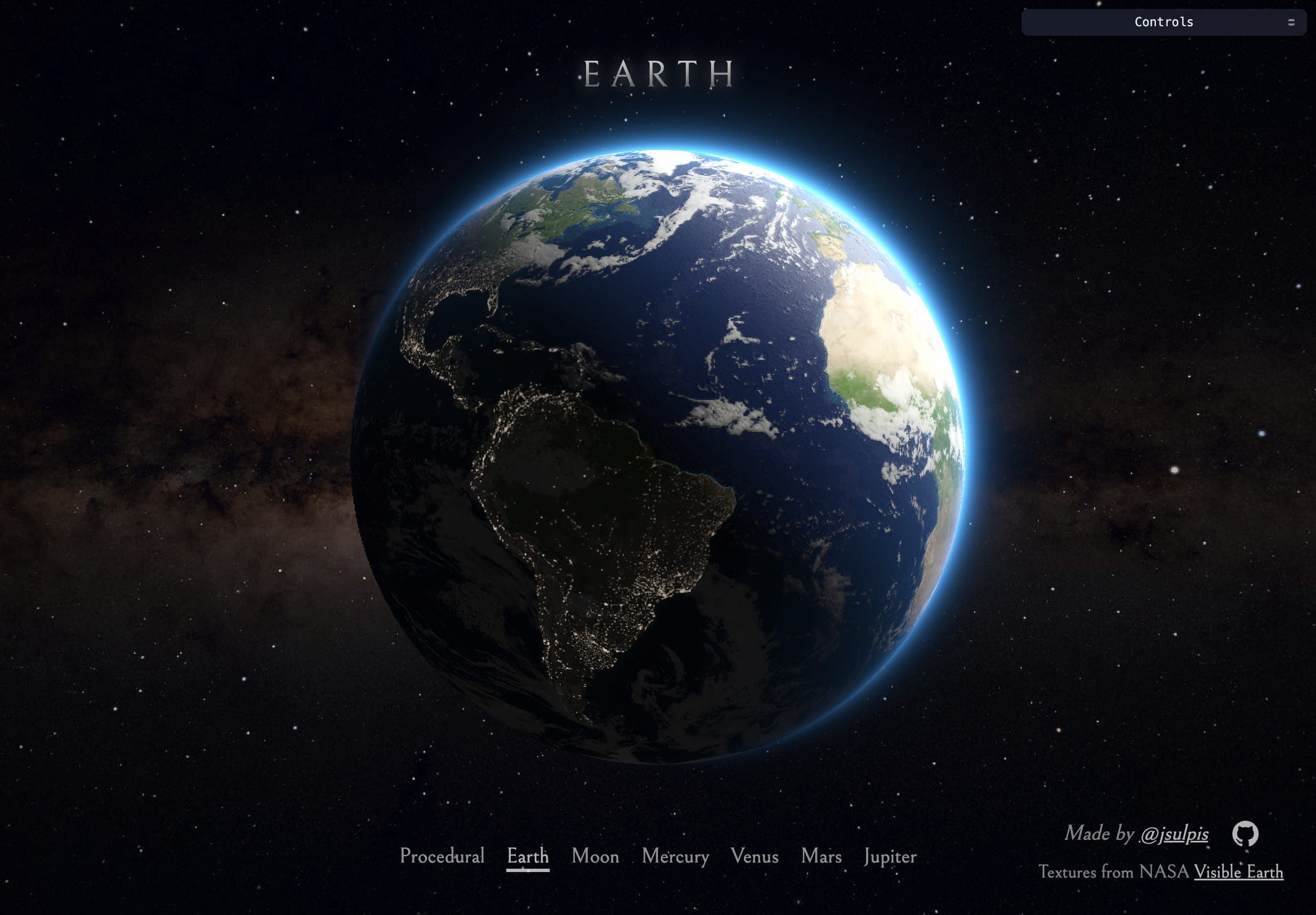
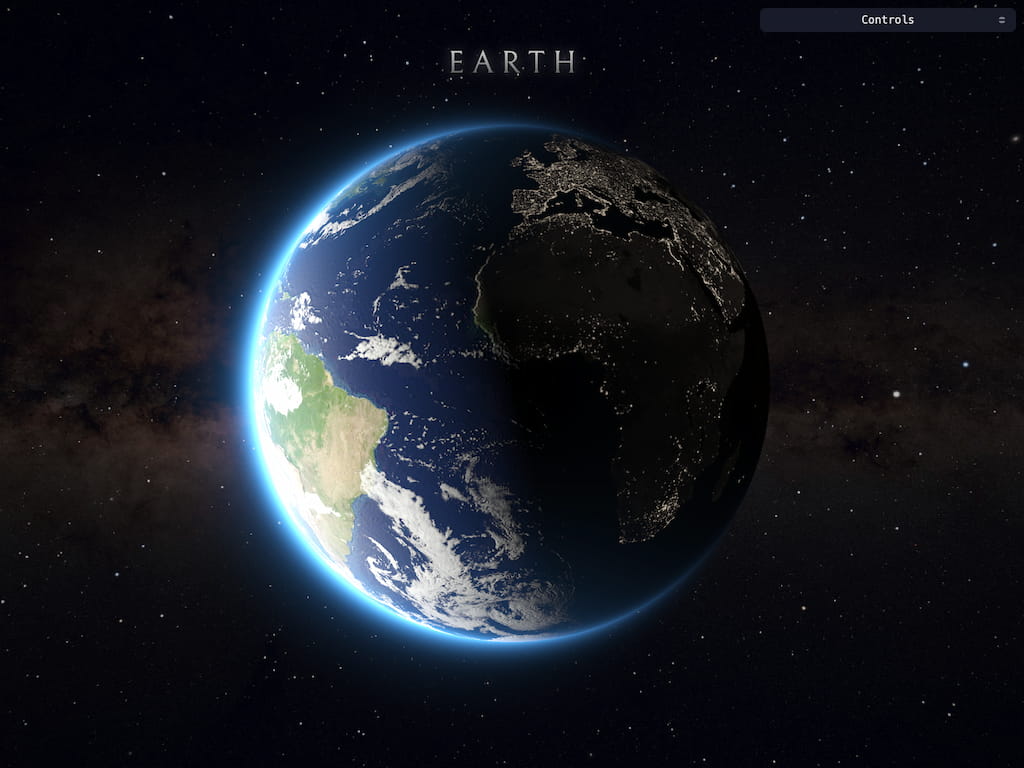
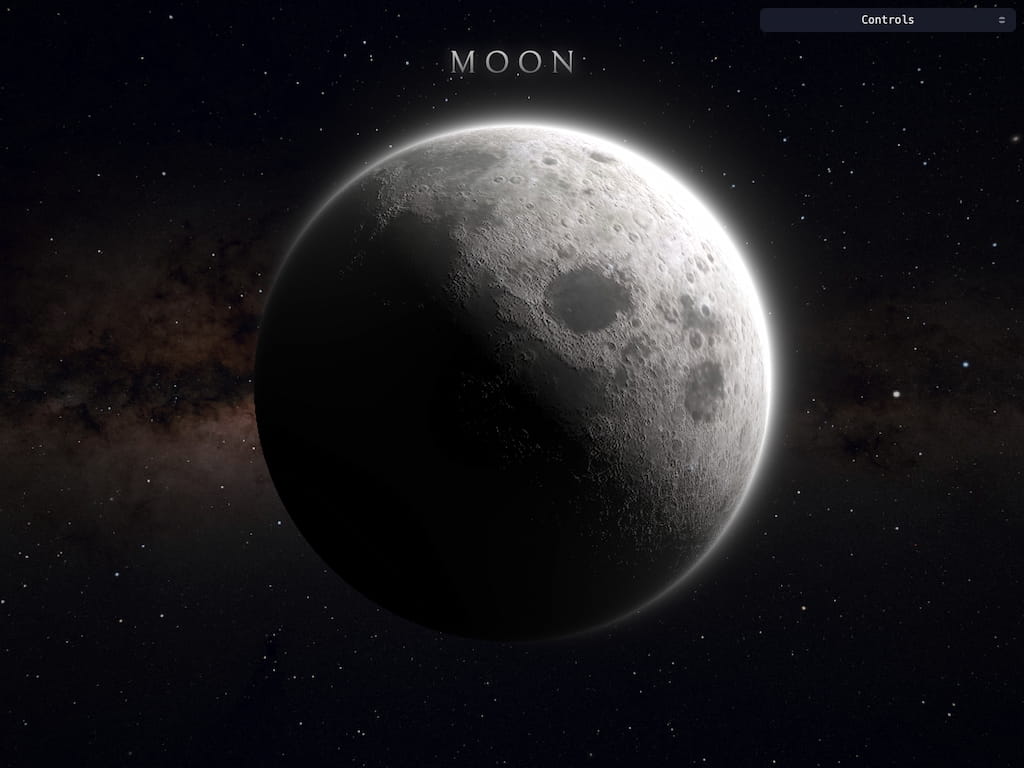
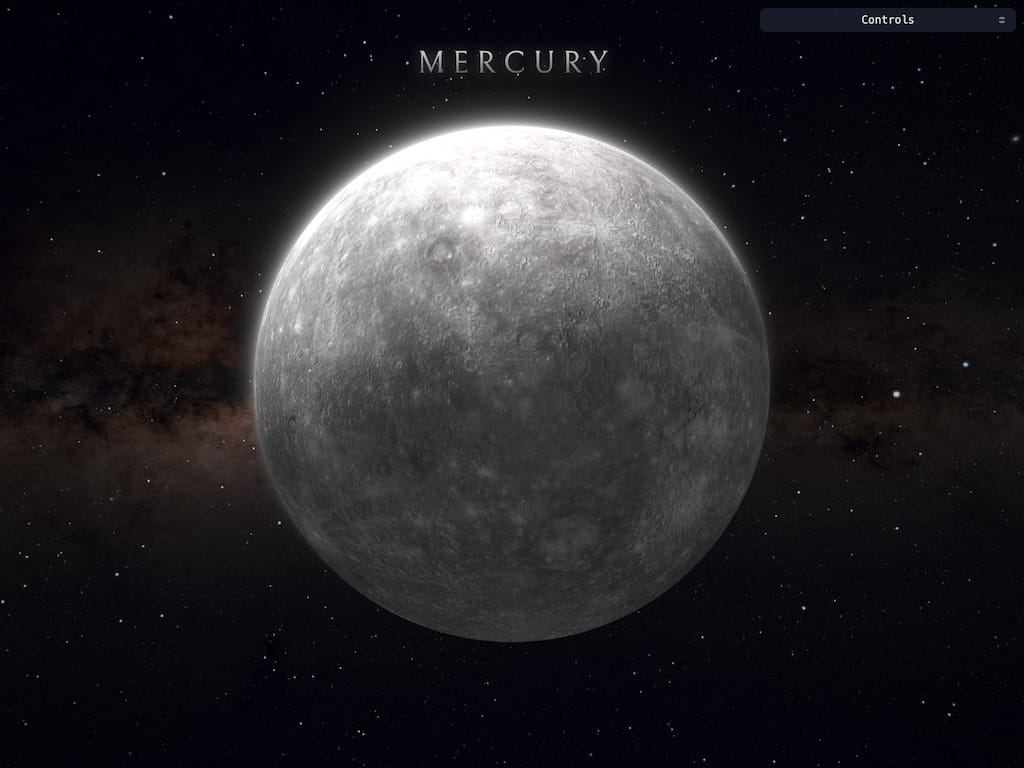
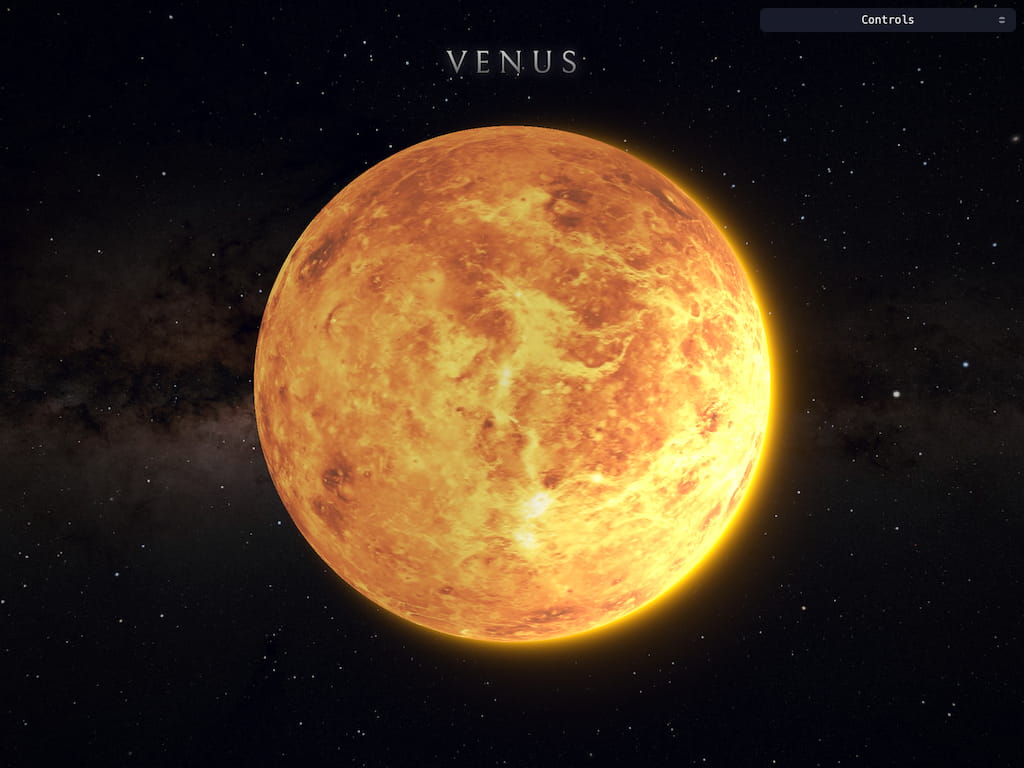
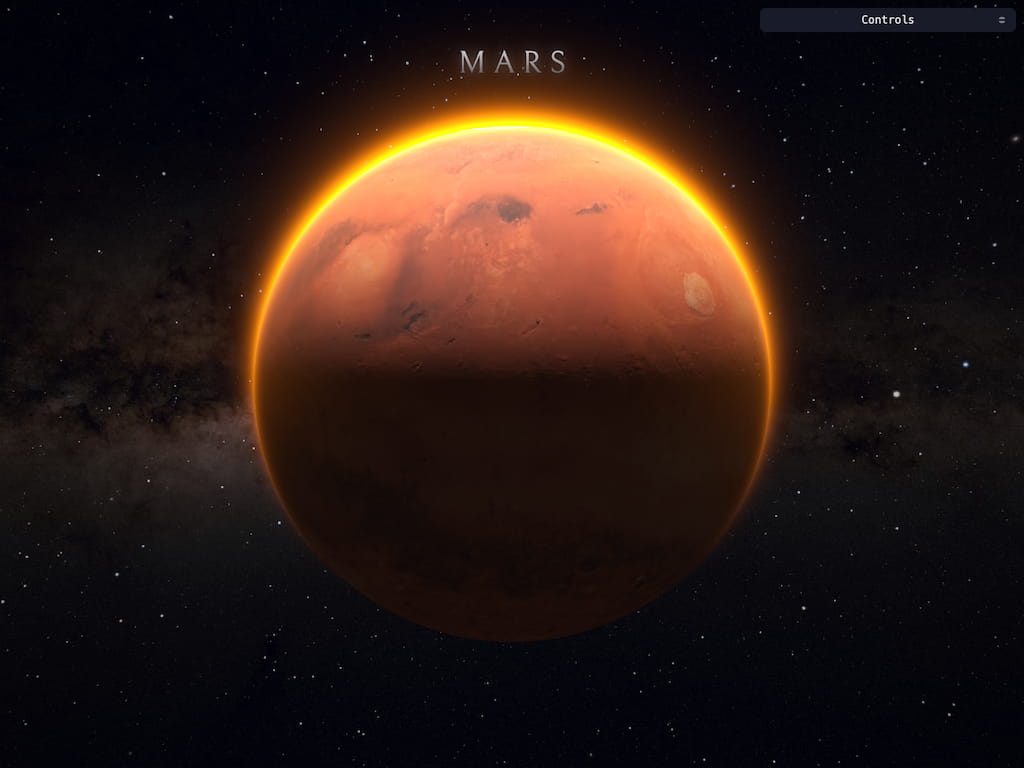
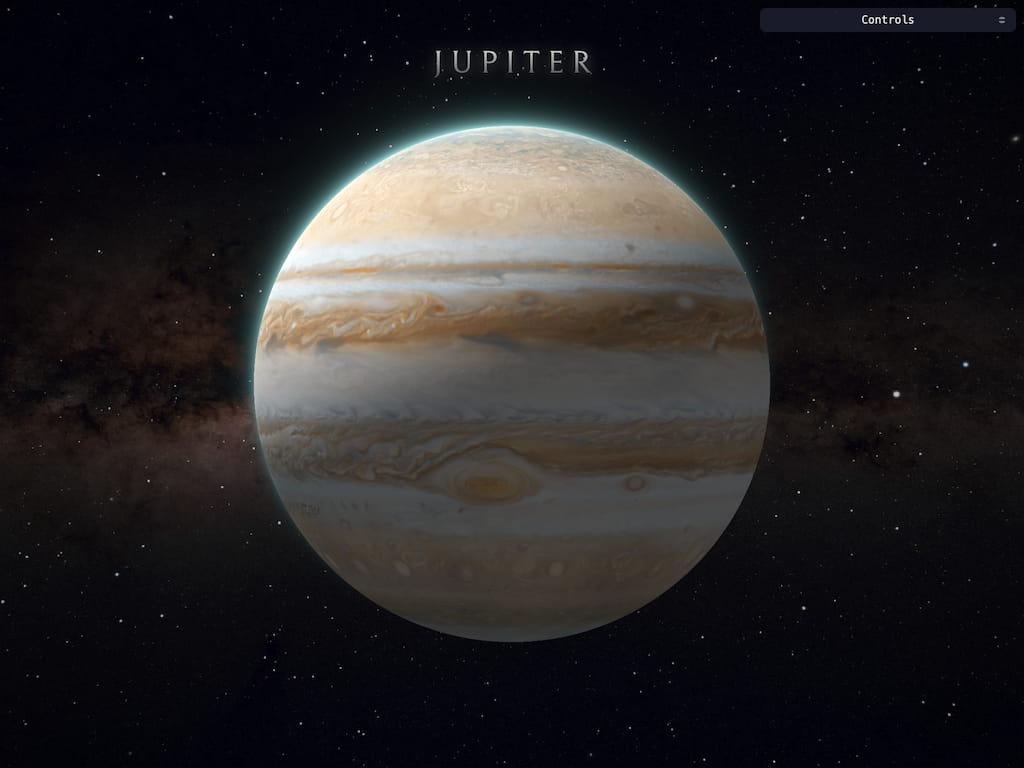
After the procedural version, I found a bunch of textures to display a realistic view of some planets of our solar system. Still with a few controls, and no quality setting because it should already run at full fps on most devices. ## Note If you want a minimalist setup to render GLSL shaders on a canvas like this one, you can check out the [little study](https://github.com/jsulpis/webgl-libs-comparison) I made before this project. ## More renders
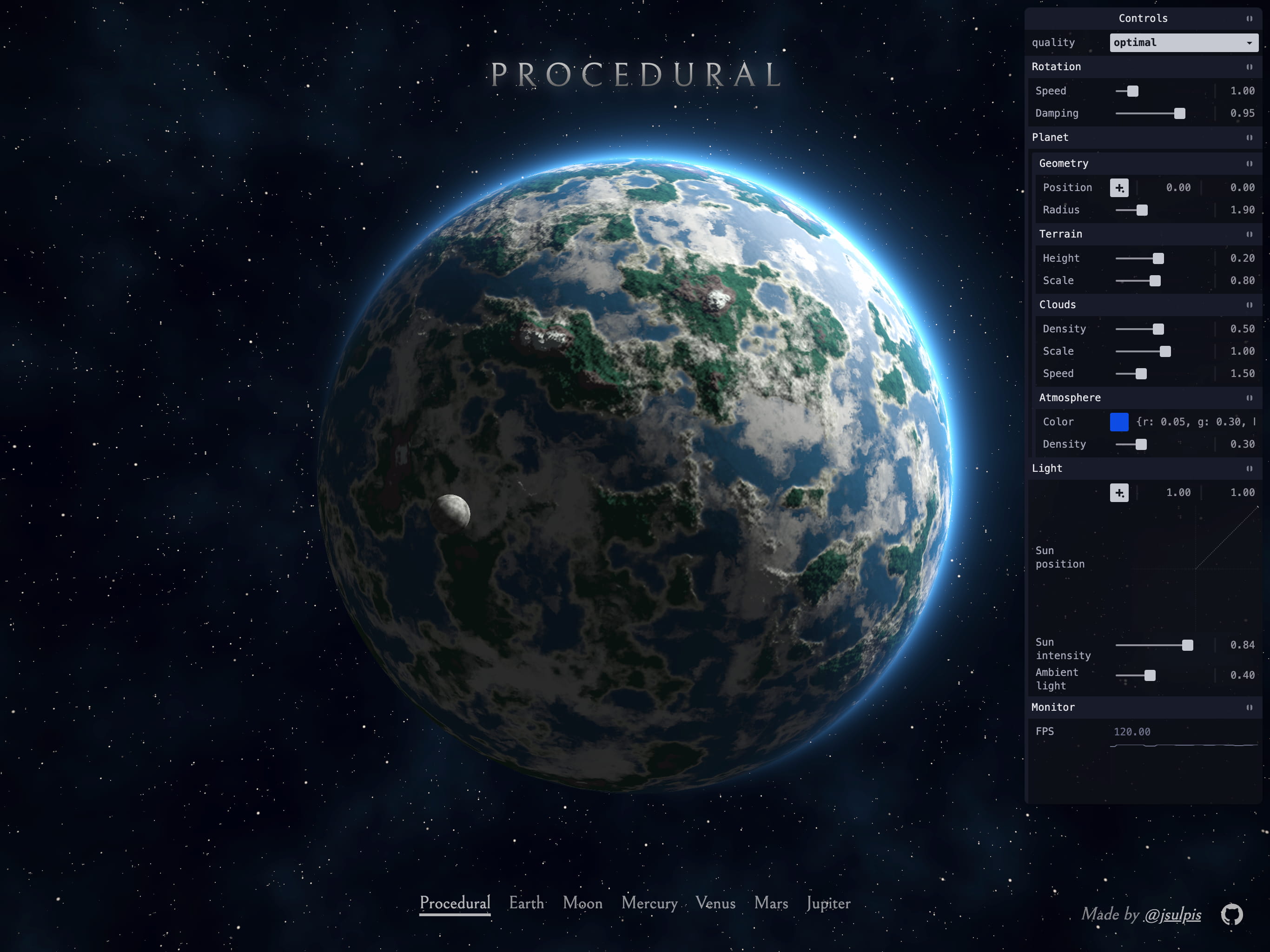
a render of the Earth a render of the Moon a render of Mercury a render of Venus a render of Mars a render of Jupiter a render of the procedural planet a render of the procedural planet a render of the procedural planet
================================================ FILE: astro.config.ts ================================================ import topLevelAwait from "vite-plugin-top-level-await"; import glsl from "vite-plugin-glsl"; import { defineConfig } from "astro/config"; export default defineConfig({ base: "/realtime-planet-shader", redirects: { "/": "/realtime-planet-shader/earth", }, vite: { plugins: [glsl(), topLevelAwait()], // top-level await present in the "four" library }, }); ================================================ FILE: package.json ================================================ { "name": "realtime-planet-shader", "version": "0.0.0", "private": true, "type": "module", "scripts": { "build": "astro check && astro build", "dev": "astro dev", "preview": "astro preview", "serve": "pnpm build && pnpm preview" }, "devDependencies": { "@astrojs/check": "0.3.1", "@tweakpane/core": "2.0.0", "@types/node": "20.8.3", "astro": "3.4.4", "four": "npm:fourwastaken@0.2.0", "sass": "1.66.1", "tweakpane": "4.0.0", "typescript": "5.1.6", "vite": "4.4.9", "vite-plugin-glsl": "1.1.2", "vite-plugin-top-level-await": "1.3.1" }, "pnpm": { "patchedDependencies": { "fourwastaken@0.2.0": "patches/fourwastaken@0.2.0.patch" } } } ================================================ FILE: patches/fourwastaken@0.2.0.patch ================================================ diff --git a/package.json b/package.json index 4afc4d8c859021f5bf8a3fa7c2fb77ab3a480ad1..1eff2e34706a533005cd829c631690ce63d3388f 100644 --- a/package.json +++ b/package.json @@ -22,7 +22,7 @@ "src/*" ], "type": "module", - "exports": "./dist/index.js", + "exports": "./src/index.ts", "sideEffects": false, "devDependencies": { "@types/node": "^20.4.2", diff --git a/src/Sampler.ts b/src/Sampler.ts index c0fdef75bcddb0c704b19dd1066712a5cc3c2e51..e6dbc0276ccfde53023c1feb6e6423fca6fc43f5 100644 --- a/src/Sampler.ts +++ b/src/Sampler.ts @@ -1,7 +1,7 @@ /** * Represents a texel filter. */ -export type Filter = 'nearest' | 'linear' +export type Filter = 'nearest' | 'linear' | 'nearestMipmapNearest' | 'nearestMipmapLinear' | 'linearMipmapNearest' | 'linearMipmapLinear' /** * Represents a wrapping mode. diff --git a/src/WebGLRenderer.ts b/src/WebGLRenderer.ts index 28c182b54334be0b8bfb07b32e94aabaef879fac..8d545aec1a63b93fe525da70ebffd6eedbd74c8c 100644 --- a/src/WebGLRenderer.ts +++ b/src/WebGLRenderer.ts @@ -42,10 +42,18 @@ const GL_RASTERIZER_DISCARD = 0x8c89 const GL_NEAREST = 0x2600 const GL_LINEAR = 0x2601 +const GL_NEAREST_MIPMAP_NEAREST = 0x2700 +const GL_NEAREST_MIPMAP_LINEAR = 0x2702 +const GL_LINEAR_MIPMAP_NEAREST = 0x2701 +const GL_LINEAR_MIPMAP_LINEAR = 0x2703 const GL_FILTERS: Record = { nearest: GL_NEAREST, linear: GL_LINEAR, + nearestMipmapNearest: GL_NEAREST_MIPMAP_NEAREST, + nearestMipmapLinear: GL_NEAREST_MIPMAP_LINEAR, + linearMipmapNearest: GL_LINEAR_MIPMAP_NEAREST, + linearMipmapLinear: GL_LINEAR_MIPMAP_LINEAR, } as const const GL_REPEAT = 0x2901 @@ -266,6 +274,10 @@ export class WebGLRenderer { this.gl.samplerParameteri(target, anisotropyExt.TEXTURE_MAX_ANISOTROPY_EXT, sampler.anisotropy) } + if (sampler.magFilter.includes('Mipmap') || sampler.minFilter.includes('Mipmap')) { + this.gl.generateMipmap(GL_TEXTURE_2D) + } + this.gl.samplerParameteri(target, GL_TEXTURE_MAG_FILTER, GL_FILTERS[sampler.magFilter]) this.gl.samplerParameteri(target, GL_TEXTURE_MIN_FILTER, GL_FILTERS[sampler.minFilter]) ================================================ FILE: src/components/Author.astro ================================================ --- import GitHubIcon from "./GitHubIcon.astro"; ---
Made by @jsulpis
================================================ FILE: src/components/Canvas.astro ================================================ ================================================ FILE: src/components/Footer.astro ================================================
================================================ FILE: src/components/GitHubIcon.astro ================================================ ================================================ FILE: src/components/MainNavigation.astro ================================================ --- const routeNames = [ "procedural", "earth", "moon", "mercury", "venus", "mars", "jupiter", ]; const currentPath = Astro.url.pathname; --- ================================================ FILE: src/components/MainTitle.astro ================================================

================================================ FILE: src/components/Meta.astro ================================================ --- const { class: className, ...rest } = Astro.props; // https://docs.astro.build/en/guides/styling/#passing-a-class-to-a-child-component ---
================================================ FILE: src/components/TextureCredits.astro ================================================
================================================ FILE: src/controls/light.controls.ts ================================================ import type { Pane } from "tweakpane"; import type { CustomUniforms } from "../webgl/settings/uniforms"; export function addLightControls(pane: Pane, uniforms: CustomUniforms) { const light = pane.addFolder({ title: "Light", expanded: window.innerHeight > 800, }); light .addBinding({ pos: { x: 1, y: 1 } }, "pos", { label: "Sun position", picker: "inline", expanded: true, y: { inverted: true, min: -1, max: 1 }, x: { min: -1, max: 1 }, }) .on("change", ({ value: { x, y } }) => { uniforms.sunDirectionXY = [x, y]; }); light .addBinding( { value: round(Math.pow(uniforms.uSunIntensity / 5, 1 / 3)) }, "value", { label: "Sun intensity", min: 0, max: 1, } ) .on("change", ({ value }) => { uniforms.uSunIntensity = Math.pow(value, 3) * 5; }); light .addBinding( { value: round(Math.pow(uniforms.uAmbientLight, 1 / 5)) }, "value", { label: "Ambient light", min: 0, max: 1, } ) .on("change", ({ value }) => { uniforms.uAmbientLight = Math.pow(value, 5); }); } function round(n: number) { return Math.round(n * 100) / 100; } ================================================ FILE: src/controls/monitor.controls.ts ================================================ import type { Pane } from "tweakpane"; export function addMonitor(pane: Pane) { const monitorFolder = pane.addFolder({ title: "Monitor", expanded: false, }); const fps = { value: 0 }; monitorFolder.addBinding(fps, "value", { label: "FPS", readonly: true, }); monitorFolder.addBinding(fps, "value", { label: "", readonly: true, view: "graph", min: 0, max: 120, }); let deltaMs = 0; let frameIndex = 1; let frameMeasure; const frameWindowSize = 100; performance.mark("previous-frame"); requestAnimationFrame(function loop() { requestAnimationFrame(loop); // Measure duration of frame window if (frameIndex++ !== frameWindowSize) { return; } frameIndex = 1; performance.mark("current-frame"); frameMeasure = performance.measure( "duration", "previous-frame", "current-frame" ); performance.mark("previous-frame"); deltaMs = frameMeasure.duration / frameWindowSize; fps.value = Math.floor(1 / ((deltaMs || Infinity) / 1000)); }); } ================================================ FILE: src/controls/planet.controls.ts ================================================ import type { Pane } from "tweakpane"; import type { CustomUniforms } from "../webgl/settings/uniforms"; import type { ControlsOptions } from "./setup"; export function addPlanetControls( pane: Pane, uniforms: CustomUniforms, options: ControlsOptions["planet"] = {} ) { const planetFolder = pane.addFolder({ title: "Planet", expanded: window.innerHeight > 800, }); if (options.geometry === true) { const geometry = planetFolder.addFolder({ title: "Geometry" }); geometry .addBinding({ pos: { x: 0, y: 0 } }, "pos", { label: "Position", picker: "inline", y: { inverted: true, min: -2, max: 2 }, x: { min: -2, max: 2 }, }) .on("change", ({ value: { x, y } }) => { uniforms.uPlanetPosition = [x, y, 0]; }); geometry.addBinding(uniforms, "uPlanetRadius", { label: "Radius", min: 0.5, max: 5, }); } if (options.terrain === true) { const terrain = planetFolder.addFolder({ title: "Terrain" }); terrain.addBinding(uniforms, "uNoiseStrength", { label: "Height", min: 0, max: 0.4, }); terrain.addBinding(uniforms, "uTerrainScale", { label: "Scale", min: 0.2, max: 1.5, }); } if (options.clouds === true) { const clouds = planetFolder.addFolder({ title: "Clouds" }); clouds.addBinding(uniforms, "uCloudsDensity", { label: "Density", min: 0, max: 1, }); if (uniforms.uCloudsScale !== -1) { clouds.addBinding(uniforms, "uCloudsScale", { label: "Scale", min: 0.3, max: 1.5, }); } if (uniforms.uCloudsSpeed !== -1) { clouds.addBinding(uniforms, "uCloudsSpeed", { label: "Speed", min: 0, max: 5, }); } } const atmosphere = planetFolder.addFolder({ title: "Atmosphere" }); atmosphere .addBinding( { col: { r: uniforms.uAtmosphereColor[0], g: uniforms.uAtmosphereColor[1], b: uniforms.uAtmosphereColor[2], }, }, "col", { label: "Color", color: { type: "float" }, } ) .on("change", ({ value: { r, g, b } }) => { uniforms.uAtmosphereColor = [r, g, b]; }); atmosphere.addBinding(uniforms, "uAtmosphereDensity", { label: "Density", min: 0, max: 1, }); } ================================================ FILE: src/controls/quality.controls.ts ================================================ import { WebGLRenderer } from "four"; import { ListBladeApi, Pane } from "tweakpane"; import { Quality } from "../webgl/settings/quality"; import type { CustomUniforms } from "../webgl/settings/uniforms"; export function addQualityControl( pane: Pane, uniforms: CustomUniforms, renderer: WebGLRenderer, defaultValue: Quality ) { ( pane.addBlade({ view: "list", label: "quality", options: [ { text: "low", value: Quality.LOW }, { text: "medium", value: Quality.MEDIUM }, { text: "optimal", value: Quality.OPTIMAL }, ], value: defaultValue, }) as ListBladeApi ).on("change", ({ value }) => { uniforms.uQuality = value; renderer.setSize(window.innerWidth * value, window.innerHeight * value); }); } ================================================ FILE: src/controls/rotation.controls.ts ================================================ import type { Pane } from "tweakpane"; import type { CustomUniforms } from "../webgl/settings/uniforms"; export function addRotationControls( pane: Pane, uniforms: CustomUniforms, canvas: HTMLCanvasElement ) { const damping = { value: 0.95 }; const speedMultiplier = 4 / Math.max(window.innerWidth, window.innerHeight); // don't really know why this works, but it does let lastPointerPos = 0; let velocity = 0; let previousTime = 0; let deltaTime = 0; function updateRotationOffset(e: PointerEvent | TouchEvent) { const clientX = getClientX(e); const currentTime = Date.now(); if (currentTime === previousTime) { return; } deltaTime = currentTime - previousTime; const deltaPos = clientX - lastPointerPos; velocity = deltaPos / deltaTime; uniforms.uRotationOffset += deltaPos * speedMultiplier; lastPointerPos = clientX; previousTime = currentTime; } function applyInertia() { if (Math.abs(velocity) < 0.01) { return; } velocity *= damping.value; const deltaPos = velocity * deltaTime; uniforms.uRotationOffset += deltaPos * speedMultiplier; window.requestAnimationFrame(applyInertia); } canvas.addEventListener("pointerdown", (e: PointerEvent | TouchEvent) => { canvas.classList.add("grabbing"); lastPointerPos = getClientX(e); previousTime = Date.now(); canvas.addEventListener("pointermove", updateRotationOffset); canvas.addEventListener( "pointerup", () => { canvas.classList.remove("grabbing"); canvas.removeEventListener("pointermove", updateRotationOffset); applyInertia(); }, { once: true } ); }); const rotationFolder = pane.addFolder({ title: "Rotation", expanded: window.innerHeight > 800, }); rotationFolder.addBinding(uniforms, "uRotationSpeed", { label: "Speed", min: 0, max: 5, }); rotationFolder.addBinding(damping, "value", { label: "Damping", min: 0.8, max: 1, }); } function getClientX(e: PointerEvent | TouchEvent) { return "touches" in e ? e.touches[0].clientX : e.clientX; } ================================================ FILE: src/controls/setup.ts ================================================ import type { WebGLRenderer } from "four"; import type { CustomUniforms } from "../webgl/settings/uniforms"; import { addLightControls } from "./light.controls"; import { addMonitor } from "./monitor.controls"; import { addPlanetControls } from "./planet.controls"; import { addQualityControl } from "./quality.controls"; import { addRotationControls } from "./rotation.controls"; import type { Quality } from "../webgl/settings/quality"; export type ControlsOptions = { expanded?: boolean; quality?: boolean; planet?: { geometry?: boolean; terrain?: boolean; clouds?: boolean; }; }; export async function setupControls( { canvas, uniforms, renderer, defaultQuality, }: { canvas: HTMLCanvasElement; uniforms: CustomUniforms; renderer?: WebGLRenderer; defaultQuality?: Quality; }, options?: ControlsOptions ) { const { Pane } = await import("tweakpane"); const pane = new Pane({ title: "Controls", expanded: options?.expanded === true, }); if (options?.quality && renderer && defaultQuality) { addQualityControl(pane, uniforms, renderer, defaultQuality); } addRotationControls(pane, uniforms, canvas); addPlanetControls(pane, uniforms, options?.planet); addLightControls(pane, uniforms); addMonitor(pane); } ================================================ FILE: src/env.d.ts ================================================ /// declare module "*.glsl" { const shaderSource: string; export default shaderSource; } ================================================ FILE: src/layouts/Layout.astro ================================================ --- import MainTitle from "../components/MainTitle.astro"; const { title, description } = Astro.props; const slug = Astro.url.pathname.replace(/\/$/, "").split("/").at(-1); const fullTitle = `${title} | Interactive 3D planet animation`; const baseUrl = "https://jsulpis.github.io/realtime-planet-shader"; --- {fullTitle} {title} ================================================ FILE: src/pages/earth.astro ================================================ --- import Author from "../components/Author.astro"; import Canvas from "../components/Canvas.astro"; import Footer from "../components/Footer.astro"; import MainNavigation from "../components/MainNavigation.astro"; import Meta from "../components/Meta.astro"; import Layout from "../layouts/Layout.astro"; import TextureCredits from "../components/TextureCredits.astro"; --- ================================================ FILE: src/pages/jupiter.astro ================================================ --- import Author from "../components/Author.astro"; import Canvas from "../components/Canvas.astro"; import Footer from "../components/Footer.astro"; import MainNavigation from "../components/MainNavigation.astro"; import Meta from "../components/Meta.astro"; import TextureCredits from "../components/TextureCredits.astro"; import Layout from "../layouts/Layout.astro"; --- ================================================ FILE: src/pages/mars.astro ================================================ --- import Author from "../components/Author.astro"; import Canvas from "../components/Canvas.astro"; import Footer from "../components/Footer.astro"; import MainNavigation from "../components/MainNavigation.astro"; import Meta from "../components/Meta.astro"; import TextureCredits from "../components/TextureCredits.astro"; import Layout from "../layouts/Layout.astro"; --- ================================================ FILE: src/pages/mercury.astro ================================================ --- import Author from "../components/Author.astro"; import Canvas from "../components/Canvas.astro"; import Footer from "../components/Footer.astro"; import MainNavigation from "../components/MainNavigation.astro"; import Meta from "../components/Meta.astro"; import TextureCredits from "../components/TextureCredits.astro"; import Layout from "../layouts/Layout.astro"; --- ================================================ FILE: src/pages/moon.astro ================================================ --- import Author from "../components/Author.astro"; import Canvas from "../components/Canvas.astro"; import Footer from "../components/Footer.astro"; import MainNavigation from "../components/MainNavigation.astro"; import Meta from "../components/Meta.astro"; import TextureCredits from "../components/TextureCredits.astro"; import Layout from "../layouts/Layout.astro"; --- ================================================ FILE: src/pages/procedural.astro ================================================ --- import Author from "../components/Author.astro"; import Canvas from "../components/Canvas.astro"; import Footer from "../components/Footer.astro"; import MainNavigation from "../components/MainNavigation.astro"; import Meta from "../components/Meta.astro"; import Layout from "../layouts/Layout.astro"; ---
================================================ FILE: src/pages/venus.astro ================================================ --- import Author from "../components/Author.astro"; import Canvas from "../components/Canvas.astro"; import Footer from "../components/Footer.astro"; import MainNavigation from "../components/MainNavigation.astro"; import Meta from "../components/Meta.astro"; import TextureCredits from "../components/TextureCredits.astro"; import Layout from "../layouts/Layout.astro"; --- ================================================ FILE: src/webgl/loaders/noise.loader.ts ================================================ /** * load a 3D texture file borrowed from Shadertoy */ export async function load3DNoiseTexture() { const gl = document.querySelector("canvas")?.getContext("webgl2"); if (!gl) return; const response = await fetch("/realtime-planet-shader/3DNoise.bin"); const binaryData = await response.arrayBuffer(); const volumeTexture = gl.createTexture(); gl.bindTexture(gl.TEXTURE_3D, volumeTexture); gl.texImage3D( gl.TEXTURE_3D, 0, gl.R8, 32, 32, 32, 0, gl.RED, gl.UNSIGNED_BYTE, new Uint8Array(binaryData) ); gl.texParameteri(gl.TEXTURE_3D, gl.TEXTURE_MIN_FILTER, gl.LINEAR); gl.texParameteri(gl.TEXTURE_3D, gl.TEXTURE_MAG_FILTER, gl.LINEAR); } ================================================ FILE: src/webgl/loaders/texture.loader.ts ================================================ import { type SamplerOptions, Texture, Sampler } from "four"; import type { TextureData } from "./texture.types"; export async function loadTexture( url: string, width: number, height: number, samplerOptions?: Partial ) { const imageData = await fetch(url); const imageBlob = await imageData.blob(); const bitmap = await createImageBitmap(imageBlob, 0, 0, width, height, { imageOrientation: "flipY", }); return new Texture( bitmap, new Sampler({ wrapS: "repeat", wrapT: "repeat", ...samplerOptions, }) ); } export async function loadTextures(texturesData: TextureData[]) { return Promise.all( texturesData.map(({ path, width = 2048, height = 1024, options }) => loadTexture(`/realtime-planet-shader/${path}`, width, height, options) ) ); } ================================================ FILE: src/webgl/loaders/texture.types.ts ================================================ import type { SamplerOptions } from "four"; export type TextureData = { path: string; width?: number; height?: number; options?: Partial; }; ================================================ FILE: src/webgl/renderer.ts ================================================ import { WebGLRenderer, PerspectiveCamera, Material, Geometry, Mesh, } from "four"; import type { CustomUniforms } from "./settings/uniforms"; function flatten(array: T[][]): T[] { return array.reduce((acc, val) => acc.concat(val), []); } type MaterialOptions = ConstructorParameters[0]; type Args = MaterialOptions & { canvas?: HTMLCanvasElement }; export function useGlslCanvas({ canvas: canvasArg, ...materialOptions }: Args) { let canvas = canvasArg ?? document.querySelector("canvas")!; const renderer = new WebGLRenderer({ canvas }); renderer.setSize( window.innerWidth * (materialOptions?.uniforms?.uQuality as number), window.innerHeight * (materialOptions?.uniforms?.uQuality as number) ); const camera = new PerspectiveCamera(); const material = new Material(materialOptions); const geometry = new Geometry({ position: { size: 3, data: new Float32Array( flatten([ [0, 0, 0], [1, 0, 0], [0, 1, 0], [0, 1, 0], [1, 0, 0], [1, 1, 0], ]) ), }, }); const mesh = new Mesh(geometry, material); const rafCallbacks: Function[] = []; /** * Usage: * ```javascript * raf(() => { * // do something at each frame * }) * ``` * @param callback function to execute at each frame */ function raf(callback: Function) { rafCallbacks.push(callback); } const uniforms = mesh.material.uniforms; requestAnimationFrame(function animate() { requestAnimationFrame(animate); rafCallbacks.forEach((callback) => callback()); (uniforms.uTime as number) += (uniforms.uRotationSpeed as number) * 0.01; renderer.render(mesh, camera); }); window.addEventListener("resize", () => { const quality = mesh.material.uniforms.uQuality as number; renderer.setSize( window.innerWidth * quality, window.innerHeight * quality ); mesh.material.uniforms.uResolution = [ window.innerWidth, window.innerHeight, ]; }); canvas.classList.add("loaded"); return { renderer, raf, uniforms: mesh.material.uniforms as CustomUniforms, canvas, }; } ================================================ FILE: src/webgl/settings/device.ts ================================================ export const isPhone = window.innerWidth < 700; ================================================ FILE: src/webgl/settings/quality.ts ================================================ export enum Quality { LOW = 0.5, MEDIUM = 1, OPTIMAL = 2, } ================================================ FILE: src/webgl/settings/uniforms.ts ================================================ export const defaultUniforms = { uTime: 0, uQuality: Math.min(window.devicePixelRatio, 2), uRotationSpeed: 1, uResolution: [window.innerWidth, window.innerHeight], uPlanetPosition: [0, 0, -10], uRotationOffset: 0.6, uPlanetRadius: 2, uBumpStrength: 0.01, uNoiseStrength: 0.2, uTerrainScale: 0.8, uCloudsDensity: 0.5, uCloudsScale: 1, uCloudsSpeed: 1.5, uAtmosphereColor: [0.05, 0.3, 0.9], uAtmosphereDensity: 0.3, uAmbientLight: 0.01, uSunIntensity: 3, sunDirectionXY: [1, 1], }; export type CustomUniforms = typeof defaultUniforms; ================================================ FILE: src/webgl/shaders/earth.fragment.glsl ================================================ //=======================================================================================// // // Earth Shader // by Julien Sulpis (https://twitter.com/jsulpis) // //=======================================================================================// #version 300 es precision highp float; precision mediump int; precision mediump sampler3D; precision mediump sampler2D; in vec2 uv; out vec4 fragColor; //===================// // Global uniforms // //===================// uniform float uTime; uniform float uRotationOffset; uniform vec2 uResolution; uniform sampler2D uEarthColor; uniform sampler2D uEarthClouds; uniform sampler2D uEarthSpecular; uniform sampler2D uEarthBump; uniform sampler2D uEarthNight; uniform sampler2D uStars; //==========================// // Controllable uniforms // //==========================// uniform vec3 uPlanetPosition; uniform float uPlanetRadius; uniform float uCloudsDensity; uniform vec3 uAtmosphereColor; uniform float uAtmosphereDensity; uniform float uSunIntensity; uniform float uAmbientLight; in vec3 uSunDirection; //==========================================================// // Constants (could be turned into controllable uniforms) // //==========================================================// // Planet geometry #define ROTATION_SPEED .1 #define PLANET_ROTATION rotateY(uTime * ROTATION_SPEED + uRotationOffset) // Planet colors #define CLOUD_COLOR vec3(1., 1., 1.) // Lighting #define SUN_COLOR vec3(1.0, 1.0, 0.9) #define DEEP_SPACE vec3(0., 0., 0.0005) // Ray tracing #define INFINITY 1e10 #define CAMERA_POSITION vec3(0., 0., 6.0) #define FOCAL_LENGTH CAMERA_POSITION.z / (CAMERA_POSITION.z - uPlanetPosition.z) #define PI acos(-1.) //=========// // Types // //=========// struct Material { vec3 color; float diffuse; float specular; vec3 emission; }; struct Hit { float len; vec3 normal; Material material; }; struct Sphere { vec3 position; float radius; }; // Note: I had created a struct for Ray but then deleted it because it caused artifacts on some mobile devices // because of a precision issue with struct (https://github.com/KhronosGroup/WebGL/issues/3351) // I use ro and rd instead in this shader. Hit miss = Hit(INFINITY, vec3(0.), Material(vec3(0.), -1., -1., vec3(-1.))); Sphere getPlanet() { return Sphere(uPlanetPosition, uPlanetRadius); } //===============================================// // Generic utilities stolen from smarter people // //===============================================// float inverseLerp(float v, float minValue, float maxValue) { return (v - minValue) / (maxValue - minValue); } float remap(float v, float inMin, float inMax, float outMin, float outMax) { float t = inverseLerp(v, inMin, inMax); return mix(outMin, outMax, t); } vec2 sphereProjection(vec3 p, vec3 origin) { vec3 dir = normalize(p - origin); float longitude = atan(dir.x, dir.z); // [-PI, PI] float latitude = asin(dir.y); // [-PI/2, PI/2] return vec2( (longitude + PI) / (2. * PI), // [0, 1] (latitude + PI / 2.) / PI // [0, 1] ); } // https://iquilezles.org/articles/intersectors/ float sphIntersect(in vec3 ro, in vec3 rd, in Sphere sphere) { vec3 oc = ro - sphere.position; float b = dot(oc, rd); float c = dot(oc, oc) - sphere.radius * sphere.radius; float h = b * b - c; if(h < 0.0) return -1.; // no intersection return -b - sqrt(h); } mat3 rotateY(float angle) { float c = cos(angle); float s = sin(angle); return mat3(// vec3(c, 0, s),// vec3(0, 1, 0),// vec3(-s, 0, c)// ); } // Zavie - https://www.shadertoy.com/view/lslGzl vec3 simpleReinhardToneMapping(vec3 color) { float exposure = 1.5; color *= exposure / (1. + color / exposure); color = pow(color, vec3(1. / 2.4)); return color; } //========// // Misc // //========// float planetNoise(vec3 p) { vec2 textureCoord = sphereProjection(p, uPlanetPosition); float bump = texture(uEarthBump, textureCoord).r; float cloudsDensity = texture(uEarthClouds, textureCoord).r; return .01 * mix(bump, max(bump, smoothstep(-.5, 2., cloudsDensity)), uCloudsDensity); ; } float planetDist(in vec3 ro, in vec3 rd) { float smoothSphereDist = sphIntersect(ro, rd, getPlanet()); vec3 intersection = ro + smoothSphereDist * rd; vec3 intersectionWithRotation = PLANET_ROTATION * (intersection - uPlanetPosition) + uPlanetPosition; return sphIntersect(ro, rd, Sphere(uPlanetPosition, uPlanetRadius + planetNoise(intersectionWithRotation))); } vec3 planetNormal(vec3 p) { vec3 rd = uPlanetPosition - p; float dist = planetDist(p, rd); // if e is too small it causes artifacts on mobile, so I interpolate // between .01 (large screens) and .03 (small screens) vec2 e = vec2(max(.01, .03 * smoothstep(1300., 300., uResolution.x)), 0); vec3 normal = dist - vec3(planetDist(p - e.xyy, rd), planetDist(p - e.yxy, rd), planetDist(p + e.yyx, rd)); return normalize(normal); } vec3 spaceColor(vec3 direction) { vec3 backgroundCoord = direction * rotateY(uTime * ROTATION_SPEED / 3. + 1.5); vec2 textureCoord = sphereProjection(backgroundCoord, vec3(0.)); textureCoord.x = 1. - textureCoord.x; // flip X because we are inside the texture vec3 stars = texture(uStars, textureCoord).rgb; return DEEP_SPACE + stars * stars * stars * .5; } vec3 atmosphereColor(vec3 ro, vec3 rd, float spaceMask) { float distCameraToPlanetOrigin = length(uPlanetPosition - CAMERA_POSITION); float distCameraToPlanetEdge = sqrt(distCameraToPlanetOrigin * distCameraToPlanetOrigin - uPlanetRadius * uPlanetRadius); float planetMask = 1.0 - spaceMask; vec3 coordFromCenter = (ro + rd * distCameraToPlanetEdge) - uPlanetPosition; float distFromEdge = abs(length(coordFromCenter) - uPlanetRadius); float planetEdge = max(uPlanetRadius - distFromEdge, 0.) / uPlanetRadius; float atmosphereMask = pow(remap(dot(uSunDirection, coordFromCenter), -uPlanetRadius, uPlanetRadius / 2., 0., 1.), 5.); atmosphereMask *= uAtmosphereDensity * uPlanetRadius * uSunIntensity; vec3 atmosphere = vec3(pow(planetEdge, 120.)) * .5; atmosphere += pow(planetEdge, 50.) * .3 * (1.5 - planetMask); atmosphere += pow(planetEdge, 15.) * .015; atmosphere += pow(planetEdge, 5.) * .04 * planetMask; return atmosphere * uAtmosphereColor * atmosphereMask; } //===============// // Ray Tracing // //===============// Hit intersectPlanet(vec3 ro, vec3 rd) { float len = sphIntersect(ro, rd, getPlanet()); if(len < 0.) { return miss; } vec3 position = ro + len * rd; vec3 rotatedPosition = PLANET_ROTATION * (position - uPlanetPosition) + uPlanetPosition; vec2 textureCoord = sphereProjection(rotatedPosition, uPlanetPosition); vec3 color = texture(uEarthColor, textureCoord).rgb; vec3 normal = planetNormal(position); float specular = texture(uEarthSpecular, textureCoord).r; float nightLightIntensity = clamp(dot(-normal, uSunDirection) + .1, smoothstep(1., 0., pow((uSunIntensity + uAmbientLight), .3)), 1.); vec3 nightColor = pow(texture(uEarthNight, textureCoord).r, 3.) * vec3(1., .8, .6); nightColor *= nightLightIntensity; float cloudsDensity = texture(uEarthClouds, textureCoord).r; float cloudsThreshold = 1. - uCloudsDensity; float smoothness = uCloudsDensity * (1. - uCloudsDensity); cloudsDensity *= smoothstep(cloudsThreshold - smoothness, cloudsThreshold, cloudsDensity); color = mix(color, CLOUD_COLOR, cloudsDensity); return Hit(len, normal, Material(color, 1., specular, nightColor)); } Hit intersectScene(vec3 ro, vec3 rd) { return intersectPlanet(ro, rd); } vec3 radiance(vec3 ro, vec3 rd) { vec3 color = vec3(0.); float spaceMask = 1.; Hit hit = intersectScene(ro, rd); if(hit.len < INFINITY) { spaceMask = 0.; // Diffuse float directLightIntensity = pow(clamp(dot(hit.normal, uSunDirection), 0.0, 1.0), 2.) * uSunIntensity; // the power softens the shadow. Not physically accurate but it looks better to me vec3 diffuseLight = directLightIntensity * SUN_COLOR; vec3 diffuseColor = hit.material.color.rgb * (uAmbientLight + diffuseLight); // Phong specular vec3 reflected = normalize(reflect(-uSunDirection, hit.normal)); vec3 phongRd = normalize(vec3(uv * pow(FOCAL_LENGTH, -1.), -1.)); // I want the reflection to stay on the edge of the planet float phongValue = pow(max(0.0, dot(phongRd, reflected)), 8.) * .2 * uSunIntensity; vec3 specularColor = hit.material.specular * vec3(phongValue); color = diffuseColor + specularColor + hit.material.emission; } else { float zoomFactor = min(uResolution.x / uResolution.y, 1.); // zoom for portrait mode because the background image is cropped to optimize file size vec3 backgroundRd = normalize(vec3(uv * zoomFactor, -1.)); // background not affected by focal length color = spaceColor(backgroundRd); } return color + atmosphereColor(ro, rd, spaceMask); } //========// // Main // //========// void main() { vec3 ro = vec3(CAMERA_POSITION); vec3 rd = normalize(vec3(uv * FOCAL_LENGTH, -1.)); vec3 color = radiance(ro, rd); // color grading color = simpleReinhardToneMapping(color); // vignette color *= 1. - 0.5 * pow(length(uv), 3.); fragColor = vec4(color, 1.0); } ================================================ FILE: src/webgl/shaders/planet.fragment.glsl ================================================ //=======================================================================================// // // Planet Shader // by Julien Sulpis (https://twitter.com/jsulpis) // //=======================================================================================// #version 300 es precision highp float; precision mediump int; precision mediump sampler2D; in vec2 uv; out vec4 fragColor; //===================// // Global uniforms // //===================// uniform float uTime; uniform vec2 uResolution; uniform vec3 uPlanetPosition; uniform float uPlanetRadius; uniform float uRotationOffset; uniform float uBumpStrength; uniform sampler2D uPlanetColor; uniform sampler2D uStars; //==========================// // Controllable uniforms // //==========================// uniform vec3 uAtmosphereColor; uniform float uAtmosphereDensity; uniform float uSunIntensity; uniform float uAmbientLight; in vec3 uSunDirection; //==========================================================// // Constants (could be turned into controllable uniforms) // //==========================================================// // Planet geometry #define ROTATION_SPEED .1 #define PLANET_ROTATION rotateY(uTime * ROTATION_SPEED + uRotationOffset) // Lighting #define SUN_COLOR vec3(1.0, 1.0, 1.0) #define DEEP_SPACE vec3(0., 0., 0.0005) // Ray tracing #define INFINITY 1e10 #define CAMERA_POSITION vec3(0., 0., 6.0) #define FOCAL_LENGTH CAMERA_POSITION.z / (CAMERA_POSITION.z - uPlanetPosition.z) #define PI acos(-1.) //=========// // Types // //=========// struct Material { vec3 color; float diffuse; float specular; vec3 emission; }; struct Hit { float len; vec3 normal; Material material; }; struct Sphere { vec3 position; float radius; }; // Note: I had created a struct for Ray but then deleted it because it caused artifacts on some mobile devices // because of a precision issue with struct (https://github.com/KhronosGroup/WebGL/issues/3351) // I use ro and rd instead in this shader. Hit miss = Hit(INFINITY, vec3(0.), Material(vec3(0.), -1., -1., vec3(-1.))); Sphere getPlanet() { return Sphere(uPlanetPosition, uPlanetRadius); } //===============================================// // Generic utilities stolen from smarter people // //===============================================// float inverseLerp(float v, float minValue, float maxValue) { return (v - minValue) / (maxValue - minValue); } float remap(float v, float inMin, float inMax, float outMin, float outMax) { float t = inverseLerp(v, inMin, inMax); return mix(outMin, outMax, t); } vec2 sphereProjection(vec3 p, vec3 origin) { vec3 dir = normalize(p - origin); float longitude = atan(dir.x, dir.z); // [-PI, PI] float latitude = asin(dir.y); // [-PI/2, PI/2] return vec2( (longitude + PI) / (2. * PI), // [0, 1] (latitude + PI / 2.) / PI // [0, 1] ); } // https://iquilezles.org/articles/intersectors/ float sphIntersect(in vec3 ro, in vec3 rd, in Sphere sphere) { vec3 oc = ro - sphere.position; float b = dot(oc, rd); float c = dot(oc, oc) - sphere.radius * sphere.radius; float h = b * b - c; if(h < 0.0) return -1.; // no intersection return -b - sqrt(h); } mat3 rotateY(float angle) { float c = cos(angle); float s = sin(angle); return mat3(// vec3(c, 0, s),// vec3(0, 1, 0),// vec3(-s, 0, c)// ); } // Zavie - https://www.shadertoy.com/view/lslGzl vec3 simpleReinhardToneMapping(vec3 color) { float exposure = 1.5; color *= exposure / (1. + color / exposure); color = pow(color, vec3(1. / 2.4)); return color; } // https://www.shadertoy.com/view/MtX3z2 float Sigmoid (float x) { return 1.0 / (1.0 + (exp(-(x - 0.7) * 6.5))); } vec3 Scurve (vec3 color) { return vec3(Sigmoid(color.x), Sigmoid(color.y), Sigmoid(color.z)); } //========// // Misc // //========// float planetNoise(vec3 p) { vec2 textureCoord = sphereProjection(p, uPlanetPosition); float bump = length(texture(uPlanetColor, textureCoord)); return uBumpStrength * bump; } float planetDist(in vec3 ro, in vec3 rd) { float smoothSphereDist = sphIntersect(ro, rd, getPlanet()); vec3 intersection = ro + smoothSphereDist * rd; vec3 intersectionWithRotation = PLANET_ROTATION * (intersection - uPlanetPosition) + uPlanetPosition; return sphIntersect(ro, rd, Sphere(uPlanetPosition, uPlanetRadius + planetNoise(intersectionWithRotation))); } vec3 planetNormal(vec3 p) { vec3 rd = uPlanetPosition - p; float dist = planetDist(p, rd); // if e is too small it causes artifacts on mobile, so I interpolate // between .01 (large screens) and .03 (small screens) vec2 e = vec2(max(.01, .03 * smoothstep(1300., 300., uResolution.x)), 0); vec3 normal = dist - vec3(planetDist(p - e.xyy, rd), planetDist(p - e.yxy, rd), planetDist(p + e.yyx, rd)); return normalize(normal); } vec3 spaceColor(vec3 direction) { vec3 backgroundCoord = direction * rotateY(uTime * ROTATION_SPEED / 3. + 1.5); vec2 textureCoord = sphereProjection(backgroundCoord, vec3(0.)); textureCoord.x = 1. - textureCoord.x; // flip X because we are inside the texture vec3 stars = texture(uStars, textureCoord).rgb; return DEEP_SPACE + stars * stars * stars * .5; } vec3 atmosphereColor(vec3 ro, vec3 rd, float spaceMask) { float distCameraToPlanetOrigin = length(uPlanetPosition - CAMERA_POSITION); float distCameraToPlanetEdge = sqrt(distCameraToPlanetOrigin * distCameraToPlanetOrigin - uPlanetRadius * uPlanetRadius); float planetMask = 1.0 - spaceMask; vec3 coordFromCenter = (ro + rd * distCameraToPlanetEdge) - uPlanetPosition; float distFromEdge = abs(length(coordFromCenter) - uPlanetRadius); float planetEdge = max(uPlanetRadius - distFromEdge, 0.) / uPlanetRadius; float atmosphereMask = pow(remap(dot(uSunDirection, coordFromCenter), -uPlanetRadius, uPlanetRadius / 2., 0., 1.), 5.); atmosphereMask *= uAtmosphereDensity * uPlanetRadius * uSunIntensity; vec3 atmosphere = vec3(pow(planetEdge, 120.)) * .5; atmosphere += pow(planetEdge, 50.) * .3 * (1.5 - planetMask); atmosphere += pow(planetEdge, 15.) * .015; atmosphere += pow(planetEdge, 5.) * .04 * planetMask; return atmosphere * uAtmosphereColor * atmosphereMask; } //===============// // Ray Tracing // //===============// Hit intersectPlanet(vec3 ro, vec3 rd) { float len = sphIntersect(ro, rd, getPlanet()); if(len < 0.) { return miss; } vec3 position = ro + len * rd; vec3 rotatedPosition = PLANET_ROTATION * (position - uPlanetPosition) + uPlanetPosition; vec2 textureCoord = sphereProjection(rotatedPosition, uPlanetPosition); vec3 color = texture(uPlanetColor, textureCoord).rgb; color = Scurve(color); vec3 normal = planetNormal(position); return Hit(len, normal, Material(color, 1., 0., vec3(0.))); } Hit intersectScene(vec3 ro, vec3 rd) { return intersectPlanet(ro, rd); } vec3 radiance(vec3 ro, vec3 rd) { vec3 color = vec3(0.); float spaceMask = 1.; Hit hit = intersectScene(ro, rd); if(hit.len < INFINITY) { spaceMask = 0.; // Diffuse float directLightIntensity = pow(clamp(dot(hit.normal, uSunDirection), 0.0, 1.0), 2.) * uSunIntensity; // the power softens the shadow. Not physically accurate but it looks better to me vec3 diffuseLight = directLightIntensity * SUN_COLOR; vec3 diffuseColor = hit.material.color.rgb * (uAmbientLight + diffuseLight); // Phong specular vec3 reflected = normalize(reflect(-uSunDirection, hit.normal)); float phongValue = pow(max(0.0, dot(rd, reflected)), 10.) * .2 * uSunIntensity; vec3 specularColor = hit.material.specular * vec3(phongValue); color = diffuseColor + specularColor + hit.material.emission; } else { float zoomFactor = min(uResolution.x / uResolution.y, 1.); // zoom for portrait mode because the background image is cropped to optimize file size vec3 backgroundRd = normalize(vec3(uv * zoomFactor, -1.)); // background not affected by focal length color = spaceColor(backgroundRd); } return color + atmosphereColor(ro, rd, spaceMask); } //========// // Main // //========// void main() { vec3 ro = vec3(CAMERA_POSITION); vec3 rd = normalize(vec3(uv * FOCAL_LENGTH, -1.)); vec3 color = radiance(ro, rd); // color grading color = simpleReinhardToneMapping(color); // vignette color *= 1. - 0.5 * pow(length(uv), 3.); fragColor = vec4(color, 1.0); } ================================================ FILE: src/webgl/shaders/procedural.fragment.glsl ================================================ //=======================================================================================// // // Procedural Blue Planet // by Julien Sulpis (https://twitter.com/jsulpis) // https://www.shadertoy.com/view/Ds3XRl // //=======================================================================================// #version 300 es precision highp float; precision mediump int; precision mediump sampler3D; in vec2 uv; out vec4 fragColor; //===================// // Global uniforms // //===================// uniform float uTime; uniform float uRotationOffset; uniform vec2 uResolution; uniform sampler3D uNoiseTexture; //==========================// // Controllable uniforms // //==========================// uniform float uQuality; uniform vec3 uPlanetPosition; uniform float uPlanetRadius; uniform float uNoiseStrength; uniform float uCloudsDensity; uniform float uCloudsScale; uniform float uCloudsSpeed; uniform float uTerrainScale; uniform vec3 uAtmosphereColor; uniform float uAtmosphereDensity; uniform float uSunIntensity; uniform float uAmbientLight; in vec3 uSunDirection; //==========================================================// // Constants (could be turned into controllable uniforms) // //==========================================================// // Planets geometry #define ROTATION_SPEED .1 #define PLANET_ROTATION rotateY(uTime * ROTATION_SPEED + uRotationOffset) #define MOON_RADIUS .08 #define MOON_ROTATION_SPEED - ROTATION_SPEED * 5. #define MOON_OFFSET vec3(uPlanetRadius * 1.2, uPlanetRadius / 4., 0.) #define MOON_ROTATION_AXIS (MOON_OFFSET - uPlanetPosition) * rotateZ(PI/2.) // Planet colors #define WATER_COLOR_DEEP vec3(0.01, 0.05, 0.15) #define WATER_COLOR_SURFACE vec3(0.02, 0.12, 0.27) #define SAND_COLOR vec3(1.0, 1.0, 0.85) #define TREE_COLOR vec3(.02, .1, .06) #define ROCK_COLOR vec3(0.15, 0.12, 0.12) #define ICE_COLOR vec3(0.8, .9, .9) #define CLOUD_COLOR vec3(1., 1., 1.) #define WATER_SURFACE_LEVEL 0.0 #define SAND_LEVEL .028 #define TREE_LEVEL .03 #define ROCK_LEVEL .1 #define ICE_LEVEL .15 #define TRANSITION .02 // Lighting #define SUN_COLOR vec3(1.0, 1.0, 0.9) #define DEEP_SPACE vec3(0., 0., 0.001) // Ray tracing #define EPSILON 1e-3 #define INFINITY 1e10 #define CAMERA_POSITION vec3(0., 0., 6.0) #define PI acos(-1.) //=========// // Types // //=========// struct Material { vec3 color; float diffuse; float specular; }; struct Hit { float len; vec3 normal; Material material; }; struct Sphere { vec3 position; float radius; }; // Note: I had created a struct for Ray but then deleted it because it caused artifacts on some mobile devices // because of a precision issue with struct (https://github.com/KhronosGroup/WebGL/issues/3351) // I use ro and rd instead in this shader. Hit miss = Hit(INFINITY, vec3(0.), Material(vec3(0.), -1., -1.)); Sphere getPlanet() { return Sphere(uPlanetPosition, uPlanetRadius); } //===============================================// // Generic utilities stolen from smarter people // //===============================================// float inverseLerp(float v, float minValue, float maxValue) { return (v - minValue) / (maxValue - minValue); } float remap(float v, float inMin, float inMax, float outMin, float outMax) { float t = inverseLerp(v, inMin, inMax); return mix(outMin, outMax, t); } float noise(vec3 p) { return texture(uNoiseTexture, p * .05).r; } // https://iquilezles.org/articles/intersectors/ float sphIntersect(in vec3 ro, in vec3 rd, in Sphere sphere) { vec3 oc = ro - sphere.position; float b = dot(oc, rd); float c = dot(oc, oc) - sphere.radius * sphere.radius; float h = b * b - c; if(h < 0.0) return -1.; // no intersection return -b - sqrt(h); } // Comes from a course by SimonDev (https://www.youtube.com/channel/UCEwhtpXrg5MmwlH04ANpL8A) // https://simondev.teachable.com/p/glsl-shaders-from-scratch float fbm(vec3 p, int octaves, float persistence, float lacunarity, float exponentiation) { float amplitude = 0.5; float frequency = 3.0; float total = 0.0; float normalization = 0.0; int qualityDegradation = 2 - int(floor(uQuality)); // 0 when quality=optimal, 2 when quality=low int octavesWithQuality = max(octaves - qualityDegradation, 1); for(int i = 0; i < octavesWithQuality; ++i) { float noiseValue = noise(p * frequency); total += noiseValue * amplitude; normalization += amplitude; amplitude *= persistence; frequency *= lacunarity; } total /= normalization; total = total * 0.8 + 0.1; total = pow(total, exponentiation); return total; } mat3 rotateY(float angle) { float c = cos(angle); float s = sin(angle); return mat3(// vec3(c, 0, s),// vec3(0, 1, 0),// vec3(-s, 0, c)// ); } mat3 rotateZ(float angle) { float c = cos(angle); float s = sin(angle); return mat3(// vec3(c, -s, 0),// vec3(s, c, 0),// vec3(0, 0, 1)// ); } // https://github.com/dmnsgn/glsl-rotate/blob/main/rotation-3d.glsl mat3 rotate3d(vec3 axis, float angle) { axis = normalize(axis); float s = sin(angle); float c = cos(angle); float oc = 1.0 - c; return mat3(// oc * axis.x * axis.x + c, oc * axis.x * axis.y - axis.z * s, oc * axis.z * axis.x + axis.y * s,// oc * axis.x * axis.y + axis.z * s, oc * axis.y * axis.y + c, oc * axis.y * axis.z - axis.x * s,// oc * axis.z * axis.x - axis.y * s, oc * axis.y * axis.z + axis.x * s, oc * axis.z * axis.z + c// ); } // nimitz - https://www.shadertoy.com/view/XsyGWV // I reused the 3D noise texture instead of nimitz's hash function for better performance vec3 stars(in vec3 p) { vec3 c = vec3(0.); float res = uResolution.x * uQuality * 0.8; for(float i = 0.; i < 3.; i++) { vec3 q = fract(p * (.15 * res)) - 0.5; vec3 id = floor(p * (.15 * res)); vec2 rn = vec2(noise(id/2.), noise(id.zyx*2.))*.03; float c2 = 1. - smoothstep(0., .6, length(q)); c2 *= step(rn.x, .003 + i * 0.0005); c += c2 * (mix(vec3(1.0, 0.49, 0.1), vec3(0.75, 0.9, 1.), rn.y) * 0.25 + 1.2); p *= 1.8; } return c * c; } // Comes from a course by SimonDev (https://www.youtube.com/channel/UCEwhtpXrg5MmwlH04ANpL8A) // https://simondev.teachable.com/p/glsl-shaders-from-scratch float domainWarpingFBM(vec3 p, int octaves, float persistence, float lacunarity, float exponentiation) { vec3 offset = vec3(// fbm(p, octaves, persistence, lacunarity, exponentiation), // fbm(p + vec3(43.235, 23.112, 0.0), octaves, persistence, lacunarity, exponentiation), // 0.0// ); return fbm(p + 1. * offset, 2, persistence, lacunarity, exponentiation); } // Zavie - https://www.shadertoy.com/view/lslGzl vec3 simpleReinhardToneMapping(vec3 color) { float exposure = 1.5; color *= exposure / (1. + color / exposure); color = pow(color, vec3(1. / 2.4)); return color; } //========// // Misc // //========// float planetNoise(vec3 p) { float fbm = fbm(p * uTerrainScale, 6, .5, 2., 5.) * uNoiseStrength; // Flatten the noise on the oceans return mix(// fbm / 3. + uNoiseStrength / 50., // fbm, // smoothstep(SAND_LEVEL, SAND_LEVEL + TRANSITION / 2., fbm * 5.)// ); } /** * Standard ray-sphere intersection but with fbm noise added on the radius. * Probably not exact (especially near the edges), but it looks good enough */ float planetDist(in vec3 ro, in vec3 rd) { float smoothSphereDist = sphIntersect(ro, rd, getPlanet()); vec3 intersection = ro + smoothSphereDist * rd; vec3 intersectionWithRotation = PLANET_ROTATION * (intersection - uPlanetPosition) + uPlanetPosition; return sphIntersect(ro, rd, Sphere(uPlanetPosition, uPlanetRadius + planetNoise(intersectionWithRotation))); } vec3 planetNormal(vec3 p) { vec3 rd = uPlanetPosition - p; float dist = planetDist(p, rd); // if e is too small it causes artifacts on mobile, so I interpolate // between .01 (large screens) and .03 (small screens) vec2 e = vec2(max(.01, .03 * smoothstep(1300., 300., uResolution.x)), 0); vec3 normal = dist - vec3(planetDist(p - e.xyy, rd), planetDist(p - e.yxy, rd), planetDist(p + e.yyx, rd)); return normalize(normal); } vec3 currentMoonPosition() { mat3 moonRotation = rotate3d(MOON_ROTATION_AXIS, uTime * MOON_ROTATION_SPEED); return MOON_OFFSET * moonRotation + uPlanetPosition; } vec3 spaceColor(vec3 direction) { mat3 backgroundRotation = rotateY(uTime * ROTATION_SPEED / 4.); vec3 backgroundCoord = direction * backgroundRotation; float spaceNoise = fbm(backgroundCoord * 3., 4, .5, 2., 6.); return stars(backgroundCoord) + mix(DEEP_SPACE, uAtmosphereColor / 12., spaceNoise); } vec3 atmosphereColor(vec3 ro, vec3 rd, float spaceMask, Hit firstHit) { vec3 position = ro + firstHit.len * rd; float distCameraToPlanetOrigin = length(uPlanetPosition - CAMERA_POSITION); float distCameraToPlanetEdge = sqrt(distCameraToPlanetOrigin * distCameraToPlanetOrigin - uPlanetRadius * uPlanetRadius); float distCameraToMoon = length(currentMoonPosition() - CAMERA_POSITION); float isMoonInFront = smoothstep(-uPlanetRadius/2., uPlanetRadius/2., distCameraToPlanetEdge - distCameraToMoon); float moonMask = (1.0 - spaceMask) * step(uPlanetRadius + EPSILON, length(position - uPlanetPosition)); float planetMask = 1.0 - spaceMask - moonMask; vec3 coordFromCenter = (ro + rd * distCameraToPlanetEdge) - uPlanetPosition; float distFromEdge = abs(length(coordFromCenter) - uPlanetRadius); float planetEdge = max(uPlanetRadius - distFromEdge, 0.) / uPlanetRadius; float atmosphereMask = pow(remap(dot(uSunDirection, coordFromCenter), -uPlanetRadius, uPlanetRadius / 2., 0., 1.), 5.); atmosphereMask *= uAtmosphereDensity * uPlanetRadius * uSunIntensity; vec3 atmosphere = vec3(pow(planetEdge, 120.)) * .5; atmosphere += pow(planetEdge, 50.) * .3 * (1.5 - planetMask); atmosphere += pow(planetEdge, 15.) * .03; atmosphere += pow(planetEdge, 5.) * .04 * planetMask; return atmosphere * uAtmosphereColor * atmosphereMask * (1. - moonMask * isMoonInFront); } //===============// // Ray Tracing // //===============// Hit intersectPlanet(vec3 ro, vec3 rd) { float len = sphIntersect(ro, rd, getPlanet()); if(len < 0.) { return miss; } vec3 position = ro + len * rd; vec3 rotatedCoord = PLANET_ROTATION * (position - uPlanetPosition) + uPlanetPosition; float altitude = 5. * planetNoise(rotatedCoord); vec3 normal = planetNormal(position); vec3 color = mix(WATER_COLOR_DEEP, WATER_COLOR_SURFACE, smoothstep(WATER_SURFACE_LEVEL, WATER_SURFACE_LEVEL + TRANSITION, altitude)); color = mix(color, SAND_COLOR, smoothstep(SAND_LEVEL, SAND_LEVEL + TRANSITION / 2., altitude)); color = mix(color, TREE_COLOR, smoothstep(TREE_LEVEL, TREE_LEVEL + TRANSITION, altitude)); color = mix(color, ROCK_COLOR, smoothstep(ROCK_LEVEL, ROCK_LEVEL + TRANSITION, altitude)); color = mix(color, ICE_COLOR, smoothstep(ICE_LEVEL, ICE_LEVEL + TRANSITION, altitude)); vec3 cloudsCoord = (rotatedCoord + vec3(uTime * .008 * uCloudsSpeed)) * uCloudsScale; float cloudsDensity = remap(domainWarpingFBM(cloudsCoord, 3, .3, 5., uCloudsScale), -1.0, 1.0, 0.0, 1.0); float cloudsThreshold = 1. - uCloudsDensity * .5; cloudsDensity *= smoothstep(cloudsThreshold, cloudsThreshold + .1, cloudsDensity); cloudsDensity *= smoothstep(ROCK_LEVEL, (ROCK_LEVEL + TREE_LEVEL) / 2., altitude); color = mix(color, CLOUD_COLOR, cloudsDensity); float specular = smoothstep(SAND_LEVEL + TRANSITION, SAND_LEVEL, altitude); return Hit(len, normal, Material(color, 1., specular)); } Hit intersectMoon(vec3 ro, vec3 rd) { vec3 moonPosition = currentMoonPosition(); float length = sphIntersect(ro, rd, Sphere(moonPosition, MOON_RADIUS)); if(length < 0.) { return miss; } vec3 position = ro + length * rd; vec3 originalPosition = position * rotate3d(MOON_ROTATION_AXIS, -uTime * MOON_ROTATION_SPEED); vec3 color = vec3(sqrt(fbm(originalPosition * 12., 6, .5, 2., 5.))); vec3 normal = normalize(position - moonPosition); return Hit(length, normal, Material(color, 1., 0.)); } Hit intersectScene(vec3 ro, vec3 rd) { Hit planetHit = intersectPlanet(ro, rd); Hit moonHit = intersectMoon(ro, rd); if(moonHit.len < planetHit.len) { return moonHit; } return planetHit; } vec3 radiance(vec3 ro, vec3 rd) { vec3 color = vec3(0.); float spaceMask = 1.; Hit hit = intersectScene(ro, rd); if(hit.len < INFINITY) { spaceMask = 0.; vec3 hitPosition = ro + hit.len * rd; Hit shadowHit = intersectScene(hitPosition + EPSILON * uSunDirection, uSunDirection); float hitDirectLight = clamp( step(INFINITY, shadowHit.len) + step(length(hitPosition - uPlanetPosition) - uPlanetRadius, .1), // don't cast shadow on the planet, only the moon 0., 1. ); // Diffuse float directLightIntensity = pow(clamp(dot(hit.normal, uSunDirection), 0.0, 1.0), 2.) * uSunIntensity; // the power softens the shadow. Not physically accurate but it looks better to me vec3 diffuseLight = hitDirectLight * directLightIntensity * SUN_COLOR; vec3 diffuseColor = hit.material.color.rgb * (uAmbientLight + diffuseLight); // Phong specular vec3 reflected = normalize(reflect(-uSunDirection, hit.normal)); float phongValue = pow(max(0.0, dot(rd, reflected)), 10.) * .2 * uSunIntensity; vec3 specularColor = hit.material.specular * vec3(phongValue); color = diffuseColor + specularColor; } else { color = spaceColor(rd); } return color + atmosphereColor(ro, rd, spaceMask, hit); } //========// // Main // //========// void main() { vec3 ro = vec3(CAMERA_POSITION); vec3 rd = normalize(vec3(uv, -1)); vec3 color = radiance(ro, rd); // color grading color = simpleReinhardToneMapping(color); // vignette color *= 1. - 0.5 * pow(length(uv), 3.); fragColor = vec4(color, 1.0); } ================================================ FILE: src/webgl/shaders/vertex.glsl ================================================ #version 300 es precision highp float; in vec3 position; uniform vec2 uResolution; uniform vec2 sunDirectionXY; uniform float uQuality; out vec3 uSunDirection; out vec2 uv; void main() { vec2 resolution = uResolution * uQuality; uv = (position.xy - 0.5) * resolution / min(resolution.y, resolution.x); uSunDirection = normalize(vec3(sunDirectionXY, 0.)); gl_Position = vec4(2.0 * position - 1.0, 1.0); } ================================================ FILE: src/webgl/textures/starsTexture.ts ================================================ import type { TextureData } from "../loaders/texture.types"; import { isPhone } from "../settings/device"; export const starsTexture: TextureData = isPhone ? { path: "4k_stars.jpg", width: 4096, height: 2048, options: { minFilter: "linearMipmapLinear" }, } : { path: "8k_stars.jpg", width: 8192, height: 4096, options: { minFilter: "linearMipmapLinear" }, }; ================================================ FILE: tsconfig.json ================================================ { "extends": "astro/tsconfigs/strict" }