Repository: nat/keyrace
Branch: main
Commit: 8c4f3d38e2c9
Files: 198
Total size: 1.1 MB
Directory structure:
gitextract_yvxi4i9t/
├── .github/
│ └── workflows/
│ ├── build_app.yml
│ └── make-test.yml
├── .gitignore
├── Makefile
├── README.md
├── go.mod
├── go.sum
├── keyrace.c
├── mac/
│ ├── Podfile
│ ├── Pods/
│ │ ├── Charts/
│ │ │ ├── LICENSE
│ │ │ ├── README.md
│ │ │ └── Source/
│ │ │ └── Charts/
│ │ │ ├── Animation/
│ │ │ │ ├── Animator.swift
│ │ │ │ └── ChartAnimationEasing.swift
│ │ │ ├── Charts/
│ │ │ │ ├── BarChartView.swift
│ │ │ │ ├── BarLineChartViewBase.swift
│ │ │ │ ├── BubbleChartView.swift
│ │ │ │ ├── CandleStickChartView.swift
│ │ │ │ ├── ChartViewBase.swift
│ │ │ │ ├── CombinedChartView.swift
│ │ │ │ ├── HorizontalBarChartView.swift
│ │ │ │ ├── LineChartView.swift
│ │ │ │ ├── PieChartView.swift
│ │ │ │ ├── PieRadarChartViewBase.swift
│ │ │ │ ├── RadarChartView.swift
│ │ │ │ └── ScatterChartView.swift
│ │ │ ├── Components/
│ │ │ │ ├── AxisBase.swift
│ │ │ │ ├── ChartLimitLine.swift
│ │ │ │ ├── ComponentBase.swift
│ │ │ │ ├── Description.swift
│ │ │ │ ├── IMarker.swift
│ │ │ │ ├── Legend.swift
│ │ │ │ ├── LegendEntry.swift
│ │ │ │ ├── MarkerImage.swift
│ │ │ │ ├── MarkerView.swift
│ │ │ │ ├── XAxis.swift
│ │ │ │ └── YAxis.swift
│ │ │ ├── Data/
│ │ │ │ ├── Implementations/
│ │ │ │ │ ├── ChartBaseDataSet.swift
│ │ │ │ │ └── Standard/
│ │ │ │ │ ├── BarChartData.swift
│ │ │ │ │ ├── BarChartDataEntry.swift
│ │ │ │ │ ├── BarChartDataSet.swift
│ │ │ │ │ ├── BarLineScatterCandleBubbleChartData.swift
│ │ │ │ │ ├── BarLineScatterCandleBubbleChartDataSet.swift
│ │ │ │ │ ├── BubbleChartData.swift
│ │ │ │ │ ├── BubbleChartDataEntry.swift
│ │ │ │ │ ├── BubbleChartDataSet.swift
│ │ │ │ │ ├── CandleChartData.swift
│ │ │ │ │ ├── CandleChartDataEntry.swift
│ │ │ │ │ ├── CandleChartDataSet.swift
│ │ │ │ │ ├── ChartData.swift
│ │ │ │ │ ├── ChartDataEntry.swift
│ │ │ │ │ ├── ChartDataEntryBase.swift
│ │ │ │ │ ├── ChartDataSet.swift
│ │ │ │ │ ├── CombinedChartData.swift
│ │ │ │ │ ├── LineChartData.swift
│ │ │ │ │ ├── LineChartDataSet.swift
│ │ │ │ │ ├── LineRadarChartDataSet.swift
│ │ │ │ │ ├── LineScatterCandleRadarChartDataSet.swift
│ │ │ │ │ ├── PieChartData.swift
│ │ │ │ │ ├── PieChartDataEntry.swift
│ │ │ │ │ ├── PieChartDataSet.swift
│ │ │ │ │ ├── RadarChartData.swift
│ │ │ │ │ ├── RadarChartDataEntry.swift
│ │ │ │ │ ├── RadarChartDataSet.swift
│ │ │ │ │ ├── ScatterChartData.swift
│ │ │ │ │ └── ScatterChartDataSet.swift
│ │ │ │ └── Interfaces/
│ │ │ │ ├── IBarChartDataSet.swift
│ │ │ │ ├── IBarLineScatterCandleBubbleChartDataSet.swift
│ │ │ │ ├── IBubbleChartDataSet.swift
│ │ │ │ ├── ICandleChartDataSet.swift
│ │ │ │ ├── IChartDataSet.swift
│ │ │ │ ├── ILineChartDataSet.swift
│ │ │ │ ├── ILineRadarChartDataSet.swift
│ │ │ │ ├── ILineScatterCandleRadarChartDataSet.swift
│ │ │ │ ├── IPieChartDataSet.swift
│ │ │ │ ├── IRadarChartDataSet.swift
│ │ │ │ └── IScatterChartDataSet.swift
│ │ │ ├── Filters/
│ │ │ │ ├── DataApproximator+N.swift
│ │ │ │ └── DataApproximator.swift
│ │ │ ├── Formatters/
│ │ │ │ ├── DefaultAxisValueFormatter.swift
│ │ │ │ ├── DefaultFillFormatter.swift
│ │ │ │ ├── DefaultValueFormatter.swift
│ │ │ │ ├── IAxisValueFormatter.swift
│ │ │ │ ├── IFillFormatter.swift
│ │ │ │ ├── IValueFormatter.swift
│ │ │ │ └── IndexAxisValueFormatter.swift
│ │ │ ├── Highlight/
│ │ │ │ ├── BarHighlighter.swift
│ │ │ │ ├── ChartHighlighter.swift
│ │ │ │ ├── CombinedHighlighter.swift
│ │ │ │ ├── Highlight.swift
│ │ │ │ ├── HorizontalBarHighlighter.swift
│ │ │ │ ├── IHighlighter.swift
│ │ │ │ ├── PieHighlighter.swift
│ │ │ │ ├── PieRadarHighlighter.swift
│ │ │ │ ├── RadarHighlighter.swift
│ │ │ │ └── Range.swift
│ │ │ ├── Interfaces/
│ │ │ │ ├── BarChartDataProvider.swift
│ │ │ │ ├── BarLineScatterCandleBubbleChartDataProvider.swift
│ │ │ │ ├── BubbleChartDataProvider.swift
│ │ │ │ ├── CandleChartDataProvider.swift
│ │ │ │ ├── ChartDataProvider.swift
│ │ │ │ ├── CombinedChartDataProvider.swift
│ │ │ │ ├── LineChartDataProvider.swift
│ │ │ │ └── ScatterChartDataProvider.swift
│ │ │ ├── Jobs/
│ │ │ │ ├── AnimatedMoveViewJob.swift
│ │ │ │ ├── AnimatedViewPortJob.swift
│ │ │ │ ├── AnimatedZoomViewJob.swift
│ │ │ │ ├── MoveViewJob.swift
│ │ │ │ ├── ViewPortJob.swift
│ │ │ │ └── ZoomViewJob.swift
│ │ │ ├── Renderers/
│ │ │ │ ├── AxisRendererBase.swift
│ │ │ │ ├── BarChartRenderer.swift
│ │ │ │ ├── BarLineScatterCandleBubbleRenderer.swift
│ │ │ │ ├── BubbleChartRenderer.swift
│ │ │ │ ├── CandleStickChartRenderer.swift
│ │ │ │ ├── ChartDataRendererBase.swift
│ │ │ │ ├── CombinedChartRenderer.swift
│ │ │ │ ├── HorizontalBarChartRenderer.swift
│ │ │ │ ├── LegendRenderer.swift
│ │ │ │ ├── LineChartRenderer.swift
│ │ │ │ ├── LineRadarRenderer.swift
│ │ │ │ ├── LineScatterCandleRadarRenderer.swift
│ │ │ │ ├── PieChartRenderer.swift
│ │ │ │ ├── RadarChartRenderer.swift
│ │ │ │ ├── Renderer.swift
│ │ │ │ ├── Scatter/
│ │ │ │ │ ├── ChevronDownShapeRenderer.swift
│ │ │ │ │ ├── ChevronUpShapeRenderer.swift
│ │ │ │ │ ├── CircleShapeRenderer.swift
│ │ │ │ │ ├── CrossShapeRenderer.swift
│ │ │ │ │ ├── IShapeRenderer.swift
│ │ │ │ │ ├── SquareShapeRenderer.swift
│ │ │ │ │ ├── TriangleShapeRenderer.swift
│ │ │ │ │ └── XShapeRenderer.swift
│ │ │ │ ├── ScatterChartRenderer.swift
│ │ │ │ ├── XAxisRenderer.swift
│ │ │ │ ├── XAxisRendererHorizontalBarChart.swift
│ │ │ │ ├── XAxisRendererRadarChart.swift
│ │ │ │ ├── YAxisRenderer.swift
│ │ │ │ ├── YAxisRendererHorizontalBarChart.swift
│ │ │ │ └── YAxisRendererRadarChart.swift
│ │ │ └── Utils/
│ │ │ ├── ChartColorTemplates.swift
│ │ │ ├── ChartUtils.swift
│ │ │ ├── Fill.swift
│ │ │ ├── Platform+Accessibility.swift
│ │ │ ├── Platform+Color.swift
│ │ │ ├── Platform+Gestures.swift
│ │ │ ├── Platform+Graphics.swift
│ │ │ ├── Platform+Touch Handling.swift
│ │ │ ├── Platform.swift
│ │ │ ├── Transformer.swift
│ │ │ ├── TransformerHorizontalBarChart.swift
│ │ │ └── ViewPortHandler.swift
│ │ ├── Pods.xcodeproj/
│ │ │ ├── project.pbxproj
│ │ │ └── xcshareddata/
│ │ │ └── xcschemes/
│ │ │ ├── Charts.xcscheme
│ │ │ └── Pods-keyrace-mac.xcscheme
│ │ └── Target Support Files/
│ │ ├── Charts/
│ │ │ ├── Charts-Info.plist
│ │ │ ├── Charts-dummy.m
│ │ │ ├── Charts-prefix.pch
│ │ │ ├── Charts-umbrella.h
│ │ │ ├── Charts.debug.xcconfig
│ │ │ ├── Charts.modulemap
│ │ │ └── Charts.release.xcconfig
│ │ └── Pods-keyrace-mac/
│ │ ├── Pods-keyrace-mac-Info.plist
│ │ ├── Pods-keyrace-mac-acknowledgements.markdown
│ │ ├── Pods-keyrace-mac-acknowledgements.plist
│ │ ├── Pods-keyrace-mac-dummy.m
│ │ ├── Pods-keyrace-mac-frameworks-Debug-input-files.xcfilelist
│ │ ├── Pods-keyrace-mac-frameworks-Debug-output-files.xcfilelist
│ │ ├── Pods-keyrace-mac-frameworks-Release-input-files.xcfilelist
│ │ ├── Pods-keyrace-mac-frameworks-Release-output-files.xcfilelist
│ │ ├── Pods-keyrace-mac-frameworks.sh
│ │ ├── Pods-keyrace-mac-umbrella.h
│ │ ├── Pods-keyrace-mac.debug.xcconfig
│ │ ├── Pods-keyrace-mac.modulemap
│ │ └── Pods-keyrace-mac.release.xcconfig
│ ├── keyrace-mac/
│ │ ├── AppDelegate.swift
│ │ ├── Assets.xcassets/
│ │ │ ├── AccentColor.colorset/
│ │ │ │ └── Contents.json
│ │ │ ├── AppIcon.appiconset/
│ │ │ │ └── Contents.json
│ │ │ ├── Contents.json
│ │ │ └── magic-keyboard.imageset/
│ │ │ └── Contents.json
│ │ ├── ContentView.swift
│ │ ├── GitHub.swift
│ │ ├── Info.plist
│ │ ├── KeyTap.swift
│ │ ├── KeyboardView.swift
│ │ ├── LeaderboardView.swift
│ │ ├── MenuView.swift
│ │ ├── Preview Content/
│ │ │ └── Preview Assets.xcassets/
│ │ │ └── Contents.json
│ │ ├── SettingsView.swift
│ │ ├── TypingChart.swift
│ │ ├── UserDefaults.swift
│ │ └── keyrace_mac.entitlements
│ ├── keyrace-mac.xcodeproj/
│ │ ├── project.pbxproj
│ │ ├── project.xcworkspace/
│ │ │ ├── contents.xcworkspacedata
│ │ │ └── xcshareddata/
│ │ │ └── IDEWorkspaceChecks.plist
│ │ └── xcshareddata/
│ │ └── xcschemes/
│ │ └── keyrace-mac.xcscheme
│ └── keyrace-mac.xcworkspace/
│ ├── contents.xcworkspacedata
│ └── xcshareddata/
│ └── IDEWorkspaceChecks.plist
└── server.go
================================================
FILE CONTENTS
================================================
================================================
FILE: .github/workflows/build_app.yml
================================================
name: build mac app
on: [push, pull_request]
jobs:
build:
runs-on: macOS-latest
steps:
- name: Checkout repository
uses: actions/checkout@v1
with:
fetch-depth: 0
- name: Select Xcode 12.4
run: sudo xcode-select -switch /Applications/Xcode_12.4.app
- name: Build project
run: make keyrace-mac
- name: Save .zip as artifact
uses: actions/upload-artifact@v1
with:
name: keyrace-mac.app
path: ./build/mac
================================================
FILE: .github/workflows/make-test.yml
================================================
on: [push, pull_request]
name: make test
jobs:
maketest:
name: make test
runs-on: ubuntu-latest
steps:
- uses: actions/checkout@master
- uses: actions/setup-go@v2
with:
go-version: '^1.13.1' # The Go version to download (if necessary) and use.
- name: make test
run: make test
shell: bash
env:
GITHUB_TOKEN: ${{secrets.GITHUB_TOKEN}}
================================================
FILE: .gitignore
================================================
# Xcode .gitignore
#
# Source:
# https://github.com/github/gitignore/blob/master/Global/Xcode.gitignore
## User settings
xcuserdata/
## compatibility with Xcode 8 and earlier (ignoring not required starting Xcode 9)
*.xcscmblueprint
*.xccheckout
## compatibility with Xcode 3 and earlier (ignoring not required starting Xcode 4)
build/
DerivedData/
*.moved-aside
*.pbxuser
!default.pbxuser
*.mode1v3
!default.mode1v3
*.mode2v3
!default.mode2v3
*.perspectivev3
!default.perspectivev3
## Gcc Patch
/*.gcno
## Sample Data
.assets/*.csv
## Secrets
Generated
Secrets.xcconfig
# Other
keyrace
keyrace.db
keyrace.dSYM
keyrace-server*
vendor
================================================
FILE: Makefile
================================================
SERVER=keyrace.app
BUILDTAGS=libsqlite3 sqlite_omit_load_extension
keyrace-server: $(wildcard *.go)
go mod vendor || true
go build -o $@ \
-tags "$(BUILDTAGS)" $?
server: keyrace-server keyrace-server-linux ## Build the server.
keyrace-server-linux: $(wildcard *.go)
# On a mac you need to `brew install sqlite`
echo "Using sqlite broke the static binary building on macos"
#go mod vendor
#GOOS=linux GOARCH=amd64 CGO_ENABLED=1 go build \
# -o $@ \
# -tags "$(BUILDTAGS)" \
# -installsuffix netgo -ldflags "-w -extldflags" $?
keyrace-mac:
set -eo pipefail
mkdir -p build/mac
xcodebuild \
-workspace mac/keyrace-mac.xcworkspace/ \
-scheme keyrace-mac \
-archivePath $(PWD)/build/keyrace.xcarchive \
clean archive
cp -r build/keyrace.xcarchive/Products/Applications/keyrace-mac.app build/mac
server-test: $(wildcard *.go)
@echo "Running the go tests..."
go mod vendor
go test $?
test: server-test ## Run the tests.
deploy: keyrace-server-linux ## Deploy the server binary.
scp keyrace-server-linux $(SERVER):
clean:
rm -rf keyrace.dSYM
.PHONY: help
help: ## Show this help.
@fgrep -h "##" $(MAKEFILE_LIST) | fgrep -v fgrep | sed -e 's/\\$$//' | sed -e 's/##//'
================================================
FILE: README.md
================================================
# keyrace
Daily multiplayer keyboard races for macos
 ## To install
```bash
git clone https://github.com/nat/keyrace.git
cd keyrace/mac
open keyrace-mac.xcworkspace
```
## To build and run
Cmd (⌘) + R or `Product` > `Run` in Xcode!
**NOTE:** If the `Run` option is grayed out in the menu, make sure that the correct scheme is selected: `Product` > `Scheme` > `keyrace-mac`.
================================================
FILE: go.mod
================================================
module github.com/nat/keyrace
go 1.14
require (
github.com/grpc-ecosystem/go-grpc-middleware v1.2.2 // indirect
github.com/improbable-eng/go-httpwares v0.0.0-20200609095714-edc8019f93cc
github.com/karalabe/xgo v0.0.0-20191115072854-c5ccff8648a7 // indirect
github.com/mattn/go-sqlite3 v1.14.6
github.com/sirupsen/logrus v1.7.0
golang.org/x/crypto v0.0.0-20201221181555-eec23a3978ad
)
================================================
FILE: go.sum
================================================
cloud.google.com/go v0.26.0/go.mod h1:aQUYkXzVsufM+DwF1aE+0xfcU+56JwCaLick0ClmMTw=
dmitri.shuralyov.com/gpu/mtl v0.0.0-20190408044501-666a987793e9/go.mod h1:H6x//7gZCb22OMCxBHrMx7a5I7Hp++hsVxbQ4BYO7hU=
github.com/BurntSushi/toml v0.3.1/go.mod h1:xHWCNGjB5oqiDr8zfno3MHue2Ht5sIBksp03qcyfWMU=
github.com/BurntSushi/xgb v0.0.0-20160522181843-27f122750802/go.mod h1:IVnqGOEym/WlBOVXweHU+Q+/VP0lqqI8lqeDx9IjBqo=
github.com/TwinProduction/go-away v1.0.0 h1:C+l/Q6eC/epJu26V17zXgi3SDxrkGdSUq3kAyJHOlVU=
github.com/TwinProduction/go-away v1.0.0/go.mod h1:VB/lNzhkzh7Xw2QgU+tYBjMheldukJaIJzVaIx2rh30=
github.com/census-instrumentation/opencensus-proto v0.2.1/go.mod h1:f6KPmirojxKA12rnyqOA5BBL4O983OfeGPqjHWSTneU=
github.com/client9/misspell v0.3.4/go.mod h1:qj6jICC3Q7zFZvVWo7KLAzC3yx5G7kyvSDkc90ppPyw=
github.com/cncf/udpa/go v0.0.0-20191209042840-269d4d468f6f/go.mod h1:M8M6+tZqaGXZJjfX53e64911xZQV5JYwmTeXPW+k8Sc=
github.com/davecgh/go-spew v1.1.0/go.mod h1:J7Y8YcW2NihsgmVo/mv3lAwl/skON4iLHjSsI+c5H38=
github.com/davecgh/go-spew v1.1.1/go.mod h1:J7Y8YcW2NihsgmVo/mv3lAwl/skON4iLHjSsI+c5H38=
github.com/envoyproxy/go-control-plane v0.9.0/go.mod h1:YTl/9mNaCwkRvm6d1a2C3ymFceY/DCBVvsKhRF0iEA4=
github.com/envoyproxy/go-control-plane v0.9.1-0.20191026205805-5f8ba28d4473/go.mod h1:YTl/9mNaCwkRvm6d1a2C3ymFceY/DCBVvsKhRF0iEA4=
github.com/envoyproxy/go-control-plane v0.9.4/go.mod h1:6rpuAdCZL397s3pYoYcLgu1mIlRU8Am5FuJP05cCM98=
github.com/envoyproxy/protoc-gen-validate v0.1.0/go.mod h1:iSmxcyjqTsJpI2R4NaDN7+kN2VEUnK/pcBlmesArF7c=
github.com/go-gl/glfw/v3.3/glfw v0.0.0-20200222043503-6f7a984d4dc4/go.mod h1:tQ2UAYgL5IevRw8kRxooKSPJfGvJ9fJQFa0TUsXzTg8=
github.com/go-kit/kit v0.9.0/go.mod h1:xBxKIO96dXMWWy0MnWVtmwkA9/13aqxPnvrjFYMA2as=
github.com/go-logfmt/logfmt v0.4.0/go.mod h1:3RMwSq7FuexP4Kalkev3ejPJsZTpXXBr9+V4qmtdjCk=
github.com/go-stack/stack v1.8.0/go.mod h1:v0f6uXyyMGvRgIKkXu+yp6POWl0qKG85gN/melR3HDY=
github.com/gogo/protobuf v1.2.1/go.mod h1:hp+jE20tsWTFYpLwKvXlhS1hjn+gTNwPg2I6zVXpSg4=
github.com/golang/glog v0.0.0-20160126235308-23def4e6c14b/go.mod h1:SBH7ygxi8pfUlaOkMMuAQtPIUF8ecWP5IEl/CR7VP2Q=
github.com/golang/mock v1.1.1/go.mod h1:oTYuIxOrZwtPieC+H1uAHpcLFnEyAGVDL/k47Jfbm0A=
github.com/golang/protobuf v1.2.0/go.mod h1:6lQm79b+lXiMfvg/cZm0SGofjICqVBUtrP5yJMmIC1U=
github.com/golang/protobuf v1.3.2/go.mod h1:6lQm79b+lXiMfvg/cZm0SGofjICqVBUtrP5yJMmIC1U=
github.com/golang/protobuf v1.3.3 h1:gyjaxf+svBWX08ZjK86iN9geUJF0H6gp2IRKX6Nf6/I=
github.com/golang/protobuf v1.3.3/go.mod h1:vzj43D7+SQXF/4pzW/hwtAqwc6iTitCiVSaWz5lYuqw=
github.com/google/go-cmp v0.2.0/go.mod h1:oXzfMopK8JAjlY9xF4vHSVASa0yLyX7SntLO5aqRK0M=
github.com/grpc-ecosystem/go-grpc-middleware v1.2.2 h1:FlFbCRLd5Jr4iYXZufAvgWN6Ao0JrI5chLINnUXDDr0=
github.com/grpc-ecosystem/go-grpc-middleware v1.2.2/go.mod h1:EaizFBKfUKtMIF5iaDEhniwNedqGo9FuLFzppDr3uwI=
github.com/improbable-eng/go-httpwares v0.0.0-20200609095714-edc8019f93cc h1:jPofYCdWojUaUhjlAe5yM/H4PFDfrZ6ldrlqoVv5YDM=
github.com/improbable-eng/go-httpwares v0.0.0-20200609095714-edc8019f93cc/go.mod h1:LE9Hs6fsYQ7RoDuFUQlYmlRAku9vUlSlO++jWNj+D0I=
github.com/karalabe/xgo v0.0.0-20191115072854-c5ccff8648a7 h1:AYzjK/SHz6m6mg5iuFwkrAhCc14jvCpW9d6frC9iDPE=
github.com/karalabe/xgo v0.0.0-20191115072854-c5ccff8648a7/go.mod h1:iYGcTYIPUvEWhFo6aKUuLchs+AV4ssYdyuBbQJZGcBk=
github.com/kisielk/errcheck v1.1.0/go.mod h1:EZBBE59ingxPouuu3KfxchcWSUPOHkagtvWXihfKN4Q=
github.com/kisielk/gotool v1.0.0/go.mod h1:XhKaO+MFFWcvkIS/tQcRk01m1F5IRFswLeQ+oQHNcck=
github.com/konsorten/go-windows-terminal-sequences v1.0.1/go.mod h1:T0+1ngSBFLxvqU3pZ+m/2kptfBszLMUkC4ZK/EgS/cQ=
github.com/kr/logfmt v0.0.0-20140226030751-b84e30acd515/go.mod h1:+0opPa2QZZtGFBFZlji/RkVcI2GknAs/DXo4wKdlNEc=
github.com/mattn/go-sqlite3 v1.14.6 h1:dNPt6NO46WmLVt2DLNpwczCmdV5boIZ6g/tlDrlRUbg=
github.com/mattn/go-sqlite3 v1.14.6/go.mod h1:NyWgC/yNuGj7Q9rpYnZvas74GogHl5/Z4A/KQRfk6bU=
github.com/opentracing/opentracing-go v1.1.0/go.mod h1:UkNAQd3GIcIGf0SeVgPpRdFStlNbqXla1AfSYxPUl2o=
github.com/pkg/errors v0.8.1/go.mod h1:bwawxfHBFNV+L2hUp1rHADufV3IMtnDRdf1r5NINEl0=
github.com/pmezard/go-difflib v1.0.0/go.mod h1:iKH77koFhYxTK1pcRnkKkqfTogsbg7gZNVY4sRDYZ/4=
github.com/prometheus/client_model v0.0.0-20190812154241-14fe0d1b01d4/go.mod h1:xMI15A0UPsDsEKsMN9yxemIoYk6Tm2C1GtYGdfGttqA=
github.com/sirupsen/logrus v1.4.2/go.mod h1:tLMulIdttU9McNUspp0xgXVQah82FyeX6MwdIuYE2rE=
github.com/sirupsen/logrus v1.7.0 h1:ShrD1U9pZB12TX0cVy0DtePoCH97K8EtX+mg7ZARUtM=
github.com/sirupsen/logrus v1.7.0/go.mod h1:yWOB1SBYBC5VeMP7gHvWumXLIWorT60ONWic61uBYv0=
github.com/stretchr/objx v0.1.0/go.mod h1:HFkY916IF+rwdDfMAkV7OtwuqBVzrE8GR6GFx+wExME=
github.com/stretchr/objx v0.1.1/go.mod h1:HFkY916IF+rwdDfMAkV7OtwuqBVzrE8GR6GFx+wExME=
github.com/stretchr/testify v1.2.2/go.mod h1:a8OnRcib4nhh0OaRAV+Yts87kKdq0PP7pXfy6kDkUVs=
github.com/stretchr/testify v1.4.0/go.mod h1:j7eGeouHqKxXV5pUuKE4zz7dFj8WfuZ+81PSLYec5m4=
go.uber.org/atomic v1.4.0/go.mod h1:gD2HeocX3+yG+ygLZcrzQJaqmWj9AIm7n08wl/qW/PE=
go.uber.org/multierr v1.1.0/go.mod h1:wR5kodmAFQ0UK8QlbwjlSNy0Z68gJhDJUG5sjR94q/0=
go.uber.org/zap v1.10.0/go.mod h1:vwi/ZaCAaUcBkycHslxD9B2zi4UTXhF60s6SWpuDF0Q=
golang.org/x/crypto v0.0.0-20190308221718-c2843e01d9a2/go.mod h1:djNgcEr1/C05ACkg1iLfiJU5Ep61QUkGW8qpdssI0+w=
golang.org/x/crypto v0.0.0-20191011191535-87dc89f01550/go.mod h1:yigFU9vqHzYiE8UmvKecakEJjdnWj3jj499lnFckfCI=
golang.org/x/crypto v0.0.0-20201221181555-eec23a3978ad h1:DN0cp81fZ3njFcrLCytUHRSUkqBjfTo4Tx9RJTWs0EY=
golang.org/x/crypto v0.0.0-20201221181555-eec23a3978ad/go.mod h1:jdWPYTVW3xRLrWPugEBEK3UY2ZEsg3UU495nc5E+M+I=
golang.org/x/exp v0.0.0-20190121172915-509febef88a4/go.mod h1:CJ0aWSM057203Lf6IL+f9T1iT9GByDxfZKAQTCR3kQA=
golang.org/x/exp v0.0.0-20190306152737-a1d7652674e8/go.mod h1:CJ0aWSM057203Lf6IL+f9T1iT9GByDxfZKAQTCR3kQA=
golang.org/x/exp v0.0.0-20200331195152-e8c3332aa8e5/go.mod h1:4M0jN8W1tt0AVLNr8HDosyJCDCDuyL9N9+3m7wDWgKw=
golang.org/x/image v0.0.0-20190227222117-0694c2d4d067/go.mod h1:kZ7UVZpmo3dzQBMxlp+ypCbDeSB+sBbTgSJuh5dn5js=
golang.org/x/image v0.0.0-20190802002840-cff245a6509b/go.mod h1:FeLwcggjj3mMvU+oOTbSwawSJRM1uh48EjtB4UJZlP0=
golang.org/x/lint v0.0.0-20181026193005-c67002cb31c3/go.mod h1:UVdnD1Gm6xHRNCYTkRU2/jEulfH38KcIWyp/GAMgvoE=
golang.org/x/lint v0.0.0-20190227174305-5b3e6a55c961/go.mod h1:wehouNa3lNwaWXcvxsM5YxQ5yQlVC4a0KAMCusXpPoU=
golang.org/x/lint v0.0.0-20190313153728-d0100b6bd8b3/go.mod h1:6SW0HCj/g11FgYtHlgUYUwCkIfeOF89ocIRzGO/8vkc=
golang.org/x/mobile v0.0.0-20190719004257-d2bd2a29d028/go.mod h1:E/iHnbuqvinMTCcRqshq8CkpyQDoeVncDDYHnLhea+o=
golang.org/x/mod v0.1.1-0.20191105210325-c90efee705ee/go.mod h1:QqPTAvyqsEbceGzBzNggFXnrqF1CaUcvgkdR5Ot7KZg=
golang.org/x/mod v0.1.1-0.20191107180719-034126e5016b/go.mod h1:QqPTAvyqsEbceGzBzNggFXnrqF1CaUcvgkdR5Ot7KZg=
golang.org/x/net v0.0.0-20180724234803-3673e40ba225/go.mod h1:mL1N/T3taQHkDXs73rZJwtUhF3w3ftmwwsq0BUmARs4=
golang.org/x/net v0.0.0-20180826012351-8a410e7b638d/go.mod h1:mL1N/T3taQHkDXs73rZJwtUhF3w3ftmwwsq0BUmARs4=
golang.org/x/net v0.0.0-20190213061140-3a22650c66bd/go.mod h1:mL1N/T3taQHkDXs73rZJwtUhF3w3ftmwwsq0BUmARs4=
golang.org/x/net v0.0.0-20190311183353-d8887717615a/go.mod h1:t9HGtf8HONx5eT2rtn7q6eTqICYqUVnKs3thJo3Qplg=
golang.org/x/net v0.0.0-20190404232315-eb5bcb51f2a3 h1:0GoQqolDA55aaLxZyTzK/Y2ePZzZTUrRacwib7cNsYQ=
golang.org/x/net v0.0.0-20190404232315-eb5bcb51f2a3/go.mod h1:t9HGtf8HONx5eT2rtn7q6eTqICYqUVnKs3thJo3Qplg=
golang.org/x/net v0.0.0-20190620200207-3b0461eec859/go.mod h1:z5CRVTTTmAJ677TzLLGU+0bjPO0LkuOLi4/5GtJWs/s=
golang.org/x/net v0.0.0-20200421231249-e086a090c8fd h1:QPwSajcTUrFriMF1nJ3XzgoqakqQEsnZf9LdXdi2nkI=
golang.org/x/net v0.0.0-20200421231249-e086a090c8fd/go.mod h1:qpuaurCH72eLCgpAm/N6yyVIVM9cpaDIP3A8BGJEC5A=
golang.org/x/oauth2 v0.0.0-20180821212333-d2e6202438be/go.mod h1:N/0e6XlmueqKjAGxoOufVs8QHGRruUQn6yWY3a++T0U=
golang.org/x/sync v0.0.0-20180314180146-1d60e4601c6f/go.mod h1:RxMgew5VJxzue5/jJTE5uejpjVlOe/izrB70Jof72aM=
golang.org/x/sync v0.0.0-20181108010431-42b317875d0f/go.mod h1:RxMgew5VJxzue5/jJTE5uejpjVlOe/izrB70Jof72aM=
golang.org/x/sync v0.0.0-20190423024810-112230192c58/go.mod h1:RxMgew5VJxzue5/jJTE5uejpjVlOe/izrB70Jof72aM=
golang.org/x/sys v0.0.0-20180830151530-49385e6e1522/go.mod h1:STP8DvDyc/dI5b8T5hshtkjS+E42TnysNCUPdjciGhY=
golang.org/x/sys v0.0.0-20190215142949-d0b11bdaac8a/go.mod h1:STP8DvDyc/dI5b8T5hshtkjS+E42TnysNCUPdjciGhY=
golang.org/x/sys v0.0.0-20190312061237-fead79001313/go.mod h1:h1NjWce9XRLGQEsW7wpKNCjG9DtNlClVuFLEZdDNbEs=
golang.org/x/sys v0.0.0-20190412213103-97732733099d/go.mod h1:h1NjWce9XRLGQEsW7wpKNCjG9DtNlClVuFLEZdDNbEs=
golang.org/x/sys v0.0.0-20190422165155-953cdadca894/go.mod h1:h1NjWce9XRLGQEsW7wpKNCjG9DtNlClVuFLEZdDNbEs=
golang.org/x/sys v0.0.0-20191001151750-bb3f8db39f24/go.mod h1:h1NjWce9XRLGQEsW7wpKNCjG9DtNlClVuFLEZdDNbEs=
golang.org/x/sys v0.0.0-20191026070338-33540a1f6037 h1:YyJpGZS1sBuBCzLAR1VEpK193GlqGZbnPFnPV/5Rsb4=
golang.org/x/sys v0.0.0-20191026070338-33540a1f6037/go.mod h1:h1NjWce9XRLGQEsW7wpKNCjG9DtNlClVuFLEZdDNbEs=
golang.org/x/sys v0.0.0-20200323222414-85ca7c5b95cd/go.mod h1:h1NjWce9XRLGQEsW7wpKNCjG9DtNlClVuFLEZdDNbEs=
golang.org/x/sys v0.0.0-20200420163511-1957bb5e6d1f h1:gWF768j/LaZugp8dyS4UwsslYCYz9XgFxvlgsn0n9H8=
golang.org/x/sys v0.0.0-20200420163511-1957bb5e6d1f/go.mod h1:h1NjWce9XRLGQEsW7wpKNCjG9DtNlClVuFLEZdDNbEs=
golang.org/x/term v0.0.0-20201117132131-f5c789dd3221/go.mod h1:Nr5EML6q2oocZ2LXRh80K7BxOlk5/8JxuGnuhpl+muw=
golang.org/x/text v0.3.0 h1:g61tztE5qeGQ89tm6NTjjM9VPIm088od1l6aSorWRWg=
golang.org/x/text v0.3.0/go.mod h1:NqM8EUOU14njkJ3fqMW+pc6Ldnwhi/IjpwHt7yyuwOQ=
golang.org/x/text v0.3.2 h1:tW2bmiBqwgJj/UpqtC8EpXEZVYOwU0yG4iWbprSVAcs=
golang.org/x/text v0.3.2/go.mod h1:bEr9sfX3Q8Zfm5fL9x+3itogRgK3+ptLWKqgva+5dAk=
golang.org/x/text v0.3.3 h1:cokOdA+Jmi5PJGXLlLllQSgYigAEfHXJAERHVMaCc2k=
golang.org/x/text v0.3.3/go.mod h1:5Zoc/QRtKVWzQhOtBMvqHzDpF6irO9z98xDceosuGiQ=
golang.org/x/tools v0.0.0-20180221164845-07fd8470d635/go.mod h1:n7NCudcB/nEzxVGmLbDWY5pfWTLqBcC2KZ6jyYvM4mQ=
golang.org/x/tools v0.0.0-20180917221912-90fa682c2a6e/go.mod h1:n7NCudcB/nEzxVGmLbDWY5pfWTLqBcC2KZ6jyYvM4mQ=
golang.org/x/tools v0.0.0-20190114222345-bf090417da8b/go.mod h1:n7NCudcB/nEzxVGmLbDWY5pfWTLqBcC2KZ6jyYvM4mQ=
golang.org/x/tools v0.0.0-20190226205152-f727befe758c/go.mod h1:9Yl7xja0Znq3iFh3HoIrodX9oNMXvdceNzlUR8zjMvY=
golang.org/x/tools v0.0.0-20190311212946-11955173bddd/go.mod h1:LCzVGOaR6xXOjkQ3onu1FJEFr0SW1gC7cKk1uF8kGRs=
golang.org/x/tools v0.0.0-20190524140312-2c0ae7006135/go.mod h1:RgjU9mgBXZiqYHBnxXauZ1Gv1EHHAz9KjViQ78xBX0Q=
golang.org/x/tools v0.0.0-20200207183749-b753a1ba74fa/go.mod h1:TB2adYChydJhpapKDTa4BR/hXlZSLoq2Wpct/0txZ28=
golang.org/x/xerrors v0.0.0-20191011141410-1b5146add898/go.mod h1:I/5z698sn9Ka8TeJc9MKroUUfqBBauWjQqLJ2OPfmY0=
google.golang.org/appengine v1.1.0/go.mod h1:EbEs0AVv82hx2wNQdGPgUI5lhzA/G0D9YwlJXL52JkM=
google.golang.org/appengine v1.4.0/go.mod h1:xpcJRLb0r/rnEns0DIKYYv+WjYCduHsrkT7/EB5XEv4=
google.golang.org/genproto v0.0.0-20180817151627-c66870c02cf8/go.mod h1:JiN7NxoALGmiZfu7CAH4rXhgtRTLTxftemlI0sWmxmc=
google.golang.org/genproto v0.0.0-20190819201941-24fa4b261c55/go.mod h1:DMBHOl98Agz4BDEuKkezgsaosCRResVns1a3J2ZsMNc=
google.golang.org/genproto v0.0.0-20200423170343-7949de9c1215 h1:0Uz5jLJQioKgVozXa1gzGbzYxbb/rhQEVvSWxzw5oUs=
google.golang.org/genproto v0.0.0-20200423170343-7949de9c1215/go.mod h1:55QSHmfGQM9UVYDPBsyGGes0y52j32PQ3BqQfXhyH3c=
google.golang.org/grpc v1.19.0/go.mod h1:mqu4LbDTu4XGKhr4mRzUsmM4RtVoemTSY81AxZiDr8c=
google.golang.org/grpc v1.23.0/go.mod h1:Y5yQAOtifL1yxbo5wqy6BxZv8vAUGQwXBOALyacEbxg=
google.golang.org/grpc v1.25.1/go.mod h1:c3i+UQWmh7LiEpx4sFZnkU36qjEYZ0imhYfXVyQciAY=
google.golang.org/grpc v1.27.0/go.mod h1:qbnxyOmOxrQa7FizSgH+ReBfzJrCY1pSN7KXBS8abTk=
google.golang.org/grpc v1.29.1 h1:EC2SB8S04d2r73uptxphDSUG+kTKVgjRPF+N3xpxRB4=
google.golang.org/grpc v1.29.1/go.mod h1:itym6AZVZYACWQqET3MqgPpjcuV5QH3BxFS3IjizoKk=
gopkg.in/check.v1 v0.0.0-20161208181325-20d25e280405/go.mod h1:Co6ibVJAznAaIkqp8huTwlJQCZ016jof/cbN4VW5Yz0=
gopkg.in/yaml.v2 v2.2.2/go.mod h1:hI93XBmqTisBFMUTm0b8Fm+jr3Dg1NNxqwp+5A1VGuI=
honnef.co/go/tools v0.0.0-20190102054323-c2f93a96b099/go.mod h1:rf3lG4BRIbNafJWhAfAdb/ePZxsR/4RtNHQocxwk9r4=
honnef.co/go/tools v0.0.0-20190523083050-ea95bdfd59fc/go.mod h1:rf3lG4BRIbNafJWhAfAdb/ePZxsR/4RtNHQocxwk9r4=
================================================
FILE: keyrace.c
================================================
// NOTE: This client no longer works. Run the native mac client instead!
//
// gcc keyrace.c -o keyrace -framework ApplicationServices -framework Carbon -Wall -g
//
// To start tracking, run as: keyrace
// To print leaderboard, run: keyrace
//
// Just use "default" as your team if you don't have one.
#include
#include
#include
#include
#include
#include
#include
const char KEYRACE_HOST[] = "159.89.136.69";
const char TMPFILE[] = "/tmp/keyrace.tmp";
char *username;
char *team;
int keycount = 0;
int last_day = -1;
int last_min = -1;
void update_savefile(int kc)
{
FILE *f;
f = fopen(TMPFILE, "w");
fprintf(f, "%d\n", kc);
fclose(f);
}
int load_savefile(void)
{
struct stat stat_buffer;
int saved_keycount;
FILE *f;
f = fopen(TMPFILE, "r");
if (f == NULL)
return 0;
fscanf(f, "%d", &saved_keycount);
if (stat(TMPFILE, &stat_buffer) != 0)
return 0;
struct tm mtime = *localtime(&stat_buffer.st_mtime);
last_day = mtime.tm_yday;
fclose(f);
return saved_keycount;
}
void upload_count(char *name, int count)
{
char s[1024];
snprintf(s, 1024, "curl \"http://%s/count?team=%s&name=%s&count=%d\" 2> /dev/null > /dev/null", KEYRACE_HOST, team, name, count);
system(s);
}
// invoked on every keypress
CGEventRef CGEventCallback(CGEventTapProxy proxy, CGEventType type, CGEventRef event, void *refcon)
{
time_t t = time(NULL);
if (type != kCGEventKeyDown && type != kCGEventFlagsChanged && type != kCGEventKeyUp)
{
return event;
}
struct tm tm = *localtime(&t);
// Reset to 0 at midnight
if (last_day != tm.tm_yday)
{
last_day = tm.tm_yday;
keycount = 0;
}
keycount++;
// Upload every minute
if (last_min != tm.tm_min)
{
last_min = tm.tm_min;
upload_count(username, keycount);
}
update_savefile(keycount);
return event;
}
void strclean(char *src)
{
char *p = src;
while (*src)
{
if (isalnum(*src))
*p++ = *src;
src++;
}
*p = '\0';
}
void run_loop(void)
{
// Create an event tap to retrieve keypresses.
CGEventMask eventMask = (CGEventMaskBit(kCGEventKeyDown) | CGEventMaskBit(kCGEventFlagsChanged));
CFMachPortRef eventTap = CGEventTapCreate(
kCGSessionEventTap, kCGHeadInsertEventTap, 0, eventMask, CGEventCallback, NULL);
// Exit the program if unable to create the event tap.
if (!eventTap)
{
fprintf(stderr, "ERROR: Unable to create event tap.\n");
exit(1);
}
// Create a run loop source and add enable the event tap.
CFRunLoopSourceRef runLoopSource = CFMachPortCreateRunLoopSource(kCFAllocatorDefault, eventTap, 0);
CFRunLoopAddSource(CFRunLoopGetCurrent(), runLoopSource, kCFRunLoopCommonModes);
CGEventTapEnable(eventTap, true);
CFRunLoopRun();
}
int main(int argc, char **argv)
{
if (argc < 2 || argc > 3 || !strcmp (argv[1], "--help"))
{
printf("Try: \n");
printf(" %s -- to start logging\n", argv[0]);
printf(" %s -- to get the tracking\n", argv[0]);
printf("Just use \"default\" as your team if you don't have one.\n");
return 1;
}
if (argc == 2)
{
char cmd[1024];
snprintf(cmd, 1024, "curl http://%s/?team=%s", KEYRACE_HOST, argv[1]);
system(cmd);
return 0;
}
username = argv[2];
team = argv[1];
strclean(username);
strclean(team);
keycount = load_savefile();
printf("Starting counting keystrokes in the background.\n");
int pid = fork();
if (pid == 0)
{ // child
setpgid(0, 0);
run_loop();
}
}
================================================
FILE: mac/Podfile
================================================
use_frameworks!
inhibit_all_warnings!
target 'keyrace-mac' do
pod 'Charts'
end
================================================
FILE: mac/Pods/Charts/LICENSE
================================================
Apache License
Version 2.0, January 2004
http://www.apache.org/licenses/
TERMS AND CONDITIONS FOR USE, REPRODUCTION, AND DISTRIBUTION
1. Definitions.
"License" shall mean the terms and conditions for use, reproduction,
and distribution as defined by Sections 1 through 9 of this document.
"Licensor" shall mean the copyright owner or entity authorized by
the copyright owner that is granting the License.
"Legal Entity" shall mean the union of the acting entity and all
other entities that control, are controlled by, or are under common
control with that entity. For the purposes of this definition,
"control" means (i) the power, direct or indirect, to cause the
direction or management of such entity, whether by contract or
otherwise, or (ii) ownership of fifty percent (50%) or more of the
outstanding shares, or (iii) beneficial ownership of such entity.
"You" (or "Your") shall mean an individual or Legal Entity
exercising permissions granted by this License.
"Source" form shall mean the preferred form for making modifications,
including but not limited to software source code, documentation
source, and configuration files.
"Object" form shall mean any form resulting from mechanical
transformation or translation of a Source form, including but
not limited to compiled object code, generated documentation,
and conversions to other media types.
"Work" shall mean the work of authorship, whether in Source or
Object form, made available under the License, as indicated by a
copyright notice that is included in or attached to the work
(an example is provided in the Appendix below).
"Derivative Works" shall mean any work, whether in Source or Object
form, that is based on (or derived from) the Work and for which the
editorial revisions, annotations, elaborations, or other modifications
represent, as a whole, an original work of authorship. For the purposes
of this License, Derivative Works shall not include works that remain
separable from, or merely link (or bind by name) to the interfaces of,
the Work and Derivative Works thereof.
"Contribution" shall mean any work of authorship, including
the original version of the Work and any modifications or additions
to that Work or Derivative Works thereof, that is intentionally
submitted to Licensor for inclusion in the Work by the copyright owner
or by an individual or Legal Entity authorized to submit on behalf of
the copyright owner. For the purposes of this definition, "submitted"
means any form of electronic, verbal, or written communication sent
to the Licensor or its representatives, including but not limited to
communication on electronic mailing lists, source code control systems,
and issue tracking systems that are managed by, or on behalf of, the
Licensor for the purpose of discussing and improving the Work, but
excluding communication that is conspicuously marked or otherwise
designated in writing by the copyright owner as "Not a Contribution."
"Contributor" shall mean Licensor and any individual or Legal Entity
on behalf of whom a Contribution has been received by Licensor and
subsequently incorporated within the Work.
2. Grant of Copyright License. Subject to the terms and conditions of
this License, each Contributor hereby grants to You a perpetual,
worldwide, non-exclusive, no-charge, royalty-free, irrevocable
copyright license to reproduce, prepare Derivative Works of,
publicly display, publicly perform, sublicense, and distribute the
Work and such Derivative Works in Source or Object form.
3. Grant of Patent License. Subject to the terms and conditions of
this License, each Contributor hereby grants to You a perpetual,
worldwide, non-exclusive, no-charge, royalty-free, irrevocable
(except as stated in this section) patent license to make, have made,
use, offer to sell, sell, import, and otherwise transfer the Work,
where such license applies only to those patent claims licensable
by such Contributor that are necessarily infringed by their
Contribution(s) alone or by combination of their Contribution(s)
with the Work to which such Contribution(s) was submitted. If You
institute patent litigation against any entity (including a
cross-claim or counterclaim in a lawsuit) alleging that the Work
or a Contribution incorporated within the Work constitutes direct
or contributory patent infringement, then any patent licenses
granted to You under this License for that Work shall terminate
as of the date such litigation is filed.
4. Redistribution. You may reproduce and distribute copies of the
Work or Derivative Works thereof in any medium, with or without
modifications, and in Source or Object form, provided that You
meet the following conditions:
(a) You must give any other recipients of the Work or
Derivative Works a copy of this License; and
(b) You must cause any modified files to carry prominent notices
stating that You changed the files; and
(c) You must retain, in the Source form of any Derivative Works
that You distribute, all copyright, patent, trademark, and
attribution notices from the Source form of the Work,
excluding those notices that do not pertain to any part of
the Derivative Works; and
(d) If the Work includes a "NOTICE" text file as part of its
distribution, then any Derivative Works that You distribute must
include a readable copy of the attribution notices contained
within such NOTICE file, excluding those notices that do not
pertain to any part of the Derivative Works, in at least one
of the following places: within a NOTICE text file distributed
as part of the Derivative Works; within the Source form or
documentation, if provided along with the Derivative Works; or,
within a display generated by the Derivative Works, if and
wherever such third-party notices normally appear. The contents
of the NOTICE file are for informational purposes only and
do not modify the License. You may add Your own attribution
notices within Derivative Works that You distribute, alongside
or as an addendum to the NOTICE text from the Work, provided
that such additional attribution notices cannot be construed
as modifying the License.
You may add Your own copyright statement to Your modifications and
may provide additional or different license terms and conditions
for use, reproduction, or distribution of Your modifications, or
for any such Derivative Works as a whole, provided Your use,
reproduction, and distribution of the Work otherwise complies with
the conditions stated in this License.
5. Submission of Contributions. Unless You explicitly state otherwise,
any Contribution intentionally submitted for inclusion in the Work
by You to the Licensor shall be under the terms and conditions of
this License, without any additional terms or conditions.
Notwithstanding the above, nothing herein shall supersede or modify
the terms of any separate license agreement you may have executed
with Licensor regarding such Contributions.
6. Trademarks. This License does not grant permission to use the trade
names, trademarks, service marks, or product names of the Licensor,
except as required for reasonable and customary use in describing the
origin of the Work and reproducing the content of the NOTICE file.
7. Disclaimer of Warranty. Unless required by applicable law or
agreed to in writing, Licensor provides the Work (and each
Contributor provides its Contributions) on an "AS IS" BASIS,
WITHOUT WARRANTIES OR CONDITIONS OF ANY KIND, either express or
implied, including, without limitation, any warranties or conditions
of TITLE, NON-INFRINGEMENT, MERCHANTABILITY, or FITNESS FOR A
PARTICULAR PURPOSE. You are solely responsible for determining the
appropriateness of using or redistributing the Work and assume any
risks associated with Your exercise of permissions under this License.
8. Limitation of Liability. In no event and under no legal theory,
whether in tort (including negligence), contract, or otherwise,
unless required by applicable law (such as deliberate and grossly
negligent acts) or agreed to in writing, shall any Contributor be
liable to You for damages, including any direct, indirect, special,
incidental, or consequential damages of any character arising as a
result of this License or out of the use or inability to use the
Work (including but not limited to damages for loss of goodwill,
work stoppage, computer failure or malfunction, or any and all
other commercial damages or losses), even if such Contributor
has been advised of the possibility of such damages.
9. Accepting Warranty or Additional Liability. While redistributing
the Work or Derivative Works thereof, You may choose to offer,
and charge a fee for, acceptance of support, warranty, indemnity,
or other liability obligations and/or rights consistent with this
License. However, in accepting such obligations, You may act only
on Your own behalf and on Your sole responsibility, not on behalf
of any other Contributor, and only if You agree to indemnify,
defend, and hold each Contributor harmless for any liability
incurred by, or claims asserted against, such Contributor by reason
of your accepting any such warranty or additional liability.
END OF TERMS AND CONDITIONS
APPENDIX: How to apply the Apache License to your work.
To apply the Apache License to your work, attach the following
boilerplate notice, with the fields enclosed by brackets "{}"
replaced with your own identifying information. (Don't include
the brackets!) The text should be enclosed in the appropriate
comment syntax for the file format. We also recommend that a
file or class name and description of purpose be included on the
same "printed page" as the copyright notice for easier
identification within third-party archives.
Copyright 2016-2019 Daniel Cohen Gindi & Philipp Jahoda
Licensed under the Apache License, Version 2.0 (the "License");
you may not use this file except in compliance with the License.
You may obtain a copy of the License at
http://www.apache.org/licenses/LICENSE-2.0
Unless required by applicable law or agreed to in writing, software
distributed under the License is distributed on an "AS IS" BASIS,
WITHOUT WARRANTIES OR CONDITIONS OF ANY KIND, either express or implied.
See the License for the specific language governing permissions and
limitations under the License.
================================================
FILE: mac/Pods/Charts/README.md
================================================
**Version 3.5.0**, synced to [MPAndroidChart #f6a398b](https://github.com/PhilJay/MPAndroidChart/commit/f6a398b)

 [](https://github.com/danielgindi/Charts/releases) [](http://cocoapods.org/pods/charts) [](https://github.com/Carthage/Carthage) [](https://travis-ci.org/danielgindi/Charts) [](https://codecov.io/gh/danielgindi/Charts)
[](https://gitter.im/danielgindi/Charts?utm_source=badge&utm_medium=badge&utm_campaign=pr-badge&utm_content=badge)
### Just a heads up: Charts 3.0 has some breaking changes. Please read [the release/migration notes](https://github.com/danielgindi/Charts/releases/tag/v3.0.0).
### Another heads up: ChartsRealm is now in a [separate repo](https://github.com/danielgindi/ChartsRealm). Pods is also now `Charts` and `ChartsRealm`, instead of ~`Charts/Core`~ and ~`Charts/Realm`~
### One more heads up: As Swift evolves, if you are not using the latest Swift compiler, you shouldn't check out the master branch. Instead, you should go to the release page and pick up whatever suits you.
* Xcode 11 / Swift 5 (master branch)
* iOS >= 8.0 (Use as an **Embedded** Framework)
* tvOS >= 9.0
* macOS >= 10.11
Okay so there's this beautiful library called [MPAndroidChart](https://github.com/PhilJay/MPAndroidChart) by [Philipp Jahoda](https://www.linkedin.com/in/philippjahoda) which has become very popular amongst Android developers, but there was no decent solution to create charts for iOS.
I've chosen to write it in `Swift` as it can be highly optimized by the compiler, and can be used in both `Swift` and `ObjC` project. The demo project is written in `ObjC` to demonstrate how it works.
**An amazing feature** of this library now, for Android, iOS, tvOS and macOS, is the time it saves you when developing for both platforms, as the learning curve is singleton- it happens only once, and the code stays very similar so developers don't have to go around and re-invent the app to produce the same output with a different library. (And that's not even considering the fact that there's not really another good choice out there currently...)
## Having trouble running the demo?
* `ChartsDemo/ChartsDemo.xcodeproj` is the demo project for iOS/tvOS
* `ChartsDemo-OSX/ChartsDemo-OSX.xcodeproj` is the demo project for macOS
* Make sure you are running a supported version of Xcode.
* Usually it is specified here a few lines above.
* In most cases it will be the latest Xcode version.
* Make sure that your project supports Swift 5.0
* Optional: Run `carthage checkout` in the project folder, to fetch dependencies (i.e testing dependencies).
* If you don't have Carthage - you can get it [here](https://github.com/Carthage/Carthage/releases).
## Usage
In order to correctly compile:
1. Drag the `Charts.xcodeproj` to your project
2. Go to your target's settings, hit the "+" under the "Embedded Binaries" section, and select the Charts.framework
3. `@import Charts`
4. When using Swift in an ObjC project:
- You need to import your Bridging Header. Usually it is "*YourProject-Swift.h*", so in ChartsDemo it's "*ChartsDemo-Swift.h*". Do not try to actually include "*ChartsDemo-Swift.h*" in your project :-)
- (Xcode 8.1 and earlier) Under "Build Options", mark "Embedded Content Contains Swift Code"
- (Xcode 8.2+) Under "Build Options", mark "Always Embed Swift Standard Libraries"
5. When using [Realm.io](https://realm.io/):
- Note that the Realm framework is not linked with Charts - it is only there for *optional* bindings. Which means that you need to have the framework in your project, and in a compatible version to whatever is compiled with Charts. We will do our best to always compile against the latest version.
- You'll need to add `ChartsRealm` as a dependency too.
## 3rd party tutorials
#### Video tutorials
* [Chart in Swift - Setting Up a Basic Line Chart Using iOS Charts(Alex Nagy)](https://www.youtube.com/watch?v=mWhwe_tLNE8&list=PL_csAAO9PQ8bjzg-wxEff1Fr0Y5W1hrum&index=5)
#### Blog posts
* [Using Realm and Charts with Swift 3 in iOS 10 (Sami Korpela)](https://medium.com/@skoli/using-realm-and-charts-with-swift-3-in-ios-10-40c42e3838c0#.2gyymwfh8)
* [Creating a Line Chart in Swift 3 and iOS 10 (Osian Smith)](https://medium.com/@OsianSmith/creating-a-line-chart-in-swift-3-and-ios-10-2f647c95392e)
* [Beginning Set-up and Example Using Charts with Swift 3](https://github.com/annalizhaz/ChartsForSwiftBasic)
* [Creating a Radar Chart in Swift (David Piper)](https://medium.com/@HeyDaveTheDev/creating-a-radar-chart-in-swift-5791afcf92f0)
* [Plotting in IOS using Charts framework with SwiftUI (Evgeny Basisty)](https://medium.com/@zzzzbh/plotting-in-ios-using-charts-framework-with-swiftui-222034a2bea6)
Want your tutorial to show here? Create a PR!
## Troubleshooting
#### Can't compile?
* Please note the difference between installing a compiled framework from CocoaPods or Carthage, and copying the source code.
* Please read the **Usage** section again.
* Search in the issues
* Try to politely ask in the issues section
#### Other problems / feature requests
* Search in the issues
* Try to politely ask in the issues section
## CocoaPods Install
Add `pod 'Charts'` to your Podfile. "Charts" is the name of the library.
For [Realm](https://realm.io/) support, please add `pod 'ChartsRealm'` too.
**Note:** ~~`pod 'ios-charts'`~~ is not the correct library, and refers to a different project by someone else.
## Carthage Install
Charts now include Carthage prebuilt binaries.
```carthage
github "danielgindi/Charts" == 3.5.0
github "danielgindi/Charts" ~> 3.5.0
```
In order to build the binaries for a new release, use `carthage build --no-skip-current && carthage archive Charts`.
## 3rd party bindings
Xamarin (by @Flash3001): *iOS* - [GitHub](https://github.com/Flash3001/iOSCharts.Xamarin)/[NuGet](https://www.nuget.org/packages/iOSCharts/). *Android* - [GitHub](https://github.com/Flash3001/MPAndroidChart.Xamarin)/[NuGet](https://www.nuget.org/packages/MPAndroidChart/).
## Help
If you like what you see here, and want to support the work being done in this repository, you could:
* Contribute code, issues and pull requests
* Let people know this library exists (:fire: spread the word :fire:)
* [](https://www.paypal.com/cgi-bin/webscr?cmd=_s-xclick&hosted_button_id=68UL6Y8KUPS96) (You can buy me a beer, or you can buy me dinner :-)
**Note:** The author of [MPAndroidChart](https://github.com/PhilJay/MPAndroidChart) is the reason that this library exists, and is accepting [donations](https://github.com/PhilJay/MPAndroidChart#donations) on his page. He deserves them!
Questions & Issues
-----
If you are having questions or problems, you should:
- Make sure you are using the latest version of the library. Check the [**release-section**](https://github.com/danielgindi/Charts/releases).
- Study the Android version's [**Documentation-Wiki**](https://github.com/PhilJay/MPAndroidChart/wiki)
- Study the (Still incomplete [](http://cocoadocs.org/docsets/Charts/)) [**Pod-Documentation**](http://cocoadocs.org/docsets/Charts/)
- Search or open questions on [**stackoverflow**](http://stackoverflow.com/questions/tagged/ios-charts) with the `ios-charts` tag
- Search [**known issues**](https://github.com/danielgindi/Charts/issues) for your problem (open and closed)
- Create new issues (please :fire: **search known issues before** :fire:, do not create duplicate issues)
Features
=======
**Core features:**
- 8 different chart types
- Scaling on both axes (with touch-gesture, axes separately or pinch-zoom)
- Dragging / Panning (with touch-gesture)
- Combined-Charts (line-, bar-, scatter-, candle-stick-, bubble-)
- Dual (separate) Axes
- Customizable Axes (both x- and y-axis)
- Highlighting values (with customizable popup-views)
- Save chart to camera-roll / export to PNG/JPEG
- Predefined color templates
- Legends (generated automatically, customizable)
- Animations (build up animations, on both x- and y-axis)
- Limit lines (providing additional information, maximums, ...)
- Fully customizable (paints, typefaces, legends, colors, background, gestures, dashed lines, ...)
- Plotting data directly from [**Realm.io**](https://realm.io) mobile database ([here](https://github.com/danielgindi/ChartsRealm))
**Chart types:**
*Screenshots are currently taken from the original repository, as they render exactly the same :-)*
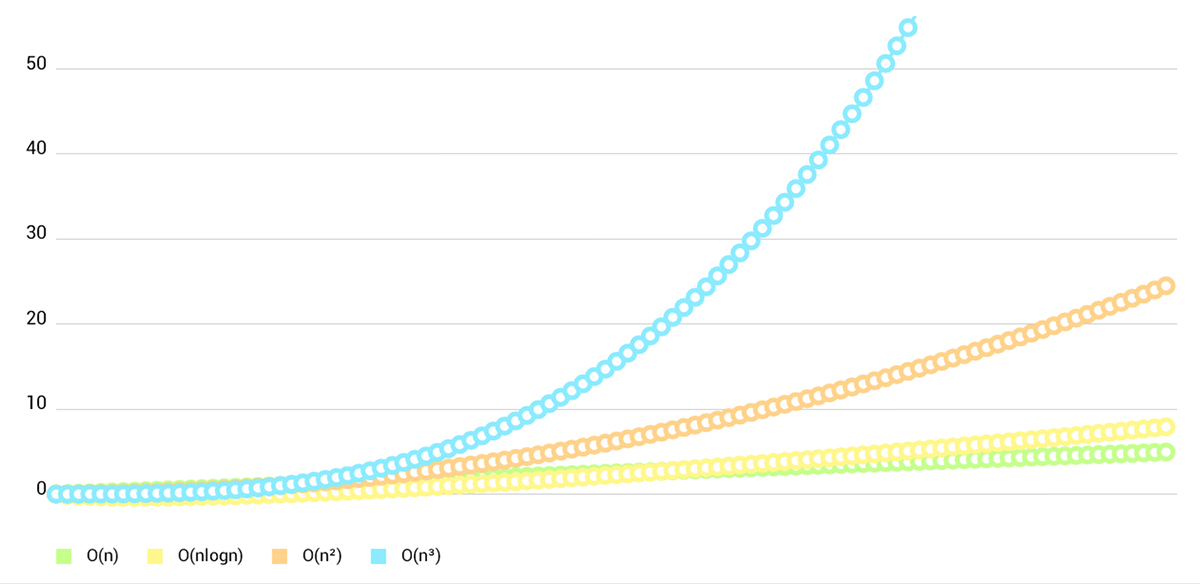
- **LineChart (with legend, simple design)**

- **LineChart (with legend, simple design)**
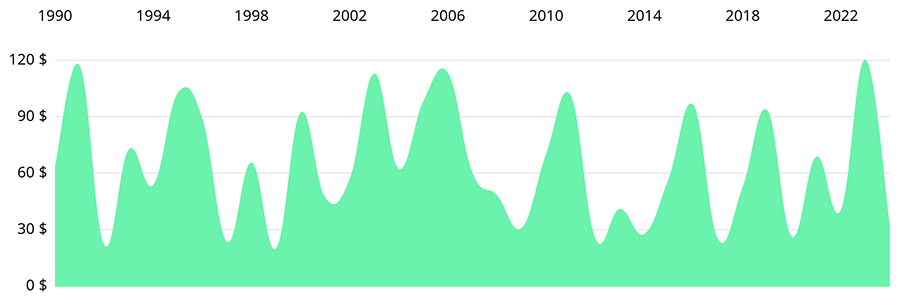
- **LineChart (cubic lines)**
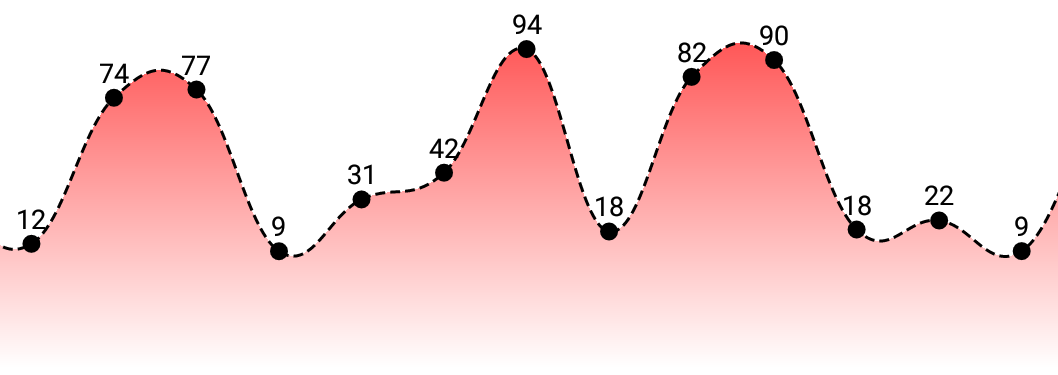
- **LineChart (gradient fill)**
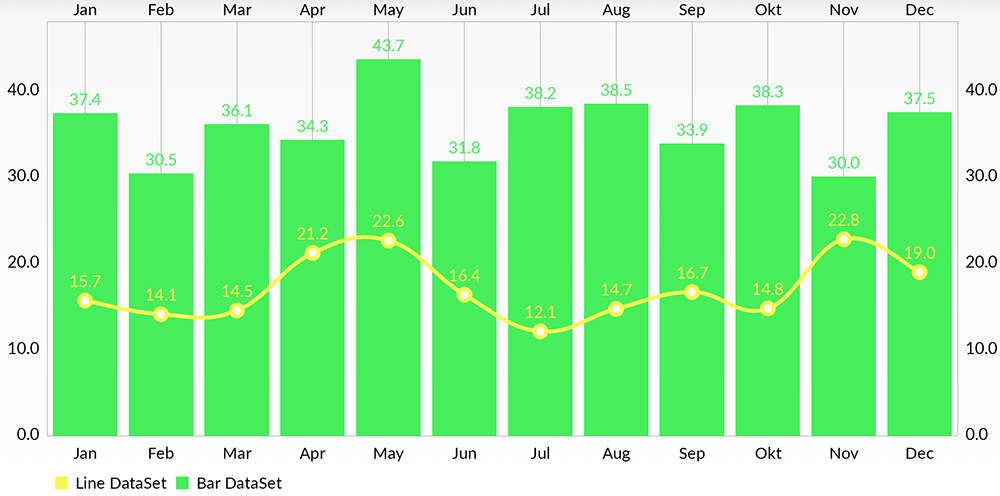
- **Combined-Chart (bar- and linechart in this case)**
- **BarChart (with legend, simple design)**

- **BarChart (grouped DataSets)**

- **Horizontal-BarChart**
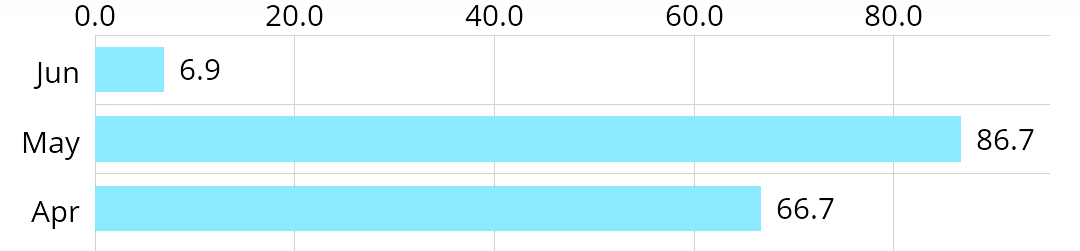
- **PieChart (with selection, ...)**

- **ScatterChart** (with squares, triangles, circles, ... and more)

- **CandleStickChart** (for financial data)

- **BubbleChart** (area covered by bubbles indicates the value)

- **RadarChart** (spider web chart)

Documentation
=======
Currently there's no need for documentation for the iOS/tvOS/macOS version, as the API is **95% the same** as on Android.
You can read the official [MPAndroidChart](https://github.com/PhilJay/MPAndroidChart) documentation here: [**Wiki**](https://github.com/PhilJay/MPAndroidChart/wiki)
Or you can see the Charts Demo project in both Objective-C and Swift ([**ChartsDemo-iOS**](https://github.com/danielgindi/Charts/tree/master/ChartsDemo-iOS), as well as macOS [**ChartsDemo-macOS**](https://github.com/danielgindi/Charts/tree/master/ChartsDemo-macOS)) and learn the how-tos from it.
Special Thanks
=======
Goes to [@liuxuan30](https://github.com/liuxuan30), [@petester42](https://github.com/petester42) and [@AlBirdie](https://github.com/AlBirdie) for new features, bugfixes, and lots and lots of involvement in our open-sourced community! You guys are a huge help to all of those coming here with questions and issues, and I couldn't respond to all of those without you.
### Our amazing sponsors
[Debricked](https://debricked.com/): Use open source securely
[](https://debricked.com/)
License
=======
Copyright 2016 Daniel Cohen Gindi & Philipp Jahoda
Licensed under the Apache License, Version 2.0 (the "License");
you may not use this file except in compliance with the License.
You may obtain a copy of the License at
http://www.apache.org/licenses/LICENSE-2.0
Unless required by applicable law or agreed to in writing, software
distributed under the License is distributed on an "AS IS" BASIS,
WITHOUT WARRANTIES OR CONDITIONS OF ANY KIND, either express or implied.
See the License for the specific language governing permissions and
limitations under the License.
================================================
FILE: mac/Pods/Charts/Source/Charts/Animation/Animator.swift
================================================
//
// Animator.swift
// Charts
//
// Copyright 2015 Daniel Cohen Gindi & Philipp Jahoda
// A port of MPAndroidChart for iOS
// Licensed under Apache License 2.0
//
// https://github.com/danielgindi/Charts
//
import Foundation
import CoreGraphics
import QuartzCore
@objc(ChartAnimatorDelegate)
public protocol AnimatorDelegate
{
/// Called when the Animator has stepped.
func animatorUpdated(_ animator: Animator)
/// Called when the Animator has stopped.
func animatorStopped(_ animator: Animator)
}
@objc(ChartAnimator)
open class Animator: NSObject
{
@objc open weak var delegate: AnimatorDelegate?
@objc open var updateBlock: (() -> Void)?
@objc open var stopBlock: (() -> Void)?
/// the phase that is animated and influences the drawn values on the x-axis
@objc open var phaseX: Double = 1.0
/// the phase that is animated and influences the drawn values on the y-axis
@objc open var phaseY: Double = 1.0
private var _startTimeX: TimeInterval = 0.0
private var _startTimeY: TimeInterval = 0.0
private var _displayLink: NSUIDisplayLink?
private var _durationX: TimeInterval = 0.0
private var _durationY: TimeInterval = 0.0
private var _endTimeX: TimeInterval = 0.0
private var _endTimeY: TimeInterval = 0.0
private var _endTime: TimeInterval = 0.0
private var _enabledX: Bool = false
private var _enabledY: Bool = false
private var _easingX: ChartEasingFunctionBlock?
private var _easingY: ChartEasingFunctionBlock?
public override init()
{
super.init()
}
deinit
{
stop()
}
@objc open func stop()
{
guard _displayLink != nil else { return }
_displayLink?.remove(from: .main, forMode: RunLoop.Mode.common)
_displayLink = nil
_enabledX = false
_enabledY = false
// If we stopped an animation in the middle, we do not want to leave it like this
if phaseX != 1.0 || phaseY != 1.0
{
phaseX = 1.0
phaseY = 1.0
delegate?.animatorUpdated(self)
updateBlock?()
}
delegate?.animatorStopped(self)
stopBlock?()
}
private func updateAnimationPhases(_ currentTime: TimeInterval)
{
if _enabledX
{
let elapsedTime: TimeInterval = currentTime - _startTimeX
let duration: TimeInterval = _durationX
var elapsed: TimeInterval = elapsedTime
if elapsed > duration
{
elapsed = duration
}
phaseX = _easingX?(elapsed, duration) ?? elapsed / duration
}
if _enabledY
{
let elapsedTime: TimeInterval = currentTime - _startTimeY
let duration: TimeInterval = _durationY
var elapsed: TimeInterval = elapsedTime
if elapsed > duration
{
elapsed = duration
}
phaseY = _easingY?(elapsed, duration) ?? elapsed / duration
}
}
@objc private func animationLoop()
{
let currentTime: TimeInterval = CACurrentMediaTime()
updateAnimationPhases(currentTime)
delegate?.animatorUpdated(self)
updateBlock?()
if currentTime >= _endTime
{
stop()
}
}
/// Animates the drawing / rendering of the chart on both x- and y-axis with the specified animation time.
/// If `animate(...)` is called, no further calling of `invalidate()` is necessary to refresh the chart.
///
/// - Parameters:
/// - xAxisDuration: duration for animating the x axis
/// - yAxisDuration: duration for animating the y axis
/// - easingX: an easing function for the animation on the x axis
/// - easingY: an easing function for the animation on the y axis
@objc open func animate(xAxisDuration: TimeInterval, yAxisDuration: TimeInterval, easingX: ChartEasingFunctionBlock?, easingY: ChartEasingFunctionBlock?)
{
stop()
_startTimeX = CACurrentMediaTime()
_startTimeY = _startTimeX
_durationX = xAxisDuration
_durationY = yAxisDuration
_endTimeX = _startTimeX + xAxisDuration
_endTimeY = _startTimeY + yAxisDuration
_endTime = _endTimeX > _endTimeY ? _endTimeX : _endTimeY
_enabledX = xAxisDuration > 0.0
_enabledY = yAxisDuration > 0.0
_easingX = easingX
_easingY = easingY
// Take care of the first frame if rendering is already scheduled...
updateAnimationPhases(_startTimeX)
if _enabledX || _enabledY
{
_displayLink = NSUIDisplayLink(target: self, selector: #selector(animationLoop))
_displayLink?.add(to: RunLoop.main, forMode: RunLoop.Mode.common)
}
}
/// Animates the drawing / rendering of the chart on both x- and y-axis with the specified animation time.
/// If `animate(...)` is called, no further calling of `invalidate()` is necessary to refresh the chart.
///
/// - Parameters:
/// - xAxisDuration: duration for animating the x axis
/// - yAxisDuration: duration for animating the y axis
/// - easingOptionX: the easing function for the animation on the x axis
/// - easingOptionY: the easing function for the animation on the y axis
@objc open func animate(xAxisDuration: TimeInterval, yAxisDuration: TimeInterval, easingOptionX: ChartEasingOption, easingOptionY: ChartEasingOption)
{
animate(xAxisDuration: xAxisDuration, yAxisDuration: yAxisDuration, easingX: easingFunctionFromOption(easingOptionX), easingY: easingFunctionFromOption(easingOptionY))
}
/// Animates the drawing / rendering of the chart on both x- and y-axis with the specified animation time.
/// If `animate(...)` is called, no further calling of `invalidate()` is necessary to refresh the chart.
///
/// - Parameters:
/// - xAxisDuration: duration for animating the x axis
/// - yAxisDuration: duration for animating the y axis
/// - easing: an easing function for the animation
@objc open func animate(xAxisDuration: TimeInterval, yAxisDuration: TimeInterval, easing: ChartEasingFunctionBlock?)
{
animate(xAxisDuration: xAxisDuration, yAxisDuration: yAxisDuration, easingX: easing, easingY: easing)
}
/// Animates the drawing / rendering of the chart on both x- and y-axis with the specified animation time.
/// If `animate(...)` is called, no further calling of `invalidate()` is necessary to refresh the chart.
///
/// - Parameters:
/// - xAxisDuration: duration for animating the x axis
/// - yAxisDuration: duration for animating the y axis
/// - easingOption: the easing function for the animation
@objc open func animate(xAxisDuration: TimeInterval, yAxisDuration: TimeInterval, easingOption: ChartEasingOption = .easeInOutSine)
{
animate(xAxisDuration: xAxisDuration, yAxisDuration: yAxisDuration, easing: easingFunctionFromOption(easingOption))
}
/// Animates the drawing / rendering of the chart the x-axis with the specified animation time.
/// If `animate(...)` is called, no further calling of `invalidate()` is necessary to refresh the chart.
///
/// - Parameters:
/// - xAxisDuration: duration for animating the x axis
/// - easing: an easing function for the animation
@objc open func animate(xAxisDuration: TimeInterval, easing: ChartEasingFunctionBlock?)
{
_startTimeX = CACurrentMediaTime()
_durationX = xAxisDuration
_endTimeX = _startTimeX + xAxisDuration
_endTime = _endTimeX > _endTimeY ? _endTimeX : _endTimeY
_enabledX = xAxisDuration > 0.0
_easingX = easing
// Take care of the first frame if rendering is already scheduled...
updateAnimationPhases(_startTimeX)
if _enabledX || _enabledY,
_displayLink == nil
{
_displayLink = NSUIDisplayLink(target: self, selector: #selector(animationLoop))
_displayLink?.add(to: .main, forMode: RunLoop.Mode.common)
}
}
/// Animates the drawing / rendering of the chart the x-axis with the specified animation time.
/// If `animate(...)` is called, no further calling of `invalidate()` is necessary to refresh the chart.
///
/// - Parameters:
/// - xAxisDuration: duration for animating the x axis
/// - easingOption: the easing function for the animation
@objc open func animate(xAxisDuration: TimeInterval, easingOption: ChartEasingOption = .easeInOutSine)
{
animate(xAxisDuration: xAxisDuration, easing: easingFunctionFromOption(easingOption))
}
/// Animates the drawing / rendering of the chart the y-axis with the specified animation time.
/// If `animate(...)` is called, no further calling of `invalidate()` is necessary to refresh the chart.
///
/// - Parameters:
/// - yAxisDuration: duration for animating the y axis
/// - easing: an easing function for the animation
@objc open func animate(yAxisDuration: TimeInterval, easing: ChartEasingFunctionBlock?)
{
_startTimeY = CACurrentMediaTime()
_durationY = yAxisDuration
_endTimeY = _startTimeY + yAxisDuration
_endTime = _endTimeX > _endTimeY ? _endTimeX : _endTimeY
_enabledY = yAxisDuration > 0.0
_easingY = easing
// Take care of the first frame if rendering is already scheduled...
updateAnimationPhases(_startTimeY)
if _enabledX || _enabledY,
_displayLink == nil
{
_displayLink = NSUIDisplayLink(target: self, selector: #selector(animationLoop))
_displayLink?.add(to: .main, forMode: RunLoop.Mode.common)
}
}
/// Animates the drawing / rendering of the chart the y-axis with the specified animation time.
/// If `animate(...)` is called, no further calling of `invalidate()` is necessary to refresh the chart.
///
/// - Parameters:
/// - yAxisDuration: duration for animating the y axis
/// - easingOption: the easing function for the animation
@objc open func animate(yAxisDuration: TimeInterval, easingOption: ChartEasingOption = .easeInOutSine)
{
animate(yAxisDuration: yAxisDuration, easing: easingFunctionFromOption(easingOption))
}
}
================================================
FILE: mac/Pods/Charts/Source/Charts/Animation/ChartAnimationEasing.swift
================================================
//
// ChartAnimationUtils.swift
// Charts
//
// Copyright 2015 Daniel Cohen Gindi & Philipp Jahoda
// A port of MPAndroidChart for iOS
// Licensed under Apache License 2.0
//
// https://github.com/danielgindi/Charts
//
import Foundation
import CoreGraphics
@objc
public enum ChartEasingOption: Int
{
case linear
case easeInQuad
case easeOutQuad
case easeInOutQuad
case easeInCubic
case easeOutCubic
case easeInOutCubic
case easeInQuart
case easeOutQuart
case easeInOutQuart
case easeInQuint
case easeOutQuint
case easeInOutQuint
case easeInSine
case easeOutSine
case easeInOutSine
case easeInExpo
case easeOutExpo
case easeInOutExpo
case easeInCirc
case easeOutCirc
case easeInOutCirc
case easeInElastic
case easeOutElastic
case easeInOutElastic
case easeInBack
case easeOutBack
case easeInOutBack
case easeInBounce
case easeOutBounce
case easeInOutBounce
}
public typealias ChartEasingFunctionBlock = ((_ elapsed: TimeInterval, _ duration: TimeInterval) -> Double)
internal func easingFunctionFromOption(_ easing: ChartEasingOption) -> ChartEasingFunctionBlock
{
switch easing
{
case .linear:
return EasingFunctions.Linear
case .easeInQuad:
return EasingFunctions.EaseInQuad
case .easeOutQuad:
return EasingFunctions.EaseOutQuad
case .easeInOutQuad:
return EasingFunctions.EaseInOutQuad
case .easeInCubic:
return EasingFunctions.EaseInCubic
case .easeOutCubic:
return EasingFunctions.EaseOutCubic
case .easeInOutCubic:
return EasingFunctions.EaseInOutCubic
case .easeInQuart:
return EasingFunctions.EaseInQuart
case .easeOutQuart:
return EasingFunctions.EaseOutQuart
case .easeInOutQuart:
return EasingFunctions.EaseInOutQuart
case .easeInQuint:
return EasingFunctions.EaseInQuint
case .easeOutQuint:
return EasingFunctions.EaseOutQuint
case .easeInOutQuint:
return EasingFunctions.EaseInOutQuint
case .easeInSine:
return EasingFunctions.EaseInSine
case .easeOutSine:
return EasingFunctions.EaseOutSine
case .easeInOutSine:
return EasingFunctions.EaseInOutSine
case .easeInExpo:
return EasingFunctions.EaseInExpo
case .easeOutExpo:
return EasingFunctions.EaseOutExpo
case .easeInOutExpo:
return EasingFunctions.EaseInOutExpo
case .easeInCirc:
return EasingFunctions.EaseInCirc
case .easeOutCirc:
return EasingFunctions.EaseOutCirc
case .easeInOutCirc:
return EasingFunctions.EaseInOutCirc
case .easeInElastic:
return EasingFunctions.EaseInElastic
case .easeOutElastic:
return EasingFunctions.EaseOutElastic
case .easeInOutElastic:
return EasingFunctions.EaseInOutElastic
case .easeInBack:
return EasingFunctions.EaseInBack
case .easeOutBack:
return EasingFunctions.EaseOutBack
case .easeInOutBack:
return EasingFunctions.EaseInOutBack
case .easeInBounce:
return EasingFunctions.EaseInBounce
case .easeOutBounce:
return EasingFunctions.EaseOutBounce
case .easeInOutBounce:
return EasingFunctions.EaseInOutBounce
}
}
internal struct EasingFunctions
{
internal static let Linear = { (elapsed: TimeInterval, duration: TimeInterval) -> Double in return Double(elapsed / duration) }
internal static let EaseInQuad = { (elapsed: TimeInterval, duration: TimeInterval) -> Double in
var position = Double(elapsed / duration)
return position * position
}
internal static let EaseOutQuad = { (elapsed: TimeInterval, duration: TimeInterval) -> Double in
var position = Double(elapsed / duration)
return -position * (position - 2.0)
}
internal static let EaseInOutQuad = { (elapsed: TimeInterval, duration: TimeInterval) -> Double in
var position = Double(elapsed / (duration / 2.0))
if position < 1.0
{
return 0.5 * position * position
}
return -0.5 * ((position - 1.0) * (position - 3.0) - 1.0)
}
internal static let EaseInCubic = { (elapsed: TimeInterval, duration: TimeInterval) -> Double in
var position = Double(elapsed / duration)
return position * position * position
}
internal static let EaseOutCubic = { (elapsed: TimeInterval, duration: TimeInterval) -> Double in
var position = Double(elapsed / duration)
position -= 1.0
return (position * position * position + 1.0)
}
internal static let EaseInOutCubic = { (elapsed: TimeInterval, duration: TimeInterval) -> Double in
var position = Double(elapsed / (duration / 2.0))
if position < 1.0
{
return 0.5 * position * position * position
}
position -= 2.0
return 0.5 * (position * position * position + 2.0)
}
internal static let EaseInQuart = { (elapsed: TimeInterval, duration: TimeInterval) -> Double in
var position = Double(elapsed / duration)
return position * position * position * position
}
internal static let EaseOutQuart = { (elapsed: TimeInterval, duration: TimeInterval) -> Double in
var position = Double(elapsed / duration)
position -= 1.0
return -(position * position * position * position - 1.0)
}
internal static let EaseInOutQuart = { (elapsed: TimeInterval, duration: TimeInterval) -> Double in
var position = Double(elapsed / (duration / 2.0))
if position < 1.0
{
return 0.5 * position * position * position * position
}
position -= 2.0
return -0.5 * (position * position * position * position - 2.0)
}
internal static let EaseInQuint = { (elapsed: TimeInterval, duration: TimeInterval) -> Double in
var position = Double(elapsed / duration)
return position * position * position * position * position
}
internal static let EaseOutQuint = { (elapsed: TimeInterval, duration: TimeInterval) -> Double in
var position = Double(elapsed / duration)
position -= 1.0
return (position * position * position * position * position + 1.0)
}
internal static let EaseInOutQuint = { (elapsed: TimeInterval, duration: TimeInterval) -> Double in
var position = Double(elapsed / (duration / 2.0))
if position < 1.0
{
return 0.5 * position * position * position * position * position
}
else
{
position -= 2.0
return 0.5 * (position * position * position * position * position + 2.0)
}
}
internal static let EaseInSine = { (elapsed: TimeInterval, duration: TimeInterval) -> Double in
var position: TimeInterval = elapsed / duration
return Double( -cos(position * Double.pi / 2) + 1.0 )
}
internal static let EaseOutSine = { (elapsed: TimeInterval, duration: TimeInterval) -> Double in
var position: TimeInterval = elapsed / duration
return Double( sin(position * Double.pi / 2) )
}
internal static let EaseInOutSine = { (elapsed: TimeInterval, duration: TimeInterval) -> Double in
var position: TimeInterval = elapsed / duration
return Double( -0.5 * (cos(Double.pi * position) - 1.0) )
}
internal static let EaseInExpo = { (elapsed: TimeInterval, duration: TimeInterval) -> Double in
return (elapsed == 0) ? 0.0 : Double(pow(2.0, 10.0 * (elapsed / duration - 1.0)))
}
internal static let EaseOutExpo = { (elapsed: TimeInterval, duration: TimeInterval) -> Double in
return (elapsed == duration) ? 1.0 : (-Double(pow(2.0, -10.0 * elapsed / duration)) + 1.0)
}
internal static let EaseInOutExpo = { (elapsed: TimeInterval, duration: TimeInterval) -> Double in
if elapsed == 0
{
return 0.0
}
if elapsed == duration
{
return 1.0
}
var position: TimeInterval = elapsed / (duration / 2.0)
if position < 1.0
{
return Double( 0.5 * pow(2.0, 10.0 * (position - 1.0)) )
}
position = position - 1.0
return Double( 0.5 * (-pow(2.0, -10.0 * position) + 2.0) )
}
internal static let EaseInCirc = { (elapsed: TimeInterval, duration: TimeInterval) -> Double in
var position = Double(elapsed / duration)
return -(Double(sqrt(1.0 - position * position)) - 1.0)
}
internal static let EaseOutCirc = { (elapsed: TimeInterval, duration: TimeInterval) -> Double in
var position = Double(elapsed / duration)
position -= 1.0
return Double( sqrt(1 - position * position) )
}
internal static let EaseInOutCirc = { (elapsed: TimeInterval, duration: TimeInterval) -> Double in
var position: TimeInterval = elapsed / (duration / 2.0)
if position < 1.0
{
return Double( -0.5 * (sqrt(1.0 - position * position) - 1.0) )
}
position -= 2.0
return Double( 0.5 * (sqrt(1.0 - position * position) + 1.0) )
}
internal static let EaseInElastic = { (elapsed: TimeInterval, duration: TimeInterval) -> Double in
if elapsed == 0.0
{
return 0.0
}
var position: TimeInterval = elapsed / duration
if position == 1.0
{
return 1.0
}
var p = duration * 0.3
var s = p / (2.0 * Double.pi) * asin(1.0)
position -= 1.0
return Double( -(pow(2.0, 10.0 * position) * sin((position * duration - s) * (2.0 * Double.pi) / p)) )
}
internal static let EaseOutElastic = { (elapsed: TimeInterval, duration: TimeInterval) -> Double in
if elapsed == 0.0
{
return 0.0
}
var position: TimeInterval = elapsed / duration
if position == 1.0
{
return 1.0
}
var p = duration * 0.3
var s = p / (2.0 * Double.pi) * asin(1.0)
return Double( pow(2.0, -10.0 * position) * sin((position * duration - s) * (2.0 * Double.pi) / p) + 1.0 )
}
internal static let EaseInOutElastic = { (elapsed: TimeInterval, duration: TimeInterval) -> Double in
if elapsed == 0.0
{
return 0.0
}
var position: TimeInterval = elapsed / (duration / 2.0)
if position == 2.0
{
return 1.0
}
var p = duration * (0.3 * 1.5)
var s = p / (2.0 * Double.pi) * asin(1.0)
if position < 1.0
{
position -= 1.0
return Double( -0.5 * (pow(2.0, 10.0 * position) * sin((position * duration - s) * (2.0 * Double.pi) / p)) )
}
position -= 1.0
return Double( pow(2.0, -10.0 * position) * sin((position * duration - s) * (2.0 * Double.pi) / p) * 0.5 + 1.0 )
}
internal static let EaseInBack = { (elapsed: TimeInterval, duration: TimeInterval) -> Double in
let s: TimeInterval = 1.70158
var position: TimeInterval = elapsed / duration
return Double( position * position * ((s + 1.0) * position - s) )
}
internal static let EaseOutBack = { (elapsed: TimeInterval, duration: TimeInterval) -> Double in
let s: TimeInterval = 1.70158
var position: TimeInterval = elapsed / duration
position -= 1.0
return Double( position * position * ((s + 1.0) * position + s) + 1.0 )
}
internal static let EaseInOutBack = { (elapsed: TimeInterval, duration: TimeInterval) -> Double in
var s: TimeInterval = 1.70158
var position: TimeInterval = elapsed / (duration / 2.0)
if position < 1.0
{
s *= 1.525
return Double( 0.5 * (position * position * ((s + 1.0) * position - s)) )
}
s *= 1.525
position -= 2.0
return Double( 0.5 * (position * position * ((s + 1.0) * position + s) + 2.0) )
}
internal static let EaseInBounce = { (elapsed: TimeInterval, duration: TimeInterval) -> Double in
return 1.0 - EaseOutBounce(duration - elapsed, duration)
}
internal static let EaseOutBounce = { (elapsed: TimeInterval, duration: TimeInterval) -> Double in
var position: TimeInterval = elapsed / duration
if position < (1.0 / 2.75)
{
return Double( 7.5625 * position * position )
}
else if position < (2.0 / 2.75)
{
position -= (1.5 / 2.75)
return Double( 7.5625 * position * position + 0.75 )
}
else if position < (2.5 / 2.75)
{
position -= (2.25 / 2.75)
return Double( 7.5625 * position * position + 0.9375 )
}
else
{
position -= (2.625 / 2.75)
return Double( 7.5625 * position * position + 0.984375 )
}
}
internal static let EaseInOutBounce = { (elapsed: TimeInterval, duration: TimeInterval) -> Double in
if elapsed < (duration / 2.0)
{
return EaseInBounce(elapsed * 2.0, duration) * 0.5
}
return EaseOutBounce(elapsed * 2.0 - duration, duration) * 0.5 + 0.5
}
}
================================================
FILE: mac/Pods/Charts/Source/Charts/Charts/BarChartView.swift
================================================
//
// BarChartView.swift
// Charts
//
// Copyright 2015 Daniel Cohen Gindi & Philipp Jahoda
// A port of MPAndroidChart for iOS
// Licensed under Apache License 2.0
//
// https://github.com/danielgindi/Charts
//
import Foundation
import CoreGraphics
/// Chart that draws bars.
open class BarChartView: BarLineChartViewBase, BarChartDataProvider
{
/// if set to true, all values are drawn above their bars, instead of below their top
private var _drawValueAboveBarEnabled = true
/// if set to true, a grey area is drawn behind each bar that indicates the maximum value
private var _drawBarShadowEnabled = false
internal override func initialize()
{
super.initialize()
renderer = BarChartRenderer(dataProvider: self, animator: _animator, viewPortHandler: _viewPortHandler)
self.highlighter = BarHighlighter(chart: self)
self.xAxis.spaceMin = 0.5
self.xAxis.spaceMax = 0.5
}
internal override func calcMinMax()
{
guard let data = self.data as? BarChartData
else { return }
if fitBars
{
_xAxis.calculate(
min: data.xMin - data.barWidth / 2.0,
max: data.xMax + data.barWidth / 2.0)
}
else
{
_xAxis.calculate(min: data.xMin, max: data.xMax)
}
// calculate axis range (min / max) according to provided data
leftAxis.calculate(
min: data.getYMin(axis: .left),
max: data.getYMax(axis: .left))
rightAxis.calculate(
min: data.getYMin(axis: .right),
max: data.getYMax(axis: .right))
}
/// - Returns: The Highlight object (contains x-index and DataSet index) of the selected value at the given touch point inside the BarChart.
open override func getHighlightByTouchPoint(_ pt: CGPoint) -> Highlight?
{
if _data === nil
{
Swift.print("Can't select by touch. No data set.")
return nil
}
guard let h = self.highlighter?.getHighlight(x: pt.x, y: pt.y)
else { return nil }
if !isHighlightFullBarEnabled { return h }
// For isHighlightFullBarEnabled, remove stackIndex
return Highlight(
x: h.x, y: h.y,
xPx: h.xPx, yPx: h.yPx,
dataIndex: h.dataIndex,
dataSetIndex: h.dataSetIndex,
stackIndex: -1,
axis: h.axis)
}
/// - Returns: The bounding box of the specified Entry in the specified DataSet. Returns null if the Entry could not be found in the charts data.
@objc open func getBarBounds(entry e: BarChartDataEntry) -> CGRect
{
guard let
data = _data as? BarChartData,
let set = data.getDataSetForEntry(e) as? IBarChartDataSet
else { return CGRect.null }
let y = e.y
let x = e.x
let barWidth = data.barWidth
let left = x - barWidth / 2.0
let right = x + barWidth / 2.0
let top = y >= 0.0 ? y : 0.0
let bottom = y <= 0.0 ? y : 0.0
var bounds = CGRect(x: left, y: top, width: right - left, height: bottom - top)
getTransformer(forAxis: set.axisDependency).rectValueToPixel(&bounds)
return bounds
}
/// Groups all BarDataSet objects this data object holds together by modifying the x-value of their entries.
/// Previously set x-values of entries will be overwritten. Leaves space between bars and groups as specified by the parameters.
/// Calls `notifyDataSetChanged()` afterwards.
///
/// - Parameters:
/// - fromX: the starting point on the x-axis where the grouping should begin
/// - groupSpace: the space between groups of bars in values (not pixels) e.g. 0.8f for bar width 1f
/// - barSpace: the space between individual bars in values (not pixels) e.g. 0.1f for bar width 1f
@objc open func groupBars(fromX: Double, groupSpace: Double, barSpace: Double)
{
guard let barData = self.barData
else
{
Swift.print("You need to set data for the chart before grouping bars.", terminator: "\n")
return
}
barData.groupBars(fromX: fromX, groupSpace: groupSpace, barSpace: barSpace)
notifyDataSetChanged()
}
/// Highlights the value at the given x-value in the given DataSet. Provide -1 as the dataSetIndex to undo all highlighting.
///
/// - Parameters:
/// - x:
/// - dataSetIndex:
/// - stackIndex: the index inside the stack - only relevant for stacked entries
@objc open func highlightValue(x: Double, dataSetIndex: Int, stackIndex: Int)
{
highlightValue(Highlight(x: x, dataSetIndex: dataSetIndex, stackIndex: stackIndex))
}
// MARK: Accessors
/// if set to true, all values are drawn above their bars, instead of below their top
@objc open var drawValueAboveBarEnabled: Bool
{
get { return _drawValueAboveBarEnabled }
set
{
_drawValueAboveBarEnabled = newValue
setNeedsDisplay()
}
}
/// if set to true, a grey area is drawn behind each bar that indicates the maximum value
@objc open var drawBarShadowEnabled: Bool
{
get { return _drawBarShadowEnabled }
set
{
_drawBarShadowEnabled = newValue
setNeedsDisplay()
}
}
/// Adds half of the bar width to each side of the x-axis range in order to allow the bars of the barchart to be fully displayed.
/// **default**: false
@objc open var fitBars = false
/// Set this to `true` to make the highlight operation full-bar oriented, `false` to make it highlight single values (relevant only for stacked).
/// If enabled, highlighting operations will highlight the whole bar, even if only a single stack entry was tapped.
@objc open var highlightFullBarEnabled: Bool = false
/// `true` the highlight is be full-bar oriented, `false` ifsingle-value
open var isHighlightFullBarEnabled: Bool { return highlightFullBarEnabled }
// MARK: - BarChartDataProvider
open var barData: BarChartData? { return _data as? BarChartData }
/// `true` if drawing values above bars is enabled, `false` ifnot
open var isDrawValueAboveBarEnabled: Bool { return drawValueAboveBarEnabled }
/// `true` if drawing shadows (maxvalue) for each bar is enabled, `false` ifnot
open var isDrawBarShadowEnabled: Bool { return drawBarShadowEnabled }
}
================================================
FILE: mac/Pods/Charts/Source/Charts/Charts/BarLineChartViewBase.swift
================================================
//
// BarLineChartViewBase.swift
// Charts
//
// Copyright 2015 Daniel Cohen Gindi & Philipp Jahoda
// A port of MPAndroidChart for iOS
// Licensed under Apache License 2.0
//
// https://github.com/danielgindi/Charts
//
import Foundation
import CoreGraphics
#if canImport(UIKit)
import UIKit
#endif
#if canImport(Cocoa)
import Cocoa
#endif
/// Base-class of LineChart, BarChart, ScatterChart and CandleStickChart.
open class BarLineChartViewBase: ChartViewBase, BarLineScatterCandleBubbleChartDataProvider, NSUIGestureRecognizerDelegate
{
/// the maximum number of entries to which values will be drawn
/// (entry numbers greater than this value will cause value-labels to disappear)
internal var _maxVisibleCount = 100
/// flag that indicates if auto scaling on the y axis is enabled
private var _autoScaleMinMaxEnabled = false
private var _pinchZoomEnabled = false
private var _doubleTapToZoomEnabled = true
private var _dragXEnabled = true
private var _dragYEnabled = true
private var _scaleXEnabled = true
private var _scaleYEnabled = true
/// the color for the background of the chart-drawing area (everything behind the grid lines).
@objc open var gridBackgroundColor = NSUIColor(red: 240/255.0, green: 240/255.0, blue: 240/255.0, alpha: 1.0)
@objc open var borderColor = NSUIColor.black
@objc open var borderLineWidth: CGFloat = 1.0
/// flag indicating if the grid background should be drawn or not
@objc open var drawGridBackgroundEnabled = false
/// When enabled, the borders rectangle will be rendered.
/// If this is enabled, there is no point drawing the axis-lines of x- and y-axis.
@objc open var drawBordersEnabled = false
/// When enabled, the values will be clipped to contentRect, otherwise they can bleed outside the content rect.
@objc open var clipValuesToContentEnabled: Bool = false
/// When disabled, the data and/or highlights will not be clipped to contentRect. Disabling this option can
/// be useful, when the data lies fully within the content rect, but is drawn in such a way (such as thick lines)
/// that there is unwanted clipping.
@objc open var clipDataToContentEnabled: Bool = true
/// Sets the minimum offset (padding) around the chart, defaults to 10
@objc open var minOffset = CGFloat(10.0)
/// Sets whether the chart should keep its position (zoom / scroll) after a rotation (orientation change)
/// **default**: false
@objc open var keepPositionOnRotation: Bool = false
/// The left y-axis object. In the horizontal bar-chart, this is the
/// top axis.
@objc open internal(set) var leftAxis = YAxis(position: .left)
/// The right y-axis object. In the horizontal bar-chart, this is the
/// bottom axis.
@objc open internal(set) var rightAxis = YAxis(position: .right)
/// The left Y axis renderer. This is a read-write property so you can set your own custom renderer here.
/// **default**: An instance of YAxisRenderer
@objc open lazy var leftYAxisRenderer = YAxisRenderer(viewPortHandler: _viewPortHandler, yAxis: leftAxis, transformer: _leftAxisTransformer)
/// The right Y axis renderer. This is a read-write property so you can set your own custom renderer here.
/// **default**: An instance of YAxisRenderer
@objc open lazy var rightYAxisRenderer = YAxisRenderer(viewPortHandler: _viewPortHandler, yAxis: rightAxis, transformer: _rightAxisTransformer)
internal var _leftAxisTransformer: Transformer!
internal var _rightAxisTransformer: Transformer!
/// The X axis renderer. This is a read-write property so you can set your own custom renderer here.
/// **default**: An instance of XAxisRenderer
@objc open lazy var xAxisRenderer = XAxisRenderer(viewPortHandler: _viewPortHandler, xAxis: _xAxis, transformer: _leftAxisTransformer)
internal var _tapGestureRecognizer: NSUITapGestureRecognizer!
internal var _doubleTapGestureRecognizer: NSUITapGestureRecognizer!
#if !os(tvOS)
internal var _pinchGestureRecognizer: NSUIPinchGestureRecognizer!
#endif
internal var _panGestureRecognizer: NSUIPanGestureRecognizer!
/// flag that indicates if a custom viewport offset has been set
private var _customViewPortEnabled = false
public override init(frame: CGRect)
{
super.init(frame: frame)
}
public required init?(coder aDecoder: NSCoder)
{
super.init(coder: aDecoder)
}
deinit
{
stopDeceleration()
}
internal override func initialize()
{
super.initialize()
_leftAxisTransformer = Transformer(viewPortHandler: _viewPortHandler)
_rightAxisTransformer = Transformer(viewPortHandler: _viewPortHandler)
self.highlighter = ChartHighlighter(chart: self)
_tapGestureRecognizer = NSUITapGestureRecognizer(target: self, action: #selector(tapGestureRecognized(_:)))
_doubleTapGestureRecognizer = NSUITapGestureRecognizer(target: self, action: #selector(doubleTapGestureRecognized(_:)))
_doubleTapGestureRecognizer.nsuiNumberOfTapsRequired = 2
_panGestureRecognizer = NSUIPanGestureRecognizer(target: self, action: #selector(panGestureRecognized(_:)))
_panGestureRecognizer.delegate = self
self.addGestureRecognizer(_tapGestureRecognizer)
self.addGestureRecognizer(_doubleTapGestureRecognizer)
self.addGestureRecognizer(_panGestureRecognizer)
_doubleTapGestureRecognizer.isEnabled = _doubleTapToZoomEnabled
_panGestureRecognizer.isEnabled = _dragXEnabled || _dragYEnabled
#if !os(tvOS)
_pinchGestureRecognizer = NSUIPinchGestureRecognizer(target: self, action: #selector(BarLineChartViewBase.pinchGestureRecognized(_:)))
_pinchGestureRecognizer.delegate = self
self.addGestureRecognizer(_pinchGestureRecognizer)
_pinchGestureRecognizer.isEnabled = _pinchZoomEnabled || _scaleXEnabled || _scaleYEnabled
#endif
}
open override func observeValue(forKeyPath keyPath: String?, of object: Any?, change: [NSKeyValueChangeKey : Any]?, context: UnsafeMutableRawPointer?)
{
// Saving current position of chart.
var oldPoint: CGPoint?
if (keepPositionOnRotation && (keyPath == "frame" || keyPath == "bounds"))
{
oldPoint = viewPortHandler.contentRect.origin
getTransformer(forAxis: .left).pixelToValues(&oldPoint!)
}
// Superclass transforms chart.
super.observeValue(forKeyPath: keyPath, of: object, change: change, context: context)
// Restoring old position of chart
if var newPoint = oldPoint , keepPositionOnRotation
{
getTransformer(forAxis: .left).pointValueToPixel(&newPoint)
viewPortHandler.centerViewPort(pt: newPoint, chart: self)
}
else
{
viewPortHandler.refresh(newMatrix: viewPortHandler.touchMatrix, chart: self, invalidate: true)
}
}
open override func draw(_ rect: CGRect)
{
super.draw(rect)
guard data != nil, let renderer = renderer else { return }
let optionalContext = NSUIGraphicsGetCurrentContext()
guard let context = optionalContext else { return }
// execute all drawing commands
drawGridBackground(context: context)
if _autoScaleMinMaxEnabled
{
autoScale()
}
if leftAxis.isEnabled
{
leftYAxisRenderer.computeAxis(min: leftAxis._axisMinimum, max: leftAxis._axisMaximum, inverted: leftAxis.isInverted)
}
if rightAxis.isEnabled
{
rightYAxisRenderer.computeAxis(min: rightAxis._axisMinimum, max: rightAxis._axisMaximum, inverted: rightAxis.isInverted)
}
if _xAxis.isEnabled
{
xAxisRenderer.computeAxis(min: _xAxis._axisMinimum, max: _xAxis._axisMaximum, inverted: false)
}
xAxisRenderer.renderAxisLine(context: context)
leftYAxisRenderer.renderAxisLine(context: context)
rightYAxisRenderer.renderAxisLine(context: context)
// The renderers are responsible for clipping, to account for line-width center etc.
if xAxis.drawGridLinesBehindDataEnabled
{
xAxisRenderer.renderGridLines(context: context)
leftYAxisRenderer.renderGridLines(context: context)
rightYAxisRenderer.renderGridLines(context: context)
}
if _xAxis.isEnabled && _xAxis.isDrawLimitLinesBehindDataEnabled
{
xAxisRenderer.renderLimitLines(context: context)
}
if leftAxis.isEnabled && leftAxis.isDrawLimitLinesBehindDataEnabled
{
leftYAxisRenderer.renderLimitLines(context: context)
}
if rightAxis.isEnabled && rightAxis.isDrawLimitLinesBehindDataEnabled
{
rightYAxisRenderer.renderLimitLines(context: context)
}
context.saveGState()
// make sure the data cannot be drawn outside the content-rect
if clipDataToContentEnabled {
context.clip(to: _viewPortHandler.contentRect)
}
renderer.drawData(context: context)
// The renderers are responsible for clipping, to account for line-width center etc.
if !xAxis.drawGridLinesBehindDataEnabled
{
xAxisRenderer.renderGridLines(context: context)
leftYAxisRenderer.renderGridLines(context: context)
rightYAxisRenderer.renderGridLines(context: context)
}
// if highlighting is enabled
if (valuesToHighlight())
{
renderer.drawHighlighted(context: context, indices: _indicesToHighlight)
}
context.restoreGState()
renderer.drawExtras(context: context)
if _xAxis.isEnabled && !_xAxis.isDrawLimitLinesBehindDataEnabled
{
xAxisRenderer.renderLimitLines(context: context)
}
if leftAxis.isEnabled && !leftAxis.isDrawLimitLinesBehindDataEnabled
{
leftYAxisRenderer.renderLimitLines(context: context)
}
if rightAxis.isEnabled && !rightAxis.isDrawLimitLinesBehindDataEnabled
{
rightYAxisRenderer.renderLimitLines(context: context)
}
xAxisRenderer.renderAxisLabels(context: context)
leftYAxisRenderer.renderAxisLabels(context: context)
rightYAxisRenderer.renderAxisLabels(context: context)
if clipValuesToContentEnabled
{
context.saveGState()
context.clip(to: _viewPortHandler.contentRect)
renderer.drawValues(context: context)
context.restoreGState()
}
else
{
renderer.drawValues(context: context)
}
_legendRenderer.renderLegend(context: context)
drawDescription(context: context)
drawMarkers(context: context)
}
private var _autoScaleLastLowestVisibleX: Double?
private var _autoScaleLastHighestVisibleX: Double?
/// Performs auto scaling of the axis by recalculating the minimum and maximum y-values based on the entries currently in view.
internal func autoScale()
{
guard let data = _data
else { return }
data.calcMinMaxY(fromX: self.lowestVisibleX, toX: self.highestVisibleX)
_xAxis.calculate(min: data.xMin, max: data.xMax)
// calculate axis range (min / max) according to provided data
if leftAxis.isEnabled
{
leftAxis.calculate(min: data.getYMin(axis: .left), max: data.getYMax(axis: .left))
}
if rightAxis.isEnabled
{
rightAxis.calculate(min: data.getYMin(axis: .right), max: data.getYMax(axis: .right))
}
calculateOffsets()
}
internal func prepareValuePxMatrix()
{
_rightAxisTransformer.prepareMatrixValuePx(chartXMin: _xAxis._axisMinimum, deltaX: CGFloat(xAxis.axisRange), deltaY: CGFloat(rightAxis.axisRange), chartYMin: rightAxis._axisMinimum)
_leftAxisTransformer.prepareMatrixValuePx(chartXMin: xAxis._axisMinimum, deltaX: CGFloat(xAxis.axisRange), deltaY: CGFloat(leftAxis.axisRange), chartYMin: leftAxis._axisMinimum)
}
internal func prepareOffsetMatrix()
{
_rightAxisTransformer.prepareMatrixOffset(inverted: rightAxis.isInverted)
_leftAxisTransformer.prepareMatrixOffset(inverted: leftAxis.isInverted)
}
open override func notifyDataSetChanged()
{
renderer?.initBuffers()
calcMinMax()
leftYAxisRenderer.computeAxis(min: leftAxis._axisMinimum, max: leftAxis._axisMaximum, inverted: leftAxis.isInverted)
rightYAxisRenderer.computeAxis(min: rightAxis._axisMinimum, max: rightAxis._axisMaximum, inverted: rightAxis.isInverted)
if let data = _data
{
xAxisRenderer.computeAxis(
min: _xAxis._axisMinimum,
max: _xAxis._axisMaximum,
inverted: false)
if _legend !== nil
{
legendRenderer?.computeLegend(data: data)
}
}
calculateOffsets()
setNeedsDisplay()
}
internal override func calcMinMax()
{
// calculate / set x-axis range
_xAxis.calculate(min: _data?.xMin ?? 0.0, max: _data?.xMax ?? 0.0)
// calculate axis range (min / max) according to provided data
leftAxis.calculate(min: _data?.getYMin(axis: .left) ?? 0.0, max: _data?.getYMax(axis: .left) ?? 0.0)
rightAxis.calculate(min: _data?.getYMin(axis: .right) ?? 0.0, max: _data?.getYMax(axis: .right) ?? 0.0)
}
internal func calculateLegendOffsets(offsetLeft: inout CGFloat, offsetTop: inout CGFloat, offsetRight: inout CGFloat, offsetBottom: inout CGFloat)
{
// setup offsets for legend
if _legend !== nil && _legend.isEnabled && !_legend.drawInside
{
switch _legend.orientation
{
case .vertical:
switch _legend.horizontalAlignment
{
case .left:
offsetLeft += min(_legend.neededWidth, _viewPortHandler.chartWidth * _legend.maxSizePercent) + _legend.xOffset
case .right:
offsetRight += min(_legend.neededWidth, _viewPortHandler.chartWidth * _legend.maxSizePercent) + _legend.xOffset
case .center:
switch _legend.verticalAlignment
{
case .top:
offsetTop += min(_legend.neededHeight, _viewPortHandler.chartHeight * _legend.maxSizePercent) + _legend.yOffset
case .bottom:
offsetBottom += min(_legend.neededHeight, _viewPortHandler.chartHeight * _legend.maxSizePercent) + _legend.yOffset
default:
break
}
}
case .horizontal:
switch _legend.verticalAlignment
{
case .top:
offsetTop += min(_legend.neededHeight, _viewPortHandler.chartHeight * _legend.maxSizePercent) + _legend.yOffset
case .bottom:
offsetBottom += min(_legend.neededHeight, _viewPortHandler.chartHeight * _legend.maxSizePercent) + _legend.yOffset
default:
break
}
}
}
}
internal override func calculateOffsets()
{
if !_customViewPortEnabled
{
var offsetLeft = CGFloat(0.0)
var offsetRight = CGFloat(0.0)
var offsetTop = CGFloat(0.0)
var offsetBottom = CGFloat(0.0)
calculateLegendOffsets(offsetLeft: &offsetLeft,
offsetTop: &offsetTop,
offsetRight: &offsetRight,
offsetBottom: &offsetBottom)
// offsets for y-labels
if leftAxis.needsOffset
{
offsetLeft += leftAxis.requiredSize().width
}
if rightAxis.needsOffset
{
offsetRight += rightAxis.requiredSize().width
}
if xAxis.isEnabled && xAxis.isDrawLabelsEnabled
{
let xlabelheight = xAxis.labelRotatedHeight + xAxis.yOffset
// offsets for x-labels
if xAxis.labelPosition == .bottom
{
offsetBottom += xlabelheight
}
else if xAxis.labelPosition == .top
{
offsetTop += xlabelheight
}
else if xAxis.labelPosition == .bothSided
{
offsetBottom += xlabelheight
offsetTop += xlabelheight
}
}
offsetTop += self.extraTopOffset
offsetRight += self.extraRightOffset
offsetBottom += self.extraBottomOffset
offsetLeft += self.extraLeftOffset
_viewPortHandler.restrainViewPort(
offsetLeft: max(self.minOffset, offsetLeft),
offsetTop: max(self.minOffset, offsetTop),
offsetRight: max(self.minOffset, offsetRight),
offsetBottom: max(self.minOffset, offsetBottom))
}
prepareOffsetMatrix()
prepareValuePxMatrix()
}
/// draws the grid background
internal func drawGridBackground(context: CGContext)
{
if drawGridBackgroundEnabled || drawBordersEnabled
{
context.saveGState()
}
if drawGridBackgroundEnabled
{
// draw the grid background
context.setFillColor(gridBackgroundColor.cgColor)
context.fill(_viewPortHandler.contentRect)
}
if drawBordersEnabled
{
context.setLineWidth(borderLineWidth)
context.setStrokeColor(borderColor.cgColor)
context.stroke(_viewPortHandler.contentRect)
}
if drawGridBackgroundEnabled || drawBordersEnabled
{
context.restoreGState()
}
}
// MARK: - Gestures
private enum GestureScaleAxis
{
case both
case x
case y
}
private var _isDragging = false
private var _isScaling = false
private var _gestureScaleAxis = GestureScaleAxis.both
private var _closestDataSetToTouch: IChartDataSet!
private var _panGestureReachedEdge: Bool = false
private weak var _outerScrollView: NSUIScrollView?
private var _lastPanPoint = CGPoint() /// This is to prevent using setTranslation which resets velocity
private var _decelerationLastTime: TimeInterval = 0.0
private var _decelerationDisplayLink: NSUIDisplayLink!
private var _decelerationVelocity = CGPoint()
@objc private func tapGestureRecognized(_ recognizer: NSUITapGestureRecognizer)
{
if _data === nil
{
return
}
if recognizer.state == NSUIGestureRecognizerState.ended
{
if !isHighLightPerTapEnabled { return }
let h = getHighlightByTouchPoint(recognizer.location(in: self))
if h === nil || h == self.lastHighlighted
{
lastHighlighted = nil
highlightValue(nil, callDelegate: true)
}
else
{
lastHighlighted = h
highlightValue(h, callDelegate: true)
}
}
}
@objc private func doubleTapGestureRecognized(_ recognizer: NSUITapGestureRecognizer)
{
if _data === nil
{
return
}
if recognizer.state == NSUIGestureRecognizerState.ended
{
if _data !== nil && _doubleTapToZoomEnabled && (data?.entryCount ?? 0) > 0
{
var location = recognizer.location(in: self)
location.x = location.x - _viewPortHandler.offsetLeft
if isTouchInverted()
{
location.y = -(location.y - _viewPortHandler.offsetTop)
}
else
{
location.y = -(self.bounds.size.height - location.y - _viewPortHandler.offsetBottom)
}
let scaleX: CGFloat = isScaleXEnabled ? 1.4 : 1.0
let scaleY: CGFloat = isScaleYEnabled ? 1.4 : 1.0
self.zoom(scaleX: scaleX, scaleY: scaleY, x: location.x, y: location.y)
delegate?.chartScaled?(self, scaleX: scaleX, scaleY: scaleY)
}
}
}
#if !os(tvOS)
@objc private func pinchGestureRecognized(_ recognizer: NSUIPinchGestureRecognizer)
{
if recognizer.state == NSUIGestureRecognizerState.began
{
stopDeceleration()
if _data !== nil &&
(_pinchZoomEnabled || _scaleXEnabled || _scaleYEnabled)
{
_isScaling = true
if _pinchZoomEnabled
{
_gestureScaleAxis = .both
}
else
{
let x = abs(recognizer.location(in: self).x - recognizer.nsuiLocationOfTouch(1, inView: self).x)
let y = abs(recognizer.location(in: self).y - recognizer.nsuiLocationOfTouch(1, inView: self).y)
if _scaleXEnabled != _scaleYEnabled
{
_gestureScaleAxis = _scaleXEnabled ? .x : .y
}
else
{
_gestureScaleAxis = x > y ? .x : .y
}
}
}
}
else if recognizer.state == NSUIGestureRecognizerState.ended ||
recognizer.state == NSUIGestureRecognizerState.cancelled
{
if _isScaling
{
_isScaling = false
// Range might have changed, which means that Y-axis labels could have changed in size, affecting Y-axis size. So we need to recalculate offsets.
calculateOffsets()
setNeedsDisplay()
}
}
else if recognizer.state == NSUIGestureRecognizerState.changed
{
let isZoomingOut = (recognizer.nsuiScale < 1)
var canZoomMoreX = isZoomingOut ? _viewPortHandler.canZoomOutMoreX : _viewPortHandler.canZoomInMoreX
var canZoomMoreY = isZoomingOut ? _viewPortHandler.canZoomOutMoreY : _viewPortHandler.canZoomInMoreY
if _isScaling
{
canZoomMoreX = canZoomMoreX && _scaleXEnabled && (_gestureScaleAxis == .both || _gestureScaleAxis == .x)
canZoomMoreY = canZoomMoreY && _scaleYEnabled && (_gestureScaleAxis == .both || _gestureScaleAxis == .y)
if canZoomMoreX || canZoomMoreY
{
var location = recognizer.location(in: self)
location.x = location.x - _viewPortHandler.offsetLeft
if isTouchInverted()
{
location.y = -(location.y - _viewPortHandler.offsetTop)
}
else
{
location.y = -(_viewPortHandler.chartHeight - location.y - _viewPortHandler.offsetBottom)
}
let scaleX = canZoomMoreX ? recognizer.nsuiScale : 1.0
let scaleY = canZoomMoreY ? recognizer.nsuiScale : 1.0
var matrix = CGAffineTransform(translationX: location.x, y: location.y)
matrix = matrix.scaledBy(x: scaleX, y: scaleY)
matrix = matrix.translatedBy(x: -location.x, y: -location.y)
matrix = _viewPortHandler.touchMatrix.concatenating(matrix)
_viewPortHandler.refresh(newMatrix: matrix, chart: self, invalidate: true)
if delegate !== nil
{
delegate?.chartScaled?(self, scaleX: scaleX, scaleY: scaleY)
}
}
recognizer.nsuiScale = 1.0
}
}
}
#endif
@objc private func panGestureRecognized(_ recognizer: NSUIPanGestureRecognizer)
{
if recognizer.state == NSUIGestureRecognizerState.began && recognizer.nsuiNumberOfTouches() > 0
{
stopDeceleration()
if _data === nil || !self.isDragEnabled
{ // If we have no data, we have nothing to pan and no data to highlight
return
}
// If drag is enabled and we are in a position where there's something to drag:
// * If we're zoomed in, then obviously we have something to drag.
// * If we have a drag offset - we always have something to drag
if !self.hasNoDragOffset || !self.isFullyZoomedOut
{
_isDragging = true
_closestDataSetToTouch = getDataSetByTouchPoint(point: recognizer.nsuiLocationOfTouch(0, inView: self))
var translation = recognizer.translation(in: self)
if !self.dragXEnabled
{
translation.x = 0.0
}
else if !self.dragYEnabled
{
translation.y = 0.0
}
let didUserDrag = translation.x != 0.0 || translation.y != 0.0
// Check to see if user dragged at all and if so, can the chart be dragged by the given amount
if didUserDrag && !performPanChange(translation: translation)
{
if _outerScrollView !== nil
{
// We can stop dragging right now, and let the scroll view take control
_outerScrollView = nil
_isDragging = false
}
}
else
{
if _outerScrollView !== nil
{
// Prevent the parent scroll view from scrolling
_outerScrollView?.nsuiIsScrollEnabled = false
}
}
_lastPanPoint = recognizer.translation(in: self)
}
else if self.isHighlightPerDragEnabled
{
// We will only handle highlights on NSUIGestureRecognizerState.Changed
_isDragging = false
}
}
else if recognizer.state == NSUIGestureRecognizerState.changed
{
if _isDragging
{
let originalTranslation = recognizer.translation(in: self)
var translation = CGPoint(x: originalTranslation.x - _lastPanPoint.x, y: originalTranslation.y - _lastPanPoint.y)
if !self.dragXEnabled
{
translation.x = 0.0
}
else if !self.dragYEnabled
{
translation.y = 0.0
}
let _ = performPanChange(translation: translation)
_lastPanPoint = originalTranslation
}
else if isHighlightPerDragEnabled
{
let h = getHighlightByTouchPoint(recognizer.location(in: self))
let lastHighlighted = self.lastHighlighted
if h != lastHighlighted
{
self.lastHighlighted = h
self.highlightValue(h, callDelegate: true)
}
}
}
else if recognizer.state == NSUIGestureRecognizerState.ended || recognizer.state == NSUIGestureRecognizerState.cancelled
{
if _isDragging
{
if recognizer.state == NSUIGestureRecognizerState.ended && isDragDecelerationEnabled
{
stopDeceleration()
_decelerationLastTime = CACurrentMediaTime()
_decelerationVelocity = recognizer.velocity(in: self)
_decelerationDisplayLink = NSUIDisplayLink(target: self, selector: #selector(BarLineChartViewBase.decelerationLoop))
_decelerationDisplayLink.add(to: RunLoop.main, forMode: RunLoop.Mode.common)
}
_isDragging = false
delegate?.chartViewDidEndPanning?(self)
}
if _outerScrollView !== nil
{
_outerScrollView?.nsuiIsScrollEnabled = true
_outerScrollView = nil
}
}
}
private func performPanChange(translation: CGPoint) -> Bool
{
var translation = translation
if isTouchInverted()
{
if self is HorizontalBarChartView
{
translation.x = -translation.x
}
else
{
translation.y = -translation.y
}
}
let originalMatrix = _viewPortHandler.touchMatrix
var matrix = CGAffineTransform(translationX: translation.x, y: translation.y)
matrix = originalMatrix.concatenating(matrix)
matrix = _viewPortHandler.refresh(newMatrix: matrix, chart: self, invalidate: true)
if matrix != originalMatrix
{
delegate?.chartTranslated?(self, dX: translation.x, dY: translation.y)
}
// Did we managed to actually drag or did we reach the edge?
return matrix.tx != originalMatrix.tx || matrix.ty != originalMatrix.ty
}
private func isTouchInverted() -> Bool
{
return isAnyAxisInverted &&
_closestDataSetToTouch !== nil &&
getAxis(_closestDataSetToTouch.axisDependency).isInverted
}
@objc open func stopDeceleration()
{
if _decelerationDisplayLink !== nil
{
_decelerationDisplayLink.remove(from: RunLoop.main, forMode: RunLoop.Mode.common)
_decelerationDisplayLink = nil
}
}
@objc private func decelerationLoop()
{
let currentTime = CACurrentMediaTime()
_decelerationVelocity.x *= self.dragDecelerationFrictionCoef
_decelerationVelocity.y *= self.dragDecelerationFrictionCoef
let timeInterval = CGFloat(currentTime - _decelerationLastTime)
let distance = CGPoint(
x: _decelerationVelocity.x * timeInterval,
y: _decelerationVelocity.y * timeInterval
)
if !performPanChange(translation: distance)
{
// We reached the edge, stop
_decelerationVelocity.x = 0.0
_decelerationVelocity.y = 0.0
}
_decelerationLastTime = currentTime
if abs(_decelerationVelocity.x) < 0.001 && abs(_decelerationVelocity.y) < 0.001
{
stopDeceleration()
// Range might have changed, which means that Y-axis labels could have changed in size, affecting Y-axis size. So we need to recalculate offsets.
calculateOffsets()
setNeedsDisplay()
}
}
private func nsuiGestureRecognizerShouldBegin(_ gestureRecognizer: NSUIGestureRecognizer) -> Bool
{
if gestureRecognizer == _panGestureRecognizer
{
let velocity = _panGestureRecognizer.velocity(in: self)
if _data === nil || !isDragEnabled ||
(self.hasNoDragOffset && self.isFullyZoomedOut && !self.isHighlightPerDragEnabled) ||
(!_dragYEnabled && abs(velocity.y) > abs(velocity.x)) ||
(!_dragXEnabled && abs(velocity.y) < abs(velocity.x))
{
return false
}
}
else
{
#if !os(tvOS)
if gestureRecognizer == _pinchGestureRecognizer
{
if _data === nil || (!_pinchZoomEnabled && !_scaleXEnabled && !_scaleYEnabled)
{
return false
}
}
#endif
}
return true
}
#if !os(OSX)
open override func gestureRecognizerShouldBegin(_ gestureRecognizer: UIGestureRecognizer) -> Bool
{
if !super.gestureRecognizerShouldBegin(gestureRecognizer)
{
return false
}
return nsuiGestureRecognizerShouldBegin(gestureRecognizer)
}
#endif
#if os(OSX)
public func gestureRecognizerShouldBegin(gestureRecognizer: NSGestureRecognizer) -> Bool
{
return nsuiGestureRecognizerShouldBegin(gestureRecognizer)
}
#endif
open func gestureRecognizer(_ gestureRecognizer: NSUIGestureRecognizer, shouldRecognizeSimultaneouslyWith otherGestureRecognizer: NSUIGestureRecognizer) -> Bool
{
#if !os(tvOS)
if ((gestureRecognizer is NSUIPinchGestureRecognizer && otherGestureRecognizer is NSUIPanGestureRecognizer) ||
(gestureRecognizer is NSUIPanGestureRecognizer && otherGestureRecognizer is NSUIPinchGestureRecognizer))
{
return true
}
#endif
if gestureRecognizer is NSUIPanGestureRecognizer,
otherGestureRecognizer is NSUIPanGestureRecognizer,
gestureRecognizer == _panGestureRecognizer
{
var scrollView = self.superview
while scrollView != nil && !(scrollView is NSUIScrollView)
{
scrollView = scrollView?.superview
}
// If there is two scrollview together, we pick the superview of the inner scrollview.
// In the case of UITableViewWrepperView, the superview will be UITableView
if let superViewOfScrollView = scrollView?.superview,
superViewOfScrollView is NSUIScrollView
{
scrollView = superViewOfScrollView
}
var foundScrollView = scrollView as? NSUIScrollView
if !(foundScrollView?.nsuiIsScrollEnabled ?? true)
{
foundScrollView = nil
}
let scrollViewPanGestureRecognizer = foundScrollView?.nsuiGestureRecognizers?.first {
$0 is NSUIPanGestureRecognizer
}
if otherGestureRecognizer === scrollViewPanGestureRecognizer
{
_outerScrollView = foundScrollView
return true
}
}
return false
}
/// MARK: Viewport modifiers
/// Zooms in by 1.4, into the charts center.
@objc open func zoomIn()
{
let center = _viewPortHandler.contentCenter
let matrix = _viewPortHandler.zoomIn(x: center.x, y: -center.y)
_viewPortHandler.refresh(newMatrix: matrix, chart: self, invalidate: false)
// Range might have changed, which means that Y-axis labels could have changed in size, affecting Y-axis size. So we need to recalculate offsets.
calculateOffsets()
setNeedsDisplay()
}
/// Zooms out by 0.7, from the charts center.
@objc open func zoomOut()
{
let center = _viewPortHandler.contentCenter
let matrix = _viewPortHandler.zoomOut(x: center.x, y: -center.y)
_viewPortHandler.refresh(newMatrix: matrix, chart: self, invalidate: false)
// Range might have changed, which means that Y-axis labels could have changed in size, affecting Y-axis size. So we need to recalculate offsets.
calculateOffsets()
setNeedsDisplay()
}
/// Zooms out to original size.
@objc open func resetZoom()
{
let matrix = _viewPortHandler.resetZoom()
_viewPortHandler.refresh(newMatrix: matrix, chart: self, invalidate: false)
// Range might have changed, which means that Y-axis labels could have changed in size, affecting Y-axis size. So we need to recalculate offsets.
calculateOffsets()
setNeedsDisplay()
}
/// Zooms in or out by the given scale factor. x and y are the coordinates
/// (in pixels) of the zoom center.
///
/// - Parameters:
/// - scaleX: if < 1 --> zoom out, if > 1 --> zoom in
/// - scaleY: if < 1 --> zoom out, if > 1 --> zoom in
/// - x:
/// - y:
@objc open func zoom(
scaleX: CGFloat,
scaleY: CGFloat,
x: CGFloat,
y: CGFloat)
{
let matrix = _viewPortHandler.zoom(scaleX: scaleX, scaleY: scaleY, x: x, y: -y)
_viewPortHandler.refresh(newMatrix: matrix, chart: self, invalidate: false)
// Range might have changed, which means that Y-axis labels could have changed in size, affecting Y-axis size. So we need to recalculate offsets.
calculateOffsets()
setNeedsDisplay()
}
/// Zooms in or out by the given scale factor.
/// x and y are the values (**not pixels**) of the zoom center.
///
/// - Parameters:
/// - scaleX: if < 1 --> zoom out, if > 1 --> zoom in
/// - scaleY: if < 1 --> zoom out, if > 1 --> zoom in
/// - xValue:
/// - yValue:
/// - axis:
@objc open func zoom(
scaleX: CGFloat,
scaleY: CGFloat,
xValue: Double,
yValue: Double,
axis: YAxis.AxisDependency)
{
let job = ZoomViewJob(
viewPortHandler: viewPortHandler,
scaleX: scaleX,
scaleY: scaleY,
xValue: xValue,
yValue: yValue,
transformer: getTransformer(forAxis: axis),
axis: axis,
view: self)
addViewportJob(job)
}
/// Zooms to the center of the chart with the given scale factor.
///
/// - Parameters:
/// - scaleX: if < 1 --> zoom out, if > 1 --> zoom in
/// - scaleY: if < 1 --> zoom out, if > 1 --> zoom in
/// - xValue:
/// - yValue:
/// - axis:
@objc open func zoomToCenter(
scaleX: CGFloat,
scaleY: CGFloat)
{
let center = centerOffsets
let matrix = viewPortHandler.zoom(
scaleX: scaleX,
scaleY: scaleY,
x: center.x,
y: -center.y)
viewPortHandler.refresh(newMatrix: matrix, chart: self, invalidate: false)
}
/// Zooms by the specified scale factor to the specified values on the specified axis.
///
/// - Parameters:
/// - scaleX:
/// - scaleY:
/// - xValue:
/// - yValue:
/// - axis: which axis should be used as a reference for the y-axis
/// - duration: the duration of the animation in seconds
/// - easing:
@objc open func zoomAndCenterViewAnimated(
scaleX: CGFloat,
scaleY: CGFloat,
xValue: Double,
yValue: Double,
axis: YAxis.AxisDependency,
duration: TimeInterval,
easing: ChartEasingFunctionBlock?)
{
let origin = valueForTouchPoint(
point: CGPoint(x: viewPortHandler.contentLeft, y: viewPortHandler.contentTop),
axis: axis)
let job = AnimatedZoomViewJob(
viewPortHandler: viewPortHandler,
transformer: getTransformer(forAxis: axis),
view: self,
yAxis: getAxis(axis),
xAxisRange: _xAxis.axisRange,
scaleX: scaleX,
scaleY: scaleY,
xOrigin: viewPortHandler.scaleX,
yOrigin: viewPortHandler.scaleY,
zoomCenterX: CGFloat(xValue),
zoomCenterY: CGFloat(yValue),
zoomOriginX: origin.x,
zoomOriginY: origin.y,
duration: duration,
easing: easing)
addViewportJob(job)
}
/// Zooms by the specified scale factor to the specified values on the specified axis.
///
/// - Parameters:
/// - scaleX:
/// - scaleY:
/// - xValue:
/// - yValue:
/// - axis: which axis should be used as a reference for the y-axis
/// - duration: the duration of the animation in seconds
/// - easing:
@objc open func zoomAndCenterViewAnimated(
scaleX: CGFloat,
scaleY: CGFloat,
xValue: Double,
yValue: Double,
axis: YAxis.AxisDependency,
duration: TimeInterval,
easingOption: ChartEasingOption)
{
zoomAndCenterViewAnimated(scaleX: scaleX, scaleY: scaleY, xValue: xValue, yValue: yValue, axis: axis, duration: duration, easing: easingFunctionFromOption(easingOption))
}
/// Zooms by the specified scale factor to the specified values on the specified axis.
///
/// - Parameters:
/// - scaleX:
/// - scaleY:
/// - xValue:
/// - yValue:
/// - axis: which axis should be used as a reference for the y-axis
/// - duration: the duration of the animation in seconds
/// - easing:
@objc open func zoomAndCenterViewAnimated(
scaleX: CGFloat,
scaleY: CGFloat,
xValue: Double,
yValue: Double,
axis: YAxis.AxisDependency,
duration: TimeInterval)
{
zoomAndCenterViewAnimated(scaleX: scaleX, scaleY: scaleY, xValue: xValue, yValue: yValue, axis: axis, duration: duration, easingOption: .easeInOutSine)
}
/// Resets all zooming and dragging and makes the chart fit exactly it's bounds.
@objc open func fitScreen()
{
let matrix = _viewPortHandler.fitScreen()
_viewPortHandler.refresh(newMatrix: matrix, chart: self, invalidate: false)
calculateOffsets()
setNeedsDisplay()
}
/// Sets the minimum scale value to which can be zoomed out. 1 = fitScreen
@objc open func setScaleMinima(_ scaleX: CGFloat, scaleY: CGFloat)
{
_viewPortHandler.setMinimumScaleX(scaleX)
_viewPortHandler.setMinimumScaleY(scaleY)
}
@objc open var visibleXRange: Double
{
return abs(highestVisibleX - lowestVisibleX)
}
/// Sets the size of the area (range on the x-axis) that should be maximum visible at once (no further zooming out allowed).
///
/// If this is e.g. set to 10, no more than a range of 10 values on the x-axis can be viewed at once without scrolling.
///
/// If you call this method, chart must have data or it has no effect.
@objc open func setVisibleXRangeMaximum(_ maxXRange: Double)
{
let xScale = _xAxis.axisRange / maxXRange
_viewPortHandler.setMinimumScaleX(CGFloat(xScale))
}
/// Sets the size of the area (range on the x-axis) that should be minimum visible at once (no further zooming in allowed).
///
/// If this is e.g. set to 10, no less than a range of 10 values on the x-axis can be viewed at once without scrolling.
///
/// If you call this method, chart must have data or it has no effect.
@objc open func setVisibleXRangeMinimum(_ minXRange: Double)
{
let xScale = _xAxis.axisRange / minXRange
_viewPortHandler.setMaximumScaleX(CGFloat(xScale))
}
/// Limits the maximum and minimum value count that can be visible by pinching and zooming.
///
/// e.g. minRange=10, maxRange=100 no less than 10 values and no more that 100 values can be viewed
/// at once without scrolling.
///
/// If you call this method, chart must have data or it has no effect.
@objc open func setVisibleXRange(minXRange: Double, maxXRange: Double)
{
let minScale = _xAxis.axisRange / maxXRange
let maxScale = _xAxis.axisRange / minXRange
_viewPortHandler.setMinMaxScaleX(
minScaleX: CGFloat(minScale),
maxScaleX: CGFloat(maxScale))
}
/// Sets the size of the area (range on the y-axis) that should be maximum visible at once.
///
/// - Parameters:
/// - yRange:
/// - axis: - the axis for which this limit should apply
@objc open func setVisibleYRangeMaximum(_ maxYRange: Double, axis: YAxis.AxisDependency)
{
let yScale = getAxisRange(axis: axis) / maxYRange
_viewPortHandler.setMinimumScaleY(CGFloat(yScale))
}
/// Sets the size of the area (range on the y-axis) that should be minimum visible at once, no further zooming in possible.
///
/// - Parameters:
/// - yRange:
/// - axis: - the axis for which this limit should apply
@objc open func setVisibleYRangeMinimum(_ minYRange: Double, axis: YAxis.AxisDependency)
{
let yScale = getAxisRange(axis: axis) / minYRange
_viewPortHandler.setMaximumScaleY(CGFloat(yScale))
}
/// Limits the maximum and minimum y range that can be visible by pinching and zooming.
///
/// - Parameters:
/// - minYRange:
/// - maxYRange:
/// - axis:
@objc open func setVisibleYRange(minYRange: Double, maxYRange: Double, axis: YAxis.AxisDependency)
{
let minScale = getAxisRange(axis: axis) / minYRange
let maxScale = getAxisRange(axis: axis) / maxYRange
_viewPortHandler.setMinMaxScaleY(minScaleY: CGFloat(minScale), maxScaleY: CGFloat(maxScale))
}
/// Moves the left side of the current viewport to the specified x-value.
/// This also refreshes the chart by calling setNeedsDisplay().
@objc open func moveViewToX(_ xValue: Double)
{
let job = MoveViewJob(
viewPortHandler: viewPortHandler,
xValue: xValue,
yValue: 0.0,
transformer: getTransformer(forAxis: .left),
view: self)
addViewportJob(job)
}
/// Centers the viewport to the specified y-value on the y-axis.
/// This also refreshes the chart by calling setNeedsDisplay().
///
/// - Parameters:
/// - yValue:
/// - axis: - which axis should be used as a reference for the y-axis
@objc open func moveViewToY(_ yValue: Double, axis: YAxis.AxisDependency)
{
let yInView = getAxisRange(axis: axis) / Double(_viewPortHandler.scaleY)
let job = MoveViewJob(
viewPortHandler: viewPortHandler,
xValue: 0.0,
yValue: yValue + yInView / 2.0,
transformer: getTransformer(forAxis: axis),
view: self)
addViewportJob(job)
}
/// This will move the left side of the current viewport to the specified x-value on the x-axis, and center the viewport to the specified y-value on the y-axis.
/// This also refreshes the chart by calling setNeedsDisplay().
///
/// - Parameters:
/// - xValue:
/// - yValue:
/// - axis: - which axis should be used as a reference for the y-axis
@objc open func moveViewTo(xValue: Double, yValue: Double, axis: YAxis.AxisDependency)
{
let yInView = getAxisRange(axis: axis) / Double(_viewPortHandler.scaleY)
let job = MoveViewJob(
viewPortHandler: viewPortHandler,
xValue: xValue,
yValue: yValue + yInView / 2.0,
transformer: getTransformer(forAxis: axis),
view: self)
addViewportJob(job)
}
/// This will move the left side of the current viewport to the specified x-position and center the viewport to the specified y-position animated.
/// This also refreshes the chart by calling setNeedsDisplay().
///
/// - Parameters:
/// - xValue:
/// - yValue:
/// - axis: which axis should be used as a reference for the y-axis
/// - duration: the duration of the animation in seconds
/// - easing:
@objc open func moveViewToAnimated(
xValue: Double,
yValue: Double,
axis: YAxis.AxisDependency,
duration: TimeInterval,
easing: ChartEasingFunctionBlock?)
{
let bounds = valueForTouchPoint(
point: CGPoint(x: viewPortHandler.contentLeft, y: viewPortHandler.contentTop),
axis: axis)
let yInView = getAxisRange(axis: axis) / Double(_viewPortHandler.scaleY)
let job = AnimatedMoveViewJob(
viewPortHandler: viewPortHandler,
xValue: xValue,
yValue: yValue + yInView / 2.0,
transformer: getTransformer(forAxis: axis),
view: self,
xOrigin: bounds.x,
yOrigin: bounds.y,
duration: duration,
easing: easing)
addViewportJob(job)
}
/// This will move the left side of the current viewport to the specified x-position and center the viewport to the specified y-position animated.
/// This also refreshes the chart by calling setNeedsDisplay().
///
/// - Parameters:
/// - xValue:
/// - yValue:
/// - axis: which axis should be used as a reference for the y-axis
/// - duration: the duration of the animation in seconds
/// - easing:
@objc open func moveViewToAnimated(
xValue: Double,
yValue: Double,
axis: YAxis.AxisDependency,
duration: TimeInterval,
easingOption: ChartEasingOption)
{
moveViewToAnimated(xValue: xValue, yValue: yValue, axis: axis, duration: duration, easing: easingFunctionFromOption(easingOption))
}
/// This will move the left side of the current viewport to the specified x-position and center the viewport to the specified y-position animated.
/// This also refreshes the chart by calling setNeedsDisplay().
///
/// - Parameters:
/// - xValue:
/// - yValue:
/// - axis: which axis should be used as a reference for the y-axis
/// - duration: the duration of the animation in seconds
/// - easing:
@objc open func moveViewToAnimated(
xValue: Double,
yValue: Double,
axis: YAxis.AxisDependency,
duration: TimeInterval)
{
moveViewToAnimated(xValue: xValue, yValue: yValue, axis: axis, duration: duration, easingOption: .easeInOutSine)
}
/// This will move the center of the current viewport to the specified x-value and y-value.
/// This also refreshes the chart by calling setNeedsDisplay().
///
/// - Parameters:
/// - xValue:
/// - yValue:
/// - axis: - which axis should be used as a reference for the y-axis
@objc open func centerViewTo(
xValue: Double,
yValue: Double,
axis: YAxis.AxisDependency)
{
let yInView = getAxisRange(axis: axis) / Double(_viewPortHandler.scaleY)
let xInView = xAxis.axisRange / Double(_viewPortHandler.scaleX)
let job = MoveViewJob(
viewPortHandler: viewPortHandler,
xValue: xValue - xInView / 2.0,
yValue: yValue + yInView / 2.0,
transformer: getTransformer(forAxis: axis),
view: self)
addViewportJob(job)
}
/// This will move the center of the current viewport to the specified x-value and y-value animated.
///
/// - Parameters:
/// - xValue:
/// - yValue:
/// - axis: which axis should be used as a reference for the y-axis
/// - duration: the duration of the animation in seconds
/// - easing:
@objc open func centerViewToAnimated(
xValue: Double,
yValue: Double,
axis: YAxis.AxisDependency,
duration: TimeInterval,
easing: ChartEasingFunctionBlock?)
{
let bounds = valueForTouchPoint(
point: CGPoint(x: viewPortHandler.contentLeft, y: viewPortHandler.contentTop),
axis: axis)
let yInView = getAxisRange(axis: axis) / Double(_viewPortHandler.scaleY)
let xInView = xAxis.axisRange / Double(_viewPortHandler.scaleX)
let job = AnimatedMoveViewJob(
viewPortHandler: viewPortHandler,
xValue: xValue - xInView / 2.0,
yValue: yValue + yInView / 2.0,
transformer: getTransformer(forAxis: axis),
view: self,
xOrigin: bounds.x,
yOrigin: bounds.y,
duration: duration,
easing: easing)
addViewportJob(job)
}
/// This will move the center of the current viewport to the specified x-value and y-value animated.
///
/// - Parameters:
/// - xValue:
/// - yValue:
/// - axis: which axis should be used as a reference for the y-axis
/// - duration: the duration of the animation in seconds
/// - easing:
@objc open func centerViewToAnimated(
xValue: Double,
yValue: Double,
axis: YAxis.AxisDependency,
duration: TimeInterval,
easingOption: ChartEasingOption)
{
centerViewToAnimated(xValue: xValue, yValue: yValue, axis: axis, duration: duration, easing: easingFunctionFromOption(easingOption))
}
/// This will move the center of the current viewport to the specified x-value and y-value animated.
///
/// - Parameters:
/// - xValue:
/// - yValue:
/// - axis: which axis should be used as a reference for the y-axis
/// - duration: the duration of the animation in seconds
/// - easing:
@objc open func centerViewToAnimated(
xValue: Double,
yValue: Double,
axis: YAxis.AxisDependency,
duration: TimeInterval)
{
centerViewToAnimated(xValue: xValue, yValue: yValue, axis: axis, duration: duration, easingOption: .easeInOutSine)
}
/// Sets custom offsets for the current `ChartViewPort` (the offsets on the sides of the actual chart window). Setting this will prevent the chart from automatically calculating it's offsets. Use `resetViewPortOffsets()` to undo this.
/// ONLY USE THIS WHEN YOU KNOW WHAT YOU ARE DOING, else use `setExtraOffsets(...)`.
@objc open func setViewPortOffsets(left: CGFloat, top: CGFloat, right: CGFloat, bottom: CGFloat)
{
_customViewPortEnabled = true
if Thread.isMainThread
{
self._viewPortHandler.restrainViewPort(offsetLeft: left, offsetTop: top, offsetRight: right, offsetBottom: bottom)
prepareOffsetMatrix()
prepareValuePxMatrix()
}
else
{
DispatchQueue.main.async(execute: {
self.setViewPortOffsets(left: left, top: top, right: right, bottom: bottom)
})
}
}
/// Resets all custom offsets set via `setViewPortOffsets(...)` method. Allows the chart to again calculate all offsets automatically.
@objc open func resetViewPortOffsets()
{
_customViewPortEnabled = false
calculateOffsets()
}
// MARK: - Accessors
/// - Returns: The range of the specified axis.
@objc open func getAxisRange(axis: YAxis.AxisDependency) -> Double
{
if axis == .left
{
return leftAxis.axisRange
}
else
{
return rightAxis.axisRange
}
}
/// - Returns: The position (in pixels) the provided Entry has inside the chart view
@objc open func getPosition(entry e: ChartDataEntry, axis: YAxis.AxisDependency) -> CGPoint
{
var vals = CGPoint(x: CGFloat(e.x), y: CGFloat(e.y))
getTransformer(forAxis: axis).pointValueToPixel(&vals)
return vals
}
/// is dragging enabled? (moving the chart with the finger) for the chart (this does not affect scaling).
@objc open var dragEnabled: Bool
{
get
{
return _dragXEnabled || _dragYEnabled
}
set
{
_dragYEnabled = newValue
_dragXEnabled = newValue
}
}
/// is dragging enabled? (moving the chart with the finger) for the chart (this does not affect scaling).
@objc open var isDragEnabled: Bool
{
return dragEnabled
}
/// is dragging on the X axis enabled?
@objc open var dragXEnabled: Bool
{
get
{
return _dragXEnabled
}
set
{
_dragXEnabled = newValue
}
}
/// is dragging on the Y axis enabled?
@objc open var dragYEnabled: Bool
{
get
{
return _dragYEnabled
}
set
{
_dragYEnabled = newValue
}
}
/// is scaling enabled? (zooming in and out by gesture) for the chart (this does not affect dragging).
@objc open func setScaleEnabled(_ enabled: Bool)
{
if _scaleXEnabled != enabled || _scaleYEnabled != enabled
{
_scaleXEnabled = enabled
_scaleYEnabled = enabled
#if !os(tvOS)
_pinchGestureRecognizer.isEnabled = _pinchZoomEnabled || _scaleXEnabled || _scaleYEnabled
#endif
}
}
@objc open var scaleXEnabled: Bool
{
get
{
return _scaleXEnabled
}
set
{
if _scaleXEnabled != newValue
{
_scaleXEnabled = newValue
#if !os(tvOS)
_pinchGestureRecognizer.isEnabled = _pinchZoomEnabled || _scaleXEnabled || _scaleYEnabled
#endif
}
}
}
@objc open var scaleYEnabled: Bool
{
get
{
return _scaleYEnabled
}
set
{
if _scaleYEnabled != newValue
{
_scaleYEnabled = newValue
#if !os(tvOS)
_pinchGestureRecognizer.isEnabled = _pinchZoomEnabled || _scaleXEnabled || _scaleYEnabled
#endif
}
}
}
@objc open var isScaleXEnabled: Bool { return scaleXEnabled }
@objc open var isScaleYEnabled: Bool { return scaleYEnabled }
/// flag that indicates if double tap zoom is enabled or not
@objc open var doubleTapToZoomEnabled: Bool
{
get
{
return _doubleTapToZoomEnabled
}
set
{
if _doubleTapToZoomEnabled != newValue
{
_doubleTapToZoomEnabled = newValue
_doubleTapGestureRecognizer.isEnabled = _doubleTapToZoomEnabled
}
}
}
/// **default**: true
/// `true` if zooming via double-tap is enabled `false` ifnot.
@objc open var isDoubleTapToZoomEnabled: Bool
{
return doubleTapToZoomEnabled
}
/// flag that indicates if highlighting per dragging over a fully zoomed out chart is enabled
@objc open var highlightPerDragEnabled = true
/// If set to true, highlighting per dragging over a fully zoomed out chart is enabled
/// You might want to disable this when using inside a `NSUIScrollView`
///
/// **default**: true
@objc open var isHighlightPerDragEnabled: Bool
{
return highlightPerDragEnabled
}
/// **default**: true
/// `true` if drawing the grid background is enabled, `false` ifnot.
@objc open var isDrawGridBackgroundEnabled: Bool
{
return drawGridBackgroundEnabled
}
/// **default**: false
/// `true` if drawing the borders rectangle is enabled, `false` ifnot.
@objc open var isDrawBordersEnabled: Bool
{
return drawBordersEnabled
}
/// - Returns: The x and y values in the chart at the given touch point
/// (encapsulated in a `CGPoint`). This method transforms pixel coordinates to
/// coordinates / values in the chart. This is the opposite method to
/// `getPixelsForValues(...)`.
@objc open func valueForTouchPoint(point pt: CGPoint, axis: YAxis.AxisDependency) -> CGPoint
{
return getTransformer(forAxis: axis).valueForTouchPoint(pt)
}
/// Transforms the given chart values into pixels. This is the opposite
/// method to `valueForTouchPoint(...)`.
@objc open func pixelForValues(x: Double, y: Double, axis: YAxis.AxisDependency) -> CGPoint
{
return getTransformer(forAxis: axis).pixelForValues(x: x, y: y)
}
/// - Returns: The Entry object displayed at the touched position of the chart
@objc open func getEntryByTouchPoint(point pt: CGPoint) -> ChartDataEntry!
{
if let h = getHighlightByTouchPoint(pt)
{
return _data!.entryForHighlight(h)
}
return nil
}
/// - Returns: The DataSet object displayed at the touched position of the chart
@objc open func getDataSetByTouchPoint(point pt: CGPoint) -> IBarLineScatterCandleBubbleChartDataSet?
{
let h = getHighlightByTouchPoint(pt)
if h !== nil
{
return _data?.getDataSetByIndex(h!.dataSetIndex) as? IBarLineScatterCandleBubbleChartDataSet
}
return nil
}
/// The current x-scale factor
@objc open var scaleX: CGFloat
{
if _viewPortHandler === nil
{
return 1.0
}
return _viewPortHandler.scaleX
}
/// The current y-scale factor
@objc open var scaleY: CGFloat
{
if _viewPortHandler === nil
{
return 1.0
}
return _viewPortHandler.scaleY
}
/// if the chart is fully zoomed out, return true
@objc open var isFullyZoomedOut: Bool { return _viewPortHandler.isFullyZoomedOut }
/// - Returns: The y-axis object to the corresponding AxisDependency. In the
/// horizontal bar-chart, LEFT == top, RIGHT == BOTTOM
@objc open func getAxis(_ axis: YAxis.AxisDependency) -> YAxis
{
if axis == .left
{
return leftAxis
}
else
{
return rightAxis
}
}
/// flag that indicates if pinch-zoom is enabled. if true, both x and y axis can be scaled simultaneously with 2 fingers, if false, x and y axis can be scaled separately
@objc open var pinchZoomEnabled: Bool
{
get
{
return _pinchZoomEnabled
}
set
{
if _pinchZoomEnabled != newValue
{
_pinchZoomEnabled = newValue
#if !os(tvOS)
_pinchGestureRecognizer.isEnabled = _pinchZoomEnabled || _scaleXEnabled || _scaleYEnabled
#endif
}
}
}
/// **default**: false
/// `true` if pinch-zoom is enabled, `false` ifnot
@objc open var isPinchZoomEnabled: Bool { return pinchZoomEnabled }
/// Set an offset in dp that allows the user to drag the chart over it's
/// bounds on the x-axis.
@objc open func setDragOffsetX(_ offset: CGFloat)
{
_viewPortHandler.setDragOffsetX(offset)
}
/// Set an offset in dp that allows the user to drag the chart over it's
/// bounds on the y-axis.
@objc open func setDragOffsetY(_ offset: CGFloat)
{
_viewPortHandler.setDragOffsetY(offset)
}
/// `true` if both drag offsets (x and y) are zero or smaller.
@objc open var hasNoDragOffset: Bool { return _viewPortHandler.hasNoDragOffset }
open override var chartYMax: Double
{
return max(leftAxis._axisMaximum, rightAxis._axisMaximum)
}
open override var chartYMin: Double
{
return min(leftAxis._axisMinimum, rightAxis._axisMinimum)
}
/// `true` if either the left or the right or both axes are inverted.
@objc open var isAnyAxisInverted: Bool
{
return leftAxis.isInverted || rightAxis.isInverted
}
/// flag that indicates if auto scaling on the y axis is enabled.
/// if yes, the y axis automatically adjusts to the min and max y values of the current x axis range whenever the viewport changes
@objc open var autoScaleMinMaxEnabled: Bool
{
get { return _autoScaleMinMaxEnabled }
set { _autoScaleMinMaxEnabled = newValue }
}
/// **default**: false
/// `true` if auto scaling on the y axis is enabled.
@objc open var isAutoScaleMinMaxEnabled : Bool { return autoScaleMinMaxEnabled }
/// Sets a minimum width to the specified y axis.
@objc open func setYAxisMinWidth(_ axis: YAxis.AxisDependency, width: CGFloat)
{
if axis == .left
{
leftAxis.minWidth = width
}
else
{
rightAxis.minWidth = width
}
}
/// **default**: 0.0
///
/// - Returns: The (custom) minimum width of the specified Y axis.
@objc open func getYAxisMinWidth(_ axis: YAxis.AxisDependency) -> CGFloat
{
if axis == .left
{
return leftAxis.minWidth
}
else
{
return rightAxis.minWidth
}
}
/// Sets a maximum width to the specified y axis.
/// Zero (0.0) means there's no maximum width
@objc open func setYAxisMaxWidth(_ axis: YAxis.AxisDependency, width: CGFloat)
{
if axis == .left
{
leftAxis.maxWidth = width
}
else
{
rightAxis.maxWidth = width
}
}
/// Zero (0.0) means there's no maximum width
///
/// **default**: 0.0 (no maximum specified)
///
/// - Returns: The (custom) maximum width of the specified Y axis.
@objc open func getYAxisMaxWidth(_ axis: YAxis.AxisDependency) -> CGFloat
{
if axis == .left
{
return leftAxis.maxWidth
}
else
{
return rightAxis.maxWidth
}
}
/// - Returns the width of the specified y axis.
@objc open func getYAxisWidth(_ axis: YAxis.AxisDependency) -> CGFloat
{
if axis == .left
{
return leftAxis.requiredSize().width
}
else
{
return rightAxis.requiredSize().width
}
}
// MARK: - BarLineScatterCandleBubbleChartDataProvider
/// - Returns: The Transformer class that contains all matrices and is
/// responsible for transforming values into pixels on the screen and
/// backwards.
open func getTransformer(forAxis axis: YAxis.AxisDependency) -> Transformer
{
if axis == .left
{
return _leftAxisTransformer
}
else
{
return _rightAxisTransformer
}
}
/// the number of maximum visible drawn values on the chart only active when `drawValuesEnabled` is enabled
open override var maxVisibleCount: Int
{
get
{
return _maxVisibleCount
}
set
{
_maxVisibleCount = newValue
}
}
open func isInverted(axis: YAxis.AxisDependency) -> Bool
{
return getAxis(axis).isInverted
}
/// The lowest x-index (value on the x-axis) that is still visible on he chart.
open var lowestVisibleX: Double
{
var pt = CGPoint(
x: viewPortHandler.contentLeft,
y: viewPortHandler.contentBottom)
getTransformer(forAxis: .left).pixelToValues(&pt)
return max(xAxis._axisMinimum, Double(pt.x))
}
/// The highest x-index (value on the x-axis) that is still visible on the chart.
open var highestVisibleX: Double
{
var pt = CGPoint(
x: viewPortHandler.contentRight,
y: viewPortHandler.contentBottom)
getTransformer(forAxis: .left).pixelToValues(&pt)
return min(xAxis._axisMaximum, Double(pt.x))
}
}
================================================
FILE: mac/Pods/Charts/Source/Charts/Charts/BubbleChartView.swift
================================================
//
// BubbleChartView.swift
// Charts
//
// Bubble chart implementation:
// Copyright 2015 Pierre-Marc Airoldi
// Licensed under Apache License 2.0
//
// https://github.com/danielgindi/Charts
//
import Foundation
import CoreGraphics
open class BubbleChartView: BarLineChartViewBase, BubbleChartDataProvider
{
open override func initialize()
{
super.initialize()
renderer = BubbleChartRenderer(dataProvider: self, animator: _animator, viewPortHandler: _viewPortHandler)
}
// MARK: - BubbleChartDataProvider
open var bubbleData: BubbleChartData? { return _data as? BubbleChartData }
}
================================================
FILE: mac/Pods/Charts/Source/Charts/Charts/CandleStickChartView.swift
================================================
//
// CandleStickChartView.swift
// Charts
//
// Copyright 2015 Daniel Cohen Gindi & Philipp Jahoda
// A port of MPAndroidChart for iOS
// Licensed under Apache License 2.0
//
// https://github.com/danielgindi/Charts
//
import Foundation
import CoreGraphics
/// Financial chart type that draws candle-sticks.
open class CandleStickChartView: BarLineChartViewBase, CandleChartDataProvider
{
internal override func initialize()
{
super.initialize()
renderer = CandleStickChartRenderer(dataProvider: self, animator: _animator, viewPortHandler: _viewPortHandler)
self.xAxis.spaceMin = 0.5
self.xAxis.spaceMax = 0.5
}
// MARK: - CandleChartDataProvider
open var candleData: CandleChartData?
{
return _data as? CandleChartData
}
}
================================================
FILE: mac/Pods/Charts/Source/Charts/Charts/ChartViewBase.swift
================================================
//
// ChartViewBase.swift
// Charts
//
// Copyright 2015 Daniel Cohen Gindi & Philipp Jahoda
// A port of MPAndroidChart for iOS
// Licensed under Apache License 2.0
//
// https://github.com/danielgindi/Charts
//
// Based on https://github.com/PhilJay/MPAndroidChart/commit/c42b880
import Foundation
import CoreGraphics
#if canImport(UIKit)
import UIKit
#endif
#if canImport(Cocoa)
import Cocoa
#endif
@objc
public protocol ChartViewDelegate
{
/// Called when a value has been selected inside the chart.
///
/// - Parameters:
/// - entry: The selected Entry.
/// - highlight: The corresponding highlight object that contains information about the highlighted position such as dataSetIndex etc.
@objc optional func chartValueSelected(_ chartView: ChartViewBase, entry: ChartDataEntry, highlight: Highlight)
/// Called when a user stops panning between values on the chart
@objc optional func chartViewDidEndPanning(_ chartView: ChartViewBase)
// Called when nothing has been selected or an "un-select" has been made.
@objc optional func chartValueNothingSelected(_ chartView: ChartViewBase)
// Callbacks when the chart is scaled / zoomed via pinch zoom gesture.
@objc optional func chartScaled(_ chartView: ChartViewBase, scaleX: CGFloat, scaleY: CGFloat)
// Callbacks when the chart is moved / translated via drag gesture.
@objc optional func chartTranslated(_ chartView: ChartViewBase, dX: CGFloat, dY: CGFloat)
// Callbacks when Animator stops animating
@objc optional func chartView(_ chartView: ChartViewBase, animatorDidStop animator: Animator)
}
open class ChartViewBase: NSUIView, ChartDataProvider, AnimatorDelegate
{
// MARK: - Properties
/// - Returns: The object representing all x-labels, this method can be used to
/// acquire the XAxis object and modify it (e.g. change the position of the
/// labels)
@objc open var xAxis: XAxis
{
return _xAxis
}
/// The default IValueFormatter that has been determined by the chart considering the provided minimum and maximum values.
internal var _defaultValueFormatter: IValueFormatter? = DefaultValueFormatter(decimals: 0)
/// object that holds all data that was originally set for the chart, before it was modified or any filtering algorithms had been applied
internal var _data: ChartData?
/// Flag that indicates if highlighting per tap (touch) is enabled
private var _highlightPerTapEnabled = true
/// If set to true, chart continues to scroll after touch up
@objc open var dragDecelerationEnabled = true
/// Deceleration friction coefficient in [0 ; 1] interval, higher values indicate that speed will decrease slowly, for example if it set to 0, it will stop immediately.
/// 1 is an invalid value, and will be converted to 0.999 automatically.
private var _dragDecelerationFrictionCoef: CGFloat = 0.9
/// if true, units are drawn next to the values in the chart
internal var _drawUnitInChart = false
/// The object representing the labels on the x-axis
internal var _xAxis: XAxis!
/// The `Description` object of the chart.
/// This should have been called just "description", but
@objc open var chartDescription: Description?
/// The legend object containing all data associated with the legend
internal var _legend: Legend!
/// delegate to receive chart events
@objc open weak var delegate: ChartViewDelegate?
/// text that is displayed when the chart is empty
@objc open var noDataText = "No chart data available."
/// Font to be used for the no data text.
@objc open var noDataFont = NSUIFont.systemFont(ofSize: 12)
/// color of the no data text
@objc open var noDataTextColor: NSUIColor = .labelOrBlack
/// alignment of the no data text
@objc open var noDataTextAlignment: NSTextAlignment = .left
internal var _legendRenderer: LegendRenderer!
/// object responsible for rendering the data
@objc open var renderer: DataRenderer?
@objc open var highlighter: IHighlighter?
/// object that manages the bounds and drawing constraints of the chart
internal var _viewPortHandler: ViewPortHandler!
/// object responsible for animations
internal var _animator: Animator!
/// flag that indicates if offsets calculation has already been done or not
private var _offsetsCalculated = false
/// array of Highlight objects that reference the highlighted slices in the chart
internal var _indicesToHighlight = [Highlight]()
/// `true` if drawing the marker is enabled when tapping on values
/// (use the `marker` property to specify a marker)
@objc open var drawMarkers = true
/// - Returns: `true` if drawing the marker is enabled when tapping on values
/// (use the `marker` property to specify a marker)
@objc open var isDrawMarkersEnabled: Bool { return drawMarkers }
/// The marker that is displayed when a value is clicked on the chart
@objc open var marker: IMarker?
private var _interceptTouchEvents = false
/// An extra offset to be appended to the viewport's top
@objc open var extraTopOffset: CGFloat = 0.0
/// An extra offset to be appended to the viewport's right
@objc open var extraRightOffset: CGFloat = 0.0
/// An extra offset to be appended to the viewport's bottom
@objc open var extraBottomOffset: CGFloat = 0.0
/// An extra offset to be appended to the viewport's left
@objc open var extraLeftOffset: CGFloat = 0.0
@objc open func setExtraOffsets(left: CGFloat, top: CGFloat, right: CGFloat, bottom: CGFloat)
{
extraLeftOffset = left
extraTopOffset = top
extraRightOffset = right
extraBottomOffset = bottom
}
// MARK: - Initializers
public override init(frame: CGRect)
{
super.init(frame: frame)
initialize()
}
public required init?(coder aDecoder: NSCoder)
{
super.init(coder: aDecoder)
initialize()
}
deinit
{
self.removeObserver(self, forKeyPath: "bounds")
self.removeObserver(self, forKeyPath: "frame")
}
internal func initialize()
{
#if os(iOS)
self.backgroundColor = NSUIColor.clear
#endif
_animator = Animator()
_animator.delegate = self
_viewPortHandler = ViewPortHandler(width: bounds.size.width, height: bounds.size.height)
chartDescription = Description()
_legend = Legend()
_legendRenderer = LegendRenderer(viewPortHandler: _viewPortHandler, legend: _legend)
_xAxis = XAxis()
self.addObserver(self, forKeyPath: "bounds", options: .new, context: nil)
self.addObserver(self, forKeyPath: "frame", options: .new, context: nil)
}
// MARK: - ChartViewBase
/// The data for the chart
open var data: ChartData?
{
get
{
return _data
}
set
{
_data = newValue
_offsetsCalculated = false
guard let _data = _data else
{
setNeedsDisplay()
return
}
// calculate how many digits are needed
setupDefaultFormatter(min: _data.getYMin(), max: _data.getYMax())
for set in _data.dataSets
{
if set.needsFormatter || set.valueFormatter === _defaultValueFormatter
{
set.valueFormatter = _defaultValueFormatter
}
}
// let the chart know there is new data
notifyDataSetChanged()
}
}
/// Clears the chart from all data (sets it to null) and refreshes it (by calling setNeedsDisplay()).
@objc open func clear()
{
_data = nil
_offsetsCalculated = false
_indicesToHighlight.removeAll()
lastHighlighted = nil
setNeedsDisplay()
}
/// Removes all DataSets (and thereby Entries) from the chart. Does not set the data object to nil. Also refreshes the chart by calling setNeedsDisplay().
@objc open func clearValues()
{
_data?.clearValues()
setNeedsDisplay()
}
/// - Returns: `true` if the chart is empty (meaning it's data object is either null or contains no entries).
@objc open func isEmpty() -> Bool
{
guard let data = _data else { return true }
if data.entryCount <= 0
{
return true
}
else
{
return false
}
}
/// Lets the chart know its underlying data has changed and should perform all necessary recalculations.
/// It is crucial that this method is called everytime data is changed dynamically. Not calling this method can lead to crashes or unexpected behaviour.
@objc open func notifyDataSetChanged()
{
fatalError("notifyDataSetChanged() cannot be called on ChartViewBase")
}
/// Calculates the offsets of the chart to the border depending on the position of an eventual legend or depending on the length of the y-axis and x-axis labels and their position
internal func calculateOffsets()
{
fatalError("calculateOffsets() cannot be called on ChartViewBase")
}
/// calcualtes the y-min and y-max value and the y-delta and x-delta value
internal func calcMinMax()
{
fatalError("calcMinMax() cannot be called on ChartViewBase")
}
/// calculates the required number of digits for the values that might be drawn in the chart (if enabled), and creates the default value formatter
internal func setupDefaultFormatter(min: Double, max: Double)
{
// check if a custom formatter is set or not
var reference = Double(0.0)
if let data = _data , data.entryCount >= 2
{
reference = fabs(max - min)
}
else
{
let absMin = fabs(min)
let absMax = fabs(max)
reference = absMin > absMax ? absMin : absMax
}
if _defaultValueFormatter is DefaultValueFormatter
{
// setup the formatter with a new number of digits
let digits = reference.decimalPlaces
(_defaultValueFormatter as? DefaultValueFormatter)?.decimals
= digits
}
}
open override func draw(_ rect: CGRect)
{
let optionalContext = NSUIGraphicsGetCurrentContext()
guard let context = optionalContext else { return }
let frame = self.bounds
if _data === nil && noDataText.count > 0
{
context.saveGState()
defer { context.restoreGState() }
let paragraphStyle = NSMutableParagraphStyle.default.mutableCopy() as! NSMutableParagraphStyle
paragraphStyle.minimumLineHeight = noDataFont.lineHeight
paragraphStyle.lineBreakMode = .byWordWrapping
paragraphStyle.alignment = noDataTextAlignment
ChartUtils.drawMultilineText(
context: context,
text: noDataText,
point: CGPoint(x: frame.width / 2.0, y: frame.height / 2.0),
attributes:
[.font: noDataFont,
.foregroundColor: noDataTextColor,
.paragraphStyle: paragraphStyle],
constrainedToSize: self.bounds.size,
anchor: CGPoint(x: 0.5, y: 0.5),
angleRadians: 0.0)
return
}
if !_offsetsCalculated
{
calculateOffsets()
_offsetsCalculated = true
}
}
/// Draws the description text in the bottom right corner of the chart (per default)
internal func drawDescription(context: CGContext)
{
// check if description should be drawn
guard
let description = chartDescription,
description.isEnabled,
let descriptionText = description.text,
descriptionText.count > 0
else { return }
let position = description.position ?? CGPoint(x: bounds.width - _viewPortHandler.offsetRight - description.xOffset,
y: bounds.height - _viewPortHandler.offsetBottom - description.yOffset - description.font.lineHeight)
var attrs = [NSAttributedString.Key : Any]()
attrs[NSAttributedString.Key.font] = description.font
attrs[NSAttributedString.Key.foregroundColor] = description.textColor
ChartUtils.drawText(
context: context,
text: descriptionText,
point: position,
align: description.textAlign,
attributes: attrs)
}
// MARK: - Accessibility
open override func accessibilityChildren() -> [Any]? {
return renderer?.accessibleChartElements
}
// MARK: - Highlighting
/// The array of currently highlighted values. This might an empty if nothing is highlighted.
@objc open var highlighted: [Highlight]
{
return _indicesToHighlight
}
/// Set this to false to prevent values from being highlighted by tap gesture.
/// Values can still be highlighted via drag or programmatically.
/// **default**: true
@objc open var highlightPerTapEnabled: Bool
{
get { return _highlightPerTapEnabled }
set { _highlightPerTapEnabled = newValue }
}
/// `true` if values can be highlighted via tap gesture, `false` ifnot.
@objc open var isHighLightPerTapEnabled: Bool
{
return highlightPerTapEnabled
}
/// Checks if the highlight array is null, has a length of zero or if the first object is null.
///
/// - Returns: `true` if there are values to highlight, `false` ifthere are no values to highlight.
@objc open func valuesToHighlight() -> Bool
{
return !_indicesToHighlight.isEmpty
}
/// Highlights the values at the given indices in the given DataSets. Provide
/// null or an empty array to undo all highlighting.
/// This should be used to programmatically highlight values.
/// This method *will not* call the delegate.
@objc open func highlightValues(_ highs: [Highlight]?)
{
// set the indices to highlight
_indicesToHighlight = highs ?? [Highlight]()
if _indicesToHighlight.isEmpty
{
self.lastHighlighted = nil
}
else
{
self.lastHighlighted = _indicesToHighlight[0]
}
// redraw the chart
setNeedsDisplay()
}
/// Highlights any y-value at the given x-value in the given DataSet.
/// Provide -1 as the dataSetIndex to undo all highlighting.
/// This method will call the delegate.
///
/// - Parameters:
/// - x: The x-value to highlight
/// - dataSetIndex: The dataset index to search in
/// - dataIndex: The data index to search in (only used in CombinedChartView currently)
@objc open func highlightValue(x: Double, dataSetIndex: Int, dataIndex: Int = -1)
{
highlightValue(x: x, dataSetIndex: dataSetIndex, dataIndex: dataIndex, callDelegate: true)
}
/// Highlights the value at the given x-value and y-value in the given DataSet.
/// Provide -1 as the dataSetIndex to undo all highlighting.
/// This method will call the delegate.
///
/// - Parameters:
/// - x: The x-value to highlight
/// - y: The y-value to highlight. Supply `NaN` for "any"
/// - dataSetIndex: The dataset index to search in
/// - dataIndex: The data index to search in (only used in CombinedChartView currently)
@objc open func highlightValue(x: Double, y: Double, dataSetIndex: Int, dataIndex: Int = -1)
{
highlightValue(x: x, y: y, dataSetIndex: dataSetIndex, dataIndex: dataIndex, callDelegate: true)
}
/// Highlights any y-value at the given x-value in the given DataSet.
/// Provide -1 as the dataSetIndex to undo all highlighting.
///
/// - Parameters:
/// - x: The x-value to highlight
/// - dataSetIndex: The dataset index to search in
/// - dataIndex: The data index to search in (only used in CombinedChartView currently)
/// - callDelegate: Should the delegate be called for this change
@objc open func highlightValue(x: Double, dataSetIndex: Int, dataIndex: Int = -1, callDelegate: Bool)
{
highlightValue(x: x, y: .nan, dataSetIndex: dataSetIndex, dataIndex: dataIndex, callDelegate: callDelegate)
}
/// Highlights the value at the given x-value and y-value in the given DataSet.
/// Provide -1 as the dataSetIndex to undo all highlighting.
///
/// - Parameters:
/// - x: The x-value to highlight
/// - y: The y-value to highlight. Supply `NaN` for "any"
/// - dataSetIndex: The dataset index to search in
/// - dataIndex: The data index to search in (only used in CombinedChartView currently)
/// - callDelegate: Should the delegate be called for this change
@objc open func highlightValue(x: Double, y: Double, dataSetIndex: Int, dataIndex: Int = -1, callDelegate: Bool)
{
guard let data = _data else
{
Swift.print("Value not highlighted because data is nil")
return
}
if dataSetIndex < 0 || dataSetIndex >= data.dataSetCount
{
highlightValue(nil, callDelegate: callDelegate)
}
else
{
highlightValue(Highlight(x: x, y: y, dataSetIndex: dataSetIndex, dataIndex: dataIndex), callDelegate: callDelegate)
}
}
/// Highlights the values represented by the provided Highlight object
/// This method *will not* call the delegate.
///
/// - Parameters:
/// - highlight: contains information about which entry should be highlighted
@objc open func highlightValue(_ highlight: Highlight?)
{
highlightValue(highlight, callDelegate: false)
}
/// Highlights the value selected by touch gesture.
@objc open func highlightValue(_ highlight: Highlight?, callDelegate: Bool)
{
var entry: ChartDataEntry?
var h = highlight
if h == nil
{
self.lastHighlighted = nil
_indicesToHighlight.removeAll(keepingCapacity: false)
}
else
{
// set the indices to highlight
entry = _data?.entryForHighlight(h!)
if entry == nil
{
h = nil
_indicesToHighlight.removeAll(keepingCapacity: false)
}
else
{
_indicesToHighlight = [h!]
}
}
if callDelegate, let delegate = delegate
{
if let h = h
{
// notify the listener
delegate.chartValueSelected?(self, entry: entry!, highlight: h)
}
else
{
delegate.chartValueNothingSelected?(self)
}
}
// redraw the chart
setNeedsDisplay()
}
/// - Returns: The Highlight object (contains x-index and DataSet index) of the
/// selected value at the given touch point inside the Line-, Scatter-, or
/// CandleStick-Chart.
@objc open func getHighlightByTouchPoint(_ pt: CGPoint) -> Highlight?
{
if _data === nil
{
Swift.print("Can't select by touch. No data set.")
return nil
}
return self.highlighter?.getHighlight(x: pt.x, y: pt.y)
}
/// The last value that was highlighted via touch.
@objc open var lastHighlighted: Highlight?
// MARK: - Markers
/// draws all MarkerViews on the highlighted positions
internal func drawMarkers(context: CGContext)
{
// if there is no marker view or drawing marker is disabled
guard
let marker = marker
, isDrawMarkersEnabled &&
valuesToHighlight()
else { return }
for i in 0 ..< _indicesToHighlight.count
{
let highlight = _indicesToHighlight[i]
guard let
set = data?.getDataSetByIndex(highlight.dataSetIndex),
let e = _data?.entryForHighlight(highlight)
else { continue }
let entryIndex = set.entryIndex(entry: e)
if entryIndex > Int(Double(set.entryCount) * _animator.phaseX)
{
continue
}
let pos = getMarkerPosition(highlight: highlight)
// check bounds
if !_viewPortHandler.isInBounds(x: pos.x, y: pos.y)
{
continue
}
// callbacks to update the content
marker.refreshContent(entry: e, highlight: highlight)
// draw the marker
marker.draw(context: context, point: pos)
}
}
/// - Returns: The actual position in pixels of the MarkerView for the given Entry in the given DataSet.
@objc open func getMarkerPosition(highlight: Highlight) -> CGPoint
{
return CGPoint(x: highlight.drawX, y: highlight.drawY)
}
// MARK: - Animation
/// The animator responsible for animating chart values.
@objc open var chartAnimator: Animator!
{
return _animator
}
/// Animates the drawing / rendering of the chart on both x- and y-axis with the specified animation time.
/// If `animate(...)` is called, no further calling of `invalidate()` is necessary to refresh the chart.
///
/// - Parameters:
/// - xAxisDuration: duration for animating the x axis
/// - yAxisDuration: duration for animating the y axis
/// - easingX: an easing function for the animation on the x axis
/// - easingY: an easing function for the animation on the y axis
@objc open func animate(xAxisDuration: TimeInterval, yAxisDuration: TimeInterval, easingX: ChartEasingFunctionBlock?, easingY: ChartEasingFunctionBlock?)
{
_animator.animate(xAxisDuration: xAxisDuration, yAxisDuration: yAxisDuration, easingX: easingX, easingY: easingY)
}
/// Animates the drawing / rendering of the chart on both x- and y-axis with the specified animation time.
/// If `animate(...)` is called, no further calling of `invalidate()` is necessary to refresh the chart.
///
/// - Parameters:
/// - xAxisDuration: duration for animating the x axis
/// - yAxisDuration: duration for animating the y axis
/// - easingOptionX: the easing function for the animation on the x axis
/// - easingOptionY: the easing function for the animation on the y axis
@objc open func animate(xAxisDuration: TimeInterval, yAxisDuration: TimeInterval, easingOptionX: ChartEasingOption, easingOptionY: ChartEasingOption)
{
_animator.animate(xAxisDuration: xAxisDuration, yAxisDuration: yAxisDuration, easingOptionX: easingOptionX, easingOptionY: easingOptionY)
}
/// Animates the drawing / rendering of the chart on both x- and y-axis with the specified animation time.
/// If `animate(...)` is called, no further calling of `invalidate()` is necessary to refresh the chart.
///
/// - Parameters:
/// - xAxisDuration: duration for animating the x axis
/// - yAxisDuration: duration for animating the y axis
/// - easing: an easing function for the animation
@objc open func animate(xAxisDuration: TimeInterval, yAxisDuration: TimeInterval, easing: ChartEasingFunctionBlock?)
{
_animator.animate(xAxisDuration: xAxisDuration, yAxisDuration: yAxisDuration, easing: easing)
}
/// Animates the drawing / rendering of the chart on both x- and y-axis with the specified animation time.
/// If `animate(...)` is called, no further calling of `invalidate()` is necessary to refresh the chart.
///
/// - Parameters:
/// - xAxisDuration: duration for animating the x axis
/// - yAxisDuration: duration for animating the y axis
/// - easingOption: the easing function for the animation
@objc open func animate(xAxisDuration: TimeInterval, yAxisDuration: TimeInterval, easingOption: ChartEasingOption)
{
_animator.animate(xAxisDuration: xAxisDuration, yAxisDuration: yAxisDuration, easingOption: easingOption)
}
/// Animates the drawing / rendering of the chart on both x- and y-axis with the specified animation time.
/// If `animate(...)` is called, no further calling of `invalidate()` is necessary to refresh the chart.
///
/// - Parameters:
/// - xAxisDuration: duration for animating the x axis
/// - yAxisDuration: duration for animating the y axis
@objc open func animate(xAxisDuration: TimeInterval, yAxisDuration: TimeInterval)
{
_animator.animate(xAxisDuration: xAxisDuration, yAxisDuration: yAxisDuration)
}
/// Animates the drawing / rendering of the chart the x-axis with the specified animation time.
/// If `animate(...)` is called, no further calling of `invalidate()` is necessary to refresh the chart.
///
/// - Parameters:
/// - xAxisDuration: duration for animating the x axis
/// - easing: an easing function for the animation
@objc open func animate(xAxisDuration: TimeInterval, easing: ChartEasingFunctionBlock?)
{
_animator.animate(xAxisDuration: xAxisDuration, easing: easing)
}
/// Animates the drawing / rendering of the chart the x-axis with the specified animation time.
/// If `animate(...)` is called, no further calling of `invalidate()` is necessary to refresh the chart.
///
/// - Parameters:
/// - xAxisDuration: duration for animating the x axis
/// - easingOption: the easing function for the animation
@objc open func animate(xAxisDuration: TimeInterval, easingOption: ChartEasingOption)
{
_animator.animate(xAxisDuration: xAxisDuration, easingOption: easingOption)
}
/// Animates the drawing / rendering of the chart the x-axis with the specified animation time.
/// If `animate(...)` is called, no further calling of `invalidate()` is necessary to refresh the chart.
///
/// - Parameters:
/// - xAxisDuration: duration for animating the x axis
@objc open func animate(xAxisDuration: TimeInterval)
{
_animator.animate(xAxisDuration: xAxisDuration)
}
/// Animates the drawing / rendering of the chart the y-axis with the specified animation time.
/// If `animate(...)` is called, no further calling of `invalidate()` is necessary to refresh the chart.
///
/// - Parameters:
/// - yAxisDuration: duration for animating the y axis
/// - easing: an easing function for the animation
@objc open func animate(yAxisDuration: TimeInterval, easing: ChartEasingFunctionBlock?)
{
_animator.animate(yAxisDuration: yAxisDuration, easing: easing)
}
/// Animates the drawing / rendering of the chart the y-axis with the specified animation time.
/// If `animate(...)` is called, no further calling of `invalidate()` is necessary to refresh the chart.
///
/// - Parameters:
/// - yAxisDuration: duration for animating the y axis
/// - easingOption: the easing function for the animation
@objc open func animate(yAxisDuration: TimeInterval, easingOption: ChartEasingOption)
{
_animator.animate(yAxisDuration: yAxisDuration, easingOption: easingOption)
}
/// Animates the drawing / rendering of the chart the y-axis with the specified animation time.
/// If `animate(...)` is called, no further calling of `invalidate()` is necessary to refresh the chart.
///
/// - Parameters:
/// - yAxisDuration: duration for animating the y axis
@objc open func animate(yAxisDuration: TimeInterval)
{
_animator.animate(yAxisDuration: yAxisDuration)
}
// MARK: - Accessors
/// The current y-max value across all DataSets
open var chartYMax: Double
{
return _data?.yMax ?? 0.0
}
/// The current y-min value across all DataSets
open var chartYMin: Double
{
return _data?.yMin ?? 0.0
}
open var chartXMax: Double
{
return _xAxis._axisMaximum
}
open var chartXMin: Double
{
return _xAxis._axisMinimum
}
open var xRange: Double
{
return _xAxis.axisRange
}
/// - Note: (Equivalent of getCenter() in MPAndroidChart, as center is already a standard in iOS that returns the center point relative to superview, and MPAndroidChart returns relative to self)*
/// The center point of the chart (the whole View) in pixels.
@objc open var midPoint: CGPoint
{
let bounds = self.bounds
return CGPoint(x: bounds.origin.x + bounds.size.width / 2.0, y: bounds.origin.y + bounds.size.height / 2.0)
}
/// The center of the chart taking offsets under consideration. (returns the center of the content rectangle)
open var centerOffsets: CGPoint
{
return _viewPortHandler.contentCenter
}
/// The Legend object of the chart. This method can be used to get an instance of the legend in order to customize the automatically generated Legend.
@objc open var legend: Legend
{
return _legend
}
/// The renderer object responsible for rendering / drawing the Legend.
@objc open var legendRenderer: LegendRenderer!
{
return _legendRenderer
}
/// The rectangle that defines the borders of the chart-value surface (into which the actual values are drawn).
@objc open var contentRect: CGRect
{
return _viewPortHandler.contentRect
}
/// - Returns: The ViewPortHandler of the chart that is responsible for the
/// content area of the chart and its offsets and dimensions.
@objc open var viewPortHandler: ViewPortHandler!
{
return _viewPortHandler
}
/// - Returns: The bitmap that represents the chart.
@objc open func getChartImage(transparent: Bool) -> NSUIImage?
{
NSUIGraphicsBeginImageContextWithOptions(bounds.size, isOpaque || !transparent, NSUIScreen.nsuiMain?.nsuiScale ?? 1.0)
guard let context = NSUIGraphicsGetCurrentContext()
else { return nil }
let rect = CGRect(origin: CGPoint(x: 0, y: 0), size: bounds.size)
if isOpaque || !transparent
{
// Background color may be partially transparent, we must fill with white if we want to output an opaque image
context.setFillColor(NSUIColor.white.cgColor)
context.fill(rect)
if let backgroundColor = self.backgroundColor
{
context.setFillColor(backgroundColor.cgColor)
context.fill(rect)
}
}
nsuiLayer?.render(in: context)
let image = NSUIGraphicsGetImageFromCurrentImageContext()
NSUIGraphicsEndImageContext()
return image
}
public enum ImageFormat
{
case jpeg
case png
}
/// Saves the current chart state with the given name to the given path on
/// the sdcard leaving the path empty "" will put the saved file directly on
/// the SD card chart is saved as a PNG image, example:
/// saveToPath("myfilename", "foldername1/foldername2")
///
/// - Parameters:
/// - to: path to the image to save
/// - format: the format to save
/// - compressionQuality: compression quality for lossless formats (JPEG)
/// - Returns: `true` if the image was saved successfully
open func save(to path: String, format: ImageFormat, compressionQuality: Double) -> Bool
{
guard let image = getChartImage(transparent: format != .jpeg) else { return false }
let imageData: Data?
switch (format)
{
case .png: imageData = NSUIImagePNGRepresentation(image)
case .jpeg: imageData = NSUIImageJPEGRepresentation(image, CGFloat(compressionQuality))
}
guard let data = imageData else { return false }
do
{
try data.write(to: URL(fileURLWithPath: path), options: .atomic)
}
catch
{
return false
}
return true
}
internal var _viewportJobs = [ViewPortJob]()
open override func observeValue(forKeyPath keyPath: String?, of object: Any?, change: [NSKeyValueChangeKey : Any]?, context: UnsafeMutableRawPointer?)
{
if keyPath == "bounds" || keyPath == "frame"
{
let bounds = self.bounds
if (_viewPortHandler !== nil &&
(bounds.size.width != _viewPortHandler.chartWidth ||
bounds.size.height != _viewPortHandler.chartHeight))
{
_viewPortHandler.setChartDimens(width: bounds.size.width, height: bounds.size.height)
// This may cause the chart view to mutate properties affecting the view port -- lets do this
// before we try to run any pending jobs on the view port itself
notifyDataSetChanged()
// Finish any pending viewport changes
while (!_viewportJobs.isEmpty)
{
let job = _viewportJobs.remove(at: 0)
job.doJob()
}
}
}
}
@objc open func removeViewportJob(_ job: ViewPortJob)
{
if let index = _viewportJobs.firstIndex(where: { $0 === job })
{
_viewportJobs.remove(at: index)
}
}
@objc open func clearAllViewportJobs()
{
_viewportJobs.removeAll(keepingCapacity: false)
}
@objc open func addViewportJob(_ job: ViewPortJob)
{
if _viewPortHandler.hasChartDimens
{
job.doJob()
}
else
{
_viewportJobs.append(job)
}
}
/// **default**: true
/// `true` if chart continues to scroll after touch up, `false` ifnot.
@objc open var isDragDecelerationEnabled: Bool
{
return dragDecelerationEnabled
}
/// Deceleration friction coefficient in [0 ; 1] interval, higher values indicate that speed will decrease slowly, for example if it set to 0, it will stop immediately.
/// 1 is an invalid value, and will be converted to 0.999 automatically.
///
/// **default**: true
@objc open var dragDecelerationFrictionCoef: CGFloat
{
get
{
return _dragDecelerationFrictionCoef
}
set
{
var val = newValue
if val < 0.0
{
val = 0.0
}
if val >= 1.0
{
val = 0.999
}
_dragDecelerationFrictionCoef = val
}
}
/// The maximum distance in screen pixels away from an entry causing it to highlight.
/// **default**: 500.0
open var maxHighlightDistance: CGFloat = 500.0
/// the number of maximum visible drawn values on the chart only active when `drawValuesEnabled` is enabled
open var maxVisibleCount: Int
{
return Int(INT_MAX)
}
// MARK: - AnimatorDelegate
open func animatorUpdated(_ chartAnimator: Animator)
{
setNeedsDisplay()
}
open func animatorStopped(_ chartAnimator: Animator)
{
delegate?.chartView?(self, animatorDidStop: chartAnimator)
}
// MARK: - Touches
open override func nsuiTouchesBegan(_ touches: Set, withEvent event: NSUIEvent?)
{
if !_interceptTouchEvents
{
super.nsuiTouchesBegan(touches, withEvent: event)
}
}
open override func nsuiTouchesMoved(_ touches: Set, withEvent event: NSUIEvent?)
{
if !_interceptTouchEvents
{
super.nsuiTouchesMoved(touches, withEvent: event)
}
}
open override func nsuiTouchesEnded(_ touches: Set, withEvent event: NSUIEvent?)
{
if !_interceptTouchEvents
{
super.nsuiTouchesEnded(touches, withEvent: event)
}
}
open override func nsuiTouchesCancelled(_ touches: Set?, withEvent event: NSUIEvent?)
{
if !_interceptTouchEvents
{
super.nsuiTouchesCancelled(touches, withEvent: event)
}
}
}
================================================
FILE: mac/Pods/Charts/Source/Charts/Charts/CombinedChartView.swift
================================================
//
// CombinedChartView.swift
// Charts
//
// Copyright 2015 Daniel Cohen Gindi & Philipp Jahoda
// A port of MPAndroidChart for iOS
// Licensed under Apache License 2.0
//
// https://github.com/danielgindi/Charts
//
import Foundation
import CoreGraphics
/// This chart class allows the combination of lines, bars, scatter and candle data all displayed in one chart area.
open class CombinedChartView: BarLineChartViewBase, CombinedChartDataProvider
{
/// the fill-formatter used for determining the position of the fill-line
internal var _fillFormatter: IFillFormatter!
/// enum that allows to specify the order in which the different data objects for the combined-chart are drawn
@objc(CombinedChartDrawOrder)
public enum DrawOrder: Int
{
case bar
case bubble
case line
case candle
case scatter
}
open override func initialize()
{
super.initialize()
self.highlighter = CombinedHighlighter(chart: self, barDataProvider: self)
// Old default behaviour
self.highlightFullBarEnabled = true
_fillFormatter = DefaultFillFormatter()
renderer = CombinedChartRenderer(chart: self, animator: _animator, viewPortHandler: _viewPortHandler)
}
open override var data: ChartData?
{
get
{
return super.data
}
set
{
super.data = newValue
self.highlighter = CombinedHighlighter(chart: self, barDataProvider: self)
(renderer as? CombinedChartRenderer)?.createRenderers()
renderer?.initBuffers()
}
}
@objc open var fillFormatter: IFillFormatter
{
get
{
return _fillFormatter
}
set
{
_fillFormatter = newValue
if _fillFormatter == nil
{
_fillFormatter = DefaultFillFormatter()
}
}
}
/// - Returns: The Highlight object (contains x-index and DataSet index) of the selected value at the given touch point inside the CombinedChart.
open override func getHighlightByTouchPoint(_ pt: CGPoint) -> Highlight?
{
if _data === nil
{
Swift.print("Can't select by touch. No data set.")
return nil
}
guard let h = self.highlighter?.getHighlight(x: pt.x, y: pt.y)
else { return nil }
if !isHighlightFullBarEnabled { return h }
// For isHighlightFullBarEnabled, remove stackIndex
return Highlight(
x: h.x, y: h.y,
xPx: h.xPx, yPx: h.yPx,
dataIndex: h.dataIndex,
dataSetIndex: h.dataSetIndex,
stackIndex: -1,
axis: h.axis)
}
// MARK: - CombinedChartDataProvider
open var combinedData: CombinedChartData?
{
get
{
return _data as? CombinedChartData
}
}
// MARK: - LineChartDataProvider
open var lineData: LineChartData?
{
get
{
return combinedData?.lineData
}
}
// MARK: - BarChartDataProvider
open var barData: BarChartData?
{
get
{
return combinedData?.barData
}
}
// MARK: - ScatterChartDataProvider
open var scatterData: ScatterChartData?
{
get
{
return combinedData?.scatterData
}
}
// MARK: - CandleChartDataProvider
open var candleData: CandleChartData?
{
get
{
return combinedData?.candleData
}
}
// MARK: - BubbleChartDataProvider
open var bubbleData: BubbleChartData?
{
get
{
return combinedData?.bubbleData
}
}
// MARK: - Accessors
/// if set to true, all values are drawn above their bars, instead of below their top
@objc open var drawValueAboveBarEnabled: Bool
{
get { return (renderer as! CombinedChartRenderer).drawValueAboveBarEnabled }
set { (renderer as! CombinedChartRenderer).drawValueAboveBarEnabled = newValue }
}
/// if set to true, a grey area is drawn behind each bar that indicates the maximum value
@objc open var drawBarShadowEnabled: Bool
{
get { return (renderer as! CombinedChartRenderer).drawBarShadowEnabled }
set { (renderer as! CombinedChartRenderer).drawBarShadowEnabled = newValue }
}
/// `true` if drawing values above bars is enabled, `false` ifnot
open var isDrawValueAboveBarEnabled: Bool { return (renderer as! CombinedChartRenderer).drawValueAboveBarEnabled }
/// `true` if drawing shadows (maxvalue) for each bar is enabled, `false` ifnot
open var isDrawBarShadowEnabled: Bool { return (renderer as! CombinedChartRenderer).drawBarShadowEnabled }
/// the order in which the provided data objects should be drawn.
/// The earlier you place them in the provided array, the further they will be in the background.
/// e.g. if you provide [DrawOrder.Bar, DrawOrder.Line], the bars will be drawn behind the lines.
@objc open var drawOrder: [Int]
{
get
{
return (renderer as! CombinedChartRenderer).drawOrder.map { $0.rawValue }
}
set
{
(renderer as! CombinedChartRenderer).drawOrder = newValue.map { DrawOrder(rawValue: $0)! }
}
}
/// Set this to `true` to make the highlight operation full-bar oriented, `false` to make it highlight single values
@objc open var highlightFullBarEnabled: Bool = false
/// `true` the highlight is be full-bar oriented, `false` ifsingle-value
open var isHighlightFullBarEnabled: Bool { return highlightFullBarEnabled }
// MARK: - ChartViewBase
/// draws all MarkerViews on the highlighted positions
override func drawMarkers(context: CGContext)
{
guard
let marker = marker,
isDrawMarkersEnabled && valuesToHighlight()
else { return }
for i in 0 ..< _indicesToHighlight.count
{
let highlight = _indicesToHighlight[i]
guard
let set = combinedData?.getDataSetByHighlight(highlight),
let e = _data?.entryForHighlight(highlight)
else { continue }
let entryIndex = set.entryIndex(entry: e)
if entryIndex > Int(Double(set.entryCount) * _animator.phaseX)
{
continue
}
let pos = getMarkerPosition(highlight: highlight)
// check bounds
if !_viewPortHandler.isInBounds(x: pos.x, y: pos.y)
{
continue
}
// callbacks to update the content
marker.refreshContent(entry: e, highlight: highlight)
// draw the marker
marker.draw(context: context, point: pos)
}
}
}
================================================
FILE: mac/Pods/Charts/Source/Charts/Charts/HorizontalBarChartView.swift
================================================
//
// HorizontalBarChartView.swift
// Charts
//
// Copyright 2015 Daniel Cohen Gindi & Philipp Jahoda
// A port of MPAndroidChart for iOS
// Licensed under Apache License 2.0
//
// https://github.com/danielgindi/Charts
//
import Foundation
import CoreGraphics
/// BarChart with horizontal bar orientation. In this implementation, x- and y-axis are switched.
open class HorizontalBarChartView: BarChartView
{
internal override func initialize()
{
super.initialize()
_leftAxisTransformer = TransformerHorizontalBarChart(viewPortHandler: _viewPortHandler)
_rightAxisTransformer = TransformerHorizontalBarChart(viewPortHandler: _viewPortHandler)
renderer = HorizontalBarChartRenderer(dataProvider: self, animator: _animator, viewPortHandler: _viewPortHandler)
leftYAxisRenderer = YAxisRendererHorizontalBarChart(viewPortHandler: _viewPortHandler, yAxis: leftAxis, transformer: _leftAxisTransformer)
rightYAxisRenderer = YAxisRendererHorizontalBarChart(viewPortHandler: _viewPortHandler, yAxis: rightAxis, transformer: _rightAxisTransformer)
xAxisRenderer = XAxisRendererHorizontalBarChart(viewPortHandler: _viewPortHandler, xAxis: _xAxis, transformer: _leftAxisTransformer, chart: self)
self.highlighter = HorizontalBarHighlighter(chart: self)
}
internal override func calculateLegendOffsets(offsetLeft: inout CGFloat, offsetTop: inout CGFloat, offsetRight: inout CGFloat, offsetBottom: inout CGFloat)
{
guard
let legend = _legend,
legend.isEnabled,
!legend.drawInside
else { return }
// setup offsets for legend
switch legend.orientation
{
case .vertical:
switch legend.horizontalAlignment
{
case .left:
offsetLeft += min(legend.neededWidth, _viewPortHandler.chartWidth * legend.maxSizePercent) + legend.xOffset
case .right:
offsetRight += min(legend.neededWidth, _viewPortHandler.chartWidth * legend.maxSizePercent) + legend.xOffset
case .center:
switch legend.verticalAlignment
{
case .top:
offsetTop += min(legend.neededHeight, _viewPortHandler.chartHeight * legend.maxSizePercent) + legend.yOffset
case .bottom:
offsetBottom += min(legend.neededHeight, _viewPortHandler.chartHeight * legend.maxSizePercent) + legend.yOffset
default:
break
}
}
case .horizontal:
switch legend.verticalAlignment
{
case .top:
offsetTop += min(legend.neededHeight, _viewPortHandler.chartHeight * legend.maxSizePercent) + legend.yOffset
// left axis equals the top x-axis in a horizontal chart
if leftAxis.isEnabled && leftAxis.isDrawLabelsEnabled
{
offsetTop += leftAxis.getRequiredHeightSpace()
}
case .bottom:
offsetBottom += min(legend.neededHeight, _viewPortHandler.chartHeight * legend.maxSizePercent) + legend.yOffset
// right axis equals the bottom x-axis in a horizontal chart
if rightAxis.isEnabled && rightAxis.isDrawLabelsEnabled
{
offsetBottom += rightAxis.getRequiredHeightSpace()
}
default:
break
}
}
}
internal override func calculateOffsets()
{
var offsetLeft: CGFloat = 0.0,
offsetRight: CGFloat = 0.0,
offsetTop: CGFloat = 0.0,
offsetBottom: CGFloat = 0.0
calculateLegendOffsets(offsetLeft: &offsetLeft,
offsetTop: &offsetTop,
offsetRight: &offsetRight,
offsetBottom: &offsetBottom)
// offsets for y-labels
if leftAxis.needsOffset
{
offsetTop += leftAxis.getRequiredHeightSpace()
}
if rightAxis.needsOffset
{
offsetBottom += rightAxis.getRequiredHeightSpace()
}
let xlabelwidth = _xAxis.labelRotatedWidth
if _xAxis.isEnabled
{
// offsets for x-labels
if _xAxis.labelPosition == .bottom
{
offsetLeft += xlabelwidth
}
else if _xAxis.labelPosition == .top
{
offsetRight += xlabelwidth
}
else if _xAxis.labelPosition == .bothSided
{
offsetLeft += xlabelwidth
offsetRight += xlabelwidth
}
}
offsetTop += self.extraTopOffset
offsetRight += self.extraRightOffset
offsetBottom += self.extraBottomOffset
offsetLeft += self.extraLeftOffset
_viewPortHandler.restrainViewPort(
offsetLeft: max(self.minOffset, offsetLeft),
offsetTop: max(self.minOffset, offsetTop),
offsetRight: max(self.minOffset, offsetRight),
offsetBottom: max(self.minOffset, offsetBottom))
prepareOffsetMatrix()
prepareValuePxMatrix()
}
internal override func prepareValuePxMatrix()
{
_rightAxisTransformer.prepareMatrixValuePx(chartXMin: rightAxis._axisMinimum, deltaX: CGFloat(rightAxis.axisRange), deltaY: CGFloat(_xAxis.axisRange), chartYMin: _xAxis._axisMinimum)
_leftAxisTransformer.prepareMatrixValuePx(chartXMin: leftAxis._axisMinimum, deltaX: CGFloat(leftAxis.axisRange), deltaY: CGFloat(_xAxis.axisRange), chartYMin: _xAxis._axisMinimum)
}
open override func getMarkerPosition(highlight: Highlight) -> CGPoint
{
return CGPoint(x: highlight.drawY, y: highlight.drawX)
}
open override func getBarBounds(entry e: BarChartDataEntry) -> CGRect
{
guard
let data = _data as? BarChartData,
let set = data.getDataSetForEntry(e) as? IBarChartDataSet
else { return CGRect.null }
let y = e.y
let x = e.x
let barWidth = data.barWidth
let top = x - 0.5 + barWidth / 2.0
let bottom = x + 0.5 - barWidth / 2.0
let left = y >= 0.0 ? y : 0.0
let right = y <= 0.0 ? y : 0.0
var bounds = CGRect(x: left, y: top, width: right - left, height: bottom - top)
getTransformer(forAxis: set.axisDependency).rectValueToPixel(&bounds)
return bounds
}
open override func getPosition(entry e: ChartDataEntry, axis: YAxis.AxisDependency) -> CGPoint
{
var vals = CGPoint(x: CGFloat(e.y), y: CGFloat(e.x))
getTransformer(forAxis: axis).pointValueToPixel(&vals)
return vals
}
open override func getHighlightByTouchPoint(_ pt: CGPoint) -> Highlight?
{
if _data === nil
{
Swift.print("Can't select by touch. No data set.", terminator: "\n")
return nil
}
return self.highlighter?.getHighlight(x: pt.y, y: pt.x)
}
/// The lowest x-index (value on the x-axis) that is still visible on he chart.
open override var lowestVisibleX: Double
{
var pt = CGPoint(
x: viewPortHandler.contentLeft,
y: viewPortHandler.contentBottom)
getTransformer(forAxis: .left).pixelToValues(&pt)
return max(xAxis._axisMinimum, Double(pt.y))
}
/// The highest x-index (value on the x-axis) that is still visible on the chart.
open override var highestVisibleX: Double
{
var pt = CGPoint(
x: viewPortHandler.contentLeft,
y: viewPortHandler.contentTop)
getTransformer(forAxis: .left).pixelToValues(&pt)
return min(xAxis._axisMaximum, Double(pt.y))
}
// MARK: - Viewport
open override func setVisibleXRangeMaximum(_ maxXRange: Double)
{
let xScale = xAxis.axisRange / maxXRange
viewPortHandler.setMinimumScaleY(CGFloat(xScale))
}
open override func setVisibleXRangeMinimum(_ minXRange: Double)
{
let xScale = xAxis.axisRange / minXRange
viewPortHandler.setMaximumScaleY(CGFloat(xScale))
}
open override func setVisibleXRange(minXRange: Double, maxXRange: Double)
{
let minScale = xAxis.axisRange / minXRange
let maxScale = xAxis.axisRange / maxXRange
viewPortHandler.setMinMaxScaleY(minScaleY: CGFloat(minScale), maxScaleY: CGFloat(maxScale))
}
open override func setVisibleYRangeMaximum(_ maxYRange: Double, axis: YAxis.AxisDependency)
{
let yScale = getAxisRange(axis: axis) / maxYRange
viewPortHandler.setMinimumScaleX(CGFloat(yScale))
}
open override func setVisibleYRangeMinimum(_ minYRange: Double, axis: YAxis.AxisDependency)
{
let yScale = getAxisRange(axis: axis) / minYRange
viewPortHandler.setMaximumScaleX(CGFloat(yScale))
}
open override func setVisibleYRange(minYRange: Double, maxYRange: Double, axis: YAxis.AxisDependency)
{
let minScale = getAxisRange(axis: axis) / minYRange
let maxScale = getAxisRange(axis: axis) / maxYRange
viewPortHandler.setMinMaxScaleX(minScaleX: CGFloat(minScale), maxScaleX: CGFloat(maxScale))
}
}
================================================
FILE: mac/Pods/Charts/Source/Charts/Charts/LineChartView.swift
================================================
//
// LineChartView.swift
// Charts
//
// Copyright 2015 Daniel Cohen Gindi & Philipp Jahoda
// A port of MPAndroidChart for iOS
// Licensed under Apache License 2.0
//
// https://github.com/danielgindi/Charts
//
import Foundation
import CoreGraphics
/// Chart that draws lines, surfaces, circles, ...
open class LineChartView: BarLineChartViewBase, LineChartDataProvider
{
internal override func initialize()
{
super.initialize()
renderer = LineChartRenderer(dataProvider: self, animator: _animator, viewPortHandler: _viewPortHandler)
}
// MARK: - LineChartDataProvider
open var lineData: LineChartData? { return _data as? LineChartData }
}
================================================
FILE: mac/Pods/Charts/Source/Charts/Charts/PieChartView.swift
================================================
//
// PieChartView.swift
// Charts
//
// Copyright 2015 Daniel Cohen Gindi & Philipp Jahoda
// A port of MPAndroidChart for iOS
// Licensed under Apache License 2.0
//
// https://github.com/danielgindi/Charts
//
import Foundation
import CoreGraphics
#if canImport(UIKit)
import UIKit
#endif
#if canImport(Cocoa)
import Cocoa
#endif
/// View that represents a pie chart. Draws cake like slices.
open class PieChartView: PieRadarChartViewBase
{
/// rect object that represents the bounds of the piechart, needed for drawing the circle
private var _circleBox = CGRect()
/// flag indicating if entry labels should be drawn or not
private var _drawEntryLabelsEnabled = true
/// array that holds the width of each pie-slice in degrees
private var _drawAngles = [CGFloat]()
/// array that holds the absolute angle in degrees of each slice
private var _absoluteAngles = [CGFloat]()
/// if true, the hole inside the chart will be drawn
private var _drawHoleEnabled = true
private var _holeColor: NSUIColor? = NSUIColor.white
/// Sets the color the entry labels are drawn with.
private var _entryLabelColor: NSUIColor? = NSUIColor.white
/// Sets the font the entry labels are drawn with.
private var _entryLabelFont: NSUIFont? = NSUIFont(name: "HelveticaNeue", size: 13.0)
/// if true, the hole will see-through to the inner tips of the slices
private var _drawSlicesUnderHoleEnabled = false
/// if true, the values inside the piechart are drawn as percent values
private var _usePercentValuesEnabled = false
/// variable for the text that is drawn in the center of the pie-chart
private var _centerAttributedText: NSAttributedString?
/// the offset on the x- and y-axis the center text has in dp.
private var _centerTextOffset: CGPoint = CGPoint()
/// indicates the size of the hole in the center of the piechart
///
/// **default**: `0.5`
private var _holeRadiusPercent = CGFloat(0.5)
private var _transparentCircleColor: NSUIColor? = NSUIColor(white: 1.0, alpha: 105.0/255.0)
/// the radius of the transparent circle next to the chart-hole in the center
private var _transparentCircleRadiusPercent = CGFloat(0.55)
/// if enabled, centertext is drawn
private var _drawCenterTextEnabled = true
private var _centerTextRadiusPercent: CGFloat = 1.0
/// maximum angle for this pie
private var _maxAngle: CGFloat = 360.0
public override init(frame: CGRect)
{
super.init(frame: frame)
}
public required init?(coder aDecoder: NSCoder)
{
super.init(coder: aDecoder)
}
internal override func initialize()
{
super.initialize()
renderer = PieChartRenderer(chart: self, animator: _animator, viewPortHandler: _viewPortHandler)
_xAxis = nil
self.highlighter = PieHighlighter(chart: self)
}
open override func draw(_ rect: CGRect)
{
super.draw(rect)
if _data === nil
{
return
}
let optionalContext = NSUIGraphicsGetCurrentContext()
guard let context = optionalContext, let renderer = renderer else
{
return
}
renderer.drawData(context: context)
if (valuesToHighlight())
{
renderer.drawHighlighted(context: context, indices: _indicesToHighlight)
}
renderer.drawExtras(context: context)
renderer.drawValues(context: context)
legendRenderer.renderLegend(context: context)
drawDescription(context: context)
drawMarkers(context: context)
}
/// if width is larger than height
private var widthLarger: Bool
{
return _viewPortHandler.contentRect.orientation == .landscape
}
/// adjusted radius. Use diameter when it's half pie and width is larger
private var adjustedRadius: CGFloat
{
return maxAngle <= 180 && widthLarger ? diameter : diameter / 2.0
}
/// true centerOffsets considering half pie & width is larger
private func adjustedCenterOffsets() -> CGPoint
{
var c = self.centerOffsets
c.y = maxAngle <= 180 && widthLarger ? c.y + adjustedRadius / 2 : c.y
return c
}
internal override func calculateOffsets()
{
super.calculateOffsets()
// prevent nullpointer when no data set
if _data === nil
{
return
}
let radius = adjustedRadius
let c = adjustedCenterOffsets()
let shift = (data as? PieChartData)?.dataSet?.selectionShift ?? 0.0
// create the circle box that will contain the pie-chart (the bounds of the pie-chart)
_circleBox.origin.x = (c.x - radius) + shift
_circleBox.origin.y = (c.y - radius) + shift
_circleBox.size.width = radius * 2 - shift * 2.0
_circleBox.size.height = radius * 2 - shift * 2.0
}
internal override func calcMinMax()
{
calcAngles()
}
@objc open override func angleForPoint(x: CGFloat, y: CGFloat) -> CGFloat
{
let c = adjustedCenterOffsets()
let tx = Double(x - c.x)
let ty = Double(y - c.y)
let length = sqrt(tx * tx + ty * ty)
let r = acos(ty / length)
var angle = r.RAD2DEG
if x > c.x
{
angle = 360.0 - angle
}
// add 90° because chart starts EAST
angle = angle + 90.0
// neutralize overflow
if angle > 360.0
{
angle = angle - 360.0
}
return CGFloat(angle)
}
/// - Returns: The distance of a certain point on the chart to the center of the chart.
@objc open override func distanceToCenter(x: CGFloat, y: CGFloat) -> CGFloat
{
let c = adjustedCenterOffsets()
var dist = CGFloat(0.0)
var xDist = CGFloat(0.0)
var yDist = CGFloat(0.0)
if x > c.x
{
xDist = x - c.x
}
else
{
xDist = c.x - x
}
if y > c.y
{
yDist = y - c.y
}
else
{
yDist = c.y - y
}
// pythagoras
dist = sqrt(pow(xDist, 2.0) + pow(yDist, 2.0))
return dist
}
open override func getMarkerPosition(highlight: Highlight) -> CGPoint
{
let center = self.centerCircleBox
var r = self.radius
var off = r / 10.0 * 3.6
if self.isDrawHoleEnabled
{
off = (r - (r * self.holeRadiusPercent)) / 2.0
}
r -= off // offset to keep things inside the chart
let rotationAngle = self.rotationAngle
let entryIndex = Int(highlight.x)
// offset needed to center the drawn text in the slice
let offset = drawAngles[entryIndex] / 2.0
// calculate the text position
let x: CGFloat = (r * cos(((rotationAngle + absoluteAngles[entryIndex] - offset) * CGFloat(_animator.phaseY)).DEG2RAD) + center.x)
let y: CGFloat = (r * sin(((rotationAngle + absoluteAngles[entryIndex] - offset) * CGFloat(_animator.phaseY)).DEG2RAD) + center.y)
return CGPoint(x: x, y: y)
}
/// calculates the needed angles for the chart slices
private func calcAngles()
{
_drawAngles = [CGFloat]()
_absoluteAngles = [CGFloat]()
guard let data = _data else { return }
let entryCount = data.entryCount
_drawAngles.reserveCapacity(entryCount)
_absoluteAngles.reserveCapacity(entryCount)
let yValueSum = (_data as! PieChartData).yValueSum
var cnt = 0
for set in data.dataSets
{
for j in 0 ..< set.entryCount
{
guard let e = set.entryForIndex(j) else { continue }
_drawAngles.append(calcAngle(value: abs(e.y), yValueSum: yValueSum))
if cnt == 0
{
_absoluteAngles.append(_drawAngles[cnt])
}
else
{
_absoluteAngles.append(_absoluteAngles[cnt - 1] + _drawAngles[cnt])
}
cnt += 1
}
}
}
/// Checks if the given index is set to be highlighted.
@objc open func needsHighlight(index: Int) -> Bool
{
return _indicesToHighlight.contains { Int($0.x) == index }
}
/// calculates the needed angle for a given value
private func calcAngle(_ value: Double) -> CGFloat
{
return calcAngle(value: value, yValueSum: (_data as! PieChartData).yValueSum)
}
/// calculates the needed angle for a given value
private func calcAngle(value: Double, yValueSum: Double) -> CGFloat
{
return CGFloat(value) / CGFloat(yValueSum) * _maxAngle
}
/// This will throw an exception, PieChart has no XAxis object.
open override var xAxis: XAxis
{
fatalError("PieChart has no XAxis")
}
open override func indexForAngle(_ angle: CGFloat) -> Int
{
// TODO: Return nil instead of -1
// take the current angle of the chart into consideration
let a = (angle - self.rotationAngle).normalizedAngle
return _absoluteAngles.firstIndex { $0 > a } ?? -1
}
/// - Returns: The index of the DataSet this x-index belongs to.
@objc open func dataSetIndexForIndex(_ xValue: Double) -> Int
{
// TODO: Return nil instead of -1
return _data?.dataSets.firstIndex {
$0.entryForXValue(xValue, closestToY: .nan) != nil
} ?? -1
}
/// - Returns: An integer array of all the different angles the chart slices
/// have the angles in the returned array determine how much space (of 360°)
/// each slice takes
@objc open var drawAngles: [CGFloat]
{
return _drawAngles
}
/// - Returns: The absolute angles of the different chart slices (where the
/// slices end)
@objc open var absoluteAngles: [CGFloat]
{
return _absoluteAngles
}
/// The color for the hole that is drawn in the center of the PieChart (if enabled).
///
/// - Note: Use holeTransparent with holeColor = nil to make the hole transparent.*
@objc open var holeColor: NSUIColor?
{
get
{
return _holeColor
}
set
{
_holeColor = newValue
setNeedsDisplay()
}
}
/// if true, the hole will see-through to the inner tips of the slices
///
/// **default**: `false`
@objc open var drawSlicesUnderHoleEnabled: Bool
{
get
{
return _drawSlicesUnderHoleEnabled
}
set
{
_drawSlicesUnderHoleEnabled = newValue
setNeedsDisplay()
}
}
/// `true` if the inner tips of the slices are visible behind the hole, `false` if not.
@objc open var isDrawSlicesUnderHoleEnabled: Bool
{
return drawSlicesUnderHoleEnabled
}
/// `true` if the hole in the center of the pie-chart is set to be visible, `false` ifnot
@objc open var drawHoleEnabled: Bool
{
get
{
return _drawHoleEnabled
}
set
{
_drawHoleEnabled = newValue
setNeedsDisplay()
}
}
/// `true` if the hole in the center of the pie-chart is set to be visible, `false` ifnot
@objc open var isDrawHoleEnabled: Bool
{
get
{
return drawHoleEnabled
}
}
/// the text that is displayed in the center of the pie-chart
@objc open var centerText: String?
{
get
{
return self.centerAttributedText?.string
}
set
{
var attrString: NSMutableAttributedString?
if newValue == nil
{
attrString = nil
}
else
{
let paragraphStyle = NSParagraphStyle.default.mutableCopy() as! NSMutableParagraphStyle
paragraphStyle.lineBreakMode = .byTruncatingTail
paragraphStyle.alignment = .center
attrString = NSMutableAttributedString(string: newValue!)
attrString?.setAttributes([
.foregroundColor: NSUIColor.labelOrBlack,
.font: NSUIFont.systemFont(ofSize: 12.0),
.paragraphStyle: paragraphStyle
], range: NSMakeRange(0, attrString!.length))
}
self.centerAttributedText = attrString
}
}
/// the text that is displayed in the center of the pie-chart
@objc open var centerAttributedText: NSAttributedString?
{
get
{
return _centerAttributedText
}
set
{
_centerAttributedText = newValue
setNeedsDisplay()
}
}
/// Sets the offset the center text should have from it's original position in dp. Default x = 0, y = 0
@objc open var centerTextOffset: CGPoint
{
get
{
return _centerTextOffset
}
set
{
_centerTextOffset = newValue
setNeedsDisplay()
}
}
/// `true` if drawing the center text is enabled
@objc open var drawCenterTextEnabled: Bool
{
get
{
return _drawCenterTextEnabled
}
set
{
_drawCenterTextEnabled = newValue
setNeedsDisplay()
}
}
/// `true` if drawing the center text is enabled
@objc open var isDrawCenterTextEnabled: Bool
{
get
{
return drawCenterTextEnabled
}
}
internal override var requiredLegendOffset: CGFloat
{
return _legend.font.pointSize * 2.0
}
internal override var requiredBaseOffset: CGFloat
{
return 0.0
}
open override var radius: CGFloat
{
return _circleBox.width / 2.0
}
/// The circlebox, the boundingbox of the pie-chart slices
@objc open var circleBox: CGRect
{
return _circleBox
}
/// The center of the circlebox
@objc open var centerCircleBox: CGPoint
{
return CGPoint(x: _circleBox.midX, y: _circleBox.midY)
}
/// the radius of the hole in the center of the piechart in percent of the maximum radius (max = the radius of the whole chart)
///
/// **default**: 0.5 (50%) (half the pie)
@objc open var holeRadiusPercent: CGFloat
{
get
{
return _holeRadiusPercent
}
set
{
_holeRadiusPercent = newValue
setNeedsDisplay()
}
}
/// The color that the transparent-circle should have.
///
/// **default**: `nil`
@objc open var transparentCircleColor: NSUIColor?
{
get
{
return _transparentCircleColor
}
set
{
_transparentCircleColor = newValue
setNeedsDisplay()
}
}
/// the radius of the transparent circle that is drawn next to the hole in the piechart in percent of the maximum radius (max = the radius of the whole chart)
///
/// **default**: 0.55 (55%) -> means 5% larger than the center-hole by default
@objc open var transparentCircleRadiusPercent: CGFloat
{
get
{
return _transparentCircleRadiusPercent
}
set
{
_transparentCircleRadiusPercent = newValue
setNeedsDisplay()
}
}
/// The color the entry labels are drawn with.
@objc open var entryLabelColor: NSUIColor?
{
get { return _entryLabelColor }
set
{
_entryLabelColor = newValue
setNeedsDisplay()
}
}
/// The font the entry labels are drawn with.
@objc open var entryLabelFont: NSUIFont?
{
get { return _entryLabelFont }
set
{
_entryLabelFont = newValue
setNeedsDisplay()
}
}
/// Set this to true to draw the enrty labels into the pie slices
@objc open var drawEntryLabelsEnabled: Bool
{
get
{
return _drawEntryLabelsEnabled
}
set
{
_drawEntryLabelsEnabled = newValue
setNeedsDisplay()
}
}
/// `true` if drawing entry labels is enabled, `false` ifnot
@objc open var isDrawEntryLabelsEnabled: Bool
{
get
{
return drawEntryLabelsEnabled
}
}
/// If this is enabled, values inside the PieChart are drawn in percent and not with their original value. Values provided for the ValueFormatter to format are then provided in percent.
@objc open var usePercentValuesEnabled: Bool
{
get
{
return _usePercentValuesEnabled
}
set
{
_usePercentValuesEnabled = newValue
setNeedsDisplay()
}
}
/// `true` if drawing x-values is enabled, `false` ifnot
@objc open var isUsePercentValuesEnabled: Bool
{
get
{
return usePercentValuesEnabled
}
}
/// the rectangular radius of the bounding box for the center text, as a percentage of the pie hole
@objc open var centerTextRadiusPercent: CGFloat
{
get
{
return _centerTextRadiusPercent
}
set
{
_centerTextRadiusPercent = newValue
setNeedsDisplay()
}
}
/// The max angle that is used for calculating the pie-circle.
/// 360 means it's a full pie-chart, 180 results in a half-pie-chart.
/// **default**: 360.0
@objc open var maxAngle: CGFloat
{
get
{
return _maxAngle
}
set
{
_maxAngle = newValue
if _maxAngle > 360.0
{
_maxAngle = 360.0
}
if _maxAngle < 90.0
{
_maxAngle = 90.0
}
}
}
}
================================================
FILE: mac/Pods/Charts/Source/Charts/Charts/PieRadarChartViewBase.swift
================================================
//
// PieRadarChartViewBase.swift
// Charts
//
// Copyright 2015 Daniel Cohen Gindi & Philipp Jahoda
// A port of MPAndroidChart for iOS
// Licensed under Apache License 2.0
//
// https://github.com/danielgindi/Charts
//
import Foundation
import CoreGraphics
import QuartzCore
#if canImport(AppKit)
import AppKit
#endif
/// Base class of PieChartView and RadarChartView.
open class PieRadarChartViewBase: ChartViewBase
{
/// holds the normalized version of the current rotation angle of the chart
private var _rotationAngle = CGFloat(270.0)
/// holds the raw version of the current rotation angle of the chart
private var _rawRotationAngle = CGFloat(270.0)
/// flag that indicates if rotation is enabled or not
@objc open var rotationEnabled = true
/// Sets the minimum offset (padding) around the chart, defaults to 0.0
@objc open var minOffset = CGFloat(0.0)
/// iOS && OSX only: Enabled multi-touch rotation using two fingers.
private var _rotationWithTwoFingers = false
private var _tapGestureRecognizer: NSUITapGestureRecognizer!
#if !os(tvOS)
private var _rotationGestureRecognizer: NSUIRotationGestureRecognizer!
#endif
public override init(frame: CGRect)
{
super.init(frame: frame)
}
public required init?(coder aDecoder: NSCoder)
{
super.init(coder: aDecoder)
}
deinit
{
stopDeceleration()
}
internal override func initialize()
{
super.initialize()
_tapGestureRecognizer = NSUITapGestureRecognizer(target: self, action: #selector(tapGestureRecognized(_:)))
self.addGestureRecognizer(_tapGestureRecognizer)
#if !os(tvOS)
_rotationGestureRecognizer = NSUIRotationGestureRecognizer(target: self, action: #selector(rotationGestureRecognized(_:)))
self.addGestureRecognizer(_rotationGestureRecognizer)
_rotationGestureRecognizer.isEnabled = rotationWithTwoFingers
#endif
}
internal override func calcMinMax()
{
/*_xAxis.axisRange = Double((_data?.xVals.count ?? 0) - 1)*/
}
open override var maxVisibleCount: Int
{
get
{
return data?.entryCount ?? 0
}
}
open override func notifyDataSetChanged()
{
calcMinMax()
if let data = _data , _legend !== nil
{
legendRenderer.computeLegend(data: data)
}
calculateOffsets()
setNeedsDisplay()
}
internal override func calculateOffsets()
{
var legendLeft = CGFloat(0.0)
var legendRight = CGFloat(0.0)
var legendBottom = CGFloat(0.0)
var legendTop = CGFloat(0.0)
if _legend != nil && _legend.enabled && !_legend.drawInside
{
let fullLegendWidth = min(_legend.neededWidth, _viewPortHandler.chartWidth * _legend.maxSizePercent)
switch _legend.orientation
{
case .vertical:
var xLegendOffset: CGFloat = 0.0
if _legend.horizontalAlignment == .left
|| _legend.horizontalAlignment == .right
{
if _legend.verticalAlignment == .center
{
// this is the space between the legend and the chart
let spacing = CGFloat(13.0)
xLegendOffset = fullLegendWidth + spacing
}
else
{
// this is the space between the legend and the chart
let spacing = CGFloat(8.0)
let legendWidth = fullLegendWidth + spacing
let legendHeight = _legend.neededHeight + _legend.textHeightMax
let c = self.midPoint
let bottomX = _legend.horizontalAlignment == .right
? self.bounds.width - legendWidth + 15.0
: legendWidth - 15.0
let bottomY = legendHeight + 15
let distLegend = distanceToCenter(x: bottomX, y: bottomY)
let reference = getPosition(center: c, dist: self.radius,
angle: angleForPoint(x: bottomX, y: bottomY))
let distReference = distanceToCenter(x: reference.x, y: reference.y)
let minOffset = CGFloat(5.0)
if bottomY >= c.y
&& self.bounds.height - legendWidth > self.bounds.width
{
xLegendOffset = legendWidth
}
else if distLegend < distReference
{
let diff = distReference - distLegend
xLegendOffset = minOffset + diff
}
}
}
switch _legend.horizontalAlignment
{
case .left:
legendLeft = xLegendOffset
case .right:
legendRight = xLegendOffset
case .center:
switch _legend.verticalAlignment
{
case .top:
legendTop = min(_legend.neededHeight, _viewPortHandler.chartHeight * _legend.maxSizePercent)
case .bottom:
legendBottom = min(_legend.neededHeight, _viewPortHandler.chartHeight * _legend.maxSizePercent)
default:
break
}
}
case .horizontal:
var yLegendOffset: CGFloat = 0.0
if _legend.verticalAlignment == .top
|| _legend.verticalAlignment == .bottom
{
// It's possible that we do not need this offset anymore as it
// is available through the extraOffsets, but changing it can mean
// changing default visibility for existing apps.
let yOffset = self.requiredLegendOffset
yLegendOffset = min(
_legend.neededHeight + yOffset,
_viewPortHandler.chartHeight * _legend.maxSizePercent)
}
switch _legend.verticalAlignment
{
case .top:
legendTop = yLegendOffset
case .bottom:
legendBottom = yLegendOffset
default:
break
}
}
legendLeft += self.requiredBaseOffset
legendRight += self.requiredBaseOffset
legendTop += self.requiredBaseOffset
legendBottom += self.requiredBaseOffset
}
legendTop += self.extraTopOffset
legendRight += self.extraRightOffset
legendBottom += self.extraBottomOffset
legendLeft += self.extraLeftOffset
var minOffset = self.minOffset
if self is RadarChartView
{
let x = self.xAxis
if x.isEnabled && x.drawLabelsEnabled
{
minOffset = max(minOffset, x.labelRotatedWidth)
}
}
let offsetLeft = max(minOffset, legendLeft)
let offsetTop = max(minOffset, legendTop)
let offsetRight = max(minOffset, legendRight)
let offsetBottom = max(minOffset, max(self.requiredBaseOffset, legendBottom))
_viewPortHandler.restrainViewPort(offsetLeft: offsetLeft, offsetTop: offsetTop, offsetRight: offsetRight, offsetBottom: offsetBottom)
}
/// - Returns: The angle relative to the chart center for the given point on the chart in degrees.
/// The angle is always between 0 and 360°, 0° is NORTH, 90° is EAST, ...
@objc open func angleForPoint(x: CGFloat, y: CGFloat) -> CGFloat
{
let c = centerOffsets
let tx = Double(x - c.x)
let ty = Double(y - c.y)
let length = sqrt(tx * tx + ty * ty)
let r = acos(ty / length)
var angle = r.RAD2DEG
if x > c.x
{
angle = 360.0 - angle
}
// add 90° because chart starts EAST
angle = angle + 90.0
// neutralize overflow
if angle > 360.0
{
angle = angle - 360.0
}
return CGFloat(angle)
}
/// Calculates the position around a center point, depending on the distance
/// from the center, and the angle of the position around the center.
@objc open func getPosition(center: CGPoint, dist: CGFloat, angle: CGFloat) -> CGPoint
{
return CGPoint(x: center.x + dist * cos(angle.DEG2RAD),
y: center.y + dist * sin(angle.DEG2RAD))
}
/// - Returns: The distance of a certain point on the chart to the center of the chart.
@objc open func distanceToCenter(x: CGFloat, y: CGFloat) -> CGFloat
{
let c = self.centerOffsets
var dist = CGFloat(0.0)
var xDist = CGFloat(0.0)
var yDist = CGFloat(0.0)
if x > c.x
{
xDist = x - c.x
}
else
{
xDist = c.x - x
}
if y > c.y
{
yDist = y - c.y
}
else
{
yDist = c.y - y
}
// pythagoras
dist = sqrt(pow(xDist, 2.0) + pow(yDist, 2.0))
return dist
}
/// - Returns: The xIndex for the given angle around the center of the chart.
/// -1 if not found / outofbounds.
@objc open func indexForAngle(_ angle: CGFloat) -> Int
{
fatalError("indexForAngle() cannot be called on PieRadarChartViewBase")
}
/// current rotation angle of the pie chart
///
/// **default**: 270 --> top (NORTH)
/// Will always return a normalized value, which will be between 0.0 < 360.0
@objc open var rotationAngle: CGFloat
{
get
{
return _rotationAngle
}
set
{
_rawRotationAngle = newValue
_rotationAngle = newValue.normalizedAngle
setNeedsDisplay()
}
}
/// gets the raw version of the current rotation angle of the pie chart the returned value could be any value, negative or positive, outside of the 360 degrees.
/// this is used when working with rotation direction, mainly by gestures and animations.
@objc open var rawRotationAngle: CGFloat
{
return _rawRotationAngle
}
/// The diameter of the pie- or radar-chart
@objc open var diameter: CGFloat
{
var content = _viewPortHandler.contentRect
content.origin.x += extraLeftOffset
content.origin.y += extraTopOffset
content.size.width -= extraLeftOffset + extraRightOffset
content.size.height -= extraTopOffset + extraBottomOffset
return min(content.width, content.height)
}
/// The radius of the chart in pixels.
@objc open var radius: CGFloat
{
fatalError("radius cannot be called on PieRadarChartViewBase")
}
/// The required offset for the chart legend.
internal var requiredLegendOffset: CGFloat
{
fatalError("requiredLegendOffset cannot be called on PieRadarChartViewBase")
}
/// - Returns: The base offset needed for the chart without calculating the
/// legend size.
internal var requiredBaseOffset: CGFloat
{
fatalError("requiredBaseOffset cannot be called on PieRadarChartViewBase")
}
open override var chartYMax: Double
{
return 0.0
}
open override var chartYMin: Double
{
return 0.0
}
@objc open var isRotationEnabled: Bool { return rotationEnabled }
/// flag that indicates if rotation is done with two fingers or one.
/// when the chart is inside a scrollview, you need a two-finger rotation because a one-finger rotation eats up all touch events.
///
/// On iOS this will disable one-finger rotation.
/// On OSX this will keep two-finger multitouch rotation, and one-pointer mouse rotation.
///
/// **default**: false
@objc open var rotationWithTwoFingers: Bool
{
get
{
return _rotationWithTwoFingers
}
set
{
_rotationWithTwoFingers = newValue
#if !os(tvOS)
_rotationGestureRecognizer.isEnabled = _rotationWithTwoFingers
#endif
}
}
/// flag that indicates if rotation is done with two fingers or one.
/// when the chart is inside a scrollview, you need a two-finger rotation because a one-finger rotation eats up all touch events.
///
/// On iOS this will disable one-finger rotation.
/// On OSX this will keep two-finger multitouch rotation, and one-pointer mouse rotation.
///
/// **default**: false
@objc open var isRotationWithTwoFingers: Bool
{
return _rotationWithTwoFingers
}
// MARK: - Animation
private var _spinAnimator: Animator!
/// Applys a spin animation to the Chart.
@objc open func spin(duration: TimeInterval, fromAngle: CGFloat, toAngle: CGFloat, easing: ChartEasingFunctionBlock?)
{
if _spinAnimator != nil
{
_spinAnimator.stop()
}
_spinAnimator = Animator()
_spinAnimator.updateBlock = {
self.rotationAngle = (toAngle - fromAngle) * CGFloat(self._spinAnimator.phaseX) + fromAngle
}
_spinAnimator.stopBlock = { self._spinAnimator = nil }
_spinAnimator.animate(xAxisDuration: duration, easing: easing)
}
@objc open func spin(duration: TimeInterval, fromAngle: CGFloat, toAngle: CGFloat, easingOption: ChartEasingOption)
{
spin(duration: duration, fromAngle: fromAngle, toAngle: toAngle, easing: easingFunctionFromOption(easingOption))
}
@objc open func spin(duration: TimeInterval, fromAngle: CGFloat, toAngle: CGFloat)
{
spin(duration: duration, fromAngle: fromAngle, toAngle: toAngle, easing: nil)
}
@objc open func stopSpinAnimation()
{
if _spinAnimator != nil
{
_spinAnimator.stop()
}
}
// MARK: - Gestures
private var _rotationGestureStartPoint: CGPoint!
private var _isRotating = false
private var _startAngle = CGFloat(0.0)
private struct AngularVelocitySample
{
var time: TimeInterval
var angle: CGFloat
}
private var velocitySamples = [AngularVelocitySample]()
private var _decelerationLastTime: TimeInterval = 0.0
private var _decelerationDisplayLink: NSUIDisplayLink!
private var _decelerationAngularVelocity: CGFloat = 0.0
internal final func processRotationGestureBegan(location: CGPoint)
{
self.resetVelocity()
if rotationEnabled
{
self.sampleVelocity(touchLocation: location)
}
self.setGestureStartAngle(x: location.x, y: location.y)
_rotationGestureStartPoint = location
}
internal final func processRotationGestureMoved(location: CGPoint)
{
if isDragDecelerationEnabled
{
sampleVelocity(touchLocation: location)
}
if !_isRotating &&
distance(
eventX: location.x,
startX: _rotationGestureStartPoint.x,
eventY: location.y,
startY: _rotationGestureStartPoint.y) > CGFloat(8.0)
{
_isRotating = true
}
else
{
self.updateGestureRotation(x: location.x, y: location.y)
setNeedsDisplay()
}
}
internal final func processRotationGestureEnded(location: CGPoint)
{
if isDragDecelerationEnabled
{
stopDeceleration()
sampleVelocity(touchLocation: location)
_decelerationAngularVelocity = calculateVelocity()
if _decelerationAngularVelocity != 0.0
{
_decelerationLastTime = CACurrentMediaTime()
_decelerationDisplayLink = NSUIDisplayLink(target: self, selector: #selector(PieRadarChartViewBase.decelerationLoop))
_decelerationDisplayLink.add(to: RunLoop.main, forMode: RunLoop.Mode.common)
}
}
}
internal final func processRotationGestureCancelled()
{
if _isRotating
{
_isRotating = false
}
}
#if !os(OSX)
open override func nsuiTouchesBegan(_ touches: Set, withEvent event: NSUIEvent?)
{
// if rotation by touch is enabled
if rotationEnabled
{
stopDeceleration()
if !rotationWithTwoFingers, let touchLocation = touches.first?.location(in: self)
{
processRotationGestureBegan(location: touchLocation)
}
}
if !_isRotating
{
super.nsuiTouchesBegan(touches, withEvent: event)
}
}
open override func nsuiTouchesMoved(_ touches: Set, withEvent event: NSUIEvent?)
{
if rotationEnabled && !rotationWithTwoFingers, let touch = touches.first
{
let touchLocation = touch.location(in: self)
processRotationGestureMoved(location: touchLocation)
}
if !_isRotating
{
super.nsuiTouchesMoved(touches, withEvent: event)
}
}
open override func nsuiTouchesEnded(_ touches: Set, withEvent event: NSUIEvent?)
{
if !_isRotating
{
super.nsuiTouchesEnded(touches, withEvent: event)
}
if rotationEnabled && !rotationWithTwoFingers, let touch = touches.first
{
let touchLocation = touch.location(in: self)
processRotationGestureEnded(location: touchLocation)
}
if _isRotating
{
_isRotating = false
}
}
open override func nsuiTouchesCancelled(_ touches: Set?, withEvent event: NSUIEvent?)
{
super.nsuiTouchesCancelled(touches, withEvent: event)
processRotationGestureCancelled()
}
#endif
#if os(OSX)
open override func mouseDown(with theEvent: NSEvent)
{
// if rotation by touch is enabled
if rotationEnabled
{
stopDeceleration()
let location = self.convert(theEvent.locationInWindow, from: nil)
processRotationGestureBegan(location: location)
}
if !_isRotating
{
super.mouseDown(with: theEvent)
}
}
open override func mouseDragged(with theEvent: NSEvent)
{
if rotationEnabled
{
let location = self.convert(theEvent.locationInWindow, from: nil)
processRotationGestureMoved(location: location)
}
if !_isRotating
{
super.mouseDragged(with: theEvent)
}
}
open override func mouseUp(with theEvent: NSEvent)
{
if !_isRotating
{
super.mouseUp(with: theEvent)
}
if rotationEnabled
{
let location = self.convert(theEvent.locationInWindow, from: nil)
processRotationGestureEnded(location: location)
}
if _isRotating
{
_isRotating = false
}
}
#endif
private func resetVelocity()
{
velocitySamples.removeAll(keepingCapacity: false)
}
private func sampleVelocity(touchLocation: CGPoint)
{
let currentSample: AngularVelocitySample = {
let time = CACurrentMediaTime()
let angle = angleForPoint(x: touchLocation.x, y: touchLocation.y)
return AngularVelocitySample(time: time, angle: angle)
}()
// Remove samples older than our sample time - 1 seconds
// while keeping at least one sample
var i = 0, count = velocitySamples.count
while (i < count - 2)
{
if currentSample.time - velocitySamples[i].time > 1.0
{
velocitySamples.remove(at: 0)
i -= 1
count -= 1
}
else
{
break
}
i += 1
}
velocitySamples.append(currentSample)
}
private func calculateVelocity() -> CGFloat
{
guard var firstSample = velocitySamples.first,
var lastSample = velocitySamples.last
else { return 0 }
// Look for a sample that's closest to the latest sample, but not the same, so we can deduce the direction
let beforeLastSample = velocitySamples.last { $0.angle != lastSample.angle }
?? firstSample
// Calculate the sampling time
let timeDelta: CGFloat = {
let delta = CGFloat(lastSample.time - firstSample.time)
return delta == 0 ? 0.1 : delta
}()
// Calculate clockwise/ccw by choosing two values that should be closest to each other,
// so if the angles are two far from each other we know they are inverted "for sure"
let isClockwise: Bool = {
let isClockwise = lastSample.angle >= beforeLastSample.angle
let isInverted = abs(lastSample.angle - beforeLastSample.angle) > 270.0
return isInverted ? !isClockwise : isClockwise
}()
// Now if the "gesture" is over a too big of an angle - then we know the angles are inverted, and we need to move them closer to each other from both sides of the 360.0 wrapping point
if lastSample.angle - firstSample.angle > 180.0
{
firstSample.angle += 360.0
}
else if firstSample.angle - lastSample.angle > 180.0
{
lastSample.angle += 360.0
}
// The velocity
let velocity = abs((lastSample.angle - firstSample.angle) / timeDelta)
return isClockwise ? velocity : -velocity
}
/// sets the starting angle of the rotation, this is only used by the touch listener, x and y is the touch position
private func setGestureStartAngle(x: CGFloat, y: CGFloat)
{
_startAngle = angleForPoint(x: x, y: y)
// take the current angle into consideration when starting a new drag
_startAngle -= _rotationAngle
}
/// updates the view rotation depending on the given touch position, also takes the starting angle into consideration
private func updateGestureRotation(x: CGFloat, y: CGFloat)
{
self.rotationAngle = angleForPoint(x: x, y: y) - _startAngle
}
@objc open func stopDeceleration()
{
if _decelerationDisplayLink !== nil
{
_decelerationDisplayLink.remove(from: RunLoop.main, forMode: RunLoop.Mode.common)
_decelerationDisplayLink = nil
}
}
@objc private func decelerationLoop()
{
let currentTime = CACurrentMediaTime()
_decelerationAngularVelocity *= self.dragDecelerationFrictionCoef
let timeInterval = CGFloat(currentTime - _decelerationLastTime)
self.rotationAngle += _decelerationAngularVelocity * timeInterval
_decelerationLastTime = currentTime
if(abs(_decelerationAngularVelocity) < 0.001)
{
stopDeceleration()
}
}
/// - Returns: The distance between two points
private func distance(eventX: CGFloat, startX: CGFloat, eventY: CGFloat, startY: CGFloat) -> CGFloat
{
let dx = eventX - startX
let dy = eventY - startY
return sqrt(dx * dx + dy * dy)
}
/// - Returns: The distance between two points
private func distance(from: CGPoint, to: CGPoint) -> CGFloat
{
let dx = from.x - to.x
let dy = from.y - to.y
return sqrt(dx * dx + dy * dy)
}
/// reference to the last highlighted object
private var _lastHighlight: Highlight!
@objc private func tapGestureRecognized(_ recognizer: NSUITapGestureRecognizer)
{
if recognizer.state == NSUIGestureRecognizerState.ended
{
if !self.isHighLightPerTapEnabled { return }
let location = recognizer.location(in: self)
let high = self.getHighlightByTouchPoint(location)
self.highlightValue(high, callDelegate: true)
}
}
#if !os(tvOS)
@objc private func rotationGestureRecognized(_ recognizer: NSUIRotationGestureRecognizer)
{
if recognizer.state == NSUIGestureRecognizerState.began
{
stopDeceleration()
_startAngle = self.rawRotationAngle
}
if recognizer.state == NSUIGestureRecognizerState.began || recognizer.state == NSUIGestureRecognizerState.changed
{
let angle = recognizer.nsuiRotation.RAD2DEG
self.rotationAngle = _startAngle + angle
setNeedsDisplay()
}
else if recognizer.state == NSUIGestureRecognizerState.ended
{
let angle = recognizer.nsuiRotation.RAD2DEG
self.rotationAngle = _startAngle + angle
setNeedsDisplay()
if isDragDecelerationEnabled
{
stopDeceleration()
_decelerationAngularVelocity = recognizer.velocity.RAD2DEG
if _decelerationAngularVelocity != 0.0
{
_decelerationLastTime = CACurrentMediaTime()
_decelerationDisplayLink = NSUIDisplayLink(target: self, selector: #selector(PieRadarChartViewBase.decelerationLoop))
_decelerationDisplayLink.add(to: RunLoop.main, forMode: RunLoop.Mode.common)
}
}
}
}
#endif
}
================================================
FILE: mac/Pods/Charts/Source/Charts/Charts/RadarChartView.swift
================================================
//
// RadarChartView.swift
// Charts
//
// Copyright 2015 Daniel Cohen Gindi & Philipp Jahoda
// A port of MPAndroidChart for iOS
// Licensed under Apache License 2.0
//
// https://github.com/danielgindi/Charts
//
import Foundation
import CoreGraphics
/// Implementation of the RadarChart, a "spidernet"-like chart. It works best
/// when displaying 5-10 entries per DataSet.
open class RadarChartView: PieRadarChartViewBase
{
/// width of the web lines that come from the center.
@objc open var webLineWidth = CGFloat(1.5)
/// width of the web lines that are in between the lines coming from the center
@objc open var innerWebLineWidth = CGFloat(0.75)
/// color for the web lines that come from the center
@objc open var webColor = NSUIColor(red: 122/255.0, green: 122/255.0, blue: 122.0/255.0, alpha: 1.0)
/// color for the web lines in between the lines that come from the center.
@objc open var innerWebColor = NSUIColor(red: 122/255.0, green: 122/255.0, blue: 122.0/255.0, alpha: 1.0)
/// transparency the grid is drawn with (0.0 - 1.0)
@objc open var webAlpha: CGFloat = 150.0 / 255.0
/// flag indicating if the web lines should be drawn or not
@objc open var drawWeb = true
/// modulus that determines how many labels and web-lines are skipped before the next is drawn
private var _skipWebLineCount = 0
/// the object reprsenting the y-axis labels
private var _yAxis: YAxis!
internal var _yAxisRenderer: YAxisRendererRadarChart!
internal var _xAxisRenderer: XAxisRendererRadarChart!
public override init(frame: CGRect)
{
super.init(frame: frame)
}
public required init?(coder aDecoder: NSCoder)
{
super.init(coder: aDecoder)
}
internal override func initialize()
{
super.initialize()
_yAxis = YAxis(position: .left)
_yAxis.labelXOffset = 10.0
renderer = RadarChartRenderer(chart: self, animator: _animator, viewPortHandler: _viewPortHandler)
_yAxisRenderer = YAxisRendererRadarChart(viewPortHandler: _viewPortHandler, yAxis: _yAxis, chart: self)
_xAxisRenderer = XAxisRendererRadarChart(viewPortHandler: _viewPortHandler, xAxis: _xAxis, chart: self)
self.highlighter = RadarHighlighter(chart: self)
}
internal override func calcMinMax()
{
super.calcMinMax()
guard let data = _data else { return }
_yAxis.calculate(min: data.getYMin(axis: .left), max: data.getYMax(axis: .left))
_xAxis.calculate(min: 0.0, max: Double(data.maxEntryCountSet?.entryCount ?? 0))
}
open override func notifyDataSetChanged()
{
calcMinMax()
_yAxisRenderer?.computeAxis(min: _yAxis._axisMinimum, max: _yAxis._axisMaximum, inverted: _yAxis.isInverted)
_xAxisRenderer?.computeAxis(min: _xAxis._axisMinimum, max: _xAxis._axisMaximum, inverted: false)
if let data = _data,
let legend = _legend,
!legend.isLegendCustom
{
legendRenderer?.computeLegend(data: data)
}
calculateOffsets()
setNeedsDisplay()
}
open override func draw(_ rect: CGRect)
{
super.draw(rect)
guard data != nil, let renderer = renderer else { return }
let optionalContext = NSUIGraphicsGetCurrentContext()
guard let context = optionalContext else { return }
if _xAxis.isEnabled
{
_xAxisRenderer.computeAxis(min: _xAxis._axisMinimum, max: _xAxis._axisMaximum, inverted: false)
}
_xAxisRenderer?.renderAxisLabels(context: context)
if drawWeb
{
renderer.drawExtras(context: context)
}
if _yAxis.isEnabled && _yAxis.isDrawLimitLinesBehindDataEnabled
{
_yAxisRenderer.renderLimitLines(context: context)
}
renderer.drawData(context: context)
if valuesToHighlight()
{
renderer.drawHighlighted(context: context, indices: _indicesToHighlight)
}
if _yAxis.isEnabled && !_yAxis.isDrawLimitLinesBehindDataEnabled
{
_yAxisRenderer.renderLimitLines(context: context)
}
_yAxisRenderer.renderAxisLabels(context: context)
renderer.drawValues(context: context)
legendRenderer.renderLegend(context: context)
drawDescription(context: context)
drawMarkers(context: context)
}
/// The factor that is needed to transform values into pixels.
@objc open var factor: CGFloat
{
let content = _viewPortHandler.contentRect
return min(content.width / 2.0, content.height / 2.0)
/ CGFloat(_yAxis.axisRange)
}
/// The angle that each slice in the radar chart occupies.
@objc open var sliceAngle: CGFloat
{
return 360.0 / CGFloat(_data?.maxEntryCountSet?.entryCount ?? 0)
}
open override func indexForAngle(_ angle: CGFloat) -> Int
{
// take the current angle of the chart into consideration
let a = (angle - self.rotationAngle).normalizedAngle
let sliceAngle = self.sliceAngle
let max = _data?.maxEntryCountSet?.entryCount ?? 0
return (0.. a
} ?? max
}
/// The object that represents all y-labels of the RadarChart.
@objc open var yAxis: YAxis
{
return _yAxis
}
/// Sets the number of web-lines that should be skipped on chart web before the next one is drawn. This targets the lines that come from the center of the RadarChart.
/// if count = 1 -> 1 line is skipped in between
@objc open var skipWebLineCount: Int
{
get
{
return _skipWebLineCount
}
set
{
_skipWebLineCount = max(0, newValue)
}
}
internal override var requiredLegendOffset: CGFloat
{
return _legend.font.pointSize * 4.0
}
internal override var requiredBaseOffset: CGFloat
{
return _xAxis.isEnabled && _xAxis.isDrawLabelsEnabled ? _xAxis.labelRotatedWidth : 10.0
}
open override var radius: CGFloat
{
let content = _viewPortHandler.contentRect
return min(content.width / 2.0, content.height / 2.0)
}
/// The maximum value this chart can display on it's y-axis.
open override var chartYMax: Double { return _yAxis._axisMaximum }
/// The minimum value this chart can display on it's y-axis.
open override var chartYMin: Double { return _yAxis._axisMinimum }
/// The range of y-values this chart can display.
@objc open var yRange: Double { return _yAxis.axisRange }
}
================================================
FILE: mac/Pods/Charts/Source/Charts/Charts/ScatterChartView.swift
================================================
//
// ScatterChartView.swift
// Charts
//
// Copyright 2015 Daniel Cohen Gindi & Philipp Jahoda
// A port of MPAndroidChart for iOS
// Licensed under Apache License 2.0
//
// https://github.com/danielgindi/Charts
//
import Foundation
import CoreGraphics
/// The ScatterChart. Draws dots, triangles, squares and custom shapes into the chartview.
open class ScatterChartView: BarLineChartViewBase, ScatterChartDataProvider
{
open override func initialize()
{
super.initialize()
renderer = ScatterChartRenderer(dataProvider: self, animator: _animator, viewPortHandler: _viewPortHandler)
xAxis.spaceMin = 0.5
xAxis.spaceMax = 0.5
}
// MARK: - ScatterChartDataProvider
open var scatterData: ScatterChartData? { return _data as? ScatterChartData }
}
================================================
FILE: mac/Pods/Charts/Source/Charts/Components/AxisBase.swift
================================================
//
// AxisBase.swift
// Charts
//
// Copyright 2015 Daniel Cohen Gindi & Philipp Jahoda
// A port of MPAndroidChart for iOS
// Licensed under Apache License 2.0
//
// https://github.com/danielgindi/Charts
//
import Foundation
import CoreGraphics
/// Base class for all axes
@objc(ChartAxisBase)
open class AxisBase: ComponentBase
{
public override init()
{
super.init()
}
/// Custom formatter that is used instead of the auto-formatter if set
private var _axisValueFormatter: IAxisValueFormatter?
@objc open var labelFont = NSUIFont.systemFont(ofSize: 10.0)
@objc open var labelTextColor = NSUIColor.labelOrBlack
@objc open var axisLineColor = NSUIColor.gray
@objc open var axisLineWidth = CGFloat(0.5)
@objc open var axisLineDashPhase = CGFloat(0.0)
@objc open var axisLineDashLengths: [CGFloat]!
@objc open var gridColor = NSUIColor.gray.withAlphaComponent(0.9)
@objc open var gridLineWidth = CGFloat(0.5)
@objc open var gridLineDashPhase = CGFloat(0.0)
@objc open var gridLineDashLengths: [CGFloat]!
@objc open var gridLineCap = CGLineCap.butt
@objc open var drawGridLinesEnabled = true
@objc open var drawAxisLineEnabled = true
/// flag that indicates of the labels of this axis should be drawn or not
@objc open var drawLabelsEnabled = true
private var _centerAxisLabelsEnabled = false
/// Centers the axis labels instead of drawing them at their original position.
/// This is useful especially for grouped BarChart.
@objc open var centerAxisLabelsEnabled: Bool
{
get { return _centerAxisLabelsEnabled && entryCount > 0 }
set { _centerAxisLabelsEnabled = newValue }
}
@objc open var isCenterAxisLabelsEnabled: Bool
{
get { return centerAxisLabelsEnabled }
}
/// array of limitlines that can be set for the axis
private var _limitLines = [ChartLimitLine]()
/// Are the LimitLines drawn behind the data or in front of the data?
///
/// **default**: false
@objc open var drawLimitLinesBehindDataEnabled = false
/// Are the grid lines drawn behind the data or in front of the data?
///
/// **default**: true
@objc open var drawGridLinesBehindDataEnabled = true
/// the flag can be used to turn off the antialias for grid lines
@objc open var gridAntialiasEnabled = true
/// the actual array of entries
@objc open var entries = [Double]()
/// axis label entries only used for centered labels
@objc open var centeredEntries = [Double]()
/// the number of entries the legend contains
@objc open var entryCount: Int { return entries.count }
/// the number of label entries the axis should have
///
/// **default**: 6
private var _labelCount = Int(6)
/// the number of decimal digits to use (for the default formatter
@objc open var decimals: Int = 0
/// When true, axis labels are controlled by the `granularity` property.
/// When false, axis values could possibly be repeated.
/// This could happen if two adjacent axis values are rounded to same value.
/// If using granularity this could be avoided by having fewer axis values visible.
@objc open var granularityEnabled = false
private var _granularity = Double(1.0)
/// The minimum interval between axis values.
/// This can be used to avoid label duplicating when zooming in.
///
/// **default**: 1.0
@objc open var granularity: Double
{
get
{
return _granularity
}
set
{
_granularity = newValue
// set this to `true` if it was disabled, as it makes no sense to set this property with granularity disabled
granularityEnabled = true
}
}
/// The minimum interval between axis values.
@objc open var isGranularityEnabled: Bool
{
get
{
return granularityEnabled
}
}
/// if true, the set number of y-labels will be forced
@objc open var forceLabelsEnabled = false
@objc open func getLongestLabel() -> String
{
var longest = ""
for i in 0 ..< entries.count
{
let text = getFormattedLabel(i)
if longest.count < text.count
{
longest = text
}
}
return longest
}
/// - Returns: The formatted label at the specified index. This will either use the auto-formatter or the custom formatter (if one is set).
@objc open func getFormattedLabel(_ index: Int) -> String
{
if index < 0 || index >= entries.count
{
return ""
}
return valueFormatter?.stringForValue(entries[index], axis: self) ?? ""
}
/// Sets the formatter to be used for formatting the axis labels.
/// If no formatter is set, the chart will automatically determine a reasonable formatting (concerning decimals) for all the values that are drawn inside the chart.
/// Use `nil` to use the formatter calculated by the chart.
@objc open var valueFormatter: IAxisValueFormatter?
{
get
{
if _axisValueFormatter == nil
{
_axisValueFormatter = DefaultAxisValueFormatter(decimals: decimals)
}
else if _axisValueFormatter is DefaultAxisValueFormatter &&
(_axisValueFormatter as! DefaultAxisValueFormatter).hasAutoDecimals &&
(_axisValueFormatter as! DefaultAxisValueFormatter).decimals != decimals
{
(self._axisValueFormatter as! DefaultAxisValueFormatter).decimals = self.decimals
}
return _axisValueFormatter
}
set
{
_axisValueFormatter = newValue ?? DefaultAxisValueFormatter(decimals: decimals)
}
}
@objc open var isDrawGridLinesEnabled: Bool { return drawGridLinesEnabled }
@objc open var isDrawAxisLineEnabled: Bool { return drawAxisLineEnabled }
@objc open var isDrawLabelsEnabled: Bool { return drawLabelsEnabled }
/// Are the LimitLines drawn behind the data or in front of the data?
///
/// **default**: false
@objc open var isDrawLimitLinesBehindDataEnabled: Bool { return drawLimitLinesBehindDataEnabled }
/// Are the grid lines drawn behind the data or in front of the data?
///
/// **default**: true
@objc open var isDrawGridLinesBehindDataEnabled: Bool { return drawGridLinesBehindDataEnabled }
/// Extra spacing for `axisMinimum` to be added to automatically calculated `axisMinimum`
@objc open var spaceMin: Double = 0.0
/// Extra spacing for `axisMaximum` to be added to automatically calculated `axisMaximum`
@objc open var spaceMax: Double = 0.0
/// Flag indicating that the axis-min value has been customized
internal var _customAxisMin: Bool = false
/// Flag indicating that the axis-max value has been customized
internal var _customAxisMax: Bool = false
/// Do not touch this directly, instead, use axisMinimum.
/// This is automatically calculated to represent the real min value,
/// and is used when calculating the effective minimum.
internal var _axisMinimum = Double(0)
/// Do not touch this directly, instead, use axisMaximum.
/// This is automatically calculated to represent the real max value,
/// and is used when calculating the effective maximum.
internal var _axisMaximum = Double(0)
/// the total range of values this axis covers
@objc open var axisRange = Double(0)
/// The minumum number of labels on the axis
@objc open var axisMinLabels = Int(2) {
didSet { axisMinLabels = axisMinLabels > 0 ? axisMinLabels : oldValue }
}
/// The maximum number of labels on the axis
@objc open var axisMaxLabels = Int(25) {
didSet { axisMaxLabels = axisMaxLabels > 0 ? axisMaxLabels : oldValue }
}
/// the number of label entries the axis should have
/// max = 25,
/// min = 2,
/// default = 6,
/// be aware that this number is not fixed and can only be approximated
@objc open var labelCount: Int
{
get
{
return _labelCount
}
set
{
let range = axisMinLabels...axisMaxLabels as ClosedRange
_labelCount = newValue.clamped(to: range)
forceLabelsEnabled = false
}
}
@objc open func setLabelCount(_ count: Int, force: Bool)
{
self.labelCount = count
forceLabelsEnabled = force
}
/// `true` if focing the y-label count is enabled. Default: false
@objc open var isForceLabelsEnabled: Bool { return forceLabelsEnabled }
/// Adds a new ChartLimitLine to this axis.
@objc open func addLimitLine(_ line: ChartLimitLine)
{
_limitLines.append(line)
}
/// Removes the specified ChartLimitLine from the axis.
@objc open func removeLimitLine(_ line: ChartLimitLine)
{
guard let i = _limitLines.firstIndex(of: line) else { return }
_limitLines.remove(at: i)
}
/// Removes all LimitLines from the axis.
@objc open func removeAllLimitLines()
{
_limitLines.removeAll(keepingCapacity: false)
}
/// The LimitLines of this axis.
@objc open var limitLines : [ChartLimitLine]
{
return _limitLines
}
// MARK: Custom axis ranges
/// By calling this method, any custom minimum value that has been previously set is reseted, and the calculation is done automatically.
@objc open func resetCustomAxisMin()
{
_customAxisMin = false
}
@objc open var isAxisMinCustom: Bool { return _customAxisMin }
/// By calling this method, any custom maximum value that has been previously set is reseted, and the calculation is done automatically.
@objc open func resetCustomAxisMax()
{
_customAxisMax = false
}
@objc open var isAxisMaxCustom: Bool { return _customAxisMax }
/// The minimum value for this axis.
/// If set, this value will not be calculated automatically depending on the provided data.
/// Use `resetCustomAxisMin()` to undo this.
@objc open var axisMinimum: Double
{
get
{
return _axisMinimum
}
set
{
_customAxisMin = true
_axisMinimum = newValue
axisRange = abs(_axisMaximum - newValue)
}
}
/// The maximum value for this axis.
/// If set, this value will not be calculated automatically depending on the provided data.
/// Use `resetCustomAxisMax()` to undo this.
@objc open var axisMaximum: Double
{
get
{
return _axisMaximum
}
set
{
_customAxisMax = true
_axisMaximum = newValue
axisRange = abs(newValue - _axisMinimum)
}
}
/// Calculates the minimum, maximum and range values of the YAxis with the given minimum and maximum values from the chart data.
///
/// - Parameters:
/// - dataMin: the y-min value according to chart data
/// - dataMax: the y-max value according to chart
@objc open func calculate(min dataMin: Double, max dataMax: Double)
{
// if custom, use value as is, else use data value
var min = _customAxisMin ? _axisMinimum : (dataMin - spaceMin)
var max = _customAxisMax ? _axisMaximum : (dataMax + spaceMax)
// temporary range (before calculations)
let range = abs(max - min)
// in case all values are equal
if range == 0.0
{
max = max + 1.0
min = min - 1.0
}
_axisMinimum = min
_axisMaximum = max
// actual range
axisRange = abs(max - min)
}
}
================================================
FILE: mac/Pods/Charts/Source/Charts/Components/ChartLimitLine.swift
================================================
//
// ChartLimitLine.swift
// Charts
//
// Copyright 2015 Daniel Cohen Gindi & Philipp Jahoda
// A port of MPAndroidChart for iOS
// Licensed under Apache License 2.0
//
// https://github.com/danielgindi/Charts
//
import Foundation
import CoreGraphics
/// The limit line is an additional feature for all Line, Bar and ScatterCharts.
/// It allows the displaying of an additional line in the chart that marks a certain maximum / limit on the specified axis (x- or y-axis).
open class ChartLimitLine: ComponentBase
{
@objc(ChartLimitLabelPosition)
public enum LabelPosition: Int
{
case topLeft
case topRight
case bottomLeft
case bottomRight
}
/// limit / maximum (the y-value or xIndex)
@objc open var limit = Double(0.0)
private var _lineWidth = CGFloat(2.0)
@objc open var lineColor = NSUIColor(red: 237.0/255.0, green: 91.0/255.0, blue: 91.0/255.0, alpha: 1.0)
@objc open var lineDashPhase = CGFloat(0.0)
@objc open var lineDashLengths: [CGFloat]?
@objc open var valueTextColor = NSUIColor.labelOrBlack
@objc open var valueFont = NSUIFont.systemFont(ofSize: 13.0)
@objc open var drawLabelEnabled = true
@objc open var label = ""
@objc open var labelPosition = LabelPosition.topRight
public override init()
{
super.init()
}
@objc public init(limit: Double)
{
super.init()
self.limit = limit
}
@objc public init(limit: Double, label: String)
{
super.init()
self.limit = limit
self.label = label
}
/// set the line width of the chart (min = 0.2, max = 12); default 2
@objc open var lineWidth: CGFloat
{
get
{
return _lineWidth
}
set
{
_lineWidth = newValue.clamped(to: 0.2...12)
}
}
}
================================================
FILE: mac/Pods/Charts/Source/Charts/Components/ComponentBase.swift
================================================
//
// ComponentBase.swift
// Charts
//
// Copyright 2015 Daniel Cohen Gindi & Philipp Jahoda
// A port of MPAndroidChart for iOS
// Licensed under Apache License 2.0
//
// https://github.com/danielgindi/Charts
//
import Foundation
import CoreGraphics
/// This class encapsulates everything both Axis, Legend and LimitLines have in common
@objc(ChartComponentBase)
open class ComponentBase: NSObject
{
/// flag that indicates if this component is enabled or not
@objc open var enabled = true
/// The offset this component has on the x-axis
/// **default**: 5.0
@objc open var xOffset = CGFloat(5.0)
/// The offset this component has on the x-axis
/// **default**: 5.0 (or 0.0 on ChartYAxis)
@objc open var yOffset = CGFloat(5.0)
public override init()
{
super.init()
}
@objc open var isEnabled: Bool { return enabled }
}
================================================
FILE: mac/Pods/Charts/Source/Charts/Components/Description.swift
================================================
//
// Description.swift
// Charts
//
// Copyright 2015 Daniel Cohen Gindi & Philipp Jahoda
// A port of MPAndroidChart for iOS
// Licensed under Apache License 2.0
//
// https://github.com/danielgindi/Charts
//
import Foundation
import CoreGraphics
#if canImport(UIKit)
import UIKit
#endif
#if canImport(Cocoa)
import Cocoa
#endif
@objc(ChartDescription)
open class Description: ComponentBase
{
public override init()
{
#if os(tvOS)
// 23 is the smallest recommended font size on the TV
font = .systemFont(ofSize: 23)
#elseif os(OSX)
font = .systemFont(ofSize: NSUIFont.systemFontSize)
#else
font = .systemFont(ofSize: 8.0)
#endif
super.init()
}
/// The text to be shown as the description.
@objc open var text: String?
/// Custom position for the description text in pixels on the screen.
open var position: CGPoint? = nil
/// The text alignment of the description text. Default RIGHT.
@objc open var textAlign: NSTextAlignment = NSTextAlignment.right
/// Font object used for drawing the description text.
@objc open var font: NSUIFont
/// Text color used for drawing the description text
@objc open var textColor = NSUIColor.labelOrBlack
}
================================================
FILE: mac/Pods/Charts/Source/Charts/Components/IMarker.swift
================================================
//
// ChartMarker.swift
// Charts
//
// Copyright 2015 Daniel Cohen Gindi & Philipp Jahoda
// A port of MPAndroidChart for iOS
// Licensed under Apache License 2.0
//
// https://github.com/danielgindi/Charts
//
import Foundation
import CoreGraphics
@objc(IChartMarker)
public protocol IMarker: class
{
/// - Returns: The desired (general) offset you wish the IMarker to have on the x-axis.
/// By returning x: -(width / 2) you will center the IMarker horizontally.
/// By returning y: -(height / 2) you will center the IMarker vertically.
var offset: CGPoint { get }
/// - Parameters:
/// - point: This is the point at which the marker wants to be drawn. You can adjust the offset conditionally based on this argument.
/// - Returns: The offset for drawing at the specific `point`.
/// This allows conditional adjusting of the Marker position.
/// If you have no adjustments to make, return self.offset().
func offsetForDrawing(atPoint: CGPoint) -> CGPoint
/// This method enables a custom IMarker to update it's content every time the IMarker is redrawn according to the data entry it points to.
///
/// - Parameters:
/// - entry: The Entry the IMarker belongs to. This can also be any subclass of Entry, like BarEntry or CandleEntry, simply cast it at runtime.
/// - highlight: The highlight object contains information about the highlighted value such as it's dataset-index, the selected range or stack-index (only stacked bar entries).
func refreshContent(entry: ChartDataEntry, highlight: Highlight)
/// Draws the IMarker on the given position on the given context
func draw(context: CGContext, point: CGPoint)
}
================================================
FILE: mac/Pods/Charts/Source/Charts/Components/Legend.swift
================================================
//
// Legend.swift
// Charts
//
// Copyright 2015 Daniel Cohen Gindi & Philipp Jahoda
// A port of MPAndroidChart for iOS
// Licensed under Apache License 2.0
//
// https://github.com/danielgindi/Charts
//
import Foundation
import CoreGraphics
@objc(ChartLegend)
open class Legend: ComponentBase
{
@objc(ChartLegendForm)
public enum Form: Int
{
/// Avoid drawing a form
case none
/// Do not draw the a form, but leave space for it
case empty
/// Use default (default dataset's form to the legend's form)
case `default`
/// Draw a square
case square
/// Draw a circle
case circle
/// Draw a horizontal line
case line
}
@objc(ChartLegendHorizontalAlignment)
public enum HorizontalAlignment: Int
{
case left
case center
case right
}
@objc(ChartLegendVerticalAlignment)
public enum VerticalAlignment: Int
{
case top
case center
case bottom
}
@objc(ChartLegendOrientation)
public enum Orientation: Int
{
case horizontal
case vertical
}
@objc(ChartLegendDirection)
public enum Direction: Int
{
case leftToRight
case rightToLeft
}
/// The legend entries array
@objc open var entries = [LegendEntry]()
/// Entries that will be appended to the end of the auto calculated entries after calculating the legend.
/// (if the legend has already been calculated, you will need to call notifyDataSetChanged() to let the changes take effect)
@objc open var extraEntries = [LegendEntry]()
/// Are the legend labels/colors a custom value or auto calculated? If false, then it's auto, if true, then custom.
///
/// **default**: false (automatic legend)
private var _isLegendCustom = false
/// The horizontal alignment of the legend
@objc open var horizontalAlignment: HorizontalAlignment = HorizontalAlignment.left
/// The vertical alignment of the legend
@objc open var verticalAlignment: VerticalAlignment = VerticalAlignment.bottom
/// The orientation of the legend
@objc open var orientation: Orientation = Orientation.horizontal
/// Flag indicating whether the legend will draw inside the chart or outside
@objc open var drawInside: Bool = false
/// Flag indicating whether the legend will draw inside the chart or outside
@objc open var isDrawInsideEnabled: Bool { return drawInside }
/// The text direction of the legend
@objc open var direction: Direction = Direction.leftToRight
@objc open var font: NSUIFont = NSUIFont.systemFont(ofSize: 10.0)
@objc open var textColor = NSUIColor.labelOrBlack
/// The form/shape of the legend forms
@objc open var form = Form.square
/// The size of the legend forms
@objc open var formSize = CGFloat(8.0)
/// The line width for forms that consist of lines
@objc open var formLineWidth = CGFloat(3.0)
/// Line dash configuration for shapes that consist of lines.
///
/// This is how much (in pixels) into the dash pattern are we starting from.
@objc open var formLineDashPhase: CGFloat = 0.0
/// Line dash configuration for shapes that consist of lines.
///
/// This is the actual dash pattern.
/// I.e. [2, 3] will paint [-- -- ]
/// [1, 3, 4, 2] will paint [- ---- - ---- ]
@objc open var formLineDashLengths: [CGFloat]?
@objc open var xEntrySpace = CGFloat(6.0)
@objc open var yEntrySpace = CGFloat(0.0)
@objc open var formToTextSpace = CGFloat(5.0)
@objc open var stackSpace = CGFloat(3.0)
@objc open var calculatedLabelSizes = [CGSize]()
@objc open var calculatedLabelBreakPoints = [Bool]()
@objc open var calculatedLineSizes = [CGSize]()
public override init()
{
super.init()
self.xOffset = 5.0
self.yOffset = 3.0
}
@objc public init(entries: [LegendEntry])
{
super.init()
self.entries = entries
}
@objc open func getMaximumEntrySize(withFont font: NSUIFont) -> CGSize
{
var maxW = CGFloat(0.0)
var maxH = CGFloat(0.0)
var maxFormSize: CGFloat = 0.0
for entry in entries
{
let formSize = entry.formSize.isNaN ? self.formSize : entry.formSize
if formSize > maxFormSize
{
maxFormSize = formSize
}
guard let label = entry.label
else { continue }
let size = (label as NSString).size(withAttributes: [.font: font])
if size.width > maxW
{
maxW = size.width
}
if size.height > maxH
{
maxH = size.height
}
}
return CGSize(
width: maxW + maxFormSize + formToTextSpace,
height: maxH
)
}
@objc open var neededWidth = CGFloat(0.0)
@objc open var neededHeight = CGFloat(0.0)
@objc open var textWidthMax = CGFloat(0.0)
@objc open var textHeightMax = CGFloat(0.0)
/// flag that indicates if word wrapping is enabled
/// this is currently supported only for `orientation == Horizontal`.
/// you may want to set maxSizePercent when word wrapping, to set the point where the text wraps.
///
/// **default**: true
@objc open var wordWrapEnabled = true
/// if this is set, then word wrapping the legend is enabled.
@objc open var isWordWrapEnabled: Bool { return wordWrapEnabled }
/// The maximum relative size out of the whole chart view in percent.
/// If the legend is to the right/left of the chart, then this affects the width of the legend.
/// If the legend is to the top/bottom of the chart, then this affects the height of the legend.
///
/// **default**: 0.95 (95%)
@objc open var maxSizePercent: CGFloat = 0.95
@objc open func calculateDimensions(labelFont: NSUIFont, viewPortHandler: ViewPortHandler)
{
let maxEntrySize = getMaximumEntrySize(withFont: labelFont)
let defaultFormSize = self.formSize
let stackSpace = self.stackSpace
let formToTextSpace = self.formToTextSpace
let xEntrySpace = self.xEntrySpace
let yEntrySpace = self.yEntrySpace
let wordWrapEnabled = self.wordWrapEnabled
let entries = self.entries
let entryCount = entries.count
textWidthMax = maxEntrySize.width
textHeightMax = maxEntrySize.height
switch orientation
{
case .vertical:
var maxWidth = CGFloat(0.0)
var width = CGFloat(0.0)
var maxHeight = CGFloat(0.0)
let labelLineHeight = labelFont.lineHeight
var wasStacked = false
for i in 0 ..< entryCount
{
let e = entries[i]
let drawingForm = e.form != .none
let formSize = e.formSize.isNaN ? defaultFormSize : e.formSize
let label = e.label
if !wasStacked
{
width = 0.0
}
if drawingForm
{
if wasStacked
{
width += stackSpace
}
width += formSize
}
if label != nil
{
let size = (label! as NSString).size(withAttributes: [.font: labelFont])
if drawingForm && !wasStacked
{
width += formToTextSpace
}
else if wasStacked
{
maxWidth = max(maxWidth, width)
maxHeight += labelLineHeight + yEntrySpace
width = 0.0
wasStacked = false
}
width += size.width
maxHeight += labelLineHeight + yEntrySpace
}
else
{
wasStacked = true
width += formSize
if i < entryCount - 1
{
width += stackSpace
}
}
maxWidth = max(maxWidth, width)
}
neededWidth = maxWidth
neededHeight = maxHeight
case .horizontal:
let labelLineHeight = labelFont.lineHeight
let contentWidth: CGFloat = viewPortHandler.contentWidth * maxSizePercent
// Prepare arrays for calculated layout
if calculatedLabelSizes.count != entryCount
{
calculatedLabelSizes = [CGSize](repeating: CGSize(), count: entryCount)
}
if calculatedLabelBreakPoints.count != entryCount
{
calculatedLabelBreakPoints = [Bool](repeating: false, count: entryCount)
}
calculatedLineSizes.removeAll(keepingCapacity: true)
// Start calculating layout
let labelAttrs = [NSAttributedString.Key.font: labelFont]
var maxLineWidth: CGFloat = 0.0
var currentLineWidth: CGFloat = 0.0
var requiredWidth: CGFloat = 0.0
var stackedStartIndex: Int = -1
for i in 0 ..< entryCount
{
let e = entries[i]
let drawingForm = e.form != .none
let label = e.label
calculatedLabelBreakPoints[i] = false
if stackedStartIndex == -1
{
// we are not stacking, so required width is for this label only
requiredWidth = 0.0
}
else
{
// add the spacing appropriate for stacked labels/forms
requiredWidth += stackSpace
}
// grouped forms have null labels
if label != nil
{
calculatedLabelSizes[i] = (label! as NSString).size(withAttributes: labelAttrs)
requiredWidth += drawingForm ? formToTextSpace + formSize : 0.0
requiredWidth += calculatedLabelSizes[i].width
}
else
{
calculatedLabelSizes[i] = CGSize()
requiredWidth += drawingForm ? formSize : 0.0
if stackedStartIndex == -1
{
// mark this index as we might want to break here later
stackedStartIndex = i
}
}
if label != nil || i == entryCount - 1
{
let requiredSpacing = currentLineWidth == 0.0 ? 0.0 : xEntrySpace
if (!wordWrapEnabled || // No word wrapping, it must fit.
currentLineWidth == 0.0 || // The line is empty, it must fit.
(contentWidth - currentLineWidth >= requiredSpacing + requiredWidth)) // It simply fits
{
// Expand current line
currentLineWidth += requiredSpacing + requiredWidth
}
else
{ // It doesn't fit, we need to wrap a line
// Add current line size to array
calculatedLineSizes.append(CGSize(width: currentLineWidth, height: labelLineHeight))
maxLineWidth = max(maxLineWidth, currentLineWidth)
// Start a new line
calculatedLabelBreakPoints[stackedStartIndex > -1 ? stackedStartIndex : i] = true
currentLineWidth = requiredWidth
}
if i == entryCount - 1
{ // Add last line size to array
calculatedLineSizes.append(CGSize(width: currentLineWidth, height: labelLineHeight))
maxLineWidth = max(maxLineWidth, currentLineWidth)
}
}
stackedStartIndex = label != nil ? -1 : stackedStartIndex
}
neededWidth = maxLineWidth
neededHeight = labelLineHeight * CGFloat(calculatedLineSizes.count) +
yEntrySpace * CGFloat(calculatedLineSizes.count == 0 ? 0 : (calculatedLineSizes.count - 1))
}
neededWidth += xOffset
neededHeight += yOffset
}
/// MARK: - Custom legend
/// Sets a custom legend's entries array.
/// * A nil label will start a group.
/// This will disable the feature that automatically calculates the legend entries from the datasets.
/// Call `resetCustom(...)` to re-enable automatic calculation (and then `notifyDataSetChanged()` is needed).
@objc open func setCustom(entries: [LegendEntry])
{
self.entries = entries
_isLegendCustom = true
}
/// Calling this will disable the custom legend entries (set by `setLegend(...)`). Instead, the entries will again be calculated automatically (after `notifyDataSetChanged()` is called).
@objc open func resetCustom()
{
_isLegendCustom = false
}
/// **default**: false (automatic legend)
/// `true` if a custom legend entries has been set
@objc open var isLegendCustom: Bool
{
return _isLegendCustom
}
}
================================================
FILE: mac/Pods/Charts/Source/Charts/Components/LegendEntry.swift
================================================
//
// LegendEntry.swift
// Charts
//
// Copyright 2015 Daniel Cohen Gindi & Philipp Jahoda
// A port of MPAndroidChart for iOS
// Licensed under Apache License 2.0
//
// https://github.com/danielgindi/Charts
//
import Foundation
import CoreGraphics
@objc(ChartLegendEntry)
open class LegendEntry: NSObject
{
public override init()
{
super.init()
}
/// - Parameters:
/// - label: The legend entry text.
/// A `nil` label will start a group.
/// - form: The form to draw for this entry.
/// - formSize: Set to NaN to use the legend's default.
/// - formLineWidth: Set to NaN to use the legend's default.
/// - formLineDashPhase: Line dash configuration.
/// - formLineDashLengths: Line dash configurationas NaN to use the legend's default.
/// - formColor: The color for drawing the form.
@objc public init(label: String?,
form: Legend.Form,
formSize: CGFloat,
formLineWidth: CGFloat,
formLineDashPhase: CGFloat,
formLineDashLengths: [CGFloat]?,
formColor: NSUIColor?)
{
self.label = label
self.form = form
self.formSize = formSize
self.formLineWidth = formLineWidth
self.formLineDashPhase = formLineDashPhase
self.formLineDashLengths = formLineDashLengths
self.formColor = formColor
}
/// The legend entry text.
/// A `nil` label will start a group.
@objc open var label: String?
/// The form to draw for this entry.
///
/// `None` will avoid drawing a form, and any related space.
/// `Empty` will avoid drawing a form, but keep its space.
/// `Default` will use the Legend's default.
@objc open var form: Legend.Form = .default
/// Form size will be considered except for when .None is used
///
/// Set as NaN to use the legend's default
@objc open var formSize: CGFloat = CGFloat.nan
/// Line width used for shapes that consist of lines.
///
/// Set to NaN to use the legend's default.
@objc open var formLineWidth: CGFloat = CGFloat.nan
/// Line dash configuration for shapes that consist of lines.
///
/// This is how much (in pixels) into the dash pattern are we starting from.
///
/// Set to NaN to use the legend's default.
@objc open var formLineDashPhase: CGFloat = 0.0
/// Line dash configuration for shapes that consist of lines.
///
/// This is the actual dash pattern.
/// I.e. [2, 3] will paint [-- -- ]
/// [1, 3, 4, 2] will paint [- ---- - ---- ]
///
/// Set to nil to use the legend's default.
@objc open var formLineDashLengths: [CGFloat]?
/// The color for drawing the form
@objc open var formColor: NSUIColor?
}
================================================
FILE: mac/Pods/Charts/Source/Charts/Components/MarkerImage.swift
================================================
//
// ChartMarkerImage.swift
// Charts
//
// Copyright 2015 Daniel Cohen Gindi & Philipp Jahoda
// A port of MPAndroidChart for iOS
// Licensed under Apache License 2.0
//
// https://github.com/danielgindi/Charts
//
import Foundation
import CoreGraphics
@objc(ChartMarkerImage)
open class MarkerImage: NSObject, IMarker
{
/// The marker image to render
@objc open var image: NSUIImage?
open var offset: CGPoint = CGPoint()
@objc open weak var chartView: ChartViewBase?
/// As long as size is 0.0/0.0 - it will default to the image's size
@objc open var size: CGSize = CGSize()
public override init()
{
super.init()
}
open func offsetForDrawing(atPoint point: CGPoint) -> CGPoint
{
var offset = self.offset
let chart = self.chartView
var size = self.size
if size.width == 0.0 && image != nil
{
size.width = image?.size.width ?? 0.0
}
if size.height == 0.0 && image != nil
{
size.height = image?.size.height ?? 0.0
}
let width = size.width
let height = size.height
if point.x + offset.x < 0.0
{
offset.x = -point.x
}
else if chart != nil && point.x + width + offset.x > chart!.bounds.size.width
{
offset.x = chart!.bounds.size.width - point.x - width
}
if point.y + offset.y < 0
{
offset.y = -point.y
}
else if chart != nil && point.y + height + offset.y > chart!.bounds.size.height
{
offset.y = chart!.bounds.size.height - point.y - height
}
return offset
}
open func refreshContent(entry: ChartDataEntry, highlight: Highlight)
{
// Do nothing here...
}
open func draw(context: CGContext, point: CGPoint)
{
guard let image = image else { return }
let offset = offsetForDrawing(atPoint: point)
var size = self.size
if size.width == 0.0
{
size.width = image.size.width
}
if size.height == 0.0
{
size.height = image.size.height
}
let rect = CGRect(
x: point.x + offset.x,
y: point.y + offset.y,
width: size.width,
height: size.height)
NSUIGraphicsPushContext(context)
image.draw(in: rect)
NSUIGraphicsPopContext()
}
}
================================================
FILE: mac/Pods/Charts/Source/Charts/Components/MarkerView.swift
================================================
//
// ChartMarkerView.swift
// Charts
//
// Copyright 2015 Daniel Cohen Gindi & Philipp Jahoda
// A port of MPAndroidChart for iOS
// Licensed under Apache License 2.0
//
// https://github.com/danielgindi/Charts
//
import Foundation
import CoreGraphics
#if canImport(AppKit)
import AppKit
#endif
@objc(ChartMarkerView)
open class MarkerView: NSUIView, IMarker
{
open var offset: CGPoint = CGPoint()
@objc open weak var chartView: ChartViewBase?
open func offsetForDrawing(atPoint point: CGPoint) -> CGPoint
{
guard let chart = chartView else { return self.offset }
var offset = self.offset
let width = self.bounds.size.width
let height = self.bounds.size.height
if point.x + offset.x < 0.0
{
offset.x = -point.x
}
else if point.x + width + offset.x > chart.bounds.size.width
{
offset.x = chart.bounds.size.width - point.x - width
}
if point.y + offset.y < 0
{
offset.y = -point.y
}
else if point.y + height + offset.y > chart.bounds.size.height
{
offset.y = chart.bounds.size.height - point.y - height
}
return offset
}
open func refreshContent(entry: ChartDataEntry, highlight: Highlight)
{
// Do nothing here...
}
open func draw(context: CGContext, point: CGPoint)
{
let offset = self.offsetForDrawing(atPoint: point)
context.saveGState()
context.translateBy(x: point.x + offset.x,
y: point.y + offset.y)
NSUIGraphicsPushContext(context)
self.nsuiLayer?.render(in: context)
NSUIGraphicsPopContext()
context.restoreGState()
}
@objc
open class func viewFromXib(in bundle: Bundle = .main) -> MarkerView?
{
#if !os(OSX)
return bundle.loadNibNamed(
String(describing: self),
owner: nil,
options: nil)?[0] as? MarkerView
#else
var loadedObjects = NSArray()
let loadedObjectsPointer = AutoreleasingUnsafeMutablePointer(&loadedObjects)
if bundle.loadNibNamed(
NSNib.Name(String(describing: self)),
owner: nil,
topLevelObjects: loadedObjectsPointer)
{
return loadedObjects[0] as? MarkerView
}
return nil
#endif
}
}
================================================
FILE: mac/Pods/Charts/Source/Charts/Components/XAxis.swift
================================================
//
// XAxis.swift
// Charts
//
// Copyright 2015 Daniel Cohen Gindi & Philipp Jahoda
// A port of MPAndroidChart for iOS
// Licensed under Apache License 2.0
//
// https://github.com/danielgindi/Charts
//
import Foundation
import CoreGraphics
@objc(ChartXAxis)
open class XAxis: AxisBase
{
@objc(XAxisLabelPosition)
public enum LabelPosition: Int
{
case top
case bottom
case bothSided
case topInside
case bottomInside
}
/// width of the x-axis labels in pixels - this is automatically calculated by the `computeSize()` methods in the renderers
@objc open var labelWidth = CGFloat(1.0)
/// height of the x-axis labels in pixels - this is automatically calculated by the `computeSize()` methods in the renderers
@objc open var labelHeight = CGFloat(1.0)
/// width of the (rotated) x-axis labels in pixels - this is automatically calculated by the `computeSize()` methods in the renderers
@objc open var labelRotatedWidth = CGFloat(1.0)
/// height of the (rotated) x-axis labels in pixels - this is automatically calculated by the `computeSize()` methods in the renderers
@objc open var labelRotatedHeight = CGFloat(1.0)
/// This is the angle for drawing the X axis labels (in degrees)
@objc open var labelRotationAngle = CGFloat(0.0)
/// if set to true, the chart will avoid that the first and last label entry in the chart "clip" off the edge of the chart
@objc open var avoidFirstLastClippingEnabled = false
/// the position of the x-labels relative to the chart
@objc open var labelPosition = LabelPosition.top
/// if set to true, word wrapping the labels will be enabled.
/// word wrapping is done using `(value width * labelRotatedWidth)`
///
/// - Note: currently supports all charts except pie/radar/horizontal-bar*
@objc open var wordWrapEnabled = false
/// `true` if word wrapping the labels is enabled
@objc open var isWordWrapEnabled: Bool { return wordWrapEnabled }
/// the width for wrapping the labels, as percentage out of one value width.
/// used only when isWordWrapEnabled = true.
///
/// **default**: 1.0
@objc open var wordWrapWidthPercent: CGFloat = 1.0
public override init()
{
super.init()
self.yOffset = 4.0
}
@objc open var isAvoidFirstLastClippingEnabled: Bool
{
return avoidFirstLastClippingEnabled
}
}
================================================
FILE: mac/Pods/Charts/Source/Charts/Components/YAxis.swift
================================================
//
// YAxis.swift
// Charts
//
// Copyright 2015 Daniel Cohen Gindi & Philipp Jahoda
// A port of MPAndroidChart for iOS
// Licensed under Apache License 2.0
//
// https://github.com/danielgindi/Charts
//
import Foundation
import CoreGraphics
#if canImport(UIKit)
import UIKit
#endif
#if canImport(Cocoa)
import Cocoa
#endif
/// Class representing the y-axis labels settings and its entries.
/// Be aware that not all features the YLabels class provides are suitable for the RadarChart.
/// Customizations that affect the value range of the axis need to be applied before setting data for the chart.
@objc(ChartYAxis)
open class YAxis: AxisBase
{
@objc(YAxisLabelPosition)
public enum LabelPosition: Int
{
case outsideChart
case insideChart
}
/// Enum that specifies the axis a DataSet should be plotted against, either Left or Right.
@objc
public enum AxisDependency: Int
{
case left
case right
}
/// indicates if the bottom y-label entry is drawn or not
@objc open var drawBottomYLabelEntryEnabled = true
/// indicates if the top y-label entry is drawn or not
@objc open var drawTopYLabelEntryEnabled = true
/// flag that indicates if the axis is inverted or not
@objc open var inverted = false
/// flag that indicates if the zero-line should be drawn regardless of other grid lines
@objc open var drawZeroLineEnabled = false
/// Color of the zero line
@objc open var zeroLineColor: NSUIColor? = NSUIColor.gray
/// Width of the zero line
@objc open var zeroLineWidth: CGFloat = 1.0
/// This is how much (in pixels) into the dash pattern are we starting from.
@objc open var zeroLineDashPhase = CGFloat(0.0)
/// This is the actual dash pattern.
/// I.e. [2, 3] will paint [-- -- ]
/// [1, 3, 4, 2] will paint [- ---- - ---- ]
@objc open var zeroLineDashLengths: [CGFloat]?
/// axis space from the largest value to the top in percent of the total axis range
@objc open var spaceTop = CGFloat(0.1)
/// axis space from the smallest value to the bottom in percent of the total axis range
@objc open var spaceBottom = CGFloat(0.1)
/// the position of the y-labels relative to the chart
@objc open var labelPosition = LabelPosition.outsideChart
/// the alignment of the text in the y-label
@objc open var labelAlignment: NSTextAlignment = .left
/// the horizontal offset of the y-label
@objc open var labelXOffset: CGFloat = 0.0
/// the side this axis object represents
private var _axisDependency = AxisDependency.left
/// the minimum width that the axis should take
///
/// **default**: 0.0
@objc open var minWidth = CGFloat(0)
/// the maximum width that the axis can take.
/// use Infinity for disabling the maximum.
///
/// **default**: CGFloat.infinity
@objc open var maxWidth = CGFloat(CGFloat.infinity)
public override init()
{
super.init()
self.yOffset = 0.0
}
@objc public init(position: AxisDependency)
{
super.init()
_axisDependency = position
self.yOffset = 0.0
}
@objc open var axisDependency: AxisDependency
{
return _axisDependency
}
@objc open func requiredSize() -> CGSize
{
let label = getLongestLabel() as NSString
var size = label.size(withAttributes: [NSAttributedString.Key.font: labelFont])
size.width += xOffset * 2.0
size.height += yOffset * 2.0
size.width = max(minWidth, min(size.width, maxWidth > 0.0 ? maxWidth : size.width))
return size
}
@objc open func getRequiredHeightSpace() -> CGFloat
{
return requiredSize().height
}
/// `true` if this axis needs horizontal offset, `false` ifno offset is needed.
@objc open var needsOffset: Bool
{
if isEnabled && isDrawLabelsEnabled && labelPosition == .outsideChart
{
return true
}
else
{
return false
}
}
@objc open var isInverted: Bool { return inverted }
open override func calculate(min dataMin: Double, max dataMax: Double)
{
// if custom, use value as is, else use data value
var min = _customAxisMin ? _axisMinimum : dataMin
var max = _customAxisMax ? _axisMaximum : dataMax
// Make sure max is greater than min
// Discussion: https://github.com/danielgindi/Charts/pull/3650#discussion_r221409991
if min > max
{
switch(_customAxisMax, _customAxisMin)
{
case(true, true):
(min, max) = (max, min)
case(true, false):
min = max < 0 ? max * 1.5 : max * 0.5
case(false, true):
max = min < 0 ? min * 0.5 : min * 1.5
case(false, false):
break
}
}
// temporary range (before calculations)
let range = abs(max - min)
// in case all values are equal
if range == 0.0
{
max = max + 1.0
min = min - 1.0
}
// bottom-space only effects non-custom min
if !_customAxisMin
{
let bottomSpace = range * Double(spaceBottom)
_axisMinimum = (min - bottomSpace)
}
// top-space only effects non-custom max
if !_customAxisMax
{
let topSpace = range * Double(spaceTop)
_axisMaximum = (max + topSpace)
}
// calc actual range
axisRange = abs(_axisMaximum - _axisMinimum)
}
@objc open var isDrawBottomYLabelEntryEnabled: Bool { return drawBottomYLabelEntryEnabled }
@objc open var isDrawTopYLabelEntryEnabled: Bool { return drawTopYLabelEntryEnabled }
}
================================================
FILE: mac/Pods/Charts/Source/Charts/Data/Implementations/ChartBaseDataSet.swift
================================================
//
// BaseDataSet.swift
// Charts
//
// Copyright 2015 Daniel Cohen Gindi & Philipp Jahoda
// A port of MPAndroidChart for iOS
// Licensed under Apache License 2.0
//
// https://github.com/danielgindi/Charts
//
import Foundation
import CoreGraphics
open class ChartBaseDataSet: NSObject, IChartDataSet, NSCopying
{
public required override init()
{
super.init()
// default color
colors.append(NSUIColor(red: 140.0/255.0, green: 234.0/255.0, blue: 255.0/255.0, alpha: 1.0))
valueColors.append(.labelOrBlack)
}
@objc public init(label: String?)
{
super.init()
// default color
colors.append(NSUIColor(red: 140.0/255.0, green: 234.0/255.0, blue: 255.0/255.0, alpha: 1.0))
valueColors.append(.labelOrBlack)
self.label = label
}
// MARK: - Data functions and accessors
/// Use this method to tell the data set that the underlying data has changed
open func notifyDataSetChanged()
{
calcMinMax()
}
open func calcMinMax()
{
fatalError("calcMinMax is not implemented in ChartBaseDataSet")
}
open func calcMinMaxY(fromX: Double, toX: Double)
{
fatalError("calcMinMaxY(fromX:, toX:) is not implemented in ChartBaseDataSet")
}
open var yMin: Double
{
fatalError("yMin is not implemented in ChartBaseDataSet")
}
open var yMax: Double
{
fatalError("yMax is not implemented in ChartBaseDataSet")
}
open var xMin: Double
{
fatalError("xMin is not implemented in ChartBaseDataSet")
}
open var xMax: Double
{
fatalError("xMax is not implemented in ChartBaseDataSet")
}
open var entryCount: Int
{
fatalError("entryCount is not implemented in ChartBaseDataSet")
}
open func entryForIndex(_ i: Int) -> ChartDataEntry?
{
fatalError("entryForIndex is not implemented in ChartBaseDataSet")
}
open func entryForXValue(
_ x: Double,
closestToY y: Double,
rounding: ChartDataSetRounding) -> ChartDataEntry?
{
fatalError("entryForXValue(x, closestToY, rounding) is not implemented in ChartBaseDataSet")
}
open func entryForXValue(
_ x: Double,
closestToY y: Double) -> ChartDataEntry?
{
fatalError("entryForXValue(x, closestToY) is not implemented in ChartBaseDataSet")
}
open func entriesForXValue(_ x: Double) -> [ChartDataEntry]
{
fatalError("entriesForXValue is not implemented in ChartBaseDataSet")
}
open func entryIndex(
x xValue: Double,
closestToY y: Double,
rounding: ChartDataSetRounding) -> Int
{
fatalError("entryIndex(x, closestToY, rounding) is not implemented in ChartBaseDataSet")
}
open func entryIndex(entry e: ChartDataEntry) -> Int
{
fatalError("entryIndex(entry) is not implemented in ChartBaseDataSet")
}
open func addEntry(_ e: ChartDataEntry) -> Bool
{
fatalError("addEntry is not implemented in ChartBaseDataSet")
}
open func addEntryOrdered(_ e: ChartDataEntry) -> Bool
{
fatalError("addEntryOrdered is not implemented in ChartBaseDataSet")
}
@discardableResult open func removeEntry(_ entry: ChartDataEntry) -> Bool
{
fatalError("removeEntry is not implemented in ChartBaseDataSet")
}
@discardableResult open func removeEntry(index: Int) -> Bool
{
if let entry = entryForIndex(index)
{
return removeEntry(entry)
}
return false
}
@discardableResult open func removeEntry(x: Double) -> Bool
{
if let entry = entryForXValue(x, closestToY: Double.nan)
{
return removeEntry(entry)
}
return false
}
@discardableResult open func removeFirst() -> Bool
{
if entryCount > 0
{
if let entry = entryForIndex(0)
{
return removeEntry(entry)
}
}
return false
}
@discardableResult open func removeLast() -> Bool
{
if entryCount > 0
{
if let entry = entryForIndex(entryCount - 1)
{
return removeEntry(entry)
}
}
return false
}
open func contains(_ e: ChartDataEntry) -> Bool
{
fatalError("removeEntry is not implemented in ChartBaseDataSet")
}
open func clear()
{
fatalError("clear is not implemented in ChartBaseDataSet")
}
// MARK: - Styling functions and accessors
/// All the colors that are used for this DataSet.
/// Colors are reused as soon as the number of Entries the DataSet represents is higher than the size of the colors array.
open var colors = [NSUIColor]()
/// List representing all colors that are used for drawing the actual values for this DataSet
open var valueColors = [NSUIColor]()
/// The label string that describes the DataSet.
open var label: String? = "DataSet"
/// The axis this DataSet should be plotted against.
open var axisDependency = YAxis.AxisDependency.left
/// - Returns: The color at the given index of the DataSet's color array.
/// This prevents out-of-bounds by performing a modulus on the color index, so colours will repeat themselves.
open func color(atIndex index: Int) -> NSUIColor
{
var index = index
if index < 0
{
index = 0
}
return colors[index % colors.count]
}
/// Resets all colors of this DataSet and recreates the colors array.
open func resetColors()
{
colors.removeAll(keepingCapacity: false)
}
/// Adds a new color to the colors array of the DataSet.
///
/// - Parameters:
/// - color: the color to add
open func addColor(_ color: NSUIColor)
{
colors.append(color)
}
/// Sets the one and **only** color that should be used for this DataSet.
/// Internally, this recreates the colors array and adds the specified color.
///
/// - Parameters:
/// - color: the color to set
open func setColor(_ color: NSUIColor)
{
colors.removeAll(keepingCapacity: false)
colors.append(color)
}
/// Sets colors to a single color a specific alpha value.
///
/// - Parameters:
/// - color: the color to set
/// - alpha: alpha to apply to the set `color`
@objc open func setColor(_ color: NSUIColor, alpha: CGFloat)
{
setColor(color.withAlphaComponent(alpha))
}
/// Sets colors with a specific alpha value.
///
/// - Parameters:
/// - colors: the colors to set
/// - alpha: alpha to apply to the set `colors`
@objc open func setColors(_ colors: [NSUIColor], alpha: CGFloat)
{
self.colors = colors.map { $0.withAlphaComponent(alpha) }
}
/// Sets colors with a specific alpha value.
///
/// - Parameters:
/// - colors: the colors to set
/// - alpha: alpha to apply to the set `colors`
open func setColors(_ colors: NSUIColor...)
{
self.colors = colors
}
/// if true, value highlighting is enabled
open var highlightEnabled = true
/// `true` if value highlighting is enabled for this dataset
open var isHighlightEnabled: Bool { return highlightEnabled }
/// Custom formatter that is used instead of the auto-formatter if set
internal var _valueFormatter: IValueFormatter?
/// Custom formatter that is used instead of the auto-formatter if set
open var valueFormatter: IValueFormatter?
{
get
{
if needsFormatter
{
return ChartUtils.defaultValueFormatter()
}
return _valueFormatter
}
set
{
if newValue == nil { return }
_valueFormatter = newValue
}
}
open var needsFormatter: Bool
{
return _valueFormatter == nil
}
/// Sets/get a single color for value text.
/// Setting the color clears the colors array and adds a single color.
/// Getting will return the first color in the array.
open var valueTextColor: NSUIColor
{
get
{
return valueColors[0]
}
set
{
valueColors.removeAll(keepingCapacity: false)
valueColors.append(newValue)
}
}
/// - Returns: The color at the specified index that is used for drawing the values inside the chart. Uses modulus internally.
open func valueTextColorAt(_ index: Int) -> NSUIColor
{
var index = index
if index < 0
{
index = 0
}
return valueColors[index % valueColors.count]
}
/// the font for the value-text labels
open var valueFont: NSUIFont = NSUIFont.systemFont(ofSize: 7.0)
/// The form to draw for this dataset in the legend.
open var form = Legend.Form.default
/// The form size to draw for this dataset in the legend.
///
/// Return `NaN` to use the default legend form size.
open var formSize: CGFloat = CGFloat.nan
/// The line width for drawing the form of this dataset in the legend
///
/// Return `NaN` to use the default legend form line width.
open var formLineWidth: CGFloat = CGFloat.nan
/// Line dash configuration for legend shapes that consist of lines.
///
/// This is how much (in pixels) into the dash pattern are we starting from.
open var formLineDashPhase: CGFloat = 0.0
/// Line dash configuration for legend shapes that consist of lines.
///
/// This is the actual dash pattern.
/// I.e. [2, 3] will paint [-- -- ]
/// [1, 3, 4, 2] will paint [- ---- - ---- ]
open var formLineDashLengths: [CGFloat]? = nil
/// Set this to true to draw y-values on the chart.
///
/// - Note: For bar and line charts: if `maxVisibleCount` is reached, no values will be drawn even if this is enabled.
open var drawValuesEnabled = true
/// `true` if y-value drawing is enabled, `false` ifnot
open var isDrawValuesEnabled: Bool
{
return drawValuesEnabled
}
/// Set this to true to draw y-icons on the chart.
///
/// - Note: For bar and line charts: if `maxVisibleCount` is reached, no icons will be drawn even if this is enabled.
open var drawIconsEnabled = true
/// Returns true if y-icon drawing is enabled, false if not
open var isDrawIconsEnabled: Bool
{
return drawIconsEnabled
}
/// Offset of icons drawn on the chart.
///
/// For all charts except Pie and Radar it will be ordinary (x offset, y offset).
///
/// For Pie and Radar chart it will be (y offset, distance from center offset); so if you want icon to be rendered under value, you should increase X component of CGPoint, and if you want icon to be rendered closet to center, you should decrease height component of CGPoint.
open var iconsOffset = CGPoint(x: 0, y: 0)
/// Set the visibility of this DataSet. If not visible, the DataSet will not be drawn to the chart upon refreshing it.
open var visible = true
/// `true` if this DataSet is visible inside the chart, or `false` ifit is currently hidden.
open var isVisible: Bool
{
return visible
}
// MARK: - NSObject
open override var description: String
{
return String(format: "%@, label: %@, %i entries", arguments: [NSStringFromClass(type(of: self)), self.label ?? "", self.entryCount])
}
open override var debugDescription: String
{
return (0.. Any
{
let copy = type(of: self).init()
copy.colors = colors
copy.valueColors = valueColors
copy.label = label
copy.axisDependency = axisDependency
copy.highlightEnabled = highlightEnabled
copy._valueFormatter = _valueFormatter
copy.valueFont = valueFont
copy.form = form
copy.formSize = formSize
copy.formLineWidth = formLineWidth
copy.formLineDashPhase = formLineDashPhase
copy.formLineDashLengths = formLineDashLengths
copy.drawValuesEnabled = drawValuesEnabled
copy.drawValuesEnabled = drawValuesEnabled
copy.iconsOffset = iconsOffset
copy.visible = visible
return copy
}
}
================================================
FILE: mac/Pods/Charts/Source/Charts/Data/Implementations/Standard/BarChartData.swift
================================================
//
// BarChartData.swift
// Charts
//
// Copyright 2015 Daniel Cohen Gindi & Philipp Jahoda
// A port of MPAndroidChart for iOS
// Licensed under Apache License 2.0
//
// https://github.com/danielgindi/Charts
//
import Foundation
import CoreGraphics
open class BarChartData: BarLineScatterCandleBubbleChartData
{
public override init()
{
super.init()
}
public override init(dataSets: [IChartDataSet]?)
{
super.init(dataSets: dataSets)
}
/// The width of the bars on the x-axis, in values (not pixels)
///
/// **default**: 0.85
@objc open var barWidth = Double(0.85)
/// Groups all BarDataSet objects this data object holds together by modifying the x-value of their entries.
/// Previously set x-values of entries will be overwritten. Leaves space between bars and groups as specified by the parameters.
/// Do not forget to call notifyDataSetChanged() on your BarChart object after calling this method.
///
/// - Parameters:
/// - fromX: the starting point on the x-axis where the grouping should begin
/// - groupSpace: The space between groups of bars in values (not pixels) e.g. 0.8f for bar width 1f
/// - barSpace: The space between individual bars in values (not pixels) e.g. 0.1f for bar width 1f
@objc open func groupBars(fromX: Double, groupSpace: Double, barSpace: Double)
{
let setCount = _dataSets.count
if setCount <= 1
{
print("BarData needs to hold at least 2 BarDataSets to allow grouping.", terminator: "\n")
return
}
let max = maxEntryCountSet
let maxEntryCount = max?.entryCount ?? 0
let groupSpaceWidthHalf = groupSpace / 2.0
let barSpaceHalf = barSpace / 2.0
let barWidthHalf = self.barWidth / 2.0
var fromX = fromX
let interval = groupWidth(groupSpace: groupSpace, barSpace: barSpace)
for i in stride(from: 0, to: maxEntryCount, by: 1)
{
let start = fromX
fromX += groupSpaceWidthHalf
(_dataSets as? [IBarChartDataSet])?.forEach { set in
fromX += barSpaceHalf
fromX += barWidthHalf
if i < set.entryCount
{
if let entry = set.entryForIndex(i)
{
entry.x = fromX
}
}
fromX += barWidthHalf
fromX += barSpaceHalf
}
fromX += groupSpaceWidthHalf
let end = fromX
let innerInterval = end - start
let diff = interval - innerInterval
// correct rounding errors
if diff > 0 || diff < 0
{
fromX += diff
}
}
notifyDataChanged()
}
/// In case of grouped bars, this method returns the space an individual group of bar needs on the x-axis.
///
/// - Parameters:
/// - groupSpace:
/// - barSpace:
@objc open func groupWidth(groupSpace: Double, barSpace: Double) -> Double
{
return Double(_dataSets.count) * (self.barWidth + barSpace) + groupSpace
}
}
================================================
FILE: mac/Pods/Charts/Source/Charts/Data/Implementations/Standard/BarChartDataEntry.swift
================================================
//
// BarChartDataEntry.swift
// Charts
//
// Copyright 2015 Daniel Cohen Gindi & Philipp Jahoda
// A port of MPAndroidChart for iOS
// Licensed under Apache License 2.0
//
// https://github.com/danielgindi/Charts
//
import Foundation
open class BarChartDataEntry: ChartDataEntry
{
/// the values the stacked barchart holds
private var _yVals: [Double]?
/// the ranges for the individual stack values - automatically calculated
private var _ranges: [Range]?
/// the sum of all negative values this entry (if stacked) contains
private var _negativeSum: Double = 0.0
/// the sum of all positive values this entry (if stacked) contains
private var _positiveSum: Double = 0.0
public required init()
{
super.init()
}
/// Constructor for normal bars (not stacked).
public override init(x: Double, y: Double)
{
super.init(x: x, y: y)
}
/// Constructor for normal bars (not stacked).
public convenience init(x: Double, y: Double, data: Any?)
{
self.init(x: x, y: y)
self.data = data
}
/// Constructor for normal bars (not stacked).
public convenience init(x: Double, y: Double, icon: NSUIImage?)
{
self.init(x: x, y: y)
self.icon = icon
}
/// Constructor for normal bars (not stacked).
public convenience init(x: Double, y: Double, icon: NSUIImage?, data: Any?)
{
self.init(x: x, y: y)
self.icon = icon
self.data = data
}
/// Constructor for stacked bar entries.
@objc public init(x: Double, yValues: [Double])
{
super.init(x: x, y: BarChartDataEntry.calcSum(values: yValues))
self._yVals = yValues
calcPosNegSum()
calcRanges()
}
/// Constructor for stacked bar entries. One data object for whole stack
@objc public convenience init(x: Double, yValues: [Double], icon: NSUIImage?)
{
self.init(x: x, yValues: yValues)
self.icon = icon
}
/// Constructor for stacked bar entries. One data object for whole stack
@objc public convenience init(x: Double, yValues: [Double], data: Any?)
{
self.init(x: x, yValues: yValues)
self.data = data
}
/// Constructor for stacked bar entries. One data object for whole stack
@objc public convenience init(x: Double, yValues: [Double], icon: NSUIImage?, data: Any?)
{
self.init(x: x, yValues: yValues)
self.icon = icon
self.data = data
}
@objc open func sumBelow(stackIndex :Int) -> Double
{
guard let yVals = _yVals else
{
return 0
}
var remainder: Double = 0.0
var index = yVals.count - 1
while (index > stackIndex && index >= 0)
{
remainder += yVals[index]
index -= 1
}
return remainder
}
/// The sum of all negative values this entry (if stacked) contains. (this is a positive number)
@objc open var negativeSum: Double
{
return _negativeSum
}
/// The sum of all positive values this entry (if stacked) contains.
@objc open var positiveSum: Double
{
return _positiveSum
}
@objc open func calcPosNegSum()
{
(_negativeSum, _positiveSum) = _yVals?.reduce(into: (0,0)) { (result, y) in
if y < 0
{
result.0 += -y
}
else
{
result.1 += y
}
} ?? (0,0)
}
/// Splits up the stack-values of the given bar-entry into Range objects.
///
/// - Parameters:
/// - entry:
/// - Returns:
@objc open func calcRanges()
{
guard let values = yValues, !values.isEmpty else { return }
if _ranges == nil
{
_ranges = [Range]()
}
else
{
_ranges!.removeAll()
}
_ranges!.reserveCapacity(values.count)
var negRemain = -negativeSum
var posRemain: Double = 0.0
for value in values
{
if value < 0
{
_ranges!.append(Range(from: negRemain, to: negRemain - value))
negRemain -= value
}
else
{
_ranges!.append(Range(from: posRemain, to: posRemain + value))
posRemain += value
}
}
}
// MARK: Accessors
/// the values the stacked barchart holds
@objc open var isStacked: Bool { return _yVals != nil }
/// the values the stacked barchart holds
@objc open var yValues: [Double]?
{
get { return self._yVals }
set
{
self.y = BarChartDataEntry.calcSum(values: newValue)
self._yVals = newValue
calcPosNegSum()
calcRanges()
}
}
/// The ranges of the individual stack-entries. Will return null if this entry is not stacked.
@objc open var ranges: [Range]?
{
return _ranges
}
// MARK: NSCopying
open override func copy(with zone: NSZone? = nil) -> Any
{
let copy = super.copy(with: zone) as! BarChartDataEntry
copy._yVals = _yVals
copy.y = y
copy._negativeSum = _negativeSum
copy._positiveSum = _positiveSum
return copy
}
/// Calculates the sum across all values of the given stack.
///
/// - Parameters:
/// - vals:
/// - Returns:
private static func calcSum(values: [Double]?) -> Double
{
guard let values = values
else { return 0.0 }
var sum = 0.0
for f in values
{
sum += f
}
return sum
}
}
================================================
FILE: mac/Pods/Charts/Source/Charts/Data/Implementations/Standard/BarChartDataSet.swift
================================================
//
// BarChartDataSet.swift
// Charts
//
// Copyright 2015 Daniel Cohen Gindi & Philipp Jahoda
// A port of MPAndroidChart for iOS
// Licensed under Apache License 2.0
//
// https://github.com/danielgindi/Charts
//
import Foundation
import CoreGraphics
open class BarChartDataSet: BarLineScatterCandleBubbleChartDataSet, IBarChartDataSet
{
private func initialize()
{
self.highlightColor = NSUIColor.black
self.calcStackSize(entries: entries as! [BarChartDataEntry])
self.calcEntryCountIncludingStacks(entries: entries as! [BarChartDataEntry])
}
public required init()
{
super.init()
initialize()
}
public override init(entries: [ChartDataEntry]?, label: String?)
{
super.init(entries: entries, label: label)
initialize()
}
// MARK: - Data functions and accessors
/// the maximum number of bars that are stacked upon each other, this value
/// is calculated from the Entries that are added to the DataSet
private var _stackSize = 1
/// the overall entry count, including counting each stack-value individually
private var _entryCountStacks = 0
/// Calculates the total number of entries this DataSet represents, including
/// stacks. All values belonging to a stack are calculated separately.
private func calcEntryCountIncludingStacks(entries: [BarChartDataEntry])
{
_entryCountStacks = 0
for i in 0 ..< entries.count
{
if let vals = entries[i].yValues
{
_entryCountStacks += vals.count
}
else
{
_entryCountStacks += 1
}
}
}
/// calculates the maximum stacksize that occurs in the Entries array of this DataSet
private func calcStackSize(entries: [BarChartDataEntry])
{
for i in 0 ..< entries.count
{
if let vals = entries[i].yValues
{
if vals.count > _stackSize
{
_stackSize = vals.count
}
}
}
}
open override func calcMinMax(entry e: ChartDataEntry)
{
guard let e = e as? BarChartDataEntry
else { return }
if !e.y.isNaN
{
if e.yValues == nil
{
if e.y < _yMin
{
_yMin = e.y
}
if e.y > _yMax
{
_yMax = e.y
}
}
else
{
if -e.negativeSum < _yMin
{
_yMin = -e.negativeSum
}
if e.positiveSum > _yMax
{
_yMax = e.positiveSum
}
}
calcMinMaxX(entry: e)
}
}
/// The maximum number of bars that can be stacked upon another in this DataSet.
open var stackSize: Int
{
return _stackSize
}
/// `true` if this DataSet is stacked (stacksize > 1) or not.
open var isStacked: Bool
{
return _stackSize > 1 ? true : false
}
/// The overall entry count, including counting each stack-value individually
@objc open var entryCountStacks: Int
{
return _entryCountStacks
}
/// array of labels used to describe the different values of the stacked bars
open var stackLabels: [String] = []
// MARK: - Styling functions and accessors
/// the color used for drawing the bar-shadows. The bar shadows is a surface behind the bar that indicates the maximum value
open var barShadowColor = NSUIColor(red: 215.0/255.0, green: 215.0/255.0, blue: 215.0/255.0, alpha: 1.0)
/// the width used for drawing borders around the bars. If borderWidth == 0, no border will be drawn.
open var barBorderWidth : CGFloat = 0.0
/// the color drawing borders around the bars.
open var barBorderColor = NSUIColor.black
/// the alpha value (transparency) that is used for drawing the highlight indicator bar. min = 0.0 (fully transparent), max = 1.0 (fully opaque)
open var highlightAlpha = CGFloat(120.0 / 255.0)
// MARK: - NSCopying
open override func copy(with zone: NSZone? = nil) -> Any
{
let copy = super.copy(with: zone) as! BarChartDataSet
copy._stackSize = _stackSize
copy._entryCountStacks = _entryCountStacks
copy.stackLabels = stackLabels
copy.barShadowColor = barShadowColor
copy.barBorderWidth = barBorderWidth
copy.barBorderColor = barBorderColor
copy.highlightAlpha = highlightAlpha
return copy
}
}
================================================
FILE: mac/Pods/Charts/Source/Charts/Data/Implementations/Standard/BarLineScatterCandleBubbleChartData.swift
================================================
//
// BarLineScatterCandleBubbleChartData.swift
// Charts
//
// Copyright 2015 Daniel Cohen Gindi & Philipp Jahoda
// A port of MPAndroidChart for iOS
// Licensed under Apache License 2.0
//
// https://github.com/danielgindi/Charts
//
import Foundation
open class BarLineScatterCandleBubbleChartData: ChartData
{
public override init()
{
super.init()
}
public override init(dataSets: [IChartDataSet]?)
{
super.init(dataSets: dataSets)
}
}
================================================
FILE: mac/Pods/Charts/Source/Charts/Data/Implementations/Standard/BarLineScatterCandleBubbleChartDataSet.swift
================================================
//
// BarLineScatterCandleBubbleChartDataSet.swift
// Charts
//
// Copyright 2015 Daniel Cohen Gindi & Philipp Jahoda
// A port of MPAndroidChart for iOS
// Licensed under Apache License 2.0
//
// https://github.com/danielgindi/Charts
//
import Foundation
import CoreGraphics
open class BarLineScatterCandleBubbleChartDataSet: ChartDataSet, IBarLineScatterCandleBubbleChartDataSet
{
// MARK: - Data functions and accessors
// MARK: - Styling functions and accessors
open var highlightColor = NSUIColor(red: 255.0/255.0, green: 187.0/255.0, blue: 115.0/255.0, alpha: 1.0)
open var highlightLineWidth = CGFloat(0.5)
open var highlightLineDashPhase = CGFloat(0.0)
open var highlightLineDashLengths: [CGFloat]?
// MARK: - NSCopying
open override func copy(with zone: NSZone? = nil) -> Any
{
let copy = super.copy(with: zone) as! BarLineScatterCandleBubbleChartDataSet
copy.highlightColor = highlightColor
copy.highlightLineWidth = highlightLineWidth
copy.highlightLineDashPhase = highlightLineDashPhase
copy.highlightLineDashLengths = highlightLineDashLengths
return copy
}
}
================================================
FILE: mac/Pods/Charts/Source/Charts/Data/Implementations/Standard/BubbleChartData.swift
================================================
//
// BubbleChartData.swift
// Charts
//
// Bubble chart implementation:
// Copyright 2015 Pierre-Marc Airoldi
// Licensed under Apache License 2.0
//
// https://github.com/danielgindi/Charts
//
import Foundation
import CoreGraphics
open class BubbleChartData: BarLineScatterCandleBubbleChartData
{
public override init()
{
super.init()
}
public override init(dataSets: [IChartDataSet]?)
{
super.init(dataSets: dataSets)
}
/// Sets the width of the circle that surrounds the bubble when highlighted for all DataSet objects this data object contains
@objc open func setHighlightCircleWidth(_ width: CGFloat)
{
(_dataSets as? [IBubbleChartDataSet])?.forEach { $0.highlightCircleWidth = width }
}
}
================================================
FILE: mac/Pods/Charts/Source/Charts/Data/Implementations/Standard/BubbleChartDataEntry.swift
================================================
//
// BubbleDataEntry.swift
// Charts
//
// Bubble chart implementation:
// Copyright 2015 Pierre-Marc Airoldi
// Licensed under Apache License 2.0
//
// https://github.com/danielgindi/Charts
//
import Foundation
import CoreGraphics
open class BubbleChartDataEntry: ChartDataEntry
{
/// The size of the bubble.
@objc open var size = CGFloat(0.0)
public required init()
{
super.init()
}
/// - Parameters:
/// - x: The index on the x-axis.
/// - y: The value on the y-axis.
/// - size: The size of the bubble.
@objc public init(x: Double, y: Double, size: CGFloat)
{
super.init(x: x, y: y)
self.size = size
}
/// - Parameters:
/// - x: The index on the x-axis.
/// - y: The value on the y-axis.
/// - size: The size of the bubble.
/// - data: Spot for additional data this Entry represents.
@objc public convenience init(x: Double, y: Double, size: CGFloat, data: Any?)
{
self.init(x: x, y: y, size: size)
self.data = data
}
/// - Parameters:
/// - x: The index on the x-axis.
/// - y: The value on the y-axis.
/// - size: The size of the bubble.
/// - icon: icon image
@objc public convenience init(x: Double, y: Double, size: CGFloat, icon: NSUIImage?)
{
self.init(x: x, y: y, size: size)
self.icon = icon
}
/// - Parameters:
/// - x: The index on the x-axis.
/// - y: The value on the y-axis.
/// - size: The size of the bubble.
/// - icon: icon image
/// - data: Spot for additional data this Entry represents.
@objc public convenience init(x: Double, y: Double, size: CGFloat, icon: NSUIImage?, data: Any?)
{
self.init(x: x, y: y, size: size)
self.icon = icon
self.data = data
}
// MARK: NSCopying
open override func copy(with zone: NSZone? = nil) -> Any
{
let copy = super.copy(with: zone) as! BubbleChartDataEntry
copy.size = size
return copy
}
}
================================================
FILE: mac/Pods/Charts/Source/Charts/Data/Implementations/Standard/BubbleChartDataSet.swift
================================================
//
// BubbleChartDataSet.swift
// Charts
//
// Bubble chart implementation:
// Copyright 2015 Pierre-Marc Airoldi
// Licensed under Apache License 2.0
//
// https://github.com/danielgindi/Charts
//
import Foundation
import CoreGraphics
open class BubbleChartDataSet: BarLineScatterCandleBubbleChartDataSet, IBubbleChartDataSet
{
// MARK: - Data functions and accessors
internal var _maxSize = CGFloat(0.0)
open var maxSize: CGFloat { return _maxSize }
@objc open var normalizeSizeEnabled: Bool = true
open var isNormalizeSizeEnabled: Bool { return normalizeSizeEnabled }
open override func calcMinMax(entry e: ChartDataEntry)
{
guard let e = e as? BubbleChartDataEntry
else { return }
super.calcMinMax(entry: e)
let size = e.size
if size > _maxSize
{
_maxSize = size
}
}
// MARK: - Styling functions and accessors
/// Sets/gets the width of the circle that surrounds the bubble when highlighted
open var highlightCircleWidth: CGFloat = 2.5
// MARK: - NSCopying
open override func copy(with zone: NSZone? = nil) -> Any
{
let copy = super.copy(with: zone) as! BubbleChartDataSet
copy._xMin = _xMin
copy._xMax = _xMax
copy._maxSize = _maxSize
copy.normalizeSizeEnabled = normalizeSizeEnabled
copy.highlightCircleWidth = highlightCircleWidth
return copy
}
}
================================================
FILE: mac/Pods/Charts/Source/Charts/Data/Implementations/Standard/CandleChartData.swift
================================================
//
// CandleChartData.swift
// Charts
//
// Copyright 2015 Daniel Cohen Gindi & Philipp Jahoda
// A port of MPAndroidChart for iOS
// Licensed under Apache License 2.0
//
// https://github.com/danielgindi/Charts
//
import Foundation
open class CandleChartData: BarLineScatterCandleBubbleChartData
{
public override init()
{
super.init()
}
public override init(dataSets: [IChartDataSet]?)
{
super.init(dataSets: dataSets)
}
}
================================================
FILE: mac/Pods/Charts/Source/Charts/Data/Implementations/Standard/CandleChartDataEntry.swift
================================================
//
// CandleChartDataEntry.swift
// Charts
//
// Copyright 2015 Daniel Cohen Gindi & Philipp Jahoda
// A port of MPAndroidChart for iOS
// Licensed under Apache License 2.0
//
// https://github.com/danielgindi/Charts
//
import Foundation
open class CandleChartDataEntry: ChartDataEntry
{
/// shadow-high value
@objc open var high = Double(0.0)
/// shadow-low value
@objc open var low = Double(0.0)
/// close value
@objc open var close = Double(0.0)
/// open value
@objc open var open = Double(0.0)
public required init()
{
super.init()
}
@objc public init(x: Double, shadowH: Double, shadowL: Double, open: Double, close: Double)
{
super.init(x: x, y: (shadowH + shadowL) / 2.0)
self.high = shadowH
self.low = shadowL
self.open = open
self.close = close
}
@objc public convenience init(x: Double, shadowH: Double, shadowL: Double, open: Double, close: Double, icon: NSUIImage?)
{
self.init(x: x, shadowH: shadowH, shadowL: shadowL, open: open, close: close)
self.icon = icon
}
@objc public convenience init(x: Double, shadowH: Double, shadowL: Double, open: Double, close: Double, data: Any?)
{
self.init(x: x, shadowH: shadowH, shadowL: shadowL, open: open, close: close)
self.data = data
}
@objc public convenience init(x: Double, shadowH: Double, shadowL: Double, open: Double, close: Double, icon: NSUIImage?, data: Any?)
{
self.init(x: x, shadowH: shadowH, shadowL: shadowL, open: open, close: close)
self.icon = icon
self.data = data
}
/// The overall range (difference) between shadow-high and shadow-low.
@objc open var shadowRange: Double
{
return abs(high - low)
}
/// The body size (difference between open and close).
@objc open var bodyRange: Double
{
return abs(open - close)
}
/// the center value of the candle. (Middle value between high and low)
open override var y: Double
{
get
{
return super.y
}
set
{
super.y = (high + low) / 2.0
}
}
// MARK: NSCopying
open override func copy(with zone: NSZone? = nil) -> Any
{
let copy = super.copy(with: zone) as! CandleChartDataEntry
copy.high = high
copy.low = low
copy.open = open
copy.close = close
return copy
}
}
================================================
FILE: mac/Pods/Charts/Source/Charts/Data/Implementations/Standard/CandleChartDataSet.swift
================================================
//
// CandleChartDataSet.swift
// Charts
//
// Copyright 2015 Daniel Cohen Gindi & Philipp Jahoda
// A port of MPAndroidChart for iOS
// Licensed under Apache License 2.0
//
// https://github.com/danielgindi/Charts
//
import Foundation
import CoreGraphics
open class CandleChartDataSet: LineScatterCandleRadarChartDataSet, ICandleChartDataSet
{
public required init()
{
super.init()
}
public override init(entries: [ChartDataEntry]?, label: String?)
{
super.init(entries: entries, label: label)
}
// MARK: - Data functions and accessors
open override func calcMinMax(entry e: ChartDataEntry)
{
guard let e = e as? CandleChartDataEntry
else { return }
if e.low < _yMin
{
_yMin = e.low
}
if e.high > _yMax
{
_yMax = e.high
}
calcMinMaxX(entry: e)
}
open override func calcMinMaxY(entry e: ChartDataEntry)
{
guard let e = e as? CandleChartDataEntry
else { return }
if e.high < _yMin
{
_yMin = e.high
}
if e.high > _yMax
{
_yMax = e.high
}
if e.low < _yMin
{
_yMin = e.low
}
if e.low > _yMax
{
_yMax = e.low
}
}
// MARK: - Styling functions and accessors
/// the space between the candle entries
///
/// **default**: 0.1 (10%)
private var _barSpace = CGFloat(0.1)
/// the space that is left out on the left and right side of each candle,
/// **default**: 0.1 (10%), max 0.45, min 0.0
open var barSpace: CGFloat
{
get
{
return _barSpace
}
set
{
_barSpace = newValue.clamped(to: 0...0.45)
}
}
/// should the candle bars show?
/// when false, only "ticks" will show
///
/// **default**: true
open var showCandleBar: Bool = true
/// the width of the candle-shadow-line in pixels.
///
/// **default**: 1.5
open var shadowWidth = CGFloat(1.5)
/// the color of the shadow line
open var shadowColor: NSUIColor?
/// use candle color for the shadow
open var shadowColorSameAsCandle = false
/// Is the shadow color same as the candle color?
open var isShadowColorSameAsCandle: Bool { return shadowColorSameAsCandle }
/// color for open == close
open var neutralColor: NSUIColor?
/// color for open > close
open var increasingColor: NSUIColor?
/// color for open < close
open var decreasingColor: NSUIColor?
/// Are increasing values drawn as filled?
/// increasing candlesticks are traditionally hollow
open var increasingFilled = false
/// Are increasing values drawn as filled?
open var isIncreasingFilled: Bool { return increasingFilled }
/// Are decreasing values drawn as filled?
/// descreasing candlesticks are traditionally filled
open var decreasingFilled = true
/// Are decreasing values drawn as filled?
open var isDecreasingFilled: Bool { return decreasingFilled }
}
================================================
FILE: mac/Pods/Charts/Source/Charts/Data/Implementations/Standard/ChartData.swift
================================================
//
// ChartData.swift
// Charts
//
// Copyright 2015 Daniel Cohen Gindi & Philipp Jahoda
// A port of MPAndroidChart for iOS
// Licensed under Apache License 2.0
//
// https://github.com/danielgindi/Charts
//
import Foundation
open class ChartData: NSObject
{
internal var _yMax: Double = -Double.greatestFiniteMagnitude
internal var _yMin: Double = Double.greatestFiniteMagnitude
internal var _xMax: Double = -Double.greatestFiniteMagnitude
internal var _xMin: Double = Double.greatestFiniteMagnitude
internal var _leftAxisMax: Double = -Double.greatestFiniteMagnitude
internal var _leftAxisMin: Double = Double.greatestFiniteMagnitude
internal var _rightAxisMax: Double = -Double.greatestFiniteMagnitude
internal var _rightAxisMin: Double = Double.greatestFiniteMagnitude
internal var _dataSets = [IChartDataSet]()
public override init()
{
super.init()
_dataSets = [IChartDataSet]()
}
@objc public init(dataSets: [IChartDataSet]?)
{
super.init()
_dataSets = dataSets ?? [IChartDataSet]()
self.initialize(dataSets: _dataSets)
}
@objc public convenience init(dataSet: IChartDataSet?)
{
self.init(dataSets: dataSet === nil ? nil : [dataSet!])
}
internal func initialize(dataSets: [IChartDataSet])
{
notifyDataChanged()
}
/// Call this method to let the ChartData know that the underlying data has changed.
/// Calling this performs all necessary recalculations needed when the contained data has changed.
@objc open func notifyDataChanged()
{
calcMinMax()
}
@objc open func calcMinMaxY(fromX: Double, toX: Double)
{
_dataSets.forEach { $0.calcMinMaxY(fromX: fromX, toX: toX) }
// apply the new data
calcMinMax()
}
/// calc minimum and maximum y value over all datasets
@objc open func calcMinMax()
{
_yMax = -Double.greatestFiniteMagnitude
_yMin = Double.greatestFiniteMagnitude
_xMax = -Double.greatestFiniteMagnitude
_xMin = Double.greatestFiniteMagnitude
_dataSets.forEach { calcMinMax(dataSet: $0) }
_leftAxisMax = -Double.greatestFiniteMagnitude
_leftAxisMin = Double.greatestFiniteMagnitude
_rightAxisMax = -Double.greatestFiniteMagnitude
_rightAxisMin = Double.greatestFiniteMagnitude
// left axis
let firstLeft = getFirstLeft(dataSets: dataSets)
if firstLeft !== nil
{
_leftAxisMax = firstLeft!.yMax
_leftAxisMin = firstLeft!.yMin
for dataSet in _dataSets
{
if dataSet.axisDependency == .left
{
if dataSet.yMin < _leftAxisMin
{
_leftAxisMin = dataSet.yMin
}
if dataSet.yMax > _leftAxisMax
{
_leftAxisMax = dataSet.yMax
}
}
}
}
// right axis
let firstRight = getFirstRight(dataSets: dataSets)
if firstRight !== nil
{
_rightAxisMax = firstRight!.yMax
_rightAxisMin = firstRight!.yMin
for dataSet in _dataSets
{
if dataSet.axisDependency == .right
{
if dataSet.yMin < _rightAxisMin
{
_rightAxisMin = dataSet.yMin
}
if dataSet.yMax > _rightAxisMax
{
_rightAxisMax = dataSet.yMax
}
}
}
}
}
/// Adjusts the current minimum and maximum values based on the provided Entry object.
@objc open func calcMinMax(entry e: ChartDataEntry, axis: YAxis.AxisDependency)
{
if _yMax < e.y
{
_yMax = e.y
}
if _yMin > e.y
{
_yMin = e.y
}
if _xMax < e.x
{
_xMax = e.x
}
if _xMin > e.x
{
_xMin = e.x
}
if axis == .left
{
if _leftAxisMax < e.y
{
_leftAxisMax = e.y
}
if _leftAxisMin > e.y
{
_leftAxisMin = e.y
}
}
else
{
if _rightAxisMax < e.y
{
_rightAxisMax = e.y
}
if _rightAxisMin > e.y
{
_rightAxisMin = e.y
}
}
}
/// Adjusts the minimum and maximum values based on the given DataSet.
@objc open func calcMinMax(dataSet d: IChartDataSet)
{
if _yMax < d.yMax
{
_yMax = d.yMax
}
if _yMin > d.yMin
{
_yMin = d.yMin
}
if _xMax < d.xMax
{
_xMax = d.xMax
}
if _xMin > d.xMin
{
_xMin = d.xMin
}
if d.axisDependency == .left
{
if _leftAxisMax < d.yMax
{
_leftAxisMax = d.yMax
}
if _leftAxisMin > d.yMin
{
_leftAxisMin = d.yMin
}
}
else
{
if _rightAxisMax < d.yMax
{
_rightAxisMax = d.yMax
}
if _rightAxisMin > d.yMin
{
_rightAxisMin = d.yMin
}
}
}
/// The number of LineDataSets this object contains
@objc open var dataSetCount: Int
{
return _dataSets.count
}
/// The smallest y-value the data object contains.
@objc open var yMin: Double
{
return _yMin
}
@nonobjc
open func getYMin() -> Double
{
return _yMin
}
@objc open func getYMin(axis: YAxis.AxisDependency) -> Double
{
if axis == .left
{
if _leftAxisMin == Double.greatestFiniteMagnitude
{
return _rightAxisMin
}
else
{
return _leftAxisMin
}
}
else
{
if _rightAxisMin == Double.greatestFiniteMagnitude
{
return _leftAxisMin
}
else
{
return _rightAxisMin
}
}
}
/// The greatest y-value the data object contains.
@objc open var yMax: Double
{
return _yMax
}
@nonobjc
open func getYMax() -> Double
{
return _yMax
}
@objc open func getYMax(axis: YAxis.AxisDependency) -> Double
{
if axis == .left
{
if _leftAxisMax == -Double.greatestFiniteMagnitude
{
return _rightAxisMax
}
else
{
return _leftAxisMax
}
}
else
{
if _rightAxisMax == -Double.greatestFiniteMagnitude
{
return _leftAxisMax
}
else
{
return _rightAxisMax
}
}
}
/// The minimum x-value the data object contains.
@objc open var xMin: Double
{
return _xMin
}
/// The maximum x-value the data object contains.
@objc open var xMax: Double
{
return _xMax
}
/// All DataSet objects this ChartData object holds.
@objc open var dataSets: [IChartDataSet]
{
get
{
return _dataSets
}
set
{
_dataSets = newValue
notifyDataChanged()
}
}
/// Retrieve the index of a ChartDataSet with a specific label from the ChartData. Search can be case sensitive or not.
///
/// **IMPORTANT: This method does calculations at runtime, do not over-use in performance critical situations.**
///
/// - Parameters:
/// - dataSets: the DataSet array to search
/// - type:
/// - ignorecase: if true, the search is not case-sensitive
/// - Returns: The index of the DataSet Object with the given label. Sensitive or not.
internal func getDataSetIndexByLabel(_ label: String, ignorecase: Bool) -> Int
{
// TODO: Return nil instead of -1
if ignorecase
{
return dataSets.firstIndex { $0.label?.caseInsensitiveCompare(label) == .orderedSame }
?? -1
}
else
{
return dataSets.firstIndex { $0.label == label }
?? -1
}
}
/// Get the Entry for a corresponding highlight object
///
/// - Parameters:
/// - highlight:
/// - Returns: The entry that is highlighted
@objc open func entryForHighlight(_ highlight: Highlight) -> ChartDataEntry?
{
if highlight.dataSetIndex >= dataSets.count
{
return nil
}
else
{
return dataSets[highlight.dataSetIndex].entryForXValue(highlight.x, closestToY: highlight.y)
}
}
/// **IMPORTANT: This method does calculations at runtime. Use with care in performance critical situations.**
///
/// - Parameters:
/// - label:
/// - ignorecase:
/// - Returns: The DataSet Object with the given label. Sensitive or not.
@objc open func getDataSetByLabel(_ label: String, ignorecase: Bool) -> IChartDataSet?
{
let index = getDataSetIndexByLabel(label, ignorecase: ignorecase)
if index < 0 || index >= _dataSets.count
{
return nil
}
else
{
return _dataSets[index]
}
}
@objc open func getDataSetByIndex(_ index: Int) -> IChartDataSet!
{
if index < 0 || index >= _dataSets.count
{
return nil
}
return _dataSets[index]
}
@objc open func addDataSet(_ dataSet: IChartDataSet!)
{
calcMinMax(dataSet: dataSet)
_dataSets.append(dataSet)
}
/// Removes the given DataSet from this data object.
/// Also recalculates all minimum and maximum values.
///
/// - Returns: `true` if a DataSet was removed, `false` ifno DataSet could be removed.
@objc @discardableResult open func removeDataSet(_ dataSet: IChartDataSet) -> Bool
{
guard let i = _dataSets.firstIndex(where: { $0 === dataSet }) else { return false }
return removeDataSetByIndex(i)
}
/// Removes the DataSet at the given index in the DataSet array from the data object.
/// Also recalculates all minimum and maximum values.
///
/// - Returns: `true` if a DataSet was removed, `false` ifno DataSet could be removed.
@objc @discardableResult open func removeDataSetByIndex(_ index: Int) -> Bool
{
if index >= _dataSets.count || index < 0
{
return false
}
_dataSets.remove(at: index)
calcMinMax()
return true
}
/// Adds an Entry to the DataSet at the specified index. Entries are added to the end of the list.
@objc open func addEntry(_ e: ChartDataEntry, dataSetIndex: Int)
{
if _dataSets.count > dataSetIndex && dataSetIndex >= 0
{
let set = _dataSets[dataSetIndex]
if !set.addEntry(e) { return }
calcMinMax(entry: e, axis: set.axisDependency)
}
else
{
print("ChartData.addEntry() - Cannot add Entry because dataSetIndex too high or too low.", terminator: "\n")
}
}
/// Removes the given Entry object from the DataSet at the specified index.
@objc @discardableResult open func removeEntry(_ entry: ChartDataEntry, dataSetIndex: Int) -> Bool
{
// entry outofbounds
if dataSetIndex >= _dataSets.count
{
return false
}
// remove the entry from the dataset
let removed = _dataSets[dataSetIndex].removeEntry(entry)
if removed
{
calcMinMax()
}
return removed
}
/// Removes the Entry object closest to the given xIndex from the ChartDataSet at the
/// specified index.
///
/// - Returns: `true` if an entry was removed, `false` ifno Entry was found that meets the specified requirements.
@objc @discardableResult open func removeEntry(xValue: Double, dataSetIndex: Int) -> Bool
{
if dataSetIndex >= _dataSets.count
{
return false
}
if let entry = _dataSets[dataSetIndex].entryForXValue(xValue, closestToY: Double.nan)
{
return removeEntry(entry, dataSetIndex: dataSetIndex)
}
return false
}
/// - Returns: The DataSet that contains the provided Entry, or null, if no DataSet contains this entry.
@objc open func getDataSetForEntry(_ e: ChartDataEntry) -> IChartDataSet?
{
return _dataSets.first { $0.entryForXValue(e.x, closestToY: e.y) === e }
}
/// - Returns: The index of the provided DataSet in the DataSet array of this data object, or -1 if it does not exist.
@objc open func indexOfDataSet(_ dataSet: IChartDataSet) -> Int
{
// TODO: Return nil instead of -1
return _dataSets.firstIndex { $0 === dataSet } ?? -1
}
/// - Returns: The first DataSet from the datasets-array that has it's dependency on the left axis. Returns null if no DataSet with left dependency could be found.
@objc open func getFirstLeft(dataSets: [IChartDataSet]) -> IChartDataSet?
{
return dataSets.first { $0.axisDependency == .left }
}
/// - Returns: The first DataSet from the datasets-array that has it's dependency on the right axis. Returns null if no DataSet with right dependency could be found.
@objc open func getFirstRight(dataSets: [IChartDataSet]) -> IChartDataSet?
{
return dataSets.first { $0.axisDependency == .right }
}
/// - Returns: All colors used across all DataSet objects this object represents.
@objc open func getColors() -> [NSUIColor]?
{
// TODO: Don't return nil
return _dataSets.flatMap { $0.colors }
}
/// Sets a custom IValueFormatter for all DataSets this data object contains.
@objc open func setValueFormatter(_ formatter: IValueFormatter)
{
dataSets.forEach { $0.valueFormatter = formatter }
}
/// Sets the color of the value-text (color in which the value-labels are drawn) for all DataSets this data object contains.
@objc open func setValueTextColor(_ color: NSUIColor)
{
dataSets.forEach { $0.valueTextColor = color }
}
/// Sets the font for all value-labels for all DataSets this data object contains.
@objc open func setValueFont(_ font: NSUIFont)
{
dataSets.forEach { $0.valueFont = font }
}
/// Enables / disables drawing values (value-text) for all DataSets this data object contains.
@objc open func setDrawValues(_ enabled: Bool)
{
dataSets.forEach { $0.drawValuesEnabled = enabled }
}
/// Enables / disables highlighting values for all DataSets this data object contains.
/// If set to true, this means that values can be highlighted programmatically or by touch gesture.
@objc open var highlightEnabled: Bool
{
get { return dataSets.allSatisfy { $0.highlightEnabled } }
set { dataSets.forEach { $0.highlightEnabled = newValue } }
}
/// if true, value highlightning is enabled
@objc open var isHighlightEnabled: Bool { return highlightEnabled }
/// Clears this data object from all DataSets and removes all Entries.
/// Don't forget to invalidate the chart after this.
@objc open func clearValues()
{
dataSets.removeAll(keepingCapacity: false)
notifyDataChanged()
}
/// Checks if this data object contains the specified DataSet.
///
/// - Returns: `true` if so, `false` ifnot.
@objc open func contains(dataSet: IChartDataSet) -> Bool
{
return dataSets.contains { $0 === dataSet }
}
/// The total entry count across all DataSet objects this data object contains.
@objc open var entryCount: Int
{
return _dataSets.reduce(0) { $0 + $1.entryCount }
}
/// The DataSet object with the maximum number of entries or null if there are no DataSets.
@objc open var maxEntryCountSet: IChartDataSet?
{
return dataSets.max { $0.entryCount < $1.entryCount }
}
// MARK: - Accessibility
/// When the data entry labels are generated identifiers, set this property to prepend a string before each identifier
///
/// For example, if a label is "#3", settings this property to "Item" allows it to be spoken as "Item #3"
@objc open var accessibilityEntryLabelPrefix: String?
/// When the data entry value requires a unit, use this property to append the string representation of the unit to the value
///
/// For example, if a value is "44.1", setting this property to "m" allows it to be spoken as "44.1 m"
@objc open var accessibilityEntryLabelSuffix: String?
/// If the data entry value is a count, set this to true to allow plurals and other grammatical changes
/// **default**: false
@objc open var accessibilityEntryLabelSuffixIsCount: Bool = false
}
================================================
FILE: mac/Pods/Charts/Source/Charts/Data/Implementations/Standard/ChartDataEntry.swift
================================================
//
// ChartDataEntry.swift
// Charts
//
// Copyright 2015 Daniel Cohen Gindi & Philipp Jahoda
// A port of MPAndroidChart for iOS
// Licensed under Apache License 2.0
//
// https://github.com/danielgindi/Charts
//
import Foundation
open class ChartDataEntry: ChartDataEntryBase, NSCopying
{
/// the x value
@objc open var x = 0.0
public required init()
{
super.init()
}
/// An Entry represents one single entry in the chart.
///
/// - Parameters:
/// - x: the x value
/// - y: the y value (the actual value of the entry)
@objc public init(x: Double, y: Double)
{
super.init(y: y)
self.x = x
}
/// An Entry represents one single entry in the chart.
///
/// - Parameters:
/// - x: the x value
/// - y: the y value (the actual value of the entry)
/// - data: Space for additional data this Entry represents.
@objc public convenience init(x: Double, y: Double, data: Any?)
{
self.init(x: x, y: y)
self.data = data
}
/// An Entry represents one single entry in the chart.
///
/// - Parameters:
/// - x: the x value
/// - y: the y value (the actual value of the entry)
/// - icon: icon image
@objc public convenience init(x: Double, y: Double, icon: NSUIImage?)
{
self.init(x: x, y: y)
self.icon = icon
}
/// An Entry represents one single entry in the chart.
///
/// - Parameters:
/// - x: the x value
/// - y: the y value (the actual value of the entry)
/// - icon: icon image
/// - data: Space for additional data this Entry represents.
@objc public convenience init(x: Double, y: Double, icon: NSUIImage?, data: Any?)
{
self.init(x: x, y: y)
self.icon = icon
self.data = data
}
// MARK: NSObject
open override var description: String
{
return "ChartDataEntry, x: \(x), y \(y)"
}
// MARK: NSCopying
open func copy(with zone: NSZone? = nil) -> Any
{
let copy = type(of: self).init()
copy.x = x
copy.y = y
copy.data = data
return copy
}
}
// MARK: Equatable
extension ChartDataEntry/*: Equatable*/ {
open override func isEqual(_ object: Any?) -> Bool {
guard let object = object as? ChartDataEntry else { return false }
if self === object
{
return true
}
return y == object.y
&& x == object.x
}
}
================================================
FILE: mac/Pods/Charts/Source/Charts/Data/Implementations/Standard/ChartDataEntryBase.swift
================================================
//
// ChartDataEntryBase.swift
// Charts
//
// Copyright 2015 Daniel Cohen Gindi & Philipp Jahoda
// A port of MPAndroidChart for iOS
// Licensed under Apache License 2.0
//
// https://github.com/danielgindi/Charts
//
import Foundation
open class ChartDataEntryBase: NSObject
{
/// the y value
@objc open var y = 0.0
/// optional spot for additional data this Entry represents
@objc open var data: Any?
/// optional icon image
@objc open var icon: NSUIImage?
public override required init()
{
super.init()
}
/// An Entry represents one single entry in the chart.
///
/// - Parameters:
/// - y: the y value (the actual value of the entry)
@objc public init(y: Double)
{
super.init()
self.y = y
}
/// - Parameters:
/// - y: the y value (the actual value of the entry)
/// - data: Space for additional data this Entry represents.
@objc public convenience init(y: Double, data: Any?)
{
self.init(y: y)
self.data = data
}
/// - Parameters:
/// - y: the y value (the actual value of the entry)
/// - icon: icon image
@objc public convenience init(y: Double, icon: NSUIImage?)
{
self.init(y: y)
self.icon = icon
}
/// - Parameters:
/// - y: the y value (the actual value of the entry)
/// - icon: icon image
/// - data: Space for additional data this Entry represents.
@objc public convenience init(y: Double, icon: NSUIImage?, data: Any?)
{
self.init(y: y)
self.icon = icon
self.data = data
}
// MARK: NSObject
open override var description: String
{
return "ChartDataEntryBase, y \(y)"
}
}
// MARK: Equatable
extension ChartDataEntryBase/*: Equatable*/ {
open override func isEqual(_ object: Any?) -> Bool {
guard let object = object as? ChartDataEntryBase else { return false }
if self === object
{
return true
}
return y == object.y
}
}
================================================
FILE: mac/Pods/Charts/Source/Charts/Data/Implementations/Standard/ChartDataSet.swift
================================================
//
// ChartDataSet.swift
// Charts
//
// Copyright 2015 Daniel Cohen Gindi & Philipp Jahoda
// A port of MPAndroidChart for iOS
// Licensed under Apache License 2.0
//
// https://github.com/danielgindi/Charts
//
import Foundation
/// Determines how to round DataSet index values for `ChartDataSet.entryIndex(x, rounding)` when an exact x-value is not found.
@objc
public enum ChartDataSetRounding: Int
{
case up = 0
case down = 1
case closest = 2
}
/// The DataSet class represents one group or type of entries (Entry) in the Chart that belong together.
/// It is designed to logically separate different groups of values inside the Chart (e.g. the values for a specific line in the LineChart, or the values of a specific group of bars in the BarChart).
open class ChartDataSet: ChartBaseDataSet
{
public required init()
{
entries = []
super.init()
}
public override convenience init(label: String?)
{
self.init(entries: nil, label: label)
}
@objc public init(entries: [ChartDataEntry]?, label: String?)
{
self.entries = entries ?? []
super.init(label: label)
self.calcMinMax()
}
@objc public convenience init(entries: [ChartDataEntry]?)
{
self.init(entries: entries, label: "DataSet")
}
// MARK: - Data functions and accessors
/// - Note: Calls `notifyDataSetChanged()` after setting a new value.
/// - Returns: The array of y-values that this DataSet represents.
/// the entries that this dataset represents / holds together
@available(*, unavailable, renamed: "entries")
@objc
open var values: [ChartDataEntry] { return entries }
@objc
open private(set) var entries: [ChartDataEntry]
/// Used to replace all entries of a data set while retaining styling properties.
/// This is a separate method from a setter on `entries` to encourage usage
/// of `Collection` conformances.
///
/// - Parameter entries: new entries to replace existing entries in the dataset
@objc
public func replaceEntries(_ entries: [ChartDataEntry]) {
self.entries = entries
notifyDataSetChanged()
}
/// maximum y-value in the value array
internal var _yMax: Double = -Double.greatestFiniteMagnitude
/// minimum y-value in the value array
internal var _yMin: Double = Double.greatestFiniteMagnitude
/// maximum x-value in the value array
internal var _xMax: Double = -Double.greatestFiniteMagnitude
/// minimum x-value in the value array
internal var _xMin: Double = Double.greatestFiniteMagnitude
open override func calcMinMax()
{
_yMax = -Double.greatestFiniteMagnitude
_yMin = Double.greatestFiniteMagnitude
_xMax = -Double.greatestFiniteMagnitude
_xMin = Double.greatestFiniteMagnitude
guard !isEmpty else { return }
forEach(calcMinMax)
}
open override func calcMinMaxY(fromX: Double, toX: Double)
{
_yMax = -Double.greatestFiniteMagnitude
_yMin = Double.greatestFiniteMagnitude
guard !isEmpty else { return }
let indexFrom = entryIndex(x: fromX, closestToY: Double.nan, rounding: .down)
let indexTo = entryIndex(x: toX, closestToY: Double.nan, rounding: .up)
guard !(indexTo < indexFrom) else { return }
// only recalculate y
self[indexFrom...indexTo].forEach(calcMinMaxY)
}
@objc open func calcMinMaxX(entry e: ChartDataEntry)
{
if e.x < _xMin
{
_xMin = e.x
}
if e.x > _xMax
{
_xMax = e.x
}
}
@objc open func calcMinMaxY(entry e: ChartDataEntry)
{
if e.y < _yMin
{
_yMin = e.y
}
if e.y > _yMax
{
_yMax = e.y
}
}
/// Updates the min and max x and y value of this DataSet based on the given Entry.
///
/// - Parameters:
/// - e:
internal func calcMinMax(entry e: ChartDataEntry)
{
calcMinMaxX(entry: e)
calcMinMaxY(entry: e)
}
/// The minimum y-value this DataSet holds
open override var yMin: Double { return _yMin }
/// The maximum y-value this DataSet holds
open override var yMax: Double { return _yMax }
/// The minimum x-value this DataSet holds
open override var xMin: Double { return _xMin }
/// The maximum x-value this DataSet holds
open override var xMax: Double { return _xMax }
/// The number of y-values this DataSet represents
@available(*, deprecated, message: "Use `count` instead")
open override var entryCount: Int { return count }
/// - Throws: out of bounds
/// if `i` is out of bounds, it may throw an out-of-bounds exception
/// - Returns: The entry object found at the given index (not x-value!)
@available(*, deprecated, message: "Use `subscript(index:)` instead.")
open override func entryForIndex(_ i: Int) -> ChartDataEntry?
{
guard i >= startIndex, i < endIndex else {
return nil
}
return self[i]
}
/// - Parameters:
/// - xValue: the x-value
/// - closestToY: If there are multiple y-values for the specified x-value,
/// - rounding: determine whether to round up/down/closest if there is no Entry matching the provided x-value
/// - Returns: The first Entry object found at the given x-value with binary search.
/// If the no Entry at the specified x-value is found, this method returns the Entry at the closest x-value according to the rounding.
/// nil if no Entry object at that x-value.
open override func entryForXValue(
_ xValue: Double,
closestToY yValue: Double,
rounding: ChartDataSetRounding) -> ChartDataEntry?
{
let index = entryIndex(x: xValue, closestToY: yValue, rounding: rounding)
if index > -1
{
return self[index]
}
return nil
}
/// - Parameters:
/// - xValue: the x-value
/// - closestToY: If there are multiple y-values for the specified x-value,
/// - Returns: The first Entry object found at the given x-value with binary search.
/// If the no Entry at the specified x-value is found, this method returns the Entry at the closest x-value.
/// nil if no Entry object at that x-value.
open override func entryForXValue(
_ xValue: Double,
closestToY yValue: Double) -> ChartDataEntry?
{
return entryForXValue(xValue, closestToY: yValue, rounding: .closest)
}
/// - Returns: All Entry objects found at the given xIndex with binary search.
/// An empty array if no Entry object at that index.
open override func entriesForXValue(_ xValue: Double) -> [ChartDataEntry]
{
var entries = [ChartDataEntry]()
var low = startIndex
var high = endIndex - 1
while low <= high
{
var m = (high + low) / 2
var entry = self[m]
// if we have a match
if xValue == entry.x
{
while m > 0 && self[m - 1].x == xValue
{
m -= 1
}
high = endIndex
// loop over all "equal" entries
while m < high
{
entry = self[m]
if entry.x == xValue
{
entries.append(entry)
}
else
{
break
}
m += 1
}
break
}
else
{
if xValue > entry.x
{
low = m + 1
}
else
{
high = m - 1
}
}
}
return entries
}
/// - Parameters:
/// - xValue: x-value of the entry to search for
/// - closestToY: If there are multiple y-values for the specified x-value,
/// - rounding: Rounding method if exact value was not found
/// - Returns: The array-index of the specified entry.
/// If the no Entry at the specified x-value is found, this method returns the index of the Entry at the closest x-value according to the rounding.
open override func entryIndex(
x xValue: Double,
closestToY yValue: Double,
rounding: ChartDataSetRounding) -> Int
{
var low = startIndex
var high = endIndex - 1
var closest = high
while low < high
{
let m = (low + high) / 2
let d1 = self[m].x - xValue
let d2 = self[m + 1].x - xValue
let ad1 = abs(d1), ad2 = abs(d2)
if ad2 < ad1
{
// [m + 1] is closer to xValue
// Search in an higher place
low = m + 1
}
else if ad1 < ad2
{
// [m] is closer to xValue
// Search in a lower place
high = m
}
else
{
// We have multiple sequential x-value with same distance
if d1 >= 0.0
{
// Search in a lower place
high = m
}
else if d1 < 0.0
{
// Search in an higher place
low = m + 1
}
}
closest = high
}
if closest != -1
{
let closestXValue = self[closest].x
if rounding == .up
{
// If rounding up, and found x-value is lower than specified x, and we can go upper...
if closestXValue < xValue && closest < endIndex - 1
{
closest += 1
}
}
else if rounding == .down
{
// If rounding down, and found x-value is upper than specified x, and we can go lower...
if closestXValue > xValue && closest > 0
{
closest -= 1
}
}
// Search by closest to y-value
if !yValue.isNaN
{
while closest > 0 && self[closest - 1].x == closestXValue
{
closest -= 1
}
var closestYValue = self[closest].y
var closestYIndex = closest
while true
{
closest += 1
if closest >= endIndex { break }
let value = self[closest]
if value.x != closestXValue { break }
if abs(value.y - yValue) <= abs(closestYValue - yValue)
{
closestYValue = yValue
closestYIndex = closest
}
}
closest = closestYIndex
}
}
return closest
}
/// - Parameters:
/// - e: the entry to search for
/// - Returns: The array-index of the specified entry
@available(*, deprecated, message: "Use `firstIndex(of:)` or `lastIndex(of:)`")
open override func entryIndex(entry e: ChartDataEntry) -> Int
{
return firstIndex(of: e) ?? -1
}
/// Adds an Entry to the DataSet dynamically.
/// Entries are added to the end of the list.
/// This will also recalculate the current minimum and maximum values of the DataSet and the value-sum.
///
/// - Parameters:
/// - e: the entry to add
/// - Returns: True
@available(*, deprecated, message: "Use `append(_:)` instead")
open override func addEntry(_ e: ChartDataEntry) -> Bool
{
append(e)
return true
}
/// Adds an Entry to the DataSet dynamically.
/// Entries are added to their appropriate index respective to it's x-index.
/// This will also recalculate the current minimum and maximum values of the DataSet and the value-sum.
///
/// - Parameters:
/// - e: the entry to add
/// - Returns: True
open override func addEntryOrdered(_ e: ChartDataEntry) -> Bool
{
calcMinMax(entry: e)
if let last = last, last.x > e.x
{
var closestIndex = entryIndex(x: e.x, closestToY: e.y, rounding: .up)
while self[closestIndex].x < e.x
{
closestIndex += 1
}
entries.insert(e, at: closestIndex)
}
else
{
append(e)
}
return true
}
@available(*, renamed: "remove(_:)")
open override func removeEntry(_ entry: ChartDataEntry) -> Bool
{
return remove(entry)
}
/// Removes an Entry from the DataSet dynamically.
/// This will also recalculate the current minimum and maximum values of the DataSet and the value-sum.
///
/// - Parameters:
/// - entry: the entry to remove
/// - Returns: `true` if the entry was removed successfully, else if the entry does not exist
open func remove(_ entry: ChartDataEntry) -> Bool
{
guard let index = firstIndex(of: entry) else { return false }
_ = remove(at: index)
return true
}
/// Removes the first Entry (at index 0) of this DataSet from the entries array.
///
/// - Returns: `true` if successful, `false` if not.
@available(*, deprecated, message: "Use `func removeFirst() -> ChartDataEntry` instead.")
open override func removeFirst() -> Bool
{
let entry: ChartDataEntry? = isEmpty ? nil : removeFirst()
return entry != nil
}
/// Removes the last Entry (at index size-1) of this DataSet from the entries array.
///
/// - Returns: `true` if successful, `false` if not.
@available(*, deprecated, message: "Use `func removeLast() -> ChartDataEntry` instead.")
open override func removeLast() -> Bool
{
let entry: ChartDataEntry? = isEmpty ? nil : removeLast()
return entry != nil
}
/// Removes all values from this DataSet and recalculates min and max value.
@available(*, deprecated, message: "Use `removeAll(keepingCapacity:)` instead.")
open override func clear()
{
removeAll(keepingCapacity: true)
}
// MARK: - Data functions and accessors
// MARK: - NSCopying
open override func copy(with zone: NSZone? = nil) -> Any
{
let copy = super.copy(with: zone) as! ChartDataSet
copy.entries = entries
copy._yMax = _yMax
copy._yMin = _yMin
copy._xMax = _xMax
copy._xMin = _xMin
return copy
}
}
// MARK: MutableCollection
extension ChartDataSet: MutableCollection {
public typealias Index = Int
public typealias Element = ChartDataEntry
public var startIndex: Index {
return entries.startIndex
}
public var endIndex: Index {
return entries.endIndex
}
public func index(after: Index) -> Index {
return entries.index(after: after)
}
@objc
public subscript(position: Index) -> Element {
get {
// This is intentionally not a safe subscript to mirror
// the behaviour of the built in Swift Collection Types
return entries[position]
}
set {
calcMinMax(entry: newValue)
entries[position] = newValue
}
}
}
// MARK: RandomAccessCollection
extension ChartDataSet: RandomAccessCollection {
public func index(before: Index) -> Index {
return entries.index(before: before)
}
}
// MARK: RangeReplaceableCollection
extension ChartDataSet: RangeReplaceableCollection {
public func append(_ newElement: Element) {
calcMinMax(entry: newElement)
entries.append(newElement)
}
public func remove(at position: Index) -> Element {
let element = entries.remove(at: position)
notifyDataSetChanged()
return element
}
public func removeFirst() -> Element {
let element = entries.removeFirst()
notifyDataSetChanged()
return element
}
public func removeFirst(_ n: Int) {
entries.removeFirst(n)
notifyDataSetChanged()
}
public func removeLast() -> Element {
let element = entries.removeLast()
notifyDataSetChanged()
return element
}
public func removeLast(_ n: Int) {
entries.removeLast(n)
notifyDataSetChanged()
}
public func removeSubrange(_ bounds: R) where R : RangeExpression, Index == R.Bound {
entries.removeSubrange(bounds)
notifyDataSetChanged()
}
@objc
public func removeAll(keepingCapacity keepCapacity: Bool) {
entries.removeAll(keepingCapacity: keepCapacity)
notifyDataSetChanged()
}
}
================================================
FILE: mac/Pods/Charts/Source/Charts/Data/Implementations/Standard/CombinedChartData.swift
================================================
//
// CombinedChartData.swift
// Charts
//
// Copyright 2015 Daniel Cohen Gindi & Philipp Jahoda
// A port of MPAndroidChart for iOS
// Licensed under Apache License 2.0
//
// https://github.com/danielgindi/Charts
//
import Foundation
open class CombinedChartData: BarLineScatterCandleBubbleChartData
{
private var _lineData: LineChartData!
private var _barData: BarChartData!
private var _scatterData: ScatterChartData!
private var _candleData: CandleChartData!
private var _bubbleData: BubbleChartData!
public override init()
{
super.init()
}
public override init(dataSets: [IChartDataSet]?)
{
super.init(dataSets: dataSets)
}
@objc open var lineData: LineChartData!
{
get
{
return _lineData
}
set
{
_lineData = newValue
notifyDataChanged()
}
}
@objc open var barData: BarChartData!
{
get
{
return _barData
}
set
{
_barData = newValue
notifyDataChanged()
}
}
@objc open var scatterData: ScatterChartData!
{
get
{
return _scatterData
}
set
{
_scatterData = newValue
notifyDataChanged()
}
}
@objc open var candleData: CandleChartData!
{
get
{
return _candleData
}
set
{
_candleData = newValue
notifyDataChanged()
}
}
@objc open var bubbleData: BubbleChartData!
{
get
{
return _bubbleData
}
set
{
_bubbleData = newValue
notifyDataChanged()
}
}
open override func calcMinMax()
{
_dataSets.removeAll()
_yMax = -Double.greatestFiniteMagnitude
_yMin = Double.greatestFiniteMagnitude
_xMax = -Double.greatestFiniteMagnitude
_xMin = Double.greatestFiniteMagnitude
_leftAxisMax = -Double.greatestFiniteMagnitude
_leftAxisMin = Double.greatestFiniteMagnitude
_rightAxisMax = -Double.greatestFiniteMagnitude
_rightAxisMin = Double.greatestFiniteMagnitude
let allData = self.allData
for data in allData
{
data.calcMinMax()
let sets = data.dataSets
_dataSets.append(contentsOf: sets)
if data.yMax > _yMax
{
_yMax = data.yMax
}
if data.yMin < _yMin
{
_yMin = data.yMin
}
if data.xMax > _xMax
{
_xMax = data.xMax
}
if data.xMin < _xMin
{
_xMin = data.xMin
}
for dataset in sets
{
if dataset.axisDependency == .left
{
if dataset.yMax > _leftAxisMax
{
_leftAxisMax = dataset.yMax
}
if dataset.yMin < _leftAxisMin
{
_leftAxisMin = dataset.yMin
}
}
else
{
if dataset.yMax > _rightAxisMax
{
_rightAxisMax = dataset.yMax
}
if dataset.yMin < _rightAxisMin
{
_rightAxisMin = dataset.yMin
}
}
}
}
}
/// All data objects in row: line-bar-scatter-candle-bubble if not null.
@objc open var allData: [ChartData]
{
var data = [ChartData]()
if lineData !== nil
{
data.append(lineData)
}
if barData !== nil
{
data.append(barData)
}
if scatterData !== nil
{
data.append(scatterData)
}
if candleData !== nil
{
data.append(candleData)
}
if bubbleData !== nil
{
data.append(bubbleData)
}
return data
}
@objc open func dataByIndex(_ index: Int) -> ChartData
{
return allData[index]
}
open func dataIndex(_ data: ChartData) -> Int?
{
return allData.firstIndex(of: data)
}
open override func removeDataSet(_ dataSet: IChartDataSet) -> Bool
{
return allData.contains { $0.removeDataSet(dataSet) }
}
open override func removeDataSetByIndex(_ index: Int) -> Bool
{
print("removeDataSet(index) not supported for CombinedData", terminator: "\n")
return false
}
open override func removeEntry(_ entry: ChartDataEntry, dataSetIndex: Int) -> Bool
{
print("removeEntry(entry, dataSetIndex) not supported for CombinedData", terminator: "\n")
return false
}
open override func removeEntry(xValue: Double, dataSetIndex: Int) -> Bool
{
print("removeEntry(xValue, dataSetIndex) not supported for CombinedData", terminator: "\n")
return false
}
open override func notifyDataChanged()
{
if _lineData !== nil
{
_lineData.notifyDataChanged()
}
if _barData !== nil
{
_barData.notifyDataChanged()
}
if _scatterData !== nil
{
_scatterData.notifyDataChanged()
}
if _candleData !== nil
{
_candleData.notifyDataChanged()
}
if _bubbleData !== nil
{
_bubbleData.notifyDataChanged()
}
super.notifyDataChanged() // recalculate everything
}
/// Get the Entry for a corresponding highlight object
///
/// - Parameters:
/// - highlight:
/// - Returns: The entry that is highlighted
open override func entryForHighlight(_ highlight: Highlight) -> ChartDataEntry?
{
if highlight.dataIndex >= allData.count
{
return nil
}
let data = dataByIndex(highlight.dataIndex)
if highlight.dataSetIndex >= data.dataSetCount
{
return nil
}
// The value of the highlighted entry could be NaN - if we are not interested in highlighting a specific value.
let entries = data.getDataSetByIndex(highlight.dataSetIndex).entriesForXValue(highlight.x)
return entries.first { $0.y == highlight.y || highlight.y.isNaN }
}
/// Get dataset for highlight
///
/// - Parameters:
/// - highlight: current highlight
/// - Returns: dataset related to highlight
@objc open func getDataSetByHighlight(_ highlight: Highlight) -> IChartDataSet!
{
if highlight.dataIndex >= allData.count
{
return nil
}
let data = dataByIndex(highlight.dataIndex)
if highlight.dataSetIndex >= data.dataSetCount
{
return nil
}
return data.dataSets[highlight.dataSetIndex]
}
}
================================================
FILE: mac/Pods/Charts/Source/Charts/Data/Implementations/Standard/LineChartData.swift
================================================
//
// LineChartData.swift
// Charts
//
// Copyright 2015 Daniel Cohen Gindi & Philipp Jahoda
// A port of MPAndroidChart for iOS
// Licensed under Apache License 2.0
//
// https://github.com/danielgindi/Charts
//
import Foundation
/// Data object that encapsulates all data associated with a LineChart.
open class LineChartData: ChartData
{
public override init()
{
super.init()
}
public override init(dataSets: [IChartDataSet]?)
{
super.init(dataSets: dataSets)
}
}
================================================
FILE: mac/Pods/Charts/Source/Charts/Data/Implementations/Standard/LineChartDataSet.swift
================================================
//
// LineChartDataSet.swift
// Charts
//
// Copyright 2015 Daniel Cohen Gindi & Philipp Jahoda
// A port of MPAndroidChart for iOS
// Licensed under Apache License 2.0
//
// https://github.com/danielgindi/Charts
//
import Foundation
import CoreGraphics
open class LineChartDataSet: LineRadarChartDataSet, ILineChartDataSet
{
@objc(LineChartMode)
public enum Mode: Int
{
case linear
case stepped
case cubicBezier
case horizontalBezier
}
private func initialize()
{
// default color
circleColors.append(NSUIColor(red: 140.0/255.0, green: 234.0/255.0, blue: 255.0/255.0, alpha: 1.0))
}
public required init()
{
super.init()
initialize()
}
public override init(entries: [ChartDataEntry]?, label: String?)
{
super.init(entries: entries, label: label)
initialize()
}
// MARK: - Data functions and accessors
// MARK: - Styling functions and accessors
/// The drawing mode for this line dataset
///
/// **default**: Linear
open var mode: Mode = Mode.linear
private var _cubicIntensity = CGFloat(0.2)
/// Intensity for cubic lines (min = 0.05, max = 1)
///
/// **default**: 0.2
open var cubicIntensity: CGFloat
{
get
{
return _cubicIntensity
}
set
{
_cubicIntensity = newValue.clamped(to: 0.05...1)
}
}
/// The radius of the drawn circles.
open var circleRadius = CGFloat(8.0)
/// The hole radius of the drawn circles
open var circleHoleRadius = CGFloat(4.0)
open var circleColors = [NSUIColor]()
/// - Returns: The color at the given index of the DataSet's circle-color array.
/// Performs a IndexOutOfBounds check by modulus.
open func getCircleColor(atIndex index: Int) -> NSUIColor?
{
let size = circleColors.count
let index = index % size
if index >= size
{
return nil
}
return circleColors[index]
}
/// Sets the one and ONLY color that should be used for this DataSet.
/// Internally, this recreates the colors array and adds the specified color.
open func setCircleColor(_ color: NSUIColor)
{
circleColors.removeAll(keepingCapacity: false)
circleColors.append(color)
}
open func setCircleColors(_ colors: NSUIColor...)
{
circleColors.removeAll(keepingCapacity: false)
circleColors.append(contentsOf: colors)
}
/// Resets the circle-colors array and creates a new one
open func resetCircleColors(_ index: Int)
{
circleColors.removeAll(keepingCapacity: false)
}
/// If true, drawing circles is enabled
open var drawCirclesEnabled = true
/// `true` if drawing circles for this DataSet is enabled, `false` ifnot
open var isDrawCirclesEnabled: Bool { return drawCirclesEnabled }
/// The color of the inner circle (the circle-hole).
open var circleHoleColor: NSUIColor? = NSUIColor.white
/// `true` if drawing circles for this DataSet is enabled, `false` ifnot
open var drawCircleHoleEnabled = true
/// `true` if drawing the circle-holes is enabled, `false` ifnot.
open var isDrawCircleHoleEnabled: Bool { return drawCircleHoleEnabled }
/// This is how much (in pixels) into the dash pattern are we starting from.
open var lineDashPhase = CGFloat(0.0)
/// This is the actual dash pattern.
/// I.e. [2, 3] will paint [-- -- ]
/// [1, 3, 4, 2] will paint [- ---- - ---- ]
open var lineDashLengths: [CGFloat]?
/// Line cap type, default is CGLineCap.Butt
open var lineCapType = CGLineCap.butt
/// formatter for customizing the position of the fill-line
private var _fillFormatter: IFillFormatter = DefaultFillFormatter()
/// Sets a custom IFillFormatter to the chart that handles the position of the filled-line for each DataSet. Set this to null to use the default logic.
open var fillFormatter: IFillFormatter?
{
get
{
return _fillFormatter
}
set
{
_fillFormatter = newValue ?? DefaultFillFormatter()
}
}
// MARK: NSCopying
open override func copy(with zone: NSZone? = nil) -> Any
{
let copy = super.copy(with: zone) as! LineChartDataSet
copy.circleColors = circleColors
copy.circleHoleColor = circleHoleColor
copy.circleRadius = circleRadius
copy.circleHoleRadius = circleHoleRadius
copy.cubicIntensity = cubicIntensity
copy.lineDashPhase = lineDashPhase
copy.lineDashLengths = lineDashLengths
copy.lineCapType = lineCapType
copy.drawCirclesEnabled = drawCirclesEnabled
copy.drawCircleHoleEnabled = drawCircleHoleEnabled
copy.mode = mode
copy._fillFormatter = _fillFormatter
return copy
}
}
================================================
FILE: mac/Pods/Charts/Source/Charts/Data/Implementations/Standard/LineRadarChartDataSet.swift
================================================
//
// LineRadarChartDataSet.swift
// Charts
//
// Copyright 2015 Daniel Cohen Gindi & Philipp Jahoda
// A port of MPAndroidChart for iOS
// Licensed under Apache License 2.0
//
// https://github.com/danielgindi/Charts
//
import Foundation
import CoreGraphics
open class LineRadarChartDataSet: LineScatterCandleRadarChartDataSet, ILineRadarChartDataSet
{
// MARK: - Data functions and accessors
// MARK: - Styling functions and accessors
/// The color that is used for filling the line surface area.
private var _fillColor = NSUIColor(red: 140.0/255.0, green: 234.0/255.0, blue: 255.0/255.0, alpha: 1.0)
/// The color that is used for filling the line surface area.
open var fillColor: NSUIColor
{
get { return _fillColor }
set
{
_fillColor = newValue
fill = nil
}
}
/// The object that is used for filling the area below the line.
/// **default**: nil
open var fill: Fill?
/// The alpha value that is used for filling the line surface,
/// **default**: 0.33
open var fillAlpha = CGFloat(0.33)
private var _lineWidth = CGFloat(1.0)
/// line width of the chart (min = 0.0, max = 10)
///
/// **default**: 1
open var lineWidth: CGFloat
{
get
{
return _lineWidth
}
set
{
_lineWidth = newValue.clamped(to: 0...10)
}
}
/// Set to `true` if the DataSet should be drawn filled (surface), and not just as a line.
/// Disabling this will give great performance boost.
/// Please note that this method uses the path clipping for drawing the filled area (with images, gradients and layers).
open var drawFilledEnabled = false
/// `true` if filled drawing is enabled, `false` ifnot
open var isDrawFilledEnabled: Bool
{
return drawFilledEnabled
}
// MARK: NSCopying
open override func copy(with zone: NSZone? = nil) -> Any
{
let copy = super.copy(with: zone) as! LineRadarChartDataSet
copy.fill = fill
copy.fillAlpha = fillAlpha
copy._fillColor = _fillColor
copy._lineWidth = _lineWidth
copy.drawFilledEnabled = drawFilledEnabled
return copy
}
}
================================================
FILE: mac/Pods/Charts/Source/Charts/Data/Implementations/Standard/LineScatterCandleRadarChartDataSet.swift
================================================
//
// LineScatterCandleRadarChartDataSet.swift
// Charts
//
// Copyright 2015 Daniel Cohen Gindi & Philipp Jahoda
// A port of MPAndroidChart for iOS
// Licensed under Apache License 2.0
//
// https://github.com/danielgindi/Charts
//
import Foundation
open class LineScatterCandleRadarChartDataSet: BarLineScatterCandleBubbleChartDataSet, ILineScatterCandleRadarChartDataSet
{
// MARK: - Data functions and accessors
// MARK: - Styling functions and accessors
/// Enables / disables the horizontal highlight-indicator. If disabled, the indicator is not drawn.
open var drawHorizontalHighlightIndicatorEnabled = true
/// Enables / disables the vertical highlight-indicator. If disabled, the indicator is not drawn.
open var drawVerticalHighlightIndicatorEnabled = true
/// `true` if horizontal highlight indicator lines are enabled (drawn)
open var isHorizontalHighlightIndicatorEnabled: Bool { return drawHorizontalHighlightIndicatorEnabled }
/// `true` if vertical highlight indicator lines are enabled (drawn)
open var isVerticalHighlightIndicatorEnabled: Bool { return drawVerticalHighlightIndicatorEnabled }
/// Enables / disables both vertical and horizontal highlight-indicators.
/// :param: enabled
open func setDrawHighlightIndicators(_ enabled: Bool)
{
drawHorizontalHighlightIndicatorEnabled = enabled
drawVerticalHighlightIndicatorEnabled = enabled
}
// MARK: NSCopying
open override func copy(with zone: NSZone? = nil) -> Any
{
let copy = super.copy(with: zone) as! LineScatterCandleRadarChartDataSet
copy.drawHorizontalHighlightIndicatorEnabled = drawHorizontalHighlightIndicatorEnabled
copy.drawVerticalHighlightIndicatorEnabled = drawVerticalHighlightIndicatorEnabled
return copy
}
}
================================================
FILE: mac/Pods/Charts/Source/Charts/Data/Implementations/Standard/PieChartData.swift
================================================
//
// PieData.swift
// Charts
//
// Copyright 2015 Daniel Cohen Gindi & Philipp Jahoda
// A port of MPAndroidChart for iOS
// Licensed under Apache License 2.0
//
// https://github.com/danielgindi/Charts
//
import Foundation
open class PieChartData: ChartData
{
public override init()
{
super.init()
}
public override init(dataSets: [IChartDataSet]?)
{
super.init(dataSets: dataSets)
}
/// All DataSet objects this ChartData object holds.
@objc open override var dataSets: [IChartDataSet]
{
get
{
assert(super.dataSets.count <= 1, "Found multiple data sets while pie chart only allows one")
return super.dataSets
}
set
{
super.dataSets = newValue
}
}
@objc var dataSet: IPieChartDataSet?
{
get
{
return dataSets.count > 0 ? dataSets[0] as? IPieChartDataSet : nil
}
set
{
if let newValue = newValue
{
dataSets = [newValue]
}
else
{
dataSets = []
}
}
}
open override func getDataSetByIndex(_ index: Int) -> IChartDataSet?
{
if index != 0
{
return nil
}
return super.getDataSetByIndex(index)
}
open override func getDataSetByLabel(_ label: String, ignorecase: Bool) -> IChartDataSet?
{
if dataSets.count == 0 || dataSets[0].label == nil
{
return nil
}
if ignorecase
{
if let label = dataSets[0].label, label.caseInsensitiveCompare(label) == .orderedSame
{
return dataSets[0]
}
}
else
{
if label == dataSets[0].label
{
return dataSets[0]
}
}
return nil
}
open override func entryForHighlight(_ highlight: Highlight) -> ChartDataEntry?
{
return dataSet?.entryForIndex(Int(highlight.x))
}
open override func addDataSet(_ d: IChartDataSet!)
{
super.addDataSet(d)
}
/// Removes the DataSet at the given index in the DataSet array from the data object.
/// Also recalculates all minimum and maximum values.
///
/// - Returns: `true` if a DataSet was removed, `false` ifno DataSet could be removed.
open override func removeDataSetByIndex(_ index: Int) -> Bool
{
if index >= _dataSets.count || index < 0
{
return false
}
return false
}
/// The total y-value sum across all DataSet objects the this object represents.
@objc open var yValueSum: Double
{
guard let dataSet = dataSet else { return 0.0 }
return (0.. Any
{
let copy = super.copy(with: zone) as! PieChartDataEntry
copy.label = label
return copy
}
}
================================================
FILE: mac/Pods/Charts/Source/Charts/Data/Implementations/Standard/PieChartDataSet.swift
================================================
//
// PieChartDataSet.swift
// Charts
//
// Copyright 2015 Daniel Cohen Gindi & Philipp Jahoda
// A port of MPAndroidChart for iOS
// Licensed under Apache License 2.0
//
// https://github.com/danielgindi/Charts
//
import Foundation
import CoreGraphics
open class PieChartDataSet: ChartDataSet, IPieChartDataSet
{
@objc(PieChartValuePosition)
public enum ValuePosition: Int
{
case insideSlice
case outsideSlice
}
private func initialize()
{
self.valueTextColor = NSUIColor.white
self.valueFont = NSUIFont.systemFont(ofSize: 13.0)
}
public required init()
{
super.init()
initialize()
}
public override init(entries: [ChartDataEntry]?, label: String?)
{
super.init(entries: entries, label: label)
initialize()
}
internal override func calcMinMax(entry e: ChartDataEntry)
{
calcMinMaxY(entry: e)
}
// MARK: - Styling functions and accessors
private var _sliceSpace = CGFloat(0.0)
/// the space in pixels between the pie-slices
/// **default**: 0
/// **maximum**: 20
open var sliceSpace: CGFloat
{
get
{
return _sliceSpace
}
set
{
var space = newValue
if space > 20.0
{
space = 20.0
}
if space < 0.0
{
space = 0.0
}
_sliceSpace = space
}
}
/// When enabled, slice spacing will be 0.0 when the smallest value is going to be smaller than the slice spacing itself.
open var automaticallyDisableSliceSpacing: Bool = false
/// indicates the selection distance of a pie slice
open var selectionShift = CGFloat(18.0)
open var xValuePosition: ValuePosition = .insideSlice
open var yValuePosition: ValuePosition = .insideSlice
/// When valuePosition is OutsideSlice, indicates line color
open var valueLineColor: NSUIColor? = NSUIColor.black
/// When valuePosition is OutsideSlice and enabled, line will have the same color as the slice
open var useValueColorForLine: Bool = false
/// When valuePosition is OutsideSlice, indicates line width
open var valueLineWidth: CGFloat = 1.0
/// When valuePosition is OutsideSlice, indicates offset as percentage out of the slice size
open var valueLinePart1OffsetPercentage: CGFloat = 0.75
/// When valuePosition is OutsideSlice, indicates length of first half of the line
open var valueLinePart1Length: CGFloat = 0.3
/// When valuePosition is OutsideSlice, indicates length of second half of the line
open var valueLinePart2Length: CGFloat = 0.4
/// When valuePosition is OutsideSlice, this allows variable line length
open var valueLineVariableLength: Bool = true
/// the font for the slice-text labels
open var entryLabelFont: NSUIFont? = nil
/// the color for the slice-text labels
open var entryLabelColor: NSUIColor? = nil
/// the color for the highlighted sector
open var highlightColor: NSUIColor? = nil
// MARK: - NSCopying
open override func copy(with zone: NSZone? = nil) -> Any
{
let copy = super.copy(with: zone) as! PieChartDataSet
copy._sliceSpace = _sliceSpace
copy.automaticallyDisableSliceSpacing = automaticallyDisableSliceSpacing
copy.selectionShift = selectionShift
copy.xValuePosition = xValuePosition
copy.yValuePosition = yValuePosition
copy.valueLineColor = valueLineColor
copy.valueLineWidth = valueLineWidth
copy.valueLinePart1OffsetPercentage = valueLinePart1OffsetPercentage
copy.valueLinePart1Length = valueLinePart1Length
copy.valueLinePart2Length = valueLinePart2Length
copy.valueLineVariableLength = valueLineVariableLength
copy.entryLabelFont = entryLabelFont
copy.entryLabelColor = entryLabelColor
copy.highlightColor = highlightColor
return copy
}
}
================================================
FILE: mac/Pods/Charts/Source/Charts/Data/Implementations/Standard/RadarChartData.swift
================================================
//
// RadarChartData.swift
// Charts
//
// Copyright 2015 Daniel Cohen Gindi & Philipp Jahoda
// A port of MPAndroidChart for iOS
// Licensed under Apache License 2.0
//
// https://github.com/danielgindi/Charts
//
import Foundation
import CoreGraphics
open class RadarChartData: ChartData
{
@objc open var highlightColor = NSUIColor(red: 255.0/255.0, green: 187.0/255.0, blue: 115.0/255.0, alpha: 1.0)
@objc open var highlightLineWidth = CGFloat(1.0)
@objc open var highlightLineDashPhase = CGFloat(0.0)
@objc open var highlightLineDashLengths: [CGFloat]?
/// Sets labels that should be drawn around the RadarChart at the end of each web line.
@objc open var labels = [String]()
/// Sets the labels that should be drawn around the RadarChart at the end of each web line.
open func setLabels(_ labels: String...)
{
self.labels = labels
}
public override init()
{
super.init()
}
public override init(dataSets: [IChartDataSet]?)
{
super.init(dataSets: dataSets)
}
open override func entryForHighlight(_ highlight: Highlight) -> ChartDataEntry?
{
return getDataSetByIndex(highlight.dataSetIndex)?.entryForIndex(Int(highlight.x))
}
}
================================================
FILE: mac/Pods/Charts/Source/Charts/Data/Implementations/Standard/RadarChartDataEntry.swift
================================================
//
// RadarChartDataEntry.swift
// Charts
//
// Copyright 2015 Daniel Cohen Gindi & Philipp Jahoda
// A port of MPAndroidChart for iOS
// Licensed under Apache License 2.0
//
// https://github.com/danielgindi/Charts
//
import Foundation
import CoreGraphics
open class RadarChartDataEntry: ChartDataEntry
{
public required init()
{
super.init()
}
/// - Parameters:
/// - value: The value on the y-axis.
@objc public init(value: Double)
{
super.init(x: .nan, y: value)
}
/// - Parameters:
/// - value: The value on the y-axis.
/// - data: Spot for additional data this Entry represents.
@objc public convenience init(value: Double, data: Any?)
{
self.init(value: value)
self.data = data
}
// MARK: Data property accessors
@objc open var value: Double
{
get { return y }
set { y = newValue }
}
// MARK: NSCopying
open override func copy(with zone: NSZone? = nil) -> Any
{
let copy = super.copy(with: zone) as! RadarChartDataEntry
return copy
}
}
================================================
FILE: mac/Pods/Charts/Source/Charts/Data/Implementations/Standard/RadarChartDataSet.swift
================================================
//
// RadarChartDataSet.swift
// Charts
//
// Copyright 2015 Daniel Cohen Gindi & Philipp Jahoda
// A port of MPAndroidChart for iOS
// Licensed under Apache License 2.0
//
// https://github.com/danielgindi/Charts
//
import Foundation
import CoreGraphics
open class RadarChartDataSet: LineRadarChartDataSet, IRadarChartDataSet
{
private func initialize()
{
self.valueFont = NSUIFont.systemFont(ofSize: 13.0)
}
public required init()
{
super.init()
initialize()
}
public required override init(entries: [ChartDataEntry]?, label: String?)
{
super.init(entries: entries, label: label)
initialize()
}
// MARK: - Data functions and accessors
// MARK: - Styling functions and accessors
/// flag indicating whether highlight circle should be drawn or not
/// **default**: false
open var drawHighlightCircleEnabled: Bool = false
/// `true` if highlight circle should be drawn, `false` ifnot
open var isDrawHighlightCircleEnabled: Bool { return drawHighlightCircleEnabled }
open var highlightCircleFillColor: NSUIColor? = NSUIColor.white
/// The stroke color for highlight circle.
/// If `nil`, the color of the dataset is taken.
open var highlightCircleStrokeColor: NSUIColor?
open var highlightCircleStrokeAlpha: CGFloat = 0.3
open var highlightCircleInnerRadius: CGFloat = 3.0
open var highlightCircleOuterRadius: CGFloat = 4.0
open var highlightCircleStrokeWidth: CGFloat = 2.0
}
================================================
FILE: mac/Pods/Charts/Source/Charts/Data/Implementations/Standard/ScatterChartData.swift
================================================
//
// ScatterChartData.swift
// Charts
//
// Copyright 2015 Daniel Cohen Gindi & Philipp Jahoda
// A port of MPAndroidChart for iOS
// Licensed under Apache License 2.0
//
// https://github.com/danielgindi/Charts
//
import Foundation
import CoreGraphics
open class ScatterChartData: BarLineScatterCandleBubbleChartData
{
public override init()
{
super.init()
}
public override init(dataSets: [IChartDataSet]?)
{
super.init(dataSets: dataSets)
}
/// - Returns: The maximum shape-size across all DataSets.
@objc open func getGreatestShapeSize() -> CGFloat
{
return (_dataSets as? [IScatterChartDataSet])?
.max { $0.scatterShapeSize < $1.scatterShapeSize }?
.scatterShapeSize ?? 0
}
}
================================================
FILE: mac/Pods/Charts/Source/Charts/Data/Implementations/Standard/ScatterChartDataSet.swift
================================================
//
// ScatterChartDataSet.swift
// Charts
//
// Copyright 2015 Daniel Cohen Gindi & Philipp Jahoda
// A port of MPAndroidChart for iOS
// Licensed under Apache License 2.0
//
// https://github.com/danielgindi/Charts
//
import Foundation
import CoreGraphics
open class ScatterChartDataSet: LineScatterCandleRadarChartDataSet, IScatterChartDataSet
{
@objc(ScatterShape)
public enum Shape: Int
{
case square
case circle
case triangle
case cross
case x
case chevronUp
case chevronDown
}
/// The size the scatter shape will have
open var scatterShapeSize = CGFloat(10.0)
/// The radius of the hole in the shape (applies to Square, Circle and Triangle)
/// **default**: 0.0
open var scatterShapeHoleRadius: CGFloat = 0.0
/// Color for the hole in the shape. Setting to `nil` will behave as transparent.
/// **default**: nil
open var scatterShapeHoleColor: NSUIColor? = nil
/// Sets the ScatterShape this DataSet should be drawn with.
/// This will search for an available IShapeRenderer and set this renderer for the DataSet
@objc open func setScatterShape(_ shape: Shape)
{
self.shapeRenderer = ScatterChartDataSet.renderer(forShape: shape)
}
/// The IShapeRenderer responsible for rendering this DataSet.
/// This can also be used to set a custom IShapeRenderer aside from the default ones.
/// **default**: `SquareShapeRenderer`
open var shapeRenderer: IShapeRenderer? = SquareShapeRenderer()
@objc open class func renderer(forShape shape: Shape) -> IShapeRenderer
{
switch shape
{
case .square: return SquareShapeRenderer()
case .circle: return CircleShapeRenderer()
case .triangle: return TriangleShapeRenderer()
case .cross: return CrossShapeRenderer()
case .x: return XShapeRenderer()
case .chevronUp: return ChevronUpShapeRenderer()
case .chevronDown: return ChevronDownShapeRenderer()
}
}
// MARK: NSCopying
open override func copy(with zone: NSZone? = nil) -> Any
{
let copy = super.copy(with: zone) as! ScatterChartDataSet
copy.scatterShapeSize = scatterShapeSize
copy.scatterShapeHoleRadius = scatterShapeHoleRadius
copy.scatterShapeHoleColor = scatterShapeHoleColor
copy.shapeRenderer = shapeRenderer
return copy
}
}
================================================
FILE: mac/Pods/Charts/Source/Charts/Data/Interfaces/IBarChartDataSet.swift
================================================
//
// IBarChartDataSet.swift
// Charts
//
// Copyright 2015 Daniel Cohen Gindi & Philipp Jahoda
// A port of MPAndroidChart for iOS
// Licensed under Apache License 2.0
//
// https://github.com/danielgindi/Charts
//
import Foundation
import CoreGraphics
@objc
public protocol IBarChartDataSet: IBarLineScatterCandleBubbleChartDataSet
{
// MARK: - Data functions and accessors
// MARK: - Styling functions and accessors
/// `true` if this DataSet is stacked (stacksize > 1) or not.
var isStacked: Bool { get }
/// The maximum number of bars that can be stacked upon another in this DataSet.
var stackSize: Int { get }
/// the color used for drawing the bar-shadows. The bar shadows is a surface behind the bar that indicates the maximum value
var barShadowColor: NSUIColor { get set }
/// the width used for drawing borders around the bars. If borderWidth == 0, no border will be drawn.
var barBorderWidth : CGFloat { get set }
/// the color drawing borders around the bars.
var barBorderColor: NSUIColor { get set }
/// the alpha value (transparency) that is used for drawing the highlight indicator bar. min = 0.0 (fully transparent), max = 1.0 (fully opaque)
var highlightAlpha: CGFloat { get set }
/// array of labels used to describe the different values of the stacked bars
var stackLabels: [String] { get set }
}
================================================
FILE: mac/Pods/Charts/Source/Charts/Data/Interfaces/IBarLineScatterCandleBubbleChartDataSet.swift
================================================
//
// IBarLineScatterCandleBubbleChartDataSet.swift
// Charts
//
// Copyright 2015 Daniel Cohen Gindi & Philipp Jahoda
// A port of MPAndroidChart for iOS
// Licensed under Apache License 2.0
//
// https://github.com/danielgindi/Charts
//
import Foundation
import CoreGraphics
@objc
public protocol IBarLineScatterCandleBubbleChartDataSet: IChartDataSet
{
// MARK: - Data functions and accessors
// MARK: - Styling functions and accessors
var highlightColor: NSUIColor { get set }
var highlightLineWidth: CGFloat { get set }
var highlightLineDashPhase: CGFloat { get set }
var highlightLineDashLengths: [CGFloat]? { get set }
}
================================================
FILE: mac/Pods/Charts/Source/Charts/Data/Interfaces/IBubbleChartDataSet.swift
================================================
//
// IBubbleChartDataSet.swift
// Charts
//
// Copyright 2015 Daniel Cohen Gindi & Philipp Jahoda
// A port of MPAndroidChart for iOS
// Licensed under Apache License 2.0
//
// https://github.com/danielgindi/Charts
//
import Foundation
import CoreGraphics
@objc
public protocol IBubbleChartDataSet: IBarLineScatterCandleBubbleChartDataSet
{
// MARK: - Data functions and accessors
var maxSize: CGFloat { get }
var isNormalizeSizeEnabled: Bool { get }
// MARK: - Styling functions and accessors
/// Sets/gets the width of the circle that surrounds the bubble when highlighted
var highlightCircleWidth: CGFloat { get set }
}
================================================
FILE: mac/Pods/Charts/Source/Charts/Data/Interfaces/ICandleChartDataSet.swift
================================================
//
// ICandleChartDataSet.swift
// Charts
//
// Copyright 2015 Daniel Cohen Gindi & Philipp Jahoda
// A port of MPAndroidChart for iOS
// Licensed under Apache License 2.0
//
// https://github.com/danielgindi/Charts
//
import Foundation
import CoreGraphics
@objc
public protocol ICandleChartDataSet: ILineScatterCandleRadarChartDataSet
{
// MARK: - Data functions and accessors
// MARK: - Styling functions and accessors
/// the space that is left out on the left and right side of each candle,
/// **default**: 0.1 (10%), max 0.45, min 0.0
var barSpace: CGFloat { get set }
/// should the candle bars show?
/// when false, only "ticks" will show
///
/// **default**: true
var showCandleBar: Bool { get set }
/// the width of the candle-shadow-line in pixels.
///
/// **default**: 3.0
var shadowWidth: CGFloat { get set }
/// the color of the shadow line
var shadowColor: NSUIColor? { get set }
/// use candle color for the shadow
var shadowColorSameAsCandle: Bool { get set }
/// Is the shadow color same as the candle color?
var isShadowColorSameAsCandle: Bool { get }
/// color for open == close
var neutralColor: NSUIColor? { get set }
/// color for open > close
var increasingColor: NSUIColor? { get set }
/// color for open < close
var decreasingColor: NSUIColor? { get set }
/// Are increasing values drawn as filled?
var increasingFilled: Bool { get set }
/// Are increasing values drawn as filled?
var isIncreasingFilled: Bool { get }
/// Are decreasing values drawn as filled?
var decreasingFilled: Bool { get set }
/// Are decreasing values drawn as filled?
var isDecreasingFilled: Bool { get }
}
================================================
FILE: mac/Pods/Charts/Source/Charts/Data/Interfaces/IChartDataSet.swift
================================================
//
// IChartDataSet.swift
// Charts
//
// Copyright 2015 Daniel Cohen Gindi & Philipp Jahoda
// A port of MPAndroidChart for iOS
// Licensed under Apache License 2.0
//
// https://github.com/danielgindi/Charts
//
import Foundation
import CoreGraphics
@objc
public protocol IChartDataSet
{
// MARK: - Data functions and accessors
/// Use this method to tell the data set that the underlying data has changed
func notifyDataSetChanged()
/// Calculates the minimum and maximum x and y values (_xMin, _xMax, _yMin, _yMax).
func calcMinMax()
/// Calculates the min and max y-values from the Entry closest to the given fromX to the Entry closest to the given toX value.
/// This is only needed for the autoScaleMinMax feature.
func calcMinMaxY(fromX: Double, toX: Double)
/// The minimum y-value this DataSet holds
var yMin: Double { get }
/// The maximum y-value this DataSet holds
var yMax: Double { get }
/// The minimum x-value this DataSet holds
var xMin: Double { get }
/// The maximum x-value this DataSet holds
var xMax: Double { get }
/// The number of y-values this DataSet represents
var entryCount: Int { get }
/// - Throws: out of bounds
/// if `i` is out of bounds, it may throw an out-of-bounds exception
/// - Returns: The entry object found at the given index (not x-value!)
func entryForIndex(_ i: Int) -> ChartDataEntry?
/// - Parameters:
/// - xValue: the x-value
/// - closestToY: If there are multiple y-values for the specified x-value,
/// - rounding: determine whether to round up/down/closest if there is no Entry matching the provided x-value
/// - Returns: The first Entry object found at the given x-value with binary search.
/// If the no Entry at the specified x-value is found, this method returns the Entry at the closest x-value according to the rounding.
/// nil if no Entry object at that x-value.
func entryForXValue(
_ xValue: Double,
closestToY yValue: Double,
rounding: ChartDataSetRounding) -> ChartDataEntry?
/// - Parameters:
/// - xValue: the x-value
/// - closestToY: If there are multiple y-values for the specified x-value,
/// - Returns: The first Entry object found at the given x-value with binary search.
/// If the no Entry at the specified x-value is found, this method returns the Entry at the closest x-value.
/// nil if no Entry object at that x-value.
func entryForXValue(
_ xValue: Double,
closestToY yValue: Double) -> ChartDataEntry?
/// - Returns: All Entry objects found at the given x-value with binary search.
/// An empty array if no Entry object at that x-value.
func entriesForXValue(_ xValue: Double) -> [ChartDataEntry]
/// - Parameters:
/// - xValue: x-value of the entry to search for
/// - closestToY: If there are multiple y-values for the specified x-value,
/// - rounding: Rounding method if exact value was not found
/// - Returns: The array-index of the specified entry.
/// If the no Entry at the specified x-value is found, this method returns the index of the Entry at the closest x-value according to the rounding.
func entryIndex(
x xValue: Double,
closestToY yValue: Double,
rounding: ChartDataSetRounding) -> Int
/// - Parameters:
/// - e: the entry to search for
/// - Returns: The array-index of the specified entry
func entryIndex(entry e: ChartDataEntry) -> Int
/// Adds an Entry to the DataSet dynamically.
///
/// *optional feature, can return `false` ifnot implemented*
///
/// Entries are added to the end of the list.
///
/// - Parameters:
/// - e: the entry to add
/// - Returns: `true` if the entry was added successfully, `false` ifthis feature is not supported
func addEntry(_ e: ChartDataEntry) -> Bool
/// Adds an Entry to the DataSet dynamically.
/// Entries are added to their appropriate index in the values array respective to their x-position.
/// This will also recalculate the current minimum and maximum values of the DataSet and the value-sum.
///
/// *optional feature, can return `false` ifnot implemented*
///
/// Entries are added to the end of the list.
///
/// - Parameters:
/// - e: the entry to add
/// - Returns: `true` if the entry was added successfully, `false` ifthis feature is not supported
func addEntryOrdered(_ e: ChartDataEntry) -> Bool
/// Removes an Entry from the DataSet dynamically.
///
/// *optional feature, can return `false` ifnot implemented*
///
/// - Parameters:
/// - entry: the entry to remove
/// - Returns: `true` if the entry was removed successfully, `false` ifthe entry does not exist or if this feature is not supported
func removeEntry(_ entry: ChartDataEntry) -> Bool
/// Removes the Entry object at the given index in the values array from the DataSet.
///
/// *optional feature, can return `false` ifnot implemented*
///
/// - Parameters:
/// - index: the index of the entry to remove
/// - Returns: `true` if the entry was removed successfully, `false` ifthe entry does not exist or if this feature is not supported
func removeEntry(index: Int) -> Bool
/// Removes the Entry object closest to the given x-value from the DataSet.
///
/// *optional feature, can return `false` ifnot implemented*
///
/// - Parameters:
/// - x: the x-value to remove
/// - Returns: `true` if the entry was removed successfully, `false` ifthe entry does not exist or if this feature is not supported
func removeEntry(x: Double) -> Bool
/// Removes the first Entry (at index 0) of this DataSet from the entries array.
///
/// *optional feature, can return `false` ifnot implemented*
///
/// - Returns: `true` if the entry was removed successfully, `false` ifthe entry does not exist or if this feature is not supported
func removeFirst() -> Bool
/// Removes the last Entry (at index 0) of this DataSet from the entries array.
///
/// *optional feature, can return `false` ifnot implemented*
///
/// - Returns: `true` if the entry was removed successfully, `false` ifthe entry does not exist or if this feature is not supported
func removeLast() -> Bool
/// Checks if this DataSet contains the specified Entry.
///
/// - Returns: `true` if contains the entry, `false` ifnot.
func contains(_ e: ChartDataEntry) -> Bool
/// Removes all values from this DataSet and does all necessary recalculations.
///
/// *optional feature, could throw if not implemented*
func clear()
// MARK: - Styling functions and accessors
/// The label string that describes the DataSet.
var label: String? { get }
/// The axis this DataSet should be plotted against.
var axisDependency: YAxis.AxisDependency { get }
/// List representing all colors that are used for drawing the actual values for this DataSet
var valueColors: [NSUIColor] { get }
/// All the colors that are used for this DataSet.
/// Colors are reused as soon as the number of Entries the DataSet represents is higher than the size of the colors array.
var colors: [NSUIColor] { get }
/// - Returns: The color at the given index of the DataSet's color array.
/// This prevents out-of-bounds by performing a modulus on the color index, so colours will repeat themselves.
func color(atIndex: Int) -> NSUIColor
func resetColors()
func addColor(_ color: NSUIColor)
func setColor(_ color: NSUIColor)
/// if true, value highlighting is enabled
var highlightEnabled: Bool { get set }
/// `true` if value highlighting is enabled for this dataset
var isHighlightEnabled: Bool { get }
/// Custom formatter that is used instead of the auto-formatter if set
var valueFormatter: IValueFormatter? { get set }
/// `true` if the valueFormatter object of this DataSet is null.
var needsFormatter: Bool { get }
/// Sets/get a single color for value text.
/// Setting the color clears the colors array and adds a single color.
/// Getting will return the first color in the array.
var valueTextColor: NSUIColor { get set }
/// - Returns: The color at the specified index that is used for drawing the values inside the chart. Uses modulus internally.
func valueTextColorAt(_ index: Int) -> NSUIColor
/// the font for the value-text labels
var valueFont: NSUIFont { get set }
/// The form to draw for this dataset in the legend.
///
/// Return `.Default` to use the default legend form.
var form: Legend.Form { get }
/// The form size to draw for this dataset in the legend.
///
/// Return `NaN` to use the default legend form size.
var formSize: CGFloat { get }
/// The line width for drawing the form of this dataset in the legend
///
/// Return `NaN` to use the default legend form line width.
var formLineWidth: CGFloat { get }
/// Line dash configuration for legend shapes that consist of lines.
///
/// This is how much (in pixels) into the dash pattern are we starting from.
var formLineDashPhase: CGFloat { get }
/// Line dash configuration for legend shapes that consist of lines.
///
/// This is the actual dash pattern.
/// I.e. [2, 3] will paint [-- -- ]
/// [1, 3, 4, 2] will paint [- ---- - ---- ]
var formLineDashLengths: [CGFloat]? { get }
/// Set this to true to draw y-values on the chart.
///
/// - Note: For bar and line charts: if `maxVisibleCount` is reached, no values will be drawn even if this is enabled.
var drawValuesEnabled: Bool { get set }
/// `true` if y-value drawing is enabled, `false` ifnot
var isDrawValuesEnabled: Bool { get }
/// Set this to true to draw y-icons on the chart
///
/// - Note: For bar and line charts: if `maxVisibleCount` is reached, no icons will be drawn even if this is enabled.
var drawIconsEnabled: Bool { get set }
/// Returns true if y-icon drawing is enabled, false if not
var isDrawIconsEnabled: Bool { get }
/// Offset of icons drawn on the chart.
///
/// For all charts except Pie and Radar it will be ordinary (x offset, y offset).
///
/// For Pie and Radar chart it will be (y offset, distance from center offset); so if you want icon to be rendered under value, you should increase X component of CGPoint, and if you want icon to be rendered closet to center, you should decrease height component of CGPoint.
var iconsOffset: CGPoint { get set }
/// Set the visibility of this DataSet. If not visible, the DataSet will not be drawn to the chart upon refreshing it.
var visible: Bool { get set }
/// `true` if this DataSet is visible inside the chart, or `false` ifit is currently hidden.
var isVisible: Bool { get }
}
================================================
FILE: mac/Pods/Charts/Source/Charts/Data/Interfaces/ILineChartDataSet.swift
================================================
//
// ILineChartDataSet.swift
// Charts
//
// Copyright 2015 Daniel Cohen Gindi & Philipp Jahoda
// A port of MPAndroidChart for iOS
// Licensed under Apache License 2.0
//
// https://github.com/danielgindi/Charts
//
import Foundation
import CoreGraphics
@objc
public protocol ILineChartDataSet: ILineRadarChartDataSet
{
// MARK: - Data functions and accessors
// MARK: - Styling functions and accessors
/// The drawing mode for this line dataset
///
/// **default**: Linear
var mode: LineChartDataSet.Mode { get set }
/// Intensity for cubic lines (min = 0.05, max = 1)
///
/// **default**: 0.2
var cubicIntensity: CGFloat { get set }
/// The radius of the drawn circles.
var circleRadius: CGFloat { get set }
/// The hole radius of the drawn circles.
var circleHoleRadius: CGFloat { get set }
var circleColors: [NSUIColor] { get set }
/// - Returns: The color at the given index of the DataSet's circle-color array.
/// Performs a IndexOutOfBounds check by modulus.
func getCircleColor(atIndex: Int) -> NSUIColor?
/// Sets the one and ONLY color that should be used for this DataSet.
/// Internally, this recreates the colors array and adds the specified color.
func setCircleColor(_ color: NSUIColor)
/// Resets the circle-colors array and creates a new one
func resetCircleColors(_ index: Int)
/// If true, drawing circles is enabled
var drawCirclesEnabled: Bool { get set }
/// `true` if drawing circles for this DataSet is enabled, `false` ifnot
var isDrawCirclesEnabled: Bool { get }
/// The color of the inner circle (the circle-hole).
var circleHoleColor: NSUIColor? { get set }
/// `true` if drawing circles for this DataSet is enabled, `false` ifnot
var drawCircleHoleEnabled: Bool { get set }
/// `true` if drawing the circle-holes is enabled, `false` ifnot.
var isDrawCircleHoleEnabled: Bool { get }
/// This is how much (in pixels) into the dash pattern are we starting from.
var lineDashPhase: CGFloat { get }
/// This is the actual dash pattern.
/// I.e. [2, 3] will paint [-- -- ]
/// [1, 3, 4, 2] will paint [- ---- - ---- ]
var lineDashLengths: [CGFloat]? { get set }
/// Line cap type, default is CGLineCap.Butt
var lineCapType: CGLineCap { get set }
/// Sets a custom IFillFormatter to the chart that handles the position of the filled-line for each DataSet. Set this to null to use the default logic.
var fillFormatter: IFillFormatter? { get set }
}
================================================
FILE: mac/Pods/Charts/Source/Charts/Data/Interfaces/ILineRadarChartDataSet.swift
================================================
//
// ILineRadarChartDataSet.swift
// Charts
//
// Copyright 2015 Daniel Cohen Gindi & Philipp Jahoda
// A port of MPAndroidChart for iOS
// Licensed under Apache License 2.0
//
// https://github.com/danielgindi/Charts
//
import Foundation
import CoreGraphics
@objc
public protocol ILineRadarChartDataSet: ILineScatterCandleRadarChartDataSet
{
// MARK: - Data functions and accessors
// MARK: - Styling functions and accessors
/// The color that is used for filling the line surface area.
var fillColor: NSUIColor { get set }
/// - Returns: The object that is used for filling the area below the line.
/// **default**: nil
var fill: Fill? { get set }
/// The alpha value that is used for filling the line surface.
/// **default**: 0.33
var fillAlpha: CGFloat { get set }
/// line width of the chart (min = 0.0, max = 10)
///
/// **default**: 1
var lineWidth: CGFloat { get set }
/// Set to `true` if the DataSet should be drawn filled (surface), and not just as a line.
/// Disabling this will give great performance boost.
/// Please note that this method uses the path clipping for drawing the filled area (with images, gradients and layers).
var drawFilledEnabled: Bool { get set }
/// `true` if filled drawing is enabled, `false` if not
var isDrawFilledEnabled: Bool { get }
}
================================================
FILE: mac/Pods/Charts/Source/Charts/Data/Interfaces/ILineScatterCandleRadarChartDataSet.swift
================================================
//
// ILineScatterCandleRadarChartDataSet.swift
// Charts
//
// Copyright 2015 Daniel Cohen Gindi & Philipp Jahoda
// A port of MPAndroidChart for iOS
// Licensed under Apache License 2.0
//
// https://github.com/danielgindi/Charts
//
import Foundation
@objc
public protocol ILineScatterCandleRadarChartDataSet: IBarLineScatterCandleBubbleChartDataSet
{
// MARK: - Data functions and accessors
// MARK: - Styling functions and accessors
/// Enables / disables the horizontal highlight-indicator. If disabled, the indicator is not drawn.
var drawHorizontalHighlightIndicatorEnabled: Bool { get set }
/// Enables / disables the vertical highlight-indicator. If disabled, the indicator is not drawn.
var drawVerticalHighlightIndicatorEnabled: Bool { get set }
/// `true` if horizontal highlight indicator lines are enabled (drawn)
var isHorizontalHighlightIndicatorEnabled: Bool { get }
/// `true` if vertical highlight indicator lines are enabled (drawn)
var isVerticalHighlightIndicatorEnabled: Bool { get }
/// Enables / disables both vertical and horizontal highlight-indicators.
/// :param: enabled
func setDrawHighlightIndicators(_ enabled: Bool)
}
================================================
FILE: mac/Pods/Charts/Source/Charts/Data/Interfaces/IPieChartDataSet.swift
================================================
//
// IPieChartDataSet.swift
// Charts
//
// Copyright 2015 Daniel Cohen Gindi & Philipp Jahoda
// A port of MPAndroidChart for iOS
// Licensed under Apache License 2.0
//
// https://github.com/danielgindi/Charts
//
import Foundation
import CoreGraphics
@objc
public protocol IPieChartDataSet: IChartDataSet
{
// MARK: - Styling functions and accessors
/// the space in pixels between the pie-slices
/// **default**: 0
/// **maximum**: 20
var sliceSpace: CGFloat { get set }
/// When enabled, slice spacing will be 0.0 when the smallest value is going to be smaller than the slice spacing itself.
var automaticallyDisableSliceSpacing: Bool { get set }
/// indicates the selection distance of a pie slice
var selectionShift: CGFloat { get set }
var xValuePosition: PieChartDataSet.ValuePosition { get set }
var yValuePosition: PieChartDataSet.ValuePosition { get set }
/// When valuePosition is OutsideSlice, indicates line color
var valueLineColor: NSUIColor? { get set }
/// When valuePosition is OutsideSlice and enabled, line will have the same color as the slice
var useValueColorForLine: Bool { get set }
/// When valuePosition is OutsideSlice, indicates line width
var valueLineWidth: CGFloat { get set }
/// When valuePosition is OutsideSlice, indicates offset as percentage out of the slice size
var valueLinePart1OffsetPercentage: CGFloat { get set }
/// When valuePosition is OutsideSlice, indicates length of first half of the line
var valueLinePart1Length: CGFloat { get set }
/// When valuePosition is OutsideSlice, indicates length of second half of the line
var valueLinePart2Length: CGFloat { get set }
/// When valuePosition is OutsideSlice, this allows variable line length
var valueLineVariableLength: Bool { get set }
/// the font for the slice-text labels
var entryLabelFont: NSUIFont? { get set }
/// the color for the slice-text labels
var entryLabelColor: NSUIColor? { get set }
/// get/sets the color for the highlighted sector
var highlightColor: NSUIColor? { get set }
}
================================================
FILE: mac/Pods/Charts/Source/Charts/Data/Interfaces/IRadarChartDataSet.swift
================================================
//
// IRadarChartDataSet.swift
// Charts
//
// Copyright 2015 Daniel Cohen Gindi & Philipp Jahoda
// A port of MPAndroidChart for iOS
// Licensed under Apache License 2.0
//
// https://github.com/danielgindi/Charts
//
import Foundation
import CoreGraphics
@objc
public protocol IRadarChartDataSet: ILineRadarChartDataSet
{
// MARK: - Data functions and accessors
// MARK: - Styling functions and accessors
/// flag indicating whether highlight circle should be drawn or not
var drawHighlightCircleEnabled: Bool { get set }
var isDrawHighlightCircleEnabled: Bool { get }
var highlightCircleFillColor: NSUIColor? { get set }
/// The stroke color for highlight circle.
/// If `nil`, the color of the dataset is taken.
var highlightCircleStrokeColor: NSUIColor? { get set }
var highlightCircleStrokeAlpha: CGFloat { get set }
var highlightCircleInnerRadius: CGFloat { get set }
var highlightCircleOuterRadius: CGFloat { get set }
var highlightCircleStrokeWidth: CGFloat { get set }
}
================================================
FILE: mac/Pods/Charts/Source/Charts/Data/Interfaces/IScatterChartDataSet.swift
================================================
//
// IScatterChartDataSet.swift
// Charts
//
// Copyright 2015 Daniel Cohen Gindi & Philipp Jahoda
// A port of MPAndroidChart for iOS
// Licensed under Apache License 2.0
//
// https://github.com/danielgindi/Charts
//
import Foundation
import CoreGraphics
@objc
public protocol IScatterChartDataSet: ILineScatterCandleRadarChartDataSet
{
// MARK: - Data functions and accessors
// MARK: - Styling functions and accessors
/// The size the scatter shape will have
var scatterShapeSize: CGFloat { get }
/// - Returns: The radius of the hole in the shape (applies to Square, Circle and Triangle)
/// Set this to <= 0 to remove holes.
/// **default**: 0.0
var scatterShapeHoleRadius: CGFloat { get }
/// - Returns: Color for the hole in the shape. Setting to `nil` will behave as transparent.
/// **default**: nil
var scatterShapeHoleColor: NSUIColor? { get }
/// The IShapeRenderer responsible for rendering this DataSet.
var shapeRenderer: IShapeRenderer? { get }
}
================================================
FILE: mac/Pods/Charts/Source/Charts/Filters/DataApproximator+N.swift
================================================
//
// DataApproximator+N.swift
// Charts
//
// Created by M Ivaniushchenko on 9/6/17.
// Licensed under Apache License 2.0
//
// https://github.com/danielgindi/Charts
//
import Foundation
import CoreGraphics
extension CGPoint {
fileprivate func distanceToLine(from linePoint1: CGPoint, to linePoint2: CGPoint) -> CGFloat {
let dx = linePoint2.x - linePoint1.x
let dy = linePoint2.y - linePoint1.y
let dividend = abs(dy * self.x - dx * self.y - linePoint1.x * linePoint2.y + linePoint2.x * linePoint1.y)
let divisor = sqrt(dx * dx + dy * dy)
return dividend / divisor
}
}
private struct LineAlt {
let start: Int
let end: Int
var distance: CGFloat = 0
var index: Int = 0
init(start: Int, end: Int, points: [CGPoint]) {
self.start = start
self.end = end
let startPoint = points[start]
let endPoint = points[end]
guard (end > start + 1) else {
return
}
for i in start + 1 ..< end {
let currentPoint = points[i]
let distance = currentPoint.distanceToLine(from: startPoint, to: endPoint)
if distance > self.distance {
self.index = i
self.distance = distance
}
}
}
}
extension LineAlt: Comparable {
static func ==(lhs: LineAlt, rhs: LineAlt) -> Bool {
return (lhs.start == rhs.start) && (lhs.end == rhs.end) && (lhs.index == rhs.index)
}
static func <(lhs: LineAlt, rhs: LineAlt) -> Bool {
return lhs.distance < rhs.distance
}
}
extension DataApproximator {
/// uses the douglas peuker algorithm to reduce the given arraylist of entries to given number of points
/// More algorithm details here - http://psimpl.sourceforge.net/douglas-peucker.html
@objc open class func reduceWithDouglasPeukerN(_ points: [CGPoint], resultCount: Int) -> [CGPoint]
{
// if a shape has 2 or less points it cannot be reduced
if resultCount <= 2 || resultCount >= points.count
{
return points
}
var keep = [Bool](repeating: false, count: points.count)
// first and last always stay
keep[0] = true
keep[points.count - 1] = true
var currentStoredPoints = 2
var queue = [LineAlt]()
let line = LineAlt(start: 0, end: points.count - 1, points: points)
queue.append(line)
repeat {
let line = queue.popLast()!
// store the key
keep[line.index] = true
// check point count tolerance
currentStoredPoints += 1
if (currentStoredPoints == resultCount) {
break;
}
// split the polyline at the key and recurse
let left = LineAlt(start: line.start, end: line.index, points: points)
if (left.index > 0) {
self.insertLine(left, into: &queue)
}
let right = LineAlt(start: line.index, end: line.end, points: points)
if (right.index > 0) {
self.insertLine(right, into: &queue)
}
} while !queue.isEmpty
// create a new array with series, only take the kept ones
let reducedEntries = points.enumerated().compactMap { (index: Int, point: CGPoint) -> CGPoint? in
return keep[index] ? point : nil
}
return reducedEntries
}
// Keeps array sorted
private static func insertLine(_ line: LineAlt, into array: inout [LineAlt]) {
let insertionIndex = self.insertionIndex(for: line, into: &array)
array.insert(line, at: insertionIndex)
}
private static func insertionIndex(for line: LineAlt, into array: inout [LineAlt]) -> Int {
var indices = array.indices
while !indices.isEmpty {
let midIndex = indices.lowerBound.advanced(by: indices.count / 2)
let midLine = array[midIndex]
if midLine == line {
return midIndex
}
else if (line < midLine) {
// perform search in left half
indices = indices.lowerBound.. [CGPoint]
{
// if a shape has 2 or less points it cannot be reduced
if tolerance <= 0 || points.count < 3
{
return points
}
var keep = [Bool](repeating: false, count: points.count)
// first and last always stay
keep[0] = true
keep[points.count - 1] = true
// first and last entry are entry point to recursion
reduceWithDouglasPeuker(points: points,
tolerance: tolerance,
start: 0,
end: points.count - 1,
keep: &keep)
// create a new array with series, only take the kept ones
return zip(keep, points).compactMap { $0 ? nil : $1 }
}
/// apply the Douglas-Peucker-Reduction to an array of `CGPoint`s with a given tolerance
///
/// - Parameters:
/// - points:
/// - tolerance:
/// - start:
/// - end:
open class func reduceWithDouglasPeuker(
points: [CGPoint],
tolerance: CGFloat,
start: Int,
end: Int,
keep: inout [Bool])
{
if end <= start + 1
{
// recursion finished
return
}
var greatestIndex = Int(0)
var greatestDistance = CGFloat(0.0)
let line = Line(pt1: points[start], pt2: points[end])
for i in start + 1 ..< end
{
let distance = line.distance(toPoint: points[i])
if distance > greatestDistance
{
greatestDistance = distance
greatestIndex = i
}
}
if greatestDistance > tolerance
{
// keep max dist point
keep[greatestIndex] = true
// recursive call
reduceWithDouglasPeuker(points: points, tolerance: tolerance, start: start, end: greatestIndex, keep: &keep)
reduceWithDouglasPeuker(points: points, tolerance: tolerance, start: greatestIndex, end: end, keep: &keep)
} // else don't keep the point...
}
private class Line
{
var sxey: CGFloat
var exsy: CGFloat
var dx: CGFloat
var dy: CGFloat
var length: CGFloat
init(pt1: CGPoint, pt2: CGPoint)
{
dx = pt1.x - pt2.x
dy = pt1.y - pt2.y
sxey = pt1.x * pt2.y
exsy = pt2.x * pt1.y
length = sqrt(dx * dx + dy * dy)
}
func distance(toPoint pt: CGPoint) -> CGFloat
{
return abs(dy * pt.x - dx * pt.y + sxey - exsy) / length
}
}
}
================================================
FILE: mac/Pods/Charts/Source/Charts/Formatters/DefaultAxisValueFormatter.swift
================================================
//
// DefaultAxisValueFormatter.swift
// Charts
//
// Copyright 2015 Daniel Cohen Gindi & Philipp Jahoda
// A port of MPAndroidChart for iOS
// Licensed under Apache License 2.0
//
// https://github.com/danielgindi/Charts
//
import Foundation
@objc(ChartDefaultAxisValueFormatter)
open class DefaultAxisValueFormatter: NSObject, IAxisValueFormatter
{
public typealias Block = (
_ value: Double,
_ axis: AxisBase?) -> String
@objc open var block: Block?
@objc open var hasAutoDecimals: Bool = false
private var _formatter: NumberFormatter?
@objc open var formatter: NumberFormatter?
{
get { return _formatter }
set
{
hasAutoDecimals = false
_formatter = newValue
}
}
// TODO: Documentation. Especially the nil case
private var _decimals: Int?
open var decimals: Int?
{
get { return _decimals }
set
{
_decimals = newValue
if let digits = newValue
{
self.formatter?.minimumFractionDigits = digits
self.formatter?.maximumFractionDigits = digits
self.formatter?.usesGroupingSeparator = true
}
}
}
public override init()
{
super.init()
self.formatter = NumberFormatter()
hasAutoDecimals = true
}
@objc public init(formatter: NumberFormatter)
{
super.init()
self.formatter = formatter
}
@objc public init(decimals: Int)
{
super.init()
self.formatter = NumberFormatter()
self.formatter?.usesGroupingSeparator = true
self.decimals = decimals
hasAutoDecimals = true
}
@objc public init(block: @escaping Block)
{
super.init()
self.block = block
}
@objc public static func with(block: @escaping Block) -> DefaultAxisValueFormatter?
{
return DefaultAxisValueFormatter(block: block)
}
open func stringForValue(_ value: Double,
axis: AxisBase?) -> String
{
if let block = block {
return block(value, axis)
} else {
return formatter?.string(from: NSNumber(floatLiteral: value)) ?? ""
}
}
}
================================================
FILE: mac/Pods/Charts/Source/Charts/Formatters/DefaultFillFormatter.swift
================================================
//
// DefaultFillFormatter.swift
// Charts
//
// Copyright 2015 Daniel Cohen Gindi & Philipp Jahoda
// A port of MPAndroidChart for iOS
// Licensed under Apache License 2.0
//
// https://github.com/danielgindi/Charts
//
import Foundation
import CoreGraphics
/// Default formatter that calculates the position of the filled line.
@objc(ChartDefaultFillFormatter)
open class DefaultFillFormatter: NSObject, IFillFormatter
{
public typealias Block = (
_ dataSet: ILineChartDataSet,
_ dataProvider: LineChartDataProvider) -> CGFloat
@objc open var block: Block?
public override init() { }
@objc public init(block: @escaping Block)
{
self.block = block
}
@objc public static func with(block: @escaping Block) -> DefaultFillFormatter?
{
return DefaultFillFormatter(block: block)
}
open func getFillLinePosition(
dataSet: ILineChartDataSet,
dataProvider: LineChartDataProvider) -> CGFloat
{
guard block == nil else { return block!(dataSet, dataProvider) }
var fillMin: CGFloat = 0.0
if dataSet.yMax > 0.0 && dataSet.yMin < 0.0
{
fillMin = 0.0
}
else if let data = dataProvider.data
{
let max = data.yMax > 0.0 ? 0.0 : dataProvider.chartYMax
let min = data.yMin < 0.0 ? 0.0 : dataProvider.chartYMin
fillMin = CGFloat(dataSet.yMin >= 0.0 ? min : max)
}
return fillMin
}
}
================================================
FILE: mac/Pods/Charts/Source/Charts/Formatters/DefaultValueFormatter.swift
================================================
//
// DefaultValueFormatter.swift
// Charts
//
// Copyright 2015 Daniel Cohen Gindi & Philipp Jahoda
// A port of MPAndroidChart for iOS
// Licensed under Apache License 2.0
//
// https://github.com/danielgindi/Charts
//
import Foundation
@objc(ChartDefaultValueFormatter)
open class DefaultValueFormatter: NSObject, IValueFormatter
{
public typealias Block = (
_ value: Double,
_ entry: ChartDataEntry,
_ dataSetIndex: Int,
_ viewPortHandler: ViewPortHandler?) -> String
@objc open var block: Block?
@objc open var hasAutoDecimals: Bool = false
private var _formatter: NumberFormatter?
@objc open var formatter: NumberFormatter?
{
get { return _formatter }
set
{
hasAutoDecimals = false
_formatter = newValue
}
}
private var _decimals: Int?
open var decimals: Int?
{
get { return _decimals }
set
{
_decimals = newValue
if let digits = newValue
{
self.formatter?.minimumFractionDigits = digits
self.formatter?.maximumFractionDigits = digits
self.formatter?.usesGroupingSeparator = true
}
}
}
public override init()
{
super.init()
self.formatter = NumberFormatter()
hasAutoDecimals = true
}
@objc public init(formatter: NumberFormatter)
{
super.init()
self.formatter = formatter
}
@objc public init(decimals: Int)
{
super.init()
self.formatter = NumberFormatter()
self.formatter?.usesGroupingSeparator = true
self.decimals = decimals
hasAutoDecimals = true
}
@objc public init(block: @escaping Block)
{
super.init()
self.block = block
}
@objc public static func with(block: @escaping Block) -> DefaultValueFormatter?
{
return DefaultValueFormatter(block: block)
}
open func stringForValue(_ value: Double,
entry: ChartDataEntry,
dataSetIndex: Int,
viewPortHandler: ViewPortHandler?) -> String
{
if let block = block {
return block(value, entry, dataSetIndex, viewPortHandler)
} else {
return formatter?.string(from: NSNumber(floatLiteral: value)) ?? ""
}
}
}
================================================
FILE: mac/Pods/Charts/Source/Charts/Formatters/IAxisValueFormatter.swift
================================================
//
// IAxisValueFormatter.swift
// Charts
//
// Copyright 2015 Daniel Cohen Gindi & Philipp Jahoda
// A port of MPAndroidChart for iOS
// Licensed under Apache License 2.0
//
// https://github.com/danielgindi/Charts
//
import Foundation
/// An interface for providing custom axis Strings.
@objc(IChartAxisValueFormatter)
public protocol IAxisValueFormatter: class
{
/// Called when a value from an axis is formatted before being drawn.
///
/// For performance reasons, avoid excessive calculations and memory allocations inside this method.
///
/// - Parameters:
/// - value: the value that is currently being drawn
/// - axis: the axis that the value belongs to
/// - Returns: The customized label that is drawn on the x-axis.
func stringForValue(_ value: Double,
axis: AxisBase?) -> String
}
================================================
FILE: mac/Pods/Charts/Source/Charts/Formatters/IFillFormatter.swift
================================================
//
// IFillFormatter.swift
// Charts
//
// Copyright 2015 Daniel Cohen Gindi & Philipp Jahoda
// A port of MPAndroidChart for iOS
// Licensed under Apache License 2.0
//
// https://github.com/danielgindi/Charts
//
import Foundation
import CoreGraphics
/// Protocol for providing a custom logic to where the filling line of a LineDataSet should end. This of course only works if setFillEnabled(...) is set to true.
@objc(IChartFillFormatter)
public protocol IFillFormatter
{
/// - Returns: The vertical (y-axis) position where the filled-line of the LineDataSet should end.
func getFillLinePosition(dataSet: ILineChartDataSet, dataProvider: LineChartDataProvider) -> CGFloat
}
================================================
FILE: mac/Pods/Charts/Source/Charts/Formatters/IValueFormatter.swift
================================================
//
// IValueFormatter.swift
// Charts
//
// Copyright 2015 Daniel Cohen Gindi & Philipp Jahoda
// A port of MPAndroidChart for iOS
// Licensed under Apache License 2.0
//
// https://github.com/danielgindi/Charts
//
import Foundation
/// Interface that allows custom formatting of all values inside the chart before they are drawn to the screen.
///
/// Simply create your own formatting class and let it implement ValueFormatter. Then override the stringForValue()
/// method and return whatever you want.
@objc(IChartValueFormatter)
public protocol IValueFormatter: class
{
/// Called when a value (from labels inside the chart) is formatted before being drawn.
///
/// For performance reasons, avoid excessive calculations and memory allocations inside this method.
///
/// - Parameters:
/// - value: The value to be formatted
/// - dataSetIndex: The index of the DataSet the entry in focus belongs to
/// - viewPortHandler: provides information about the current chart state (scale, translation, ...)
/// - Returns: The formatted label ready to be drawn
func stringForValue(_ value: Double,
entry: ChartDataEntry,
dataSetIndex: Int,
viewPortHandler: ViewPortHandler?) -> String
}
================================================
FILE: mac/Pods/Charts/Source/Charts/Formatters/IndexAxisValueFormatter.swift
================================================
//
// IndexAxisValueFormatter.swift
// Charts
//
// Copyright 2015 Daniel Cohen Gindi & Philipp Jahoda
// A port of MPAndroidChart for iOS
// Licensed under Apache License 2.0
//
// https://github.com/danielgindi/Charts
//
import Foundation
/// This formatter is used for passing an array of x-axis labels, on whole x steps.
@objc(ChartIndexAxisValueFormatter)
open class IndexAxisValueFormatter: NSObject, IAxisValueFormatter
{
private var _values: [String] = [String]()
private var _valueCount: Int = 0
@objc public var values: [String]
{
get
{
return _values
}
set
{
_values = newValue
_valueCount = _values.count
}
}
public override init()
{
super.init()
}
@objc public init(values: [String])
{
super.init()
self.values = values
}
@objc public static func with(values: [String]) -> IndexAxisValueFormatter?
{
return IndexAxisValueFormatter(values: values)
}
open func stringForValue(_ value: Double,
axis: AxisBase?) -> String
{
let index = Int(value.rounded())
guard values.indices.contains(index), index == Int(value) else { return "" }
return _values[index]
}
}
================================================
FILE: mac/Pods/Charts/Source/Charts/Highlight/BarHighlighter.swift
================================================
//
// BarHighlighter.swift
// Charts
//
// Copyright 2015 Daniel Cohen Gindi & Philipp Jahoda
// A port of MPAndroidChart for iOS
// Licensed under Apache License 2.0
//
// https://github.com/danielgindi/Charts
//
import Foundation
import CoreGraphics
@objc(BarChartHighlighter)
open class BarHighlighter: ChartHighlighter
{
open override func getHighlight(x: CGFloat, y: CGFloat) -> Highlight?
{
guard
let barData = (self.chart as? BarChartDataProvider)?.barData,
let high = super.getHighlight(x: x, y: y)
else { return nil }
let pos = getValsForTouch(x: x, y: y)
if let set = barData.getDataSetByIndex(high.dataSetIndex) as? IBarChartDataSet,
set.isStacked
{
return getStackedHighlight(high: high,
set: set,
xValue: Double(pos.x),
yValue: Double(pos.y))
}
else
{
return high
}
}
internal override func getDistance(x1: CGFloat, y1: CGFloat, x2: CGFloat, y2: CGFloat) -> CGFloat
{
return abs(x1 - x2)
}
internal override var data: ChartData?
{
return (chart as? BarChartDataProvider)?.barData
}
/// This method creates the Highlight object that also indicates which value of a stacked BarEntry has been selected.
///
/// - Parameters:
/// - high: the Highlight to work with looking for stacked values
/// - set:
/// - xIndex:
/// - yValue:
/// - Returns:
@objc open func getStackedHighlight(high: Highlight,
set: IBarChartDataSet,
xValue: Double,
yValue: Double) -> Highlight?
{
guard
let chart = self.chart as? BarLineScatterCandleBubbleChartDataProvider,
let entry = set.entryForXValue(xValue, closestToY: yValue) as? BarChartDataEntry
else { return nil }
// Not stacked
if entry.yValues == nil
{
return high
}
guard
let ranges = entry.ranges,
ranges.count > 0
else { return nil }
let stackIndex = getClosestStackIndex(ranges: ranges, value: yValue)
let pixel = chart
.getTransformer(forAxis: set.axisDependency)
.pixelForValues(x: high.x, y: ranges[stackIndex].to)
return Highlight(x: entry.x,
y: entry.y,
xPx: pixel.x,
yPx: pixel.y,
dataSetIndex: high.dataSetIndex,
stackIndex: stackIndex,
axis: high.axis)
}
/// - Parameters:
/// - entry:
/// - value:
/// - Returns: The index of the closest value inside the values array / ranges (stacked barchart) to the value given as a parameter.
@objc open func getClosestStackIndex(ranges: [Range]?, value: Double) -> Int
{
guard let ranges = ranges else { return 0 }
if let stackIndex = ranges.firstIndex(where: { $0.contains(value) }) {
return stackIndex
} else {
let length = max(ranges.count - 1, 0)
return (value > ranges[length].to) ? length : 0
}
}
}
================================================
FILE: mac/Pods/Charts/Source/Charts/Highlight/ChartHighlighter.swift
================================================
//
// ChartHighlighter.swift
// Charts
//
// Copyright 2015 Daniel Cohen Gindi & Philipp Jahoda
// A port of MPAndroidChart for iOS
// Licensed under Apache License 2.0
//
// https://github.com/danielgindi/Charts
//
import Foundation
import CoreGraphics
open class ChartHighlighter : NSObject, IHighlighter
{
/// instance of the data-provider
@objc open weak var chart: ChartDataProvider?
@objc public init(chart: ChartDataProvider)
{
self.chart = chart
}
open func getHighlight(x: CGFloat, y: CGFloat) -> Highlight?
{
let xVal = Double(getValsForTouch(x: x, y: y).x)
return getHighlight(xValue: xVal, x: x, y: y)
}
/// - Parameters:
/// - x:
/// - Returns: The corresponding x-pos for a given touch-position in pixels.
@objc open func getValsForTouch(x: CGFloat, y: CGFloat) -> CGPoint
{
guard let chart = self.chart as? BarLineScatterCandleBubbleChartDataProvider else { return .zero }
// take any transformer to determine the values
return chart.getTransformer(forAxis: .left).valueForTouchPoint(x: x, y: y)
}
/// - Parameters:
/// - xValue:
/// - x:
/// - y:
/// - Returns: The corresponding ChartHighlight for a given x-value and xy-touch position in pixels.
@objc open func getHighlight(xValue xVal: Double, x: CGFloat, y: CGFloat) -> Highlight?
{
guard let chart = chart else { return nil }
let closestValues = getHighlights(xValue: xVal, x: x, y: y)
guard !closestValues.isEmpty else { return nil }
let leftAxisMinDist = getMinimumDistance(closestValues: closestValues, y: y, axis: .left)
let rightAxisMinDist = getMinimumDistance(closestValues: closestValues, y: y, axis: .right)
let axis: YAxis.AxisDependency = leftAxisMinDist < rightAxisMinDist ? .left : .right
let detail = closestSelectionDetailByPixel(closestValues: closestValues, x: x, y: y, axis: axis, minSelectionDistance: chart.maxHighlightDistance)
return detail
}
/// - Parameters:
/// - xValue: the transformed x-value of the x-touch position
/// - x: touch position
/// - y: touch position
/// - Returns: A list of Highlight objects representing the entries closest to the given xVal.
/// The returned list contains two objects per DataSet (closest rounding up, closest rounding down).
@objc open func getHighlights(xValue: Double, x: CGFloat, y: CGFloat) -> [Highlight]
{
var vals = [Highlight]()
guard let data = self.data else { return vals }
for i in 0 ..< data.dataSetCount
{
guard
let dataSet = data.getDataSetByIndex(i),
dataSet.isHighlightEnabled // don't include datasets that cannot be highlighted
else { continue }
// extract all y-values from all DataSets at the given x-value.
// some datasets (i.e bubble charts) make sense to have multiple values for an x-value. We'll have to find a way to handle that later on. It's more complicated now when x-indices are floating point.
vals.append(contentsOf: buildHighlights(dataSet: dataSet, dataSetIndex: i, xValue: xValue, rounding: .closest))
}
return vals
}
/// - Returns: An array of `Highlight` objects corresponding to the selected xValue and dataSetIndex.
internal func buildHighlights(
dataSet set: IChartDataSet,
dataSetIndex: Int,
xValue: Double,
rounding: ChartDataSetRounding) -> [Highlight]
{
guard let chart = self.chart as? BarLineScatterCandleBubbleChartDataProvider else { return [] }
var entries = set.entriesForXValue(xValue)
if entries.count == 0, let closest = set.entryForXValue(xValue, closestToY: .nan, rounding: rounding)
{
// Try to find closest x-value and take all entries for that x-value
entries = set.entriesForXValue(closest.x)
}
return entries.map { e in
let px = chart.getTransformer(forAxis: set.axisDependency)
.pixelForValues(x: e.x, y: e.y)
return Highlight(x: e.x, y: e.y, xPx: px.x, yPx: px.y, dataSetIndex: dataSetIndex, axis: set.axisDependency)
}
}
// - MARK: - Utilities
/// - Returns: The `ChartHighlight` of the closest value on the x-y cartesian axes
internal func closestSelectionDetailByPixel(
closestValues: [Highlight],
x: CGFloat,
y: CGFloat,
axis: YAxis.AxisDependency?,
minSelectionDistance: CGFloat) -> Highlight?
{
var distance = minSelectionDistance
var closest: Highlight?
for high in closestValues
{
if axis == nil || high.axis == axis
{
let cDistance = getDistance(x1: x, y1: y, x2: high.xPx, y2: high.yPx)
if cDistance < distance
{
closest = high
distance = cDistance
}
}
}
return closest
}
/// - Returns: The minimum distance from a touch-y-value (in pixels) to the closest y-value (in pixels) that is displayed in the chart.
internal func getMinimumDistance(
closestValues: [Highlight],
y: CGFloat,
axis: YAxis.AxisDependency
) -> CGFloat {
var distance = CGFloat.greatestFiniteMagnitude
for high in closestValues where high.axis == axis
{
let tempDistance = abs(getHighlightPos(high: high) - y)
if tempDistance < distance
{
distance = tempDistance
}
}
return distance
}
internal func getHighlightPos(high: Highlight) -> CGFloat
{
return high.yPx
}
internal func getDistance(x1: CGFloat, y1: CGFloat, x2: CGFloat, y2: CGFloat) -> CGFloat
{
return hypot(x1 - x2, y1 - y2)
}
internal var data: ChartData?
{
return chart?.data
}
}
================================================
FILE: mac/Pods/Charts/Source/Charts/Highlight/CombinedHighlighter.swift
================================================
//
// CombinedHighlighter.swift
// Charts
//
// Copyright 2015 Daniel Cohen Gindi & Philipp Jahoda
// A port of MPAndroidChart for iOS
// Licensed under Apache License 2.0
//
// https://github.com/danielgindi/Charts
//
import Foundation
import CoreGraphics
@objc(CombinedChartHighlighter)
open class CombinedHighlighter: ChartHighlighter
{
/// bar highlighter for supporting stacked highlighting
private var barHighlighter: BarHighlighter?
@objc public init(chart: CombinedChartDataProvider, barDataProvider: BarChartDataProvider)
{
super.init(chart: chart)
// if there is BarData, create a BarHighlighter
self.barHighlighter = barDataProvider.barData == nil ? nil : BarHighlighter(chart: barDataProvider)
}
open override func getHighlights(xValue: Double, x: CGFloat, y: CGFloat) -> [Highlight]
{
var vals = [Highlight]()
guard
let chart = self.chart as? CombinedChartDataProvider,
let dataObjects = chart.combinedData?.allData
else { return vals }
for i in 0..= 0 }
/// Sets the x- and y-position (pixels) where this highlight was last drawn.
@objc open func setDraw(x: CGFloat, y: CGFloat)
{
self.drawX = x
self.drawY = y
}
/// Sets the x- and y-position (pixels) where this highlight was last drawn.
@objc open func setDraw(pt: CGPoint)
{
self.drawX = pt.x
self.drawY = pt.y
}
// MARK: NSObject
open override var description: String
{
return "Highlight, x: \(_x), y: \(_y), dataIndex (combined charts): \(dataIndex), dataSetIndex: \(_dataSetIndex), stackIndex (only stacked barentry): \(_stackIndex)"
}
}
// MARK: Equatable
extension Highlight /*: Equatable*/ {
open override func isEqual(_ object: Any?) -> Bool {
guard let object = object as? Highlight else { return false }
if self === object
{
return true
}
return _x == object._x
&& _y == object._y
&& dataIndex == object.dataIndex
&& _dataSetIndex == object._dataSetIndex
&& _stackIndex == object._stackIndex
}
}
================================================
FILE: mac/Pods/Charts/Source/Charts/Highlight/HorizontalBarHighlighter.swift
================================================
//
// HorizontalBarHighlighter.swift
// Charts
//
// Copyright 2015 Daniel Cohen Gindi & Philipp Jahoda
// A port of MPAndroidChart for iOS
// Licensed under Apache License 2.0
//
// https://github.com/danielgindi/Charts
//
import Foundation
import CoreGraphics
@objc(HorizontalBarChartHighlighter)
open class HorizontalBarHighlighter: BarHighlighter
{
open override func getHighlight(x: CGFloat, y: CGFloat) -> Highlight?
{
guard let barData = self.chart?.data as? BarChartData else { return nil }
let pos = getValsForTouch(x: y, y: x)
guard let high = getHighlight(xValue: Double(pos.y), x: y, y: x) else { return nil }
if let set = barData.getDataSetByIndex(high.dataSetIndex) as? IBarChartDataSet,
set.isStacked
{
return getStackedHighlight(high: high,
set: set,
xValue: Double(pos.y),
yValue: Double(pos.x))
}
return high
}
internal override func buildHighlights(
dataSet set: IChartDataSet,
dataSetIndex: Int,
xValue: Double,
rounding: ChartDataSetRounding) -> [Highlight]
{
guard let chart = self.chart as? BarLineScatterCandleBubbleChartDataProvider else { return [] }
var entries = set.entriesForXValue(xValue)
if entries.count == 0, let closest = set.entryForXValue(xValue, closestToY: .nan, rounding: rounding)
{
// Try to find closest x-value and take all entries for that x-value
entries = set.entriesForXValue(closest.x)
}
return entries.map { e in
let px = chart.getTransformer(forAxis: set.axisDependency)
.pixelForValues(x: e.y, y: e.x)
return Highlight(x: e.x, y: e.y, xPx: px.x, yPx: px.y, dataSetIndex: dataSetIndex, axis: set.axisDependency)
}
}
internal override func getDistance(x1: CGFloat, y1: CGFloat, x2: CGFloat, y2: CGFloat) -> CGFloat
{
return abs(y1 - y2)
}
}
================================================
FILE: mac/Pods/Charts/Source/Charts/Highlight/IHighlighter.swift
================================================
//
// IHighlighter.swift
// Charts
//
// Copyright 2015 Daniel Cohen Gindi & Philipp Jahoda
// A port of MPAndroidChart for iOS
// Licensed under Apache License 2.0
//
// https://github.com/danielgindi/Charts
//
import Foundation
import CoreGraphics
@objc(IChartHighlighter)
public protocol IHighlighter: class
{
/// - Parameters:
/// - x:
/// - y:
/// - Returns: A Highlight object corresponding to the given x- and y- touch positions in pixels.
func getHighlight(x: CGFloat, y: CGFloat) -> Highlight?
}
================================================
FILE: mac/Pods/Charts/Source/Charts/Highlight/PieHighlighter.swift
================================================
//
// PieHighlighter.swift
// Charts
//
// Copyright 2015 Daniel Cohen Gindi & Philipp Jahoda
// A port of MPAndroidChart for iOS
// Licensed under Apache License 2.0
//
// https://github.com/danielgindi/Charts
//
import Foundation
import CoreGraphics
@objc(PieChartHighlighter)
open class PieHighlighter: PieRadarHighlighter
{
open override func closestHighlight(index: Int, x: CGFloat, y: CGFloat) -> Highlight?
{
guard
let set = chart?.data?.dataSets[0],
let entry = set.entryForIndex(index)
else { return nil }
return Highlight(x: Double(index), y: entry.y, xPx: x, yPx: y, dataSetIndex: 0, axis: set.axisDependency)
}
}
================================================
FILE: mac/Pods/Charts/Source/Charts/Highlight/PieRadarHighlighter.swift
================================================
//
// PieRadarHighlighter.swift
// Charts
//
// Copyright 2015 Daniel Cohen Gindi & Philipp Jahoda
// A port of MPAndroidChart for iOS
// Licensed under Apache License 2.0
//
// https://github.com/danielgindi/Charts
//
import Foundation
import CoreGraphics
@objc(PieRadarChartHighlighter)
open class PieRadarHighlighter: ChartHighlighter
{
open override func getHighlight(x: CGFloat, y: CGFloat) -> Highlight?
{
guard let chart = self.chart as? PieRadarChartViewBase else { return nil }
let touchDistanceToCenter = chart.distanceToCenter(x: x, y: y)
// check if a slice was touched
guard touchDistanceToCenter <= chart.radius else
{
// if no slice was touched, highlight nothing
return nil
}
var angle = chart.angleForPoint(x: x ,y: y)
if chart is PieChartView
{
angle /= CGFloat(chart.chartAnimator.phaseY)
}
let index = chart.indexForAngle(angle)
// check if the index could be found
if index < 0 || index >= chart.data?.maxEntryCountSet?.entryCount ?? 0
{
return nil
}
else
{
return closestHighlight(index: index, x: x, y: y)
}
}
/// - Parameters:
/// - index:
/// - x:
/// - y:
/// - Returns: The closest Highlight object of the given objects based on the touch position inside the chart.
@objc open func closestHighlight(index: Int, x: CGFloat, y: CGFloat) -> Highlight?
{
fatalError("closestHighlight(index, x, y) cannot be called on PieRadarChartHighlighter")
}
}
================================================
FILE: mac/Pods/Charts/Source/Charts/Highlight/RadarHighlighter.swift
================================================
//
// RadarHighlighter.swift
// Charts
//
// Copyright 2015 Daniel Cohen Gindi & Philipp Jahoda
// A port of MPAndroidChart for iOS
// Licensed under Apache License 2.0
//
// https://github.com/danielgindi/Charts
//
import Foundation
import CoreGraphics
@objc(RadarChartHighlighter)
open class RadarHighlighter: PieRadarHighlighter
{
open override func closestHighlight(index: Int, x: CGFloat, y: CGFloat) -> Highlight?
{
guard let chart = self.chart as? RadarChartView else { return nil }
let highlights = getHighlights(forIndex: index)
let distanceToCenter = Double(chart.distanceToCenter(x: x, y: y) / chart.factor)
var closest: Highlight?
var distance = Double.greatestFiniteMagnitude
for high in highlights
{
let cdistance = abs(high.y - distanceToCenter)
if cdistance < distance
{
closest = high
distance = cdistance
}
}
return closest
}
/// - Parameters:
/// - index:
/// - Returns: An array of Highlight objects for the given index.
/// The Highlight objects give information about the value at the selected index and DataSet it belongs to.
internal func getHighlights(forIndex index: Int) -> [Highlight]
{
var vals = [Highlight]()
guard
let chart = self.chart as? RadarChartView,
let chartData = chart.data
else { return vals }
let phaseX = chart.chartAnimator.phaseX
let phaseY = chart.chartAnimator.phaseY
let sliceangle = chart.sliceAngle
let factor = chart.factor
for i in chartData.dataSets.indices
{
guard
let dataSet = chartData.getDataSetByIndex(i),
let entry = dataSet.entryForIndex(index)
else { continue }
let y = (entry.y - chart.chartYMin)
let p = chart.centerOffsets.moving(distance: CGFloat(y) * factor * CGFloat(phaseY),
atAngle: sliceangle * CGFloat(index) * CGFloat(phaseX) + chart.rotationAngle)
let highlight = Highlight(x: Double(index), y: entry.y, xPx: p.x, yPx: p.y, dataSetIndex: i, axis: dataSet.axisDependency)
vals.append(highlight)
}
return vals
}
}
================================================
FILE: mac/Pods/Charts/Source/Charts/Highlight/Range.swift
================================================
//
// Range.swift
// Charts
//
// Copyright 2015 Daniel Cohen Gindi & Philipp Jahoda
// A port of MPAndroidChart for iOS
// Licensed under Apache License 2.0
//
// https://github.com/danielgindi/Charts
//
import Foundation
@objc(ChartRange)
open class Range: NSObject
{
@objc open var from: Double
@objc open var to: Double
@objc public init(from: Double, to: Double)
{
self.from = from
self.to = to
super.init()
}
/// - Parameters:
/// - value:
/// - Returns: `true` if this range contains (if the value is in between) the given value, `false` ifnot.
@objc open func contains(_ value: Double) -> Bool
{
if value > from && value <= to
{
return true
}
else
{
return false
}
}
@objc open func isLarger(_ value: Double) -> Bool
{
return value > to
}
@objc open func isSmaller(_ value: Double) -> Bool
{
return value < from
}
}
================================================
FILE: mac/Pods/Charts/Source/Charts/Interfaces/BarChartDataProvider.swift
================================================
//
// BarChartDataProvider.swift
// Charts
//
// Copyright 2015 Daniel Cohen Gindi & Philipp Jahoda
// A port of MPAndroidChart for iOS
// Licensed under Apache License 2.0
//
// https://github.com/danielgindi/Charts
//
import Foundation
import CoreGraphics
@objc
public protocol BarChartDataProvider: BarLineScatterCandleBubbleChartDataProvider
{
var barData: BarChartData? { get }
var isDrawBarShadowEnabled: Bool { get }
var isDrawValueAboveBarEnabled: Bool { get }
var isHighlightFullBarEnabled: Bool { get }
}
================================================
FILE: mac/Pods/Charts/Source/Charts/Interfaces/BarLineScatterCandleBubbleChartDataProvider.swift
================================================
//
// BarLineScatterCandleBubbleChartDataProvider.swift
// Charts
//
// Copyright 2015 Daniel Cohen Gindi & Philipp Jahoda
// A port of MPAndroidChart for iOS
// Licensed under Apache License 2.0
//
// https://github.com/danielgindi/Charts
//
import Foundation
import CoreGraphics
@objc
public protocol BarLineScatterCandleBubbleChartDataProvider: ChartDataProvider
{
func getTransformer(forAxis: YAxis.AxisDependency) -> Transformer
func isInverted(axis: YAxis.AxisDependency) -> Bool
var lowestVisibleX: Double { get }
var highestVisibleX: Double { get }
}
================================================
FILE: mac/Pods/Charts/Source/Charts/Interfaces/BubbleChartDataProvider.swift
================================================
//
// BubbleChartDataProvider.swift
// Charts
//
// Copyright 2015 Daniel Cohen Gindi & Philipp Jahoda
// A port of MPAndroidChart for iOS
// Licensed under Apache License 2.0
//
// https://github.com/danielgindi/Charts
//
import Foundation
import CoreGraphics
@objc
public protocol BubbleChartDataProvider: BarLineScatterCandleBubbleChartDataProvider
{
var bubbleData: BubbleChartData? { get }
}
================================================
FILE: mac/Pods/Charts/Source/Charts/Interfaces/CandleChartDataProvider.swift
================================================
//
// CandleChartDataProvider.swift
// Charts
//
// Copyright 2015 Daniel Cohen Gindi & Philipp Jahoda
// A port of MPAndroidChart for iOS
// Licensed under Apache License 2.0
//
// https://github.com/danielgindi/Charts
//
import Foundation
import CoreGraphics
@objc
public protocol CandleChartDataProvider: BarLineScatterCandleBubbleChartDataProvider
{
var candleData: CandleChartData? { get }
}
================================================
FILE: mac/Pods/Charts/Source/Charts/Interfaces/ChartDataProvider.swift
================================================
//
// ChartDataProvider.swift
// Charts
//
// Copyright 2015 Daniel Cohen Gindi & Philipp Jahoda
// A port of MPAndroidChart for iOS
// Licensed under Apache License 2.0
//
// https://github.com/danielgindi/Charts
//
import Foundation
import CoreGraphics
@objc
public protocol ChartDataProvider
{
/// The minimum x-value of the chart, regardless of zoom or translation.
var chartXMin: Double { get }
/// The maximum x-value of the chart, regardless of zoom or translation.
var chartXMax: Double { get }
/// The minimum y-value of the chart, regardless of zoom or translation.
var chartYMin: Double { get }
/// The maximum y-value of the chart, regardless of zoom or translation.
var chartYMax: Double { get }
var maxHighlightDistance: CGFloat { get }
var xRange: Double { get }
var centerOffsets: CGPoint { get }
var data: ChartData? { get }
var maxVisibleCount: Int { get }
}
================================================
FILE: mac/Pods/Charts/Source/Charts/Interfaces/CombinedChartDataProvider.swift
================================================
//
// CombinedChartDataProvider.swoft
// Charts
//
// Copyright 2015 Daniel Cohen Gindi & Philipp Jahoda
// A port of MPAndroidChart for iOS
// Licensed under Apache License 2.0
//
// https://github.com/danielgindi/Charts
//
import Foundation
import CoreGraphics
@objc
public protocol CombinedChartDataProvider: LineChartDataProvider, BarChartDataProvider, BubbleChartDataProvider, CandleChartDataProvider, ScatterChartDataProvider
{
var combinedData: CombinedChartData? { get }
}
================================================
FILE: mac/Pods/Charts/Source/Charts/Interfaces/LineChartDataProvider.swift
================================================
//
// LineChartDataProvider.swift
// Charts
//
// Copyright 2015 Daniel Cohen Gindi & Philipp Jahoda
// A port of MPAndroidChart for iOS
// Licensed under Apache License 2.0
//
// https://github.com/danielgindi/Charts
//
import Foundation
import CoreGraphics
@objc
public protocol LineChartDataProvider: BarLineScatterCandleBubbleChartDataProvider
{
var lineData: LineChartData? { get }
func getAxis(_ axis: YAxis.AxisDependency) -> YAxis
}
================================================
FILE: mac/Pods/Charts/Source/Charts/Interfaces/ScatterChartDataProvider.swift
================================================
//
// ScatterChartDataProvider.swift
// Charts
//
// Copyright 2015 Daniel Cohen Gindi & Philipp Jahoda
// A port of MPAndroidChart for iOS
// Licensed under Apache License 2.0
//
// https://github.com/danielgindi/Charts
//
import Foundation
import CoreGraphics
@objc
public protocol ScatterChartDataProvider: BarLineScatterCandleBubbleChartDataProvider
{
var scatterData: ScatterChartData? { get }
}
================================================
FILE: mac/Pods/Charts/Source/Charts/Jobs/AnimatedMoveViewJob.swift
================================================
//
// AnimatedMoveViewJob.swift
// Charts
//
// Copyright 2015 Daniel Cohen Gindi & Philipp Jahoda
// A port of MPAndroidChart for iOS
// Licensed under Apache License 2.0
//
// https://github.com/danielgindi/Charts
//
import Foundation
import CoreGraphics
open class AnimatedMoveViewJob: AnimatedViewPortJob
{
internal override func animationUpdate()
{
guard
let viewPortHandler = viewPortHandler,
let transformer = transformer,
let view = view
else { return }
var pt = CGPoint(
x: xOrigin + (CGFloat(xValue) - xOrigin) * phase,
y: yOrigin + (CGFloat(yValue) - yOrigin) * phase
)
transformer.pointValueToPixel(&pt)
viewPortHandler.centerViewPort(pt: pt, chart: view)
}
}
================================================
FILE: mac/Pods/Charts/Source/Charts/Jobs/AnimatedViewPortJob.swift
================================================
//
// AnimatedViewPortJob.swift
// Charts
//
// Copyright 2015 Daniel Cohen Gindi & Philipp Jahoda
// A port of MPAndroidChart for iOS
// Licensed under Apache License 2.0
//
// https://github.com/danielgindi/Charts
//
import Foundation
import CoreGraphics
import QuartzCore
open class AnimatedViewPortJob: ViewPortJob
{
internal var phase: CGFloat = 1.0
internal var xOrigin: CGFloat = 0.0
internal var yOrigin: CGFloat = 0.0
private var _startTime: TimeInterval = 0.0
private var _displayLink: NSUIDisplayLink!
private var _duration: TimeInterval = 0.0
private var _endTime: TimeInterval = 0.0
private var _easing: ChartEasingFunctionBlock?
@objc public init(
viewPortHandler: ViewPortHandler,
xValue: Double,
yValue: Double,
transformer: Transformer,
view: ChartViewBase,
xOrigin: CGFloat,
yOrigin: CGFloat,
duration: TimeInterval,
easing: ChartEasingFunctionBlock?)
{
super.init(viewPortHandler: viewPortHandler,
xValue: xValue,
yValue: yValue,
transformer: transformer,
view: view)
self.xOrigin = xOrigin
self.yOrigin = yOrigin
self._duration = duration
self._easing = easing
}
deinit
{
stop(finish: false)
}
open override func doJob()
{
start()
}
@objc open func start()
{
_startTime = CACurrentMediaTime()
_endTime = _startTime + _duration
_endTime = _endTime > _endTime ? _endTime : _endTime
updateAnimationPhase(_startTime)
_displayLink = NSUIDisplayLink(target: self, selector: #selector(animationLoop))
_displayLink.add(to: .main, forMode: RunLoop.Mode.common)
}
@objc open func stop(finish: Bool)
{
guard _displayLink != nil else { return }
_displayLink.remove(from: .main, forMode: RunLoop.Mode.common)
_displayLink = nil
if finish
{
if phase != 1.0
{
phase = 1.0
animationUpdate()
}
animationEnd()
}
}
private func updateAnimationPhase(_ currentTime: TimeInterval)
{
let elapsedTime = currentTime - _startTime
let duration = _duration
var elapsed = elapsedTime
elapsed = min(elapsed, duration)
phase = CGFloat(_easing?(elapsed, duration) ?? elapsed / duration)
}
@objc private func animationLoop()
{
let currentTime: TimeInterval = CACurrentMediaTime()
updateAnimationPhase(currentTime)
animationUpdate()
if currentTime >= _endTime
{
stop(finish: true)
}
}
internal func animationUpdate()
{
// Override this
}
internal func animationEnd()
{
// Override this
}
}
================================================
FILE: mac/Pods/Charts/Source/Charts/Jobs/AnimatedZoomViewJob.swift
================================================
//
// AnimatedZoomViewJob.swift
// Charts
//
// Copyright 2015 Daniel Cohen Gindi & Philipp Jahoda
// A port of MPAndroidChart for iOS
// Licensed under Apache License 2.0
//
// https://github.com/danielgindi/Charts
//
import Foundation
import CoreGraphics
open class AnimatedZoomViewJob: AnimatedViewPortJob
{
internal var yAxis: YAxis?
internal var xAxisRange: Double = 0.0
internal var scaleX: CGFloat = 0.0
internal var scaleY: CGFloat = 0.0
internal var zoomOriginX: CGFloat = 0.0
internal var zoomOriginY: CGFloat = 0.0
internal var zoomCenterX: CGFloat = 0.0
internal var zoomCenterY: CGFloat = 0.0
@objc public init(
viewPortHandler: ViewPortHandler,
transformer: Transformer,
view: ChartViewBase,
yAxis: YAxis,
xAxisRange: Double,
scaleX: CGFloat,
scaleY: CGFloat,
xOrigin: CGFloat,
yOrigin: CGFloat,
zoomCenterX: CGFloat,
zoomCenterY: CGFloat,
zoomOriginX: CGFloat,
zoomOriginY: CGFloat,
duration: TimeInterval,
easing: ChartEasingFunctionBlock?)
{
super.init(viewPortHandler: viewPortHandler,
xValue: 0.0,
yValue: 0.0,
transformer: transformer,
view: view,
xOrigin: xOrigin,
yOrigin: yOrigin,
duration: duration,
easing: easing)
self.yAxis = yAxis
self.xAxisRange = xAxisRange
self.scaleX = scaleX
self.scaleY = scaleY
self.zoomCenterX = zoomCenterX
self.zoomCenterY = zoomCenterY
self.zoomOriginX = zoomOriginX
self.zoomOriginY = zoomOriginY
}
internal override func animationUpdate()
{
guard
let viewPortHandler = viewPortHandler,
let transformer = transformer,
let view = view
else { return }
let scaleX = xOrigin + (self.scaleX - xOrigin) * phase
let scaleY = yOrigin + (self.scaleY - yOrigin) * phase
var matrix = viewPortHandler.setZoom(scaleX: scaleX, scaleY: scaleY)
viewPortHandler.refresh(newMatrix: matrix, chart: view, invalidate: false)
let valsInView = CGFloat(yAxis?.axisRange ?? 0.0) / viewPortHandler.scaleY
let xsInView = CGFloat(xAxisRange) / viewPortHandler.scaleX
var pt = CGPoint(
x: zoomOriginX + ((zoomCenterX - xsInView / 2.0) - zoomOriginX) * phase,
y: zoomOriginY + ((zoomCenterY + valsInView / 2.0) - zoomOriginY) * phase
)
transformer.pointValueToPixel(&pt)
matrix = viewPortHandler.translate(pt: pt)
viewPortHandler.refresh(newMatrix: matrix, chart: view, invalidate: true)
}
internal override func animationEnd()
{
(view as? BarLineChartViewBase)?.calculateOffsets()
view?.setNeedsDisplay()
}
}
================================================
FILE: mac/Pods/Charts/Source/Charts/Jobs/MoveViewJob.swift
================================================
//
// MoveViewJob.swift
// Charts
//
// Copyright 2015 Daniel Cohen Gindi & Philipp Jahoda
// A port of MPAndroidChart for iOS
// Licensed under Apache License 2.0
//
// https://github.com/danielgindi/Charts
//
import Foundation
import CoreGraphics
@objc(MoveChartViewJob)
open class MoveViewJob: ViewPortJob
{
open override func doJob()
{
guard
let viewPortHandler = viewPortHandler,
let transformer = transformer,
let view = view
else { return }
var pt = CGPoint(
x: xValue,
y: yValue
)
transformer.pointValueToPixel(&pt)
viewPortHandler.centerViewPort(pt: pt, chart: view)
}
}
================================================
FILE: mac/Pods/Charts/Source/Charts/Jobs/ViewPortJob.swift
================================================
//
// ViewPortJob.swift
// Charts
//
// Copyright 2015 Daniel Cohen Gindi & Philipp Jahoda
// A port of MPAndroidChart for iOS
// Licensed under Apache License 2.0
//
// https://github.com/danielgindi/Charts
//
import Foundation
import CoreGraphics
// This defines a viewport modification job, used for delaying or animating viewport changes
@objc(ChartViewPortJob)
open class ViewPortJob: NSObject
{
internal var point: CGPoint = CGPoint()
internal weak var viewPortHandler: ViewPortHandler?
internal var xValue: Double = 0.0
internal var yValue: Double = 0.0
internal weak var transformer: Transformer?
internal weak var view: ChartViewBase?
@objc public init(
viewPortHandler: ViewPortHandler,
xValue: Double,
yValue: Double,
transformer: Transformer,
view: ChartViewBase)
{
super.init()
self.viewPortHandler = viewPortHandler
self.xValue = xValue
self.yValue = yValue
self.transformer = transformer
self.view = view
}
@objc open func doJob()
{
fatalError("`doJob()` must be overridden by subclasses")
}
}
================================================
FILE: mac/Pods/Charts/Source/Charts/Jobs/ZoomViewJob.swift
================================================
//
// ZoomViewJob.swift
// Charts
//
// Copyright 2015 Daniel Cohen Gindi & Philipp Jahoda
// A port of MPAndroidChart for iOS
// Licensed under Apache License 2.0
//
// https://github.com/danielgindi/Charts
//
import Foundation
import CoreGraphics
@objc(ZoomChartViewJob)
open class ZoomViewJob: ViewPortJob
{
internal var scaleX: CGFloat = 0.0
internal var scaleY: CGFloat = 0.0
internal var axisDependency: YAxis.AxisDependency = .left
@objc public init(
viewPortHandler: ViewPortHandler,
scaleX: CGFloat,
scaleY: CGFloat,
xValue: Double,
yValue: Double,
transformer: Transformer,
axis: YAxis.AxisDependency,
view: ChartViewBase)
{
super.init(
viewPortHandler: viewPortHandler,
xValue: xValue,
yValue: yValue,
transformer: transformer,
view: view)
self.scaleX = scaleX
self.scaleY = scaleY
self.axisDependency = axis
}
open override func doJob()
{
guard
let viewPortHandler = viewPortHandler,
let transformer = transformer,
let view = view
else { return }
var matrix = viewPortHandler.setZoom(scaleX: scaleX, scaleY: scaleY)
viewPortHandler.refresh(newMatrix: matrix, chart: view, invalidate: false)
let yValsInView = (view as! BarLineChartViewBase).getAxis(axisDependency).axisRange / Double(viewPortHandler.scaleY)
let xValsInView = (view as! BarLineChartViewBase).xAxis.axisRange / Double(viewPortHandler.scaleX)
var pt = CGPoint(
x: CGFloat(xValue - xValsInView / 2.0),
y: CGFloat(yValue + yValsInView / 2.0)
)
transformer.pointValueToPixel(&pt)
matrix = viewPortHandler.translate(pt: pt)
viewPortHandler.refresh(newMatrix: matrix, chart: view, invalidate: false)
(view as! BarLineChartViewBase).calculateOffsets()
view.setNeedsDisplay()
}
}
================================================
FILE: mac/Pods/Charts/Source/Charts/Renderers/AxisRendererBase.swift
================================================
//
// AxisRendererBase.swift
// Charts
//
// Copyright 2015 Daniel Cohen Gindi & Philipp Jahoda
// A port of MPAndroidChart for iOS
// Licensed under Apache License 2.0
//
// https://github.com/danielgindi/Charts
//
import Foundation
import CoreGraphics
@objc(ChartAxisRendererBase)
open class AxisRendererBase: Renderer
{
/// base axis this axis renderer works with
@objc open var axis: AxisBase?
/// transformer to transform values to screen pixels and return
@objc open var transformer: Transformer?
@objc public init(viewPortHandler: ViewPortHandler, transformer: Transformer?, axis: AxisBase?)
{
super.init(viewPortHandler: viewPortHandler)
self.transformer = transformer
self.axis = axis
}
/// Draws the axis labels on the specified context
@objc open func renderAxisLabels(context: CGContext)
{
fatalError("renderAxisLabels() cannot be called on AxisRendererBase")
}
/// Draws the grid lines belonging to the axis.
@objc open func renderGridLines(context: CGContext)
{
fatalError("renderGridLines() cannot be called on AxisRendererBase")
}
/// Draws the line that goes alongside the axis.
@objc open func renderAxisLine(context: CGContext)
{
fatalError("renderAxisLine() cannot be called on AxisRendererBase")
}
/// Draws the LimitLines associated with this axis to the screen.
@objc open func renderLimitLines(context: CGContext)
{
fatalError("renderLimitLines() cannot be called on AxisRendererBase")
}
/// Computes the axis values.
///
/// - Parameters:
/// - min: the minimum value in the data object for this axis
/// - max: the maximum value in the data object for this axis
@objc open func computeAxis(min: Double, max: Double, inverted: Bool)
{
var min = min, max = max
if let transformer = self.transformer
{
// calculate the starting and entry point of the y-labels (depending on zoom / contentrect bounds)
if viewPortHandler.contentWidth > 10.0 && !viewPortHandler.isFullyZoomedOutY
{
let p1 = transformer.valueForTouchPoint(CGPoint(x: viewPortHandler.contentLeft, y: viewPortHandler.contentTop))
let p2 = transformer.valueForTouchPoint(CGPoint(x: viewPortHandler.contentLeft, y: viewPortHandler.contentBottom))
if !inverted
{
min = Double(p2.y)
max = Double(p1.y)
}
else
{
min = Double(p1.y)
max = Double(p2.y)
}
}
}
computeAxisValues(min: min, max: max)
}
/// Sets up the axis values. Computes the desired number of labels between the two given extremes.
@objc open func computeAxisValues(min: Double, max: Double)
{
guard let axis = self.axis else { return }
let yMin = min
let yMax = max
let labelCount = axis.labelCount
let range = abs(yMax - yMin)
if labelCount == 0 || range <= 0 || range.isInfinite
{
axis.entries = [Double]()
axis.centeredEntries = [Double]()
return
}
// Find out how much spacing (in y value space) between axis values
let rawInterval = range / Double(labelCount)
var interval = rawInterval.roundedToNextSignficant()
// If granularity is enabled, then do not allow the interval to go below specified granularity.
// This is used to avoid repeated values when rounding values for display.
if axis.granularityEnabled
{
interval = interval < axis.granularity ? axis.granularity : interval
}
// Normalize interval
let intervalMagnitude = pow(10.0, Double(Int(log10(interval)))).roundedToNextSignficant()
let intervalSigDigit = Int(interval / intervalMagnitude)
if intervalSigDigit > 5
{
// Use one order of magnitude higher, to avoid intervals like 0.9 or 90
// if it's 0.0 after floor(), we use the old value
interval = floor(10.0 * intervalMagnitude) == 0.0 ? interval : floor(10.0 * intervalMagnitude)
}
var n = axis.centerAxisLabelsEnabled ? 1 : 0
// force label count
if axis.isForceLabelsEnabled
{
interval = Double(range) / Double(labelCount - 1)
// Ensure stops contains at least n elements.
axis.entries.removeAll(keepingCapacity: true)
axis.entries.reserveCapacity(labelCount)
var v = yMin
for _ in 0 ..< labelCount
{
axis.entries.append(v)
v += interval
}
n = labelCount
}
else
{
// no forced count
var first = interval == 0.0 ? 0.0 : ceil(yMin / interval) * interval
if axis.centerAxisLabelsEnabled
{
first -= interval
}
let last = interval == 0.0 ? 0.0 : (floor(yMax / interval) * interval).nextUp
if interval != 0.0 && last != first
{
for _ in stride(from: first, through: last, by: interval)
{
n += 1
}
}
else if last == first && n == 0
{
n = 1
}
// Ensure stops contains at least n elements.
axis.entries.removeAll(keepingCapacity: true)
axis.entries.reserveCapacity(labelCount)
var f = first
var i = 0
while i < n
{
if f == 0.0
{
// Fix for IEEE negative zero case (Where value == -0.0, and 0.0 == -0.0)
f = 0.0
}
axis.entries.append(Double(f))
f += interval
i += 1
}
}
// set decimals
if interval < 1
{
axis.decimals = Int(ceil(-log10(interval)))
}
else
{
axis.decimals = 0
}
if axis.centerAxisLabelsEnabled
{
axis.centeredEntries.reserveCapacity(n)
axis.centeredEntries.removeAll()
let offset: Double = interval / 2.0
for i in 0 ..< n
{
axis.centeredEntries.append(axis.entries[i] + offset)
}
}
}
}
================================================
FILE: mac/Pods/Charts/Source/Charts/Renderers/BarChartRenderer.swift
================================================
//
// BarChartRenderer.swift
// Charts
//
// Copyright 2015 Daniel Cohen Gindi & Philipp Jahoda
// A port of MPAndroidChart for iOS
// Licensed under Apache License 2.0
//
// https://github.com/danielgindi/Charts
//
import Foundation
import CoreGraphics
#if canImport(UIKit)
import UIKit
#endif
#if canImport(Cocoa)
import Cocoa
#endif
open class BarChartRenderer: BarLineScatterCandleBubbleRenderer
{
/// A nested array of elements ordered logically (i.e not in visual/drawing order) for use with VoiceOver
///
/// Its use is apparent when there are multiple data sets, since we want to read bars in left to right order,
/// irrespective of dataset. However, drawing is done per dataset, so using this array and then flattening it prevents us from needing to
/// re-render for the sake of accessibility.
///
/// In practise, its structure is:
///
/// ````
/// [
/// [dataset1 element1, dataset2 element1],
/// [dataset1 element2, dataset2 element2],
/// [dataset1 element3, dataset2 element3]
/// ...
/// ]
/// ````
/// This is done to provide numerical inference across datasets to a screenreader user, in the same way that a sighted individual
/// uses a multi-dataset bar chart.
///
/// The ````internal```` specifier is to allow subclasses (HorizontalBar) to populate the same array
internal lazy var accessibilityOrderedElements: [[NSUIAccessibilityElement]] = accessibilityCreateEmptyOrderedElements()
private class Buffer
{
var rects = [CGRect]()
}
@objc open weak var dataProvider: BarChartDataProvider?
@objc public init(dataProvider: BarChartDataProvider, animator: Animator, viewPortHandler: ViewPortHandler)
{
super.init(animator: animator, viewPortHandler: viewPortHandler)
self.dataProvider = dataProvider
}
// [CGRect] per dataset
private var _buffers = [Buffer]()
open override func initBuffers()
{
if let barData = dataProvider?.barData
{
// Matche buffers count to dataset count
if _buffers.count != barData.dataSetCount
{
while _buffers.count < barData.dataSetCount
{
_buffers.append(Buffer())
}
while _buffers.count > barData.dataSetCount
{
_buffers.removeLast()
}
}
for i in stride(from: 0, to: barData.dataSetCount, by: 1)
{
let set = barData.dataSets[i] as! IBarChartDataSet
let size = set.entryCount * (set.isStacked ? set.stackSize : 1)
if _buffers[i].rects.count != size
{
_buffers[i].rects = [CGRect](repeating: CGRect(), count: size)
}
}
}
else
{
_buffers.removeAll()
}
}
private func prepareBuffer(dataSet: IBarChartDataSet, index: Int)
{
guard
let dataProvider = dataProvider,
let barData = dataProvider.barData
else { return }
let barWidthHalf = barData.barWidth / 2.0
let buffer = _buffers[index]
var bufferIndex = 0
let containsStacks = dataSet.isStacked
let isInverted = dataProvider.isInverted(axis: dataSet.axisDependency)
let phaseY = animator.phaseY
var barRect = CGRect()
var x: Double
var y: Double
for i in stride(from: 0, to: min(Int(ceil(Double(dataSet.entryCount) * animator.phaseX)), dataSet.entryCount), by: 1)
{
guard let e = dataSet.entryForIndex(i) as? BarChartDataEntry else { continue }
let vals = e.yValues
x = e.x
y = e.y
if !containsStacks || vals == nil
{
let left = CGFloat(x - barWidthHalf)
let right = CGFloat(x + barWidthHalf)
var top = isInverted
? (y <= 0.0 ? CGFloat(y) : 0)
: (y >= 0.0 ? CGFloat(y) : 0)
var bottom = isInverted
? (y >= 0.0 ? CGFloat(y) : 0)
: (y <= 0.0 ? CGFloat(y) : 0)
/* When drawing each bar, the renderer actually draws each bar from 0 to the required value.
* This drawn bar is then clipped to the visible chart rect in BarLineChartViewBase's draw(rect:) using clipDataToContent.
* While this works fine when calculating the bar rects for drawing, it causes the accessibilityFrames to be oversized in some cases.
* This offset attempts to undo that unnecessary drawing when calculating barRects
*
* +---------------------------------------------------------------+---------------------------------------------------------------+
* | Situation 1: (!inverted && y >= 0) | Situation 3: (inverted && y >= 0) |
* | | |
* | y -> +--+ <- top | 0 -> ---+--+---+--+------ <- top |
* | |//| } topOffset = y - max | | | |//| } topOffset = min |
* | max -> +---------+--+----+ <- top - topOffset | min -> +--+--+---+--+----+ <- top + topOffset |
* | | +--+ |//| | | | | | |//| | |
* | | | | |//| | | | +--+ |//| | |
* | | | | |//| | | | |//| | |
* | min -> +--+--+---+--+----+ <- bottom + bottomOffset | max -> +---------+--+----+ <- bottom - bottomOffset |
* | | | |//| } bottomOffset = min | |//| } bottomOffset = y - max |
* | 0 -> ---+--+---+--+----- <- bottom | y -> +--+ <- bottom |
* | | |
* +---------------------------------------------------------------+---------------------------------------------------------------+
* | Situation 2: (!inverted && y < 0) | Situation 4: (inverted && y < 0) |
* | | |
* | 0 -> ---+--+---+--+----- <- top | y -> +--+ <- top |
* | | | |//| } topOffset = -max | |//| } topOffset = min - y |
* | max -> +--+--+---+--+----+ <- top - topOffset | min -> +---------+--+----+ <- top + topOffset |
* | | | | |//| | | | +--+ |//| | |
* | | +--+ |//| | | | | | |//| | |
* | | |//| | | | | | |//| | |
* | min -> +---------+--+----+ <- bottom + bottomOffset | max -> +--+--+---+--+----+ <- bottom - bottomOffset |
* | |//| } bottomOffset = min - y | | | |//| } bottomOffset = -max |
* | y -> +--+ <- bottom | 0 -> ---+--+---+--+------- <- bottom |
* | | |
* +---------------------------------------------------------------+---------------------------------------------------------------+
*/
var topOffset: CGFloat = 0.0
var bottomOffset: CGFloat = 0.0
if let offsetView = dataProvider as? BarChartView
{
let offsetAxis = offsetView.getAxis(dataSet.axisDependency)
if y >= 0
{
// situation 1
if offsetAxis.axisMaximum < y
{
topOffset = CGFloat(y - offsetAxis.axisMaximum)
}
if offsetAxis.axisMinimum > 0
{
bottomOffset = CGFloat(offsetAxis.axisMinimum)
}
}
else // y < 0
{
//situation 2
if offsetAxis.axisMaximum < 0
{
topOffset = CGFloat(offsetAxis.axisMaximum * -1)
}
if offsetAxis.axisMinimum > y
{
bottomOffset = CGFloat(offsetAxis.axisMinimum - y)
}
}
if isInverted
{
// situation 3 and 4
// exchange topOffset/bottomOffset based on 1 and 2
// see diagram above
(topOffset, bottomOffset) = (bottomOffset, topOffset)
}
}
//apply offset
top = isInverted ? top + topOffset : top - topOffset
bottom = isInverted ? bottom - bottomOffset : bottom + bottomOffset
// multiply the height of the rect with the phase
// explicitly add 0 + topOffset to indicate this is changed after adding accessibility support (#3650, #3520)
if top > 0 + topOffset
{
top *= CGFloat(phaseY)
}
else
{
bottom *= CGFloat(phaseY)
}
barRect.origin.x = left
barRect.origin.y = top
barRect.size.width = right - left
barRect.size.height = bottom - top
buffer.rects[bufferIndex] = barRect
bufferIndex += 1
}
else
{
var posY = 0.0
var negY = -e.negativeSum
var yStart = 0.0
// fill the stack
for k in 0 ..< vals!.count
{
let value = vals![k]
if value == 0.0 && (posY == 0.0 || negY == 0.0)
{
// Take care of the situation of a 0.0 value, which overlaps a non-zero bar
y = value
yStart = y
}
else if value >= 0.0
{
y = posY
yStart = posY + value
posY = yStart
}
else
{
y = negY
yStart = negY + abs(value)
negY += abs(value)
}
let left = CGFloat(x - barWidthHalf)
let right = CGFloat(x + barWidthHalf)
var top = isInverted
? (y <= yStart ? CGFloat(y) : CGFloat(yStart))
: (y >= yStart ? CGFloat(y) : CGFloat(yStart))
var bottom = isInverted
? (y >= yStart ? CGFloat(y) : CGFloat(yStart))
: (y <= yStart ? CGFloat(y) : CGFloat(yStart))
// multiply the height of the rect with the phase
top *= CGFloat(phaseY)
bottom *= CGFloat(phaseY)
barRect.origin.x = left
barRect.size.width = right - left
barRect.origin.y = top
barRect.size.height = bottom - top
buffer.rects[bufferIndex] = barRect
bufferIndex += 1
}
}
}
}
open override func drawData(context: CGContext)
{
guard
let dataProvider = dataProvider,
let barData = dataProvider.barData
else { return }
// If we redraw the data, remove and repopulate accessible elements to update label values and frames
accessibleChartElements.removeAll()
accessibilityOrderedElements = accessibilityCreateEmptyOrderedElements()
// Make the chart header the first element in the accessible elements array
if let chart = dataProvider as? BarChartView {
let element = createAccessibleHeader(usingChart: chart,
andData: barData,
withDefaultDescription: "Bar Chart")
accessibleChartElements.append(element)
}
// Populate logically ordered nested elements into accessibilityOrderedElements in drawDataSet()
for i in 0 ..< barData.dataSetCount
{
guard let set = barData.getDataSetByIndex(i) else { continue }
if set.isVisible
{
if !(set is IBarChartDataSet)
{
fatalError("Datasets for BarChartRenderer must conform to IBarChartDataset")
}
drawDataSet(context: context, dataSet: set as! IBarChartDataSet, index: i)
}
}
// Merge nested ordered arrays into the single accessibleChartElements.
accessibleChartElements.append(contentsOf: accessibilityOrderedElements.flatMap { $0 } )
accessibilityPostLayoutChangedNotification()
}
private var _barShadowRectBuffer: CGRect = CGRect()
@objc open func drawDataSet(context: CGContext, dataSet: IBarChartDataSet, index: Int)
{
guard let dataProvider = dataProvider else { return }
let trans = dataProvider.getTransformer(forAxis: dataSet.axisDependency)
prepareBuffer(dataSet: dataSet, index: index)
trans.rectValuesToPixel(&_buffers[index].rects)
let borderWidth = dataSet.barBorderWidth
let borderColor = dataSet.barBorderColor
let drawBorder = borderWidth > 0.0
context.saveGState()
// draw the bar shadow before the values
if dataProvider.isDrawBarShadowEnabled
{
guard let barData = dataProvider.barData else { return }
let barWidth = barData.barWidth
let barWidthHalf = barWidth / 2.0
var x: Double = 0.0
for i in stride(from: 0, to: min(Int(ceil(Double(dataSet.entryCount) * animator.phaseX)), dataSet.entryCount), by: 1)
{
guard let e = dataSet.entryForIndex(i) as? BarChartDataEntry else { continue }
x = e.x
_barShadowRectBuffer.origin.x = CGFloat(x - barWidthHalf)
_barShadowRectBuffer.size.width = CGFloat(barWidth)
trans.rectValueToPixel(&_barShadowRectBuffer)
if !viewPortHandler.isInBoundsLeft(_barShadowRectBuffer.origin.x + _barShadowRectBuffer.size.width)
{
continue
}
if !viewPortHandler.isInBoundsRight(_barShadowRectBuffer.origin.x)
{
break
}
_barShadowRectBuffer.origin.y = viewPortHandler.contentTop
_barShadowRectBuffer.size.height = viewPortHandler.contentHeight
context.setFillColor(dataSet.barShadowColor.cgColor)
context.fill(_barShadowRectBuffer)
}
}
let buffer = _buffers[index]
// draw the bar shadow before the values
if dataProvider.isDrawBarShadowEnabled
{
for j in stride(from: 0, to: buffer.rects.count, by: 1)
{
let barRect = buffer.rects[j]
if (!viewPortHandler.isInBoundsLeft(barRect.origin.x + barRect.size.width))
{
continue
}
if (!viewPortHandler.isInBoundsRight(barRect.origin.x))
{
break
}
context.setFillColor(dataSet.barShadowColor.cgColor)
context.fill(barRect)
}
}
let isSingleColor = dataSet.colors.count == 1
if isSingleColor
{
context.setFillColor(dataSet.color(atIndex: 0).cgColor)
}
// In case the chart is stacked, we need to accomodate individual bars within accessibilityOrdereredElements
let isStacked = dataSet.isStacked
let stackSize = isStacked ? dataSet.stackSize : 1
for j in stride(from: 0, to: buffer.rects.count, by: 1)
{
let barRect = buffer.rects[j]
if (!viewPortHandler.isInBoundsLeft(barRect.origin.x + barRect.size.width))
{
continue
}
if (!viewPortHandler.isInBoundsRight(barRect.origin.x))
{
break
}
if !isSingleColor
{
// Set the color for the currently drawn value. If the index is out of bounds, reuse colors.
context.setFillColor(dataSet.color(atIndex: j).cgColor)
}
context.fill(barRect)
if drawBorder
{
context.setStrokeColor(borderColor.cgColor)
context.setLineWidth(borderWidth)
context.stroke(barRect)
}
// Create and append the corresponding accessibility element to accessibilityOrderedElements
if let chart = dataProvider as? BarChartView
{
let element = createAccessibleElement(withIndex: j,
container: chart,
dataSet: dataSet,
dataSetIndex: index,
stackSize: stackSize)
{ (element) in
element.accessibilityFrame = barRect
}
accessibilityOrderedElements[j/stackSize].append(element)
}
}
context.restoreGState()
}
open func prepareBarHighlight(
x: Double,
y1: Double,
y2: Double,
barWidthHalf: Double,
trans: Transformer,
rect: inout CGRect)
{
let left = x - barWidthHalf
let right = x + barWidthHalf
let top = y1
let bottom = y2
rect.origin.x = CGFloat(left)
rect.origin.y = CGFloat(top)
rect.size.width = CGFloat(right - left)
rect.size.height = CGFloat(bottom - top)
trans.rectValueToPixel(&rect, phaseY: animator.phaseY )
}
open override func drawValues(context: CGContext)
{
// if values are drawn
if isDrawingValuesAllowed(dataProvider: dataProvider)
{
guard
let dataProvider = dataProvider,
let barData = dataProvider.barData
else { return }
let dataSets = barData.dataSets
let valueOffsetPlus: CGFloat = 4.5
var posOffset: CGFloat
var negOffset: CGFloat
let drawValueAboveBar = dataProvider.isDrawValueAboveBarEnabled
for dataSetIndex in 0 ..< barData.dataSetCount
{
guard let
dataSet = dataSets[dataSetIndex] as? IBarChartDataSet,
shouldDrawValues(forDataSet: dataSet)
else { continue }
let isInverted = dataProvider.isInverted(axis: dataSet.axisDependency)
// calculate the correct offset depending on the draw position of the value
let valueFont = dataSet.valueFont
let valueTextHeight = valueFont.lineHeight
posOffset = (drawValueAboveBar ? -(valueTextHeight + valueOffsetPlus) : valueOffsetPlus)
negOffset = (drawValueAboveBar ? valueOffsetPlus : -(valueTextHeight + valueOffsetPlus))
if isInverted
{
posOffset = -posOffset - valueTextHeight
negOffset = -negOffset - valueTextHeight
}
let buffer = _buffers[dataSetIndex]
guard let formatter = dataSet.valueFormatter else { continue }
let trans = dataProvider.getTransformer(forAxis: dataSet.axisDependency)
let phaseY = animator.phaseY
let iconsOffset = dataSet.iconsOffset
// if only single values are drawn (sum)
if !dataSet.isStacked
{
for j in 0 ..< Int(ceil(Double(dataSet.entryCount) * animator.phaseX))
{
guard let e = dataSet.entryForIndex(j) as? BarChartDataEntry else { continue }
let rect = buffer.rects[j]
let x = rect.origin.x + rect.size.width / 2.0
if !viewPortHandler.isInBoundsRight(x)
{
break
}
if !viewPortHandler.isInBoundsY(rect.origin.y)
|| !viewPortHandler.isInBoundsLeft(x)
{
continue
}
let val = e.y
if dataSet.isDrawValuesEnabled
{
drawValue(
context: context,
value: formatter.stringForValue(
val,
entry: e,
dataSetIndex: dataSetIndex,
viewPortHandler: viewPortHandler),
xPos: x,
yPos: val >= 0.0
? (rect.origin.y + posOffset)
: (rect.origin.y + rect.size.height + negOffset),
font: valueFont,
align: .center,
color: dataSet.valueTextColorAt(j))
}
if let icon = e.icon, dataSet.isDrawIconsEnabled
{
var px = x
var py = val >= 0.0
? (rect.origin.y + posOffset)
: (rect.origin.y + rect.size.height + negOffset)
px += iconsOffset.x
py += iconsOffset.y
ChartUtils.drawImage(
context: context,
image: icon,
x: px,
y: py,
size: icon.size)
}
}
}
else
{
// if we have stacks
var bufferIndex = 0
for index in 0 ..< Int(ceil(Double(dataSet.entryCount) * animator.phaseX))
{
guard let e = dataSet.entryForIndex(index) as? BarChartDataEntry else { continue }
let vals = e.yValues
let rect = buffer.rects[bufferIndex]
let x = rect.origin.x + rect.size.width / 2.0
// we still draw stacked bars, but there is one non-stacked in between
if vals == nil
{
if !viewPortHandler.isInBoundsRight(x)
{
break
}
if !viewPortHandler.isInBoundsY(rect.origin.y)
|| !viewPortHandler.isInBoundsLeft(x)
{
continue
}
if dataSet.isDrawValuesEnabled
{
drawValue(
context: context,
value: formatter.stringForValue(
e.y,
entry: e,
dataSetIndex: dataSetIndex,
viewPortHandler: viewPortHandler),
xPos: x,
yPos: rect.origin.y +
(e.y >= 0 ? posOffset : negOffset),
font: valueFont,
align: .center,
color: dataSet.valueTextColorAt(index))
}
if let icon = e.icon, dataSet.isDrawIconsEnabled
{
var px = x
var py = rect.origin.y +
(e.y >= 0 ? posOffset : negOffset)
px += iconsOffset.x
py += iconsOffset.y
ChartUtils.drawImage(
context: context,
image: icon,
x: px,
y: py,
size: icon.size)
}
}
else
{
// draw stack values
let vals = vals!
var transformed = [CGPoint]()
var posY = 0.0
var negY = -e.negativeSum
for k in 0 ..< vals.count
{
let value = vals[k]
var y: Double
if value == 0.0 && (posY == 0.0 || negY == 0.0)
{
// Take care of the situation of a 0.0 value, which overlaps a non-zero bar
y = value
}
else if value >= 0.0
{
posY += value
y = posY
}
else
{
y = negY
negY -= value
}
transformed.append(CGPoint(x: 0.0, y: CGFloat(y * phaseY)))
}
trans.pointValuesToPixel(&transformed)
for k in 0 ..< transformed.count
{
let val = vals[k]
let drawBelow = (val == 0.0 && negY == 0.0 && posY > 0.0) || val < 0.0
let y = transformed[k].y + (drawBelow ? negOffset : posOffset)
if !viewPortHandler.isInBoundsRight(x)
{
break
}
if !viewPortHandler.isInBoundsY(y) || !viewPortHandler.isInBoundsLeft(x)
{
continue
}
if dataSet.isDrawValuesEnabled
{
drawValue(
context: context,
value: formatter.stringForValue(
vals[k],
entry: e,
dataSetIndex: dataSetIndex,
viewPortHandler: viewPortHandler),
xPos: x,
yPos: y,
font: valueFont,
align: .center,
color: dataSet.valueTextColorAt(index))
}
if let icon = e.icon, dataSet.isDrawIconsEnabled
{
ChartUtils.drawImage(
context: context,
image: icon,
x: x + iconsOffset.x,
y: y + iconsOffset.y,
size: icon.size)
}
}
}
bufferIndex = vals == nil ? (bufferIndex + 1) : (bufferIndex + vals!.count)
}
}
}
}
}
/// Draws a value at the specified x and y position.
@objc open func drawValue(context: CGContext, value: String, xPos: CGFloat, yPos: CGFloat, font: NSUIFont, align: NSTextAlignment, color: NSUIColor)
{
ChartUtils.drawText(context: context, text: value, point: CGPoint(x: xPos, y: yPos), align: align, attributes: [NSAttributedString.Key.font: font, NSAttributedString.Key.foregroundColor: color])
}
open override func drawExtras(context: CGContext)
{
}
open override func drawHighlighted(context: CGContext, indices: [Highlight])
{
guard
let dataProvider = dataProvider,
let barData = dataProvider.barData
else { return }
context.saveGState()
var barRect = CGRect()
for high in indices
{
guard
let set = barData.getDataSetByIndex(high.dataSetIndex) as? IBarChartDataSet,
set.isHighlightEnabled
else { continue }
if let e = set.entryForXValue(high.x, closestToY: high.y) as? BarChartDataEntry
{
if !isInBoundsX(entry: e, dataSet: set)
{
continue
}
let trans = dataProvider.getTransformer(forAxis: set.axisDependency)
context.setFillColor(set.highlightColor.cgColor)
context.setAlpha(set.highlightAlpha)
let isStack = high.stackIndex >= 0 && e.isStacked
let y1: Double
let y2: Double
if isStack
{
if dataProvider.isHighlightFullBarEnabled
{
y1 = e.positiveSum
y2 = -e.negativeSum
}
else
{
let range = e.ranges?[high.stackIndex]
y1 = range?.from ?? 0.0
y2 = range?.to ?? 0.0
}
}
else
{
y1 = e.y
y2 = 0.0
}
prepareBarHighlight(x: e.x, y1: y1, y2: y2, barWidthHalf: barData.barWidth / 2.0, trans: trans, rect: &barRect)
setHighlightDrawPos(highlight: high, barRect: barRect)
context.fill(barRect)
}
}
context.restoreGState()
}
/// Sets the drawing position of the highlight object based on the given bar-rect.
internal func setHighlightDrawPos(highlight high: Highlight, barRect: CGRect)
{
high.setDraw(x: barRect.midX, y: barRect.origin.y)
}
/// Creates a nested array of empty subarrays each of which will be populated with NSUIAccessibilityElements.
/// This is marked internal to support HorizontalBarChartRenderer as well.
internal func accessibilityCreateEmptyOrderedElements() -> [[NSUIAccessibilityElement]]
{
guard let chart = dataProvider as? BarChartView else { return [] }
// Unlike Bubble & Line charts, here we use the maximum entry count to account for stacked bars
let maxEntryCount = chart.data?.maxEntryCountSet?.entryCount ?? 0
return Array(repeating: [NSUIAccessibilityElement](),
count: maxEntryCount)
}
/// Creates an NSUIAccessibleElement representing the smallest meaningful bar of the chart
/// i.e. in case of a stacked chart, this returns each stack, not the combined bar.
/// Note that it is marked internal to support subclass modification in the HorizontalBarChart.
internal func createAccessibleElement(withIndex idx: Int,
container: BarChartView,
dataSet: IBarChartDataSet,
dataSetIndex: Int,
stackSize: Int,
modifier: (NSUIAccessibilityElement) -> ()) -> NSUIAccessibilityElement
{
let element = NSUIAccessibilityElement(accessibilityContainer: container)
let xAxis = container.xAxis
guard let e = dataSet.entryForIndex(idx/stackSize) as? BarChartDataEntry else { return element }
guard let dataProvider = dataProvider else { return element }
// NOTE: The formatter can cause issues when the x-axis labels are consecutive ints.
// i.e. due to the Double conversion, if there are more than one data set that are grouped,
// there is the possibility of some labels being rounded up. A floor() might fix this, but seems to be a brute force solution.
let label = xAxis.valueFormatter?.stringForValue(e.x, axis: xAxis) ?? "\(e.x)"
var elementValueText = dataSet.valueFormatter?.stringForValue(
e.y,
entry: e,
dataSetIndex: dataSetIndex,
viewPortHandler: viewPortHandler) ?? "\(e.y)"
if dataSet.isStacked, let vals = e.yValues
{
let labelCount = min(dataSet.colors.count, stackSize)
let stackLabel: String?
if (dataSet.stackLabels.count > 0 && labelCount > 0) {
let labelIndex = idx % labelCount
stackLabel = dataSet.stackLabels.indices.contains(labelIndex) ? dataSet.stackLabels[labelIndex] : nil
} else {
stackLabel = nil
}
//Handles empty array of yValues
let yValue = vals.isEmpty ? 0.0 : vals[idx % vals.count]
elementValueText = dataSet.valueFormatter?.stringForValue(
yValue,
entry: e,
dataSetIndex: dataSetIndex,
viewPortHandler: viewPortHandler) ?? "\(e.y)"
if let stackLabel = stackLabel {
elementValueText = stackLabel + " \(elementValueText)"
} else {
elementValueText = "\(elementValueText)"
}
}
let dataSetCount = dataProvider.barData?.dataSetCount ?? -1
let doesContainMultipleDataSets = dataSetCount > 1
element.accessibilityLabel = "\(doesContainMultipleDataSets ? (dataSet.label ?? "") + ", " : "") \(label): \(elementValueText)"
modifier(element)
return element
}
}
================================================
FILE: mac/Pods/Charts/Source/Charts/Renderers/BarLineScatterCandleBubbleRenderer.swift
================================================
//
// BarLineScatterCandleBubbleRenderer.swift
// Charts
//
// Copyright 2015 Daniel Cohen Gindi & Philipp Jahoda
// A port of MPAndroidChart for iOS
// Licensed under Apache License 2.0
//
// https://github.com/danielgindi/Charts
//
import Foundation
import CoreGraphics
@objc(BarLineScatterCandleBubbleChartRenderer)
open class BarLineScatterCandleBubbleRenderer: DataRenderer
{
internal var _xBounds = XBounds() // Reusable XBounds object
public override init(animator: Animator, viewPortHandler: ViewPortHandler)
{
super.init(animator: animator, viewPortHandler: viewPortHandler)
}
/// Checks if the provided entry object is in bounds for drawing considering the current animation phase.
internal func isInBoundsX(entry e: ChartDataEntry, dataSet: IBarLineScatterCandleBubbleChartDataSet) -> Bool
{
let entryIndex = dataSet.entryIndex(entry: e)
return Double(entryIndex) < Double(dataSet.entryCount) * animator.phaseX
}
/// Calculates and returns the x-bounds for the given DataSet in terms of index in their values array.
/// This includes minimum and maximum visible x, as well as range.
internal func xBounds(chart: BarLineScatterCandleBubbleChartDataProvider,
dataSet: IBarLineScatterCandleBubbleChartDataSet,
animator: Animator?) -> XBounds
{
return XBounds(chart: chart, dataSet: dataSet, animator: animator)
}
/// - Returns: `true` if the DataSet values should be drawn, `false` if not.
internal func shouldDrawValues(forDataSet set: IChartDataSet) -> Bool
{
return set.isVisible && (set.isDrawValuesEnabled || set.isDrawIconsEnabled)
}
/// Class representing the bounds of the current viewport in terms of indices in the values array of a DataSet.
open class XBounds
{
/// minimum visible entry index
open var min: Int = 0
/// maximum visible entry index
open var max: Int = 0
/// range of visible entry indices
open var range: Int = 0
public init()
{
}
public init(chart: BarLineScatterCandleBubbleChartDataProvider,
dataSet: IBarLineScatterCandleBubbleChartDataSet,
animator: Animator?)
{
self.set(chart: chart, dataSet: dataSet, animator: animator)
}
/// Calculates the minimum and maximum x values as well as the range between them.
open func set(chart: BarLineScatterCandleBubbleChartDataProvider,
dataSet: IBarLineScatterCandleBubbleChartDataSet,
animator: Animator?)
{
let phaseX = Swift.max(0.0, Swift.min(1.0, animator?.phaseX ?? 1.0))
let low = chart.lowestVisibleX
let high = chart.highestVisibleX
let entryFrom = dataSet.entryForXValue(low, closestToY: .nan, rounding: .down)
let entryTo = dataSet.entryForXValue(high, closestToY: .nan, rounding: .up)
self.min = entryFrom == nil ? 0 : dataSet.entryIndex(entry: entryFrom!)
self.max = entryTo == nil ? 0 : dataSet.entryIndex(entry: entryTo!)
range = Int(Double(self.max - self.min) * phaseX)
}
}
}
extension BarLineScatterCandleBubbleRenderer.XBounds: RangeExpression {
public func relative(to collection: C) -> Swift.Range
where C : Collection, Bound == C.Index
{
return Swift.Range(min...min + range)
}
public func contains(_ element: Int) -> Bool {
return (min...min + range).contains(element)
}
}
extension BarLineScatterCandleBubbleRenderer.XBounds: Sequence {
public struct Iterator: IteratorProtocol {
private var iterator: IndexingIterator>
fileprivate init(min: Int, max: Int) {
self.iterator = (min...max).makeIterator()
}
public mutating func next() -> Int? {
return self.iterator.next()
}
}
public func makeIterator() -> Iterator {
return Iterator(min: self.min, max: self.min + self.range)
}
}
extension BarLineScatterCandleBubbleRenderer.XBounds: CustomDebugStringConvertible
{
public var debugDescription: String
{
return "min:\(self.min), max:\(self.max), range:\(self.range)"
}
}
================================================
FILE: mac/Pods/Charts/Source/Charts/Renderers/BubbleChartRenderer.swift
================================================
//
// BubbleChartRenderer.swift
// Charts
//
// Bubble chart implementation:
// Copyright 2015 Pierre-Marc Airoldi
// Licensed under Apache License 2.0
//
// https://github.com/danielgindi/Charts
//
import Foundation
import CoreGraphics
open class BubbleChartRenderer: BarLineScatterCandleBubbleRenderer
{
/// A nested array of elements ordered logically (i.e not in visual/drawing order) for use with VoiceOver.
private lazy var accessibilityOrderedElements: [[NSUIAccessibilityElement]] = accessibilityCreateEmptyOrderedElements()
@objc open weak var dataProvider: BubbleChartDataProvider?
@objc public init(dataProvider: BubbleChartDataProvider, animator: Animator, viewPortHandler: ViewPortHandler)
{
super.init(animator: animator, viewPortHandler: viewPortHandler)
self.dataProvider = dataProvider
}
open override func drawData(context: CGContext)
{
guard
let dataProvider = dataProvider,
let bubbleData = dataProvider.bubbleData
else { return }
// If we redraw the data, remove and repopulate accessible elements to update label values and frames
accessibleChartElements.removeAll()
accessibilityOrderedElements = accessibilityCreateEmptyOrderedElements()
// Make the chart header the first element in the accessible elements array
if let chart = dataProvider as? BubbleChartView {
let element = createAccessibleHeader(usingChart: chart,
andData: bubbleData,
withDefaultDescription: "Bubble Chart")
accessibleChartElements.append(element)
}
for (i, set) in (bubbleData.dataSets as! [IBubbleChartDataSet]).enumerated() where set.isVisible
{
drawDataSet(context: context, dataSet: set, dataSetIndex: i)
}
// Merge nested ordered arrays into the single accessibleChartElements.
accessibleChartElements.append(contentsOf: accessibilityOrderedElements.flatMap { $0 } )
accessibilityPostLayoutChangedNotification()
}
private func getShapeSize(
entrySize: CGFloat,
maxSize: CGFloat,
reference: CGFloat,
normalizeSize: Bool) -> CGFloat
{
let factor: CGFloat = normalizeSize
? ((maxSize == 0.0) ? 1.0 : sqrt(entrySize / maxSize))
: entrySize
let shapeSize: CGFloat = reference * factor
return shapeSize
}
private var _pointBuffer = CGPoint()
private var _sizeBuffer = [CGPoint](repeating: CGPoint(), count: 2)
@objc open func drawDataSet(context: CGContext, dataSet: IBubbleChartDataSet, dataSetIndex: Int)
{
guard let dataProvider = dataProvider else { return }
let trans = dataProvider.getTransformer(forAxis: dataSet.axisDependency)
let phaseY = animator.phaseY
_xBounds.set(chart: dataProvider, dataSet: dataSet, animator: animator)
let valueToPixelMatrix = trans.valueToPixelMatrix
_sizeBuffer[0].x = 0.0
_sizeBuffer[0].y = 0.0
_sizeBuffer[1].x = 1.0
_sizeBuffer[1].y = 0.0
trans.pointValuesToPixel(&_sizeBuffer)
context.saveGState()
defer { context.restoreGState() }
let normalizeSize = dataSet.isNormalizeSizeEnabled
// calcualte the full width of 1 step on the x-axis
let maxBubbleWidth: CGFloat = abs(_sizeBuffer[1].x - _sizeBuffer[0].x)
let maxBubbleHeight: CGFloat = abs(viewPortHandler.contentBottom - viewPortHandler.contentTop)
let referenceSize: CGFloat = min(maxBubbleHeight, maxBubbleWidth)
for j in _xBounds
{
guard let entry = dataSet.entryForIndex(j) as? BubbleChartDataEntry else { continue }
_pointBuffer.x = CGFloat(entry.x)
_pointBuffer.y = CGFloat(entry.y * phaseY)
_pointBuffer = _pointBuffer.applying(valueToPixelMatrix)
let shapeSize = getShapeSize(entrySize: entry.size, maxSize: dataSet.maxSize, reference: referenceSize, normalizeSize: normalizeSize)
let shapeHalf = shapeSize / 2.0
guard
viewPortHandler.isInBoundsTop(_pointBuffer.y + shapeHalf),
viewPortHandler.isInBoundsBottom(_pointBuffer.y - shapeHalf),
viewPortHandler.isInBoundsLeft(_pointBuffer.x + shapeHalf)
else { continue }
guard viewPortHandler.isInBoundsRight(_pointBuffer.x - shapeHalf) else { break }
let color = dataSet.color(atIndex: j)
let rect = CGRect(
x: _pointBuffer.x - shapeHalf,
y: _pointBuffer.y - shapeHalf,
width: shapeSize,
height: shapeSize
)
context.setFillColor(color.cgColor)
context.fillEllipse(in: rect)
// Create and append the corresponding accessibility element to accessibilityOrderedElements
if let chart = dataProvider as? BubbleChartView
{
let element = createAccessibleElement(withIndex: j,
container: chart,
dataSet: dataSet,
dataSetIndex: dataSetIndex,
shapeSize: shapeSize)
{ (element) in
element.accessibilityFrame = rect
}
accessibilityOrderedElements[dataSetIndex].append(element)
}
}
}
open override func drawValues(context: CGContext)
{
guard let
dataProvider = dataProvider,
let bubbleData = dataProvider.bubbleData,
isDrawingValuesAllowed(dataProvider: dataProvider),
let dataSets = bubbleData.dataSets as? [IBubbleChartDataSet]
else { return }
let phaseX = max(0.0, min(1.0, animator.phaseX))
let phaseY = animator.phaseY
var pt = CGPoint()
for i in 0.. [[NSUIAccessibilityElement]]
{
guard let chart = dataProvider as? BubbleChartView else { return [] }
let dataSetCount = chart.bubbleData?.dataSetCount ?? 0
return Array(repeating: [NSUIAccessibilityElement](),
count: dataSetCount)
}
/// Creates an NSUIAccessibleElement representing individual bubbles location and relative size.
private func createAccessibleElement(withIndex idx: Int,
container: BubbleChartView,
dataSet: IBubbleChartDataSet,
dataSetIndex: Int,
shapeSize: CGFloat,
modifier: (NSUIAccessibilityElement) -> ()) -> NSUIAccessibilityElement
{
let element = NSUIAccessibilityElement(accessibilityContainer: container)
let xAxis = container.xAxis
guard let e = dataSet.entryForIndex(idx) else { return element }
guard let dataProvider = dataProvider else { return element }
// NOTE: The formatter can cause issues when the x-axis labels are consecutive ints.
// i.e. due to the Double conversion, if there are more than one data set that are grouped,
// there is the possibility of some labels being rounded up. A floor() might fix this, but seems to be a brute force solution.
let label = xAxis.valueFormatter?.stringForValue(e.x, axis: xAxis) ?? "\(e.x)"
let elementValueText = dataSet.valueFormatter?.stringForValue(e.y,
entry: e,
dataSetIndex: dataSetIndex,
viewPortHandler: viewPortHandler) ?? "\(e.y)"
let dataSetCount = dataProvider.bubbleData?.dataSetCount ?? -1
let doesContainMultipleDataSets = dataSetCount > 1
element.accessibilityLabel = "\(doesContainMultipleDataSets ? (dataSet.label ?? "") + ", " : "") \(label): \(elementValueText), bubble size: \(String(format: "%.2f", (shapeSize/dataSet.maxSize) * 100)) %"
modifier(element)
return element
}
}
================================================
FILE: mac/Pods/Charts/Source/Charts/Renderers/CandleStickChartRenderer.swift
================================================
//
// CandleStickChartRenderer.swift
// Charts
//
// Copyright 2015 Daniel Cohen Gindi & Philipp Jahoda
// A port of MPAndroidChart for iOS
// Licensed under Apache License 2.0
//
// https://github.com/danielgindi/Charts
//
import Foundation
import CoreGraphics
open class CandleStickChartRenderer: LineScatterCandleRadarRenderer
{
@objc open weak var dataProvider: CandleChartDataProvider?
@objc public init(dataProvider: CandleChartDataProvider, animator: Animator, viewPortHandler: ViewPortHandler)
{
super.init(animator: animator, viewPortHandler: viewPortHandler)
self.dataProvider = dataProvider
}
open override func drawData(context: CGContext)
{
guard let dataProvider = dataProvider, let candleData = dataProvider.candleData else { return }
// If we redraw the data, remove and repopulate accessible elements to update label values and frames
accessibleChartElements.removeAll()
// Make the chart header the first element in the accessible elements array
if let chart = dataProvider as? CandleStickChartView {
let element = createAccessibleHeader(usingChart: chart,
andData: candleData,
withDefaultDescription: "CandleStick Chart")
accessibleChartElements.append(element)
}
for set in candleData.dataSets as! [ICandleChartDataSet] where set.isVisible
{
drawDataSet(context: context, dataSet: set)
}
}
private var _shadowPoints = [CGPoint](repeating: CGPoint(), count: 4)
private var _rangePoints = [CGPoint](repeating: CGPoint(), count: 2)
private var _openPoints = [CGPoint](repeating: CGPoint(), count: 2)
private var _closePoints = [CGPoint](repeating: CGPoint(), count: 2)
private var _bodyRect = CGRect()
private var _lineSegments = [CGPoint](repeating: CGPoint(), count: 2)
@objc open func drawDataSet(context: CGContext, dataSet: ICandleChartDataSet)
{
guard
let dataProvider = dataProvider
else { return }
let trans = dataProvider.getTransformer(forAxis: dataSet.axisDependency)
let phaseY = animator.phaseY
let barSpace = dataSet.barSpace
let showCandleBar = dataSet.showCandleBar
_xBounds.set(chart: dataProvider, dataSet: dataSet, animator: animator)
context.saveGState()
context.setLineWidth(dataSet.shadowWidth)
for j in _xBounds
{
// get the entry
guard let e = dataSet.entryForIndex(j) as? CandleChartDataEntry else { continue }
let xPos = e.x
let open = e.open
let close = e.close
let high = e.high
let low = e.low
let doesContainMultipleDataSets = (dataProvider.candleData?.dataSets.count ?? 1) > 1
var accessibilityMovementDescription = "neutral"
var accessibilityRect = CGRect(x: CGFloat(xPos) + 0.5 - barSpace,
y: CGFloat(low * phaseY),
width: (2 * barSpace) - 1.0,
height: (CGFloat(abs(high - low) * phaseY)))
trans.rectValueToPixel(&accessibilityRect)
if showCandleBar
{
// calculate the shadow
_shadowPoints[0].x = CGFloat(xPos)
_shadowPoints[1].x = CGFloat(xPos)
_shadowPoints[2].x = CGFloat(xPos)
_shadowPoints[3].x = CGFloat(xPos)
if open > close
{
_shadowPoints[0].y = CGFloat(high * phaseY)
_shadowPoints[1].y = CGFloat(open * phaseY)
_shadowPoints[2].y = CGFloat(low * phaseY)
_shadowPoints[3].y = CGFloat(close * phaseY)
}
else if open < close
{
_shadowPoints[0].y = CGFloat(high * phaseY)
_shadowPoints[1].y = CGFloat(close * phaseY)
_shadowPoints[2].y = CGFloat(low * phaseY)
_shadowPoints[3].y = CGFloat(open * phaseY)
}
else
{
_shadowPoints[0].y = CGFloat(high * phaseY)
_shadowPoints[1].y = CGFloat(open * phaseY)
_shadowPoints[2].y = CGFloat(low * phaseY)
_shadowPoints[3].y = _shadowPoints[1].y
}
trans.pointValuesToPixel(&_shadowPoints)
// draw the shadows
var shadowColor: NSUIColor! = nil
if dataSet.shadowColorSameAsCandle
{
if open > close
{
shadowColor = dataSet.decreasingColor ?? dataSet.color(atIndex: j)
}
else if open < close
{
shadowColor = dataSet.increasingColor ?? dataSet.color(atIndex: j)
}
else
{
shadowColor = dataSet.neutralColor ?? dataSet.color(atIndex: j)
}
}
if shadowColor === nil
{
shadowColor = dataSet.shadowColor ?? dataSet.color(atIndex: j)
}
context.setStrokeColor(shadowColor.cgColor)
context.strokeLineSegments(between: _shadowPoints)
// calculate the body
_bodyRect.origin.x = CGFloat(xPos) - 0.5 + barSpace
_bodyRect.origin.y = CGFloat(close * phaseY)
_bodyRect.size.width = (CGFloat(xPos) + 0.5 - barSpace) - _bodyRect.origin.x
_bodyRect.size.height = CGFloat(open * phaseY) - _bodyRect.origin.y
trans.rectValueToPixel(&_bodyRect)
// draw body differently for increasing and decreasing entry
if open > close
{
accessibilityMovementDescription = "decreasing"
let color = dataSet.decreasingColor ?? dataSet.color(atIndex: j)
if dataSet.isDecreasingFilled
{
context.setFillColor(color.cgColor)
context.fill(_bodyRect)
}
else
{
context.setStrokeColor(color.cgColor)
context.stroke(_bodyRect)
}
}
else if open < close
{
accessibilityMovementDescription = "increasing"
let color = dataSet.increasingColor ?? dataSet.color(atIndex: j)
if dataSet.isIncreasingFilled
{
context.setFillColor(color.cgColor)
context.fill(_bodyRect)
}
else
{
context.setStrokeColor(color.cgColor)
context.stroke(_bodyRect)
}
}
else
{
let color = dataSet.neutralColor ?? dataSet.color(atIndex: j)
context.setStrokeColor(color.cgColor)
context.stroke(_bodyRect)
}
}
else
{
_rangePoints[0].x = CGFloat(xPos)
_rangePoints[0].y = CGFloat(high * phaseY)
_rangePoints[1].x = CGFloat(xPos)
_rangePoints[1].y = CGFloat(low * phaseY)
_openPoints[0].x = CGFloat(xPos) - 0.5 + barSpace
_openPoints[0].y = CGFloat(open * phaseY)
_openPoints[1].x = CGFloat(xPos)
_openPoints[1].y = CGFloat(open * phaseY)
_closePoints[0].x = CGFloat(xPos) + 0.5 - barSpace
_closePoints[0].y = CGFloat(close * phaseY)
_closePoints[1].x = CGFloat(xPos)
_closePoints[1].y = CGFloat(close * phaseY)
trans.pointValuesToPixel(&_rangePoints)
trans.pointValuesToPixel(&_openPoints)
trans.pointValuesToPixel(&_closePoints)
// draw the ranges
var barColor: NSUIColor! = nil
if open > close
{
accessibilityMovementDescription = "decreasing"
barColor = dataSet.decreasingColor ?? dataSet.color(atIndex: j)
}
else if open < close
{
accessibilityMovementDescription = "increasing"
barColor = dataSet.increasingColor ?? dataSet.color(atIndex: j)
}
else
{
barColor = dataSet.neutralColor ?? dataSet.color(atIndex: j)
}
context.setStrokeColor(barColor.cgColor)
context.strokeLineSegments(between: _rangePoints)
context.strokeLineSegments(between: _openPoints)
context.strokeLineSegments(between: _closePoints)
}
let axElement = createAccessibleElement(withIndex: j,
container: dataProvider,
dataSet: dataSet)
{ (element) in
element.accessibilityLabel = "\(doesContainMultipleDataSets ? "\(dataSet.label ?? "Dataset")" : "") " + "\(xPos) - \(accessibilityMovementDescription). low: \(low), high: \(high), opening: \(open), closing: \(close)"
element.accessibilityFrame = accessibilityRect
}
accessibleChartElements.append(axElement)
}
// Post this notification to let VoiceOver account for the redrawn frames
accessibilityPostLayoutChangedNotification()
context.restoreGState()
}
open override func drawValues(context: CGContext)
{
guard
let dataProvider = dataProvider,
let candleData = dataProvider.candleData
else { return }
// if values are drawn
if isDrawingValuesAllowed(dataProvider: dataProvider)
{
let dataSets = candleData.dataSets
let phaseY = animator.phaseY
var pt = CGPoint()
for i in 0 ..< dataSets.count
{
guard let
dataSet = dataSets[i] as? IBarLineScatterCandleBubbleChartDataSet,
shouldDrawValues(forDataSet: dataSet)
else { continue }
let valueFont = dataSet.valueFont
guard let formatter = dataSet.valueFormatter else { continue }
let trans = dataProvider.getTransformer(forAxis: dataSet.axisDependency)
let valueToPixelMatrix = trans.valueToPixelMatrix
let iconsOffset = dataSet.iconsOffset
_xBounds.set(chart: dataProvider, dataSet: dataSet, animator: animator)
let lineHeight = valueFont.lineHeight
let yOffset: CGFloat = lineHeight + 5.0
for j in _xBounds
{
guard let e = dataSet.entryForIndex(j) as? CandleChartDataEntry else { break }
pt.x = CGFloat(e.x)
pt.y = CGFloat(e.high * phaseY)
pt = pt.applying(valueToPixelMatrix)
if (!viewPortHandler.isInBoundsRight(pt.x))
{
break
}
if (!viewPortHandler.isInBoundsLeft(pt.x) || !viewPortHandler.isInBoundsY(pt.y))
{
continue
}
if dataSet.isDrawValuesEnabled
{
ChartUtils.drawText(
context: context,
text: formatter.stringForValue(
e.high,
entry: e,
dataSetIndex: i,
viewPortHandler: viewPortHandler),
point: CGPoint(
x: pt.x,
y: pt.y - yOffset),
align: .center,
attributes: [NSAttributedString.Key.font: valueFont, NSAttributedString.Key.foregroundColor: dataSet.valueTextColorAt(j)])
}
if let icon = e.icon, dataSet.isDrawIconsEnabled
{
ChartUtils.drawImage(context: context,
image: icon,
x: pt.x + iconsOffset.x,
y: pt.y + iconsOffset.y,
size: icon.size)
}
}
}
}
}
open override func drawExtras(context: CGContext)
{
}
open override func drawHighlighted(context: CGContext, indices: [Highlight])
{
guard
let dataProvider = dataProvider,
let candleData = dataProvider.candleData
else { return }
context.saveGState()
for high in indices
{
guard
let set = candleData.getDataSetByIndex(high.dataSetIndex) as? ICandleChartDataSet,
set.isHighlightEnabled
else { continue }
guard let e = set.entryForXValue(high.x, closestToY: high.y) as? CandleChartDataEntry else { continue }
if !isInBoundsX(entry: e, dataSet: set)
{
continue
}
let trans = dataProvider.getTransformer(forAxis: set.axisDependency)
context.setStrokeColor(set.highlightColor.cgColor)
context.setLineWidth(set.highlightLineWidth)
if set.highlightLineDashLengths != nil
{
context.setLineDash(phase: set.highlightLineDashPhase, lengths: set.highlightLineDashLengths!)
}
else
{
context.setLineDash(phase: 0.0, lengths: [])
}
let lowValue = e.low * Double(animator.phaseY)
let highValue = e.high * Double(animator.phaseY)
let y = (lowValue + highValue) / 2.0
let pt = trans.pixelForValues(x: e.x, y: y)
high.setDraw(pt: pt)
// draw the lines
drawHighlightLines(context: context, point: pt, set: set)
}
context.restoreGState()
}
private func createAccessibleElement(withIndex idx: Int,
container: CandleChartDataProvider,
dataSet: ICandleChartDataSet,
modifier: (NSUIAccessibilityElement) -> ()) -> NSUIAccessibilityElement {
let element = NSUIAccessibilityElement(accessibilityContainer: container)
// The modifier allows changing of traits and frame depending on highlight, rotation, etc
modifier(element)
return element
}
}
================================================
FILE: mac/Pods/Charts/Source/Charts/Renderers/ChartDataRendererBase.swift
================================================
//
// DataRenderer.swift
// Charts
//
// Copyright 2015 Daniel Cohen Gindi & Philipp Jahoda
// A port of MPAndroidChart for iOS
// Licensed under Apache License 2.0
//
// https://github.com/danielgindi/Charts
//
import Foundation
import CoreGraphics
#if canImport(UIKit)
import UIKit
#endif
#if canImport(Cocoa)
import Cocoa
#endif
@objc(ChartDataRendererBase)
open class DataRenderer: Renderer
{
/// An array of accessibility elements that are presented to the ChartViewBase accessibility methods.
///
/// Note that the order of elements in this array determines the order in which they are presented and navigated by
/// Accessibility clients such as VoiceOver.
///
/// Renderers should ensure that the order of elements makes sense to a client presenting an audio-only interface to a user.
/// Subclasses should populate this array in drawData() or drawDataSet() to make the chart accessible.
@objc final var accessibleChartElements: [NSUIAccessibilityElement] = []
@objc public let animator: Animator
@objc public init(animator: Animator, viewPortHandler: ViewPortHandler)
{
self.animator = animator
super.init(viewPortHandler: viewPortHandler)
}
@objc open func drawData(context: CGContext)
{
fatalError("drawData() cannot be called on DataRenderer")
}
@objc open func drawValues(context: CGContext)
{
fatalError("drawValues() cannot be called on DataRenderer")
}
@objc open func drawExtras(context: CGContext)
{
fatalError("drawExtras() cannot be called on DataRenderer")
}
/// Draws all highlight indicators for the values that are currently highlighted.
///
/// - Parameters:
/// - indices: the highlighted values
@objc open func drawHighlighted(context: CGContext, indices: [Highlight])
{
fatalError("drawHighlighted() cannot be called on DataRenderer")
}
/// An opportunity for initializing internal buffers used for rendering with a new size.
/// Since this might do memory allocations, it should only be called if necessary.
@objc open func initBuffers() { }
@objc open func isDrawingValuesAllowed(dataProvider: ChartDataProvider?) -> Bool
{
guard let data = dataProvider?.data else { return false }
return data.entryCount < Int(CGFloat(dataProvider?.maxVisibleCount ?? 0) * viewPortHandler.scaleX)
}
/// Creates an ```NSUIAccessibilityElement``` that acts as the first and primary header describing a chart view.
///
/// - Parameters:
/// - chart: The chartView object being described
/// - data: A non optional data source about the chart
/// - defaultDescription: A simple string describing the type/design of Chart.
/// - Returns: A header ```NSUIAccessibilityElement``` that can be added to accessibleChartElements.
@objc internal func createAccessibleHeader(usingChart chart: ChartViewBase,
andData data: ChartData,
withDefaultDescription defaultDescription: String = "Chart") -> NSUIAccessibilityElement
{
let chartDescriptionText = chart.chartDescription?.text ?? defaultDescription
let dataSetDescriptions = data.dataSets.map { $0.label ?? "" }
let dataSetDescriptionText = dataSetDescriptions.joined(separator: ", ")
let dataSetCount = data.dataSets.count
let
element = NSUIAccessibilityElement(accessibilityContainer: chart)
element.accessibilityLabel = chartDescriptionText + ". \(dataSetCount) dataset\(dataSetCount == 1 ? "" : "s"). \(dataSetDescriptionText)"
element.accessibilityFrame = chart.bounds
element.isHeader = true
return element
}
}
================================================
FILE: mac/Pods/Charts/Source/Charts/Renderers/CombinedChartRenderer.swift
================================================
//
// CombinedChartRenderer.swift
// Charts
//
// Copyright 2015 Daniel Cohen Gindi & Philipp Jahoda
// A port of MPAndroidChart for iOS
// Licensed under Apache License 2.0
//
// https://github.com/danielgindi/Charts
//
import Foundation
import CoreGraphics
open class CombinedChartRenderer: DataRenderer
{
@objc open weak var chart: CombinedChartView?
/// if set to true, all values are drawn above their bars, instead of below their top
@objc open var drawValueAboveBarEnabled = true
/// if set to true, a grey area is drawn behind each bar that indicates the maximum value
@objc open var drawBarShadowEnabled = false
internal var _renderers = [DataRenderer]()
internal var _drawOrder: [CombinedChartView.DrawOrder] = [.bar, .bubble, .line, .candle, .scatter]
@objc public init(chart: CombinedChartView, animator: Animator, viewPortHandler: ViewPortHandler)
{
super.init(animator: animator, viewPortHandler: viewPortHandler)
self.chart = chart
createRenderers()
}
/// Creates the renderers needed for this combined-renderer in the required order. Also takes the DrawOrder into consideration.
internal func createRenderers()
{
_renderers = [DataRenderer]()
guard let chart = chart else { return }
for order in drawOrder
{
switch (order)
{
case .bar:
if chart.barData !== nil
{
_renderers.append(BarChartRenderer(dataProvider: chart, animator: animator, viewPortHandler: viewPortHandler))
}
break
case .line:
if chart.lineData !== nil
{
_renderers.append(LineChartRenderer(dataProvider: chart, animator: animator, viewPortHandler: viewPortHandler))
}
break
case .candle:
if chart.candleData !== nil
{
_renderers.append(CandleStickChartRenderer(dataProvider: chart, animator: animator, viewPortHandler: viewPortHandler))
}
break
case .scatter:
if chart.scatterData !== nil
{
_renderers.append(ScatterChartRenderer(dataProvider: chart, animator: animator, viewPortHandler: viewPortHandler))
}
break
case .bubble:
if chart.bubbleData !== nil
{
_renderers.append(BubbleChartRenderer(dataProvider: chart, animator: animator, viewPortHandler: viewPortHandler))
}
break
}
}
}
open override func initBuffers()
{
_renderers.forEach { $0.initBuffers() }
}
open override func drawData(context: CGContext)
{
// If we redraw the data, remove and repopulate accessible elements to update label values and frames
accessibleChartElements.removeAll()
if
let combinedChart = chart,
let data = combinedChart.data {
// Make the chart header the first element in the accessible elements array
let element = createAccessibleHeader(usingChart: combinedChart,
andData: data,
withDefaultDescription: "Combined Chart")
accessibleChartElements.append(element)
}
// TODO: Due to the potential complexity of data presented in Combined charts, a more usable way
// for VO accessibility would be to use axis based traversal rather than by dataset.
// Hence, accessibleChartElements is not populated below. (Individual renderers guard against dataSource being their respective views)
_renderers.forEach { $0.drawData(context: context) }
}
open override func drawValues(context: CGContext)
{
_renderers.forEach { $0.drawValues(context: context) }
}
open override func drawExtras(context: CGContext)
{
_renderers.forEach { $0.drawExtras(context: context) }
}
open override func drawHighlighted(context: CGContext, indices: [Highlight])
{
for renderer in _renderers
{
var data: ChartData?
if renderer is BarChartRenderer
{
data = (renderer as! BarChartRenderer).dataProvider?.barData
}
else if renderer is LineChartRenderer
{
data = (renderer as! LineChartRenderer).dataProvider?.lineData
}
else if renderer is CandleStickChartRenderer
{
data = (renderer as! CandleStickChartRenderer).dataProvider?.candleData
}
else if renderer is ScatterChartRenderer
{
data = (renderer as! ScatterChartRenderer).dataProvider?.scatterData
}
else if renderer is BubbleChartRenderer
{
data = (renderer as! BubbleChartRenderer).dataProvider?.bubbleData
}
let dataIndex: Int? = {
guard let data = data else { return nil }
return (chart?.data as? CombinedChartData)?
.allData
.firstIndex(of: data)
}()
let dataIndices = indices.filter{ $0.dataIndex == dataIndex || $0.dataIndex == -1 }
renderer.drawHighlighted(context: context, indices: dataIndices)
}
}
/// - Returns: The sub-renderer object at the specified index.
@objc open func getSubRenderer(index: Int) -> DataRenderer?
{
if index >= _renderers.count || index < 0
{
return nil
}
else
{
return _renderers[index]
}
}
/// All sub-renderers.
@objc open var subRenderers: [DataRenderer]
{
get { return _renderers }
set { _renderers = newValue }
}
// MARK: Accessors
/// `true` if drawing values above bars is enabled, `false` ifnot
@objc open var isDrawValueAboveBarEnabled: Bool { return drawValueAboveBarEnabled }
/// `true` if drawing shadows (maxvalue) for each bar is enabled, `false` ifnot
@objc open var isDrawBarShadowEnabled: Bool { return drawBarShadowEnabled }
/// the order in which the provided data objects should be drawn.
/// The earlier you place them in the provided array, the further they will be in the background.
/// e.g. if you provide [DrawOrder.Bar, DrawOrder.Line], the bars will be drawn behind the lines.
open var drawOrder: [CombinedChartView.DrawOrder]
{
get
{
return _drawOrder
}
set
{
if newValue.count > 0
{
_drawOrder = newValue
}
}
}
}
================================================
FILE: mac/Pods/Charts/Source/Charts/Renderers/HorizontalBarChartRenderer.swift
================================================
//
// HorizontalBarChartRenderer.swift
// Charts
//
// Copyright 2015 Daniel Cohen Gindi & Philipp Jahoda
// A port of MPAndroidChart for iOS
// Licensed under Apache License 2.0
//
// https://github.com/danielgindi/Charts
//
import Foundation
import CoreGraphics
#if canImport(UIKit)
import UIKit
#endif
#if canImport(Cocoa)
import Cocoa
#endif
open class HorizontalBarChartRenderer: BarChartRenderer
{
private class Buffer
{
var rects = [CGRect]()
}
public override init(dataProvider: BarChartDataProvider, animator: Animator, viewPortHandler: ViewPortHandler)
{
super.init(dataProvider: dataProvider, animator: animator, viewPortHandler: viewPortHandler)
}
// [CGRect] per dataset
private var _buffers = [Buffer]()
open override func initBuffers()
{
if let barData = dataProvider?.barData
{
// Matche buffers count to dataset count
if _buffers.count != barData.dataSetCount
{
while _buffers.count < barData.dataSetCount
{
_buffers.append(Buffer())
}
while _buffers.count > barData.dataSetCount
{
_buffers.removeLast()
}
}
for i in stride(from: 0, to: barData.dataSetCount, by: 1)
{
let set = barData.dataSets[i] as! IBarChartDataSet
let size = set.entryCount * (set.isStacked ? set.stackSize : 1)
if _buffers[i].rects.count != size
{
_buffers[i].rects = [CGRect](repeating: CGRect(), count: size)
}
}
}
else
{
_buffers.removeAll()
}
}
private func prepareBuffer(dataSet: IBarChartDataSet, index: Int)
{
guard let
dataProvider = dataProvider,
let barData = dataProvider.barData
else { return }
let barWidthHalf = barData.barWidth / 2.0
let buffer = _buffers[index]
var bufferIndex = 0
let containsStacks = dataSet.isStacked
let isInverted = dataProvider.isInverted(axis: dataSet.axisDependency)
let phaseY = animator.phaseY
var barRect = CGRect()
var x: Double
var y: Double
for i in stride(from: 0, to: min(Int(ceil(Double(dataSet.entryCount) * animator.phaseX)), dataSet.entryCount), by: 1)
{
guard let e = dataSet.entryForIndex(i) as? BarChartDataEntry else { continue }
let vals = e.yValues
x = e.x
y = e.y
if !containsStacks || vals == nil
{
let bottom = CGFloat(x - barWidthHalf)
let top = CGFloat(x + barWidthHalf)
var right = isInverted
? (y <= 0.0 ? CGFloat(y) : 0)
: (y >= 0.0 ? CGFloat(y) : 0)
var left = isInverted
? (y >= 0.0 ? CGFloat(y) : 0)
: (y <= 0.0 ? CGFloat(y) : 0)
// multiply the height of the rect with the phase
if right > 0
{
right *= CGFloat(phaseY)
}
else
{
left *= CGFloat(phaseY)
}
barRect.origin.x = left
barRect.size.width = right - left
barRect.origin.y = top
barRect.size.height = bottom - top
buffer.rects[bufferIndex] = barRect
bufferIndex += 1
}
else
{
var posY = 0.0
var negY = -e.negativeSum
var yStart = 0.0
// fill the stack
for k in 0 ..< vals!.count
{
let value = vals![k]
if value == 0.0 && (posY == 0.0 || negY == 0.0)
{
// Take care of the situation of a 0.0 value, which overlaps a non-zero bar
y = value
yStart = y
}
else if value >= 0.0
{
y = posY
yStart = posY + value
posY = yStart
}
else
{
y = negY
yStart = negY + abs(value)
negY += abs(value)
}
let bottom = CGFloat(x - barWidthHalf)
let top = CGFloat(x + barWidthHalf)
var right = isInverted
? (y <= yStart ? CGFloat(y) : CGFloat(yStart))
: (y >= yStart ? CGFloat(y) : CGFloat(yStart))
var left = isInverted
? (y >= yStart ? CGFloat(y) : CGFloat(yStart))
: (y <= yStart ? CGFloat(y) : CGFloat(yStart))
// multiply the height of the rect with the phase
right *= CGFloat(phaseY)
left *= CGFloat(phaseY)
barRect.origin.x = left
barRect.size.width = right - left
barRect.origin.y = top
barRect.size.height = bottom - top
buffer.rects[bufferIndex] = barRect
bufferIndex += 1
}
}
}
}
private var _barShadowRectBuffer: CGRect = CGRect()
open override func drawDataSet(context: CGContext, dataSet: IBarChartDataSet, index: Int)
{
guard let dataProvider = dataProvider else { return }
let trans = dataProvider.getTransformer(forAxis: dataSet.axisDependency)
prepareBuffer(dataSet: dataSet, index: index)
trans.rectValuesToPixel(&_buffers[index].rects)
let borderWidth = dataSet.barBorderWidth
let borderColor = dataSet.barBorderColor
let drawBorder = borderWidth > 0.0
context.saveGState()
// draw the bar shadow before the values
if dataProvider.isDrawBarShadowEnabled
{
guard let barData = dataProvider.barData else { return }
let barWidth = barData.barWidth
let barWidthHalf = barWidth / 2.0
var x: Double = 0.0
for i in stride(from: 0, to: min(Int(ceil(Double(dataSet.entryCount) * animator.phaseX)), dataSet.entryCount), by: 1)
{
guard let e = dataSet.entryForIndex(i) as? BarChartDataEntry else { continue }
x = e.x
_barShadowRectBuffer.origin.y = CGFloat(x - barWidthHalf)
_barShadowRectBuffer.size.height = CGFloat(barWidth)
trans.rectValueToPixel(&_barShadowRectBuffer)
if !viewPortHandler.isInBoundsTop(_barShadowRectBuffer.origin.y + _barShadowRectBuffer.size.height)
{
break
}
if !viewPortHandler.isInBoundsBottom(_barShadowRectBuffer.origin.y)
{
continue
}
_barShadowRectBuffer.origin.x = viewPortHandler.contentLeft
_barShadowRectBuffer.size.width = viewPortHandler.contentWidth
context.setFillColor(dataSet.barShadowColor.cgColor)
context.fill(_barShadowRectBuffer)
}
}
let buffer = _buffers[index]
let isSingleColor = dataSet.colors.count == 1
if isSingleColor
{
context.setFillColor(dataSet.color(atIndex: 0).cgColor)
}
// In case the chart is stacked, we need to accomodate individual bars within accessibilityOrdereredElements
let isStacked = dataSet.isStacked
let stackSize = isStacked ? dataSet.stackSize : 1
for j in stride(from: 0, to: buffer.rects.count, by: 1)
{
let barRect = buffer.rects[j]
if (!viewPortHandler.isInBoundsTop(barRect.origin.y + barRect.size.height))
{
break
}
if (!viewPortHandler.isInBoundsBottom(barRect.origin.y))
{
continue
}
if !isSingleColor
{
// Set the color for the currently drawn value. If the index is out of bounds, reuse colors.
context.setFillColor(dataSet.color(atIndex: j).cgColor)
}
context.fill(barRect)
if drawBorder
{
context.setStrokeColor(borderColor.cgColor)
context.setLineWidth(borderWidth)
context.stroke(barRect)
}
// Create and append the corresponding accessibility element to accessibilityOrderedElements (see BarChartRenderer)
if let chart = dataProvider as? BarChartView
{
let element = createAccessibleElement(withIndex: j,
container: chart,
dataSet: dataSet,
dataSetIndex: index,
stackSize: stackSize)
{ (element) in
element.accessibilityFrame = barRect
}
accessibilityOrderedElements[j/stackSize].append(element)
}
}
context.restoreGState()
}
open override func prepareBarHighlight(
x: Double,
y1: Double,
y2: Double,
barWidthHalf: Double,
trans: Transformer,
rect: inout CGRect)
{
let top = x - barWidthHalf
let bottom = x + barWidthHalf
let left = y1
let right = y2
rect.origin.x = CGFloat(left)
rect.origin.y = CGFloat(top)
rect.size.width = CGFloat(right - left)
rect.size.height = CGFloat(bottom - top)
trans.rectValueToPixelHorizontal(&rect, phaseY: animator.phaseY)
}
open override func drawValues(context: CGContext)
{
// if values are drawn
if isDrawingValuesAllowed(dataProvider: dataProvider)
{
guard
let dataProvider = dataProvider,
let barData = dataProvider.barData
else { return }
let dataSets = barData.dataSets
let textAlign = NSTextAlignment.left
let valueOffsetPlus: CGFloat = 5.0
var posOffset: CGFloat
var negOffset: CGFloat
let drawValueAboveBar = dataProvider.isDrawValueAboveBarEnabled
for dataSetIndex in 0 ..< barData.dataSetCount
{
guard let
dataSet = dataSets[dataSetIndex] as? IBarChartDataSet,
shouldDrawValues(forDataSet: dataSet)
else { continue }
let isInverted = dataProvider.isInverted(axis: dataSet.axisDependency)
let valueFont = dataSet.valueFont
let yOffset = -valueFont.lineHeight / 2.0
guard let formatter = dataSet.valueFormatter else { continue }
let trans = dataProvider.getTransformer(forAxis: dataSet.axisDependency)
let phaseY = animator.phaseY
let iconsOffset = dataSet.iconsOffset
let buffer = _buffers[dataSetIndex]
// if only single values are drawn (sum)
if !dataSet.isStacked
{
for j in 0 ..< Int(ceil(Double(dataSet.entryCount) * animator.phaseX))
{
guard let e = dataSet.entryForIndex(j) as? BarChartDataEntry else { continue }
let rect = buffer.rects[j]
let y = rect.origin.y + rect.size.height / 2.0
if !viewPortHandler.isInBoundsTop(rect.origin.y)
{
break
}
if !viewPortHandler.isInBoundsX(rect.origin.x)
{
continue
}
if !viewPortHandler.isInBoundsBottom(rect.origin.y)
{
continue
}
let val = e.y
let valueText = formatter.stringForValue(
val,
entry: e,
dataSetIndex: dataSetIndex,
viewPortHandler: viewPortHandler)
// calculate the correct offset depending on the draw position of the value
let valueTextWidth = valueText.size(withAttributes: [NSAttributedString.Key.font: valueFont]).width
posOffset = (drawValueAboveBar ? valueOffsetPlus : -(valueTextWidth + valueOffsetPlus))
negOffset = (drawValueAboveBar ? -(valueTextWidth + valueOffsetPlus) : valueOffsetPlus) - rect.size.width
if isInverted
{
posOffset = -posOffset - valueTextWidth
negOffset = -negOffset - valueTextWidth
}
if dataSet.isDrawValuesEnabled
{
drawValue(
context: context,
value: valueText,
xPos: (rect.origin.x + rect.size.width)
+ (val >= 0.0 ? posOffset : negOffset),
yPos: y + yOffset,
font: valueFont,
align: textAlign,
color: dataSet.valueTextColorAt(j))
}
if let icon = e.icon, dataSet.isDrawIconsEnabled
{
var px = (rect.origin.x + rect.size.width)
+ (val >= 0.0 ? posOffset : negOffset)
var py = y
px += iconsOffset.x
py += iconsOffset.y
ChartUtils.drawImage(
context: context,
image: icon,
x: px,
y: py,
size: icon.size)
}
}
}
else
{
// if each value of a potential stack should be drawn
var bufferIndex = 0
for index in 0 ..< Int(ceil(Double(dataSet.entryCount) * animator.phaseX))
{
guard let e = dataSet.entryForIndex(index) as? BarChartDataEntry else { continue }
let rect = buffer.rects[bufferIndex]
let vals = e.yValues
// we still draw stacked bars, but there is one non-stacked in between
if vals == nil
{
if !viewPortHandler.isInBoundsTop(rect.origin.y)
{
break
}
if !viewPortHandler.isInBoundsX(rect.origin.x)
{
continue
}
if !viewPortHandler.isInBoundsBottom(rect.origin.y)
{
continue
}
let val = e.y
let valueText = formatter.stringForValue(
val,
entry: e,
dataSetIndex: dataSetIndex,
viewPortHandler: viewPortHandler)
// calculate the correct offset depending on the draw position of the value
let valueTextWidth = valueText.size(withAttributes: [NSAttributedString.Key.font: valueFont]).width
posOffset = (drawValueAboveBar ? valueOffsetPlus : -(valueTextWidth + valueOffsetPlus))
negOffset = (drawValueAboveBar ? -(valueTextWidth + valueOffsetPlus) : valueOffsetPlus)
if isInverted
{
posOffset = -posOffset - valueTextWidth
negOffset = -negOffset - valueTextWidth
}
if dataSet.isDrawValuesEnabled
{
drawValue(
context: context,
value: valueText,
xPos: (rect.origin.x + rect.size.width)
+ (val >= 0.0 ? posOffset : negOffset),
yPos: rect.origin.y + yOffset,
font: valueFont,
align: textAlign,
color: dataSet.valueTextColorAt(index))
}
if let icon = e.icon, dataSet.isDrawIconsEnabled
{
var px = (rect.origin.x + rect.size.width)
+ (val >= 0.0 ? posOffset : negOffset)
var py = rect.origin.y
px += iconsOffset.x
py += iconsOffset.y
ChartUtils.drawImage(
context: context,
image: icon,
x: px,
y: py,
size: icon.size)
}
}
else
{
let vals = vals!
var transformed = [CGPoint]()
var posY = 0.0
var negY = -e.negativeSum
for k in 0 ..< vals.count
{
let value = vals[k]
var y: Double
if value == 0.0 && (posY == 0.0 || negY == 0.0)
{
// Take care of the situation of a 0.0 value, which overlaps a non-zero bar
y = value
}
else if value >= 0.0
{
posY += value
y = posY
}
else
{
y = negY
negY -= value
}
transformed.append(CGPoint(x: CGFloat(y * phaseY), y: 0.0))
}
trans.pointValuesToPixel(&transformed)
for k in 0 ..< transformed.count
{
let val = vals[k]
let valueText = formatter.stringForValue(
val,
entry: e,
dataSetIndex: dataSetIndex,
viewPortHandler: viewPortHandler)
// calculate the correct offset depending on the draw position of the value
let valueTextWidth = valueText.size(withAttributes: [NSAttributedString.Key.font: valueFont]).width
posOffset = (drawValueAboveBar ? valueOffsetPlus : -(valueTextWidth + valueOffsetPlus))
negOffset = (drawValueAboveBar ? -(valueTextWidth + valueOffsetPlus) : valueOffsetPlus)
if isInverted
{
posOffset = -posOffset - valueTextWidth
negOffset = -negOffset - valueTextWidth
}
let drawBelow = (val == 0.0 && negY == 0.0 && posY > 0.0) || val < 0.0
let x = transformed[k].x + (drawBelow ? negOffset : posOffset)
let y = rect.origin.y + rect.size.height / 2.0
if (!viewPortHandler.isInBoundsTop(y))
{
break
}
if (!viewPortHandler.isInBoundsX(x))
{
continue
}
if (!viewPortHandler.isInBoundsBottom(y))
{
continue
}
if dataSet.isDrawValuesEnabled
{
drawValue(context: context,
value: valueText,
xPos: x,
yPos: y + yOffset,
font: valueFont,
align: textAlign,
color: dataSet.valueTextColorAt(index))
}
if let icon = e.icon, dataSet.isDrawIconsEnabled
{
ChartUtils.drawImage(
context: context,
image: icon,
x: x + iconsOffset.x,
y: y + iconsOffset.y,
size: icon.size)
}
}
}
bufferIndex = vals == nil ? (bufferIndex + 1) : (bufferIndex + vals!.count)
}
}
}
}
}
open override func isDrawingValuesAllowed(dataProvider: ChartDataProvider?) -> Bool
{
guard let data = dataProvider?.data
else { return false }
return data.entryCount < Int(CGFloat(dataProvider?.maxVisibleCount ?? 0) * self.viewPortHandler.scaleY)
}
/// Sets the drawing position of the highlight object based on the riven bar-rect.
internal override func setHighlightDrawPos(highlight high: Highlight, barRect: CGRect)
{
high.setDraw(x: barRect.midY, y: barRect.origin.x + barRect.size.width)
}
}
================================================
FILE: mac/Pods/Charts/Source/Charts/Renderers/LegendRenderer.swift
================================================
//
// LegendRenderer.swift
// Charts
//
// Copyright 2015 Daniel Cohen Gindi & Philipp Jahoda
// A port of MPAndroidChart for iOS
// Licensed under Apache License 2.0
//
// https://github.com/danielgindi/Charts
//
import Foundation
import CoreGraphics
@objc(ChartLegendRenderer)
open class LegendRenderer: Renderer
{
/// the legend object this renderer renders
@objc open var legend: Legend?
@objc public init(viewPortHandler: ViewPortHandler, legend: Legend?)
{
super.init(viewPortHandler: viewPortHandler)
self.legend = legend
}
/// Prepares the legend and calculates all needed forms, labels and colors.
@objc open func computeLegend(data: ChartData)
{
guard let legend = legend else { return }
if !legend.isLegendCustom
{
var entries: [LegendEntry] = []
// loop for building up the colors and labels used in the legend
for i in 0.. 0)
{
let labelIndex = j % minEntries
label = sLabels.indices.contains(labelIndex) ? sLabels[labelIndex] : nil
}
else
{
label = nil
}
entries.append(
LegendEntry(
label: label,
form: dataSet.form,
formSize: dataSet.formSize,
formLineWidth: dataSet.formLineWidth,
formLineDashPhase: dataSet.formLineDashPhase,
formLineDashLengths: dataSet.formLineDashLengths,
formColor: clrs[j]
)
)
}
if dataSet.label != nil
{
// add the legend description label
entries.append(
LegendEntry(
label: dataSet.label,
form: .none,
formSize: CGFloat.nan,
formLineWidth: CGFloat.nan,
formLineDashPhase: 0.0,
formLineDashLengths: nil,
formColor: nil
)
)
}
}
else if dataSet is IPieChartDataSet
{
let pds = dataSet as! IPieChartDataSet
for j in 0.. 0
{
context.setLineDash(phase: formLineDashPhase, lengths: formLineDashLengths!)
}
else
{
context.setLineDash(phase: 0.0, lengths: [])
}
context.setStrokeColor(formColor.cgColor)
_formLineSegmentsBuffer[0].x = x
_formLineSegmentsBuffer[0].y = y
_formLineSegmentsBuffer[1].x = x + formSize
_formLineSegmentsBuffer[1].y = y
context.strokeLineSegments(between: _formLineSegmentsBuffer)
}
}
/// Draws the provided label at the given position.
@objc open func drawLabel(context: CGContext, x: CGFloat, y: CGFloat, label: String, font: NSUIFont, textColor: NSUIColor)
{
ChartUtils.drawText(context: context, text: label, point: CGPoint(x: x, y: y), align: .left, attributes: [NSAttributedString.Key.font: font, NSAttributedString.Key.foregroundColor: textColor])
}
}
================================================
FILE: mac/Pods/Charts/Source/Charts/Renderers/LineChartRenderer.swift
================================================
//
// LineChartRenderer.swift
// Charts
//
// Copyright 2015 Daniel Cohen Gindi & Philipp Jahoda
// A port of MPAndroidChart for iOS
// Licensed under Apache License 2.0
//
// https://github.com/danielgindi/Charts
//
import Foundation
import CoreGraphics
open class LineChartRenderer: LineRadarRenderer
{
// TODO: Currently, this nesting isn't necessary for LineCharts. However, it will make it much easier to add a custom rotor
// that navigates between datasets.
// NOTE: Unlike the other renderers, LineChartRenderer populates accessibleChartElements in drawCircles due to the nature of its drawing options.
/// A nested array of elements ordered logically (i.e not in visual/drawing order) for use with VoiceOver.
private lazy var accessibilityOrderedElements: [[NSUIAccessibilityElement]] = accessibilityCreateEmptyOrderedElements()
@objc open weak var dataProvider: LineChartDataProvider?
@objc public init(dataProvider: LineChartDataProvider, animator: Animator, viewPortHandler: ViewPortHandler)
{
super.init(animator: animator, viewPortHandler: viewPortHandler)
self.dataProvider = dataProvider
}
open override func drawData(context: CGContext)
{
guard let lineData = dataProvider?.lineData else { return }
for i in 0 ..< lineData.dataSetCount
{
guard let set = lineData.getDataSetByIndex(i) else { continue }
if set.isVisible
{
if !(set is ILineChartDataSet)
{
fatalError("Datasets for LineChartRenderer must conform to ILineChartDataSet")
}
drawDataSet(context: context, dataSet: set as! ILineChartDataSet)
}
}
}
@objc open func drawDataSet(context: CGContext, dataSet: ILineChartDataSet)
{
if dataSet.entryCount < 1
{
return
}
context.saveGState()
context.setLineWidth(dataSet.lineWidth)
if dataSet.lineDashLengths != nil
{
context.setLineDash(phase: dataSet.lineDashPhase, lengths: dataSet.lineDashLengths!)
}
else
{
context.setLineDash(phase: 0.0, lengths: [])
}
context.setLineCap(dataSet.lineCapType)
// if drawing cubic lines is enabled
switch dataSet.mode
{
case .linear: fallthrough
case .stepped:
drawLinear(context: context, dataSet: dataSet)
case .cubicBezier:
drawCubicBezier(context: context, dataSet: dataSet)
case .horizontalBezier:
drawHorizontalBezier(context: context, dataSet: dataSet)
}
context.restoreGState()
}
@objc open func drawCubicBezier(context: CGContext, dataSet: ILineChartDataSet)
{
guard let dataProvider = dataProvider else { return }
let trans = dataProvider.getTransformer(forAxis: dataSet.axisDependency)
let phaseY = animator.phaseY
_xBounds.set(chart: dataProvider, dataSet: dataSet, animator: animator)
// get the color that is specified for this position from the DataSet
let drawingColor = dataSet.colors.first!
let intensity = dataSet.cubicIntensity
// the path for the cubic-spline
let cubicPath = CGMutablePath()
let valueToPixelMatrix = trans.valueToPixelMatrix
if _xBounds.range >= 1
{
var prevDx: CGFloat = 0.0
var prevDy: CGFloat = 0.0
var curDx: CGFloat = 0.0
var curDy: CGFloat = 0.0
// Take an extra point from the left, and an extra from the right.
// That's because we need 4 points for a cubic bezier (cubic=4), otherwise we get lines moving and doing weird stuff on the edges of the chart.
// So in the starting `prev` and `cur`, go -2, -1
let firstIndex = _xBounds.min + 1
var prevPrev: ChartDataEntry! = nil
var prev: ChartDataEntry! = dataSet.entryForIndex(max(firstIndex - 2, 0))
var cur: ChartDataEntry! = dataSet.entryForIndex(max(firstIndex - 1, 0))
var next: ChartDataEntry! = cur
var nextIndex: Int = -1
if cur == nil { return }
// let the spline start
cubicPath.move(to: CGPoint(x: CGFloat(cur.x), y: CGFloat(cur.y * phaseY)), transform: valueToPixelMatrix)
for j in _xBounds.dropFirst() // same as firstIndex
{
prevPrev = prev
prev = cur
cur = nextIndex == j ? next : dataSet.entryForIndex(j)
nextIndex = j + 1 < dataSet.entryCount ? j + 1 : j
next = dataSet.entryForIndex(nextIndex)
if next == nil { break }
prevDx = CGFloat(cur.x - prevPrev.x) * intensity
prevDy = CGFloat(cur.y - prevPrev.y) * intensity
curDx = CGFloat(next.x - prev.x) * intensity
curDy = CGFloat(next.y - prev.y) * intensity
cubicPath.addCurve(
to: CGPoint(
x: CGFloat(cur.x),
y: CGFloat(cur.y) * CGFloat(phaseY)),
control1: CGPoint(
x: CGFloat(prev.x) + prevDx,
y: (CGFloat(prev.y) + prevDy) * CGFloat(phaseY)),
control2: CGPoint(
x: CGFloat(cur.x) - curDx,
y: (CGFloat(cur.y) - curDy) * CGFloat(phaseY)),
transform: valueToPixelMatrix)
}
}
context.saveGState()
if dataSet.isDrawFilledEnabled
{
// Copy this path because we make changes to it
let fillPath = cubicPath.mutableCopy()
drawCubicFill(context: context, dataSet: dataSet, spline: fillPath!, matrix: valueToPixelMatrix, bounds: _xBounds)
}
context.beginPath()
context.addPath(cubicPath)
context.setStrokeColor(drawingColor.cgColor)
context.strokePath()
context.restoreGState()
}
@objc open func drawHorizontalBezier(context: CGContext, dataSet: ILineChartDataSet)
{
guard let dataProvider = dataProvider else { return }
let trans = dataProvider.getTransformer(forAxis: dataSet.axisDependency)
let phaseY = animator.phaseY
_xBounds.set(chart: dataProvider, dataSet: dataSet, animator: animator)
// get the color that is specified for this position from the DataSet
let drawingColor = dataSet.colors.first!
// the path for the cubic-spline
let cubicPath = CGMutablePath()
let valueToPixelMatrix = trans.valueToPixelMatrix
if _xBounds.range >= 1
{
var prev: ChartDataEntry! = dataSet.entryForIndex(_xBounds.min)
var cur: ChartDataEntry! = prev
if cur == nil { return }
// let the spline start
cubicPath.move(to: CGPoint(x: CGFloat(cur.x), y: CGFloat(cur.y * phaseY)), transform: valueToPixelMatrix)
for j in _xBounds.dropFirst()
{
prev = cur
cur = dataSet.entryForIndex(j)
let cpx = CGFloat(prev.x + (cur.x - prev.x) / 2.0)
cubicPath.addCurve(
to: CGPoint(
x: CGFloat(cur.x),
y: CGFloat(cur.y * phaseY)),
control1: CGPoint(
x: cpx,
y: CGFloat(prev.y * phaseY)),
control2: CGPoint(
x: cpx,
y: CGFloat(cur.y * phaseY)),
transform: valueToPixelMatrix)
}
}
context.saveGState()
if dataSet.isDrawFilledEnabled
{
// Copy this path because we make changes to it
let fillPath = cubicPath.mutableCopy()
drawCubicFill(context: context, dataSet: dataSet, spline: fillPath!, matrix: valueToPixelMatrix, bounds: _xBounds)
}
context.beginPath()
context.addPath(cubicPath)
context.setStrokeColor(drawingColor.cgColor)
context.strokePath()
context.restoreGState()
}
open func drawCubicFill(
context: CGContext,
dataSet: ILineChartDataSet,
spline: CGMutablePath,
matrix: CGAffineTransform,
bounds: XBounds)
{
guard
let dataProvider = dataProvider
else { return }
if bounds.range <= 0
{
return
}
let fillMin = dataSet.fillFormatter?.getFillLinePosition(dataSet: dataSet, dataProvider: dataProvider) ?? 0.0
var pt1 = CGPoint(x: CGFloat(dataSet.entryForIndex(bounds.min + bounds.range)?.x ?? 0.0), y: fillMin)
var pt2 = CGPoint(x: CGFloat(dataSet.entryForIndex(bounds.min)?.x ?? 0.0), y: fillMin)
pt1 = pt1.applying(matrix)
pt2 = pt2.applying(matrix)
spline.addLine(to: pt1)
spline.addLine(to: pt2)
spline.closeSubpath()
if dataSet.fill != nil
{
drawFilledPath(context: context, path: spline, fill: dataSet.fill!, fillAlpha: dataSet.fillAlpha)
}
else
{
drawFilledPath(context: context, path: spline, fillColor: dataSet.fillColor, fillAlpha: dataSet.fillAlpha)
}
}
private var _lineSegments = [CGPoint](repeating: CGPoint(), count: 2)
@objc open func drawLinear(context: CGContext, dataSet: ILineChartDataSet)
{
guard let dataProvider = dataProvider else { return }
let trans = dataProvider.getTransformer(forAxis: dataSet.axisDependency)
let valueToPixelMatrix = trans.valueToPixelMatrix
let entryCount = dataSet.entryCount
let isDrawSteppedEnabled = dataSet.mode == .stepped
let pointsPerEntryPair = isDrawSteppedEnabled ? 4 : 2
let phaseY = animator.phaseY
_xBounds.set(chart: dataProvider, dataSet: dataSet, animator: animator)
// if drawing filled is enabled
if dataSet.isDrawFilledEnabled && entryCount > 0
{
drawLinearFill(context: context, dataSet: dataSet, trans: trans, bounds: _xBounds)
}
context.saveGState()
if _lineSegments.count != pointsPerEntryPair
{
// Allocate once in correct size
_lineSegments = [CGPoint](repeating: CGPoint(), count: pointsPerEntryPair)
}
for j in _xBounds.dropLast()
{
var e: ChartDataEntry! = dataSet.entryForIndex(j)
if e == nil { continue }
_lineSegments[0].x = CGFloat(e.x)
_lineSegments[0].y = CGFloat(e.y * phaseY)
if j < _xBounds.max
{
// TODO: remove the check.
// With the new XBounds iterator, j is always smaller than _xBounds.max
// Keeping this check for a while, if xBounds have no further breaking changes, it should be safe to remove the check
e = dataSet.entryForIndex(j + 1)
if e == nil { break }
if isDrawSteppedEnabled
{
_lineSegments[1] = CGPoint(x: CGFloat(e.x), y: _lineSegments[0].y)
_lineSegments[2] = _lineSegments[1]
_lineSegments[3] = CGPoint(x: CGFloat(e.x), y: CGFloat(e.y * phaseY))
}
else
{
_lineSegments[1] = CGPoint(x: CGFloat(e.x), y: CGFloat(e.y * phaseY))
}
}
else
{
_lineSegments[1] = _lineSegments[0]
}
for i in 0..<_lineSegments.count
{
_lineSegments[i] = _lineSegments[i].applying(valueToPixelMatrix)
}
if !viewPortHandler.isInBoundsRight(_lineSegments[0].x)
{
break
}
// Determine the start and end coordinates of the line, and make sure they differ.
guard
let firstCoordinate = _lineSegments.first,
let lastCoordinate = _lineSegments.last,
firstCoordinate != lastCoordinate else { continue }
// make sure the lines don't do shitty things outside bounds
if !viewPortHandler.isInBoundsLeft(lastCoordinate.x) ||
!viewPortHandler.isInBoundsTop(max(firstCoordinate.y, lastCoordinate.y)) ||
!viewPortHandler.isInBoundsBottom(min(firstCoordinate.y, lastCoordinate.y))
{
continue
}
// get the color that is set for this line-segment
context.setStrokeColor(dataSet.color(atIndex: j).cgColor)
context.strokeLineSegments(between: _lineSegments)
}
context.restoreGState()
}
open func drawLinearFill(context: CGContext, dataSet: ILineChartDataSet, trans: Transformer, bounds: XBounds)
{
guard let dataProvider = dataProvider else { return }
let filled = generateFilledPath(
dataSet: dataSet,
fillMin: dataSet.fillFormatter?.getFillLinePosition(dataSet: dataSet, dataProvider: dataProvider) ?? 0.0,
bounds: bounds,
matrix: trans.valueToPixelMatrix)
if dataSet.fill != nil
{
drawFilledPath(context: context, path: filled, fill: dataSet.fill!, fillAlpha: dataSet.fillAlpha)
}
else
{
drawFilledPath(context: context, path: filled, fillColor: dataSet.fillColor, fillAlpha: dataSet.fillAlpha)
}
}
/// Generates the path that is used for filled drawing.
private func generateFilledPath(dataSet: ILineChartDataSet, fillMin: CGFloat, bounds: XBounds, matrix: CGAffineTransform) -> CGPath
{
let phaseY = animator.phaseY
let isDrawSteppedEnabled = dataSet.mode == .stepped
let matrix = matrix
var e: ChartDataEntry!
let filled = CGMutablePath()
e = dataSet.entryForIndex(bounds.min)
if e != nil
{
filled.move(to: CGPoint(x: CGFloat(e.x), y: fillMin), transform: matrix)
filled.addLine(to: CGPoint(x: CGFloat(e.x), y: CGFloat(e.y * phaseY)), transform: matrix)
}
// create a new path
for x in stride(from: (bounds.min + 1), through: bounds.range + bounds.min, by: 1)
{
guard let e = dataSet.entryForIndex(x) else { continue }
if isDrawSteppedEnabled
{
guard let ePrev = dataSet.entryForIndex(x-1) else { continue }
filled.addLine(to: CGPoint(x: CGFloat(e.x), y: CGFloat(ePrev.y * phaseY)), transform: matrix)
}
filled.addLine(to: CGPoint(x: CGFloat(e.x), y: CGFloat(e.y * phaseY)), transform: matrix)
}
// close up
e = dataSet.entryForIndex(bounds.range + bounds.min)
if e != nil
{
filled.addLine(to: CGPoint(x: CGFloat(e.x), y: fillMin), transform: matrix)
}
filled.closeSubpath()
return filled
}
open override func drawValues(context: CGContext)
{
guard
let dataProvider = dataProvider,
let lineData = dataProvider.lineData
else { return }
if isDrawingValuesAllowed(dataProvider: dataProvider)
{
let dataSets = lineData.dataSets
let phaseY = animator.phaseY
var pt = CGPoint()
for i in 0 ..< dataSets.count
{
guard let
dataSet = dataSets[i] as? ILineChartDataSet,
shouldDrawValues(forDataSet: dataSet)
else { continue }
let valueFont = dataSet.valueFont
guard let formatter = dataSet.valueFormatter else { continue }
let trans = dataProvider.getTransformer(forAxis: dataSet.axisDependency)
let valueToPixelMatrix = trans.valueToPixelMatrix
let iconsOffset = dataSet.iconsOffset
// make sure the values do not interfear with the circles
var valOffset = Int(dataSet.circleRadius * 1.75)
if !dataSet.isDrawCirclesEnabled
{
valOffset = valOffset / 2
}
_xBounds.set(chart: dataProvider, dataSet: dataSet, animator: animator)
for j in _xBounds
{
guard let e = dataSet.entryForIndex(j) else { break }
pt.x = CGFloat(e.x)
pt.y = CGFloat(e.y * phaseY)
pt = pt.applying(valueToPixelMatrix)
if (!viewPortHandler.isInBoundsRight(pt.x))
{
break
}
if (!viewPortHandler.isInBoundsLeft(pt.x) || !viewPortHandler.isInBoundsY(pt.y))
{
continue
}
if dataSet.isDrawValuesEnabled {
ChartUtils.drawText(
context: context,
text: formatter.stringForValue(
e.y,
entry: e,
dataSetIndex: i,
viewPortHandler: viewPortHandler),
point: CGPoint(
x: pt.x,
y: pt.y - CGFloat(valOffset) - valueFont.lineHeight),
align: .center,
attributes: [NSAttributedString.Key.font: valueFont, NSAttributedString.Key.foregroundColor: dataSet.valueTextColorAt(j)])
}
if let icon = e.icon, dataSet.isDrawIconsEnabled
{
ChartUtils.drawImage(context: context,
image: icon,
x: pt.x + iconsOffset.x,
y: pt.y + iconsOffset.y,
size: icon.size)
}
}
}
}
}
open override func drawExtras(context: CGContext)
{
drawCircles(context: context)
}
private func drawCircles(context: CGContext)
{
guard
let dataProvider = dataProvider,
let lineData = dataProvider.lineData
else { return }
let phaseY = animator.phaseY
let dataSets = lineData.dataSets
var pt = CGPoint()
var rect = CGRect()
// If we redraw the data, remove and repopulate accessible elements to update label values and frames
accessibleChartElements.removeAll()
accessibilityOrderedElements = accessibilityCreateEmptyOrderedElements()
// Make the chart header the first element in the accessible elements array
if let chart = dataProvider as? LineChartView {
let element = createAccessibleHeader(usingChart: chart,
andData: lineData,
withDefaultDescription: "Line Chart")
accessibleChartElements.append(element)
}
context.saveGState()
for i in 0 ..< dataSets.count
{
guard let dataSet = lineData.getDataSetByIndex(i) as? ILineChartDataSet else { continue }
if !dataSet.isVisible || dataSet.entryCount == 0
{
continue
}
let trans = dataProvider.getTransformer(forAxis: dataSet.axisDependency)
let valueToPixelMatrix = trans.valueToPixelMatrix
_xBounds.set(chart: dataProvider, dataSet: dataSet, animator: animator)
let circleRadius = dataSet.circleRadius
let circleDiameter = circleRadius * 2.0
let circleHoleRadius = dataSet.circleHoleRadius
let circleHoleDiameter = circleHoleRadius * 2.0
let drawCircleHole = dataSet.isDrawCircleHoleEnabled &&
circleHoleRadius < circleRadius &&
circleHoleRadius > 0.0
let drawTransparentCircleHole = drawCircleHole &&
(dataSet.circleHoleColor == nil ||
dataSet.circleHoleColor == NSUIColor.clear)
for j in _xBounds
{
guard let e = dataSet.entryForIndex(j) else { break }
pt.x = CGFloat(e.x)
pt.y = CGFloat(e.y * phaseY)
pt = pt.applying(valueToPixelMatrix)
if (!viewPortHandler.isInBoundsRight(pt.x))
{
break
}
// make sure the circles don't do shitty things outside bounds
if (!viewPortHandler.isInBoundsLeft(pt.x) || !viewPortHandler.isInBoundsY(pt.y))
{
continue
}
// Skip Circles and Accessibility if not enabled,
// reduces CPU significantly if not needed
if !dataSet.isDrawCirclesEnabled
{
continue
}
// Accessibility element geometry
let scaleFactor: CGFloat = 3
let accessibilityRect = CGRect(x: pt.x - (scaleFactor * circleRadius),
y: pt.y - (scaleFactor * circleRadius),
width: scaleFactor * circleDiameter,
height: scaleFactor * circleDiameter)
// Create and append the corresponding accessibility element to accessibilityOrderedElements
if let chart = dataProvider as? LineChartView
{
let element = createAccessibleElement(withIndex: j,
container: chart,
dataSet: dataSet,
dataSetIndex: i)
{ (element) in
element.accessibilityFrame = accessibilityRect
}
accessibilityOrderedElements[i].append(element)
}
context.setFillColor(dataSet.getCircleColor(atIndex: j)!.cgColor)
rect.origin.x = pt.x - circleRadius
rect.origin.y = pt.y - circleRadius
rect.size.width = circleDiameter
rect.size.height = circleDiameter
if drawTransparentCircleHole
{
// Begin path for circle with hole
context.beginPath()
context.addEllipse(in: rect)
// Cut hole in path
rect.origin.x = pt.x - circleHoleRadius
rect.origin.y = pt.y - circleHoleRadius
rect.size.width = circleHoleDiameter
rect.size.height = circleHoleDiameter
context.addEllipse(in: rect)
// Fill in-between
context.fillPath(using: .evenOdd)
}
else
{
context.fillEllipse(in: rect)
if drawCircleHole
{
context.setFillColor(dataSet.circleHoleColor!.cgColor)
// The hole rect
rect.origin.x = pt.x - circleHoleRadius
rect.origin.y = pt.y - circleHoleRadius
rect.size.width = circleHoleDiameter
rect.size.height = circleHoleDiameter
context.fillEllipse(in: rect)
}
}
}
}
context.restoreGState()
// Merge nested ordered arrays into the single accessibleChartElements.
accessibleChartElements.append(contentsOf: accessibilityOrderedElements.flatMap { $0 } )
accessibilityPostLayoutChangedNotification()
}
open override func drawHighlighted(context: CGContext, indices: [Highlight])
{
guard
let dataProvider = dataProvider,
let lineData = dataProvider.lineData
else { return }
let chartXMax = dataProvider.chartXMax
context.saveGState()
for high in indices
{
guard let set = lineData.getDataSetByIndex(high.dataSetIndex) as? ILineChartDataSet
, set.isHighlightEnabled
else { continue }
guard let e = set.entryForXValue(high.x, closestToY: high.y) else { continue }
if !isInBoundsX(entry: e, dataSet: set)
{
continue
}
context.setStrokeColor(set.highlightColor.cgColor)
context.setLineWidth(set.highlightLineWidth)
if set.highlightLineDashLengths != nil
{
context.setLineDash(phase: set.highlightLineDashPhase, lengths: set.highlightLineDashLengths!)
}
else
{
context.setLineDash(phase: 0.0, lengths: [])
}
let x = e.x // get the x-position
let y = e.y * Double(animator.phaseY)
if x > chartXMax * animator.phaseX
{
continue
}
let trans = dataProvider.getTransformer(forAxis: set.axisDependency)
let pt = trans.pixelForValues(x: x, y: y)
high.setDraw(pt: pt)
// draw the lines
drawHighlightLines(context: context, point: pt, set: set)
}
context.restoreGState()
}
/// Creates a nested array of empty subarrays each of which will be populated with NSUIAccessibilityElements.
/// This is marked internal to support HorizontalBarChartRenderer as well.
private func accessibilityCreateEmptyOrderedElements() -> [[NSUIAccessibilityElement]]
{
guard let chart = dataProvider as? LineChartView else { return [] }
let dataSetCount = chart.lineData?.dataSetCount ?? 0
return Array(repeating: [NSUIAccessibilityElement](),
count: dataSetCount)
}
/// Creates an NSUIAccessibleElement representing the smallest meaningful bar of the chart
/// i.e. in case of a stacked chart, this returns each stack, not the combined bar.
/// Note that it is marked internal to support subclass modification in the HorizontalBarChart.
private func createAccessibleElement(withIndex idx: Int,
container: LineChartView,
dataSet: ILineChartDataSet,
dataSetIndex: Int,
modifier: (NSUIAccessibilityElement) -> ()) -> NSUIAccessibilityElement
{
let element = NSUIAccessibilityElement(accessibilityContainer: container)
let xAxis = container.xAxis
guard let e = dataSet.entryForIndex(idx) else { return element }
guard let dataProvider = dataProvider else { return element }
// NOTE: The formatter can cause issues when the x-axis labels are consecutive ints.
// i.e. due to the Double conversion, if there are more than one data set that are grouped,
// there is the possibility of some labels being rounded up. A floor() might fix this, but seems to be a brute force solution.
let label = xAxis.valueFormatter?.stringForValue(e.x, axis: xAxis) ?? "\(e.x)"
let elementValueText = dataSet.valueFormatter?.stringForValue(e.y,
entry: e,
dataSetIndex: dataSetIndex,
viewPortHandler: viewPortHandler) ?? "\(e.y)"
let dataSetCount = dataProvider.lineData?.dataSetCount ?? -1
let doesContainMultipleDataSets = dataSetCount > 1
element.accessibilityLabel = "\(doesContainMultipleDataSets ? (dataSet.label ?? "") + ", " : "") \(label): \(elementValueText)"
modifier(element)
return element
}
}
================================================
FILE: mac/Pods/Charts/Source/Charts/Renderers/LineRadarRenderer.swift
================================================
//
// LineRadarRenderer.swift
// Charts
//
// Copyright 2015 Daniel Cohen Gindi & Philipp Jahoda
// A port of MPAndroidChart for iOS
// Licensed under Apache License 2.0
//
// https://github.com/danielgindi/Charts
//
import Foundation
import CoreGraphics
@objc(LineRadarChartRenderer)
open class LineRadarRenderer: LineScatterCandleRadarRenderer
{
public override init(animator: Animator, viewPortHandler: ViewPortHandler)
{
super.init(animator: animator, viewPortHandler: viewPortHandler)
}
/// Draws the provided path in filled mode with the provided drawable.
@objc open func drawFilledPath(context: CGContext, path: CGPath, fill: Fill, fillAlpha: CGFloat)
{
context.saveGState()
context.beginPath()
context.addPath(path)
// filled is usually drawn with less alpha
context.setAlpha(fillAlpha)
fill.fillPath(context: context, rect: viewPortHandler.contentRect)
context.restoreGState()
}
/// Draws the provided path in filled mode with the provided color and alpha.
@objc open func drawFilledPath(context: CGContext, path: CGPath, fillColor: NSUIColor, fillAlpha: CGFloat)
{
context.saveGState()
context.beginPath()
context.addPath(path)
// filled is usually drawn with less alpha
context.setAlpha(fillAlpha)
context.setFillColor(fillColor.cgColor)
context.fillPath()
context.restoreGState()
}
}
================================================
FILE: mac/Pods/Charts/Source/Charts/Renderers/LineScatterCandleRadarRenderer.swift
================================================
//
// LineScatterCandleRadarRenderer.swift
// Charts
//
// Copyright 2015 Daniel Cohen Gindi & Philipp Jahoda
// A port of MPAndroidChart for iOS
// Licensed under Apache License 2.0
//
// https://github.com/danielgindi/Charts
//
import Foundation
import CoreGraphics
@objc(LineScatterCandleRadarChartRenderer)
open class LineScatterCandleRadarRenderer: BarLineScatterCandleBubbleRenderer
{
public override init(animator: Animator, viewPortHandler: ViewPortHandler)
{
super.init(animator: animator, viewPortHandler: viewPortHandler)
}
/// Draws vertical & horizontal highlight-lines if enabled.
/// :param: context
/// :param: points
/// :param: horizontal
/// :param: vertical
@objc open func drawHighlightLines(context: CGContext, point: CGPoint, set: ILineScatterCandleRadarChartDataSet)
{
// draw vertical highlight lines
if set.isVerticalHighlightIndicatorEnabled
{
context.beginPath()
context.move(to: CGPoint(x: point.x, y: viewPortHandler.contentTop))
context.addLine(to: CGPoint(x: point.x, y: viewPortHandler.contentBottom))
context.strokePath()
}
// draw horizontal highlight lines
if set.isHorizontalHighlightIndicatorEnabled
{
context.beginPath()
context.move(to: CGPoint(x: viewPortHandler.contentLeft, y: point.y))
context.addLine(to: CGPoint(x: viewPortHandler.contentRight, y: point.y))
context.strokePath()
}
}
}
================================================
FILE: mac/Pods/Charts/Source/Charts/Renderers/PieChartRenderer.swift
================================================
//
// PieChartRenderer.swift
// Charts
//
// Copyright 2015 Daniel Cohen Gindi & Philipp Jahoda
// A port of MPAndroidChart for iOS
// Licensed under Apache License 2.0
//
// https://github.com/danielgindi/Charts
//
import Foundation
import CoreGraphics
#if canImport(UIKit)
import UIKit
#endif
#if canImport(Cocoa)
import Cocoa
#endif
open class PieChartRenderer: DataRenderer
{
@objc open weak var chart: PieChartView?
@objc public init(chart: PieChartView, animator: Animator, viewPortHandler: ViewPortHandler)
{
super.init(animator: animator, viewPortHandler: viewPortHandler)
self.chart = chart
}
open override func drawData(context: CGContext)
{
guard let chart = chart else { return }
let pieData = chart.data
if pieData != nil
{
// If we redraw the data, remove and repopulate accessible elements to update label values and frames
accessibleChartElements.removeAll()
for set in pieData!.dataSets as! [IPieChartDataSet]
where set.isVisible && set.entryCount > 0
{
drawDataSet(context: context, dataSet: set)
}
}
}
@objc open func calculateMinimumRadiusForSpacedSlice(
center: CGPoint,
radius: CGFloat,
angle: CGFloat,
arcStartPointX: CGFloat,
arcStartPointY: CGFloat,
startAngle: CGFloat,
sweepAngle: CGFloat) -> CGFloat
{
let angleMiddle = startAngle + sweepAngle / 2.0
// Other point of the arc
let arcEndPointX = center.x + radius * cos((startAngle + sweepAngle).DEG2RAD)
let arcEndPointY = center.y + radius * sin((startAngle + sweepAngle).DEG2RAD)
// Middle point on the arc
let arcMidPointX = center.x + radius * cos(angleMiddle.DEG2RAD)
let arcMidPointY = center.y + radius * sin(angleMiddle.DEG2RAD)
// This is the base of the contained triangle
let basePointsDistance = sqrt(
pow(arcEndPointX - arcStartPointX, 2) +
pow(arcEndPointY - arcStartPointY, 2))
// After reducing space from both sides of the "slice",
// the angle of the contained triangle should stay the same.
// So let's find out the height of that triangle.
let containedTriangleHeight = (basePointsDistance / 2.0 *
tan((180.0 - angle).DEG2RAD / 2.0))
// Now we subtract that from the radius
var spacedRadius = radius - containedTriangleHeight
// And now subtract the height of the arc that's between the triangle and the outer circle
spacedRadius -= sqrt(
pow(arcMidPointX - (arcEndPointX + arcStartPointX) / 2.0, 2) +
pow(arcMidPointY - (arcEndPointY + arcStartPointY) / 2.0, 2))
return spacedRadius
}
/// Calculates the sliceSpace to use based on visible values and their size compared to the set sliceSpace.
@objc open func getSliceSpace(dataSet: IPieChartDataSet) -> CGFloat
{
guard
dataSet.automaticallyDisableSliceSpacing,
let data = chart?.data as? PieChartData
else { return dataSet.sliceSpace }
let spaceSizeRatio = dataSet.sliceSpace / min(viewPortHandler.contentWidth, viewPortHandler.contentHeight)
let minValueRatio = dataSet.yMin / data.yValueSum * 2.0
let sliceSpace = spaceSizeRatio > CGFloat(minValueRatio)
? 0.0
: dataSet.sliceSpace
return sliceSpace
}
@objc open func drawDataSet(context: CGContext, dataSet: IPieChartDataSet)
{
guard let chart = chart else {return }
var angle: CGFloat = 0.0
let rotationAngle = chart.rotationAngle
let phaseX = animator.phaseX
let phaseY = animator.phaseY
let entryCount = dataSet.entryCount
let drawAngles = chart.drawAngles
let center = chart.centerCircleBox
let radius = chart.radius
let drawInnerArc = chart.drawHoleEnabled && !chart.drawSlicesUnderHoleEnabled
let userInnerRadius = drawInnerArc ? radius * chart.holeRadiusPercent : 0.0
var visibleAngleCount = 0
for j in 0 ..< entryCount
{
guard let e = dataSet.entryForIndex(j) else { continue }
if ((abs(e.y) > Double.ulpOfOne))
{
visibleAngleCount += 1
}
}
let sliceSpace = visibleAngleCount <= 1 ? 0.0 : getSliceSpace(dataSet: dataSet)
context.saveGState()
// Make the chart header the first element in the accessible elements array
// We can do this in drawDataSet, since we know PieChartView can have only 1 dataSet
// Also since there's only 1 dataset, we don't use the typical createAccessibleHeader() here.
// NOTE: - Since we want to summarize the total count of slices/portions/elements, use a default string here
// This is unlike when we are naming individual slices, wherein it's alright to not use a prefix as descriptor.
// i.e. We want to VO to say "3 Elements" even if the developer didn't specify an accessibility prefix
// If prefix is unspecified it is safe to assume they did not want to use "Element 1", so that uses a default empty string
let prefix: String = chart.data?.accessibilityEntryLabelPrefix ?? "Element"
let description = chart.chartDescription?.text ?? dataSet.label ?? chart.centerText ?? "Pie Chart"
let
element = NSUIAccessibilityElement(accessibilityContainer: chart)
element.accessibilityLabel = description + ". \(entryCount) \(prefix + (entryCount == 1 ? "" : "s"))"
element.accessibilityFrame = chart.bounds
element.isHeader = true
accessibleChartElements.append(element)
for j in 0 ..< entryCount
{
let sliceAngle = drawAngles[j]
var innerRadius = userInnerRadius
guard let e = dataSet.entryForIndex(j) else { continue }
defer
{
// From here on, even when skipping (i.e for highlight),
// increase the angle
angle += sliceAngle * CGFloat(phaseX)
}
// draw only if the value is greater than zero
if abs(e.y) < Double.ulpOfOne { continue }
// Skip if highlighted
if dataSet.isHighlightEnabled && chart.needsHighlight(index: j)
{
continue
}
let accountForSliceSpacing = sliceSpace > 0.0 && sliceAngle <= 180.0
context.setFillColor(dataSet.color(atIndex: j).cgColor)
let sliceSpaceAngleOuter = visibleAngleCount == 1 ?
0.0 :
sliceSpace / radius.DEG2RAD
let startAngleOuter = rotationAngle + (angle + sliceSpaceAngleOuter / 2.0) * CGFloat(phaseY)
var sweepAngleOuter = (sliceAngle - sliceSpaceAngleOuter) * CGFloat(phaseY)
if sweepAngleOuter < 0.0
{
sweepAngleOuter = 0.0
}
let arcStartPointX = center.x + radius * cos(startAngleOuter.DEG2RAD)
let arcStartPointY = center.y + radius * sin(startAngleOuter.DEG2RAD)
let path = CGMutablePath()
path.move(to: CGPoint(x: arcStartPointX,
y: arcStartPointY))
path.addRelativeArc(center: center, radius: radius, startAngle: startAngleOuter.DEG2RAD, delta: sweepAngleOuter.DEG2RAD)
if drawInnerArc &&
(innerRadius > 0.0 || accountForSliceSpacing)
{
if accountForSliceSpacing
{
var minSpacedRadius = calculateMinimumRadiusForSpacedSlice(
center: center,
radius: radius,
angle: sliceAngle * CGFloat(phaseY),
arcStartPointX: arcStartPointX,
arcStartPointY: arcStartPointY,
startAngle: startAngleOuter,
sweepAngle: sweepAngleOuter)
if minSpacedRadius < 0.0
{
minSpacedRadius = -minSpacedRadius
}
innerRadius = min(max(innerRadius, minSpacedRadius), radius)
}
let sliceSpaceAngleInner = visibleAngleCount == 1 || innerRadius == 0.0 ?
0.0 :
sliceSpace / innerRadius.DEG2RAD
let startAngleInner = rotationAngle + (angle + sliceSpaceAngleInner / 2.0) * CGFloat(phaseY)
var sweepAngleInner = (sliceAngle - sliceSpaceAngleInner) * CGFloat(phaseY)
if sweepAngleInner < 0.0
{
sweepAngleInner = 0.0
}
let endAngleInner = startAngleInner + sweepAngleInner
path.addLine(
to: CGPoint(
x: center.x + innerRadius * cos(endAngleInner.DEG2RAD),
y: center.y + innerRadius * sin(endAngleInner.DEG2RAD)))
path.addRelativeArc(center: center, radius: innerRadius, startAngle: endAngleInner.DEG2RAD, delta: -sweepAngleInner.DEG2RAD)
}
else
{
if accountForSliceSpacing
{
let angleMiddle = startAngleOuter + sweepAngleOuter / 2.0
let sliceSpaceOffset =
calculateMinimumRadiusForSpacedSlice(
center: center,
radius: radius,
angle: sliceAngle * CGFloat(phaseY),
arcStartPointX: arcStartPointX,
arcStartPointY: arcStartPointY,
startAngle: startAngleOuter,
sweepAngle: sweepAngleOuter)
let arcEndPointX = center.x + sliceSpaceOffset * cos(angleMiddle.DEG2RAD)
let arcEndPointY = center.y + sliceSpaceOffset * sin(angleMiddle.DEG2RAD)
path.addLine(
to: CGPoint(
x: arcEndPointX,
y: arcEndPointY))
}
else
{
path.addLine(to: center)
}
}
path.closeSubpath()
context.beginPath()
context.addPath(path)
context.fillPath(using: .evenOdd)
let axElement = createAccessibleElement(withIndex: j,
container: chart,
dataSet: dataSet)
{ (element) in
element.accessibilityFrame = path.boundingBoxOfPath
}
accessibleChartElements.append(axElement)
}
// Post this notification to let VoiceOver account for the redrawn frames
accessibilityPostLayoutChangedNotification()
context.restoreGState()
}
open override func drawValues(context: CGContext)
{
guard
let chart = chart,
let data = chart.data
else { return }
let center = chart.centerCircleBox
// get whole the radius
let radius = chart.radius
let rotationAngle = chart.rotationAngle
let drawAngles = chart.drawAngles
let absoluteAngles = chart.absoluteAngles
let phaseX = animator.phaseX
let phaseY = animator.phaseY
var labelRadiusOffset = radius / 10.0 * 3.0
if chart.drawHoleEnabled
{
labelRadiusOffset = (radius - (radius * chart.holeRadiusPercent)) / 2.0
}
let labelRadius = radius - labelRadiusOffset
let dataSets = data.dataSets
let yValueSum = (data as! PieChartData).yValueSum
let drawEntryLabels = chart.isDrawEntryLabelsEnabled
let usePercentValuesEnabled = chart.usePercentValuesEnabled
var angle: CGFloat = 0.0
var xIndex = 0
context.saveGState()
defer { context.restoreGState() }
for i in 0 ..< dataSets.count
{
guard let dataSet = dataSets[i] as? IPieChartDataSet else { continue }
let drawValues = dataSet.isDrawValuesEnabled
if !drawValues && !drawEntryLabels && !dataSet.isDrawIconsEnabled
{
continue
}
let iconsOffset = dataSet.iconsOffset
let xValuePosition = dataSet.xValuePosition
let yValuePosition = dataSet.yValuePosition
let valueFont = dataSet.valueFont
let entryLabelFont = dataSet.entryLabelFont ?? chart.entryLabelFont
let lineHeight = valueFont.lineHeight
guard let formatter = dataSet.valueFormatter else { continue }
for j in 0 ..< dataSet.entryCount
{
guard let e = dataSet.entryForIndex(j) else { continue }
let pe = e as? PieChartDataEntry
if xIndex == 0
{
angle = 0.0
}
else
{
angle = absoluteAngles[xIndex - 1] * CGFloat(phaseX)
}
let sliceAngle = drawAngles[xIndex]
let sliceSpace = getSliceSpace(dataSet: dataSet)
let sliceSpaceMiddleAngle = sliceSpace / labelRadius.DEG2RAD
// offset needed to center the drawn text in the slice
let angleOffset = (sliceAngle - sliceSpaceMiddleAngle / 2.0) / 2.0
angle = angle + angleOffset
let transformedAngle = rotationAngle + angle * CGFloat(phaseY)
let value = usePercentValuesEnabled ? e.y / yValueSum * 100.0 : e.y
let valueText = formatter.stringForValue(
value,
entry: e,
dataSetIndex: i,
viewPortHandler: viewPortHandler)
let sliceXBase = cos(transformedAngle.DEG2RAD)
let sliceYBase = sin(transformedAngle.DEG2RAD)
let drawXOutside = drawEntryLabels && xValuePosition == .outsideSlice
let drawYOutside = drawValues && yValuePosition == .outsideSlice
let drawXInside = drawEntryLabels && xValuePosition == .insideSlice
let drawYInside = drawValues && yValuePosition == .insideSlice
let valueTextColor = dataSet.valueTextColorAt(j)
let entryLabelColor = dataSet.entryLabelColor ?? chart.entryLabelColor
if drawXOutside || drawYOutside
{
let valueLineLength1 = dataSet.valueLinePart1Length
let valueLineLength2 = dataSet.valueLinePart2Length
let valueLinePart1OffsetPercentage = dataSet.valueLinePart1OffsetPercentage
var pt2: CGPoint
var labelPoint: CGPoint
var align: NSTextAlignment
var line1Radius: CGFloat
if chart.drawHoleEnabled
{
line1Radius = (radius - (radius * chart.holeRadiusPercent)) * valueLinePart1OffsetPercentage + (radius * chart.holeRadiusPercent)
}
else
{
line1Radius = radius * valueLinePart1OffsetPercentage
}
let polyline2Length = dataSet.valueLineVariableLength
? labelRadius * valueLineLength2 * abs(sin(transformedAngle.DEG2RAD))
: labelRadius * valueLineLength2
let pt0 = CGPoint(
x: line1Radius * sliceXBase + center.x,
y: line1Radius * sliceYBase + center.y)
let pt1 = CGPoint(
x: labelRadius * (1 + valueLineLength1) * sliceXBase + center.x,
y: labelRadius * (1 + valueLineLength1) * sliceYBase + center.y)
if transformedAngle.truncatingRemainder(dividingBy: 360.0) >= 90.0 && transformedAngle.truncatingRemainder(dividingBy: 360.0) <= 270.0
{
pt2 = CGPoint(x: pt1.x - polyline2Length, y: pt1.y)
align = .right
labelPoint = CGPoint(x: pt2.x - 5, y: pt2.y - lineHeight)
}
else
{
pt2 = CGPoint(x: pt1.x + polyline2Length, y: pt1.y)
align = .left
labelPoint = CGPoint(x: pt2.x + 5, y: pt2.y - lineHeight)
}
DrawLine: do
{
if dataSet.useValueColorForLine
{
context.setStrokeColor(dataSet.color(atIndex: j).cgColor)
}
else if let valueLineColor = dataSet.valueLineColor
{
context.setStrokeColor(valueLineColor.cgColor)
}
else
{
return
}
context.setLineWidth(dataSet.valueLineWidth)
context.move(to: CGPoint(x: pt0.x, y: pt0.y))
context.addLine(to: CGPoint(x: pt1.x, y: pt1.y))
context.addLine(to: CGPoint(x: pt2.x, y: pt2.y))
context.drawPath(using: CGPathDrawingMode.stroke)
}
if drawXOutside && drawYOutside
{
ChartUtils.drawText(
context: context,
text: valueText,
point: labelPoint,
align: align,
attributes: [NSAttributedString.Key.font: valueFont, NSAttributedString.Key.foregroundColor: valueTextColor]
)
if j < data.entryCount && pe?.label != nil
{
ChartUtils.drawText(
context: context,
text: pe!.label!,
point: CGPoint(x: labelPoint.x, y: labelPoint.y + lineHeight),
align: align,
attributes: [
NSAttributedString.Key.font: entryLabelFont ?? valueFont,
NSAttributedString.Key.foregroundColor: entryLabelColor ?? valueTextColor]
)
}
}
else if drawXOutside
{
if j < data.entryCount && pe?.label != nil
{
ChartUtils.drawText(
context: context,
text: pe!.label!,
point: CGPoint(x: labelPoint.x, y: labelPoint.y + lineHeight / 2.0),
align: align,
attributes: [
NSAttributedString.Key.font: entryLabelFont ?? valueFont,
NSAttributedString.Key.foregroundColor: entryLabelColor ?? valueTextColor]
)
}
}
else if drawYOutside
{
ChartUtils.drawText(
context: context,
text: valueText,
point: CGPoint(x: labelPoint.x, y: labelPoint.y + lineHeight / 2.0),
align: align,
attributes: [NSAttributedString.Key.font: valueFont, NSAttributedString.Key.foregroundColor: valueTextColor]
)
}
}
if drawXInside || drawYInside
{
// calculate the text position
let x = labelRadius * sliceXBase + center.x
let y = labelRadius * sliceYBase + center.y - lineHeight
if drawXInside && drawYInside
{
ChartUtils.drawText(
context: context,
text: valueText,
point: CGPoint(x: x, y: y),
align: .center,
attributes: [NSAttributedString.Key.font: valueFont, NSAttributedString.Key.foregroundColor: valueTextColor]
)
if j < data.entryCount && pe?.label != nil
{
ChartUtils.drawText(
context: context,
text: pe!.label!,
point: CGPoint(x: x, y: y + lineHeight),
align: .center,
attributes: [
NSAttributedString.Key.font: entryLabelFont ?? valueFont,
NSAttributedString.Key.foregroundColor: entryLabelColor ?? valueTextColor]
)
}
}
else if drawXInside
{
if j < data.entryCount && pe?.label != nil
{
ChartUtils.drawText(
context: context,
text: pe!.label!,
point: CGPoint(x: x, y: y + lineHeight / 2.0),
align: .center,
attributes: [
NSAttributedString.Key.font: entryLabelFont ?? valueFont,
NSAttributedString.Key.foregroundColor: entryLabelColor ?? valueTextColor]
)
}
}
else if drawYInside
{
ChartUtils.drawText(
context: context,
text: valueText,
point: CGPoint(x: x, y: y + lineHeight / 2.0),
align: .center,
attributes: [NSAttributedString.Key.font: valueFont, NSAttributedString.Key.foregroundColor: valueTextColor]
)
}
}
if let icon = e.icon, dataSet.isDrawIconsEnabled
{
// calculate the icon's position
let x = (labelRadius + iconsOffset.y) * sliceXBase + center.x
var y = (labelRadius + iconsOffset.y) * sliceYBase + center.y
y += iconsOffset.x
ChartUtils.drawImage(context: context,
image: icon,
x: x,
y: y,
size: icon.size)
}
xIndex += 1
}
}
}
open override func drawExtras(context: CGContext)
{
drawHole(context: context)
drawCenterText(context: context)
}
/// draws the hole in the center of the chart and the transparent circle / hole
private func drawHole(context: CGContext)
{
guard let chart = chart else { return }
if chart.drawHoleEnabled
{
context.saveGState()
let radius = chart.radius
let holeRadius = radius * chart.holeRadiusPercent
let center = chart.centerCircleBox
if let holeColor = chart.holeColor
{
if holeColor != NSUIColor.clear
{
// draw the hole-circle
context.setFillColor(chart.holeColor!.cgColor)
context.fillEllipse(in: CGRect(x: center.x - holeRadius, y: center.y - holeRadius, width: holeRadius * 2.0, height: holeRadius * 2.0))
}
}
// only draw the circle if it can be seen (not covered by the hole)
if let transparentCircleColor = chart.transparentCircleColor
{
if transparentCircleColor != NSUIColor.clear &&
chart.transparentCircleRadiusPercent > chart.holeRadiusPercent
{
let alpha = animator.phaseX * animator.phaseY
let secondHoleRadius = radius * chart.transparentCircleRadiusPercent
// make transparent
context.setAlpha(CGFloat(alpha))
context.setFillColor(transparentCircleColor.cgColor)
// draw the transparent-circle
context.beginPath()
context.addEllipse(in: CGRect(
x: center.x - secondHoleRadius,
y: center.y - secondHoleRadius,
width: secondHoleRadius * 2.0,
height: secondHoleRadius * 2.0))
context.addEllipse(in: CGRect(
x: center.x - holeRadius,
y: center.y - holeRadius,
width: holeRadius * 2.0,
height: holeRadius * 2.0))
context.fillPath(using: .evenOdd)
}
}
context.restoreGState()
}
}
/// draws the description text in the center of the pie chart makes most sense when center-hole is enabled
private func drawCenterText(context: CGContext)
{
guard
let chart = chart,
let centerAttributedText = chart.centerAttributedText
else { return }
if chart.drawCenterTextEnabled && centerAttributedText.length > 0
{
let center = chart.centerCircleBox
let offset = chart.centerTextOffset
let innerRadius = chart.drawHoleEnabled && !chart.drawSlicesUnderHoleEnabled ? chart.radius * chart.holeRadiusPercent : chart.radius
let x = center.x + offset.x
let y = center.y + offset.y
let holeRect = CGRect(
x: x - innerRadius,
y: y - innerRadius,
width: innerRadius * 2.0,
height: innerRadius * 2.0)
var boundingRect = holeRect
if chart.centerTextRadiusPercent > 0.0
{
boundingRect = boundingRect.insetBy(dx: (boundingRect.width - boundingRect.width * chart.centerTextRadiusPercent) / 2.0, dy: (boundingRect.height - boundingRect.height * chart.centerTextRadiusPercent) / 2.0)
}
let textBounds = centerAttributedText.boundingRect(with: boundingRect.size, options: [.usesLineFragmentOrigin, .usesFontLeading, .truncatesLastVisibleLine], context: nil)
var drawingRect = boundingRect
drawingRect.origin.x += (boundingRect.size.width - textBounds.size.width) / 2.0
drawingRect.origin.y += (boundingRect.size.height - textBounds.size.height) / 2.0
drawingRect.size = textBounds.size
context.saveGState()
let clippingPath = CGPath(ellipseIn: holeRect, transform: nil)
context.beginPath()
context.addPath(clippingPath)
context.clip()
centerAttributedText.draw(with: drawingRect, options: [.usesLineFragmentOrigin, .usesFontLeading, .truncatesLastVisibleLine], context: nil)
context.restoreGState()
}
}
open override func drawHighlighted(context: CGContext, indices: [Highlight])
{
guard
let chart = chart,
let data = chart.data
else { return }
context.saveGState()
let phaseX = animator.phaseX
let phaseY = animator.phaseY
var angle: CGFloat = 0.0
let rotationAngle = chart.rotationAngle
let drawAngles = chart.drawAngles
let absoluteAngles = chart.absoluteAngles
let center = chart.centerCircleBox
let radius = chart.radius
let drawInnerArc = chart.drawHoleEnabled && !chart.drawSlicesUnderHoleEnabled
let userInnerRadius = drawInnerArc ? radius * chart.holeRadiusPercent : 0.0
// Append highlighted accessibility slices into this array, so we can prioritize them over unselected slices
var highlightedAccessibleElements: [NSUIAccessibilityElement] = []
for i in 0 ..< indices.count
{
// get the index to highlight
let index = Int(indices[i].x)
if index >= drawAngles.count
{
continue
}
guard let set = data.getDataSetByIndex(indices[i].dataSetIndex) as? IPieChartDataSet else { continue }
if !set.isHighlightEnabled { continue }
let entryCount = set.entryCount
var visibleAngleCount = 0
for j in 0 ..< entryCount
{
guard let e = set.entryForIndex(j) else { continue }
if ((abs(e.y) > Double.ulpOfOne))
{
visibleAngleCount += 1
}
}
if index == 0
{
angle = 0.0
}
else
{
angle = absoluteAngles[index - 1] * CGFloat(phaseX)
}
let sliceSpace = visibleAngleCount <= 1 ? 0.0 : set.sliceSpace
let sliceAngle = drawAngles[index]
var innerRadius = userInnerRadius
let shift = set.selectionShift
let highlightedRadius = radius + shift
let accountForSliceSpacing = sliceSpace > 0.0 && sliceAngle <= 180.0
context.setFillColor(set.highlightColor?.cgColor ?? set.color(atIndex: index).cgColor)
let sliceSpaceAngleOuter = visibleAngleCount == 1 ?
0.0 :
sliceSpace / radius.DEG2RAD
let sliceSpaceAngleShifted = visibleAngleCount == 1 ?
0.0 :
sliceSpace / highlightedRadius.DEG2RAD
let startAngleOuter = rotationAngle + (angle + sliceSpaceAngleOuter / 2.0) * CGFloat(phaseY)
var sweepAngleOuter = (sliceAngle - sliceSpaceAngleOuter) * CGFloat(phaseY)
if sweepAngleOuter < 0.0
{
sweepAngleOuter = 0.0
}
let startAngleShifted = rotationAngle + (angle + sliceSpaceAngleShifted / 2.0) * CGFloat(phaseY)
var sweepAngleShifted = (sliceAngle - sliceSpaceAngleShifted) * CGFloat(phaseY)
if sweepAngleShifted < 0.0
{
sweepAngleShifted = 0.0
}
let path = CGMutablePath()
path.move(to: CGPoint(x: center.x + highlightedRadius * cos(startAngleShifted.DEG2RAD),
y: center.y + highlightedRadius * sin(startAngleShifted.DEG2RAD)))
path.addRelativeArc(center: center, radius: highlightedRadius, startAngle: startAngleShifted.DEG2RAD,
delta: sweepAngleShifted.DEG2RAD)
var sliceSpaceRadius: CGFloat = 0.0
if accountForSliceSpacing
{
sliceSpaceRadius = calculateMinimumRadiusForSpacedSlice(
center: center,
radius: radius,
angle: sliceAngle * CGFloat(phaseY),
arcStartPointX: center.x + radius * cos(startAngleOuter.DEG2RAD),
arcStartPointY: center.y + radius * sin(startAngleOuter.DEG2RAD),
startAngle: startAngleOuter,
sweepAngle: sweepAngleOuter)
}
if drawInnerArc &&
(innerRadius > 0.0 || accountForSliceSpacing)
{
if accountForSliceSpacing
{
var minSpacedRadius = sliceSpaceRadius
if minSpacedRadius < 0.0
{
minSpacedRadius = -minSpacedRadius
}
innerRadius = min(max(innerRadius, minSpacedRadius), radius)
}
let sliceSpaceAngleInner = visibleAngleCount == 1 || innerRadius == 0.0 ?
0.0 :
sliceSpace / innerRadius.DEG2RAD
let startAngleInner = rotationAngle + (angle + sliceSpaceAngleInner / 2.0) * CGFloat(phaseY)
var sweepAngleInner = (sliceAngle - sliceSpaceAngleInner) * CGFloat(phaseY)
if sweepAngleInner < 0.0
{
sweepAngleInner = 0.0
}
let endAngleInner = startAngleInner + sweepAngleInner
path.addLine(
to: CGPoint(
x: center.x + innerRadius * cos(endAngleInner.DEG2RAD),
y: center.y + innerRadius * sin(endAngleInner.DEG2RAD)))
path.addRelativeArc(center: center, radius: innerRadius,
startAngle: endAngleInner.DEG2RAD,
delta: -sweepAngleInner.DEG2RAD)
}
else
{
if accountForSliceSpacing
{
let angleMiddle = startAngleOuter + sweepAngleOuter / 2.0
let arcEndPointX = center.x + sliceSpaceRadius * cos(angleMiddle.DEG2RAD)
let arcEndPointY = center.y + sliceSpaceRadius * sin(angleMiddle.DEG2RAD)
path.addLine(
to: CGPoint(
x: arcEndPointX,
y: arcEndPointY))
}
else
{
path.addLine(to: center)
}
}
path.closeSubpath()
context.beginPath()
context.addPath(path)
context.fillPath(using: .evenOdd)
let axElement = createAccessibleElement(withIndex: index,
container: chart,
dataSet: set)
{ (element) in
element.accessibilityFrame = path.boundingBoxOfPath
element.isSelected = true
}
highlightedAccessibleElements.append(axElement)
}
// Prepend selected slices before the already rendered unselected ones.
// NOTE: - This relies on drawDataSet() being called before drawHighlighted in PieChartView.
if !accessibleChartElements.isEmpty {
accessibleChartElements.insert(contentsOf: highlightedAccessibleElements, at: 1)
}
context.restoreGState()
}
/// Creates an NSUIAccessibilityElement representing a slice of the PieChart.
/// The element only has it's container and label set based on the chart and dataSet. Use the modifier to alter traits and frame.
private func createAccessibleElement(withIndex idx: Int,
container: PieChartView,
dataSet: IPieChartDataSet,
modifier: (NSUIAccessibilityElement) -> ()) -> NSUIAccessibilityElement {
let element = NSUIAccessibilityElement(accessibilityContainer: container)
guard let e = dataSet.entryForIndex(idx) else { return element }
guard let formatter = dataSet.valueFormatter else { return element }
guard let data = container.data as? PieChartData else { return element }
var elementValueText = formatter.stringForValue(
e.y,
entry: e,
dataSetIndex: idx,
viewPortHandler: viewPortHandler)
if container.usePercentValuesEnabled {
let value = e.y / data.yValueSum * 100.0
let valueText = formatter.stringForValue(
value,
entry: e,
dataSetIndex: idx,
viewPortHandler: viewPortHandler)
elementValueText = valueText
}
let pieChartDataEntry = (dataSet.entryForIndex(idx) as? PieChartDataEntry)
let isCount = data.accessibilityEntryLabelSuffixIsCount
let prefix = data.accessibilityEntryLabelPrefix?.appending("\(idx + 1)") ?? pieChartDataEntry?.label ?? ""
let suffix = data.accessibilityEntryLabelSuffix ?? ""
element.accessibilityLabel = "\(prefix) : \(elementValueText) \(suffix + (isCount ? (e.y == 1.0 ? "" : "s") : "") )"
// The modifier allows changing of traits and frame depending on highlight, rotation, etc
modifier(element)
return element
}
}
================================================
FILE: mac/Pods/Charts/Source/Charts/Renderers/RadarChartRenderer.swift
================================================
//
// RadarChartRenderer.swift
// Charts
//
// Copyright 2015 Daniel Cohen Gindi & Philipp Jahoda
// A port of MPAndroidChart for iOS
// Licensed under Apache License 2.0
//
// https://github.com/danielgindi/Charts
//
import Foundation
import CoreGraphics
open class RadarChartRenderer: LineRadarRenderer
{
private lazy var accessibilityXLabels: [String] = {
guard let chart = chart else { return [] }
guard let formatter = chart.xAxis.valueFormatter else { return [] }
let maxEntryCount = chart.data?.maxEntryCountSet?.entryCount ?? 0
return stride(from: 0, to: maxEntryCount, by: 1).map {
formatter.stringForValue(Double($0), axis: chart.xAxis)
}
}()
@objc open weak var chart: RadarChartView?
@objc public init(chart: RadarChartView, animator: Animator, viewPortHandler: ViewPortHandler)
{
super.init(animator: animator, viewPortHandler: viewPortHandler)
self.chart = chart
}
open override func drawData(context: CGContext)
{
guard let chart = chart else { return }
let radarData = chart.data
if radarData != nil
{
let mostEntries = radarData?.maxEntryCountSet?.entryCount ?? 0
// If we redraw the data, remove and repopulate accessible elements to update label values and frames
self.accessibleChartElements.removeAll()
// Make the chart header the first element in the accessible elements array
if let accessibilityHeaderData = radarData as? RadarChartData {
let element = createAccessibleHeader(usingChart: chart,
andData: accessibilityHeaderData,
withDefaultDescription: "Radar Chart")
self.accessibleChartElements.append(element)
}
for set in radarData!.dataSets as! [IRadarChartDataSet] where set.isVisible
{
drawDataSet(context: context, dataSet: set, mostEntries: mostEntries)
}
}
}
/// Draws the RadarDataSet
///
/// - Parameters:
/// - context:
/// - dataSet:
/// - mostEntries: the entry count of the dataset with the most entries
internal func drawDataSet(context: CGContext, dataSet: IRadarChartDataSet, mostEntries: Int)
{
guard let chart = chart else { return }
context.saveGState()
let phaseX = animator.phaseX
let phaseY = animator.phaseY
let sliceangle = chart.sliceAngle
// calculate the factor that is needed for transforming the value to pixels
let factor = chart.factor
let center = chart.centerOffsets
let entryCount = dataSet.entryCount
let path = CGMutablePath()
var hasMovedToPoint = false
let prefix: String = chart.data?.accessibilityEntryLabelPrefix ?? "Item"
let description = dataSet.label ?? ""
// Make a tuple of (xLabels, value, originalIndex) then sort it
// This is done, so that the labels are narrated in decreasing order of their corresponding value
// Otherwise, there is no non-visual logic to the data presented
let accessibilityEntryValues = Array(0 ..< entryCount).map { (dataSet.entryForIndex($0)?.y ?? 0, $0) }
let accessibilityAxisLabelValueTuples = zip(accessibilityXLabels, accessibilityEntryValues).map { ($0, $1.0, $1.1) }.sorted { $0.1 > $1.1 }
let accessibilityDataSetDescription: String = description + ". \(entryCount) \(prefix + (entryCount == 1 ? "" : "s")). "
let accessibilityFrameWidth: CGFloat = 22.0 // To allow a tap target of 44x44
var accessibilityEntryElements: [NSUIAccessibilityElement] = []
for j in 0 ..< entryCount
{
guard let e = dataSet.entryForIndex(j) else { continue }
let p = center.moving(distance: CGFloat((e.y - chart.chartYMin) * Double(factor) * phaseY),
atAngle: sliceangle * CGFloat(j) * CGFloat(phaseX) + chart.rotationAngle)
if p.x.isNaN
{
continue
}
if !hasMovedToPoint
{
path.move(to: p)
hasMovedToPoint = true
}
else
{
path.addLine(to: p)
}
let accessibilityLabel = accessibilityAxisLabelValueTuples[j].0
let accessibilityValue = accessibilityAxisLabelValueTuples[j].1
let accessibilityValueIndex = accessibilityAxisLabelValueTuples[j].2
let axp = center.moving(distance: CGFloat((accessibilityValue - chart.chartYMin) * Double(factor) * phaseY),
atAngle: sliceangle * CGFloat(accessibilityValueIndex) * CGFloat(phaseX) + chart.rotationAngle)
let axDescription = description + " - " + accessibilityLabel + ": \(accessibilityValue) \(chart.data?.accessibilityEntryLabelSuffix ?? "")"
let axElement = createAccessibleElement(withDescription: axDescription,
container: chart,
dataSet: dataSet)
{ (element) in
element.accessibilityFrame = CGRect(x: axp.x - accessibilityFrameWidth,
y: axp.y - accessibilityFrameWidth,
width: 2 * accessibilityFrameWidth,
height: 2 * accessibilityFrameWidth)
}
accessibilityEntryElements.append(axElement)
}
// if this is the largest set, close it
if dataSet.entryCount < mostEntries
{
// if this is not the largest set, draw a line to the center before closing
path.addLine(to: center)
}
path.closeSubpath()
// draw filled
if dataSet.isDrawFilledEnabled
{
if dataSet.fill != nil
{
drawFilledPath(context: context, path: path, fill: dataSet.fill!, fillAlpha: dataSet.fillAlpha)
}
else
{
drawFilledPath(context: context, path: path, fillColor: dataSet.fillColor, fillAlpha: dataSet.fillAlpha)
}
}
// draw the line (only if filled is disabled or alpha is below 255)
if !dataSet.isDrawFilledEnabled || dataSet.fillAlpha < 1.0
{
context.setStrokeColor(dataSet.color(atIndex: 0).cgColor)
context.setLineWidth(dataSet.lineWidth)
context.setAlpha(1.0)
context.beginPath()
context.addPath(path)
context.strokePath()
let axElement = createAccessibleElement(withDescription: accessibilityDataSetDescription,
container: chart,
dataSet: dataSet)
{ (element) in
element.isHeader = true
element.accessibilityFrame = path.boundingBoxOfPath
}
accessibleChartElements.append(axElement)
accessibleChartElements.append(contentsOf: accessibilityEntryElements)
}
accessibilityPostLayoutChangedNotification()
context.restoreGState()
}
open override func drawValues(context: CGContext)
{
guard
let chart = chart,
let data = chart.data
else { return }
let phaseX = animator.phaseX
let phaseY = animator.phaseY
let sliceangle = chart.sliceAngle
// calculate the factor that is needed for transforming the value to pixels
let factor = chart.factor
let center = chart.centerOffsets
let yoffset = CGFloat(5.0)
for i in 0 ..< data.dataSetCount
{
guard let
dataSet = data.getDataSetByIndex(i) as? IRadarChartDataSet,
shouldDrawValues(forDataSet: dataSet)
else { continue }
let entryCount = dataSet.entryCount
let iconsOffset = dataSet.iconsOffset
for j in 0 ..< entryCount
{
guard let e = dataSet.entryForIndex(j) else { continue }
let p = center.moving(distance: CGFloat(e.y - chart.chartYMin) * factor * CGFloat(phaseY),
atAngle: sliceangle * CGFloat(j) * CGFloat(phaseX) + chart.rotationAngle)
let valueFont = dataSet.valueFont
guard let formatter = dataSet.valueFormatter else { continue }
if dataSet.isDrawValuesEnabled
{
ChartUtils.drawText(
context: context,
text: formatter.stringForValue(
e.y,
entry: e,
dataSetIndex: i,
viewPortHandler: viewPortHandler),
point: CGPoint(x: p.x, y: p.y - yoffset - valueFont.lineHeight),
align: .center,
attributes: [NSAttributedString.Key.font: valueFont,
NSAttributedString.Key.foregroundColor: dataSet.valueTextColorAt(j)]
)
}
if let icon = e.icon, dataSet.isDrawIconsEnabled
{
var pIcon = center.moving(distance: CGFloat(e.y) * factor * CGFloat(phaseY) + iconsOffset.y,
atAngle: sliceangle * CGFloat(j) * CGFloat(phaseX) + chart.rotationAngle)
pIcon.y += iconsOffset.x
ChartUtils.drawImage(context: context,
image: icon,
x: pIcon.x,
y: pIcon.y,
size: icon.size)
}
}
}
}
open override func drawExtras(context: CGContext)
{
drawWeb(context: context)
}
private var _webLineSegmentsBuffer = [CGPoint](repeating: CGPoint(), count: 2)
@objc open func drawWeb(context: CGContext)
{
guard
let chart = chart,
let data = chart.data
else { return }
let sliceangle = chart.sliceAngle
context.saveGState()
// calculate the factor that is needed for transforming the value to
// pixels
let factor = chart.factor
let rotationangle = chart.rotationAngle
let center = chart.centerOffsets
// draw the web lines that come from the center
context.setLineWidth(chart.webLineWidth)
context.setStrokeColor(chart.webColor.cgColor)
context.setAlpha(chart.webAlpha)
let xIncrements = 1 + chart.skipWebLineCount
let maxEntryCount = chart.data?.maxEntryCountSet?.entryCount ?? 0
for i in stride(from: 0, to: maxEntryCount, by: xIncrements)
{
let p = center.moving(distance: CGFloat(chart.yRange) * factor,
atAngle: sliceangle * CGFloat(i) + rotationangle)
_webLineSegmentsBuffer[0].x = center.x
_webLineSegmentsBuffer[0].y = center.y
_webLineSegmentsBuffer[1].x = p.x
_webLineSegmentsBuffer[1].y = p.y
context.strokeLineSegments(between: _webLineSegmentsBuffer)
}
// draw the inner-web
context.setLineWidth(chart.innerWebLineWidth)
context.setStrokeColor(chart.innerWebColor.cgColor)
context.setAlpha(chart.webAlpha)
let labelCount = chart.yAxis.entryCount
for j in 0 ..< labelCount
{
for i in 0 ..< data.entryCount
{
let r = CGFloat(chart.yAxis.entries[j] - chart.chartYMin) * factor
let p1 = center.moving(distance: r, atAngle: sliceangle * CGFloat(i) + rotationangle)
let p2 = center.moving(distance: r, atAngle: sliceangle * CGFloat(i + 1) + rotationangle)
_webLineSegmentsBuffer[0].x = p1.x
_webLineSegmentsBuffer[0].y = p1.y
_webLineSegmentsBuffer[1].x = p2.x
_webLineSegmentsBuffer[1].y = p2.y
context.strokeLineSegments(between: _webLineSegmentsBuffer)
}
}
context.restoreGState()
}
private var _highlightPointBuffer = CGPoint()
open override func drawHighlighted(context: CGContext, indices: [Highlight])
{
guard
let chart = chart,
let radarData = chart.data as? RadarChartData
else { return }
context.saveGState()
let sliceangle = chart.sliceAngle
// calculate the factor that is needed for transforming the value pixels
let factor = chart.factor
let center = chart.centerOffsets
for high in indices
{
guard
let set = chart.data?.getDataSetByIndex(high.dataSetIndex) as? IRadarChartDataSet,
set.isHighlightEnabled
else { continue }
guard let e = set.entryForIndex(Int(high.x)) as? RadarChartDataEntry
else { continue }
if !isInBoundsX(entry: e, dataSet: set)
{
continue
}
context.setLineWidth(radarData.highlightLineWidth)
if radarData.highlightLineDashLengths != nil
{
context.setLineDash(phase: radarData.highlightLineDashPhase, lengths: radarData.highlightLineDashLengths!)
}
else
{
context.setLineDash(phase: 0.0, lengths: [])
}
context.setStrokeColor(set.highlightColor.cgColor)
let y = e.y - chart.chartYMin
_highlightPointBuffer = center.moving(distance: CGFloat(y) * factor * CGFloat(animator.phaseY),
atAngle: sliceangle * CGFloat(high.x) * CGFloat(animator.phaseX) + chart.rotationAngle)
high.setDraw(pt: _highlightPointBuffer)
// draw the lines
drawHighlightLines(context: context, point: _highlightPointBuffer, set: set)
if set.isDrawHighlightCircleEnabled
{
if !_highlightPointBuffer.x.isNaN && !_highlightPointBuffer.y.isNaN
{
var strokeColor = set.highlightCircleStrokeColor
if strokeColor == nil
{
strokeColor = set.color(atIndex: 0)
}
if set.highlightCircleStrokeAlpha < 1.0
{
strokeColor = strokeColor?.withAlphaComponent(set.highlightCircleStrokeAlpha)
}
drawHighlightCircle(
context: context,
atPoint: _highlightPointBuffer,
innerRadius: set.highlightCircleInnerRadius,
outerRadius: set.highlightCircleOuterRadius,
fillColor: set.highlightCircleFillColor,
strokeColor: strokeColor,
strokeWidth: set.highlightCircleStrokeWidth)
}
}
}
context.restoreGState()
}
internal func drawHighlightCircle(
context: CGContext,
atPoint point: CGPoint,
innerRadius: CGFloat,
outerRadius: CGFloat,
fillColor: NSUIColor?,
strokeColor: NSUIColor?,
strokeWidth: CGFloat)
{
context.saveGState()
if let fillColor = fillColor
{
context.beginPath()
context.addEllipse(in: CGRect(x: point.x - outerRadius, y: point.y - outerRadius, width: outerRadius * 2.0, height: outerRadius * 2.0))
if innerRadius > 0.0
{
context.addEllipse(in: CGRect(x: point.x - innerRadius, y: point.y - innerRadius, width: innerRadius * 2.0, height: innerRadius * 2.0))
}
context.setFillColor(fillColor.cgColor)
context.fillPath(using: .evenOdd)
}
if let strokeColor = strokeColor
{
context.beginPath()
context.addEllipse(in: CGRect(x: point.x - outerRadius, y: point.y - outerRadius, width: outerRadius * 2.0, height: outerRadius * 2.0))
context.setStrokeColor(strokeColor.cgColor)
context.setLineWidth(strokeWidth)
context.strokePath()
}
context.restoreGState()
}
private func createAccessibleElement(withDescription description: String,
container: RadarChartView,
dataSet: IRadarChartDataSet,
modifier: (NSUIAccessibilityElement) -> ()) -> NSUIAccessibilityElement {
let element = NSUIAccessibilityElement(accessibilityContainer: container)
element.accessibilityLabel = description
// The modifier allows changing of traits and frame depending on highlight, rotation, etc
modifier(element)
return element
}
}
================================================
FILE: mac/Pods/Charts/Source/Charts/Renderers/Renderer.swift
================================================
//
// Renderer.swift
// Charts
//
// Copyright 2015 Daniel Cohen Gindi & Philipp Jahoda
// A port of MPAndroidChart for iOS
// Licensed under Apache License 2.0
//
// https://github.com/danielgindi/Charts
//
import Foundation
import CoreGraphics
@objc(ChartRenderer)
open class Renderer: NSObject
{
/// the component that handles the drawing area of the chart and it's offsets
@objc public let viewPortHandler: ViewPortHandler
@objc public init(viewPortHandler: ViewPortHandler)
{
self.viewPortHandler = viewPortHandler
super.init()
}
}
================================================
FILE: mac/Pods/Charts/Source/Charts/Renderers/Scatter/ChevronDownShapeRenderer.swift
================================================
//
// ChevronDownShapeRenderer.swift
// Charts
//
// Copyright 2015 Daniel Cohen Gindi & Philipp Jahoda
// A port of MPAndroidChart for iOS
// Licensed under Apache License 2.0
//
// https://github.com/danielgindi/Charts
//
import Foundation
import CoreGraphics
open class ChevronDownShapeRenderer : NSObject, IShapeRenderer
{
open func renderShape(
context: CGContext,
dataSet: IScatterChartDataSet,
viewPortHandler: ViewPortHandler,
point: CGPoint,
color: NSUIColor)
{
let shapeSize = dataSet.scatterShapeSize
let shapeHalf = shapeSize / 2.0
context.setLineWidth(1.0)
context.setStrokeColor(color.cgColor)
context.beginPath()
context.move(to: CGPoint(x: point.x, y: point.y + 2 * shapeHalf))
context.addLine(to: CGPoint(x: point.x + 2 * shapeHalf, y: point.y))
context.move(to: CGPoint(x: point.x, y: point.y + 2 * shapeHalf))
context.addLine(to: CGPoint(x: point.x - 2 * shapeHalf, y: point.y))
context.strokePath()
}
}
================================================
FILE: mac/Pods/Charts/Source/Charts/Renderers/Scatter/ChevronUpShapeRenderer.swift
================================================
//
// ChevronUpShapeRenderer.swift
// Charts
//
// Copyright 2015 Daniel Cohen Gindi & Philipp Jahoda
// A port of MPAndroidChart for iOS
// Licensed under Apache License 2.0
//
// https://github.com/danielgindi/Charts
//
import Foundation
import CoreGraphics
open class ChevronUpShapeRenderer : NSObject, IShapeRenderer
{
open func renderShape(
context: CGContext,
dataSet: IScatterChartDataSet,
viewPortHandler: ViewPortHandler,
point: CGPoint,
color: NSUIColor)
{
let shapeSize = dataSet.scatterShapeSize
let shapeHalf = shapeSize / 2.0
context.setLineWidth(1.0)
context.setStrokeColor(color.cgColor)
context.beginPath()
context.move(to: CGPoint(x: point.x, y: point.y - 2 * shapeHalf))
context.addLine(to: CGPoint(x: point.x + 2 * shapeHalf, y: point.y))
context.move(to: CGPoint(x: point.x, y: point.y - 2 * shapeHalf))
context.addLine(to: CGPoint(x: point.x - 2 * shapeHalf, y: point.y))
context.strokePath()
}
}
================================================
FILE: mac/Pods/Charts/Source/Charts/Renderers/Scatter/CircleShapeRenderer.swift
================================================
//
// CircleShapeRenderer.swift
// Charts
//
// Copyright 2015 Daniel Cohen Gindi & Philipp Jahoda
// A port of MPAndroidChart for iOS
// Licensed under Apache License 2.0
//
// https://github.com/danielgindi/Charts
//
import Foundation
import CoreGraphics
open class CircleShapeRenderer : NSObject, IShapeRenderer
{
open func renderShape(
context: CGContext,
dataSet: IScatterChartDataSet,
viewPortHandler: ViewPortHandler,
point: CGPoint,
color: NSUIColor)
{
let shapeSize = dataSet.scatterShapeSize
let shapeHalf = shapeSize / 2.0
let shapeHoleSizeHalf = dataSet.scatterShapeHoleRadius
let shapeHoleSize = shapeHoleSizeHalf * 2.0
let shapeHoleColor = dataSet.scatterShapeHoleColor
let shapeStrokeSize = (shapeSize - shapeHoleSize) / 2.0
let shapeStrokeSizeHalf = shapeStrokeSize / 2.0
if shapeHoleSize > 0.0
{
context.setStrokeColor(color.cgColor)
context.setLineWidth(shapeStrokeSize)
var rect = CGRect()
rect.origin.x = point.x - shapeHoleSizeHalf - shapeStrokeSizeHalf
rect.origin.y = point.y - shapeHoleSizeHalf - shapeStrokeSizeHalf
rect.size.width = shapeHoleSize + shapeStrokeSize
rect.size.height = shapeHoleSize + shapeStrokeSize
context.strokeEllipse(in: rect)
if let shapeHoleColor = shapeHoleColor
{
context.setFillColor(shapeHoleColor.cgColor)
rect.origin.x = point.x - shapeHoleSizeHalf
rect.origin.y = point.y - shapeHoleSizeHalf
rect.size.width = shapeHoleSize
rect.size.height = shapeHoleSize
context.fillEllipse(in: rect)
}
}
else
{
context.setFillColor(color.cgColor)
var rect = CGRect()
rect.origin.x = point.x - shapeHalf
rect.origin.y = point.y - shapeHalf
rect.size.width = shapeSize
rect.size.height = shapeSize
context.fillEllipse(in: rect)
}
}
}
================================================
FILE: mac/Pods/Charts/Source/Charts/Renderers/Scatter/CrossShapeRenderer.swift
================================================
//
// CrossShapeRenderer.swift
// Charts
//
// Copyright 2015 Daniel Cohen Gindi & Philipp Jahoda
// A port of MPAndroidChart for iOS
// Licensed under Apache License 2.0
//
// https://github.com/danielgindi/Charts
//
import Foundation
import CoreGraphics
open class CrossShapeRenderer : NSObject, IShapeRenderer
{
open func renderShape(
context: CGContext,
dataSet: IScatterChartDataSet,
viewPortHandler: ViewPortHandler,
point: CGPoint,
color: NSUIColor)
{
let shapeSize = dataSet.scatterShapeSize
let shapeHalf = shapeSize / 2.0
context.setLineWidth(1.0)
context.setStrokeColor(color.cgColor)
context.beginPath()
context.move(to: CGPoint(x: point.x - shapeHalf, y: point.y))
context.addLine(to: CGPoint(x: point.x + shapeHalf, y: point.y))
context.move(to: CGPoint(x: point.x, y: point.y - shapeHalf))
context.addLine(to: CGPoint(x: point.x, y: point.y + shapeHalf))
context.strokePath()
}
}
================================================
FILE: mac/Pods/Charts/Source/Charts/Renderers/Scatter/IShapeRenderer.swift
================================================
//
// IShapeRenderer.swift
// Charts
//
// Copyright 2015 Daniel Cohen Gindi & Philipp Jahoda
// A port of MPAndroidChart for iOS
// Licensed under Apache License 2.0
//
// https://github.com/danielgindi/Charts
//
import Foundation
import CoreGraphics
@objc
public protocol IShapeRenderer: class
{
/// Renders the provided ScatterDataSet with a shape.
///
/// - Parameters:
/// - context: CGContext for drawing on
/// - dataSet: The DataSet to be drawn
/// - viewPortHandler: Contains information about the current state of the view
/// - point: Position to draw the shape at
/// - color: Color to draw the shape
func renderShape(
context: CGContext,
dataSet: IScatterChartDataSet,
viewPortHandler: ViewPortHandler,
point: CGPoint,
color: NSUIColor)
}
================================================
FILE: mac/Pods/Charts/Source/Charts/Renderers/Scatter/SquareShapeRenderer.swift
================================================
//
// SquareShapeRenderer.swift
// Charts
//
// Copyright 2015 Daniel Cohen Gindi & Philipp Jahoda
// A port of MPAndroidChart for iOS
// Licensed under Apache License 2.0
//
// https://github.com/danielgindi/Charts
//
import Foundation
import CoreGraphics
open class SquareShapeRenderer : NSObject, IShapeRenderer
{
open func renderShape(
context: CGContext,
dataSet: IScatterChartDataSet,
viewPortHandler: ViewPortHandler,
point: CGPoint,
color: NSUIColor)
{
let shapeSize = dataSet.scatterShapeSize
let shapeHalf = shapeSize / 2.0
let shapeHoleSizeHalf = dataSet.scatterShapeHoleRadius
let shapeHoleSize = shapeHoleSizeHalf * 2.0
let shapeHoleColor = dataSet.scatterShapeHoleColor
let shapeStrokeSize = (shapeSize - shapeHoleSize) / 2.0
let shapeStrokeSizeHalf = shapeStrokeSize / 2.0
if shapeHoleSize > 0.0
{
context.setStrokeColor(color.cgColor)
context.setLineWidth(shapeStrokeSize)
var rect = CGRect()
rect.origin.x = point.x - shapeHoleSizeHalf - shapeStrokeSizeHalf
rect.origin.y = point.y - shapeHoleSizeHalf - shapeStrokeSizeHalf
rect.size.width = shapeHoleSize + shapeStrokeSize
rect.size.height = shapeHoleSize + shapeStrokeSize
context.stroke(rect)
if let shapeHoleColor = shapeHoleColor
{
context.setFillColor(shapeHoleColor.cgColor)
rect.origin.x = point.x - shapeHoleSizeHalf
rect.origin.y = point.y - shapeHoleSizeHalf
rect.size.width = shapeHoleSize
rect.size.height = shapeHoleSize
context.fill(rect)
}
}
else
{
context.setFillColor(color.cgColor)
var rect = CGRect()
rect.origin.x = point.x - shapeHalf
rect.origin.y = point.y - shapeHalf
rect.size.width = shapeSize
rect.size.height = shapeSize
context.fill(rect)
}
}
}
================================================
FILE: mac/Pods/Charts/Source/Charts/Renderers/Scatter/TriangleShapeRenderer.swift
================================================
//
// TriangleShapeRenderer.swift
// Charts
//
// Copyright 2015 Daniel Cohen Gindi & Philipp Jahoda
// A port of MPAndroidChart for iOS
// Licensed under Apache License 2.0
//
// https://github.com/danielgindi/Charts
//
import Foundation
import CoreGraphics
open class TriangleShapeRenderer : NSObject, IShapeRenderer
{
open func renderShape(
context: CGContext,
dataSet: IScatterChartDataSet,
viewPortHandler: ViewPortHandler,
point: CGPoint,
color: NSUIColor)
{
let shapeSize = dataSet.scatterShapeSize
let shapeHalf = shapeSize / 2.0
let shapeHoleSizeHalf = dataSet.scatterShapeHoleRadius
let shapeHoleSize = shapeHoleSizeHalf * 2.0
let shapeHoleColor = dataSet.scatterShapeHoleColor
let shapeStrokeSize = (shapeSize - shapeHoleSize) / 2.0
context.setFillColor(color.cgColor)
// create a triangle path
context.beginPath()
context.move(to: CGPoint(x: point.x, y: point.y - shapeHalf))
context.addLine(to: CGPoint(x: point.x + shapeHalf, y: point.y + shapeHalf))
context.addLine(to: CGPoint(x: point.x - shapeHalf, y: point.y + shapeHalf))
if shapeHoleSize > 0.0
{
context.addLine(to: CGPoint(x: point.x, y: point.y - shapeHalf))
context.move(to: CGPoint(x: point.x - shapeHalf + shapeStrokeSize, y: point.y + shapeHalf - shapeStrokeSize))
context.addLine(to: CGPoint(x: point.x + shapeHalf - shapeStrokeSize, y: point.y + shapeHalf - shapeStrokeSize))
context.addLine(to: CGPoint(x: point.x, y: point.y - shapeHalf + shapeStrokeSize))
context.addLine(to: CGPoint(x: point.x - shapeHalf + shapeStrokeSize, y: point.y + shapeHalf - shapeStrokeSize))
}
context.closePath()
context.fillPath()
if shapeHoleSize > 0.0 && shapeHoleColor != nil
{
context.setFillColor(shapeHoleColor!.cgColor)
// create a triangle path
context.beginPath()
context.move(to: CGPoint(x: point.x, y: point.y - shapeHalf + shapeStrokeSize))
context.addLine(to: CGPoint(x: point.x + shapeHalf - shapeStrokeSize, y: point.y + shapeHalf - shapeStrokeSize))
context.addLine(to: CGPoint(x: point.x - shapeHalf + shapeStrokeSize, y: point.y + shapeHalf - shapeStrokeSize))
context.closePath()
context.fillPath()
}
}
}
================================================
FILE: mac/Pods/Charts/Source/Charts/Renderers/Scatter/XShapeRenderer.swift
================================================
//
// XShapeRenderer.swift
// Charts
//
// Copyright 2015 Daniel Cohen Gindi & Philipp Jahoda
// A port of MPAndroidChart for iOS
// Licensed under Apache License 2.0
//
// https://github.com/danielgindi/Charts
//
import Foundation
import CoreGraphics
open class XShapeRenderer : NSObject, IShapeRenderer
{
open func renderShape(
context: CGContext,
dataSet: IScatterChartDataSet,
viewPortHandler: ViewPortHandler,
point: CGPoint,
color: NSUIColor)
{
let shapeSize = dataSet.scatterShapeSize
let shapeHalf = shapeSize / 2.0
context.setLineWidth(1.0)
context.setStrokeColor(color.cgColor)
context.beginPath()
context.move(to: CGPoint(x: point.x - shapeHalf, y: point.y - shapeHalf))
context.addLine(to: CGPoint(x: point.x + shapeHalf, y: point.y + shapeHalf))
context.move(to: CGPoint(x: point.x + shapeHalf, y: point.y - shapeHalf))
context.addLine(to: CGPoint(x: point.x - shapeHalf, y: point.y + shapeHalf))
context.strokePath()
}
}
================================================
FILE: mac/Pods/Charts/Source/Charts/Renderers/ScatterChartRenderer.swift
================================================
//
// ScatterChartRenderer.swift
// Charts
//
// Copyright 2015 Daniel Cohen Gindi & Philipp Jahoda
// A port of MPAndroidChart for iOS
// Licensed under Apache License 2.0
//
// https://github.com/danielgindi/Charts
//
import Foundation
import CoreGraphics
open class ScatterChartRenderer: LineScatterCandleRadarRenderer
{
@objc open weak var dataProvider: ScatterChartDataProvider?
@objc public init(dataProvider: ScatterChartDataProvider, animator: Animator, viewPortHandler: ViewPortHandler)
{
super.init(animator: animator, viewPortHandler: viewPortHandler)
self.dataProvider = dataProvider
}
open override func drawData(context: CGContext)
{
guard let scatterData = dataProvider?.scatterData else { return }
// If we redraw the data, remove and repopulate accessible elements to update label values and frames
accessibleChartElements.removeAll()
if let chart = dataProvider as? ScatterChartView {
// Make the chart header the first element in the accessible elements array
let element = createAccessibleHeader(usingChart: chart,
andData: scatterData,
withDefaultDescription: "Scatter Chart")
accessibleChartElements.append(element)
}
// TODO: Due to the potential complexity of data presented in Scatter charts, a more usable way
// for VO accessibility would be to use axis based traversal rather than by dataset.
// Hence, accessibleChartElements is not populated below. (Individual renderers guard against dataSource being their respective views)
for i in 0 ..< scatterData.dataSetCount
{
guard let set = scatterData.getDataSetByIndex(i) else { continue }
if set.isVisible
{
if !(set is IScatterChartDataSet)
{
fatalError("Datasets for ScatterChartRenderer must conform to IScatterChartDataSet")
}
drawDataSet(context: context, dataSet: set as! IScatterChartDataSet)
}
}
}
private var _lineSegments = [CGPoint](repeating: CGPoint(), count: 2)
@objc open func drawDataSet(context: CGContext, dataSet: IScatterChartDataSet)
{
guard let dataProvider = dataProvider else { return }
let trans = dataProvider.getTransformer(forAxis: dataSet.axisDependency)
let phaseY = animator.phaseY
let entryCount = dataSet.entryCount
var point = CGPoint()
let valueToPixelMatrix = trans.valueToPixelMatrix
if let renderer = dataSet.shapeRenderer
{
context.saveGState()
for j in 0 ..< Int(min(ceil(Double(entryCount) * animator.phaseX), Double(entryCount)))
{
guard let e = dataSet.entryForIndex(j) else { continue }
point.x = CGFloat(e.x)
point.y = CGFloat(e.y * phaseY)
point = point.applying(valueToPixelMatrix)
if !viewPortHandler.isInBoundsRight(point.x)
{
break
}
if !viewPortHandler.isInBoundsLeft(point.x) ||
!viewPortHandler.isInBoundsY(point.y)
{
continue
}
renderer.renderShape(context: context, dataSet: dataSet, viewPortHandler: viewPortHandler, point: point, color: dataSet.color(atIndex: j))
}
context.restoreGState()
}
else
{
print("There's no IShapeRenderer specified for ScatterDataSet", terminator: "\n")
}
}
open override func drawValues(context: CGContext)
{
guard
let dataProvider = dataProvider,
let scatterData = dataProvider.scatterData
else { return }
// if values are drawn
if isDrawingValuesAllowed(dataProvider: dataProvider)
{
guard let dataSets = scatterData.dataSets as? [IScatterChartDataSet] else { return }
let phaseY = animator.phaseY
var pt = CGPoint()
for i in 0 ..< scatterData.dataSetCount
{
let dataSet = dataSets[i]
guard let
formatter = dataSet.valueFormatter,
shouldDrawValues(forDataSet: dataSet)
else { continue }
let valueFont = dataSet.valueFont
let trans = dataProvider.getTransformer(forAxis: dataSet.axisDependency)
let valueToPixelMatrix = trans.valueToPixelMatrix
let iconsOffset = dataSet.iconsOffset
let shapeSize = dataSet.scatterShapeSize
let lineHeight = valueFont.lineHeight
_xBounds.set(chart: dataProvider, dataSet: dataSet, animator: animator)
for j in _xBounds
{
guard let e = dataSet.entryForIndex(j) else { break }
pt.x = CGFloat(e.x)
pt.y = CGFloat(e.y * phaseY)
pt = pt.applying(valueToPixelMatrix)
if (!viewPortHandler.isInBoundsRight(pt.x))
{
break
}
// make sure the lines don't do shitty things outside bounds
if (!viewPortHandler.isInBoundsLeft(pt.x)
|| !viewPortHandler.isInBoundsY(pt.y))
{
continue
}
let text = formatter.stringForValue(
e.y,
entry: e,
dataSetIndex: i,
viewPortHandler: viewPortHandler)
if dataSet.isDrawValuesEnabled
{
ChartUtils.drawText(
context: context,
text: text,
point: CGPoint(
x: pt.x,
y: pt.y - shapeSize - lineHeight),
align: .center,
attributes: [NSAttributedString.Key.font: valueFont, NSAttributedString.Key.foregroundColor: dataSet.valueTextColorAt(j)]
)
}
if let icon = e.icon, dataSet.isDrawIconsEnabled
{
ChartUtils.drawImage(context: context,
image: icon,
x: pt.x + iconsOffset.x,
y: pt.y + iconsOffset.y,
size: icon.size)
}
}
}
}
}
open override func drawExtras(context: CGContext)
{
}
open override func drawHighlighted(context: CGContext, indices: [Highlight])
{
guard
let dataProvider = dataProvider,
let scatterData = dataProvider.scatterData
else { return }
context.saveGState()
for high in indices
{
guard
let set = scatterData.getDataSetByIndex(high.dataSetIndex) as? IScatterChartDataSet,
set.isHighlightEnabled
else { continue }
guard let entry = set.entryForXValue(high.x, closestToY: high.y) else { continue }
if !isInBoundsX(entry: entry, dataSet: set) { continue }
context.setStrokeColor(set.highlightColor.cgColor)
context.setLineWidth(set.highlightLineWidth)
if set.highlightLineDashLengths != nil
{
context.setLineDash(phase: set.highlightLineDashPhase, lengths: set.highlightLineDashLengths!)
}
else
{
context.setLineDash(phase: 0.0, lengths: [])
}
let x = entry.x // get the x-position
let y = entry.y * Double(animator.phaseY)
let trans = dataProvider.getTransformer(forAxis: set.axisDependency)
let pt = trans.pixelForValues(x: x, y: y)
high.setDraw(pt: pt)
// draw the lines
drawHighlightLines(context: context, point: pt, set: set)
}
context.restoreGState()
}
}
================================================
FILE: mac/Pods/Charts/Source/Charts/Renderers/XAxisRenderer.swift
================================================
//
// XAxisRenderer.swift
// Charts
//
// Copyright 2015 Daniel Cohen Gindi & Philipp Jahoda
// A port of MPAndroidChart for iOS
// Licensed under Apache License 2.0
//
// https://github.com/danielgindi/Charts
//
import Foundation
import CoreGraphics
#if canImport(UIKit)
import UIKit
#endif
#if canImport(Cocoa)
import Cocoa
#endif
@objc(ChartXAxisRenderer)
open class XAxisRenderer: AxisRendererBase
{
@objc public init(viewPortHandler: ViewPortHandler, xAxis: XAxis?, transformer: Transformer?)
{
super.init(viewPortHandler: viewPortHandler, transformer: transformer, axis: xAxis)
}
open override func computeAxis(min: Double, max: Double, inverted: Bool)
{
var min = min, max = max
if let transformer = self.transformer
{
// calculate the starting and entry point of the y-labels (depending on
// zoom / contentrect bounds)
if viewPortHandler.contentWidth > 10 && !viewPortHandler.isFullyZoomedOutX
{
let p1 = transformer.valueForTouchPoint(CGPoint(x: viewPortHandler.contentLeft, y: viewPortHandler.contentTop))
let p2 = transformer.valueForTouchPoint(CGPoint(x: viewPortHandler.contentRight, y: viewPortHandler.contentTop))
if inverted
{
min = Double(p2.x)
max = Double(p1.x)
}
else
{
min = Double(p1.x)
max = Double(p2.x)
}
}
}
computeAxisValues(min: min, max: max)
}
open override func computeAxisValues(min: Double, max: Double)
{
super.computeAxisValues(min: min, max: max)
computeSize()
}
@objc open func computeSize()
{
guard let
xAxis = self.axis as? XAxis
else { return }
let longest = xAxis.getLongestLabel()
let labelSize = longest.size(withAttributes: [NSAttributedString.Key.font: xAxis.labelFont])
let labelWidth = labelSize.width
let labelHeight = labelSize.height
let labelRotatedSize = labelSize.rotatedBy(degrees: xAxis.labelRotationAngle)
xAxis.labelWidth = labelWidth
xAxis.labelHeight = labelHeight
xAxis.labelRotatedWidth = labelRotatedSize.width
xAxis.labelRotatedHeight = labelRotatedSize.height
}
open override func renderAxisLabels(context: CGContext)
{
guard let xAxis = self.axis as? XAxis else { return }
if !xAxis.isEnabled || !xAxis.isDrawLabelsEnabled
{
return
}
let yOffset = xAxis.yOffset
if xAxis.labelPosition == .top
{
drawLabels(context: context, pos: viewPortHandler.contentTop - yOffset, anchor: CGPoint(x: 0.5, y: 1.0))
}
else if xAxis.labelPosition == .topInside
{
drawLabels(context: context, pos: viewPortHandler.contentTop + yOffset + xAxis.labelRotatedHeight, anchor: CGPoint(x: 0.5, y: 1.0))
}
else if xAxis.labelPosition == .bottom
{
drawLabels(context: context, pos: viewPortHandler.contentBottom + yOffset, anchor: CGPoint(x: 0.5, y: 0.0))
}
else if xAxis.labelPosition == .bottomInside
{
drawLabels(context: context, pos: viewPortHandler.contentBottom - yOffset - xAxis.labelRotatedHeight, anchor: CGPoint(x: 0.5, y: 0.0))
}
else
{ // BOTH SIDED
drawLabels(context: context, pos: viewPortHandler.contentTop - yOffset, anchor: CGPoint(x: 0.5, y: 1.0))
drawLabels(context: context, pos: viewPortHandler.contentBottom + yOffset, anchor: CGPoint(x: 0.5, y: 0.0))
}
}
private var _axisLineSegmentsBuffer = [CGPoint](repeating: CGPoint(), count: 2)
open override func renderAxisLine(context: CGContext)
{
guard let xAxis = self.axis as? XAxis else { return }
if !xAxis.isEnabled || !xAxis.isDrawAxisLineEnabled
{
return
}
context.saveGState()
context.setStrokeColor(xAxis.axisLineColor.cgColor)
context.setLineWidth(xAxis.axisLineWidth)
if xAxis.axisLineDashLengths != nil
{
context.setLineDash(phase: xAxis.axisLineDashPhase, lengths: xAxis.axisLineDashLengths)
}
else
{
context.setLineDash(phase: 0.0, lengths: [])
}
if xAxis.labelPosition == .top
|| xAxis.labelPosition == .topInside
|| xAxis.labelPosition == .bothSided
{
_axisLineSegmentsBuffer[0].x = viewPortHandler.contentLeft
_axisLineSegmentsBuffer[0].y = viewPortHandler.contentTop
_axisLineSegmentsBuffer[1].x = viewPortHandler.contentRight
_axisLineSegmentsBuffer[1].y = viewPortHandler.contentTop
context.strokeLineSegments(between: _axisLineSegmentsBuffer)
}
if xAxis.labelPosition == .bottom
|| xAxis.labelPosition == .bottomInside
|| xAxis.labelPosition == .bothSided
{
_axisLineSegmentsBuffer[0].x = viewPortHandler.contentLeft
_axisLineSegmentsBuffer[0].y = viewPortHandler.contentBottom
_axisLineSegmentsBuffer[1].x = viewPortHandler.contentRight
_axisLineSegmentsBuffer[1].y = viewPortHandler.contentBottom
context.strokeLineSegments(between: _axisLineSegmentsBuffer)
}
context.restoreGState()
}
/// draws the x-labels on the specified y-position
@objc open func drawLabels(context: CGContext, pos: CGFloat, anchor: CGPoint)
{
guard
let xAxis = self.axis as? XAxis,
let transformer = self.transformer
else { return }
let paraStyle = NSParagraphStyle.default.mutableCopy() as! NSMutableParagraphStyle
paraStyle.alignment = .center
let labelAttrs: [NSAttributedString.Key : Any] = [
.font: xAxis.labelFont,
.foregroundColor: xAxis.labelTextColor,
.paragraphStyle: paraStyle
]
let labelRotationAngleRadians = xAxis.labelRotationAngle.DEG2RAD
let centeringEnabled = xAxis.isCenterAxisLabelsEnabled
let valueToPixelMatrix = transformer.valueToPixelMatrix
var position = CGPoint(x: 0.0, y: 0.0)
var labelMaxSize = CGSize()
if xAxis.isWordWrapEnabled
{
labelMaxSize.width = xAxis.wordWrapWidthPercent * valueToPixelMatrix.a
}
let entries = xAxis.entries
for i in stride(from: 0, to: entries.count, by: 1)
{
if centeringEnabled
{
position.x = CGFloat(xAxis.centeredEntries[i])
}
else
{
position.x = CGFloat(entries[i])
}
position.y = 0.0
position = position.applying(valueToPixelMatrix)
if viewPortHandler.isInBoundsX(position.x)
{
let label = xAxis.valueFormatter?.stringForValue(xAxis.entries[i], axis: xAxis) ?? ""
let labelns = label as NSString
if xAxis.isAvoidFirstLastClippingEnabled
{
// avoid clipping of the last
if i == xAxis.entryCount - 1 && xAxis.entryCount > 1
{
let width = labelns.boundingRect(with: labelMaxSize, options: .usesLineFragmentOrigin, attributes: labelAttrs, context: nil).size.width
if width > viewPortHandler.offsetRight * 2.0
&& position.x + width > viewPortHandler.chartWidth
{
position.x -= width / 2.0
}
}
else if i == 0
{ // avoid clipping of the first
let width = labelns.boundingRect(with: labelMaxSize, options: .usesLineFragmentOrigin, attributes: labelAttrs, context: nil).size.width
position.x += width / 2.0
}
}
drawLabel(context: context,
formattedLabel: label,
x: position.x,
y: pos,
attributes: labelAttrs,
constrainedToSize: labelMaxSize,
anchor: anchor,
angleRadians: labelRotationAngleRadians)
}
}
}
@objc open func drawLabel(
context: CGContext,
formattedLabel: String,
x: CGFloat,
y: CGFloat,
attributes: [NSAttributedString.Key : Any],
constrainedToSize: CGSize,
anchor: CGPoint,
angleRadians: CGFloat)
{
ChartUtils.drawMultilineText(
context: context,
text: formattedLabel,
point: CGPoint(x: x, y: y),
attributes: attributes,
constrainedToSize: constrainedToSize,
anchor: anchor,
angleRadians: angleRadians)
}
open override func renderGridLines(context: CGContext)
{
guard
let xAxis = self.axis as? XAxis,
let transformer = self.transformer
else { return }
if !xAxis.isDrawGridLinesEnabled || !xAxis.isEnabled
{
return
}
context.saveGState()
defer { context.restoreGState() }
context.clip(to: self.gridClippingRect)
context.setShouldAntialias(xAxis.gridAntialiasEnabled)
context.setStrokeColor(xAxis.gridColor.cgColor)
context.setLineWidth(xAxis.gridLineWidth)
context.setLineCap(xAxis.gridLineCap)
if xAxis.gridLineDashLengths != nil
{
context.setLineDash(phase: xAxis.gridLineDashPhase, lengths: xAxis.gridLineDashLengths)
}
else
{
context.setLineDash(phase: 0.0, lengths: [])
}
let valueToPixelMatrix = transformer.valueToPixelMatrix
var position = CGPoint(x: 0.0, y: 0.0)
let entries = xAxis.entries
for i in stride(from: 0, to: entries.count, by: 1)
{
position.x = CGFloat(entries[i])
position.y = position.x
position = position.applying(valueToPixelMatrix)
drawGridLine(context: context, x: position.x, y: position.y)
}
}
@objc open var gridClippingRect: CGRect
{
var contentRect = viewPortHandler.contentRect
let dx = self.axis?.gridLineWidth ?? 0.0
contentRect.origin.x -= dx / 2.0
contentRect.size.width += dx
return contentRect
}
@objc open func drawGridLine(context: CGContext, x: CGFloat, y: CGFloat)
{
if x >= viewPortHandler.offsetLeft
&& x <= viewPortHandler.chartWidth
{
context.beginPath()
context.move(to: CGPoint(x: x, y: viewPortHandler.contentTop))
context.addLine(to: CGPoint(x: x, y: viewPortHandler.contentBottom))
context.strokePath()
}
}
open override func renderLimitLines(context: CGContext)
{
guard
let xAxis = self.axis as? XAxis,
let transformer = self.transformer,
!xAxis.limitLines.isEmpty
else { return }
let trans = transformer.valueToPixelMatrix
var position = CGPoint(x: 0.0, y: 0.0)
for l in xAxis.limitLines where l.isEnabled
{
context.saveGState()
defer { context.restoreGState() }
var clippingRect = viewPortHandler.contentRect
clippingRect.origin.x -= l.lineWidth / 2.0
clippingRect.size.width += l.lineWidth
context.clip(to: clippingRect)
position.x = CGFloat(l.limit)
position.y = 0.0
position = position.applying(trans)
renderLimitLineLine(context: context, limitLine: l, position: position)
renderLimitLineLabel(context: context, limitLine: l, position: position, yOffset: 2.0 + l.yOffset)
}
}
@objc open func renderLimitLineLine(context: CGContext, limitLine: ChartLimitLine, position: CGPoint)
{
context.beginPath()
context.move(to: CGPoint(x: position.x, y: viewPortHandler.contentTop))
context.addLine(to: CGPoint(x: position.x, y: viewPortHandler.contentBottom))
context.setStrokeColor(limitLine.lineColor.cgColor)
context.setLineWidth(limitLine.lineWidth)
if limitLine.lineDashLengths != nil
{
context.setLineDash(phase: limitLine.lineDashPhase, lengths: limitLine.lineDashLengths!)
}
else
{
context.setLineDash(phase: 0.0, lengths: [])
}
context.strokePath()
}
@objc open func renderLimitLineLabel(context: CGContext, limitLine: ChartLimitLine, position: CGPoint, yOffset: CGFloat)
{
let label = limitLine.label
guard limitLine.drawLabelEnabled, !label.isEmpty else { return }
let labelLineHeight = limitLine.valueFont.lineHeight
let xOffset: CGFloat = limitLine.lineWidth + limitLine.xOffset
let attributes: [NSAttributedString.Key : Any] = [
.font : limitLine.valueFont,
.foregroundColor : limitLine.valueTextColor
]
let (point, align): (CGPoint, NSTextAlignment)
switch limitLine.labelPosition {
case .topRight:
point = CGPoint(
x: position.x + xOffset,
y: viewPortHandler.contentTop + yOffset
)
align = .left
case .bottomRight:
point = CGPoint(
x: position.x + xOffset,
y: viewPortHandler.contentBottom - labelLineHeight - yOffset
)
align = .left
case .topLeft:
point = CGPoint(
x: position.x - xOffset,
y: viewPortHandler.contentTop + yOffset
)
align = .right
case .bottomLeft:
point = CGPoint(
x: position.x - xOffset,
y: viewPortHandler.contentBottom - labelLineHeight - yOffset
)
align = .right
}
ChartUtils.drawText(
context: context,
text: label,
point: point,
align: align,
attributes: attributes
)
}
}
================================================
FILE: mac/Pods/Charts/Source/Charts/Renderers/XAxisRendererHorizontalBarChart.swift
================================================
//
// XAxisRendererHorizontalBarChart.swift
// Charts
//
// Copyright 2015 Daniel Cohen Gindi & Philipp Jahoda
// A port of MPAndroidChart for iOS
// Licensed under Apache License 2.0
//
// https://github.com/danielgindi/Charts
//
import Foundation
import CoreGraphics
open class XAxisRendererHorizontalBarChart: XAxisRenderer
{
internal weak var chart: BarChartView?
@objc public init(viewPortHandler: ViewPortHandler, xAxis: XAxis?, transformer: Transformer?, chart: BarChartView)
{
super.init(viewPortHandler: viewPortHandler, xAxis: xAxis, transformer: transformer)
self.chart = chart
}
open override func computeAxis(min: Double, max: Double, inverted: Bool)
{
var min = min, max = max
if let transformer = self.transformer
{
// calculate the starting and entry point of the y-labels (depending on
// zoom / contentrect bounds)
if viewPortHandler.contentWidth > 10 && !viewPortHandler.isFullyZoomedOutY
{
let p1 = transformer.valueForTouchPoint(CGPoint(x: viewPortHandler.contentLeft, y: viewPortHandler.contentBottom))
let p2 = transformer.valueForTouchPoint(CGPoint(x: viewPortHandler.contentLeft, y: viewPortHandler.contentTop))
if inverted
{
min = Double(p2.y)
max = Double(p1.y)
}
else
{
min = Double(p1.y)
max = Double(p2.y)
}
}
}
computeAxisValues(min: min, max: max)
}
open override func computeSize()
{
guard let
xAxis = self.axis as? XAxis
else { return }
let longest = xAxis.getLongestLabel() as NSString
let labelSize = longest.size(withAttributes: [NSAttributedString.Key.font: xAxis.labelFont])
let labelWidth = floor(labelSize.width + xAxis.xOffset * 3.5)
let labelHeight = labelSize.height
let labelRotatedSize = CGSize(width: labelSize.width, height: labelHeight).rotatedBy(degrees: xAxis.labelRotationAngle)
xAxis.labelWidth = labelWidth
xAxis.labelHeight = labelHeight
xAxis.labelRotatedWidth = round(labelRotatedSize.width + xAxis.xOffset * 3.5)
xAxis.labelRotatedHeight = round(labelRotatedSize.height)
}
open override func renderAxisLabels(context: CGContext)
{
guard
let xAxis = self.axis as? XAxis
else { return }
if !xAxis.isEnabled || !xAxis.isDrawLabelsEnabled || chart?.data === nil
{
return
}
let xoffset = xAxis.xOffset
if xAxis.labelPosition == .top
{
drawLabels(context: context, pos: viewPortHandler.contentRight + xoffset, anchor: CGPoint(x: 0.0, y: 0.5))
}
else if xAxis.labelPosition == .topInside
{
drawLabels(context: context, pos: viewPortHandler.contentRight - xoffset, anchor: CGPoint(x: 1.0, y: 0.5))
}
else if xAxis.labelPosition == .bottom
{
drawLabels(context: context, pos: viewPortHandler.contentLeft - xoffset, anchor: CGPoint(x: 1.0, y: 0.5))
}
else if xAxis.labelPosition == .bottomInside
{
drawLabels(context: context, pos: viewPortHandler.contentLeft + xoffset, anchor: CGPoint(x: 0.0, y: 0.5))
}
else
{ // BOTH SIDED
drawLabels(context: context, pos: viewPortHandler.contentRight + xoffset, anchor: CGPoint(x: 0.0, y: 0.5))
drawLabels(context: context, pos: viewPortHandler.contentLeft - xoffset, anchor: CGPoint(x: 1.0, y: 0.5))
}
}
/// draws the x-labels on the specified y-position
open override func drawLabels(context: CGContext, pos: CGFloat, anchor: CGPoint)
{
guard
let xAxis = self.axis as? XAxis,
let transformer = self.transformer
else { return }
let labelFont = xAxis.labelFont
let labelTextColor = xAxis.labelTextColor
let labelRotationAngleRadians = xAxis.labelRotationAngle.DEG2RAD
let centeringEnabled = xAxis.isCenterAxisLabelsEnabled
// pre allocate to save performance (dont allocate in loop)
var position = CGPoint(x: 0.0, y: 0.0)
for i in stride(from: 0, to: xAxis.entryCount, by: 1)
{
// only fill x values
position.x = 0.0
if centeringEnabled
{
position.y = CGFloat(xAxis.centeredEntries[i])
}
else
{
position.y = CGFloat(xAxis.entries[i])
}
transformer.pointValueToPixel(&position)
if viewPortHandler.isInBoundsY(position.y)
{
if let label = xAxis.valueFormatter?.stringForValue(xAxis.entries[i], axis: xAxis)
{
drawLabel(
context: context,
formattedLabel: label,
x: pos,
y: position.y,
attributes: [NSAttributedString.Key.font: labelFont, NSAttributedString.Key.foregroundColor: labelTextColor],
anchor: anchor,
angleRadians: labelRotationAngleRadians)
}
}
}
}
@objc open func drawLabel(
context: CGContext,
formattedLabel: String,
x: CGFloat,
y: CGFloat,
attributes: [NSAttributedString.Key : Any],
anchor: CGPoint,
angleRadians: CGFloat)
{
ChartUtils.drawText(
context: context,
text: formattedLabel,
point: CGPoint(x: x, y: y),
attributes: attributes,
anchor: anchor,
angleRadians: angleRadians)
}
open override var gridClippingRect: CGRect
{
var contentRect = viewPortHandler.contentRect
let dy = self.axis?.gridLineWidth ?? 0.0
contentRect.origin.y -= dy / 2.0
contentRect.size.height += dy
return contentRect
}
private var _gridLineSegmentsBuffer = [CGPoint](repeating: CGPoint(), count: 2)
open override func drawGridLine(context: CGContext, x: CGFloat, y: CGFloat)
{
if viewPortHandler.isInBoundsY(y)
{
context.beginPath()
context.move(to: CGPoint(x: viewPortHandler.contentLeft, y: y))
context.addLine(to: CGPoint(x: viewPortHandler.contentRight, y: y))
context.strokePath()
}
}
open override func renderAxisLine(context: CGContext)
{
guard let xAxis = self.axis as? XAxis else { return }
if !xAxis.isEnabled || !xAxis.isDrawAxisLineEnabled
{
return
}
context.saveGState()
context.setStrokeColor(xAxis.axisLineColor.cgColor)
context.setLineWidth(xAxis.axisLineWidth)
if xAxis.axisLineDashLengths != nil
{
context.setLineDash(phase: xAxis.axisLineDashPhase, lengths: xAxis.axisLineDashLengths)
}
else
{
context.setLineDash(phase: 0.0, lengths: [])
}
if xAxis.labelPosition == .top ||
xAxis.labelPosition == .topInside ||
xAxis.labelPosition == .bothSided
{
context.beginPath()
context.move(to: CGPoint(x: viewPortHandler.contentRight, y: viewPortHandler.contentTop))
context.addLine(to: CGPoint(x: viewPortHandler.contentRight, y: viewPortHandler.contentBottom))
context.strokePath()
}
if xAxis.labelPosition == .bottom ||
xAxis.labelPosition == .bottomInside ||
xAxis.labelPosition == .bothSided
{
context.beginPath()
context.move(to: CGPoint(x: viewPortHandler.contentLeft, y: viewPortHandler.contentTop))
context.addLine(to: CGPoint(x: viewPortHandler.contentLeft, y: viewPortHandler.contentBottom))
context.strokePath()
}
context.restoreGState()
}
open override func renderLimitLines(context: CGContext)
{
guard
let xAxis = self.axis as? XAxis,
let transformer = self.transformer
else { return }
let limitLines = xAxis.limitLines
if limitLines.count == 0
{
return
}
let trans = transformer.valueToPixelMatrix
var position = CGPoint(x: 0.0, y: 0.0)
for i in 0 ..< limitLines.count
{
let l = limitLines[i]
if !l.isEnabled
{
continue
}
context.saveGState()
defer { context.restoreGState() }
var clippingRect = viewPortHandler.contentRect
clippingRect.origin.y -= l.lineWidth / 2.0
clippingRect.size.height += l.lineWidth
context.clip(to: clippingRect)
position.x = 0.0
position.y = CGFloat(l.limit)
position = position.applying(trans)
context.beginPath()
context.move(to: CGPoint(x: viewPortHandler.contentLeft, y: position.y))
context.addLine(to: CGPoint(x: viewPortHandler.contentRight, y: position.y))
context.setStrokeColor(l.lineColor.cgColor)
context.setLineWidth(l.lineWidth)
if l.lineDashLengths != nil
{
context.setLineDash(phase: l.lineDashPhase, lengths: l.lineDashLengths!)
}
else
{
context.setLineDash(phase: 0.0, lengths: [])
}
context.strokePath()
let label = l.label
// if drawing the limit-value label is enabled
if l.drawLabelEnabled && label.count > 0
{
let labelLineHeight = l.valueFont.lineHeight
let xOffset: CGFloat = 4.0 + l.xOffset
let yOffset: CGFloat = l.lineWidth + labelLineHeight + l.yOffset
if l.labelPosition == .topRight
{
ChartUtils.drawText(context: context,
text: label,
point: CGPoint(
x: viewPortHandler.contentRight - xOffset,
y: position.y - yOffset),
align: .right,
attributes: [NSAttributedString.Key.font: l.valueFont, NSAttributedString.Key.foregroundColor: l.valueTextColor])
}
else if l.labelPosition == .bottomRight
{
ChartUtils.drawText(context: context,
text: label,
point: CGPoint(
x: viewPortHandler.contentRight - xOffset,
y: position.y + yOffset - labelLineHeight),
align: .right,
attributes: [NSAttributedString.Key.font: l.valueFont, NSAttributedString.Key.foregroundColor: l.valueTextColor])
}
else if l.labelPosition == .topLeft
{
ChartUtils.drawText(context: context,
text: label,
point: CGPoint(
x: viewPortHandler.contentLeft + xOffset,
y: position.y - yOffset),
align: .left,
attributes: [NSAttributedString.Key.font: l.valueFont, NSAttributedString.Key.foregroundColor: l.valueTextColor])
}
else
{
ChartUtils.drawText(context: context,
text: label,
point: CGPoint(
x: viewPortHandler.contentLeft + xOffset,
y: position.y + yOffset - labelLineHeight),
align: .left,
attributes: [NSAttributedString.Key.font: l.valueFont, NSAttributedString.Key.foregroundColor: l.valueTextColor])
}
}
}
}
}
================================================
FILE: mac/Pods/Charts/Source/Charts/Renderers/XAxisRendererRadarChart.swift
================================================
//
// XAxisRendererRadarChart.swift
// Charts
//
// Copyright 2015 Daniel Cohen Gindi & Philipp Jahoda
// A port of MPAndroidChart for iOS
// Licensed under Apache License 2.0
//
// https://github.com/danielgindi/Charts
//
import Foundation
import CoreGraphics
open class XAxisRendererRadarChart: XAxisRenderer
{
@objc open weak var chart: RadarChartView?
@objc public init(viewPortHandler: ViewPortHandler, xAxis: XAxis?, chart: RadarChartView)
{
super.init(viewPortHandler: viewPortHandler, xAxis: xAxis, transformer: nil)
self.chart = chart
}
open override func renderAxisLabels(context: CGContext)
{
guard let
xAxis = axis as? XAxis,
let chart = chart
else { return }
if !xAxis.isEnabled || !xAxis.isDrawLabelsEnabled
{
return
}
let labelFont = xAxis.labelFont
let labelTextColor = xAxis.labelTextColor
let labelRotationAngleRadians = xAxis.labelRotationAngle.RAD2DEG
let drawLabelAnchor = CGPoint(x: 0.5, y: 0.25)
let sliceangle = chart.sliceAngle
// calculate the factor that is needed for transforming the value to pixels
let factor = chart.factor
let center = chart.centerOffsets
for i in stride(from: 0, to: chart.data?.maxEntryCountSet?.entryCount ?? 0, by: 1)
{
let label = xAxis.valueFormatter?.stringForValue(Double(i), axis: xAxis) ?? ""
let angle = (sliceangle * CGFloat(i) + chart.rotationAngle).truncatingRemainder(dividingBy: 360.0)
let p = center.moving(distance: CGFloat(chart.yRange) * factor + xAxis.labelRotatedWidth / 2.0, atAngle: angle)
drawLabel(context: context,
formattedLabel: label,
x: p.x,
y: p.y - xAxis.labelRotatedHeight / 2.0,
attributes: [NSAttributedString.Key.font: labelFont, NSAttributedString.Key.foregroundColor: labelTextColor],
anchor: drawLabelAnchor,
angleRadians: labelRotationAngleRadians)
}
}
@objc open func drawLabel(
context: CGContext,
formattedLabel: String,
x: CGFloat,
y: CGFloat,
attributes: [NSAttributedString.Key : Any],
anchor: CGPoint,
angleRadians: CGFloat)
{
ChartUtils.drawText(
context: context,
text: formattedLabel,
point: CGPoint(x: x, y: y),
attributes: attributes,
anchor: anchor,
angleRadians: angleRadians)
}
open override func renderLimitLines(context: CGContext)
{
/// XAxis LimitLines on RadarChart not yet supported.
}
}
================================================
FILE: mac/Pods/Charts/Source/Charts/Renderers/YAxisRenderer.swift
================================================
//
// YAxisRenderer.swift
// Charts
//
// Copyright 2015 Daniel Cohen Gindi & Philipp Jahoda
// A port of MPAndroidChart for iOS
// Licensed under Apache License 2.0
//
// https://github.com/danielgindi/Charts
//
import Foundation
import CoreGraphics
#if canImport(UIKit)
import UIKit
#endif
#if canImport(Cocoa)
import Cocoa
#endif
@objc(ChartYAxisRenderer)
open class YAxisRenderer: AxisRendererBase
{
@objc public init(viewPortHandler: ViewPortHandler, yAxis: YAxis?, transformer: Transformer?)
{
super.init(viewPortHandler: viewPortHandler, transformer: transformer, axis: yAxis)
}
/// draws the y-axis labels to the screen
open override func renderAxisLabels(context: CGContext)
{
guard let yAxis = self.axis as? YAxis else { return }
if !yAxis.isEnabled || !yAxis.isDrawLabelsEnabled
{
return
}
let xoffset = yAxis.xOffset
let yoffset = yAxis.labelFont.lineHeight / 2.5 + yAxis.yOffset
let dependency = yAxis.axisDependency
let labelPosition = yAxis.labelPosition
var xPos = CGFloat(0.0)
var textAlign: NSTextAlignment
if dependency == .left
{
if labelPosition == .outsideChart
{
textAlign = .right
xPos = viewPortHandler.offsetLeft - xoffset
}
else
{
textAlign = .left
xPos = viewPortHandler.offsetLeft + xoffset
}
}
else
{
if labelPosition == .outsideChart
{
textAlign = .left
xPos = viewPortHandler.contentRight + xoffset
}
else
{
textAlign = .right
xPos = viewPortHandler.contentRight - xoffset
}
}
drawYLabels(
context: context,
fixedPosition: xPos,
positions: transformedPositions(),
offset: yoffset - yAxis.labelFont.lineHeight,
textAlign: textAlign)
}
open override func renderAxisLine(context: CGContext)
{
guard let yAxis = self.axis as? YAxis else { return }
if !yAxis.isEnabled || !yAxis.drawAxisLineEnabled
{
return
}
context.saveGState()
context.setStrokeColor(yAxis.axisLineColor.cgColor)
context.setLineWidth(yAxis.axisLineWidth)
if yAxis.axisLineDashLengths != nil
{
context.setLineDash(phase: yAxis.axisLineDashPhase, lengths: yAxis.axisLineDashLengths)
}
else
{
context.setLineDash(phase: 0.0, lengths: [])
}
if yAxis.axisDependency == .left
{
context.beginPath()
context.move(to: CGPoint(x: viewPortHandler.contentLeft, y: viewPortHandler.contentTop))
context.addLine(to: CGPoint(x: viewPortHandler.contentLeft, y: viewPortHandler.contentBottom))
context.strokePath()
}
else
{
context.beginPath()
context.move(to: CGPoint(x: viewPortHandler.contentRight, y: viewPortHandler.contentTop))
context.addLine(to: CGPoint(x: viewPortHandler.contentRight, y: viewPortHandler.contentBottom))
context.strokePath()
}
context.restoreGState()
}
/// draws the y-labels on the specified x-position
open func drawYLabels(
context: CGContext,
fixedPosition: CGFloat,
positions: [CGPoint],
offset: CGFloat,
textAlign: NSTextAlignment)
{
guard
let yAxis = self.axis as? YAxis
else { return }
let labelFont = yAxis.labelFont
let labelTextColor = yAxis.labelTextColor
let from = yAxis.isDrawBottomYLabelEntryEnabled ? 0 : 1
let to = yAxis.isDrawTopYLabelEntryEnabled ? yAxis.entryCount : (yAxis.entryCount - 1)
let xOffset = yAxis.labelXOffset
for i in stride(from: from, to: to, by: 1)
{
let text = yAxis.getFormattedLabel(i)
ChartUtils.drawText(
context: context,
text: text,
point: CGPoint(x: fixedPosition + xOffset, y: positions[i].y + offset),
align: textAlign,
attributes: [.font: labelFont, .foregroundColor: labelTextColor]
)
}
}
open override func renderGridLines(context: CGContext)
{
guard let
yAxis = self.axis as? YAxis
else { return }
if !yAxis.isEnabled
{
return
}
if yAxis.drawGridLinesEnabled
{
let positions = transformedPositions()
context.saveGState()
defer { context.restoreGState() }
context.clip(to: self.gridClippingRect)
context.setShouldAntialias(yAxis.gridAntialiasEnabled)
context.setStrokeColor(yAxis.gridColor.cgColor)
context.setLineWidth(yAxis.gridLineWidth)
context.setLineCap(yAxis.gridLineCap)
if yAxis.gridLineDashLengths != nil
{
context.setLineDash(phase: yAxis.gridLineDashPhase, lengths: yAxis.gridLineDashLengths)
}
else
{
context.setLineDash(phase: 0.0, lengths: [])
}
// draw the grid
positions.forEach { drawGridLine(context: context, position: $0) }
}
if yAxis.drawZeroLineEnabled
{
// draw zero line
drawZeroLine(context: context)
}
}
@objc open var gridClippingRect: CGRect
{
var contentRect = viewPortHandler.contentRect
let dy = self.axis?.gridLineWidth ?? 0.0
contentRect.origin.y -= dy / 2.0
contentRect.size.height += dy
return contentRect
}
@objc open func drawGridLine(
context: CGContext,
position: CGPoint)
{
context.beginPath()
context.move(to: CGPoint(x: viewPortHandler.contentLeft, y: position.y))
context.addLine(to: CGPoint(x: viewPortHandler.contentRight, y: position.y))
context.strokePath()
}
@objc open func transformedPositions() -> [CGPoint]
{
guard
let yAxis = self.axis as? YAxis,
let transformer = self.transformer
else { return [CGPoint]() }
var positions = [CGPoint]()
positions.reserveCapacity(yAxis.entryCount)
let entries = yAxis.entries
for i in stride(from: 0, to: yAxis.entryCount, by: 1)
{
positions.append(CGPoint(x: 0.0, y: entries[i]))
}
transformer.pointValuesToPixel(&positions)
return positions
}
/// Draws the zero line at the specified position.
@objc open func drawZeroLine(context: CGContext)
{
guard
let yAxis = self.axis as? YAxis,
let transformer = self.transformer,
let zeroLineColor = yAxis.zeroLineColor
else { return }
context.saveGState()
defer { context.restoreGState() }
var clippingRect = viewPortHandler.contentRect
clippingRect.origin.y -= yAxis.zeroLineWidth / 2.0
clippingRect.size.height += yAxis.zeroLineWidth
context.clip(to: clippingRect)
context.setStrokeColor(zeroLineColor.cgColor)
context.setLineWidth(yAxis.zeroLineWidth)
let pos = transformer.pixelForValues(x: 0.0, y: 0.0)
if yAxis.zeroLineDashLengths != nil
{
context.setLineDash(phase: yAxis.zeroLineDashPhase, lengths: yAxis.zeroLineDashLengths!)
}
else
{
context.setLineDash(phase: 0.0, lengths: [])
}
context.move(to: CGPoint(x: viewPortHandler.contentLeft, y: pos.y))
context.addLine(to: CGPoint(x: viewPortHandler.contentRight, y: pos.y))
context.drawPath(using: CGPathDrawingMode.stroke)
}
open override func renderLimitLines(context: CGContext)
{
guard
let yAxis = self.axis as? YAxis,
let transformer = self.transformer
else { return }
let limitLines = yAxis.limitLines
if limitLines.count == 0
{
return
}
context.saveGState()
let trans = transformer.valueToPixelMatrix
var position = CGPoint(x: 0.0, y: 0.0)
for i in 0 ..< limitLines.count
{
let l = limitLines[i]
if !l.isEnabled
{
continue
}
context.saveGState()
defer { context.restoreGState() }
var clippingRect = viewPortHandler.contentRect
clippingRect.origin.y -= l.lineWidth / 2.0
clippingRect.size.height += l.lineWidth
context.clip(to: clippingRect)
position.x = 0.0
position.y = CGFloat(l.limit)
position = position.applying(trans)
context.beginPath()
context.move(to: CGPoint(x: viewPortHandler.contentLeft, y: position.y))
context.addLine(to: CGPoint(x: viewPortHandler.contentRight, y: position.y))
context.setStrokeColor(l.lineColor.cgColor)
context.setLineWidth(l.lineWidth)
if l.lineDashLengths != nil
{
context.setLineDash(phase: l.lineDashPhase, lengths: l.lineDashLengths!)
}
else
{
context.setLineDash(phase: 0.0, lengths: [])
}
context.strokePath()
let label = l.label
// if drawing the limit-value label is enabled
if l.drawLabelEnabled && label.count > 0
{
let labelLineHeight = l.valueFont.lineHeight
let xOffset: CGFloat = 4.0 + l.xOffset
let yOffset: CGFloat = l.lineWidth + labelLineHeight + l.yOffset
if l.labelPosition == .topRight
{
ChartUtils.drawText(context: context,
text: label,
point: CGPoint(
x: viewPortHandler.contentRight - xOffset,
y: position.y - yOffset),
align: .right,
attributes: [NSAttributedString.Key.font: l.valueFont, NSAttributedString.Key.foregroundColor: l.valueTextColor])
}
else if l.labelPosition == .bottomRight
{
ChartUtils.drawText(context: context,
text: label,
point: CGPoint(
x: viewPortHandler.contentRight - xOffset,
y: position.y + yOffset - labelLineHeight),
align: .right,
attributes: [NSAttributedString.Key.font: l.valueFont, NSAttributedString.Key.foregroundColor: l.valueTextColor])
}
else if l.labelPosition == .topLeft
{
ChartUtils.drawText(context: context,
text: label,
point: CGPoint(
x: viewPortHandler.contentLeft + xOffset,
y: position.y - yOffset),
align: .left,
attributes: [NSAttributedString.Key.font: l.valueFont, NSAttributedString.Key.foregroundColor: l.valueTextColor])
}
else
{
ChartUtils.drawText(context: context,
text: label,
point: CGPoint(
x: viewPortHandler.contentLeft + xOffset,
y: position.y + yOffset - labelLineHeight),
align: .left,
attributes: [NSAttributedString.Key.font: l.valueFont, NSAttributedString.Key.foregroundColor: l.valueTextColor])
}
}
}
context.restoreGState()
}
}
================================================
FILE: mac/Pods/Charts/Source/Charts/Renderers/YAxisRendererHorizontalBarChart.swift
================================================
//
// YAxisRendererHorizontalBarChart.swift
// Charts
//
// Copyright 2015 Daniel Cohen Gindi & Philipp Jahoda
// A port of MPAndroidChart for iOS
// Licensed under Apache License 2.0
//
// https://github.com/danielgindi/Charts
//
import Foundation
import CoreGraphics
open class YAxisRendererHorizontalBarChart: YAxisRenderer
{
public override init(viewPortHandler: ViewPortHandler, yAxis: YAxis?, transformer: Transformer?)
{
super.init(viewPortHandler: viewPortHandler, yAxis: yAxis, transformer: transformer)
}
/// Computes the axis values.
open override func computeAxis(min: Double, max: Double, inverted: Bool)
{
guard let transformer = self.transformer else { return }
var min = min, max = max
// calculate the starting and entry point of the y-labels (depending on zoom / contentrect bounds)
if viewPortHandler.contentHeight > 10.0 && !viewPortHandler.isFullyZoomedOutX
{
let p1 = transformer.valueForTouchPoint(CGPoint(x: viewPortHandler.contentLeft, y: viewPortHandler.contentTop))
let p2 = transformer.valueForTouchPoint(CGPoint(x: viewPortHandler.contentRight, y: viewPortHandler.contentTop))
if !inverted
{
min = Double(p1.x)
max = Double(p2.x)
}
else
{
min = Double(p2.x)
max = Double(p1.x)
}
}
computeAxisValues(min: min, max: max)
}
/// draws the y-axis labels to the screen
open override func renderAxisLabels(context: CGContext)
{
guard let yAxis = axis as? YAxis else { return }
if !yAxis.isEnabled || !yAxis.isDrawLabelsEnabled
{
return
}
let lineHeight = yAxis.labelFont.lineHeight
let baseYOffset: CGFloat = 2.5
let dependency = yAxis.axisDependency
let labelPosition = yAxis.labelPosition
var yPos: CGFloat = 0.0
if dependency == .left
{
if labelPosition == .outsideChart
{
yPos = viewPortHandler.contentTop - baseYOffset
}
else
{
yPos = viewPortHandler.contentTop - baseYOffset
}
}
else
{
if labelPosition == .outsideChart
{
yPos = viewPortHandler.contentBottom + lineHeight + baseYOffset
}
else
{
yPos = viewPortHandler.contentBottom + lineHeight + baseYOffset
}
}
// For compatibility with Android code, we keep above calculation the same,
// And here we pull the line back up
yPos -= lineHeight
drawYLabels(
context: context,
fixedPosition: yPos,
positions: transformedPositions(),
offset: yAxis.yOffset)
}
open override func renderAxisLine(context: CGContext)
{
guard let yAxis = axis as? YAxis else { return }
if !yAxis.isEnabled || !yAxis.drawAxisLineEnabled
{
return
}
context.saveGState()
context.setStrokeColor(yAxis.axisLineColor.cgColor)
context.setLineWidth(yAxis.axisLineWidth)
if yAxis.axisLineDashLengths != nil
{
context.setLineDash(phase: yAxis.axisLineDashPhase, lengths: yAxis.axisLineDashLengths)
}
else
{
context.setLineDash(phase: 0.0, lengths: [])
}
if yAxis.axisDependency == .left
{
context.beginPath()
context.move(to: CGPoint(x: viewPortHandler.contentLeft, y: viewPortHandler.contentTop))
context.addLine(to: CGPoint(x: viewPortHandler.contentRight, y: viewPortHandler.contentTop))
context.strokePath()
}
else
{
context.beginPath()
context.move(to: CGPoint(x: viewPortHandler.contentLeft, y: viewPortHandler.contentBottom))
context.addLine(to: CGPoint(x: viewPortHandler.contentRight, y: viewPortHandler.contentBottom))
context.strokePath() }
context.restoreGState()
}
/// draws the y-labels on the specified x-position
@objc open func drawYLabels(
context: CGContext,
fixedPosition: CGFloat,
positions: [CGPoint],
offset: CGFloat)
{
guard let
yAxis = axis as? YAxis
else { return }
let labelFont = yAxis.labelFont
let labelTextColor = yAxis.labelTextColor
let from = yAxis.isDrawBottomYLabelEntryEnabled ? 0 : 1
let to = yAxis.isDrawTopYLabelEntryEnabled ? yAxis.entryCount : (yAxis.entryCount - 1)
let xOffset = yAxis.labelXOffset
for i in stride(from: from, to: to, by: 1)
{
let text = yAxis.getFormattedLabel(i)
ChartUtils.drawText(
context: context,
text: text,
point: CGPoint(
x: positions[i].x, y:
fixedPosition - offset + xOffset
),
align: .center,
attributes: [NSAttributedString.Key.font: labelFont, NSAttributedString.Key.foregroundColor: labelTextColor])
}
}
open override var gridClippingRect: CGRect
{
var contentRect = viewPortHandler.contentRect
let dx = self.axis?.gridLineWidth ?? 0.0
contentRect.origin.x -= dx / 2.0
contentRect.size.width += dx
return contentRect
}
open override func drawGridLine(
context: CGContext,
position: CGPoint)
{
context.beginPath()
context.move(to: CGPoint(x: position.x, y: viewPortHandler.contentTop))
context.addLine(to: CGPoint(x: position.x, y: viewPortHandler.contentBottom))
context.strokePath()
}
open override func transformedPositions() -> [CGPoint]
{
guard
let yAxis = self.axis as? YAxis,
let transformer = self.transformer
else { return [CGPoint]() }
var positions = [CGPoint]()
positions.reserveCapacity(yAxis.entryCount)
let entries = yAxis.entries
for i in stride(from: 0, to: yAxis.entryCount, by: 1)
{
positions.append(CGPoint(x: entries[i], y: 0.0))
}
transformer.pointValuesToPixel(&positions)
return positions
}
/// Draws the zero line at the specified position.
open override func drawZeroLine(context: CGContext)
{
guard
let yAxis = self.axis as? YAxis,
let transformer = self.transformer,
let zeroLineColor = yAxis.zeroLineColor
else { return }
context.saveGState()
defer { context.restoreGState() }
var clippingRect = viewPortHandler.contentRect
clippingRect.origin.x -= yAxis.zeroLineWidth / 2.0
clippingRect.size.width += yAxis.zeroLineWidth
context.clip(to: clippingRect)
context.setStrokeColor(zeroLineColor.cgColor)
context.setLineWidth(yAxis.zeroLineWidth)
let pos = transformer.pixelForValues(x: 0.0, y: 0.0)
if yAxis.zeroLineDashLengths != nil
{
context.setLineDash(phase: yAxis.zeroLineDashPhase, lengths: yAxis.zeroLineDashLengths!)
}
else
{
context.setLineDash(phase: 0.0, lengths: [])
}
context.move(to: CGPoint(x: pos.x - 1.0, y: viewPortHandler.contentTop))
context.addLine(to: CGPoint(x: pos.x - 1.0, y: viewPortHandler.contentBottom))
context.drawPath(using: CGPathDrawingMode.stroke)
}
private var _limitLineSegmentsBuffer = [CGPoint](repeating: CGPoint(), count: 2)
open override func renderLimitLines(context: CGContext)
{
guard
let yAxis = axis as? YAxis,
let transformer = self.transformer
else { return }
let limitLines = yAxis.limitLines
if limitLines.count <= 0
{
return
}
context.saveGState()
let trans = transformer.valueToPixelMatrix
var position = CGPoint(x: 0.0, y: 0.0)
for i in 0 ..< limitLines.count
{
let l = limitLines[i]
if !l.isEnabled
{
continue
}
context.saveGState()
defer { context.restoreGState() }
var clippingRect = viewPortHandler.contentRect
clippingRect.origin.x -= l.lineWidth / 2.0
clippingRect.size.width += l.lineWidth
context.clip(to: clippingRect)
position.x = CGFloat(l.limit)
position.y = 0.0
position = position.applying(trans)
context.beginPath()
context.move(to: CGPoint(x: position.x, y: viewPortHandler.contentTop))
context.addLine(to: CGPoint(x: position.x, y: viewPortHandler.contentBottom))
context.setStrokeColor(l.lineColor.cgColor)
context.setLineWidth(l.lineWidth)
if l.lineDashLengths != nil
{
context.setLineDash(phase: l.lineDashPhase, lengths: l.lineDashLengths!)
}
else
{
context.setLineDash(phase: 0.0, lengths: [])
}
context.strokePath()
let label = l.label
// if drawing the limit-value label is enabled
if l.drawLabelEnabled && label.count > 0
{
let labelLineHeight = l.valueFont.lineHeight
let xOffset: CGFloat = l.lineWidth + l.xOffset
let yOffset: CGFloat = 2.0 + l.yOffset
if l.labelPosition == .topRight
{
ChartUtils.drawText(context: context,
text: label,
point: CGPoint(
x: position.x + xOffset,
y: viewPortHandler.contentTop + yOffset),
align: .left,
attributes: [NSAttributedString.Key.font: l.valueFont, NSAttributedString.Key.foregroundColor: l.valueTextColor])
}
else if l.labelPosition == .bottomRight
{
ChartUtils.drawText(context: context,
text: label,
point: CGPoint(
x: position.x + xOffset,
y: viewPortHandler.contentBottom - labelLineHeight - yOffset),
align: .left,
attributes: [NSAttributedString.Key.font: l.valueFont, NSAttributedString.Key.foregroundColor: l.valueTextColor])
}
else if l.labelPosition == .topLeft
{
ChartUtils.drawText(context: context,
text: label,
point: CGPoint(
x: position.x - xOffset,
y: viewPortHandler.contentTop + yOffset),
align: .right,
attributes: [NSAttributedString.Key.font: l.valueFont, NSAttributedString.Key.foregroundColor: l.valueTextColor])
}
else
{
ChartUtils.drawText(context: context,
text: label,
point: CGPoint(
x: position.x - xOffset,
y: viewPortHandler.contentBottom - labelLineHeight - yOffset),
align: .right,
attributes: [NSAttributedString.Key.font: l.valueFont, NSAttributedString.Key.foregroundColor: l.valueTextColor])
}
}
}
context.restoreGState()
}
}
================================================
FILE: mac/Pods/Charts/Source/Charts/Renderers/YAxisRendererRadarChart.swift
================================================
//
// YAxisRendererRadarChart.swift
// Charts
//
// Copyright 2015 Daniel Cohen Gindi & Philipp Jahoda
// A port of MPAndroidChart for iOS
// Licensed under Apache License 2.0
//
// https://github.com/danielgindi/Charts
//
import Foundation
import CoreGraphics
#if canImport(UIKit)
import UIKit
#endif
#if canImport(Cocoa)
import Cocoa
#endif
open class YAxisRendererRadarChart: YAxisRenderer
{
private weak var chart: RadarChartView?
@objc public init(viewPortHandler: ViewPortHandler, yAxis: YAxis?, chart: RadarChartView)
{
super.init(viewPortHandler: viewPortHandler, yAxis: yAxis, transformer: nil)
self.chart = chart
}
open override func computeAxisValues(min yMin: Double, max yMax: Double)
{
guard let
axis = axis as? YAxis
else { return }
let labelCount = axis.labelCount
let range = abs(yMax - yMin)
if labelCount == 0 || range <= 0 || range.isInfinite
{
axis.entries = [Double]()
axis.centeredEntries = [Double]()
return
}
// Find out how much spacing (in yValue space) between axis values
let rawInterval = range / Double(labelCount)
var interval = rawInterval.roundedToNextSignficant()
// If granularity is enabled, then do not allow the interval to go below specified granularity.
// This is used to avoid repeated values when rounding values for display.
if axis.isGranularityEnabled
{
interval = interval < axis.granularity ? axis.granularity : interval
}
// Normalize interval
let intervalMagnitude = pow(10.0, floor(log10(interval))).roundedToNextSignficant()
let intervalSigDigit = Int(interval / intervalMagnitude)
if intervalSigDigit > 5
{
// Use one order of magnitude higher, to avoid intervals like 0.9 or 90
// if it's 0.0 after floor(), we use the old value
interval = floor(10.0 * intervalMagnitude) == 0.0 ? interval : floor(10.0 * intervalMagnitude)
}
let centeringEnabled = axis.isCenterAxisLabelsEnabled
var n = centeringEnabled ? 1 : 0
// force label count
if axis.isForceLabelsEnabled
{
let step = Double(range) / Double(labelCount - 1)
// Ensure stops contains at least n elements.
axis.entries.removeAll(keepingCapacity: true)
axis.entries.reserveCapacity(labelCount)
var v = yMin
for _ in 0 ..< labelCount
{
axis.entries.append(v)
v += step
}
n = labelCount
}
else
{
// no forced count
var first = interval == 0.0 ? 0.0 : ceil(yMin / interval) * interval
if centeringEnabled
{
first -= interval
}
let last = interval == 0.0 ? 0.0 : (floor(yMax / interval) * interval).nextUp
if interval != 0.0
{
for _ in stride(from: first, through: last, by: interval)
{
n += 1
}
}
n += 1
// Ensure stops contains at least n elements.
axis.entries.removeAll(keepingCapacity: true)
axis.entries.reserveCapacity(labelCount)
var f = first
var i = 0
while i < n
{
if f == 0.0
{
// Fix for IEEE negative zero case (Where value == -0.0, and 0.0 == -0.0)
f = 0.0
}
axis.entries.append(Double(f))
f += interval
i += 1
}
}
// set decimals
if interval < 1
{
axis.decimals = Int(ceil(-log10(interval)))
}
else
{
axis.decimals = 0
}
if centeringEnabled
{
axis.centeredEntries.reserveCapacity(n)
axis.centeredEntries.removeAll()
let offset = (axis.entries[1] - axis.entries[0]) / 2.0
for i in 0 ..< n
{
axis.centeredEntries.append(axis.entries[i] + offset)
}
}
axis._axisMinimum = axis.entries[0]
axis._axisMaximum = axis.entries[n-1]
axis.axisRange = abs(axis._axisMaximum - axis._axisMinimum)
}
open override func renderAxisLabels(context: CGContext)
{
guard let
yAxis = axis as? YAxis,
let chart = chart
else { return }
if !yAxis.isEnabled || !yAxis.isDrawLabelsEnabled
{
return
}
let labelFont = yAxis.labelFont
let labelTextColor = yAxis.labelTextColor
let center = chart.centerOffsets
let factor = chart.factor
let labelLineHeight = yAxis.labelFont.lineHeight
let from = yAxis.isDrawBottomYLabelEntryEnabled ? 0 : 1
let to = yAxis.isDrawTopYLabelEntryEnabled ? yAxis.entryCount : (yAxis.entryCount - 1)
let alignment: NSTextAlignment = yAxis.labelAlignment
let xOffset = yAxis.labelXOffset
for j in stride(from: from, to: to, by: 1)
{
let r = CGFloat(yAxis.entries[j] - yAxis._axisMinimum) * factor
let p = center.moving(distance: r, atAngle: chart.rotationAngle)
let label = yAxis.getFormattedLabel(j)
ChartUtils.drawText(
context: context,
text: label,
point: CGPoint(x: p.x + xOffset, y: p.y - labelLineHeight),
align: alignment,
attributes: [
NSAttributedString.Key.font: labelFont,
NSAttributedString.Key.foregroundColor: labelTextColor
])
}
}
open override func renderLimitLines(context: CGContext)
{
guard
let yAxis = axis as? YAxis,
let chart = chart,
let data = chart.data
else { return }
let limitLines = yAxis.limitLines
if limitLines.count == 0
{
return
}
context.saveGState()
let sliceangle = chart.sliceAngle
// calculate the factor that is needed for transforming the value to pixels
let factor = chart.factor
let center = chart.centerOffsets
for i in 0 ..< limitLines.count
{
let l = limitLines[i]
if !l.isEnabled
{
continue
}
context.setStrokeColor(l.lineColor.cgColor)
context.setLineWidth(l.lineWidth)
if l.lineDashLengths != nil
{
context.setLineDash(phase: l.lineDashPhase, lengths: l.lineDashLengths!)
}
else
{
context.setLineDash(phase: 0.0, lengths: [])
}
let r = CGFloat(l.limit - chart.chartYMin) * factor
context.beginPath()
for j in 0 ..< (data.maxEntryCountSet?.entryCount ?? 0)
{
let p = center.moving(distance: r, atAngle: sliceangle * CGFloat(j) + chart.rotationAngle)
if j == 0
{
context.move(to: CGPoint(x: p.x, y: p.y))
}
else
{
context.addLine(to: CGPoint(x: p.x, y: p.y))
}
}
context.closePath()
context.strokePath()
}
context.restoreGState()
}
}
================================================
FILE: mac/Pods/Charts/Source/Charts/Utils/ChartColorTemplates.swift
================================================
//
// ChartColorTemplates.swift
// Charts
//
// Copyright 2015 Daniel Cohen Gindi & Philipp Jahoda
// A port of MPAndroidChart for iOS
// Licensed under Apache License 2.0
//
// https://github.com/danielgindi/Charts
//
import Foundation
import CoreGraphics
open class ChartColorTemplates: NSObject
{
@objc open class func liberty () -> [NSUIColor]
{
return [
NSUIColor(red: 207/255.0, green: 248/255.0, blue: 246/255.0, alpha: 1.0),
NSUIColor(red: 148/255.0, green: 212/255.0, blue: 212/255.0, alpha: 1.0),
NSUIColor(red: 136/255.0, green: 180/255.0, blue: 187/255.0, alpha: 1.0),
NSUIColor(red: 118/255.0, green: 174/255.0, blue: 175/255.0, alpha: 1.0),
NSUIColor(red: 42/255.0, green: 109/255.0, blue: 130/255.0, alpha: 1.0)
]
}
@objc open class func joyful () -> [NSUIColor]
{
return [
NSUIColor(red: 217/255.0, green: 80/255.0, blue: 138/255.0, alpha: 1.0),
NSUIColor(red: 254/255.0, green: 149/255.0, blue: 7/255.0, alpha: 1.0),
NSUIColor(red: 254/255.0, green: 247/255.0, blue: 120/255.0, alpha: 1.0),
NSUIColor(red: 106/255.0, green: 167/255.0, blue: 134/255.0, alpha: 1.0),
NSUIColor(red: 53/255.0, green: 194/255.0, blue: 209/255.0, alpha: 1.0)
]
}
@objc open class func pastel () -> [NSUIColor]
{
return [
NSUIColor(red: 64/255.0, green: 89/255.0, blue: 128/255.0, alpha: 1.0),
NSUIColor(red: 149/255.0, green: 165/255.0, blue: 124/255.0, alpha: 1.0),
NSUIColor(red: 217/255.0, green: 184/255.0, blue: 162/255.0, alpha: 1.0),
NSUIColor(red: 191/255.0, green: 134/255.0, blue: 134/255.0, alpha: 1.0),
NSUIColor(red: 179/255.0, green: 48/255.0, blue: 80/255.0, alpha: 1.0)
]
}
@objc open class func colorful () -> [NSUIColor]
{
return [
NSUIColor(red: 193/255.0, green: 37/255.0, blue: 82/255.0, alpha: 1.0),
NSUIColor(red: 255/255.0, green: 102/255.0, blue: 0/255.0, alpha: 1.0),
NSUIColor(red: 245/255.0, green: 199/255.0, blue: 0/255.0, alpha: 1.0),
NSUIColor(red: 106/255.0, green: 150/255.0, blue: 31/255.0, alpha: 1.0),
NSUIColor(red: 179/255.0, green: 100/255.0, blue: 53/255.0, alpha: 1.0)
]
}
@objc open class func vordiplom () -> [NSUIColor]
{
return [
NSUIColor(red: 192/255.0, green: 255/255.0, blue: 140/255.0, alpha: 1.0),
NSUIColor(red: 255/255.0, green: 247/255.0, blue: 140/255.0, alpha: 1.0),
NSUIColor(red: 255/255.0, green: 208/255.0, blue: 140/255.0, alpha: 1.0),
NSUIColor(red: 140/255.0, green: 234/255.0, blue: 255/255.0, alpha: 1.0),
NSUIColor(red: 255/255.0, green: 140/255.0, blue: 157/255.0, alpha: 1.0)
]
}
@objc open class func material () -> [NSUIColor]
{
return [
NSUIColor(red: 46/255.0, green: 204/255.0, blue: 113/255.0, alpha: 1.0),
NSUIColor(red: 241/255.0, green: 196/255.0, blue: 15/255.0, alpha: 1.0),
NSUIColor(red: 231/255.0, green: 76/255.0, blue: 60/255.0, alpha: 1.0),
NSUIColor(red: 52/255.0, green: 152/255.0, blue: 219/255.0, alpha: 1.0)
]
}
@objc open class func colorFromString(_ colorString: String) -> NSUIColor
{
let leftParenCharset: CharacterSet = CharacterSet(charactersIn: "( ")
let commaCharset: CharacterSet = CharacterSet(charactersIn: ", ")
let colorString = colorString.lowercased()
if colorString.hasPrefix("#")
{
var argb: [UInt] = [255, 0, 0, 0]
let colorString = colorString.unicodeScalars
var length = colorString.count
var index = colorString.startIndex
let endIndex = colorString.endIndex
index = colorString.index(after: index)
length = length - 1
if length == 3 || length == 6 || length == 8
{
var i = length == 8 ? 0 : 1
while index < endIndex
{
var c = colorString[index]
index = colorString.index(after: index)
var val = (c.value >= 0x61 && c.value <= 0x66) ? (c.value - 0x61 + 10) : c.value - 0x30
argb[i] = UInt(val) * 16
if length == 3
{
argb[i] = argb[i] + UInt(val)
}
else
{
c = colorString[index]
index = colorString.index(after: index)
val = (c.value >= 0x61 && c.value <= 0x66) ? (c.value - 0x61 + 10) : c.value - 0x30
argb[i] = argb[i] + UInt(val)
}
i += 1
}
}
return NSUIColor(red: CGFloat(argb[1]) / 255.0, green: CGFloat(argb[2]) / 255.0, blue: CGFloat(argb[3]) / 255.0, alpha: CGFloat(argb[0]) / 255.0)
}
else if colorString.hasPrefix("rgba")
{
var a: Float = 1.0
var r: Int32 = 0
var g: Int32 = 0
var b: Int32 = 0
let scanner: Scanner = Scanner(string: colorString)
scanner.scanString("rgba", into: nil)
scanner.scanCharacters(from: leftParenCharset, into: nil)
scanner.scanInt32(&r)
scanner.scanCharacters(from: commaCharset, into: nil)
scanner.scanInt32(&g)
scanner.scanCharacters(from: commaCharset, into: nil)
scanner.scanInt32(&b)
scanner.scanCharacters(from: commaCharset, into: nil)
scanner.scanFloat(&a)
return NSUIColor(
red: CGFloat(r) / 255.0,
green: CGFloat(g) / 255.0,
blue: CGFloat(b) / 255.0,
alpha: CGFloat(a)
)
}
else if colorString.hasPrefix("argb")
{
var a: Float = 1.0
var r: Int32 = 0
var g: Int32 = 0
var b: Int32 = 0
let scanner: Scanner = Scanner(string: colorString)
scanner.scanString("argb", into: nil)
scanner.scanCharacters(from: leftParenCharset, into: nil)
scanner.scanFloat(&a)
scanner.scanCharacters(from: commaCharset, into: nil)
scanner.scanInt32(&r)
scanner.scanCharacters(from: commaCharset, into: nil)
scanner.scanInt32(&g)
scanner.scanCharacters(from: commaCharset, into: nil)
scanner.scanInt32(&b)
return NSUIColor(
red: CGFloat(r) / 255.0,
green: CGFloat(g) / 255.0,
blue: CGFloat(b) / 255.0,
alpha: CGFloat(a)
)
}
else if colorString.hasPrefix("rgb")
{
var r: Int32 = 0
var g: Int32 = 0
var b: Int32 = 0
let scanner: Scanner = Scanner(string: colorString)
scanner.scanString("rgb", into: nil)
scanner.scanCharacters(from: leftParenCharset, into: nil)
scanner.scanInt32(&r)
scanner.scanCharacters(from: commaCharset, into: nil)
scanner.scanInt32(&g)
scanner.scanCharacters(from: commaCharset, into: nil)
scanner.scanInt32(&b)
return NSUIColor(
red: CGFloat(r) / 255.0,
green: CGFloat(g) / 255.0,
blue: CGFloat(b) / 255.0,
alpha: 1.0
)
}
return NSUIColor.clear
}
}
================================================
FILE: mac/Pods/Charts/Source/Charts/Utils/ChartUtils.swift
================================================
//
// Utils.swift
// Charts
//
// Copyright 2015 Daniel Cohen Gindi & Philipp Jahoda
// A port of MPAndroidChart for iOS
// Licensed under Apache License 2.0
//
// https://github.com/danielgindi/Charts
//
import Foundation
import CoreGraphics
#if canImport(UIKit)
import UIKit
#endif
#if canImport(Cocoa)
import Cocoa
#endif
extension Comparable
{
func clamped(to range: ClosedRange) -> Self
{
if self > range.upperBound
{
return range.upperBound
}
else if self < range.lowerBound
{
return range.lowerBound
}
else
{
return self
}
}
}
extension FloatingPoint
{
var DEG2RAD: Self
{
return self * .pi / 180
}
var RAD2DEG: Self
{
return self * 180 / .pi
}
/// - Note: Value must be in degrees
/// - Returns: An angle between 0.0 < 360.0 (not less than zero, less than 360)
var normalizedAngle: Self
{
let angle = truncatingRemainder(dividingBy: 360)
return (sign == .minus) ? angle + 360 : angle
}
}
extension CGSize
{
func rotatedBy(degrees: CGFloat) -> CGSize
{
let radians = degrees.DEG2RAD
return rotatedBy(radians: radians)
}
func rotatedBy(radians: CGFloat) -> CGSize
{
return CGSize(
width: abs(width * cos(radians)) + abs(height * sin(radians)),
height: abs(width * sin(radians)) + abs(height * cos(radians))
)
}
}
extension Double
{
/// Rounds the number to the nearest multiple of it's order of magnitude, rounding away from zero if halfway.
func roundedToNextSignficant() -> Double
{
guard
!isInfinite,
!isNaN,
self != 0
else { return self }
let d = ceil(log10(self < 0 ? -self : self))
let pw = 1 - Int(d)
let magnitude = pow(10.0, Double(pw))
let shifted = (self * magnitude).rounded()
return shifted / magnitude
}
var decimalPlaces: Int
{
guard
!isNaN,
!isInfinite,
self != 0.0
else { return 0 }
let i = self.roundedToNextSignficant()
guard
!i.isInfinite,
!i.isNaN
else { return 0 }
return Int(ceil(-log10(i))) + 2
}
}
extension CGPoint
{
/// Calculates the position around a center point, depending on the distance from the center, and the angle of the position around the center.
func moving(distance: CGFloat, atAngle angle: CGFloat) -> CGPoint
{
return CGPoint(x: x + distance * cos(angle.DEG2RAD),
y: y + distance * sin(angle.DEG2RAD))
}
}
open class ChartUtils
{
private static var _defaultValueFormatter: IValueFormatter = ChartUtils.generateDefaultValueFormatter()
open class func drawImage(
context: CGContext,
image: NSUIImage,
x: CGFloat,
y: CGFloat,
size: CGSize)
{
var drawOffset = CGPoint()
drawOffset.x = x - (size.width / 2)
drawOffset.y = y - (size.height / 2)
NSUIGraphicsPushContext(context)
if image.size.width != size.width && image.size.height != size.height
{
let key = "resized_\(size.width)_\(size.height)"
// Try to take scaled image from cache of this image
var scaledImage = objc_getAssociatedObject(image, key) as? NSUIImage
if scaledImage == nil
{
// Scale the image
NSUIGraphicsBeginImageContextWithOptions(size, false, 0.0)
image.draw(in: CGRect(origin: CGPoint(x: 0, y: 0), size: size))
scaledImage = NSUIGraphicsGetImageFromCurrentImageContext()
NSUIGraphicsEndImageContext()
// Put the scaled image in a cache owned by the original image
objc_setAssociatedObject(image, key, scaledImage, .OBJC_ASSOCIATION_RETAIN_NONATOMIC)
}
scaledImage?.draw(in: CGRect(origin: drawOffset, size: size))
}
else
{
image.draw(in: CGRect(origin: drawOffset, size: size))
}
NSUIGraphicsPopContext()
}
open class func drawText(context: CGContext, text: String, point: CGPoint, align: NSTextAlignment, attributes: [NSAttributedString.Key : Any]?)
{
var point = point
if align == .center
{
point.x -= text.size(withAttributes: attributes).width / 2.0
}
else if align == .right
{
point.x -= text.size(withAttributes: attributes).width
}
NSUIGraphicsPushContext(context)
(text as NSString).draw(at: point, withAttributes: attributes)
NSUIGraphicsPopContext()
}
open class func drawText(context: CGContext, text: String, point: CGPoint, attributes: [NSAttributedString.Key : Any]?, anchor: CGPoint, angleRadians: CGFloat)
{
var drawOffset = CGPoint()
NSUIGraphicsPushContext(context)
if angleRadians != 0.0
{
let size = text.size(withAttributes: attributes)
// Move the text drawing rect in a way that it always rotates around its center
drawOffset.x = -size.width * 0.5
drawOffset.y = -size.height * 0.5
var translate = point
// Move the "outer" rect relative to the anchor, assuming its centered
if anchor.x != 0.5 || anchor.y != 0.5
{
let rotatedSize = size.rotatedBy(radians: angleRadians)
translate.x -= rotatedSize.width * (anchor.x - 0.5)
translate.y -= rotatedSize.height * (anchor.y - 0.5)
}
context.saveGState()
context.translateBy(x: translate.x, y: translate.y)
context.rotate(by: angleRadians)
(text as NSString).draw(at: drawOffset, withAttributes: attributes)
context.restoreGState()
}
else
{
if anchor.x != 0.0 || anchor.y != 0.0
{
let size = text.size(withAttributes: attributes)
drawOffset.x = -size.width * anchor.x
drawOffset.y = -size.height * anchor.y
}
drawOffset.x += point.x
drawOffset.y += point.y
(text as NSString).draw(at: drawOffset, withAttributes: attributes)
}
NSUIGraphicsPopContext()
}
internal class func drawMultilineText(context: CGContext, text: String, knownTextSize: CGSize, point: CGPoint, attributes: [NSAttributedString.Key : Any]?, constrainedToSize: CGSize, anchor: CGPoint, angleRadians: CGFloat)
{
var rect = CGRect(origin: CGPoint(), size: knownTextSize)
NSUIGraphicsPushContext(context)
if angleRadians != 0.0
{
// Move the text drawing rect in a way that it always rotates around its center
rect.origin.x = -knownTextSize.width * 0.5
rect.origin.y = -knownTextSize.height * 0.5
var translate = point
// Move the "outer" rect relative to the anchor, assuming its centered
if anchor.x != 0.5 || anchor.y != 0.5
{
let rotatedSize = knownTextSize.rotatedBy(radians: angleRadians)
translate.x -= rotatedSize.width * (anchor.x - 0.5)
translate.y -= rotatedSize.height * (anchor.y - 0.5)
}
context.saveGState()
context.translateBy(x: translate.x, y: translate.y)
context.rotate(by: angleRadians)
(text as NSString).draw(with: rect, options: .usesLineFragmentOrigin, attributes: attributes, context: nil)
context.restoreGState()
}
else
{
if anchor.x != 0.0 || anchor.y != 0.0
{
rect.origin.x = -knownTextSize.width * anchor.x
rect.origin.y = -knownTextSize.height * anchor.y
}
rect.origin.x += point.x
rect.origin.y += point.y
(text as NSString).draw(with: rect, options: .usesLineFragmentOrigin, attributes: attributes, context: nil)
}
NSUIGraphicsPopContext()
}
internal class func drawMultilineText(context: CGContext, text: String, point: CGPoint, attributes: [NSAttributedString.Key : Any]?, constrainedToSize: CGSize, anchor: CGPoint, angleRadians: CGFloat)
{
let rect = text.boundingRect(with: constrainedToSize, options: .usesLineFragmentOrigin, attributes: attributes, context: nil)
drawMultilineText(context: context, text: text, knownTextSize: rect.size, point: point, attributes: attributes, constrainedToSize: constrainedToSize, anchor: anchor, angleRadians: angleRadians)
}
private class func generateDefaultValueFormatter() -> IValueFormatter
{
let formatter = DefaultValueFormatter(decimals: 1)
return formatter
}
/// - Returns: The default value formatter used for all chart components that needs a default
open class func defaultValueFormatter() -> IValueFormatter
{
return _defaultValueFormatter
}
}
================================================
FILE: mac/Pods/Charts/Source/Charts/Utils/Fill.swift
================================================
//
// Fill.swift
// Charts
//
// Copyright 2015 Daniel Cohen Gindi & Philipp Jahoda
// A port of MPAndroidChart for iOS
// Licensed under Apache License 2.0
//
// https://github.com/danielgindi/Charts
//
import Foundation
import CoreGraphics
@objc(ChartFillType)
public enum FillType: Int
{
case empty
case color
case linearGradient
case radialGradient
case image
case tiledImage
case layer
}
@objc(ChartFill)
open class Fill: NSObject
{
private var _type: FillType = FillType.empty
private var _color: CGColor?
private var _gradient: CGGradient?
private var _gradientAngle: CGFloat = 0.0
private var _gradientStartOffsetPercent: CGPoint = CGPoint()
private var _gradientStartRadiusPercent: CGFloat = 0.0
private var _gradientEndOffsetPercent: CGPoint = CGPoint()
private var _gradientEndRadiusPercent: CGFloat = 0.0
private var _image: CGImage?
private var _layer: CGLayer?
// MARK: Properties
@objc open var type: FillType
{
return _type
}
@objc open var color: CGColor?
{
return _color
}
@objc open var gradient: CGGradient?
{
return _gradient
}
@objc open var gradientAngle: CGFloat
{
return _gradientAngle
}
@objc open var gradientStartOffsetPercent: CGPoint
{
return _gradientStartOffsetPercent
}
@objc open var gradientStartRadiusPercent: CGFloat
{
return _gradientStartRadiusPercent
}
@objc open var gradientEndOffsetPercent: CGPoint
{
return _gradientEndOffsetPercent
}
@objc open var gradientEndRadiusPercent: CGFloat
{
return _gradientEndRadiusPercent
}
@objc open var image: CGImage?
{
return _image
}
@objc open var layer: CGLayer?
{
return _layer
}
// MARK: Constructors
public override init()
{
}
@objc public init(CGColor: CGColor)
{
_type = .color
_color = CGColor
}
@objc public convenience init(color: NSUIColor)
{
self.init(CGColor: color.cgColor)
}
@objc public init(linearGradient: CGGradient, angle: CGFloat)
{
_type = .linearGradient
_gradient = linearGradient
_gradientAngle = angle
}
@objc public init(
radialGradient: CGGradient,
startOffsetPercent: CGPoint,
startRadiusPercent: CGFloat,
endOffsetPercent: CGPoint,
endRadiusPercent: CGFloat
)
{
_type = .radialGradient
_gradient = radialGradient
_gradientStartOffsetPercent = startOffsetPercent
_gradientStartRadiusPercent = startRadiusPercent
_gradientEndOffsetPercent = endOffsetPercent
_gradientEndRadiusPercent = endRadiusPercent
}
@objc public convenience init(radialGradient: CGGradient)
{
self.init(
radialGradient: radialGradient,
startOffsetPercent: CGPoint(x: 0.0, y: 0.0),
startRadiusPercent: 0.0,
endOffsetPercent: CGPoint(x: 0.0, y: 0.0),
endRadiusPercent: 1.0
)
}
@objc public init(CGImage: CGImage, tiled: Bool)
{
_type = tiled ? .tiledImage : .image
_image = CGImage
}
@objc public convenience init(image: NSUIImage, tiled: Bool)
{
self.init(CGImage: image.cgImage!, tiled: tiled)
}
@objc public convenience init(CGImage: CGImage)
{
self.init(CGImage: CGImage, tiled: false)
}
@objc public convenience init(image: NSUIImage)
{
self.init(image: image, tiled: false)
}
@objc public init(CGLayer: CGLayer)
{
_type = .layer
_layer = CGLayer
}
// MARK: Constructors
@objc open class func fillWithCGColor(_ CGColor: CGColor) -> Fill
{
return Fill(CGColor: CGColor)
}
@objc open class func fillWithColor(_ color: NSUIColor) -> Fill
{
return Fill(color: color)
}
@objc open class func fillWithLinearGradient(
_ linearGradient: CGGradient,
angle: CGFloat) -> Fill
{
return Fill(linearGradient: linearGradient, angle: angle)
}
@objc open class func fillWithRadialGradient(
_ radialGradient: CGGradient,
startOffsetPercent: CGPoint,
startRadiusPercent: CGFloat,
endOffsetPercent: CGPoint,
endRadiusPercent: CGFloat
) -> Fill
{
return Fill(
radialGradient: radialGradient,
startOffsetPercent: startOffsetPercent,
startRadiusPercent: startRadiusPercent,
endOffsetPercent: endOffsetPercent,
endRadiusPercent: endRadiusPercent
)
}
@objc open class func fillWithRadialGradient(_ radialGradient: CGGradient) -> Fill
{
return Fill(radialGradient: radialGradient)
}
@objc open class func fillWithCGImage(_ CGImage: CGImage, tiled: Bool) -> Fill
{
return Fill(CGImage: CGImage, tiled: tiled)
}
@objc open class func fillWithImage(_ image: NSUIImage, tiled: Bool) -> Fill
{
return Fill(image: image, tiled: tiled)
}
@objc open class func fillWithCGImage(_ CGImage: CGImage) -> Fill
{
return Fill(CGImage: CGImage)
}
@objc open class func fillWithImage(_ image: NSUIImage) -> Fill
{
return Fill(image: image)
}
@objc open class func fillWithCGLayer(_ CGLayer: CGLayer) -> Fill
{
return Fill(CGLayer: CGLayer)
}
// MARK: Drawing code
/// Draws the provided path in filled mode with the provided area
@objc open func fillPath(
context: CGContext,
rect: CGRect)
{
let fillType = _type
if fillType == .empty
{
return
}
context.saveGState()
switch fillType
{
case .color:
context.setFillColor(_color!)
context.fillPath()
case .image:
context.clip()
context.draw(_image!, in: rect)
case .tiledImage:
context.clip()
context.draw(_image!, in: rect, byTiling: true)
case .layer:
context.clip()
context.draw(_layer!, in: rect)
case .linearGradient:
let radians = (360.0 - _gradientAngle).DEG2RAD
let centerPoint = CGPoint(x: rect.midX, y: rect.midY)
let xAngleDelta = cos(radians) * rect.width / 2.0
let yAngleDelta = sin(radians) * rect.height / 2.0
let startPoint = CGPoint(
x: centerPoint.x - xAngleDelta,
y: centerPoint.y - yAngleDelta
)
let endPoint = CGPoint(
x: centerPoint.x + xAngleDelta,
y: centerPoint.y + yAngleDelta
)
context.clip()
context.drawLinearGradient(_gradient!,
start: startPoint,
end: endPoint,
options: [.drawsAfterEndLocation, .drawsBeforeStartLocation]
)
case .radialGradient:
let centerPoint = CGPoint(x: rect.midX, y: rect.midY)
let radius = max(rect.width, rect.height) / 2.0
context.clip()
context.drawRadialGradient(_gradient!,
startCenter: CGPoint(
x: centerPoint.x + rect.width * _gradientStartOffsetPercent.x,
y: centerPoint.y + rect.height * _gradientStartOffsetPercent.y
),
startRadius: radius * _gradientStartRadiusPercent,
endCenter: CGPoint(
x: centerPoint.x + rect.width * _gradientEndOffsetPercent.x,
y: centerPoint.y + rect.height * _gradientEndOffsetPercent.y
),
endRadius: radius * _gradientEndRadiusPercent,
options: [.drawsAfterEndLocation, .drawsBeforeStartLocation]
)
case .empty:
break
}
context.restoreGState()
}
}
================================================
FILE: mac/Pods/Charts/Source/Charts/Utils/Platform+Accessibility.swift
================================================
//
// Platform+Accessibility.swift
// Charts
//
// Copyright 2015 Daniel Cohen Gindi & Philipp Jahoda
// A port of MPAndroidChart for iOS
// Licensed under Apache License 2.0
//
// https://github.com/danielgindi/Charts
//
import Foundation
#if os(iOS) || os(tvOS)
#if canImport(UIKit)
import UIKit
#endif
internal func accessibilityPostLayoutChangedNotification(withElement element: Any? = nil)
{
UIAccessibility.post(notification: UIAccessibility.Notification.layoutChanged, argument: element)
}
internal func accessibilityPostScreenChangedNotification(withElement element: Any? = nil)
{
UIAccessibility.post(notification: UIAccessibility.Notification.screenChanged, argument: element)
}
/// A simple abstraction over UIAccessibilityElement and NSAccessibilityElement.
open class NSUIAccessibilityElement: UIAccessibilityElement
{
private weak var containerView: UIView?
final var isHeader: Bool = false
{
didSet
{
accessibilityTraits = isHeader ? UIAccessibilityTraits.header : UIAccessibilityTraits.none
}
}
final var isSelected: Bool = false
{
didSet
{
accessibilityTraits = isSelected ? UIAccessibilityTraits.selected : UIAccessibilityTraits.none
}
}
override public init(accessibilityContainer container: Any)
{
// We can force unwrap since all chart views are subclasses of UIView
containerView = (container as! UIView)
super.init(accessibilityContainer: container)
}
override open var accessibilityFrame: CGRect
{
get
{
return super.accessibilityFrame
}
set
{
guard let containerView = containerView else { return }
super.accessibilityFrame = containerView.convert(newValue, to: UIScreen.main.coordinateSpace)
}
}
}
extension NSUIView
{
/// An array of accessibilityElements that is used to implement UIAccessibilityContainer internally.
/// Subclasses **MUST** override this with an array of such elements.
@objc open func accessibilityChildren() -> [Any]?
{
return nil
}
public final override var isAccessibilityElement: Bool
{
get { return false } // Return false here, so we can make individual elements accessible
set { }
}
open override func accessibilityElementCount() -> Int
{
return accessibilityChildren()?.count ?? 0
}
open override func accessibilityElement(at index: Int) -> Any?
{
return accessibilityChildren()?[index]
}
open override func index(ofAccessibilityElement element: Any) -> Int
{
guard let axElement = element as? NSUIAccessibilityElement else { return NSNotFound }
return (accessibilityChildren() as? [NSUIAccessibilityElement])?
.firstIndex(of: axElement) ?? NSNotFound
}
}
#endif
#if os(OSX)
#if canImport(AppKit)
import AppKit
#endif
internal func accessibilityPostLayoutChangedNotification(withElement element: Any? = nil)
{
guard let validElement = element else { return }
NSAccessibility.post(element: validElement, notification: .layoutChanged)
}
internal func accessibilityPostScreenChangedNotification(withElement element: Any? = nil)
{
// Placeholder
}
/// A simple abstraction over UIAccessibilityElement and NSAccessibilityElement.
open class NSUIAccessibilityElement: NSAccessibilityElement
{
private weak var containerView: NSView?
final var isHeader: Bool = false
{
didSet
{
setAccessibilityRole(isHeader ? .staticText : .none)
}
}
final var isSelected: Bool = false
{
didSet
{
setAccessibilitySelected(isSelected)
}
}
open var accessibilityLabel: String
{
get
{
return accessibilityLabel() ?? ""
}
set
{
setAccessibilityLabel(newValue)
}
}
open var accessibilityFrame: NSRect
{
get
{
return accessibilityFrame()
}
set
{
guard let containerView = containerView else { return }
let bounds = NSAccessibility.screenRect(fromView: containerView, rect: newValue)
// This works, but won't auto update if the window is resized or moved.
// setAccessibilityFrame(bounds)
// using FrameInParentSpace allows for automatic updating of frame when windows are moved and resized.
// However, there seems to be a bug right now where using it causes an offset in the frame.
// This is a slightly hacky workaround that calculates the offset and removes it from frame calculation.
setAccessibilityFrameInParentSpace(bounds)
let axFrame = accessibilityFrame()
let widthOffset = abs(axFrame.origin.x - bounds.origin.x)
let heightOffset = abs(axFrame.origin.y - bounds.origin.y)
let rect = NSRect(x: bounds.origin.x - widthOffset,
y: bounds.origin.y - heightOffset,
width: bounds.width,
height: bounds.height)
setAccessibilityFrameInParentSpace(rect)
}
}
public init(accessibilityContainer container: Any)
{
// We can force unwrap since all chart views are subclasses of NSView
containerView = (container as! NSView)
super.init()
setAccessibilityParent(containerView)
setAccessibilityRole(.row)
}
}
/// - Note: setAccessibilityRole(.list) is called at init. See Platform.swift.
extension NSUIView: NSAccessibilityGroup
{
open override func accessibilityLabel() -> String?
{
return "Chart View"
}
open override func accessibilityRows() -> [Any]?
{
return accessibilityChildren()
}
}
#endif
================================================
FILE: mac/Pods/Charts/Source/Charts/Utils/Platform+Color.swift
================================================
//
// Platform+Color.swift
// Charts
//
// Copyright 2015 Daniel Cohen Gindi & Philipp Jahoda
// A port of MPAndroidChart for iOS
// Licensed under Apache License 2.0
//
// https://github.com/danielgindi/Charts
//
#if canImport(UIKit)
import UIKit
public typealias NSUIColor = UIColor
private func fetchLabelColor() -> UIColor
{
if #available(iOS 13, tvOS 13, *)
{
return .label
}
else
{
return .black
}
}
private let labelColor: UIColor = fetchLabelColor()
extension UIColor
{
static var labelOrBlack: UIColor { labelColor }
}
#endif
#if canImport(AppKit) && !targetEnvironment(macCatalyst)
import AppKit
public typealias NSUIColor = NSColor
private func fetchLabelColor() -> NSColor
{
if #available(macOS 10.14, *)
{
return .labelColor
}
else
{
return .black
}
}
private let labelColor: NSColor = fetchLabelColor()
extension NSColor
{
static var labelOrBlack: NSColor { labelColor }
}
#endif
================================================
FILE: mac/Pods/Charts/Source/Charts/Utils/Platform+Gestures.swift
================================================
//
// Platform+Gestures.swift
// Charts
//
// Copyright 2015 Daniel Cohen Gindi & Philipp Jahoda
// A port of MPAndroidChart for iOS
// Licensed under Apache License 2.0
//
// https://github.com/danielgindi/Charts
//
// MARK: - UIKit
#if canImport(UIKit)
import UIKit
public typealias NSUIGestureRecognizer = UIGestureRecognizer
public typealias NSUIGestureRecognizerState = UIGestureRecognizer.State
public typealias NSUIGestureRecognizerDelegate = UIGestureRecognizerDelegate
public typealias NSUITapGestureRecognizer = UITapGestureRecognizer
public typealias NSUIPanGestureRecognizer = UIPanGestureRecognizer
extension NSUITapGestureRecognizer
{
@objc final func nsuiNumberOfTouches() -> Int
{
return numberOfTouches
}
@objc final var nsuiNumberOfTapsRequired: Int
{
get
{
return self.numberOfTapsRequired
}
set
{
self.numberOfTapsRequired = newValue
}
}
}
extension NSUIPanGestureRecognizer
{
@objc final func nsuiNumberOfTouches() -> Int
{
return numberOfTouches
}
@objc final func nsuiLocationOfTouch(_ touch: Int, inView: UIView?) -> CGPoint
{
return super.location(ofTouch: touch, in: inView)
}
}
#if !os(tvOS)
public typealias NSUIPinchGestureRecognizer = UIPinchGestureRecognizer
public typealias NSUIRotationGestureRecognizer = UIRotationGestureRecognizer
extension NSUIRotationGestureRecognizer
{
@objc final var nsuiRotation: CGFloat
{
get { return rotation }
set { rotation = newValue }
}
}
extension NSUIPinchGestureRecognizer
{
@objc final var nsuiScale: CGFloat
{
get
{
return scale
}
set
{
scale = newValue
}
}
@objc final func nsuiLocationOfTouch(_ touch: Int, inView: UIView?) -> CGPoint
{
return super.location(ofTouch: touch, in: inView)
}
}
#endif
#endif
// MARK: - AppKit
#if canImport(AppKit) && !targetEnvironment(macCatalyst)
import AppKit
public typealias NSUIGestureRecognizer = NSGestureRecognizer
public typealias NSUIGestureRecognizerState = NSGestureRecognizer.State
public typealias NSUIGestureRecognizerDelegate = NSGestureRecognizerDelegate
public typealias NSUITapGestureRecognizer = NSClickGestureRecognizer
public typealias NSUIPanGestureRecognizer = NSPanGestureRecognizer
public typealias NSUIPinchGestureRecognizer = NSMagnificationGestureRecognizer
public typealias NSUIRotationGestureRecognizer = NSRotationGestureRecognizer
/** The 'tap' gesture is mapped to clicks. */
extension NSUITapGestureRecognizer
{
final func nsuiNumberOfTouches() -> Int
{
return 1
}
final var nsuiNumberOfTapsRequired: Int
{
get
{
return self.numberOfClicksRequired
}
set
{
self.numberOfClicksRequired = newValue
}
}
}
extension NSUIPanGestureRecognizer
{
final func nsuiNumberOfTouches() -> Int
{
return 1
}
/// FIXME: Currently there are no more than 1 touch in OSX gestures, and not way to create custom touch gestures.
final func nsuiLocationOfTouch(_ touch: Int, inView: NSView?) -> NSPoint
{
return super.location(in: inView)
}
}
extension NSUIRotationGestureRecognizer
{
/// FIXME: Currently there are no velocities in OSX gestures, and not way to create custom touch gestures.
final var velocity: CGFloat
{
return 0.1
}
final var nsuiRotation: CGFloat
{
get { return -rotation }
set { rotation = -newValue }
}
}
extension NSUIPinchGestureRecognizer
{
final var nsuiScale: CGFloat
{
get
{
return magnification + 1.0
}
set
{
magnification = newValue - 1.0
}
}
/// FIXME: Currently there are no more than 1 touch in OSX gestures, and not way to create custom touch gestures.
final func nsuiLocationOfTouch(_ touch: Int, inView view: NSView?) -> NSPoint
{
return super.location(in: view)
}
}
#endif
================================================
FILE: mac/Pods/Charts/Source/Charts/Utils/Platform+Graphics.swift
================================================
//
// Platform+Graphics.swift
// Charts
//
// Copyright 2015 Daniel Cohen Gindi & Philipp Jahoda
// A port of MPAndroidChart for iOS
// Licensed under Apache License 2.0
//
// https://github.com/danielgindi/Charts
//
enum Orientation
{
case portrait, landscape
}
extension CGSize
{
var orientation: Orientation { return width > height ? .landscape : .portrait }
}
extension CGRect
{
var orientation: Orientation { size.orientation }
}
// MARK: - UIKit
#if canImport(UIKit)
import UIKit
func NSUIGraphicsGetCurrentContext() -> CGContext?
{
return UIGraphicsGetCurrentContext()
}
func NSUIGraphicsGetImageFromCurrentImageContext() -> NSUIImage!
{
return UIGraphicsGetImageFromCurrentImageContext()
}
func NSUIGraphicsPushContext(_ context: CGContext)
{
UIGraphicsPushContext(context)
}
func NSUIGraphicsPopContext()
{
UIGraphicsPopContext()
}
func NSUIGraphicsEndImageContext()
{
UIGraphicsEndImageContext()
}
func NSUIImagePNGRepresentation(_ image: NSUIImage) -> Data?
{
return image.pngData()
}
func NSUIImageJPEGRepresentation(_ image: NSUIImage, _ quality: CGFloat = 0.8) -> Data?
{
return image.jpegData(compressionQuality: quality)
}
func NSUIGraphicsBeginImageContextWithOptions(_ size: CGSize, _ opaque: Bool, _ scale: CGFloat)
{
UIGraphicsBeginImageContextWithOptions(size, opaque, scale)
}
#endif
// MARK: - AppKit
#if canImport(AppKit) && !targetEnvironment(macCatalyst)
import AppKit
func NSUIGraphicsGetCurrentContext() -> CGContext?
{
return NSGraphicsContext.current?.cgContext
}
func NSUIGraphicsPushContext(_ context: CGContext)
{
let cx = NSGraphicsContext(cgContext: context, flipped: true)
NSGraphicsContext.saveGraphicsState()
NSGraphicsContext.current = cx
}
func NSUIGraphicsPopContext()
{
NSGraphicsContext.restoreGraphicsState()
}
func NSUIImagePNGRepresentation(_ image: NSUIImage) -> Data?
{
image.lockFocus()
let rep = NSBitmapImageRep(focusedViewRect: NSMakeRect(0, 0, image.size.width, image.size.height))
image.unlockFocus()
return rep?.representation(using: .png, properties: [:])
}
func NSUIImageJPEGRepresentation(_ image: NSUIImage, _ quality: CGFloat = 0.9) -> Data?
{
image.lockFocus()
let rep = NSBitmapImageRep(focusedViewRect: NSMakeRect(0, 0, image.size.width, image.size.height))
image.unlockFocus()
return rep?.representation(using: .jpeg, properties: [NSBitmapImageRep.PropertyKey.compressionFactor: quality])
}
private var imageContextStack: [CGFloat] = []
func NSUIGraphicsBeginImageContextWithOptions(_ size: CGSize, _ opaque: Bool, _ scale: CGFloat)
{
var scale = scale
if scale == 0.0
{
scale = NSScreen.main?.backingScaleFactor ?? 1.0
}
let width = Int(size.width * scale)
let height = Int(size.height * scale)
if width > 0 && height > 0
{
imageContextStack.append(scale)
let colorSpace = CGColorSpaceCreateDeviceRGB()
guard let ctx = CGContext(data: nil, width: width, height: height, bitsPerComponent: 8, bytesPerRow: 4*width, space: colorSpace, bitmapInfo: (opaque ? CGImageAlphaInfo.noneSkipFirst.rawValue : CGImageAlphaInfo.premultipliedFirst.rawValue))
else { return }
ctx.concatenate(CGAffineTransform(a: 1, b: 0, c: 0, d: -1, tx: 0, ty: CGFloat(height)))
ctx.scaleBy(x: scale, y: scale)
NSUIGraphicsPushContext(ctx)
}
}
func NSUIGraphicsGetImageFromCurrentImageContext() -> NSUIImage?
{
if !imageContextStack.isEmpty
{
guard let ctx = NSUIGraphicsGetCurrentContext()
else { return nil }
let scale = imageContextStack.last!
if let theCGImage = ctx.makeImage()
{
let size = CGSize(width: CGFloat(ctx.width) / scale, height: CGFloat(ctx.height) / scale)
let image = NSImage(cgImage: theCGImage, size: size)
return image
}
}
return nil
}
func NSUIGraphicsEndImageContext()
{
if imageContextStack.last != nil
{
imageContextStack.removeLast()
NSUIGraphicsPopContext()
}
}
#endif
================================================
FILE: mac/Pods/Charts/Source/Charts/Utils/Platform+Touch Handling.swift
================================================
//
// Platform+Touch Handling.swift
// Charts
//
// Copyright 2015 Daniel Cohen Gindi & Philipp Jahoda
// A port of MPAndroidChart for iOS
// Licensed under Apache License 2.0
//
// https://github.com/danielgindi/Charts
//
#if canImport(UIKit)
import UIKit
public typealias NSUIEvent = UIEvent
public typealias NSUITouch = UITouch
@objc
extension NSUIView {
public final override func touchesBegan(_ touches: Set, with event: NSUIEvent?)
{
self.nsuiTouchesBegan(touches, withEvent: event)
}
public final override func touchesMoved(_ touches: Set, with event: NSUIEvent?)
{
self.nsuiTouchesMoved(touches, withEvent: event)
}
public final override func touchesEnded(_ touches: Set, with event: NSUIEvent?)
{
self.nsuiTouchesEnded(touches, withEvent: event)
}
public final override func touchesCancelled(_ touches: Set, with event: NSUIEvent?)
{
self.nsuiTouchesCancelled(touches, withEvent: event)
}
open func nsuiTouchesBegan(_ touches: Set, withEvent event: NSUIEvent?)
{
super.touchesBegan(touches, with: event!)
}
open func nsuiTouchesMoved(_ touches: Set, withEvent event: NSUIEvent?)
{
super.touchesMoved(touches, with: event!)
}
open func nsuiTouchesEnded(_ touches: Set, withEvent event: NSUIEvent?)
{
super.touchesEnded(touches, with: event!)
}
open func nsuiTouchesCancelled(_ touches: Set?, withEvent event: NSUIEvent?)
{
super.touchesCancelled(touches!, with: event!)
}
}
extension UIView
{
@objc final var nsuiGestureRecognizers: [NSUIGestureRecognizer]?
{
return self.gestureRecognizers
}
}
#endif
#if canImport(AppKit) && !targetEnvironment(macCatalyst)
import AppKit
public typealias NSUIEvent = NSEvent
public typealias NSUITouch = NSTouch
@objc
extension NSUIView
{
public final override func touchesBegan(with event: NSEvent)
{
self.nsuiTouchesBegan(event.touches(matching: .any, in: self), withEvent: event)
}
public final override func touchesEnded(with event: NSEvent)
{
self.nsuiTouchesEnded(event.touches(matching: .any, in: self), withEvent: event)
}
public final override func touchesMoved(with event: NSEvent)
{
self.nsuiTouchesMoved(event.touches(matching: .any, in: self), withEvent: event)
}
open override func touchesCancelled(with event: NSEvent)
{
self.nsuiTouchesCancelled(event.touches(matching: .any, in: self), withEvent: event)
}
open func nsuiTouchesBegan(_ touches: Set, withEvent event: NSUIEvent?)
{
super.touchesBegan(with: event!)
}
open func nsuiTouchesMoved(_ touches: Set, withEvent event: NSUIEvent?)
{
super.touchesMoved(with: event!)
}
open func nsuiTouchesEnded(_ touches: Set, withEvent event: NSUIEvent?)
{
super.touchesEnded(with: event!)
}
open func nsuiTouchesCancelled(_ touches: Set?, withEvent event: NSUIEvent?)
{
super.touchesCancelled(with: event!)
}
}
extension NSTouch
{
/** Touch locations on OS X are relative to the trackpad, whereas on iOS they are actually *on* the view. */
func locationInView(view: NSView) -> NSPoint
{
let n = self.normalizedPosition
let b = view.bounds
return NSPoint(
x: b.origin.x + b.size.width * n.x,
y: b.origin.y + b.size.height * n.y
)
}
}
#endif
================================================
FILE: mac/Pods/Charts/Source/Charts/Utils/Platform.swift
================================================
import Foundation
/** This file provides a thin abstraction layer atop of UIKit (iOS, tvOS) and Cocoa (OS X). The two APIs are very much
alike, and for the chart library's usage of the APIs it is often sufficient to typealias one to the other. The NSUI*
types are aliased to either their UI* implementation (on iOS) or their NS* implementation (on OS X). */
#if os(iOS) || os(tvOS)
#if canImport(UIKit)
import UIKit
#endif
public typealias NSUIFont = UIFont
public typealias NSUIImage = UIImage
public typealias NSUIScrollView = UIScrollView
public typealias NSUIScreen = UIScreen
public typealias NSUIDisplayLink = CADisplayLink
open class NSUIView: UIView
{
@objc var nsuiLayer: CALayer?
{
return self.layer
}
}
extension UIScrollView
{
@objc var nsuiIsScrollEnabled: Bool
{
get { return isScrollEnabled }
set { isScrollEnabled = newValue }
}
}
extension UIScreen
{
@objc final var nsuiScale: CGFloat
{
return self.scale
}
}
#endif
#if os(OSX)
import Cocoa
import Quartz
public typealias NSUIFont = NSFont
public typealias NSUIImage = NSImage
public typealias NSUIScrollView = NSScrollView
public typealias NSUIScreen = NSScreen
/** On OS X there is no CADisplayLink. Use a 60 fps timer to render the animations. */
public class NSUIDisplayLink
{
private var timer: Timer?
private var displayLink: CVDisplayLink?
private var _timestamp: CFTimeInterval = 0.0
private weak var _target: AnyObject?
private var _selector: Selector
public var timestamp: CFTimeInterval
{
return _timestamp
}
init(target: Any, selector: Selector)
{
_target = target as AnyObject
_selector = selector
if CVDisplayLinkCreateWithActiveCGDisplays(&displayLink) == kCVReturnSuccess
{
CVDisplayLinkSetOutputCallback(displayLink!, { (displayLink, inNow, inOutputTime, flagsIn, flagsOut, userData) -> CVReturn in
let _self = unsafeBitCast(userData, to: NSUIDisplayLink.self)
_self._timestamp = CFAbsoluteTimeGetCurrent()
_self._target?.performSelector(onMainThread: _self._selector, with: _self, waitUntilDone: false)
return kCVReturnSuccess
}, Unmanaged.passUnretained(self).toOpaque())
}
else
{
timer = Timer(timeInterval: 1.0 / 60.0, target: target, selector: selector, userInfo: nil, repeats: true)
}
}
deinit
{
stop()
}
open func add(to runloop: RunLoop, forMode mode: RunLoop.Mode)
{
if displayLink != nil
{
CVDisplayLinkStart(displayLink!)
}
else if timer != nil
{
runloop.add(timer!, forMode: mode)
}
}
open func remove(from: RunLoop, forMode: RunLoop.Mode)
{
stop()
}
private func stop()
{
if displayLink != nil
{
CVDisplayLinkStop(displayLink!)
}
if timer != nil
{
timer?.invalidate()
}
}
}
extension NSView
{
final var nsuiGestureRecognizers: [NSGestureRecognizer]?
{
return self.gestureRecognizers
}
}
extension NSScrollView
{
var nsuiIsScrollEnabled: Bool
{
get { return scrollEnabled }
set { scrollEnabled = newValue }
}
}
open class NSUIView: NSView
{
/// A private constant to set the accessibility role during initialization.
/// It ensures parity with the iOS element ordering as well as numbered counts of chart components.
/// (See Platform+Accessibility for details)
private let role: NSAccessibility.Role = .list
public override init(frame frameRect: NSRect)
{
super.init(frame: frameRect)
setAccessibilityRole(role)
}
required public init?(coder decoder: NSCoder)
{
super.init(coder: decoder)
setAccessibilityRole(role)
}
public final override var isFlipped: Bool
{
return true
}
func setNeedsDisplay()
{
self.setNeedsDisplay(self.bounds)
}
open var backgroundColor: NSUIColor?
{
get
{
return self.layer?.backgroundColor == nil
? nil
: NSColor(cgColor: self.layer!.backgroundColor!)
}
set
{
self.wantsLayer = true
self.layer?.backgroundColor = newValue == nil ? nil : newValue!.cgColor
}
}
final var nsuiLayer: CALayer?
{
return self.layer
}
}
extension NSFont
{
var lineHeight: CGFloat
{
// Not sure if this is right, but it looks okay
return self.boundingRectForFont.size.height
}
}
extension NSScreen
{
final var nsuiScale: CGFloat
{
return self.backingScaleFactor
}
}
extension NSImage
{
var cgImage: CGImage?
{
return self.cgImage(forProposedRect: nil, context: nil, hints: nil)
}
}
extension NSScrollView
{
/// NOTE: Unable to disable scrolling in macOS
var scrollEnabled: Bool
{
get
{
return true
}
set
{
}
}
}
#endif
extension NSUIScreen
{
class var nsuiMain: NSUIScreen? { .main }
}
================================================
FILE: mac/Pods/Charts/Source/Charts/Utils/Transformer.swift
================================================
//
// Transformer.swift
// Charts
//
// Copyright 2015 Daniel Cohen Gindi & Philipp Jahoda
// A port of MPAndroidChart for iOS
// Licensed under Apache License 2.0
//
// https://github.com/danielgindi/Charts
//
import Foundation
import CoreGraphics
/// Transformer class that contains all matrices and is responsible for transforming values into pixels on the screen and backwards.
@objc(ChartTransformer)
open class Transformer: NSObject
{
/// matrix to map the values to the screen pixels
internal var _matrixValueToPx = CGAffineTransform.identity
/// matrix for handling the different offsets of the chart
internal var _matrixOffset = CGAffineTransform.identity
internal var _viewPortHandler: ViewPortHandler
@objc public init(viewPortHandler: ViewPortHandler)
{
_viewPortHandler = viewPortHandler
}
/// Prepares the matrix that transforms values to pixels. Calculates the scale factors from the charts size and offsets.
@objc open func prepareMatrixValuePx(chartXMin: Double, deltaX: CGFloat, deltaY: CGFloat, chartYMin: Double)
{
var scaleX = (_viewPortHandler.contentWidth / deltaX)
var scaleY = (_viewPortHandler.contentHeight / deltaY)
if CGFloat.infinity == scaleX
{
scaleX = 0.0
}
if CGFloat.infinity == scaleY
{
scaleY = 0.0
}
// setup all matrices
_matrixValueToPx = CGAffineTransform.identity
_matrixValueToPx = _matrixValueToPx.scaledBy(x: scaleX, y: -scaleY)
_matrixValueToPx = _matrixValueToPx.translatedBy(x: CGFloat(-chartXMin), y: CGFloat(-chartYMin))
}
/// Prepares the matrix that contains all offsets.
@objc open func prepareMatrixOffset(inverted: Bool)
{
if !inverted
{
_matrixOffset = CGAffineTransform(translationX: _viewPortHandler.offsetLeft, y: _viewPortHandler.chartHeight - _viewPortHandler.offsetBottom)
}
else
{
_matrixOffset = CGAffineTransform(scaleX: 1.0, y: -1.0)
_matrixOffset = _matrixOffset.translatedBy(x: _viewPortHandler.offsetLeft, y: -_viewPortHandler.offsetTop)
}
}
/// Transform an array of points with all matrices.
// VERY IMPORTANT: Keep matrix order "value-touch-offset" when transforming.
open func pointValuesToPixel(_ points: inout [CGPoint])
{
let trans = valueToPixelMatrix
points = points.map { $0.applying(trans) }
}
open func pointValueToPixel(_ point: inout CGPoint)
{
point = point.applying(valueToPixelMatrix)
}
@objc open func pixelForValues(x: Double, y: Double) -> CGPoint
{
return CGPoint(x: x, y: y).applying(valueToPixelMatrix)
}
/// Transform a rectangle with all matrices.
open func rectValueToPixel(_ r: inout CGRect)
{
r = r.applying(valueToPixelMatrix)
}
/// Transform a rectangle with all matrices with potential animation phases.
open func rectValueToPixel(_ r: inout CGRect, phaseY: Double)
{
// multiply the height of the rect with the phase
var bottom = r.origin.y + r.size.height
bottom *= CGFloat(phaseY)
let top = r.origin.y * CGFloat(phaseY)
r.size.height = bottom - top
r.origin.y = top
r = r.applying(valueToPixelMatrix)
}
/// Transform a rectangle with all matrices.
open func rectValueToPixelHorizontal(_ r: inout CGRect)
{
r = r.applying(valueToPixelMatrix)
}
/// Transform a rectangle with all matrices with potential animation phases.
open func rectValueToPixelHorizontal(_ r: inout CGRect, phaseY: Double)
{
// multiply the height of the rect with the phase
let left = r.origin.x * CGFloat(phaseY)
let right = (r.origin.x + r.size.width) * CGFloat(phaseY)
r.size.width = right - left
r.origin.x = left
r = r.applying(valueToPixelMatrix)
}
/// transforms multiple rects with all matrices
open func rectValuesToPixel(_ rects: inout [CGRect])
{
let trans = valueToPixelMatrix
rects = rects.map { $0.applying(trans) }
}
/// Transforms the given array of touch points (pixels) into values on the chart.
open func pixelsToValues(_ pixels: inout [CGPoint])
{
let trans = pixelToValueMatrix
pixels = pixels.map { $0.applying(trans) }
}
/// Transforms the given touch point (pixels) into a value on the chart.
open func pixelToValues(_ pixel: inout CGPoint)
{
pixel = pixel.applying(pixelToValueMatrix)
}
/// - Returns: The x and y values in the chart at the given touch point
/// (encapsulated in a CGPoint). This method transforms pixel coordinates to
/// coordinates / values in the chart.
@objc open func valueForTouchPoint(_ point: CGPoint) -> CGPoint
{
return point.applying(pixelToValueMatrix)
}
/// - Returns: The x and y values in the chart at the given touch point
/// (x/y). This method transforms pixel coordinates to
/// coordinates / values in the chart.
@objc open func valueForTouchPoint(x: CGFloat, y: CGFloat) -> CGPoint
{
return CGPoint(x: x, y: y).applying(pixelToValueMatrix)
}
@objc open var valueToPixelMatrix: CGAffineTransform
{
return
_matrixValueToPx.concatenating(_viewPortHandler.touchMatrix
).concatenating(_matrixOffset
)
}
@objc open var pixelToValueMatrix: CGAffineTransform
{
return valueToPixelMatrix.inverted()
}
}
================================================
FILE: mac/Pods/Charts/Source/Charts/Utils/TransformerHorizontalBarChart.swift
================================================
//
// TransformerHorizontalBarChart.swift
// Charts
//
// Copyright 2015 Daniel Cohen Gindi & Philipp Jahoda
// A port of MPAndroidChart for iOS
// Licensed under Apache License 2.0
//
// https://github.com/danielgindi/Charts
//
import Foundation
import CoreGraphics
@objc(ChartTransformerHorizontalBarChart)
open class TransformerHorizontalBarChart: Transformer
{
/// Prepares the matrix that contains all offsets.
open override func prepareMatrixOffset(inverted: Bool)
{
if !inverted
{
_matrixOffset = CGAffineTransform(translationX: _viewPortHandler.offsetLeft, y: _viewPortHandler.chartHeight - _viewPortHandler.offsetBottom)
}
else
{
_matrixOffset = CGAffineTransform(scaleX: -1.0, y: 1.0)
_matrixOffset = _matrixOffset.translatedBy(x: -(_viewPortHandler.chartWidth - _viewPortHandler.offsetRight),
y: _viewPortHandler.chartHeight - _viewPortHandler.offsetBottom)
}
}
}
================================================
FILE: mac/Pods/Charts/Source/Charts/Utils/ViewPortHandler.swift
================================================
//
// ViewPortHandler.swift
// Charts
//
// Copyright 2015 Daniel Cohen Gindi & Philipp Jahoda
// A port of MPAndroidChart for iOS
// Licensed under Apache License 2.0
//
// https://github.com/danielgindi/Charts
//
import Foundation
import CoreGraphics
/// Class that contains information about the charts current viewport settings, including offsets, scale & translation levels, ...
@objc(ChartViewPortHandler)
open class ViewPortHandler: NSObject
{
/// matrix used for touch events
private var _touchMatrix = CGAffineTransform.identity
/// this rectangle defines the area in which graph values can be drawn
private var _contentRect = CGRect()
private var _chartWidth = CGFloat(0.0)
private var _chartHeight = CGFloat(0.0)
/// minimum scale value on the y-axis
private var _minScaleY = CGFloat(1.0)
/// maximum scale value on the y-axis
private var _maxScaleY = CGFloat.greatestFiniteMagnitude
/// minimum scale value on the x-axis
private var _minScaleX = CGFloat(1.0)
/// maximum scale value on the x-axis
private var _maxScaleX = CGFloat.greatestFiniteMagnitude
/// contains the current scale factor of the x-axis
private var _scaleX = CGFloat(1.0)
/// contains the current scale factor of the y-axis
private var _scaleY = CGFloat(1.0)
/// current translation (drag distance) on the x-axis
private var _transX = CGFloat(0.0)
/// current translation (drag distance) on the y-axis
private var _transY = CGFloat(0.0)
/// offset that allows the chart to be dragged over its bounds on the x-axis
private var _transOffsetX = CGFloat(0.0)
/// offset that allows the chart to be dragged over its bounds on the x-axis
private var _transOffsetY = CGFloat(0.0)
/// Constructor - don't forget calling setChartDimens(...)
@objc public init(width: CGFloat, height: CGFloat)
{
super.init()
setChartDimens(width: width, height: height)
}
@objc open func setChartDimens(width: CGFloat, height: CGFloat)
{
let offsetLeft = self.offsetLeft
let offsetTop = self.offsetTop
let offsetRight = self.offsetRight
let offsetBottom = self.offsetBottom
_chartHeight = height
_chartWidth = width
restrainViewPort(offsetLeft: offsetLeft, offsetTop: offsetTop, offsetRight: offsetRight, offsetBottom: offsetBottom)
}
@objc open var hasChartDimens: Bool
{
if _chartHeight > 0.0 && _chartWidth > 0.0
{
return true
}
else
{
return false
}
}
@objc open func restrainViewPort(offsetLeft: CGFloat, offsetTop: CGFloat, offsetRight: CGFloat, offsetBottom: CGFloat)
{
_contentRect.origin.x = offsetLeft
_contentRect.origin.y = offsetTop
_contentRect.size.width = _chartWidth - offsetLeft - offsetRight
_contentRect.size.height = _chartHeight - offsetBottom - offsetTop
}
@objc open var offsetLeft: CGFloat
{
return _contentRect.origin.x
}
@objc open var offsetRight: CGFloat
{
return _chartWidth - _contentRect.size.width - _contentRect.origin.x
}
@objc open var offsetTop: CGFloat
{
return _contentRect.origin.y
}
@objc open var offsetBottom: CGFloat
{
return _chartHeight - _contentRect.size.height - _contentRect.origin.y
}
@objc open var contentTop: CGFloat
{
return _contentRect.origin.y
}
@objc open var contentLeft: CGFloat
{
return _contentRect.origin.x
}
@objc open var contentRight: CGFloat
{
return _contentRect.origin.x + _contentRect.size.width
}
@objc open var contentBottom: CGFloat
{
return _contentRect.origin.y + _contentRect.size.height
}
@objc open var contentWidth: CGFloat
{
return _contentRect.size.width
}
@objc open var contentHeight: CGFloat
{
return _contentRect.size.height
}
@objc open var contentRect: CGRect
{
return _contentRect
}
@objc open var contentCenter: CGPoint
{
return CGPoint(x: _contentRect.origin.x + _contentRect.size.width / 2.0, y: _contentRect.origin.y + _contentRect.size.height / 2.0)
}
@objc open var chartHeight: CGFloat
{
return _chartHeight
}
@objc open var chartWidth: CGFloat
{
return _chartWidth
}
// MARK: - Scaling/Panning etc.
/// Zooms by the specified zoom factors.
@objc open func zoom(scaleX: CGFloat, scaleY: CGFloat) -> CGAffineTransform
{
return _touchMatrix.scaledBy(x: scaleX, y: scaleY)
}
/// Zooms around the specified center
@objc open func zoom(scaleX: CGFloat, scaleY: CGFloat, x: CGFloat, y: CGFloat) -> CGAffineTransform
{
var matrix = _touchMatrix.translatedBy(x: x, y: y)
matrix = matrix.scaledBy(x: scaleX, y: scaleY)
matrix = matrix.translatedBy(x: -x, y: -y)
return matrix
}
/// Zooms in by 1.4, x and y are the coordinates (in pixels) of the zoom center.
@objc open func zoomIn(x: CGFloat, y: CGFloat) -> CGAffineTransform
{
return zoom(scaleX: 1.4, scaleY: 1.4, x: x, y: y)
}
/// Zooms out by 0.7, x and y are the coordinates (in pixels) of the zoom center.
@objc open func zoomOut(x: CGFloat, y: CGFloat) -> CGAffineTransform
{
return zoom(scaleX: 0.7, scaleY: 0.7, x: x, y: y)
}
/// Zooms out to original size.
@objc open func resetZoom() -> CGAffineTransform
{
return zoom(scaleX: 1.0, scaleY: 1.0, x: 0.0, y: 0.0)
}
/// Sets the scale factor to the specified values.
@objc open func setZoom(scaleX: CGFloat, scaleY: CGFloat) -> CGAffineTransform
{
var matrix = _touchMatrix
matrix.a = scaleX
matrix.d = scaleY
return matrix
}
/// Sets the scale factor to the specified values. x and y is pivot.
@objc open func setZoom(scaleX: CGFloat, scaleY: CGFloat, x: CGFloat, y: CGFloat) -> CGAffineTransform
{
var matrix = _touchMatrix
matrix.a = 1.0
matrix.d = 1.0
matrix = matrix.translatedBy(x: x, y: y)
matrix = matrix.scaledBy(x: scaleX, y: scaleY)
matrix = matrix.translatedBy(x: -x, y: -y)
return matrix
}
/// Resets all zooming and dragging and makes the chart fit exactly it's bounds.
@objc open func fitScreen() -> CGAffineTransform
{
_minScaleX = 1.0
_minScaleY = 1.0
return CGAffineTransform.identity
}
/// Translates to the specified point.
@objc open func translate(pt: CGPoint) -> CGAffineTransform
{
let translateX = pt.x - offsetLeft
let translateY = pt.y - offsetTop
let matrix = _touchMatrix.concatenating(CGAffineTransform(translationX: -translateX, y: -translateY))
return matrix
}
/// Centers the viewport around the specified position (x-index and y-value) in the chart.
/// Centering the viewport outside the bounds of the chart is not possible.
/// Makes most sense in combination with the setScaleMinima(...) method.
@objc open func centerViewPort(pt: CGPoint, chart: ChartViewBase)
{
let translateX = pt.x - offsetLeft
let translateY = pt.y - offsetTop
let matrix = _touchMatrix.concatenating(CGAffineTransform(translationX: -translateX, y: -translateY))
refresh(newMatrix: matrix, chart: chart, invalidate: true)
}
/// call this method to refresh the graph with a given matrix
@objc @discardableResult open func refresh(newMatrix: CGAffineTransform, chart: ChartViewBase, invalidate: Bool) -> CGAffineTransform
{
_touchMatrix = newMatrix
// make sure scale and translation are within their bounds
limitTransAndScale(matrix: &_touchMatrix, content: _contentRect)
chart.setNeedsDisplay()
return _touchMatrix
}
/// limits the maximum scale and X translation of the given matrix
private func limitTransAndScale(matrix: inout CGAffineTransform, content: CGRect?)
{
// min scale-x is 1
_scaleX = min(max(_minScaleX, matrix.a), _maxScaleX)
// min scale-y is 1
_scaleY = min(max(_minScaleY, matrix.d), _maxScaleY)
var width: CGFloat = 0.0
var height: CGFloat = 0.0
if content != nil
{
width = content!.width
height = content!.height
}
let maxTransX = -width * (_scaleX - 1.0)
_transX = min(max(matrix.tx, maxTransX - _transOffsetX), _transOffsetX)
let maxTransY = height * (_scaleY - 1.0)
_transY = max(min(matrix.ty, maxTransY + _transOffsetY), -_transOffsetY)
matrix.tx = _transX
matrix.a = _scaleX
matrix.ty = _transY
matrix.d = _scaleY
}
/// Sets the minimum scale factor for the x-axis
@objc open func setMinimumScaleX(_ xScale: CGFloat)
{
var newValue = xScale
if newValue < 1.0
{
newValue = 1.0
}
_minScaleX = newValue
limitTransAndScale(matrix: &_touchMatrix, content: _contentRect)
}
/// Sets the maximum scale factor for the x-axis
@objc open func setMaximumScaleX(_ xScale: CGFloat)
{
var newValue = xScale
if newValue == 0.0
{
newValue = CGFloat.greatestFiniteMagnitude
}
_maxScaleX = newValue
limitTransAndScale(matrix: &_touchMatrix, content: _contentRect)
}
/// Sets the minimum and maximum scale factors for the x-axis
@objc open func setMinMaxScaleX(minScaleX: CGFloat, maxScaleX: CGFloat)
{
var newMin = minScaleX
var newMax = maxScaleX
if newMin < 1.0
{
newMin = 1.0
}
if newMax == 0.0
{
newMax = CGFloat.greatestFiniteMagnitude
}
_minScaleX = newMin
_maxScaleX = maxScaleX
limitTransAndScale(matrix: &_touchMatrix, content: _contentRect)
}
/// Sets the minimum scale factor for the y-axis
@objc open func setMinimumScaleY(_ yScale: CGFloat)
{
var newValue = yScale
if newValue < 1.0
{
newValue = 1.0
}
_minScaleY = newValue
limitTransAndScale(matrix: &_touchMatrix, content: _contentRect)
}
/// Sets the maximum scale factor for the y-axis
@objc open func setMaximumScaleY(_ yScale: CGFloat)
{
var newValue = yScale
if newValue == 0.0
{
newValue = CGFloat.greatestFiniteMagnitude
}
_maxScaleY = newValue
limitTransAndScale(matrix: &_touchMatrix, content: _contentRect)
}
@objc open func setMinMaxScaleY(minScaleY: CGFloat, maxScaleY: CGFloat)
{
var minScaleY = minScaleY, maxScaleY = maxScaleY
if minScaleY < 1.0
{
minScaleY = 1.0
}
if maxScaleY == 0.0
{
maxScaleY = CGFloat.greatestFiniteMagnitude
}
_minScaleY = minScaleY
_maxScaleY = maxScaleY
limitTransAndScale(matrix: &_touchMatrix, content: _contentRect)
}
@objc open var touchMatrix: CGAffineTransform
{
return _touchMatrix
}
// MARK: - Boundaries Check
@objc open func isInBoundsX(_ x: CGFloat) -> Bool
{
return isInBoundsLeft(x) && isInBoundsRight(x)
}
@objc open func isInBoundsY(_ y: CGFloat) -> Bool
{
return isInBoundsTop(y) && isInBoundsBottom(y)
}
/**
A method to check whether coordinate lies within the viewport.
- Parameters:
- point: a coordinate.
*/
@objc open func isInBounds(point: CGPoint) -> Bool
{
return isInBounds(x: point.x, y: point.y)
}
@objc open func isInBounds(x: CGFloat, y: CGFloat) -> Bool
{
return isInBoundsX(x) && isInBoundsY(y)
}
@objc open func isInBoundsLeft(_ x: CGFloat) -> Bool
{
return _contentRect.origin.x <= x + 1.0
}
@objc open func isInBoundsRight(_ x: CGFloat) -> Bool
{
let x = floor(x * 100.0) / 100.0
return (_contentRect.origin.x + _contentRect.size.width) >= x - 1.0
}
@objc open func isInBoundsTop(_ y: CGFloat) -> Bool
{
return _contentRect.origin.y <= y
}
@objc open func isInBoundsBottom(_ y: CGFloat) -> Bool
{
let normalizedY = floor(y * 100.0) / 100.0
return (_contentRect.origin.y + _contentRect.size.height) >= normalizedY
}
/**
A method to check whether a line between two coordinates intersects with the view port by using a linear function.
Linear function (calculus): `y = ax + b`
Note: this method will not check for collision with the right edge of the view port, as we assume lines run from left
to right (e.g. `startPoint < endPoint`).
- Parameters:
- startPoint: the start coordinate of the line.
- endPoint: the end coordinate of the line.
*/
@objc open func isIntersectingLine(from startPoint: CGPoint, to endPoint: CGPoint) -> Bool
{
// If start- and/or endpoint fall within the viewport, bail out early.
if isInBounds(point: startPoint) || isInBounds(point: endPoint) { return true }
// check if x in bound when it's a vertical line
if startPoint.x == endPoint.x { return isInBoundsX(startPoint.x) }
// Calculate the slope (`a`) of the line (e.g. `a = (y2 - y1) / (x2 - x1)`).
let a = (endPoint.y - startPoint.y) / (endPoint.x - startPoint.x)
// Calculate the y-correction (`b`) of the line (e.g. `b = y1 - (a * x1)`).
let b = startPoint.y - (a * startPoint.x)
// Check for colission with the left edge of the view port (e.g. `y = (a * minX) + b`).
// if a is 0, it's a horizontal line; checking b here is still valid, as b is `point.y` all the time
if isInBoundsY((a * contentRect.minX) + b) { return true }
// Skip unnecessary check for collision with the right edge of the view port
// (e.g. `y = (a * maxX) + b`), as such a line will either begin inside the view port,
// or intersect the left, top or bottom edges of the view port. Leaving this logic here for clarity's sake:
// if isInBoundsY((a * contentRect.maxX) + b) { return true }
// While slope `a` can theoretically never be `0`, we should protect against division by zero.
guard a != 0 else { return false }
// Check for collision with the bottom edge of the view port (e.g. `x = (maxY - b) / a`).
if isInBoundsX((contentRect.maxY - b) / a) { return true }
// Check for collision with the top edge of the view port (e.g. `x = (minY - b) / a`).
if isInBoundsX((contentRect.minY - b) / a) { return true }
// This line does not intersect the view port.
return false
}
/// The current x-scale factor
@objc open var scaleX: CGFloat
{
return _scaleX
}
/// The current y-scale factor
@objc open var scaleY: CGFloat
{
return _scaleY
}
/// The minimum x-scale factor
@objc open var minScaleX: CGFloat
{
return _minScaleX
}
/// The minimum y-scale factor
@objc open var minScaleY: CGFloat
{
return _minScaleY
}
/// The minimum x-scale factor
@objc open var maxScaleX: CGFloat
{
return _maxScaleX
}
/// The minimum y-scale factor
@objc open var maxScaleY: CGFloat
{
return _maxScaleY
}
/// The translation (drag / pan) distance on the x-axis
@objc open var transX: CGFloat
{
return _transX
}
/// The translation (drag / pan) distance on the y-axis
@objc open var transY: CGFloat
{
return _transY
}
/// if the chart is fully zoomed out, return true
@objc open var isFullyZoomedOut: Bool
{
return isFullyZoomedOutX && isFullyZoomedOutY
}
/// `true` if the chart is fully zoomed out on it's y-axis (vertical).
@objc open var isFullyZoomedOutY: Bool
{
return !(_scaleY > _minScaleY || _minScaleY > 1.0)
}
/// `true` if the chart is fully zoomed out on it's x-axis (horizontal).
@objc open var isFullyZoomedOutX: Bool
{
return !(_scaleX > _minScaleX || _minScaleX > 1.0)
}
/// Set an offset in pixels that allows the user to drag the chart over it's bounds on the x-axis.
@objc open func setDragOffsetX(_ offset: CGFloat)
{
_transOffsetX = offset
}
/// Set an offset in pixels that allows the user to drag the chart over it's bounds on the y-axis.
@objc open func setDragOffsetY(_ offset: CGFloat)
{
_transOffsetY = offset
}
/// `true` if both drag offsets (x and y) are zero or smaller.
@objc open var hasNoDragOffset: Bool
{
return _transOffsetX <= 0.0 && _transOffsetY <= 0.0
}
/// `true` if the chart is not yet fully zoomed out on the x-axis
@objc open var canZoomOutMoreX: Bool
{
return _scaleX > _minScaleX
}
/// `true` if the chart is not yet fully zoomed in on the x-axis
@objc open var canZoomInMoreX: Bool
{
return _scaleX < _maxScaleX
}
/// `true` if the chart is not yet fully zoomed out on the y-axis
@objc open var canZoomOutMoreY: Bool
{
return _scaleY > _minScaleY
}
/// `true` if the chart is not yet fully zoomed in on the y-axis
@objc open var canZoomInMoreY: Bool
{
return _scaleY < _maxScaleY
}
}
================================================
FILE: mac/Pods/Pods.xcodeproj/project.pbxproj
================================================
// !$*UTF8*$!
{
archiveVersion = 1;
classes = {
};
objectVersion = 50;
objects = {
/* Begin PBXBuildFile section */
00F52B5B3C90538FE25AEBD9DCC93249 /* ChartDataProvider.swift in Sources */ = {isa = PBXBuildFile; fileRef = B5C48EE2BD97F532614152EE3B7174C1 /* ChartDataProvider.swift */; };
01618174B06DD11428CA21BD4F996704 /* ComponentBase.swift in Sources */ = {isa = PBXBuildFile; fileRef = 982DAA1854D8023ABFEA6BC33FC82DB0 /* ComponentBase.swift */; };
02DB3B5C782BC3DEF6B921B9D049201D /* BubbleChartDataEntry.swift in Sources */ = {isa = PBXBuildFile; fileRef = E08B71C982EA49726288682CBB3396D8 /* BubbleChartDataEntry.swift */; };
0388D8402985CBE0DB060BB0D7CCB2ED /* Description.swift in Sources */ = {isa = PBXBuildFile; fileRef = 9C8836136B3D1D17F9D3F8B9D95D3388 /* Description.swift */; };
03D8F8D16FAF2B28113DB82186DBC66F /* BarLineChartViewBase.swift in Sources */ = {isa = PBXBuildFile; fileRef = B3AA2F159DA8DDB1545D218F25CF602D /* BarLineChartViewBase.swift */; };
0769C281810E13C0985B2A414F20ADDE /* XAxisRendererHorizontalBarChart.swift in Sources */ = {isa = PBXBuildFile; fileRef = B977CDCAF22C01387F25227CF5E529DA /* XAxisRendererHorizontalBarChart.swift */; };
090EC855719CDC566D1972121B042A40 /* Pods-keyrace-mac-umbrella.h in Headers */ = {isa = PBXBuildFile; fileRef = 0D257BE844F46F78FFA7342CECD2F880 /* Pods-keyrace-mac-umbrella.h */; settings = {ATTRIBUTES = (Public, ); }; };
09D2EA12CED518BAA4BCB6A707FA3125 /* TriangleShapeRenderer.swift in Sources */ = {isa = PBXBuildFile; fileRef = 8FAE17F95C8E67F7DD27B73DC5094352 /* TriangleShapeRenderer.swift */; };
0A30CC2BF450A16F1F4C39C95CFA3A66 /* BarChartDataProvider.swift in Sources */ = {isa = PBXBuildFile; fileRef = FEF476294176D6409FCAE02A9C446303 /* BarChartDataProvider.swift */; };
0E7DC6451BEFB26E3A47621C0B7F1C16 /* ViewPortJob.swift in Sources */ = {isa = PBXBuildFile; fileRef = 6FB84441B8E2DCF6A26C65D45A397E7E /* ViewPortJob.swift */; };
1132976D856E1857C4CD9989B9A8EBCE /* PieChartView.swift in Sources */ = {isa = PBXBuildFile; fileRef = 8B96B0EF0930A5844DDD4478360FBCBD /* PieChartView.swift */; };
12A718BC5CDEB44AA6B58C8EE7C13128 /* ChartColorTemplates.swift in Sources */ = {isa = PBXBuildFile; fileRef = B762FBC3ED87739CF4DAB160D7BC7721 /* ChartColorTemplates.swift */; };
13D3AB43B01F6D78090806390BD29B7E /* BarChartDataSet.swift in Sources */ = {isa = PBXBuildFile; fileRef = 8A487EA532C7C7089D2D437C41720734 /* BarChartDataSet.swift */; };
171D7FC46EC56CF9B16D97877A176C10 /* ChartUtils.swift in Sources */ = {isa = PBXBuildFile; fileRef = 0840460E6B20D57B0C6D83CAF5284438 /* ChartUtils.swift */; };
1AF2A57E2B15E7DB326A38D8D8A4FBE2 /* ChartViewBase.swift in Sources */ = {isa = PBXBuildFile; fileRef = 4E83764B86E2AD6C8404CE9E3E3973FC /* ChartViewBase.swift */; };
1C2DB744A980164665CE687581222A12 /* Charts-dummy.m in Sources */ = {isa = PBXBuildFile; fileRef = 04D67F763094F475FC117DDA0423C310 /* Charts-dummy.m */; };
1D2BEF7D292100F700E00314C6FA6FAF /* CandleStickChartView.swift in Sources */ = {isa = PBXBuildFile; fileRef = F4F25DDB985AB3FF5DFD5DE5CE8383F5 /* CandleStickChartView.swift */; };
1EA6964A5C78B205DFC45AFC08637DF8 /* LegendEntry.swift in Sources */ = {isa = PBXBuildFile; fileRef = 22336FC2A8799C235B5B45A641881D41 /* LegendEntry.swift */; };
1F33F0B7F8701E9A20F90C6A32B2CA03 /* Platform.swift in Sources */ = {isa = PBXBuildFile; fileRef = CDCFD0A6BEC4B92F90140951AB59AC27 /* Platform.swift */; };
1F91BEF50B63CA55CA641D3367FCA3F3 /* CandleStickChartRenderer.swift in Sources */ = {isa = PBXBuildFile; fileRef = 80F9005CEE4CD5BB4E50C3379F8C7D2F /* CandleStickChartRenderer.swift */; };
22681421488F1E799B4C8FFC0A77F29B /* ZoomViewJob.swift in Sources */ = {isa = PBXBuildFile; fileRef = 54FD294FABA663DD42E0A312B4ACAF1B /* ZoomViewJob.swift */; };
25D675B271C3E073CF2C27B945FAADBB /* RadarChartView.swift in Sources */ = {isa = PBXBuildFile; fileRef = 5BDD3B37C60FEA9DF5A07DF5B69C56BA /* RadarChartView.swift */; };
2652DBC582FD2BF6AA5B2A40B66020EC /* CircleShapeRenderer.swift in Sources */ = {isa = PBXBuildFile; fileRef = B0281969024E2336858175E92AAEE5BF /* CircleShapeRenderer.swift */; };
26EFCEF521B95D2CCB19E5535408A1FA /* Fill.swift in Sources */ = {isa = PBXBuildFile; fileRef = ACA11F4A1B918C7BEB459B8DE15FBA42 /* Fill.swift */; };
27303BB4BDD2C456C1DEC36087E756B4 /* ICandleChartDataSet.swift in Sources */ = {isa = PBXBuildFile; fileRef = 9F71AF6D8A36E6262C1E9B000FF8367C /* ICandleChartDataSet.swift */; };
2AFDC0B52F5347C726EAAD89365E3978 /* PieChartDataSet.swift in Sources */ = {isa = PBXBuildFile; fileRef = 4926FB589990AB6F079A9D6A138D5497 /* PieChartDataSet.swift */; };
2E91A4CB83F9DC6BDDAE907A38FE4648 /* BubbleChartDataProvider.swift in Sources */ = {isa = PBXBuildFile; fileRef = A2BA199F97C72A9D0A0EFFC2FD30DBB6 /* BubbleChartDataProvider.swift */; };
2F819FF7F7721DA042E977EF91BA545D /* CombinedChartRenderer.swift in Sources */ = {isa = PBXBuildFile; fileRef = A5A15E35076A3B667B8FD0509EB3AF06 /* CombinedChartRenderer.swift */; };
31918F06050D6445E06FEDF8E2183AF6 /* XAxisRendererRadarChart.swift in Sources */ = {isa = PBXBuildFile; fileRef = 963DE893F037587387004805D1A922C3 /* XAxisRendererRadarChart.swift */; };
32B122E4A8FECD28F192174EA3A4C704 /* MarkerView.swift in Sources */ = {isa = PBXBuildFile; fileRef = 03D4E380F40EAEFB1DA84D63EE80B2FD /* MarkerView.swift */; };
34BC5667BA39781B4F70C9AC0518E537 /* CombinedChartDataProvider.swift in Sources */ = {isa = PBXBuildFile; fileRef = 7C9B0E0005C6D71214BFEF16FB514846 /* CombinedChartDataProvider.swift */; };
35C57ED01BE2D7FD6F4DACD96F5EDFE1 /* IFillFormatter.swift in Sources */ = {isa = PBXBuildFile; fileRef = EA427B68ADA2432EB0ADB4B261CC04A9 /* IFillFormatter.swift */; };
39E13C8ED0C32E9EC0B353CA45C70CF2 /* AnimatedMoveViewJob.swift in Sources */ = {isa = PBXBuildFile; fileRef = 5A9B286BDFE78ABF03B0C4DDCFD8FBF6 /* AnimatedMoveViewJob.swift */; };
3A5078F021BB004E2F4463F360D41391 /* HorizontalBarChartView.swift in Sources */ = {isa = PBXBuildFile; fileRef = CC21A85FF755B71FE7150933C213AD28 /* HorizontalBarChartView.swift */; };
3C84B052E203BF5E7F174EDAB824897B /* Pods-keyrace-mac-dummy.m in Sources */ = {isa = PBXBuildFile; fileRef = 0211DA1BE0E7F4E13B81E37FEACDEB70 /* Pods-keyrace-mac-dummy.m */; };
3D57709B53538839313AA6A6DC6E322C /* ILineRadarChartDataSet.swift in Sources */ = {isa = PBXBuildFile; fileRef = C1C4B267A4820A775520B1F23ECE97E0 /* ILineRadarChartDataSet.swift */; };
3EAC9B9D96C569653EF71750289EB0D0 /* CandleChartDataEntry.swift in Sources */ = {isa = PBXBuildFile; fileRef = FAB5FAA917CB8604181B74E2806CB081 /* CandleChartDataEntry.swift */; };
474E946BEBC8E12EA9C8D766BDFCEEF5 /* Platform+Graphics.swift in Sources */ = {isa = PBXBuildFile; fileRef = A241627ED7CACB2517AF5D95B139FA28 /* Platform+Graphics.swift */; };
4975CACC893A427910F64270C28E7275 /* RadarChartData.swift in Sources */ = {isa = PBXBuildFile; fileRef = 2906C15E4AAF238B01D2F3816A9E94A2 /* RadarChartData.swift */; };
4994E7B2E69CF616E8E7ECD19014CAE0 /* CandleChartDataSet.swift in Sources */ = {isa = PBXBuildFile; fileRef = 361F7A3E2259B2B52B112ACAC2CE35C4 /* CandleChartDataSet.swift */; };
4BBFCE1FBB68AAFB91FF682CD80B9F69 /* ChevronDownShapeRenderer.swift in Sources */ = {isa = PBXBuildFile; fileRef = 9EBFC09E188572ED1B1102DC83212F3C /* ChevronDownShapeRenderer.swift */; };
4C32C75AC457E9E150B9A6AF9D1BF36B /* Cocoa.framework in Frameworks */ = {isa = PBXBuildFile; fileRef = C1430F003D39D9906881A6AC724B7931 /* Cocoa.framework */; };
4D9563B240B9127EDF6FBA5A21180FD8 /* PieChartData.swift in Sources */ = {isa = PBXBuildFile; fileRef = 8FE39773953A05362EED2186FC542B9D /* PieChartData.swift */; };
4DB24C948D1C4F4FB43DAA833D049885 /* LegendRenderer.swift in Sources */ = {isa = PBXBuildFile; fileRef = A229399F00599645CBD267A0FC0A07E0 /* LegendRenderer.swift */; };
5128310DB4D59B51642B2A13972C3434 /* IAxisValueFormatter.swift in Sources */ = {isa = PBXBuildFile; fileRef = 3CC1CAEC7CC7F954BB49C60C7987BAC5 /* IAxisValueFormatter.swift */; };
53772EF4F22DD42A63551C4CD687E9A6 /* LineRadarChartDataSet.swift in Sources */ = {isa = PBXBuildFile; fileRef = CCD2EA381942C4006320FBDE1E3B86CF /* LineRadarChartDataSet.swift */; };
58398B0E03224E5EBE7FCFAD62F8FB69 /* ILineChartDataSet.swift in Sources */ = {isa = PBXBuildFile; fileRef = 5EF31F6C01D1D5CEBABFF06A1EA53B83 /* ILineChartDataSet.swift */; };
5847AEA5F6021F082A9238BDD5801079 /* Platform+Accessibility.swift in Sources */ = {isa = PBXBuildFile; fileRef = 0C772E5330CFA8563393FB3B93F49D19 /* Platform+Accessibility.swift */; };
5B96DE0FB615C832ACB06B9E16B49740 /* IValueFormatter.swift in Sources */ = {isa = PBXBuildFile; fileRef = CA1EB0270C9AF81C443D76CEF39F2274 /* IValueFormatter.swift */; };
5C790091CB1B0D41E23A4AE5FA727983 /* IBubbleChartDataSet.swift in Sources */ = {isa = PBXBuildFile; fileRef = DEF0442BC2DEEBAD45CD4240D2002ED8 /* IBubbleChartDataSet.swift */; };
5D79FD33591AEAEB1B9BF86EC4EA3EA6 /* BubbleChartRenderer.swift in Sources */ = {isa = PBXBuildFile; fileRef = B57CE21CBA350F5390D423FF734D11CF /* BubbleChartRenderer.swift */; };
5DA6F4FC8413B90BD793D0AE181C2AA9 /* SquareShapeRenderer.swift in Sources */ = {isa = PBXBuildFile; fileRef = 85BEACA32BCD34C2CD03C5EFC0FE8AAC /* SquareShapeRenderer.swift */; };
5E27C6B54F72D3C34AB6605772DF7E70 /* LineScatterCandleRadarChartDataSet.swift in Sources */ = {isa = PBXBuildFile; fileRef = 730E07622026A5A5E75F286CB850C568 /* LineScatterCandleRadarChartDataSet.swift */; };
61B753A042411BCF77F768D958106A5C /* RadarHighlighter.swift in Sources */ = {isa = PBXBuildFile; fileRef = 20762B1AA4729D653B9EEA7B06362E9C /* RadarHighlighter.swift */; };
62BEAD080E107195393F8ABBA8C81572 /* BarChartData.swift in Sources */ = {isa = PBXBuildFile; fileRef = 9465B7BFAAE224331E14F0E3E4D7BA0C /* BarChartData.swift */; };
62C2F7F87CA413E2407F1F8DECA88949 /* IChartDataSet.swift in Sources */ = {isa = PBXBuildFile; fileRef = 472A1BECA75869F0E182193909DF7598 /* IChartDataSet.swift */; };
640C152125D86F7A3C9BDD7D18563CBA /* Platform+Gestures.swift in Sources */ = {isa = PBXBuildFile; fileRef = 0E287149E74C235521D84600D0C9B280 /* Platform+Gestures.swift */; };
644CBE15115BFEDB16BF372F81CFF076 /* PieRadarHighlighter.swift in Sources */ = {isa = PBXBuildFile; fileRef = D064CCBEB3D8F86F6C6EB1E51C427CFA /* PieRadarHighlighter.swift */; };
64A0821B4F9954E56639DAF9BD7E575C /* Transformer.swift in Sources */ = {isa = PBXBuildFile; fileRef = 219FD25090597D5812A06B145F0E6F75 /* Transformer.swift */; };
66B829842549EECCE91E61D34FFABCBA /* ScatterChartData.swift in Sources */ = {isa = PBXBuildFile; fileRef = 1A7B411ABEF18348A1C24049179B0396 /* ScatterChartData.swift */; };
66FC952C43367208D641932AEB59DA8A /* LineChartDataSet.swift in Sources */ = {isa = PBXBuildFile; fileRef = 80D4C18DB4EABA7352BA57DD27731968 /* LineChartDataSet.swift */; };
675D24D585A2506762D77E6052517E00 /* IPieChartDataSet.swift in Sources */ = {isa = PBXBuildFile; fileRef = A0F14905E040D69883458A7BA60D77B3 /* IPieChartDataSet.swift */; };
6801E6D885988880F502EFA919360446 /* DefaultAxisValueFormatter.swift in Sources */ = {isa = PBXBuildFile; fileRef = A763AF52AFF556911CCB6DE94DCAB56E /* DefaultAxisValueFormatter.swift */; };
683F5BAD171DD257F3EC9472323B4BC7 /* RadarChartRenderer.swift in Sources */ = {isa = PBXBuildFile; fileRef = 55F91B713D90321789BFA3CF0F7100EE /* RadarChartRenderer.swift */; };
6A532F6858B2D5219D76BEFE1E74A5A6 /* HorizontalBarChartRenderer.swift in Sources */ = {isa = PBXBuildFile; fileRef = 45CCCA654941CB27552C2FAD2D1122B1 /* HorizontalBarChartRenderer.swift */; };
6FDD5EA5214B8CDC0E747916F07D74C2 /* YAxisRendererRadarChart.swift in Sources */ = {isa = PBXBuildFile; fileRef = 4D83B64A18CDDF1C04F570FA8EDEA669 /* YAxisRendererRadarChart.swift */; };
709152D66394DCE1D7D3802C65090118 /* IBarLineScatterCandleBubbleChartDataSet.swift in Sources */ = {isa = PBXBuildFile; fileRef = 656AA19EC1629C80BCFFD4315DD5BDB7 /* IBarLineScatterCandleBubbleChartDataSet.swift */; };
7320CBA29BE1D473CA5BE26B1D226D04 /* Animator.swift in Sources */ = {isa = PBXBuildFile; fileRef = D6C914CE5746D0FCF154D34789221D3D /* Animator.swift */; };
74D4DC9B702FBC147C03965E9F271128 /* CrossShapeRenderer.swift in Sources */ = {isa = PBXBuildFile; fileRef = 9C76396CFA6540619A62D61E2A294362 /* CrossShapeRenderer.swift */; };
75B22CB8C580F73B117214B061436099 /* IMarker.swift in Sources */ = {isa = PBXBuildFile; fileRef = 5801D58E9C83CC70716892F19D6A348E /* IMarker.swift */; };
7605565F28B5C078923EE0A3F5D7C86E /* ChartData.swift in Sources */ = {isa = PBXBuildFile; fileRef = 72CDFA4660BA481182F5396D68931AE3 /* ChartData.swift */; };
7731319719C1878AE7AF9D78705712AF /* Range.swift in Sources */ = {isa = PBXBuildFile; fileRef = CE6013C31DB5F628FCFF459656034379 /* Range.swift */; };
7ACE9E9A28CB14F6DB0D7218C8B50917 /* BubbleChartDataSet.swift in Sources */ = {isa = PBXBuildFile; fileRef = 61D7F5CD3E891DC2B37BD432ECAC7891 /* BubbleChartDataSet.swift */; };
7D605E2EF1E737244832E3329AE89746 /* BarChartRenderer.swift in Sources */ = {isa = PBXBuildFile; fileRef = E640D5726A76F14086D66DAE9EDB8AF1 /* BarChartRenderer.swift */; };
7EA6B81624538BCC292467DC0E7832D0 /* BubbleChartData.swift in Sources */ = {isa = PBXBuildFile; fileRef = 53E52906494517D7BDFFBAD661170110 /* BubbleChartData.swift */; };
8104AC0D8B60EEC6FB5C73EAFA1934AA /* PieRadarChartViewBase.swift in Sources */ = {isa = PBXBuildFile; fileRef = 310F7771A75BD6E2CBACF851524328A8 /* PieRadarChartViewBase.swift */; };
81FCFDD76834B83BF46D3741C79FF29A /* MarkerImage.swift in Sources */ = {isa = PBXBuildFile; fileRef = 6D514D886299C4E38ACE36A8CC9376AA /* MarkerImage.swift */; };
83907D8546A31C4C4B1E31DA90A0CD77 /* ChartLimitLine.swift in Sources */ = {isa = PBXBuildFile; fileRef = 82208E692B4A402C7DF9DF8F98907938 /* ChartLimitLine.swift */; };
83BBD232FE2EA04587B21C81B73AFC09 /* ChartDataEntryBase.swift in Sources */ = {isa = PBXBuildFile; fileRef = 54963C18E39F70602633881D10DA1DEA /* ChartDataEntryBase.swift */; };
8606577BE49942FFBE9764F6BAC993A8 /* BarHighlighter.swift in Sources */ = {isa = PBXBuildFile; fileRef = 82B18F265074AA3D7BA6F3B73B37F48C /* BarHighlighter.swift */; };
8CBA559D0C2045A8E6F7F9922C553F0F /* CandleChartDataProvider.swift in Sources */ = {isa = PBXBuildFile; fileRef = 5A19B026B6D5B009AF55843C77E64C7D /* CandleChartDataProvider.swift */; };
8D62FB3504F2C9B9E0910E493637F7BE /* BarChartDataEntry.swift in Sources */ = {isa = PBXBuildFile; fileRef = 4D8ACD76E884D121786129799A6C62A6 /* BarChartDataEntry.swift */; };
8E01F38A1667D8B2C57E20400D6BB425 /* LineRadarRenderer.swift in Sources */ = {isa = PBXBuildFile; fileRef = B9E0829E790CBE9CA5282F73867C31AE /* LineRadarRenderer.swift */; };
8EE80878B32207C5EC1712D83F04983A /* ChartDataSet.swift in Sources */ = {isa = PBXBuildFile; fileRef = DE84760CA92A44451BAF0388CD92EB6B /* ChartDataSet.swift */; };
91704461340ABFBEB88425DCC9867890 /* HorizontalBarHighlighter.swift in Sources */ = {isa = PBXBuildFile; fileRef = FE7FF71FC6D20F4EF1FDA988B5491143 /* HorizontalBarHighlighter.swift */; };
91FA70B412F137846836139ED890FF6C /* ChartBaseDataSet.swift in Sources */ = {isa = PBXBuildFile; fileRef = B9B10DED9CF90164B6A993344964857D /* ChartBaseDataSet.swift */; };
930F4FD273BB41A8D1BB1F07608B3028 /* RadarChartDataSet.swift in Sources */ = {isa = PBXBuildFile; fileRef = BE5D36BF7809E29E812564777A1AC752 /* RadarChartDataSet.swift */; };
93966518847AB0F104DFCC9DC5B63197 /* ChartHighlighter.swift in Sources */ = {isa = PBXBuildFile; fileRef = E342C8773A1BA8773376B4195576B48D /* ChartHighlighter.swift */; };
9400854C32DFF16FD068D280CD43176F /* AxisBase.swift in Sources */ = {isa = PBXBuildFile; fileRef = 7AFEE06A40FD441B75D6442A4808E8FD /* AxisBase.swift */; };
94921CD3D3FBA3D6572678B1F59AA957 /* TransformerHorizontalBarChart.swift in Sources */ = {isa = PBXBuildFile; fileRef = 4BEF19D891C300E9F3E61B100982A371 /* TransformerHorizontalBarChart.swift */; };
970B9C4530EA8ACC31B005CE4523C91B /* AnimatedZoomViewJob.swift in Sources */ = {isa = PBXBuildFile; fileRef = F8029D3F7C7235D9DAD26F6F024AEA05 /* AnimatedZoomViewJob.swift */; };
991A4EA362C241D77DF184594E226E93 /* ScatterChartView.swift in Sources */ = {isa = PBXBuildFile; fileRef = 76AA4227E480A6D7128216FDF75ABCA0 /* ScatterChartView.swift */; };
9C081B18BB1A54D953EB89605319AA77 /* Legend.swift in Sources */ = {isa = PBXBuildFile; fileRef = F55AB4B9BE69EE5A91C12C6E2D3A254F /* Legend.swift */; };
9F668D7B0F3CEA3608D305A013A7BE48 /* Highlight.swift in Sources */ = {isa = PBXBuildFile; fileRef = CB74972F135C7166CE1348B423582867 /* Highlight.swift */; };
A688509392FC14A799979CEA50908A2D /* DataApproximator+N.swift in Sources */ = {isa = PBXBuildFile; fileRef = 2DE0E041B547D06BBB282DB3D2831F7D /* DataApproximator+N.swift */; };
A710DCACFF8FFEA66D7ACC5D1BD95C1D /* XAxisRenderer.swift in Sources */ = {isa = PBXBuildFile; fileRef = 1137A3154E31F919E544231EDBE4F4A4 /* XAxisRenderer.swift */; };
A86CEF7063CDF44017CBFC67DEA1168E /* ChevronUpShapeRenderer.swift in Sources */ = {isa = PBXBuildFile; fileRef = 5CB55ED6B3C8E714443CDB854DA6E806 /* ChevronUpShapeRenderer.swift */; };
A885B8D33137F4CEBDD0776D44275A53 /* Cocoa.framework in Frameworks */ = {isa = PBXBuildFile; fileRef = C1430F003D39D9906881A6AC724B7931 /* Cocoa.framework */; };
A95748A4D50EEB26B6290061C34DAA6D /* AnimatedViewPortJob.swift in Sources */ = {isa = PBXBuildFile; fileRef = 09EB01587B2AA70DC3FBE251AFA94DFD /* AnimatedViewPortJob.swift */; };
AA39F0560285BF5448411D429ED9408D /* IScatterChartDataSet.swift in Sources */ = {isa = PBXBuildFile; fileRef = 8A85155430AE43695062008A4862ABE0 /* IScatterChartDataSet.swift */; };
ABC6878E21B62261BBB4E1631E5EDAF1 /* ChartDataEntry.swift in Sources */ = {isa = PBXBuildFile; fileRef = 925B133230158B28D8930FEC1E65AD5F /* ChartDataEntry.swift */; };
AD1E6E99CE3807BF3DEE1BEBE6E3CAF2 /* BarChartView.swift in Sources */ = {isa = PBXBuildFile; fileRef = F31DE9FFC8BF98D4EA3157F618246059 /* BarChartView.swift */; };
AEAB95AFD2529CDAF3A10D90A165CF16 /* BarLineScatterCandleBubbleChartDataSet.swift in Sources */ = {isa = PBXBuildFile; fileRef = 6EA8CD47E32F7F47C61D7C746928EF49 /* BarLineScatterCandleBubbleChartDataSet.swift */; };
AF34EC6CDB336F35ACD18C2CA8428251 /* PieChartDataEntry.swift in Sources */ = {isa = PBXBuildFile; fileRef = 3A4DB505F06D59AEF8D380731C3F6A1D /* PieChartDataEntry.swift */; };
B00A1568A89DD820BC9063DC6961540D /* XAxis.swift in Sources */ = {isa = PBXBuildFile; fileRef = 0F4DDEF4A7E1473A0A77044933BBC7EB /* XAxis.swift */; };
B14341E138DC6D05193C2866864E9DEC /* AxisRendererBase.swift in Sources */ = {isa = PBXBuildFile; fileRef = 4B455CB3260113D06D0708E1A7EF6C70 /* AxisRendererBase.swift */; };
B45CE2B91939EC0EA7898C1C6BA16367 /* ILineScatterCandleRadarChartDataSet.swift in Sources */ = {isa = PBXBuildFile; fileRef = A90D03D5BD551CF9814FDA9DBA45C503 /* ILineScatterCandleRadarChartDataSet.swift */; };
B65DAD4280582DBED3A5A2C62185B389 /* YAxisRenderer.swift in Sources */ = {isa = PBXBuildFile; fileRef = CEEED036C18816CECC0CE22C86D1282A /* YAxisRenderer.swift */; };
B87DABFAA95CDA5DFDDD2F409FDD5DF3 /* YAxisRendererHorizontalBarChart.swift in Sources */ = {isa = PBXBuildFile; fileRef = C703A25169E5D43CAD96BBA0AAC69C53 /* YAxisRendererHorizontalBarChart.swift */; };
BB75859BDCF578D67C08E6E6741701EB /* PieChartRenderer.swift in Sources */ = {isa = PBXBuildFile; fileRef = 681CC7EFDA3A2065E4313010BEB8E1F0 /* PieChartRenderer.swift */; };
BCD42880A54D247B7A68AC06335D0AF5 /* YAxis.swift in Sources */ = {isa = PBXBuildFile; fileRef = 2C7037B35851C6D052F95DF73E7834EC /* YAxis.swift */; };
BDD367ED4BB5510C86658115EE6BE71E /* CombinedHighlighter.swift in Sources */ = {isa = PBXBuildFile; fileRef = 4186796F0F1A447948DBB31A0BB6C13D /* CombinedHighlighter.swift */; };
C031EFD3013B5803C3B7A6D07E4721C0 /* CombinedChartData.swift in Sources */ = {isa = PBXBuildFile; fileRef = 019A8A956A819C818DCA46DFA00E61B1 /* CombinedChartData.swift */; };
C2012E1E9FD44B75ECF4B4B3D3782293 /* IndexAxisValueFormatter.swift in Sources */ = {isa = PBXBuildFile; fileRef = 268820956AD9E6F3005E70F48761B403 /* IndexAxisValueFormatter.swift */; };
C45A1A018758BC37A59C89114F9A4F75 /* Platform+Touch Handling.swift in Sources */ = {isa = PBXBuildFile; fileRef = A179508508A4EEFB527CAA42968E9197 /* Platform+Touch Handling.swift */; };
C5880AE977F94A1AE25E756A805B7B0B /* LineChartDataProvider.swift in Sources */ = {isa = PBXBuildFile; fileRef = 41D0098654976FC43104CF290C9AC02D /* LineChartDataProvider.swift */; };
C5A3430178D9993D8A5A13864AE40A45 /* ScatterChartDataProvider.swift in Sources */ = {isa = PBXBuildFile; fileRef = BF52BC3A519D9360BCA9A79F7B7C7554 /* ScatterChartDataProvider.swift */; };
C6F4045EAF5410768B595ED98863A250 /* Renderer.swift in Sources */ = {isa = PBXBuildFile; fileRef = 467E88A8A712690EC5CCE4B8FD4CACEA /* Renderer.swift */; };
C72D7A57303FE4E7E25AB747DD3A85AC /* RadarChartDataEntry.swift in Sources */ = {isa = PBXBuildFile; fileRef = D466846EAE78237BBF2B30F1C005611F /* RadarChartDataEntry.swift */; };
C742D0AA9431960E21B6203AF6D2F62B /* PieHighlighter.swift in Sources */ = {isa = PBXBuildFile; fileRef = 4BD493BB0F0A3F7D7A61E2E7B5AE9B15 /* PieHighlighter.swift */; };
C798D8F553DB176CD793E27B4C309DC6 /* ChartDataRendererBase.swift in Sources */ = {isa = PBXBuildFile; fileRef = 8C846D69A45DE7B151D62918B47C9C09 /* ChartDataRendererBase.swift */; };
C7F30DCF3631591639429F38CDA24EBC /* BarLineScatterCandleBubbleRenderer.swift in Sources */ = {isa = PBXBuildFile; fileRef = FAA0F6E3688964B6BE8E9AF58E0BA4EC /* BarLineScatterCandleBubbleRenderer.swift */; };
C8092EC19C870273D18B562A7EE9CD0F /* BarLineScatterCandleBubbleChartDataProvider.swift in Sources */ = {isa = PBXBuildFile; fileRef = D72F3D17B7969DEA5559D01C445F4E98 /* BarLineScatterCandleBubbleChartDataProvider.swift */; };
CAE986D939019B7726C896B88AC34B82 /* ScatterChartDataSet.swift in Sources */ = {isa = PBXBuildFile; fileRef = DAA8EBBE1A58B09493C2E2986D3C119D /* ScatterChartDataSet.swift */; };
CB6E235EB0A5B896F9D1815877757EF9 /* CandleChartData.swift in Sources */ = {isa = PBXBuildFile; fileRef = 1E783FA79E7C5FEE6D62879F518ABF0A /* CandleChartData.swift */; };
CDABB0AA47F0EEE957FCE629F8D2DB6B /* BubbleChartView.swift in Sources */ = {isa = PBXBuildFile; fileRef = F657E07032F55A96BEE75F573FBC54D1 /* BubbleChartView.swift */; };
CEC814CFD549BCDDAB65F5918969182E /* IHighlighter.swift in Sources */ = {isa = PBXBuildFile; fileRef = 4D7045AE44AA41F438E17FF48B7B8DCA /* IHighlighter.swift */; };
D68F93293888B6776369185028CB60B0 /* IBarChartDataSet.swift in Sources */ = {isa = PBXBuildFile; fileRef = 8FEA8AC06FB34D00653F00EB4DA31444 /* IBarChartDataSet.swift */; };
D6E011A7BA193945CEA69517E40CBD48 /* XShapeRenderer.swift in Sources */ = {isa = PBXBuildFile; fileRef = F116AB9BF75A2A772277869CDD16CFD5 /* XShapeRenderer.swift */; };
D7B623CFD7231E00FB60419AA17A3E82 /* MoveViewJob.swift in Sources */ = {isa = PBXBuildFile; fileRef = 6F617C946A8AF36F4BE67A3944DCD159 /* MoveViewJob.swift */; };
D885D137C7BBBBA479BDB92A72B7D04E /* Platform+Color.swift in Sources */ = {isa = PBXBuildFile; fileRef = 3DFD8284D505942F173AB98D06E36376 /* Platform+Color.swift */; };
D9687FA7E8A77056DC5C8444EEA904E5 /* BarLineScatterCandleBubbleChartData.swift in Sources */ = {isa = PBXBuildFile; fileRef = E456311CD02FC8F7B9F13164C6053805 /* BarLineScatterCandleBubbleChartData.swift */; };
DC28EC495C8806D9B9C0CB0C2F8E8673 /* LineScatterCandleRadarRenderer.swift in Sources */ = {isa = PBXBuildFile; fileRef = B2D17B401D069A99D3A5DE2230884184 /* LineScatterCandleRadarRenderer.swift */; };
DD3CC52D093C0DF2CF8109C55CFFCD85 /* DefaultValueFormatter.swift in Sources */ = {isa = PBXBuildFile; fileRef = 2B5B198EAB22E4CF1BCB058341BEBA1F /* DefaultValueFormatter.swift */; };
DDCAF53B6EE94F6ADF428036C2A85244 /* DataApproximator.swift in Sources */ = {isa = PBXBuildFile; fileRef = 9571799E2B70E3638C50E190BCF7FC1A /* DataApproximator.swift */; };
E2FF6F533C0CFB1461BA3D7B76B48A9C /* DefaultFillFormatter.swift in Sources */ = {isa = PBXBuildFile; fileRef = CB5714A0027C8A21F4A61B3E0273D37E /* DefaultFillFormatter.swift */; };
E3EDB632F407232103226EB2AF8C239D /* Charts-umbrella.h in Headers */ = {isa = PBXBuildFile; fileRef = E5258784B6E97243813A800D0D761BEC /* Charts-umbrella.h */; settings = {ATTRIBUTES = (Public, ); }; };
E4131026AAE1E3333FB46E14CED55F2A /* ViewPortHandler.swift in Sources */ = {isa = PBXBuildFile; fileRef = 18119E2E59FD581E3BE807720C0B6285 /* ViewPortHandler.swift */; };
E73D9F2950182C774E50E891F75C1BB4 /* LineChartView.swift in Sources */ = {isa = PBXBuildFile; fileRef = E14A2AF3B0D0B87457A9365D67335375 /* LineChartView.swift */; };
E999737BF0D21446B7FFE4DA783EACB2 /* ScatterChartRenderer.swift in Sources */ = {isa = PBXBuildFile; fileRef = 4EA32329972480D9F8F828C733B63F62 /* ScatterChartRenderer.swift */; };
ECC149B136D4D63AF251912E051A142F /* IShapeRenderer.swift in Sources */ = {isa = PBXBuildFile; fileRef = FE9895F38C7A3054AD2F794757525624 /* IShapeRenderer.swift */; };
ED58A23EB5289726B5D74EFEEA590BDD /* LineChartData.swift in Sources */ = {isa = PBXBuildFile; fileRef = D5870D99A8B67AFF39FEA87AED03835E /* LineChartData.swift */; };
F1B3693550BD159B7E910C182326A44B /* ChartAnimationEasing.swift in Sources */ = {isa = PBXBuildFile; fileRef = C6173E76B956E7C1315DEA28B19CA44C /* ChartAnimationEasing.swift */; };
F2C1EF0010084FA2B769B019EBD6D909 /* CombinedChartView.swift in Sources */ = {isa = PBXBuildFile; fileRef = 0141308887815C97C9170EC63901E651 /* CombinedChartView.swift */; };
FC378CAAA9FD5B4B156B982EBDB12BA3 /* IRadarChartDataSet.swift in Sources */ = {isa = PBXBuildFile; fileRef = F7724C18FC084866A1E40F9681848392 /* IRadarChartDataSet.swift */; };
FEFD4F20D5515E1D596FCFA083EB05D7 /* LineChartRenderer.swift in Sources */ = {isa = PBXBuildFile; fileRef = 85D2EEBA26F92B9A8A8697210DBC5E24 /* LineChartRenderer.swift */; };
/* End PBXBuildFile section */
/* Begin PBXContainerItemProxy section */
F09E63C596DE5E11C43A6564C42655E0 /* PBXContainerItemProxy */ = {
isa = PBXContainerItemProxy;
containerPortal = BFDFE7DC352907FC980B868725387E98 /* Project object */;
proxyType = 1;
remoteGlobalIDString = BF03B0B2B8B052092CB5F90CC5FB3757;
remoteInfo = Charts;
};
/* End PBXContainerItemProxy section */
/* Begin PBXFileReference section */
0141308887815C97C9170EC63901E651 /* CombinedChartView.swift */ = {isa = PBXFileReference; includeInIndex = 1; lastKnownFileType = sourcecode.swift; name = CombinedChartView.swift; path = Source/Charts/Charts/CombinedChartView.swift; sourceTree = ""; };
019A8A956A819C818DCA46DFA00E61B1 /* CombinedChartData.swift */ = {isa = PBXFileReference; includeInIndex = 1; lastKnownFileType = sourcecode.swift; name = CombinedChartData.swift; path = Source/Charts/Data/Implementations/Standard/CombinedChartData.swift; sourceTree = ""; };
0211DA1BE0E7F4E13B81E37FEACDEB70 /* Pods-keyrace-mac-dummy.m */ = {isa = PBXFileReference; includeInIndex = 1; lastKnownFileType = sourcecode.c.objc; path = "Pods-keyrace-mac-dummy.m"; sourceTree = ""; };
03D4E380F40EAEFB1DA84D63EE80B2FD /* MarkerView.swift */ = {isa = PBXFileReference; includeInIndex = 1; lastKnownFileType = sourcecode.swift; name = MarkerView.swift; path = Source/Charts/Components/MarkerView.swift; sourceTree = ""; };
04D67F763094F475FC117DDA0423C310 /* Charts-dummy.m */ = {isa = PBXFileReference; includeInIndex = 1; lastKnownFileType = sourcecode.c.objc; path = "Charts-dummy.m"; sourceTree = ""; };
0840460E6B20D57B0C6D83CAF5284438 /* ChartUtils.swift */ = {isa = PBXFileReference; includeInIndex = 1; lastKnownFileType = sourcecode.swift; name = ChartUtils.swift; path = Source/Charts/Utils/ChartUtils.swift; sourceTree = ""; };
09EB01587B2AA70DC3FBE251AFA94DFD /* AnimatedViewPortJob.swift */ = {isa = PBXFileReference; includeInIndex = 1; lastKnownFileType = sourcecode.swift; name = AnimatedViewPortJob.swift; path = Source/Charts/Jobs/AnimatedViewPortJob.swift; sourceTree = ""; };
0C772E5330CFA8563393FB3B93F49D19 /* Platform+Accessibility.swift */ = {isa = PBXFileReference; includeInIndex = 1; lastKnownFileType = sourcecode.swift; name = "Platform+Accessibility.swift"; path = "Source/Charts/Utils/Platform+Accessibility.swift"; sourceTree = ""; };
0D257BE844F46F78FFA7342CECD2F880 /* Pods-keyrace-mac-umbrella.h */ = {isa = PBXFileReference; includeInIndex = 1; lastKnownFileType = sourcecode.c.h; path = "Pods-keyrace-mac-umbrella.h"; sourceTree = ""; };
0E287149E74C235521D84600D0C9B280 /* Platform+Gestures.swift */ = {isa = PBXFileReference; includeInIndex = 1; lastKnownFileType = sourcecode.swift; name = "Platform+Gestures.swift"; path = "Source/Charts/Utils/Platform+Gestures.swift"; sourceTree = ""; };
0F4DDEF4A7E1473A0A77044933BBC7EB /* XAxis.swift */ = {isa = PBXFileReference; includeInIndex = 1; lastKnownFileType = sourcecode.swift; name = XAxis.swift; path = Source/Charts/Components/XAxis.swift; sourceTree = ""; };
1137A3154E31F919E544231EDBE4F4A4 /* XAxisRenderer.swift */ = {isa = PBXFileReference; includeInIndex = 1; lastKnownFileType = sourcecode.swift; name = XAxisRenderer.swift; path = Source/Charts/Renderers/XAxisRenderer.swift; sourceTree = ""; };
18119E2E59FD581E3BE807720C0B6285 /* ViewPortHandler.swift */ = {isa = PBXFileReference; includeInIndex = 1; lastKnownFileType = sourcecode.swift; name = ViewPortHandler.swift; path = Source/Charts/Utils/ViewPortHandler.swift; sourceTree = ""; };
1A7B411ABEF18348A1C24049179B0396 /* ScatterChartData.swift */ = {isa = PBXFileReference; includeInIndex = 1; lastKnownFileType = sourcecode.swift; name = ScatterChartData.swift; path = Source/Charts/Data/Implementations/Standard/ScatterChartData.swift; sourceTree = ""; };
1E3C8CA9224056D8D7A1739230C380E2 /* Pods-keyrace-mac.release.xcconfig */ = {isa = PBXFileReference; includeInIndex = 1; lastKnownFileType = text.xcconfig; path = "Pods-keyrace-mac.release.xcconfig"; sourceTree = ""; };
1E783FA79E7C5FEE6D62879F518ABF0A /* CandleChartData.swift */ = {isa = PBXFileReference; includeInIndex = 1; lastKnownFileType = sourcecode.swift; name = CandleChartData.swift; path = Source/Charts/Data/Implementations/Standard/CandleChartData.swift; sourceTree = ""; };
20762B1AA4729D653B9EEA7B06362E9C /* RadarHighlighter.swift */ = {isa = PBXFileReference; includeInIndex = 1; lastKnownFileType = sourcecode.swift; name = RadarHighlighter.swift; path = Source/Charts/Highlight/RadarHighlighter.swift; sourceTree = ""; };
219FD25090597D5812A06B145F0E6F75 /* Transformer.swift */ = {isa = PBXFileReference; includeInIndex = 1; lastKnownFileType = sourcecode.swift; name = Transformer.swift; path = Source/Charts/Utils/Transformer.swift; sourceTree = ""; };
22336FC2A8799C235B5B45A641881D41 /* LegendEntry.swift */ = {isa = PBXFileReference; includeInIndex = 1; lastKnownFileType = sourcecode.swift; name = LegendEntry.swift; path = Source/Charts/Components/LegendEntry.swift; sourceTree = ""; };
268820956AD9E6F3005E70F48761B403 /* IndexAxisValueFormatter.swift */ = {isa = PBXFileReference; includeInIndex = 1; lastKnownFileType = sourcecode.swift; name = IndexAxisValueFormatter.swift; path = Source/Charts/Formatters/IndexAxisValueFormatter.swift; sourceTree = ""; };
2906C15E4AAF238B01D2F3816A9E94A2 /* RadarChartData.swift */ = {isa = PBXFileReference; includeInIndex = 1; lastKnownFileType = sourcecode.swift; name = RadarChartData.swift; path = Source/Charts/Data/Implementations/Standard/RadarChartData.swift; sourceTree = ""; };
2930D0D408850212F0A2E20DE501ECB6 /* Pods-keyrace-mac.debug.xcconfig */ = {isa = PBXFileReference; includeInIndex = 1; lastKnownFileType = text.xcconfig; path = "Pods-keyrace-mac.debug.xcconfig"; sourceTree = ""; };
2B5B198EAB22E4CF1BCB058341BEBA1F /* DefaultValueFormatter.swift */ = {isa = PBXFileReference; includeInIndex = 1; lastKnownFileType = sourcecode.swift; name = DefaultValueFormatter.swift; path = Source/Charts/Formatters/DefaultValueFormatter.swift; sourceTree = ""; };
2C7037B35851C6D052F95DF73E7834EC /* YAxis.swift */ = {isa = PBXFileReference; includeInIndex = 1; lastKnownFileType = sourcecode.swift; name = YAxis.swift; path = Source/Charts/Components/YAxis.swift; sourceTree = ""; };
2DE0E041B547D06BBB282DB3D2831F7D /* DataApproximator+N.swift */ = {isa = PBXFileReference; includeInIndex = 1; lastKnownFileType = sourcecode.swift; name = "DataApproximator+N.swift"; path = "Source/Charts/Filters/DataApproximator+N.swift"; sourceTree = ""; };
310F7771A75BD6E2CBACF851524328A8 /* PieRadarChartViewBase.swift */ = {isa = PBXFileReference; includeInIndex = 1; lastKnownFileType = sourcecode.swift; name = PieRadarChartViewBase.swift; path = Source/Charts/Charts/PieRadarChartViewBase.swift; sourceTree = ""; };
312361A9B4B10D690E10AECB9C6022A1 /* Pods_keyrace_mac.framework */ = {isa = PBXFileReference; explicitFileType = wrapper.framework; includeInIndex = 0; path = Pods_keyrace_mac.framework; sourceTree = BUILT_PRODUCTS_DIR; };
329B70C148CE0946450C9DAA9D23CFB0 /* Pods-keyrace-mac.modulemap */ = {isa = PBXFileReference; includeInIndex = 1; lastKnownFileType = sourcecode.module; path = "Pods-keyrace-mac.modulemap"; sourceTree = ""; };
361F7A3E2259B2B52B112ACAC2CE35C4 /* CandleChartDataSet.swift */ = {isa = PBXFileReference; includeInIndex = 1; lastKnownFileType = sourcecode.swift; name = CandleChartDataSet.swift; path = Source/Charts/Data/Implementations/Standard/CandleChartDataSet.swift; sourceTree = ""; };
36463F8F974EBA12D9FB4B8ACDA7CBED /* Pods-keyrace-mac-acknowledgements.markdown */ = {isa = PBXFileReference; includeInIndex = 1; lastKnownFileType = text; path = "Pods-keyrace-mac-acknowledgements.markdown"; sourceTree = ""; };
3A4DB505F06D59AEF8D380731C3F6A1D /* PieChartDataEntry.swift */ = {isa = PBXFileReference; includeInIndex = 1; lastKnownFileType = sourcecode.swift; name = PieChartDataEntry.swift; path = Source/Charts/Data/Implementations/Standard/PieChartDataEntry.swift; sourceTree = ""; };
3CC1CAEC7CC7F954BB49C60C7987BAC5 /* IAxisValueFormatter.swift */ = {isa = PBXFileReference; includeInIndex = 1; lastKnownFileType = sourcecode.swift; name = IAxisValueFormatter.swift; path = Source/Charts/Formatters/IAxisValueFormatter.swift; sourceTree = ""; };
3DFD8284D505942F173AB98D06E36376 /* Platform+Color.swift */ = {isa = PBXFileReference; includeInIndex = 1; lastKnownFileType = sourcecode.swift; name = "Platform+Color.swift"; path = "Source/Charts/Utils/Platform+Color.swift"; sourceTree = ""; };
4186796F0F1A447948DBB31A0BB6C13D /* CombinedHighlighter.swift */ = {isa = PBXFileReference; includeInIndex = 1; lastKnownFileType = sourcecode.swift; name = CombinedHighlighter.swift; path = Source/Charts/Highlight/CombinedHighlighter.swift; sourceTree = ""; };
41D0098654976FC43104CF290C9AC02D /* LineChartDataProvider.swift */ = {isa = PBXFileReference; includeInIndex = 1; lastKnownFileType = sourcecode.swift; name = LineChartDataProvider.swift; path = Source/Charts/Interfaces/LineChartDataProvider.swift; sourceTree = ""; };
45CCCA654941CB27552C2FAD2D1122B1 /* HorizontalBarChartRenderer.swift */ = {isa = PBXFileReference; includeInIndex = 1; lastKnownFileType = sourcecode.swift; name = HorizontalBarChartRenderer.swift; path = Source/Charts/Renderers/HorizontalBarChartRenderer.swift; sourceTree = ""; };
467E88A8A712690EC5CCE4B8FD4CACEA /* Renderer.swift */ = {isa = PBXFileReference; includeInIndex = 1; lastKnownFileType = sourcecode.swift; name = Renderer.swift; path = Source/Charts/Renderers/Renderer.swift; sourceTree = ""; };
472A1BECA75869F0E182193909DF7598 /* IChartDataSet.swift */ = {isa = PBXFileReference; includeInIndex = 1; lastKnownFileType = sourcecode.swift; name = IChartDataSet.swift; path = Source/Charts/Data/Interfaces/IChartDataSet.swift; sourceTree = ""; };
48027FA544793BB96B21AC8F1F684204 /* Charts.debug.xcconfig */ = {isa = PBXFileReference; includeInIndex = 1; lastKnownFileType = text.xcconfig; path = Charts.debug.xcconfig; sourceTree = ""; };
4926FB589990AB6F079A9D6A138D5497 /* PieChartDataSet.swift */ = {isa = PBXFileReference; includeInIndex = 1; lastKnownFileType = sourcecode.swift; name = PieChartDataSet.swift; path = Source/Charts/Data/Implementations/Standard/PieChartDataSet.swift; sourceTree = ""; };
4B455CB3260113D06D0708E1A7EF6C70 /* AxisRendererBase.swift */ = {isa = PBXFileReference; includeInIndex = 1; lastKnownFileType = sourcecode.swift; name = AxisRendererBase.swift; path = Source/Charts/Renderers/AxisRendererBase.swift; sourceTree = ""; };
4BD493BB0F0A3F7D7A61E2E7B5AE9B15 /* PieHighlighter.swift */ = {isa = PBXFileReference; includeInIndex = 1; lastKnownFileType = sourcecode.swift; name = PieHighlighter.swift; path = Source/Charts/Highlight/PieHighlighter.swift; sourceTree = ""; };
4BEF19D891C300E9F3E61B100982A371 /* TransformerHorizontalBarChart.swift */ = {isa = PBXFileReference; includeInIndex = 1; lastKnownFileType = sourcecode.swift; name = TransformerHorizontalBarChart.swift; path = Source/Charts/Utils/TransformerHorizontalBarChart.swift; sourceTree = ""; };
4D7045AE44AA41F438E17FF48B7B8DCA /* IHighlighter.swift */ = {isa = PBXFileReference; includeInIndex = 1; lastKnownFileType = sourcecode.swift; name = IHighlighter.swift; path = Source/Charts/Highlight/IHighlighter.swift; sourceTree = ""; };
4D83B64A18CDDF1C04F570FA8EDEA669 /* YAxisRendererRadarChart.swift */ = {isa = PBXFileReference; includeInIndex = 1; lastKnownFileType = sourcecode.swift; name = YAxisRendererRadarChart.swift; path = Source/Charts/Renderers/YAxisRendererRadarChart.swift; sourceTree = ""; };
4D8ACD76E884D121786129799A6C62A6 /* BarChartDataEntry.swift */ = {isa = PBXFileReference; includeInIndex = 1; lastKnownFileType = sourcecode.swift; name = BarChartDataEntry.swift; path = Source/Charts/Data/Implementations/Standard/BarChartDataEntry.swift; sourceTree = ""; };
4E83764B86E2AD6C8404CE9E3E3973FC /* ChartViewBase.swift */ = {isa = PBXFileReference; includeInIndex = 1; lastKnownFileType = sourcecode.swift; name = ChartViewBase.swift; path = Source/Charts/Charts/ChartViewBase.swift; sourceTree = ""; };
4EA32329972480D9F8F828C733B63F62 /* ScatterChartRenderer.swift */ = {isa = PBXFileReference; includeInIndex = 1; lastKnownFileType = sourcecode.swift; name = ScatterChartRenderer.swift; path = Source/Charts/Renderers/ScatterChartRenderer.swift; sourceTree = ""; };
4F8CCE4EA15930858831F1EE7E2800E9 /* Pods-keyrace-mac-frameworks.sh */ = {isa = PBXFileReference; includeInIndex = 1; lastKnownFileType = text.script.sh; path = "Pods-keyrace-mac-frameworks.sh"; sourceTree = ""; };
53E52906494517D7BDFFBAD661170110 /* BubbleChartData.swift */ = {isa = PBXFileReference; includeInIndex = 1; lastKnownFileType = sourcecode.swift; name = BubbleChartData.swift; path = Source/Charts/Data/Implementations/Standard/BubbleChartData.swift; sourceTree = ""; };
54963C18E39F70602633881D10DA1DEA /* ChartDataEntryBase.swift */ = {isa = PBXFileReference; includeInIndex = 1; lastKnownFileType = sourcecode.swift; name = ChartDataEntryBase.swift; path = Source/Charts/Data/Implementations/Standard/ChartDataEntryBase.swift; sourceTree = ""; };
54FD294FABA663DD42E0A312B4ACAF1B /* ZoomViewJob.swift */ = {isa = PBXFileReference; includeInIndex = 1; lastKnownFileType = sourcecode.swift; name = ZoomViewJob.swift; path = Source/Charts/Jobs/ZoomViewJob.swift; sourceTree = ""; };
55F91B713D90321789BFA3CF0F7100EE /* RadarChartRenderer.swift */ = {isa = PBXFileReference; includeInIndex = 1; lastKnownFileType = sourcecode.swift; name = RadarChartRenderer.swift; path = Source/Charts/Renderers/RadarChartRenderer.swift; sourceTree = ""; };
5801D58E9C83CC70716892F19D6A348E /* IMarker.swift */ = {isa = PBXFileReference; includeInIndex = 1; lastKnownFileType = sourcecode.swift; name = IMarker.swift; path = Source/Charts/Components/IMarker.swift; sourceTree = ""; };
5A19B026B6D5B009AF55843C77E64C7D /* CandleChartDataProvider.swift */ = {isa = PBXFileReference; includeInIndex = 1; lastKnownFileType = sourcecode.swift; name = CandleChartDataProvider.swift; path = Source/Charts/Interfaces/CandleChartDataProvider.swift; sourceTree = ""; };
5A9B286BDFE78ABF03B0C4DDCFD8FBF6 /* AnimatedMoveViewJob.swift */ = {isa = PBXFileReference; includeInIndex = 1; lastKnownFileType = sourcecode.swift; name = AnimatedMoveViewJob.swift; path = Source/Charts/Jobs/AnimatedMoveViewJob.swift; sourceTree = ""; };
5BDD3B37C60FEA9DF5A07DF5B69C56BA /* RadarChartView.swift */ = {isa = PBXFileReference; includeInIndex = 1; lastKnownFileType = sourcecode.swift; name = RadarChartView.swift; path = Source/Charts/Charts/RadarChartView.swift; sourceTree = ""; };
5CB55ED6B3C8E714443CDB854DA6E806 /* ChevronUpShapeRenderer.swift */ = {isa = PBXFileReference; includeInIndex = 1; lastKnownFileType = sourcecode.swift; name = ChevronUpShapeRenderer.swift; path = Source/Charts/Renderers/Scatter/ChevronUpShapeRenderer.swift; sourceTree = ""; };
5EF31F6C01D1D5CEBABFF06A1EA53B83 /* ILineChartDataSet.swift */ = {isa = PBXFileReference; includeInIndex = 1; lastKnownFileType = sourcecode.swift; name = ILineChartDataSet.swift; path = Source/Charts/Data/Interfaces/ILineChartDataSet.swift; sourceTree = ""; };
61D7F5CD3E891DC2B37BD432ECAC7891 /* BubbleChartDataSet.swift */ = {isa = PBXFileReference; includeInIndex = 1; lastKnownFileType = sourcecode.swift; name = BubbleChartDataSet.swift; path = Source/Charts/Data/Implementations/Standard/BubbleChartDataSet.swift; sourceTree = ""; };
656AA19EC1629C80BCFFD4315DD5BDB7 /* IBarLineScatterCandleBubbleChartDataSet.swift */ = {isa = PBXFileReference; includeInIndex = 1; lastKnownFileType = sourcecode.swift; name = IBarLineScatterCandleBubbleChartDataSet.swift; path = Source/Charts/Data/Interfaces/IBarLineScatterCandleBubbleChartDataSet.swift; sourceTree = ""; };
681CC7EFDA3A2065E4313010BEB8E1F0 /* PieChartRenderer.swift */ = {isa = PBXFileReference; includeInIndex = 1; lastKnownFileType = sourcecode.swift; name = PieChartRenderer.swift; path = Source/Charts/Renderers/PieChartRenderer.swift; sourceTree = ""; };
6D514D886299C4E38ACE36A8CC9376AA /* MarkerImage.swift */ = {isa = PBXFileReference; includeInIndex = 1; lastKnownFileType = sourcecode.swift; name = MarkerImage.swift; path = Source/Charts/Components/MarkerImage.swift; sourceTree = ""; };
6EA8CD47E32F7F47C61D7C746928EF49 /* BarLineScatterCandleBubbleChartDataSet.swift */ = {isa = PBXFileReference; includeInIndex = 1; lastKnownFileType = sourcecode.swift; name = BarLineScatterCandleBubbleChartDataSet.swift; path = Source/Charts/Data/Implementations/Standard/BarLineScatterCandleBubbleChartDataSet.swift; sourceTree = ""; };
6F1B6FDBF3D63C5ACE0A26BFAF08936F /* Charts.release.xcconfig */ = {isa = PBXFileReference; includeInIndex = 1; lastKnownFileType = text.xcconfig; path = Charts.release.xcconfig; sourceTree = ""; };
6F617C946A8AF36F4BE67A3944DCD159 /* MoveViewJob.swift */ = {isa = PBXFileReference; includeInIndex = 1; lastKnownFileType = sourcecode.swift; name = MoveViewJob.swift; path = Source/Charts/Jobs/MoveViewJob.swift; sourceTree = ""; };
6FB84441B8E2DCF6A26C65D45A397E7E /* ViewPortJob.swift */ = {isa = PBXFileReference; includeInIndex = 1; lastKnownFileType = sourcecode.swift; name = ViewPortJob.swift; path = Source/Charts/Jobs/ViewPortJob.swift; sourceTree = ""; };
71F32C50693A963B322C4C7452A23B5A /* Pods-keyrace-mac-acknowledgements.plist */ = {isa = PBXFileReference; includeInIndex = 1; lastKnownFileType = text.plist.xml; path = "Pods-keyrace-mac-acknowledgements.plist"; sourceTree = ""; };
72CDFA4660BA481182F5396D68931AE3 /* ChartData.swift */ = {isa = PBXFileReference; includeInIndex = 1; lastKnownFileType = sourcecode.swift; name = ChartData.swift; path = Source/Charts/Data/Implementations/Standard/ChartData.swift; sourceTree = ""; };
730E07622026A5A5E75F286CB850C568 /* LineScatterCandleRadarChartDataSet.swift */ = {isa = PBXFileReference; includeInIndex = 1; lastKnownFileType = sourcecode.swift; name = LineScatterCandleRadarChartDataSet.swift; path = Source/Charts/Data/Implementations/Standard/LineScatterCandleRadarChartDataSet.swift; sourceTree = ""; };
76AA4227E480A6D7128216FDF75ABCA0 /* ScatterChartView.swift */ = {isa = PBXFileReference; includeInIndex = 1; lastKnownFileType = sourcecode.swift; name = ScatterChartView.swift; path = Source/Charts/Charts/ScatterChartView.swift; sourceTree = ""; };
7AFEE06A40FD441B75D6442A4808E8FD /* AxisBase.swift */ = {isa = PBXFileReference; includeInIndex = 1; lastKnownFileType = sourcecode.swift; name = AxisBase.swift; path = Source/Charts/Components/AxisBase.swift; sourceTree = ""; };
7C9B0E0005C6D71214BFEF16FB514846 /* CombinedChartDataProvider.swift */ = {isa = PBXFileReference; includeInIndex = 1; lastKnownFileType = sourcecode.swift; name = CombinedChartDataProvider.swift; path = Source/Charts/Interfaces/CombinedChartDataProvider.swift; sourceTree = ""; };
80D4C18DB4EABA7352BA57DD27731968 /* LineChartDataSet.swift */ = {isa = PBXFileReference; includeInIndex = 1; lastKnownFileType = sourcecode.swift; name = LineChartDataSet.swift; path = Source/Charts/Data/Implementations/Standard/LineChartDataSet.swift; sourceTree = ""; };
80F9005CEE4CD5BB4E50C3379F8C7D2F /* CandleStickChartRenderer.swift */ = {isa = PBXFileReference; includeInIndex = 1; lastKnownFileType = sourcecode.swift; name = CandleStickChartRenderer.swift; path = Source/Charts/Renderers/CandleStickChartRenderer.swift; sourceTree = ""; };
82208E692B4A402C7DF9DF8F98907938 /* ChartLimitLine.swift */ = {isa = PBXFileReference; includeInIndex = 1; lastKnownFileType = sourcecode.swift; name = ChartLimitLine.swift; path = Source/Charts/Components/ChartLimitLine.swift; sourceTree = ""; };
82B18F265074AA3D7BA6F3B73B37F48C /* BarHighlighter.swift */ = {isa = PBXFileReference; includeInIndex = 1; lastKnownFileType = sourcecode.swift; name = BarHighlighter.swift; path = Source/Charts/Highlight/BarHighlighter.swift; sourceTree = ""; };
8306A5F0855BCDDD856B6F010FA09B9E /* Charts-Info.plist */ = {isa = PBXFileReference; includeInIndex = 1; lastKnownFileType = text.plist.xml; path = "Charts-Info.plist"; sourceTree = ""; };
850539FB2009EC968B138DD7A7284AD5 /* Pods-keyrace-mac-Info.plist */ = {isa = PBXFileReference; includeInIndex = 1; lastKnownFileType = text.plist.xml; path = "Pods-keyrace-mac-Info.plist"; sourceTree = ""; };
85BEACA32BCD34C2CD03C5EFC0FE8AAC /* SquareShapeRenderer.swift */ = {isa = PBXFileReference; includeInIndex = 1; lastKnownFileType = sourcecode.swift; name = SquareShapeRenderer.swift; path = Source/Charts/Renderers/Scatter/SquareShapeRenderer.swift; sourceTree = ""; };
85D2EEBA26F92B9A8A8697210DBC5E24 /* LineChartRenderer.swift */ = {isa = PBXFileReference; includeInIndex = 1; lastKnownFileType = sourcecode.swift; name = LineChartRenderer.swift; path = Source/Charts/Renderers/LineChartRenderer.swift; sourceTree = ""; };
8A487EA532C7C7089D2D437C41720734 /* BarChartDataSet.swift */ = {isa = PBXFileReference; includeInIndex = 1; lastKnownFileType = sourcecode.swift; name = BarChartDataSet.swift; path = Source/Charts/Data/Implementations/Standard/BarChartDataSet.swift; sourceTree = ""; };
8A85155430AE43695062008A4862ABE0 /* IScatterChartDataSet.swift */ = {isa = PBXFileReference; includeInIndex = 1; lastKnownFileType = sourcecode.swift; name = IScatterChartDataSet.swift; path = Source/Charts/Data/Interfaces/IScatterChartDataSet.swift; sourceTree = ""; };
8B96B0EF0930A5844DDD4478360FBCBD /* PieChartView.swift */ = {isa = PBXFileReference; includeInIndex = 1; lastKnownFileType = sourcecode.swift; name = PieChartView.swift; path = Source/Charts/Charts/PieChartView.swift; sourceTree = ""; };
8C846D69A45DE7B151D62918B47C9C09 /* ChartDataRendererBase.swift */ = {isa = PBXFileReference; includeInIndex = 1; lastKnownFileType = sourcecode.swift; name = ChartDataRendererBase.swift; path = Source/Charts/Renderers/ChartDataRendererBase.swift; sourceTree = ""; };
8FAE17F95C8E67F7DD27B73DC5094352 /* TriangleShapeRenderer.swift */ = {isa = PBXFileReference; includeInIndex = 1; lastKnownFileType = sourcecode.swift; name = TriangleShapeRenderer.swift; path = Source/Charts/Renderers/Scatter/TriangleShapeRenderer.swift; sourceTree = ""; };
8FE39773953A05362EED2186FC542B9D /* PieChartData.swift */ = {isa = PBXFileReference; includeInIndex = 1; lastKnownFileType = sourcecode.swift; name = PieChartData.swift; path = Source/Charts/Data/Implementations/Standard/PieChartData.swift; sourceTree = ""; };
8FEA8AC06FB34D00653F00EB4DA31444 /* IBarChartDataSet.swift */ = {isa = PBXFileReference; includeInIndex = 1; lastKnownFileType = sourcecode.swift; name = IBarChartDataSet.swift; path = Source/Charts/Data/Interfaces/IBarChartDataSet.swift; sourceTree = ""; };
925B133230158B28D8930FEC1E65AD5F /* ChartDataEntry.swift */ = {isa = PBXFileReference; includeInIndex = 1; lastKnownFileType = sourcecode.swift; name = ChartDataEntry.swift; path = Source/Charts/Data/Implementations/Standard/ChartDataEntry.swift; sourceTree = ""; };
9465B7BFAAE224331E14F0E3E4D7BA0C /* BarChartData.swift */ = {isa = PBXFileReference; includeInIndex = 1; lastKnownFileType = sourcecode.swift; name = BarChartData.swift; path = Source/Charts/Data/Implementations/Standard/BarChartData.swift; sourceTree = ""; };
9571799E2B70E3638C50E190BCF7FC1A /* DataApproximator.swift */ = {isa = PBXFileReference; includeInIndex = 1; lastKnownFileType = sourcecode.swift; name = DataApproximator.swift; path = Source/Charts/Filters/DataApproximator.swift; sourceTree = ""; };
963DE893F037587387004805D1A922C3 /* XAxisRendererRadarChart.swift */ = {isa = PBXFileReference; includeInIndex = 1; lastKnownFileType = sourcecode.swift; name = XAxisRendererRadarChart.swift; path = Source/Charts/Renderers/XAxisRendererRadarChart.swift; sourceTree = ""; };
982DAA1854D8023ABFEA6BC33FC82DB0 /* ComponentBase.swift */ = {isa = PBXFileReference; includeInIndex = 1; lastKnownFileType = sourcecode.swift; name = ComponentBase.swift; path = Source/Charts/Components/ComponentBase.swift; sourceTree = ""; };
9C76396CFA6540619A62D61E2A294362 /* CrossShapeRenderer.swift */ = {isa = PBXFileReference; includeInIndex = 1; lastKnownFileType = sourcecode.swift; name = CrossShapeRenderer.swift; path = Source/Charts/Renderers/Scatter/CrossShapeRenderer.swift; sourceTree = ""; };
9C8836136B3D1D17F9D3F8B9D95D3388 /* Description.swift */ = {isa = PBXFileReference; includeInIndex = 1; lastKnownFileType = sourcecode.swift; name = Description.swift; path = Source/Charts/Components/Description.swift; sourceTree = ""; };
9D940727FF8FB9C785EB98E56350EF41 /* Podfile */ = {isa = PBXFileReference; explicitFileType = text.script.ruby; includeInIndex = 1; indentWidth = 2; name = Podfile; path = ../Podfile; sourceTree = SOURCE_ROOT; tabWidth = 2; xcLanguageSpecificationIdentifier = xcode.lang.ruby; };
9EBFC09E188572ED1B1102DC83212F3C /* ChevronDownShapeRenderer.swift */ = {isa = PBXFileReference; includeInIndex = 1; lastKnownFileType = sourcecode.swift; name = ChevronDownShapeRenderer.swift; path = Source/Charts/Renderers/Scatter/ChevronDownShapeRenderer.swift; sourceTree = ""; };
9F71AF6D8A36E6262C1E9B000FF8367C /* ICandleChartDataSet.swift */ = {isa = PBXFileReference; includeInIndex = 1; lastKnownFileType = sourcecode.swift; name = ICandleChartDataSet.swift; path = Source/Charts/Data/Interfaces/ICandleChartDataSet.swift; sourceTree = ""; };
A0F14905E040D69883458A7BA60D77B3 /* IPieChartDataSet.swift */ = {isa = PBXFileReference; includeInIndex = 1; lastKnownFileType = sourcecode.swift; name = IPieChartDataSet.swift; path = Source/Charts/Data/Interfaces/IPieChartDataSet.swift; sourceTree = ""; };
A179508508A4EEFB527CAA42968E9197 /* Platform+Touch Handling.swift */ = {isa = PBXFileReference; includeInIndex = 1; lastKnownFileType = sourcecode.swift; name = "Platform+Touch Handling.swift"; path = "Source/Charts/Utils/Platform+Touch Handling.swift"; sourceTree = ""; };
A1C1B977ED8804E8AEEC884E7359EE58 /* Charts.framework */ = {isa = PBXFileReference; explicitFileType = wrapper.framework; includeInIndex = 0; path = Charts.framework; sourceTree = BUILT_PRODUCTS_DIR; };
A229399F00599645CBD267A0FC0A07E0 /* LegendRenderer.swift */ = {isa = PBXFileReference; includeInIndex = 1; lastKnownFileType = sourcecode.swift; name = LegendRenderer.swift; path = Source/Charts/Renderers/LegendRenderer.swift; sourceTree = ""; };
A241627ED7CACB2517AF5D95B139FA28 /* Platform+Graphics.swift */ = {isa = PBXFileReference; includeInIndex = 1; lastKnownFileType = sourcecode.swift; name = "Platform+Graphics.swift"; path = "Source/Charts/Utils/Platform+Graphics.swift"; sourceTree = ""; };
A2BA199F97C72A9D0A0EFFC2FD30DBB6 /* BubbleChartDataProvider.swift */ = {isa = PBXFileReference; includeInIndex = 1; lastKnownFileType = sourcecode.swift; name = BubbleChartDataProvider.swift; path = Source/Charts/Interfaces/BubbleChartDataProvider.swift; sourceTree = ""; };
A5A15E35076A3B667B8FD0509EB3AF06 /* CombinedChartRenderer.swift */ = {isa = PBXFileReference; includeInIndex = 1; lastKnownFileType = sourcecode.swift; name = CombinedChartRenderer.swift; path = Source/Charts/Renderers/CombinedChartRenderer.swift; sourceTree = ""; };
A763AF52AFF556911CCB6DE94DCAB56E /* DefaultAxisValueFormatter.swift */ = {isa = PBXFileReference; includeInIndex = 1; lastKnownFileType = sourcecode.swift; name = DefaultAxisValueFormatter.swift; path = Source/Charts/Formatters/DefaultAxisValueFormatter.swift; sourceTree = ""; };
A90D03D5BD551CF9814FDA9DBA45C503 /* ILineScatterCandleRadarChartDataSet.swift */ = {isa = PBXFileReference; includeInIndex = 1; lastKnownFileType = sourcecode.swift; name = ILineScatterCandleRadarChartDataSet.swift; path = Source/Charts/Data/Interfaces/ILineScatterCandleRadarChartDataSet.swift; sourceTree = ""; };
ACA11F4A1B918C7BEB459B8DE15FBA42 /* Fill.swift */ = {isa = PBXFileReference; includeInIndex = 1; lastKnownFileType = sourcecode.swift; name = Fill.swift; path = Source/Charts/Utils/Fill.swift; sourceTree = ""; };
ADDF08F21E96EE5B41BD2FF6FC8838BA /* Charts.modulemap */ = {isa = PBXFileReference; includeInIndex = 1; lastKnownFileType = sourcecode.module; path = Charts.modulemap; sourceTree = ""; };
B0281969024E2336858175E92AAEE5BF /* CircleShapeRenderer.swift */ = {isa = PBXFileReference; includeInIndex = 1; lastKnownFileType = sourcecode.swift; name = CircleShapeRenderer.swift; path = Source/Charts/Renderers/Scatter/CircleShapeRenderer.swift; sourceTree = ""; };
B2D17B401D069A99D3A5DE2230884184 /* LineScatterCandleRadarRenderer.swift */ = {isa = PBXFileReference; includeInIndex = 1; lastKnownFileType = sourcecode.swift; name = LineScatterCandleRadarRenderer.swift; path = Source/Charts/Renderers/LineScatterCandleRadarRenderer.swift; sourceTree = ""; };
B3AA2F159DA8DDB1545D218F25CF602D /* BarLineChartViewBase.swift */ = {isa = PBXFileReference; includeInIndex = 1; lastKnownFileType = sourcecode.swift; name = BarLineChartViewBase.swift; path = Source/Charts/Charts/BarLineChartViewBase.swift; sourceTree = ""; };
B57CE21CBA350F5390D423FF734D11CF /* BubbleChartRenderer.swift */ = {isa = PBXFileReference; includeInIndex = 1; lastKnownFileType = sourcecode.swift; name = BubbleChartRenderer.swift; path = Source/Charts/Renderers/BubbleChartRenderer.swift; sourceTree = ""; };
B5C48EE2BD97F532614152EE3B7174C1 /* ChartDataProvider.swift */ = {isa = PBXFileReference; includeInIndex = 1; lastKnownFileType = sourcecode.swift; name = ChartDataProvider.swift; path = Source/Charts/Interfaces/ChartDataProvider.swift; sourceTree = ""; };
B762FBC3ED87739CF4DAB160D7BC7721 /* ChartColorTemplates.swift */ = {isa = PBXFileReference; includeInIndex = 1; lastKnownFileType = sourcecode.swift; name = ChartColorTemplates.swift; path = Source/Charts/Utils/ChartColorTemplates.swift; sourceTree = ""; };
B977CDCAF22C01387F25227CF5E529DA /* XAxisRendererHorizontalBarChart.swift */ = {isa = PBXFileReference; includeInIndex = 1; lastKnownFileType = sourcecode.swift; name = XAxisRendererHorizontalBarChart.swift; path = Source/Charts/Renderers/XAxisRendererHorizontalBarChart.swift; sourceTree = ""; };
B9B10DED9CF90164B6A993344964857D /* ChartBaseDataSet.swift */ = {isa = PBXFileReference; includeInIndex = 1; lastKnownFileType = sourcecode.swift; name = ChartBaseDataSet.swift; path = Source/Charts/Data/Implementations/ChartBaseDataSet.swift; sourceTree = ""; };
B9E0829E790CBE9CA5282F73867C31AE /* LineRadarRenderer.swift */ = {isa = PBXFileReference; includeInIndex = 1; lastKnownFileType = sourcecode.swift; name = LineRadarRenderer.swift; path = Source/Charts/Renderers/LineRadarRenderer.swift; sourceTree = ""; };
BB878A144F07E75C081971F854C99BE8 /* Charts-prefix.pch */ = {isa = PBXFileReference; includeInIndex = 1; lastKnownFileType = sourcecode.c.h; path = "Charts-prefix.pch"; sourceTree = ""; };
BE5D36BF7809E29E812564777A1AC752 /* RadarChartDataSet.swift */ = {isa = PBXFileReference; includeInIndex = 1; lastKnownFileType = sourcecode.swift; name = RadarChartDataSet.swift; path = Source/Charts/Data/Implementations/Standard/RadarChartDataSet.swift; sourceTree = ""; };
BF52BC3A519D9360BCA9A79F7B7C7554 /* ScatterChartDataProvider.swift */ = {isa = PBXFileReference; includeInIndex = 1; lastKnownFileType = sourcecode.swift; name = ScatterChartDataProvider.swift; path = Source/Charts/Interfaces/ScatterChartDataProvider.swift; sourceTree = ""; };
C1430F003D39D9906881A6AC724B7931 /* Cocoa.framework */ = {isa = PBXFileReference; lastKnownFileType = wrapper.framework; name = Cocoa.framework; path = Platforms/MacOSX.platform/Developer/SDKs/MacOSX10.15.sdk/System/Library/Frameworks/Cocoa.framework; sourceTree = DEVELOPER_DIR; };
C1C4B267A4820A775520B1F23ECE97E0 /* ILineRadarChartDataSet.swift */ = {isa = PBXFileReference; includeInIndex = 1; lastKnownFileType = sourcecode.swift; name = ILineRadarChartDataSet.swift; path = Source/Charts/Data/Interfaces/ILineRadarChartDataSet.swift; sourceTree = ""; };
C6173E76B956E7C1315DEA28B19CA44C /* ChartAnimationEasing.swift */ = {isa = PBXFileReference; includeInIndex = 1; lastKnownFileType = sourcecode.swift; name = ChartAnimationEasing.swift; path = Source/Charts/Animation/ChartAnimationEasing.swift; sourceTree = ""; };
C703A25169E5D43CAD96BBA0AAC69C53 /* YAxisRendererHorizontalBarChart.swift */ = {isa = PBXFileReference; includeInIndex = 1; lastKnownFileType = sourcecode.swift; name = YAxisRendererHorizontalBarChart.swift; path = Source/Charts/Renderers/YAxisRendererHorizontalBarChart.swift; sourceTree = ""; };
CA1EB0270C9AF81C443D76CEF39F2274 /* IValueFormatter.swift */ = {isa = PBXFileReference; includeInIndex = 1; lastKnownFileType = sourcecode.swift; name = IValueFormatter.swift; path = Source/Charts/Formatters/IValueFormatter.swift; sourceTree = ""; };
CB5714A0027C8A21F4A61B3E0273D37E /* DefaultFillFormatter.swift */ = {isa = PBXFileReference; includeInIndex = 1; lastKnownFileType = sourcecode.swift; name = DefaultFillFormatter.swift; path = Source/Charts/Formatters/DefaultFillFormatter.swift; sourceTree = ""; };
CB74972F135C7166CE1348B423582867 /* Highlight.swift */ = {isa = PBXFileReference; includeInIndex = 1; lastKnownFileType = sourcecode.swift; name = Highlight.swift; path = Source/Charts/Highlight/Highlight.swift; sourceTree = ""; };
CC21A85FF755B71FE7150933C213AD28 /* HorizontalBarChartView.swift */ = {isa = PBXFileReference; includeInIndex = 1; lastKnownFileType = sourcecode.swift; name = HorizontalBarChartView.swift; path = Source/Charts/Charts/HorizontalBarChartView.swift; sourceTree = ""; };
CCD2EA381942C4006320FBDE1E3B86CF /* LineRadarChartDataSet.swift */ = {isa = PBXFileReference; includeInIndex = 1; lastKnownFileType = sourcecode.swift; name = LineRadarChartDataSet.swift; path = Source/Charts/Data/Implementations/Standard/LineRadarChartDataSet.swift; sourceTree = ""; };
CDCFD0A6BEC4B92F90140951AB59AC27 /* Platform.swift */ = {isa = PBXFileReference; includeInIndex = 1; lastKnownFileType = sourcecode.swift; name = Platform.swift; path = Source/Charts/Utils/Platform.swift; sourceTree = ""; };
CE6013C31DB5F628FCFF459656034379 /* Range.swift */ = {isa = PBXFileReference; includeInIndex = 1; lastKnownFileType = sourcecode.swift; name = Range.swift; path = Source/Charts/Highlight/Range.swift; sourceTree = ""; };
CEEED036C18816CECC0CE22C86D1282A /* YAxisRenderer.swift */ = {isa = PBXFileReference; includeInIndex = 1; lastKnownFileType = sourcecode.swift; name = YAxisRenderer.swift; path = Source/Charts/Renderers/YAxisRenderer.swift; sourceTree = ""; };
D064CCBEB3D8F86F6C6EB1E51C427CFA /* PieRadarHighlighter.swift */ = {isa = PBXFileReference; includeInIndex = 1; lastKnownFileType = sourcecode.swift; name = PieRadarHighlighter.swift; path = Source/Charts/Highlight/PieRadarHighlighter.swift; sourceTree = ""; };
D466846EAE78237BBF2B30F1C005611F /* RadarChartDataEntry.swift */ = {isa = PBXFileReference; includeInIndex = 1; lastKnownFileType = sourcecode.swift; name = RadarChartDataEntry.swift; path = Source/Charts/Data/Implementations/Standard/RadarChartDataEntry.swift; sourceTree = ""; };
D5870D99A8B67AFF39FEA87AED03835E /* LineChartData.swift */ = {isa = PBXFileReference; includeInIndex = 1; lastKnownFileType = sourcecode.swift; name = LineChartData.swift; path = Source/Charts/Data/Implementations/Standard/LineChartData.swift; sourceTree = ""; };
D6C914CE5746D0FCF154D34789221D3D /* Animator.swift */ = {isa = PBXFileReference; includeInIndex = 1; lastKnownFileType = sourcecode.swift; name = Animator.swift; path = Source/Charts/Animation/Animator.swift; sourceTree = ""; };
D72F3D17B7969DEA5559D01C445F4E98 /* BarLineScatterCandleBubbleChartDataProvider.swift */ = {isa = PBXFileReference; includeInIndex = 1; lastKnownFileType = sourcecode.swift; name = BarLineScatterCandleBubbleChartDataProvider.swift; path = Source/Charts/Interfaces/BarLineScatterCandleBubbleChartDataProvider.swift; sourceTree = ""; };
DAA8EBBE1A58B09493C2E2986D3C119D /* ScatterChartDataSet.swift */ = {isa = PBXFileReference; includeInIndex = 1; lastKnownFileType = sourcecode.swift; name = ScatterChartDataSet.swift; path = Source/Charts/Data/Implementations/Standard/ScatterChartDataSet.swift; sourceTree = ""; };
DE84760CA92A44451BAF0388CD92EB6B /* ChartDataSet.swift */ = {isa = PBXFileReference; includeInIndex = 1; lastKnownFileType = sourcecode.swift; name = ChartDataSet.swift; path = Source/Charts/Data/Implementations/Standard/ChartDataSet.swift; sourceTree = ""; };
DEF0442BC2DEEBAD45CD4240D2002ED8 /* IBubbleChartDataSet.swift */ = {isa = PBXFileReference; includeInIndex = 1; lastKnownFileType = sourcecode.swift; name = IBubbleChartDataSet.swift; path = Source/Charts/Data/Interfaces/IBubbleChartDataSet.swift; sourceTree = ""; };
E08B71C982EA49726288682CBB3396D8 /* BubbleChartDataEntry.swift */ = {isa = PBXFileReference; includeInIndex = 1; lastKnownFileType = sourcecode.swift; name = BubbleChartDataEntry.swift; path = Source/Charts/Data/Implementations/Standard/BubbleChartDataEntry.swift; sourceTree = ""; };
E14A2AF3B0D0B87457A9365D67335375 /* LineChartView.swift */ = {isa = PBXFileReference; includeInIndex = 1; lastKnownFileType = sourcecode.swift; name = LineChartView.swift; path = Source/Charts/Charts/LineChartView.swift; sourceTree = ""; };
E342C8773A1BA8773376B4195576B48D /* ChartHighlighter.swift */ = {isa = PBXFileReference; includeInIndex = 1; lastKnownFileType = sourcecode.swift; name = ChartHighlighter.swift; path = Source/Charts/Highlight/ChartHighlighter.swift; sourceTree = ""; };
E456311CD02FC8F7B9F13164C6053805 /* BarLineScatterCandleBubbleChartData.swift */ = {isa = PBXFileReference; includeInIndex = 1; lastKnownFileType = sourcecode.swift; name = BarLineScatterCandleBubbleChartData.swift; path = Source/Charts/Data/Implementations/Standard/BarLineScatterCandleBubbleChartData.swift; sourceTree = ""; };
E5258784B6E97243813A800D0D761BEC /* Charts-umbrella.h */ = {isa = PBXFileReference; includeInIndex = 1; lastKnownFileType = sourcecode.c.h; path = "Charts-umbrella.h"; sourceTree = ""; };
E640D5726A76F14086D66DAE9EDB8AF1 /* BarChartRenderer.swift */ = {isa = PBXFileReference; includeInIndex = 1; lastKnownFileType = sourcecode.swift; name = BarChartRenderer.swift; path = Source/Charts/Renderers/BarChartRenderer.swift; sourceTree = ""; };
EA427B68ADA2432EB0ADB4B261CC04A9 /* IFillFormatter.swift */ = {isa = PBXFileReference; includeInIndex = 1; lastKnownFileType = sourcecode.swift; name = IFillFormatter.swift; path = Source/Charts/Formatters/IFillFormatter.swift; sourceTree = ""; };
F116AB9BF75A2A772277869CDD16CFD5 /* XShapeRenderer.swift */ = {isa = PBXFileReference; includeInIndex = 1; lastKnownFileType = sourcecode.swift; name = XShapeRenderer.swift; path = Source/Charts/Renderers/Scatter/XShapeRenderer.swift; sourceTree = ""; };
F31DE9FFC8BF98D4EA3157F618246059 /* BarChartView.swift */ = {isa = PBXFileReference; includeInIndex = 1; lastKnownFileType = sourcecode.swift; name = BarChartView.swift; path = Source/Charts/Charts/BarChartView.swift; sourceTree = ""; };
F4F25DDB985AB3FF5DFD5DE5CE8383F5 /* CandleStickChartView.swift */ = {isa = PBXFileReference; includeInIndex = 1; lastKnownFileType = sourcecode.swift; name = CandleStickChartView.swift; path = Source/Charts/Charts/CandleStickChartView.swift; sourceTree = ""; };
F55AB4B9BE69EE5A91C12C6E2D3A254F /* Legend.swift */ = {isa = PBXFileReference; includeInIndex = 1; lastKnownFileType = sourcecode.swift; name = Legend.swift; path = Source/Charts/Components/Legend.swift; sourceTree = ""; };
F657E07032F55A96BEE75F573FBC54D1 /* BubbleChartView.swift */ = {isa = PBXFileReference; includeInIndex = 1; lastKnownFileType = sourcecode.swift; name = BubbleChartView.swift; path = Source/Charts/Charts/BubbleChartView.swift; sourceTree = ""; };
F7724C18FC084866A1E40F9681848392 /* IRadarChartDataSet.swift */ = {isa = PBXFileReference; includeInIndex = 1; lastKnownFileType = sourcecode.swift; name = IRadarChartDataSet.swift; path = Source/Charts/Data/Interfaces/IRadarChartDataSet.swift; sourceTree = ""; };
F8029D3F7C7235D9DAD26F6F024AEA05 /* AnimatedZoomViewJob.swift */ = {isa = PBXFileReference; includeInIndex = 1; lastKnownFileType = sourcecode.swift; name = AnimatedZoomViewJob.swift; path = Source/Charts/Jobs/AnimatedZoomViewJob.swift; sourceTree = ""; };
FAA0F6E3688964B6BE8E9AF58E0BA4EC /* BarLineScatterCandleBubbleRenderer.swift */ = {isa = PBXFileReference; includeInIndex = 1; lastKnownFileType = sourcecode.swift; name = BarLineScatterCandleBubbleRenderer.swift; path = Source/Charts/Renderers/BarLineScatterCandleBubbleRenderer.swift; sourceTree = ""; };
FAB5FAA917CB8604181B74E2806CB081 /* CandleChartDataEntry.swift */ = {isa = PBXFileReference; includeInIndex = 1; lastKnownFileType = sourcecode.swift; name = CandleChartDataEntry.swift; path = Source/Charts/Data/Implementations/Standard/CandleChartDataEntry.swift; sourceTree = ""; };
FE7FF71FC6D20F4EF1FDA988B5491143 /* HorizontalBarHighlighter.swift */ = {isa = PBXFileReference; includeInIndex = 1; lastKnownFileType = sourcecode.swift; name = HorizontalBarHighlighter.swift; path = Source/Charts/Highlight/HorizontalBarHighlighter.swift; sourceTree = ""; };
FE9895F38C7A3054AD2F794757525624 /* IShapeRenderer.swift */ = {isa = PBXFileReference; includeInIndex = 1; lastKnownFileType = sourcecode.swift; name = IShapeRenderer.swift; path = Source/Charts/Renderers/Scatter/IShapeRenderer.swift; sourceTree = ""; };
FEF476294176D6409FCAE02A9C446303 /* BarChartDataProvider.swift */ = {isa = PBXFileReference; includeInIndex = 1; lastKnownFileType = sourcecode.swift; name = BarChartDataProvider.swift; path = Source/Charts/Interfaces/BarChartDataProvider.swift; sourceTree = ""; };
/* End PBXFileReference section */
/* Begin PBXFrameworksBuildPhase section */
B39F3F51F36A1EF6F91DF1DAE0E408C7 /* Frameworks */ = {
isa = PBXFrameworksBuildPhase;
buildActionMask = 2147483647;
files = (
A885B8D33137F4CEBDD0776D44275A53 /* Cocoa.framework in Frameworks */,
);
runOnlyForDeploymentPostprocessing = 0;
};
C7A4F9F6363A97D90F81368026F28563 /* Frameworks */ = {
isa = PBXFrameworksBuildPhase;
buildActionMask = 2147483647;
files = (
4C32C75AC457E9E150B9A6AF9D1BF36B /* Cocoa.framework in Frameworks */,
);
runOnlyForDeploymentPostprocessing = 0;
};
/* End PBXFrameworksBuildPhase section */
/* Begin PBXGroup section */
4790A0B1DB10DF116159893B0ABB0D43 /* Support Files */ = {
isa = PBXGroup;
children = (
ADDF08F21E96EE5B41BD2FF6FC8838BA /* Charts.modulemap */,
04D67F763094F475FC117DDA0423C310 /* Charts-dummy.m */,
8306A5F0855BCDDD856B6F010FA09B9E /* Charts-Info.plist */,
BB878A144F07E75C081971F854C99BE8 /* Charts-prefix.pch */,
E5258784B6E97243813A800D0D761BEC /* Charts-umbrella.h */,
48027FA544793BB96B21AC8F1F684204 /* Charts.debug.xcconfig */,
6F1B6FDBF3D63C5ACE0A26BFAF08936F /* Charts.release.xcconfig */,
);
name = "Support Files";
path = "../Target Support Files/Charts";
sourceTree = "";
};
51507FDF5F9FA17490E9C236C4E0956F /* Products */ = {
isa = PBXGroup;
children = (
A1C1B977ED8804E8AEEC884E7359EE58 /* Charts.framework */,
312361A9B4B10D690E10AECB9C6022A1 /* Pods_keyrace_mac.framework */,
);
name = Products;
sourceTree = "";
};
6C59B95617D3A333D009173628DA4FBC /* Charts */ = {
isa = PBXGroup;
children = (
AE50847139E378013B792A5B9907532A /* Core */,
4790A0B1DB10DF116159893B0ABB0D43 /* Support Files */,
);
path = Charts;
sourceTree = "";
};
AE50847139E378013B792A5B9907532A /* Core */ = {
isa = PBXGroup;
children = (
5A9B286BDFE78ABF03B0C4DDCFD8FBF6 /* AnimatedMoveViewJob.swift */,
09EB01587B2AA70DC3FBE251AFA94DFD /* AnimatedViewPortJob.swift */,
F8029D3F7C7235D9DAD26F6F024AEA05 /* AnimatedZoomViewJob.swift */,
D6C914CE5746D0FCF154D34789221D3D /* Animator.swift */,
7AFEE06A40FD441B75D6442A4808E8FD /* AxisBase.swift */,
4B455CB3260113D06D0708E1A7EF6C70 /* AxisRendererBase.swift */,
9465B7BFAAE224331E14F0E3E4D7BA0C /* BarChartData.swift */,
4D8ACD76E884D121786129799A6C62A6 /* BarChartDataEntry.swift */,
FEF476294176D6409FCAE02A9C446303 /* BarChartDataProvider.swift */,
8A487EA532C7C7089D2D437C41720734 /* BarChartDataSet.swift */,
E640D5726A76F14086D66DAE9EDB8AF1 /* BarChartRenderer.swift */,
F31DE9FFC8BF98D4EA3157F618246059 /* BarChartView.swift */,
82B18F265074AA3D7BA6F3B73B37F48C /* BarHighlighter.swift */,
B3AA2F159DA8DDB1545D218F25CF602D /* BarLineChartViewBase.swift */,
E456311CD02FC8F7B9F13164C6053805 /* BarLineScatterCandleBubbleChartData.swift */,
D72F3D17B7969DEA5559D01C445F4E98 /* BarLineScatterCandleBubbleChartDataProvider.swift */,
6EA8CD47E32F7F47C61D7C746928EF49 /* BarLineScatterCandleBubbleChartDataSet.swift */,
FAA0F6E3688964B6BE8E9AF58E0BA4EC /* BarLineScatterCandleBubbleRenderer.swift */,
53E52906494517D7BDFFBAD661170110 /* BubbleChartData.swift */,
E08B71C982EA49726288682CBB3396D8 /* BubbleChartDataEntry.swift */,
A2BA199F97C72A9D0A0EFFC2FD30DBB6 /* BubbleChartDataProvider.swift */,
61D7F5CD3E891DC2B37BD432ECAC7891 /* BubbleChartDataSet.swift */,
B57CE21CBA350F5390D423FF734D11CF /* BubbleChartRenderer.swift */,
F657E07032F55A96BEE75F573FBC54D1 /* BubbleChartView.swift */,
1E783FA79E7C5FEE6D62879F518ABF0A /* CandleChartData.swift */,
FAB5FAA917CB8604181B74E2806CB081 /* CandleChartDataEntry.swift */,
5A19B026B6D5B009AF55843C77E64C7D /* CandleChartDataProvider.swift */,
361F7A3E2259B2B52B112ACAC2CE35C4 /* CandleChartDataSet.swift */,
80F9005CEE4CD5BB4E50C3379F8C7D2F /* CandleStickChartRenderer.swift */,
F4F25DDB985AB3FF5DFD5DE5CE8383F5 /* CandleStickChartView.swift */,
C6173E76B956E7C1315DEA28B19CA44C /* ChartAnimationEasing.swift */,
B9B10DED9CF90164B6A993344964857D /* ChartBaseDataSet.swift */,
B762FBC3ED87739CF4DAB160D7BC7721 /* ChartColorTemplates.swift */,
72CDFA4660BA481182F5396D68931AE3 /* ChartData.swift */,
925B133230158B28D8930FEC1E65AD5F /* ChartDataEntry.swift */,
54963C18E39F70602633881D10DA1DEA /* ChartDataEntryBase.swift */,
B5C48EE2BD97F532614152EE3B7174C1 /* ChartDataProvider.swift */,
8C846D69A45DE7B151D62918B47C9C09 /* ChartDataRendererBase.swift */,
DE84760CA92A44451BAF0388CD92EB6B /* ChartDataSet.swift */,
E342C8773A1BA8773376B4195576B48D /* ChartHighlighter.swift */,
82208E692B4A402C7DF9DF8F98907938 /* ChartLimitLine.swift */,
0840460E6B20D57B0C6D83CAF5284438 /* ChartUtils.swift */,
4E83764B86E2AD6C8404CE9E3E3973FC /* ChartViewBase.swift */,
9EBFC09E188572ED1B1102DC83212F3C /* ChevronDownShapeRenderer.swift */,
5CB55ED6B3C8E714443CDB854DA6E806 /* ChevronUpShapeRenderer.swift */,
B0281969024E2336858175E92AAEE5BF /* CircleShapeRenderer.swift */,
019A8A956A819C818DCA46DFA00E61B1 /* CombinedChartData.swift */,
7C9B0E0005C6D71214BFEF16FB514846 /* CombinedChartDataProvider.swift */,
A5A15E35076A3B667B8FD0509EB3AF06 /* CombinedChartRenderer.swift */,
0141308887815C97C9170EC63901E651 /* CombinedChartView.swift */,
4186796F0F1A447948DBB31A0BB6C13D /* CombinedHighlighter.swift */,
982DAA1854D8023ABFEA6BC33FC82DB0 /* ComponentBase.swift */,
9C76396CFA6540619A62D61E2A294362 /* CrossShapeRenderer.swift */,
9571799E2B70E3638C50E190BCF7FC1A /* DataApproximator.swift */,
2DE0E041B547D06BBB282DB3D2831F7D /* DataApproximator+N.swift */,
A763AF52AFF556911CCB6DE94DCAB56E /* DefaultAxisValueFormatter.swift */,
CB5714A0027C8A21F4A61B3E0273D37E /* DefaultFillFormatter.swift */,
2B5B198EAB22E4CF1BCB058341BEBA1F /* DefaultValueFormatter.swift */,
9C8836136B3D1D17F9D3F8B9D95D3388 /* Description.swift */,
ACA11F4A1B918C7BEB459B8DE15FBA42 /* Fill.swift */,
CB74972F135C7166CE1348B423582867 /* Highlight.swift */,
45CCCA654941CB27552C2FAD2D1122B1 /* HorizontalBarChartRenderer.swift */,
CC21A85FF755B71FE7150933C213AD28 /* HorizontalBarChartView.swift */,
FE7FF71FC6D20F4EF1FDA988B5491143 /* HorizontalBarHighlighter.swift */,
3CC1CAEC7CC7F954BB49C60C7987BAC5 /* IAxisValueFormatter.swift */,
8FEA8AC06FB34D00653F00EB4DA31444 /* IBarChartDataSet.swift */,
656AA19EC1629C80BCFFD4315DD5BDB7 /* IBarLineScatterCandleBubbleChartDataSet.swift */,
DEF0442BC2DEEBAD45CD4240D2002ED8 /* IBubbleChartDataSet.swift */,
9F71AF6D8A36E6262C1E9B000FF8367C /* ICandleChartDataSet.swift */,
472A1BECA75869F0E182193909DF7598 /* IChartDataSet.swift */,
EA427B68ADA2432EB0ADB4B261CC04A9 /* IFillFormatter.swift */,
4D7045AE44AA41F438E17FF48B7B8DCA /* IHighlighter.swift */,
5EF31F6C01D1D5CEBABFF06A1EA53B83 /* ILineChartDataSet.swift */,
C1C4B267A4820A775520B1F23ECE97E0 /* ILineRadarChartDataSet.swift */,
A90D03D5BD551CF9814FDA9DBA45C503 /* ILineScatterCandleRadarChartDataSet.swift */,
5801D58E9C83CC70716892F19D6A348E /* IMarker.swift */,
268820956AD9E6F3005E70F48761B403 /* IndexAxisValueFormatter.swift */,
A0F14905E040D69883458A7BA60D77B3 /* IPieChartDataSet.swift */,
F7724C18FC084866A1E40F9681848392 /* IRadarChartDataSet.swift */,
8A85155430AE43695062008A4862ABE0 /* IScatterChartDataSet.swift */,
FE9895F38C7A3054AD2F794757525624 /* IShapeRenderer.swift */,
CA1EB0270C9AF81C443D76CEF39F2274 /* IValueFormatter.swift */,
F55AB4B9BE69EE5A91C12C6E2D3A254F /* Legend.swift */,
22336FC2A8799C235B5B45A641881D41 /* LegendEntry.swift */,
A229399F00599645CBD267A0FC0A07E0 /* LegendRenderer.swift */,
D5870D99A8B67AFF39FEA87AED03835E /* LineChartData.swift */,
41D0098654976FC43104CF290C9AC02D /* LineChartDataProvider.swift */,
80D4C18DB4EABA7352BA57DD27731968 /* LineChartDataSet.swift */,
85D2EEBA26F92B9A8A8697210DBC5E24 /* LineChartRenderer.swift */,
E14A2AF3B0D0B87457A9365D67335375 /* LineChartView.swift */,
CCD2EA381942C4006320FBDE1E3B86CF /* LineRadarChartDataSet.swift */,
B9E0829E790CBE9CA5282F73867C31AE /* LineRadarRenderer.swift */,
730E07622026A5A5E75F286CB850C568 /* LineScatterCandleRadarChartDataSet.swift */,
B2D17B401D069A99D3A5DE2230884184 /* LineScatterCandleRadarRenderer.swift */,
6D514D886299C4E38ACE36A8CC9376AA /* MarkerImage.swift */,
03D4E380F40EAEFB1DA84D63EE80B2FD /* MarkerView.swift */,
6F617C946A8AF36F4BE67A3944DCD159 /* MoveViewJob.swift */,
8FE39773953A05362EED2186FC542B9D /* PieChartData.swift */,
3A4DB505F06D59AEF8D380731C3F6A1D /* PieChartDataEntry.swift */,
4926FB589990AB6F079A9D6A138D5497 /* PieChartDataSet.swift */,
681CC7EFDA3A2065E4313010BEB8E1F0 /* PieChartRenderer.swift */,
8B96B0EF0930A5844DDD4478360FBCBD /* PieChartView.swift */,
4BD493BB0F0A3F7D7A61E2E7B5AE9B15 /* PieHighlighter.swift */,
310F7771A75BD6E2CBACF851524328A8 /* PieRadarChartViewBase.swift */,
D064CCBEB3D8F86F6C6EB1E51C427CFA /* PieRadarHighlighter.swift */,
CDCFD0A6BEC4B92F90140951AB59AC27 /* Platform.swift */,
0C772E5330CFA8563393FB3B93F49D19 /* Platform+Accessibility.swift */,
3DFD8284D505942F173AB98D06E36376 /* Platform+Color.swift */,
0E287149E74C235521D84600D0C9B280 /* Platform+Gestures.swift */,
A241627ED7CACB2517AF5D95B139FA28 /* Platform+Graphics.swift */,
A179508508A4EEFB527CAA42968E9197 /* Platform+Touch Handling.swift */,
2906C15E4AAF238B01D2F3816A9E94A2 /* RadarChartData.swift */,
D466846EAE78237BBF2B30F1C005611F /* RadarChartDataEntry.swift */,
BE5D36BF7809E29E812564777A1AC752 /* RadarChartDataSet.swift */,
55F91B713D90321789BFA3CF0F7100EE /* RadarChartRenderer.swift */,
5BDD3B37C60FEA9DF5A07DF5B69C56BA /* RadarChartView.swift */,
20762B1AA4729D653B9EEA7B06362E9C /* RadarHighlighter.swift */,
CE6013C31DB5F628FCFF459656034379 /* Range.swift */,
467E88A8A712690EC5CCE4B8FD4CACEA /* Renderer.swift */,
1A7B411ABEF18348A1C24049179B0396 /* ScatterChartData.swift */,
BF52BC3A519D9360BCA9A79F7B7C7554 /* ScatterChartDataProvider.swift */,
DAA8EBBE1A58B09493C2E2986D3C119D /* ScatterChartDataSet.swift */,
4EA32329972480D9F8F828C733B63F62 /* ScatterChartRenderer.swift */,
76AA4227E480A6D7128216FDF75ABCA0 /* ScatterChartView.swift */,
85BEACA32BCD34C2CD03C5EFC0FE8AAC /* SquareShapeRenderer.swift */,
219FD25090597D5812A06B145F0E6F75 /* Transformer.swift */,
4BEF19D891C300E9F3E61B100982A371 /* TransformerHorizontalBarChart.swift */,
8FAE17F95C8E67F7DD27B73DC5094352 /* TriangleShapeRenderer.swift */,
18119E2E59FD581E3BE807720C0B6285 /* ViewPortHandler.swift */,
6FB84441B8E2DCF6A26C65D45A397E7E /* ViewPortJob.swift */,
0F4DDEF4A7E1473A0A77044933BBC7EB /* XAxis.swift */,
1137A3154E31F919E544231EDBE4F4A4 /* XAxisRenderer.swift */,
B977CDCAF22C01387F25227CF5E529DA /* XAxisRendererHorizontalBarChart.swift */,
963DE893F037587387004805D1A922C3 /* XAxisRendererRadarChart.swift */,
F116AB9BF75A2A772277869CDD16CFD5 /* XShapeRenderer.swift */,
2C7037B35851C6D052F95DF73E7834EC /* YAxis.swift */,
CEEED036C18816CECC0CE22C86D1282A /* YAxisRenderer.swift */,
C703A25169E5D43CAD96BBA0AAC69C53 /* YAxisRendererHorizontalBarChart.swift */,
4D83B64A18CDDF1C04F570FA8EDEA669 /* YAxisRendererRadarChart.swift */,
54FD294FABA663DD42E0A312B4ACAF1B /* ZoomViewJob.swift */,
);
name = Core;
sourceTree = "";
};
CD995B4CC0A3C0BF17E1A5BD5759E927 /* Pods-keyrace-mac */ = {
isa = PBXGroup;
children = (
329B70C148CE0946450C9DAA9D23CFB0 /* Pods-keyrace-mac.modulemap */,
36463F8F974EBA12D9FB4B8ACDA7CBED /* Pods-keyrace-mac-acknowledgements.markdown */,
71F32C50693A963B322C4C7452A23B5A /* Pods-keyrace-mac-acknowledgements.plist */,
0211DA1BE0E7F4E13B81E37FEACDEB70 /* Pods-keyrace-mac-dummy.m */,
4F8CCE4EA15930858831F1EE7E2800E9 /* Pods-keyrace-mac-frameworks.sh */,
850539FB2009EC968B138DD7A7284AD5 /* Pods-keyrace-mac-Info.plist */,
0D257BE844F46F78FFA7342CECD2F880 /* Pods-keyrace-mac-umbrella.h */,
2930D0D408850212F0A2E20DE501ECB6 /* Pods-keyrace-mac.debug.xcconfig */,
1E3C8CA9224056D8D7A1739230C380E2 /* Pods-keyrace-mac.release.xcconfig */,
);
name = "Pods-keyrace-mac";
path = "Target Support Files/Pods-keyrace-mac";
sourceTree = "";
};
CF1408CF629C7361332E53B88F7BD30C = {
isa = PBXGroup;
children = (
9D940727FF8FB9C785EB98E56350EF41 /* Podfile */,
E0A1E60606E0BF6E2E10F1F01350DFE8 /* Frameworks */,
E5AB24ECFD8DBB88747DFD7EDF5BF05C /* Pods */,
51507FDF5F9FA17490E9C236C4E0956F /* Products */,
FAF1943BF15CA8FEAF3F68DE21AB92B7 /* Targets Support Files */,
);
sourceTree = "";
};
E0A1E60606E0BF6E2E10F1F01350DFE8 /* Frameworks */ = {
isa = PBXGroup;
children = (
E2A8756CA1FF5258A0344D53C5C60EC1 /* OS X */,
);
name = Frameworks;
sourceTree = "";
};
E2A8756CA1FF5258A0344D53C5C60EC1 /* OS X */ = {
isa = PBXGroup;
children = (
C1430F003D39D9906881A6AC724B7931 /* Cocoa.framework */,
);
name = "OS X";
sourceTree = "";
};
E5AB24ECFD8DBB88747DFD7EDF5BF05C /* Pods */ = {
isa = PBXGroup;
children = (
6C59B95617D3A333D009173628DA4FBC /* Charts */,
);
name = Pods;
sourceTree = "";
};
FAF1943BF15CA8FEAF3F68DE21AB92B7 /* Targets Support Files */ = {
isa = PBXGroup;
children = (
CD995B4CC0A3C0BF17E1A5BD5759E927 /* Pods-keyrace-mac */,
);
name = "Targets Support Files";
sourceTree = "";
};
/* End PBXGroup section */
/* Begin PBXHeadersBuildPhase section */
3C21E3A60B8D2063E4CC2A0220E45AFD /* Headers */ = {
isa = PBXHeadersBuildPhase;
buildActionMask = 2147483647;
files = (
E3EDB632F407232103226EB2AF8C239D /* Charts-umbrella.h in Headers */,
);
runOnlyForDeploymentPostprocessing = 0;
};
593DD8FBD4BE9CA9CF371B247C267B2B /* Headers */ = {
isa = PBXHeadersBuildPhase;
buildActionMask = 2147483647;
files = (
090EC855719CDC566D1972121B042A40 /* Pods-keyrace-mac-umbrella.h in Headers */,
);
runOnlyForDeploymentPostprocessing = 0;
};
/* End PBXHeadersBuildPhase section */
/* Begin PBXNativeTarget section */
2AA283DD094B7DF025AF7C29731707BA /* Pods-keyrace-mac */ = {
isa = PBXNativeTarget;
buildConfigurationList = 0529FBB23F7D135C6148230AFAACBA2F /* Build configuration list for PBXNativeTarget "Pods-keyrace-mac" */;
buildPhases = (
593DD8FBD4BE9CA9CF371B247C267B2B /* Headers */,
412C30BF2E770C8A8172C51CBAD34529 /* Sources */,
B39F3F51F36A1EF6F91DF1DAE0E408C7 /* Frameworks */,
AF770D1EDF21B0EEF3B1E1DE3D201341 /* Resources */,
);
buildRules = (
);
dependencies = (
146A60999A87B6A0D7B8D911D1CA32E8 /* PBXTargetDependency */,
);
name = "Pods-keyrace-mac";
productName = "Pods-keyrace-mac";
productReference = 312361A9B4B10D690E10AECB9C6022A1 /* Pods_keyrace_mac.framework */;
productType = "com.apple.product-type.framework";
};
BF03B0B2B8B052092CB5F90CC5FB3757 /* Charts */ = {
isa = PBXNativeTarget;
buildConfigurationList = EACB1516A3F84CD99E9B870444AB37F1 /* Build configuration list for PBXNativeTarget "Charts" */;
buildPhases = (
3C21E3A60B8D2063E4CC2A0220E45AFD /* Headers */,
6D366EFBB5EBF23E78291B1F4BFCECFA /* Sources */,
C7A4F9F6363A97D90F81368026F28563 /* Frameworks */,
C0AFB00D995D51D37A221C832E39671F /* Resources */,
);
buildRules = (
);
dependencies = (
);
name = Charts;
productName = Charts;
productReference = A1C1B977ED8804E8AEEC884E7359EE58 /* Charts.framework */;
productType = "com.apple.product-type.framework";
};
/* End PBXNativeTarget section */
/* Begin PBXProject section */
BFDFE7DC352907FC980B868725387E98 /* Project object */ = {
isa = PBXProject;
attributes = {
LastSwiftUpdateCheck = 1100;
LastUpgradeCheck = 1240;
};
buildConfigurationList = 4821239608C13582E20E6DA73FD5F1F9 /* Build configuration list for PBXProject "Pods" */;
compatibilityVersion = "Xcode 9.3";
developmentRegion = en;
hasScannedForEncodings = 0;
knownRegions = (
en,
Base,
);
mainGroup = CF1408CF629C7361332E53B88F7BD30C;
productRefGroup = 51507FDF5F9FA17490E9C236C4E0956F /* Products */;
projectDirPath = "";
projectRoot = "";
targets = (
BF03B0B2B8B052092CB5F90CC5FB3757 /* Charts */,
2AA283DD094B7DF025AF7C29731707BA /* Pods-keyrace-mac */,
);
};
/* End PBXProject section */
/* Begin PBXResourcesBuildPhase section */
AF770D1EDF21B0EEF3B1E1DE3D201341 /* Resources */ = {
isa = PBXResourcesBuildPhase;
buildActionMask = 2147483647;
files = (
);
runOnlyForDeploymentPostprocessing = 0;
};
C0AFB00D995D51D37A221C832E39671F /* Resources */ = {
isa = PBXResourcesBuildPhase;
buildActionMask = 2147483647;
files = (
);
runOnlyForDeploymentPostprocessing = 0;
};
/* End PBXResourcesBuildPhase section */
/* Begin PBXSourcesBuildPhase section */
412C30BF2E770C8A8172C51CBAD34529 /* Sources */ = {
isa = PBXSourcesBuildPhase;
buildActionMask = 2147483647;
files = (
3C84B052E203BF5E7F174EDAB824897B /* Pods-keyrace-mac-dummy.m in Sources */,
);
runOnlyForDeploymentPostprocessing = 0;
};
6D366EFBB5EBF23E78291B1F4BFCECFA /* Sources */ = {
isa = PBXSourcesBuildPhase;
buildActionMask = 2147483647;
files = (
39E13C8ED0C32E9EC0B353CA45C70CF2 /* AnimatedMoveViewJob.swift in Sources */,
A95748A4D50EEB26B6290061C34DAA6D /* AnimatedViewPortJob.swift in Sources */,
970B9C4530EA8ACC31B005CE4523C91B /* AnimatedZoomViewJob.swift in Sources */,
7320CBA29BE1D473CA5BE26B1D226D04 /* Animator.swift in Sources */,
9400854C32DFF16FD068D280CD43176F /* AxisBase.swift in Sources */,
B14341E138DC6D05193C2866864E9DEC /* AxisRendererBase.swift in Sources */,
62BEAD080E107195393F8ABBA8C81572 /* BarChartData.swift in Sources */,
8D62FB3504F2C9B9E0910E493637F7BE /* BarChartDataEntry.swift in Sources */,
0A30CC2BF450A16F1F4C39C95CFA3A66 /* BarChartDataProvider.swift in Sources */,
13D3AB43B01F6D78090806390BD29B7E /* BarChartDataSet.swift in Sources */,
7D605E2EF1E737244832E3329AE89746 /* BarChartRenderer.swift in Sources */,
AD1E6E99CE3807BF3DEE1BEBE6E3CAF2 /* BarChartView.swift in Sources */,
8606577BE49942FFBE9764F6BAC993A8 /* BarHighlighter.swift in Sources */,
03D8F8D16FAF2B28113DB82186DBC66F /* BarLineChartViewBase.swift in Sources */,
D9687FA7E8A77056DC5C8444EEA904E5 /* BarLineScatterCandleBubbleChartData.swift in Sources */,
C8092EC19C870273D18B562A7EE9CD0F /* BarLineScatterCandleBubbleChartDataProvider.swift in Sources */,
AEAB95AFD2529CDAF3A10D90A165CF16 /* BarLineScatterCandleBubbleChartDataSet.swift in Sources */,
C7F30DCF3631591639429F38CDA24EBC /* BarLineScatterCandleBubbleRenderer.swift in Sources */,
7EA6B81624538BCC292467DC0E7832D0 /* BubbleChartData.swift in Sources */,
02DB3B5C782BC3DEF6B921B9D049201D /* BubbleChartDataEntry.swift in Sources */,
2E91A4CB83F9DC6BDDAE907A38FE4648 /* BubbleChartDataProvider.swift in Sources */,
7ACE9E9A28CB14F6DB0D7218C8B50917 /* BubbleChartDataSet.swift in Sources */,
5D79FD33591AEAEB1B9BF86EC4EA3EA6 /* BubbleChartRenderer.swift in Sources */,
CDABB0AA47F0EEE957FCE629F8D2DB6B /* BubbleChartView.swift in Sources */,
CB6E235EB0A5B896F9D1815877757EF9 /* CandleChartData.swift in Sources */,
3EAC9B9D96C569653EF71750289EB0D0 /* CandleChartDataEntry.swift in Sources */,
8CBA559D0C2045A8E6F7F9922C553F0F /* CandleChartDataProvider.swift in Sources */,
4994E7B2E69CF616E8E7ECD19014CAE0 /* CandleChartDataSet.swift in Sources */,
1F91BEF50B63CA55CA641D3367FCA3F3 /* CandleStickChartRenderer.swift in Sources */,
1D2BEF7D292100F700E00314C6FA6FAF /* CandleStickChartView.swift in Sources */,
F1B3693550BD159B7E910C182326A44B /* ChartAnimationEasing.swift in Sources */,
91FA70B412F137846836139ED890FF6C /* ChartBaseDataSet.swift in Sources */,
12A718BC5CDEB44AA6B58C8EE7C13128 /* ChartColorTemplates.swift in Sources */,
7605565F28B5C078923EE0A3F5D7C86E /* ChartData.swift in Sources */,
ABC6878E21B62261BBB4E1631E5EDAF1 /* ChartDataEntry.swift in Sources */,
83BBD232FE2EA04587B21C81B73AFC09 /* ChartDataEntryBase.swift in Sources */,
00F52B5B3C90538FE25AEBD9DCC93249 /* ChartDataProvider.swift in Sources */,
C798D8F553DB176CD793E27B4C309DC6 /* ChartDataRendererBase.swift in Sources */,
8EE80878B32207C5EC1712D83F04983A /* ChartDataSet.swift in Sources */,
93966518847AB0F104DFCC9DC5B63197 /* ChartHighlighter.swift in Sources */,
83907D8546A31C4C4B1E31DA90A0CD77 /* ChartLimitLine.swift in Sources */,
1C2DB744A980164665CE687581222A12 /* Charts-dummy.m in Sources */,
171D7FC46EC56CF9B16D97877A176C10 /* ChartUtils.swift in Sources */,
1AF2A57E2B15E7DB326A38D8D8A4FBE2 /* ChartViewBase.swift in Sources */,
4BBFCE1FBB68AAFB91FF682CD80B9F69 /* ChevronDownShapeRenderer.swift in Sources */,
A86CEF7063CDF44017CBFC67DEA1168E /* ChevronUpShapeRenderer.swift in Sources */,
2652DBC582FD2BF6AA5B2A40B66020EC /* CircleShapeRenderer.swift in Sources */,
C031EFD3013B5803C3B7A6D07E4721C0 /* CombinedChartData.swift in Sources */,
34BC5667BA39781B4F70C9AC0518E537 /* CombinedChartDataProvider.swift in Sources */,
2F819FF7F7721DA042E977EF91BA545D /* CombinedChartRenderer.swift in Sources */,
F2C1EF0010084FA2B769B019EBD6D909 /* CombinedChartView.swift in Sources */,
BDD367ED4BB5510C86658115EE6BE71E /* CombinedHighlighter.swift in Sources */,
01618174B06DD11428CA21BD4F996704 /* ComponentBase.swift in Sources */,
74D4DC9B702FBC147C03965E9F271128 /* CrossShapeRenderer.swift in Sources */,
A688509392FC14A799979CEA50908A2D /* DataApproximator+N.swift in Sources */,
DDCAF53B6EE94F6ADF428036C2A85244 /* DataApproximator.swift in Sources */,
6801E6D885988880F502EFA919360446 /* DefaultAxisValueFormatter.swift in Sources */,
E2FF6F533C0CFB1461BA3D7B76B48A9C /* DefaultFillFormatter.swift in Sources */,
DD3CC52D093C0DF2CF8109C55CFFCD85 /* DefaultValueFormatter.swift in Sources */,
0388D8402985CBE0DB060BB0D7CCB2ED /* Description.swift in Sources */,
26EFCEF521B95D2CCB19E5535408A1FA /* Fill.swift in Sources */,
9F668D7B0F3CEA3608D305A013A7BE48 /* Highlight.swift in Sources */,
6A532F6858B2D5219D76BEFE1E74A5A6 /* HorizontalBarChartRenderer.swift in Sources */,
3A5078F021BB004E2F4463F360D41391 /* HorizontalBarChartView.swift in Sources */,
91704461340ABFBEB88425DCC9867890 /* HorizontalBarHighlighter.swift in Sources */,
5128310DB4D59B51642B2A13972C3434 /* IAxisValueFormatter.swift in Sources */,
D68F93293888B6776369185028CB60B0 /* IBarChartDataSet.swift in Sources */,
709152D66394DCE1D7D3802C65090118 /* IBarLineScatterCandleBubbleChartDataSet.swift in Sources */,
5C790091CB1B0D41E23A4AE5FA727983 /* IBubbleChartDataSet.swift in Sources */,
27303BB4BDD2C456C1DEC36087E756B4 /* ICandleChartDataSet.swift in Sources */,
62C2F7F87CA413E2407F1F8DECA88949 /* IChartDataSet.swift in Sources */,
35C57ED01BE2D7FD6F4DACD96F5EDFE1 /* IFillFormatter.swift in Sources */,
CEC814CFD549BCDDAB65F5918969182E /* IHighlighter.swift in Sources */,
58398B0E03224E5EBE7FCFAD62F8FB69 /* ILineChartDataSet.swift in Sources */,
3D57709B53538839313AA6A6DC6E322C /* ILineRadarChartDataSet.swift in Sources */,
B45CE2B91939EC0EA7898C1C6BA16367 /* ILineScatterCandleRadarChartDataSet.swift in Sources */,
75B22CB8C580F73B117214B061436099 /* IMarker.swift in Sources */,
C2012E1E9FD44B75ECF4B4B3D3782293 /* IndexAxisValueFormatter.swift in Sources */,
675D24D585A2506762D77E6052517E00 /* IPieChartDataSet.swift in Sources */,
FC378CAAA9FD5B4B156B982EBDB12BA3 /* IRadarChartDataSet.swift in Sources */,
AA39F0560285BF5448411D429ED9408D /* IScatterChartDataSet.swift in Sources */,
ECC149B136D4D63AF251912E051A142F /* IShapeRenderer.swift in Sources */,
5B96DE0FB615C832ACB06B9E16B49740 /* IValueFormatter.swift in Sources */,
9C081B18BB1A54D953EB89605319AA77 /* Legend.swift in Sources */,
1EA6964A5C78B205DFC45AFC08637DF8 /* LegendEntry.swift in Sources */,
4DB24C948D1C4F4FB43DAA833D049885 /* LegendRenderer.swift in Sources */,
ED58A23EB5289726B5D74EFEEA590BDD /* LineChartData.swift in Sources */,
C5880AE977F94A1AE25E756A805B7B0B /* LineChartDataProvider.swift in Sources */,
66FC952C43367208D641932AEB59DA8A /* LineChartDataSet.swift in Sources */,
FEFD4F20D5515E1D596FCFA083EB05D7 /* LineChartRenderer.swift in Sources */,
E73D9F2950182C774E50E891F75C1BB4 /* LineChartView.swift in Sources */,
53772EF4F22DD42A63551C4CD687E9A6 /* LineRadarChartDataSet.swift in Sources */,
8E01F38A1667D8B2C57E20400D6BB425 /* LineRadarRenderer.swift in Sources */,
5E27C6B54F72D3C34AB6605772DF7E70 /* LineScatterCandleRadarChartDataSet.swift in Sources */,
DC28EC495C8806D9B9C0CB0C2F8E8673 /* LineScatterCandleRadarRenderer.swift in Sources */,
81FCFDD76834B83BF46D3741C79FF29A /* MarkerImage.swift in Sources */,
32B122E4A8FECD28F192174EA3A4C704 /* MarkerView.swift in Sources */,
D7B623CFD7231E00FB60419AA17A3E82 /* MoveViewJob.swift in Sources */,
4D9563B240B9127EDF6FBA5A21180FD8 /* PieChartData.swift in Sources */,
AF34EC6CDB336F35ACD18C2CA8428251 /* PieChartDataEntry.swift in Sources */,
2AFDC0B52F5347C726EAAD89365E3978 /* PieChartDataSet.swift in Sources */,
BB75859BDCF578D67C08E6E6741701EB /* PieChartRenderer.swift in Sources */,
1132976D856E1857C4CD9989B9A8EBCE /* PieChartView.swift in Sources */,
C742D0AA9431960E21B6203AF6D2F62B /* PieHighlighter.swift in Sources */,
8104AC0D8B60EEC6FB5C73EAFA1934AA /* PieRadarChartViewBase.swift in Sources */,
644CBE15115BFEDB16BF372F81CFF076 /* PieRadarHighlighter.swift in Sources */,
5847AEA5F6021F082A9238BDD5801079 /* Platform+Accessibility.swift in Sources */,
D885D137C7BBBBA479BDB92A72B7D04E /* Platform+Color.swift in Sources */,
640C152125D86F7A3C9BDD7D18563CBA /* Platform+Gestures.swift in Sources */,
474E946BEBC8E12EA9C8D766BDFCEEF5 /* Platform+Graphics.swift in Sources */,
C45A1A018758BC37A59C89114F9A4F75 /* Platform+Touch Handling.swift in Sources */,
1F33F0B7F8701E9A20F90C6A32B2CA03 /* Platform.swift in Sources */,
4975CACC893A427910F64270C28E7275 /* RadarChartData.swift in Sources */,
C72D7A57303FE4E7E25AB747DD3A85AC /* RadarChartDataEntry.swift in Sources */,
930F4FD273BB41A8D1BB1F07608B3028 /* RadarChartDataSet.swift in Sources */,
683F5BAD171DD257F3EC9472323B4BC7 /* RadarChartRenderer.swift in Sources */,
25D675B271C3E073CF2C27B945FAADBB /* RadarChartView.swift in Sources */,
61B753A042411BCF77F768D958106A5C /* RadarHighlighter.swift in Sources */,
7731319719C1878AE7AF9D78705712AF /* Range.swift in Sources */,
C6F4045EAF5410768B595ED98863A250 /* Renderer.swift in Sources */,
66B829842549EECCE91E61D34FFABCBA /* ScatterChartData.swift in Sources */,
C5A3430178D9993D8A5A13864AE40A45 /* ScatterChartDataProvider.swift in Sources */,
CAE986D939019B7726C896B88AC34B82 /* ScatterChartDataSet.swift in Sources */,
E999737BF0D21446B7FFE4DA783EACB2 /* ScatterChartRenderer.swift in Sources */,
991A4EA362C241D77DF184594E226E93 /* ScatterChartView.swift in Sources */,
5DA6F4FC8413B90BD793D0AE181C2AA9 /* SquareShapeRenderer.swift in Sources */,
64A0821B4F9954E56639DAF9BD7E575C /* Transformer.swift in Sources */,
94921CD3D3FBA3D6572678B1F59AA957 /* TransformerHorizontalBarChart.swift in Sources */,
09D2EA12CED518BAA4BCB6A707FA3125 /* TriangleShapeRenderer.swift in Sources */,
E4131026AAE1E3333FB46E14CED55F2A /* ViewPortHandler.swift in Sources */,
0E7DC6451BEFB26E3A47621C0B7F1C16 /* ViewPortJob.swift in Sources */,
B00A1568A89DD820BC9063DC6961540D /* XAxis.swift in Sources */,
A710DCACFF8FFEA66D7ACC5D1BD95C1D /* XAxisRenderer.swift in Sources */,
0769C281810E13C0985B2A414F20ADDE /* XAxisRendererHorizontalBarChart.swift in Sources */,
31918F06050D6445E06FEDF8E2183AF6 /* XAxisRendererRadarChart.swift in Sources */,
D6E011A7BA193945CEA69517E40CBD48 /* XShapeRenderer.swift in Sources */,
BCD42880A54D247B7A68AC06335D0AF5 /* YAxis.swift in Sources */,
B65DAD4280582DBED3A5A2C62185B389 /* YAxisRenderer.swift in Sources */,
B87DABFAA95CDA5DFDDD2F409FDD5DF3 /* YAxisRendererHorizontalBarChart.swift in Sources */,
6FDD5EA5214B8CDC0E747916F07D74C2 /* YAxisRendererRadarChart.swift in Sources */,
22681421488F1E799B4C8FFC0A77F29B /* ZoomViewJob.swift in Sources */,
);
runOnlyForDeploymentPostprocessing = 0;
};
/* End PBXSourcesBuildPhase section */
/* Begin PBXTargetDependency section */
146A60999A87B6A0D7B8D911D1CA32E8 /* PBXTargetDependency */ = {
isa = PBXTargetDependency;
name = Charts;
target = BF03B0B2B8B052092CB5F90CC5FB3757 /* Charts */;
targetProxy = F09E63C596DE5E11C43A6564C42655E0 /* PBXContainerItemProxy */;
};
/* End PBXTargetDependency section */
/* Begin XCBuildConfiguration section */
19B3B6901F16085A93627643AEAED43B /* Debug */ = {
isa = XCBuildConfiguration;
baseConfigurationReference = 2930D0D408850212F0A2E20DE501ECB6 /* Pods-keyrace-mac.debug.xcconfig */;
buildSettings = {
ALWAYS_EMBED_SWIFT_STANDARD_LIBRARIES = NO;
"CODE_SIGN_IDENTITY[sdk=appletvos*]" = "";
"CODE_SIGN_IDENTITY[sdk=iphoneos*]" = "";
"CODE_SIGN_IDENTITY[sdk=watchos*]" = "";
COMBINE_HIDPI_IMAGES = YES;
CURRENT_PROJECT_VERSION = 1;
DEFINES_MODULE = YES;
DYLIB_COMPATIBILITY_VERSION = 1;
DYLIB_CURRENT_VERSION = 1;
DYLIB_INSTALL_NAME_BASE = "@rpath";
INFOPLIST_FILE = "Target Support Files/Pods-keyrace-mac/Pods-keyrace-mac-Info.plist";
INSTALL_PATH = "$(LOCAL_LIBRARY_DIR)/Frameworks";
LD_RUNPATH_SEARCH_PATHS = (
"$(inherited)",
"@executable_path/../Frameworks",
"@loader_path/Frameworks",
);
MACH_O_TYPE = staticlib;
MACOSX_DEPLOYMENT_TARGET = 11.0;
MODULEMAP_FILE = "Target Support Files/Pods-keyrace-mac/Pods-keyrace-mac.modulemap";
OTHER_LDFLAGS = "";
OTHER_LIBTOOLFLAGS = "";
PODS_ROOT = "$(SRCROOT)";
PRODUCT_BUNDLE_IDENTIFIER = "org.cocoapods.${PRODUCT_NAME:rfc1034identifier}";
PRODUCT_NAME = "$(TARGET_NAME:c99extidentifier)";
SDKROOT = macosx;
SKIP_INSTALL = YES;
VERSIONING_SYSTEM = "apple-generic";
VERSION_INFO_PREFIX = "";
};
name = Debug;
};
2FF0A18971F482EEDEA27298566F7785 /* Release */ = {
isa = XCBuildConfiguration;
baseConfigurationReference = 6F1B6FDBF3D63C5ACE0A26BFAF08936F /* Charts.release.xcconfig */;
buildSettings = {
CLANG_ENABLE_OBJC_WEAK = NO;
"CODE_SIGN_IDENTITY[sdk=appletvos*]" = "";
"CODE_SIGN_IDENTITY[sdk=iphoneos*]" = "";
"CODE_SIGN_IDENTITY[sdk=watchos*]" = "";
COMBINE_HIDPI_IMAGES = YES;
CURRENT_PROJECT_VERSION = 1;
DEFINES_MODULE = YES;
DYLIB_COMPATIBILITY_VERSION = 1;
DYLIB_CURRENT_VERSION = 1;
DYLIB_INSTALL_NAME_BASE = "@rpath";
GCC_PREFIX_HEADER = "Target Support Files/Charts/Charts-prefix.pch";
INFOPLIST_FILE = "Target Support Files/Charts/Charts-Info.plist";
INSTALL_PATH = "$(LOCAL_LIBRARY_DIR)/Frameworks";
LD_RUNPATH_SEARCH_PATHS = (
"$(inherited)",
"@executable_path/../Frameworks",
"@loader_path/Frameworks",
);
MACOSX_DEPLOYMENT_TARGET = 10.11;
MODULEMAP_FILE = "Target Support Files/Charts/Charts.modulemap";
PRODUCT_MODULE_NAME = Charts;
PRODUCT_NAME = Charts;
SDKROOT = macosx;
SKIP_INSTALL = YES;
SWIFT_ACTIVE_COMPILATION_CONDITIONS = "$(inherited) ";
SWIFT_VERSION = 5.3;
VERSIONING_SYSTEM = "apple-generic";
VERSION_INFO_PREFIX = "";
};
name = Release;
};
82E73717A2562031D5E1F4D85DD1A982 /* Release */ = {
isa = XCBuildConfiguration;
buildSettings = {
ALWAYS_SEARCH_USER_PATHS = NO;
CLANG_ANALYZER_LOCALIZABILITY_NONLOCALIZED = YES;
CLANG_ANALYZER_NONNULL = YES;
CLANG_ANALYZER_NUMBER_OBJECT_CONVERSION = YES_AGGRESSIVE;
CLANG_CXX_LANGUAGE_STANDARD = "gnu++14";
CLANG_CXX_LIBRARY = "libc++";
CLANG_ENABLE_MODULES = YES;
CLANG_ENABLE_OBJC_ARC = YES;
CLANG_ENABLE_OBJC_WEAK = YES;
CLANG_WARN_BLOCK_CAPTURE_AUTORELEASING = YES;
CLANG_WARN_BOOL_CONVERSION = YES;
CLANG_WARN_COMMA = YES;
CLANG_WARN_CONSTANT_CONVERSION = YES;
CLANG_WARN_DEPRECATED_OBJC_IMPLEMENTATIONS = YES;
CLANG_WARN_DIRECT_OBJC_ISA_USAGE = YES_ERROR;
CLANG_WARN_DOCUMENTATION_COMMENTS = YES;
CLANG_WARN_EMPTY_BODY = YES;
CLANG_WARN_ENUM_CONVERSION = YES;
CLANG_WARN_INFINITE_RECURSION = YES;
CLANG_WARN_INT_CONVERSION = YES;
CLANG_WARN_NON_LITERAL_NULL_CONVERSION = YES;
CLANG_WARN_OBJC_IMPLICIT_RETAIN_SELF = YES;
CLANG_WARN_OBJC_LITERAL_CONVERSION = YES;
CLANG_WARN_OBJC_ROOT_CLASS = YES_ERROR;
CLANG_WARN_QUOTED_INCLUDE_IN_FRAMEWORK_HEADER = YES;
CLANG_WARN_RANGE_LOOP_ANALYSIS = YES;
CLANG_WARN_STRICT_PROTOTYPES = YES;
CLANG_WARN_SUSPICIOUS_MOVE = YES;
CLANG_WARN_UNGUARDED_AVAILABILITY = YES_AGGRESSIVE;
CLANG_WARN_UNREACHABLE_CODE = YES;
CLANG_WARN__DUPLICATE_METHOD_MATCH = YES;
COPY_PHASE_STRIP = NO;
DEBUG_INFORMATION_FORMAT = "dwarf-with-dsym";
ENABLE_NS_ASSERTIONS = NO;
ENABLE_STRICT_OBJC_MSGSEND = YES;
GCC_C_LANGUAGE_STANDARD = gnu11;
GCC_NO_COMMON_BLOCKS = YES;
GCC_PREPROCESSOR_DEFINITIONS = (
"POD_CONFIGURATION_RELEASE=1",
"$(inherited)",
);
GCC_WARN_64_TO_32_BIT_CONVERSION = YES;
GCC_WARN_ABOUT_RETURN_TYPE = YES_ERROR;
GCC_WARN_UNDECLARED_SELECTOR = YES;
GCC_WARN_UNINITIALIZED_AUTOS = YES_AGGRESSIVE;
GCC_WARN_UNUSED_FUNCTION = YES;
GCC_WARN_UNUSED_VARIABLE = YES;
MACOSX_DEPLOYMENT_TARGET = 11.0;
MTL_ENABLE_DEBUG_INFO = NO;
MTL_FAST_MATH = YES;
PRODUCT_NAME = "$(TARGET_NAME)";
STRIP_INSTALLED_PRODUCT = NO;
SWIFT_COMPILATION_MODE = wholemodule;
SWIFT_OPTIMIZATION_LEVEL = "-O";
SWIFT_VERSION = 5.0;
SYMROOT = "${SRCROOT}/../build";
};
name = Release;
};
9B0BFDC9DAA66F86E2788B0D628C7E78 /* Release */ = {
isa = XCBuildConfiguration;
baseConfigurationReference = 1E3C8CA9224056D8D7A1739230C380E2 /* Pods-keyrace-mac.release.xcconfig */;
buildSettings = {
ALWAYS_EMBED_SWIFT_STANDARD_LIBRARIES = NO;
"CODE_SIGN_IDENTITY[sdk=appletvos*]" = "";
"CODE_SIGN_IDENTITY[sdk=iphoneos*]" = "";
"CODE_SIGN_IDENTITY[sdk=watchos*]" = "";
COMBINE_HIDPI_IMAGES = YES;
CURRENT_PROJECT_VERSION = 1;
DEFINES_MODULE = YES;
DYLIB_COMPATIBILITY_VERSION = 1;
DYLIB_CURRENT_VERSION = 1;
DYLIB_INSTALL_NAME_BASE = "@rpath";
INFOPLIST_FILE = "Target Support Files/Pods-keyrace-mac/Pods-keyrace-mac-Info.plist";
INSTALL_PATH = "$(LOCAL_LIBRARY_DIR)/Frameworks";
LD_RUNPATH_SEARCH_PATHS = (
"$(inherited)",
"@executable_path/../Frameworks",
"@loader_path/Frameworks",
);
MACH_O_TYPE = staticlib;
MACOSX_DEPLOYMENT_TARGET = 11.0;
MODULEMAP_FILE = "Target Support Files/Pods-keyrace-mac/Pods-keyrace-mac.modulemap";
OTHER_LDFLAGS = "";
OTHER_LIBTOOLFLAGS = "";
PODS_ROOT = "$(SRCROOT)";
PRODUCT_BUNDLE_IDENTIFIER = "org.cocoapods.${PRODUCT_NAME:rfc1034identifier}";
PRODUCT_NAME = "$(TARGET_NAME:c99extidentifier)";
SDKROOT = macosx;
SKIP_INSTALL = YES;
VERSIONING_SYSTEM = "apple-generic";
VERSION_INFO_PREFIX = "";
};
name = Release;
};
CC53D57BD7F722A069009F6307547A95 /* Debug */ = {
isa = XCBuildConfiguration;
baseConfigurationReference = 48027FA544793BB96B21AC8F1F684204 /* Charts.debug.xcconfig */;
buildSettings = {
CLANG_ENABLE_OBJC_WEAK = NO;
"CODE_SIGN_IDENTITY[sdk=appletvos*]" = "";
"CODE_SIGN_IDENTITY[sdk=iphoneos*]" = "";
"CODE_SIGN_IDENTITY[sdk=watchos*]" = "";
COMBINE_HIDPI_IMAGES = YES;
CURRENT_PROJECT_VERSION = 1;
DEFINES_MODULE = YES;
DYLIB_COMPATIBILITY_VERSION = 1;
DYLIB_CURRENT_VERSION = 1;
DYLIB_INSTALL_NAME_BASE = "@rpath";
GCC_PREFIX_HEADER = "Target Support Files/Charts/Charts-prefix.pch";
INFOPLIST_FILE = "Target Support Files/Charts/Charts-Info.plist";
INSTALL_PATH = "$(LOCAL_LIBRARY_DIR)/Frameworks";
LD_RUNPATH_SEARCH_PATHS = (
"$(inherited)",
"@executable_path/../Frameworks",
"@loader_path/Frameworks",
);
MACOSX_DEPLOYMENT_TARGET = 10.11;
MODULEMAP_FILE = "Target Support Files/Charts/Charts.modulemap";
PRODUCT_MODULE_NAME = Charts;
PRODUCT_NAME = Charts;
SDKROOT = macosx;
SKIP_INSTALL = YES;
SWIFT_ACTIVE_COMPILATION_CONDITIONS = "$(inherited) ";
SWIFT_VERSION = 5.3;
VERSIONING_SYSTEM = "apple-generic";
VERSION_INFO_PREFIX = "";
};
name = Debug;
};
D39E634FC2CFF97419EB3682DD2807FA /* Debug */ = {
isa = XCBuildConfiguration;
buildSettings = {
ALWAYS_SEARCH_USER_PATHS = NO;
CLANG_ANALYZER_LOCALIZABILITY_NONLOCALIZED = YES;
CLANG_ANALYZER_NONNULL = YES;
CLANG_ANALYZER_NUMBER_OBJECT_CONVERSION = YES_AGGRESSIVE;
CLANG_CXX_LANGUAGE_STANDARD = "gnu++14";
CLANG_CXX_LIBRARY = "libc++";
CLANG_ENABLE_MODULES = YES;
CLANG_ENABLE_OBJC_ARC = YES;
CLANG_ENABLE_OBJC_WEAK = YES;
CLANG_WARN_BLOCK_CAPTURE_AUTORELEASING = YES;
CLANG_WARN_BOOL_CONVERSION = YES;
CLANG_WARN_COMMA = YES;
CLANG_WARN_CONSTANT_CONVERSION = YES;
CLANG_WARN_DEPRECATED_OBJC_IMPLEMENTATIONS = YES;
CLANG_WARN_DIRECT_OBJC_ISA_USAGE = YES_ERROR;
CLANG_WARN_DOCUMENTATION_COMMENTS = YES;
CLANG_WARN_EMPTY_BODY = YES;
CLANG_WARN_ENUM_CONVERSION = YES;
CLANG_WARN_INFINITE_RECURSION = YES;
CLANG_WARN_INT_CONVERSION = YES;
CLANG_WARN_NON_LITERAL_NULL_CONVERSION = YES;
CLANG_WARN_OBJC_IMPLICIT_RETAIN_SELF = YES;
CLANG_WARN_OBJC_LITERAL_CONVERSION = YES;
CLANG_WARN_OBJC_ROOT_CLASS = YES_ERROR;
CLANG_WARN_QUOTED_INCLUDE_IN_FRAMEWORK_HEADER = YES;
CLANG_WARN_RANGE_LOOP_ANALYSIS = YES;
CLANG_WARN_STRICT_PROTOTYPES = YES;
CLANG_WARN_SUSPICIOUS_MOVE = YES;
CLANG_WARN_UNGUARDED_AVAILABILITY = YES_AGGRESSIVE;
CLANG_WARN_UNREACHABLE_CODE = YES;
CLANG_WARN__DUPLICATE_METHOD_MATCH = YES;
COPY_PHASE_STRIP = NO;
DEBUG_INFORMATION_FORMAT = dwarf;
ENABLE_STRICT_OBJC_MSGSEND = YES;
ENABLE_TESTABILITY = YES;
GCC_C_LANGUAGE_STANDARD = gnu11;
GCC_DYNAMIC_NO_PIC = NO;
GCC_NO_COMMON_BLOCKS = YES;
GCC_OPTIMIZATION_LEVEL = 0;
GCC_PREPROCESSOR_DEFINITIONS = (
"POD_CONFIGURATION_DEBUG=1",
"DEBUG=1",
"$(inherited)",
);
GCC_WARN_64_TO_32_BIT_CONVERSION = YES;
GCC_WARN_ABOUT_RETURN_TYPE = YES_ERROR;
GCC_WARN_UNDECLARED_SELECTOR = YES;
GCC_WARN_UNINITIALIZED_AUTOS = YES_AGGRESSIVE;
GCC_WARN_UNUSED_FUNCTION = YES;
GCC_WARN_UNUSED_VARIABLE = YES;
MACOSX_DEPLOYMENT_TARGET = 11.0;
MTL_ENABLE_DEBUG_INFO = INCLUDE_SOURCE;
MTL_FAST_MATH = YES;
ONLY_ACTIVE_ARCH = YES;
PRODUCT_NAME = "$(TARGET_NAME)";
STRIP_INSTALLED_PRODUCT = NO;
SWIFT_ACTIVE_COMPILATION_CONDITIONS = DEBUG;
SWIFT_OPTIMIZATION_LEVEL = "-Onone";
SWIFT_VERSION = 5.0;
SYMROOT = "${SRCROOT}/../build";
};
name = Debug;
};
/* End XCBuildConfiguration section */
/* Begin XCConfigurationList section */
0529FBB23F7D135C6148230AFAACBA2F /* Build configuration list for PBXNativeTarget "Pods-keyrace-mac" */ = {
isa = XCConfigurationList;
buildConfigurations = (
19B3B6901F16085A93627643AEAED43B /* Debug */,
9B0BFDC9DAA66F86E2788B0D628C7E78 /* Release */,
);
defaultConfigurationIsVisible = 0;
defaultConfigurationName = Release;
};
4821239608C13582E20E6DA73FD5F1F9 /* Build configuration list for PBXProject "Pods" */ = {
isa = XCConfigurationList;
buildConfigurations = (
D39E634FC2CFF97419EB3682DD2807FA /* Debug */,
82E73717A2562031D5E1F4D85DD1A982 /* Release */,
);
defaultConfigurationIsVisible = 0;
defaultConfigurationName = Release;
};
EACB1516A3F84CD99E9B870444AB37F1 /* Build configuration list for PBXNativeTarget "Charts" */ = {
isa = XCConfigurationList;
buildConfigurations = (
CC53D57BD7F722A069009F6307547A95 /* Debug */,
2FF0A18971F482EEDEA27298566F7785 /* Release */,
);
defaultConfigurationIsVisible = 0;
defaultConfigurationName = Release;
};
/* End XCConfigurationList section */
};
rootObject = BFDFE7DC352907FC980B868725387E98 /* Project object */;
}
================================================
FILE: mac/Pods/Pods.xcodeproj/xcshareddata/xcschemes/Charts.xcscheme
================================================
================================================
FILE: mac/Pods/Pods.xcodeproj/xcshareddata/xcschemes/Pods-keyrace-mac.xcscheme
================================================
================================================
FILE: mac/Pods/Target Support Files/Charts/Charts-Info.plist
================================================
CFBundleDevelopmentRegion
en
CFBundleExecutable
${EXECUTABLE_NAME}
CFBundleIdentifier
${PRODUCT_BUNDLE_IDENTIFIER}
CFBundleInfoDictionaryVersion
6.0
CFBundleName
${PRODUCT_NAME}
CFBundlePackageType
FMWK
CFBundleShortVersionString
3.6.0
CFBundleSignature
????
CFBundleVersion
${CURRENT_PROJECT_VERSION}
NSPrincipalClass
================================================
FILE: mac/Pods/Target Support Files/Charts/Charts-dummy.m
================================================
#import
@interface PodsDummy_Charts : NSObject
@end
@implementation PodsDummy_Charts
@end
================================================
FILE: mac/Pods/Target Support Files/Charts/Charts-prefix.pch
================================================
#ifdef __OBJC__
#import
#else
#ifndef FOUNDATION_EXPORT
#if defined(__cplusplus)
#define FOUNDATION_EXPORT extern "C"
#else
#define FOUNDATION_EXPORT extern
#endif
#endif
#endif
================================================
FILE: mac/Pods/Target Support Files/Charts/Charts-umbrella.h
================================================
#ifdef __OBJC__
#import
#else
#ifndef FOUNDATION_EXPORT
#if defined(__cplusplus)
#define FOUNDATION_EXPORT extern "C"
#else
#define FOUNDATION_EXPORT extern
#endif
#endif
#endif
FOUNDATION_EXPORT double ChartsVersionNumber;
FOUNDATION_EXPORT const unsigned char ChartsVersionString[];
================================================
FILE: mac/Pods/Target Support Files/Charts/Charts.debug.xcconfig
================================================
CLANG_WARN_QUOTED_INCLUDE_IN_FRAMEWORK_HEADER = NO
CODE_SIGN_IDENTITY =
CONFIGURATION_BUILD_DIR = ${PODS_CONFIGURATION_BUILD_DIR}/Charts
GCC_PREPROCESSOR_DEFINITIONS = $(inherited) COCOAPODS=1
OTHER_SWIFT_FLAGS = $(inherited) -D COCOAPODS -suppress-warnings
PODS_BUILD_DIR = ${BUILD_DIR}
PODS_CONFIGURATION_BUILD_DIR = ${PODS_BUILD_DIR}/$(CONFIGURATION)$(EFFECTIVE_PLATFORM_NAME)
PODS_ROOT = ${SRCROOT}
PODS_TARGET_SRCROOT = ${PODS_ROOT}/Charts
PODS_XCFRAMEWORKS_BUILD_DIR = $(PODS_CONFIGURATION_BUILD_DIR)/XCFrameworkIntermediates
PRODUCT_BUNDLE_IDENTIFIER = org.cocoapods.${PRODUCT_NAME:rfc1034identifier}
SKIP_INSTALL = YES
USE_RECURSIVE_SCRIPT_INPUTS_IN_SCRIPT_PHASES = YES
================================================
FILE: mac/Pods/Target Support Files/Charts/Charts.modulemap
================================================
framework module Charts {
umbrella header "Charts-umbrella.h"
export *
module * { export * }
}
================================================
FILE: mac/Pods/Target Support Files/Charts/Charts.release.xcconfig
================================================
CLANG_WARN_QUOTED_INCLUDE_IN_FRAMEWORK_HEADER = NO
CODE_SIGN_IDENTITY =
CONFIGURATION_BUILD_DIR = ${PODS_CONFIGURATION_BUILD_DIR}/Charts
GCC_PREPROCESSOR_DEFINITIONS = $(inherited) COCOAPODS=1
OTHER_SWIFT_FLAGS = $(inherited) -D COCOAPODS -suppress-warnings
PODS_BUILD_DIR = ${BUILD_DIR}
PODS_CONFIGURATION_BUILD_DIR = ${PODS_BUILD_DIR}/$(CONFIGURATION)$(EFFECTIVE_PLATFORM_NAME)
PODS_ROOT = ${SRCROOT}
PODS_TARGET_SRCROOT = ${PODS_ROOT}/Charts
PODS_XCFRAMEWORKS_BUILD_DIR = $(PODS_CONFIGURATION_BUILD_DIR)/XCFrameworkIntermediates
PRODUCT_BUNDLE_IDENTIFIER = org.cocoapods.${PRODUCT_NAME:rfc1034identifier}
SKIP_INSTALL = YES
USE_RECURSIVE_SCRIPT_INPUTS_IN_SCRIPT_PHASES = YES
================================================
FILE: mac/Pods/Target Support Files/Pods-keyrace-mac/Pods-keyrace-mac-Info.plist
================================================
CFBundleDevelopmentRegion
en
CFBundleExecutable
${EXECUTABLE_NAME}
CFBundleIdentifier
${PRODUCT_BUNDLE_IDENTIFIER}
CFBundleInfoDictionaryVersion
6.0
CFBundleName
${PRODUCT_NAME}
CFBundlePackageType
FMWK
CFBundleShortVersionString
1.0.0
CFBundleSignature
????
CFBundleVersion
${CURRENT_PROJECT_VERSION}
NSPrincipalClass
================================================
FILE: mac/Pods/Target Support Files/Pods-keyrace-mac/Pods-keyrace-mac-acknowledgements.markdown
================================================
# Acknowledgements
This application makes use of the following third party libraries:
## Charts
Apache License
Version 2.0, January 2004
http://www.apache.org/licenses/
TERMS AND CONDITIONS FOR USE, REPRODUCTION, AND DISTRIBUTION
1. Definitions.
"License" shall mean the terms and conditions for use, reproduction,
and distribution as defined by Sections 1 through 9 of this document.
"Licensor" shall mean the copyright owner or entity authorized by
the copyright owner that is granting the License.
"Legal Entity" shall mean the union of the acting entity and all
other entities that control, are controlled by, or are under common
control with that entity. For the purposes of this definition,
"control" means (i) the power, direct or indirect, to cause the
direction or management of such entity, whether by contract or
otherwise, or (ii) ownership of fifty percent (50%) or more of the
outstanding shares, or (iii) beneficial ownership of such entity.
"You" (or "Your") shall mean an individual or Legal Entity
exercising permissions granted by this License.
"Source" form shall mean the preferred form for making modifications,
including but not limited to software source code, documentation
source, and configuration files.
"Object" form shall mean any form resulting from mechanical
transformation or translation of a Source form, including but
not limited to compiled object code, generated documentation,
and conversions to other media types.
"Work" shall mean the work of authorship, whether in Source or
Object form, made available under the License, as indicated by a
copyright notice that is included in or attached to the work
(an example is provided in the Appendix below).
"Derivative Works" shall mean any work, whether in Source or Object
form, that is based on (or derived from) the Work and for which the
editorial revisions, annotations, elaborations, or other modifications
represent, as a whole, an original work of authorship. For the purposes
of this License, Derivative Works shall not include works that remain
separable from, or merely link (or bind by name) to the interfaces of,
the Work and Derivative Works thereof.
"Contribution" shall mean any work of authorship, including
the original version of the Work and any modifications or additions
to that Work or Derivative Works thereof, that is intentionally
submitted to Licensor for inclusion in the Work by the copyright owner
or by an individual or Legal Entity authorized to submit on behalf of
the copyright owner. For the purposes of this definition, "submitted"
means any form of electronic, verbal, or written communication sent
to the Licensor or its representatives, including but not limited to
communication on electronic mailing lists, source code control systems,
and issue tracking systems that are managed by, or on behalf of, the
Licensor for the purpose of discussing and improving the Work, but
excluding communication that is conspicuously marked or otherwise
designated in writing by the copyright owner as "Not a Contribution."
"Contributor" shall mean Licensor and any individual or Legal Entity
on behalf of whom a Contribution has been received by Licensor and
subsequently incorporated within the Work.
2. Grant of Copyright License. Subject to the terms and conditions of
this License, each Contributor hereby grants to You a perpetual,
worldwide, non-exclusive, no-charge, royalty-free, irrevocable
copyright license to reproduce, prepare Derivative Works of,
publicly display, publicly perform, sublicense, and distribute the
Work and such Derivative Works in Source or Object form.
3. Grant of Patent License. Subject to the terms and conditions of
this License, each Contributor hereby grants to You a perpetual,
worldwide, non-exclusive, no-charge, royalty-free, irrevocable
(except as stated in this section) patent license to make, have made,
use, offer to sell, sell, import, and otherwise transfer the Work,
where such license applies only to those patent claims licensable
by such Contributor that are necessarily infringed by their
Contribution(s) alone or by combination of their Contribution(s)
with the Work to which such Contribution(s) was submitted. If You
institute patent litigation against any entity (including a
cross-claim or counterclaim in a lawsuit) alleging that the Work
or a Contribution incorporated within the Work constitutes direct
or contributory patent infringement, then any patent licenses
granted to You under this License for that Work shall terminate
as of the date such litigation is filed.
4. Redistribution. You may reproduce and distribute copies of the
Work or Derivative Works thereof in any medium, with or without
modifications, and in Source or Object form, provided that You
meet the following conditions:
(a) You must give any other recipients of the Work or
Derivative Works a copy of this License; and
(b) You must cause any modified files to carry prominent notices
stating that You changed the files; and
(c) You must retain, in the Source form of any Derivative Works
that You distribute, all copyright, patent, trademark, and
attribution notices from the Source form of the Work,
excluding those notices that do not pertain to any part of
the Derivative Works; and
(d) If the Work includes a "NOTICE" text file as part of its
distribution, then any Derivative Works that You distribute must
include a readable copy of the attribution notices contained
within such NOTICE file, excluding those notices that do not
pertain to any part of the Derivative Works, in at least one
of the following places: within a NOTICE text file distributed
as part of the Derivative Works; within the Source form or
documentation, if provided along with the Derivative Works; or,
within a display generated by the Derivative Works, if and
wherever such third-party notices normally appear. The contents
of the NOTICE file are for informational purposes only and
do not modify the License. You may add Your own attribution
notices within Derivative Works that You distribute, alongside
or as an addendum to the NOTICE text from the Work, provided
that such additional attribution notices cannot be construed
as modifying the License.
You may add Your own copyright statement to Your modifications and
may provide additional or different license terms and conditions
for use, reproduction, or distribution of Your modifications, or
for any such Derivative Works as a whole, provided Your use,
reproduction, and distribution of the Work otherwise complies with
the conditions stated in this License.
5. Submission of Contributions. Unless You explicitly state otherwise,
any Contribution intentionally submitted for inclusion in the Work
by You to the Licensor shall be under the terms and conditions of
this License, without any additional terms or conditions.
Notwithstanding the above, nothing herein shall supersede or modify
the terms of any separate license agreement you may have executed
with Licensor regarding such Contributions.
6. Trademarks. This License does not grant permission to use the trade
names, trademarks, service marks, or product names of the Licensor,
except as required for reasonable and customary use in describing the
origin of the Work and reproducing the content of the NOTICE file.
7. Disclaimer of Warranty. Unless required by applicable law or
agreed to in writing, Licensor provides the Work (and each
Contributor provides its Contributions) on an "AS IS" BASIS,
WITHOUT WARRANTIES OR CONDITIONS OF ANY KIND, either express or
implied, including, without limitation, any warranties or conditions
of TITLE, NON-INFRINGEMENT, MERCHANTABILITY, or FITNESS FOR A
PARTICULAR PURPOSE. You are solely responsible for determining the
appropriateness of using or redistributing the Work and assume any
risks associated with Your exercise of permissions under this License.
8. Limitation of Liability. In no event and under no legal theory,
whether in tort (including negligence), contract, or otherwise,
unless required by applicable law (such as deliberate and grossly
negligent acts) or agreed to in writing, shall any Contributor be
liable to You for damages, including any direct, indirect, special,
incidental, or consequential damages of any character arising as a
result of this License or out of the use or inability to use the
Work (including but not limited to damages for loss of goodwill,
work stoppage, computer failure or malfunction, or any and all
other commercial damages or losses), even if such Contributor
has been advised of the possibility of such damages.
9. Accepting Warranty or Additional Liability. While redistributing
the Work or Derivative Works thereof, You may choose to offer,
and charge a fee for, acceptance of support, warranty, indemnity,
or other liability obligations and/or rights consistent with this
License. However, in accepting such obligations, You may act only
on Your own behalf and on Your sole responsibility, not on behalf
of any other Contributor, and only if You agree to indemnify,
defend, and hold each Contributor harmless for any liability
incurred by, or claims asserted against, such Contributor by reason
of your accepting any such warranty or additional liability.
END OF TERMS AND CONDITIONS
APPENDIX: How to apply the Apache License to your work.
To apply the Apache License to your work, attach the following
boilerplate notice, with the fields enclosed by brackets "{}"
replaced with your own identifying information. (Don't include
the brackets!) The text should be enclosed in the appropriate
comment syntax for the file format. We also recommend that a
file or class name and description of purpose be included on the
same "printed page" as the copyright notice for easier
identification within third-party archives.
Copyright 2016-2019 Daniel Cohen Gindi & Philipp Jahoda
Licensed under the Apache License, Version 2.0 (the "License");
you may not use this file except in compliance with the License.
You may obtain a copy of the License at
http://www.apache.org/licenses/LICENSE-2.0
Unless required by applicable law or agreed to in writing, software
distributed under the License is distributed on an "AS IS" BASIS,
WITHOUT WARRANTIES OR CONDITIONS OF ANY KIND, either express or implied.
See the License for the specific language governing permissions and
limitations under the License.
Generated by CocoaPods - https://cocoapods.org
================================================
FILE: mac/Pods/Target Support Files/Pods-keyrace-mac/Pods-keyrace-mac-acknowledgements.plist
================================================
PreferenceSpecifiers
FooterText
This application makes use of the following third party libraries:
Title
Acknowledgements
Type
PSGroupSpecifier
FooterText
Apache License
Version 2.0, January 2004
http://www.apache.org/licenses/
TERMS AND CONDITIONS FOR USE, REPRODUCTION, AND DISTRIBUTION
1. Definitions.
"License" shall mean the terms and conditions for use, reproduction,
and distribution as defined by Sections 1 through 9 of this document.
"Licensor" shall mean the copyright owner or entity authorized by
the copyright owner that is granting the License.
"Legal Entity" shall mean the union of the acting entity and all
other entities that control, are controlled by, or are under common
control with that entity. For the purposes of this definition,
"control" means (i) the power, direct or indirect, to cause the
direction or management of such entity, whether by contract or
otherwise, or (ii) ownership of fifty percent (50%) or more of the
outstanding shares, or (iii) beneficial ownership of such entity.
"You" (or "Your") shall mean an individual or Legal Entity
exercising permissions granted by this License.
"Source" form shall mean the preferred form for making modifications,
including but not limited to software source code, documentation
source, and configuration files.
"Object" form shall mean any form resulting from mechanical
transformation or translation of a Source form, including but
not limited to compiled object code, generated documentation,
and conversions to other media types.
"Work" shall mean the work of authorship, whether in Source or
Object form, made available under the License, as indicated by a
copyright notice that is included in or attached to the work
(an example is provided in the Appendix below).
"Derivative Works" shall mean any work, whether in Source or Object
form, that is based on (or derived from) the Work and for which the
editorial revisions, annotations, elaborations, or other modifications
represent, as a whole, an original work of authorship. For the purposes
of this License, Derivative Works shall not include works that remain
separable from, or merely link (or bind by name) to the interfaces of,
the Work and Derivative Works thereof.
"Contribution" shall mean any work of authorship, including
the original version of the Work and any modifications or additions
to that Work or Derivative Works thereof, that is intentionally
submitted to Licensor for inclusion in the Work by the copyright owner
or by an individual or Legal Entity authorized to submit on behalf of
the copyright owner. For the purposes of this definition, "submitted"
means any form of electronic, verbal, or written communication sent
to the Licensor or its representatives, including but not limited to
communication on electronic mailing lists, source code control systems,
and issue tracking systems that are managed by, or on behalf of, the
Licensor for the purpose of discussing and improving the Work, but
excluding communication that is conspicuously marked or otherwise
designated in writing by the copyright owner as "Not a Contribution."
"Contributor" shall mean Licensor and any individual or Legal Entity
on behalf of whom a Contribution has been received by Licensor and
subsequently incorporated within the Work.
2. Grant of Copyright License. Subject to the terms and conditions of
this License, each Contributor hereby grants to You a perpetual,
worldwide, non-exclusive, no-charge, royalty-free, irrevocable
copyright license to reproduce, prepare Derivative Works of,
publicly display, publicly perform, sublicense, and distribute the
Work and such Derivative Works in Source or Object form.
3. Grant of Patent License. Subject to the terms and conditions of
this License, each Contributor hereby grants to You a perpetual,
worldwide, non-exclusive, no-charge, royalty-free, irrevocable
(except as stated in this section) patent license to make, have made,
use, offer to sell, sell, import, and otherwise transfer the Work,
where such license applies only to those patent claims licensable
by such Contributor that are necessarily infringed by their
Contribution(s) alone or by combination of their Contribution(s)
with the Work to which such Contribution(s) was submitted. If You
institute patent litigation against any entity (including a
cross-claim or counterclaim in a lawsuit) alleging that the Work
or a Contribution incorporated within the Work constitutes direct
or contributory patent infringement, then any patent licenses
granted to You under this License for that Work shall terminate
as of the date such litigation is filed.
4. Redistribution. You may reproduce and distribute copies of the
Work or Derivative Works thereof in any medium, with or without
modifications, and in Source or Object form, provided that You
meet the following conditions:
(a) You must give any other recipients of the Work or
Derivative Works a copy of this License; and
(b) You must cause any modified files to carry prominent notices
stating that You changed the files; and
(c) You must retain, in the Source form of any Derivative Works
that You distribute, all copyright, patent, trademark, and
attribution notices from the Source form of the Work,
excluding those notices that do not pertain to any part of
the Derivative Works; and
(d) If the Work includes a "NOTICE" text file as part of its
distribution, then any Derivative Works that You distribute must
include a readable copy of the attribution notices contained
within such NOTICE file, excluding those notices that do not
pertain to any part of the Derivative Works, in at least one
of the following places: within a NOTICE text file distributed
as part of the Derivative Works; within the Source form or
documentation, if provided along with the Derivative Works; or,
within a display generated by the Derivative Works, if and
wherever such third-party notices normally appear. The contents
of the NOTICE file are for informational purposes only and
do not modify the License. You may add Your own attribution
notices within Derivative Works that You distribute, alongside
or as an addendum to the NOTICE text from the Work, provided
that such additional attribution notices cannot be construed
as modifying the License.
You may add Your own copyright statement to Your modifications and
may provide additional or different license terms and conditions
for use, reproduction, or distribution of Your modifications, or
for any such Derivative Works as a whole, provided Your use,
reproduction, and distribution of the Work otherwise complies with
the conditions stated in this License.
5. Submission of Contributions. Unless You explicitly state otherwise,
any Contribution intentionally submitted for inclusion in the Work
by You to the Licensor shall be under the terms and conditions of
this License, without any additional terms or conditions.
Notwithstanding the above, nothing herein shall supersede or modify
the terms of any separate license agreement you may have executed
with Licensor regarding such Contributions.
6. Trademarks. This License does not grant permission to use the trade
names, trademarks, service marks, or product names of the Licensor,
except as required for reasonable and customary use in describing the
origin of the Work and reproducing the content of the NOTICE file.
7. Disclaimer of Warranty. Unless required by applicable law or
agreed to in writing, Licensor provides the Work (and each
Contributor provides its Contributions) on an "AS IS" BASIS,
WITHOUT WARRANTIES OR CONDITIONS OF ANY KIND, either express or
implied, including, without limitation, any warranties or conditions
of TITLE, NON-INFRINGEMENT, MERCHANTABILITY, or FITNESS FOR A
PARTICULAR PURPOSE. You are solely responsible for determining the
appropriateness of using or redistributing the Work and assume any
risks associated with Your exercise of permissions under this License.
8. Limitation of Liability. In no event and under no legal theory,
whether in tort (including negligence), contract, or otherwise,
unless required by applicable law (such as deliberate and grossly
negligent acts) or agreed to in writing, shall any Contributor be
liable to You for damages, including any direct, indirect, special,
incidental, or consequential damages of any character arising as a
result of this License or out of the use or inability to use the
Work (including but not limited to damages for loss of goodwill,
work stoppage, computer failure or malfunction, or any and all
other commercial damages or losses), even if such Contributor
has been advised of the possibility of such damages.
9. Accepting Warranty or Additional Liability. While redistributing
the Work or Derivative Works thereof, You may choose to offer,
and charge a fee for, acceptance of support, warranty, indemnity,
or other liability obligations and/or rights consistent with this
License. However, in accepting such obligations, You may act only
on Your own behalf and on Your sole responsibility, not on behalf
of any other Contributor, and only if You agree to indemnify,
defend, and hold each Contributor harmless for any liability
incurred by, or claims asserted against, such Contributor by reason
of your accepting any such warranty or additional liability.
END OF TERMS AND CONDITIONS
APPENDIX: How to apply the Apache License to your work.
To apply the Apache License to your work, attach the following
boilerplate notice, with the fields enclosed by brackets "{}"
replaced with your own identifying information. (Don't include
the brackets!) The text should be enclosed in the appropriate
comment syntax for the file format. We also recommend that a
file or class name and description of purpose be included on the
same "printed page" as the copyright notice for easier
identification within third-party archives.
Copyright 2016-2019 Daniel Cohen Gindi & Philipp Jahoda
Licensed under the Apache License, Version 2.0 (the "License");
you may not use this file except in compliance with the License.
You may obtain a copy of the License at
http://www.apache.org/licenses/LICENSE-2.0
Unless required by applicable law or agreed to in writing, software
distributed under the License is distributed on an "AS IS" BASIS,
WITHOUT WARRANTIES OR CONDITIONS OF ANY KIND, either express or implied.
See the License for the specific language governing permissions and
limitations under the License.
License
Apache License, Version 2.0
Title
Charts
Type
PSGroupSpecifier
FooterText
Generated by CocoaPods - https://cocoapods.org
Title
Type
PSGroupSpecifier
StringsTable
Acknowledgements
Title
Acknowledgements
================================================
FILE: mac/Pods/Target Support Files/Pods-keyrace-mac/Pods-keyrace-mac-dummy.m
================================================
#import
@interface PodsDummy_Pods_keyrace_mac : NSObject
@end
@implementation PodsDummy_Pods_keyrace_mac
@end
================================================
FILE: mac/Pods/Target Support Files/Pods-keyrace-mac/Pods-keyrace-mac-frameworks-Debug-input-files.xcfilelist
================================================
${PODS_ROOT}/Target Support Files/Pods-keyrace-mac/Pods-keyrace-mac-frameworks.sh
${BUILT_PRODUCTS_DIR}/Charts/Charts.framework
================================================
FILE: mac/Pods/Target Support Files/Pods-keyrace-mac/Pods-keyrace-mac-frameworks-Debug-output-files.xcfilelist
================================================
${TARGET_BUILD_DIR}/${FRAMEWORKS_FOLDER_PATH}/Charts.framework
================================================
FILE: mac/Pods/Target Support Files/Pods-keyrace-mac/Pods-keyrace-mac-frameworks-Release-input-files.xcfilelist
================================================
${PODS_ROOT}/Target Support Files/Pods-keyrace-mac/Pods-keyrace-mac-frameworks.sh
${BUILT_PRODUCTS_DIR}/Charts/Charts.framework
================================================
FILE: mac/Pods/Target Support Files/Pods-keyrace-mac/Pods-keyrace-mac-frameworks-Release-output-files.xcfilelist
================================================
${TARGET_BUILD_DIR}/${FRAMEWORKS_FOLDER_PATH}/Charts.framework
================================================
FILE: mac/Pods/Target Support Files/Pods-keyrace-mac/Pods-keyrace-mac-frameworks.sh
================================================
#!/bin/sh
set -e
set -u
set -o pipefail
function on_error {
echo "$(realpath -mq "${0}"):$1: error: Unexpected failure"
}
trap 'on_error $LINENO' ERR
if [ -z ${FRAMEWORKS_FOLDER_PATH+x} ]; then
# If FRAMEWORKS_FOLDER_PATH is not set, then there's nowhere for us to copy
# frameworks to, so exit 0 (signalling the script phase was successful).
exit 0
fi
echo "mkdir -p ${CONFIGURATION_BUILD_DIR}/${FRAMEWORKS_FOLDER_PATH}"
mkdir -p "${CONFIGURATION_BUILD_DIR}/${FRAMEWORKS_FOLDER_PATH}"
COCOAPODS_PARALLEL_CODE_SIGN="${COCOAPODS_PARALLEL_CODE_SIGN:-false}"
SWIFT_STDLIB_PATH="${DT_TOOLCHAIN_DIR}/usr/lib/swift/${PLATFORM_NAME}"
BCSYMBOLMAP_DIR="BCSymbolMaps"
# This protects against multiple targets copying the same framework dependency at the same time. The solution
# was originally proposed here: https://lists.samba.org/archive/rsync/2008-February/020158.html
RSYNC_PROTECT_TMP_FILES=(--filter "P .*.??????")
# Copies and strips a vendored framework
install_framework()
{
if [ -r "${BUILT_PRODUCTS_DIR}/$1" ]; then
local source="${BUILT_PRODUCTS_DIR}/$1"
elif [ -r "${BUILT_PRODUCTS_DIR}/$(basename "$1")" ]; then
local source="${BUILT_PRODUCTS_DIR}/$(basename "$1")"
elif [ -r "$1" ]; then
local source="$1"
fi
local destination="${TARGET_BUILD_DIR}/${FRAMEWORKS_FOLDER_PATH}"
if [ -L "${source}" ]; then
echo "Symlinked..."
source="$(readlink "${source}")"
fi
if [ -d "${source}/${BCSYMBOLMAP_DIR}" ]; then
# Locate and install any .bcsymbolmaps if present, and remove them from the .framework before the framework is copied
find "${source}/${BCSYMBOLMAP_DIR}" -name "*.bcsymbolmap"|while read f; do
echo "Installing $f"
install_bcsymbolmap "$f" "$destination"
rm "$f"
done
rmdir "${source}/${BCSYMBOLMAP_DIR}"
fi
# Use filter instead of exclude so missing patterns don't throw errors.
echo "rsync --delete -av "${RSYNC_PROTECT_TMP_FILES[@]}" --links --filter \"- CVS/\" --filter \"- .svn/\" --filter \"- .git/\" --filter \"- .hg/\" --filter \"- Headers\" --filter \"- PrivateHeaders\" --filter \"- Modules\" \"${source}\" \"${destination}\""
rsync --delete -av "${RSYNC_PROTECT_TMP_FILES[@]}" --links --filter "- CVS/" --filter "- .svn/" --filter "- .git/" --filter "- .hg/" --filter "- Headers" --filter "- PrivateHeaders" --filter "- Modules" "${source}" "${destination}"
local basename
basename="$(basename -s .framework "$1")"
binary="${destination}/${basename}.framework/${basename}"
if ! [ -r "$binary" ]; then
binary="${destination}/${basename}"
elif [ -L "${binary}" ]; then
echo "Destination binary is symlinked..."
dirname="$(dirname "${binary}")"
binary="${dirname}/$(readlink "${binary}")"
fi
# Strip invalid architectures so "fat" simulator / device frameworks work on device
if [[ "$(file "$binary")" == *"dynamically linked shared library"* ]]; then
strip_invalid_archs "$binary"
fi
# Resign the code if required by the build settings to avoid unstable apps
code_sign_if_enabled "${destination}/$(basename "$1")"
# Embed linked Swift runtime libraries. No longer necessary as of Xcode 7.
if [ "${XCODE_VERSION_MAJOR}" -lt 7 ]; then
local swift_runtime_libs
swift_runtime_libs=$(xcrun otool -LX "$binary" | grep --color=never @rpath/libswift | sed -E s/@rpath\\/\(.+dylib\).*/\\1/g | uniq -u)
for lib in $swift_runtime_libs; do
echo "rsync -auv \"${SWIFT_STDLIB_PATH}/${lib}\" \"${destination}\""
rsync -auv "${SWIFT_STDLIB_PATH}/${lib}" "${destination}"
code_sign_if_enabled "${destination}/${lib}"
done
fi
}
# Copies and strips a vendored dSYM
install_dsym() {
local source="$1"
warn_missing_arch=${2:-true}
if [ -r "$source" ]; then
# Copy the dSYM into the targets temp dir.
echo "rsync --delete -av "${RSYNC_PROTECT_TMP_FILES[@]}" --filter \"- CVS/\" --filter \"- .svn/\" --filter \"- .git/\" --filter \"- .hg/\" --filter \"- Headers\" --filter \"- PrivateHeaders\" --filter \"- Modules\" \"${source}\" \"${DERIVED_FILES_DIR}\""
rsync --delete -av "${RSYNC_PROTECT_TMP_FILES[@]}" --filter "- CVS/" --filter "- .svn/" --filter "- .git/" --filter "- .hg/" --filter "- Headers" --filter "- PrivateHeaders" --filter "- Modules" "${source}" "${DERIVED_FILES_DIR}"
local basename
basename="$(basename -s .dSYM "$source")"
binary_name="$(ls "$source/Contents/Resources/DWARF")"
binary="${DERIVED_FILES_DIR}/${basename}.dSYM/Contents/Resources/DWARF/${binary_name}"
# Strip invalid architectures from the dSYM.
if [[ "$(file "$binary")" == *"Mach-O "*"dSYM companion"* ]]; then
strip_invalid_archs "$binary" "$warn_missing_arch"
fi
if [[ $STRIP_BINARY_RETVAL == 0 ]]; then
# Move the stripped file into its final destination.
echo "rsync --delete -av "${RSYNC_PROTECT_TMP_FILES[@]}" --links --filter \"- CVS/\" --filter \"- .svn/\" --filter \"- .git/\" --filter \"- .hg/\" --filter \"- Headers\" --filter \"- PrivateHeaders\" --filter \"- Modules\" \"${DERIVED_FILES_DIR}/${basename}.framework.dSYM\" \"${DWARF_DSYM_FOLDER_PATH}\""
rsync --delete -av "${RSYNC_PROTECT_TMP_FILES[@]}" --links --filter "- CVS/" --filter "- .svn/" --filter "- .git/" --filter "- .hg/" --filter "- Headers" --filter "- PrivateHeaders" --filter "- Modules" "${DERIVED_FILES_DIR}/${basename}.dSYM" "${DWARF_DSYM_FOLDER_PATH}"
else
# The dSYM was not stripped at all, in this case touch a fake folder so the input/output paths from Xcode do not reexecute this script because the file is missing.
touch "${DWARF_DSYM_FOLDER_PATH}/${basename}.dSYM"
fi
fi
}
# Used as a return value for each invocation of `strip_invalid_archs` function.
STRIP_BINARY_RETVAL=0
# Strip invalid architectures
strip_invalid_archs() {
binary="$1"
warn_missing_arch=${2:-true}
# Get architectures for current target binary
binary_archs="$(lipo -info "$binary" | rev | cut -d ':' -f1 | awk '{$1=$1;print}' | rev)"
# Intersect them with the architectures we are building for
intersected_archs="$(echo ${ARCHS[@]} ${binary_archs[@]} | tr ' ' '\n' | sort | uniq -d)"
# If there are no archs supported by this binary then warn the user
if [[ -z "$intersected_archs" ]]; then
if [[ "$warn_missing_arch" == "true" ]]; then
echo "warning: [CP] Vendored binary '$binary' contains architectures ($binary_archs) none of which match the current build architectures ($ARCHS)."
fi
STRIP_BINARY_RETVAL=1
return
fi
stripped=""
for arch in $binary_archs; do
if ! [[ "${ARCHS}" == *"$arch"* ]]; then
# Strip non-valid architectures in-place
lipo -remove "$arch" -output "$binary" "$binary"
stripped="$stripped $arch"
fi
done
if [[ "$stripped" ]]; then
echo "Stripped $binary of architectures:$stripped"
fi
STRIP_BINARY_RETVAL=0
}
# Copies the bcsymbolmap files of a vendored framework
install_bcsymbolmap() {
local bcsymbolmap_path="$1"
local destination="${BUILT_PRODUCTS_DIR}"
echo "rsync --delete -av "${RSYNC_PROTECT_TMP_FILES[@]}" --filter "- CVS/" --filter "- .svn/" --filter "- .git/" --filter "- .hg/" --filter "- Headers" --filter "- PrivateHeaders" --filter "- Modules" "${bcsymbolmap_path}" "${destination}""
rsync --delete -av "${RSYNC_PROTECT_TMP_FILES[@]}" --filter "- CVS/" --filter "- .svn/" --filter "- .git/" --filter "- .hg/" --filter "- Headers" --filter "- PrivateHeaders" --filter "- Modules" "${bcsymbolmap_path}" "${destination}"
}
# Signs a framework with the provided identity
code_sign_if_enabled() {
if [ -n "${EXPANDED_CODE_SIGN_IDENTITY:-}" -a "${CODE_SIGNING_REQUIRED:-}" != "NO" -a "${CODE_SIGNING_ALLOWED}" != "NO" ]; then
# Use the current code_sign_identity
echo "Code Signing $1 with Identity ${EXPANDED_CODE_SIGN_IDENTITY_NAME}"
local code_sign_cmd="/usr/bin/codesign --force --sign ${EXPANDED_CODE_SIGN_IDENTITY} ${OTHER_CODE_SIGN_FLAGS:-} --preserve-metadata=identifier,entitlements '$1'"
if [ "${COCOAPODS_PARALLEL_CODE_SIGN}" == "true" ]; then
code_sign_cmd="$code_sign_cmd &"
fi
echo "$code_sign_cmd"
eval "$code_sign_cmd"
fi
}
if [[ "$CONFIGURATION" == "Debug" ]]; then
install_framework "${BUILT_PRODUCTS_DIR}/Charts/Charts.framework"
fi
if [[ "$CONFIGURATION" == "Release" ]]; then
install_framework "${BUILT_PRODUCTS_DIR}/Charts/Charts.framework"
fi
if [ "${COCOAPODS_PARALLEL_CODE_SIGN}" == "true" ]; then
wait
fi
================================================
FILE: mac/Pods/Target Support Files/Pods-keyrace-mac/Pods-keyrace-mac-umbrella.h
================================================
#ifdef __OBJC__
#import
#else
#ifndef FOUNDATION_EXPORT
#if defined(__cplusplus)
#define FOUNDATION_EXPORT extern "C"
#else
#define FOUNDATION_EXPORT extern
#endif
#endif
#endif
FOUNDATION_EXPORT double Pods_keyrace_macVersionNumber;
FOUNDATION_EXPORT const unsigned char Pods_keyrace_macVersionString[];
================================================
FILE: mac/Pods/Target Support Files/Pods-keyrace-mac/Pods-keyrace-mac.debug.xcconfig
================================================
ALWAYS_EMBED_SWIFT_STANDARD_LIBRARIES = YES
CLANG_WARN_QUOTED_INCLUDE_IN_FRAMEWORK_HEADER = NO
FRAMEWORK_SEARCH_PATHS = $(inherited) "${PODS_CONFIGURATION_BUILD_DIR}/Charts"
GCC_PREPROCESSOR_DEFINITIONS = $(inherited) COCOAPODS=1
HEADER_SEARCH_PATHS = $(inherited) "${PODS_CONFIGURATION_BUILD_DIR}/Charts/Charts.framework/Headers"
LD_RUNPATH_SEARCH_PATHS = $(inherited) '@executable_path/../Frameworks' '@loader_path/Frameworks'
OTHER_CFLAGS = $(inherited) -isystem "${PODS_CONFIGURATION_BUILD_DIR}/Charts/Charts.framework/Headers" -iframework "${PODS_CONFIGURATION_BUILD_DIR}/Charts"
OTHER_LDFLAGS = $(inherited) -framework "Charts"
OTHER_SWIFT_FLAGS = $(inherited) -D COCOAPODS
PODS_BUILD_DIR = ${BUILD_DIR}
PODS_CONFIGURATION_BUILD_DIR = ${PODS_BUILD_DIR}/$(CONFIGURATION)$(EFFECTIVE_PLATFORM_NAME)
PODS_PODFILE_DIR_PATH = ${SRCROOT}/.
PODS_ROOT = ${SRCROOT}/Pods
PODS_XCFRAMEWORKS_BUILD_DIR = $(PODS_CONFIGURATION_BUILD_DIR)/XCFrameworkIntermediates
USE_RECURSIVE_SCRIPT_INPUTS_IN_SCRIPT_PHASES = YES
================================================
FILE: mac/Pods/Target Support Files/Pods-keyrace-mac/Pods-keyrace-mac.modulemap
================================================
framework module Pods_keyrace_mac {
umbrella header "Pods-keyrace-mac-umbrella.h"
export *
module * { export * }
}
================================================
FILE: mac/Pods/Target Support Files/Pods-keyrace-mac/Pods-keyrace-mac.release.xcconfig
================================================
ALWAYS_EMBED_SWIFT_STANDARD_LIBRARIES = YES
CLANG_WARN_QUOTED_INCLUDE_IN_FRAMEWORK_HEADER = NO
FRAMEWORK_SEARCH_PATHS = $(inherited) "${PODS_CONFIGURATION_BUILD_DIR}/Charts"
GCC_PREPROCESSOR_DEFINITIONS = $(inherited) COCOAPODS=1
HEADER_SEARCH_PATHS = $(inherited) "${PODS_CONFIGURATION_BUILD_DIR}/Charts/Charts.framework/Headers"
LD_RUNPATH_SEARCH_PATHS = $(inherited) '@executable_path/../Frameworks' '@loader_path/Frameworks'
OTHER_CFLAGS = $(inherited) -isystem "${PODS_CONFIGURATION_BUILD_DIR}/Charts/Charts.framework/Headers" -iframework "${PODS_CONFIGURATION_BUILD_DIR}/Charts"
OTHER_LDFLAGS = $(inherited) -framework "Charts"
OTHER_SWIFT_FLAGS = $(inherited) -D COCOAPODS
PODS_BUILD_DIR = ${BUILD_DIR}
PODS_CONFIGURATION_BUILD_DIR = ${PODS_BUILD_DIR}/$(CONFIGURATION)$(EFFECTIVE_PLATFORM_NAME)
PODS_PODFILE_DIR_PATH = ${SRCROOT}/.
PODS_ROOT = ${SRCROOT}/Pods
PODS_XCFRAMEWORKS_BUILD_DIR = $(PODS_CONFIGURATION_BUILD_DIR)/XCFrameworkIntermediates
USE_RECURSIVE_SCRIPT_INPUTS_IN_SCRIPT_PHASES = YES
================================================
FILE: mac/keyrace-mac/AppDelegate.swift
================================================
//
// keyrace-mac
//
// Created by Nat Friedman on 1/2/21.
//
import Cocoa
import Foundation
import SwiftUI
@available(OSX 11.0, *)
@main
struct MenuBarPopoverApp: App {
@NSApplicationDelegateAdaptor(AppDelegate.self) var appDelegate
var body: some Scene {
Settings{
EmptyView()
}
}
}
class AppDelegate: NSObject, NSApplicationDelegate {
var popover: NSPopover!
var statusBarItem: NSStatusItem!
var keyTap : KeyTap?
var gitHub : GitHub?
func applicationDidFinishLaunching(_ aNotification: Notification) {
// Create the status item.
self.statusBarItem = NSStatusBar.system.statusItem(withLength: CGFloat(NSStatusItem.variableLength))
if let button = self.statusBarItem.button {
button.title = "Setup Keyrace"
let clickGesture = NSClickGestureRecognizer(target: self, action: #selector(togglePopover))
button.addGestureRecognizer(clickGesture)
}
// Initialize these things so we can pass them to the ContentView().
gitHub = GitHub()
keyTap = KeyTap(self)
keyTap!.getAccessibilityPermissions()
// Create the SwiftUI view that provides the window contents.
let contentView = ContentView(keyTap: keyTap!, gitHub: gitHub!)
// Create the popover
let popover = NSPopover()
popover.contentSize = NSSize(width: 350, height: 1000)
popover.behavior = .transient
popover.contentViewController = NSHostingController(rootView: contentView)
self.popover = popover
NSApp.activate(ignoringOtherApps: true)
}
@objc func togglePopover(_ sender: AnyObject?) {
if let button = self.statusBarItem.button {
if self.popover.isShown {
self.popover.performClose(sender)
} else {
let sizeThatFits = (self.popover.contentViewController as? NSHostingController)?.sizeThatFits(in: CGSize(width: 350, height: 0))
if sizeThatFits != nil {
self.popover.contentSize = sizeThatFits!
}
self.popover.show(relativeTo: button.bounds, of: button, preferredEdge: NSRectEdge.minY)
}
}
}
}
================================================
FILE: mac/keyrace-mac/Assets.xcassets/AccentColor.colorset/Contents.json
================================================
{
"colors" : [
{
"idiom" : "universal"
}
],
"info" : {
"author" : "xcode",
"version" : 1
}
}
================================================
FILE: mac/keyrace-mac/Assets.xcassets/AppIcon.appiconset/Contents.json
================================================
{
"images" : [
{
"idiom" : "mac",
"scale" : "1x",
"size" : "16x16"
},
{
"idiom" : "mac",
"scale" : "2x",
"size" : "16x16"
},
{
"idiom" : "mac",
"scale" : "1x",
"size" : "32x32"
},
{
"idiom" : "mac",
"scale" : "2x",
"size" : "32x32"
},
{
"idiom" : "mac",
"scale" : "1x",
"size" : "128x128"
},
{
"idiom" : "mac",
"scale" : "2x",
"size" : "128x128"
},
{
"idiom" : "mac",
"scale" : "1x",
"size" : "256x256"
},
{
"idiom" : "mac",
"scale" : "2x",
"size" : "256x256"
},
{
"idiom" : "mac",
"scale" : "1x",
"size" : "512x512"
},
{
"idiom" : "mac",
"scale" : "2x",
"size" : "512x512"
}
],
"info" : {
"author" : "xcode",
"version" : 1
}
}
================================================
FILE: mac/keyrace-mac/Assets.xcassets/Contents.json
================================================
{
"info" : {
"author" : "xcode",
"version" : 1
}
}
================================================
FILE: mac/keyrace-mac/Assets.xcassets/magic-keyboard.imageset/Contents.json
================================================
{
"images" : [
{
"filename" : "magic-keyboard.png",
"idiom" : "universal",
"scale" : "1x"
},
{
"filename" : "magic-keyboard@2x.png",
"idiom" : "universal",
"scale" : "2x"
},
{
"filename" : "magic-keyboard@3x.png",
"idiom" : "universal",
"scale" : "3x"
}
],
"info" : {
"author" : "xcode",
"version" : 1
}
}
================================================
FILE: mac/keyrace-mac/ContentView.swift
================================================
//
// ContentView.swift
// keyrace-mac
//
// Created by Jessie Frazelle on 2/21/21.
//
import Foundation
import SwiftUI
struct ContentView: View {
@ObservedObject var keyTap: KeyTap
@ObservedObject var gitHub: GitHub
var body: some View {
Section {
TypingChart(typingCount: keyTap.minutesChart, color: [255, 253, 86], granularity: 3,
valueFormatter: MinAxisValueFormatter(), labelCount: 0)
.frame(width: 350, height: 100, alignment: .center)
TypingChart(typingCount: keyTap.hoursChart, color: [255, 0, 0], granularity: 3,
valueFormatter: HourAxisValueFormatter(), labelCount: 0 )
.frame(width: 350, height: 100, alignment: .center)
TypingChart(typingCount: keyTap.keysChart, color: [0, 255, 255], granularity: 1,
valueFormatter: KeyAxisValueFormatter(), labelCount: 25)
.frame(width: 350, height: 100, alignment: .center)
TypingChart(typingCount: keyTap.symbolsChart, color: [0, 255, 255], granularity: 1,
valueFormatter: SymbolAxisValueFormatter(), labelCount: 25)
.frame(width: 350, height: 100, alignment: .center)
.padding(.bottom, 10)
}
Section {
KeyboardView(keyTap: keyTap)
}
Section {
LeaderboardView(keyTap: keyTap, gitHub: gitHub)
}
Section {
SettingsView(keyTap: keyTap, gitHub: gitHub)
}
}
}
================================================
FILE: mac/keyrace-mac/GitHub.swift
================================================
//
// github_auth.swift
// keyrace-mac
//
// Created by Nat Friedman on 1/2/21.
//
import Cocoa
import Combine
import Foundation
import SwiftUI
class GitHub: ObservableObject {
@Published var loggedIn : Bool = false
@Published var username: String = UserDefaults.standard.githubUsername {
didSet {
// Update UserDefaults whenever our local value for username is updated.
UserDefaults.standard.githubUsername = username
}
}
@Published var token: String = UserDefaults.standard.githubToken {
didSet {
// Update UserDefaults whenever our local value for token is updated.
UserDefaults.standard.githubToken = token
}
}
private var cancellableUsername: AnyCancellable?
private var cancellableToken: AnyCancellable?
init() {
// Listen for changes to githubUsername, we need to do this
// because the SettingsView changes githubUsername on logout to be empty.
cancellableUsername = UserDefaults.standard.publisher(for: \.githubUsername)
.sink(receiveValue: { [weak self] newValue in
guard let self = self else { return }
if newValue != self.username { // avoid cycling !!
self.username = newValue
}
})
// Listen for changes to githubToken, we need to do this
// because the SettingsView changes githubToken on logout to be empty.
cancellableToken = UserDefaults.standard.publisher(for: \.githubToken)
.sink(receiveValue: { [weak self] newValue in
guard let self = self else { return }
if newValue != self.token { // avoid cycling !!
self.token = newValue
}
})
if self.username.isEmpty && !self.token.isEmpty {
// We have a token but not a username, let's get the username.
getUserName()
}
}
deinit {
if let c = cancellableUsername {
c.cancel()
}
if let c = cancellableToken {
c.cancel()
}
}
func startDeviceAuth(clientId: String, scope: String) -> (userCode: String, verificationUri: String){
let url = URL(string: "https://github.com/login/device/code")!
var request = URLRequest(url: url)
let parameters: [String: Any] = ["client_id": clientId, "scope": scope]
request.httpBody = parameters.percentEncoded()
request.httpMethod = "POST"
let (data,response,error) = URLSession.shared.performSynchronously(request: request)
if let error = error {
print("Error \(error.localizedDescription)")
} else if let data = data, let response = response as? HTTPURLResponse, response.statusCode == 200 {
let str = String(data: data, encoding: .utf8)
let params = str?.getParams()
let interval = Double(params?["interval"] ?? "15.0")!
DispatchQueue.global(qos: .background).async {
self.pollForAuth(interval: interval * 2, clientId: clientId, deviceCode: params!["device_code"]!)
}
return (params!["user_code"]!, params!["verification_uri"]!)
}
return ("", "")
}
func pollForAuth(interval: Double, clientId: String, deviceCode: String) {
var count = 0
while (count < 20) {
sleep(uint32(interval))
let pollUrl = URL(string: "https://github.com/login/oauth/access_token")!
var pollRequest = URLRequest(url: pollUrl)
let pollParameters: [String:Any] = ["client_id": clientId, "device_code": deviceCode, "grant_type": "urn:ietf:params:oauth:grant-type:device_code"]
pollRequest.httpBody = pollParameters.percentEncoded()
pollRequest.httpMethod = "POST"
let (data, response, error) = URLSession.shared.performSynchronously(request: pollRequest)
if (error == nil), data != nil, let response = response as? HTTPURLResponse, response.statusCode == 200 {
let str = String(data: data!, encoding: .utf8)
let pollParams = str?.getParams()
if (pollParams!["access_token"] != nil) {
DispatchQueue.main.async {
self.token = pollParams!["access_token"] ?? ""
self.loggedIn = true
self.getUserName()
}
return
}
}
count += 1
}
}
func getUserName() {
if token.isEmpty {
// If we have an empty token, return early.
return
}
let url = URL(string: "https://api.github.com/user")!
var req = URLRequest(url: url)
req.addValue("token \(token)", forHTTPHeaderField: "Authorization")
req.httpMethod = "GET"
let (data, response, error) = URLSession.shared.performSynchronously(request: req)
if (error == nil), data != nil, let response = response as? HTTPURLResponse, response.statusCode == 200 {
if let json = try? JSONSerialization.jsonObject(with: data!, options: []) as? [String: Any] {
if let login = json["login"] as? String {
DispatchQueue.main.async {
// Set the username.
self.username = login
}
}
}
} else if let response = response as? HTTPURLResponse, response.statusCode == 401 {
// Bad credentials, therefore user needs to re-authenticate, so we can set the
// token back to an empty string.
self.token = ""
}
}
}
extension URLSession {
func performSynchronously(request: URLRequest) -> (data: Data?, response: URLResponse?, error: Error?) {
let semaphore = DispatchSemaphore(value: 0)
var data: Data?
var response: URLResponse?
var error: Error?
let task = self.dataTask(with: request) {
data = $0
response = $1
error = $2
semaphore.signal()
}
task.resume()
semaphore.wait()
return (data, response, error)
}
}
extension String {
func getParams() -> [String: String] {
var params = [String:String]()
let items = self.split(separator: "&")
for i in items {
let kv = i.split(separator: "=")
let key = kv[0].removingPercentEncoding
let value = 1 < kv.count ? kv[1].removingPercentEncoding : ""
if key != nil && value != nil {
params[key!] = value!
}
}
return params
}
}
extension Dictionary {
func percentEncoded() -> Data? {
return map { key, value in
let escapedKey = "\(key)".addingPercentEncoding(withAllowedCharacters: .urlQueryValueAllowed) ?? ""
let escapedValue = "\(value)".addingPercentEncoding(withAllowedCharacters: .urlQueryValueAllowed) ?? ""
return escapedKey + "=" + escapedValue
}
.joined(separator: "&")
.data(using: .utf8)
}
}
extension CharacterSet {
static let urlQueryValueAllowed: CharacterSet = {
let generalDelimitersToEncode = ":#[]@" // does not include "?" or "/" due to RFC 3986 - Section 3.4
let subDelimitersToEncode = "!$&'()*+,;="
var allowed = CharacterSet.urlQueryAllowed
allowed.remove(charactersIn: "\(generalDelimitersToEncode)\(subDelimitersToEncode)")
return allowed
}()
}
================================================
FILE: mac/keyrace-mac/Info.plist
================================================
CFBundleDevelopmentRegion
$(DEVELOPMENT_LANGUAGE)
CFBundleExecutable
$(EXECUTABLE_NAME)
CFBundleIdentifier
$(PRODUCT_BUNDLE_IDENTIFIER)
CFBundleInfoDictionaryVersion
6.0
CFBundleName
$(PRODUCT_NAME)
CFBundlePackageType
$(PRODUCT_BUNDLE_PACKAGE_TYPE)
CFBundleShortVersionString
1.0
CFBundleVersion
1
LSMinimumSystemVersion
$(MACOSX_DEPLOYMENT_TARGET)
LSUIElement
================================================
FILE: mac/keyrace-mac/KeyTap.swift
================================================
// Created by Nat Friedman on 1/2/21.
import Accessibility
import Cocoa
import Combine
import Foundation
import SwiftUI
func formatCount(count: Int) -> NSAttributedString {
var str = ""
if (count == 0) {
str = "Waiting for first keystroke..."
} else if (count == 1) {
str = "👍 First key!"
} else {
var pfx = ""
switch (count) {
case 1..<500: pfx = "👍 "
case 500..<1000: pfx = "🏃 "
case 1000..<5000: pfx = "💨 "
case 5000..<10000: pfx = "🙌 "
case 10000..<20000: pfx = "🚀 "
case 20000..<30000: pfx = "🥳 "
case 30000...40000: pfx = "🔥 "
case 40000...60000: pfx = "🤯 "
default:
pfx = ""
}
var sfx = ""
if (count < 100) {
sfx = " today"
}
str = "\(pfx)\(count) keys\(sfx)"
}
// We use a monospaced font here so as the number changes the popover does not get jumpy.
let font = NSFont.monospacedSystemFont(ofSize: 13, weight: .regular)
let attributes = [NSAttributedString.Key.font: font]
return NSAttributedString(string: str, attributes: attributes)
}
func myCGEventCallback(proxy: CGEventTapProxy, type: CGEventType, event: CGEvent, refcon: UnsafeMutableRawPointer?) -> Unmanaged? {
let keyTap = Unmanaged.fromOpaque(refcon!).takeUnretainedValue()
if [.keyDown].contains(type) {
DispatchQueue.global(qos: .background).async {
var char = UniChar()
var length = 0
event.keyboardGetUnicodeString(maxStringLength: 1, actualStringLength: &length, unicodeString: &char)
keyTap.increment(char)
}
DispatchQueue.main.async {
keyTap.appDelegate.statusBarItem.button?.attributedTitle = formatCount(count: keyTap.keycount)
}
}
if [.tapDisabledByTimeout].contains(type) {
keyTap.appDelegate.statusBarItem.button?.title = "Lost event tap!"
}
return Unmanaged.passRetained(event)
}
// This is an ObservableObject so that the UI can subscribe to updates in players,
// and we’ll use @Published to send updates whenever the player list changes.
class KeyTap: ObservableObject {
var appDelegate : AppDelegate
var lastDay = -1
var timerRunning = false
var keyTrapSetup = false
var KEYRACE_HOST = "https://keyrace.app"
// Load values from UserDefaults.
var keycount: Int = UserDefaults.standard.keyCount {
didSet {
// Update UserDefaults whenever our local value for keycount is updated.
UserDefaults.standard.keyCount = keycount
}
}
var minutes: [Int] = UserDefaults.standard.minutes {
didSet {
DispatchQueue.main.async {
// Update UserDefaults whenever our local value for minutes is updated.
UserDefaults.standard.minutes = self.minutes
}
}
}
var keys: [Int] = UserDefaults.standard.keys {
didSet {
// Update UserDefaults whenever our local value for keys is updated.
UserDefaults.standard.keys = keys
}
}
@Published var minutesChart: [Int] = []
@Published var hoursChart: [Int] = []
@Published var keysChart: [Int] = []
@Published var symbolsChart: [Int] = []
@Published var keyboardData: [[String]: Int] = [:]
@Published var maxKeyboardCount: Int = 0
@Published var players: [Player] = []
@Published var onlyShowFollows: Bool = UserDefaults.standard.onlyShowFollows
private var cancellableOnlyShowFollow: AnyCancellable?
private var cancellableKeycount: AnyCancellable?
init(_ appd: AppDelegate) {
self.appDelegate = appd
// Listen for changes to onlyShowFollows, we need to do this
// because the SettingsView changes onlyShowFollows.
cancellableOnlyShowFollow = UserDefaults.standard.publisher(for: \.onlyShowFollows)
.sink(receiveValue: { [weak self] newValue in
guard let self = self else { return }
if newValue != self.onlyShowFollows { // avoid cycling !!
self.onlyShowFollows = newValue
// Reload the leaderboard.
self.uploadKeycount()
}
})
// We want to listen for changes to the keycount BUT
// we want to use debounce so that we wait until
// after a specified time interval elapses between events.
// This way we aren't spiking our CPU if someone is typing really fast.
// The status bar is updated outside this scope so only do compute heavy loads here.
cancellableKeycount = UserDefaults.standard.publisher(for: \.keyCount)
// Wait for a pause in the delivery of events from the upstream publisher.
// Only receive elements when the user pauses or stops typing.
// When they start typing again, the debounce holds event delivery until the next pause.
.debounce(for: .seconds(2), scheduler: DispatchQueue.main)
.sink(receiveValue: { [weak self] newValue in
guard let self = self else { return }
// Update the leaderboard.
self.uploadKeycount()
// Update the charts.
self.updateCharts()
})
}
deinit {
if let c = cancellableOnlyShowFollow {
c.cancel()
}
if let c = cancellableKeycount {
c.cancel()
}
}
func increment(_ keyCode: UInt16) {
let date = Date()
let calendar = Calendar.current
// Reset to 0 at midnight
let day = calendar.component(.day, from:date)
if (lastDay != day) {
lastDay = day
DispatchQueue.main.async {
self.keycount = 0
}
self.keys = [Int](repeating:0, count:256)
// Clears our minutes, leaving the last 20 minutes, and than deletes the rest after 20 minutes
minutes.replaceSubrange(0..<1420, with: repeatElement(0, count: 1420))
DispatchQueue.main.asyncAfter(deadline: .now() + .seconds(1200), execute: {
self.minutes.replaceSubrange(1420..<1440, with: repeatElement(0, count: 20))
})
}
DispatchQueue.main.async {
self.keycount += 1
}
let hour = calendar.component(.hour, from: date)
let minute = calendar.component(.minute, from: date)
DispatchQueue.main.async {
self.minutes[hour*60 + minute] += 1
if self.keys.indices.contains(Int(keyCode)) {
self.keys[Int(keyCode)] += 1
} else if self.keys.count > keyCode {
self.keys[Int(keyCode)] = 0
}
}
// Save the keyCountLastUpdated to UserDefaults and set it as now.
UserDefaults.standard.keyCountLastUpdated = Date()
}
func updateCharts() {
// Update all the charts.
updateMinutesChart()
updateHoursChart()
updateKeyboardData()
updateKeysChart()
updateSymbolsChart()
}
func updateMinutesChart() {
// Return the last 20 minutes minutely
let date = Date()
let calendar = Calendar.current
let hour = calendar.component(.hour, from: date)
let min = calendar.component(.minute, from: date)
let currMin = hour*60 + min
var mins : [Int] = []
for i in (0...20).reversed() {
currMin - i > 0 ? mins.append(minutes[currMin - i]): mins.append(minutes[1440 + i - (20 - currMin)])
}
DispatchQueue.main.async {
self.minutesChart = mins
}
}
func updateHoursChart() {
var hours = [Int](repeating: 0, count: 24)
for i in 0..", "."],
["?", "/"]],
[["", ""]]]
struct KeyboardView: View {
@ObservedObject var keyTap: KeyTap
var body: some View {
VStack(alignment: .center, spacing: 0) {
ForEach(
ROWS.indexed(),
id: \.1.self
) { index, row in
Section {
HStack(alignment: .center, spacing: 0) {
ForEach(
row,
id: \.self
) { char in
KeyView(keyTap: keyTap, char: char, index: index)
.padding(.top, 1.4)
.padding(.leading, -3.1)
.padding(.trailing, -3.1)
.padding(.bottom, 1.4)
}
}
.frame(width: 344.4, height: 20.7, alignment: index.getRowAlignment())
.padding(.top, 1.4)
.padding(.bottom, 1.4)
.padding(.leading, 0)
.padding(.trailing, 0)
}
}
}
.background(
Image("magic-keyboard")
.resizable()
.frame(width: 350, height: 144)
)
.padding(.leading, 8)
.padding(.trailing, 8)
}
}
struct KeyView: View {
var keyTap: KeyTap
var char: [String]
var index: Int
@State private var hover = false
var body: some View {
if index == 0 || index == 5 {
// These are empty purposely so that the heatmapped keys are aligned perfectly.
Rectangle()
.frame(width: 20.7, height: 20.7)
.hidden()
} else {
ZStack {
Circle()
.fill(char.getFill(keyTap))
.frame(width: 30, height: 30)
.overlay(
// We stick this inside another overlay so you can't be overed over 2 keys at once.
Rectangle()
.fill(Color.clear)
.frame(width: 20.7, height: 20.7)
.overlay(
RoundedRectangle(cornerSize: CGSize(width: 3, height: 3), style: .continuous)
.fill(Color.black.opacity(0.7))
.overlay(
Text(String(format: "%d (%.2f%%)",
keyTap.keyboardData[char]!,
char.getPercentage(keyTap)))
.font(.system(size: 8, weight: .medium, design: .monospaced))
.foregroundColor(Color.white)
.padding(2)
.lineLimit(1)
)
// FIXME: Somehow make the width of the tooltip the width of the text.
.frame(width: 90, height: 16, alignment: .center)
.shadow(radius: 2)
.offset(x: 0, y: -20)
.opacity(hover ? 1 : 0)
.fixedSize(horizontal: false, vertical: /*@START_MENU_TOKEN@*/true/*@END_MENU_TOKEN@*/)
.zIndex(1)
)
// FIXME: if you hover too fast things get stuck
.onHover { hover in
self.hover = hover
}
)
}
.zIndex(0)
.frame(width: 30, height: 30)
}
}
}
extension String {
func toUnicodeScalarInt() -> Int {
let scalar = Unicode.Scalar.init(self as String) ?? Unicode.Scalar.init(0 as UInt8)
return Int(scalar.value)
}
}
extension Int {
func getRowAlignment() -> Alignment {
if self == 1 {
return .leading
} else if self == 2 {
return .trailing
}
return .center
}
}
extension Array where Element == String {
func getCount(_ keys: [Int]) -> Int {
var count = 0
for char in self {
if char.isEmpty {
continue
}
// Get the count for this key and return it.
count += keys[char.toUnicodeScalarInt()]
}
return count
}
func getPercentage(_ keyTap: KeyTap) -> Double {
return (Double(keyTap.keyboardData[self]!) / Double(keyTap.keycount)) * 100
}
func getFillPercentage(_ keyTap: KeyTap) -> Double {
return (Double(keyTap.keyboardData[self]!) / Double(keyTap.maxKeyboardCount)) * 100
}
func getFill(_ keyTap: KeyTap) -> RadialGradient {
let percentage = self.getFillPercentage(keyTap)
// Calculate the color and the percentage.
var color = Color.green
var opacity = percentage / 33
if percentage > 33 && percentage < 66 {
color = Color.yellow
opacity = percentage / 66
} else if percentage >= 66 {
color = Color.red
opacity = percentage / 100
}
return RadialGradient(
gradient: Gradient(colors: [color.opacity(opacity), color.opacity(opacity / 1.6), color.opacity(0.1)]),
center: .center,
startRadius: 0,
endRadius: 15)
}
}
================================================
FILE: mac/keyrace-mac/LeaderboardView.swift
================================================
//
// LeaderboardView.swift
// keyrace-mac
//
// Created by Jessie Frazelle on 2/20/21.
//
import Foundation
import SwiftUI
struct Player: Codable {
var username: String
var gravatar: String
var score: Int
}
extension Player {
// Turn the URL for the player's avatar into an NSImage.
func avatar() -> NSImage {
let url = URLComponents(string: self.gravatar)?.url
if let data = try? Data.init(contentsOf: url!, options: []) {
let avatar = NSImage(data: data)!
avatar.size = NSSizeFromString("100,100")
return avatar
}
return NSImage()
}
// Get the score string for the player
func scoreString(index: Int) -> String {
var format = "%d"
if index == 0 {
format += " 🎉"
}
return String(format: format, self.score)
}
// Get the link to the player's GitHub profile.
func profileLink() -> String {
return "https://github.com/" + self.username
}
}
struct LeaderboardView: View {
@ObservedObject var keyTap: KeyTap
@ObservedObject var gitHub: GitHub
@Environment(\.openURL) var openURL
var body: some View {
// This allows the leaderboard view to watch for when we login and update.
if !gitHub.username.isEmpty {
List(keyTap.players.indexed(), id: \.1.username) { index, player in
// Create the profile image in a button so it is a link.
Button(action: {
openProfile(player)
}) {
Image(nsImage: player.avatar())
.resizable()
.scaledToFit()
.frame(width: 25, height: 25, alignment: .center)
.clipShape(Circle())
.shadow(radius: 2)
}
.buttonStyle(PlainButtonStyle())
.padding(EdgeInsets(top: 2.5, leading: 2.5, bottom: 2.5, trailing: 0))
// Print the username as a link.
Link("@" + player.username,
destination: URL(string: "https://github.com/" + player.username)!)
.foregroundColor(/*@START_MENU_TOKEN@*/.blue/*@END_MENU_TOKEN@*/)
.font(.system(size: 12, weight: .medium, design: .monospaced))
.frame(width: 100, alignment: .leading)
// Print the score.
Text(player.scoreString(index: index))
.font(.system(size: 12, design: .monospaced))
}
.listStyle(SidebarListStyle())
.frame(width: 350, height: (40 * CGFloat(keyTap.players.count)) + 20, alignment: .topLeading)
}
}
func openProfile(_ player: Player) {
guard let url = URL(string: player.profileLink()) else {
return
}
openURL(url)
}
}
// Make it so we can index our list of players for the leaderboard view.
struct IndexedCollection: RandomAccessCollection {
typealias Index = Base.Index
typealias Element = (index: Index, element: Base.Element)
let base: Base
var startIndex: Index { base.startIndex }
// corrected typo: base.endIndex, instead of base.startIndex
var endIndex: Index { base.endIndex }
func index(after i: Index) -> Index {
base.index(after: i)
}
func index(before i: Index) -> Index {
base.index(before: i)
}
func index(_ i: Index, offsetBy distance: Int) -> Index {
base.index(i, offsetBy: distance)
}
subscript(position: Index) -> Element {
(index: position, element: base[position])
}
}
extension RandomAccessCollection {
func indexed() -> IndexedCollection {
IndexedCollection(base: self)
}
}
================================================
FILE: mac/keyrace-mac/MenuView.swift
================================================
//
// MenuView.swift
// keyrace-mac
//
// Created by Jessie Frazelle on 2/21/21.
//
import Foundation
import SwiftUI
================================================
FILE: mac/keyrace-mac/Preview Content/Preview Assets.xcassets/Contents.json
================================================
{
"info" : {
"author" : "xcode",
"version" : 1
}
}
================================================
FILE: mac/keyrace-mac/SettingsView.swift
================================================
//
// SettingsView.swift
// keyrace-mac
//
// Created by Jessie Frazelle on 2/16/21.
//
import Foundation
import SwiftUI
struct SettingsView: View {
@ObservedObject var keyTap: KeyTap
@ObservedObject var gitHub: GitHub
@AppStorage("onlyShowFollows") private var onlyShowFollows = UserDefaults.standard.onlyShowFollows
var body: some View {
Menu("Settings") {
if !gitHub.username.isEmpty {
Toggle("Only show users I follow", isOn: $onlyShowFollows)
Text("Logged in as @" + gitHub.username)
Button("Logout") {
logout()
}
} else {
Button("Login with GitHub") {
login()
}
}
Button("Quit") {
quit()
}
}
.menuStyle(BorderlessButtonMenuStyle())
.padding(.leading, 10)
.padding(.trailing, 10)
.padding(.bottom, 10)
}
func logout() {
// Nullify the githubUsername and githubToken.
UserDefaults.standard.githubUsername = ""
UserDefaults.standard.githubToken = ""
}
func login() {
if !gitHub.token.isEmpty {
gitHub.getUserName()
return
}
let alert = NSAlert()
alert.messageText = "Login with GitHub"
DispatchQueue.global(qos: .background).async {
let (userCode, verificationUri) = self.gitHub.startDeviceAuth(clientId: "a945f87ad537bfddb109", scope: "")
if (userCode == "") {
alert.informativeText = "Could not contact GitHub. Try again later."
alert.addButton(withTitle: "Ok")
alert.runModal()
return
}
DispatchQueue.main.async {
alert.informativeText = "Your GitHub device code is \(userCode)"
alert.addButton(withTitle: "Copy device code and open browser")
alert.addButton(withTitle: "Cancel")
let modalResult = alert.runModal()
switch modalResult {
case .alertFirstButtonReturn:
let pasteboard = NSPasteboard.general
pasteboard.clearContents()
pasteboard.setString(userCode, forType: .string)
let url = URL(string: verificationUri)!
NSWorkspace.shared.open(url)
default:
return
}
}
}
}
func quit() {
print("quitting")
exit(0)
}
}
================================================
FILE: mac/keyrace-mac/TypingChart.swift
================================================
//
// MenubarItem.swift
// keyrace-mac
//
// Created by Nat Friedman on 1/3/21.
//
import Charts
import Cocoa
import Foundation
import SwiftUI
class ChartValueFormatter: NSObject, IValueFormatter {
func stringForValue(_ value: Double, entry: ChartDataEntry, dataSetIndex: Int, viewPortHandler: ViewPortHandler?) -> String {
if value == 0.0 {
return ""
}
return String(Int(value))
}
}
public class MinAxisValueFormatter: NSObject, IAxisValueFormatter {
public func stringForValue(_ value: Double, axis: AxisBase?) -> String {
let date = Date()
let calendar = Calendar.current
let min = calendar.component(.minute, from: date)
var m = min - 20 + Int(value)
if m < 0 {
m += 60
}
return String(format: ":%02d", m)
}
}
public class HourAxisValueFormatter: NSObject, IAxisValueFormatter {
public func stringForValue(_ value: Double, axis: AxisBase?) -> String {
if (value == 12.0) {
return "noon"
}
if (value == 0.0) {
return "12am"
}
var str = "\(Int(value)%12)"
if (value < 12.0) {
str += "am"
} else {
str += "pm"
}
return str
}
}
public class KeyAxisValueFormatter: NSObject, IAxisValueFormatter {
public func stringForValue(_ value: Double, axis: AxisBase?) -> String {
return "\(Character(UnicodeScalar(Int(97 + value))!))" // 97 is 'a'
}
}
public class SymbolAxisValueFormatter: NSObject, IAxisValueFormatter {
public func stringForValue(_ value: Double, axis: AxisBase?) -> String {
return "\(Character(UnicodeScalar(Int(33 + value))!))" // 33 is '!'
}
}
struct TypingChart: NSViewRepresentable {
// TypingChart accepts a typingCount and a color.
var typingCount: [Int]
var color: [Int] = [255, 255, 0]
var granularity: Double
var valueFormatter: IAxisValueFormatter
var labelCount: Int
func makeNSView(context: Context) -> BarChartView {
// Create the typing chart.
let chart = BarChartView()
chart.legend.enabled = false
chart.leftAxis.drawGridLinesEnabled = false
chart.leftAxis.drawAxisLineEnabled = false
chart.leftAxis.drawLabelsEnabled = false
chart.rightAxis.drawGridLinesEnabled = false
chart.rightAxis.drawAxisLineEnabled = false
chart.rightAxis.drawLabelsEnabled = false
chart.xAxis.drawGridLinesEnabled = false
chart.xAxis.drawAxisLineEnabled = false
chart.xAxis.drawLabelsEnabled = false
chart.xAxis.labelPosition = .bottom
chart.xAxis.labelFont = .systemFont(ofSize: 7.0)
chart.xAxis.drawLabelsEnabled = true
chart.xAxis.granularity = granularity
if labelCount > 0 {
chart.xAxis.labelCount = labelCount
}
chart.xAxis.valueFormatter = valueFormatter
chart.data = addData()
return chart
}
func updateNSView(_ nsView: BarChartView, context: Context) {
// When the typing count changes, change the view.
nsView.data = addData()
}
typealias NSViewType = BarChartView
func addData() -> BarChartData {
let yse1 = typingCount.enumerated().map { x, y in return BarChartDataEntry(x: Double(x), y: Double(y)) }
let data = BarChartData()
let ds1 = BarChartDataSet(entries: yse1, label: "Hello")
ds1.colors = [NSUIColor.init(srgbRed: CGFloat(color[0])/255.0, green: CGFloat(color[1])/255.0, blue: CGFloat(color[2])/255.0, alpha: 1.0)]
data.addDataSet(ds1)
data.barWidth = Double(0.5)
data.setDrawValues(true)
let valueFormatter = ChartValueFormatter()
data.setValueFormatter(valueFormatter)
return data
}
}
================================================
FILE: mac/keyrace-mac/UserDefaults.swift
================================================
//
// UserDefaults.swift
// keyrace-mac
//
// Created by Jessie Frazelle on 2/21/21.
//
import Foundation
// Store data in UserDefaults.
// This allows us to more easily access it later.
extension UserDefaults {
@objc dynamic var onlyShowFollows: Bool {
get { bool(forKey: "onlyShowFollows") }
set { setValue(newValue, forKey: "onlyShowFollows") }
}
@objc dynamic var githubToken: String {
get { string(forKey: "githubToken") ?? "" }
set { setValue(newValue, forKey: "githubToken") }
}
@objc dynamic var githubUsername: String {
get { string(forKey: "githubUsername") ?? "" }
set { setValue(newValue, forKey: "githubUsername") }
}
@objc dynamic var keyCount: Int {
get { integer(forKey: "keyCount") }
set { setValue(newValue, forKey: "keyCount") }
}
@objc dynamic var keyCountLastUpdated: Date {
get { (object(forKey: "keyCountLastUpdated") as? Date) ?? Date() }
set { setValue(newValue, forKey: "keyCountLastUpdated") }
}
@objc dynamic var minutes: [Int] {
get { (object(forKey: "minutes") as? [Int]) ?? [Int](repeating:0, count:1440) }
set { setValue(newValue, forKey: "minutes") }
}
@objc dynamic var keys: [Int] {
get { (object(forKey: "keys") as? [Int]) ?? [Int](repeating:0, count:256) }
set { setValue(newValue, forKey: "keys") }
}
}
================================================
FILE: mac/keyrace-mac/keyrace_mac.entitlements
================================================
================================================
FILE: mac/keyrace-mac.xcodeproj/project.pbxproj
================================================
// !$*UTF8*$!
{
archiveVersion = 1;
classes = {
};
objectVersion = 51;
objects = {
/* Begin PBXBuildFile section */
4137815825A19C3A004AD04D /* AppDelegate.swift in Sources */ = {isa = PBXBuildFile; fileRef = 4137815725A19C3A004AD04D /* AppDelegate.swift */; };
4137815C25A19C3B004AD04D /* Assets.xcassets in Resources */ = {isa = PBXBuildFile; fileRef = 4137815B25A19C3B004AD04D /* Assets.xcassets */; };
4137815F25A19C3B004AD04D /* Preview Assets.xcassets in Resources */ = {isa = PBXBuildFile; fileRef = 4137815E25A19C3B004AD04D /* Preview Assets.xcassets */; };
4137816B25A1A9CF004AD04D /* GitHub.swift in Sources */ = {isa = PBXBuildFile; fileRef = 4137816A25A1A9CF004AD04D /* GitHub.swift */; };
4137817425A2289B004AD04D /* TypingChart.swift in Sources */ = {isa = PBXBuildFile; fileRef = 4137817325A2289B004AD04D /* TypingChart.swift */; };
4D4E330D25E067AC009ADC9E /* KeyTap.swift in Sources */ = {isa = PBXBuildFile; fileRef = 4D4E330C25E067AC009ADC9E /* KeyTap.swift */; };
6B8B0D3B6D788EB8DF76B1B0 /* Pods_keyrace_mac.framework in Frameworks */ = {isa = PBXBuildFile; fileRef = FAEA1BAC8E02E82DEC480300 /* Pods_keyrace_mac.framework */; };
C80F0EEE25E373A80001D70E /* KeyboardView.swift in Sources */ = {isa = PBXBuildFile; fileRef = C80F0EED25E373A80001D70E /* KeyboardView.swift */; };
C84C4B6C25E1C51100BD0454 /* LeaderboardView.swift in Sources */ = {isa = PBXBuildFile; fileRef = C84C4B6B25E1C51100BD0454 /* LeaderboardView.swift */; };
C861C49625E2D16800C7EC25 /* ContentView.swift in Sources */ = {isa = PBXBuildFile; fileRef = C861C49525E2D16800C7EC25 /* ContentView.swift */; };
C861C54D25E3281800C7EC25 /* UserDefaults.swift in Sources */ = {isa = PBXBuildFile; fileRef = C861C54C25E3281800C7EC25 /* UserDefaults.swift */; };
C8F2DC5F25DC742900502D4E /* SettingsView.swift in Sources */ = {isa = PBXBuildFile; fileRef = C8F2DC5E25DC742900502D4E /* SettingsView.swift */; };
/* End PBXBuildFile section */
/* Begin PBXFileReference section */
103D5CE5A38C840CB5D3C88E /* Pods-keyrace-mac.debug.xcconfig */ = {isa = PBXFileReference; includeInIndex = 1; lastKnownFileType = text.xcconfig; name = "Pods-keyrace-mac.debug.xcconfig"; path = "Target Support Files/Pods-keyrace-mac/Pods-keyrace-mac.debug.xcconfig"; sourceTree = ""; };
4137815725A19C3A004AD04D /* AppDelegate.swift */ = {isa = PBXFileReference; lastKnownFileType = sourcecode.swift; path = AppDelegate.swift; sourceTree = ""; };
4137815B25A19C3B004AD04D /* Assets.xcassets */ = {isa = PBXFileReference; lastKnownFileType = folder.assetcatalog; path = Assets.xcassets; sourceTree = ""; };
4137815E25A19C3B004AD04D /* Preview Assets.xcassets */ = {isa = PBXFileReference; lastKnownFileType = folder.assetcatalog; path = "Preview Assets.xcassets"; sourceTree = ""; };
4137816025A19C3B004AD04D /* Info.plist */ = {isa = PBXFileReference; lastKnownFileType = text.plist.xml; path = Info.plist; sourceTree = ""; };
4137816125A19C3B004AD04D /* keyrace_mac.entitlements */ = {isa = PBXFileReference; lastKnownFileType = text.plist.entitlements; path = keyrace_mac.entitlements; sourceTree = ""; };
4137816A25A1A9CF004AD04D /* GitHub.swift */ = {isa = PBXFileReference; lastKnownFileType = sourcecode.swift; path = GitHub.swift; sourceTree = ""; };
4137817325A2289B004AD04D /* TypingChart.swift */ = {isa = PBXFileReference; lastKnownFileType = sourcecode.swift; path = TypingChart.swift; sourceTree = ""; };
4D4E330C25E067AC009ADC9E /* KeyTap.swift */ = {isa = PBXFileReference; lastKnownFileType = sourcecode.swift; path = KeyTap.swift; sourceTree = ""; };
5DFFC29E2F953C16F277CF7F /* Pods-keyrace-mac.release.xcconfig */ = {isa = PBXFileReference; includeInIndex = 1; lastKnownFileType = text.xcconfig; name = "Pods-keyrace-mac.release.xcconfig"; path = "Target Support Files/Pods-keyrace-mac/Pods-keyrace-mac.release.xcconfig"; sourceTree = ""; };
C80F0EED25E373A80001D70E /* KeyboardView.swift */ = {isa = PBXFileReference; lastKnownFileType = sourcecode.swift; path = KeyboardView.swift; sourceTree = ""; };
C84C4B6B25E1C51100BD0454 /* LeaderboardView.swift */ = {isa = PBXFileReference; lastKnownFileType = sourcecode.swift; path = LeaderboardView.swift; sourceTree = ""; };
C861C49525E2D16800C7EC25 /* ContentView.swift */ = {isa = PBXFileReference; lastKnownFileType = sourcecode.swift; path = ContentView.swift; sourceTree = ""; };
C861C54C25E3281800C7EC25 /* UserDefaults.swift */ = {isa = PBXFileReference; lastKnownFileType = sourcecode.swift; path = UserDefaults.swift; sourceTree = ""; };
C8F2DC5A25DB4BDD00502D4E /* keyrace-mac.app */ = {isa = PBXFileReference; explicitFileType = wrapper.application; includeInIndex = 0; path = "keyrace-mac.app"; sourceTree = BUILT_PRODUCTS_DIR; };
C8F2DC5E25DC742900502D4E /* SettingsView.swift */ = {isa = PBXFileReference; lastKnownFileType = sourcecode.swift; path = SettingsView.swift; sourceTree = ""; };
FAEA1BAC8E02E82DEC480300 /* Pods_keyrace_mac.framework */ = {isa = PBXFileReference; explicitFileType = wrapper.framework; includeInIndex = 0; path = Pods_keyrace_mac.framework; sourceTree = BUILT_PRODUCTS_DIR; };
/* End PBXFileReference section */
/* Begin PBXFrameworksBuildPhase section */
4137815125A19C3A004AD04D /* Frameworks */ = {
isa = PBXFrameworksBuildPhase;
buildActionMask = 2147483647;
files = (
6B8B0D3B6D788EB8DF76B1B0 /* Pods_keyrace_mac.framework in Frameworks */,
);
runOnlyForDeploymentPostprocessing = 0;
};
/* End PBXFrameworksBuildPhase section */
/* Begin PBXGroup section */
25445D3A793350B261DE3920 /* Pods */ = {
isa = PBXGroup;
children = (
103D5CE5A38C840CB5D3C88E /* Pods-keyrace-mac.debug.xcconfig */,
5DFFC29E2F953C16F277CF7F /* Pods-keyrace-mac.release.xcconfig */,
);
path = Pods;
sourceTree = "";
};
4137814B25A19C3A004AD04D = {
isa = PBXGroup;
children = (
4137815625A19C3A004AD04D /* keyrace-mac */,
25445D3A793350B261DE3920 /* Pods */,
D2C6C3213E73F95725FE9429 /* Frameworks */,
C8F2DC5A25DB4BDD00502D4E /* keyrace-mac.app */,
);
sourceTree = "";
};
4137815625A19C3A004AD04D /* keyrace-mac */ = {
isa = PBXGroup;
children = (
4137815725A19C3A004AD04D /* AppDelegate.swift */,
4137816A25A1A9CF004AD04D /* GitHub.swift */,
4D4E330C25E067AC009ADC9E /* KeyTap.swift */,
4137817325A2289B004AD04D /* TypingChart.swift */,
C861C49525E2D16800C7EC25 /* ContentView.swift */,
C8F2DC5E25DC742900502D4E /* SettingsView.swift */,
C861C54C25E3281800C7EC25 /* UserDefaults.swift */,
C80F0EED25E373A80001D70E /* KeyboardView.swift */,
C84C4B6B25E1C51100BD0454 /* LeaderboardView.swift */,
4137815B25A19C3B004AD04D /* Assets.xcassets */,
4137816025A19C3B004AD04D /* Info.plist */,
4137816125A19C3B004AD04D /* keyrace_mac.entitlements */,
4137815D25A19C3B004AD04D /* Preview Content */,
);
path = "keyrace-mac";
sourceTree = "";
};
4137815D25A19C3B004AD04D /* Preview Content */ = {
isa = PBXGroup;
children = (
4137815E25A19C3B004AD04D /* Preview Assets.xcassets */,
);
path = "Preview Content";
sourceTree = "";
};
D2C6C3213E73F95725FE9429 /* Frameworks */ = {
isa = PBXGroup;
children = (
FAEA1BAC8E02E82DEC480300 /* Pods_keyrace_mac.framework */,
);
name = Frameworks;
sourceTree = "";
};
/* End PBXGroup section */
/* Begin PBXNativeTarget section */
4137815325A19C3A004AD04D /* keyrace-mac */ = {
isa = PBXNativeTarget;
buildConfigurationList = 4137816425A19C3B004AD04D /* Build configuration list for PBXNativeTarget "keyrace-mac" */;
buildPhases = (
70AB7FEB63AFF33F2101D09C /* [CP] Check Pods Manifest.lock */,
4137815025A19C3A004AD04D /* Sources */,
4137815125A19C3A004AD04D /* Frameworks */,
4137815225A19C3A004AD04D /* Resources */,
F92F6671D7CE5BB4FB92FCCB /* [CP] Embed Pods Frameworks */,
);
buildRules = (
);
dependencies = (
);
name = "keyrace-mac";
productName = "keyrace-mac";
productReference = C8F2DC5A25DB4BDD00502D4E /* keyrace-mac.app */;
productType = "com.apple.product-type.application";
};
/* End PBXNativeTarget section */
/* Begin PBXProject section */
4137814C25A19C3A004AD04D /* Project object */ = {
isa = PBXProject;
attributes = {
LastSwiftUpdateCheck = 1230;
LastUpgradeCheck = 1240;
TargetAttributes = {
4137815325A19C3A004AD04D = {
CreatedOnToolsVersion = 12.3;
};
};
};
buildConfigurationList = 4137814F25A19C3A004AD04D /* Build configuration list for PBXProject "keyrace-mac" */;
compatibilityVersion = "Xcode 9.3";
developmentRegion = en;
hasScannedForEncodings = 0;
knownRegions = (
en,
Base,
);
mainGroup = 4137814B25A19C3A004AD04D;
productRefGroup = 4137814B25A19C3A004AD04D;
projectDirPath = "";
projectRoot = "";
targets = (
4137815325A19C3A004AD04D /* keyrace-mac */,
);
};
/* End PBXProject section */
/* Begin PBXResourcesBuildPhase section */
4137815225A19C3A004AD04D /* Resources */ = {
isa = PBXResourcesBuildPhase;
buildActionMask = 2147483647;
files = (
4137815F25A19C3B004AD04D /* Preview Assets.xcassets in Resources */,
4137815C25A19C3B004AD04D /* Assets.xcassets in Resources */,
);
runOnlyForDeploymentPostprocessing = 0;
};
/* End PBXResourcesBuildPhase section */
/* Begin PBXShellScriptBuildPhase section */
70AB7FEB63AFF33F2101D09C /* [CP] Check Pods Manifest.lock */ = {
isa = PBXShellScriptBuildPhase;
buildActionMask = 2147483647;
files = (
);
inputFileListPaths = (
);
inputPaths = (
"${PODS_PODFILE_DIR_PATH}/Podfile.lock",
"${PODS_ROOT}/Manifest.lock",
);
name = "[CP] Check Pods Manifest.lock";
outputFileListPaths = (
);
outputPaths = (
"$(DERIVED_FILE_DIR)/Pods-keyrace-mac-checkManifestLockResult.txt",
);
runOnlyForDeploymentPostprocessing = 0;
shellPath = /bin/sh;
shellScript = "diff \"${PODS_PODFILE_DIR_PATH}/Podfile.lock\" \"${PODS_ROOT}/Manifest.lock\" > /dev/null\nif [ $? != 0 ] ; then\n # print error to STDERR\n echo \"error: The sandbox is not in sync with the Podfile.lock. Run 'pod install' or update your CocoaPods installation.\" >&2\n exit 1\nfi\n# This output is used by Xcode 'outputs' to avoid re-running this script phase.\necho \"SUCCESS\" > \"${SCRIPT_OUTPUT_FILE_0}\"\n";
showEnvVarsInLog = 0;
};
F92F6671D7CE5BB4FB92FCCB /* [CP] Embed Pods Frameworks */ = {
isa = PBXShellScriptBuildPhase;
buildActionMask = 2147483647;
files = (
);
inputFileListPaths = (
"${PODS_ROOT}/Target Support Files/Pods-keyrace-mac/Pods-keyrace-mac-frameworks-${CONFIGURATION}-input-files.xcfilelist",
);
name = "[CP] Embed Pods Frameworks";
outputFileListPaths = (
"${PODS_ROOT}/Target Support Files/Pods-keyrace-mac/Pods-keyrace-mac-frameworks-${CONFIGURATION}-output-files.xcfilelist",
);
runOnlyForDeploymentPostprocessing = 0;
shellPath = /bin/sh;
shellScript = "\"${PODS_ROOT}/Target Support Files/Pods-keyrace-mac/Pods-keyrace-mac-frameworks.sh\"\n";
showEnvVarsInLog = 0;
};
/* End PBXShellScriptBuildPhase section */
/* Begin PBXSourcesBuildPhase section */
4137815025A19C3A004AD04D /* Sources */ = {
isa = PBXSourcesBuildPhase;
buildActionMask = 2147483647;
files = (
4137816B25A1A9CF004AD04D /* GitHub.swift in Sources */,
4D4E330D25E067AC009ADC9E /* KeyTap.swift in Sources */,
C861C49625E2D16800C7EC25 /* ContentView.swift in Sources */,
4137817425A2289B004AD04D /* TypingChart.swift in Sources */,
C80F0EEE25E373A80001D70E /* KeyboardView.swift in Sources */,
C861C54D25E3281800C7EC25 /* UserDefaults.swift in Sources */,
C84C4B6C25E1C51100BD0454 /* LeaderboardView.swift in Sources */,
C8F2DC5F25DC742900502D4E /* SettingsView.swift in Sources */,
4137815825A19C3A004AD04D /* AppDelegate.swift in Sources */,
);
runOnlyForDeploymentPostprocessing = 0;
};
/* End PBXSourcesBuildPhase section */
/* Begin XCBuildConfiguration section */
4137816225A19C3B004AD04D /* Debug */ = {
isa = XCBuildConfiguration;
buildSettings = {
ALWAYS_SEARCH_USER_PATHS = NO;
CLANG_ANALYZER_NONNULL = YES;
CLANG_ANALYZER_NUMBER_OBJECT_CONVERSION = YES_AGGRESSIVE;
CLANG_CXX_LANGUAGE_STANDARD = "gnu++14";
CLANG_CXX_LIBRARY = "libc++";
CLANG_ENABLE_MODULES = YES;
CLANG_ENABLE_OBJC_ARC = YES;
CLANG_ENABLE_OBJC_WEAK = YES;
CLANG_WARN_BLOCK_CAPTURE_AUTORELEASING = YES;
CLANG_WARN_BOOL_CONVERSION = YES;
CLANG_WARN_COMMA = YES;
CLANG_WARN_CONSTANT_CONVERSION = YES;
CLANG_WARN_DEPRECATED_OBJC_IMPLEMENTATIONS = YES;
CLANG_WARN_DIRECT_OBJC_ISA_USAGE = YES_ERROR;
CLANG_WARN_DOCUMENTATION_COMMENTS = YES;
CLANG_WARN_EMPTY_BODY = YES;
CLANG_WARN_ENUM_CONVERSION = YES;
CLANG_WARN_INFINITE_RECURSION = YES;
CLANG_WARN_INT_CONVERSION = YES;
CLANG_WARN_NON_LITERAL_NULL_CONVERSION = YES;
CLANG_WARN_OBJC_IMPLICIT_RETAIN_SELF = YES;
CLANG_WARN_OBJC_LITERAL_CONVERSION = YES;
CLANG_WARN_OBJC_ROOT_CLASS = YES_ERROR;
CLANG_WARN_QUOTED_INCLUDE_IN_FRAMEWORK_HEADER = YES;
CLANG_WARN_RANGE_LOOP_ANALYSIS = YES;
CLANG_WARN_STRICT_PROTOTYPES = YES;
CLANG_WARN_SUSPICIOUS_MOVE = YES;
CLANG_WARN_UNGUARDED_AVAILABILITY = YES_AGGRESSIVE;
CLANG_WARN_UNREACHABLE_CODE = YES;
CLANG_WARN__DUPLICATE_METHOD_MATCH = YES;
COPY_PHASE_STRIP = NO;
DEBUG_INFORMATION_FORMAT = dwarf;
ENABLE_STRICT_OBJC_MSGSEND = YES;
ENABLE_TESTABILITY = YES;
GCC_C_LANGUAGE_STANDARD = gnu11;
GCC_DYNAMIC_NO_PIC = NO;
GCC_NO_COMMON_BLOCKS = YES;
GCC_OPTIMIZATION_LEVEL = 0;
GCC_PREPROCESSOR_DEFINITIONS = (
"DEBUG=1",
"$(inherited)",
);
GCC_WARN_64_TO_32_BIT_CONVERSION = YES;
GCC_WARN_ABOUT_RETURN_TYPE = YES_ERROR;
GCC_WARN_UNDECLARED_SELECTOR = YES;
GCC_WARN_UNINITIALIZED_AUTOS = YES_AGGRESSIVE;
GCC_WARN_UNUSED_FUNCTION = YES;
GCC_WARN_UNUSED_VARIABLE = YES;
MACOSX_DEPLOYMENT_TARGET = 11.1;
MTL_ENABLE_DEBUG_INFO = INCLUDE_SOURCE;
MTL_FAST_MATH = YES;
ONLY_ACTIVE_ARCH = YES;
SDKROOT = macosx;
SWIFT_ACTIVE_COMPILATION_CONDITIONS = DEBUG;
SWIFT_OPTIMIZATION_LEVEL = "-Onone";
};
name = Debug;
};
4137816325A19C3B004AD04D /* Release */ = {
isa = XCBuildConfiguration;
buildSettings = {
ALWAYS_SEARCH_USER_PATHS = NO;
CLANG_ANALYZER_NONNULL = YES;
CLANG_ANALYZER_NUMBER_OBJECT_CONVERSION = YES_AGGRESSIVE;
CLANG_CXX_LANGUAGE_STANDARD = "gnu++14";
CLANG_CXX_LIBRARY = "libc++";
CLANG_ENABLE_MODULES = YES;
CLANG_ENABLE_OBJC_ARC = YES;
CLANG_ENABLE_OBJC_WEAK = YES;
CLANG_WARN_BLOCK_CAPTURE_AUTORELEASING = YES;
CLANG_WARN_BOOL_CONVERSION = YES;
CLANG_WARN_COMMA = YES;
CLANG_WARN_CONSTANT_CONVERSION = YES;
CLANG_WARN_DEPRECATED_OBJC_IMPLEMENTATIONS = YES;
CLANG_WARN_DIRECT_OBJC_ISA_USAGE = YES_ERROR;
CLANG_WARN_DOCUMENTATION_COMMENTS = YES;
CLANG_WARN_EMPTY_BODY = YES;
CLANG_WARN_ENUM_CONVERSION = YES;
CLANG_WARN_INFINITE_RECURSION = YES;
CLANG_WARN_INT_CONVERSION = YES;
CLANG_WARN_NON_LITERAL_NULL_CONVERSION = YES;
CLANG_WARN_OBJC_IMPLICIT_RETAIN_SELF = YES;
CLANG_WARN_OBJC_LITERAL_CONVERSION = YES;
CLANG_WARN_OBJC_ROOT_CLASS = YES_ERROR;
CLANG_WARN_QUOTED_INCLUDE_IN_FRAMEWORK_HEADER = YES;
CLANG_WARN_RANGE_LOOP_ANALYSIS = YES;
CLANG_WARN_STRICT_PROTOTYPES = YES;
CLANG_WARN_SUSPICIOUS_MOVE = YES;
CLANG_WARN_UNGUARDED_AVAILABILITY = YES_AGGRESSIVE;
CLANG_WARN_UNREACHABLE_CODE = YES;
CLANG_WARN__DUPLICATE_METHOD_MATCH = YES;
COPY_PHASE_STRIP = NO;
DEBUG_INFORMATION_FORMAT = "dwarf-with-dsym";
ENABLE_NS_ASSERTIONS = NO;
ENABLE_STRICT_OBJC_MSGSEND = YES;
GCC_C_LANGUAGE_STANDARD = gnu11;
GCC_NO_COMMON_BLOCKS = YES;
GCC_WARN_64_TO_32_BIT_CONVERSION = YES;
GCC_WARN_ABOUT_RETURN_TYPE = YES_ERROR;
GCC_WARN_UNDECLARED_SELECTOR = YES;
GCC_WARN_UNINITIALIZED_AUTOS = YES_AGGRESSIVE;
GCC_WARN_UNUSED_FUNCTION = YES;
GCC_WARN_UNUSED_VARIABLE = YES;
MACOSX_DEPLOYMENT_TARGET = 11.1;
MTL_ENABLE_DEBUG_INFO = NO;
MTL_FAST_MATH = YES;
SDKROOT = macosx;
SWIFT_COMPILATION_MODE = wholemodule;
SWIFT_OPTIMIZATION_LEVEL = "-O";
};
name = Release;
};
4137816525A19C3B004AD04D /* Debug */ = {
isa = XCBuildConfiguration;
baseConfigurationReference = 103D5CE5A38C840CB5D3C88E /* Pods-keyrace-mac.debug.xcconfig */;
buildSettings = {
ASSETCATALOG_COMPILER_APPICON_NAME = AppIcon;
ASSETCATALOG_COMPILER_GLOBAL_ACCENT_COLOR_NAME = AccentColor;
CODE_SIGN_ENTITLEMENTS = "keyrace-mac/keyrace_mac.entitlements";
CODE_SIGN_IDENTITY = "-";
CODE_SIGN_STYLE = Automatic;
COMBINE_HIDPI_IMAGES = YES;
DEVELOPMENT_ASSET_PATHS = "\"keyrace-mac/Preview Content\"";
ENABLE_PREVIEWS = YES;
INFOPLIST_FILE = "keyrace-mac/Info.plist";
LD_RUNPATH_SEARCH_PATHS = (
"$(inherited)",
"@executable_path/../Frameworks",
);
MACOSX_DEPLOYMENT_TARGET = 11.0;
PRODUCT_BUNDLE_IDENTIFIER = org.nat.keyrace;
PRODUCT_NAME = "$(TARGET_NAME)";
SWIFT_VERSION = 5.0;
};
name = Debug;
};
4137816625A19C3B004AD04D /* Release */ = {
isa = XCBuildConfiguration;
baseConfigurationReference = 5DFFC29E2F953C16F277CF7F /* Pods-keyrace-mac.release.xcconfig */;
buildSettings = {
ASSETCATALOG_COMPILER_APPICON_NAME = AppIcon;
ASSETCATALOG_COMPILER_GLOBAL_ACCENT_COLOR_NAME = AccentColor;
CODE_SIGN_ENTITLEMENTS = "keyrace-mac/keyrace_mac.entitlements";
CODE_SIGN_IDENTITY = "-";
CODE_SIGN_STYLE = Automatic;
COMBINE_HIDPI_IMAGES = YES;
DEVELOPMENT_ASSET_PATHS = "\"keyrace-mac/Preview Content\"";
ENABLE_PREVIEWS = YES;
INFOPLIST_FILE = "keyrace-mac/Info.plist";
LD_RUNPATH_SEARCH_PATHS = (
"$(inherited)",
"@executable_path/../Frameworks",
);
MACOSX_DEPLOYMENT_TARGET = 11.0;
PRODUCT_BUNDLE_IDENTIFIER = org.nat.keyrace;
PRODUCT_NAME = "$(TARGET_NAME)";
SWIFT_VERSION = 5.0;
};
name = Release;
};
/* End XCBuildConfiguration section */
/* Begin XCConfigurationList section */
4137814F25A19C3A004AD04D /* Build configuration list for PBXProject "keyrace-mac" */ = {
isa = XCConfigurationList;
buildConfigurations = (
4137816225A19C3B004AD04D /* Debug */,
4137816325A19C3B004AD04D /* Release */,
);
defaultConfigurationIsVisible = 0;
defaultConfigurationName = Release;
};
4137816425A19C3B004AD04D /* Build configuration list for PBXNativeTarget "keyrace-mac" */ = {
isa = XCConfigurationList;
buildConfigurations = (
4137816525A19C3B004AD04D /* Debug */,
4137816625A19C3B004AD04D /* Release */,
);
defaultConfigurationIsVisible = 0;
defaultConfigurationName = Release;
};
/* End XCConfigurationList section */
};
rootObject = 4137814C25A19C3A004AD04D /* Project object */;
}
================================================
FILE: mac/keyrace-mac.xcodeproj/project.xcworkspace/contents.xcworkspacedata
================================================
================================================
FILE: mac/keyrace-mac.xcodeproj/project.xcworkspace/xcshareddata/IDEWorkspaceChecks.plist
================================================
IDEDidComputeMac32BitWarning
================================================
FILE: mac/keyrace-mac.xcodeproj/xcshareddata/xcschemes/keyrace-mac.xcscheme
================================================
================================================
FILE: mac/keyrace-mac.xcworkspace/contents.xcworkspacedata
================================================
================================================
FILE: mac/keyrace-mac.xcworkspace/xcshareddata/IDEWorkspaceChecks.plist
================================================
IDEDidComputeMac32BitWarning
================================================
FILE: server.go
================================================
package main
import (
"database/sql"
"encoding/json"
"fmt"
"net/http"
"os"
"os/signal"
"path/filepath"
"strconv"
"strings"
"syscall"
"time"
http_logrus "github.com/improbable-eng/go-httpwares/logging/logrus"
"github.com/improbable-eng/go-httpwares/logging/logrus/ctxlogrus"
_ "github.com/mattn/go-sqlite3"
"github.com/sirupsen/logrus"
"golang.org/x/crypto/acme/autocert"
)
// Global variable for the database connection.
var db *sql.DB
type PlayerScore struct {
Username string `json:"username"`
Gravatar string `json:"gravatar"`
Score int64 `json:"score"`
}
type Player struct {
ID int64 `json:"id"`
Username string `json:"username"`
Gravatar string `json:"gravatar"`
Token string `json:"token"`
Score int64 `json:"score"`
Follows []string `json:"follows"`
}
func (p *Player) upsertInDB() error {
tx, err := db.Begin()
if err != nil {
// Return early.
return fmt.Errorf("beginning transaction in db failed: %v", err)
}
// Create the statement.
var stmt *sql.Stmt
if len(p.Username) == 0 {
stmt, err = tx.Prepare(fmt.Sprintf(
`INSERT INTO players(token,score,last_updated)
VALUES('%s',%d,datetime('now'))
ON CONFLICT(token) DO UPDATE SET score=excluded.score, last_updated=excluded.last_updated`,
p.Token, p.Score))
if err != nil {
tx.Rollback()
return fmt.Errorf("upserting player with token %q in db failed: %v", p.Token, err)
}
} else {
// If we have a username, upsert that as well.
stmt, err = tx.Prepare(fmt.Sprintf(
`INSERT INTO players(token,username,gravatar,score,last_updated,follows)
VALUES('%s','%s','%s',%d,datetime('now'),'%s')
ON CONFLICT(username) DO UPDATE SET token=excluded.token, score=excluded.score, last_updated=excluded.last_updated, follows=excluded.follows, gravatar=excluded.gravatar`,
p.Token, p.Username, p.Gravatar, p.Score, strings.Join(p.Follows, ",")))
if err != nil {
tx.Rollback()
return fmt.Errorf("upserting player with token %q | username %q in db failed: %v", p.Token, p.Username, err)
}
}
defer stmt.Close()
// Execute the statement.
if _, err := stmt.Exec(); err != nil {
tx.Rollback()
return fmt.Errorf("executing upsert player with token %q in db failed: %v", p.Token, err)
}
// Commit the transaction.
if err := tx.Commit(); err != nil {
tx.Rollback()
return fmt.Errorf("commiting the transaction for player with token %q in db failed: %v", p.Token, err)
}
// If we sucessfully updated the player and their username is still empty,
// let's get their data from the database.
if len(p.Username) == 0 {
var follows string
if err := db.QueryRow("SELECT id,username,follows,gravatar FROM players WHERE token=?", p.Token).Scan(&p.ID, &p.Username, &follows, &p.Gravatar); err != nil {
return fmt.Errorf("querying the db for player with token %q failed: %v", p.Token, err)
}
p.Follows = strings.Split(follows, ",")
}
logrus.WithFields(logrus.Fields{
"username": p.Username,
"token": p.Token,
"score": p.Score,
"gravatar": p.Gravatar,
}).Info("updated player in database")
return nil
}
func count(w http.ResponseWriter, req *http.Request) {
ctxlogrus.Extract(req.Context()).Info("started request")
// Get the token from the authorization header.
ghToken := req.Header.Get("Authorization")
splitToken := strings.Split(ghToken, "Bearer ")
// Make sure we actually have a token.
if len(splitToken) <= 1 {
logrus.Warn("invalid GitHub token")
return
}
ghToken = splitToken[1]
count, err := strconv.ParseInt(req.URL.Query()["count"][0], 10, 64)
if err != nil {
logrus.Warnf("error parsing count: %v", err)
return
}
onlyFollows := false
onlyFollowsStr := req.URL.Query()["only_follows"]
if len(onlyFollowsStr) > 0 {
onlyFollows = true
}
// Create the player.
player := Player{
ID: 0,
Username: "",
Token: ghToken,
Score: count,
Follows: []string{},
}
// Try to update the player in the database with just their token.
if err := player.upsertInDB(); err != nil {
// Let's get their username from GitHub since likely we
// didn't already have it in the database.
player.setGitHubDataFromToken()
if err := player.upsertInDB(); err != nil {
logrus.Warn(err)
return
}
}
// If they don't have a gravatar, try and get it.
if len(player.Gravatar) == 0 {
player.setGitHubDataFromToken()
player.upsertInDB()
}
// Make sure we have a Username, this should never be empty.
if len(player.Username) == 0 {
logrus.Warn("github username cannot be empty")
return
}
// Print the user's leaderboard back out.
leaderboard := player.getLeaderboard(onlyFollows)
fmt.Fprintf(w, "%s", leaderboard)
}
func (p Player) getLeaderboard(onlyFollows bool) string {
leaderboard := []PlayerScore{}
// localtime depends on the localtime of the server.
query := fmt.Sprintf(`SELECT username,score,gravatar FROM players WHERE date(last_updated,'localtime') = date('now','localtime') AND ( shadow_ban = 0 OR username = '%s') ORDER BY score DESC LIMIT 20`, p.Username)
if onlyFollows {
// Make sure we get ourselves in the leaderboard as well.
filter := ""
for _, f := range p.Follows {
filter += fmt.Sprintf(",'%s'", f)
}
filter = strings.TrimPrefix(filter, ",")
query = fmt.Sprintf(`SELECT username,score,gravatar FROM players WHERE date(last_updated,'localtime') = date('now','localtime') AND (( username IN (%s) AND shadow_ban = 0 ) OR username = '%s') ORDER BY score DESC LIMIT 20`, filter, p.Username)
}
rows, err := db.Query(query)
if err != nil {
logrus.WithFields(logrus.Fields{
"query": query,
}).Warnf("querying the db for leaderboard for player with username %q failed: %v", p.Username, err)
}
defer rows.Close()
for rows.Next() {
player := PlayerScore{}
if err := rows.Scan(&player.Username, &player.Score, &player.Gravatar); err != nil {
logrus.Warnf("failed to scan row for player for leaderboard: %v", err)
}
if len(player.Username) > 0 {
// Add it to our array.
leaderboard = append(leaderboard, player)
}
}
str, err := json.Marshal(leaderboard)
if err != nil {
logrus.Warnf("marshaling the leaderboard to JSON failed: %v", err)
}
return string(str)
}
func removeFromSlice(slice []Player, index int) []Player {
return append(slice[:index], slice[index+1:]...)
}
// getStringParam makes sure a string parameter passed to the server fits the constraints.
// If not it will return an empty string.
func getStringParam(req *http.Request, key string) string {
keys, ok := req.URL.Query()[key]
if !ok || len(keys[0]) < 1 || len(keys[0]) >= 50 {
return ""
}
return keys[0]
}
// humanTime returns a human-readable approximation of a time.Time
// (eg. "About a minute", "4 hours ago", etc.).
// This is lovingly inspired by:
// https://github.com/docker/go-units/blob/master/duration.go
func humanTime(t time.Time) string {
d := time.Since(t)
if seconds := int(d.Seconds()); seconds < 1 {
return "Less than a second"
} else if seconds == 1 {
return "1 second"
} else if seconds < 60 {
return fmt.Sprintf("%d seconds", seconds)
} else if minutes := int(d.Minutes()); minutes == 1 {
return "About a minute"
} else if minutes < 60 {
return fmt.Sprintf("%d minutes", minutes)
} else if hours := int(d.Hours() + 0.5); hours == 1 {
return "About an hour"
} else if hours < 48 {
return fmt.Sprintf("%d hours", hours)
} else if hours < 24*7*2 {
return fmt.Sprintf("%d days", hours/24)
} else if hours < 24*30*2 {
return fmt.Sprintf("%d weeks", hours/24/7)
} else if hours < 24*365*2 {
return fmt.Sprintf("%d months", hours/24/30)
}
return fmt.Sprintf("%d years", int(d.Hours())/24/365)
}
type GitHubUser struct {
ID int64 `json:"id"`
Login string `json:"login"`
Name string `json:"name"`
Gravatar string `json:"avatar_url"`
}
func (p *Player) setGitHubDataFromToken() {
resp := p.doGitHubCall("user")
var user GitHubUser
if err := json.NewDecoder(resp.Body).Decode(&user); err != nil {
logrus.Warnf("decoding the response from the github api failed: %v", err)
}
// Set the username.
p.Username = user.Login
p.Gravatar = user.Gravatar
// Get who the user follows.
resp = p.doGitHubCall("user/following")
var users []GitHubUser
if err := json.NewDecoder(resp.Body).Decode(&users); err != nil {
logrus.Warnf("decoding the response from the github api failed: %v", err)
}
// Set the follows.
p.Follows = []string{}
for _, u := range users {
p.Follows = append(p.Follows, u.Login)
}
}
func (p Player) doGitHubCall(endpoint string) *http.Response {
req, err := http.NewRequest("GET", fmt.Sprintf("https://api.github.com/%s", endpoint), nil)
// add authorization header to the req
req.Header.Add("Authorization", "token "+p.Token)
req.Header.Add("Accept", "application/vnd.github.v3+json")
// Send req using http Client
client := &http.Client{}
resp, err := client.Do(req)
if err != nil {
logrus.WithFields(logrus.Fields{
"endpoint": endpoint,
}).Warnf("response from the github API errored: %v", err)
}
return resp
}
func main() {
// On ^C, or SIGTERM gracefully handle exit.
signals := make(chan os.Signal, 1)
signal.Notify(signals, os.Interrupt, syscall.SIGTERM)
go func() {
for sig := range signals {
// Close the database.
db.Close()
logrus.Infof("received signal %s, exiting", sig.String())
os.Exit(0)
}
}()
// Get the current working directory.
curdir, err := os.Getwd()
if err != nil {
logrus.Fatalf("getting the current working directory failed: %v", err)
}
// Open the database.
dbPath := filepath.Join(curdir, "keyrace.db?mode=rwc&_busy_timeout=10000")
db, err = sql.Open("sqlite3", dbPath)
if err != nil {
logrus.WithFields(logrus.Fields{
"path": dbPath,
}).Fatalf("opening the database failed: %v", err)
}
logrus.WithFields(logrus.Fields{
"path": dbPath,
}).Info("opened database")
// Create our table.
createTableStatement := `
CREATE TABLE IF NOT EXISTS players (
id INTEGER NOT NULL PRIMARY KEY,
username TEXT NOT NULL UNIQUE,
token TEXT NOT NULL UNIQUE,
score INTEGER NOT NULL DEFAULT 0,
last_updated TEXT NOT NULL,
follows TEXT NOT NULL
);
ALTER TABLE players ADD COLUMN shadow_ban INTEGER NOT NULL DEFAULT 0;
ALTER TABLE players ADD COLUMN gravatar TEXT NOT NULL DEFAULT '';
`
_, err = db.Exec(createTableStatement)
if err != nil {
logrus.Warnf("creating/updating the sqlite table failed: %v -> %s", err, createTableStatement)
// We only warn, since likely it just couldn't do the migrations.
}
logrus.WithFields(logrus.Fields{
"table": "players",
}).Info("created database table if it didn't exist")
mux := http.NewServeMux()
mux.HandleFunc("/count", count)
mux.HandleFunc("/", func(w http.ResponseWriter, r *http.Request) {
http.Redirect(w, r, "https://github.com/nat/keyrace", 301)
})
// Setup the logger.
muxLogger := http_logrus.Middleware(logrus.WithField("type", "request"))(mux)
// TODO: skip this if in DEV mode, maybe set an env variable.
// We need to generate the certificate.
domain := "keyrace.app"
logrus.Infof("Server is listening at https://%s..", domain)
logrus.Fatal(http.Serve(autocert.NewListener(domain), muxLogger))
}
## To install
```bash
git clone https://github.com/nat/keyrace.git
cd keyrace/mac
open keyrace-mac.xcworkspace
```
## To build and run
Cmd (⌘) + R or `Product` > `Run` in Xcode!
**NOTE:** If the `Run` option is grayed out in the menu, make sure that the correct scheme is selected: `Product` > `Scheme` > `keyrace-mac`.
================================================
FILE: go.mod
================================================
module github.com/nat/keyrace
go 1.14
require (
github.com/grpc-ecosystem/go-grpc-middleware v1.2.2 // indirect
github.com/improbable-eng/go-httpwares v0.0.0-20200609095714-edc8019f93cc
github.com/karalabe/xgo v0.0.0-20191115072854-c5ccff8648a7 // indirect
github.com/mattn/go-sqlite3 v1.14.6
github.com/sirupsen/logrus v1.7.0
golang.org/x/crypto v0.0.0-20201221181555-eec23a3978ad
)
================================================
FILE: go.sum
================================================
cloud.google.com/go v0.26.0/go.mod h1:aQUYkXzVsufM+DwF1aE+0xfcU+56JwCaLick0ClmMTw=
dmitri.shuralyov.com/gpu/mtl v0.0.0-20190408044501-666a987793e9/go.mod h1:H6x//7gZCb22OMCxBHrMx7a5I7Hp++hsVxbQ4BYO7hU=
github.com/BurntSushi/toml v0.3.1/go.mod h1:xHWCNGjB5oqiDr8zfno3MHue2Ht5sIBksp03qcyfWMU=
github.com/BurntSushi/xgb v0.0.0-20160522181843-27f122750802/go.mod h1:IVnqGOEym/WlBOVXweHU+Q+/VP0lqqI8lqeDx9IjBqo=
github.com/TwinProduction/go-away v1.0.0 h1:C+l/Q6eC/epJu26V17zXgi3SDxrkGdSUq3kAyJHOlVU=
github.com/TwinProduction/go-away v1.0.0/go.mod h1:VB/lNzhkzh7Xw2QgU+tYBjMheldukJaIJzVaIx2rh30=
github.com/census-instrumentation/opencensus-proto v0.2.1/go.mod h1:f6KPmirojxKA12rnyqOA5BBL4O983OfeGPqjHWSTneU=
github.com/client9/misspell v0.3.4/go.mod h1:qj6jICC3Q7zFZvVWo7KLAzC3yx5G7kyvSDkc90ppPyw=
github.com/cncf/udpa/go v0.0.0-20191209042840-269d4d468f6f/go.mod h1:M8M6+tZqaGXZJjfX53e64911xZQV5JYwmTeXPW+k8Sc=
github.com/davecgh/go-spew v1.1.0/go.mod h1:J7Y8YcW2NihsgmVo/mv3lAwl/skON4iLHjSsI+c5H38=
github.com/davecgh/go-spew v1.1.1/go.mod h1:J7Y8YcW2NihsgmVo/mv3lAwl/skON4iLHjSsI+c5H38=
github.com/envoyproxy/go-control-plane v0.9.0/go.mod h1:YTl/9mNaCwkRvm6d1a2C3ymFceY/DCBVvsKhRF0iEA4=
github.com/envoyproxy/go-control-plane v0.9.1-0.20191026205805-5f8ba28d4473/go.mod h1:YTl/9mNaCwkRvm6d1a2C3ymFceY/DCBVvsKhRF0iEA4=
github.com/envoyproxy/go-control-plane v0.9.4/go.mod h1:6rpuAdCZL397s3pYoYcLgu1mIlRU8Am5FuJP05cCM98=
github.com/envoyproxy/protoc-gen-validate v0.1.0/go.mod h1:iSmxcyjqTsJpI2R4NaDN7+kN2VEUnK/pcBlmesArF7c=
github.com/go-gl/glfw/v3.3/glfw v0.0.0-20200222043503-6f7a984d4dc4/go.mod h1:tQ2UAYgL5IevRw8kRxooKSPJfGvJ9fJQFa0TUsXzTg8=
github.com/go-kit/kit v0.9.0/go.mod h1:xBxKIO96dXMWWy0MnWVtmwkA9/13aqxPnvrjFYMA2as=
github.com/go-logfmt/logfmt v0.4.0/go.mod h1:3RMwSq7FuexP4Kalkev3ejPJsZTpXXBr9+V4qmtdjCk=
github.com/go-stack/stack v1.8.0/go.mod h1:v0f6uXyyMGvRgIKkXu+yp6POWl0qKG85gN/melR3HDY=
github.com/gogo/protobuf v1.2.1/go.mod h1:hp+jE20tsWTFYpLwKvXlhS1hjn+gTNwPg2I6zVXpSg4=
github.com/golang/glog v0.0.0-20160126235308-23def4e6c14b/go.mod h1:SBH7ygxi8pfUlaOkMMuAQtPIUF8ecWP5IEl/CR7VP2Q=
github.com/golang/mock v1.1.1/go.mod h1:oTYuIxOrZwtPieC+H1uAHpcLFnEyAGVDL/k47Jfbm0A=
github.com/golang/protobuf v1.2.0/go.mod h1:6lQm79b+lXiMfvg/cZm0SGofjICqVBUtrP5yJMmIC1U=
github.com/golang/protobuf v1.3.2/go.mod h1:6lQm79b+lXiMfvg/cZm0SGofjICqVBUtrP5yJMmIC1U=
github.com/golang/protobuf v1.3.3 h1:gyjaxf+svBWX08ZjK86iN9geUJF0H6gp2IRKX6Nf6/I=
github.com/golang/protobuf v1.3.3/go.mod h1:vzj43D7+SQXF/4pzW/hwtAqwc6iTitCiVSaWz5lYuqw=
github.com/google/go-cmp v0.2.0/go.mod h1:oXzfMopK8JAjlY9xF4vHSVASa0yLyX7SntLO5aqRK0M=
github.com/grpc-ecosystem/go-grpc-middleware v1.2.2 h1:FlFbCRLd5Jr4iYXZufAvgWN6Ao0JrI5chLINnUXDDr0=
github.com/grpc-ecosystem/go-grpc-middleware v1.2.2/go.mod h1:EaizFBKfUKtMIF5iaDEhniwNedqGo9FuLFzppDr3uwI=
github.com/improbable-eng/go-httpwares v0.0.0-20200609095714-edc8019f93cc h1:jPofYCdWojUaUhjlAe5yM/H4PFDfrZ6ldrlqoVv5YDM=
github.com/improbable-eng/go-httpwares v0.0.0-20200609095714-edc8019f93cc/go.mod h1:LE9Hs6fsYQ7RoDuFUQlYmlRAku9vUlSlO++jWNj+D0I=
github.com/karalabe/xgo v0.0.0-20191115072854-c5ccff8648a7 h1:AYzjK/SHz6m6mg5iuFwkrAhCc14jvCpW9d6frC9iDPE=
github.com/karalabe/xgo v0.0.0-20191115072854-c5ccff8648a7/go.mod h1:iYGcTYIPUvEWhFo6aKUuLchs+AV4ssYdyuBbQJZGcBk=
github.com/kisielk/errcheck v1.1.0/go.mod h1:EZBBE59ingxPouuu3KfxchcWSUPOHkagtvWXihfKN4Q=
github.com/kisielk/gotool v1.0.0/go.mod h1:XhKaO+MFFWcvkIS/tQcRk01m1F5IRFswLeQ+oQHNcck=
github.com/konsorten/go-windows-terminal-sequences v1.0.1/go.mod h1:T0+1ngSBFLxvqU3pZ+m/2kptfBszLMUkC4ZK/EgS/cQ=
github.com/kr/logfmt v0.0.0-20140226030751-b84e30acd515/go.mod h1:+0opPa2QZZtGFBFZlji/RkVcI2GknAs/DXo4wKdlNEc=
github.com/mattn/go-sqlite3 v1.14.6 h1:dNPt6NO46WmLVt2DLNpwczCmdV5boIZ6g/tlDrlRUbg=
github.com/mattn/go-sqlite3 v1.14.6/go.mod h1:NyWgC/yNuGj7Q9rpYnZvas74GogHl5/Z4A/KQRfk6bU=
github.com/opentracing/opentracing-go v1.1.0/go.mod h1:UkNAQd3GIcIGf0SeVgPpRdFStlNbqXla1AfSYxPUl2o=
github.com/pkg/errors v0.8.1/go.mod h1:bwawxfHBFNV+L2hUp1rHADufV3IMtnDRdf1r5NINEl0=
github.com/pmezard/go-difflib v1.0.0/go.mod h1:iKH77koFhYxTK1pcRnkKkqfTogsbg7gZNVY4sRDYZ/4=
github.com/prometheus/client_model v0.0.0-20190812154241-14fe0d1b01d4/go.mod h1:xMI15A0UPsDsEKsMN9yxemIoYk6Tm2C1GtYGdfGttqA=
github.com/sirupsen/logrus v1.4.2/go.mod h1:tLMulIdttU9McNUspp0xgXVQah82FyeX6MwdIuYE2rE=
github.com/sirupsen/logrus v1.7.0 h1:ShrD1U9pZB12TX0cVy0DtePoCH97K8EtX+mg7ZARUtM=
github.com/sirupsen/logrus v1.7.0/go.mod h1:yWOB1SBYBC5VeMP7gHvWumXLIWorT60ONWic61uBYv0=
github.com/stretchr/objx v0.1.0/go.mod h1:HFkY916IF+rwdDfMAkV7OtwuqBVzrE8GR6GFx+wExME=
github.com/stretchr/objx v0.1.1/go.mod h1:HFkY916IF+rwdDfMAkV7OtwuqBVzrE8GR6GFx+wExME=
github.com/stretchr/testify v1.2.2/go.mod h1:a8OnRcib4nhh0OaRAV+Yts87kKdq0PP7pXfy6kDkUVs=
github.com/stretchr/testify v1.4.0/go.mod h1:j7eGeouHqKxXV5pUuKE4zz7dFj8WfuZ+81PSLYec5m4=
go.uber.org/atomic v1.4.0/go.mod h1:gD2HeocX3+yG+ygLZcrzQJaqmWj9AIm7n08wl/qW/PE=
go.uber.org/multierr v1.1.0/go.mod h1:wR5kodmAFQ0UK8QlbwjlSNy0Z68gJhDJUG5sjR94q/0=
go.uber.org/zap v1.10.0/go.mod h1:vwi/ZaCAaUcBkycHslxD9B2zi4UTXhF60s6SWpuDF0Q=
golang.org/x/crypto v0.0.0-20190308221718-c2843e01d9a2/go.mod h1:djNgcEr1/C05ACkg1iLfiJU5Ep61QUkGW8qpdssI0+w=
golang.org/x/crypto v0.0.0-20191011191535-87dc89f01550/go.mod h1:yigFU9vqHzYiE8UmvKecakEJjdnWj3jj499lnFckfCI=
golang.org/x/crypto v0.0.0-20201221181555-eec23a3978ad h1:DN0cp81fZ3njFcrLCytUHRSUkqBjfTo4Tx9RJTWs0EY=
golang.org/x/crypto v0.0.0-20201221181555-eec23a3978ad/go.mod h1:jdWPYTVW3xRLrWPugEBEK3UY2ZEsg3UU495nc5E+M+I=
golang.org/x/exp v0.0.0-20190121172915-509febef88a4/go.mod h1:CJ0aWSM057203Lf6IL+f9T1iT9GByDxfZKAQTCR3kQA=
golang.org/x/exp v0.0.0-20190306152737-a1d7652674e8/go.mod h1:CJ0aWSM057203Lf6IL+f9T1iT9GByDxfZKAQTCR3kQA=
golang.org/x/exp v0.0.0-20200331195152-e8c3332aa8e5/go.mod h1:4M0jN8W1tt0AVLNr8HDosyJCDCDuyL9N9+3m7wDWgKw=
golang.org/x/image v0.0.0-20190227222117-0694c2d4d067/go.mod h1:kZ7UVZpmo3dzQBMxlp+ypCbDeSB+sBbTgSJuh5dn5js=
golang.org/x/image v0.0.0-20190802002840-cff245a6509b/go.mod h1:FeLwcggjj3mMvU+oOTbSwawSJRM1uh48EjtB4UJZlP0=
golang.org/x/lint v0.0.0-20181026193005-c67002cb31c3/go.mod h1:UVdnD1Gm6xHRNCYTkRU2/jEulfH38KcIWyp/GAMgvoE=
golang.org/x/lint v0.0.0-20190227174305-5b3e6a55c961/go.mod h1:wehouNa3lNwaWXcvxsM5YxQ5yQlVC4a0KAMCusXpPoU=
golang.org/x/lint v0.0.0-20190313153728-d0100b6bd8b3/go.mod h1:6SW0HCj/g11FgYtHlgUYUwCkIfeOF89ocIRzGO/8vkc=
golang.org/x/mobile v0.0.0-20190719004257-d2bd2a29d028/go.mod h1:E/iHnbuqvinMTCcRqshq8CkpyQDoeVncDDYHnLhea+o=
golang.org/x/mod v0.1.1-0.20191105210325-c90efee705ee/go.mod h1:QqPTAvyqsEbceGzBzNggFXnrqF1CaUcvgkdR5Ot7KZg=
golang.org/x/mod v0.1.1-0.20191107180719-034126e5016b/go.mod h1:QqPTAvyqsEbceGzBzNggFXnrqF1CaUcvgkdR5Ot7KZg=
golang.org/x/net v0.0.0-20180724234803-3673e40ba225/go.mod h1:mL1N/T3taQHkDXs73rZJwtUhF3w3ftmwwsq0BUmARs4=
golang.org/x/net v0.0.0-20180826012351-8a410e7b638d/go.mod h1:mL1N/T3taQHkDXs73rZJwtUhF3w3ftmwwsq0BUmARs4=
golang.org/x/net v0.0.0-20190213061140-3a22650c66bd/go.mod h1:mL1N/T3taQHkDXs73rZJwtUhF3w3ftmwwsq0BUmARs4=
golang.org/x/net v0.0.0-20190311183353-d8887717615a/go.mod h1:t9HGtf8HONx5eT2rtn7q6eTqICYqUVnKs3thJo3Qplg=
golang.org/x/net v0.0.0-20190404232315-eb5bcb51f2a3 h1:0GoQqolDA55aaLxZyTzK/Y2ePZzZTUrRacwib7cNsYQ=
golang.org/x/net v0.0.0-20190404232315-eb5bcb51f2a3/go.mod h1:t9HGtf8HONx5eT2rtn7q6eTqICYqUVnKs3thJo3Qplg=
golang.org/x/net v0.0.0-20190620200207-3b0461eec859/go.mod h1:z5CRVTTTmAJ677TzLLGU+0bjPO0LkuOLi4/5GtJWs/s=
golang.org/x/net v0.0.0-20200421231249-e086a090c8fd h1:QPwSajcTUrFriMF1nJ3XzgoqakqQEsnZf9LdXdi2nkI=
golang.org/x/net v0.0.0-20200421231249-e086a090c8fd/go.mod h1:qpuaurCH72eLCgpAm/N6yyVIVM9cpaDIP3A8BGJEC5A=
golang.org/x/oauth2 v0.0.0-20180821212333-d2e6202438be/go.mod h1:N/0e6XlmueqKjAGxoOufVs8QHGRruUQn6yWY3a++T0U=
golang.org/x/sync v0.0.0-20180314180146-1d60e4601c6f/go.mod h1:RxMgew5VJxzue5/jJTE5uejpjVlOe/izrB70Jof72aM=
golang.org/x/sync v0.0.0-20181108010431-42b317875d0f/go.mod h1:RxMgew5VJxzue5/jJTE5uejpjVlOe/izrB70Jof72aM=
golang.org/x/sync v0.0.0-20190423024810-112230192c58/go.mod h1:RxMgew5VJxzue5/jJTE5uejpjVlOe/izrB70Jof72aM=
golang.org/x/sys v0.0.0-20180830151530-49385e6e1522/go.mod h1:STP8DvDyc/dI5b8T5hshtkjS+E42TnysNCUPdjciGhY=
golang.org/x/sys v0.0.0-20190215142949-d0b11bdaac8a/go.mod h1:STP8DvDyc/dI5b8T5hshtkjS+E42TnysNCUPdjciGhY=
golang.org/x/sys v0.0.0-20190312061237-fead79001313/go.mod h1:h1NjWce9XRLGQEsW7wpKNCjG9DtNlClVuFLEZdDNbEs=
golang.org/x/sys v0.0.0-20190412213103-97732733099d/go.mod h1:h1NjWce9XRLGQEsW7wpKNCjG9DtNlClVuFLEZdDNbEs=
golang.org/x/sys v0.0.0-20190422165155-953cdadca894/go.mod h1:h1NjWce9XRLGQEsW7wpKNCjG9DtNlClVuFLEZdDNbEs=
golang.org/x/sys v0.0.0-20191001151750-bb3f8db39f24/go.mod h1:h1NjWce9XRLGQEsW7wpKNCjG9DtNlClVuFLEZdDNbEs=
golang.org/x/sys v0.0.0-20191026070338-33540a1f6037 h1:YyJpGZS1sBuBCzLAR1VEpK193GlqGZbnPFnPV/5Rsb4=
golang.org/x/sys v0.0.0-20191026070338-33540a1f6037/go.mod h1:h1NjWce9XRLGQEsW7wpKNCjG9DtNlClVuFLEZdDNbEs=
golang.org/x/sys v0.0.0-20200323222414-85ca7c5b95cd/go.mod h1:h1NjWce9XRLGQEsW7wpKNCjG9DtNlClVuFLEZdDNbEs=
golang.org/x/sys v0.0.0-20200420163511-1957bb5e6d1f h1:gWF768j/LaZugp8dyS4UwsslYCYz9XgFxvlgsn0n9H8=
golang.org/x/sys v0.0.0-20200420163511-1957bb5e6d1f/go.mod h1:h1NjWce9XRLGQEsW7wpKNCjG9DtNlClVuFLEZdDNbEs=
golang.org/x/term v0.0.0-20201117132131-f5c789dd3221/go.mod h1:Nr5EML6q2oocZ2LXRh80K7BxOlk5/8JxuGnuhpl+muw=
golang.org/x/text v0.3.0 h1:g61tztE5qeGQ89tm6NTjjM9VPIm088od1l6aSorWRWg=
golang.org/x/text v0.3.0/go.mod h1:NqM8EUOU14njkJ3fqMW+pc6Ldnwhi/IjpwHt7yyuwOQ=
golang.org/x/text v0.3.2 h1:tW2bmiBqwgJj/UpqtC8EpXEZVYOwU0yG4iWbprSVAcs=
golang.org/x/text v0.3.2/go.mod h1:bEr9sfX3Q8Zfm5fL9x+3itogRgK3+ptLWKqgva+5dAk=
golang.org/x/text v0.3.3 h1:cokOdA+Jmi5PJGXLlLllQSgYigAEfHXJAERHVMaCc2k=
golang.org/x/text v0.3.3/go.mod h1:5Zoc/QRtKVWzQhOtBMvqHzDpF6irO9z98xDceosuGiQ=
golang.org/x/tools v0.0.0-20180221164845-07fd8470d635/go.mod h1:n7NCudcB/nEzxVGmLbDWY5pfWTLqBcC2KZ6jyYvM4mQ=
golang.org/x/tools v0.0.0-20180917221912-90fa682c2a6e/go.mod h1:n7NCudcB/nEzxVGmLbDWY5pfWTLqBcC2KZ6jyYvM4mQ=
golang.org/x/tools v0.0.0-20190114222345-bf090417da8b/go.mod h1:n7NCudcB/nEzxVGmLbDWY5pfWTLqBcC2KZ6jyYvM4mQ=
golang.org/x/tools v0.0.0-20190226205152-f727befe758c/go.mod h1:9Yl7xja0Znq3iFh3HoIrodX9oNMXvdceNzlUR8zjMvY=
golang.org/x/tools v0.0.0-20190311212946-11955173bddd/go.mod h1:LCzVGOaR6xXOjkQ3onu1FJEFr0SW1gC7cKk1uF8kGRs=
golang.org/x/tools v0.0.0-20190524140312-2c0ae7006135/go.mod h1:RgjU9mgBXZiqYHBnxXauZ1Gv1EHHAz9KjViQ78xBX0Q=
golang.org/x/tools v0.0.0-20200207183749-b753a1ba74fa/go.mod h1:TB2adYChydJhpapKDTa4BR/hXlZSLoq2Wpct/0txZ28=
golang.org/x/xerrors v0.0.0-20191011141410-1b5146add898/go.mod h1:I/5z698sn9Ka8TeJc9MKroUUfqBBauWjQqLJ2OPfmY0=
google.golang.org/appengine v1.1.0/go.mod h1:EbEs0AVv82hx2wNQdGPgUI5lhzA/G0D9YwlJXL52JkM=
google.golang.org/appengine v1.4.0/go.mod h1:xpcJRLb0r/rnEns0DIKYYv+WjYCduHsrkT7/EB5XEv4=
google.golang.org/genproto v0.0.0-20180817151627-c66870c02cf8/go.mod h1:JiN7NxoALGmiZfu7CAH4rXhgtRTLTxftemlI0sWmxmc=
google.golang.org/genproto v0.0.0-20190819201941-24fa4b261c55/go.mod h1:DMBHOl98Agz4BDEuKkezgsaosCRResVns1a3J2ZsMNc=
google.golang.org/genproto v0.0.0-20200423170343-7949de9c1215 h1:0Uz5jLJQioKgVozXa1gzGbzYxbb/rhQEVvSWxzw5oUs=
google.golang.org/genproto v0.0.0-20200423170343-7949de9c1215/go.mod h1:55QSHmfGQM9UVYDPBsyGGes0y52j32PQ3BqQfXhyH3c=
google.golang.org/grpc v1.19.0/go.mod h1:mqu4LbDTu4XGKhr4mRzUsmM4RtVoemTSY81AxZiDr8c=
google.golang.org/grpc v1.23.0/go.mod h1:Y5yQAOtifL1yxbo5wqy6BxZv8vAUGQwXBOALyacEbxg=
google.golang.org/grpc v1.25.1/go.mod h1:c3i+UQWmh7LiEpx4sFZnkU36qjEYZ0imhYfXVyQciAY=
google.golang.org/grpc v1.27.0/go.mod h1:qbnxyOmOxrQa7FizSgH+ReBfzJrCY1pSN7KXBS8abTk=
google.golang.org/grpc v1.29.1 h1:EC2SB8S04d2r73uptxphDSUG+kTKVgjRPF+N3xpxRB4=
google.golang.org/grpc v1.29.1/go.mod h1:itym6AZVZYACWQqET3MqgPpjcuV5QH3BxFS3IjizoKk=
gopkg.in/check.v1 v0.0.0-20161208181325-20d25e280405/go.mod h1:Co6ibVJAznAaIkqp8huTwlJQCZ016jof/cbN4VW5Yz0=
gopkg.in/yaml.v2 v2.2.2/go.mod h1:hI93XBmqTisBFMUTm0b8Fm+jr3Dg1NNxqwp+5A1VGuI=
honnef.co/go/tools v0.0.0-20190102054323-c2f93a96b099/go.mod h1:rf3lG4BRIbNafJWhAfAdb/ePZxsR/4RtNHQocxwk9r4=
honnef.co/go/tools v0.0.0-20190523083050-ea95bdfd59fc/go.mod h1:rf3lG4BRIbNafJWhAfAdb/ePZxsR/4RtNHQocxwk9r4=
================================================
FILE: keyrace.c
================================================
// NOTE: This client no longer works. Run the native mac client instead!
//
// gcc keyrace.c -o keyrace -framework ApplicationServices -framework Carbon -Wall -g
//
// To start tracking, run as: keyrace
// To print leaderboard, run: keyrace
//
// Just use "default" as your team if you don't have one.
#include
#include
#include
#include
#include
#include
#include
const char KEYRACE_HOST[] = "159.89.136.69";
const char TMPFILE[] = "/tmp/keyrace.tmp";
char *username;
char *team;
int keycount = 0;
int last_day = -1;
int last_min = -1;
void update_savefile(int kc)
{
FILE *f;
f = fopen(TMPFILE, "w");
fprintf(f, "%d\n", kc);
fclose(f);
}
int load_savefile(void)
{
struct stat stat_buffer;
int saved_keycount;
FILE *f;
f = fopen(TMPFILE, "r");
if (f == NULL)
return 0;
fscanf(f, "%d", &saved_keycount);
if (stat(TMPFILE, &stat_buffer) != 0)
return 0;
struct tm mtime = *localtime(&stat_buffer.st_mtime);
last_day = mtime.tm_yday;
fclose(f);
return saved_keycount;
}
void upload_count(char *name, int count)
{
char s[1024];
snprintf(s, 1024, "curl \"http://%s/count?team=%s&name=%s&count=%d\" 2> /dev/null > /dev/null", KEYRACE_HOST, team, name, count);
system(s);
}
// invoked on every keypress
CGEventRef CGEventCallback(CGEventTapProxy proxy, CGEventType type, CGEventRef event, void *refcon)
{
time_t t = time(NULL);
if (type != kCGEventKeyDown && type != kCGEventFlagsChanged && type != kCGEventKeyUp)
{
return event;
}
struct tm tm = *localtime(&t);
// Reset to 0 at midnight
if (last_day != tm.tm_yday)
{
last_day = tm.tm_yday;
keycount = 0;
}
keycount++;
// Upload every minute
if (last_min != tm.tm_min)
{
last_min = tm.tm_min;
upload_count(username, keycount);
}
update_savefile(keycount);
return event;
}
void strclean(char *src)
{
char *p = src;
while (*src)
{
if (isalnum(*src))
*p++ = *src;
src++;
}
*p = '\0';
}
void run_loop(void)
{
// Create an event tap to retrieve keypresses.
CGEventMask eventMask = (CGEventMaskBit(kCGEventKeyDown) | CGEventMaskBit(kCGEventFlagsChanged));
CFMachPortRef eventTap = CGEventTapCreate(
kCGSessionEventTap, kCGHeadInsertEventTap, 0, eventMask, CGEventCallback, NULL);
// Exit the program if unable to create the event tap.
if (!eventTap)
{
fprintf(stderr, "ERROR: Unable to create event tap.\n");
exit(1);
}
// Create a run loop source and add enable the event tap.
CFRunLoopSourceRef runLoopSource = CFMachPortCreateRunLoopSource(kCFAllocatorDefault, eventTap, 0);
CFRunLoopAddSource(CFRunLoopGetCurrent(), runLoopSource, kCFRunLoopCommonModes);
CGEventTapEnable(eventTap, true);
CFRunLoopRun();
}
int main(int argc, char **argv)
{
if (argc < 2 || argc > 3 || !strcmp (argv[1], "--help"))
{
printf("Try: \n");
printf(" %s -- to start logging\n", argv[0]);
printf(" %s -- to get the tracking\n", argv[0]);
printf("Just use \"default\" as your team if you don't have one.\n");
return 1;
}
if (argc == 2)
{
char cmd[1024];
snprintf(cmd, 1024, "curl http://%s/?team=%s", KEYRACE_HOST, argv[1]);
system(cmd);
return 0;
}
username = argv[2];
team = argv[1];
strclean(username);
strclean(team);
keycount = load_savefile();
printf("Starting counting keystrokes in the background.\n");
int pid = fork();
if (pid == 0)
{ // child
setpgid(0, 0);
run_loop();
}
}
================================================
FILE: mac/Podfile
================================================
use_frameworks!
inhibit_all_warnings!
target 'keyrace-mac' do
pod 'Charts'
end
================================================
FILE: mac/Pods/Charts/LICENSE
================================================
Apache License
Version 2.0, January 2004
http://www.apache.org/licenses/
TERMS AND CONDITIONS FOR USE, REPRODUCTION, AND DISTRIBUTION
1. Definitions.
"License" shall mean the terms and conditions for use, reproduction,
and distribution as defined by Sections 1 through 9 of this document.
"Licensor" shall mean the copyright owner or entity authorized by
the copyright owner that is granting the License.
"Legal Entity" shall mean the union of the acting entity and all
other entities that control, are controlled by, or are under common
control with that entity. For the purposes of this definition,
"control" means (i) the power, direct or indirect, to cause the
direction or management of such entity, whether by contract or
otherwise, or (ii) ownership of fifty percent (50%) or more of the
outstanding shares, or (iii) beneficial ownership of such entity.
"You" (or "Your") shall mean an individual or Legal Entity
exercising permissions granted by this License.
"Source" form shall mean the preferred form for making modifications,
including but not limited to software source code, documentation
source, and configuration files.
"Object" form shall mean any form resulting from mechanical
transformation or translation of a Source form, including but
not limited to compiled object code, generated documentation,
and conversions to other media types.
"Work" shall mean the work of authorship, whether in Source or
Object form, made available under the License, as indicated by a
copyright notice that is included in or attached to the work
(an example is provided in the Appendix below).
"Derivative Works" shall mean any work, whether in Source or Object
form, that is based on (or derived from) the Work and for which the
editorial revisions, annotations, elaborations, or other modifications
represent, as a whole, an original work of authorship. For the purposes
of this License, Derivative Works shall not include works that remain
separable from, or merely link (or bind by name) to the interfaces of,
the Work and Derivative Works thereof.
"Contribution" shall mean any work of authorship, including
the original version of the Work and any modifications or additions
to that Work or Derivative Works thereof, that is intentionally
submitted to Licensor for inclusion in the Work by the copyright owner
or by an individual or Legal Entity authorized to submit on behalf of
the copyright owner. For the purposes of this definition, "submitted"
means any form of electronic, verbal, or written communication sent
to the Licensor or its representatives, including but not limited to
communication on electronic mailing lists, source code control systems,
and issue tracking systems that are managed by, or on behalf of, the
Licensor for the purpose of discussing and improving the Work, but
excluding communication that is conspicuously marked or otherwise
designated in writing by the copyright owner as "Not a Contribution."
"Contributor" shall mean Licensor and any individual or Legal Entity
on behalf of whom a Contribution has been received by Licensor and
subsequently incorporated within the Work.
2. Grant of Copyright License. Subject to the terms and conditions of
this License, each Contributor hereby grants to You a perpetual,
worldwide, non-exclusive, no-charge, royalty-free, irrevocable
copyright license to reproduce, prepare Derivative Works of,
publicly display, publicly perform, sublicense, and distribute the
Work and such Derivative Works in Source or Object form.
3. Grant of Patent License. Subject to the terms and conditions of
this License, each Contributor hereby grants to You a perpetual,
worldwide, non-exclusive, no-charge, royalty-free, irrevocable
(except as stated in this section) patent license to make, have made,
use, offer to sell, sell, import, and otherwise transfer the Work,
where such license applies only to those patent claims licensable
by such Contributor that are necessarily infringed by their
Contribution(s) alone or by combination of their Contribution(s)
with the Work to which such Contribution(s) was submitted. If You
institute patent litigation against any entity (including a
cross-claim or counterclaim in a lawsuit) alleging that the Work
or a Contribution incorporated within the Work constitutes direct
or contributory patent infringement, then any patent licenses
granted to You under this License for that Work shall terminate
as of the date such litigation is filed.
4. Redistribution. You may reproduce and distribute copies of the
Work or Derivative Works thereof in any medium, with or without
modifications, and in Source or Object form, provided that You
meet the following conditions:
(a) You must give any other recipients of the Work or
Derivative Works a copy of this License; and
(b) You must cause any modified files to carry prominent notices
stating that You changed the files; and
(c) You must retain, in the Source form of any Derivative Works
that You distribute, all copyright, patent, trademark, and
attribution notices from the Source form of the Work,
excluding those notices that do not pertain to any part of
the Derivative Works; and
(d) If the Work includes a "NOTICE" text file as part of its
distribution, then any Derivative Works that You distribute must
include a readable copy of the attribution notices contained
within such NOTICE file, excluding those notices that do not
pertain to any part of the Derivative Works, in at least one
of the following places: within a NOTICE text file distributed
as part of the Derivative Works; within the Source form or
documentation, if provided along with the Derivative Works; or,
within a display generated by the Derivative Works, if and
wherever such third-party notices normally appear. The contents
of the NOTICE file are for informational purposes only and
do not modify the License. You may add Your own attribution
notices within Derivative Works that You distribute, alongside
or as an addendum to the NOTICE text from the Work, provided
that such additional attribution notices cannot be construed
as modifying the License.
You may add Your own copyright statement to Your modifications and
may provide additional or different license terms and conditions
for use, reproduction, or distribution of Your modifications, or
for any such Derivative Works as a whole, provided Your use,
reproduction, and distribution of the Work otherwise complies with
the conditions stated in this License.
5. Submission of Contributions. Unless You explicitly state otherwise,
any Contribution intentionally submitted for inclusion in the Work
by You to the Licensor shall be under the terms and conditions of
this License, without any additional terms or conditions.
Notwithstanding the above, nothing herein shall supersede or modify
the terms of any separate license agreement you may have executed
with Licensor regarding such Contributions.
6. Trademarks. This License does not grant permission to use the trade
names, trademarks, service marks, or product names of the Licensor,
except as required for reasonable and customary use in describing the
origin of the Work and reproducing the content of the NOTICE file.
7. Disclaimer of Warranty. Unless required by applicable law or
agreed to in writing, Licensor provides the Work (and each
Contributor provides its Contributions) on an "AS IS" BASIS,
WITHOUT WARRANTIES OR CONDITIONS OF ANY KIND, either express or
implied, including, without limitation, any warranties or conditions
of TITLE, NON-INFRINGEMENT, MERCHANTABILITY, or FITNESS FOR A
PARTICULAR PURPOSE. You are solely responsible for determining the
appropriateness of using or redistributing the Work and assume any
risks associated with Your exercise of permissions under this License.
8. Limitation of Liability. In no event and under no legal theory,
whether in tort (including negligence), contract, or otherwise,
unless required by applicable law (such as deliberate and grossly
negligent acts) or agreed to in writing, shall any Contributor be
liable to You for damages, including any direct, indirect, special,
incidental, or consequential damages of any character arising as a
result of this License or out of the use or inability to use the
Work (including but not limited to damages for loss of goodwill,
work stoppage, computer failure or malfunction, or any and all
other commercial damages or losses), even if such Contributor
has been advised of the possibility of such damages.
9. Accepting Warranty or Additional Liability. While redistributing
the Work or Derivative Works thereof, You may choose to offer,
and charge a fee for, acceptance of support, warranty, indemnity,
or other liability obligations and/or rights consistent with this
License. However, in accepting such obligations, You may act only
on Your own behalf and on Your sole responsibility, not on behalf
of any other Contributor, and only if You agree to indemnify,
defend, and hold each Contributor harmless for any liability
incurred by, or claims asserted against, such Contributor by reason
of your accepting any such warranty or additional liability.
END OF TERMS AND CONDITIONS
APPENDIX: How to apply the Apache License to your work.
To apply the Apache License to your work, attach the following
boilerplate notice, with the fields enclosed by brackets "{}"
replaced with your own identifying information. (Don't include
the brackets!) The text should be enclosed in the appropriate
comment syntax for the file format. We also recommend that a
file or class name and description of purpose be included on the
same "printed page" as the copyright notice for easier
identification within third-party archives.
Copyright 2016-2019 Daniel Cohen Gindi & Philipp Jahoda
Licensed under the Apache License, Version 2.0 (the "License");
you may not use this file except in compliance with the License.
You may obtain a copy of the License at
http://www.apache.org/licenses/LICENSE-2.0
Unless required by applicable law or agreed to in writing, software
distributed under the License is distributed on an "AS IS" BASIS,
WITHOUT WARRANTIES OR CONDITIONS OF ANY KIND, either express or implied.
See the License for the specific language governing permissions and
limitations under the License.
================================================
FILE: mac/Pods/Charts/README.md
================================================
**Version 3.5.0**, synced to [MPAndroidChart #f6a398b](https://github.com/PhilJay/MPAndroidChart/commit/f6a398b)

 [](https://github.com/danielgindi/Charts/releases) [](http://cocoapods.org/pods/charts) [](https://github.com/Carthage/Carthage) [](https://travis-ci.org/danielgindi/Charts) [](https://codecov.io/gh/danielgindi/Charts)
[](https://gitter.im/danielgindi/Charts?utm_source=badge&utm_medium=badge&utm_campaign=pr-badge&utm_content=badge)
### Just a heads up: Charts 3.0 has some breaking changes. Please read [the release/migration notes](https://github.com/danielgindi/Charts/releases/tag/v3.0.0).
### Another heads up: ChartsRealm is now in a [separate repo](https://github.com/danielgindi/ChartsRealm). Pods is also now `Charts` and `ChartsRealm`, instead of ~`Charts/Core`~ and ~`Charts/Realm`~
### One more heads up: As Swift evolves, if you are not using the latest Swift compiler, you shouldn't check out the master branch. Instead, you should go to the release page and pick up whatever suits you.
* Xcode 11 / Swift 5 (master branch)
* iOS >= 8.0 (Use as an **Embedded** Framework)
* tvOS >= 9.0
* macOS >= 10.11
Okay so there's this beautiful library called [MPAndroidChart](https://github.com/PhilJay/MPAndroidChart) by [Philipp Jahoda](https://www.linkedin.com/in/philippjahoda) which has become very popular amongst Android developers, but there was no decent solution to create charts for iOS.
I've chosen to write it in `Swift` as it can be highly optimized by the compiler, and can be used in both `Swift` and `ObjC` project. The demo project is written in `ObjC` to demonstrate how it works.
**An amazing feature** of this library now, for Android, iOS, tvOS and macOS, is the time it saves you when developing for both platforms, as the learning curve is singleton- it happens only once, and the code stays very similar so developers don't have to go around and re-invent the app to produce the same output with a different library. (And that's not even considering the fact that there's not really another good choice out there currently...)
## Having trouble running the demo?
* `ChartsDemo/ChartsDemo.xcodeproj` is the demo project for iOS/tvOS
* `ChartsDemo-OSX/ChartsDemo-OSX.xcodeproj` is the demo project for macOS
* Make sure you are running a supported version of Xcode.
* Usually it is specified here a few lines above.
* In most cases it will be the latest Xcode version.
* Make sure that your project supports Swift 5.0
* Optional: Run `carthage checkout` in the project folder, to fetch dependencies (i.e testing dependencies).
* If you don't have Carthage - you can get it [here](https://github.com/Carthage/Carthage/releases).
## Usage
In order to correctly compile:
1. Drag the `Charts.xcodeproj` to your project
2. Go to your target's settings, hit the "+" under the "Embedded Binaries" section, and select the Charts.framework
3. `@import Charts`
4. When using Swift in an ObjC project:
- You need to import your Bridging Header. Usually it is "*YourProject-Swift.h*", so in ChartsDemo it's "*ChartsDemo-Swift.h*". Do not try to actually include "*ChartsDemo-Swift.h*" in your project :-)
- (Xcode 8.1 and earlier) Under "Build Options", mark "Embedded Content Contains Swift Code"
- (Xcode 8.2+) Under "Build Options", mark "Always Embed Swift Standard Libraries"
5. When using [Realm.io](https://realm.io/):
- Note that the Realm framework is not linked with Charts - it is only there for *optional* bindings. Which means that you need to have the framework in your project, and in a compatible version to whatever is compiled with Charts. We will do our best to always compile against the latest version.
- You'll need to add `ChartsRealm` as a dependency too.
## 3rd party tutorials
#### Video tutorials
* [Chart in Swift - Setting Up a Basic Line Chart Using iOS Charts(Alex Nagy)](https://www.youtube.com/watch?v=mWhwe_tLNE8&list=PL_csAAO9PQ8bjzg-wxEff1Fr0Y5W1hrum&index=5)
#### Blog posts
* [Using Realm and Charts with Swift 3 in iOS 10 (Sami Korpela)](https://medium.com/@skoli/using-realm-and-charts-with-swift-3-in-ios-10-40c42e3838c0#.2gyymwfh8)
* [Creating a Line Chart in Swift 3 and iOS 10 (Osian Smith)](https://medium.com/@OsianSmith/creating-a-line-chart-in-swift-3-and-ios-10-2f647c95392e)
* [Beginning Set-up and Example Using Charts with Swift 3](https://github.com/annalizhaz/ChartsForSwiftBasic)
* [Creating a Radar Chart in Swift (David Piper)](https://medium.com/@HeyDaveTheDev/creating-a-radar-chart-in-swift-5791afcf92f0)
* [Plotting in IOS using Charts framework with SwiftUI (Evgeny Basisty)](https://medium.com/@zzzzbh/plotting-in-ios-using-charts-framework-with-swiftui-222034a2bea6)
Want your tutorial to show here? Create a PR!
## Troubleshooting
#### Can't compile?
* Please note the difference between installing a compiled framework from CocoaPods or Carthage, and copying the source code.
* Please read the **Usage** section again.
* Search in the issues
* Try to politely ask in the issues section
#### Other problems / feature requests
* Search in the issues
* Try to politely ask in the issues section
## CocoaPods Install
Add `pod 'Charts'` to your Podfile. "Charts" is the name of the library.
For [Realm](https://realm.io/) support, please add `pod 'ChartsRealm'` too.
**Note:** ~~`pod 'ios-charts'`~~ is not the correct library, and refers to a different project by someone else.
## Carthage Install
Charts now include Carthage prebuilt binaries.
```carthage
github "danielgindi/Charts" == 3.5.0
github "danielgindi/Charts" ~> 3.5.0
```
In order to build the binaries for a new release, use `carthage build --no-skip-current && carthage archive Charts`.
## 3rd party bindings
Xamarin (by @Flash3001): *iOS* - [GitHub](https://github.com/Flash3001/iOSCharts.Xamarin)/[NuGet](https://www.nuget.org/packages/iOSCharts/). *Android* - [GitHub](https://github.com/Flash3001/MPAndroidChart.Xamarin)/[NuGet](https://www.nuget.org/packages/MPAndroidChart/).
## Help
If you like what you see here, and want to support the work being done in this repository, you could:
* Contribute code, issues and pull requests
* Let people know this library exists (:fire: spread the word :fire:)
* [](https://www.paypal.com/cgi-bin/webscr?cmd=_s-xclick&hosted_button_id=68UL6Y8KUPS96) (You can buy me a beer, or you can buy me dinner :-)
**Note:** The author of [MPAndroidChart](https://github.com/PhilJay/MPAndroidChart) is the reason that this library exists, and is accepting [donations](https://github.com/PhilJay/MPAndroidChart#donations) on his page. He deserves them!
Questions & Issues
-----
If you are having questions or problems, you should:
- Make sure you are using the latest version of the library. Check the [**release-section**](https://github.com/danielgindi/Charts/releases).
- Study the Android version's [**Documentation-Wiki**](https://github.com/PhilJay/MPAndroidChart/wiki)
- Study the (Still incomplete [](http://cocoadocs.org/docsets/Charts/)) [**Pod-Documentation**](http://cocoadocs.org/docsets/Charts/)
- Search or open questions on [**stackoverflow**](http://stackoverflow.com/questions/tagged/ios-charts) with the `ios-charts` tag
- Search [**known issues**](https://github.com/danielgindi/Charts/issues) for your problem (open and closed)
- Create new issues (please :fire: **search known issues before** :fire:, do not create duplicate issues)
Features
=======
**Core features:**
- 8 different chart types
- Scaling on both axes (with touch-gesture, axes separately or pinch-zoom)
- Dragging / Panning (with touch-gesture)
- Combined-Charts (line-, bar-, scatter-, candle-stick-, bubble-)
- Dual (separate) Axes
- Customizable Axes (both x- and y-axis)
- Highlighting values (with customizable popup-views)
- Save chart to camera-roll / export to PNG/JPEG
- Predefined color templates
- Legends (generated automatically, customizable)
- Animations (build up animations, on both x- and y-axis)
- Limit lines (providing additional information, maximums, ...)
- Fully customizable (paints, typefaces, legends, colors, background, gestures, dashed lines, ...)
- Plotting data directly from [**Realm.io**](https://realm.io) mobile database ([here](https://github.com/danielgindi/ChartsRealm))
**Chart types:**
*Screenshots are currently taken from the original repository, as they render exactly the same :-)*
- **LineChart (with legend, simple design)**

- **LineChart (with legend, simple design)**

- **LineChart (cubic lines)**

- **LineChart (gradient fill)**

- **Combined-Chart (bar- and linechart in this case)**

- **BarChart (with legend, simple design)**

- **BarChart (grouped DataSets)**

- **Horizontal-BarChart**

- **PieChart (with selection, ...)**

- **ScatterChart** (with squares, triangles, circles, ... and more)

- **CandleStickChart** (for financial data)

- **BubbleChart** (area covered by bubbles indicates the value)

- **RadarChart** (spider web chart)

Documentation
=======
Currently there's no need for documentation for the iOS/tvOS/macOS version, as the API is **95% the same** as on Android.
You can read the official [MPAndroidChart](https://github.com/PhilJay/MPAndroidChart) documentation here: [**Wiki**](https://github.com/PhilJay/MPAndroidChart/wiki)
Or you can see the Charts Demo project in both Objective-C and Swift ([**ChartsDemo-iOS**](https://github.com/danielgindi/Charts/tree/master/ChartsDemo-iOS), as well as macOS [**ChartsDemo-macOS**](https://github.com/danielgindi/Charts/tree/master/ChartsDemo-macOS)) and learn the how-tos from it.
Special Thanks
=======
Goes to [@liuxuan30](https://github.com/liuxuan30), [@petester42](https://github.com/petester42) and [@AlBirdie](https://github.com/AlBirdie) for new features, bugfixes, and lots and lots of involvement in our open-sourced community! You guys are a huge help to all of those coming here with questions and issues, and I couldn't respond to all of those without you.
### Our amazing sponsors
[Debricked](https://debricked.com/): Use open source securely
[](https://debricked.com/)
License
=======
Copyright 2016 Daniel Cohen Gindi & Philipp Jahoda
Licensed under the Apache License, Version 2.0 (the "License");
you may not use this file except in compliance with the License.
You may obtain a copy of the License at
http://www.apache.org/licenses/LICENSE-2.0
Unless required by applicable law or agreed to in writing, software
distributed under the License is distributed on an "AS IS" BASIS,
WITHOUT WARRANTIES OR CONDITIONS OF ANY KIND, either express or implied.
See the License for the specific language governing permissions and
limitations under the License.
================================================
FILE: mac/Pods/Charts/Source/Charts/Animation/Animator.swift
================================================
//
// Animator.swift
// Charts
//
// Copyright 2015 Daniel Cohen Gindi & Philipp Jahoda
// A port of MPAndroidChart for iOS
// Licensed under Apache License 2.0
//
// https://github.com/danielgindi/Charts
//
import Foundation
import CoreGraphics
import QuartzCore
@objc(ChartAnimatorDelegate)
public protocol AnimatorDelegate
{
/// Called when the Animator has stepped.
func animatorUpdated(_ animator: Animator)
/// Called when the Animator has stopped.
func animatorStopped(_ animator: Animator)
}
@objc(ChartAnimator)
open class Animator: NSObject
{
@objc open weak var delegate: AnimatorDelegate?
@objc open var updateBlock: (() -> Void)?
@objc open var stopBlock: (() -> Void)?
/// the phase that is animated and influences the drawn values on the x-axis
@objc open var phaseX: Double = 1.0
/// the phase that is animated and influences the drawn values on the y-axis
@objc open var phaseY: Double = 1.0
private var _startTimeX: TimeInterval = 0.0
private var _startTimeY: TimeInterval = 0.0
private var _displayLink: NSUIDisplayLink?
private var _durationX: TimeInterval = 0.0
private var _durationY: TimeInterval = 0.0
private var _endTimeX: TimeInterval = 0.0
private var _endTimeY: TimeInterval = 0.0
private var _endTime: TimeInterval = 0.0
private var _enabledX: Bool = false
private var _enabledY: Bool = false
private var _easingX: ChartEasingFunctionBlock?
private var _easingY: ChartEasingFunctionBlock?
public override init()
{
super.init()
}
deinit
{
stop()
}
@objc open func stop()
{
guard _displayLink != nil else { return }
_displayLink?.remove(from: .main, forMode: RunLoop.Mode.common)
_displayLink = nil
_enabledX = false
_enabledY = false
// If we stopped an animation in the middle, we do not want to leave it like this
if phaseX != 1.0 || phaseY != 1.0
{
phaseX = 1.0
phaseY = 1.0
delegate?.animatorUpdated(self)
updateBlock?()
}
delegate?.animatorStopped(self)
stopBlock?()
}
private func updateAnimationPhases(_ currentTime: TimeInterval)
{
if _enabledX
{
let elapsedTime: TimeInterval = currentTime - _startTimeX
let duration: TimeInterval = _durationX
var elapsed: TimeInterval = elapsedTime
if elapsed > duration
{
elapsed = duration
}
phaseX = _easingX?(elapsed, duration) ?? elapsed / duration
}
if _enabledY
{
let elapsedTime: TimeInterval = currentTime - _startTimeY
let duration: TimeInterval = _durationY
var elapsed: TimeInterval = elapsedTime
if elapsed > duration
{
elapsed = duration
}
phaseY = _easingY?(elapsed, duration) ?? elapsed / duration
}
}
@objc private func animationLoop()
{
let currentTime: TimeInterval = CACurrentMediaTime()
updateAnimationPhases(currentTime)
delegate?.animatorUpdated(self)
updateBlock?()
if currentTime >= _endTime
{
stop()
}
}
/// Animates the drawing / rendering of the chart on both x- and y-axis with the specified animation time.
/// If `animate(...)` is called, no further calling of `invalidate()` is necessary to refresh the chart.
///
/// - Parameters:
/// - xAxisDuration: duration for animating the x axis
/// - yAxisDuration: duration for animating the y axis
/// - easingX: an easing function for the animation on the x axis
/// - easingY: an easing function for the animation on the y axis
@objc open func animate(xAxisDuration: TimeInterval, yAxisDuration: TimeInterval, easingX: ChartEasingFunctionBlock?, easingY: ChartEasingFunctionBlock?)
{
stop()
_startTimeX = CACurrentMediaTime()
_startTimeY = _startTimeX
_durationX = xAxisDuration
_durationY = yAxisDuration
_endTimeX = _startTimeX + xAxisDuration
_endTimeY = _startTimeY + yAxisDuration
_endTime = _endTimeX > _endTimeY ? _endTimeX : _endTimeY
_enabledX = xAxisDuration > 0.0
_enabledY = yAxisDuration > 0.0
_easingX = easingX
_easingY = easingY
// Take care of the first frame if rendering is already scheduled...
updateAnimationPhases(_startTimeX)
if _enabledX || _enabledY
{
_displayLink = NSUIDisplayLink(target: self, selector: #selector(animationLoop))
_displayLink?.add(to: RunLoop.main, forMode: RunLoop.Mode.common)
}
}
/// Animates the drawing / rendering of the chart on both x- and y-axis with the specified animation time.
/// If `animate(...)` is called, no further calling of `invalidate()` is necessary to refresh the chart.
///
/// - Parameters:
/// - xAxisDuration: duration for animating the x axis
/// - yAxisDuration: duration for animating the y axis
/// - easingOptionX: the easing function for the animation on the x axis
/// - easingOptionY: the easing function for the animation on the y axis
@objc open func animate(xAxisDuration: TimeInterval, yAxisDuration: TimeInterval, easingOptionX: ChartEasingOption, easingOptionY: ChartEasingOption)
{
animate(xAxisDuration: xAxisDuration, yAxisDuration: yAxisDuration, easingX: easingFunctionFromOption(easingOptionX), easingY: easingFunctionFromOption(easingOptionY))
}
/// Animates the drawing / rendering of the chart on both x- and y-axis with the specified animation time.
/// If `animate(...)` is called, no further calling of `invalidate()` is necessary to refresh the chart.
///
/// - Parameters:
/// - xAxisDuration: duration for animating the x axis
/// - yAxisDuration: duration for animating the y axis
/// - easing: an easing function for the animation
@objc open func animate(xAxisDuration: TimeInterval, yAxisDuration: TimeInterval, easing: ChartEasingFunctionBlock?)
{
animate(xAxisDuration: xAxisDuration, yAxisDuration: yAxisDuration, easingX: easing, easingY: easing)
}
/// Animates the drawing / rendering of the chart on both x- and y-axis with the specified animation time.
/// If `animate(...)` is called, no further calling of `invalidate()` is necessary to refresh the chart.
///
/// - Parameters:
/// - xAxisDuration: duration for animating the x axis
/// - yAxisDuration: duration for animating the y axis
/// - easingOption: the easing function for the animation
@objc open func animate(xAxisDuration: TimeInterval, yAxisDuration: TimeInterval, easingOption: ChartEasingOption = .easeInOutSine)
{
animate(xAxisDuration: xAxisDuration, yAxisDuration: yAxisDuration, easing: easingFunctionFromOption(easingOption))
}
/// Animates the drawing / rendering of the chart the x-axis with the specified animation time.
/// If `animate(...)` is called, no further calling of `invalidate()` is necessary to refresh the chart.
///
/// - Parameters:
/// - xAxisDuration: duration for animating the x axis
/// - easing: an easing function for the animation
@objc open func animate(xAxisDuration: TimeInterval, easing: ChartEasingFunctionBlock?)
{
_startTimeX = CACurrentMediaTime()
_durationX = xAxisDuration
_endTimeX = _startTimeX + xAxisDuration
_endTime = _endTimeX > _endTimeY ? _endTimeX : _endTimeY
_enabledX = xAxisDuration > 0.0
_easingX = easing
// Take care of the first frame if rendering is already scheduled...
updateAnimationPhases(_startTimeX)
if _enabledX || _enabledY,
_displayLink == nil
{
_displayLink = NSUIDisplayLink(target: self, selector: #selector(animationLoop))
_displayLink?.add(to: .main, forMode: RunLoop.Mode.common)
}
}
/// Animates the drawing / rendering of the chart the x-axis with the specified animation time.
/// If `animate(...)` is called, no further calling of `invalidate()` is necessary to refresh the chart.
///
/// - Parameters:
/// - xAxisDuration: duration for animating the x axis
/// - easingOption: the easing function for the animation
@objc open func animate(xAxisDuration: TimeInterval, easingOption: ChartEasingOption = .easeInOutSine)
{
animate(xAxisDuration: xAxisDuration, easing: easingFunctionFromOption(easingOption))
}
/// Animates the drawing / rendering of the chart the y-axis with the specified animation time.
/// If `animate(...)` is called, no further calling of `invalidate()` is necessary to refresh the chart.
///
/// - Parameters:
/// - yAxisDuration: duration for animating the y axis
/// - easing: an easing function for the animation
@objc open func animate(yAxisDuration: TimeInterval, easing: ChartEasingFunctionBlock?)
{
_startTimeY = CACurrentMediaTime()
_durationY = yAxisDuration
_endTimeY = _startTimeY + yAxisDuration
_endTime = _endTimeX > _endTimeY ? _endTimeX : _endTimeY
_enabledY = yAxisDuration > 0.0
_easingY = easing
// Take care of the first frame if rendering is already scheduled...
updateAnimationPhases(_startTimeY)
if _enabledX || _enabledY,
_displayLink == nil
{
_displayLink = NSUIDisplayLink(target: self, selector: #selector(animationLoop))
_displayLink?.add(to: .main, forMode: RunLoop.Mode.common)
}
}
/// Animates the drawing / rendering of the chart the y-axis with the specified animation time.
/// If `animate(...)` is called, no further calling of `invalidate()` is necessary to refresh the chart.
///
/// - Parameters:
/// - yAxisDuration: duration for animating the y axis
/// - easingOption: the easing function for the animation
@objc open func animate(yAxisDuration: TimeInterval, easingOption: ChartEasingOption = .easeInOutSine)
{
animate(yAxisDuration: yAxisDuration, easing: easingFunctionFromOption(easingOption))
}
}
================================================
FILE: mac/Pods/Charts/Source/Charts/Animation/ChartAnimationEasing.swift
================================================
//
// ChartAnimationUtils.swift
// Charts
//
// Copyright 2015 Daniel Cohen Gindi & Philipp Jahoda
// A port of MPAndroidChart for iOS
// Licensed under Apache License 2.0
//
// https://github.com/danielgindi/Charts
//
import Foundation
import CoreGraphics
@objc
public enum ChartEasingOption: Int
{
case linear
case easeInQuad
case easeOutQuad
case easeInOutQuad
case easeInCubic
case easeOutCubic
case easeInOutCubic
case easeInQuart
case easeOutQuart
case easeInOutQuart
case easeInQuint
case easeOutQuint
case easeInOutQuint
case easeInSine
case easeOutSine
case easeInOutSine
case easeInExpo
case easeOutExpo
case easeInOutExpo
case easeInCirc
case easeOutCirc
case easeInOutCirc
case easeInElastic
case easeOutElastic
case easeInOutElastic
case easeInBack
case easeOutBack
case easeInOutBack
case easeInBounce
case easeOutBounce
case easeInOutBounce
}
public typealias ChartEasingFunctionBlock = ((_ elapsed: TimeInterval, _ duration: TimeInterval) -> Double)
internal func easingFunctionFromOption(_ easing: ChartEasingOption) -> ChartEasingFunctionBlock
{
switch easing
{
case .linear:
return EasingFunctions.Linear
case .easeInQuad:
return EasingFunctions.EaseInQuad
case .easeOutQuad:
return EasingFunctions.EaseOutQuad
case .easeInOutQuad:
return EasingFunctions.EaseInOutQuad
case .easeInCubic:
return EasingFunctions.EaseInCubic
case .easeOutCubic:
return EasingFunctions.EaseOutCubic
case .easeInOutCubic:
return EasingFunctions.EaseInOutCubic
case .easeInQuart:
return EasingFunctions.EaseInQuart
case .easeOutQuart:
return EasingFunctions.EaseOutQuart
case .easeInOutQuart:
return EasingFunctions.EaseInOutQuart
case .easeInQuint:
return EasingFunctions.EaseInQuint
case .easeOutQuint:
return EasingFunctions.EaseOutQuint
case .easeInOutQuint:
return EasingFunctions.EaseInOutQuint
case .easeInSine:
return EasingFunctions.EaseInSine
case .easeOutSine:
return EasingFunctions.EaseOutSine
case .easeInOutSine:
return EasingFunctions.EaseInOutSine
case .easeInExpo:
return EasingFunctions.EaseInExpo
case .easeOutExpo:
return EasingFunctions.EaseOutExpo
case .easeInOutExpo:
return EasingFunctions.EaseInOutExpo
case .easeInCirc:
return EasingFunctions.EaseInCirc
case .easeOutCirc:
return EasingFunctions.EaseOutCirc
case .easeInOutCirc:
return EasingFunctions.EaseInOutCirc
case .easeInElastic:
return EasingFunctions.EaseInElastic
case .easeOutElastic:
return EasingFunctions.EaseOutElastic
case .easeInOutElastic:
return EasingFunctions.EaseInOutElastic
case .easeInBack:
return EasingFunctions.EaseInBack
case .easeOutBack:
return EasingFunctions.EaseOutBack
case .easeInOutBack:
return EasingFunctions.EaseInOutBack
case .easeInBounce:
return EasingFunctions.EaseInBounce
case .easeOutBounce:
return EasingFunctions.EaseOutBounce
case .easeInOutBounce:
return EasingFunctions.EaseInOutBounce
}
}
internal struct EasingFunctions
{
internal static let Linear = { (elapsed: TimeInterval, duration: TimeInterval) -> Double in return Double(elapsed / duration) }
internal static let EaseInQuad = { (elapsed: TimeInterval, duration: TimeInterval) -> Double in
var position = Double(elapsed / duration)
return position * position
}
internal static let EaseOutQuad = { (elapsed: TimeInterval, duration: TimeInterval) -> Double in
var position = Double(elapsed / duration)
return -position * (position - 2.0)
}
internal static let EaseInOutQuad = { (elapsed: TimeInterval, duration: TimeInterval) -> Double in
var position = Double(elapsed / (duration / 2.0))
if position < 1.0
{
return 0.5 * position * position
}
return -0.5 * ((position - 1.0) * (position - 3.0) - 1.0)
}
internal static let EaseInCubic = { (elapsed: TimeInterval, duration: TimeInterval) -> Double in
var position = Double(elapsed / duration)
return position * position * position
}
internal static let EaseOutCubic = { (elapsed: TimeInterval, duration: TimeInterval) -> Double in
var position = Double(elapsed / duration)
position -= 1.0
return (position * position * position + 1.0)
}
internal static let EaseInOutCubic = { (elapsed: TimeInterval, duration: TimeInterval) -> Double in
var position = Double(elapsed / (duration / 2.0))
if position < 1.0
{
return 0.5 * position * position * position
}
position -= 2.0
return 0.5 * (position * position * position + 2.0)
}
internal static let EaseInQuart = { (elapsed: TimeInterval, duration: TimeInterval) -> Double in
var position = Double(elapsed / duration)
return position * position * position * position
}
internal static let EaseOutQuart = { (elapsed: TimeInterval, duration: TimeInterval) -> Double in
var position = Double(elapsed / duration)
position -= 1.0
return -(position * position * position * position - 1.0)
}
internal static let EaseInOutQuart = { (elapsed: TimeInterval, duration: TimeInterval) -> Double in
var position = Double(elapsed / (duration / 2.0))
if position < 1.0
{
return 0.5 * position * position * position * position
}
position -= 2.0
return -0.5 * (position * position * position * position - 2.0)
}
internal static let EaseInQuint = { (elapsed: TimeInterval, duration: TimeInterval) -> Double in
var position = Double(elapsed / duration)
return position * position * position * position * position
}
internal static let EaseOutQuint = { (elapsed: TimeInterval, duration: TimeInterval) -> Double in
var position = Double(elapsed / duration)
position -= 1.0
return (position * position * position * position * position + 1.0)
}
internal static let EaseInOutQuint = { (elapsed: TimeInterval, duration: TimeInterval) -> Double in
var position = Double(elapsed / (duration / 2.0))
if position < 1.0
{
return 0.5 * position * position * position * position * position
}
else
{
position -= 2.0
return 0.5 * (position * position * position * position * position + 2.0)
}
}
internal static let EaseInSine = { (elapsed: TimeInterval, duration: TimeInterval) -> Double in
var position: TimeInterval = elapsed / duration
return Double( -cos(position * Double.pi / 2) + 1.0 )
}
internal static let EaseOutSine = { (elapsed: TimeInterval, duration: TimeInterval) -> Double in
var position: TimeInterval = elapsed / duration
return Double( sin(position * Double.pi / 2) )
}
internal static let EaseInOutSine = { (elapsed: TimeInterval, duration: TimeInterval) -> Double in
var position: TimeInterval = elapsed / duration
return Double( -0.5 * (cos(Double.pi * position) - 1.0) )
}
internal static let EaseInExpo = { (elapsed: TimeInterval, duration: TimeInterval) -> Double in
return (elapsed == 0) ? 0.0 : Double(pow(2.0, 10.0 * (elapsed / duration - 1.0)))
}
internal static let EaseOutExpo = { (elapsed: TimeInterval, duration: TimeInterval) -> Double in
return (elapsed == duration) ? 1.0 : (-Double(pow(2.0, -10.0 * elapsed / duration)) + 1.0)
}
internal static let EaseInOutExpo = { (elapsed: TimeInterval, duration: TimeInterval) -> Double in
if elapsed == 0
{
return 0.0
}
if elapsed == duration
{
return 1.0
}
var position: TimeInterval = elapsed / (duration / 2.0)
if position < 1.0
{
return Double( 0.5 * pow(2.0, 10.0 * (position - 1.0)) )
}
position = position - 1.0
return Double( 0.5 * (-pow(2.0, -10.0 * position) + 2.0) )
}
internal static let EaseInCirc = { (elapsed: TimeInterval, duration: TimeInterval) -> Double in
var position = Double(elapsed / duration)
return -(Double(sqrt(1.0 - position * position)) - 1.0)
}
internal static let EaseOutCirc = { (elapsed: TimeInterval, duration: TimeInterval) -> Double in
var position = Double(elapsed / duration)
position -= 1.0
return Double( sqrt(1 - position * position) )
}
internal static let EaseInOutCirc = { (elapsed: TimeInterval, duration: TimeInterval) -> Double in
var position: TimeInterval = elapsed / (duration / 2.0)
if position < 1.0
{
return Double( -0.5 * (sqrt(1.0 - position * position) - 1.0) )
}
position -= 2.0
return Double( 0.5 * (sqrt(1.0 - position * position) + 1.0) )
}
internal static let EaseInElastic = { (elapsed: TimeInterval, duration: TimeInterval) -> Double in
if elapsed == 0.0
{
return 0.0
}
var position: TimeInterval = elapsed / duration
if position == 1.0
{
return 1.0
}
var p = duration * 0.3
var s = p / (2.0 * Double.pi) * asin(1.0)
position -= 1.0
return Double( -(pow(2.0, 10.0 * position) * sin((position * duration - s) * (2.0 * Double.pi) / p)) )
}
internal static let EaseOutElastic = { (elapsed: TimeInterval, duration: TimeInterval) -> Double in
if elapsed == 0.0
{
return 0.0
}
var position: TimeInterval = elapsed / duration
if position == 1.0
{
return 1.0
}
var p = duration * 0.3
var s = p / (2.0 * Double.pi) * asin(1.0)
return Double( pow(2.0, -10.0 * position) * sin((position * duration - s) * (2.0 * Double.pi) / p) + 1.0 )
}
internal static let EaseInOutElastic = { (elapsed: TimeInterval, duration: TimeInterval) -> Double in
if elapsed == 0.0
{
return 0.0
}
var position: TimeInterval = elapsed / (duration / 2.0)
if position == 2.0
{
return 1.0
}
var p = duration * (0.3 * 1.5)
var s = p / (2.0 * Double.pi) * asin(1.0)
if position < 1.0
{
position -= 1.0
return Double( -0.5 * (pow(2.0, 10.0 * position) * sin((position * duration - s) * (2.0 * Double.pi) / p)) )
}
position -= 1.0
return Double( pow(2.0, -10.0 * position) * sin((position * duration - s) * (2.0 * Double.pi) / p) * 0.5 + 1.0 )
}
internal static let EaseInBack = { (elapsed: TimeInterval, duration: TimeInterval) -> Double in
let s: TimeInterval = 1.70158
var position: TimeInterval = elapsed / duration
return Double( position * position * ((s + 1.0) * position - s) )
}
internal static let EaseOutBack = { (elapsed: TimeInterval, duration: TimeInterval) -> Double in
let s: TimeInterval = 1.70158
var position: TimeInterval = elapsed / duration
position -= 1.0
return Double( position * position * ((s + 1.0) * position + s) + 1.0 )
}
internal static let EaseInOutBack = { (elapsed: TimeInterval, duration: TimeInterval) -> Double in
var s: TimeInterval = 1.70158
var position: TimeInterval = elapsed / (duration / 2.0)
if position < 1.0
{
s *= 1.525
return Double( 0.5 * (position * position * ((s + 1.0) * position - s)) )
}
s *= 1.525
position -= 2.0
return Double( 0.5 * (position * position * ((s + 1.0) * position + s) + 2.0) )
}
internal static let EaseInBounce = { (elapsed: TimeInterval, duration: TimeInterval) -> Double in
return 1.0 - EaseOutBounce(duration - elapsed, duration)
}
internal static let EaseOutBounce = { (elapsed: TimeInterval, duration: TimeInterval) -> Double in
var position: TimeInterval = elapsed / duration
if position < (1.0 / 2.75)
{
return Double( 7.5625 * position * position )
}
else if position < (2.0 / 2.75)
{
position -= (1.5 / 2.75)
return Double( 7.5625 * position * position + 0.75 )
}
else if position < (2.5 / 2.75)
{
position -= (2.25 / 2.75)
return Double( 7.5625 * position * position + 0.9375 )
}
else
{
position -= (2.625 / 2.75)
return Double( 7.5625 * position * position + 0.984375 )
}
}
internal static let EaseInOutBounce = { (elapsed: TimeInterval, duration: TimeInterval) -> Double in
if elapsed < (duration / 2.0)
{
return EaseInBounce(elapsed * 2.0, duration) * 0.5
}
return EaseOutBounce(elapsed * 2.0 - duration, duration) * 0.5 + 0.5
}
}
================================================
FILE: mac/Pods/Charts/Source/Charts/Charts/BarChartView.swift
================================================
//
// BarChartView.swift
// Charts
//
// Copyright 2015 Daniel Cohen Gindi & Philipp Jahoda
// A port of MPAndroidChart for iOS
// Licensed under Apache License 2.0
//
// https://github.com/danielgindi/Charts
//
import Foundation
import CoreGraphics
/// Chart that draws bars.
open class BarChartView: BarLineChartViewBase, BarChartDataProvider
{
/// if set to true, all values are drawn above their bars, instead of below their top
private var _drawValueAboveBarEnabled = true
/// if set to true, a grey area is drawn behind each bar that indicates the maximum value
private var _drawBarShadowEnabled = false
internal override func initialize()
{
super.initialize()
renderer = BarChartRenderer(dataProvider: self, animator: _animator, viewPortHandler: _viewPortHandler)
self.highlighter = BarHighlighter(chart: self)
self.xAxis.spaceMin = 0.5
self.xAxis.spaceMax = 0.5
}
internal override func calcMinMax()
{
guard let data = self.data as? BarChartData
else { return }
if fitBars
{
_xAxis.calculate(
min: data.xMin - data.barWidth / 2.0,
max: data.xMax + data.barWidth / 2.0)
}
else
{
_xAxis.calculate(min: data.xMin, max: data.xMax)
}
// calculate axis range (min / max) according to provided data
leftAxis.calculate(
min: data.getYMin(axis: .left),
max: data.getYMax(axis: .left))
rightAxis.calculate(
min: data.getYMin(axis: .right),
max: data.getYMax(axis: .right))
}
/// - Returns: The Highlight object (contains x-index and DataSet index) of the selected value at the given touch point inside the BarChart.
open override func getHighlightByTouchPoint(_ pt: CGPoint) -> Highlight?
{
if _data === nil
{
Swift.print("Can't select by touch. No data set.")
return nil
}
guard let h = self.highlighter?.getHighlight(x: pt.x, y: pt.y)
else { return nil }
if !isHighlightFullBarEnabled { return h }
// For isHighlightFullBarEnabled, remove stackIndex
return Highlight(
x: h.x, y: h.y,
xPx: h.xPx, yPx: h.yPx,
dataIndex: h.dataIndex,
dataSetIndex: h.dataSetIndex,
stackIndex: -1,
axis: h.axis)
}
/// - Returns: The bounding box of the specified Entry in the specified DataSet. Returns null if the Entry could not be found in the charts data.
@objc open func getBarBounds(entry e: BarChartDataEntry) -> CGRect
{
guard let
data = _data as? BarChartData,
let set = data.getDataSetForEntry(e) as? IBarChartDataSet
else { return CGRect.null }
let y = e.y
let x = e.x
let barWidth = data.barWidth
let left = x - barWidth / 2.0
let right = x + barWidth / 2.0
let top = y >= 0.0 ? y : 0.0
let bottom = y <= 0.0 ? y : 0.0
var bounds = CGRect(x: left, y: top, width: right - left, height: bottom - top)
getTransformer(forAxis: set.axisDependency).rectValueToPixel(&bounds)
return bounds
}
/// Groups all BarDataSet objects this data object holds together by modifying the x-value of their entries.
/// Previously set x-values of entries will be overwritten. Leaves space between bars and groups as specified by the parameters.
/// Calls `notifyDataSetChanged()` afterwards.
///
/// - Parameters:
/// - fromX: the starting point on the x-axis where the grouping should begin
/// - groupSpace: the space between groups of bars in values (not pixels) e.g. 0.8f for bar width 1f
/// - barSpace: the space between individual bars in values (not pixels) e.g. 0.1f for bar width 1f
@objc open func groupBars(fromX: Double, groupSpace: Double, barSpace: Double)
{
guard let barData = self.barData
else
{
Swift.print("You need to set data for the chart before grouping bars.", terminator: "\n")
return
}
barData.groupBars(fromX: fromX, groupSpace: groupSpace, barSpace: barSpace)
notifyDataSetChanged()
}
/// Highlights the value at the given x-value in the given DataSet. Provide -1 as the dataSetIndex to undo all highlighting.
///
/// - Parameters:
/// - x:
/// - dataSetIndex:
/// - stackIndex: the index inside the stack - only relevant for stacked entries
@objc open func highlightValue(x: Double, dataSetIndex: Int, stackIndex: Int)
{
highlightValue(Highlight(x: x, dataSetIndex: dataSetIndex, stackIndex: stackIndex))
}
// MARK: Accessors
/// if set to true, all values are drawn above their bars, instead of below their top
@objc open var drawValueAboveBarEnabled: Bool
{
get { return _drawValueAboveBarEnabled }
set
{
_drawValueAboveBarEnabled = newValue
setNeedsDisplay()
}
}
/// if set to true, a grey area is drawn behind each bar that indicates the maximum value
@objc open var drawBarShadowEnabled: Bool
{
get { return _drawBarShadowEnabled }
set
{
_drawBarShadowEnabled = newValue
setNeedsDisplay()
}
}
/// Adds half of the bar width to each side of the x-axis range in order to allow the bars of the barchart to be fully displayed.
/// **default**: false
@objc open var fitBars = false
/// Set this to `true` to make the highlight operation full-bar oriented, `false` to make it highlight single values (relevant only for stacked).
/// If enabled, highlighting operations will highlight the whole bar, even if only a single stack entry was tapped.
@objc open var highlightFullBarEnabled: Bool = false
/// `true` the highlight is be full-bar oriented, `false` ifsingle-value
open var isHighlightFullBarEnabled: Bool { return highlightFullBarEnabled }
// MARK: - BarChartDataProvider
open var barData: BarChartData? { return _data as? BarChartData }
/// `true` if drawing values above bars is enabled, `false` ifnot
open var isDrawValueAboveBarEnabled: Bool { return drawValueAboveBarEnabled }
/// `true` if drawing shadows (maxvalue) for each bar is enabled, `false` ifnot
open var isDrawBarShadowEnabled: Bool { return drawBarShadowEnabled }
}
================================================
FILE: mac/Pods/Charts/Source/Charts/Charts/BarLineChartViewBase.swift
================================================
//
// BarLineChartViewBase.swift
// Charts
//
// Copyright 2015 Daniel Cohen Gindi & Philipp Jahoda
// A port of MPAndroidChart for iOS
// Licensed under Apache License 2.0
//
// https://github.com/danielgindi/Charts
//
import Foundation
import CoreGraphics
#if canImport(UIKit)
import UIKit
#endif
#if canImport(Cocoa)
import Cocoa
#endif
/// Base-class of LineChart, BarChart, ScatterChart and CandleStickChart.
open class BarLineChartViewBase: ChartViewBase, BarLineScatterCandleBubbleChartDataProvider, NSUIGestureRecognizerDelegate
{
/// the maximum number of entries to which values will be drawn
/// (entry numbers greater than this value will cause value-labels to disappear)
internal var _maxVisibleCount = 100
/// flag that indicates if auto scaling on the y axis is enabled
private var _autoScaleMinMaxEnabled = false
private var _pinchZoomEnabled = false
private var _doubleTapToZoomEnabled = true
private var _dragXEnabled = true
private var _dragYEnabled = true
private var _scaleXEnabled = true
private var _scaleYEnabled = true
/// the color for the background of the chart-drawing area (everything behind the grid lines).
@objc open var gridBackgroundColor = NSUIColor(red: 240/255.0, green: 240/255.0, blue: 240/255.0, alpha: 1.0)
@objc open var borderColor = NSUIColor.black
@objc open var borderLineWidth: CGFloat = 1.0
/// flag indicating if the grid background should be drawn or not
@objc open var drawGridBackgroundEnabled = false
/// When enabled, the borders rectangle will be rendered.
/// If this is enabled, there is no point drawing the axis-lines of x- and y-axis.
@objc open var drawBordersEnabled = false
/// When enabled, the values will be clipped to contentRect, otherwise they can bleed outside the content rect.
@objc open var clipValuesToContentEnabled: Bool = false
/// When disabled, the data and/or highlights will not be clipped to contentRect. Disabling this option can
/// be useful, when the data lies fully within the content rect, but is drawn in such a way (such as thick lines)
/// that there is unwanted clipping.
@objc open var clipDataToContentEnabled: Bool = true
/// Sets the minimum offset (padding) around the chart, defaults to 10
@objc open var minOffset = CGFloat(10.0)
/// Sets whether the chart should keep its position (zoom / scroll) after a rotation (orientation change)
/// **default**: false
@objc open var keepPositionOnRotation: Bool = false
/// The left y-axis object. In the horizontal bar-chart, this is the
/// top axis.
@objc open internal(set) var leftAxis = YAxis(position: .left)
/// The right y-axis object. In the horizontal bar-chart, this is the
/// bottom axis.
@objc open internal(set) var rightAxis = YAxis(position: .right)
/// The left Y axis renderer. This is a read-write property so you can set your own custom renderer here.
/// **default**: An instance of YAxisRenderer
@objc open lazy var leftYAxisRenderer = YAxisRenderer(viewPortHandler: _viewPortHandler, yAxis: leftAxis, transformer: _leftAxisTransformer)
/// The right Y axis renderer. This is a read-write property so you can set your own custom renderer here.
/// **default**: An instance of YAxisRenderer
@objc open lazy var rightYAxisRenderer = YAxisRenderer(viewPortHandler: _viewPortHandler, yAxis: rightAxis, transformer: _rightAxisTransformer)
internal var _leftAxisTransformer: Transformer!
internal var _rightAxisTransformer: Transformer!
/// The X axis renderer. This is a read-write property so you can set your own custom renderer here.
/// **default**: An instance of XAxisRenderer
@objc open lazy var xAxisRenderer = XAxisRenderer(viewPortHandler: _viewPortHandler, xAxis: _xAxis, transformer: _leftAxisTransformer)
internal var _tapGestureRecognizer: NSUITapGestureRecognizer!
internal var _doubleTapGestureRecognizer: NSUITapGestureRecognizer!
#if !os(tvOS)
internal var _pinchGestureRecognizer: NSUIPinchGestureRecognizer!
#endif
internal var _panGestureRecognizer: NSUIPanGestureRecognizer!
/// flag that indicates if a custom viewport offset has been set
private var _customViewPortEnabled = false
public override init(frame: CGRect)
{
super.init(frame: frame)
}
public required init?(coder aDecoder: NSCoder)
{
super.init(coder: aDecoder)
}
deinit
{
stopDeceleration()
}
internal override func initialize()
{
super.initialize()
_leftAxisTransformer = Transformer(viewPortHandler: _viewPortHandler)
_rightAxisTransformer = Transformer(viewPortHandler: _viewPortHandler)
self.highlighter = ChartHighlighter(chart: self)
_tapGestureRecognizer = NSUITapGestureRecognizer(target: self, action: #selector(tapGestureRecognized(_:)))
_doubleTapGestureRecognizer = NSUITapGestureRecognizer(target: self, action: #selector(doubleTapGestureRecognized(_:)))
_doubleTapGestureRecognizer.nsuiNumberOfTapsRequired = 2
_panGestureRecognizer = NSUIPanGestureRecognizer(target: self, action: #selector(panGestureRecognized(_:)))
_panGestureRecognizer.delegate = self
self.addGestureRecognizer(_tapGestureRecognizer)
self.addGestureRecognizer(_doubleTapGestureRecognizer)
self.addGestureRecognizer(_panGestureRecognizer)
_doubleTapGestureRecognizer.isEnabled = _doubleTapToZoomEnabled
_panGestureRecognizer.isEnabled = _dragXEnabled || _dragYEnabled
#if !os(tvOS)
_pinchGestureRecognizer = NSUIPinchGestureRecognizer(target: self, action: #selector(BarLineChartViewBase.pinchGestureRecognized(_:)))
_pinchGestureRecognizer.delegate = self
self.addGestureRecognizer(_pinchGestureRecognizer)
_pinchGestureRecognizer.isEnabled = _pinchZoomEnabled || _scaleXEnabled || _scaleYEnabled
#endif
}
open override func observeValue(forKeyPath keyPath: String?, of object: Any?, change: [NSKeyValueChangeKey : Any]?, context: UnsafeMutableRawPointer?)
{
// Saving current position of chart.
var oldPoint: CGPoint?
if (keepPositionOnRotation && (keyPath == "frame" || keyPath == "bounds"))
{
oldPoint = viewPortHandler.contentRect.origin
getTransformer(forAxis: .left).pixelToValues(&oldPoint!)
}
// Superclass transforms chart.
super.observeValue(forKeyPath: keyPath, of: object, change: change, context: context)
// Restoring old position of chart
if var newPoint = oldPoint , keepPositionOnRotation
{
getTransformer(forAxis: .left).pointValueToPixel(&newPoint)
viewPortHandler.centerViewPort(pt: newPoint, chart: self)
}
else
{
viewPortHandler.refresh(newMatrix: viewPortHandler.touchMatrix, chart: self, invalidate: true)
}
}
open override func draw(_ rect: CGRect)
{
super.draw(rect)
guard data != nil, let renderer = renderer else { return }
let optionalContext = NSUIGraphicsGetCurrentContext()
guard let context = optionalContext else { return }
// execute all drawing commands
drawGridBackground(context: context)
if _autoScaleMinMaxEnabled
{
autoScale()
}
if leftAxis.isEnabled
{
leftYAxisRenderer.computeAxis(min: leftAxis._axisMinimum, max: leftAxis._axisMaximum, inverted: leftAxis.isInverted)
}
if rightAxis.isEnabled
{
rightYAxisRenderer.computeAxis(min: rightAxis._axisMinimum, max: rightAxis._axisMaximum, inverted: rightAxis.isInverted)
}
if _xAxis.isEnabled
{
xAxisRenderer.computeAxis(min: _xAxis._axisMinimum, max: _xAxis._axisMaximum, inverted: false)
}
xAxisRenderer.renderAxisLine(context: context)
leftYAxisRenderer.renderAxisLine(context: context)
rightYAxisRenderer.renderAxisLine(context: context)
// The renderers are responsible for clipping, to account for line-width center etc.
if xAxis.drawGridLinesBehindDataEnabled
{
xAxisRenderer.renderGridLines(context: context)
leftYAxisRenderer.renderGridLines(context: context)
rightYAxisRenderer.renderGridLines(context: context)
}
if _xAxis.isEnabled && _xAxis.isDrawLimitLinesBehindDataEnabled
{
xAxisRenderer.renderLimitLines(context: context)
}
if leftAxis.isEnabled && leftAxis.isDrawLimitLinesBehindDataEnabled
{
leftYAxisRenderer.renderLimitLines(context: context)
}
if rightAxis.isEnabled && rightAxis.isDrawLimitLinesBehindDataEnabled
{
rightYAxisRenderer.renderLimitLines(context: context)
}
context.saveGState()
// make sure the data cannot be drawn outside the content-rect
if clipDataToContentEnabled {
context.clip(to: _viewPortHandler.contentRect)
}
renderer.drawData(context: context)
// The renderers are responsible for clipping, to account for line-width center etc.
if !xAxis.drawGridLinesBehindDataEnabled
{
xAxisRenderer.renderGridLines(context: context)
leftYAxisRenderer.renderGridLines(context: context)
rightYAxisRenderer.renderGridLines(context: context)
}
// if highlighting is enabled
if (valuesToHighlight())
{
renderer.drawHighlighted(context: context, indices: _indicesToHighlight)
}
context.restoreGState()
renderer.drawExtras(context: context)
if _xAxis.isEnabled && !_xAxis.isDrawLimitLinesBehindDataEnabled
{
xAxisRenderer.renderLimitLines(context: context)
}
if leftAxis.isEnabled && !leftAxis.isDrawLimitLinesBehindDataEnabled
{
leftYAxisRenderer.renderLimitLines(context: context)
}
if rightAxis.isEnabled && !rightAxis.isDrawLimitLinesBehindDataEnabled
{
rightYAxisRenderer.renderLimitLines(context: context)
}
xAxisRenderer.renderAxisLabels(context: context)
leftYAxisRenderer.renderAxisLabels(context: context)
rightYAxisRenderer.renderAxisLabels(context: context)
if clipValuesToContentEnabled
{
context.saveGState()
context.clip(to: _viewPortHandler.contentRect)
renderer.drawValues(context: context)
context.restoreGState()
}
else
{
renderer.drawValues(context: context)
}
_legendRenderer.renderLegend(context: context)
drawDescription(context: context)
drawMarkers(context: context)
}
private var _autoScaleLastLowestVisibleX: Double?
private var _autoScaleLastHighestVisibleX: Double?
/// Performs auto scaling of the axis by recalculating the minimum and maximum y-values based on the entries currently in view.
internal func autoScale()
{
guard let data = _data
else { return }
data.calcMinMaxY(fromX: self.lowestVisibleX, toX: self.highestVisibleX)
_xAxis.calculate(min: data.xMin, max: data.xMax)
// calculate axis range (min / max) according to provided data
if leftAxis.isEnabled
{
leftAxis.calculate(min: data.getYMin(axis: .left), max: data.getYMax(axis: .left))
}
if rightAxis.isEnabled
{
rightAxis.calculate(min: data.getYMin(axis: .right), max: data.getYMax(axis: .right))
}
calculateOffsets()
}
internal func prepareValuePxMatrix()
{
_rightAxisTransformer.prepareMatrixValuePx(chartXMin: _xAxis._axisMinimum, deltaX: CGFloat(xAxis.axisRange), deltaY: CGFloat(rightAxis.axisRange), chartYMin: rightAxis._axisMinimum)
_leftAxisTransformer.prepareMatrixValuePx(chartXMin: xAxis._axisMinimum, deltaX: CGFloat(xAxis.axisRange), deltaY: CGFloat(leftAxis.axisRange), chartYMin: leftAxis._axisMinimum)
}
internal func prepareOffsetMatrix()
{
_rightAxisTransformer.prepareMatrixOffset(inverted: rightAxis.isInverted)
_leftAxisTransformer.prepareMatrixOffset(inverted: leftAxis.isInverted)
}
open override func notifyDataSetChanged()
{
renderer?.initBuffers()
calcMinMax()
leftYAxisRenderer.computeAxis(min: leftAxis._axisMinimum, max: leftAxis._axisMaximum, inverted: leftAxis.isInverted)
rightYAxisRenderer.computeAxis(min: rightAxis._axisMinimum, max: rightAxis._axisMaximum, inverted: rightAxis.isInverted)
if let data = _data
{
xAxisRenderer.computeAxis(
min: _xAxis._axisMinimum,
max: _xAxis._axisMaximum,
inverted: false)
if _legend !== nil
{
legendRenderer?.computeLegend(data: data)
}
}
calculateOffsets()
setNeedsDisplay()
}
internal override func calcMinMax()
{
// calculate / set x-axis range
_xAxis.calculate(min: _data?.xMin ?? 0.0, max: _data?.xMax ?? 0.0)
// calculate axis range (min / max) according to provided data
leftAxis.calculate(min: _data?.getYMin(axis: .left) ?? 0.0, max: _data?.getYMax(axis: .left) ?? 0.0)
rightAxis.calculate(min: _data?.getYMin(axis: .right) ?? 0.0, max: _data?.getYMax(axis: .right) ?? 0.0)
}
internal func calculateLegendOffsets(offsetLeft: inout CGFloat, offsetTop: inout CGFloat, offsetRight: inout CGFloat, offsetBottom: inout CGFloat)
{
// setup offsets for legend
if _legend !== nil && _legend.isEnabled && !_legend.drawInside
{
switch _legend.orientation
{
case .vertical:
switch _legend.horizontalAlignment
{
case .left:
offsetLeft += min(_legend.neededWidth, _viewPortHandler.chartWidth * _legend.maxSizePercent) + _legend.xOffset
case .right:
offsetRight += min(_legend.neededWidth, _viewPortHandler.chartWidth * _legend.maxSizePercent) + _legend.xOffset
case .center:
switch _legend.verticalAlignment
{
case .top:
offsetTop += min(_legend.neededHeight, _viewPortHandler.chartHeight * _legend.maxSizePercent) + _legend.yOffset
case .bottom:
offsetBottom += min(_legend.neededHeight, _viewPortHandler.chartHeight * _legend.maxSizePercent) + _legend.yOffset
default:
break
}
}
case .horizontal:
switch _legend.verticalAlignment
{
case .top:
offsetTop += min(_legend.neededHeight, _viewPortHandler.chartHeight * _legend.maxSizePercent) + _legend.yOffset
case .bottom:
offsetBottom += min(_legend.neededHeight, _viewPortHandler.chartHeight * _legend.maxSizePercent) + _legend.yOffset
default:
break
}
}
}
}
internal override func calculateOffsets()
{
if !_customViewPortEnabled
{
var offsetLeft = CGFloat(0.0)
var offsetRight = CGFloat(0.0)
var offsetTop = CGFloat(0.0)
var offsetBottom = CGFloat(0.0)
calculateLegendOffsets(offsetLeft: &offsetLeft,
offsetTop: &offsetTop,
offsetRight: &offsetRight,
offsetBottom: &offsetBottom)
// offsets for y-labels
if leftAxis.needsOffset
{
offsetLeft += leftAxis.requiredSize().width
}
if rightAxis.needsOffset
{
offsetRight += rightAxis.requiredSize().width
}
if xAxis.isEnabled && xAxis.isDrawLabelsEnabled
{
let xlabelheight = xAxis.labelRotatedHeight + xAxis.yOffset
// offsets for x-labels
if xAxis.labelPosition == .bottom
{
offsetBottom += xlabelheight
}
else if xAxis.labelPosition == .top
{
offsetTop += xlabelheight
}
else if xAxis.labelPosition == .bothSided
{
offsetBottom += xlabelheight
offsetTop += xlabelheight
}
}
offsetTop += self.extraTopOffset
offsetRight += self.extraRightOffset
offsetBottom += self.extraBottomOffset
offsetLeft += self.extraLeftOffset
_viewPortHandler.restrainViewPort(
offsetLeft: max(self.minOffset, offsetLeft),
offsetTop: max(self.minOffset, offsetTop),
offsetRight: max(self.minOffset, offsetRight),
offsetBottom: max(self.minOffset, offsetBottom))
}
prepareOffsetMatrix()
prepareValuePxMatrix()
}
/// draws the grid background
internal func drawGridBackground(context: CGContext)
{
if drawGridBackgroundEnabled || drawBordersEnabled
{
context.saveGState()
}
if drawGridBackgroundEnabled
{
// draw the grid background
context.setFillColor(gridBackgroundColor.cgColor)
context.fill(_viewPortHandler.contentRect)
}
if drawBordersEnabled
{
context.setLineWidth(borderLineWidth)
context.setStrokeColor(borderColor.cgColor)
context.stroke(_viewPortHandler.contentRect)
}
if drawGridBackgroundEnabled || drawBordersEnabled
{
context.restoreGState()
}
}
// MARK: - Gestures
private enum GestureScaleAxis
{
case both
case x
case y
}
private var _isDragging = false
private var _isScaling = false
private var _gestureScaleAxis = GestureScaleAxis.both
private var _closestDataSetToTouch: IChartDataSet!
private var _panGestureReachedEdge: Bool = false
private weak var _outerScrollView: NSUIScrollView?
private var _lastPanPoint = CGPoint() /// This is to prevent using setTranslation which resets velocity
private var _decelerationLastTime: TimeInterval = 0.0
private var _decelerationDisplayLink: NSUIDisplayLink!
private var _decelerationVelocity = CGPoint()
@objc private func tapGestureRecognized(_ recognizer: NSUITapGestureRecognizer)
{
if _data === nil
{
return
}
if recognizer.state == NSUIGestureRecognizerState.ended
{
if !isHighLightPerTapEnabled { return }
let h = getHighlightByTouchPoint(recognizer.location(in: self))
if h === nil || h == self.lastHighlighted
{
lastHighlighted = nil
highlightValue(nil, callDelegate: true)
}
else
{
lastHighlighted = h
highlightValue(h, callDelegate: true)
}
}
}
@objc private func doubleTapGestureRecognized(_ recognizer: NSUITapGestureRecognizer)
{
if _data === nil
{
return
}
if recognizer.state == NSUIGestureRecognizerState.ended
{
if _data !== nil && _doubleTapToZoomEnabled && (data?.entryCount ?? 0) > 0
{
var location = recognizer.location(in: self)
location.x = location.x - _viewPortHandler.offsetLeft
if isTouchInverted()
{
location.y = -(location.y - _viewPortHandler.offsetTop)
}
else
{
location.y = -(self.bounds.size.height - location.y - _viewPortHandler.offsetBottom)
}
let scaleX: CGFloat = isScaleXEnabled ? 1.4 : 1.0
let scaleY: CGFloat = isScaleYEnabled ? 1.4 : 1.0
self.zoom(scaleX: scaleX, scaleY: scaleY, x: location.x, y: location.y)
delegate?.chartScaled?(self, scaleX: scaleX, scaleY: scaleY)
}
}
}
#if !os(tvOS)
@objc private func pinchGestureRecognized(_ recognizer: NSUIPinchGestureRecognizer)
{
if recognizer.state == NSUIGestureRecognizerState.began
{
stopDeceleration()
if _data !== nil &&
(_pinchZoomEnabled || _scaleXEnabled || _scaleYEnabled)
{
_isScaling = true
if _pinchZoomEnabled
{
_gestureScaleAxis = .both
}
else
{
let x = abs(recognizer.location(in: self).x - recognizer.nsuiLocationOfTouch(1, inView: self).x)
let y = abs(recognizer.location(in: self).y - recognizer.nsuiLocationOfTouch(1, inView: self).y)
if _scaleXEnabled != _scaleYEnabled
{
_gestureScaleAxis = _scaleXEnabled ? .x : .y
}
else
{
_gestureScaleAxis = x > y ? .x : .y
}
}
}
}
else if recognizer.state == NSUIGestureRecognizerState.ended ||
recognizer.state == NSUIGestureRecognizerState.cancelled
{
if _isScaling
{
_isScaling = false
// Range might have changed, which means that Y-axis labels could have changed in size, affecting Y-axis size. So we need to recalculate offsets.
calculateOffsets()
setNeedsDisplay()
}
}
else if recognizer.state == NSUIGestureRecognizerState.changed
{
let isZoomingOut = (recognizer.nsuiScale < 1)
var canZoomMoreX = isZoomingOut ? _viewPortHandler.canZoomOutMoreX : _viewPortHandler.canZoomInMoreX
var canZoomMoreY = isZoomingOut ? _viewPortHandler.canZoomOutMoreY : _viewPortHandler.canZoomInMoreY
if _isScaling
{
canZoomMoreX = canZoomMoreX && _scaleXEnabled && (_gestureScaleAxis == .both || _gestureScaleAxis == .x)
canZoomMoreY = canZoomMoreY && _scaleYEnabled && (_gestureScaleAxis == .both || _gestureScaleAxis == .y)
if canZoomMoreX || canZoomMoreY
{
var location = recognizer.location(in: self)
location.x = location.x - _viewPortHandler.offsetLeft
if isTouchInverted()
{
location.y = -(location.y - _viewPortHandler.offsetTop)
}
else
{
location.y = -(_viewPortHandler.chartHeight - location.y - _viewPortHandler.offsetBottom)
}
let scaleX = canZoomMoreX ? recognizer.nsuiScale : 1.0
let scaleY = canZoomMoreY ? recognizer.nsuiScale : 1.0
var matrix = CGAffineTransform(translationX: location.x, y: location.y)
matrix = matrix.scaledBy(x: scaleX, y: scaleY)
matrix = matrix.translatedBy(x: -location.x, y: -location.y)
matrix = _viewPortHandler.touchMatrix.concatenating(matrix)
_viewPortHandler.refresh(newMatrix: matrix, chart: self, invalidate: true)
if delegate !== nil
{
delegate?.chartScaled?(self, scaleX: scaleX, scaleY: scaleY)
}
}
recognizer.nsuiScale = 1.0
}
}
}
#endif
@objc private func panGestureRecognized(_ recognizer: NSUIPanGestureRecognizer)
{
if recognizer.state == NSUIGestureRecognizerState.began && recognizer.nsuiNumberOfTouches() > 0
{
stopDeceleration()
if _data === nil || !self.isDragEnabled
{ // If we have no data, we have nothing to pan and no data to highlight
return
}
// If drag is enabled and we are in a position where there's something to drag:
// * If we're zoomed in, then obviously we have something to drag.
// * If we have a drag offset - we always have something to drag
if !self.hasNoDragOffset || !self.isFullyZoomedOut
{
_isDragging = true
_closestDataSetToTouch = getDataSetByTouchPoint(point: recognizer.nsuiLocationOfTouch(0, inView: self))
var translation = recognizer.translation(in: self)
if !self.dragXEnabled
{
translation.x = 0.0
}
else if !self.dragYEnabled
{
translation.y = 0.0
}
let didUserDrag = translation.x != 0.0 || translation.y != 0.0
// Check to see if user dragged at all and if so, can the chart be dragged by the given amount
if didUserDrag && !performPanChange(translation: translation)
{
if _outerScrollView !== nil
{
// We can stop dragging right now, and let the scroll view take control
_outerScrollView = nil
_isDragging = false
}
}
else
{
if _outerScrollView !== nil
{
// Prevent the parent scroll view from scrolling
_outerScrollView?.nsuiIsScrollEnabled = false
}
}
_lastPanPoint = recognizer.translation(in: self)
}
else if self.isHighlightPerDragEnabled
{
// We will only handle highlights on NSUIGestureRecognizerState.Changed
_isDragging = false
}
}
else if recognizer.state == NSUIGestureRecognizerState.changed
{
if _isDragging
{
let originalTranslation = recognizer.translation(in: self)
var translation = CGPoint(x: originalTranslation.x - _lastPanPoint.x, y: originalTranslation.y - _lastPanPoint.y)
if !self.dragXEnabled
{
translation.x = 0.0
}
else if !self.dragYEnabled
{
translation.y = 0.0
}
let _ = performPanChange(translation: translation)
_lastPanPoint = originalTranslation
}
else if isHighlightPerDragEnabled
{
let h = getHighlightByTouchPoint(recognizer.location(in: self))
let lastHighlighted = self.lastHighlighted
if h != lastHighlighted
{
self.lastHighlighted = h
self.highlightValue(h, callDelegate: true)
}
}
}
else if recognizer.state == NSUIGestureRecognizerState.ended || recognizer.state == NSUIGestureRecognizerState.cancelled
{
if _isDragging
{
if recognizer.state == NSUIGestureRecognizerState.ended && isDragDecelerationEnabled
{
stopDeceleration()
_decelerationLastTime = CACurrentMediaTime()
_decelerationVelocity = recognizer.velocity(in: self)
_decelerationDisplayLink = NSUIDisplayLink(target: self, selector: #selector(BarLineChartViewBase.decelerationLoop))
_decelerationDisplayLink.add(to: RunLoop.main, forMode: RunLoop.Mode.common)
}
_isDragging = false
delegate?.chartViewDidEndPanning?(self)
}
if _outerScrollView !== nil
{
_outerScrollView?.nsuiIsScrollEnabled = true
_outerScrollView = nil
}
}
}
private func performPanChange(translation: CGPoint) -> Bool
{
var translation = translation
if isTouchInverted()
{
if self is HorizontalBarChartView
{
translation.x = -translation.x
}
else
{
translation.y = -translation.y
}
}
let originalMatrix = _viewPortHandler.touchMatrix
var matrix = CGAffineTransform(translationX: translation.x, y: translation.y)
matrix = originalMatrix.concatenating(matrix)
matrix = _viewPortHandler.refresh(newMatrix: matrix, chart: self, invalidate: true)
if matrix != originalMatrix
{
delegate?.chartTranslated?(self, dX: translation.x, dY: translation.y)
}
// Did we managed to actually drag or did we reach the edge?
return matrix.tx != originalMatrix.tx || matrix.ty != originalMatrix.ty
}
private func isTouchInverted() -> Bool
{
return isAnyAxisInverted &&
_closestDataSetToTouch !== nil &&
getAxis(_closestDataSetToTouch.axisDependency).isInverted
}
@objc open func stopDeceleration()
{
if _decelerationDisplayLink !== nil
{
_decelerationDisplayLink.remove(from: RunLoop.main, forMode: RunLoop.Mode.common)
_decelerationDisplayLink = nil
}
}
@objc private func decelerationLoop()
{
let currentTime = CACurrentMediaTime()
_decelerationVelocity.x *= self.dragDecelerationFrictionCoef
_decelerationVelocity.y *= self.dragDecelerationFrictionCoef
let timeInterval = CGFloat(currentTime - _decelerationLastTime)
let distance = CGPoint(
x: _decelerationVelocity.x * timeInterval,
y: _decelerationVelocity.y * timeInterval
)
if !performPanChange(translation: distance)
{
// We reached the edge, stop
_decelerationVelocity.x = 0.0
_decelerationVelocity.y = 0.0
}
_decelerationLastTime = currentTime
if abs(_decelerationVelocity.x) < 0.001 && abs(_decelerationVelocity.y) < 0.001
{
stopDeceleration()
// Range might have changed, which means that Y-axis labels could have changed in size, affecting Y-axis size. So we need to recalculate offsets.
calculateOffsets()
setNeedsDisplay()
}
}
private func nsuiGestureRecognizerShouldBegin(_ gestureRecognizer: NSUIGestureRecognizer) -> Bool
{
if gestureRecognizer == _panGestureRecognizer
{
let velocity = _panGestureRecognizer.velocity(in: self)
if _data === nil || !isDragEnabled ||
(self.hasNoDragOffset && self.isFullyZoomedOut && !self.isHighlightPerDragEnabled) ||
(!_dragYEnabled && abs(velocity.y) > abs(velocity.x)) ||
(!_dragXEnabled && abs(velocity.y) < abs(velocity.x))
{
return false
}
}
else
{
#if !os(tvOS)
if gestureRecognizer == _pinchGestureRecognizer
{
if _data === nil || (!_pinchZoomEnabled && !_scaleXEnabled && !_scaleYEnabled)
{
return false
}
}
#endif
}
return true
}
#if !os(OSX)
open override func gestureRecognizerShouldBegin(_ gestureRecognizer: UIGestureRecognizer) -> Bool
{
if !super.gestureRecognizerShouldBegin(gestureRecognizer)
{
return false
}
return nsuiGestureRecognizerShouldBegin(gestureRecognizer)
}
#endif
#if os(OSX)
public func gestureRecognizerShouldBegin(gestureRecognizer: NSGestureRecognizer) -> Bool
{
return nsuiGestureRecognizerShouldBegin(gestureRecognizer)
}
#endif
open func gestureRecognizer(_ gestureRecognizer: NSUIGestureRecognizer, shouldRecognizeSimultaneouslyWith otherGestureRecognizer: NSUIGestureRecognizer) -> Bool
{
#if !os(tvOS)
if ((gestureRecognizer is NSUIPinchGestureRecognizer && otherGestureRecognizer is NSUIPanGestureRecognizer) ||
(gestureRecognizer is NSUIPanGestureRecognizer && otherGestureRecognizer is NSUIPinchGestureRecognizer))
{
return true
}
#endif
if gestureRecognizer is NSUIPanGestureRecognizer,
otherGestureRecognizer is NSUIPanGestureRecognizer,
gestureRecognizer == _panGestureRecognizer
{
var scrollView = self.superview
while scrollView != nil && !(scrollView is NSUIScrollView)
{
scrollView = scrollView?.superview
}
// If there is two scrollview together, we pick the superview of the inner scrollview.
// In the case of UITableViewWrepperView, the superview will be UITableView
if let superViewOfScrollView = scrollView?.superview,
superViewOfScrollView is NSUIScrollView
{
scrollView = superViewOfScrollView
}
var foundScrollView = scrollView as? NSUIScrollView
if !(foundScrollView?.nsuiIsScrollEnabled ?? true)
{
foundScrollView = nil
}
let scrollViewPanGestureRecognizer = foundScrollView?.nsuiGestureRecognizers?.first {
$0 is NSUIPanGestureRecognizer
}
if otherGestureRecognizer === scrollViewPanGestureRecognizer
{
_outerScrollView = foundScrollView
return true
}
}
return false
}
/// MARK: Viewport modifiers
/// Zooms in by 1.4, into the charts center.
@objc open func zoomIn()
{
let center = _viewPortHandler.contentCenter
let matrix = _viewPortHandler.zoomIn(x: center.x, y: -center.y)
_viewPortHandler.refresh(newMatrix: matrix, chart: self, invalidate: false)
// Range might have changed, which means that Y-axis labels could have changed in size, affecting Y-axis size. So we need to recalculate offsets.
calculateOffsets()
setNeedsDisplay()
}
/// Zooms out by 0.7, from the charts center.
@objc open func zoomOut()
{
let center = _viewPortHandler.contentCenter
let matrix = _viewPortHandler.zoomOut(x: center.x, y: -center.y)
_viewPortHandler.refresh(newMatrix: matrix, chart: self, invalidate: false)
// Range might have changed, which means that Y-axis labels could have changed in size, affecting Y-axis size. So we need to recalculate offsets.
calculateOffsets()
setNeedsDisplay()
}
/// Zooms out to original size.
@objc open func resetZoom()
{
let matrix = _viewPortHandler.resetZoom()
_viewPortHandler.refresh(newMatrix: matrix, chart: self, invalidate: false)
// Range might have changed, which means that Y-axis labels could have changed in size, affecting Y-axis size. So we need to recalculate offsets.
calculateOffsets()
setNeedsDisplay()
}
/// Zooms in or out by the given scale factor. x and y are the coordinates
/// (in pixels) of the zoom center.
///
/// - Parameters:
/// - scaleX: if < 1 --> zoom out, if > 1 --> zoom in
/// - scaleY: if < 1 --> zoom out, if > 1 --> zoom in
/// - x:
/// - y:
@objc open func zoom(
scaleX: CGFloat,
scaleY: CGFloat,
x: CGFloat,
y: CGFloat)
{
let matrix = _viewPortHandler.zoom(scaleX: scaleX, scaleY: scaleY, x: x, y: -y)
_viewPortHandler.refresh(newMatrix: matrix, chart: self, invalidate: false)
// Range might have changed, which means that Y-axis labels could have changed in size, affecting Y-axis size. So we need to recalculate offsets.
calculateOffsets()
setNeedsDisplay()
}
/// Zooms in or out by the given scale factor.
/// x and y are the values (**not pixels**) of the zoom center.
///
/// - Parameters:
/// - scaleX: if < 1 --> zoom out, if > 1 --> zoom in
/// - scaleY: if < 1 --> zoom out, if > 1 --> zoom in
/// - xValue:
/// - yValue:
/// - axis:
@objc open func zoom(
scaleX: CGFloat,
scaleY: CGFloat,
xValue: Double,
yValue: Double,
axis: YAxis.AxisDependency)
{
let job = ZoomViewJob(
viewPortHandler: viewPortHandler,
scaleX: scaleX,
scaleY: scaleY,
xValue: xValue,
yValue: yValue,
transformer: getTransformer(forAxis: axis),
axis: axis,
view: self)
addViewportJob(job)
}
/// Zooms to the center of the chart with the given scale factor.
///
/// - Parameters:
/// - scaleX: if < 1 --> zoom out, if > 1 --> zoom in
/// - scaleY: if < 1 --> zoom out, if > 1 --> zoom in
/// - xValue:
/// - yValue:
/// - axis:
@objc open func zoomToCenter(
scaleX: CGFloat,
scaleY: CGFloat)
{
let center = centerOffsets
let matrix = viewPortHandler.zoom(
scaleX: scaleX,
scaleY: scaleY,
x: center.x,
y: -center.y)
viewPortHandler.refresh(newMatrix: matrix, chart: self, invalidate: false)
}
/// Zooms by the specified scale factor to the specified values on the specified axis.
///
/// - Parameters:
/// - scaleX:
/// - scaleY:
/// - xValue:
/// - yValue:
/// - axis: which axis should be used as a reference for the y-axis
/// - duration: the duration of the animation in seconds
/// - easing:
@objc open func zoomAndCenterViewAnimated(
scaleX: CGFloat,
scaleY: CGFloat,
xValue: Double,
yValue: Double,
axis: YAxis.AxisDependency,
duration: TimeInterval,
easing: ChartEasingFunctionBlock?)
{
let origin = valueForTouchPoint(
point: CGPoint(x: viewPortHandler.contentLeft, y: viewPortHandler.contentTop),
axis: axis)
let job = AnimatedZoomViewJob(
viewPortHandler: viewPortHandler,
transformer: getTransformer(forAxis: axis),
view: self,
yAxis: getAxis(axis),
xAxisRange: _xAxis.axisRange,
scaleX: scaleX,
scaleY: scaleY,
xOrigin: viewPortHandler.scaleX,
yOrigin: viewPortHandler.scaleY,
zoomCenterX: CGFloat(xValue),
zoomCenterY: CGFloat(yValue),
zoomOriginX: origin.x,
zoomOriginY: origin.y,
duration: duration,
easing: easing)
addViewportJob(job)
}
/// Zooms by the specified scale factor to the specified values on the specified axis.
///
/// - Parameters:
/// - scaleX:
/// - scaleY:
/// - xValue:
/// - yValue:
/// - axis: which axis should be used as a reference for the y-axis
/// - duration: the duration of the animation in seconds
/// - easing:
@objc open func zoomAndCenterViewAnimated(
scaleX: CGFloat,
scaleY: CGFloat,
xValue: Double,
yValue: Double,
axis: YAxis.AxisDependency,
duration: TimeInterval,
easingOption: ChartEasingOption)
{
zoomAndCenterViewAnimated(scaleX: scaleX, scaleY: scaleY, xValue: xValue, yValue: yValue, axis: axis, duration: duration, easing: easingFunctionFromOption(easingOption))
}
/// Zooms by the specified scale factor to the specified values on the specified axis.
///
/// - Parameters:
/// - scaleX:
/// - scaleY:
/// - xValue:
/// - yValue:
/// - axis: which axis should be used as a reference for the y-axis
/// - duration: the duration of the animation in seconds
/// - easing:
@objc open func zoomAndCenterViewAnimated(
scaleX: CGFloat,
scaleY: CGFloat,
xValue: Double,
yValue: Double,
axis: YAxis.AxisDependency,
duration: TimeInterval)
{
zoomAndCenterViewAnimated(scaleX: scaleX, scaleY: scaleY, xValue: xValue, yValue: yValue, axis: axis, duration: duration, easingOption: .easeInOutSine)
}
/// Resets all zooming and dragging and makes the chart fit exactly it's bounds.
@objc open func fitScreen()
{
let matrix = _viewPortHandler.fitScreen()
_viewPortHandler.refresh(newMatrix: matrix, chart: self, invalidate: false)
calculateOffsets()
setNeedsDisplay()
}
/// Sets the minimum scale value to which can be zoomed out. 1 = fitScreen
@objc open func setScaleMinima(_ scaleX: CGFloat, scaleY: CGFloat)
{
_viewPortHandler.setMinimumScaleX(scaleX)
_viewPortHandler.setMinimumScaleY(scaleY)
}
@objc open var visibleXRange: Double
{
return abs(highestVisibleX - lowestVisibleX)
}
/// Sets the size of the area (range on the x-axis) that should be maximum visible at once (no further zooming out allowed).
///
/// If this is e.g. set to 10, no more than a range of 10 values on the x-axis can be viewed at once without scrolling.
///
/// If you call this method, chart must have data or it has no effect.
@objc open func setVisibleXRangeMaximum(_ maxXRange: Double)
{
let xScale = _xAxis.axisRange / maxXRange
_viewPortHandler.setMinimumScaleX(CGFloat(xScale))
}
/// Sets the size of the area (range on the x-axis) that should be minimum visible at once (no further zooming in allowed).
///
/// If this is e.g. set to 10, no less than a range of 10 values on the x-axis can be viewed at once without scrolling.
///
/// If you call this method, chart must have data or it has no effect.
@objc open func setVisibleXRangeMinimum(_ minXRange: Double)
{
let xScale = _xAxis.axisRange / minXRange
_viewPortHandler.setMaximumScaleX(CGFloat(xScale))
}
/// Limits the maximum and minimum value count that can be visible by pinching and zooming.
///
/// e.g. minRange=10, maxRange=100 no less than 10 values and no more that 100 values can be viewed
/// at once without scrolling.
///
/// If you call this method, chart must have data or it has no effect.
@objc open func setVisibleXRange(minXRange: Double, maxXRange: Double)
{
let minScale = _xAxis.axisRange / maxXRange
let maxScale = _xAxis.axisRange / minXRange
_viewPortHandler.setMinMaxScaleX(
minScaleX: CGFloat(minScale),
maxScaleX: CGFloat(maxScale))
}
/// Sets the size of the area (range on the y-axis) that should be maximum visible at once.
///
/// - Parameters:
/// - yRange:
/// - axis: - the axis for which this limit should apply
@objc open func setVisibleYRangeMaximum(_ maxYRange: Double, axis: YAxis.AxisDependency)
{
let yScale = getAxisRange(axis: axis) / maxYRange
_viewPortHandler.setMinimumScaleY(CGFloat(yScale))
}
/// Sets the size of the area (range on the y-axis) that should be minimum visible at once, no further zooming in possible.
///
/// - Parameters:
/// - yRange:
/// - axis: - the axis for which this limit should apply
@objc open func setVisibleYRangeMinimum(_ minYRange: Double, axis: YAxis.AxisDependency)
{
let yScale = getAxisRange(axis: axis) / minYRange
_viewPortHandler.setMaximumScaleY(CGFloat(yScale))
}
/// Limits the maximum and minimum y range that can be visible by pinching and zooming.
///
/// - Parameters:
/// - minYRange:
/// - maxYRange:
/// - axis:
@objc open func setVisibleYRange(minYRange: Double, maxYRange: Double, axis: YAxis.AxisDependency)
{
let minScale = getAxisRange(axis: axis) / minYRange
let maxScale = getAxisRange(axis: axis) / maxYRange
_viewPortHandler.setMinMaxScaleY(minScaleY: CGFloat(minScale), maxScaleY: CGFloat(maxScale))
}
/// Moves the left side of the current viewport to the specified x-value.
/// This also refreshes the chart by calling setNeedsDisplay().
@objc open func moveViewToX(_ xValue: Double)
{
let job = MoveViewJob(
viewPortHandler: viewPortHandler,
xValue: xValue,
yValue: 0.0,
transformer: getTransformer(forAxis: .left),
view: self)
addViewportJob(job)
}
/// Centers the viewport to the specified y-value on the y-axis.
/// This also refreshes the chart by calling setNeedsDisplay().
///
/// - Parameters:
/// - yValue:
/// - axis: - which axis should be used as a reference for the y-axis
@objc open func moveViewToY(_ yValue: Double, axis: YAxis.AxisDependency)
{
let yInView = getAxisRange(axis: axis) / Double(_viewPortHandler.scaleY)
let job = MoveViewJob(
viewPortHandler: viewPortHandler,
xValue: 0.0,
yValue: yValue + yInView / 2.0,
transformer: getTransformer(forAxis: axis),
view: self)
addViewportJob(job)
}
/// This will move the left side of the current viewport to the specified x-value on the x-axis, and center the viewport to the specified y-value on the y-axis.
/// This also refreshes the chart by calling setNeedsDisplay().
///
/// - Parameters:
/// - xValue:
/// - yValue:
/// - axis: - which axis should be used as a reference for the y-axis
@objc open func moveViewTo(xValue: Double, yValue: Double, axis: YAxis.AxisDependency)
{
let yInView = getAxisRange(axis: axis) / Double(_viewPortHandler.scaleY)
let job = MoveViewJob(
viewPortHandler: viewPortHandler,
xValue: xValue,
yValue: yValue + yInView / 2.0,
transformer: getTransformer(forAxis: axis),
view: self)
addViewportJob(job)
}
/// This will move the left side of the current viewport to the specified x-position and center the viewport to the specified y-position animated.
/// This also refreshes the chart by calling setNeedsDisplay().
///
/// - Parameters:
/// - xValue:
/// - yValue:
/// - axis: which axis should be used as a reference for the y-axis
/// - duration: the duration of the animation in seconds
/// - easing:
@objc open func moveViewToAnimated(
xValue: Double,
yValue: Double,
axis: YAxis.AxisDependency,
duration: TimeInterval,
easing: ChartEasingFunctionBlock?)
{
let bounds = valueForTouchPoint(
point: CGPoint(x: viewPortHandler.contentLeft, y: viewPortHandler.contentTop),
axis: axis)
let yInView = getAxisRange(axis: axis) / Double(_viewPortHandler.scaleY)
let job = AnimatedMoveViewJob(
viewPortHandler: viewPortHandler,
xValue: xValue,
yValue: yValue + yInView / 2.0,
transformer: getTransformer(forAxis: axis),
view: self,
xOrigin: bounds.x,
yOrigin: bounds.y,
duration: duration,
easing: easing)
addViewportJob(job)
}
/// This will move the left side of the current viewport to the specified x-position and center the viewport to the specified y-position animated.
/// This also refreshes the chart by calling setNeedsDisplay().
///
/// - Parameters:
/// - xValue:
/// - yValue:
/// - axis: which axis should be used as a reference for the y-axis
/// - duration: the duration of the animation in seconds
/// - easing:
@objc open func moveViewToAnimated(
xValue: Double,
yValue: Double,
axis: YAxis.AxisDependency,
duration: TimeInterval,
easingOption: ChartEasingOption)
{
moveViewToAnimated(xValue: xValue, yValue: yValue, axis: axis, duration: duration, easing: easingFunctionFromOption(easingOption))
}
/// This will move the left side of the current viewport to the specified x-position and center the viewport to the specified y-position animated.
/// This also refreshes the chart by calling setNeedsDisplay().
///
/// - Parameters:
/// - xValue:
/// - yValue:
/// - axis: which axis should be used as a reference for the y-axis
/// - duration: the duration of the animation in seconds
/// - easing:
@objc open func moveViewToAnimated(
xValue: Double,
yValue: Double,
axis: YAxis.AxisDependency,
duration: TimeInterval)
{
moveViewToAnimated(xValue: xValue, yValue: yValue, axis: axis, duration: duration, easingOption: .easeInOutSine)
}
/// This will move the center of the current viewport to the specified x-value and y-value.
/// This also refreshes the chart by calling setNeedsDisplay().
///
/// - Parameters:
/// - xValue:
/// - yValue:
/// - axis: - which axis should be used as a reference for the y-axis
@objc open func centerViewTo(
xValue: Double,
yValue: Double,
axis: YAxis.AxisDependency)
{
let yInView = getAxisRange(axis: axis) / Double(_viewPortHandler.scaleY)
let xInView = xAxis.axisRange / Double(_viewPortHandler.scaleX)
let job = MoveViewJob(
viewPortHandler: viewPortHandler,
xValue: xValue - xInView / 2.0,
yValue: yValue + yInView / 2.0,
transformer: getTransformer(forAxis: axis),
view: self)
addViewportJob(job)
}
/// This will move the center of the current viewport to the specified x-value and y-value animated.
///
/// - Parameters:
/// - xValue:
/// - yValue:
/// - axis: which axis should be used as a reference for the y-axis
/// - duration: the duration of the animation in seconds
/// - easing:
@objc open func centerViewToAnimated(
xValue: Double,
yValue: Double,
axis: YAxis.AxisDependency,
duration: TimeInterval,
easing: ChartEasingFunctionBlock?)
{
let bounds = valueForTouchPoint(
point: CGPoint(x: viewPortHandler.contentLeft, y: viewPortHandler.contentTop),
axis: axis)
let yInView = getAxisRange(axis: axis) / Double(_viewPortHandler.scaleY)
let xInView = xAxis.axisRange / Double(_viewPortHandler.scaleX)
let job = AnimatedMoveViewJob(
viewPortHandler: viewPortHandler,
xValue: xValue - xInView / 2.0,
yValue: yValue + yInView / 2.0,
transformer: getTransformer(forAxis: axis),
view: self,
xOrigin: bounds.x,
yOrigin: bounds.y,
duration: duration,
easing: easing)
addViewportJob(job)
}
/// This will move the center of the current viewport to the specified x-value and y-value animated.
///
/// - Parameters:
/// - xValue:
/// - yValue:
/// - axis: which axis should be used as a reference for the y-axis
/// - duration: the duration of the animation in seconds
/// - easing:
@objc open func centerViewToAnimated(
xValue: Double,
yValue: Double,
axis: YAxis.AxisDependency,
duration: TimeInterval,
easingOption: ChartEasingOption)
{
centerViewToAnimated(xValue: xValue, yValue: yValue, axis: axis, duration: duration, easing: easingFunctionFromOption(easingOption))
}
/// This will move the center of the current viewport to the specified x-value and y-value animated.
///
/// - Parameters:
/// - xValue:
/// - yValue:
/// - axis: which axis should be used as a reference for the y-axis
/// - duration: the duration of the animation in seconds
/// - easing:
@objc open func centerViewToAnimated(
xValue: Double,
yValue: Double,
axis: YAxis.AxisDependency,
duration: TimeInterval)
{
centerViewToAnimated(xValue: xValue, yValue: yValue, axis: axis, duration: duration, easingOption: .easeInOutSine)
}
/// Sets custom offsets for the current `ChartViewPort` (the offsets on the sides of the actual chart window). Setting this will prevent the chart from automatically calculating it's offsets. Use `resetViewPortOffsets()` to undo this.
/// ONLY USE THIS WHEN YOU KNOW WHAT YOU ARE DOING, else use `setExtraOffsets(...)`.
@objc open func setViewPortOffsets(left: CGFloat, top: CGFloat, right: CGFloat, bottom: CGFloat)
{
_customViewPortEnabled = true
if Thread.isMainThread
{
self._viewPortHandler.restrainViewPort(offsetLeft: left, offsetTop: top, offsetRight: right, offsetBottom: bottom)
prepareOffsetMatrix()
prepareValuePxMatrix()
}
else
{
DispatchQueue.main.async(execute: {
self.setViewPortOffsets(left: left, top: top, right: right, bottom: bottom)
})
}
}
/// Resets all custom offsets set via `setViewPortOffsets(...)` method. Allows the chart to again calculate all offsets automatically.
@objc open func resetViewPortOffsets()
{
_customViewPortEnabled = false
calculateOffsets()
}
// MARK: - Accessors
/// - Returns: The range of the specified axis.
@objc open func getAxisRange(axis: YAxis.AxisDependency) -> Double
{
if axis == .left
{
return leftAxis.axisRange
}
else
{
return rightAxis.axisRange
}
}
/// - Returns: The position (in pixels) the provided Entry has inside the chart view
@objc open func getPosition(entry e: ChartDataEntry, axis: YAxis.AxisDependency) -> CGPoint
{
var vals = CGPoint(x: CGFloat(e.x), y: CGFloat(e.y))
getTransformer(forAxis: axis).pointValueToPixel(&vals)
return vals
}
/// is dragging enabled? (moving the chart with the finger) for the chart (this does not affect scaling).
@objc open var dragEnabled: Bool
{
get
{
return _dragXEnabled || _dragYEnabled
}
set
{
_dragYEnabled = newValue
_dragXEnabled = newValue
}
}
/// is dragging enabled? (moving the chart with the finger) for the chart (this does not affect scaling).
@objc open var isDragEnabled: Bool
{
return dragEnabled
}
/// is dragging on the X axis enabled?
@objc open var dragXEnabled: Bool
{
get
{
return _dragXEnabled
}
set
{
_dragXEnabled = newValue
}
}
/// is dragging on the Y axis enabled?
@objc open var dragYEnabled: Bool
{
get
{
return _dragYEnabled
}
set
{
_dragYEnabled = newValue
}
}
/// is scaling enabled? (zooming in and out by gesture) for the chart (this does not affect dragging).
@objc open func setScaleEnabled(_ enabled: Bool)
{
if _scaleXEnabled != enabled || _scaleYEnabled != enabled
{
_scaleXEnabled = enabled
_scaleYEnabled = enabled
#if !os(tvOS)
_pinchGestureRecognizer.isEnabled = _pinchZoomEnabled || _scaleXEnabled || _scaleYEnabled
#endif
}
}
@objc open var scaleXEnabled: Bool
{
get
{
return _scaleXEnabled
}
set
{
if _scaleXEnabled != newValue
{
_scaleXEnabled = newValue
#if !os(tvOS)
_pinchGestureRecognizer.isEnabled = _pinchZoomEnabled || _scaleXEnabled || _scaleYEnabled
#endif
}
}
}
@objc open var scaleYEnabled: Bool
{
get
{
return _scaleYEnabled
}
set
{
if _scaleYEnabled != newValue
{
_scaleYEnabled = newValue
#if !os(tvOS)
_pinchGestureRecognizer.isEnabled = _pinchZoomEnabled || _scaleXEnabled || _scaleYEnabled
#endif
}
}
}
@objc open var isScaleXEnabled: Bool { return scaleXEnabled }
@objc open var isScaleYEnabled: Bool { return scaleYEnabled }
/// flag that indicates if double tap zoom is enabled or not
@objc open var doubleTapToZoomEnabled: Bool
{
get
{
return _doubleTapToZoomEnabled
}
set
{
if _doubleTapToZoomEnabled != newValue
{
_doubleTapToZoomEnabled = newValue
_doubleTapGestureRecognizer.isEnabled = _doubleTapToZoomEnabled
}
}
}
/// **default**: true
/// `true` if zooming via double-tap is enabled `false` ifnot.
@objc open var isDoubleTapToZoomEnabled: Bool
{
return doubleTapToZoomEnabled
}
/// flag that indicates if highlighting per dragging over a fully zoomed out chart is enabled
@objc open var highlightPerDragEnabled = true
/// If set to true, highlighting per dragging over a fully zoomed out chart is enabled
/// You might want to disable this when using inside a `NSUIScrollView`
///
/// **default**: true
@objc open var isHighlightPerDragEnabled: Bool
{
return highlightPerDragEnabled
}
/// **default**: true
/// `true` if drawing the grid background is enabled, `false` ifnot.
@objc open var isDrawGridBackgroundEnabled: Bool
{
return drawGridBackgroundEnabled
}
/// **default**: false
/// `true` if drawing the borders rectangle is enabled, `false` ifnot.
@objc open var isDrawBordersEnabled: Bool
{
return drawBordersEnabled
}
/// - Returns: The x and y values in the chart at the given touch point
/// (encapsulated in a `CGPoint`). This method transforms pixel coordinates to
/// coordinates / values in the chart. This is the opposite method to
/// `getPixelsForValues(...)`.
@objc open func valueForTouchPoint(point pt: CGPoint, axis: YAxis.AxisDependency) -> CGPoint
{
return getTransformer(forAxis: axis).valueForTouchPoint(pt)
}
/// Transforms the given chart values into pixels. This is the opposite
/// method to `valueForTouchPoint(...)`.
@objc open func pixelForValues(x: Double, y: Double, axis: YAxis.AxisDependency) -> CGPoint
{
return getTransformer(forAxis: axis).pixelForValues(x: x, y: y)
}
/// - Returns: The Entry object displayed at the touched position of the chart
@objc open func getEntryByTouchPoint(point pt: CGPoint) -> ChartDataEntry!
{
if let h = getHighlightByTouchPoint(pt)
{
return _data!.entryForHighlight(h)
}
return nil
}
/// - Returns: The DataSet object displayed at the touched position of the chart
@objc open func getDataSetByTouchPoint(point pt: CGPoint) -> IBarLineScatterCandleBubbleChartDataSet?
{
let h = getHighlightByTouchPoint(pt)
if h !== nil
{
return _data?.getDataSetByIndex(h!.dataSetIndex) as? IBarLineScatterCandleBubbleChartDataSet
}
return nil
}
/// The current x-scale factor
@objc open var scaleX: CGFloat
{
if _viewPortHandler === nil
{
return 1.0
}
return _viewPortHandler.scaleX
}
/// The current y-scale factor
@objc open var scaleY: CGFloat
{
if _viewPortHandler === nil
{
return 1.0
}
return _viewPortHandler.scaleY
}
/// if the chart is fully zoomed out, return true
@objc open var isFullyZoomedOut: Bool { return _viewPortHandler.isFullyZoomedOut }
/// - Returns: The y-axis object to the corresponding AxisDependency. In the
/// horizontal bar-chart, LEFT == top, RIGHT == BOTTOM
@objc open func getAxis(_ axis: YAxis.AxisDependency) -> YAxis
{
if axis == .left
{
return leftAxis
}
else
{
return rightAxis
}
}
/// flag that indicates if pinch-zoom is enabled. if true, both x and y axis can be scaled simultaneously with 2 fingers, if false, x and y axis can be scaled separately
@objc open var pinchZoomEnabled: Bool
{
get
{
return _pinchZoomEnabled
}
set
{
if _pinchZoomEnabled != newValue
{
_pinchZoomEnabled = newValue
#if !os(tvOS)
_pinchGestureRecognizer.isEnabled = _pinchZoomEnabled || _scaleXEnabled || _scaleYEnabled
#endif
}
}
}
/// **default**: false
/// `true` if pinch-zoom is enabled, `false` ifnot
@objc open var isPinchZoomEnabled: Bool { return pinchZoomEnabled }
/// Set an offset in dp that allows the user to drag the chart over it's
/// bounds on the x-axis.
@objc open func setDragOffsetX(_ offset: CGFloat)
{
_viewPortHandler.setDragOffsetX(offset)
}
/// Set an offset in dp that allows the user to drag the chart over it's
/// bounds on the y-axis.
@objc open func setDragOffsetY(_ offset: CGFloat)
{
_viewPortHandler.setDragOffsetY(offset)
}
/// `true` if both drag offsets (x and y) are zero or smaller.
@objc open var hasNoDragOffset: Bool { return _viewPortHandler.hasNoDragOffset }
open override var chartYMax: Double
{
return max(leftAxis._axisMaximum, rightAxis._axisMaximum)
}
open override var chartYMin: Double
{
return min(leftAxis._axisMinimum, rightAxis._axisMinimum)
}
/// `true` if either the left or the right or both axes are inverted.
@objc open var isAnyAxisInverted: Bool
{
return leftAxis.isInverted || rightAxis.isInverted
}
/// flag that indicates if auto scaling on the y axis is enabled.
/// if yes, the y axis automatically adjusts to the min and max y values of the current x axis range whenever the viewport changes
@objc open var autoScaleMinMaxEnabled: Bool
{
get { return _autoScaleMinMaxEnabled }
set { _autoScaleMinMaxEnabled = newValue }
}
/// **default**: false
/// `true` if auto scaling on the y axis is enabled.
@objc open var isAutoScaleMinMaxEnabled : Bool { return autoScaleMinMaxEnabled }
/// Sets a minimum width to the specified y axis.
@objc open func setYAxisMinWidth(_ axis: YAxis.AxisDependency, width: CGFloat)
{
if axis == .left
{
leftAxis.minWidth = width
}
else
{
rightAxis.minWidth = width
}
}
/// **default**: 0.0
///
/// - Returns: The (custom) minimum width of the specified Y axis.
@objc open func getYAxisMinWidth(_ axis: YAxis.AxisDependency) -> CGFloat
{
if axis == .left
{
return leftAxis.minWidth
}
else
{
return rightAxis.minWidth
}
}
/// Sets a maximum width to the specified y axis.
/// Zero (0.0) means there's no maximum width
@objc open func setYAxisMaxWidth(_ axis: YAxis.AxisDependency, width: CGFloat)
{
if axis == .left
{
leftAxis.maxWidth = width
}
else
{
rightAxis.maxWidth = width
}
}
/// Zero (0.0) means there's no maximum width
///
/// **default**: 0.0 (no maximum specified)
///
/// - Returns: The (custom) maximum width of the specified Y axis.
@objc open func getYAxisMaxWidth(_ axis: YAxis.AxisDependency) -> CGFloat
{
if axis == .left
{
return leftAxis.maxWidth
}
else
{
return rightAxis.maxWidth
}
}
/// - Returns the width of the specified y axis.
@objc open func getYAxisWidth(_ axis: YAxis.AxisDependency) -> CGFloat
{
if axis == .left
{
return leftAxis.requiredSize().width
}
else
{
return rightAxis.requiredSize().width
}
}
// MARK: - BarLineScatterCandleBubbleChartDataProvider
/// - Returns: The Transformer class that contains all matrices and is
/// responsible for transforming values into pixels on the screen and
/// backwards.
open func getTransformer(forAxis axis: YAxis.AxisDependency) -> Transformer
{
if axis == .left
{
return _leftAxisTransformer
}
else
{
return _rightAxisTransformer
}
}
/// the number of maximum visible drawn values on the chart only active when `drawValuesEnabled` is enabled
open override var maxVisibleCount: Int
{
get
{
return _maxVisibleCount
}
set
{
_maxVisibleCount = newValue
}
}
open func isInverted(axis: YAxis.AxisDependency) -> Bool
{
return getAxis(axis).isInverted
}
/// The lowest x-index (value on the x-axis) that is still visible on he chart.
open var lowestVisibleX: Double
{
var pt = CGPoint(
x: viewPortHandler.contentLeft,
y: viewPortHandler.contentBottom)
getTransformer(forAxis: .left).pixelToValues(&pt)
return max(xAxis._axisMinimum, Double(pt.x))
}
/// The highest x-index (value on the x-axis) that is still visible on the chart.
open var highestVisibleX: Double
{
var pt = CGPoint(
x: viewPortHandler.contentRight,
y: viewPortHandler.contentBottom)
getTransformer(forAxis: .left).pixelToValues(&pt)
return min(xAxis._axisMaximum, Double(pt.x))
}
}
================================================
FILE: mac/Pods/Charts/Source/Charts/Charts/BubbleChartView.swift
================================================
//
// BubbleChartView.swift
// Charts
//
// Bubble chart implementation:
// Copyright 2015 Pierre-Marc Airoldi
// Licensed under Apache License 2.0
//
// https://github.com/danielgindi/Charts
//
import Foundation
import CoreGraphics
open class BubbleChartView: BarLineChartViewBase, BubbleChartDataProvider
{
open override func initialize()
{
super.initialize()
renderer = BubbleChartRenderer(dataProvider: self, animator: _animator, viewPortHandler: _viewPortHandler)
}
// MARK: - BubbleChartDataProvider
open var bubbleData: BubbleChartData? { return _data as? BubbleChartData }
}
================================================
FILE: mac/Pods/Charts/Source/Charts/Charts/CandleStickChartView.swift
================================================
//
// CandleStickChartView.swift
// Charts
//
// Copyright 2015 Daniel Cohen Gindi & Philipp Jahoda
// A port of MPAndroidChart for iOS
// Licensed under Apache License 2.0
//
// https://github.com/danielgindi/Charts
//
import Foundation
import CoreGraphics
/// Financial chart type that draws candle-sticks.
open class CandleStickChartView: BarLineChartViewBase, CandleChartDataProvider
{
internal override func initialize()
{
super.initialize()
renderer = CandleStickChartRenderer(dataProvider: self, animator: _animator, viewPortHandler: _viewPortHandler)
self.xAxis.spaceMin = 0.5
self.xAxis.spaceMax = 0.5
}
// MARK: - CandleChartDataProvider
open var candleData: CandleChartData?
{
return _data as? CandleChartData
}
}
================================================
FILE: mac/Pods/Charts/Source/Charts/Charts/ChartViewBase.swift
================================================
//
// ChartViewBase.swift
// Charts
//
// Copyright 2015 Daniel Cohen Gindi & Philipp Jahoda
// A port of MPAndroidChart for iOS
// Licensed under Apache License 2.0
//
// https://github.com/danielgindi/Charts
//
// Based on https://github.com/PhilJay/MPAndroidChart/commit/c42b880
import Foundation
import CoreGraphics
#if canImport(UIKit)
import UIKit
#endif
#if canImport(Cocoa)
import Cocoa
#endif
@objc
public protocol ChartViewDelegate
{
/// Called when a value has been selected inside the chart.
///
/// - Parameters:
/// - entry: The selected Entry.
/// - highlight: The corresponding highlight object that contains information about the highlighted position such as dataSetIndex etc.
@objc optional func chartValueSelected(_ chartView: ChartViewBase, entry: ChartDataEntry, highlight: Highlight)
/// Called when a user stops panning between values on the chart
@objc optional func chartViewDidEndPanning(_ chartView: ChartViewBase)
// Called when nothing has been selected or an "un-select" has been made.
@objc optional func chartValueNothingSelected(_ chartView: ChartViewBase)
// Callbacks when the chart is scaled / zoomed via pinch zoom gesture.
@objc optional func chartScaled(_ chartView: ChartViewBase, scaleX: CGFloat, scaleY: CGFloat)
// Callbacks when the chart is moved / translated via drag gesture.
@objc optional func chartTranslated(_ chartView: ChartViewBase, dX: CGFloat, dY: CGFloat)
// Callbacks when Animator stops animating
@objc optional func chartView(_ chartView: ChartViewBase, animatorDidStop animator: Animator)
}
open class ChartViewBase: NSUIView, ChartDataProvider, AnimatorDelegate
{
// MARK: - Properties
/// - Returns: The object representing all x-labels, this method can be used to
/// acquire the XAxis object and modify it (e.g. change the position of the
/// labels)
@objc open var xAxis: XAxis
{
return _xAxis
}
/// The default IValueFormatter that has been determined by the chart considering the provided minimum and maximum values.
internal var _defaultValueFormatter: IValueFormatter? = DefaultValueFormatter(decimals: 0)
/// object that holds all data that was originally set for the chart, before it was modified or any filtering algorithms had been applied
internal var _data: ChartData?
/// Flag that indicates if highlighting per tap (touch) is enabled
private var _highlightPerTapEnabled = true
/// If set to true, chart continues to scroll after touch up
@objc open var dragDecelerationEnabled = true
/// Deceleration friction coefficient in [0 ; 1] interval, higher values indicate that speed will decrease slowly, for example if it set to 0, it will stop immediately.
/// 1 is an invalid value, and will be converted to 0.999 automatically.
private var _dragDecelerationFrictionCoef: CGFloat = 0.9
/// if true, units are drawn next to the values in the chart
internal var _drawUnitInChart = false
/// The object representing the labels on the x-axis
internal var _xAxis: XAxis!
/// The `Description` object of the chart.
/// This should have been called just "description", but
@objc open var chartDescription: Description?
/// The legend object containing all data associated with the legend
internal var _legend: Legend!
/// delegate to receive chart events
@objc open weak var delegate: ChartViewDelegate?
/// text that is displayed when the chart is empty
@objc open var noDataText = "No chart data available."
/// Font to be used for the no data text.
@objc open var noDataFont = NSUIFont.systemFont(ofSize: 12)
/// color of the no data text
@objc open var noDataTextColor: NSUIColor = .labelOrBlack
/// alignment of the no data text
@objc open var noDataTextAlignment: NSTextAlignment = .left
internal var _legendRenderer: LegendRenderer!
/// object responsible for rendering the data
@objc open var renderer: DataRenderer?
@objc open var highlighter: IHighlighter?
/// object that manages the bounds and drawing constraints of the chart
internal var _viewPortHandler: ViewPortHandler!
/// object responsible for animations
internal var _animator: Animator!
/// flag that indicates if offsets calculation has already been done or not
private var _offsetsCalculated = false
/// array of Highlight objects that reference the highlighted slices in the chart
internal var _indicesToHighlight = [Highlight]()
/// `true` if drawing the marker is enabled when tapping on values
/// (use the `marker` property to specify a marker)
@objc open var drawMarkers = true
/// - Returns: `true` if drawing the marker is enabled when tapping on values
/// (use the `marker` property to specify a marker)
@objc open var isDrawMarkersEnabled: Bool { return drawMarkers }
/// The marker that is displayed when a value is clicked on the chart
@objc open var marker: IMarker?
private var _interceptTouchEvents = false
/// An extra offset to be appended to the viewport's top
@objc open var extraTopOffset: CGFloat = 0.0
/// An extra offset to be appended to the viewport's right
@objc open var extraRightOffset: CGFloat = 0.0
/// An extra offset to be appended to the viewport's bottom
@objc open var extraBottomOffset: CGFloat = 0.0
/// An extra offset to be appended to the viewport's left
@objc open var extraLeftOffset: CGFloat = 0.0
@objc open func setExtraOffsets(left: CGFloat, top: CGFloat, right: CGFloat, bottom: CGFloat)
{
extraLeftOffset = left
extraTopOffset = top
extraRightOffset = right
extraBottomOffset = bottom
}
// MARK: - Initializers
public override init(frame: CGRect)
{
super.init(frame: frame)
initialize()
}
public required init?(coder aDecoder: NSCoder)
{
super.init(coder: aDecoder)
initialize()
}
deinit
{
self.removeObserver(self, forKeyPath: "bounds")
self.removeObserver(self, forKeyPath: "frame")
}
internal func initialize()
{
#if os(iOS)
self.backgroundColor = NSUIColor.clear
#endif
_animator = Animator()
_animator.delegate = self
_viewPortHandler = ViewPortHandler(width: bounds.size.width, height: bounds.size.height)
chartDescription = Description()
_legend = Legend()
_legendRenderer = LegendRenderer(viewPortHandler: _viewPortHandler, legend: _legend)
_xAxis = XAxis()
self.addObserver(self, forKeyPath: "bounds", options: .new, context: nil)
self.addObserver(self, forKeyPath: "frame", options: .new, context: nil)
}
// MARK: - ChartViewBase
/// The data for the chart
open var data: ChartData?
{
get
{
return _data
}
set
{
_data = newValue
_offsetsCalculated = false
guard let _data = _data else
{
setNeedsDisplay()
return
}
// calculate how many digits are needed
setupDefaultFormatter(min: _data.getYMin(), max: _data.getYMax())
for set in _data.dataSets
{
if set.needsFormatter || set.valueFormatter === _defaultValueFormatter
{
set.valueFormatter = _defaultValueFormatter
}
}
// let the chart know there is new data
notifyDataSetChanged()
}
}
/// Clears the chart from all data (sets it to null) and refreshes it (by calling setNeedsDisplay()).
@objc open func clear()
{
_data = nil
_offsetsCalculated = false
_indicesToHighlight.removeAll()
lastHighlighted = nil
setNeedsDisplay()
}
/// Removes all DataSets (and thereby Entries) from the chart. Does not set the data object to nil. Also refreshes the chart by calling setNeedsDisplay().
@objc open func clearValues()
{
_data?.clearValues()
setNeedsDisplay()
}
/// - Returns: `true` if the chart is empty (meaning it's data object is either null or contains no entries).
@objc open func isEmpty() -> Bool
{
guard let data = _data else { return true }
if data.entryCount <= 0
{
return true
}
else
{
return false
}
}
/// Lets the chart know its underlying data has changed and should perform all necessary recalculations.
/// It is crucial that this method is called everytime data is changed dynamically. Not calling this method can lead to crashes or unexpected behaviour.
@objc open func notifyDataSetChanged()
{
fatalError("notifyDataSetChanged() cannot be called on ChartViewBase")
}
/// Calculates the offsets of the chart to the border depending on the position of an eventual legend or depending on the length of the y-axis and x-axis labels and their position
internal func calculateOffsets()
{
fatalError("calculateOffsets() cannot be called on ChartViewBase")
}
/// calcualtes the y-min and y-max value and the y-delta and x-delta value
internal func calcMinMax()
{
fatalError("calcMinMax() cannot be called on ChartViewBase")
}
/// calculates the required number of digits for the values that might be drawn in the chart (if enabled), and creates the default value formatter
internal func setupDefaultFormatter(min: Double, max: Double)
{
// check if a custom formatter is set or not
var reference = Double(0.0)
if let data = _data , data.entryCount >= 2
{
reference = fabs(max - min)
}
else
{
let absMin = fabs(min)
let absMax = fabs(max)
reference = absMin > absMax ? absMin : absMax
}
if _defaultValueFormatter is DefaultValueFormatter
{
// setup the formatter with a new number of digits
let digits = reference.decimalPlaces
(_defaultValueFormatter as? DefaultValueFormatter)?.decimals
= digits
}
}
open override func draw(_ rect: CGRect)
{
let optionalContext = NSUIGraphicsGetCurrentContext()
guard let context = optionalContext else { return }
let frame = self.bounds
if _data === nil && noDataText.count > 0
{
context.saveGState()
defer { context.restoreGState() }
let paragraphStyle = NSMutableParagraphStyle.default.mutableCopy() as! NSMutableParagraphStyle
paragraphStyle.minimumLineHeight = noDataFont.lineHeight
paragraphStyle.lineBreakMode = .byWordWrapping
paragraphStyle.alignment = noDataTextAlignment
ChartUtils.drawMultilineText(
context: context,
text: noDataText,
point: CGPoint(x: frame.width / 2.0, y: frame.height / 2.0),
attributes:
[.font: noDataFont,
.foregroundColor: noDataTextColor,
.paragraphStyle: paragraphStyle],
constrainedToSize: self.bounds.size,
anchor: CGPoint(x: 0.5, y: 0.5),
angleRadians: 0.0)
return
}
if !_offsetsCalculated
{
calculateOffsets()
_offsetsCalculated = true
}
}
/// Draws the description text in the bottom right corner of the chart (per default)
internal func drawDescription(context: CGContext)
{
// check if description should be drawn
guard
let description = chartDescription,
description.isEnabled,
let descriptionText = description.text,
descriptionText.count > 0
else { return }
let position = description.position ?? CGPoint(x: bounds.width - _viewPortHandler.offsetRight - description.xOffset,
y: bounds.height - _viewPortHandler.offsetBottom - description.yOffset - description.font.lineHeight)
var attrs = [NSAttributedString.Key : Any]()
attrs[NSAttributedString.Key.font] = description.font
attrs[NSAttributedString.Key.foregroundColor] = description.textColor
ChartUtils.drawText(
context: context,
text: descriptionText,
point: position,
align: description.textAlign,
attributes: attrs)
}
// MARK: - Accessibility
open override func accessibilityChildren() -> [Any]? {
return renderer?.accessibleChartElements
}
// MARK: - Highlighting
/// The array of currently highlighted values. This might an empty if nothing is highlighted.
@objc open var highlighted: [Highlight]
{
return _indicesToHighlight
}
/// Set this to false to prevent values from being highlighted by tap gesture.
/// Values can still be highlighted via drag or programmatically.
/// **default**: true
@objc open var highlightPerTapEnabled: Bool
{
get { return _highlightPerTapEnabled }
set { _highlightPerTapEnabled = newValue }
}
/// `true` if values can be highlighted via tap gesture, `false` ifnot.
@objc open var isHighLightPerTapEnabled: Bool
{
return highlightPerTapEnabled
}
/// Checks if the highlight array is null, has a length of zero or if the first object is null.
///
/// - Returns: `true` if there are values to highlight, `false` ifthere are no values to highlight.
@objc open func valuesToHighlight() -> Bool
{
return !_indicesToHighlight.isEmpty
}
/// Highlights the values at the given indices in the given DataSets. Provide
/// null or an empty array to undo all highlighting.
/// This should be used to programmatically highlight values.
/// This method *will not* call the delegate.
@objc open func highlightValues(_ highs: [Highlight]?)
{
// set the indices to highlight
_indicesToHighlight = highs ?? [Highlight]()
if _indicesToHighlight.isEmpty
{
self.lastHighlighted = nil
}
else
{
self.lastHighlighted = _indicesToHighlight[0]
}
// redraw the chart
setNeedsDisplay()
}
/// Highlights any y-value at the given x-value in the given DataSet.
/// Provide -1 as the dataSetIndex to undo all highlighting.
/// This method will call the delegate.
///
/// - Parameters:
/// - x: The x-value to highlight
/// - dataSetIndex: The dataset index to search in
/// - dataIndex: The data index to search in (only used in CombinedChartView currently)
@objc open func highlightValue(x: Double, dataSetIndex: Int, dataIndex: Int = -1)
{
highlightValue(x: x, dataSetIndex: dataSetIndex, dataIndex: dataIndex, callDelegate: true)
}
/// Highlights the value at the given x-value and y-value in the given DataSet.
/// Provide -1 as the dataSetIndex to undo all highlighting.
/// This method will call the delegate.
///
/// - Parameters:
/// - x: The x-value to highlight
/// - y: The y-value to highlight. Supply `NaN` for "any"
/// - dataSetIndex: The dataset index to search in
/// - dataIndex: The data index to search in (only used in CombinedChartView currently)
@objc open func highlightValue(x: Double, y: Double, dataSetIndex: Int, dataIndex: Int = -1)
{
highlightValue(x: x, y: y, dataSetIndex: dataSetIndex, dataIndex: dataIndex, callDelegate: true)
}
/// Highlights any y-value at the given x-value in the given DataSet.
/// Provide -1 as the dataSetIndex to undo all highlighting.
///
/// - Parameters:
/// - x: The x-value to highlight
/// - dataSetIndex: The dataset index to search in
/// - dataIndex: The data index to search in (only used in CombinedChartView currently)
/// - callDelegate: Should the delegate be called for this change
@objc open func highlightValue(x: Double, dataSetIndex: Int, dataIndex: Int = -1, callDelegate: Bool)
{
highlightValue(x: x, y: .nan, dataSetIndex: dataSetIndex, dataIndex: dataIndex, callDelegate: callDelegate)
}
/// Highlights the value at the given x-value and y-value in the given DataSet.
/// Provide -1 as the dataSetIndex to undo all highlighting.
///
/// - Parameters:
/// - x: The x-value to highlight
/// - y: The y-value to highlight. Supply `NaN` for "any"
/// - dataSetIndex: The dataset index to search in
/// - dataIndex: The data index to search in (only used in CombinedChartView currently)
/// - callDelegate: Should the delegate be called for this change
@objc open func highlightValue(x: Double, y: Double, dataSetIndex: Int, dataIndex: Int = -1, callDelegate: Bool)
{
guard let data = _data else
{
Swift.print("Value not highlighted because data is nil")
return
}
if dataSetIndex < 0 || dataSetIndex >= data.dataSetCount
{
highlightValue(nil, callDelegate: callDelegate)
}
else
{
highlightValue(Highlight(x: x, y: y, dataSetIndex: dataSetIndex, dataIndex: dataIndex), callDelegate: callDelegate)
}
}
/// Highlights the values represented by the provided Highlight object
/// This method *will not* call the delegate.
///
/// - Parameters:
/// - highlight: contains information about which entry should be highlighted
@objc open func highlightValue(_ highlight: Highlight?)
{
highlightValue(highlight, callDelegate: false)
}
/// Highlights the value selected by touch gesture.
@objc open func highlightValue(_ highlight: Highlight?, callDelegate: Bool)
{
var entry: ChartDataEntry?
var h = highlight
if h == nil
{
self.lastHighlighted = nil
_indicesToHighlight.removeAll(keepingCapacity: false)
}
else
{
// set the indices to highlight
entry = _data?.entryForHighlight(h!)
if entry == nil
{
h = nil
_indicesToHighlight.removeAll(keepingCapacity: false)
}
else
{
_indicesToHighlight = [h!]
}
}
if callDelegate, let delegate = delegate
{
if let h = h
{
// notify the listener
delegate.chartValueSelected?(self, entry: entry!, highlight: h)
}
else
{
delegate.chartValueNothingSelected?(self)
}
}
// redraw the chart
setNeedsDisplay()
}
/// - Returns: The Highlight object (contains x-index and DataSet index) of the
/// selected value at the given touch point inside the Line-, Scatter-, or
/// CandleStick-Chart.
@objc open func getHighlightByTouchPoint(_ pt: CGPoint) -> Highlight?
{
if _data === nil
{
Swift.print("Can't select by touch. No data set.")
return nil
}
return self.highlighter?.getHighlight(x: pt.x, y: pt.y)
}
/// The last value that was highlighted via touch.
@objc open var lastHighlighted: Highlight?
// MARK: - Markers
/// draws all MarkerViews on the highlighted positions
internal func drawMarkers(context: CGContext)
{
// if there is no marker view or drawing marker is disabled
guard
let marker = marker
, isDrawMarkersEnabled &&
valuesToHighlight()
else { return }
for i in 0 ..< _indicesToHighlight.count
{
let highlight = _indicesToHighlight[i]
guard let
set = data?.getDataSetByIndex(highlight.dataSetIndex),
let e = _data?.entryForHighlight(highlight)
else { continue }
let entryIndex = set.entryIndex(entry: e)
if entryIndex > Int(Double(set.entryCount) * _animator.phaseX)
{
continue
}
let pos = getMarkerPosition(highlight: highlight)
// check bounds
if !_viewPortHandler.isInBounds(x: pos.x, y: pos.y)
{
continue
}
// callbacks to update the content
marker.refreshContent(entry: e, highlight: highlight)
// draw the marker
marker.draw(context: context, point: pos)
}
}
/// - Returns: The actual position in pixels of the MarkerView for the given Entry in the given DataSet.
@objc open func getMarkerPosition(highlight: Highlight) -> CGPoint
{
return CGPoint(x: highlight.drawX, y: highlight.drawY)
}
// MARK: - Animation
/// The animator responsible for animating chart values.
@objc open var chartAnimator: Animator!
{
return _animator
}
/// Animates the drawing / rendering of the chart on both x- and y-axis with the specified animation time.
/// If `animate(...)` is called, no further calling of `invalidate()` is necessary to refresh the chart.
///
/// - Parameters:
/// - xAxisDuration: duration for animating the x axis
/// - yAxisDuration: duration for animating the y axis
/// - easingX: an easing function for the animation on the x axis
/// - easingY: an easing function for the animation on the y axis
@objc open func animate(xAxisDuration: TimeInterval, yAxisDuration: TimeInterval, easingX: ChartEasingFunctionBlock?, easingY: ChartEasingFunctionBlock?)
{
_animator.animate(xAxisDuration: xAxisDuration, yAxisDuration: yAxisDuration, easingX: easingX, easingY: easingY)
}
/// Animates the drawing / rendering of the chart on both x- and y-axis with the specified animation time.
/// If `animate(...)` is called, no further calling of `invalidate()` is necessary to refresh the chart.
///
/// - Parameters:
/// - xAxisDuration: duration for animating the x axis
/// - yAxisDuration: duration for animating the y axis
/// - easingOptionX: the easing function for the animation on the x axis
/// - easingOptionY: the easing function for the animation on the y axis
@objc open func animate(xAxisDuration: TimeInterval, yAxisDuration: TimeInterval, easingOptionX: ChartEasingOption, easingOptionY: ChartEasingOption)
{
_animator.animate(xAxisDuration: xAxisDuration, yAxisDuration: yAxisDuration, easingOptionX: easingOptionX, easingOptionY: easingOptionY)
}
/// Animates the drawing / rendering of the chart on both x- and y-axis with the specified animation time.
/// If `animate(...)` is called, no further calling of `invalidate()` is necessary to refresh the chart.
///
/// - Parameters:
/// - xAxisDuration: duration for animating the x axis
/// - yAxisDuration: duration for animating the y axis
/// - easing: an easing function for the animation
@objc open func animate(xAxisDuration: TimeInterval, yAxisDuration: TimeInterval, easing: ChartEasingFunctionBlock?)
{
_animator.animate(xAxisDuration: xAxisDuration, yAxisDuration: yAxisDuration, easing: easing)
}
/// Animates the drawing / rendering of the chart on both x- and y-axis with the specified animation time.
/// If `animate(...)` is called, no further calling of `invalidate()` is necessary to refresh the chart.
///
/// - Parameters:
/// - xAxisDuration: duration for animating the x axis
/// - yAxisDuration: duration for animating the y axis
/// - easingOption: the easing function for the animation
@objc open func animate(xAxisDuration: TimeInterval, yAxisDuration: TimeInterval, easingOption: ChartEasingOption)
{
_animator.animate(xAxisDuration: xAxisDuration, yAxisDuration: yAxisDuration, easingOption: easingOption)
}
/// Animates the drawing / rendering of the chart on both x- and y-axis with the specified animation time.
/// If `animate(...)` is called, no further calling of `invalidate()` is necessary to refresh the chart.
///
/// - Parameters:
/// - xAxisDuration: duration for animating the x axis
/// - yAxisDuration: duration for animating the y axis
@objc open func animate(xAxisDuration: TimeInterval, yAxisDuration: TimeInterval)
{
_animator.animate(xAxisDuration: xAxisDuration, yAxisDuration: yAxisDuration)
}
/// Animates the drawing / rendering of the chart the x-axis with the specified animation time.
/// If `animate(...)` is called, no further calling of `invalidate()` is necessary to refresh the chart.
///
/// - Parameters:
/// - xAxisDuration: duration for animating the x axis
/// - easing: an easing function for the animation
@objc open func animate(xAxisDuration: TimeInterval, easing: ChartEasingFunctionBlock?)
{
_animator.animate(xAxisDuration: xAxisDuration, easing: easing)
}
/// Animates the drawing / rendering of the chart the x-axis with the specified animation time.
/// If `animate(...)` is called, no further calling of `invalidate()` is necessary to refresh the chart.
///
/// - Parameters:
/// - xAxisDuration: duration for animating the x axis
/// - easingOption: the easing function for the animation
@objc open func animate(xAxisDuration: TimeInterval, easingOption: ChartEasingOption)
{
_animator.animate(xAxisDuration: xAxisDuration, easingOption: easingOption)
}
/// Animates the drawing / rendering of the chart the x-axis with the specified animation time.
/// If `animate(...)` is called, no further calling of `invalidate()` is necessary to refresh the chart.
///
/// - Parameters:
/// - xAxisDuration: duration for animating the x axis
@objc open func animate(xAxisDuration: TimeInterval)
{
_animator.animate(xAxisDuration: xAxisDuration)
}
/// Animates the drawing / rendering of the chart the y-axis with the specified animation time.
/// If `animate(...)` is called, no further calling of `invalidate()` is necessary to refresh the chart.
///
/// - Parameters:
/// - yAxisDuration: duration for animating the y axis
/// - easing: an easing function for the animation
@objc open func animate(yAxisDuration: TimeInterval, easing: ChartEasingFunctionBlock?)
{
_animator.animate(yAxisDuration: yAxisDuration, easing: easing)
}
/// Animates the drawing / rendering of the chart the y-axis with the specified animation time.
/// If `animate(...)` is called, no further calling of `invalidate()` is necessary to refresh the chart.
///
/// - Parameters:
/// - yAxisDuration: duration for animating the y axis
/// - easingOption: the easing function for the animation
@objc open func animate(yAxisDuration: TimeInterval, easingOption: ChartEasingOption)
{
_animator.animate(yAxisDuration: yAxisDuration, easingOption: easingOption)
}
/// Animates the drawing / rendering of the chart the y-axis with the specified animation time.
/// If `animate(...)` is called, no further calling of `invalidate()` is necessary to refresh the chart.
///
/// - Parameters:
/// - yAxisDuration: duration for animating the y axis
@objc open func animate(yAxisDuration: TimeInterval)
{
_animator.animate(yAxisDuration: yAxisDuration)
}
// MARK: - Accessors
/// The current y-max value across all DataSets
open var chartYMax: Double
{
return _data?.yMax ?? 0.0
}
/// The current y-min value across all DataSets
open var chartYMin: Double
{
return _data?.yMin ?? 0.0
}
open var chartXMax: Double
{
return _xAxis._axisMaximum
}
open var chartXMin: Double
{
return _xAxis._axisMinimum
}
open var xRange: Double
{
return _xAxis.axisRange
}
/// - Note: (Equivalent of getCenter() in MPAndroidChart, as center is already a standard in iOS that returns the center point relative to superview, and MPAndroidChart returns relative to self)*
/// The center point of the chart (the whole View) in pixels.
@objc open var midPoint: CGPoint
{
let bounds = self.bounds
return CGPoint(x: bounds.origin.x + bounds.size.width / 2.0, y: bounds.origin.y + bounds.size.height / 2.0)
}
/// The center of the chart taking offsets under consideration. (returns the center of the content rectangle)
open var centerOffsets: CGPoint
{
return _viewPortHandler.contentCenter
}
/// The Legend object of the chart. This method can be used to get an instance of the legend in order to customize the automatically generated Legend.
@objc open var legend: Legend
{
return _legend
}
/// The renderer object responsible for rendering / drawing the Legend.
@objc open var legendRenderer: LegendRenderer!
{
return _legendRenderer
}
/// The rectangle that defines the borders of the chart-value surface (into which the actual values are drawn).
@objc open var contentRect: CGRect
{
return _viewPortHandler.contentRect
}
/// - Returns: The ViewPortHandler of the chart that is responsible for the
/// content area of the chart and its offsets and dimensions.
@objc open var viewPortHandler: ViewPortHandler!
{
return _viewPortHandler
}
/// - Returns: The bitmap that represents the chart.
@objc open func getChartImage(transparent: Bool) -> NSUIImage?
{
NSUIGraphicsBeginImageContextWithOptions(bounds.size, isOpaque || !transparent, NSUIScreen.nsuiMain?.nsuiScale ?? 1.0)
guard let context = NSUIGraphicsGetCurrentContext()
else { return nil }
let rect = CGRect(origin: CGPoint(x: 0, y: 0), size: bounds.size)
if isOpaque || !transparent
{
// Background color may be partially transparent, we must fill with white if we want to output an opaque image
context.setFillColor(NSUIColor.white.cgColor)
context.fill(rect)
if let backgroundColor = self.backgroundColor
{
context.setFillColor(backgroundColor.cgColor)
context.fill(rect)
}
}
nsuiLayer?.render(in: context)
let image = NSUIGraphicsGetImageFromCurrentImageContext()
NSUIGraphicsEndImageContext()
return image
}
public enum ImageFormat
{
case jpeg
case png
}
/// Saves the current chart state with the given name to the given path on
/// the sdcard leaving the path empty "" will put the saved file directly on
/// the SD card chart is saved as a PNG image, example:
/// saveToPath("myfilename", "foldername1/foldername2")
///
/// - Parameters:
/// - to: path to the image to save
/// - format: the format to save
/// - compressionQuality: compression quality for lossless formats (JPEG)
/// - Returns: `true` if the image was saved successfully
open func save(to path: String, format: ImageFormat, compressionQuality: Double) -> Bool
{
guard let image = getChartImage(transparent: format != .jpeg) else { return false }
let imageData: Data?
switch (format)
{
case .png: imageData = NSUIImagePNGRepresentation(image)
case .jpeg: imageData = NSUIImageJPEGRepresentation(image, CGFloat(compressionQuality))
}
guard let data = imageData else { return false }
do
{
try data.write(to: URL(fileURLWithPath: path), options: .atomic)
}
catch
{
return false
}
return true
}
internal var _viewportJobs = [ViewPortJob]()
open override func observeValue(forKeyPath keyPath: String?, of object: Any?, change: [NSKeyValueChangeKey : Any]?, context: UnsafeMutableRawPointer?)
{
if keyPath == "bounds" || keyPath == "frame"
{
let bounds = self.bounds
if (_viewPortHandler !== nil &&
(bounds.size.width != _viewPortHandler.chartWidth ||
bounds.size.height != _viewPortHandler.chartHeight))
{
_viewPortHandler.setChartDimens(width: bounds.size.width, height: bounds.size.height)
// This may cause the chart view to mutate properties affecting the view port -- lets do this
// before we try to run any pending jobs on the view port itself
notifyDataSetChanged()
// Finish any pending viewport changes
while (!_viewportJobs.isEmpty)
{
let job = _viewportJobs.remove(at: 0)
job.doJob()
}
}
}
}
@objc open func removeViewportJob(_ job: ViewPortJob)
{
if let index = _viewportJobs.firstIndex(where: { $0 === job })
{
_viewportJobs.remove(at: index)
}
}
@objc open func clearAllViewportJobs()
{
_viewportJobs.removeAll(keepingCapacity: false)
}
@objc open func addViewportJob(_ job: ViewPortJob)
{
if _viewPortHandler.hasChartDimens
{
job.doJob()
}
else
{
_viewportJobs.append(job)
}
}
/// **default**: true
/// `true` if chart continues to scroll after touch up, `false` ifnot.
@objc open var isDragDecelerationEnabled: Bool
{
return dragDecelerationEnabled
}
/// Deceleration friction coefficient in [0 ; 1] interval, higher values indicate that speed will decrease slowly, for example if it set to 0, it will stop immediately.
/// 1 is an invalid value, and will be converted to 0.999 automatically.
///
/// **default**: true
@objc open var dragDecelerationFrictionCoef: CGFloat
{
get
{
return _dragDecelerationFrictionCoef
}
set
{
var val = newValue
if val < 0.0
{
val = 0.0
}
if val >= 1.0
{
val = 0.999
}
_dragDecelerationFrictionCoef = val
}
}
/// The maximum distance in screen pixels away from an entry causing it to highlight.
/// **default**: 500.0
open var maxHighlightDistance: CGFloat = 500.0
/// the number of maximum visible drawn values on the chart only active when `drawValuesEnabled` is enabled
open var maxVisibleCount: Int
{
return Int(INT_MAX)
}
// MARK: - AnimatorDelegate
open func animatorUpdated(_ chartAnimator: Animator)
{
setNeedsDisplay()
}
open func animatorStopped(_ chartAnimator: Animator)
{
delegate?.chartView?(self, animatorDidStop: chartAnimator)
}
// MARK: - Touches
open override func nsuiTouchesBegan(_ touches: Set, withEvent event: NSUIEvent?)
{
if !_interceptTouchEvents
{
super.nsuiTouchesBegan(touches, withEvent: event)
}
}
open override func nsuiTouchesMoved(_ touches: Set, withEvent event: NSUIEvent?)
{
if !_interceptTouchEvents
{
super.nsuiTouchesMoved(touches, withEvent: event)
}
}
open override func nsuiTouchesEnded(_ touches: Set, withEvent event: NSUIEvent?)
{
if !_interceptTouchEvents
{
super.nsuiTouchesEnded(touches, withEvent: event)
}
}
open override func nsuiTouchesCancelled(_ touches: Set?, withEvent event: NSUIEvent?)
{
if !_interceptTouchEvents
{
super.nsuiTouchesCancelled(touches, withEvent: event)
}
}
}
================================================
FILE: mac/Pods/Charts/Source/Charts/Charts/CombinedChartView.swift
================================================
//
// CombinedChartView.swift
// Charts
//
// Copyright 2015 Daniel Cohen Gindi & Philipp Jahoda
// A port of MPAndroidChart for iOS
// Licensed under Apache License 2.0
//
// https://github.com/danielgindi/Charts
//
import Foundation
import CoreGraphics
/// This chart class allows the combination of lines, bars, scatter and candle data all displayed in one chart area.
open class CombinedChartView: BarLineChartViewBase, CombinedChartDataProvider
{
/// the fill-formatter used for determining the position of the fill-line
internal var _fillFormatter: IFillFormatter!
/// enum that allows to specify the order in which the different data objects for the combined-chart are drawn
@objc(CombinedChartDrawOrder)
public enum DrawOrder: Int
{
case bar
case bubble
case line
case candle
case scatter
}
open override func initialize()
{
super.initialize()
self.highlighter = CombinedHighlighter(chart: self, barDataProvider: self)
// Old default behaviour
self.highlightFullBarEnabled = true
_fillFormatter = DefaultFillFormatter()
renderer = CombinedChartRenderer(chart: self, animator: _animator, viewPortHandler: _viewPortHandler)
}
open override var data: ChartData?
{
get
{
return super.data
}
set
{
super.data = newValue
self.highlighter = CombinedHighlighter(chart: self, barDataProvider: self)
(renderer as? CombinedChartRenderer)?.createRenderers()
renderer?.initBuffers()
}
}
@objc open var fillFormatter: IFillFormatter
{
get
{
return _fillFormatter
}
set
{
_fillFormatter = newValue
if _fillFormatter == nil
{
_fillFormatter = DefaultFillFormatter()
}
}
}
/// - Returns: The Highlight object (contains x-index and DataSet index) of the selected value at the given touch point inside the CombinedChart.
open override func getHighlightByTouchPoint(_ pt: CGPoint) -> Highlight?
{
if _data === nil
{
Swift.print("Can't select by touch. No data set.")
return nil
}
guard let h = self.highlighter?.getHighlight(x: pt.x, y: pt.y)
else { return nil }
if !isHighlightFullBarEnabled { return h }
// For isHighlightFullBarEnabled, remove stackIndex
return Highlight(
x: h.x, y: h.y,
xPx: h.xPx, yPx: h.yPx,
dataIndex: h.dataIndex,
dataSetIndex: h.dataSetIndex,
stackIndex: -1,
axis: h.axis)
}
// MARK: - CombinedChartDataProvider
open var combinedData: CombinedChartData?
{
get
{
return _data as? CombinedChartData
}
}
// MARK: - LineChartDataProvider
open var lineData: LineChartData?
{
get
{
return combinedData?.lineData
}
}
// MARK: - BarChartDataProvider
open var barData: BarChartData?
{
get
{
return combinedData?.barData
}
}
// MARK: - ScatterChartDataProvider
open var scatterData: ScatterChartData?
{
get
{
return combinedData?.scatterData
}
}
// MARK: - CandleChartDataProvider
open var candleData: CandleChartData?
{
get
{
return combinedData?.candleData
}
}
// MARK: - BubbleChartDataProvider
open var bubbleData: BubbleChartData?
{
get
{
return combinedData?.bubbleData
}
}
// MARK: - Accessors
/// if set to true, all values are drawn above their bars, instead of below their top
@objc open var drawValueAboveBarEnabled: Bool
{
get { return (renderer as! CombinedChartRenderer).drawValueAboveBarEnabled }
set { (renderer as! CombinedChartRenderer).drawValueAboveBarEnabled = newValue }
}
/// if set to true, a grey area is drawn behind each bar that indicates the maximum value
@objc open var drawBarShadowEnabled: Bool
{
get { return (renderer as! CombinedChartRenderer).drawBarShadowEnabled }
set { (renderer as! CombinedChartRenderer).drawBarShadowEnabled = newValue }
}
/// `true` if drawing values above bars is enabled, `false` ifnot
open var isDrawValueAboveBarEnabled: Bool { return (renderer as! CombinedChartRenderer).drawValueAboveBarEnabled }
/// `true` if drawing shadows (maxvalue) for each bar is enabled, `false` ifnot
open var isDrawBarShadowEnabled: Bool { return (renderer as! CombinedChartRenderer).drawBarShadowEnabled }
/// the order in which the provided data objects should be drawn.
/// The earlier you place them in the provided array, the further they will be in the background.
/// e.g. if you provide [DrawOrder.Bar, DrawOrder.Line], the bars will be drawn behind the lines.
@objc open var drawOrder: [Int]
{
get
{
return (renderer as! CombinedChartRenderer).drawOrder.map { $0.rawValue }
}
set
{
(renderer as! CombinedChartRenderer).drawOrder = newValue.map { DrawOrder(rawValue: $0)! }
}
}
/// Set this to `true` to make the highlight operation full-bar oriented, `false` to make it highlight single values
@objc open var highlightFullBarEnabled: Bool = false
/// `true` the highlight is be full-bar oriented, `false` ifsingle-value
open var isHighlightFullBarEnabled: Bool { return highlightFullBarEnabled }
// MARK: - ChartViewBase
/// draws all MarkerViews on the highlighted positions
override func drawMarkers(context: CGContext)
{
guard
let marker = marker,
isDrawMarkersEnabled && valuesToHighlight()
else { return }
for i in 0 ..< _indicesToHighlight.count
{
let highlight = _indicesToHighlight[i]
guard
let set = combinedData?.getDataSetByHighlight(highlight),
let e = _data?.entryForHighlight(highlight)
else { continue }
let entryIndex = set.entryIndex(entry: e)
if entryIndex > Int(Double(set.entryCount) * _animator.phaseX)
{
continue
}
let pos = getMarkerPosition(highlight: highlight)
// check bounds
if !_viewPortHandler.isInBounds(x: pos.x, y: pos.y)
{
continue
}
// callbacks to update the content
marker.refreshContent(entry: e, highlight: highlight)
// draw the marker
marker.draw(context: context, point: pos)
}
}
}
================================================
FILE: mac/Pods/Charts/Source/Charts/Charts/HorizontalBarChartView.swift
================================================
//
// HorizontalBarChartView.swift
// Charts
//
// Copyright 2015 Daniel Cohen Gindi & Philipp Jahoda
// A port of MPAndroidChart for iOS
// Licensed under Apache License 2.0
//
// https://github.com/danielgindi/Charts
//
import Foundation
import CoreGraphics
/// BarChart with horizontal bar orientation. In this implementation, x- and y-axis are switched.
open class HorizontalBarChartView: BarChartView
{
internal override func initialize()
{
super.initialize()
_leftAxisTransformer = TransformerHorizontalBarChart(viewPortHandler: _viewPortHandler)
_rightAxisTransformer = TransformerHorizontalBarChart(viewPortHandler: _viewPortHandler)
renderer = HorizontalBarChartRenderer(dataProvider: self, animator: _animator, viewPortHandler: _viewPortHandler)
leftYAxisRenderer = YAxisRendererHorizontalBarChart(viewPortHandler: _viewPortHandler, yAxis: leftAxis, transformer: _leftAxisTransformer)
rightYAxisRenderer = YAxisRendererHorizontalBarChart(viewPortHandler: _viewPortHandler, yAxis: rightAxis, transformer: _rightAxisTransformer)
xAxisRenderer = XAxisRendererHorizontalBarChart(viewPortHandler: _viewPortHandler, xAxis: _xAxis, transformer: _leftAxisTransformer, chart: self)
self.highlighter = HorizontalBarHighlighter(chart: self)
}
internal override func calculateLegendOffsets(offsetLeft: inout CGFloat, offsetTop: inout CGFloat, offsetRight: inout CGFloat, offsetBottom: inout CGFloat)
{
guard
let legend = _legend,
legend.isEnabled,
!legend.drawInside
else { return }
// setup offsets for legend
switch legend.orientation
{
case .vertical:
switch legend.horizontalAlignment
{
case .left:
offsetLeft += min(legend.neededWidth, _viewPortHandler.chartWidth * legend.maxSizePercent) + legend.xOffset
case .right:
offsetRight += min(legend.neededWidth, _viewPortHandler.chartWidth * legend.maxSizePercent) + legend.xOffset
case .center:
switch legend.verticalAlignment
{
case .top:
offsetTop += min(legend.neededHeight, _viewPortHandler.chartHeight * legend.maxSizePercent) + legend.yOffset
case .bottom:
offsetBottom += min(legend.neededHeight, _viewPortHandler.chartHeight * legend.maxSizePercent) + legend.yOffset
default:
break
}
}
case .horizontal:
switch legend.verticalAlignment
{
case .top:
offsetTop += min(legend.neededHeight, _viewPortHandler.chartHeight * legend.maxSizePercent) + legend.yOffset
// left axis equals the top x-axis in a horizontal chart
if leftAxis.isEnabled && leftAxis.isDrawLabelsEnabled
{
offsetTop += leftAxis.getRequiredHeightSpace()
}
case .bottom:
offsetBottom += min(legend.neededHeight, _viewPortHandler.chartHeight * legend.maxSizePercent) + legend.yOffset
// right axis equals the bottom x-axis in a horizontal chart
if rightAxis.isEnabled && rightAxis.isDrawLabelsEnabled
{
offsetBottom += rightAxis.getRequiredHeightSpace()
}
default:
break
}
}
}
internal override func calculateOffsets()
{
var offsetLeft: CGFloat = 0.0,
offsetRight: CGFloat = 0.0,
offsetTop: CGFloat = 0.0,
offsetBottom: CGFloat = 0.0
calculateLegendOffsets(offsetLeft: &offsetLeft,
offsetTop: &offsetTop,
offsetRight: &offsetRight,
offsetBottom: &offsetBottom)
// offsets for y-labels
if leftAxis.needsOffset
{
offsetTop += leftAxis.getRequiredHeightSpace()
}
if rightAxis.needsOffset
{
offsetBottom += rightAxis.getRequiredHeightSpace()
}
let xlabelwidth = _xAxis.labelRotatedWidth
if _xAxis.isEnabled
{
// offsets for x-labels
if _xAxis.labelPosition == .bottom
{
offsetLeft += xlabelwidth
}
else if _xAxis.labelPosition == .top
{
offsetRight += xlabelwidth
}
else if _xAxis.labelPosition == .bothSided
{
offsetLeft += xlabelwidth
offsetRight += xlabelwidth
}
}
offsetTop += self.extraTopOffset
offsetRight += self.extraRightOffset
offsetBottom += self.extraBottomOffset
offsetLeft += self.extraLeftOffset
_viewPortHandler.restrainViewPort(
offsetLeft: max(self.minOffset, offsetLeft),
offsetTop: max(self.minOffset, offsetTop),
offsetRight: max(self.minOffset, offsetRight),
offsetBottom: max(self.minOffset, offsetBottom))
prepareOffsetMatrix()
prepareValuePxMatrix()
}
internal override func prepareValuePxMatrix()
{
_rightAxisTransformer.prepareMatrixValuePx(chartXMin: rightAxis._axisMinimum, deltaX: CGFloat(rightAxis.axisRange), deltaY: CGFloat(_xAxis.axisRange), chartYMin: _xAxis._axisMinimum)
_leftAxisTransformer.prepareMatrixValuePx(chartXMin: leftAxis._axisMinimum, deltaX: CGFloat(leftAxis.axisRange), deltaY: CGFloat(_xAxis.axisRange), chartYMin: _xAxis._axisMinimum)
}
open override func getMarkerPosition(highlight: Highlight) -> CGPoint
{
return CGPoint(x: highlight.drawY, y: highlight.drawX)
}
open override func getBarBounds(entry e: BarChartDataEntry) -> CGRect
{
guard
let data = _data as? BarChartData,
let set = data.getDataSetForEntry(e) as? IBarChartDataSet
else { return CGRect.null }
let y = e.y
let x = e.x
let barWidth = data.barWidth
let top = x - 0.5 + barWidth / 2.0
let bottom = x + 0.5 - barWidth / 2.0
let left = y >= 0.0 ? y : 0.0
let right = y <= 0.0 ? y : 0.0
var bounds = CGRect(x: left, y: top, width: right - left, height: bottom - top)
getTransformer(forAxis: set.axisDependency).rectValueToPixel(&bounds)
return bounds
}
open override func getPosition(entry e: ChartDataEntry, axis: YAxis.AxisDependency) -> CGPoint
{
var vals = CGPoint(x: CGFloat(e.y), y: CGFloat(e.x))
getTransformer(forAxis: axis).pointValueToPixel(&vals)
return vals
}
open override func getHighlightByTouchPoint(_ pt: CGPoint) -> Highlight?
{
if _data === nil
{
Swift.print("Can't select by touch. No data set.", terminator: "\n")
return nil
}
return self.highlighter?.getHighlight(x: pt.y, y: pt.x)
}
/// The lowest x-index (value on the x-axis) that is still visible on he chart.
open override var lowestVisibleX: Double
{
var pt = CGPoint(
x: viewPortHandler.contentLeft,
y: viewPortHandler.contentBottom)
getTransformer(forAxis: .left).pixelToValues(&pt)
return max(xAxis._axisMinimum, Double(pt.y))
}
/// The highest x-index (value on the x-axis) that is still visible on the chart.
open override var highestVisibleX: Double
{
var pt = CGPoint(
x: viewPortHandler.contentLeft,
y: viewPortHandler.contentTop)
getTransformer(forAxis: .left).pixelToValues(&pt)
return min(xAxis._axisMaximum, Double(pt.y))
}
// MARK: - Viewport
open override func setVisibleXRangeMaximum(_ maxXRange: Double)
{
let xScale = xAxis.axisRange / maxXRange
viewPortHandler.setMinimumScaleY(CGFloat(xScale))
}
open override func setVisibleXRangeMinimum(_ minXRange: Double)
{
let xScale = xAxis.axisRange / minXRange
viewPortHandler.setMaximumScaleY(CGFloat(xScale))
}
open override func setVisibleXRange(minXRange: Double, maxXRange: Double)
{
let minScale = xAxis.axisRange / minXRange
let maxScale = xAxis.axisRange / maxXRange
viewPortHandler.setMinMaxScaleY(minScaleY: CGFloat(minScale), maxScaleY: CGFloat(maxScale))
}
open override func setVisibleYRangeMaximum(_ maxYRange: Double, axis: YAxis.AxisDependency)
{
let yScale = getAxisRange(axis: axis) / maxYRange
viewPortHandler.setMinimumScaleX(CGFloat(yScale))
}
open override func setVisibleYRangeMinimum(_ minYRange: Double, axis: YAxis.AxisDependency)
{
let yScale = getAxisRange(axis: axis) / minYRange
viewPortHandler.setMaximumScaleX(CGFloat(yScale))
}
open override func setVisibleYRange(minYRange: Double, maxYRange: Double, axis: YAxis.AxisDependency)
{
let minScale = getAxisRange(axis: axis) / minYRange
let maxScale = getAxisRange(axis: axis) / maxYRange
viewPortHandler.setMinMaxScaleX(minScaleX: CGFloat(minScale), maxScaleX: CGFloat(maxScale))
}
}
================================================
FILE: mac/Pods/Charts/Source/Charts/Charts/LineChartView.swift
================================================
//
// LineChartView.swift
// Charts
//
// Copyright 2015 Daniel Cohen Gindi & Philipp Jahoda
// A port of MPAndroidChart for iOS
// Licensed under Apache License 2.0
//
// https://github.com/danielgindi/Charts
//
import Foundation
import CoreGraphics
/// Chart that draws lines, surfaces, circles, ...
open class LineChartView: BarLineChartViewBase, LineChartDataProvider
{
internal override func initialize()
{
super.initialize()
renderer = LineChartRenderer(dataProvider: self, animator: _animator, viewPortHandler: _viewPortHandler)
}
// MARK: - LineChartDataProvider
open var lineData: LineChartData? { return _data as? LineChartData }
}
================================================
FILE: mac/Pods/Charts/Source/Charts/Charts/PieChartView.swift
================================================
//
// PieChartView.swift
// Charts
//
// Copyright 2015 Daniel Cohen Gindi & Philipp Jahoda
// A port of MPAndroidChart for iOS
// Licensed under Apache License 2.0
//
// https://github.com/danielgindi/Charts
//
import Foundation
import CoreGraphics
#if canImport(UIKit)
import UIKit
#endif
#if canImport(Cocoa)
import Cocoa
#endif
/// View that represents a pie chart. Draws cake like slices.
open class PieChartView: PieRadarChartViewBase
{
/// rect object that represents the bounds of the piechart, needed for drawing the circle
private var _circleBox = CGRect()
/// flag indicating if entry labels should be drawn or not
private var _drawEntryLabelsEnabled = true
/// array that holds the width of each pie-slice in degrees
private var _drawAngles = [CGFloat]()
/// array that holds the absolute angle in degrees of each slice
private var _absoluteAngles = [CGFloat]()
/// if true, the hole inside the chart will be drawn
private var _drawHoleEnabled = true
private var _holeColor: NSUIColor? = NSUIColor.white
/// Sets the color the entry labels are drawn with.
private var _entryLabelColor: NSUIColor? = NSUIColor.white
/// Sets the font the entry labels are drawn with.
private var _entryLabelFont: NSUIFont? = NSUIFont(name: "HelveticaNeue", size: 13.0)
/// if true, the hole will see-through to the inner tips of the slices
private var _drawSlicesUnderHoleEnabled = false
/// if true, the values inside the piechart are drawn as percent values
private var _usePercentValuesEnabled = false
/// variable for the text that is drawn in the center of the pie-chart
private var _centerAttributedText: NSAttributedString?
/// the offset on the x- and y-axis the center text has in dp.
private var _centerTextOffset: CGPoint = CGPoint()
/// indicates the size of the hole in the center of the piechart
///
/// **default**: `0.5`
private var _holeRadiusPercent = CGFloat(0.5)
private var _transparentCircleColor: NSUIColor? = NSUIColor(white: 1.0, alpha: 105.0/255.0)
/// the radius of the transparent circle next to the chart-hole in the center
private var _transparentCircleRadiusPercent = CGFloat(0.55)
/// if enabled, centertext is drawn
private var _drawCenterTextEnabled = true
private var _centerTextRadiusPercent: CGFloat = 1.0
/// maximum angle for this pie
private var _maxAngle: CGFloat = 360.0
public override init(frame: CGRect)
{
super.init(frame: frame)
}
public required init?(coder aDecoder: NSCoder)
{
super.init(coder: aDecoder)
}
internal override func initialize()
{
super.initialize()
renderer = PieChartRenderer(chart: self, animator: _animator, viewPortHandler: _viewPortHandler)
_xAxis = nil
self.highlighter = PieHighlighter(chart: self)
}
open override func draw(_ rect: CGRect)
{
super.draw(rect)
if _data === nil
{
return
}
let optionalContext = NSUIGraphicsGetCurrentContext()
guard let context = optionalContext, let renderer = renderer else
{
return
}
renderer.drawData(context: context)
if (valuesToHighlight())
{
renderer.drawHighlighted(context: context, indices: _indicesToHighlight)
}
renderer.drawExtras(context: context)
renderer.drawValues(context: context)
legendRenderer.renderLegend(context: context)
drawDescription(context: context)
drawMarkers(context: context)
}
/// if width is larger than height
private var widthLarger: Bool
{
return _viewPortHandler.contentRect.orientation == .landscape
}
/// adjusted radius. Use diameter when it's half pie and width is larger
private var adjustedRadius: CGFloat
{
return maxAngle <= 180 && widthLarger ? diameter : diameter / 2.0
}
/// true centerOffsets considering half pie & width is larger
private func adjustedCenterOffsets() -> CGPoint
{
var c = self.centerOffsets
c.y = maxAngle <= 180 && widthLarger ? c.y + adjustedRadius / 2 : c.y
return c
}
internal override func calculateOffsets()
{
super.calculateOffsets()
// prevent nullpointer when no data set
if _data === nil
{
return
}
let radius = adjustedRadius
let c = adjustedCenterOffsets()
let shift = (data as? PieChartData)?.dataSet?.selectionShift ?? 0.0
// create the circle box that will contain the pie-chart (the bounds of the pie-chart)
_circleBox.origin.x = (c.x - radius) + shift
_circleBox.origin.y = (c.y - radius) + shift
_circleBox.size.width = radius * 2 - shift * 2.0
_circleBox.size.height = radius * 2 - shift * 2.0
}
internal override func calcMinMax()
{
calcAngles()
}
@objc open override func angleForPoint(x: CGFloat, y: CGFloat) -> CGFloat
{
let c = adjustedCenterOffsets()
let tx = Double(x - c.x)
let ty = Double(y - c.y)
let length = sqrt(tx * tx + ty * ty)
let r = acos(ty / length)
var angle = r.RAD2DEG
if x > c.x
{
angle = 360.0 - angle
}
// add 90° because chart starts EAST
angle = angle + 90.0
// neutralize overflow
if angle > 360.0
{
angle = angle - 360.0
}
return CGFloat(angle)
}
/// - Returns: The distance of a certain point on the chart to the center of the chart.
@objc open override func distanceToCenter(x: CGFloat, y: CGFloat) -> CGFloat
{
let c = adjustedCenterOffsets()
var dist = CGFloat(0.0)
var xDist = CGFloat(0.0)
var yDist = CGFloat(0.0)
if x > c.x
{
xDist = x - c.x
}
else
{
xDist = c.x - x
}
if y > c.y
{
yDist = y - c.y
}
else
{
yDist = c.y - y
}
// pythagoras
dist = sqrt(pow(xDist, 2.0) + pow(yDist, 2.0))
return dist
}
open override func getMarkerPosition(highlight: Highlight) -> CGPoint
{
let center = self.centerCircleBox
var r = self.radius
var off = r / 10.0 * 3.6
if self.isDrawHoleEnabled
{
off = (r - (r * self.holeRadiusPercent)) / 2.0
}
r -= off // offset to keep things inside the chart
let rotationAngle = self.rotationAngle
let entryIndex = Int(highlight.x)
// offset needed to center the drawn text in the slice
let offset = drawAngles[entryIndex] / 2.0
// calculate the text position
let x: CGFloat = (r * cos(((rotationAngle + absoluteAngles[entryIndex] - offset) * CGFloat(_animator.phaseY)).DEG2RAD) + center.x)
let y: CGFloat = (r * sin(((rotationAngle + absoluteAngles[entryIndex] - offset) * CGFloat(_animator.phaseY)).DEG2RAD) + center.y)
return CGPoint(x: x, y: y)
}
/// calculates the needed angles for the chart slices
private func calcAngles()
{
_drawAngles = [CGFloat]()
_absoluteAngles = [CGFloat]()
guard let data = _data else { return }
let entryCount = data.entryCount
_drawAngles.reserveCapacity(entryCount)
_absoluteAngles.reserveCapacity(entryCount)
let yValueSum = (_data as! PieChartData).yValueSum
var cnt = 0
for set in data.dataSets
{
for j in 0 ..< set.entryCount
{
guard let e = set.entryForIndex(j) else { continue }
_drawAngles.append(calcAngle(value: abs(e.y), yValueSum: yValueSum))
if cnt == 0
{
_absoluteAngles.append(_drawAngles[cnt])
}
else
{
_absoluteAngles.append(_absoluteAngles[cnt - 1] + _drawAngles[cnt])
}
cnt += 1
}
}
}
/// Checks if the given index is set to be highlighted.
@objc open func needsHighlight(index: Int) -> Bool
{
return _indicesToHighlight.contains { Int($0.x) == index }
}
/// calculates the needed angle for a given value
private func calcAngle(_ value: Double) -> CGFloat
{
return calcAngle(value: value, yValueSum: (_data as! PieChartData).yValueSum)
}
/// calculates the needed angle for a given value
private func calcAngle(value: Double, yValueSum: Double) -> CGFloat
{
return CGFloat(value) / CGFloat(yValueSum) * _maxAngle
}
/// This will throw an exception, PieChart has no XAxis object.
open override var xAxis: XAxis
{
fatalError("PieChart has no XAxis")
}
open override func indexForAngle(_ angle: CGFloat) -> Int
{
// TODO: Return nil instead of -1
// take the current angle of the chart into consideration
let a = (angle - self.rotationAngle).normalizedAngle
return _absoluteAngles.firstIndex { $0 > a } ?? -1
}
/// - Returns: The index of the DataSet this x-index belongs to.
@objc open func dataSetIndexForIndex(_ xValue: Double) -> Int
{
// TODO: Return nil instead of -1
return _data?.dataSets.firstIndex {
$0.entryForXValue(xValue, closestToY: .nan) != nil
} ?? -1
}
/// - Returns: An integer array of all the different angles the chart slices
/// have the angles in the returned array determine how much space (of 360°)
/// each slice takes
@objc open var drawAngles: [CGFloat]
{
return _drawAngles
}
/// - Returns: The absolute angles of the different chart slices (where the
/// slices end)
@objc open var absoluteAngles: [CGFloat]
{
return _absoluteAngles
}
/// The color for the hole that is drawn in the center of the PieChart (if enabled).
///
/// - Note: Use holeTransparent with holeColor = nil to make the hole transparent.*
@objc open var holeColor: NSUIColor?
{
get
{
return _holeColor
}
set
{
_holeColor = newValue
setNeedsDisplay()
}
}
/// if true, the hole will see-through to the inner tips of the slices
///
/// **default**: `false`
@objc open var drawSlicesUnderHoleEnabled: Bool
{
get
{
return _drawSlicesUnderHoleEnabled
}
set
{
_drawSlicesUnderHoleEnabled = newValue
setNeedsDisplay()
}
}
/// `true` if the inner tips of the slices are visible behind the hole, `false` if not.
@objc open var isDrawSlicesUnderHoleEnabled: Bool
{
return drawSlicesUnderHoleEnabled
}
/// `true` if the hole in the center of the pie-chart is set to be visible, `false` ifnot
@objc open var drawHoleEnabled: Bool
{
get
{
return _drawHoleEnabled
}
set
{
_drawHoleEnabled = newValue
setNeedsDisplay()
}
}
/// `true` if the hole in the center of the pie-chart is set to be visible, `false` ifnot
@objc open var isDrawHoleEnabled: Bool
{
get
{
return drawHoleEnabled
}
}
/// the text that is displayed in the center of the pie-chart
@objc open var centerText: String?
{
get
{
return self.centerAttributedText?.string
}
set
{
var attrString: NSMutableAttributedString?
if newValue == nil
{
attrString = nil
}
else
{
let paragraphStyle = NSParagraphStyle.default.mutableCopy() as! NSMutableParagraphStyle
paragraphStyle.lineBreakMode = .byTruncatingTail
paragraphStyle.alignment = .center
attrString = NSMutableAttributedString(string: newValue!)
attrString?.setAttributes([
.foregroundColor: NSUIColor.labelOrBlack,
.font: NSUIFont.systemFont(ofSize: 12.0),
.paragraphStyle: paragraphStyle
], range: NSMakeRange(0, attrString!.length))
}
self.centerAttributedText = attrString
}
}
/// the text that is displayed in the center of the pie-chart
@objc open var centerAttributedText: NSAttributedString?
{
get
{
return _centerAttributedText
}
set
{
_centerAttributedText = newValue
setNeedsDisplay()
}
}
/// Sets the offset the center text should have from it's original position in dp. Default x = 0, y = 0
@objc open var centerTextOffset: CGPoint
{
get
{
return _centerTextOffset
}
set
{
_centerTextOffset = newValue
setNeedsDisplay()
}
}
/// `true` if drawing the center text is enabled
@objc open var drawCenterTextEnabled: Bool
{
get
{
return _drawCenterTextEnabled
}
set
{
_drawCenterTextEnabled = newValue
setNeedsDisplay()
}
}
/// `true` if drawing the center text is enabled
@objc open var isDrawCenterTextEnabled: Bool
{
get
{
return drawCenterTextEnabled
}
}
internal override var requiredLegendOffset: CGFloat
{
return _legend.font.pointSize * 2.0
}
internal override var requiredBaseOffset: CGFloat
{
return 0.0
}
open override var radius: CGFloat
{
return _circleBox.width / 2.0
}
/// The circlebox, the boundingbox of the pie-chart slices
@objc open var circleBox: CGRect
{
return _circleBox
}
/// The center of the circlebox
@objc open var centerCircleBox: CGPoint
{
return CGPoint(x: _circleBox.midX, y: _circleBox.midY)
}
/// the radius of the hole in the center of the piechart in percent of the maximum radius (max = the radius of the whole chart)
///
/// **default**: 0.5 (50%) (half the pie)
@objc open var holeRadiusPercent: CGFloat
{
get
{
return _holeRadiusPercent
}
set
{
_holeRadiusPercent = newValue
setNeedsDisplay()
}
}
/// The color that the transparent-circle should have.
///
/// **default**: `nil`
@objc open var transparentCircleColor: NSUIColor?
{
get
{
return _transparentCircleColor
}
set
{
_transparentCircleColor = newValue
setNeedsDisplay()
}
}
/// the radius of the transparent circle that is drawn next to the hole in the piechart in percent of the maximum radius (max = the radius of the whole chart)
///
/// **default**: 0.55 (55%) -> means 5% larger than the center-hole by default
@objc open var transparentCircleRadiusPercent: CGFloat
{
get
{
return _transparentCircleRadiusPercent
}
set
{
_transparentCircleRadiusPercent = newValue
setNeedsDisplay()
}
}
/// The color the entry labels are drawn with.
@objc open var entryLabelColor: NSUIColor?
{
get { return _entryLabelColor }
set
{
_entryLabelColor = newValue
setNeedsDisplay()
}
}
/// The font the entry labels are drawn with.
@objc open var entryLabelFont: NSUIFont?
{
get { return _entryLabelFont }
set
{
_entryLabelFont = newValue
setNeedsDisplay()
}
}
/// Set this to true to draw the enrty labels into the pie slices
@objc open var drawEntryLabelsEnabled: Bool
{
get
{
return _drawEntryLabelsEnabled
}
set
{
_drawEntryLabelsEnabled = newValue
setNeedsDisplay()
}
}
/// `true` if drawing entry labels is enabled, `false` ifnot
@objc open var isDrawEntryLabelsEnabled: Bool
{
get
{
return drawEntryLabelsEnabled
}
}
/// If this is enabled, values inside the PieChart are drawn in percent and not with their original value. Values provided for the ValueFormatter to format are then provided in percent.
@objc open var usePercentValuesEnabled: Bool
{
get
{
return _usePercentValuesEnabled
}
set
{
_usePercentValuesEnabled = newValue
setNeedsDisplay()
}
}
/// `true` if drawing x-values is enabled, `false` ifnot
@objc open var isUsePercentValuesEnabled: Bool
{
get
{
return usePercentValuesEnabled
}
}
/// the rectangular radius of the bounding box for the center text, as a percentage of the pie hole
@objc open var centerTextRadiusPercent: CGFloat
{
get
{
return _centerTextRadiusPercent
}
set
{
_centerTextRadiusPercent = newValue
setNeedsDisplay()
}
}
/// The max angle that is used for calculating the pie-circle.
/// 360 means it's a full pie-chart, 180 results in a half-pie-chart.
/// **default**: 360.0
@objc open var maxAngle: CGFloat
{
get
{
return _maxAngle
}
set
{
_maxAngle = newValue
if _maxAngle > 360.0
{
_maxAngle = 360.0
}
if _maxAngle < 90.0
{
_maxAngle = 90.0
}
}
}
}
================================================
FILE: mac/Pods/Charts/Source/Charts/Charts/PieRadarChartViewBase.swift
================================================
//
// PieRadarChartViewBase.swift
// Charts
//
// Copyright 2015 Daniel Cohen Gindi & Philipp Jahoda
// A port of MPAndroidChart for iOS
// Licensed under Apache License 2.0
//
// https://github.com/danielgindi/Charts
//
import Foundation
import CoreGraphics
import QuartzCore
#if canImport(AppKit)
import AppKit
#endif
/// Base class of PieChartView and RadarChartView.
open class PieRadarChartViewBase: ChartViewBase
{
/// holds the normalized version of the current rotation angle of the chart
private var _rotationAngle = CGFloat(270.0)
/// holds the raw version of the current rotation angle of the chart
private var _rawRotationAngle = CGFloat(270.0)
/// flag that indicates if rotation is enabled or not
@objc open var rotationEnabled = true
/// Sets the minimum offset (padding) around the chart, defaults to 0.0
@objc open var minOffset = CGFloat(0.0)
/// iOS && OSX only: Enabled multi-touch rotation using two fingers.
private var _rotationWithTwoFingers = false
private var _tapGestureRecognizer: NSUITapGestureRecognizer!
#if !os(tvOS)
private var _rotationGestureRecognizer: NSUIRotationGestureRecognizer!
#endif
public override init(frame: CGRect)
{
super.init(frame: frame)
}
public required init?(coder aDecoder: NSCoder)
{
super.init(coder: aDecoder)
}
deinit
{
stopDeceleration()
}
internal override func initialize()
{
super.initialize()
_tapGestureRecognizer = NSUITapGestureRecognizer(target: self, action: #selector(tapGestureRecognized(_:)))
self.addGestureRecognizer(_tapGestureRecognizer)
#if !os(tvOS)
_rotationGestureRecognizer = NSUIRotationGestureRecognizer(target: self, action: #selector(rotationGestureRecognized(_:)))
self.addGestureRecognizer(_rotationGestureRecognizer)
_rotationGestureRecognizer.isEnabled = rotationWithTwoFingers
#endif
}
internal override func calcMinMax()
{
/*_xAxis.axisRange = Double((_data?.xVals.count ?? 0) - 1)*/
}
open override var maxVisibleCount: Int
{
get
{
return data?.entryCount ?? 0
}
}
open override func notifyDataSetChanged()
{
calcMinMax()
if let data = _data , _legend !== nil
{
legendRenderer.computeLegend(data: data)
}
calculateOffsets()
setNeedsDisplay()
}
internal override func calculateOffsets()
{
var legendLeft = CGFloat(0.0)
var legendRight = CGFloat(0.0)
var legendBottom = CGFloat(0.0)
var legendTop = CGFloat(0.0)
if _legend != nil && _legend.enabled && !_legend.drawInside
{
let fullLegendWidth = min(_legend.neededWidth, _viewPortHandler.chartWidth * _legend.maxSizePercent)
switch _legend.orientation
{
case .vertical:
var xLegendOffset: CGFloat = 0.0
if _legend.horizontalAlignment == .left
|| _legend.horizontalAlignment == .right
{
if _legend.verticalAlignment == .center
{
// this is the space between the legend and the chart
let spacing = CGFloat(13.0)
xLegendOffset = fullLegendWidth + spacing
}
else
{
// this is the space between the legend and the chart
let spacing = CGFloat(8.0)
let legendWidth = fullLegendWidth + spacing
let legendHeight = _legend.neededHeight + _legend.textHeightMax
let c = self.midPoint
let bottomX = _legend.horizontalAlignment == .right
? self.bounds.width - legendWidth + 15.0
: legendWidth - 15.0
let bottomY = legendHeight + 15
let distLegend = distanceToCenter(x: bottomX, y: bottomY)
let reference = getPosition(center: c, dist: self.radius,
angle: angleForPoint(x: bottomX, y: bottomY))
let distReference = distanceToCenter(x: reference.x, y: reference.y)
let minOffset = CGFloat(5.0)
if bottomY >= c.y
&& self.bounds.height - legendWidth > self.bounds.width
{
xLegendOffset = legendWidth
}
else if distLegend < distReference
{
let diff = distReference - distLegend
xLegendOffset = minOffset + diff
}
}
}
switch _legend.horizontalAlignment
{
case .left:
legendLeft = xLegendOffset
case .right:
legendRight = xLegendOffset
case .center:
switch _legend.verticalAlignment
{
case .top:
legendTop = min(_legend.neededHeight, _viewPortHandler.chartHeight * _legend.maxSizePercent)
case .bottom:
legendBottom = min(_legend.neededHeight, _viewPortHandler.chartHeight * _legend.maxSizePercent)
default:
break
}
}
case .horizontal:
var yLegendOffset: CGFloat = 0.0
if _legend.verticalAlignment == .top
|| _legend.verticalAlignment == .bottom
{
// It's possible that we do not need this offset anymore as it
// is available through the extraOffsets, but changing it can mean
// changing default visibility for existing apps.
let yOffset = self.requiredLegendOffset
yLegendOffset = min(
_legend.neededHeight + yOffset,
_viewPortHandler.chartHeight * _legend.maxSizePercent)
}
switch _legend.verticalAlignment
{
case .top:
legendTop = yLegendOffset
case .bottom:
legendBottom = yLegendOffset
default:
break
}
}
legendLeft += self.requiredBaseOffset
legendRight += self.requiredBaseOffset
legendTop += self.requiredBaseOffset
legendBottom += self.requiredBaseOffset
}
legendTop += self.extraTopOffset
legendRight += self.extraRightOffset
legendBottom += self.extraBottomOffset
legendLeft += self.extraLeftOffset
var minOffset = self.minOffset
if self is RadarChartView
{
let x = self.xAxis
if x.isEnabled && x.drawLabelsEnabled
{
minOffset = max(minOffset, x.labelRotatedWidth)
}
}
let offsetLeft = max(minOffset, legendLeft)
let offsetTop = max(minOffset, legendTop)
let offsetRight = max(minOffset, legendRight)
let offsetBottom = max(minOffset, max(self.requiredBaseOffset, legendBottom))
_viewPortHandler.restrainViewPort(offsetLeft: offsetLeft, offsetTop: offsetTop, offsetRight: offsetRight, offsetBottom: offsetBottom)
}
/// - Returns: The angle relative to the chart center for the given point on the chart in degrees.
/// The angle is always between 0 and 360°, 0° is NORTH, 90° is EAST, ...
@objc open func angleForPoint(x: CGFloat, y: CGFloat) -> CGFloat
{
let c = centerOffsets
let tx = Double(x - c.x)
let ty = Double(y - c.y)
let length = sqrt(tx * tx + ty * ty)
let r = acos(ty / length)
var angle = r.RAD2DEG
if x > c.x
{
angle = 360.0 - angle
}
// add 90° because chart starts EAST
angle = angle + 90.0
// neutralize overflow
if angle > 360.0
{
angle = angle - 360.0
}
return CGFloat(angle)
}
/// Calculates the position around a center point, depending on the distance
/// from the center, and the angle of the position around the center.
@objc open func getPosition(center: CGPoint, dist: CGFloat, angle: CGFloat) -> CGPoint
{
return CGPoint(x: center.x + dist * cos(angle.DEG2RAD),
y: center.y + dist * sin(angle.DEG2RAD))
}
/// - Returns: The distance of a certain point on the chart to the center of the chart.
@objc open func distanceToCenter(x: CGFloat, y: CGFloat) -> CGFloat
{
let c = self.centerOffsets
var dist = CGFloat(0.0)
var xDist = CGFloat(0.0)
var yDist = CGFloat(0.0)
if x > c.x
{
xDist = x - c.x
}
else
{
xDist = c.x - x
}
if y > c.y
{
yDist = y - c.y
}
else
{
yDist = c.y - y
}
// pythagoras
dist = sqrt(pow(xDist, 2.0) + pow(yDist, 2.0))
return dist
}
/// - Returns: The xIndex for the given angle around the center of the chart.
/// -1 if not found / outofbounds.
@objc open func indexForAngle(_ angle: CGFloat) -> Int
{
fatalError("indexForAngle() cannot be called on PieRadarChartViewBase")
}
/// current rotation angle of the pie chart
///
/// **default**: 270 --> top (NORTH)
/// Will always return a normalized value, which will be between 0.0 < 360.0
@objc open var rotationAngle: CGFloat
{
get
{
return _rotationAngle
}
set
{
_rawRotationAngle = newValue
_rotationAngle = newValue.normalizedAngle
setNeedsDisplay()
}
}
/// gets the raw version of the current rotation angle of the pie chart the returned value could be any value, negative or positive, outside of the 360 degrees.
/// this is used when working with rotation direction, mainly by gestures and animations.
@objc open var rawRotationAngle: CGFloat
{
return _rawRotationAngle
}
/// The diameter of the pie- or radar-chart
@objc open var diameter: CGFloat
{
var content = _viewPortHandler.contentRect
content.origin.x += extraLeftOffset
content.origin.y += extraTopOffset
content.size.width -= extraLeftOffset + extraRightOffset
content.size.height -= extraTopOffset + extraBottomOffset
return min(content.width, content.height)
}
/// The radius of the chart in pixels.
@objc open var radius: CGFloat
{
fatalError("radius cannot be called on PieRadarChartViewBase")
}
/// The required offset for the chart legend.
internal var requiredLegendOffset: CGFloat
{
fatalError("requiredLegendOffset cannot be called on PieRadarChartViewBase")
}
/// - Returns: The base offset needed for the chart without calculating the
/// legend size.
internal var requiredBaseOffset: CGFloat
{
fatalError("requiredBaseOffset cannot be called on PieRadarChartViewBase")
}
open override var chartYMax: Double
{
return 0.0
}
open override var chartYMin: Double
{
return 0.0
}
@objc open var isRotationEnabled: Bool { return rotationEnabled }
/// flag that indicates if rotation is done with two fingers or one.
/// when the chart is inside a scrollview, you need a two-finger rotation because a one-finger rotation eats up all touch events.
///
/// On iOS this will disable one-finger rotation.
/// On OSX this will keep two-finger multitouch rotation, and one-pointer mouse rotation.
///
/// **default**: false
@objc open var rotationWithTwoFingers: Bool
{
get
{
return _rotationWithTwoFingers
}
set
{
_rotationWithTwoFingers = newValue
#if !os(tvOS)
_rotationGestureRecognizer.isEnabled = _rotationWithTwoFingers
#endif
}
}
/// flag that indicates if rotation is done with two fingers or one.
/// when the chart is inside a scrollview, you need a two-finger rotation because a one-finger rotation eats up all touch events.
///
/// On iOS this will disable one-finger rotation.
/// On OSX this will keep two-finger multitouch rotation, and one-pointer mouse rotation.
///
/// **default**: false
@objc open var isRotationWithTwoFingers: Bool
{
return _rotationWithTwoFingers
}
// MARK: - Animation
private var _spinAnimator: Animator!
/// Applys a spin animation to the Chart.
@objc open func spin(duration: TimeInterval, fromAngle: CGFloat, toAngle: CGFloat, easing: ChartEasingFunctionBlock?)
{
if _spinAnimator != nil
{
_spinAnimator.stop()
}
_spinAnimator = Animator()
_spinAnimator.updateBlock = {
self.rotationAngle = (toAngle - fromAngle) * CGFloat(self._spinAnimator.phaseX) + fromAngle
}
_spinAnimator.stopBlock = { self._spinAnimator = nil }
_spinAnimator.animate(xAxisDuration: duration, easing: easing)
}
@objc open func spin(duration: TimeInterval, fromAngle: CGFloat, toAngle: CGFloat, easingOption: ChartEasingOption)
{
spin(duration: duration, fromAngle: fromAngle, toAngle: toAngle, easing: easingFunctionFromOption(easingOption))
}
@objc open func spin(duration: TimeInterval, fromAngle: CGFloat, toAngle: CGFloat)
{
spin(duration: duration, fromAngle: fromAngle, toAngle: toAngle, easing: nil)
}
@objc open func stopSpinAnimation()
{
if _spinAnimator != nil
{
_spinAnimator.stop()
}
}
// MARK: - Gestures
private var _rotationGestureStartPoint: CGPoint!
private var _isRotating = false
private var _startAngle = CGFloat(0.0)
private struct AngularVelocitySample
{
var time: TimeInterval
var angle: CGFloat
}
private var velocitySamples = [AngularVelocitySample]()
private var _decelerationLastTime: TimeInterval = 0.0
private var _decelerationDisplayLink: NSUIDisplayLink!
private var _decelerationAngularVelocity: CGFloat = 0.0
internal final func processRotationGestureBegan(location: CGPoint)
{
self.resetVelocity()
if rotationEnabled
{
self.sampleVelocity(touchLocation: location)
}
self.setGestureStartAngle(x: location.x, y: location.y)
_rotationGestureStartPoint = location
}
internal final func processRotationGestureMoved(location: CGPoint)
{
if isDragDecelerationEnabled
{
sampleVelocity(touchLocation: location)
}
if !_isRotating &&
distance(
eventX: location.x,
startX: _rotationGestureStartPoint.x,
eventY: location.y,
startY: _rotationGestureStartPoint.y) > CGFloat(8.0)
{
_isRotating = true
}
else
{
self.updateGestureRotation(x: location.x, y: location.y)
setNeedsDisplay()
}
}
internal final func processRotationGestureEnded(location: CGPoint)
{
if isDragDecelerationEnabled
{
stopDeceleration()
sampleVelocity(touchLocation: location)
_decelerationAngularVelocity = calculateVelocity()
if _decelerationAngularVelocity != 0.0
{
_decelerationLastTime = CACurrentMediaTime()
_decelerationDisplayLink = NSUIDisplayLink(target: self, selector: #selector(PieRadarChartViewBase.decelerationLoop))
_decelerationDisplayLink.add(to: RunLoop.main, forMode: RunLoop.Mode.common)
}
}
}
internal final func processRotationGestureCancelled()
{
if _isRotating
{
_isRotating = false
}
}
#if !os(OSX)
open override func nsuiTouchesBegan(_ touches: Set, withEvent event: NSUIEvent?)
{
// if rotation by touch is enabled
if rotationEnabled
{
stopDeceleration()
if !rotationWithTwoFingers, let touchLocation = touches.first?.location(in: self)
{
processRotationGestureBegan(location: touchLocation)
}
}
if !_isRotating
{
super.nsuiTouchesBegan(touches, withEvent: event)
}
}
open override func nsuiTouchesMoved(_ touches: Set, withEvent event: NSUIEvent?)
{
if rotationEnabled && !rotationWithTwoFingers, let touch = touches.first
{
let touchLocation = touch.location(in: self)
processRotationGestureMoved(location: touchLocation)
}
if !_isRotating
{
super.nsuiTouchesMoved(touches, withEvent: event)
}
}
open override func nsuiTouchesEnded(_ touches: Set, withEvent event: NSUIEvent?)
{
if !_isRotating
{
super.nsuiTouchesEnded(touches, withEvent: event)
}
if rotationEnabled && !rotationWithTwoFingers, let touch = touches.first
{
let touchLocation = touch.location(in: self)
processRotationGestureEnded(location: touchLocation)
}
if _isRotating
{
_isRotating = false
}
}
open override func nsuiTouchesCancelled(_ touches: Set?, withEvent event: NSUIEvent?)
{
super.nsuiTouchesCancelled(touches, withEvent: event)
processRotationGestureCancelled()
}
#endif
#if os(OSX)
open override func mouseDown(with theEvent: NSEvent)
{
// if rotation by touch is enabled
if rotationEnabled
{
stopDeceleration()
let location = self.convert(theEvent.locationInWindow, from: nil)
processRotationGestureBegan(location: location)
}
if !_isRotating
{
super.mouseDown(with: theEvent)
}
}
open override func mouseDragged(with theEvent: NSEvent)
{
if rotationEnabled
{
let location = self.convert(theEvent.locationInWindow, from: nil)
processRotationGestureMoved(location: location)
}
if !_isRotating
{
super.mouseDragged(with: theEvent)
}
}
open override func mouseUp(with theEvent: NSEvent)
{
if !_isRotating
{
super.mouseUp(with: theEvent)
}
if rotationEnabled
{
let location = self.convert(theEvent.locationInWindow, from: nil)
processRotationGestureEnded(location: location)
}
if _isRotating
{
_isRotating = false
}
}
#endif
private func resetVelocity()
{
velocitySamples.removeAll(keepingCapacity: false)
}
private func sampleVelocity(touchLocation: CGPoint)
{
let currentSample: AngularVelocitySample = {
let time = CACurrentMediaTime()
let angle = angleForPoint(x: touchLocation.x, y: touchLocation.y)
return AngularVelocitySample(time: time, angle: angle)
}()
// Remove samples older than our sample time - 1 seconds
// while keeping at least one sample
var i = 0, count = velocitySamples.count
while (i < count - 2)
{
if currentSample.time - velocitySamples[i].time > 1.0
{
velocitySamples.remove(at: 0)
i -= 1
count -= 1
}
else
{
break
}
i += 1
}
velocitySamples.append(currentSample)
}
private func calculateVelocity() -> CGFloat
{
guard var firstSample = velocitySamples.first,
var lastSample = velocitySamples.last
else { return 0 }
// Look for a sample that's closest to the latest sample, but not the same, so we can deduce the direction
let beforeLastSample = velocitySamples.last { $0.angle != lastSample.angle }
?? firstSample
// Calculate the sampling time
let timeDelta: CGFloat = {
let delta = CGFloat(lastSample.time - firstSample.time)
return delta == 0 ? 0.1 : delta
}()
// Calculate clockwise/ccw by choosing two values that should be closest to each other,
// so if the angles are two far from each other we know they are inverted "for sure"
let isClockwise: Bool = {
let isClockwise = lastSample.angle >= beforeLastSample.angle
let isInverted = abs(lastSample.angle - beforeLastSample.angle) > 270.0
return isInverted ? !isClockwise : isClockwise
}()
// Now if the "gesture" is over a too big of an angle - then we know the angles are inverted, and we need to move them closer to each other from both sides of the 360.0 wrapping point
if lastSample.angle - firstSample.angle > 180.0
{
firstSample.angle += 360.0
}
else if firstSample.angle - lastSample.angle > 180.0
{
lastSample.angle += 360.0
}
// The velocity
let velocity = abs((lastSample.angle - firstSample.angle) / timeDelta)
return isClockwise ? velocity : -velocity
}
/// sets the starting angle of the rotation, this is only used by the touch listener, x and y is the touch position
private func setGestureStartAngle(x: CGFloat, y: CGFloat)
{
_startAngle = angleForPoint(x: x, y: y)
// take the current angle into consideration when starting a new drag
_startAngle -= _rotationAngle
}
/// updates the view rotation depending on the given touch position, also takes the starting angle into consideration
private func updateGestureRotation(x: CGFloat, y: CGFloat)
{
self.rotationAngle = angleForPoint(x: x, y: y) - _startAngle
}
@objc open func stopDeceleration()
{
if _decelerationDisplayLink !== nil
{
_decelerationDisplayLink.remove(from: RunLoop.main, forMode: RunLoop.Mode.common)
_decelerationDisplayLink = nil
}
}
@objc private func decelerationLoop()
{
let currentTime = CACurrentMediaTime()
_decelerationAngularVelocity *= self.dragDecelerationFrictionCoef
let timeInterval = CGFloat(currentTime - _decelerationLastTime)
self.rotationAngle += _decelerationAngularVelocity * timeInterval
_decelerationLastTime = currentTime
if(abs(_decelerationAngularVelocity) < 0.001)
{
stopDeceleration()
}
}
/// - Returns: The distance between two points
private func distance(eventX: CGFloat, startX: CGFloat, eventY: CGFloat, startY: CGFloat) -> CGFloat
{
let dx = eventX - startX
let dy = eventY - startY
return sqrt(dx * dx + dy * dy)
}
/// - Returns: The distance between two points
private func distance(from: CGPoint, to: CGPoint) -> CGFloat
{
let dx = from.x - to.x
let dy = from.y - to.y
return sqrt(dx * dx + dy * dy)
}
/// reference to the last highlighted object
private var _lastHighlight: Highlight!
@objc private func tapGestureRecognized(_ recognizer: NSUITapGestureRecognizer)
{
if recognizer.state == NSUIGestureRecognizerState.ended
{
if !self.isHighLightPerTapEnabled { return }
let location = recognizer.location(in: self)
let high = self.getHighlightByTouchPoint(location)
self.highlightValue(high, callDelegate: true)
}
}
#if !os(tvOS)
@objc private func rotationGestureRecognized(_ recognizer: NSUIRotationGestureRecognizer)
{
if recognizer.state == NSUIGestureRecognizerState.began
{
stopDeceleration()
_startAngle = self.rawRotationAngle
}
if recognizer.state == NSUIGestureRecognizerState.began || recognizer.state == NSUIGestureRecognizerState.changed
{
let angle = recognizer.nsuiRotation.RAD2DEG
self.rotationAngle = _startAngle + angle
setNeedsDisplay()
}
else if recognizer.state == NSUIGestureRecognizerState.ended
{
let angle = recognizer.nsuiRotation.RAD2DEG
self.rotationAngle = _startAngle + angle
setNeedsDisplay()
if isDragDecelerationEnabled
{
stopDeceleration()
_decelerationAngularVelocity = recognizer.velocity.RAD2DEG
if _decelerationAngularVelocity != 0.0
{
_decelerationLastTime = CACurrentMediaTime()
_decelerationDisplayLink = NSUIDisplayLink(target: self, selector: #selector(PieRadarChartViewBase.decelerationLoop))
_decelerationDisplayLink.add(to: RunLoop.main, forMode: RunLoop.Mode.common)
}
}
}
}
#endif
}
================================================
FILE: mac/Pods/Charts/Source/Charts/Charts/RadarChartView.swift
================================================
//
// RadarChartView.swift
// Charts
//
// Copyright 2015 Daniel Cohen Gindi & Philipp Jahoda
// A port of MPAndroidChart for iOS
// Licensed under Apache License 2.0
//
// https://github.com/danielgindi/Charts
//
import Foundation
import CoreGraphics
/// Implementation of the RadarChart, a "spidernet"-like chart. It works best
/// when displaying 5-10 entries per DataSet.
open class RadarChartView: PieRadarChartViewBase
{
/// width of the web lines that come from the center.
@objc open var webLineWidth = CGFloat(1.5)
/// width of the web lines that are in between the lines coming from the center
@objc open var innerWebLineWidth = CGFloat(0.75)
/// color for the web lines that come from the center
@objc open var webColor = NSUIColor(red: 122/255.0, green: 122/255.0, blue: 122.0/255.0, alpha: 1.0)
/// color for the web lines in between the lines that come from the center.
@objc open var innerWebColor = NSUIColor(red: 122/255.0, green: 122/255.0, blue: 122.0/255.0, alpha: 1.0)
/// transparency the grid is drawn with (0.0 - 1.0)
@objc open var webAlpha: CGFloat = 150.0 / 255.0
/// flag indicating if the web lines should be drawn or not
@objc open var drawWeb = true
/// modulus that determines how many labels and web-lines are skipped before the next is drawn
private var _skipWebLineCount = 0
/// the object reprsenting the y-axis labels
private var _yAxis: YAxis!
internal var _yAxisRenderer: YAxisRendererRadarChart!
internal var _xAxisRenderer: XAxisRendererRadarChart!
public override init(frame: CGRect)
{
super.init(frame: frame)
}
public required init?(coder aDecoder: NSCoder)
{
super.init(coder: aDecoder)
}
internal override func initialize()
{
super.initialize()
_yAxis = YAxis(position: .left)
_yAxis.labelXOffset = 10.0
renderer = RadarChartRenderer(chart: self, animator: _animator, viewPortHandler: _viewPortHandler)
_yAxisRenderer = YAxisRendererRadarChart(viewPortHandler: _viewPortHandler, yAxis: _yAxis, chart: self)
_xAxisRenderer = XAxisRendererRadarChart(viewPortHandler: _viewPortHandler, xAxis: _xAxis, chart: self)
self.highlighter = RadarHighlighter(chart: self)
}
internal override func calcMinMax()
{
super.calcMinMax()
guard let data = _data else { return }
_yAxis.calculate(min: data.getYMin(axis: .left), max: data.getYMax(axis: .left))
_xAxis.calculate(min: 0.0, max: Double(data.maxEntryCountSet?.entryCount ?? 0))
}
open override func notifyDataSetChanged()
{
calcMinMax()
_yAxisRenderer?.computeAxis(min: _yAxis._axisMinimum, max: _yAxis._axisMaximum, inverted: _yAxis.isInverted)
_xAxisRenderer?.computeAxis(min: _xAxis._axisMinimum, max: _xAxis._axisMaximum, inverted: false)
if let data = _data,
let legend = _legend,
!legend.isLegendCustom
{
legendRenderer?.computeLegend(data: data)
}
calculateOffsets()
setNeedsDisplay()
}
open override func draw(_ rect: CGRect)
{
super.draw(rect)
guard data != nil, let renderer = renderer else { return }
let optionalContext = NSUIGraphicsGetCurrentContext()
guard let context = optionalContext else { return }
if _xAxis.isEnabled
{
_xAxisRenderer.computeAxis(min: _xAxis._axisMinimum, max: _xAxis._axisMaximum, inverted: false)
}
_xAxisRenderer?.renderAxisLabels(context: context)
if drawWeb
{
renderer.drawExtras(context: context)
}
if _yAxis.isEnabled && _yAxis.isDrawLimitLinesBehindDataEnabled
{
_yAxisRenderer.renderLimitLines(context: context)
}
renderer.drawData(context: context)
if valuesToHighlight()
{
renderer.drawHighlighted(context: context, indices: _indicesToHighlight)
}
if _yAxis.isEnabled && !_yAxis.isDrawLimitLinesBehindDataEnabled
{
_yAxisRenderer.renderLimitLines(context: context)
}
_yAxisRenderer.renderAxisLabels(context: context)
renderer.drawValues(context: context)
legendRenderer.renderLegend(context: context)
drawDescription(context: context)
drawMarkers(context: context)
}
/// The factor that is needed to transform values into pixels.
@objc open var factor: CGFloat
{
let content = _viewPortHandler.contentRect
return min(content.width / 2.0, content.height / 2.0)
/ CGFloat(_yAxis.axisRange)
}
/// The angle that each slice in the radar chart occupies.
@objc open var sliceAngle: CGFloat
{
return 360.0 / CGFloat(_data?.maxEntryCountSet?.entryCount ?? 0)
}
open override func indexForAngle(_ angle: CGFloat) -> Int
{
// take the current angle of the chart into consideration
let a = (angle - self.rotationAngle).normalizedAngle
let sliceAngle = self.sliceAngle
let max = _data?.maxEntryCountSet?.entryCount ?? 0
return (0.. a
} ?? max
}
/// The object that represents all y-labels of the RadarChart.
@objc open var yAxis: YAxis
{
return _yAxis
}
/// Sets the number of web-lines that should be skipped on chart web before the next one is drawn. This targets the lines that come from the center of the RadarChart.
/// if count = 1 -> 1 line is skipped in between
@objc open var skipWebLineCount: Int
{
get
{
return _skipWebLineCount
}
set
{
_skipWebLineCount = max(0, newValue)
}
}
internal override var requiredLegendOffset: CGFloat
{
return _legend.font.pointSize * 4.0
}
internal override var requiredBaseOffset: CGFloat
{
return _xAxis.isEnabled && _xAxis.isDrawLabelsEnabled ? _xAxis.labelRotatedWidth : 10.0
}
open override var radius: CGFloat
{
let content = _viewPortHandler.contentRect
return min(content.width / 2.0, content.height / 2.0)
}
/// The maximum value this chart can display on it's y-axis.
open override var chartYMax: Double { return _yAxis._axisMaximum }
/// The minimum value this chart can display on it's y-axis.
open override var chartYMin: Double { return _yAxis._axisMinimum }
/// The range of y-values this chart can display.
@objc open var yRange: Double { return _yAxis.axisRange }
}
================================================
FILE: mac/Pods/Charts/Source/Charts/Charts/ScatterChartView.swift
================================================
//
// ScatterChartView.swift
// Charts
//
// Copyright 2015 Daniel Cohen Gindi & Philipp Jahoda
// A port of MPAndroidChart for iOS
// Licensed under Apache License 2.0
//
// https://github.com/danielgindi/Charts
//
import Foundation
import CoreGraphics
/// The ScatterChart. Draws dots, triangles, squares and custom shapes into the chartview.
open class ScatterChartView: BarLineChartViewBase, ScatterChartDataProvider
{
open override func initialize()
{
super.initialize()
renderer = ScatterChartRenderer(dataProvider: self, animator: _animator, viewPortHandler: _viewPortHandler)
xAxis.spaceMin = 0.5
xAxis.spaceMax = 0.5
}
// MARK: - ScatterChartDataProvider
open var scatterData: ScatterChartData? { return _data as? ScatterChartData }
}
================================================
FILE: mac/Pods/Charts/Source/Charts/Components/AxisBase.swift
================================================
//
// AxisBase.swift
// Charts
//
// Copyright 2015 Daniel Cohen Gindi & Philipp Jahoda
// A port of MPAndroidChart for iOS
// Licensed under Apache License 2.0
//
// https://github.com/danielgindi/Charts
//
import Foundation
import CoreGraphics
/// Base class for all axes
@objc(ChartAxisBase)
open class AxisBase: ComponentBase
{
public override init()
{
super.init()
}
/// Custom formatter that is used instead of the auto-formatter if set
private var _axisValueFormatter: IAxisValueFormatter?
@objc open var labelFont = NSUIFont.systemFont(ofSize: 10.0)
@objc open var labelTextColor = NSUIColor.labelOrBlack
@objc open var axisLineColor = NSUIColor.gray
@objc open var axisLineWidth = CGFloat(0.5)
@objc open var axisLineDashPhase = CGFloat(0.0)
@objc open var axisLineDashLengths: [CGFloat]!
@objc open var gridColor = NSUIColor.gray.withAlphaComponent(0.9)
@objc open var gridLineWidth = CGFloat(0.5)
@objc open var gridLineDashPhase = CGFloat(0.0)
@objc open var gridLineDashLengths: [CGFloat]!
@objc open var gridLineCap = CGLineCap.butt
@objc open var drawGridLinesEnabled = true
@objc open var drawAxisLineEnabled = true
/// flag that indicates of the labels of this axis should be drawn or not
@objc open var drawLabelsEnabled = true
private var _centerAxisLabelsEnabled = false
/// Centers the axis labels instead of drawing them at their original position.
/// This is useful especially for grouped BarChart.
@objc open var centerAxisLabelsEnabled: Bool
{
get { return _centerAxisLabelsEnabled && entryCount > 0 }
set { _centerAxisLabelsEnabled = newValue }
}
@objc open var isCenterAxisLabelsEnabled: Bool
{
get { return centerAxisLabelsEnabled }
}
/// array of limitlines that can be set for the axis
private var _limitLines = [ChartLimitLine]()
/// Are the LimitLines drawn behind the data or in front of the data?
///
/// **default**: false
@objc open var drawLimitLinesBehindDataEnabled = false
/// Are the grid lines drawn behind the data or in front of the data?
///
/// **default**: true
@objc open var drawGridLinesBehindDataEnabled = true
/// the flag can be used to turn off the antialias for grid lines
@objc open var gridAntialiasEnabled = true
/// the actual array of entries
@objc open var entries = [Double]()
/// axis label entries only used for centered labels
@objc open var centeredEntries = [Double]()
/// the number of entries the legend contains
@objc open var entryCount: Int { return entries.count }
/// the number of label entries the axis should have
///
/// **default**: 6
private var _labelCount = Int(6)
/// the number of decimal digits to use (for the default formatter
@objc open var decimals: Int = 0
/// When true, axis labels are controlled by the `granularity` property.
/// When false, axis values could possibly be repeated.
/// This could happen if two adjacent axis values are rounded to same value.
/// If using granularity this could be avoided by having fewer axis values visible.
@objc open var granularityEnabled = false
private var _granularity = Double(1.0)
/// The minimum interval between axis values.
/// This can be used to avoid label duplicating when zooming in.
///
/// **default**: 1.0
@objc open var granularity: Double
{
get
{
return _granularity
}
set
{
_granularity = newValue
// set this to `true` if it was disabled, as it makes no sense to set this property with granularity disabled
granularityEnabled = true
}
}
/// The minimum interval between axis values.
@objc open var isGranularityEnabled: Bool
{
get
{
return granularityEnabled
}
}
/// if true, the set number of y-labels will be forced
@objc open var forceLabelsEnabled = false
@objc open func getLongestLabel() -> String
{
var longest = ""
for i in 0 ..< entries.count
{
let text = getFormattedLabel(i)
if longest.count < text.count
{
longest = text
}
}
return longest
}
/// - Returns: The formatted label at the specified index. This will either use the auto-formatter or the custom formatter (if one is set).
@objc open func getFormattedLabel(_ index: Int) -> String
{
if index < 0 || index >= entries.count
{
return ""
}
return valueFormatter?.stringForValue(entries[index], axis: self) ?? ""
}
/// Sets the formatter to be used for formatting the axis labels.
/// If no formatter is set, the chart will automatically determine a reasonable formatting (concerning decimals) for all the values that are drawn inside the chart.
/// Use `nil` to use the formatter calculated by the chart.
@objc open var valueFormatter: IAxisValueFormatter?
{
get
{
if _axisValueFormatter == nil
{
_axisValueFormatter = DefaultAxisValueFormatter(decimals: decimals)
}
else if _axisValueFormatter is DefaultAxisValueFormatter &&
(_axisValueFormatter as! DefaultAxisValueFormatter).hasAutoDecimals &&
(_axisValueFormatter as! DefaultAxisValueFormatter).decimals != decimals
{
(self._axisValueFormatter as! DefaultAxisValueFormatter).decimals = self.decimals
}
return _axisValueFormatter
}
set
{
_axisValueFormatter = newValue ?? DefaultAxisValueFormatter(decimals: decimals)
}
}
@objc open var isDrawGridLinesEnabled: Bool { return drawGridLinesEnabled }
@objc open var isDrawAxisLineEnabled: Bool { return drawAxisLineEnabled }
@objc open var isDrawLabelsEnabled: Bool { return drawLabelsEnabled }
/// Are the LimitLines drawn behind the data or in front of the data?
///
/// **default**: false
@objc open var isDrawLimitLinesBehindDataEnabled: Bool { return drawLimitLinesBehindDataEnabled }
/// Are the grid lines drawn behind the data or in front of the data?
///
/// **default**: true
@objc open var isDrawGridLinesBehindDataEnabled: Bool { return drawGridLinesBehindDataEnabled }
/// Extra spacing for `axisMinimum` to be added to automatically calculated `axisMinimum`
@objc open var spaceMin: Double = 0.0
/// Extra spacing for `axisMaximum` to be added to automatically calculated `axisMaximum`
@objc open var spaceMax: Double = 0.0
/// Flag indicating that the axis-min value has been customized
internal var _customAxisMin: Bool = false
/// Flag indicating that the axis-max value has been customized
internal var _customAxisMax: Bool = false
/// Do not touch this directly, instead, use axisMinimum.
/// This is automatically calculated to represent the real min value,
/// and is used when calculating the effective minimum.
internal var _axisMinimum = Double(0)
/// Do not touch this directly, instead, use axisMaximum.
/// This is automatically calculated to represent the real max value,
/// and is used when calculating the effective maximum.
internal var _axisMaximum = Double(0)
/// the total range of values this axis covers
@objc open var axisRange = Double(0)
/// The minumum number of labels on the axis
@objc open var axisMinLabels = Int(2) {
didSet { axisMinLabels = axisMinLabels > 0 ? axisMinLabels : oldValue }
}
/// The maximum number of labels on the axis
@objc open var axisMaxLabels = Int(25) {
didSet { axisMaxLabels = axisMaxLabels > 0 ? axisMaxLabels : oldValue }
}
/// the number of label entries the axis should have
/// max = 25,
/// min = 2,
/// default = 6,
/// be aware that this number is not fixed and can only be approximated
@objc open var labelCount: Int
{
get
{
return _labelCount
}
set
{
let range = axisMinLabels...axisMaxLabels as ClosedRange
_labelCount = newValue.clamped(to: range)
forceLabelsEnabled = false
}
}
@objc open func setLabelCount(_ count: Int, force: Bool)
{
self.labelCount = count
forceLabelsEnabled = force
}
/// `true` if focing the y-label count is enabled. Default: false
@objc open var isForceLabelsEnabled: Bool { return forceLabelsEnabled }
/// Adds a new ChartLimitLine to this axis.
@objc open func addLimitLine(_ line: ChartLimitLine)
{
_limitLines.append(line)
}
/// Removes the specified ChartLimitLine from the axis.
@objc open func removeLimitLine(_ line: ChartLimitLine)
{
guard let i = _limitLines.firstIndex(of: line) else { return }
_limitLines.remove(at: i)
}
/// Removes all LimitLines from the axis.
@objc open func removeAllLimitLines()
{
_limitLines.removeAll(keepingCapacity: false)
}
/// The LimitLines of this axis.
@objc open var limitLines : [ChartLimitLine]
{
return _limitLines
}
// MARK: Custom axis ranges
/// By calling this method, any custom minimum value that has been previously set is reseted, and the calculation is done automatically.
@objc open func resetCustomAxisMin()
{
_customAxisMin = false
}
@objc open var isAxisMinCustom: Bool { return _customAxisMin }
/// By calling this method, any custom maximum value that has been previously set is reseted, and the calculation is done automatically.
@objc open func resetCustomAxisMax()
{
_customAxisMax = false
}
@objc open var isAxisMaxCustom: Bool { return _customAxisMax }
/// The minimum value for this axis.
/// If set, this value will not be calculated automatically depending on the provided data.
/// Use `resetCustomAxisMin()` to undo this.
@objc open var axisMinimum: Double
{
get
{
return _axisMinimum
}
set
{
_customAxisMin = true
_axisMinimum = newValue
axisRange = abs(_axisMaximum - newValue)
}
}
/// The maximum value for this axis.
/// If set, this value will not be calculated automatically depending on the provided data.
/// Use `resetCustomAxisMax()` to undo this.
@objc open var axisMaximum: Double
{
get
{
return _axisMaximum
}
set
{
_customAxisMax = true
_axisMaximum = newValue
axisRange = abs(newValue - _axisMinimum)
}
}
/// Calculates the minimum, maximum and range values of the YAxis with the given minimum and maximum values from the chart data.
///
/// - Parameters:
/// - dataMin: the y-min value according to chart data
/// - dataMax: the y-max value according to chart
@objc open func calculate(min dataMin: Double, max dataMax: Double)
{
// if custom, use value as is, else use data value
var min = _customAxisMin ? _axisMinimum : (dataMin - spaceMin)
var max = _customAxisMax ? _axisMaximum : (dataMax + spaceMax)
// temporary range (before calculations)
let range = abs(max - min)
// in case all values are equal
if range == 0.0
{
max = max + 1.0
min = min - 1.0
}
_axisMinimum = min
_axisMaximum = max
// actual range
axisRange = abs(max - min)
}
}
================================================
FILE: mac/Pods/Charts/Source/Charts/Components/ChartLimitLine.swift
================================================
//
// ChartLimitLine.swift
// Charts
//
// Copyright 2015 Daniel Cohen Gindi & Philipp Jahoda
// A port of MPAndroidChart for iOS
// Licensed under Apache License 2.0
//
// https://github.com/danielgindi/Charts
//
import Foundation
import CoreGraphics
/// The limit line is an additional feature for all Line, Bar and ScatterCharts.
/// It allows the displaying of an additional line in the chart that marks a certain maximum / limit on the specified axis (x- or y-axis).
open class ChartLimitLine: ComponentBase
{
@objc(ChartLimitLabelPosition)
public enum LabelPosition: Int
{
case topLeft
case topRight
case bottomLeft
case bottomRight
}
/// limit / maximum (the y-value or xIndex)
@objc open var limit = Double(0.0)
private var _lineWidth = CGFloat(2.0)
@objc open var lineColor = NSUIColor(red: 237.0/255.0, green: 91.0/255.0, blue: 91.0/255.0, alpha: 1.0)
@objc open var lineDashPhase = CGFloat(0.0)
@objc open var lineDashLengths: [CGFloat]?
@objc open var valueTextColor = NSUIColor.labelOrBlack
@objc open var valueFont = NSUIFont.systemFont(ofSize: 13.0)
@objc open var drawLabelEnabled = true
@objc open var label = ""
@objc open var labelPosition = LabelPosition.topRight
public override init()
{
super.init()
}
@objc public init(limit: Double)
{
super.init()
self.limit = limit
}
@objc public init(limit: Double, label: String)
{
super.init()
self.limit = limit
self.label = label
}
/// set the line width of the chart (min = 0.2, max = 12); default 2
@objc open var lineWidth: CGFloat
{
get
{
return _lineWidth
}
set
{
_lineWidth = newValue.clamped(to: 0.2...12)
}
}
}
================================================
FILE: mac/Pods/Charts/Source/Charts/Components/ComponentBase.swift
================================================
//
// ComponentBase.swift
// Charts
//
// Copyright 2015 Daniel Cohen Gindi & Philipp Jahoda
// A port of MPAndroidChart for iOS
// Licensed under Apache License 2.0
//
// https://github.com/danielgindi/Charts
//
import Foundation
import CoreGraphics
/// This class encapsulates everything both Axis, Legend and LimitLines have in common
@objc(ChartComponentBase)
open class ComponentBase: NSObject
{
/// flag that indicates if this component is enabled or not
@objc open var enabled = true
/// The offset this component has on the x-axis
/// **default**: 5.0
@objc open var xOffset = CGFloat(5.0)
/// The offset this component has on the x-axis
/// **default**: 5.0 (or 0.0 on ChartYAxis)
@objc open var yOffset = CGFloat(5.0)
public override init()
{
super.init()
}
@objc open var isEnabled: Bool { return enabled }
}
================================================
FILE: mac/Pods/Charts/Source/Charts/Components/Description.swift
================================================
//
// Description.swift
// Charts
//
// Copyright 2015 Daniel Cohen Gindi & Philipp Jahoda
// A port of MPAndroidChart for iOS
// Licensed under Apache License 2.0
//
// https://github.com/danielgindi/Charts
//
import Foundation
import CoreGraphics
#if canImport(UIKit)
import UIKit
#endif
#if canImport(Cocoa)
import Cocoa
#endif
@objc(ChartDescription)
open class Description: ComponentBase
{
public override init()
{
#if os(tvOS)
// 23 is the smallest recommended font size on the TV
font = .systemFont(ofSize: 23)
#elseif os(OSX)
font = .systemFont(ofSize: NSUIFont.systemFontSize)
#else
font = .systemFont(ofSize: 8.0)
#endif
super.init()
}
/// The text to be shown as the description.
@objc open var text: String?
/// Custom position for the description text in pixels on the screen.
open var position: CGPoint? = nil
/// The text alignment of the description text. Default RIGHT.
@objc open var textAlign: NSTextAlignment = NSTextAlignment.right
/// Font object used for drawing the description text.
@objc open var font: NSUIFont
/// Text color used for drawing the description text
@objc open var textColor = NSUIColor.labelOrBlack
}
================================================
FILE: mac/Pods/Charts/Source/Charts/Components/IMarker.swift
================================================
//
// ChartMarker.swift
// Charts
//
// Copyright 2015 Daniel Cohen Gindi & Philipp Jahoda
// A port of MPAndroidChart for iOS
// Licensed under Apache License 2.0
//
// https://github.com/danielgindi/Charts
//
import Foundation
import CoreGraphics
@objc(IChartMarker)
public protocol IMarker: class
{
/// - Returns: The desired (general) offset you wish the IMarker to have on the x-axis.
/// By returning x: -(width / 2) you will center the IMarker horizontally.
/// By returning y: -(height / 2) you will center the IMarker vertically.
var offset: CGPoint { get }
/// - Parameters:
/// - point: This is the point at which the marker wants to be drawn. You can adjust the offset conditionally based on this argument.
/// - Returns: The offset for drawing at the specific `point`.
/// This allows conditional adjusting of the Marker position.
/// If you have no adjustments to make, return self.offset().
func offsetForDrawing(atPoint: CGPoint) -> CGPoint
/// This method enables a custom IMarker to update it's content every time the IMarker is redrawn according to the data entry it points to.
///
/// - Parameters:
/// - entry: The Entry the IMarker belongs to. This can also be any subclass of Entry, like BarEntry or CandleEntry, simply cast it at runtime.
/// - highlight: The highlight object contains information about the highlighted value such as it's dataset-index, the selected range or stack-index (only stacked bar entries).
func refreshContent(entry: ChartDataEntry, highlight: Highlight)
/// Draws the IMarker on the given position on the given context
func draw(context: CGContext, point: CGPoint)
}
================================================
FILE: mac/Pods/Charts/Source/Charts/Components/Legend.swift
================================================
//
// Legend.swift
// Charts
//
// Copyright 2015 Daniel Cohen Gindi & Philipp Jahoda
// A port of MPAndroidChart for iOS
// Licensed under Apache License 2.0
//
// https://github.com/danielgindi/Charts
//
import Foundation
import CoreGraphics
@objc(ChartLegend)
open class Legend: ComponentBase
{
@objc(ChartLegendForm)
public enum Form: Int
{
/// Avoid drawing a form
case none
/// Do not draw the a form, but leave space for it
case empty
/// Use default (default dataset's form to the legend's form)
case `default`
/// Draw a square
case square
/// Draw a circle
case circle
/// Draw a horizontal line
case line
}
@objc(ChartLegendHorizontalAlignment)
public enum HorizontalAlignment: Int
{
case left
case center
case right
}
@objc(ChartLegendVerticalAlignment)
public enum VerticalAlignment: Int
{
case top
case center
case bottom
}
@objc(ChartLegendOrientation)
public enum Orientation: Int
{
case horizontal
case vertical
}
@objc(ChartLegendDirection)
public enum Direction: Int
{
case leftToRight
case rightToLeft
}
/// The legend entries array
@objc open var entries = [LegendEntry]()
/// Entries that will be appended to the end of the auto calculated entries after calculating the legend.
/// (if the legend has already been calculated, you will need to call notifyDataSetChanged() to let the changes take effect)
@objc open var extraEntries = [LegendEntry]()
/// Are the legend labels/colors a custom value or auto calculated? If false, then it's auto, if true, then custom.
///
/// **default**: false (automatic legend)
private var _isLegendCustom = false
/// The horizontal alignment of the legend
@objc open var horizontalAlignment: HorizontalAlignment = HorizontalAlignment.left
/// The vertical alignment of the legend
@objc open var verticalAlignment: VerticalAlignment = VerticalAlignment.bottom
/// The orientation of the legend
@objc open var orientation: Orientation = Orientation.horizontal
/// Flag indicating whether the legend will draw inside the chart or outside
@objc open var drawInside: Bool = false
/// Flag indicating whether the legend will draw inside the chart or outside
@objc open var isDrawInsideEnabled: Bool { return drawInside }
/// The text direction of the legend
@objc open var direction: Direction = Direction.leftToRight
@objc open var font: NSUIFont = NSUIFont.systemFont(ofSize: 10.0)
@objc open var textColor = NSUIColor.labelOrBlack
/// The form/shape of the legend forms
@objc open var form = Form.square
/// The size of the legend forms
@objc open var formSize = CGFloat(8.0)
/// The line width for forms that consist of lines
@objc open var formLineWidth = CGFloat(3.0)
/// Line dash configuration for shapes that consist of lines.
///
/// This is how much (in pixels) into the dash pattern are we starting from.
@objc open var formLineDashPhase: CGFloat = 0.0
/// Line dash configuration for shapes that consist of lines.
///
/// This is the actual dash pattern.
/// I.e. [2, 3] will paint [-- -- ]
/// [1, 3, 4, 2] will paint [- ---- - ---- ]
@objc open var formLineDashLengths: [CGFloat]?
@objc open var xEntrySpace = CGFloat(6.0)
@objc open var yEntrySpace = CGFloat(0.0)
@objc open var formToTextSpace = CGFloat(5.0)
@objc open var stackSpace = CGFloat(3.0)
@objc open var calculatedLabelSizes = [CGSize]()
@objc open var calculatedLabelBreakPoints = [Bool]()
@objc open var calculatedLineSizes = [CGSize]()
public override init()
{
super.init()
self.xOffset = 5.0
self.yOffset = 3.0
}
@objc public init(entries: [LegendEntry])
{
super.init()
self.entries = entries
}
@objc open func getMaximumEntrySize(withFont font: NSUIFont) -> CGSize
{
var maxW = CGFloat(0.0)
var maxH = CGFloat(0.0)
var maxFormSize: CGFloat = 0.0
for entry in entries
{
let formSize = entry.formSize.isNaN ? self.formSize : entry.formSize
if formSize > maxFormSize
{
maxFormSize = formSize
}
guard let label = entry.label
else { continue }
let size = (label as NSString).size(withAttributes: [.font: font])
if size.width > maxW
{
maxW = size.width
}
if size.height > maxH
{
maxH = size.height
}
}
return CGSize(
width: maxW + maxFormSize + formToTextSpace,
height: maxH
)
}
@objc open var neededWidth = CGFloat(0.0)
@objc open var neededHeight = CGFloat(0.0)
@objc open var textWidthMax = CGFloat(0.0)
@objc open var textHeightMax = CGFloat(0.0)
/// flag that indicates if word wrapping is enabled
/// this is currently supported only for `orientation == Horizontal`.
/// you may want to set maxSizePercent when word wrapping, to set the point where the text wraps.
///
/// **default**: true
@objc open var wordWrapEnabled = true
/// if this is set, then word wrapping the legend is enabled.
@objc open var isWordWrapEnabled: Bool { return wordWrapEnabled }
/// The maximum relative size out of the whole chart view in percent.
/// If the legend is to the right/left of the chart, then this affects the width of the legend.
/// If the legend is to the top/bottom of the chart, then this affects the height of the legend.
///
/// **default**: 0.95 (95%)
@objc open var maxSizePercent: CGFloat = 0.95
@objc open func calculateDimensions(labelFont: NSUIFont, viewPortHandler: ViewPortHandler)
{
let maxEntrySize = getMaximumEntrySize(withFont: labelFont)
let defaultFormSize = self.formSize
let stackSpace = self.stackSpace
let formToTextSpace = self.formToTextSpace
let xEntrySpace = self.xEntrySpace
let yEntrySpace = self.yEntrySpace
let wordWrapEnabled = self.wordWrapEnabled
let entries = self.entries
let entryCount = entries.count
textWidthMax = maxEntrySize.width
textHeightMax = maxEntrySize.height
switch orientation
{
case .vertical:
var maxWidth = CGFloat(0.0)
var width = CGFloat(0.0)
var maxHeight = CGFloat(0.0)
let labelLineHeight = labelFont.lineHeight
var wasStacked = false
for i in 0 ..< entryCount
{
let e = entries[i]
let drawingForm = e.form != .none
let formSize = e.formSize.isNaN ? defaultFormSize : e.formSize
let label = e.label
if !wasStacked
{
width = 0.0
}
if drawingForm
{
if wasStacked
{
width += stackSpace
}
width += formSize
}
if label != nil
{
let size = (label! as NSString).size(withAttributes: [.font: labelFont])
if drawingForm && !wasStacked
{
width += formToTextSpace
}
else if wasStacked
{
maxWidth = max(maxWidth, width)
maxHeight += labelLineHeight + yEntrySpace
width = 0.0
wasStacked = false
}
width += size.width
maxHeight += labelLineHeight + yEntrySpace
}
else
{
wasStacked = true
width += formSize
if i < entryCount - 1
{
width += stackSpace
}
}
maxWidth = max(maxWidth, width)
}
neededWidth = maxWidth
neededHeight = maxHeight
case .horizontal:
let labelLineHeight = labelFont.lineHeight
let contentWidth: CGFloat = viewPortHandler.contentWidth * maxSizePercent
// Prepare arrays for calculated layout
if calculatedLabelSizes.count != entryCount
{
calculatedLabelSizes = [CGSize](repeating: CGSize(), count: entryCount)
}
if calculatedLabelBreakPoints.count != entryCount
{
calculatedLabelBreakPoints = [Bool](repeating: false, count: entryCount)
}
calculatedLineSizes.removeAll(keepingCapacity: true)
// Start calculating layout
let labelAttrs = [NSAttributedString.Key.font: labelFont]
var maxLineWidth: CGFloat = 0.0
var currentLineWidth: CGFloat = 0.0
var requiredWidth: CGFloat = 0.0
var stackedStartIndex: Int = -1
for i in 0 ..< entryCount
{
let e = entries[i]
let drawingForm = e.form != .none
let label = e.label
calculatedLabelBreakPoints[i] = false
if stackedStartIndex == -1
{
// we are not stacking, so required width is for this label only
requiredWidth = 0.0
}
else
{
// add the spacing appropriate for stacked labels/forms
requiredWidth += stackSpace
}
// grouped forms have null labels
if label != nil
{
calculatedLabelSizes[i] = (label! as NSString).size(withAttributes: labelAttrs)
requiredWidth += drawingForm ? formToTextSpace + formSize : 0.0
requiredWidth += calculatedLabelSizes[i].width
}
else
{
calculatedLabelSizes[i] = CGSize()
requiredWidth += drawingForm ? formSize : 0.0
if stackedStartIndex == -1
{
// mark this index as we might want to break here later
stackedStartIndex = i
}
}
if label != nil || i == entryCount - 1
{
let requiredSpacing = currentLineWidth == 0.0 ? 0.0 : xEntrySpace
if (!wordWrapEnabled || // No word wrapping, it must fit.
currentLineWidth == 0.0 || // The line is empty, it must fit.
(contentWidth - currentLineWidth >= requiredSpacing + requiredWidth)) // It simply fits
{
// Expand current line
currentLineWidth += requiredSpacing + requiredWidth
}
else
{ // It doesn't fit, we need to wrap a line
// Add current line size to array
calculatedLineSizes.append(CGSize(width: currentLineWidth, height: labelLineHeight))
maxLineWidth = max(maxLineWidth, currentLineWidth)
// Start a new line
calculatedLabelBreakPoints[stackedStartIndex > -1 ? stackedStartIndex : i] = true
currentLineWidth = requiredWidth
}
if i == entryCount - 1
{ // Add last line size to array
calculatedLineSizes.append(CGSize(width: currentLineWidth, height: labelLineHeight))
maxLineWidth = max(maxLineWidth, currentLineWidth)
}
}
stackedStartIndex = label != nil ? -1 : stackedStartIndex
}
neededWidth = maxLineWidth
neededHeight = labelLineHeight * CGFloat(calculatedLineSizes.count) +
yEntrySpace * CGFloat(calculatedLineSizes.count == 0 ? 0 : (calculatedLineSizes.count - 1))
}
neededWidth += xOffset
neededHeight += yOffset
}
/// MARK: - Custom legend
/// Sets a custom legend's entries array.
/// * A nil label will start a group.
/// This will disable the feature that automatically calculates the legend entries from the datasets.
/// Call `resetCustom(...)` to re-enable automatic calculation (and then `notifyDataSetChanged()` is needed).
@objc open func setCustom(entries: [LegendEntry])
{
self.entries = entries
_isLegendCustom = true
}
/// Calling this will disable the custom legend entries (set by `setLegend(...)`). Instead, the entries will again be calculated automatically (after `notifyDataSetChanged()` is called).
@objc open func resetCustom()
{
_isLegendCustom = false
}
/// **default**: false (automatic legend)
/// `true` if a custom legend entries has been set
@objc open var isLegendCustom: Bool
{
return _isLegendCustom
}
}
================================================
FILE: mac/Pods/Charts/Source/Charts/Components/LegendEntry.swift
================================================
//
// LegendEntry.swift
// Charts
//
// Copyright 2015 Daniel Cohen Gindi & Philipp Jahoda
// A port of MPAndroidChart for iOS
// Licensed under Apache License 2.0
//
// https://github.com/danielgindi/Charts
//
import Foundation
import CoreGraphics
@objc(ChartLegendEntry)
open class LegendEntry: NSObject
{
public override init()
{
super.init()
}
/// - Parameters:
/// - label: The legend entry text.
/// A `nil` label will start a group.
/// - form: The form to draw for this entry.
/// - formSize: Set to NaN to use the legend's default.
/// - formLineWidth: Set to NaN to use the legend's default.
/// - formLineDashPhase: Line dash configuration.
/// - formLineDashLengths: Line dash configurationas NaN to use the legend's default.
/// - formColor: The color for drawing the form.
@objc public init(label: String?,
form: Legend.Form,
formSize: CGFloat,
formLineWidth: CGFloat,
formLineDashPhase: CGFloat,
formLineDashLengths: [CGFloat]?,
formColor: NSUIColor?)
{
self.label = label
self.form = form
self.formSize = formSize
self.formLineWidth = formLineWidth
self.formLineDashPhase = formLineDashPhase
self.formLineDashLengths = formLineDashLengths
self.formColor = formColor
}
/// The legend entry text.
/// A `nil` label will start a group.
@objc open var label: String?
/// The form to draw for this entry.
///
/// `None` will avoid drawing a form, and any related space.
/// `Empty` will avoid drawing a form, but keep its space.
/// `Default` will use the Legend's default.
@objc open var form: Legend.Form = .default
/// Form size will be considered except for when .None is used
///
/// Set as NaN to use the legend's default
@objc open var formSize: CGFloat = CGFloat.nan
/// Line width used for shapes that consist of lines.
///
/// Set to NaN to use the legend's default.
@objc open var formLineWidth: CGFloat = CGFloat.nan
/// Line dash configuration for shapes that consist of lines.
///
/// This is how much (in pixels) into the dash pattern are we starting from.
///
/// Set to NaN to use the legend's default.
@objc open var formLineDashPhase: CGFloat = 0.0
/// Line dash configuration for shapes that consist of lines.
///
/// This is the actual dash pattern.
/// I.e. [2, 3] will paint [-- -- ]
/// [1, 3, 4, 2] will paint [- ---- - ---- ]
///
/// Set to nil to use the legend's default.
@objc open var formLineDashLengths: [CGFloat]?
/// The color for drawing the form
@objc open var formColor: NSUIColor?
}
================================================
FILE: mac/Pods/Charts/Source/Charts/Components/MarkerImage.swift
================================================
//
// ChartMarkerImage.swift
// Charts
//
// Copyright 2015 Daniel Cohen Gindi & Philipp Jahoda
// A port of MPAndroidChart for iOS
// Licensed under Apache License 2.0
//
// https://github.com/danielgindi/Charts
//
import Foundation
import CoreGraphics
@objc(ChartMarkerImage)
open class MarkerImage: NSObject, IMarker
{
/// The marker image to render
@objc open var image: NSUIImage?
open var offset: CGPoint = CGPoint()
@objc open weak var chartView: ChartViewBase?
/// As long as size is 0.0/0.0 - it will default to the image's size
@objc open var size: CGSize = CGSize()
public override init()
{
super.init()
}
open func offsetForDrawing(atPoint point: CGPoint) -> CGPoint
{
var offset = self.offset
let chart = self.chartView
var size = self.size
if size.width == 0.0 && image != nil
{
size.width = image?.size.width ?? 0.0
}
if size.height == 0.0 && image != nil
{
size.height = image?.size.height ?? 0.0
}
let width = size.width
let height = size.height
if point.x + offset.x < 0.0
{
offset.x = -point.x
}
else if chart != nil && point.x + width + offset.x > chart!.bounds.size.width
{
offset.x = chart!.bounds.size.width - point.x - width
}
if point.y + offset.y < 0
{
offset.y = -point.y
}
else if chart != nil && point.y + height + offset.y > chart!.bounds.size.height
{
offset.y = chart!.bounds.size.height - point.y - height
}
return offset
}
open func refreshContent(entry: ChartDataEntry, highlight: Highlight)
{
// Do nothing here...
}
open func draw(context: CGContext, point: CGPoint)
{
guard let image = image else { return }
let offset = offsetForDrawing(atPoint: point)
var size = self.size
if size.width == 0.0
{
size.width = image.size.width
}
if size.height == 0.0
{
size.height = image.size.height
}
let rect = CGRect(
x: point.x + offset.x,
y: point.y + offset.y,
width: size.width,
height: size.height)
NSUIGraphicsPushContext(context)
image.draw(in: rect)
NSUIGraphicsPopContext()
}
}
================================================
FILE: mac/Pods/Charts/Source/Charts/Components/MarkerView.swift
================================================
//
// ChartMarkerView.swift
// Charts
//
// Copyright 2015 Daniel Cohen Gindi & Philipp Jahoda
// A port of MPAndroidChart for iOS
// Licensed under Apache License 2.0
//
// https://github.com/danielgindi/Charts
//
import Foundation
import CoreGraphics
#if canImport(AppKit)
import AppKit
#endif
@objc(ChartMarkerView)
open class MarkerView: NSUIView, IMarker
{
open var offset: CGPoint = CGPoint()
@objc open weak var chartView: ChartViewBase?
open func offsetForDrawing(atPoint point: CGPoint) -> CGPoint
{
guard let chart = chartView else { return self.offset }
var offset = self.offset
let width = self.bounds.size.width
let height = self.bounds.size.height
if point.x + offset.x < 0.0
{
offset.x = -point.x
}
else if point.x + width + offset.x > chart.bounds.size.width
{
offset.x = chart.bounds.size.width - point.x - width
}
if point.y + offset.y < 0
{
offset.y = -point.y
}
else if point.y + height + offset.y > chart.bounds.size.height
{
offset.y = chart.bounds.size.height - point.y - height
}
return offset
}
open func refreshContent(entry: ChartDataEntry, highlight: Highlight)
{
// Do nothing here...
}
open func draw(context: CGContext, point: CGPoint)
{
let offset = self.offsetForDrawing(atPoint: point)
context.saveGState()
context.translateBy(x: point.x + offset.x,
y: point.y + offset.y)
NSUIGraphicsPushContext(context)
self.nsuiLayer?.render(in: context)
NSUIGraphicsPopContext()
context.restoreGState()
}
@objc
open class func viewFromXib(in bundle: Bundle = .main) -> MarkerView?
{
#if !os(OSX)
return bundle.loadNibNamed(
String(describing: self),
owner: nil,
options: nil)?[0] as? MarkerView
#else
var loadedObjects = NSArray()
let loadedObjectsPointer = AutoreleasingUnsafeMutablePointer(&loadedObjects)
if bundle.loadNibNamed(
NSNib.Name(String(describing: self)),
owner: nil,
topLevelObjects: loadedObjectsPointer)
{
return loadedObjects[0] as? MarkerView
}
return nil
#endif
}
}
================================================
FILE: mac/Pods/Charts/Source/Charts/Components/XAxis.swift
================================================
//
// XAxis.swift
// Charts
//
// Copyright 2015 Daniel Cohen Gindi & Philipp Jahoda
// A port of MPAndroidChart for iOS
// Licensed under Apache License 2.0
//
// https://github.com/danielgindi/Charts
//
import Foundation
import CoreGraphics
@objc(ChartXAxis)
open class XAxis: AxisBase
{
@objc(XAxisLabelPosition)
public enum LabelPosition: Int
{
case top
case bottom
case bothSided
case topInside
case bottomInside
}
/// width of the x-axis labels in pixels - this is automatically calculated by the `computeSize()` methods in the renderers
@objc open var labelWidth = CGFloat(1.0)
/// height of the x-axis labels in pixels - this is automatically calculated by the `computeSize()` methods in the renderers
@objc open var labelHeight = CGFloat(1.0)
/// width of the (rotated) x-axis labels in pixels - this is automatically calculated by the `computeSize()` methods in the renderers
@objc open var labelRotatedWidth = CGFloat(1.0)
/// height of the (rotated) x-axis labels in pixels - this is automatically calculated by the `computeSize()` methods in the renderers
@objc open var labelRotatedHeight = CGFloat(1.0)
/// This is the angle for drawing the X axis labels (in degrees)
@objc open var labelRotationAngle = CGFloat(0.0)
/// if set to true, the chart will avoid that the first and last label entry in the chart "clip" off the edge of the chart
@objc open var avoidFirstLastClippingEnabled = false
/// the position of the x-labels relative to the chart
@objc open var labelPosition = LabelPosition.top
/// if set to true, word wrapping the labels will be enabled.
/// word wrapping is done using `(value width * labelRotatedWidth)`
///
/// - Note: currently supports all charts except pie/radar/horizontal-bar*
@objc open var wordWrapEnabled = false
/// `true` if word wrapping the labels is enabled
@objc open var isWordWrapEnabled: Bool { return wordWrapEnabled }
/// the width for wrapping the labels, as percentage out of one value width.
/// used only when isWordWrapEnabled = true.
///
/// **default**: 1.0
@objc open var wordWrapWidthPercent: CGFloat = 1.0
public override init()
{
super.init()
self.yOffset = 4.0
}
@objc open var isAvoidFirstLastClippingEnabled: Bool
{
return avoidFirstLastClippingEnabled
}
}
================================================
FILE: mac/Pods/Charts/Source/Charts/Components/YAxis.swift
================================================
//
// YAxis.swift
// Charts
//
// Copyright 2015 Daniel Cohen Gindi & Philipp Jahoda
// A port of MPAndroidChart for iOS
// Licensed under Apache License 2.0
//
// https://github.com/danielgindi/Charts
//
import Foundation
import CoreGraphics
#if canImport(UIKit)
import UIKit
#endif
#if canImport(Cocoa)
import Cocoa
#endif
/// Class representing the y-axis labels settings and its entries.
/// Be aware that not all features the YLabels class provides are suitable for the RadarChart.
/// Customizations that affect the value range of the axis need to be applied before setting data for the chart.
@objc(ChartYAxis)
open class YAxis: AxisBase
{
@objc(YAxisLabelPosition)
public enum LabelPosition: Int
{
case outsideChart
case insideChart
}
/// Enum that specifies the axis a DataSet should be plotted against, either Left or Right.
@objc
public enum AxisDependency: Int
{
case left
case right
}
/// indicates if the bottom y-label entry is drawn or not
@objc open var drawBottomYLabelEntryEnabled = true
/// indicates if the top y-label entry is drawn or not
@objc open var drawTopYLabelEntryEnabled = true
/// flag that indicates if the axis is inverted or not
@objc open var inverted = false
/// flag that indicates if the zero-line should be drawn regardless of other grid lines
@objc open var drawZeroLineEnabled = false
/// Color of the zero line
@objc open var zeroLineColor: NSUIColor? = NSUIColor.gray
/// Width of the zero line
@objc open var zeroLineWidth: CGFloat = 1.0
/// This is how much (in pixels) into the dash pattern are we starting from.
@objc open var zeroLineDashPhase = CGFloat(0.0)
/// This is the actual dash pattern.
/// I.e. [2, 3] will paint [-- -- ]
/// [1, 3, 4, 2] will paint [- ---- - ---- ]
@objc open var zeroLineDashLengths: [CGFloat]?
/// axis space from the largest value to the top in percent of the total axis range
@objc open var spaceTop = CGFloat(0.1)
/// axis space from the smallest value to the bottom in percent of the total axis range
@objc open var spaceBottom = CGFloat(0.1)
/// the position of the y-labels relative to the chart
@objc open var labelPosition = LabelPosition.outsideChart
/// the alignment of the text in the y-label
@objc open var labelAlignment: NSTextAlignment = .left
/// the horizontal offset of the y-label
@objc open var labelXOffset: CGFloat = 0.0
/// the side this axis object represents
private var _axisDependency = AxisDependency.left
/// the minimum width that the axis should take
///
/// **default**: 0.0
@objc open var minWidth = CGFloat(0)
/// the maximum width that the axis can take.
/// use Infinity for disabling the maximum.
///
/// **default**: CGFloat.infinity
@objc open var maxWidth = CGFloat(CGFloat.infinity)
public override init()
{
super.init()
self.yOffset = 0.0
}
@objc public init(position: AxisDependency)
{
super.init()
_axisDependency = position
self.yOffset = 0.0
}
@objc open var axisDependency: AxisDependency
{
return _axisDependency
}
@objc open func requiredSize() -> CGSize
{
let label = getLongestLabel() as NSString
var size = label.size(withAttributes: [NSAttributedString.Key.font: labelFont])
size.width += xOffset * 2.0
size.height += yOffset * 2.0
size.width = max(minWidth, min(size.width, maxWidth > 0.0 ? maxWidth : size.width))
return size
}
@objc open func getRequiredHeightSpace() -> CGFloat
{
return requiredSize().height
}
/// `true` if this axis needs horizontal offset, `false` ifno offset is needed.
@objc open var needsOffset: Bool
{
if isEnabled && isDrawLabelsEnabled && labelPosition == .outsideChart
{
return true
}
else
{
return false
}
}
@objc open var isInverted: Bool { return inverted }
open override func calculate(min dataMin: Double, max dataMax: Double)
{
// if custom, use value as is, else use data value
var min = _customAxisMin ? _axisMinimum : dataMin
var max = _customAxisMax ? _axisMaximum : dataMax
// Make sure max is greater than min
// Discussion: https://github.com/danielgindi/Charts/pull/3650#discussion_r221409991
if min > max
{
switch(_customAxisMax, _customAxisMin)
{
case(true, true):
(min, max) = (max, min)
case(true, false):
min = max < 0 ? max * 1.5 : max * 0.5
case(false, true):
max = min < 0 ? min * 0.5 : min * 1.5
case(false, false):
break
}
}
// temporary range (before calculations)
let range = abs(max - min)
// in case all values are equal
if range == 0.0
{
max = max + 1.0
min = min - 1.0
}
// bottom-space only effects non-custom min
if !_customAxisMin
{
let bottomSpace = range * Double(spaceBottom)
_axisMinimum = (min - bottomSpace)
}
// top-space only effects non-custom max
if !_customAxisMax
{
let topSpace = range * Double(spaceTop)
_axisMaximum = (max + topSpace)
}
// calc actual range
axisRange = abs(_axisMaximum - _axisMinimum)
}
@objc open var isDrawBottomYLabelEntryEnabled: Bool { return drawBottomYLabelEntryEnabled }
@objc open var isDrawTopYLabelEntryEnabled: Bool { return drawTopYLabelEntryEnabled }
}
================================================
FILE: mac/Pods/Charts/Source/Charts/Data/Implementations/ChartBaseDataSet.swift
================================================
//
// BaseDataSet.swift
// Charts
//
// Copyright 2015 Daniel Cohen Gindi & Philipp Jahoda
// A port of MPAndroidChart for iOS
// Licensed under Apache License 2.0
//
// https://github.com/danielgindi/Charts
//
import Foundation
import CoreGraphics
open class ChartBaseDataSet: NSObject, IChartDataSet, NSCopying
{
public required override init()
{
super.init()
// default color
colors.append(NSUIColor(red: 140.0/255.0, green: 234.0/255.0, blue: 255.0/255.0, alpha: 1.0))
valueColors.append(.labelOrBlack)
}
@objc public init(label: String?)
{
super.init()
// default color
colors.append(NSUIColor(red: 140.0/255.0, green: 234.0/255.0, blue: 255.0/255.0, alpha: 1.0))
valueColors.append(.labelOrBlack)
self.label = label
}
// MARK: - Data functions and accessors
/// Use this method to tell the data set that the underlying data has changed
open func notifyDataSetChanged()
{
calcMinMax()
}
open func calcMinMax()
{
fatalError("calcMinMax is not implemented in ChartBaseDataSet")
}
open func calcMinMaxY(fromX: Double, toX: Double)
{
fatalError("calcMinMaxY(fromX:, toX:) is not implemented in ChartBaseDataSet")
}
open var yMin: Double
{
fatalError("yMin is not implemented in ChartBaseDataSet")
}
open var yMax: Double
{
fatalError("yMax is not implemented in ChartBaseDataSet")
}
open var xMin: Double
{
fatalError("xMin is not implemented in ChartBaseDataSet")
}
open var xMax: Double
{
fatalError("xMax is not implemented in ChartBaseDataSet")
}
open var entryCount: Int
{
fatalError("entryCount is not implemented in ChartBaseDataSet")
}
open func entryForIndex(_ i: Int) -> ChartDataEntry?
{
fatalError("entryForIndex is not implemented in ChartBaseDataSet")
}
open func entryForXValue(
_ x: Double,
closestToY y: Double,
rounding: ChartDataSetRounding) -> ChartDataEntry?
{
fatalError("entryForXValue(x, closestToY, rounding) is not implemented in ChartBaseDataSet")
}
open func entryForXValue(
_ x: Double,
closestToY y: Double) -> ChartDataEntry?
{
fatalError("entryForXValue(x, closestToY) is not implemented in ChartBaseDataSet")
}
open func entriesForXValue(_ x: Double) -> [ChartDataEntry]
{
fatalError("entriesForXValue is not implemented in ChartBaseDataSet")
}
open func entryIndex(
x xValue: Double,
closestToY y: Double,
rounding: ChartDataSetRounding) -> Int
{
fatalError("entryIndex(x, closestToY, rounding) is not implemented in ChartBaseDataSet")
}
open func entryIndex(entry e: ChartDataEntry) -> Int
{
fatalError("entryIndex(entry) is not implemented in ChartBaseDataSet")
}
open func addEntry(_ e: ChartDataEntry) -> Bool
{
fatalError("addEntry is not implemented in ChartBaseDataSet")
}
open func addEntryOrdered(_ e: ChartDataEntry) -> Bool
{
fatalError("addEntryOrdered is not implemented in ChartBaseDataSet")
}
@discardableResult open func removeEntry(_ entry: ChartDataEntry) -> Bool
{
fatalError("removeEntry is not implemented in ChartBaseDataSet")
}
@discardableResult open func removeEntry(index: Int) -> Bool
{
if let entry = entryForIndex(index)
{
return removeEntry(entry)
}
return false
}
@discardableResult open func removeEntry(x: Double) -> Bool
{
if let entry = entryForXValue(x, closestToY: Double.nan)
{
return removeEntry(entry)
}
return false
}
@discardableResult open func removeFirst() -> Bool
{
if entryCount > 0
{
if let entry = entryForIndex(0)
{
return removeEntry(entry)
}
}
return false
}
@discardableResult open func removeLast() -> Bool
{
if entryCount > 0
{
if let entry = entryForIndex(entryCount - 1)
{
return removeEntry(entry)
}
}
return false
}
open func contains(_ e: ChartDataEntry) -> Bool
{
fatalError("removeEntry is not implemented in ChartBaseDataSet")
}
open func clear()
{
fatalError("clear is not implemented in ChartBaseDataSet")
}
// MARK: - Styling functions and accessors
/// All the colors that are used for this DataSet.
/// Colors are reused as soon as the number of Entries the DataSet represents is higher than the size of the colors array.
open var colors = [NSUIColor]()
/// List representing all colors that are used for drawing the actual values for this DataSet
open var valueColors = [NSUIColor]()
/// The label string that describes the DataSet.
open var label: String? = "DataSet"
/// The axis this DataSet should be plotted against.
open var axisDependency = YAxis.AxisDependency.left
/// - Returns: The color at the given index of the DataSet's color array.
/// This prevents out-of-bounds by performing a modulus on the color index, so colours will repeat themselves.
open func color(atIndex index: Int) -> NSUIColor
{
var index = index
if index < 0
{
index = 0
}
return colors[index % colors.count]
}
/// Resets all colors of this DataSet and recreates the colors array.
open func resetColors()
{
colors.removeAll(keepingCapacity: false)
}
/// Adds a new color to the colors array of the DataSet.
///
/// - Parameters:
/// - color: the color to add
open func addColor(_ color: NSUIColor)
{
colors.append(color)
}
/// Sets the one and **only** color that should be used for this DataSet.
/// Internally, this recreates the colors array and adds the specified color.
///
/// - Parameters:
/// - color: the color to set
open func setColor(_ color: NSUIColor)
{
colors.removeAll(keepingCapacity: false)
colors.append(color)
}
/// Sets colors to a single color a specific alpha value.
///
/// - Parameters:
/// - color: the color to set
/// - alpha: alpha to apply to the set `color`
@objc open func setColor(_ color: NSUIColor, alpha: CGFloat)
{
setColor(color.withAlphaComponent(alpha))
}
/// Sets colors with a specific alpha value.
///
/// - Parameters:
/// - colors: the colors to set
/// - alpha: alpha to apply to the set `colors`
@objc open func setColors(_ colors: [NSUIColor], alpha: CGFloat)
{
self.colors = colors.map { $0.withAlphaComponent(alpha) }
}
/// Sets colors with a specific alpha value.
///
/// - Parameters:
/// - colors: the colors to set
/// - alpha: alpha to apply to the set `colors`
open func setColors(_ colors: NSUIColor...)
{
self.colors = colors
}
/// if true, value highlighting is enabled
open var highlightEnabled = true
/// `true` if value highlighting is enabled for this dataset
open var isHighlightEnabled: Bool { return highlightEnabled }
/// Custom formatter that is used instead of the auto-formatter if set
internal var _valueFormatter: IValueFormatter?
/// Custom formatter that is used instead of the auto-formatter if set
open var valueFormatter: IValueFormatter?
{
get
{
if needsFormatter
{
return ChartUtils.defaultValueFormatter()
}
return _valueFormatter
}
set
{
if newValue == nil { return }
_valueFormatter = newValue
}
}
open var needsFormatter: Bool
{
return _valueFormatter == nil
}
/// Sets/get a single color for value text.
/// Setting the color clears the colors array and adds a single color.
/// Getting will return the first color in the array.
open var valueTextColor: NSUIColor
{
get
{
return valueColors[0]
}
set
{
valueColors.removeAll(keepingCapacity: false)
valueColors.append(newValue)
}
}
/// - Returns: The color at the specified index that is used for drawing the values inside the chart. Uses modulus internally.
open func valueTextColorAt(_ index: Int) -> NSUIColor
{
var index = index
if index < 0
{
index = 0
}
return valueColors[index % valueColors.count]
}
/// the font for the value-text labels
open var valueFont: NSUIFont = NSUIFont.systemFont(ofSize: 7.0)
/// The form to draw for this dataset in the legend.
open var form = Legend.Form.default
/// The form size to draw for this dataset in the legend.
///
/// Return `NaN` to use the default legend form size.
open var formSize: CGFloat = CGFloat.nan
/// The line width for drawing the form of this dataset in the legend
///
/// Return `NaN` to use the default legend form line width.
open var formLineWidth: CGFloat = CGFloat.nan
/// Line dash configuration for legend shapes that consist of lines.
///
/// This is how much (in pixels) into the dash pattern are we starting from.
open var formLineDashPhase: CGFloat = 0.0
/// Line dash configuration for legend shapes that consist of lines.
///
/// This is the actual dash pattern.
/// I.e. [2, 3] will paint [-- -- ]
/// [1, 3, 4, 2] will paint [- ---- - ---- ]
open var formLineDashLengths: [CGFloat]? = nil
/// Set this to true to draw y-values on the chart.
///
/// - Note: For bar and line charts: if `maxVisibleCount` is reached, no values will be drawn even if this is enabled.
open var drawValuesEnabled = true
/// `true` if y-value drawing is enabled, `false` ifnot
open var isDrawValuesEnabled: Bool
{
return drawValuesEnabled
}
/// Set this to true to draw y-icons on the chart.
///
/// - Note: For bar and line charts: if `maxVisibleCount` is reached, no icons will be drawn even if this is enabled.
open var drawIconsEnabled = true
/// Returns true if y-icon drawing is enabled, false if not
open var isDrawIconsEnabled: Bool
{
return drawIconsEnabled
}
/// Offset of icons drawn on the chart.
///
/// For all charts except Pie and Radar it will be ordinary (x offset, y offset).
///
/// For Pie and Radar chart it will be (y offset, distance from center offset); so if you want icon to be rendered under value, you should increase X component of CGPoint, and if you want icon to be rendered closet to center, you should decrease height component of CGPoint.
open var iconsOffset = CGPoint(x: 0, y: 0)
/// Set the visibility of this DataSet. If not visible, the DataSet will not be drawn to the chart upon refreshing it.
open var visible = true
/// `true` if this DataSet is visible inside the chart, or `false` ifit is currently hidden.
open var isVisible: Bool
{
return visible
}
// MARK: - NSObject
open override var description: String
{
return String(format: "%@, label: %@, %i entries", arguments: [NSStringFromClass(type(of: self)), self.label ?? "", self.entryCount])
}
open override var debugDescription: String
{
return (0.. Any
{
let copy = type(of: self).init()
copy.colors = colors
copy.valueColors = valueColors
copy.label = label
copy.axisDependency = axisDependency
copy.highlightEnabled = highlightEnabled
copy._valueFormatter = _valueFormatter
copy.valueFont = valueFont
copy.form = form
copy.formSize = formSize
copy.formLineWidth = formLineWidth
copy.formLineDashPhase = formLineDashPhase
copy.formLineDashLengths = formLineDashLengths
copy.drawValuesEnabled = drawValuesEnabled
copy.drawValuesEnabled = drawValuesEnabled
copy.iconsOffset = iconsOffset
copy.visible = visible
return copy
}
}
================================================
FILE: mac/Pods/Charts/Source/Charts/Data/Implementations/Standard/BarChartData.swift
================================================
//
// BarChartData.swift
// Charts
//
// Copyright 2015 Daniel Cohen Gindi & Philipp Jahoda
// A port of MPAndroidChart for iOS
// Licensed under Apache License 2.0
//
// https://github.com/danielgindi/Charts
//
import Foundation
import CoreGraphics
open class BarChartData: BarLineScatterCandleBubbleChartData
{
public override init()
{
super.init()
}
public override init(dataSets: [IChartDataSet]?)
{
super.init(dataSets: dataSets)
}
/// The width of the bars on the x-axis, in values (not pixels)
///
/// **default**: 0.85
@objc open var barWidth = Double(0.85)
/// Groups all BarDataSet objects this data object holds together by modifying the x-value of their entries.
/// Previously set x-values of entries will be overwritten. Leaves space between bars and groups as specified by the parameters.
/// Do not forget to call notifyDataSetChanged() on your BarChart object after calling this method.
///
/// - Parameters:
/// - fromX: the starting point on the x-axis where the grouping should begin
/// - groupSpace: The space between groups of bars in values (not pixels) e.g. 0.8f for bar width 1f
/// - barSpace: The space between individual bars in values (not pixels) e.g. 0.1f for bar width 1f
@objc open func groupBars(fromX: Double, groupSpace: Double, barSpace: Double)
{
let setCount = _dataSets.count
if setCount <= 1
{
print("BarData needs to hold at least 2 BarDataSets to allow grouping.", terminator: "\n")
return
}
let max = maxEntryCountSet
let maxEntryCount = max?.entryCount ?? 0
let groupSpaceWidthHalf = groupSpace / 2.0
let barSpaceHalf = barSpace / 2.0
let barWidthHalf = self.barWidth / 2.0
var fromX = fromX
let interval = groupWidth(groupSpace: groupSpace, barSpace: barSpace)
for i in stride(from: 0, to: maxEntryCount, by: 1)
{
let start = fromX
fromX += groupSpaceWidthHalf
(_dataSets as? [IBarChartDataSet])?.forEach { set in
fromX += barSpaceHalf
fromX += barWidthHalf
if i < set.entryCount
{
if let entry = set.entryForIndex(i)
{
entry.x = fromX
}
}
fromX += barWidthHalf
fromX += barSpaceHalf
}
fromX += groupSpaceWidthHalf
let end = fromX
let innerInterval = end - start
let diff = interval - innerInterval
// correct rounding errors
if diff > 0 || diff < 0
{
fromX += diff
}
}
notifyDataChanged()
}
/// In case of grouped bars, this method returns the space an individual group of bar needs on the x-axis.
///
/// - Parameters:
/// - groupSpace:
/// - barSpace:
@objc open func groupWidth(groupSpace: Double, barSpace: Double) -> Double
{
return Double(_dataSets.count) * (self.barWidth + barSpace) + groupSpace
}
}
================================================
FILE: mac/Pods/Charts/Source/Charts/Data/Implementations/Standard/BarChartDataEntry.swift
================================================
//
// BarChartDataEntry.swift
// Charts
//
// Copyright 2015 Daniel Cohen Gindi & Philipp Jahoda
// A port of MPAndroidChart for iOS
// Licensed under Apache License 2.0
//
// https://github.com/danielgindi/Charts
//
import Foundation
open class BarChartDataEntry: ChartDataEntry
{
/// the values the stacked barchart holds
private var _yVals: [Double]?
/// the ranges for the individual stack values - automatically calculated
private var _ranges: [Range]?
/// the sum of all negative values this entry (if stacked) contains
private var _negativeSum: Double = 0.0
/// the sum of all positive values this entry (if stacked) contains
private var _positiveSum: Double = 0.0
public required init()
{
super.init()
}
/// Constructor for normal bars (not stacked).
public override init(x: Double, y: Double)
{
super.init(x: x, y: y)
}
/// Constructor for normal bars (not stacked).
public convenience init(x: Double, y: Double, data: Any?)
{
self.init(x: x, y: y)
self.data = data
}
/// Constructor for normal bars (not stacked).
public convenience init(x: Double, y: Double, icon: NSUIImage?)
{
self.init(x: x, y: y)
self.icon = icon
}
/// Constructor for normal bars (not stacked).
public convenience init(x: Double, y: Double, icon: NSUIImage?, data: Any?)
{
self.init(x: x, y: y)
self.icon = icon
self.data = data
}
/// Constructor for stacked bar entries.
@objc public init(x: Double, yValues: [Double])
{
super.init(x: x, y: BarChartDataEntry.calcSum(values: yValues))
self._yVals = yValues
calcPosNegSum()
calcRanges()
}
/// Constructor for stacked bar entries. One data object for whole stack
@objc public convenience init(x: Double, yValues: [Double], icon: NSUIImage?)
{
self.init(x: x, yValues: yValues)
self.icon = icon
}
/// Constructor for stacked bar entries. One data object for whole stack
@objc public convenience init(x: Double, yValues: [Double], data: Any?)
{
self.init(x: x, yValues: yValues)
self.data = data
}
/// Constructor for stacked bar entries. One data object for whole stack
@objc public convenience init(x: Double, yValues: [Double], icon: NSUIImage?, data: Any?)
{
self.init(x: x, yValues: yValues)
self.icon = icon
self.data = data
}
@objc open func sumBelow(stackIndex :Int) -> Double
{
guard let yVals = _yVals else
{
return 0
}
var remainder: Double = 0.0
var index = yVals.count - 1
while (index > stackIndex && index >= 0)
{
remainder += yVals[index]
index -= 1
}
return remainder
}
/// The sum of all negative values this entry (if stacked) contains. (this is a positive number)
@objc open var negativeSum: Double
{
return _negativeSum
}
/// The sum of all positive values this entry (if stacked) contains.
@objc open var positiveSum: Double
{
return _positiveSum
}
@objc open func calcPosNegSum()
{
(_negativeSum, _positiveSum) = _yVals?.reduce(into: (0,0)) { (result, y) in
if y < 0
{
result.0 += -y
}
else
{
result.1 += y
}
} ?? (0,0)
}
/// Splits up the stack-values of the given bar-entry into Range objects.
///
/// - Parameters:
/// - entry:
/// - Returns:
@objc open func calcRanges()
{
guard let values = yValues, !values.isEmpty else { return }
if _ranges == nil
{
_ranges = [Range]()
}
else
{
_ranges!.removeAll()
}
_ranges!.reserveCapacity(values.count)
var negRemain = -negativeSum
var posRemain: Double = 0.0
for value in values
{
if value < 0
{
_ranges!.append(Range(from: negRemain, to: negRemain - value))
negRemain -= value
}
else
{
_ranges!.append(Range(from: posRemain, to: posRemain + value))
posRemain += value
}
}
}
// MARK: Accessors
/// the values the stacked barchart holds
@objc open var isStacked: Bool { return _yVals != nil }
/// the values the stacked barchart holds
@objc open var yValues: [Double]?
{
get { return self._yVals }
set
{
self.y = BarChartDataEntry.calcSum(values: newValue)
self._yVals = newValue
calcPosNegSum()
calcRanges()
}
}
/// The ranges of the individual stack-entries. Will return null if this entry is not stacked.
@objc open var ranges: [Range]?
{
return _ranges
}
// MARK: NSCopying
open override func copy(with zone: NSZone? = nil) -> Any
{
let copy = super.copy(with: zone) as! BarChartDataEntry
copy._yVals = _yVals
copy.y = y
copy._negativeSum = _negativeSum
copy._positiveSum = _positiveSum
return copy
}
/// Calculates the sum across all values of the given stack.
///
/// - Parameters:
/// - vals:
/// - Returns:
private static func calcSum(values: [Double]?) -> Double
{
guard let values = values
else { return 0.0 }
var sum = 0.0
for f in values
{
sum += f
}
return sum
}
}
================================================
FILE: mac/Pods/Charts/Source/Charts/Data/Implementations/Standard/BarChartDataSet.swift
================================================
//
// BarChartDataSet.swift
// Charts
//
// Copyright 2015 Daniel Cohen Gindi & Philipp Jahoda
// A port of MPAndroidChart for iOS
// Licensed under Apache License 2.0
//
// https://github.com/danielgindi/Charts
//
import Foundation
import CoreGraphics
open class BarChartDataSet: BarLineScatterCandleBubbleChartDataSet, IBarChartDataSet
{
private func initialize()
{
self.highlightColor = NSUIColor.black
self.calcStackSize(entries: entries as! [BarChartDataEntry])
self.calcEntryCountIncludingStacks(entries: entries as! [BarChartDataEntry])
}
public required init()
{
super.init()
initialize()
}
public override init(entries: [ChartDataEntry]?, label: String?)
{
super.init(entries: entries, label: label)
initialize()
}
// MARK: - Data functions and accessors
/// the maximum number of bars that are stacked upon each other, this value
/// is calculated from the Entries that are added to the DataSet
private var _stackSize = 1
/// the overall entry count, including counting each stack-value individually
private var _entryCountStacks = 0
/// Calculates the total number of entries this DataSet represents, including
/// stacks. All values belonging to a stack are calculated separately.
private func calcEntryCountIncludingStacks(entries: [BarChartDataEntry])
{
_entryCountStacks = 0
for i in 0 ..< entries.count
{
if let vals = entries[i].yValues
{
_entryCountStacks += vals.count
}
else
{
_entryCountStacks += 1
}
}
}
/// calculates the maximum stacksize that occurs in the Entries array of this DataSet
private func calcStackSize(entries: [BarChartDataEntry])
{
for i in 0 ..< entries.count
{
if let vals = entries[i].yValues
{
if vals.count > _stackSize
{
_stackSize = vals.count
}
}
}
}
open override func calcMinMax(entry e: ChartDataEntry)
{
guard let e = e as? BarChartDataEntry
else { return }
if !e.y.isNaN
{
if e.yValues == nil
{
if e.y < _yMin
{
_yMin = e.y
}
if e.y > _yMax
{
_yMax = e.y
}
}
else
{
if -e.negativeSum < _yMin
{
_yMin = -e.negativeSum
}
if e.positiveSum > _yMax
{
_yMax = e.positiveSum
}
}
calcMinMaxX(entry: e)
}
}
/// The maximum number of bars that can be stacked upon another in this DataSet.
open var stackSize: Int
{
return _stackSize
}
/// `true` if this DataSet is stacked (stacksize > 1) or not.
open var isStacked: Bool
{
return _stackSize > 1 ? true : false
}
/// The overall entry count, including counting each stack-value individually
@objc open var entryCountStacks: Int
{
return _entryCountStacks
}
/// array of labels used to describe the different values of the stacked bars
open var stackLabels: [String] = []
// MARK: - Styling functions and accessors
/// the color used for drawing the bar-shadows. The bar shadows is a surface behind the bar that indicates the maximum value
open var barShadowColor = NSUIColor(red: 215.0/255.0, green: 215.0/255.0, blue: 215.0/255.0, alpha: 1.0)
/// the width used for drawing borders around the bars. If borderWidth == 0, no border will be drawn.
open var barBorderWidth : CGFloat = 0.0
/// the color drawing borders around the bars.
open var barBorderColor = NSUIColor.black
/// the alpha value (transparency) that is used for drawing the highlight indicator bar. min = 0.0 (fully transparent), max = 1.0 (fully opaque)
open var highlightAlpha = CGFloat(120.0 / 255.0)
// MARK: - NSCopying
open override func copy(with zone: NSZone? = nil) -> Any
{
let copy = super.copy(with: zone) as! BarChartDataSet
copy._stackSize = _stackSize
copy._entryCountStacks = _entryCountStacks
copy.stackLabels = stackLabels
copy.barShadowColor = barShadowColor
copy.barBorderWidth = barBorderWidth
copy.barBorderColor = barBorderColor
copy.highlightAlpha = highlightAlpha
return copy
}
}
================================================
FILE: mac/Pods/Charts/Source/Charts/Data/Implementations/Standard/BarLineScatterCandleBubbleChartData.swift
================================================
//
// BarLineScatterCandleBubbleChartData.swift
// Charts
//
// Copyright 2015 Daniel Cohen Gindi & Philipp Jahoda
// A port of MPAndroidChart for iOS
// Licensed under Apache License 2.0
//
// https://github.com/danielgindi/Charts
//
import Foundation
open class BarLineScatterCandleBubbleChartData: ChartData
{
public override init()
{
super.init()
}
public override init(dataSets: [IChartDataSet]?)
{
super.init(dataSets: dataSets)
}
}
================================================
FILE: mac/Pods/Charts/Source/Charts/Data/Implementations/Standard/BarLineScatterCandleBubbleChartDataSet.swift
================================================
//
// BarLineScatterCandleBubbleChartDataSet.swift
// Charts
//
// Copyright 2015 Daniel Cohen Gindi & Philipp Jahoda
// A port of MPAndroidChart for iOS
// Licensed under Apache License 2.0
//
// https://github.com/danielgindi/Charts
//
import Foundation
import CoreGraphics
open class BarLineScatterCandleBubbleChartDataSet: ChartDataSet, IBarLineScatterCandleBubbleChartDataSet
{
// MARK: - Data functions and accessors
// MARK: - Styling functions and accessors
open var highlightColor = NSUIColor(red: 255.0/255.0, green: 187.0/255.0, blue: 115.0/255.0, alpha: 1.0)
open var highlightLineWidth = CGFloat(0.5)
open var highlightLineDashPhase = CGFloat(0.0)
open var highlightLineDashLengths: [CGFloat]?
// MARK: - NSCopying
open override func copy(with zone: NSZone? = nil) -> Any
{
let copy = super.copy(with: zone) as! BarLineScatterCandleBubbleChartDataSet
copy.highlightColor = highlightColor
copy.highlightLineWidth = highlightLineWidth
copy.highlightLineDashPhase = highlightLineDashPhase
copy.highlightLineDashLengths = highlightLineDashLengths
return copy
}
}
================================================
FILE: mac/Pods/Charts/Source/Charts/Data/Implementations/Standard/BubbleChartData.swift
================================================
//
// BubbleChartData.swift
// Charts
//
// Bubble chart implementation:
// Copyright 2015 Pierre-Marc Airoldi
// Licensed under Apache License 2.0
//
// https://github.com/danielgindi/Charts
//
import Foundation
import CoreGraphics
open class BubbleChartData: BarLineScatterCandleBubbleChartData
{
public override init()
{
super.init()
}
public override init(dataSets: [IChartDataSet]?)
{
super.init(dataSets: dataSets)
}
/// Sets the width of the circle that surrounds the bubble when highlighted for all DataSet objects this data object contains
@objc open func setHighlightCircleWidth(_ width: CGFloat)
{
(_dataSets as? [IBubbleChartDataSet])?.forEach { $0.highlightCircleWidth = width }
}
}
================================================
FILE: mac/Pods/Charts/Source/Charts/Data/Implementations/Standard/BubbleChartDataEntry.swift
================================================
//
// BubbleDataEntry.swift
// Charts
//
// Bubble chart implementation:
// Copyright 2015 Pierre-Marc Airoldi
// Licensed under Apache License 2.0
//
// https://github.com/danielgindi/Charts
//
import Foundation
import CoreGraphics
open class BubbleChartDataEntry: ChartDataEntry
{
/// The size of the bubble.
@objc open var size = CGFloat(0.0)
public required init()
{
super.init()
}
/// - Parameters:
/// - x: The index on the x-axis.
/// - y: The value on the y-axis.
/// - size: The size of the bubble.
@objc public init(x: Double, y: Double, size: CGFloat)
{
super.init(x: x, y: y)
self.size = size
}
/// - Parameters:
/// - x: The index on the x-axis.
/// - y: The value on the y-axis.
/// - size: The size of the bubble.
/// - data: Spot for additional data this Entry represents.
@objc public convenience init(x: Double, y: Double, size: CGFloat, data: Any?)
{
self.init(x: x, y: y, size: size)
self.data = data
}
/// - Parameters:
/// - x: The index on the x-axis.
/// - y: The value on the y-axis.
/// - size: The size of the bubble.
/// - icon: icon image
@objc public convenience init(x: Double, y: Double, size: CGFloat, icon: NSUIImage?)
{
self.init(x: x, y: y, size: size)
self.icon = icon
}
/// - Parameters:
/// - x: The index on the x-axis.
/// - y: The value on the y-axis.
/// - size: The size of the bubble.
/// - icon: icon image
/// - data: Spot for additional data this Entry represents.
@objc public convenience init(x: Double, y: Double, size: CGFloat, icon: NSUIImage?, data: Any?)
{
self.init(x: x, y: y, size: size)
self.icon = icon
self.data = data
}
// MARK: NSCopying
open override func copy(with zone: NSZone? = nil) -> Any
{
let copy = super.copy(with: zone) as! BubbleChartDataEntry
copy.size = size
return copy
}
}
================================================
FILE: mac/Pods/Charts/Source/Charts/Data/Implementations/Standard/BubbleChartDataSet.swift
================================================
//
// BubbleChartDataSet.swift
// Charts
//
// Bubble chart implementation:
// Copyright 2015 Pierre-Marc Airoldi
// Licensed under Apache License 2.0
//
// https://github.com/danielgindi/Charts
//
import Foundation
import CoreGraphics
open class BubbleChartDataSet: BarLineScatterCandleBubbleChartDataSet, IBubbleChartDataSet
{
// MARK: - Data functions and accessors
internal var _maxSize = CGFloat(0.0)
open var maxSize: CGFloat { return _maxSize }
@objc open var normalizeSizeEnabled: Bool = true
open var isNormalizeSizeEnabled: Bool { return normalizeSizeEnabled }
open override func calcMinMax(entry e: ChartDataEntry)
{
guard let e = e as? BubbleChartDataEntry
else { return }
super.calcMinMax(entry: e)
let size = e.size
if size > _maxSize
{
_maxSize = size
}
}
// MARK: - Styling functions and accessors
/// Sets/gets the width of the circle that surrounds the bubble when highlighted
open var highlightCircleWidth: CGFloat = 2.5
// MARK: - NSCopying
open override func copy(with zone: NSZone? = nil) -> Any
{
let copy = super.copy(with: zone) as! BubbleChartDataSet
copy._xMin = _xMin
copy._xMax = _xMax
copy._maxSize = _maxSize
copy.normalizeSizeEnabled = normalizeSizeEnabled
copy.highlightCircleWidth = highlightCircleWidth
return copy
}
}
================================================
FILE: mac/Pods/Charts/Source/Charts/Data/Implementations/Standard/CandleChartData.swift
================================================
//
// CandleChartData.swift
// Charts
//
// Copyright 2015 Daniel Cohen Gindi & Philipp Jahoda
// A port of MPAndroidChart for iOS
// Licensed under Apache License 2.0
//
// https://github.com/danielgindi/Charts
//
import Foundation
open class CandleChartData: BarLineScatterCandleBubbleChartData
{
public override init()
{
super.init()
}
public override init(dataSets: [IChartDataSet]?)
{
super.init(dataSets: dataSets)
}
}
================================================
FILE: mac/Pods/Charts/Source/Charts/Data/Implementations/Standard/CandleChartDataEntry.swift
================================================
//
// CandleChartDataEntry.swift
// Charts
//
// Copyright 2015 Daniel Cohen Gindi & Philipp Jahoda
// A port of MPAndroidChart for iOS
// Licensed under Apache License 2.0
//
// https://github.com/danielgindi/Charts
//
import Foundation
open class CandleChartDataEntry: ChartDataEntry
{
/// shadow-high value
@objc open var high = Double(0.0)
/// shadow-low value
@objc open var low = Double(0.0)
/// close value
@objc open var close = Double(0.0)
/// open value
@objc open var open = Double(0.0)
public required init()
{
super.init()
}
@objc public init(x: Double, shadowH: Double, shadowL: Double, open: Double, close: Double)
{
super.init(x: x, y: (shadowH + shadowL) / 2.0)
self.high = shadowH
self.low = shadowL
self.open = open
self.close = close
}
@objc public convenience init(x: Double, shadowH: Double, shadowL: Double, open: Double, close: Double, icon: NSUIImage?)
{
self.init(x: x, shadowH: shadowH, shadowL: shadowL, open: open, close: close)
self.icon = icon
}
@objc public convenience init(x: Double, shadowH: Double, shadowL: Double, open: Double, close: Double, data: Any?)
{
self.init(x: x, shadowH: shadowH, shadowL: shadowL, open: open, close: close)
self.data = data
}
@objc public convenience init(x: Double, shadowH: Double, shadowL: Double, open: Double, close: Double, icon: NSUIImage?, data: Any?)
{
self.init(x: x, shadowH: shadowH, shadowL: shadowL, open: open, close: close)
self.icon = icon
self.data = data
}
/// The overall range (difference) between shadow-high and shadow-low.
@objc open var shadowRange: Double
{
return abs(high - low)
}
/// The body size (difference between open and close).
@objc open var bodyRange: Double
{
return abs(open - close)
}
/// the center value of the candle. (Middle value between high and low)
open override var y: Double
{
get
{
return super.y
}
set
{
super.y = (high + low) / 2.0
}
}
// MARK: NSCopying
open override func copy(with zone: NSZone? = nil) -> Any
{
let copy = super.copy(with: zone) as! CandleChartDataEntry
copy.high = high
copy.low = low
copy.open = open
copy.close = close
return copy
}
}
================================================
FILE: mac/Pods/Charts/Source/Charts/Data/Implementations/Standard/CandleChartDataSet.swift
================================================
//
// CandleChartDataSet.swift
// Charts
//
// Copyright 2015 Daniel Cohen Gindi & Philipp Jahoda
// A port of MPAndroidChart for iOS
// Licensed under Apache License 2.0
//
// https://github.com/danielgindi/Charts
//
import Foundation
import CoreGraphics
open class CandleChartDataSet: LineScatterCandleRadarChartDataSet, ICandleChartDataSet
{
public required init()
{
super.init()
}
public override init(entries: [ChartDataEntry]?, label: String?)
{
super.init(entries: entries, label: label)
}
// MARK: - Data functions and accessors
open override func calcMinMax(entry e: ChartDataEntry)
{
guard let e = e as? CandleChartDataEntry
else { return }
if e.low < _yMin
{
_yMin = e.low
}
if e.high > _yMax
{
_yMax = e.high
}
calcMinMaxX(entry: e)
}
open override func calcMinMaxY(entry e: ChartDataEntry)
{
guard let e = e as? CandleChartDataEntry
else { return }
if e.high < _yMin
{
_yMin = e.high
}
if e.high > _yMax
{
_yMax = e.high
}
if e.low < _yMin
{
_yMin = e.low
}
if e.low > _yMax
{
_yMax = e.low
}
}
// MARK: - Styling functions and accessors
/// the space between the candle entries
///
/// **default**: 0.1 (10%)
private var _barSpace = CGFloat(0.1)
/// the space that is left out on the left and right side of each candle,
/// **default**: 0.1 (10%), max 0.45, min 0.0
open var barSpace: CGFloat
{
get
{
return _barSpace
}
set
{
_barSpace = newValue.clamped(to: 0...0.45)
}
}
/// should the candle bars show?
/// when false, only "ticks" will show
///
/// **default**: true
open var showCandleBar: Bool = true
/// the width of the candle-shadow-line in pixels.
///
/// **default**: 1.5
open var shadowWidth = CGFloat(1.5)
/// the color of the shadow line
open var shadowColor: NSUIColor?
/// use candle color for the shadow
open var shadowColorSameAsCandle = false
/// Is the shadow color same as the candle color?
open var isShadowColorSameAsCandle: Bool { return shadowColorSameAsCandle }
/// color for open == close
open var neutralColor: NSUIColor?
/// color for open > close
open var increasingColor: NSUIColor?
/// color for open < close
open var decreasingColor: NSUIColor?
/// Are increasing values drawn as filled?
/// increasing candlesticks are traditionally hollow
open var increasingFilled = false
/// Are increasing values drawn as filled?
open var isIncreasingFilled: Bool { return increasingFilled }
/// Are decreasing values drawn as filled?
/// descreasing candlesticks are traditionally filled
open var decreasingFilled = true
/// Are decreasing values drawn as filled?
open var isDecreasingFilled: Bool { return decreasingFilled }
}
================================================
FILE: mac/Pods/Charts/Source/Charts/Data/Implementations/Standard/ChartData.swift
================================================
//
// ChartData.swift
// Charts
//
// Copyright 2015 Daniel Cohen Gindi & Philipp Jahoda
// A port of MPAndroidChart for iOS
// Licensed under Apache License 2.0
//
// https://github.com/danielgindi/Charts
//
import Foundation
open class ChartData: NSObject
{
internal var _yMax: Double = -Double.greatestFiniteMagnitude
internal var _yMin: Double = Double.greatestFiniteMagnitude
internal var _xMax: Double = -Double.greatestFiniteMagnitude
internal var _xMin: Double = Double.greatestFiniteMagnitude
internal var _leftAxisMax: Double = -Double.greatestFiniteMagnitude
internal var _leftAxisMin: Double = Double.greatestFiniteMagnitude
internal var _rightAxisMax: Double = -Double.greatestFiniteMagnitude
internal var _rightAxisMin: Double = Double.greatestFiniteMagnitude
internal var _dataSets = [IChartDataSet]()
public override init()
{
super.init()
_dataSets = [IChartDataSet]()
}
@objc public init(dataSets: [IChartDataSet]?)
{
super.init()
_dataSets = dataSets ?? [IChartDataSet]()
self.initialize(dataSets: _dataSets)
}
@objc public convenience init(dataSet: IChartDataSet?)
{
self.init(dataSets: dataSet === nil ? nil : [dataSet!])
}
internal func initialize(dataSets: [IChartDataSet])
{
notifyDataChanged()
}
/// Call this method to let the ChartData know that the underlying data has changed.
/// Calling this performs all necessary recalculations needed when the contained data has changed.
@objc open func notifyDataChanged()
{
calcMinMax()
}
@objc open func calcMinMaxY(fromX: Double, toX: Double)
{
_dataSets.forEach { $0.calcMinMaxY(fromX: fromX, toX: toX) }
// apply the new data
calcMinMax()
}
/// calc minimum and maximum y value over all datasets
@objc open func calcMinMax()
{
_yMax = -Double.greatestFiniteMagnitude
_yMin = Double.greatestFiniteMagnitude
_xMax = -Double.greatestFiniteMagnitude
_xMin = Double.greatestFiniteMagnitude
_dataSets.forEach { calcMinMax(dataSet: $0) }
_leftAxisMax = -Double.greatestFiniteMagnitude
_leftAxisMin = Double.greatestFiniteMagnitude
_rightAxisMax = -Double.greatestFiniteMagnitude
_rightAxisMin = Double.greatestFiniteMagnitude
// left axis
let firstLeft = getFirstLeft(dataSets: dataSets)
if firstLeft !== nil
{
_leftAxisMax = firstLeft!.yMax
_leftAxisMin = firstLeft!.yMin
for dataSet in _dataSets
{
if dataSet.axisDependency == .left
{
if dataSet.yMin < _leftAxisMin
{
_leftAxisMin = dataSet.yMin
}
if dataSet.yMax > _leftAxisMax
{
_leftAxisMax = dataSet.yMax
}
}
}
}
// right axis
let firstRight = getFirstRight(dataSets: dataSets)
if firstRight !== nil
{
_rightAxisMax = firstRight!.yMax
_rightAxisMin = firstRight!.yMin
for dataSet in _dataSets
{
if dataSet.axisDependency == .right
{
if dataSet.yMin < _rightAxisMin
{
_rightAxisMin = dataSet.yMin
}
if dataSet.yMax > _rightAxisMax
{
_rightAxisMax = dataSet.yMax
}
}
}
}
}
/// Adjusts the current minimum and maximum values based on the provided Entry object.
@objc open func calcMinMax(entry e: ChartDataEntry, axis: YAxis.AxisDependency)
{
if _yMax < e.y
{
_yMax = e.y
}
if _yMin > e.y
{
_yMin = e.y
}
if _xMax < e.x
{
_xMax = e.x
}
if _xMin > e.x
{
_xMin = e.x
}
if axis == .left
{
if _leftAxisMax < e.y
{
_leftAxisMax = e.y
}
if _leftAxisMin > e.y
{
_leftAxisMin = e.y
}
}
else
{
if _rightAxisMax < e.y
{
_rightAxisMax = e.y
}
if _rightAxisMin > e.y
{
_rightAxisMin = e.y
}
}
}
/// Adjusts the minimum and maximum values based on the given DataSet.
@objc open func calcMinMax(dataSet d: IChartDataSet)
{
if _yMax < d.yMax
{
_yMax = d.yMax
}
if _yMin > d.yMin
{
_yMin = d.yMin
}
if _xMax < d.xMax
{
_xMax = d.xMax
}
if _xMin > d.xMin
{
_xMin = d.xMin
}
if d.axisDependency == .left
{
if _leftAxisMax < d.yMax
{
_leftAxisMax = d.yMax
}
if _leftAxisMin > d.yMin
{
_leftAxisMin = d.yMin
}
}
else
{
if _rightAxisMax < d.yMax
{
_rightAxisMax = d.yMax
}
if _rightAxisMin > d.yMin
{
_rightAxisMin = d.yMin
}
}
}
/// The number of LineDataSets this object contains
@objc open var dataSetCount: Int
{
return _dataSets.count
}
/// The smallest y-value the data object contains.
@objc open var yMin: Double
{
return _yMin
}
@nonobjc
open func getYMin() -> Double
{
return _yMin
}
@objc open func getYMin(axis: YAxis.AxisDependency) -> Double
{
if axis == .left
{
if _leftAxisMin == Double.greatestFiniteMagnitude
{
return _rightAxisMin
}
else
{
return _leftAxisMin
}
}
else
{
if _rightAxisMin == Double.greatestFiniteMagnitude
{
return _leftAxisMin
}
else
{
return _rightAxisMin
}
}
}
/// The greatest y-value the data object contains.
@objc open var yMax: Double
{
return _yMax
}
@nonobjc
open func getYMax() -> Double
{
return _yMax
}
@objc open func getYMax(axis: YAxis.AxisDependency) -> Double
{
if axis == .left
{
if _leftAxisMax == -Double.greatestFiniteMagnitude
{
return _rightAxisMax
}
else
{
return _leftAxisMax
}
}
else
{
if _rightAxisMax == -Double.greatestFiniteMagnitude
{
return _leftAxisMax
}
else
{
return _rightAxisMax
}
}
}
/// The minimum x-value the data object contains.
@objc open var xMin: Double
{
return _xMin
}
/// The maximum x-value the data object contains.
@objc open var xMax: Double
{
return _xMax
}
/// All DataSet objects this ChartData object holds.
@objc open var dataSets: [IChartDataSet]
{
get
{
return _dataSets
}
set
{
_dataSets = newValue
notifyDataChanged()
}
}
/// Retrieve the index of a ChartDataSet with a specific label from the ChartData. Search can be case sensitive or not.
///
/// **IMPORTANT: This method does calculations at runtime, do not over-use in performance critical situations.**
///
/// - Parameters:
/// - dataSets: the DataSet array to search
/// - type:
/// - ignorecase: if true, the search is not case-sensitive
/// - Returns: The index of the DataSet Object with the given label. Sensitive or not.
internal func getDataSetIndexByLabel(_ label: String, ignorecase: Bool) -> Int
{
// TODO: Return nil instead of -1
if ignorecase
{
return dataSets.firstIndex { $0.label?.caseInsensitiveCompare(label) == .orderedSame }
?? -1
}
else
{
return dataSets.firstIndex { $0.label == label }
?? -1
}
}
/// Get the Entry for a corresponding highlight object
///
/// - Parameters:
/// - highlight:
/// - Returns: The entry that is highlighted
@objc open func entryForHighlight(_ highlight: Highlight) -> ChartDataEntry?
{
if highlight.dataSetIndex >= dataSets.count
{
return nil
}
else
{
return dataSets[highlight.dataSetIndex].entryForXValue(highlight.x, closestToY: highlight.y)
}
}
/// **IMPORTANT: This method does calculations at runtime. Use with care in performance critical situations.**
///
/// - Parameters:
/// - label:
/// - ignorecase:
/// - Returns: The DataSet Object with the given label. Sensitive or not.
@objc open func getDataSetByLabel(_ label: String, ignorecase: Bool) -> IChartDataSet?
{
let index = getDataSetIndexByLabel(label, ignorecase: ignorecase)
if index < 0 || index >= _dataSets.count
{
return nil
}
else
{
return _dataSets[index]
}
}
@objc open func getDataSetByIndex(_ index: Int) -> IChartDataSet!
{
if index < 0 || index >= _dataSets.count
{
return nil
}
return _dataSets[index]
}
@objc open func addDataSet(_ dataSet: IChartDataSet!)
{
calcMinMax(dataSet: dataSet)
_dataSets.append(dataSet)
}
/// Removes the given DataSet from this data object.
/// Also recalculates all minimum and maximum values.
///
/// - Returns: `true` if a DataSet was removed, `false` ifno DataSet could be removed.
@objc @discardableResult open func removeDataSet(_ dataSet: IChartDataSet) -> Bool
{
guard let i = _dataSets.firstIndex(where: { $0 === dataSet }) else { return false }
return removeDataSetByIndex(i)
}
/// Removes the DataSet at the given index in the DataSet array from the data object.
/// Also recalculates all minimum and maximum values.
///
/// - Returns: `true` if a DataSet was removed, `false` ifno DataSet could be removed.
@objc @discardableResult open func removeDataSetByIndex(_ index: Int) -> Bool
{
if index >= _dataSets.count || index < 0
{
return false
}
_dataSets.remove(at: index)
calcMinMax()
return true
}
/// Adds an Entry to the DataSet at the specified index. Entries are added to the end of the list.
@objc open func addEntry(_ e: ChartDataEntry, dataSetIndex: Int)
{
if _dataSets.count > dataSetIndex && dataSetIndex >= 0
{
let set = _dataSets[dataSetIndex]
if !set.addEntry(e) { return }
calcMinMax(entry: e, axis: set.axisDependency)
}
else
{
print("ChartData.addEntry() - Cannot add Entry because dataSetIndex too high or too low.", terminator: "\n")
}
}
/// Removes the given Entry object from the DataSet at the specified index.
@objc @discardableResult open func removeEntry(_ entry: ChartDataEntry, dataSetIndex: Int) -> Bool
{
// entry outofbounds
if dataSetIndex >= _dataSets.count
{
return false
}
// remove the entry from the dataset
let removed = _dataSets[dataSetIndex].removeEntry(entry)
if removed
{
calcMinMax()
}
return removed
}
/// Removes the Entry object closest to the given xIndex from the ChartDataSet at the
/// specified index.
///
/// - Returns: `true` if an entry was removed, `false` ifno Entry was found that meets the specified requirements.
@objc @discardableResult open func removeEntry(xValue: Double, dataSetIndex: Int) -> Bool
{
if dataSetIndex >= _dataSets.count
{
return false
}
if let entry = _dataSets[dataSetIndex].entryForXValue(xValue, closestToY: Double.nan)
{
return removeEntry(entry, dataSetIndex: dataSetIndex)
}
return false
}
/// - Returns: The DataSet that contains the provided Entry, or null, if no DataSet contains this entry.
@objc open func getDataSetForEntry(_ e: ChartDataEntry) -> IChartDataSet?
{
return _dataSets.first { $0.entryForXValue(e.x, closestToY: e.y) === e }
}
/// - Returns: The index of the provided DataSet in the DataSet array of this data object, or -1 if it does not exist.
@objc open func indexOfDataSet(_ dataSet: IChartDataSet) -> Int
{
// TODO: Return nil instead of -1
return _dataSets.firstIndex { $0 === dataSet } ?? -1
}
/// - Returns: The first DataSet from the datasets-array that has it's dependency on the left axis. Returns null if no DataSet with left dependency could be found.
@objc open func getFirstLeft(dataSets: [IChartDataSet]) -> IChartDataSet?
{
return dataSets.first { $0.axisDependency == .left }
}
/// - Returns: The first DataSet from the datasets-array that has it's dependency on the right axis. Returns null if no DataSet with right dependency could be found.
@objc open func getFirstRight(dataSets: [IChartDataSet]) -> IChartDataSet?
{
return dataSets.first { $0.axisDependency == .right }
}
/// - Returns: All colors used across all DataSet objects this object represents.
@objc open func getColors() -> [NSUIColor]?
{
// TODO: Don't return nil
return _dataSets.flatMap { $0.colors }
}
/// Sets a custom IValueFormatter for all DataSets this data object contains.
@objc open func setValueFormatter(_ formatter: IValueFormatter)
{
dataSets.forEach { $0.valueFormatter = formatter }
}
/// Sets the color of the value-text (color in which the value-labels are drawn) for all DataSets this data object contains.
@objc open func setValueTextColor(_ color: NSUIColor)
{
dataSets.forEach { $0.valueTextColor = color }
}
/// Sets the font for all value-labels for all DataSets this data object contains.
@objc open func setValueFont(_ font: NSUIFont)
{
dataSets.forEach { $0.valueFont = font }
}
/// Enables / disables drawing values (value-text) for all DataSets this data object contains.
@objc open func setDrawValues(_ enabled: Bool)
{
dataSets.forEach { $0.drawValuesEnabled = enabled }
}
/// Enables / disables highlighting values for all DataSets this data object contains.
/// If set to true, this means that values can be highlighted programmatically or by touch gesture.
@objc open var highlightEnabled: Bool
{
get { return dataSets.allSatisfy { $0.highlightEnabled } }
set { dataSets.forEach { $0.highlightEnabled = newValue } }
}
/// if true, value highlightning is enabled
@objc open var isHighlightEnabled: Bool { return highlightEnabled }
/// Clears this data object from all DataSets and removes all Entries.
/// Don't forget to invalidate the chart after this.
@objc open func clearValues()
{
dataSets.removeAll(keepingCapacity: false)
notifyDataChanged()
}
/// Checks if this data object contains the specified DataSet.
///
/// - Returns: `true` if so, `false` ifnot.
@objc open func contains(dataSet: IChartDataSet) -> Bool
{
return dataSets.contains { $0 === dataSet }
}
/// The total entry count across all DataSet objects this data object contains.
@objc open var entryCount: Int
{
return _dataSets.reduce(0) { $0 + $1.entryCount }
}
/// The DataSet object with the maximum number of entries or null if there are no DataSets.
@objc open var maxEntryCountSet: IChartDataSet?
{
return dataSets.max { $0.entryCount < $1.entryCount }
}
// MARK: - Accessibility
/// When the data entry labels are generated identifiers, set this property to prepend a string before each identifier
///
/// For example, if a label is "#3", settings this property to "Item" allows it to be spoken as "Item #3"
@objc open var accessibilityEntryLabelPrefix: String?
/// When the data entry value requires a unit, use this property to append the string representation of the unit to the value
///
/// For example, if a value is "44.1", setting this property to "m" allows it to be spoken as "44.1 m"
@objc open var accessibilityEntryLabelSuffix: String?
/// If the data entry value is a count, set this to true to allow plurals and other grammatical changes
/// **default**: false
@objc open var accessibilityEntryLabelSuffixIsCount: Bool = false
}
================================================
FILE: mac/Pods/Charts/Source/Charts/Data/Implementations/Standard/ChartDataEntry.swift
================================================
//
// ChartDataEntry.swift
// Charts
//
// Copyright 2015 Daniel Cohen Gindi & Philipp Jahoda
// A port of MPAndroidChart for iOS
// Licensed under Apache License 2.0
//
// https://github.com/danielgindi/Charts
//
import Foundation
open class ChartDataEntry: ChartDataEntryBase, NSCopying
{
/// the x value
@objc open var x = 0.0
public required init()
{
super.init()
}
/// An Entry represents one single entry in the chart.
///
/// - Parameters:
/// - x: the x value
/// - y: the y value (the actual value of the entry)
@objc public init(x: Double, y: Double)
{
super.init(y: y)
self.x = x
}
/// An Entry represents one single entry in the chart.
///
/// - Parameters:
/// - x: the x value
/// - y: the y value (the actual value of the entry)
/// - data: Space for additional data this Entry represents.
@objc public convenience init(x: Double, y: Double, data: Any?)
{
self.init(x: x, y: y)
self.data = data
}
/// An Entry represents one single entry in the chart.
///
/// - Parameters:
/// - x: the x value
/// - y: the y value (the actual value of the entry)
/// - icon: icon image
@objc public convenience init(x: Double, y: Double, icon: NSUIImage?)
{
self.init(x: x, y: y)
self.icon = icon
}
/// An Entry represents one single entry in the chart.
///
/// - Parameters:
/// - x: the x value
/// - y: the y value (the actual value of the entry)
/// - icon: icon image
/// - data: Space for additional data this Entry represents.
@objc public convenience init(x: Double, y: Double, icon: NSUIImage?, data: Any?)
{
self.init(x: x, y: y)
self.icon = icon
self.data = data
}
// MARK: NSObject
open override var description: String
{
return "ChartDataEntry, x: \(x), y \(y)"
}
// MARK: NSCopying
open func copy(with zone: NSZone? = nil) -> Any
{
let copy = type(of: self).init()
copy.x = x
copy.y = y
copy.data = data
return copy
}
}
// MARK: Equatable
extension ChartDataEntry/*: Equatable*/ {
open override func isEqual(_ object: Any?) -> Bool {
guard let object = object as? ChartDataEntry else { return false }
if self === object
{
return true
}
return y == object.y
&& x == object.x
}
}
================================================
FILE: mac/Pods/Charts/Source/Charts/Data/Implementations/Standard/ChartDataEntryBase.swift
================================================
//
// ChartDataEntryBase.swift
// Charts
//
// Copyright 2015 Daniel Cohen Gindi & Philipp Jahoda
// A port of MPAndroidChart for iOS
// Licensed under Apache License 2.0
//
// https://github.com/danielgindi/Charts
//
import Foundation
open class ChartDataEntryBase: NSObject
{
/// the y value
@objc open var y = 0.0
/// optional spot for additional data this Entry represents
@objc open var data: Any?
/// optional icon image
@objc open var icon: NSUIImage?
public override required init()
{
super.init()
}
/// An Entry represents one single entry in the chart.
///
/// - Parameters:
/// - y: the y value (the actual value of the entry)
@objc public init(y: Double)
{
super.init()
self.y = y
}
/// - Parameters:
/// - y: the y value (the actual value of the entry)
/// - data: Space for additional data this Entry represents.
@objc public convenience init(y: Double, data: Any?)
{
self.init(y: y)
self.data = data
}
/// - Parameters:
/// - y: the y value (the actual value of the entry)
/// - icon: icon image
@objc public convenience init(y: Double, icon: NSUIImage?)
{
self.init(y: y)
self.icon = icon
}
/// - Parameters:
/// - y: the y value (the actual value of the entry)
/// - icon: icon image
/// - data: Space for additional data this Entry represents.
@objc public convenience init(y: Double, icon: NSUIImage?, data: Any?)
{
self.init(y: y)
self.icon = icon
self.data = data
}
// MARK: NSObject
open override var description: String
{
return "ChartDataEntryBase, y \(y)"
}
}
// MARK: Equatable
extension ChartDataEntryBase/*: Equatable*/ {
open override func isEqual(_ object: Any?) -> Bool {
guard let object = object as? ChartDataEntryBase else { return false }
if self === object
{
return true
}
return y == object.y
}
}
================================================
FILE: mac/Pods/Charts/Source/Charts/Data/Implementations/Standard/ChartDataSet.swift
================================================
//
// ChartDataSet.swift
// Charts
//
// Copyright 2015 Daniel Cohen Gindi & Philipp Jahoda
// A port of MPAndroidChart for iOS
// Licensed under Apache License 2.0
//
// https://github.com/danielgindi/Charts
//
import Foundation
/// Determines how to round DataSet index values for `ChartDataSet.entryIndex(x, rounding)` when an exact x-value is not found.
@objc
public enum ChartDataSetRounding: Int
{
case up = 0
case down = 1
case closest = 2
}
/// The DataSet class represents one group or type of entries (Entry) in the Chart that belong together.
/// It is designed to logically separate different groups of values inside the Chart (e.g. the values for a specific line in the LineChart, or the values of a specific group of bars in the BarChart).
open class ChartDataSet: ChartBaseDataSet
{
public required init()
{
entries = []
super.init()
}
public override convenience init(label: String?)
{
self.init(entries: nil, label: label)
}
@objc public init(entries: [ChartDataEntry]?, label: String?)
{
self.entries = entries ?? []
super.init(label: label)
self.calcMinMax()
}
@objc public convenience init(entries: [ChartDataEntry]?)
{
self.init(entries: entries, label: "DataSet")
}
// MARK: - Data functions and accessors
/// - Note: Calls `notifyDataSetChanged()` after setting a new value.
/// - Returns: The array of y-values that this DataSet represents.
/// the entries that this dataset represents / holds together
@available(*, unavailable, renamed: "entries")
@objc
open var values: [ChartDataEntry] { return entries }
@objc
open private(set) var entries: [ChartDataEntry]
/// Used to replace all entries of a data set while retaining styling properties.
/// This is a separate method from a setter on `entries` to encourage usage
/// of `Collection` conformances.
///
/// - Parameter entries: new entries to replace existing entries in the dataset
@objc
public func replaceEntries(_ entries: [ChartDataEntry]) {
self.entries = entries
notifyDataSetChanged()
}
/// maximum y-value in the value array
internal var _yMax: Double = -Double.greatestFiniteMagnitude
/// minimum y-value in the value array
internal var _yMin: Double = Double.greatestFiniteMagnitude
/// maximum x-value in the value array
internal var _xMax: Double = -Double.greatestFiniteMagnitude
/// minimum x-value in the value array
internal var _xMin: Double = Double.greatestFiniteMagnitude
open override func calcMinMax()
{
_yMax = -Double.greatestFiniteMagnitude
_yMin = Double.greatestFiniteMagnitude
_xMax = -Double.greatestFiniteMagnitude
_xMin = Double.greatestFiniteMagnitude
guard !isEmpty else { return }
forEach(calcMinMax)
}
open override func calcMinMaxY(fromX: Double, toX: Double)
{
_yMax = -Double.greatestFiniteMagnitude
_yMin = Double.greatestFiniteMagnitude
guard !isEmpty else { return }
let indexFrom = entryIndex(x: fromX, closestToY: Double.nan, rounding: .down)
let indexTo = entryIndex(x: toX, closestToY: Double.nan, rounding: .up)
guard !(indexTo < indexFrom) else { return }
// only recalculate y
self[indexFrom...indexTo].forEach(calcMinMaxY)
}
@objc open func calcMinMaxX(entry e: ChartDataEntry)
{
if e.x < _xMin
{
_xMin = e.x
}
if e.x > _xMax
{
_xMax = e.x
}
}
@objc open func calcMinMaxY(entry e: ChartDataEntry)
{
if e.y < _yMin
{
_yMin = e.y
}
if e.y > _yMax
{
_yMax = e.y
}
}
/// Updates the min and max x and y value of this DataSet based on the given Entry.
///
/// - Parameters:
/// - e:
internal func calcMinMax(entry e: ChartDataEntry)
{
calcMinMaxX(entry: e)
calcMinMaxY(entry: e)
}
/// The minimum y-value this DataSet holds
open override var yMin: Double { return _yMin }
/// The maximum y-value this DataSet holds
open override var yMax: Double { return _yMax }
/// The minimum x-value this DataSet holds
open override var xMin: Double { return _xMin }
/// The maximum x-value this DataSet holds
open override var xMax: Double { return _xMax }
/// The number of y-values this DataSet represents
@available(*, deprecated, message: "Use `count` instead")
open override var entryCount: Int { return count }
/// - Throws: out of bounds
/// if `i` is out of bounds, it may throw an out-of-bounds exception
/// - Returns: The entry object found at the given index (not x-value!)
@available(*, deprecated, message: "Use `subscript(index:)` instead.")
open override func entryForIndex(_ i: Int) -> ChartDataEntry?
{
guard i >= startIndex, i < endIndex else {
return nil
}
return self[i]
}
/// - Parameters:
/// - xValue: the x-value
/// - closestToY: If there are multiple y-values for the specified x-value,
/// - rounding: determine whether to round up/down/closest if there is no Entry matching the provided x-value
/// - Returns: The first Entry object found at the given x-value with binary search.
/// If the no Entry at the specified x-value is found, this method returns the Entry at the closest x-value according to the rounding.
/// nil if no Entry object at that x-value.
open override func entryForXValue(
_ xValue: Double,
closestToY yValue: Double,
rounding: ChartDataSetRounding) -> ChartDataEntry?
{
let index = entryIndex(x: xValue, closestToY: yValue, rounding: rounding)
if index > -1
{
return self[index]
}
return nil
}
/// - Parameters:
/// - xValue: the x-value
/// - closestToY: If there are multiple y-values for the specified x-value,
/// - Returns: The first Entry object found at the given x-value with binary search.
/// If the no Entry at the specified x-value is found, this method returns the Entry at the closest x-value.
/// nil if no Entry object at that x-value.
open override func entryForXValue(
_ xValue: Double,
closestToY yValue: Double) -> ChartDataEntry?
{
return entryForXValue(xValue, closestToY: yValue, rounding: .closest)
}
/// - Returns: All Entry objects found at the given xIndex with binary search.
/// An empty array if no Entry object at that index.
open override func entriesForXValue(_ xValue: Double) -> [ChartDataEntry]
{
var entries = [ChartDataEntry]()
var low = startIndex
var high = endIndex - 1
while low <= high
{
var m = (high + low) / 2
var entry = self[m]
// if we have a match
if xValue == entry.x
{
while m > 0 && self[m - 1].x == xValue
{
m -= 1
}
high = endIndex
// loop over all "equal" entries
while m < high
{
entry = self[m]
if entry.x == xValue
{
entries.append(entry)
}
else
{
break
}
m += 1
}
break
}
else
{
if xValue > entry.x
{
low = m + 1
}
else
{
high = m - 1
}
}
}
return entries
}
/// - Parameters:
/// - xValue: x-value of the entry to search for
/// - closestToY: If there are multiple y-values for the specified x-value,
/// - rounding: Rounding method if exact value was not found
/// - Returns: The array-index of the specified entry.
/// If the no Entry at the specified x-value is found, this method returns the index of the Entry at the closest x-value according to the rounding.
open override func entryIndex(
x xValue: Double,
closestToY yValue: Double,
rounding: ChartDataSetRounding) -> Int
{
var low = startIndex
var high = endIndex - 1
var closest = high
while low < high
{
let m = (low + high) / 2
let d1 = self[m].x - xValue
let d2 = self[m + 1].x - xValue
let ad1 = abs(d1), ad2 = abs(d2)
if ad2 < ad1
{
// [m + 1] is closer to xValue
// Search in an higher place
low = m + 1
}
else if ad1 < ad2
{
// [m] is closer to xValue
// Search in a lower place
high = m
}
else
{
// We have multiple sequential x-value with same distance
if d1 >= 0.0
{
// Search in a lower place
high = m
}
else if d1 < 0.0
{
// Search in an higher place
low = m + 1
}
}
closest = high
}
if closest != -1
{
let closestXValue = self[closest].x
if rounding == .up
{
// If rounding up, and found x-value is lower than specified x, and we can go upper...
if closestXValue < xValue && closest < endIndex - 1
{
closest += 1
}
}
else if rounding == .down
{
// If rounding down, and found x-value is upper than specified x, and we can go lower...
if closestXValue > xValue && closest > 0
{
closest -= 1
}
}
// Search by closest to y-value
if !yValue.isNaN
{
while closest > 0 && self[closest - 1].x == closestXValue
{
closest -= 1
}
var closestYValue = self[closest].y
var closestYIndex = closest
while true
{
closest += 1
if closest >= endIndex { break }
let value = self[closest]
if value.x != closestXValue { break }
if abs(value.y - yValue) <= abs(closestYValue - yValue)
{
closestYValue = yValue
closestYIndex = closest
}
}
closest = closestYIndex
}
}
return closest
}
/// - Parameters:
/// - e: the entry to search for
/// - Returns: The array-index of the specified entry
@available(*, deprecated, message: "Use `firstIndex(of:)` or `lastIndex(of:)`")
open override func entryIndex(entry e: ChartDataEntry) -> Int
{
return firstIndex(of: e) ?? -1
}
/// Adds an Entry to the DataSet dynamically.
/// Entries are added to the end of the list.
/// This will also recalculate the current minimum and maximum values of the DataSet and the value-sum.
///
/// - Parameters:
/// - e: the entry to add
/// - Returns: True
@available(*, deprecated, message: "Use `append(_:)` instead")
open override func addEntry(_ e: ChartDataEntry) -> Bool
{
append(e)
return true
}
/// Adds an Entry to the DataSet dynamically.
/// Entries are added to their appropriate index respective to it's x-index.
/// This will also recalculate the current minimum and maximum values of the DataSet and the value-sum.
///
/// - Parameters:
/// - e: the entry to add
/// - Returns: True
open override func addEntryOrdered(_ e: ChartDataEntry) -> Bool
{
calcMinMax(entry: e)
if let last = last, last.x > e.x
{
var closestIndex = entryIndex(x: e.x, closestToY: e.y, rounding: .up)
while self[closestIndex].x < e.x
{
closestIndex += 1
}
entries.insert(e, at: closestIndex)
}
else
{
append(e)
}
return true
}
@available(*, renamed: "remove(_:)")
open override func removeEntry(_ entry: ChartDataEntry) -> Bool
{
return remove(entry)
}
/// Removes an Entry from the DataSet dynamically.
/// This will also recalculate the current minimum and maximum values of the DataSet and the value-sum.
///
/// - Parameters:
/// - entry: the entry to remove
/// - Returns: `true` if the entry was removed successfully, else if the entry does not exist
open func remove(_ entry: ChartDataEntry) -> Bool
{
guard let index = firstIndex(of: entry) else { return false }
_ = remove(at: index)
return true
}
/// Removes the first Entry (at index 0) of this DataSet from the entries array.
///
/// - Returns: `true` if successful, `false` if not.
@available(*, deprecated, message: "Use `func removeFirst() -> ChartDataEntry` instead.")
open override func removeFirst() -> Bool
{
let entry: ChartDataEntry? = isEmpty ? nil : removeFirst()
return entry != nil
}
/// Removes the last Entry (at index size-1) of this DataSet from the entries array.
///
/// - Returns: `true` if successful, `false` if not.
@available(*, deprecated, message: "Use `func removeLast() -> ChartDataEntry` instead.")
open override func removeLast() -> Bool
{
let entry: ChartDataEntry? = isEmpty ? nil : removeLast()
return entry != nil
}
/// Removes all values from this DataSet and recalculates min and max value.
@available(*, deprecated, message: "Use `removeAll(keepingCapacity:)` instead.")
open override func clear()
{
removeAll(keepingCapacity: true)
}
// MARK: - Data functions and accessors
// MARK: - NSCopying
open override func copy(with zone: NSZone? = nil) -> Any
{
let copy = super.copy(with: zone) as! ChartDataSet
copy.entries = entries
copy._yMax = _yMax
copy._yMin = _yMin
copy._xMax = _xMax
copy._xMin = _xMin
return copy
}
}
// MARK: MutableCollection
extension ChartDataSet: MutableCollection {
public typealias Index = Int
public typealias Element = ChartDataEntry
public var startIndex: Index {
return entries.startIndex
}
public var endIndex: Index {
return entries.endIndex
}
public func index(after: Index) -> Index {
return entries.index(after: after)
}
@objc
public subscript(position: Index) -> Element {
get {
// This is intentionally not a safe subscript to mirror
// the behaviour of the built in Swift Collection Types
return entries[position]
}
set {
calcMinMax(entry: newValue)
entries[position] = newValue
}
}
}
// MARK: RandomAccessCollection
extension ChartDataSet: RandomAccessCollection {
public func index(before: Index) -> Index {
return entries.index(before: before)
}
}
// MARK: RangeReplaceableCollection
extension ChartDataSet: RangeReplaceableCollection {
public func append(_ newElement: Element) {
calcMinMax(entry: newElement)
entries.append(newElement)
}
public func remove(at position: Index) -> Element {
let element = entries.remove(at: position)
notifyDataSetChanged()
return element
}
public func removeFirst() -> Element {
let element = entries.removeFirst()
notifyDataSetChanged()
return element
}
public func removeFirst(_ n: Int) {
entries.removeFirst(n)
notifyDataSetChanged()
}
public func removeLast() -> Element {
let element = entries.removeLast()
notifyDataSetChanged()
return element
}
public func removeLast(_ n: Int) {
entries.removeLast(n)
notifyDataSetChanged()
}
public func removeSubrange(_ bounds: R) where R : RangeExpression, Index == R.Bound {
entries.removeSubrange(bounds)
notifyDataSetChanged()
}
@objc
public func removeAll(keepingCapacity keepCapacity: Bool) {
entries.removeAll(keepingCapacity: keepCapacity)
notifyDataSetChanged()
}
}
================================================
FILE: mac/Pods/Charts/Source/Charts/Data/Implementations/Standard/CombinedChartData.swift
================================================
//
// CombinedChartData.swift
// Charts
//
// Copyright 2015 Daniel Cohen Gindi & Philipp Jahoda
// A port of MPAndroidChart for iOS
// Licensed under Apache License 2.0
//
// https://github.com/danielgindi/Charts
//
import Foundation
open class CombinedChartData: BarLineScatterCandleBubbleChartData
{
private var _lineData: LineChartData!
private var _barData: BarChartData!
private var _scatterData: ScatterChartData!
private var _candleData: CandleChartData!
private var _bubbleData: BubbleChartData!
public override init()
{
super.init()
}
public override init(dataSets: [IChartDataSet]?)
{
super.init(dataSets: dataSets)
}
@objc open var lineData: LineChartData!
{
get
{
return _lineData
}
set
{
_lineData = newValue
notifyDataChanged()
}
}
@objc open var barData: BarChartData!
{
get
{
return _barData
}
set
{
_barData = newValue
notifyDataChanged()
}
}
@objc open var scatterData: ScatterChartData!
{
get
{
return _scatterData
}
set
{
_scatterData = newValue
notifyDataChanged()
}
}
@objc open var candleData: CandleChartData!
{
get
{
return _candleData
}
set
{
_candleData = newValue
notifyDataChanged()
}
}
@objc open var bubbleData: BubbleChartData!
{
get
{
return _bubbleData
}
set
{
_bubbleData = newValue
notifyDataChanged()
}
}
open override func calcMinMax()
{
_dataSets.removeAll()
_yMax = -Double.greatestFiniteMagnitude
_yMin = Double.greatestFiniteMagnitude
_xMax = -Double.greatestFiniteMagnitude
_xMin = Double.greatestFiniteMagnitude
_leftAxisMax = -Double.greatestFiniteMagnitude
_leftAxisMin = Double.greatestFiniteMagnitude
_rightAxisMax = -Double.greatestFiniteMagnitude
_rightAxisMin = Double.greatestFiniteMagnitude
let allData = self.allData
for data in allData
{
data.calcMinMax()
let sets = data.dataSets
_dataSets.append(contentsOf: sets)
if data.yMax > _yMax
{
_yMax = data.yMax
}
if data.yMin < _yMin
{
_yMin = data.yMin
}
if data.xMax > _xMax
{
_xMax = data.xMax
}
if data.xMin < _xMin
{
_xMin = data.xMin
}
for dataset in sets
{
if dataset.axisDependency == .left
{
if dataset.yMax > _leftAxisMax
{
_leftAxisMax = dataset.yMax
}
if dataset.yMin < _leftAxisMin
{
_leftAxisMin = dataset.yMin
}
}
else
{
if dataset.yMax > _rightAxisMax
{
_rightAxisMax = dataset.yMax
}
if dataset.yMin < _rightAxisMin
{
_rightAxisMin = dataset.yMin
}
}
}
}
}
/// All data objects in row: line-bar-scatter-candle-bubble if not null.
@objc open var allData: [ChartData]
{
var data = [ChartData]()
if lineData !== nil
{
data.append(lineData)
}
if barData !== nil
{
data.append(barData)
}
if scatterData !== nil
{
data.append(scatterData)
}
if candleData !== nil
{
data.append(candleData)
}
if bubbleData !== nil
{
data.append(bubbleData)
}
return data
}
@objc open func dataByIndex(_ index: Int) -> ChartData
{
return allData[index]
}
open func dataIndex(_ data: ChartData) -> Int?
{
return allData.firstIndex(of: data)
}
open override func removeDataSet(_ dataSet: IChartDataSet) -> Bool
{
return allData.contains { $0.removeDataSet(dataSet) }
}
open override func removeDataSetByIndex(_ index: Int) -> Bool
{
print("removeDataSet(index) not supported for CombinedData", terminator: "\n")
return false
}
open override func removeEntry(_ entry: ChartDataEntry, dataSetIndex: Int) -> Bool
{
print("removeEntry(entry, dataSetIndex) not supported for CombinedData", terminator: "\n")
return false
}
open override func removeEntry(xValue: Double, dataSetIndex: Int) -> Bool
{
print("removeEntry(xValue, dataSetIndex) not supported for CombinedData", terminator: "\n")
return false
}
open override func notifyDataChanged()
{
if _lineData !== nil
{
_lineData.notifyDataChanged()
}
if _barData !== nil
{
_barData.notifyDataChanged()
}
if _scatterData !== nil
{
_scatterData.notifyDataChanged()
}
if _candleData !== nil
{
_candleData.notifyDataChanged()
}
if _bubbleData !== nil
{
_bubbleData.notifyDataChanged()
}
super.notifyDataChanged() // recalculate everything
}
/// Get the Entry for a corresponding highlight object
///
/// - Parameters:
/// - highlight:
/// - Returns: The entry that is highlighted
open override func entryForHighlight(_ highlight: Highlight) -> ChartDataEntry?
{
if highlight.dataIndex >= allData.count
{
return nil
}
let data = dataByIndex(highlight.dataIndex)
if highlight.dataSetIndex >= data.dataSetCount
{
return nil
}
// The value of the highlighted entry could be NaN - if we are not interested in highlighting a specific value.
let entries = data.getDataSetByIndex(highlight.dataSetIndex).entriesForXValue(highlight.x)
return entries.first { $0.y == highlight.y || highlight.y.isNaN }
}
/// Get dataset for highlight
///
/// - Parameters:
/// - highlight: current highlight
/// - Returns: dataset related to highlight
@objc open func getDataSetByHighlight(_ highlight: Highlight) -> IChartDataSet!
{
if highlight.dataIndex >= allData.count
{
return nil
}
let data = dataByIndex(highlight.dataIndex)
if highlight.dataSetIndex >= data.dataSetCount
{
return nil
}
return data.dataSets[highlight.dataSetIndex]
}
}
================================================
FILE: mac/Pods/Charts/Source/Charts/Data/Implementations/Standard/LineChartData.swift
================================================
//
// LineChartData.swift
// Charts
//
// Copyright 2015 Daniel Cohen Gindi & Philipp Jahoda
// A port of MPAndroidChart for iOS
// Licensed under Apache License 2.0
//
// https://github.com/danielgindi/Charts
//
import Foundation
/// Data object that encapsulates all data associated with a LineChart.
open class LineChartData: ChartData
{
public override init()
{
super.init()
}
public override init(dataSets: [IChartDataSet]?)
{
super.init(dataSets: dataSets)
}
}
================================================
FILE: mac/Pods/Charts/Source/Charts/Data/Implementations/Standard/LineChartDataSet.swift
================================================
//
// LineChartDataSet.swift
// Charts
//
// Copyright 2015 Daniel Cohen Gindi & Philipp Jahoda
// A port of MPAndroidChart for iOS
// Licensed under Apache License 2.0
//
// https://github.com/danielgindi/Charts
//
import Foundation
import CoreGraphics
open class LineChartDataSet: LineRadarChartDataSet, ILineChartDataSet
{
@objc(LineChartMode)
public enum Mode: Int
{
case linear
case stepped
case cubicBezier
case horizontalBezier
}
private func initialize()
{
// default color
circleColors.append(NSUIColor(red: 140.0/255.0, green: 234.0/255.0, blue: 255.0/255.0, alpha: 1.0))
}
public required init()
{
super.init()
initialize()
}
public override init(entries: [ChartDataEntry]?, label: String?)
{
super.init(entries: entries, label: label)
initialize()
}
// MARK: - Data functions and accessors
// MARK: - Styling functions and accessors
/// The drawing mode for this line dataset
///
/// **default**: Linear
open var mode: Mode = Mode.linear
private var _cubicIntensity = CGFloat(0.2)
/// Intensity for cubic lines (min = 0.05, max = 1)
///
/// **default**: 0.2
open var cubicIntensity: CGFloat
{
get
{
return _cubicIntensity
}
set
{
_cubicIntensity = newValue.clamped(to: 0.05...1)
}
}
/// The radius of the drawn circles.
open var circleRadius = CGFloat(8.0)
/// The hole radius of the drawn circles
open var circleHoleRadius = CGFloat(4.0)
open var circleColors = [NSUIColor]()
/// - Returns: The color at the given index of the DataSet's circle-color array.
/// Performs a IndexOutOfBounds check by modulus.
open func getCircleColor(atIndex index: Int) -> NSUIColor?
{
let size = circleColors.count
let index = index % size
if index >= size
{
return nil
}
return circleColors[index]
}
/// Sets the one and ONLY color that should be used for this DataSet.
/// Internally, this recreates the colors array and adds the specified color.
open func setCircleColor(_ color: NSUIColor)
{
circleColors.removeAll(keepingCapacity: false)
circleColors.append(color)
}
open func setCircleColors(_ colors: NSUIColor...)
{
circleColors.removeAll(keepingCapacity: false)
circleColors.append(contentsOf: colors)
}
/// Resets the circle-colors array and creates a new one
open func resetCircleColors(_ index: Int)
{
circleColors.removeAll(keepingCapacity: false)
}
/// If true, drawing circles is enabled
open var drawCirclesEnabled = true
/// `true` if drawing circles for this DataSet is enabled, `false` ifnot
open var isDrawCirclesEnabled: Bool { return drawCirclesEnabled }
/// The color of the inner circle (the circle-hole).
open var circleHoleColor: NSUIColor? = NSUIColor.white
/// `true` if drawing circles for this DataSet is enabled, `false` ifnot
open var drawCircleHoleEnabled = true
/// `true` if drawing the circle-holes is enabled, `false` ifnot.
open var isDrawCircleHoleEnabled: Bool { return drawCircleHoleEnabled }
/// This is how much (in pixels) into the dash pattern are we starting from.
open var lineDashPhase = CGFloat(0.0)
/// This is the actual dash pattern.
/// I.e. [2, 3] will paint [-- -- ]
/// [1, 3, 4, 2] will paint [- ---- - ---- ]
open var lineDashLengths: [CGFloat]?
/// Line cap type, default is CGLineCap.Butt
open var lineCapType = CGLineCap.butt
/// formatter for customizing the position of the fill-line
private var _fillFormatter: IFillFormatter = DefaultFillFormatter()
/// Sets a custom IFillFormatter to the chart that handles the position of the filled-line for each DataSet. Set this to null to use the default logic.
open var fillFormatter: IFillFormatter?
{
get
{
return _fillFormatter
}
set
{
_fillFormatter = newValue ?? DefaultFillFormatter()
}
}
// MARK: NSCopying
open override func copy(with zone: NSZone? = nil) -> Any
{
let copy = super.copy(with: zone) as! LineChartDataSet
copy.circleColors = circleColors
copy.circleHoleColor = circleHoleColor
copy.circleRadius = circleRadius
copy.circleHoleRadius = circleHoleRadius
copy.cubicIntensity = cubicIntensity
copy.lineDashPhase = lineDashPhase
copy.lineDashLengths = lineDashLengths
copy.lineCapType = lineCapType
copy.drawCirclesEnabled = drawCirclesEnabled
copy.drawCircleHoleEnabled = drawCircleHoleEnabled
copy.mode = mode
copy._fillFormatter = _fillFormatter
return copy
}
}
================================================
FILE: mac/Pods/Charts/Source/Charts/Data/Implementations/Standard/LineRadarChartDataSet.swift
================================================
//
// LineRadarChartDataSet.swift
// Charts
//
// Copyright 2015 Daniel Cohen Gindi & Philipp Jahoda
// A port of MPAndroidChart for iOS
// Licensed under Apache License 2.0
//
// https://github.com/danielgindi/Charts
//
import Foundation
import CoreGraphics
open class LineRadarChartDataSet: LineScatterCandleRadarChartDataSet, ILineRadarChartDataSet
{
// MARK: - Data functions and accessors
// MARK: - Styling functions and accessors
/// The color that is used for filling the line surface area.
private var _fillColor = NSUIColor(red: 140.0/255.0, green: 234.0/255.0, blue: 255.0/255.0, alpha: 1.0)
/// The color that is used for filling the line surface area.
open var fillColor: NSUIColor
{
get { return _fillColor }
set
{
_fillColor = newValue
fill = nil
}
}
/// The object that is used for filling the area below the line.
/// **default**: nil
open var fill: Fill?
/// The alpha value that is used for filling the line surface,
/// **default**: 0.33
open var fillAlpha = CGFloat(0.33)
private var _lineWidth = CGFloat(1.0)
/// line width of the chart (min = 0.0, max = 10)
///
/// **default**: 1
open var lineWidth: CGFloat
{
get
{
return _lineWidth
}
set
{
_lineWidth = newValue.clamped(to: 0...10)
}
}
/// Set to `true` if the DataSet should be drawn filled (surface), and not just as a line.
/// Disabling this will give great performance boost.
/// Please note that this method uses the path clipping for drawing the filled area (with images, gradients and layers).
open var drawFilledEnabled = false
/// `true` if filled drawing is enabled, `false` ifnot
open var isDrawFilledEnabled: Bool
{
return drawFilledEnabled
}
// MARK: NSCopying
open override func copy(with zone: NSZone? = nil) -> Any
{
let copy = super.copy(with: zone) as! LineRadarChartDataSet
copy.fill = fill
copy.fillAlpha = fillAlpha
copy._fillColor = _fillColor
copy._lineWidth = _lineWidth
copy.drawFilledEnabled = drawFilledEnabled
return copy
}
}
================================================
FILE: mac/Pods/Charts/Source/Charts/Data/Implementations/Standard/LineScatterCandleRadarChartDataSet.swift
================================================
//
// LineScatterCandleRadarChartDataSet.swift
// Charts
//
// Copyright 2015 Daniel Cohen Gindi & Philipp Jahoda
// A port of MPAndroidChart for iOS
// Licensed under Apache License 2.0
//
// https://github.com/danielgindi/Charts
//
import Foundation
open class LineScatterCandleRadarChartDataSet: BarLineScatterCandleBubbleChartDataSet, ILineScatterCandleRadarChartDataSet
{
// MARK: - Data functions and accessors
// MARK: - Styling functions and accessors
/// Enables / disables the horizontal highlight-indicator. If disabled, the indicator is not drawn.
open var drawHorizontalHighlightIndicatorEnabled = true
/// Enables / disables the vertical highlight-indicator. If disabled, the indicator is not drawn.
open var drawVerticalHighlightIndicatorEnabled = true
/// `true` if horizontal highlight indicator lines are enabled (drawn)
open var isHorizontalHighlightIndicatorEnabled: Bool { return drawHorizontalHighlightIndicatorEnabled }
/// `true` if vertical highlight indicator lines are enabled (drawn)
open var isVerticalHighlightIndicatorEnabled: Bool { return drawVerticalHighlightIndicatorEnabled }
/// Enables / disables both vertical and horizontal highlight-indicators.
/// :param: enabled
open func setDrawHighlightIndicators(_ enabled: Bool)
{
drawHorizontalHighlightIndicatorEnabled = enabled
drawVerticalHighlightIndicatorEnabled = enabled
}
// MARK: NSCopying
open override func copy(with zone: NSZone? = nil) -> Any
{
let copy = super.copy(with: zone) as! LineScatterCandleRadarChartDataSet
copy.drawHorizontalHighlightIndicatorEnabled = drawHorizontalHighlightIndicatorEnabled
copy.drawVerticalHighlightIndicatorEnabled = drawVerticalHighlightIndicatorEnabled
return copy
}
}
================================================
FILE: mac/Pods/Charts/Source/Charts/Data/Implementations/Standard/PieChartData.swift
================================================
//
// PieData.swift
// Charts
//
// Copyright 2015 Daniel Cohen Gindi & Philipp Jahoda
// A port of MPAndroidChart for iOS
// Licensed under Apache License 2.0
//
// https://github.com/danielgindi/Charts
//
import Foundation
open class PieChartData: ChartData
{
public override init()
{
super.init()
}
public override init(dataSets: [IChartDataSet]?)
{
super.init(dataSets: dataSets)
}
/// All DataSet objects this ChartData object holds.
@objc open override var dataSets: [IChartDataSet]
{
get
{
assert(super.dataSets.count <= 1, "Found multiple data sets while pie chart only allows one")
return super.dataSets
}
set
{
super.dataSets = newValue
}
}
@objc var dataSet: IPieChartDataSet?
{
get
{
return dataSets.count > 0 ? dataSets[0] as? IPieChartDataSet : nil
}
set
{
if let newValue = newValue
{
dataSets = [newValue]
}
else
{
dataSets = []
}
}
}
open override func getDataSetByIndex(_ index: Int) -> IChartDataSet?
{
if index != 0
{
return nil
}
return super.getDataSetByIndex(index)
}
open override func getDataSetByLabel(_ label: String, ignorecase: Bool) -> IChartDataSet?
{
if dataSets.count == 0 || dataSets[0].label == nil
{
return nil
}
if ignorecase
{
if let label = dataSets[0].label, label.caseInsensitiveCompare(label) == .orderedSame
{
return dataSets[0]
}
}
else
{
if label == dataSets[0].label
{
return dataSets[0]
}
}
return nil
}
open override func entryForHighlight(_ highlight: Highlight) -> ChartDataEntry?
{
return dataSet?.entryForIndex(Int(highlight.x))
}
open override func addDataSet(_ d: IChartDataSet!)
{
super.addDataSet(d)
}
/// Removes the DataSet at the given index in the DataSet array from the data object.
/// Also recalculates all minimum and maximum values.
///
/// - Returns: `true` if a DataSet was removed, `false` ifno DataSet could be removed.
open override func removeDataSetByIndex(_ index: Int) -> Bool
{
if index >= _dataSets.count || index < 0
{
return false
}
return false
}
/// The total y-value sum across all DataSet objects the this object represents.
@objc open var yValueSum: Double
{
guard let dataSet = dataSet else { return 0.0 }
return (0.. Any
{
let copy = super.copy(with: zone) as! PieChartDataEntry
copy.label = label
return copy
}
}
================================================
FILE: mac/Pods/Charts/Source/Charts/Data/Implementations/Standard/PieChartDataSet.swift
================================================
//
// PieChartDataSet.swift
// Charts
//
// Copyright 2015 Daniel Cohen Gindi & Philipp Jahoda
// A port of MPAndroidChart for iOS
// Licensed under Apache License 2.0
//
// https://github.com/danielgindi/Charts
//
import Foundation
import CoreGraphics
open class PieChartDataSet: ChartDataSet, IPieChartDataSet
{
@objc(PieChartValuePosition)
public enum ValuePosition: Int
{
case insideSlice
case outsideSlice
}
private func initialize()
{
self.valueTextColor = NSUIColor.white
self.valueFont = NSUIFont.systemFont(ofSize: 13.0)
}
public required init()
{
super.init()
initialize()
}
public override init(entries: [ChartDataEntry]?, label: String?)
{
super.init(entries: entries, label: label)
initialize()
}
internal override func calcMinMax(entry e: ChartDataEntry)
{
calcMinMaxY(entry: e)
}
// MARK: - Styling functions and accessors
private var _sliceSpace = CGFloat(0.0)
/// the space in pixels between the pie-slices
/// **default**: 0
/// **maximum**: 20
open var sliceSpace: CGFloat
{
get
{
return _sliceSpace
}
set
{
var space = newValue
if space > 20.0
{
space = 20.0
}
if space < 0.0
{
space = 0.0
}
_sliceSpace = space
}
}
/// When enabled, slice spacing will be 0.0 when the smallest value is going to be smaller than the slice spacing itself.
open var automaticallyDisableSliceSpacing: Bool = false
/// indicates the selection distance of a pie slice
open var selectionShift = CGFloat(18.0)
open var xValuePosition: ValuePosition = .insideSlice
open var yValuePosition: ValuePosition = .insideSlice
/// When valuePosition is OutsideSlice, indicates line color
open var valueLineColor: NSUIColor? = NSUIColor.black
/// When valuePosition is OutsideSlice and enabled, line will have the same color as the slice
open var useValueColorForLine: Bool = false
/// When valuePosition is OutsideSlice, indicates line width
open var valueLineWidth: CGFloat = 1.0
/// When valuePosition is OutsideSlice, indicates offset as percentage out of the slice size
open var valueLinePart1OffsetPercentage: CGFloat = 0.75
/// When valuePosition is OutsideSlice, indicates length of first half of the line
open var valueLinePart1Length: CGFloat = 0.3
/// When valuePosition is OutsideSlice, indicates length of second half of the line
open var valueLinePart2Length: CGFloat = 0.4
/// When valuePosition is OutsideSlice, this allows variable line length
open var valueLineVariableLength: Bool = true
/// the font for the slice-text labels
open var entryLabelFont: NSUIFont? = nil
/// the color for the slice-text labels
open var entryLabelColor: NSUIColor? = nil
/// the color for the highlighted sector
open var highlightColor: NSUIColor? = nil
// MARK: - NSCopying
open override func copy(with zone: NSZone? = nil) -> Any
{
let copy = super.copy(with: zone) as! PieChartDataSet
copy._sliceSpace = _sliceSpace
copy.automaticallyDisableSliceSpacing = automaticallyDisableSliceSpacing
copy.selectionShift = selectionShift
copy.xValuePosition = xValuePosition
copy.yValuePosition = yValuePosition
copy.valueLineColor = valueLineColor
copy.valueLineWidth = valueLineWidth
copy.valueLinePart1OffsetPercentage = valueLinePart1OffsetPercentage
copy.valueLinePart1Length = valueLinePart1Length
copy.valueLinePart2Length = valueLinePart2Length
copy.valueLineVariableLength = valueLineVariableLength
copy.entryLabelFont = entryLabelFont
copy.entryLabelColor = entryLabelColor
copy.highlightColor = highlightColor
return copy
}
}
================================================
FILE: mac/Pods/Charts/Source/Charts/Data/Implementations/Standard/RadarChartData.swift
================================================
//
// RadarChartData.swift
// Charts
//
// Copyright 2015 Daniel Cohen Gindi & Philipp Jahoda
// A port of MPAndroidChart for iOS
// Licensed under Apache License 2.0
//
// https://github.com/danielgindi/Charts
//
import Foundation
import CoreGraphics
open class RadarChartData: ChartData
{
@objc open var highlightColor = NSUIColor(red: 255.0/255.0, green: 187.0/255.0, blue: 115.0/255.0, alpha: 1.0)
@objc open var highlightLineWidth = CGFloat(1.0)
@objc open var highlightLineDashPhase = CGFloat(0.0)
@objc open var highlightLineDashLengths: [CGFloat]?
/// Sets labels that should be drawn around the RadarChart at the end of each web line.
@objc open var labels = [String]()
/// Sets the labels that should be drawn around the RadarChart at the end of each web line.
open func setLabels(_ labels: String...)
{
self.labels = labels
}
public override init()
{
super.init()
}
public override init(dataSets: [IChartDataSet]?)
{
super.init(dataSets: dataSets)
}
open override func entryForHighlight(_ highlight: Highlight) -> ChartDataEntry?
{
return getDataSetByIndex(highlight.dataSetIndex)?.entryForIndex(Int(highlight.x))
}
}
================================================
FILE: mac/Pods/Charts/Source/Charts/Data/Implementations/Standard/RadarChartDataEntry.swift
================================================
//
// RadarChartDataEntry.swift
// Charts
//
// Copyright 2015 Daniel Cohen Gindi & Philipp Jahoda
// A port of MPAndroidChart for iOS
// Licensed under Apache License 2.0
//
// https://github.com/danielgindi/Charts
//
import Foundation
import CoreGraphics
open class RadarChartDataEntry: ChartDataEntry
{
public required init()
{
super.init()
}
/// - Parameters:
/// - value: The value on the y-axis.
@objc public init(value: Double)
{
super.init(x: .nan, y: value)
}
/// - Parameters:
/// - value: The value on the y-axis.
/// - data: Spot for additional data this Entry represents.
@objc public convenience init(value: Double, data: Any?)
{
self.init(value: value)
self.data = data
}
// MARK: Data property accessors
@objc open var value: Double
{
get { return y }
set { y = newValue }
}
// MARK: NSCopying
open override func copy(with zone: NSZone? = nil) -> Any
{
let copy = super.copy(with: zone) as! RadarChartDataEntry
return copy
}
}
================================================
FILE: mac/Pods/Charts/Source/Charts/Data/Implementations/Standard/RadarChartDataSet.swift
================================================
//
// RadarChartDataSet.swift
// Charts
//
// Copyright 2015 Daniel Cohen Gindi & Philipp Jahoda
// A port of MPAndroidChart for iOS
// Licensed under Apache License 2.0
//
// https://github.com/danielgindi/Charts
//
import Foundation
import CoreGraphics
open class RadarChartDataSet: LineRadarChartDataSet, IRadarChartDataSet
{
private func initialize()
{
self.valueFont = NSUIFont.systemFont(ofSize: 13.0)
}
public required init()
{
super.init()
initialize()
}
public required override init(entries: [ChartDataEntry]?, label: String?)
{
super.init(entries: entries, label: label)
initialize()
}
// MARK: - Data functions and accessors
// MARK: - Styling functions and accessors
/// flag indicating whether highlight circle should be drawn or not
/// **default**: false
open var drawHighlightCircleEnabled: Bool = false
/// `true` if highlight circle should be drawn, `false` ifnot
open var isDrawHighlightCircleEnabled: Bool { return drawHighlightCircleEnabled }
open var highlightCircleFillColor: NSUIColor? = NSUIColor.white
/// The stroke color for highlight circle.
/// If `nil`, the color of the dataset is taken.
open var highlightCircleStrokeColor: NSUIColor?
open var highlightCircleStrokeAlpha: CGFloat = 0.3
open var highlightCircleInnerRadius: CGFloat = 3.0
open var highlightCircleOuterRadius: CGFloat = 4.0
open var highlightCircleStrokeWidth: CGFloat = 2.0
}
================================================
FILE: mac/Pods/Charts/Source/Charts/Data/Implementations/Standard/ScatterChartData.swift
================================================
//
// ScatterChartData.swift
// Charts
//
// Copyright 2015 Daniel Cohen Gindi & Philipp Jahoda
// A port of MPAndroidChart for iOS
// Licensed under Apache License 2.0
//
// https://github.com/danielgindi/Charts
//
import Foundation
import CoreGraphics
open class ScatterChartData: BarLineScatterCandleBubbleChartData
{
public override init()
{
super.init()
}
public override init(dataSets: [IChartDataSet]?)
{
super.init(dataSets: dataSets)
}
/// - Returns: The maximum shape-size across all DataSets.
@objc open func getGreatestShapeSize() -> CGFloat
{
return (_dataSets as? [IScatterChartDataSet])?
.max { $0.scatterShapeSize < $1.scatterShapeSize }?
.scatterShapeSize ?? 0
}
}
================================================
FILE: mac/Pods/Charts/Source/Charts/Data/Implementations/Standard/ScatterChartDataSet.swift
================================================
//
// ScatterChartDataSet.swift
// Charts
//
// Copyright 2015 Daniel Cohen Gindi & Philipp Jahoda
// A port of MPAndroidChart for iOS
// Licensed under Apache License 2.0
//
// https://github.com/danielgindi/Charts
//
import Foundation
import CoreGraphics
open class ScatterChartDataSet: LineScatterCandleRadarChartDataSet, IScatterChartDataSet
{
@objc(ScatterShape)
public enum Shape: Int
{
case square
case circle
case triangle
case cross
case x
case chevronUp
case chevronDown
}
/// The size the scatter shape will have
open var scatterShapeSize = CGFloat(10.0)
/// The radius of the hole in the shape (applies to Square, Circle and Triangle)
/// **default**: 0.0
open var scatterShapeHoleRadius: CGFloat = 0.0
/// Color for the hole in the shape. Setting to `nil` will behave as transparent.
/// **default**: nil
open var scatterShapeHoleColor: NSUIColor? = nil
/// Sets the ScatterShape this DataSet should be drawn with.
/// This will search for an available IShapeRenderer and set this renderer for the DataSet
@objc open func setScatterShape(_ shape: Shape)
{
self.shapeRenderer = ScatterChartDataSet.renderer(forShape: shape)
}
/// The IShapeRenderer responsible for rendering this DataSet.
/// This can also be used to set a custom IShapeRenderer aside from the default ones.
/// **default**: `SquareShapeRenderer`
open var shapeRenderer: IShapeRenderer? = SquareShapeRenderer()
@objc open class func renderer(forShape shape: Shape) -> IShapeRenderer
{
switch shape
{
case .square: return SquareShapeRenderer()
case .circle: return CircleShapeRenderer()
case .triangle: return TriangleShapeRenderer()
case .cross: return CrossShapeRenderer()
case .x: return XShapeRenderer()
case .chevronUp: return ChevronUpShapeRenderer()
case .chevronDown: return ChevronDownShapeRenderer()
}
}
// MARK: NSCopying
open override func copy(with zone: NSZone? = nil) -> Any
{
let copy = super.copy(with: zone) as! ScatterChartDataSet
copy.scatterShapeSize = scatterShapeSize
copy.scatterShapeHoleRadius = scatterShapeHoleRadius
copy.scatterShapeHoleColor = scatterShapeHoleColor
copy.shapeRenderer = shapeRenderer
return copy
}
}
================================================
FILE: mac/Pods/Charts/Source/Charts/Data/Interfaces/IBarChartDataSet.swift
================================================
//
// IBarChartDataSet.swift
// Charts
//
// Copyright 2015 Daniel Cohen Gindi & Philipp Jahoda
// A port of MPAndroidChart for iOS
// Licensed under Apache License 2.0
//
// https://github.com/danielgindi/Charts
//
import Foundation
import CoreGraphics
@objc
public protocol IBarChartDataSet: IBarLineScatterCandleBubbleChartDataSet
{
// MARK: - Data functions and accessors
// MARK: - Styling functions and accessors
/// `true` if this DataSet is stacked (stacksize > 1) or not.
var isStacked: Bool { get }
/// The maximum number of bars that can be stacked upon another in this DataSet.
var stackSize: Int { get }
/// the color used for drawing the bar-shadows. The bar shadows is a surface behind the bar that indicates the maximum value
var barShadowColor: NSUIColor { get set }
/// the width used for drawing borders around the bars. If borderWidth == 0, no border will be drawn.
var barBorderWidth : CGFloat { get set }
/// the color drawing borders around the bars.
var barBorderColor: NSUIColor { get set }
/// the alpha value (transparency) that is used for drawing the highlight indicator bar. min = 0.0 (fully transparent), max = 1.0 (fully opaque)
var highlightAlpha: CGFloat { get set }
/// array of labels used to describe the different values of the stacked bars
var stackLabels: [String] { get set }
}
================================================
FILE: mac/Pods/Charts/Source/Charts/Data/Interfaces/IBarLineScatterCandleBubbleChartDataSet.swift
================================================
//
// IBarLineScatterCandleBubbleChartDataSet.swift
// Charts
//
// Copyright 2015 Daniel Cohen Gindi & Philipp Jahoda
// A port of MPAndroidChart for iOS
// Licensed under Apache License 2.0
//
// https://github.com/danielgindi/Charts
//
import Foundation
import CoreGraphics
@objc
public protocol IBarLineScatterCandleBubbleChartDataSet: IChartDataSet
{
// MARK: - Data functions and accessors
// MARK: - Styling functions and accessors
var highlightColor: NSUIColor { get set }
var highlightLineWidth: CGFloat { get set }
var highlightLineDashPhase: CGFloat { get set }
var highlightLineDashLengths: [CGFloat]? { get set }
}
================================================
FILE: mac/Pods/Charts/Source/Charts/Data/Interfaces/IBubbleChartDataSet.swift
================================================
//
// IBubbleChartDataSet.swift
// Charts
//
// Copyright 2015 Daniel Cohen Gindi & Philipp Jahoda
// A port of MPAndroidChart for iOS
// Licensed under Apache License 2.0
//
// https://github.com/danielgindi/Charts
//
import Foundation
import CoreGraphics
@objc
public protocol IBubbleChartDataSet: IBarLineScatterCandleBubbleChartDataSet
{
// MARK: - Data functions and accessors
var maxSize: CGFloat { get }
var isNormalizeSizeEnabled: Bool { get }
// MARK: - Styling functions and accessors
/// Sets/gets the width of the circle that surrounds the bubble when highlighted
var highlightCircleWidth: CGFloat { get set }
}
================================================
FILE: mac/Pods/Charts/Source/Charts/Data/Interfaces/ICandleChartDataSet.swift
================================================
//
// ICandleChartDataSet.swift
// Charts
//
// Copyright 2015 Daniel Cohen Gindi & Philipp Jahoda
// A port of MPAndroidChart for iOS
// Licensed under Apache License 2.0
//
// https://github.com/danielgindi/Charts
//
import Foundation
import CoreGraphics
@objc
public protocol ICandleChartDataSet: ILineScatterCandleRadarChartDataSet
{
// MARK: - Data functions and accessors
// MARK: - Styling functions and accessors
/// the space that is left out on the left and right side of each candle,
/// **default**: 0.1 (10%), max 0.45, min 0.0
var barSpace: CGFloat { get set }
/// should the candle bars show?
/// when false, only "ticks" will show
///
/// **default**: true
var showCandleBar: Bool { get set }
/// the width of the candle-shadow-line in pixels.
///
/// **default**: 3.0
var shadowWidth: CGFloat { get set }
/// the color of the shadow line
var shadowColor: NSUIColor? { get set }
/// use candle color for the shadow
var shadowColorSameAsCandle: Bool { get set }
/// Is the shadow color same as the candle color?
var isShadowColorSameAsCandle: Bool { get }
/// color for open == close
var neutralColor: NSUIColor? { get set }
/// color for open > close
var increasingColor: NSUIColor? { get set }
/// color for open < close
var decreasingColor: NSUIColor? { get set }
/// Are increasing values drawn as filled?
var increasingFilled: Bool { get set }
/// Are increasing values drawn as filled?
var isIncreasingFilled: Bool { get }
/// Are decreasing values drawn as filled?
var decreasingFilled: Bool { get set }
/// Are decreasing values drawn as filled?
var isDecreasingFilled: Bool { get }
}
================================================
FILE: mac/Pods/Charts/Source/Charts/Data/Interfaces/IChartDataSet.swift
================================================
//
// IChartDataSet.swift
// Charts
//
// Copyright 2015 Daniel Cohen Gindi & Philipp Jahoda
// A port of MPAndroidChart for iOS
// Licensed under Apache License 2.0
//
// https://github.com/danielgindi/Charts
//
import Foundation
import CoreGraphics
@objc
public protocol IChartDataSet
{
// MARK: - Data functions and accessors
/// Use this method to tell the data set that the underlying data has changed
func notifyDataSetChanged()
/// Calculates the minimum and maximum x and y values (_xMin, _xMax, _yMin, _yMax).
func calcMinMax()
/// Calculates the min and max y-values from the Entry closest to the given fromX to the Entry closest to the given toX value.
/// This is only needed for the autoScaleMinMax feature.
func calcMinMaxY(fromX: Double, toX: Double)
/// The minimum y-value this DataSet holds
var yMin: Double { get }
/// The maximum y-value this DataSet holds
var yMax: Double { get }
/// The minimum x-value this DataSet holds
var xMin: Double { get }
/// The maximum x-value this DataSet holds
var xMax: Double { get }
/// The number of y-values this DataSet represents
var entryCount: Int { get }
/// - Throws: out of bounds
/// if `i` is out of bounds, it may throw an out-of-bounds exception
/// - Returns: The entry object found at the given index (not x-value!)
func entryForIndex(_ i: Int) -> ChartDataEntry?
/// - Parameters:
/// - xValue: the x-value
/// - closestToY: If there are multiple y-values for the specified x-value,
/// - rounding: determine whether to round up/down/closest if there is no Entry matching the provided x-value
/// - Returns: The first Entry object found at the given x-value with binary search.
/// If the no Entry at the specified x-value is found, this method returns the Entry at the closest x-value according to the rounding.
/// nil if no Entry object at that x-value.
func entryForXValue(
_ xValue: Double,
closestToY yValue: Double,
rounding: ChartDataSetRounding) -> ChartDataEntry?
/// - Parameters:
/// - xValue: the x-value
/// - closestToY: If there are multiple y-values for the specified x-value,
/// - Returns: The first Entry object found at the given x-value with binary search.
/// If the no Entry at the specified x-value is found, this method returns the Entry at the closest x-value.
/// nil if no Entry object at that x-value.
func entryForXValue(
_ xValue: Double,
closestToY yValue: Double) -> ChartDataEntry?
/// - Returns: All Entry objects found at the given x-value with binary search.
/// An empty array if no Entry object at that x-value.
func entriesForXValue(_ xValue: Double) -> [ChartDataEntry]
/// - Parameters:
/// - xValue: x-value of the entry to search for
/// - closestToY: If there are multiple y-values for the specified x-value,
/// - rounding: Rounding method if exact value was not found
/// - Returns: The array-index of the specified entry.
/// If the no Entry at the specified x-value is found, this method returns the index of the Entry at the closest x-value according to the rounding.
func entryIndex(
x xValue: Double,
closestToY yValue: Double,
rounding: ChartDataSetRounding) -> Int
/// - Parameters:
/// - e: the entry to search for
/// - Returns: The array-index of the specified entry
func entryIndex(entry e: ChartDataEntry) -> Int
/// Adds an Entry to the DataSet dynamically.
///
/// *optional feature, can return `false` ifnot implemented*
///
/// Entries are added to the end of the list.
///
/// - Parameters:
/// - e: the entry to add
/// - Returns: `true` if the entry was added successfully, `false` ifthis feature is not supported
func addEntry(_ e: ChartDataEntry) -> Bool
/// Adds an Entry to the DataSet dynamically.
/// Entries are added to their appropriate index in the values array respective to their x-position.
/// This will also recalculate the current minimum and maximum values of the DataSet and the value-sum.
///
/// *optional feature, can return `false` ifnot implemented*
///
/// Entries are added to the end of the list.
///
/// - Parameters:
/// - e: the entry to add
/// - Returns: `true` if the entry was added successfully, `false` ifthis feature is not supported
func addEntryOrdered(_ e: ChartDataEntry) -> Bool
/// Removes an Entry from the DataSet dynamically.
///
/// *optional feature, can return `false` ifnot implemented*
///
/// - Parameters:
/// - entry: the entry to remove
/// - Returns: `true` if the entry was removed successfully, `false` ifthe entry does not exist or if this feature is not supported
func removeEntry(_ entry: ChartDataEntry) -> Bool
/// Removes the Entry object at the given index in the values array from the DataSet.
///
/// *optional feature, can return `false` ifnot implemented*
///
/// - Parameters:
/// - index: the index of the entry to remove
/// - Returns: `true` if the entry was removed successfully, `false` ifthe entry does not exist or if this feature is not supported
func removeEntry(index: Int) -> Bool
/// Removes the Entry object closest to the given x-value from the DataSet.
///
/// *optional feature, can return `false` ifnot implemented*
///
/// - Parameters:
/// - x: the x-value to remove
/// - Returns: `true` if the entry was removed successfully, `false` ifthe entry does not exist or if this feature is not supported
func removeEntry(x: Double) -> Bool
/// Removes the first Entry (at index 0) of this DataSet from the entries array.
///
/// *optional feature, can return `false` ifnot implemented*
///
/// - Returns: `true` if the entry was removed successfully, `false` ifthe entry does not exist or if this feature is not supported
func removeFirst() -> Bool
/// Removes the last Entry (at index 0) of this DataSet from the entries array.
///
/// *optional feature, can return `false` ifnot implemented*
///
/// - Returns: `true` if the entry was removed successfully, `false` ifthe entry does not exist or if this feature is not supported
func removeLast() -> Bool
/// Checks if this DataSet contains the specified Entry.
///
/// - Returns: `true` if contains the entry, `false` ifnot.
func contains(_ e: ChartDataEntry) -> Bool
/// Removes all values from this DataSet and does all necessary recalculations.
///
/// *optional feature, could throw if not implemented*
func clear()
// MARK: - Styling functions and accessors
/// The label string that describes the DataSet.
var label: String? { get }
/// The axis this DataSet should be plotted against.
var axisDependency: YAxis.AxisDependency { get }
/// List representing all colors that are used for drawing the actual values for this DataSet
var valueColors: [NSUIColor] { get }
/// All the colors that are used for this DataSet.
/// Colors are reused as soon as the number of Entries the DataSet represents is higher than the size of the colors array.
var colors: [NSUIColor] { get }
/// - Returns: The color at the given index of the DataSet's color array.
/// This prevents out-of-bounds by performing a modulus on the color index, so colours will repeat themselves.
func color(atIndex: Int) -> NSUIColor
func resetColors()
func addColor(_ color: NSUIColor)
func setColor(_ color: NSUIColor)
/// if true, value highlighting is enabled
var highlightEnabled: Bool { get set }
/// `true` if value highlighting is enabled for this dataset
var isHighlightEnabled: Bool { get }
/// Custom formatter that is used instead of the auto-formatter if set
var valueFormatter: IValueFormatter? { get set }
/// `true` if the valueFormatter object of this DataSet is null.
var needsFormatter: Bool { get }
/// Sets/get a single color for value text.
/// Setting the color clears the colors array and adds a single color.
/// Getting will return the first color in the array.
var valueTextColor: NSUIColor { get set }
/// - Returns: The color at the specified index that is used for drawing the values inside the chart. Uses modulus internally.
func valueTextColorAt(_ index: Int) -> NSUIColor
/// the font for the value-text labels
var valueFont: NSUIFont { get set }
/// The form to draw for this dataset in the legend.
///
/// Return `.Default` to use the default legend form.
var form: Legend.Form { get }
/// The form size to draw for this dataset in the legend.
///
/// Return `NaN` to use the default legend form size.
var formSize: CGFloat { get }
/// The line width for drawing the form of this dataset in the legend
///
/// Return `NaN` to use the default legend form line width.
var formLineWidth: CGFloat { get }
/// Line dash configuration for legend shapes that consist of lines.
///
/// This is how much (in pixels) into the dash pattern are we starting from.
var formLineDashPhase: CGFloat { get }
/// Line dash configuration for legend shapes that consist of lines.
///
/// This is the actual dash pattern.
/// I.e. [2, 3] will paint [-- -- ]
/// [1, 3, 4, 2] will paint [- ---- - ---- ]
var formLineDashLengths: [CGFloat]? { get }
/// Set this to true to draw y-values on the chart.
///
/// - Note: For bar and line charts: if `maxVisibleCount` is reached, no values will be drawn even if this is enabled.
var drawValuesEnabled: Bool { get set }
/// `true` if y-value drawing is enabled, `false` ifnot
var isDrawValuesEnabled: Bool { get }
/// Set this to true to draw y-icons on the chart
///
/// - Note: For bar and line charts: if `maxVisibleCount` is reached, no icons will be drawn even if this is enabled.
var drawIconsEnabled: Bool { get set }
/// Returns true if y-icon drawing is enabled, false if not
var isDrawIconsEnabled: Bool { get }
/// Offset of icons drawn on the chart.
///
/// For all charts except Pie and Radar it will be ordinary (x offset, y offset).
///
/// For Pie and Radar chart it will be (y offset, distance from center offset); so if you want icon to be rendered under value, you should increase X component of CGPoint, and if you want icon to be rendered closet to center, you should decrease height component of CGPoint.
var iconsOffset: CGPoint { get set }
/// Set the visibility of this DataSet. If not visible, the DataSet will not be drawn to the chart upon refreshing it.
var visible: Bool { get set }
/// `true` if this DataSet is visible inside the chart, or `false` ifit is currently hidden.
var isVisible: Bool { get }
}
================================================
FILE: mac/Pods/Charts/Source/Charts/Data/Interfaces/ILineChartDataSet.swift
================================================
//
// ILineChartDataSet.swift
// Charts
//
// Copyright 2015 Daniel Cohen Gindi & Philipp Jahoda
// A port of MPAndroidChart for iOS
// Licensed under Apache License 2.0
//
// https://github.com/danielgindi/Charts
//
import Foundation
import CoreGraphics
@objc
public protocol ILineChartDataSet: ILineRadarChartDataSet
{
// MARK: - Data functions and accessors
// MARK: - Styling functions and accessors
/// The drawing mode for this line dataset
///
/// **default**: Linear
var mode: LineChartDataSet.Mode { get set }
/// Intensity for cubic lines (min = 0.05, max = 1)
///
/// **default**: 0.2
var cubicIntensity: CGFloat { get set }
/// The radius of the drawn circles.
var circleRadius: CGFloat { get set }
/// The hole radius of the drawn circles.
var circleHoleRadius: CGFloat { get set }
var circleColors: [NSUIColor] { get set }
/// - Returns: The color at the given index of the DataSet's circle-color array.
/// Performs a IndexOutOfBounds check by modulus.
func getCircleColor(atIndex: Int) -> NSUIColor?
/// Sets the one and ONLY color that should be used for this DataSet.
/// Internally, this recreates the colors array and adds the specified color.
func setCircleColor(_ color: NSUIColor)
/// Resets the circle-colors array and creates a new one
func resetCircleColors(_ index: Int)
/// If true, drawing circles is enabled
var drawCirclesEnabled: Bool { get set }
/// `true` if drawing circles for this DataSet is enabled, `false` ifnot
var isDrawCirclesEnabled: Bool { get }
/// The color of the inner circle (the circle-hole).
var circleHoleColor: NSUIColor? { get set }
/// `true` if drawing circles for this DataSet is enabled, `false` ifnot
var drawCircleHoleEnabled: Bool { get set }
/// `true` if drawing the circle-holes is enabled, `false` ifnot.
var isDrawCircleHoleEnabled: Bool { get }
/// This is how much (in pixels) into the dash pattern are we starting from.
var lineDashPhase: CGFloat { get }
/// This is the actual dash pattern.
/// I.e. [2, 3] will paint [-- -- ]
/// [1, 3, 4, 2] will paint [- ---- - ---- ]
var lineDashLengths: [CGFloat]? { get set }
/// Line cap type, default is CGLineCap.Butt
var lineCapType: CGLineCap { get set }
/// Sets a custom IFillFormatter to the chart that handles the position of the filled-line for each DataSet. Set this to null to use the default logic.
var fillFormatter: IFillFormatter? { get set }
}
================================================
FILE: mac/Pods/Charts/Source/Charts/Data/Interfaces/ILineRadarChartDataSet.swift
================================================
//
// ILineRadarChartDataSet.swift
// Charts
//
// Copyright 2015 Daniel Cohen Gindi & Philipp Jahoda
// A port of MPAndroidChart for iOS
// Licensed under Apache License 2.0
//
// https://github.com/danielgindi/Charts
//
import Foundation
import CoreGraphics
@objc
public protocol ILineRadarChartDataSet: ILineScatterCandleRadarChartDataSet
{
// MARK: - Data functions and accessors
// MARK: - Styling functions and accessors
/// The color that is used for filling the line surface area.
var fillColor: NSUIColor { get set }
/// - Returns: The object that is used for filling the area below the line.
/// **default**: nil
var fill: Fill? { get set }
/// The alpha value that is used for filling the line surface.
/// **default**: 0.33
var fillAlpha: CGFloat { get set }
/// line width of the chart (min = 0.0, max = 10)
///
/// **default**: 1
var lineWidth: CGFloat { get set }
/// Set to `true` if the DataSet should be drawn filled (surface), and not just as a line.
/// Disabling this will give great performance boost.
/// Please note that this method uses the path clipping for drawing the filled area (with images, gradients and layers).
var drawFilledEnabled: Bool { get set }
/// `true` if filled drawing is enabled, `false` if not
var isDrawFilledEnabled: Bool { get }
}
================================================
FILE: mac/Pods/Charts/Source/Charts/Data/Interfaces/ILineScatterCandleRadarChartDataSet.swift
================================================
//
// ILineScatterCandleRadarChartDataSet.swift
// Charts
//
// Copyright 2015 Daniel Cohen Gindi & Philipp Jahoda
// A port of MPAndroidChart for iOS
// Licensed under Apache License 2.0
//
// https://github.com/danielgindi/Charts
//
import Foundation
@objc
public protocol ILineScatterCandleRadarChartDataSet: IBarLineScatterCandleBubbleChartDataSet
{
// MARK: - Data functions and accessors
// MARK: - Styling functions and accessors
/// Enables / disables the horizontal highlight-indicator. If disabled, the indicator is not drawn.
var drawHorizontalHighlightIndicatorEnabled: Bool { get set }
/// Enables / disables the vertical highlight-indicator. If disabled, the indicator is not drawn.
var drawVerticalHighlightIndicatorEnabled: Bool { get set }
/// `true` if horizontal highlight indicator lines are enabled (drawn)
var isHorizontalHighlightIndicatorEnabled: Bool { get }
/// `true` if vertical highlight indicator lines are enabled (drawn)
var isVerticalHighlightIndicatorEnabled: Bool { get }
/// Enables / disables both vertical and horizontal highlight-indicators.
/// :param: enabled
func setDrawHighlightIndicators(_ enabled: Bool)
}
================================================
FILE: mac/Pods/Charts/Source/Charts/Data/Interfaces/IPieChartDataSet.swift
================================================
//
// IPieChartDataSet.swift
// Charts
//
// Copyright 2015 Daniel Cohen Gindi & Philipp Jahoda
// A port of MPAndroidChart for iOS
// Licensed under Apache License 2.0
//
// https://github.com/danielgindi/Charts
//
import Foundation
import CoreGraphics
@objc
public protocol IPieChartDataSet: IChartDataSet
{
// MARK: - Styling functions and accessors
/// the space in pixels between the pie-slices
/// **default**: 0
/// **maximum**: 20
var sliceSpace: CGFloat { get set }
/// When enabled, slice spacing will be 0.0 when the smallest value is going to be smaller than the slice spacing itself.
var automaticallyDisableSliceSpacing: Bool { get set }
/// indicates the selection distance of a pie slice
var selectionShift: CGFloat { get set }
var xValuePosition: PieChartDataSet.ValuePosition { get set }
var yValuePosition: PieChartDataSet.ValuePosition { get set }
/// When valuePosition is OutsideSlice, indicates line color
var valueLineColor: NSUIColor? { get set }
/// When valuePosition is OutsideSlice and enabled, line will have the same color as the slice
var useValueColorForLine: Bool { get set }
/// When valuePosition is OutsideSlice, indicates line width
var valueLineWidth: CGFloat { get set }
/// When valuePosition is OutsideSlice, indicates offset as percentage out of the slice size
var valueLinePart1OffsetPercentage: CGFloat { get set }
/// When valuePosition is OutsideSlice, indicates length of first half of the line
var valueLinePart1Length: CGFloat { get set }
/// When valuePosition is OutsideSlice, indicates length of second half of the line
var valueLinePart2Length: CGFloat { get set }
/// When valuePosition is OutsideSlice, this allows variable line length
var valueLineVariableLength: Bool { get set }
/// the font for the slice-text labels
var entryLabelFont: NSUIFont? { get set }
/// the color for the slice-text labels
var entryLabelColor: NSUIColor? { get set }
/// get/sets the color for the highlighted sector
var highlightColor: NSUIColor? { get set }
}
================================================
FILE: mac/Pods/Charts/Source/Charts/Data/Interfaces/IRadarChartDataSet.swift
================================================
//
// IRadarChartDataSet.swift
// Charts
//
// Copyright 2015 Daniel Cohen Gindi & Philipp Jahoda
// A port of MPAndroidChart for iOS
// Licensed under Apache License 2.0
//
// https://github.com/danielgindi/Charts
//
import Foundation
import CoreGraphics
@objc
public protocol IRadarChartDataSet: ILineRadarChartDataSet
{
// MARK: - Data functions and accessors
// MARK: - Styling functions and accessors
/// flag indicating whether highlight circle should be drawn or not
var drawHighlightCircleEnabled: Bool { get set }
var isDrawHighlightCircleEnabled: Bool { get }
var highlightCircleFillColor: NSUIColor? { get set }
/// The stroke color for highlight circle.
/// If `nil`, the color of the dataset is taken.
var highlightCircleStrokeColor: NSUIColor? { get set }
var highlightCircleStrokeAlpha: CGFloat { get set }
var highlightCircleInnerRadius: CGFloat { get set }
var highlightCircleOuterRadius: CGFloat { get set }
var highlightCircleStrokeWidth: CGFloat { get set }
}
================================================
FILE: mac/Pods/Charts/Source/Charts/Data/Interfaces/IScatterChartDataSet.swift
================================================
//
// IScatterChartDataSet.swift
// Charts
//
// Copyright 2015 Daniel Cohen Gindi & Philipp Jahoda
// A port of MPAndroidChart for iOS
// Licensed under Apache License 2.0
//
// https://github.com/danielgindi/Charts
//
import Foundation
import CoreGraphics
@objc
public protocol IScatterChartDataSet: ILineScatterCandleRadarChartDataSet
{
// MARK: - Data functions and accessors
// MARK: - Styling functions and accessors
/// The size the scatter shape will have
var scatterShapeSize: CGFloat { get }
/// - Returns: The radius of the hole in the shape (applies to Square, Circle and Triangle)
/// Set this to <= 0 to remove holes.
/// **default**: 0.0
var scatterShapeHoleRadius: CGFloat { get }
/// - Returns: Color for the hole in the shape. Setting to `nil` will behave as transparent.
/// **default**: nil
var scatterShapeHoleColor: NSUIColor? { get }
/// The IShapeRenderer responsible for rendering this DataSet.
var shapeRenderer: IShapeRenderer? { get }
}
================================================
FILE: mac/Pods/Charts/Source/Charts/Filters/DataApproximator+N.swift
================================================
//
// DataApproximator+N.swift
// Charts
//
// Created by M Ivaniushchenko on 9/6/17.
// Licensed under Apache License 2.0
//
// https://github.com/danielgindi/Charts
//
import Foundation
import CoreGraphics
extension CGPoint {
fileprivate func distanceToLine(from linePoint1: CGPoint, to linePoint2: CGPoint) -> CGFloat {
let dx = linePoint2.x - linePoint1.x
let dy = linePoint2.y - linePoint1.y
let dividend = abs(dy * self.x - dx * self.y - linePoint1.x * linePoint2.y + linePoint2.x * linePoint1.y)
let divisor = sqrt(dx * dx + dy * dy)
return dividend / divisor
}
}
private struct LineAlt {
let start: Int
let end: Int
var distance: CGFloat = 0
var index: Int = 0
init(start: Int, end: Int, points: [CGPoint]) {
self.start = start
self.end = end
let startPoint = points[start]
let endPoint = points[end]
guard (end > start + 1) else {
return
}
for i in start + 1 ..< end {
let currentPoint = points[i]
let distance = currentPoint.distanceToLine(from: startPoint, to: endPoint)
if distance > self.distance {
self.index = i
self.distance = distance
}
}
}
}
extension LineAlt: Comparable {
static func ==(lhs: LineAlt, rhs: LineAlt) -> Bool {
return (lhs.start == rhs.start) && (lhs.end == rhs.end) && (lhs.index == rhs.index)
}
static func <(lhs: LineAlt, rhs: LineAlt) -> Bool {
return lhs.distance < rhs.distance
}
}
extension DataApproximator {
/// uses the douglas peuker algorithm to reduce the given arraylist of entries to given number of points
/// More algorithm details here - http://psimpl.sourceforge.net/douglas-peucker.html
@objc open class func reduceWithDouglasPeukerN(_ points: [CGPoint], resultCount: Int) -> [CGPoint]
{
// if a shape has 2 or less points it cannot be reduced
if resultCount <= 2 || resultCount >= points.count
{
return points
}
var keep = [Bool](repeating: false, count: points.count)
// first and last always stay
keep[0] = true
keep[points.count - 1] = true
var currentStoredPoints = 2
var queue = [LineAlt]()
let line = LineAlt(start: 0, end: points.count - 1, points: points)
queue.append(line)
repeat {
let line = queue.popLast()!
// store the key
keep[line.index] = true
// check point count tolerance
currentStoredPoints += 1
if (currentStoredPoints == resultCount) {
break;
}
// split the polyline at the key and recurse
let left = LineAlt(start: line.start, end: line.index, points: points)
if (left.index > 0) {
self.insertLine(left, into: &queue)
}
let right = LineAlt(start: line.index, end: line.end, points: points)
if (right.index > 0) {
self.insertLine(right, into: &queue)
}
} while !queue.isEmpty
// create a new array with series, only take the kept ones
let reducedEntries = points.enumerated().compactMap { (index: Int, point: CGPoint) -> CGPoint? in
return keep[index] ? point : nil
}
return reducedEntries
}
// Keeps array sorted
private static func insertLine(_ line: LineAlt, into array: inout [LineAlt]) {
let insertionIndex = self.insertionIndex(for: line, into: &array)
array.insert(line, at: insertionIndex)
}
private static func insertionIndex(for line: LineAlt, into array: inout [LineAlt]) -> Int {
var indices = array.indices
while !indices.isEmpty {
let midIndex = indices.lowerBound.advanced(by: indices.count / 2)
let midLine = array[midIndex]
if midLine == line {
return midIndex
}
else if (line < midLine) {
// perform search in left half
indices = indices.lowerBound.. [CGPoint]
{
// if a shape has 2 or less points it cannot be reduced
if tolerance <= 0 || points.count < 3
{
return points
}
var keep = [Bool](repeating: false, count: points.count)
// first and last always stay
keep[0] = true
keep[points.count - 1] = true
// first and last entry are entry point to recursion
reduceWithDouglasPeuker(points: points,
tolerance: tolerance,
start: 0,
end: points.count - 1,
keep: &keep)
// create a new array with series, only take the kept ones
return zip(keep, points).compactMap { $0 ? nil : $1 }
}
/// apply the Douglas-Peucker-Reduction to an array of `CGPoint`s with a given tolerance
///
/// - Parameters:
/// - points:
/// - tolerance:
/// - start:
/// - end:
open class func reduceWithDouglasPeuker(
points: [CGPoint],
tolerance: CGFloat,
start: Int,
end: Int,
keep: inout [Bool])
{
if end <= start + 1
{
// recursion finished
return
}
var greatestIndex = Int(0)
var greatestDistance = CGFloat(0.0)
let line = Line(pt1: points[start], pt2: points[end])
for i in start + 1 ..< end
{
let distance = line.distance(toPoint: points[i])
if distance > greatestDistance
{
greatestDistance = distance
greatestIndex = i
}
}
if greatestDistance > tolerance
{
// keep max dist point
keep[greatestIndex] = true
// recursive call
reduceWithDouglasPeuker(points: points, tolerance: tolerance, start: start, end: greatestIndex, keep: &keep)
reduceWithDouglasPeuker(points: points, tolerance: tolerance, start: greatestIndex, end: end, keep: &keep)
} // else don't keep the point...
}
private class Line
{
var sxey: CGFloat
var exsy: CGFloat
var dx: CGFloat
var dy: CGFloat
var length: CGFloat
init(pt1: CGPoint, pt2: CGPoint)
{
dx = pt1.x - pt2.x
dy = pt1.y - pt2.y
sxey = pt1.x * pt2.y
exsy = pt2.x * pt1.y
length = sqrt(dx * dx + dy * dy)
}
func distance(toPoint pt: CGPoint) -> CGFloat
{
return abs(dy * pt.x - dx * pt.y + sxey - exsy) / length
}
}
}
================================================
FILE: mac/Pods/Charts/Source/Charts/Formatters/DefaultAxisValueFormatter.swift
================================================
//
// DefaultAxisValueFormatter.swift
// Charts
//
// Copyright 2015 Daniel Cohen Gindi & Philipp Jahoda
// A port of MPAndroidChart for iOS
// Licensed under Apache License 2.0
//
// https://github.com/danielgindi/Charts
//
import Foundation
@objc(ChartDefaultAxisValueFormatter)
open class DefaultAxisValueFormatter: NSObject, IAxisValueFormatter
{
public typealias Block = (
_ value: Double,
_ axis: AxisBase?) -> String
@objc open var block: Block?
@objc open var hasAutoDecimals: Bool = false
private var _formatter: NumberFormatter?
@objc open var formatter: NumberFormatter?
{
get { return _formatter }
set
{
hasAutoDecimals = false
_formatter = newValue
}
}
// TODO: Documentation. Especially the nil case
private var _decimals: Int?
open var decimals: Int?
{
get { return _decimals }
set
{
_decimals = newValue
if let digits = newValue
{
self.formatter?.minimumFractionDigits = digits
self.formatter?.maximumFractionDigits = digits
self.formatter?.usesGroupingSeparator = true
}
}
}
public override init()
{
super.init()
self.formatter = NumberFormatter()
hasAutoDecimals = true
}
@objc public init(formatter: NumberFormatter)
{
super.init()
self.formatter = formatter
}
@objc public init(decimals: Int)
{
super.init()
self.formatter = NumberFormatter()
self.formatter?.usesGroupingSeparator = true
self.decimals = decimals
hasAutoDecimals = true
}
@objc public init(block: @escaping Block)
{
super.init()
self.block = block
}
@objc public static func with(block: @escaping Block) -> DefaultAxisValueFormatter?
{
return DefaultAxisValueFormatter(block: block)
}
open func stringForValue(_ value: Double,
axis: AxisBase?) -> String
{
if let block = block {
return block(value, axis)
} else {
return formatter?.string(from: NSNumber(floatLiteral: value)) ?? ""
}
}
}
================================================
FILE: mac/Pods/Charts/Source/Charts/Formatters/DefaultFillFormatter.swift
================================================
//
// DefaultFillFormatter.swift
// Charts
//
// Copyright 2015 Daniel Cohen Gindi & Philipp Jahoda
// A port of MPAndroidChart for iOS
// Licensed under Apache License 2.0
//
// https://github.com/danielgindi/Charts
//
import Foundation
import CoreGraphics
/// Default formatter that calculates the position of the filled line.
@objc(ChartDefaultFillFormatter)
open class DefaultFillFormatter: NSObject, IFillFormatter
{
public typealias Block = (
_ dataSet: ILineChartDataSet,
_ dataProvider: LineChartDataProvider) -> CGFloat
@objc open var block: Block?
public override init() { }
@objc public init(block: @escaping Block)
{
self.block = block
}
@objc public static func with(block: @escaping Block) -> DefaultFillFormatter?
{
return DefaultFillFormatter(block: block)
}
open func getFillLinePosition(
dataSet: ILineChartDataSet,
dataProvider: LineChartDataProvider) -> CGFloat
{
guard block == nil else { return block!(dataSet, dataProvider) }
var fillMin: CGFloat = 0.0
if dataSet.yMax > 0.0 && dataSet.yMin < 0.0
{
fillMin = 0.0
}
else if let data = dataProvider.data
{
let max = data.yMax > 0.0 ? 0.0 : dataProvider.chartYMax
let min = data.yMin < 0.0 ? 0.0 : dataProvider.chartYMin
fillMin = CGFloat(dataSet.yMin >= 0.0 ? min : max)
}
return fillMin
}
}
================================================
FILE: mac/Pods/Charts/Source/Charts/Formatters/DefaultValueFormatter.swift
================================================
//
// DefaultValueFormatter.swift
// Charts
//
// Copyright 2015 Daniel Cohen Gindi & Philipp Jahoda
// A port of MPAndroidChart for iOS
// Licensed under Apache License 2.0
//
// https://github.com/danielgindi/Charts
//
import Foundation
@objc(ChartDefaultValueFormatter)
open class DefaultValueFormatter: NSObject, IValueFormatter
{
public typealias Block = (
_ value: Double,
_ entry: ChartDataEntry,
_ dataSetIndex: Int,
_ viewPortHandler: ViewPortHandler?) -> String
@objc open var block: Block?
@objc open var hasAutoDecimals: Bool = false
private var _formatter: NumberFormatter?
@objc open var formatter: NumberFormatter?
{
get { return _formatter }
set
{
hasAutoDecimals = false
_formatter = newValue
}
}
private var _decimals: Int?
open var decimals: Int?
{
get { return _decimals }
set
{
_decimals = newValue
if let digits = newValue
{
self.formatter?.minimumFractionDigits = digits
self.formatter?.maximumFractionDigits = digits
self.formatter?.usesGroupingSeparator = true
}
}
}
public override init()
{
super.init()
self.formatter = NumberFormatter()
hasAutoDecimals = true
}
@objc public init(formatter: NumberFormatter)
{
super.init()
self.formatter = formatter
}
@objc public init(decimals: Int)
{
super.init()
self.formatter = NumberFormatter()
self.formatter?.usesGroupingSeparator = true
self.decimals = decimals
hasAutoDecimals = true
}
@objc public init(block: @escaping Block)
{
super.init()
self.block = block
}
@objc public static func with(block: @escaping Block) -> DefaultValueFormatter?
{
return DefaultValueFormatter(block: block)
}
open func stringForValue(_ value: Double,
entry: ChartDataEntry,
dataSetIndex: Int,
viewPortHandler: ViewPortHandler?) -> String
{
if let block = block {
return block(value, entry, dataSetIndex, viewPortHandler)
} else {
return formatter?.string(from: NSNumber(floatLiteral: value)) ?? ""
}
}
}
================================================
FILE: mac/Pods/Charts/Source/Charts/Formatters/IAxisValueFormatter.swift
================================================
//
// IAxisValueFormatter.swift
// Charts
//
// Copyright 2015 Daniel Cohen Gindi & Philipp Jahoda
// A port of MPAndroidChart for iOS
// Licensed under Apache License 2.0
//
// https://github.com/danielgindi/Charts
//
import Foundation
/// An interface for providing custom axis Strings.
@objc(IChartAxisValueFormatter)
public protocol IAxisValueFormatter: class
{
/// Called when a value from an axis is formatted before being drawn.
///
/// For performance reasons, avoid excessive calculations and memory allocations inside this method.
///
/// - Parameters:
/// - value: the value that is currently being drawn
/// - axis: the axis that the value belongs to
/// - Returns: The customized label that is drawn on the x-axis.
func stringForValue(_ value: Double,
axis: AxisBase?) -> String
}
================================================
FILE: mac/Pods/Charts/Source/Charts/Formatters/IFillFormatter.swift
================================================
//
// IFillFormatter.swift
// Charts
//
// Copyright 2015 Daniel Cohen Gindi & Philipp Jahoda
// A port of MPAndroidChart for iOS
// Licensed under Apache License 2.0
//
// https://github.com/danielgindi/Charts
//
import Foundation
import CoreGraphics
/// Protocol for providing a custom logic to where the filling line of a LineDataSet should end. This of course only works if setFillEnabled(...) is set to true.
@objc(IChartFillFormatter)
public protocol IFillFormatter
{
/// - Returns: The vertical (y-axis) position where the filled-line of the LineDataSet should end.
func getFillLinePosition(dataSet: ILineChartDataSet, dataProvider: LineChartDataProvider) -> CGFloat
}
================================================
FILE: mac/Pods/Charts/Source/Charts/Formatters/IValueFormatter.swift
================================================
//
// IValueFormatter.swift
// Charts
//
// Copyright 2015 Daniel Cohen Gindi & Philipp Jahoda
// A port of MPAndroidChart for iOS
// Licensed under Apache License 2.0
//
// https://github.com/danielgindi/Charts
//
import Foundation
/// Interface that allows custom formatting of all values inside the chart before they are drawn to the screen.
///
/// Simply create your own formatting class and let it implement ValueFormatter. Then override the stringForValue()
/// method and return whatever you want.
@objc(IChartValueFormatter)
public protocol IValueFormatter: class
{
/// Called when a value (from labels inside the chart) is formatted before being drawn.
///
/// For performance reasons, avoid excessive calculations and memory allocations inside this method.
///
/// - Parameters:
/// - value: The value to be formatted
/// - dataSetIndex: The index of the DataSet the entry in focus belongs to
/// - viewPortHandler: provides information about the current chart state (scale, translation, ...)
/// - Returns: The formatted label ready to be drawn
func stringForValue(_ value: Double,
entry: ChartDataEntry,
dataSetIndex: Int,
viewPortHandler: ViewPortHandler?) -> String
}
================================================
FILE: mac/Pods/Charts/Source/Charts/Formatters/IndexAxisValueFormatter.swift
================================================
//
// IndexAxisValueFormatter.swift
// Charts
//
// Copyright 2015 Daniel Cohen Gindi & Philipp Jahoda
// A port of MPAndroidChart for iOS
// Licensed under Apache License 2.0
//
// https://github.com/danielgindi/Charts
//
import Foundation
/// This formatter is used for passing an array of x-axis labels, on whole x steps.
@objc(ChartIndexAxisValueFormatter)
open class IndexAxisValueFormatter: NSObject, IAxisValueFormatter
{
private var _values: [String] = [String]()
private var _valueCount: Int = 0
@objc public var values: [String]
{
get
{
return _values
}
set
{
_values = newValue
_valueCount = _values.count
}
}
public override init()
{
super.init()
}
@objc public init(values: [String])
{
super.init()
self.values = values
}
@objc public static func with(values: [String]) -> IndexAxisValueFormatter?
{
return IndexAxisValueFormatter(values: values)
}
open func stringForValue(_ value: Double,
axis: AxisBase?) -> String
{
let index = Int(value.rounded())
guard values.indices.contains(index), index == Int(value) else { return "" }
return _values[index]
}
}
================================================
FILE: mac/Pods/Charts/Source/Charts/Highlight/BarHighlighter.swift
================================================
//
// BarHighlighter.swift
// Charts
//
// Copyright 2015 Daniel Cohen Gindi & Philipp Jahoda
// A port of MPAndroidChart for iOS
// Licensed under Apache License 2.0
//
// https://github.com/danielgindi/Charts
//
import Foundation
import CoreGraphics
@objc(BarChartHighlighter)
open class BarHighlighter: ChartHighlighter
{
open override func getHighlight(x: CGFloat, y: CGFloat) -> Highlight?
{
guard
let barData = (self.chart as? BarChartDataProvider)?.barData,
let high = super.getHighlight(x: x, y: y)
else { return nil }
let pos = getValsForTouch(x: x, y: y)
if let set = barData.getDataSetByIndex(high.dataSetIndex) as? IBarChartDataSet,
set.isStacked
{
return getStackedHighlight(high: high,
set: set,
xValue: Double(pos.x),
yValue: Double(pos.y))
}
else
{
return high
}
}
internal override func getDistance(x1: CGFloat, y1: CGFloat, x2: CGFloat, y2: CGFloat) -> CGFloat
{
return abs(x1 - x2)
}
internal override var data: ChartData?
{
return (chart as? BarChartDataProvider)?.barData
}
/// This method creates the Highlight object that also indicates which value of a stacked BarEntry has been selected.
///
/// - Parameters:
/// - high: the Highlight to work with looking for stacked values
/// - set:
/// - xIndex:
/// - yValue:
/// - Returns:
@objc open func getStackedHighlight(high: Highlight,
set: IBarChartDataSet,
xValue: Double,
yValue: Double) -> Highlight?
{
guard
let chart = self.chart as? BarLineScatterCandleBubbleChartDataProvider,
let entry = set.entryForXValue(xValue, closestToY: yValue) as? BarChartDataEntry
else { return nil }
// Not stacked
if entry.yValues == nil
{
return high
}
guard
let ranges = entry.ranges,
ranges.count > 0
else { return nil }
let stackIndex = getClosestStackIndex(ranges: ranges, value: yValue)
let pixel = chart
.getTransformer(forAxis: set.axisDependency)
.pixelForValues(x: high.x, y: ranges[stackIndex].to)
return Highlight(x: entry.x,
y: entry.y,
xPx: pixel.x,
yPx: pixel.y,
dataSetIndex: high.dataSetIndex,
stackIndex: stackIndex,
axis: high.axis)
}
/// - Parameters:
/// - entry:
/// - value:
/// - Returns: The index of the closest value inside the values array / ranges (stacked barchart) to the value given as a parameter.
@objc open func getClosestStackIndex(ranges: [Range]?, value: Double) -> Int
{
guard let ranges = ranges else { return 0 }
if let stackIndex = ranges.firstIndex(where: { $0.contains(value) }) {
return stackIndex
} else {
let length = max(ranges.count - 1, 0)
return (value > ranges[length].to) ? length : 0
}
}
}
================================================
FILE: mac/Pods/Charts/Source/Charts/Highlight/ChartHighlighter.swift
================================================
//
// ChartHighlighter.swift
// Charts
//
// Copyright 2015 Daniel Cohen Gindi & Philipp Jahoda
// A port of MPAndroidChart for iOS
// Licensed under Apache License 2.0
//
// https://github.com/danielgindi/Charts
//
import Foundation
import CoreGraphics
open class ChartHighlighter : NSObject, IHighlighter
{
/// instance of the data-provider
@objc open weak var chart: ChartDataProvider?
@objc public init(chart: ChartDataProvider)
{
self.chart = chart
}
open func getHighlight(x: CGFloat, y: CGFloat) -> Highlight?
{
let xVal = Double(getValsForTouch(x: x, y: y).x)
return getHighlight(xValue: xVal, x: x, y: y)
}
/// - Parameters:
/// - x:
/// - Returns: The corresponding x-pos for a given touch-position in pixels.
@objc open func getValsForTouch(x: CGFloat, y: CGFloat) -> CGPoint
{
guard let chart = self.chart as? BarLineScatterCandleBubbleChartDataProvider else { return .zero }
// take any transformer to determine the values
return chart.getTransformer(forAxis: .left).valueForTouchPoint(x: x, y: y)
}
/// - Parameters:
/// - xValue:
/// - x:
/// - y:
/// - Returns: The corresponding ChartHighlight for a given x-value and xy-touch position in pixels.
@objc open func getHighlight(xValue xVal: Double, x: CGFloat, y: CGFloat) -> Highlight?
{
guard let chart = chart else { return nil }
let closestValues = getHighlights(xValue: xVal, x: x, y: y)
guard !closestValues.isEmpty else { return nil }
let leftAxisMinDist = getMinimumDistance(closestValues: closestValues, y: y, axis: .left)
let rightAxisMinDist = getMinimumDistance(closestValues: closestValues, y: y, axis: .right)
let axis: YAxis.AxisDependency = leftAxisMinDist < rightAxisMinDist ? .left : .right
let detail = closestSelectionDetailByPixel(closestValues: closestValues, x: x, y: y, axis: axis, minSelectionDistance: chart.maxHighlightDistance)
return detail
}
/// - Parameters:
/// - xValue: the transformed x-value of the x-touch position
/// - x: touch position
/// - y: touch position
/// - Returns: A list of Highlight objects representing the entries closest to the given xVal.
/// The returned list contains two objects per DataSet (closest rounding up, closest rounding down).
@objc open func getHighlights(xValue: Double, x: CGFloat, y: CGFloat) -> [Highlight]
{
var vals = [Highlight]()
guard let data = self.data else { return vals }
for i in 0 ..< data.dataSetCount
{
guard
let dataSet = data.getDataSetByIndex(i),
dataSet.isHighlightEnabled // don't include datasets that cannot be highlighted
else { continue }
// extract all y-values from all DataSets at the given x-value.
// some datasets (i.e bubble charts) make sense to have multiple values for an x-value. We'll have to find a way to handle that later on. It's more complicated now when x-indices are floating point.
vals.append(contentsOf: buildHighlights(dataSet: dataSet, dataSetIndex: i, xValue: xValue, rounding: .closest))
}
return vals
}
/// - Returns: An array of `Highlight` objects corresponding to the selected xValue and dataSetIndex.
internal func buildHighlights(
dataSet set: IChartDataSet,
dataSetIndex: Int,
xValue: Double,
rounding: ChartDataSetRounding) -> [Highlight]
{
guard let chart = self.chart as? BarLineScatterCandleBubbleChartDataProvider else { return [] }
var entries = set.entriesForXValue(xValue)
if entries.count == 0, let closest = set.entryForXValue(xValue, closestToY: .nan, rounding: rounding)
{
// Try to find closest x-value and take all entries for that x-value
entries = set.entriesForXValue(closest.x)
}
return entries.map { e in
let px = chart.getTransformer(forAxis: set.axisDependency)
.pixelForValues(x: e.x, y: e.y)
return Highlight(x: e.x, y: e.y, xPx: px.x, yPx: px.y, dataSetIndex: dataSetIndex, axis: set.axisDependency)
}
}
// - MARK: - Utilities
/// - Returns: The `ChartHighlight` of the closest value on the x-y cartesian axes
internal func closestSelectionDetailByPixel(
closestValues: [Highlight],
x: CGFloat,
y: CGFloat,
axis: YAxis.AxisDependency?,
minSelectionDistance: CGFloat) -> Highlight?
{
var distance = minSelectionDistance
var closest: Highlight?
for high in closestValues
{
if axis == nil || high.axis == axis
{
let cDistance = getDistance(x1: x, y1: y, x2: high.xPx, y2: high.yPx)
if cDistance < distance
{
closest = high
distance = cDistance
}
}
}
return closest
}
/// - Returns: The minimum distance from a touch-y-value (in pixels) to the closest y-value (in pixels) that is displayed in the chart.
internal func getMinimumDistance(
closestValues: [Highlight],
y: CGFloat,
axis: YAxis.AxisDependency
) -> CGFloat {
var distance = CGFloat.greatestFiniteMagnitude
for high in closestValues where high.axis == axis
{
let tempDistance = abs(getHighlightPos(high: high) - y)
if tempDistance < distance
{
distance = tempDistance
}
}
return distance
}
internal func getHighlightPos(high: Highlight) -> CGFloat
{
return high.yPx
}
internal func getDistance(x1: CGFloat, y1: CGFloat, x2: CGFloat, y2: CGFloat) -> CGFloat
{
return hypot(x1 - x2, y1 - y2)
}
internal var data: ChartData?
{
return chart?.data
}
}
================================================
FILE: mac/Pods/Charts/Source/Charts/Highlight/CombinedHighlighter.swift
================================================
//
// CombinedHighlighter.swift
// Charts
//
// Copyright 2015 Daniel Cohen Gindi & Philipp Jahoda
// A port of MPAndroidChart for iOS
// Licensed under Apache License 2.0
//
// https://github.com/danielgindi/Charts
//
import Foundation
import CoreGraphics
@objc(CombinedChartHighlighter)
open class CombinedHighlighter: ChartHighlighter
{
/// bar highlighter for supporting stacked highlighting
private var barHighlighter: BarHighlighter?
@objc public init(chart: CombinedChartDataProvider, barDataProvider: BarChartDataProvider)
{
super.init(chart: chart)
// if there is BarData, create a BarHighlighter
self.barHighlighter = barDataProvider.barData == nil ? nil : BarHighlighter(chart: barDataProvider)
}
open override func getHighlights(xValue: Double, x: CGFloat, y: CGFloat) -> [Highlight]
{
var vals = [Highlight]()
guard
let chart = self.chart as? CombinedChartDataProvider,
let dataObjects = chart.combinedData?.allData
else { return vals }
for i in 0..= 0 }
/// Sets the x- and y-position (pixels) where this highlight was last drawn.
@objc open func setDraw(x: CGFloat, y: CGFloat)
{
self.drawX = x
self.drawY = y
}
/// Sets the x- and y-position (pixels) where this highlight was last drawn.
@objc open func setDraw(pt: CGPoint)
{
self.drawX = pt.x
self.drawY = pt.y
}
// MARK: NSObject
open override var description: String
{
return "Highlight, x: \(_x), y: \(_y), dataIndex (combined charts): \(dataIndex), dataSetIndex: \(_dataSetIndex), stackIndex (only stacked barentry): \(_stackIndex)"
}
}
// MARK: Equatable
extension Highlight /*: Equatable*/ {
open override func isEqual(_ object: Any?) -> Bool {
guard let object = object as? Highlight else { return false }
if self === object
{
return true
}
return _x == object._x
&& _y == object._y
&& dataIndex == object.dataIndex
&& _dataSetIndex == object._dataSetIndex
&& _stackIndex == object._stackIndex
}
}
================================================
FILE: mac/Pods/Charts/Source/Charts/Highlight/HorizontalBarHighlighter.swift
================================================
//
// HorizontalBarHighlighter.swift
// Charts
//
// Copyright 2015 Daniel Cohen Gindi & Philipp Jahoda
// A port of MPAndroidChart for iOS
// Licensed under Apache License 2.0
//
// https://github.com/danielgindi/Charts
//
import Foundation
import CoreGraphics
@objc(HorizontalBarChartHighlighter)
open class HorizontalBarHighlighter: BarHighlighter
{
open override func getHighlight(x: CGFloat, y: CGFloat) -> Highlight?
{
guard let barData = self.chart?.data as? BarChartData else { return nil }
let pos = getValsForTouch(x: y, y: x)
guard let high = getHighlight(xValue: Double(pos.y), x: y, y: x) else { return nil }
if let set = barData.getDataSetByIndex(high.dataSetIndex) as? IBarChartDataSet,
set.isStacked
{
return getStackedHighlight(high: high,
set: set,
xValue: Double(pos.y),
yValue: Double(pos.x))
}
return high
}
internal override func buildHighlights(
dataSet set: IChartDataSet,
dataSetIndex: Int,
xValue: Double,
rounding: ChartDataSetRounding) -> [Highlight]
{
guard let chart = self.chart as? BarLineScatterCandleBubbleChartDataProvider else { return [] }
var entries = set.entriesForXValue(xValue)
if entries.count == 0, let closest = set.entryForXValue(xValue, closestToY: .nan, rounding: rounding)
{
// Try to find closest x-value and take all entries for that x-value
entries = set.entriesForXValue(closest.x)
}
return entries.map { e in
let px = chart.getTransformer(forAxis: set.axisDependency)
.pixelForValues(x: e.y, y: e.x)
return Highlight(x: e.x, y: e.y, xPx: px.x, yPx: px.y, dataSetIndex: dataSetIndex, axis: set.axisDependency)
}
}
internal override func getDistance(x1: CGFloat, y1: CGFloat, x2: CGFloat, y2: CGFloat) -> CGFloat
{
return abs(y1 - y2)
}
}
================================================
FILE: mac/Pods/Charts/Source/Charts/Highlight/IHighlighter.swift
================================================
//
// IHighlighter.swift
// Charts
//
// Copyright 2015 Daniel Cohen Gindi & Philipp Jahoda
// A port of MPAndroidChart for iOS
// Licensed under Apache License 2.0
//
// https://github.com/danielgindi/Charts
//
import Foundation
import CoreGraphics
@objc(IChartHighlighter)
public protocol IHighlighter: class
{
/// - Parameters:
/// - x:
/// - y:
/// - Returns: A Highlight object corresponding to the given x- and y- touch positions in pixels.
func getHighlight(x: CGFloat, y: CGFloat) -> Highlight?
}
================================================
FILE: mac/Pods/Charts/Source/Charts/Highlight/PieHighlighter.swift
================================================
//
// PieHighlighter.swift
// Charts
//
// Copyright 2015 Daniel Cohen Gindi & Philipp Jahoda
// A port of MPAndroidChart for iOS
// Licensed under Apache License 2.0
//
// https://github.com/danielgindi/Charts
//
import Foundation
import CoreGraphics
@objc(PieChartHighlighter)
open class PieHighlighter: PieRadarHighlighter
{
open override func closestHighlight(index: Int, x: CGFloat, y: CGFloat) -> Highlight?
{
guard
let set = chart?.data?.dataSets[0],
let entry = set.entryForIndex(index)
else { return nil }
return Highlight(x: Double(index), y: entry.y, xPx: x, yPx: y, dataSetIndex: 0, axis: set.axisDependency)
}
}
================================================
FILE: mac/Pods/Charts/Source/Charts/Highlight/PieRadarHighlighter.swift
================================================
//
// PieRadarHighlighter.swift
// Charts
//
// Copyright 2015 Daniel Cohen Gindi & Philipp Jahoda
// A port of MPAndroidChart for iOS
// Licensed under Apache License 2.0
//
// https://github.com/danielgindi/Charts
//
import Foundation
import CoreGraphics
@objc(PieRadarChartHighlighter)
open class PieRadarHighlighter: ChartHighlighter
{
open override func getHighlight(x: CGFloat, y: CGFloat) -> Highlight?
{
guard let chart = self.chart as? PieRadarChartViewBase else { return nil }
let touchDistanceToCenter = chart.distanceToCenter(x: x, y: y)
// check if a slice was touched
guard touchDistanceToCenter <= chart.radius else
{
// if no slice was touched, highlight nothing
return nil
}
var angle = chart.angleForPoint(x: x ,y: y)
if chart is PieChartView
{
angle /= CGFloat(chart.chartAnimator.phaseY)
}
let index = chart.indexForAngle(angle)
// check if the index could be found
if index < 0 || index >= chart.data?.maxEntryCountSet?.entryCount ?? 0
{
return nil
}
else
{
return closestHighlight(index: index, x: x, y: y)
}
}
/// - Parameters:
/// - index:
/// - x:
/// - y:
/// - Returns: The closest Highlight object of the given objects based on the touch position inside the chart.
@objc open func closestHighlight(index: Int, x: CGFloat, y: CGFloat) -> Highlight?
{
fatalError("closestHighlight(index, x, y) cannot be called on PieRadarChartHighlighter")
}
}
================================================
FILE: mac/Pods/Charts/Source/Charts/Highlight/RadarHighlighter.swift
================================================
//
// RadarHighlighter.swift
// Charts
//
// Copyright 2015 Daniel Cohen Gindi & Philipp Jahoda
// A port of MPAndroidChart for iOS
// Licensed under Apache License 2.0
//
// https://github.com/danielgindi/Charts
//
import Foundation
import CoreGraphics
@objc(RadarChartHighlighter)
open class RadarHighlighter: PieRadarHighlighter
{
open override func closestHighlight(index: Int, x: CGFloat, y: CGFloat) -> Highlight?
{
guard let chart = self.chart as? RadarChartView else { return nil }
let highlights = getHighlights(forIndex: index)
let distanceToCenter = Double(chart.distanceToCenter(x: x, y: y) / chart.factor)
var closest: Highlight?
var distance = Double.greatestFiniteMagnitude
for high in highlights
{
let cdistance = abs(high.y - distanceToCenter)
if cdistance < distance
{
closest = high
distance = cdistance
}
}
return closest
}
/// - Parameters:
/// - index:
/// - Returns: An array of Highlight objects for the given index.
/// The Highlight objects give information about the value at the selected index and DataSet it belongs to.
internal func getHighlights(forIndex index: Int) -> [Highlight]
{
var vals = [Highlight]()
guard
let chart = self.chart as? RadarChartView,
let chartData = chart.data
else { return vals }
let phaseX = chart.chartAnimator.phaseX
let phaseY = chart.chartAnimator.phaseY
let sliceangle = chart.sliceAngle
let factor = chart.factor
for i in chartData.dataSets.indices
{
guard
let dataSet = chartData.getDataSetByIndex(i),
let entry = dataSet.entryForIndex(index)
else { continue }
let y = (entry.y - chart.chartYMin)
let p = chart.centerOffsets.moving(distance: CGFloat(y) * factor * CGFloat(phaseY),
atAngle: sliceangle * CGFloat(index) * CGFloat(phaseX) + chart.rotationAngle)
let highlight = Highlight(x: Double(index), y: entry.y, xPx: p.x, yPx: p.y, dataSetIndex: i, axis: dataSet.axisDependency)
vals.append(highlight)
}
return vals
}
}
================================================
FILE: mac/Pods/Charts/Source/Charts/Highlight/Range.swift
================================================
//
// Range.swift
// Charts
//
// Copyright 2015 Daniel Cohen Gindi & Philipp Jahoda
// A port of MPAndroidChart for iOS
// Licensed under Apache License 2.0
//
// https://github.com/danielgindi/Charts
//
import Foundation
@objc(ChartRange)
open class Range: NSObject
{
@objc open var from: Double
@objc open var to: Double
@objc public init(from: Double, to: Double)
{
self.from = from
self.to = to
super.init()
}
/// - Parameters:
/// - value:
/// - Returns: `true` if this range contains (if the value is in between) the given value, `false` ifnot.
@objc open func contains(_ value: Double) -> Bool
{
if value > from && value <= to
{
return true
}
else
{
return false
}
}
@objc open func isLarger(_ value: Double) -> Bool
{
return value > to
}
@objc open func isSmaller(_ value: Double) -> Bool
{
return value < from
}
}
================================================
FILE: mac/Pods/Charts/Source/Charts/Interfaces/BarChartDataProvider.swift
================================================
//
// BarChartDataProvider.swift
// Charts
//
// Copyright 2015 Daniel Cohen Gindi & Philipp Jahoda
// A port of MPAndroidChart for iOS
// Licensed under Apache License 2.0
//
// https://github.com/danielgindi/Charts
//
import Foundation
import CoreGraphics
@objc
public protocol BarChartDataProvider: BarLineScatterCandleBubbleChartDataProvider
{
var barData: BarChartData? { get }
var isDrawBarShadowEnabled: Bool { get }
var isDrawValueAboveBarEnabled: Bool { get }
var isHighlightFullBarEnabled: Bool { get }
}
================================================
FILE: mac/Pods/Charts/Source/Charts/Interfaces/BarLineScatterCandleBubbleChartDataProvider.swift
================================================
//
// BarLineScatterCandleBubbleChartDataProvider.swift
// Charts
//
// Copyright 2015 Daniel Cohen Gindi & Philipp Jahoda
// A port of MPAndroidChart for iOS
// Licensed under Apache License 2.0
//
// https://github.com/danielgindi/Charts
//
import Foundation
import CoreGraphics
@objc
public protocol BarLineScatterCandleBubbleChartDataProvider: ChartDataProvider
{
func getTransformer(forAxis: YAxis.AxisDependency) -> Transformer
func isInverted(axis: YAxis.AxisDependency) -> Bool
var lowestVisibleX: Double { get }
var highestVisibleX: Double { get }
}
================================================
FILE: mac/Pods/Charts/Source/Charts/Interfaces/BubbleChartDataProvider.swift
================================================
//
// BubbleChartDataProvider.swift
// Charts
//
// Copyright 2015 Daniel Cohen Gindi & Philipp Jahoda
// A port of MPAndroidChart for iOS
// Licensed under Apache License 2.0
//
// https://github.com/danielgindi/Charts
//
import Foundation
import CoreGraphics
@objc
public protocol BubbleChartDataProvider: BarLineScatterCandleBubbleChartDataProvider
{
var bubbleData: BubbleChartData? { get }
}
================================================
FILE: mac/Pods/Charts/Source/Charts/Interfaces/CandleChartDataProvider.swift
================================================
//
// CandleChartDataProvider.swift
// Charts
//
// Copyright 2015 Daniel Cohen Gindi & Philipp Jahoda
// A port of MPAndroidChart for iOS
// Licensed under Apache License 2.0
//
// https://github.com/danielgindi/Charts
//
import Foundation
import CoreGraphics
@objc
public protocol CandleChartDataProvider: BarLineScatterCandleBubbleChartDataProvider
{
var candleData: CandleChartData? { get }
}
================================================
FILE: mac/Pods/Charts/Source/Charts/Interfaces/ChartDataProvider.swift
================================================
//
// ChartDataProvider.swift
// Charts
//
// Copyright 2015 Daniel Cohen Gindi & Philipp Jahoda
// A port of MPAndroidChart for iOS
// Licensed under Apache License 2.0
//
// https://github.com/danielgindi/Charts
//
import Foundation
import CoreGraphics
@objc
public protocol ChartDataProvider
{
/// The minimum x-value of the chart, regardless of zoom or translation.
var chartXMin: Double { get }
/// The maximum x-value of the chart, regardless of zoom or translation.
var chartXMax: Double { get }
/// The minimum y-value of the chart, regardless of zoom or translation.
var chartYMin: Double { get }
/// The maximum y-value of the chart, regardless of zoom or translation.
var chartYMax: Double { get }
var maxHighlightDistance: CGFloat { get }
var xRange: Double { get }
var centerOffsets: CGPoint { get }
var data: ChartData? { get }
var maxVisibleCount: Int { get }
}
================================================
FILE: mac/Pods/Charts/Source/Charts/Interfaces/CombinedChartDataProvider.swift
================================================
//
// CombinedChartDataProvider.swoft
// Charts
//
// Copyright 2015 Daniel Cohen Gindi & Philipp Jahoda
// A port of MPAndroidChart for iOS
// Licensed under Apache License 2.0
//
// https://github.com/danielgindi/Charts
//
import Foundation
import CoreGraphics
@objc
public protocol CombinedChartDataProvider: LineChartDataProvider, BarChartDataProvider, BubbleChartDataProvider, CandleChartDataProvider, ScatterChartDataProvider
{
var combinedData: CombinedChartData? { get }
}
================================================
FILE: mac/Pods/Charts/Source/Charts/Interfaces/LineChartDataProvider.swift
================================================
//
// LineChartDataProvider.swift
// Charts
//
// Copyright 2015 Daniel Cohen Gindi & Philipp Jahoda
// A port of MPAndroidChart for iOS
// Licensed under Apache License 2.0
//
// https://github.com/danielgindi/Charts
//
import Foundation
import CoreGraphics
@objc
public protocol LineChartDataProvider: BarLineScatterCandleBubbleChartDataProvider
{
var lineData: LineChartData? { get }
func getAxis(_ axis: YAxis.AxisDependency) -> YAxis
}
================================================
FILE: mac/Pods/Charts/Source/Charts/Interfaces/ScatterChartDataProvider.swift
================================================
//
// ScatterChartDataProvider.swift
// Charts
//
// Copyright 2015 Daniel Cohen Gindi & Philipp Jahoda
// A port of MPAndroidChart for iOS
// Licensed under Apache License 2.0
//
// https://github.com/danielgindi/Charts
//
import Foundation
import CoreGraphics
@objc
public protocol ScatterChartDataProvider: BarLineScatterCandleBubbleChartDataProvider
{
var scatterData: ScatterChartData? { get }
}
================================================
FILE: mac/Pods/Charts/Source/Charts/Jobs/AnimatedMoveViewJob.swift
================================================
//
// AnimatedMoveViewJob.swift
// Charts
//
// Copyright 2015 Daniel Cohen Gindi & Philipp Jahoda
// A port of MPAndroidChart for iOS
// Licensed under Apache License 2.0
//
// https://github.com/danielgindi/Charts
//
import Foundation
import CoreGraphics
open class AnimatedMoveViewJob: AnimatedViewPortJob
{
internal override func animationUpdate()
{
guard
let viewPortHandler = viewPortHandler,
let transformer = transformer,
let view = view
else { return }
var pt = CGPoint(
x: xOrigin + (CGFloat(xValue) - xOrigin) * phase,
y: yOrigin + (CGFloat(yValue) - yOrigin) * phase
)
transformer.pointValueToPixel(&pt)
viewPortHandler.centerViewPort(pt: pt, chart: view)
}
}
================================================
FILE: mac/Pods/Charts/Source/Charts/Jobs/AnimatedViewPortJob.swift
================================================
//
// AnimatedViewPortJob.swift
// Charts
//
// Copyright 2015 Daniel Cohen Gindi & Philipp Jahoda
// A port of MPAndroidChart for iOS
// Licensed under Apache License 2.0
//
// https://github.com/danielgindi/Charts
//
import Foundation
import CoreGraphics
import QuartzCore
open class AnimatedViewPortJob: ViewPortJob
{
internal var phase: CGFloat = 1.0
internal var xOrigin: CGFloat = 0.0
internal var yOrigin: CGFloat = 0.0
private var _startTime: TimeInterval = 0.0
private var _displayLink: NSUIDisplayLink!
private var _duration: TimeInterval = 0.0
private var _endTime: TimeInterval = 0.0
private var _easing: ChartEasingFunctionBlock?
@objc public init(
viewPortHandler: ViewPortHandler,
xValue: Double,
yValue: Double,
transformer: Transformer,
view: ChartViewBase,
xOrigin: CGFloat,
yOrigin: CGFloat,
duration: TimeInterval,
easing: ChartEasingFunctionBlock?)
{
super.init(viewPortHandler: viewPortHandler,
xValue: xValue,
yValue: yValue,
transformer: transformer,
view: view)
self.xOrigin = xOrigin
self.yOrigin = yOrigin
self._duration = duration
self._easing = easing
}
deinit
{
stop(finish: false)
}
open override func doJob()
{
start()
}
@objc open func start()
{
_startTime = CACurrentMediaTime()
_endTime = _startTime + _duration
_endTime = _endTime > _endTime ? _endTime : _endTime
updateAnimationPhase(_startTime)
_displayLink = NSUIDisplayLink(target: self, selector: #selector(animationLoop))
_displayLink.add(to: .main, forMode: RunLoop.Mode.common)
}
@objc open func stop(finish: Bool)
{
guard _displayLink != nil else { return }
_displayLink.remove(from: .main, forMode: RunLoop.Mode.common)
_displayLink = nil
if finish
{
if phase != 1.0
{
phase = 1.0
animationUpdate()
}
animationEnd()
}
}
private func updateAnimationPhase(_ currentTime: TimeInterval)
{
let elapsedTime = currentTime - _startTime
let duration = _duration
var elapsed = elapsedTime
elapsed = min(elapsed, duration)
phase = CGFloat(_easing?(elapsed, duration) ?? elapsed / duration)
}
@objc private func animationLoop()
{
let currentTime: TimeInterval = CACurrentMediaTime()
updateAnimationPhase(currentTime)
animationUpdate()
if currentTime >= _endTime
{
stop(finish: true)
}
}
internal func animationUpdate()
{
// Override this
}
internal func animationEnd()
{
// Override this
}
}
================================================
FILE: mac/Pods/Charts/Source/Charts/Jobs/AnimatedZoomViewJob.swift
================================================
//
// AnimatedZoomViewJob.swift
// Charts
//
// Copyright 2015 Daniel Cohen Gindi & Philipp Jahoda
// A port of MPAndroidChart for iOS
// Licensed under Apache License 2.0
//
// https://github.com/danielgindi/Charts
//
import Foundation
import CoreGraphics
open class AnimatedZoomViewJob: AnimatedViewPortJob
{
internal var yAxis: YAxis?
internal var xAxisRange: Double = 0.0
internal var scaleX: CGFloat = 0.0
internal var scaleY: CGFloat = 0.0
internal var zoomOriginX: CGFloat = 0.0
internal var zoomOriginY: CGFloat = 0.0
internal var zoomCenterX: CGFloat = 0.0
internal var zoomCenterY: CGFloat = 0.0
@objc public init(
viewPortHandler: ViewPortHandler,
transformer: Transformer,
view: ChartViewBase,
yAxis: YAxis,
xAxisRange: Double,
scaleX: CGFloat,
scaleY: CGFloat,
xOrigin: CGFloat,
yOrigin: CGFloat,
zoomCenterX: CGFloat,
zoomCenterY: CGFloat,
zoomOriginX: CGFloat,
zoomOriginY: CGFloat,
duration: TimeInterval,
easing: ChartEasingFunctionBlock?)
{
super.init(viewPortHandler: viewPortHandler,
xValue: 0.0,
yValue: 0.0,
transformer: transformer,
view: view,
xOrigin: xOrigin,
yOrigin: yOrigin,
duration: duration,
easing: easing)
self.yAxis = yAxis
self.xAxisRange = xAxisRange
self.scaleX = scaleX
self.scaleY = scaleY
self.zoomCenterX = zoomCenterX
self.zoomCenterY = zoomCenterY
self.zoomOriginX = zoomOriginX
self.zoomOriginY = zoomOriginY
}
internal override func animationUpdate()
{
guard
let viewPortHandler = viewPortHandler,
let transformer = transformer,
let view = view
else { return }
let scaleX = xOrigin + (self.scaleX - xOrigin) * phase
let scaleY = yOrigin + (self.scaleY - yOrigin) * phase
var matrix = viewPortHandler.setZoom(scaleX: scaleX, scaleY: scaleY)
viewPortHandler.refresh(newMatrix: matrix, chart: view, invalidate: false)
let valsInView = CGFloat(yAxis?.axisRange ?? 0.0) / viewPortHandler.scaleY
let xsInView = CGFloat(xAxisRange) / viewPortHandler.scaleX
var pt = CGPoint(
x: zoomOriginX + ((zoomCenterX - xsInView / 2.0) - zoomOriginX) * phase,
y: zoomOriginY + ((zoomCenterY + valsInView / 2.0) - zoomOriginY) * phase
)
transformer.pointValueToPixel(&pt)
matrix = viewPortHandler.translate(pt: pt)
viewPortHandler.refresh(newMatrix: matrix, chart: view, invalidate: true)
}
internal override func animationEnd()
{
(view as? BarLineChartViewBase)?.calculateOffsets()
view?.setNeedsDisplay()
}
}
================================================
FILE: mac/Pods/Charts/Source/Charts/Jobs/MoveViewJob.swift
================================================
//
// MoveViewJob.swift
// Charts
//
// Copyright 2015 Daniel Cohen Gindi & Philipp Jahoda
// A port of MPAndroidChart for iOS
// Licensed under Apache License 2.0
//
// https://github.com/danielgindi/Charts
//
import Foundation
import CoreGraphics
@objc(MoveChartViewJob)
open class MoveViewJob: ViewPortJob
{
open override func doJob()
{
guard
let viewPortHandler = viewPortHandler,
let transformer = transformer,
let view = view
else { return }
var pt = CGPoint(
x: xValue,
y: yValue
)
transformer.pointValueToPixel(&pt)
viewPortHandler.centerViewPort(pt: pt, chart: view)
}
}
================================================
FILE: mac/Pods/Charts/Source/Charts/Jobs/ViewPortJob.swift
================================================
//
// ViewPortJob.swift
// Charts
//
// Copyright 2015 Daniel Cohen Gindi & Philipp Jahoda
// A port of MPAndroidChart for iOS
// Licensed under Apache License 2.0
//
// https://github.com/danielgindi/Charts
//
import Foundation
import CoreGraphics
// This defines a viewport modification job, used for delaying or animating viewport changes
@objc(ChartViewPortJob)
open class ViewPortJob: NSObject
{
internal var point: CGPoint = CGPoint()
internal weak var viewPortHandler: ViewPortHandler?
internal var xValue: Double = 0.0
internal var yValue: Double = 0.0
internal weak var transformer: Transformer?
internal weak var view: ChartViewBase?
@objc public init(
viewPortHandler: ViewPortHandler,
xValue: Double,
yValue: Double,
transformer: Transformer,
view: ChartViewBase)
{
super.init()
self.viewPortHandler = viewPortHandler
self.xValue = xValue
self.yValue = yValue
self.transformer = transformer
self.view = view
}
@objc open func doJob()
{
fatalError("`doJob()` must be overridden by subclasses")
}
}
================================================
FILE: mac/Pods/Charts/Source/Charts/Jobs/ZoomViewJob.swift
================================================
//
// ZoomViewJob.swift
// Charts
//
// Copyright 2015 Daniel Cohen Gindi & Philipp Jahoda
// A port of MPAndroidChart for iOS
// Licensed under Apache License 2.0
//
// https://github.com/danielgindi/Charts
//
import Foundation
import CoreGraphics
@objc(ZoomChartViewJob)
open class ZoomViewJob: ViewPortJob
{
internal var scaleX: CGFloat = 0.0
internal var scaleY: CGFloat = 0.0
internal var axisDependency: YAxis.AxisDependency = .left
@objc public init(
viewPortHandler: ViewPortHandler,
scaleX: CGFloat,
scaleY: CGFloat,
xValue: Double,
yValue: Double,
transformer: Transformer,
axis: YAxis.AxisDependency,
view: ChartViewBase)
{
super.init(
viewPortHandler: viewPortHandler,
xValue: xValue,
yValue: yValue,
transformer: transformer,
view: view)
self.scaleX = scaleX
self.scaleY = scaleY
self.axisDependency = axis
}
open override func doJob()
{
guard
let viewPortHandler = viewPortHandler,
let transformer = transformer,
let view = view
else { return }
var matrix = viewPortHandler.setZoom(scaleX: scaleX, scaleY: scaleY)
viewPortHandler.refresh(newMatrix: matrix, chart: view, invalidate: false)
let yValsInView = (view as! BarLineChartViewBase).getAxis(axisDependency).axisRange / Double(viewPortHandler.scaleY)
let xValsInView = (view as! BarLineChartViewBase).xAxis.axisRange / Double(viewPortHandler.scaleX)
var pt = CGPoint(
x: CGFloat(xValue - xValsInView / 2.0),
y: CGFloat(yValue + yValsInView / 2.0)
)
transformer.pointValueToPixel(&pt)
matrix = viewPortHandler.translate(pt: pt)
viewPortHandler.refresh(newMatrix: matrix, chart: view, invalidate: false)
(view as! BarLineChartViewBase).calculateOffsets()
view.setNeedsDisplay()
}
}
================================================
FILE: mac/Pods/Charts/Source/Charts/Renderers/AxisRendererBase.swift
================================================
//
// AxisRendererBase.swift
// Charts
//
// Copyright 2015 Daniel Cohen Gindi & Philipp Jahoda
// A port of MPAndroidChart for iOS
// Licensed under Apache License 2.0
//
// https://github.com/danielgindi/Charts
//
import Foundation
import CoreGraphics
@objc(ChartAxisRendererBase)
open class AxisRendererBase: Renderer
{
/// base axis this axis renderer works with
@objc open var axis: AxisBase?
/// transformer to transform values to screen pixels and return
@objc open var transformer: Transformer?
@objc public init(viewPortHandler: ViewPortHandler, transformer: Transformer?, axis: AxisBase?)
{
super.init(viewPortHandler: viewPortHandler)
self.transformer = transformer
self.axis = axis
}
/// Draws the axis labels on the specified context
@objc open func renderAxisLabels(context: CGContext)
{
fatalError("renderAxisLabels() cannot be called on AxisRendererBase")
}
/// Draws the grid lines belonging to the axis.
@objc open func renderGridLines(context: CGContext)
{
fatalError("renderGridLines() cannot be called on AxisRendererBase")
}
/// Draws the line that goes alongside the axis.
@objc open func renderAxisLine(context: CGContext)
{
fatalError("renderAxisLine() cannot be called on AxisRendererBase")
}
/// Draws the LimitLines associated with this axis to the screen.
@objc open func renderLimitLines(context: CGContext)
{
fatalError("renderLimitLines() cannot be called on AxisRendererBase")
}
/// Computes the axis values.
///
/// - Parameters:
/// - min: the minimum value in the data object for this axis
/// - max: the maximum value in the data object for this axis
@objc open func computeAxis(min: Double, max: Double, inverted: Bool)
{
var min = min, max = max
if let transformer = self.transformer
{
// calculate the starting and entry point of the y-labels (depending on zoom / contentrect bounds)
if viewPortHandler.contentWidth > 10.0 && !viewPortHandler.isFullyZoomedOutY
{
let p1 = transformer.valueForTouchPoint(CGPoint(x: viewPortHandler.contentLeft, y: viewPortHandler.contentTop))
let p2 = transformer.valueForTouchPoint(CGPoint(x: viewPortHandler.contentLeft, y: viewPortHandler.contentBottom))
if !inverted
{
min = Double(p2.y)
max = Double(p1.y)
}
else
{
min = Double(p1.y)
max = Double(p2.y)
}
}
}
computeAxisValues(min: min, max: max)
}
/// Sets up the axis values. Computes the desired number of labels between the two given extremes.
@objc open func computeAxisValues(min: Double, max: Double)
{
guard let axis = self.axis else { return }
let yMin = min
let yMax = max
let labelCount = axis.labelCount
let range = abs(yMax - yMin)
if labelCount == 0 || range <= 0 || range.isInfinite
{
axis.entries = [Double]()
axis.centeredEntries = [Double]()
return
}
// Find out how much spacing (in y value space) between axis values
let rawInterval = range / Double(labelCount)
var interval = rawInterval.roundedToNextSignficant()
// If granularity is enabled, then do not allow the interval to go below specified granularity.
// This is used to avoid repeated values when rounding values for display.
if axis.granularityEnabled
{
interval = interval < axis.granularity ? axis.granularity : interval
}
// Normalize interval
let intervalMagnitude = pow(10.0, Double(Int(log10(interval)))).roundedToNextSignficant()
let intervalSigDigit = Int(interval / intervalMagnitude)
if intervalSigDigit > 5
{
// Use one order of magnitude higher, to avoid intervals like 0.9 or 90
// if it's 0.0 after floor(), we use the old value
interval = floor(10.0 * intervalMagnitude) == 0.0 ? interval : floor(10.0 * intervalMagnitude)
}
var n = axis.centerAxisLabelsEnabled ? 1 : 0
// force label count
if axis.isForceLabelsEnabled
{
interval = Double(range) / Double(labelCount - 1)
// Ensure stops contains at least n elements.
axis.entries.removeAll(keepingCapacity: true)
axis.entries.reserveCapacity(labelCount)
var v = yMin
for _ in 0 ..< labelCount
{
axis.entries.append(v)
v += interval
}
n = labelCount
}
else
{
// no forced count
var first = interval == 0.0 ? 0.0 : ceil(yMin / interval) * interval
if axis.centerAxisLabelsEnabled
{
first -= interval
}
let last = interval == 0.0 ? 0.0 : (floor(yMax / interval) * interval).nextUp
if interval != 0.0 && last != first
{
for _ in stride(from: first, through: last, by: interval)
{
n += 1
}
}
else if last == first && n == 0
{
n = 1
}
// Ensure stops contains at least n elements.
axis.entries.removeAll(keepingCapacity: true)
axis.entries.reserveCapacity(labelCount)
var f = first
var i = 0
while i < n
{
if f == 0.0
{
// Fix for IEEE negative zero case (Where value == -0.0, and 0.0 == -0.0)
f = 0.0
}
axis.entries.append(Double(f))
f += interval
i += 1
}
}
// set decimals
if interval < 1
{
axis.decimals = Int(ceil(-log10(interval)))
}
else
{
axis.decimals = 0
}
if axis.centerAxisLabelsEnabled
{
axis.centeredEntries.reserveCapacity(n)
axis.centeredEntries.removeAll()
let offset: Double = interval / 2.0
for i in 0 ..< n
{
axis.centeredEntries.append(axis.entries[i] + offset)
}
}
}
}
================================================
FILE: mac/Pods/Charts/Source/Charts/Renderers/BarChartRenderer.swift
================================================
//
// BarChartRenderer.swift
// Charts
//
// Copyright 2015 Daniel Cohen Gindi & Philipp Jahoda
// A port of MPAndroidChart for iOS
// Licensed under Apache License 2.0
//
// https://github.com/danielgindi/Charts
//
import Foundation
import CoreGraphics
#if canImport(UIKit)
import UIKit
#endif
#if canImport(Cocoa)
import Cocoa
#endif
open class BarChartRenderer: BarLineScatterCandleBubbleRenderer
{
/// A nested array of elements ordered logically (i.e not in visual/drawing order) for use with VoiceOver
///
/// Its use is apparent when there are multiple data sets, since we want to read bars in left to right order,
/// irrespective of dataset. However, drawing is done per dataset, so using this array and then flattening it prevents us from needing to
/// re-render for the sake of accessibility.
///
/// In practise, its structure is:
///
/// ````
/// [
/// [dataset1 element1, dataset2 element1],
/// [dataset1 element2, dataset2 element2],
/// [dataset1 element3, dataset2 element3]
/// ...
/// ]
/// ````
/// This is done to provide numerical inference across datasets to a screenreader user, in the same way that a sighted individual
/// uses a multi-dataset bar chart.
///
/// The ````internal```` specifier is to allow subclasses (HorizontalBar) to populate the same array
internal lazy var accessibilityOrderedElements: [[NSUIAccessibilityElement]] = accessibilityCreateEmptyOrderedElements()
private class Buffer
{
var rects = [CGRect]()
}
@objc open weak var dataProvider: BarChartDataProvider?
@objc public init(dataProvider: BarChartDataProvider, animator: Animator, viewPortHandler: ViewPortHandler)
{
super.init(animator: animator, viewPortHandler: viewPortHandler)
self.dataProvider = dataProvider
}
// [CGRect] per dataset
private var _buffers = [Buffer]()
open override func initBuffers()
{
if let barData = dataProvider?.barData
{
// Matche buffers count to dataset count
if _buffers.count != barData.dataSetCount
{
while _buffers.count < barData.dataSetCount
{
_buffers.append(Buffer())
}
while _buffers.count > barData.dataSetCount
{
_buffers.removeLast()
}
}
for i in stride(from: 0, to: barData.dataSetCount, by: 1)
{
let set = barData.dataSets[i] as! IBarChartDataSet
let size = set.entryCount * (set.isStacked ? set.stackSize : 1)
if _buffers[i].rects.count != size
{
_buffers[i].rects = [CGRect](repeating: CGRect(), count: size)
}
}
}
else
{
_buffers.removeAll()
}
}
private func prepareBuffer(dataSet: IBarChartDataSet, index: Int)
{
guard
let dataProvider = dataProvider,
let barData = dataProvider.barData
else { return }
let barWidthHalf = barData.barWidth / 2.0
let buffer = _buffers[index]
var bufferIndex = 0
let containsStacks = dataSet.isStacked
let isInverted = dataProvider.isInverted(axis: dataSet.axisDependency)
let phaseY = animator.phaseY
var barRect = CGRect()
var x: Double
var y: Double
for i in stride(from: 0, to: min(Int(ceil(Double(dataSet.entryCount) * animator.phaseX)), dataSet.entryCount), by: 1)
{
guard let e = dataSet.entryForIndex(i) as? BarChartDataEntry else { continue }
let vals = e.yValues
x = e.x
y = e.y
if !containsStacks || vals == nil
{
let left = CGFloat(x - barWidthHalf)
let right = CGFloat(x + barWidthHalf)
var top = isInverted
? (y <= 0.0 ? CGFloat(y) : 0)
: (y >= 0.0 ? CGFloat(y) : 0)
var bottom = isInverted
? (y >= 0.0 ? CGFloat(y) : 0)
: (y <= 0.0 ? CGFloat(y) : 0)
/* When drawing each bar, the renderer actually draws each bar from 0 to the required value.
* This drawn bar is then clipped to the visible chart rect in BarLineChartViewBase's draw(rect:) using clipDataToContent.
* While this works fine when calculating the bar rects for drawing, it causes the accessibilityFrames to be oversized in some cases.
* This offset attempts to undo that unnecessary drawing when calculating barRects
*
* +---------------------------------------------------------------+---------------------------------------------------------------+
* | Situation 1: (!inverted && y >= 0) | Situation 3: (inverted && y >= 0) |
* | | |
* | y -> +--+ <- top | 0 -> ---+--+---+--+------ <- top |
* | |//| } topOffset = y - max | | | |//| } topOffset = min |
* | max -> +---------+--+----+ <- top - topOffset | min -> +--+--+---+--+----+ <- top + topOffset |
* | | +--+ |//| | | | | | |//| | |
* | | | | |//| | | | +--+ |//| | |
* | | | | |//| | | | |//| | |
* | min -> +--+--+---+--+----+ <- bottom + bottomOffset | max -> +---------+--+----+ <- bottom - bottomOffset |
* | | | |//| } bottomOffset = min | |//| } bottomOffset = y - max |
* | 0 -> ---+--+---+--+----- <- bottom | y -> +--+ <- bottom |
* | | |
* +---------------------------------------------------------------+---------------------------------------------------------------+
* | Situation 2: (!inverted && y < 0) | Situation 4: (inverted && y < 0) |
* | | |
* | 0 -> ---+--+---+--+----- <- top | y -> +--+ <- top |
* | | | |//| } topOffset = -max | |//| } topOffset = min - y |
* | max -> +--+--+---+--+----+ <- top - topOffset | min -> +---------+--+----+ <- top + topOffset |
* | | | | |//| | | | +--+ |//| | |
* | | +--+ |//| | | | | | |//| | |
* | | |//| | | | | | |//| | |
* | min -> +---------+--+----+ <- bottom + bottomOffset | max -> +--+--+---+--+----+ <- bottom - bottomOffset |
* | |//| } bottomOffset = min - y | | | |//| } bottomOffset = -max |
* | y -> +--+ <- bottom | 0 -> ---+--+---+--+------- <- bottom |
* | | |
* +---------------------------------------------------------------+---------------------------------------------------------------+
*/
var topOffset: CGFloat = 0.0
var bottomOffset: CGFloat = 0.0
if let offsetView = dataProvider as? BarChartView
{
let offsetAxis = offsetView.getAxis(dataSet.axisDependency)
if y >= 0
{
// situation 1
if offsetAxis.axisMaximum < y
{
topOffset = CGFloat(y - offsetAxis.axisMaximum)
}
if offsetAxis.axisMinimum > 0
{
bottomOffset = CGFloat(offsetAxis.axisMinimum)
}
}
else // y < 0
{
//situation 2
if offsetAxis.axisMaximum < 0
{
topOffset = CGFloat(offsetAxis.axisMaximum * -1)
}
if offsetAxis.axisMinimum > y
{
bottomOffset = CGFloat(offsetAxis.axisMinimum - y)
}
}
if isInverted
{
// situation 3 and 4
// exchange topOffset/bottomOffset based on 1 and 2
// see diagram above
(topOffset, bottomOffset) = (bottomOffset, topOffset)
}
}
//apply offset
top = isInverted ? top + topOffset : top - topOffset
bottom = isInverted ? bottom - bottomOffset : bottom + bottomOffset
// multiply the height of the rect with the phase
// explicitly add 0 + topOffset to indicate this is changed after adding accessibility support (#3650, #3520)
if top > 0 + topOffset
{
top *= CGFloat(phaseY)
}
else
{
bottom *= CGFloat(phaseY)
}
barRect.origin.x = left
barRect.origin.y = top
barRect.size.width = right - left
barRect.size.height = bottom - top
buffer.rects[bufferIndex] = barRect
bufferIndex += 1
}
else
{
var posY = 0.0
var negY = -e.negativeSum
var yStart = 0.0
// fill the stack
for k in 0 ..< vals!.count
{
let value = vals![k]
if value == 0.0 && (posY == 0.0 || negY == 0.0)
{
// Take care of the situation of a 0.0 value, which overlaps a non-zero bar
y = value
yStart = y
}
else if value >= 0.0
{
y = posY
yStart = posY + value
posY = yStart
}
else
{
y = negY
yStart = negY + abs(value)
negY += abs(value)
}
let left = CGFloat(x - barWidthHalf)
let right = CGFloat(x + barWidthHalf)
var top = isInverted
? (y <= yStart ? CGFloat(y) : CGFloat(yStart))
: (y >= yStart ? CGFloat(y) : CGFloat(yStart))
var bottom = isInverted
? (y >= yStart ? CGFloat(y) : CGFloat(yStart))
: (y <= yStart ? CGFloat(y) : CGFloat(yStart))
// multiply the height of the rect with the phase
top *= CGFloat(phaseY)
bottom *= CGFloat(phaseY)
barRect.origin.x = left
barRect.size.width = right - left
barRect.origin.y = top
barRect.size.height = bottom - top
buffer.rects[bufferIndex] = barRect
bufferIndex += 1
}
}
}
}
open override func drawData(context: CGContext)
{
guard
let dataProvider = dataProvider,
let barData = dataProvider.barData
else { return }
// If we redraw the data, remove and repopulate accessible elements to update label values and frames
accessibleChartElements.removeAll()
accessibilityOrderedElements = accessibilityCreateEmptyOrderedElements()
// Make the chart header the first element in the accessible elements array
if let chart = dataProvider as? BarChartView {
let element = createAccessibleHeader(usingChart: chart,
andData: barData,
withDefaultDescription: "Bar Chart")
accessibleChartElements.append(element)
}
// Populate logically ordered nested elements into accessibilityOrderedElements in drawDataSet()
for i in 0 ..< barData.dataSetCount
{
guard let set = barData.getDataSetByIndex(i) else { continue }
if set.isVisible
{
if !(set is IBarChartDataSet)
{
fatalError("Datasets for BarChartRenderer must conform to IBarChartDataset")
}
drawDataSet(context: context, dataSet: set as! IBarChartDataSet, index: i)
}
}
// Merge nested ordered arrays into the single accessibleChartElements.
accessibleChartElements.append(contentsOf: accessibilityOrderedElements.flatMap { $0 } )
accessibilityPostLayoutChangedNotification()
}
private var _barShadowRectBuffer: CGRect = CGRect()
@objc open func drawDataSet(context: CGContext, dataSet: IBarChartDataSet, index: Int)
{
guard let dataProvider = dataProvider else { return }
let trans = dataProvider.getTransformer(forAxis: dataSet.axisDependency)
prepareBuffer(dataSet: dataSet, index: index)
trans.rectValuesToPixel(&_buffers[index].rects)
let borderWidth = dataSet.barBorderWidth
let borderColor = dataSet.barBorderColor
let drawBorder = borderWidth > 0.0
context.saveGState()
// draw the bar shadow before the values
if dataProvider.isDrawBarShadowEnabled
{
guard let barData = dataProvider.barData else { return }
let barWidth = barData.barWidth
let barWidthHalf = barWidth / 2.0
var x: Double = 0.0
for i in stride(from: 0, to: min(Int(ceil(Double(dataSet.entryCount) * animator.phaseX)), dataSet.entryCount), by: 1)
{
guard let e = dataSet.entryForIndex(i) as? BarChartDataEntry else { continue }
x = e.x
_barShadowRectBuffer.origin.x = CGFloat(x - barWidthHalf)
_barShadowRectBuffer.size.width = CGFloat(barWidth)
trans.rectValueToPixel(&_barShadowRectBuffer)
if !viewPortHandler.isInBoundsLeft(_barShadowRectBuffer.origin.x + _barShadowRectBuffer.size.width)
{
continue
}
if !viewPortHandler.isInBoundsRight(_barShadowRectBuffer.origin.x)
{
break
}
_barShadowRectBuffer.origin.y = viewPortHandler.contentTop
_barShadowRectBuffer.size.height = viewPortHandler.contentHeight
context.setFillColor(dataSet.barShadowColor.cgColor)
context.fill(_barShadowRectBuffer)
}
}
let buffer = _buffers[index]
// draw the bar shadow before the values
if dataProvider.isDrawBarShadowEnabled
{
for j in stride(from: 0, to: buffer.rects.count, by: 1)
{
let barRect = buffer.rects[j]
if (!viewPortHandler.isInBoundsLeft(barRect.origin.x + barRect.size.width))
{
continue
}
if (!viewPortHandler.isInBoundsRight(barRect.origin.x))
{
break
}
context.setFillColor(dataSet.barShadowColor.cgColor)
context.fill(barRect)
}
}
let isSingleColor = dataSet.colors.count == 1
if isSingleColor
{
context.setFillColor(dataSet.color(atIndex: 0).cgColor)
}
// In case the chart is stacked, we need to accomodate individual bars within accessibilityOrdereredElements
let isStacked = dataSet.isStacked
let stackSize = isStacked ? dataSet.stackSize : 1
for j in stride(from: 0, to: buffer.rects.count, by: 1)
{
let barRect = buffer.rects[j]
if (!viewPortHandler.isInBoundsLeft(barRect.origin.x + barRect.size.width))
{
continue
}
if (!viewPortHandler.isInBoundsRight(barRect.origin.x))
{
break
}
if !isSingleColor
{
// Set the color for the currently drawn value. If the index is out of bounds, reuse colors.
context.setFillColor(dataSet.color(atIndex: j).cgColor)
}
context.fill(barRect)
if drawBorder
{
context.setStrokeColor(borderColor.cgColor)
context.setLineWidth(borderWidth)
context.stroke(barRect)
}
// Create and append the corresponding accessibility element to accessibilityOrderedElements
if let chart = dataProvider as? BarChartView
{
let element = createAccessibleElement(withIndex: j,
container: chart,
dataSet: dataSet,
dataSetIndex: index,
stackSize: stackSize)
{ (element) in
element.accessibilityFrame = barRect
}
accessibilityOrderedElements[j/stackSize].append(element)
}
}
context.restoreGState()
}
open func prepareBarHighlight(
x: Double,
y1: Double,
y2: Double,
barWidthHalf: Double,
trans: Transformer,
rect: inout CGRect)
{
let left = x - barWidthHalf
let right = x + barWidthHalf
let top = y1
let bottom = y2
rect.origin.x = CGFloat(left)
rect.origin.y = CGFloat(top)
rect.size.width = CGFloat(right - left)
rect.size.height = CGFloat(bottom - top)
trans.rectValueToPixel(&rect, phaseY: animator.phaseY )
}
open override func drawValues(context: CGContext)
{
// if values are drawn
if isDrawingValuesAllowed(dataProvider: dataProvider)
{
guard
let dataProvider = dataProvider,
let barData = dataProvider.barData
else { return }
let dataSets = barData.dataSets
let valueOffsetPlus: CGFloat = 4.5
var posOffset: CGFloat
var negOffset: CGFloat
let drawValueAboveBar = dataProvider.isDrawValueAboveBarEnabled
for dataSetIndex in 0 ..< barData.dataSetCount
{
guard let
dataSet = dataSets[dataSetIndex] as? IBarChartDataSet,
shouldDrawValues(forDataSet: dataSet)
else { continue }
let isInverted = dataProvider.isInverted(axis: dataSet.axisDependency)
// calculate the correct offset depending on the draw position of the value
let valueFont = dataSet.valueFont
let valueTextHeight = valueFont.lineHeight
posOffset = (drawValueAboveBar ? -(valueTextHeight + valueOffsetPlus) : valueOffsetPlus)
negOffset = (drawValueAboveBar ? valueOffsetPlus : -(valueTextHeight + valueOffsetPlus))
if isInverted
{
posOffset = -posOffset - valueTextHeight
negOffset = -negOffset - valueTextHeight
}
let buffer = _buffers[dataSetIndex]
guard let formatter = dataSet.valueFormatter else { continue }
let trans = dataProvider.getTransformer(forAxis: dataSet.axisDependency)
let phaseY = animator.phaseY
let iconsOffset = dataSet.iconsOffset
// if only single values are drawn (sum)
if !dataSet.isStacked
{
for j in 0 ..< Int(ceil(Double(dataSet.entryCount) * animator.phaseX))
{
guard let e = dataSet.entryForIndex(j) as? BarChartDataEntry else { continue }
let rect = buffer.rects[j]
let x = rect.origin.x + rect.size.width / 2.0
if !viewPortHandler.isInBoundsRight(x)
{
break
}
if !viewPortHandler.isInBoundsY(rect.origin.y)
|| !viewPortHandler.isInBoundsLeft(x)
{
continue
}
let val = e.y
if dataSet.isDrawValuesEnabled
{
drawValue(
context: context,
value: formatter.stringForValue(
val,
entry: e,
dataSetIndex: dataSetIndex,
viewPortHandler: viewPortHandler),
xPos: x,
yPos: val >= 0.0
? (rect.origin.y + posOffset)
: (rect.origin.y + rect.size.height + negOffset),
font: valueFont,
align: .center,
color: dataSet.valueTextColorAt(j))
}
if let icon = e.icon, dataSet.isDrawIconsEnabled
{
var px = x
var py = val >= 0.0
? (rect.origin.y + posOffset)
: (rect.origin.y + rect.size.height + negOffset)
px += iconsOffset.x
py += iconsOffset.y
ChartUtils.drawImage(
context: context,
image: icon,
x: px,
y: py,
size: icon.size)
}
}
}
else
{
// if we have stacks
var bufferIndex = 0
for index in 0 ..< Int(ceil(Double(dataSet.entryCount) * animator.phaseX))
{
guard let e = dataSet.entryForIndex(index) as? BarChartDataEntry else { continue }
let vals = e.yValues
let rect = buffer.rects[bufferIndex]
let x = rect.origin.x + rect.size.width / 2.0
// we still draw stacked bars, but there is one non-stacked in between
if vals == nil
{
if !viewPortHandler.isInBoundsRight(x)
{
break
}
if !viewPortHandler.isInBoundsY(rect.origin.y)
|| !viewPortHandler.isInBoundsLeft(x)
{
continue
}
if dataSet.isDrawValuesEnabled
{
drawValue(
context: context,
value: formatter.stringForValue(
e.y,
entry: e,
dataSetIndex: dataSetIndex,
viewPortHandler: viewPortHandler),
xPos: x,
yPos: rect.origin.y +
(e.y >= 0 ? posOffset : negOffset),
font: valueFont,
align: .center,
color: dataSet.valueTextColorAt(index))
}
if let icon = e.icon, dataSet.isDrawIconsEnabled
{
var px = x
var py = rect.origin.y +
(e.y >= 0 ? posOffset : negOffset)
px += iconsOffset.x
py += iconsOffset.y
ChartUtils.drawImage(
context: context,
image: icon,
x: px,
y: py,
size: icon.size)
}
}
else
{
// draw stack values
let vals = vals!
var transformed = [CGPoint]()
var posY = 0.0
var negY = -e.negativeSum
for k in 0 ..< vals.count
{
let value = vals[k]
var y: Double
if value == 0.0 && (posY == 0.0 || negY == 0.0)
{
// Take care of the situation of a 0.0 value, which overlaps a non-zero bar
y = value
}
else if value >= 0.0
{
posY += value
y = posY
}
else
{
y = negY
negY -= value
}
transformed.append(CGPoint(x: 0.0, y: CGFloat(y * phaseY)))
}
trans.pointValuesToPixel(&transformed)
for k in 0 ..< transformed.count
{
let val = vals[k]
let drawBelow = (val == 0.0 && negY == 0.0 && posY > 0.0) || val < 0.0
let y = transformed[k].y + (drawBelow ? negOffset : posOffset)
if !viewPortHandler.isInBoundsRight(x)
{
break
}
if !viewPortHandler.isInBoundsY(y) || !viewPortHandler.isInBoundsLeft(x)
{
continue
}
if dataSet.isDrawValuesEnabled
{
drawValue(
context: context,
value: formatter.stringForValue(
vals[k],
entry: e,
dataSetIndex: dataSetIndex,
viewPortHandler: viewPortHandler),
xPos: x,
yPos: y,
font: valueFont,
align: .center,
color: dataSet.valueTextColorAt(index))
}
if let icon = e.icon, dataSet.isDrawIconsEnabled
{
ChartUtils.drawImage(
context: context,
image: icon,
x: x + iconsOffset.x,
y: y + iconsOffset.y,
size: icon.size)
}
}
}
bufferIndex = vals == nil ? (bufferIndex + 1) : (bufferIndex + vals!.count)
}
}
}
}
}
/// Draws a value at the specified x and y position.
@objc open func drawValue(context: CGContext, value: String, xPos: CGFloat, yPos: CGFloat, font: NSUIFont, align: NSTextAlignment, color: NSUIColor)
{
ChartUtils.drawText(context: context, text: value, point: CGPoint(x: xPos, y: yPos), align: align, attributes: [NSAttributedString.Key.font: font, NSAttributedString.Key.foregroundColor: color])
}
open override func drawExtras(context: CGContext)
{
}
open override func drawHighlighted(context: CGContext, indices: [Highlight])
{
guard
let dataProvider = dataProvider,
let barData = dataProvider.barData
else { return }
context.saveGState()
var barRect = CGRect()
for high in indices
{
guard
let set = barData.getDataSetByIndex(high.dataSetIndex) as? IBarChartDataSet,
set.isHighlightEnabled
else { continue }
if let e = set.entryForXValue(high.x, closestToY: high.y) as? BarChartDataEntry
{
if !isInBoundsX(entry: e, dataSet: set)
{
continue
}
let trans = dataProvider.getTransformer(forAxis: set.axisDependency)
context.setFillColor(set.highlightColor.cgColor)
context.setAlpha(set.highlightAlpha)
let isStack = high.stackIndex >= 0 && e.isStacked
let y1: Double
let y2: Double
if isStack
{
if dataProvider.isHighlightFullBarEnabled
{
y1 = e.positiveSum
y2 = -e.negativeSum
}
else
{
let range = e.ranges?[high.stackIndex]
y1 = range?.from ?? 0.0
y2 = range?.to ?? 0.0
}
}
else
{
y1 = e.y
y2 = 0.0
}
prepareBarHighlight(x: e.x, y1: y1, y2: y2, barWidthHalf: barData.barWidth / 2.0, trans: trans, rect: &barRect)
setHighlightDrawPos(highlight: high, barRect: barRect)
context.fill(barRect)
}
}
context.restoreGState()
}
/// Sets the drawing position of the highlight object based on the given bar-rect.
internal func setHighlightDrawPos(highlight high: Highlight, barRect: CGRect)
{
high.setDraw(x: barRect.midX, y: barRect.origin.y)
}
/// Creates a nested array of empty subarrays each of which will be populated with NSUIAccessibilityElements.
/// This is marked internal to support HorizontalBarChartRenderer as well.
internal func accessibilityCreateEmptyOrderedElements() -> [[NSUIAccessibilityElement]]
{
guard let chart = dataProvider as? BarChartView else { return [] }
// Unlike Bubble & Line charts, here we use the maximum entry count to account for stacked bars
let maxEntryCount = chart.data?.maxEntryCountSet?.entryCount ?? 0
return Array(repeating: [NSUIAccessibilityElement](),
count: maxEntryCount)
}
/// Creates an NSUIAccessibleElement representing the smallest meaningful bar of the chart
/// i.e. in case of a stacked chart, this returns each stack, not the combined bar.
/// Note that it is marked internal to support subclass modification in the HorizontalBarChart.
internal func createAccessibleElement(withIndex idx: Int,
container: BarChartView,
dataSet: IBarChartDataSet,
dataSetIndex: Int,
stackSize: Int,
modifier: (NSUIAccessibilityElement) -> ()) -> NSUIAccessibilityElement
{
let element = NSUIAccessibilityElement(accessibilityContainer: container)
let xAxis = container.xAxis
guard let e = dataSet.entryForIndex(idx/stackSize) as? BarChartDataEntry else { return element }
guard let dataProvider = dataProvider else { return element }
// NOTE: The formatter can cause issues when the x-axis labels are consecutive ints.
// i.e. due to the Double conversion, if there are more than one data set that are grouped,
// there is the possibility of some labels being rounded up. A floor() might fix this, but seems to be a brute force solution.
let label = xAxis.valueFormatter?.stringForValue(e.x, axis: xAxis) ?? "\(e.x)"
var elementValueText = dataSet.valueFormatter?.stringForValue(
e.y,
entry: e,
dataSetIndex: dataSetIndex,
viewPortHandler: viewPortHandler) ?? "\(e.y)"
if dataSet.isStacked, let vals = e.yValues
{
let labelCount = min(dataSet.colors.count, stackSize)
let stackLabel: String?
if (dataSet.stackLabels.count > 0 && labelCount > 0) {
let labelIndex = idx % labelCount
stackLabel = dataSet.stackLabels.indices.contains(labelIndex) ? dataSet.stackLabels[labelIndex] : nil
} else {
stackLabel = nil
}
//Handles empty array of yValues
let yValue = vals.isEmpty ? 0.0 : vals[idx % vals.count]
elementValueText = dataSet.valueFormatter?.stringForValue(
yValue,
entry: e,
dataSetIndex: dataSetIndex,
viewPortHandler: viewPortHandler) ?? "\(e.y)"
if let stackLabel = stackLabel {
elementValueText = stackLabel + " \(elementValueText)"
} else {
elementValueText = "\(elementValueText)"
}
}
let dataSetCount = dataProvider.barData?.dataSetCount ?? -1
let doesContainMultipleDataSets = dataSetCount > 1
element.accessibilityLabel = "\(doesContainMultipleDataSets ? (dataSet.label ?? "") + ", " : "") \(label): \(elementValueText)"
modifier(element)
return element
}
}
================================================
FILE: mac/Pods/Charts/Source/Charts/Renderers/BarLineScatterCandleBubbleRenderer.swift
================================================
//
// BarLineScatterCandleBubbleRenderer.swift
// Charts
//
// Copyright 2015 Daniel Cohen Gindi & Philipp Jahoda
// A port of MPAndroidChart for iOS
// Licensed under Apache License 2.0
//
// https://github.com/danielgindi/Charts
//
import Foundation
import CoreGraphics
@objc(BarLineScatterCandleBubbleChartRenderer)
open class BarLineScatterCandleBubbleRenderer: DataRenderer
{
internal var _xBounds = XBounds() // Reusable XBounds object
public override init(animator: Animator, viewPortHandler: ViewPortHandler)
{
super.init(animator: animator, viewPortHandler: viewPortHandler)
}
/// Checks if the provided entry object is in bounds for drawing considering the current animation phase.
internal func isInBoundsX(entry e: ChartDataEntry, dataSet: IBarLineScatterCandleBubbleChartDataSet) -> Bool
{
let entryIndex = dataSet.entryIndex(entry: e)
return Double(entryIndex) < Double(dataSet.entryCount) * animator.phaseX
}
/// Calculates and returns the x-bounds for the given DataSet in terms of index in their values array.
/// This includes minimum and maximum visible x, as well as range.
internal func xBounds(chart: BarLineScatterCandleBubbleChartDataProvider,
dataSet: IBarLineScatterCandleBubbleChartDataSet,
animator: Animator?) -> XBounds
{
return XBounds(chart: chart, dataSet: dataSet, animator: animator)
}
/// - Returns: `true` if the DataSet values should be drawn, `false` if not.
internal func shouldDrawValues(forDataSet set: IChartDataSet) -> Bool
{
return set.isVisible && (set.isDrawValuesEnabled || set.isDrawIconsEnabled)
}
/// Class representing the bounds of the current viewport in terms of indices in the values array of a DataSet.
open class XBounds
{
/// minimum visible entry index
open var min: Int = 0
/// maximum visible entry index
open var max: Int = 0
/// range of visible entry indices
open var range: Int = 0
public init()
{
}
public init(chart: BarLineScatterCandleBubbleChartDataProvider,
dataSet: IBarLineScatterCandleBubbleChartDataSet,
animator: Animator?)
{
self.set(chart: chart, dataSet: dataSet, animator: animator)
}
/// Calculates the minimum and maximum x values as well as the range between them.
open func set(chart: BarLineScatterCandleBubbleChartDataProvider,
dataSet: IBarLineScatterCandleBubbleChartDataSet,
animator: Animator?)
{
let phaseX = Swift.max(0.0, Swift.min(1.0, animator?.phaseX ?? 1.0))
let low = chart.lowestVisibleX
let high = chart.highestVisibleX
let entryFrom = dataSet.entryForXValue(low, closestToY: .nan, rounding: .down)
let entryTo = dataSet.entryForXValue(high, closestToY: .nan, rounding: .up)
self.min = entryFrom == nil ? 0 : dataSet.entryIndex(entry: entryFrom!)
self.max = entryTo == nil ? 0 : dataSet.entryIndex(entry: entryTo!)
range = Int(Double(self.max - self.min) * phaseX)
}
}
}
extension BarLineScatterCandleBubbleRenderer.XBounds: RangeExpression {
public func relative(to collection: C) -> Swift.Range
where C : Collection, Bound == C.Index
{
return Swift.Range(min...min + range)
}
public func contains(_ element: Int) -> Bool {
return (min...min + range).contains(element)
}
}
extension BarLineScatterCandleBubbleRenderer.XBounds: Sequence {
public struct Iterator: IteratorProtocol {
private var iterator: IndexingIterator>
fileprivate init(min: Int, max: Int) {
self.iterator = (min...max).makeIterator()
}
public mutating func next() -> Int? {
return self.iterator.next()
}
}
public func makeIterator() -> Iterator {
return Iterator(min: self.min, max: self.min + self.range)
}
}
extension BarLineScatterCandleBubbleRenderer.XBounds: CustomDebugStringConvertible
{
public var debugDescription: String
{
return "min:\(self.min), max:\(self.max), range:\(self.range)"
}
}
================================================
FILE: mac/Pods/Charts/Source/Charts/Renderers/BubbleChartRenderer.swift
================================================
//
// BubbleChartRenderer.swift
// Charts
//
// Bubble chart implementation:
// Copyright 2015 Pierre-Marc Airoldi
// Licensed under Apache License 2.0
//
// https://github.com/danielgindi/Charts
//
import Foundation
import CoreGraphics
open class BubbleChartRenderer: BarLineScatterCandleBubbleRenderer
{
/// A nested array of elements ordered logically (i.e not in visual/drawing order) for use with VoiceOver.
private lazy var accessibilityOrderedElements: [[NSUIAccessibilityElement]] = accessibilityCreateEmptyOrderedElements()
@objc open weak var dataProvider: BubbleChartDataProvider?
@objc public init(dataProvider: BubbleChartDataProvider, animator: Animator, viewPortHandler: ViewPortHandler)
{
super.init(animator: animator, viewPortHandler: viewPortHandler)
self.dataProvider = dataProvider
}
open override func drawData(context: CGContext)
{
guard
let dataProvider = dataProvider,
let bubbleData = dataProvider.bubbleData
else { return }
// If we redraw the data, remove and repopulate accessible elements to update label values and frames
accessibleChartElements.removeAll()
accessibilityOrderedElements = accessibilityCreateEmptyOrderedElements()
// Make the chart header the first element in the accessible elements array
if let chart = dataProvider as? BubbleChartView {
let element = createAccessibleHeader(usingChart: chart,
andData: bubbleData,
withDefaultDescription: "Bubble Chart")
accessibleChartElements.append(element)
}
for (i, set) in (bubbleData.dataSets as! [IBubbleChartDataSet]).enumerated() where set.isVisible
{
drawDataSet(context: context, dataSet: set, dataSetIndex: i)
}
// Merge nested ordered arrays into the single accessibleChartElements.
accessibleChartElements.append(contentsOf: accessibilityOrderedElements.flatMap { $0 } )
accessibilityPostLayoutChangedNotification()
}
private func getShapeSize(
entrySize: CGFloat,
maxSize: CGFloat,
reference: CGFloat,
normalizeSize: Bool) -> CGFloat
{
let factor: CGFloat = normalizeSize
? ((maxSize == 0.0) ? 1.0 : sqrt(entrySize / maxSize))
: entrySize
let shapeSize: CGFloat = reference * factor
return shapeSize
}
private var _pointBuffer = CGPoint()
private var _sizeBuffer = [CGPoint](repeating: CGPoint(), count: 2)
@objc open func drawDataSet(context: CGContext, dataSet: IBubbleChartDataSet, dataSetIndex: Int)
{
guard let dataProvider = dataProvider else { return }
let trans = dataProvider.getTransformer(forAxis: dataSet.axisDependency)
let phaseY = animator.phaseY
_xBounds.set(chart: dataProvider, dataSet: dataSet, animator: animator)
let valueToPixelMatrix = trans.valueToPixelMatrix
_sizeBuffer[0].x = 0.0
_sizeBuffer[0].y = 0.0
_sizeBuffer[1].x = 1.0
_sizeBuffer[1].y = 0.0
trans.pointValuesToPixel(&_sizeBuffer)
context.saveGState()
defer { context.restoreGState() }
let normalizeSize = dataSet.isNormalizeSizeEnabled
// calcualte the full width of 1 step on the x-axis
let maxBubbleWidth: CGFloat = abs(_sizeBuffer[1].x - _sizeBuffer[0].x)
let maxBubbleHeight: CGFloat = abs(viewPortHandler.contentBottom - viewPortHandler.contentTop)
let referenceSize: CGFloat = min(maxBubbleHeight, maxBubbleWidth)
for j in _xBounds
{
guard let entry = dataSet.entryForIndex(j) as? BubbleChartDataEntry else { continue }
_pointBuffer.x = CGFloat(entry.x)
_pointBuffer.y = CGFloat(entry.y * phaseY)
_pointBuffer = _pointBuffer.applying(valueToPixelMatrix)
let shapeSize = getShapeSize(entrySize: entry.size, maxSize: dataSet.maxSize, reference: referenceSize, normalizeSize: normalizeSize)
let shapeHalf = shapeSize / 2.0
guard
viewPortHandler.isInBoundsTop(_pointBuffer.y + shapeHalf),
viewPortHandler.isInBoundsBottom(_pointBuffer.y - shapeHalf),
viewPortHandler.isInBoundsLeft(_pointBuffer.x + shapeHalf)
else { continue }
guard viewPortHandler.isInBoundsRight(_pointBuffer.x - shapeHalf) else { break }
let color = dataSet.color(atIndex: j)
let rect = CGRect(
x: _pointBuffer.x - shapeHalf,
y: _pointBuffer.y - shapeHalf,
width: shapeSize,
height: shapeSize
)
context.setFillColor(color.cgColor)
context.fillEllipse(in: rect)
// Create and append the corresponding accessibility element to accessibilityOrderedElements
if let chart = dataProvider as? BubbleChartView
{
let element = createAccessibleElement(withIndex: j,
container: chart,
dataSet: dataSet,
dataSetIndex: dataSetIndex,
shapeSize: shapeSize)
{ (element) in
element.accessibilityFrame = rect
}
accessibilityOrderedElements[dataSetIndex].append(element)
}
}
}
open override func drawValues(context: CGContext)
{
guard let
dataProvider = dataProvider,
let bubbleData = dataProvider.bubbleData,
isDrawingValuesAllowed(dataProvider: dataProvider),
let dataSets = bubbleData.dataSets as? [IBubbleChartDataSet]
else { return }
let phaseX = max(0.0, min(1.0, animator.phaseX))
let phaseY = animator.phaseY
var pt = CGPoint()
for i in 0.. [[NSUIAccessibilityElement]]
{
guard let chart = dataProvider as? BubbleChartView else { return [] }
let dataSetCount = chart.bubbleData?.dataSetCount ?? 0
return Array(repeating: [NSUIAccessibilityElement](),
count: dataSetCount)
}
/// Creates an NSUIAccessibleElement representing individual bubbles location and relative size.
private func createAccessibleElement(withIndex idx: Int,
container: BubbleChartView,
dataSet: IBubbleChartDataSet,
dataSetIndex: Int,
shapeSize: CGFloat,
modifier: (NSUIAccessibilityElement) -> ()) -> NSUIAccessibilityElement
{
let element = NSUIAccessibilityElement(accessibilityContainer: container)
let xAxis = container.xAxis
guard let e = dataSet.entryForIndex(idx) else { return element }
guard let dataProvider = dataProvider else { return element }
// NOTE: The formatter can cause issues when the x-axis labels are consecutive ints.
// i.e. due to the Double conversion, if there are more than one data set that are grouped,
// there is the possibility of some labels being rounded up. A floor() might fix this, but seems to be a brute force solution.
let label = xAxis.valueFormatter?.stringForValue(e.x, axis: xAxis) ?? "\(e.x)"
let elementValueText = dataSet.valueFormatter?.stringForValue(e.y,
entry: e,
dataSetIndex: dataSetIndex,
viewPortHandler: viewPortHandler) ?? "\(e.y)"
let dataSetCount = dataProvider.bubbleData?.dataSetCount ?? -1
let doesContainMultipleDataSets = dataSetCount > 1
element.accessibilityLabel = "\(doesContainMultipleDataSets ? (dataSet.label ?? "") + ", " : "") \(label): \(elementValueText), bubble size: \(String(format: "%.2f", (shapeSize/dataSet.maxSize) * 100)) %"
modifier(element)
return element
}
}
================================================
FILE: mac/Pods/Charts/Source/Charts/Renderers/CandleStickChartRenderer.swift
================================================
//
// CandleStickChartRenderer.swift
// Charts
//
// Copyright 2015 Daniel Cohen Gindi & Philipp Jahoda
// A port of MPAndroidChart for iOS
// Licensed under Apache License 2.0
//
// https://github.com/danielgindi/Charts
//
import Foundation
import CoreGraphics
open class CandleStickChartRenderer: LineScatterCandleRadarRenderer
{
@objc open weak var dataProvider: CandleChartDataProvider?
@objc public init(dataProvider: CandleChartDataProvider, animator: Animator, viewPortHandler: ViewPortHandler)
{
super.init(animator: animator, viewPortHandler: viewPortHandler)
self.dataProvider = dataProvider
}
open override func drawData(context: CGContext)
{
guard let dataProvider = dataProvider, let candleData = dataProvider.candleData else { return }
// If we redraw the data, remove and repopulate accessible elements to update label values and frames
accessibleChartElements.removeAll()
// Make the chart header the first element in the accessible elements array
if let chart = dataProvider as? CandleStickChartView {
let element = createAccessibleHeader(usingChart: chart,
andData: candleData,
withDefaultDescription: "CandleStick Chart")
accessibleChartElements.append(element)
}
for set in candleData.dataSets as! [ICandleChartDataSet] where set.isVisible
{
drawDataSet(context: context, dataSet: set)
}
}
private var _shadowPoints = [CGPoint](repeating: CGPoint(), count: 4)
private var _rangePoints = [CGPoint](repeating: CGPoint(), count: 2)
private var _openPoints = [CGPoint](repeating: CGPoint(), count: 2)
private var _closePoints = [CGPoint](repeating: CGPoint(), count: 2)
private var _bodyRect = CGRect()
private var _lineSegments = [CGPoint](repeating: CGPoint(), count: 2)
@objc open func drawDataSet(context: CGContext, dataSet: ICandleChartDataSet)
{
guard
let dataProvider = dataProvider
else { return }
let trans = dataProvider.getTransformer(forAxis: dataSet.axisDependency)
let phaseY = animator.phaseY
let barSpace = dataSet.barSpace
let showCandleBar = dataSet.showCandleBar
_xBounds.set(chart: dataProvider, dataSet: dataSet, animator: animator)
context.saveGState()
context.setLineWidth(dataSet.shadowWidth)
for j in _xBounds
{
// get the entry
guard let e = dataSet.entryForIndex(j) as? CandleChartDataEntry else { continue }
let xPos = e.x
let open = e.open
let close = e.close
let high = e.high
let low = e.low
let doesContainMultipleDataSets = (dataProvider.candleData?.dataSets.count ?? 1) > 1
var accessibilityMovementDescription = "neutral"
var accessibilityRect = CGRect(x: CGFloat(xPos) + 0.5 - barSpace,
y: CGFloat(low * phaseY),
width: (2 * barSpace) - 1.0,
height: (CGFloat(abs(high - low) * phaseY)))
trans.rectValueToPixel(&accessibilityRect)
if showCandleBar
{
// calculate the shadow
_shadowPoints[0].x = CGFloat(xPos)
_shadowPoints[1].x = CGFloat(xPos)
_shadowPoints[2].x = CGFloat(xPos)
_shadowPoints[3].x = CGFloat(xPos)
if open > close
{
_shadowPoints[0].y = CGFloat(high * phaseY)
_shadowPoints[1].y = CGFloat(open * phaseY)
_shadowPoints[2].y = CGFloat(low * phaseY)
_shadowPoints[3].y = CGFloat(close * phaseY)
}
else if open < close
{
_shadowPoints[0].y = CGFloat(high * phaseY)
_shadowPoints[1].y = CGFloat(close * phaseY)
_shadowPoints[2].y = CGFloat(low * phaseY)
_shadowPoints[3].y = CGFloat(open * phaseY)
}
else
{
_shadowPoints[0].y = CGFloat(high * phaseY)
_shadowPoints[1].y = CGFloat(open * phaseY)
_shadowPoints[2].y = CGFloat(low * phaseY)
_shadowPoints[3].y = _shadowPoints[1].y
}
trans.pointValuesToPixel(&_shadowPoints)
// draw the shadows
var shadowColor: NSUIColor! = nil
if dataSet.shadowColorSameAsCandle
{
if open > close
{
shadowColor = dataSet.decreasingColor ?? dataSet.color(atIndex: j)
}
else if open < close
{
shadowColor = dataSet.increasingColor ?? dataSet.color(atIndex: j)
}
else
{
shadowColor = dataSet.neutralColor ?? dataSet.color(atIndex: j)
}
}
if shadowColor === nil
{
shadowColor = dataSet.shadowColor ?? dataSet.color(atIndex: j)
}
context.setStrokeColor(shadowColor.cgColor)
context.strokeLineSegments(between: _shadowPoints)
// calculate the body
_bodyRect.origin.x = CGFloat(xPos) - 0.5 + barSpace
_bodyRect.origin.y = CGFloat(close * phaseY)
_bodyRect.size.width = (CGFloat(xPos) + 0.5 - barSpace) - _bodyRect.origin.x
_bodyRect.size.height = CGFloat(open * phaseY) - _bodyRect.origin.y
trans.rectValueToPixel(&_bodyRect)
// draw body differently for increasing and decreasing entry
if open > close
{
accessibilityMovementDescription = "decreasing"
let color = dataSet.decreasingColor ?? dataSet.color(atIndex: j)
if dataSet.isDecreasingFilled
{
context.setFillColor(color.cgColor)
context.fill(_bodyRect)
}
else
{
context.setStrokeColor(color.cgColor)
context.stroke(_bodyRect)
}
}
else if open < close
{
accessibilityMovementDescription = "increasing"
let color = dataSet.increasingColor ?? dataSet.color(atIndex: j)
if dataSet.isIncreasingFilled
{
context.setFillColor(color.cgColor)
context.fill(_bodyRect)
}
else
{
context.setStrokeColor(color.cgColor)
context.stroke(_bodyRect)
}
}
else
{
let color = dataSet.neutralColor ?? dataSet.color(atIndex: j)
context.setStrokeColor(color.cgColor)
context.stroke(_bodyRect)
}
}
else
{
_rangePoints[0].x = CGFloat(xPos)
_rangePoints[0].y = CGFloat(high * phaseY)
_rangePoints[1].x = CGFloat(xPos)
_rangePoints[1].y = CGFloat(low * phaseY)
_openPoints[0].x = CGFloat(xPos) - 0.5 + barSpace
_openPoints[0].y = CGFloat(open * phaseY)
_openPoints[1].x = CGFloat(xPos)
_openPoints[1].y = CGFloat(open * phaseY)
_closePoints[0].x = CGFloat(xPos) + 0.5 - barSpace
_closePoints[0].y = CGFloat(close * phaseY)
_closePoints[1].x = CGFloat(xPos)
_closePoints[1].y = CGFloat(close * phaseY)
trans.pointValuesToPixel(&_rangePoints)
trans.pointValuesToPixel(&_openPoints)
trans.pointValuesToPixel(&_closePoints)
// draw the ranges
var barColor: NSUIColor! = nil
if open > close
{
accessibilityMovementDescription = "decreasing"
barColor = dataSet.decreasingColor ?? dataSet.color(atIndex: j)
}
else if open < close
{
accessibilityMovementDescription = "increasing"
barColor = dataSet.increasingColor ?? dataSet.color(atIndex: j)
}
else
{
barColor = dataSet.neutralColor ?? dataSet.color(atIndex: j)
}
context.setStrokeColor(barColor.cgColor)
context.strokeLineSegments(between: _rangePoints)
context.strokeLineSegments(between: _openPoints)
context.strokeLineSegments(between: _closePoints)
}
let axElement = createAccessibleElement(withIndex: j,
container: dataProvider,
dataSet: dataSet)
{ (element) in
element.accessibilityLabel = "\(doesContainMultipleDataSets ? "\(dataSet.label ?? "Dataset")" : "") " + "\(xPos) - \(accessibilityMovementDescription). low: \(low), high: \(high), opening: \(open), closing: \(close)"
element.accessibilityFrame = accessibilityRect
}
accessibleChartElements.append(axElement)
}
// Post this notification to let VoiceOver account for the redrawn frames
accessibilityPostLayoutChangedNotification()
context.restoreGState()
}
open override func drawValues(context: CGContext)
{
guard
let dataProvider = dataProvider,
let candleData = dataProvider.candleData
else { return }
// if values are drawn
if isDrawingValuesAllowed(dataProvider: dataProvider)
{
let dataSets = candleData.dataSets
let phaseY = animator.phaseY
var pt = CGPoint()
for i in 0 ..< dataSets.count
{
guard let
dataSet = dataSets[i] as? IBarLineScatterCandleBubbleChartDataSet,
shouldDrawValues(forDataSet: dataSet)
else { continue }
let valueFont = dataSet.valueFont
guard let formatter = dataSet.valueFormatter else { continue }
let trans = dataProvider.getTransformer(forAxis: dataSet.axisDependency)
let valueToPixelMatrix = trans.valueToPixelMatrix
let iconsOffset = dataSet.iconsOffset
_xBounds.set(chart: dataProvider, dataSet: dataSet, animator: animator)
let lineHeight = valueFont.lineHeight
let yOffset: CGFloat = lineHeight + 5.0
for j in _xBounds
{
guard let e = dataSet.entryForIndex(j) as? CandleChartDataEntry else { break }
pt.x = CGFloat(e.x)
pt.y = CGFloat(e.high * phaseY)
pt = pt.applying(valueToPixelMatrix)
if (!viewPortHandler.isInBoundsRight(pt.x))
{
break
}
if (!viewPortHandler.isInBoundsLeft(pt.x) || !viewPortHandler.isInBoundsY(pt.y))
{
continue
}
if dataSet.isDrawValuesEnabled
{
ChartUtils.drawText(
context: context,
text: formatter.stringForValue(
e.high,
entry: e,
dataSetIndex: i,
viewPortHandler: viewPortHandler),
point: CGPoint(
x: pt.x,
y: pt.y - yOffset),
align: .center,
attributes: [NSAttributedString.Key.font: valueFont, NSAttributedString.Key.foregroundColor: dataSet.valueTextColorAt(j)])
}
if let icon = e.icon, dataSet.isDrawIconsEnabled
{
ChartUtils.drawImage(context: context,
image: icon,
x: pt.x + iconsOffset.x,
y: pt.y + iconsOffset.y,
size: icon.size)
}
}
}
}
}
open override func drawExtras(context: CGContext)
{
}
open override func drawHighlighted(context: CGContext, indices: [Highlight])
{
guard
let dataProvider = dataProvider,
let candleData = dataProvider.candleData
else { return }
context.saveGState()
for high in indices
{
guard
let set = candleData.getDataSetByIndex(high.dataSetIndex) as? ICandleChartDataSet,
set.isHighlightEnabled
else { continue }
guard let e = set.entryForXValue(high.x, closestToY: high.y) as? CandleChartDataEntry else { continue }
if !isInBoundsX(entry: e, dataSet: set)
{
continue
}
let trans = dataProvider.getTransformer(forAxis: set.axisDependency)
context.setStrokeColor(set.highlightColor.cgColor)
context.setLineWidth(set.highlightLineWidth)
if set.highlightLineDashLengths != nil
{
context.setLineDash(phase: set.highlightLineDashPhase, lengths: set.highlightLineDashLengths!)
}
else
{
context.setLineDash(phase: 0.0, lengths: [])
}
let lowValue = e.low * Double(animator.phaseY)
let highValue = e.high * Double(animator.phaseY)
let y = (lowValue + highValue) / 2.0
let pt = trans.pixelForValues(x: e.x, y: y)
high.setDraw(pt: pt)
// draw the lines
drawHighlightLines(context: context, point: pt, set: set)
}
context.restoreGState()
}
private func createAccessibleElement(withIndex idx: Int,
container: CandleChartDataProvider,
dataSet: ICandleChartDataSet,
modifier: (NSUIAccessibilityElement) -> ()) -> NSUIAccessibilityElement {
let element = NSUIAccessibilityElement(accessibilityContainer: container)
// The modifier allows changing of traits and frame depending on highlight, rotation, etc
modifier(element)
return element
}
}
================================================
FILE: mac/Pods/Charts/Source/Charts/Renderers/ChartDataRendererBase.swift
================================================
//
// DataRenderer.swift
// Charts
//
// Copyright 2015 Daniel Cohen Gindi & Philipp Jahoda
// A port of MPAndroidChart for iOS
// Licensed under Apache License 2.0
//
// https://github.com/danielgindi/Charts
//
import Foundation
import CoreGraphics
#if canImport(UIKit)
import UIKit
#endif
#if canImport(Cocoa)
import Cocoa
#endif
@objc(ChartDataRendererBase)
open class DataRenderer: Renderer
{
/// An array of accessibility elements that are presented to the ChartViewBase accessibility methods.
///
/// Note that the order of elements in this array determines the order in which they are presented and navigated by
/// Accessibility clients such as VoiceOver.
///
/// Renderers should ensure that the order of elements makes sense to a client presenting an audio-only interface to a user.
/// Subclasses should populate this array in drawData() or drawDataSet() to make the chart accessible.
@objc final var accessibleChartElements: [NSUIAccessibilityElement] = []
@objc public let animator: Animator
@objc public init(animator: Animator, viewPortHandler: ViewPortHandler)
{
self.animator = animator
super.init(viewPortHandler: viewPortHandler)
}
@objc open func drawData(context: CGContext)
{
fatalError("drawData() cannot be called on DataRenderer")
}
@objc open func drawValues(context: CGContext)
{
fatalError("drawValues() cannot be called on DataRenderer")
}
@objc open func drawExtras(context: CGContext)
{
fatalError("drawExtras() cannot be called on DataRenderer")
}
/// Draws all highlight indicators for the values that are currently highlighted.
///
/// - Parameters:
/// - indices: the highlighted values
@objc open func drawHighlighted(context: CGContext, indices: [Highlight])
{
fatalError("drawHighlighted() cannot be called on DataRenderer")
}
/// An opportunity for initializing internal buffers used for rendering with a new size.
/// Since this might do memory allocations, it should only be called if necessary.
@objc open func initBuffers() { }
@objc open func isDrawingValuesAllowed(dataProvider: ChartDataProvider?) -> Bool
{
guard let data = dataProvider?.data else { return false }
return data.entryCount < Int(CGFloat(dataProvider?.maxVisibleCount ?? 0) * viewPortHandler.scaleX)
}
/// Creates an ```NSUIAccessibilityElement``` that acts as the first and primary header describing a chart view.
///
/// - Parameters:
/// - chart: The chartView object being described
/// - data: A non optional data source about the chart
/// - defaultDescription: A simple string describing the type/design of Chart.
/// - Returns: A header ```NSUIAccessibilityElement``` that can be added to accessibleChartElements.
@objc internal func createAccessibleHeader(usingChart chart: ChartViewBase,
andData data: ChartData,
withDefaultDescription defaultDescription: String = "Chart") -> NSUIAccessibilityElement
{
let chartDescriptionText = chart.chartDescription?.text ?? defaultDescription
let dataSetDescriptions = data.dataSets.map { $0.label ?? "" }
let dataSetDescriptionText = dataSetDescriptions.joined(separator: ", ")
let dataSetCount = data.dataSets.count
let
element = NSUIAccessibilityElement(accessibilityContainer: chart)
element.accessibilityLabel = chartDescriptionText + ". \(dataSetCount) dataset\(dataSetCount == 1 ? "" : "s"). \(dataSetDescriptionText)"
element.accessibilityFrame = chart.bounds
element.isHeader = true
return element
}
}
================================================
FILE: mac/Pods/Charts/Source/Charts/Renderers/CombinedChartRenderer.swift
================================================
//
// CombinedChartRenderer.swift
// Charts
//
// Copyright 2015 Daniel Cohen Gindi & Philipp Jahoda
// A port of MPAndroidChart for iOS
// Licensed under Apache License 2.0
//
// https://github.com/danielgindi/Charts
//
import Foundation
import CoreGraphics
open class CombinedChartRenderer: DataRenderer
{
@objc open weak var chart: CombinedChartView?
/// if set to true, all values are drawn above their bars, instead of below their top
@objc open var drawValueAboveBarEnabled = true
/// if set to true, a grey area is drawn behind each bar that indicates the maximum value
@objc open var drawBarShadowEnabled = false
internal var _renderers = [DataRenderer]()
internal var _drawOrder: [CombinedChartView.DrawOrder] = [.bar, .bubble, .line, .candle, .scatter]
@objc public init(chart: CombinedChartView, animator: Animator, viewPortHandler: ViewPortHandler)
{
super.init(animator: animator, viewPortHandler: viewPortHandler)
self.chart = chart
createRenderers()
}
/// Creates the renderers needed for this combined-renderer in the required order. Also takes the DrawOrder into consideration.
internal func createRenderers()
{
_renderers = [DataRenderer]()
guard let chart = chart else { return }
for order in drawOrder
{
switch (order)
{
case .bar:
if chart.barData !== nil
{
_renderers.append(BarChartRenderer(dataProvider: chart, animator: animator, viewPortHandler: viewPortHandler))
}
break
case .line:
if chart.lineData !== nil
{
_renderers.append(LineChartRenderer(dataProvider: chart, animator: animator, viewPortHandler: viewPortHandler))
}
break
case .candle:
if chart.candleData !== nil
{
_renderers.append(CandleStickChartRenderer(dataProvider: chart, animator: animator, viewPortHandler: viewPortHandler))
}
break
case .scatter:
if chart.scatterData !== nil
{
_renderers.append(ScatterChartRenderer(dataProvider: chart, animator: animator, viewPortHandler: viewPortHandler))
}
break
case .bubble:
if chart.bubbleData !== nil
{
_renderers.append(BubbleChartRenderer(dataProvider: chart, animator: animator, viewPortHandler: viewPortHandler))
}
break
}
}
}
open override func initBuffers()
{
_renderers.forEach { $0.initBuffers() }
}
open override func drawData(context: CGContext)
{
// If we redraw the data, remove and repopulate accessible elements to update label values and frames
accessibleChartElements.removeAll()
if
let combinedChart = chart,
let data = combinedChart.data {
// Make the chart header the first element in the accessible elements array
let element = createAccessibleHeader(usingChart: combinedChart,
andData: data,
withDefaultDescription: "Combined Chart")
accessibleChartElements.append(element)
}
// TODO: Due to the potential complexity of data presented in Combined charts, a more usable way
// for VO accessibility would be to use axis based traversal rather than by dataset.
// Hence, accessibleChartElements is not populated below. (Individual renderers guard against dataSource being their respective views)
_renderers.forEach { $0.drawData(context: context) }
}
open override func drawValues(context: CGContext)
{
_renderers.forEach { $0.drawValues(context: context) }
}
open override func drawExtras(context: CGContext)
{
_renderers.forEach { $0.drawExtras(context: context) }
}
open override func drawHighlighted(context: CGContext, indices: [Highlight])
{
for renderer in _renderers
{
var data: ChartData?
if renderer is BarChartRenderer
{
data = (renderer as! BarChartRenderer).dataProvider?.barData
}
else if renderer is LineChartRenderer
{
data = (renderer as! LineChartRenderer).dataProvider?.lineData
}
else if renderer is CandleStickChartRenderer
{
data = (renderer as! CandleStickChartRenderer).dataProvider?.candleData
}
else if renderer is ScatterChartRenderer
{
data = (renderer as! ScatterChartRenderer).dataProvider?.scatterData
}
else if renderer is BubbleChartRenderer
{
data = (renderer as! BubbleChartRenderer).dataProvider?.bubbleData
}
let dataIndex: Int? = {
guard let data = data else { return nil }
return (chart?.data as? CombinedChartData)?
.allData
.firstIndex(of: data)
}()
let dataIndices = indices.filter{ $0.dataIndex == dataIndex || $0.dataIndex == -1 }
renderer.drawHighlighted(context: context, indices: dataIndices)
}
}
/// - Returns: The sub-renderer object at the specified index.
@objc open func getSubRenderer(index: Int) -> DataRenderer?
{
if index >= _renderers.count || index < 0
{
return nil
}
else
{
return _renderers[index]
}
}
/// All sub-renderers.
@objc open var subRenderers: [DataRenderer]
{
get { return _renderers }
set { _renderers = newValue }
}
// MARK: Accessors
/// `true` if drawing values above bars is enabled, `false` ifnot
@objc open var isDrawValueAboveBarEnabled: Bool { return drawValueAboveBarEnabled }
/// `true` if drawing shadows (maxvalue) for each bar is enabled, `false` ifnot
@objc open var isDrawBarShadowEnabled: Bool { return drawBarShadowEnabled }
/// the order in which the provided data objects should be drawn.
/// The earlier you place them in the provided array, the further they will be in the background.
/// e.g. if you provide [DrawOrder.Bar, DrawOrder.Line], the bars will be drawn behind the lines.
open var drawOrder: [CombinedChartView.DrawOrder]
{
get
{
return _drawOrder
}
set
{
if newValue.count > 0
{
_drawOrder = newValue
}
}
}
}
================================================
FILE: mac/Pods/Charts/Source/Charts/Renderers/HorizontalBarChartRenderer.swift
================================================
//
// HorizontalBarChartRenderer.swift
// Charts
//
// Copyright 2015 Daniel Cohen Gindi & Philipp Jahoda
// A port of MPAndroidChart for iOS
// Licensed under Apache License 2.0
//
// https://github.com/danielgindi/Charts
//
import Foundation
import CoreGraphics
#if canImport(UIKit)
import UIKit
#endif
#if canImport(Cocoa)
import Cocoa
#endif
open class HorizontalBarChartRenderer: BarChartRenderer
{
private class Buffer
{
var rects = [CGRect]()
}
public override init(dataProvider: BarChartDataProvider, animator: Animator, viewPortHandler: ViewPortHandler)
{
super.init(dataProvider: dataProvider, animator: animator, viewPortHandler: viewPortHandler)
}
// [CGRect] per dataset
private var _buffers = [Buffer]()
open override func initBuffers()
{
if let barData = dataProvider?.barData
{
// Matche buffers count to dataset count
if _buffers.count != barData.dataSetCount
{
while _buffers.count < barData.dataSetCount
{
_buffers.append(Buffer())
}
while _buffers.count > barData.dataSetCount
{
_buffers.removeLast()
}
}
for i in stride(from: 0, to: barData.dataSetCount, by: 1)
{
let set = barData.dataSets[i] as! IBarChartDataSet
let size = set.entryCount * (set.isStacked ? set.stackSize : 1)
if _buffers[i].rects.count != size
{
_buffers[i].rects = [CGRect](repeating: CGRect(), count: size)
}
}
}
else
{
_buffers.removeAll()
}
}
private func prepareBuffer(dataSet: IBarChartDataSet, index: Int)
{
guard let
dataProvider = dataProvider,
let barData = dataProvider.barData
else { return }
let barWidthHalf = barData.barWidth / 2.0
let buffer = _buffers[index]
var bufferIndex = 0
let containsStacks = dataSet.isStacked
let isInverted = dataProvider.isInverted(axis: dataSet.axisDependency)
let phaseY = animator.phaseY
var barRect = CGRect()
var x: Double
var y: Double
for i in stride(from: 0, to: min(Int(ceil(Double(dataSet.entryCount) * animator.phaseX)), dataSet.entryCount), by: 1)
{
guard let e = dataSet.entryForIndex(i) as? BarChartDataEntry else { continue }
let vals = e.yValues
x = e.x
y = e.y
if !containsStacks || vals == nil
{
let bottom = CGFloat(x - barWidthHalf)
let top = CGFloat(x + barWidthHalf)
var right = isInverted
? (y <= 0.0 ? CGFloat(y) : 0)
: (y >= 0.0 ? CGFloat(y) : 0)
var left = isInverted
? (y >= 0.0 ? CGFloat(y) : 0)
: (y <= 0.0 ? CGFloat(y) : 0)
// multiply the height of the rect with the phase
if right > 0
{
right *= CGFloat(phaseY)
}
else
{
left *= CGFloat(phaseY)
}
barRect.origin.x = left
barRect.size.width = right - left
barRect.origin.y = top
barRect.size.height = bottom - top
buffer.rects[bufferIndex] = barRect
bufferIndex += 1
}
else
{
var posY = 0.0
var negY = -e.negativeSum
var yStart = 0.0
// fill the stack
for k in 0 ..< vals!.count
{
let value = vals![k]
if value == 0.0 && (posY == 0.0 || negY == 0.0)
{
// Take care of the situation of a 0.0 value, which overlaps a non-zero bar
y = value
yStart = y
}
else if value >= 0.0
{
y = posY
yStart = posY + value
posY = yStart
}
else
{
y = negY
yStart = negY + abs(value)
negY += abs(value)
}
let bottom = CGFloat(x - barWidthHalf)
let top = CGFloat(x + barWidthHalf)
var right = isInverted
? (y <= yStart ? CGFloat(y) : CGFloat(yStart))
: (y >= yStart ? CGFloat(y) : CGFloat(yStart))
var left = isInverted
? (y >= yStart ? CGFloat(y) : CGFloat(yStart))
: (y <= yStart ? CGFloat(y) : CGFloat(yStart))
// multiply the height of the rect with the phase
right *= CGFloat(phaseY)
left *= CGFloat(phaseY)
barRect.origin.x = left
barRect.size.width = right - left
barRect.origin.y = top
barRect.size.height = bottom - top
buffer.rects[bufferIndex] = barRect
bufferIndex += 1
}
}
}
}
private var _barShadowRectBuffer: CGRect = CGRect()
open override func drawDataSet(context: CGContext, dataSet: IBarChartDataSet, index: Int)
{
guard let dataProvider = dataProvider else { return }
let trans = dataProvider.getTransformer(forAxis: dataSet.axisDependency)
prepareBuffer(dataSet: dataSet, index: index)
trans.rectValuesToPixel(&_buffers[index].rects)
let borderWidth = dataSet.barBorderWidth
let borderColor = dataSet.barBorderColor
let drawBorder = borderWidth > 0.0
context.saveGState()
// draw the bar shadow before the values
if dataProvider.isDrawBarShadowEnabled
{
guard let barData = dataProvider.barData else { return }
let barWidth = barData.barWidth
let barWidthHalf = barWidth / 2.0
var x: Double = 0.0
for i in stride(from: 0, to: min(Int(ceil(Double(dataSet.entryCount) * animator.phaseX)), dataSet.entryCount), by: 1)
{
guard let e = dataSet.entryForIndex(i) as? BarChartDataEntry else { continue }
x = e.x
_barShadowRectBuffer.origin.y = CGFloat(x - barWidthHalf)
_barShadowRectBuffer.size.height = CGFloat(barWidth)
trans.rectValueToPixel(&_barShadowRectBuffer)
if !viewPortHandler.isInBoundsTop(_barShadowRectBuffer.origin.y + _barShadowRectBuffer.size.height)
{
break
}
if !viewPortHandler.isInBoundsBottom(_barShadowRectBuffer.origin.y)
{
continue
}
_barShadowRectBuffer.origin.x = viewPortHandler.contentLeft
_barShadowRectBuffer.size.width = viewPortHandler.contentWidth
context.setFillColor(dataSet.barShadowColor.cgColor)
context.fill(_barShadowRectBuffer)
}
}
let buffer = _buffers[index]
let isSingleColor = dataSet.colors.count == 1
if isSingleColor
{
context.setFillColor(dataSet.color(atIndex: 0).cgColor)
}
// In case the chart is stacked, we need to accomodate individual bars within accessibilityOrdereredElements
let isStacked = dataSet.isStacked
let stackSize = isStacked ? dataSet.stackSize : 1
for j in stride(from: 0, to: buffer.rects.count, by: 1)
{
let barRect = buffer.rects[j]
if (!viewPortHandler.isInBoundsTop(barRect.origin.y + barRect.size.height))
{
break
}
if (!viewPortHandler.isInBoundsBottom(barRect.origin.y))
{
continue
}
if !isSingleColor
{
// Set the color for the currently drawn value. If the index is out of bounds, reuse colors.
context.setFillColor(dataSet.color(atIndex: j).cgColor)
}
context.fill(barRect)
if drawBorder
{
context.setStrokeColor(borderColor.cgColor)
context.setLineWidth(borderWidth)
context.stroke(barRect)
}
// Create and append the corresponding accessibility element to accessibilityOrderedElements (see BarChartRenderer)
if let chart = dataProvider as? BarChartView
{
let element = createAccessibleElement(withIndex: j,
container: chart,
dataSet: dataSet,
dataSetIndex: index,
stackSize: stackSize)
{ (element) in
element.accessibilityFrame = barRect
}
accessibilityOrderedElements[j/stackSize].append(element)
}
}
context.restoreGState()
}
open override func prepareBarHighlight(
x: Double,
y1: Double,
y2: Double,
barWidthHalf: Double,
trans: Transformer,
rect: inout CGRect)
{
let top = x - barWidthHalf
let bottom = x + barWidthHalf
let left = y1
let right = y2
rect.origin.x = CGFloat(left)
rect.origin.y = CGFloat(top)
rect.size.width = CGFloat(right - left)
rect.size.height = CGFloat(bottom - top)
trans.rectValueToPixelHorizontal(&rect, phaseY: animator.phaseY)
}
open override func drawValues(context: CGContext)
{
// if values are drawn
if isDrawingValuesAllowed(dataProvider: dataProvider)
{
guard
let dataProvider = dataProvider,
let barData = dataProvider.barData
else { return }
let dataSets = barData.dataSets
let textAlign = NSTextAlignment.left
let valueOffsetPlus: CGFloat = 5.0
var posOffset: CGFloat
var negOffset: CGFloat
let drawValueAboveBar = dataProvider.isDrawValueAboveBarEnabled
for dataSetIndex in 0 ..< barData.dataSetCount
{
guard let
dataSet = dataSets[dataSetIndex] as? IBarChartDataSet,
shouldDrawValues(forDataSet: dataSet)
else { continue }
let isInverted = dataProvider.isInverted(axis: dataSet.axisDependency)
let valueFont = dataSet.valueFont
let yOffset = -valueFont.lineHeight / 2.0
guard let formatter = dataSet.valueFormatter else { continue }
let trans = dataProvider.getTransformer(forAxis: dataSet.axisDependency)
let phaseY = animator.phaseY
let iconsOffset = dataSet.iconsOffset
let buffer = _buffers[dataSetIndex]
// if only single values are drawn (sum)
if !dataSet.isStacked
{
for j in 0 ..< Int(ceil(Double(dataSet.entryCount) * animator.phaseX))
{
guard let e = dataSet.entryForIndex(j) as? BarChartDataEntry else { continue }
let rect = buffer.rects[j]
let y = rect.origin.y + rect.size.height / 2.0
if !viewPortHandler.isInBoundsTop(rect.origin.y)
{
break
}
if !viewPortHandler.isInBoundsX(rect.origin.x)
{
continue
}
if !viewPortHandler.isInBoundsBottom(rect.origin.y)
{
continue
}
let val = e.y
let valueText = formatter.stringForValue(
val,
entry: e,
dataSetIndex: dataSetIndex,
viewPortHandler: viewPortHandler)
// calculate the correct offset depending on the draw position of the value
let valueTextWidth = valueText.size(withAttributes: [NSAttributedString.Key.font: valueFont]).width
posOffset = (drawValueAboveBar ? valueOffsetPlus : -(valueTextWidth + valueOffsetPlus))
negOffset = (drawValueAboveBar ? -(valueTextWidth + valueOffsetPlus) : valueOffsetPlus) - rect.size.width
if isInverted
{
posOffset = -posOffset - valueTextWidth
negOffset = -negOffset - valueTextWidth
}
if dataSet.isDrawValuesEnabled
{
drawValue(
context: context,
value: valueText,
xPos: (rect.origin.x + rect.size.width)
+ (val >= 0.0 ? posOffset : negOffset),
yPos: y + yOffset,
font: valueFont,
align: textAlign,
color: dataSet.valueTextColorAt(j))
}
if let icon = e.icon, dataSet.isDrawIconsEnabled
{
var px = (rect.origin.x + rect.size.width)
+ (val >= 0.0 ? posOffset : negOffset)
var py = y
px += iconsOffset.x
py += iconsOffset.y
ChartUtils.drawImage(
context: context,
image: icon,
x: px,
y: py,
size: icon.size)
}
}
}
else
{
// if each value of a potential stack should be drawn
var bufferIndex = 0
for index in 0 ..< Int(ceil(Double(dataSet.entryCount) * animator.phaseX))
{
guard let e = dataSet.entryForIndex(index) as? BarChartDataEntry else { continue }
let rect = buffer.rects[bufferIndex]
let vals = e.yValues
// we still draw stacked bars, but there is one non-stacked in between
if vals == nil
{
if !viewPortHandler.isInBoundsTop(rect.origin.y)
{
break
}
if !viewPortHandler.isInBoundsX(rect.origin.x)
{
continue
}
if !viewPortHandler.isInBoundsBottom(rect.origin.y)
{
continue
}
let val = e.y
let valueText = formatter.stringForValue(
val,
entry: e,
dataSetIndex: dataSetIndex,
viewPortHandler: viewPortHandler)
// calculate the correct offset depending on the draw position of the value
let valueTextWidth = valueText.size(withAttributes: [NSAttributedString.Key.font: valueFont]).width
posOffset = (drawValueAboveBar ? valueOffsetPlus : -(valueTextWidth + valueOffsetPlus))
negOffset = (drawValueAboveBar ? -(valueTextWidth + valueOffsetPlus) : valueOffsetPlus)
if isInverted
{
posOffset = -posOffset - valueTextWidth
negOffset = -negOffset - valueTextWidth
}
if dataSet.isDrawValuesEnabled
{
drawValue(
context: context,
value: valueText,
xPos: (rect.origin.x + rect.size.width)
+ (val >= 0.0 ? posOffset : negOffset),
yPos: rect.origin.y + yOffset,
font: valueFont,
align: textAlign,
color: dataSet.valueTextColorAt(index))
}
if let icon = e.icon, dataSet.isDrawIconsEnabled
{
var px = (rect.origin.x + rect.size.width)
+ (val >= 0.0 ? posOffset : negOffset)
var py = rect.origin.y
px += iconsOffset.x
py += iconsOffset.y
ChartUtils.drawImage(
context: context,
image: icon,
x: px,
y: py,
size: icon.size)
}
}
else
{
let vals = vals!
var transformed = [CGPoint]()
var posY = 0.0
var negY = -e.negativeSum
for k in 0 ..< vals.count
{
let value = vals[k]
var y: Double
if value == 0.0 && (posY == 0.0 || negY == 0.0)
{
// Take care of the situation of a 0.0 value, which overlaps a non-zero bar
y = value
}
else if value >= 0.0
{
posY += value
y = posY
}
else
{
y = negY
negY -= value
}
transformed.append(CGPoint(x: CGFloat(y * phaseY), y: 0.0))
}
trans.pointValuesToPixel(&transformed)
for k in 0 ..< transformed.count
{
let val = vals[k]
let valueText = formatter.stringForValue(
val,
entry: e,
dataSetIndex: dataSetIndex,
viewPortHandler: viewPortHandler)
// calculate the correct offset depending on the draw position of the value
let valueTextWidth = valueText.size(withAttributes: [NSAttributedString.Key.font: valueFont]).width
posOffset = (drawValueAboveBar ? valueOffsetPlus : -(valueTextWidth + valueOffsetPlus))
negOffset = (drawValueAboveBar ? -(valueTextWidth + valueOffsetPlus) : valueOffsetPlus)
if isInverted
{
posOffset = -posOffset - valueTextWidth
negOffset = -negOffset - valueTextWidth
}
let drawBelow = (val == 0.0 && negY == 0.0 && posY > 0.0) || val < 0.0
let x = transformed[k].x + (drawBelow ? negOffset : posOffset)
let y = rect.origin.y + rect.size.height / 2.0
if (!viewPortHandler.isInBoundsTop(y))
{
break
}
if (!viewPortHandler.isInBoundsX(x))
{
continue
}
if (!viewPortHandler.isInBoundsBottom(y))
{
continue
}
if dataSet.isDrawValuesEnabled
{
drawValue(context: context,
value: valueText,
xPos: x,
yPos: y + yOffset,
font: valueFont,
align: textAlign,
color: dataSet.valueTextColorAt(index))
}
if let icon = e.icon, dataSet.isDrawIconsEnabled
{
ChartUtils.drawImage(
context: context,
image: icon,
x: x + iconsOffset.x,
y: y + iconsOffset.y,
size: icon.size)
}
}
}
bufferIndex = vals == nil ? (bufferIndex + 1) : (bufferIndex + vals!.count)
}
}
}
}
}
open override func isDrawingValuesAllowed(dataProvider: ChartDataProvider?) -> Bool
{
guard let data = dataProvider?.data
else { return false }
return data.entryCount < Int(CGFloat(dataProvider?.maxVisibleCount ?? 0) * self.viewPortHandler.scaleY)
}
/// Sets the drawing position of the highlight object based on the riven bar-rect.
internal override func setHighlightDrawPos(highlight high: Highlight, barRect: CGRect)
{
high.setDraw(x: barRect.midY, y: barRect.origin.x + barRect.size.width)
}
}
================================================
FILE: mac/Pods/Charts/Source/Charts/Renderers/LegendRenderer.swift
================================================
//
// LegendRenderer.swift
// Charts
//
// Copyright 2015 Daniel Cohen Gindi & Philipp Jahoda
// A port of MPAndroidChart for iOS
// Licensed under Apache License 2.0
//
// https://github.com/danielgindi/Charts
//
import Foundation
import CoreGraphics
@objc(ChartLegendRenderer)
open class LegendRenderer: Renderer
{
/// the legend object this renderer renders
@objc open var legend: Legend?
@objc public init(viewPortHandler: ViewPortHandler, legend: Legend?)
{
super.init(viewPortHandler: viewPortHandler)
self.legend = legend
}
/// Prepares the legend and calculates all needed forms, labels and colors.
@objc open func computeLegend(data: ChartData)
{
guard let legend = legend else { return }
if !legend.isLegendCustom
{
var entries: [LegendEntry] = []
// loop for building up the colors and labels used in the legend
for i in 0.. 0)
{
let labelIndex = j % minEntries
label = sLabels.indices.contains(labelIndex) ? sLabels[labelIndex] : nil
}
else
{
label = nil
}
entries.append(
LegendEntry(
label: label,
form: dataSet.form,
formSize: dataSet.formSize,
formLineWidth: dataSet.formLineWidth,
formLineDashPhase: dataSet.formLineDashPhase,
formLineDashLengths: dataSet.formLineDashLengths,
formColor: clrs[j]
)
)
}
if dataSet.label != nil
{
// add the legend description label
entries.append(
LegendEntry(
label: dataSet.label,
form: .none,
formSize: CGFloat.nan,
formLineWidth: CGFloat.nan,
formLineDashPhase: 0.0,
formLineDashLengths: nil,
formColor: nil
)
)
}
}
else if dataSet is IPieChartDataSet
{
let pds = dataSet as! IPieChartDataSet
for j in 0.. 0
{
context.setLineDash(phase: formLineDashPhase, lengths: formLineDashLengths!)
}
else
{
context.setLineDash(phase: 0.0, lengths: [])
}
context.setStrokeColor(formColor.cgColor)
_formLineSegmentsBuffer[0].x = x
_formLineSegmentsBuffer[0].y = y
_formLineSegmentsBuffer[1].x = x + formSize
_formLineSegmentsBuffer[1].y = y
context.strokeLineSegments(between: _formLineSegmentsBuffer)
}
}
/// Draws the provided label at the given position.
@objc open func drawLabel(context: CGContext, x: CGFloat, y: CGFloat, label: String, font: NSUIFont, textColor: NSUIColor)
{
ChartUtils.drawText(context: context, text: label, point: CGPoint(x: x, y: y), align: .left, attributes: [NSAttributedString.Key.font: font, NSAttributedString.Key.foregroundColor: textColor])
}
}
================================================
FILE: mac/Pods/Charts/Source/Charts/Renderers/LineChartRenderer.swift
================================================
//
// LineChartRenderer.swift
// Charts
//
// Copyright 2015 Daniel Cohen Gindi & Philipp Jahoda
// A port of MPAndroidChart for iOS
// Licensed under Apache License 2.0
//
// https://github.com/danielgindi/Charts
//
import Foundation
import CoreGraphics
open class LineChartRenderer: LineRadarRenderer
{
// TODO: Currently, this nesting isn't necessary for LineCharts. However, it will make it much easier to add a custom rotor
// that navigates between datasets.
// NOTE: Unlike the other renderers, LineChartRenderer populates accessibleChartElements in drawCircles due to the nature of its drawing options.
/// A nested array of elements ordered logically (i.e not in visual/drawing order) for use with VoiceOver.
private lazy var accessibilityOrderedElements: [[NSUIAccessibilityElement]] = accessibilityCreateEmptyOrderedElements()
@objc open weak var dataProvider: LineChartDataProvider?
@objc public init(dataProvider: LineChartDataProvider, animator: Animator, viewPortHandler: ViewPortHandler)
{
super.init(animator: animator, viewPortHandler: viewPortHandler)
self.dataProvider = dataProvider
}
open override func drawData(context: CGContext)
{
guard let lineData = dataProvider?.lineData else { return }
for i in 0 ..< lineData.dataSetCount
{
guard let set = lineData.getDataSetByIndex(i) else { continue }
if set.isVisible
{
if !(set is ILineChartDataSet)
{
fatalError("Datasets for LineChartRenderer must conform to ILineChartDataSet")
}
drawDataSet(context: context, dataSet: set as! ILineChartDataSet)
}
}
}
@objc open func drawDataSet(context: CGContext, dataSet: ILineChartDataSet)
{
if dataSet.entryCount < 1
{
return
}
context.saveGState()
context.setLineWidth(dataSet.lineWidth)
if dataSet.lineDashLengths != nil
{
context.setLineDash(phase: dataSet.lineDashPhase, lengths: dataSet.lineDashLengths!)
}
else
{
context.setLineDash(phase: 0.0, lengths: [])
}
context.setLineCap(dataSet.lineCapType)
// if drawing cubic lines is enabled
switch dataSet.mode
{
case .linear: fallthrough
case .stepped:
drawLinear(context: context, dataSet: dataSet)
case .cubicBezier:
drawCubicBezier(context: context, dataSet: dataSet)
case .horizontalBezier:
drawHorizontalBezier(context: context, dataSet: dataSet)
}
context.restoreGState()
}
@objc open func drawCubicBezier(context: CGContext, dataSet: ILineChartDataSet)
{
guard let dataProvider = dataProvider else { return }
let trans = dataProvider.getTransformer(forAxis: dataSet.axisDependency)
let phaseY = animator.phaseY
_xBounds.set(chart: dataProvider, dataSet: dataSet, animator: animator)
// get the color that is specified for this position from the DataSet
let drawingColor = dataSet.colors.first!
let intensity = dataSet.cubicIntensity
// the path for the cubic-spline
let cubicPath = CGMutablePath()
let valueToPixelMatrix = trans.valueToPixelMatrix
if _xBounds.range >= 1
{
var prevDx: CGFloat = 0.0
var prevDy: CGFloat = 0.0
var curDx: CGFloat = 0.0
var curDy: CGFloat = 0.0
// Take an extra point from the left, and an extra from the right.
// That's because we need 4 points for a cubic bezier (cubic=4), otherwise we get lines moving and doing weird stuff on the edges of the chart.
// So in the starting `prev` and `cur`, go -2, -1
let firstIndex = _xBounds.min + 1
var prevPrev: ChartDataEntry! = nil
var prev: ChartDataEntry! = dataSet.entryForIndex(max(firstIndex - 2, 0))
var cur: ChartDataEntry! = dataSet.entryForIndex(max(firstIndex - 1, 0))
var next: ChartDataEntry! = cur
var nextIndex: Int = -1
if cur == nil { return }
// let the spline start
cubicPath.move(to: CGPoint(x: CGFloat(cur.x), y: CGFloat(cur.y * phaseY)), transform: valueToPixelMatrix)
for j in _xBounds.dropFirst() // same as firstIndex
{
prevPrev = prev
prev = cur
cur = nextIndex == j ? next : dataSet.entryForIndex(j)
nextIndex = j + 1 < dataSet.entryCount ? j + 1 : j
next = dataSet.entryForIndex(nextIndex)
if next == nil { break }
prevDx = CGFloat(cur.x - prevPrev.x) * intensity
prevDy = CGFloat(cur.y - prevPrev.y) * intensity
curDx = CGFloat(next.x - prev.x) * intensity
curDy = CGFloat(next.y - prev.y) * intensity
cubicPath.addCurve(
to: CGPoint(
x: CGFloat(cur.x),
y: CGFloat(cur.y) * CGFloat(phaseY)),
control1: CGPoint(
x: CGFloat(prev.x) + prevDx,
y: (CGFloat(prev.y) + prevDy) * CGFloat(phaseY)),
control2: CGPoint(
x: CGFloat(cur.x) - curDx,
y: (CGFloat(cur.y) - curDy) * CGFloat(phaseY)),
transform: valueToPixelMatrix)
}
}
context.saveGState()
if dataSet.isDrawFilledEnabled
{
// Copy this path because we make changes to it
let fillPath = cubicPath.mutableCopy()
drawCubicFill(context: context, dataSet: dataSet, spline: fillPath!, matrix: valueToPixelMatrix, bounds: _xBounds)
}
context.beginPath()
context.addPath(cubicPath)
context.setStrokeColor(drawingColor.cgColor)
context.strokePath()
context.restoreGState()
}
@objc open func drawHorizontalBezier(context: CGContext, dataSet: ILineChartDataSet)
{
guard let dataProvider = dataProvider else { return }
let trans = dataProvider.getTransformer(forAxis: dataSet.axisDependency)
let phaseY = animator.phaseY
_xBounds.set(chart: dataProvider, dataSet: dataSet, animator: animator)
// get the color that is specified for this position from the DataSet
let drawingColor = dataSet.colors.first!
// the path for the cubic-spline
let cubicPath = CGMutablePath()
let valueToPixelMatrix = trans.valueToPixelMatrix
if _xBounds.range >= 1
{
var prev: ChartDataEntry! = dataSet.entryForIndex(_xBounds.min)
var cur: ChartDataEntry! = prev
if cur == nil { return }
// let the spline start
cubicPath.move(to: CGPoint(x: CGFloat(cur.x), y: CGFloat(cur.y * phaseY)), transform: valueToPixelMatrix)
for j in _xBounds.dropFirst()
{
prev = cur
cur = dataSet.entryForIndex(j)
let cpx = CGFloat(prev.x + (cur.x - prev.x) / 2.0)
cubicPath.addCurve(
to: CGPoint(
x: CGFloat(cur.x),
y: CGFloat(cur.y * phaseY)),
control1: CGPoint(
x: cpx,
y: CGFloat(prev.y * phaseY)),
control2: CGPoint(
x: cpx,
y: CGFloat(cur.y * phaseY)),
transform: valueToPixelMatrix)
}
}
context.saveGState()
if dataSet.isDrawFilledEnabled
{
// Copy this path because we make changes to it
let fillPath = cubicPath.mutableCopy()
drawCubicFill(context: context, dataSet: dataSet, spline: fillPath!, matrix: valueToPixelMatrix, bounds: _xBounds)
}
context.beginPath()
context.addPath(cubicPath)
context.setStrokeColor(drawingColor.cgColor)
context.strokePath()
context.restoreGState()
}
open func drawCubicFill(
context: CGContext,
dataSet: ILineChartDataSet,
spline: CGMutablePath,
matrix: CGAffineTransform,
bounds: XBounds)
{
guard
let dataProvider = dataProvider
else { return }
if bounds.range <= 0
{
return
}
let fillMin = dataSet.fillFormatter?.getFillLinePosition(dataSet: dataSet, dataProvider: dataProvider) ?? 0.0
var pt1 = CGPoint(x: CGFloat(dataSet.entryForIndex(bounds.min + bounds.range)?.x ?? 0.0), y: fillMin)
var pt2 = CGPoint(x: CGFloat(dataSet.entryForIndex(bounds.min)?.x ?? 0.0), y: fillMin)
pt1 = pt1.applying(matrix)
pt2 = pt2.applying(matrix)
spline.addLine(to: pt1)
spline.addLine(to: pt2)
spline.closeSubpath()
if dataSet.fill != nil
{
drawFilledPath(context: context, path: spline, fill: dataSet.fill!, fillAlpha: dataSet.fillAlpha)
}
else
{
drawFilledPath(context: context, path: spline, fillColor: dataSet.fillColor, fillAlpha: dataSet.fillAlpha)
}
}
private var _lineSegments = [CGPoint](repeating: CGPoint(), count: 2)
@objc open func drawLinear(context: CGContext, dataSet: ILineChartDataSet)
{
guard let dataProvider = dataProvider else { return }
let trans = dataProvider.getTransformer(forAxis: dataSet.axisDependency)
let valueToPixelMatrix = trans.valueToPixelMatrix
let entryCount = dataSet.entryCount
let isDrawSteppedEnabled = dataSet.mode == .stepped
let pointsPerEntryPair = isDrawSteppedEnabled ? 4 : 2
let phaseY = animator.phaseY
_xBounds.set(chart: dataProvider, dataSet: dataSet, animator: animator)
// if drawing filled is enabled
if dataSet.isDrawFilledEnabled && entryCount > 0
{
drawLinearFill(context: context, dataSet: dataSet, trans: trans, bounds: _xBounds)
}
context.saveGState()
if _lineSegments.count != pointsPerEntryPair
{
// Allocate once in correct size
_lineSegments = [CGPoint](repeating: CGPoint(), count: pointsPerEntryPair)
}
for j in _xBounds.dropLast()
{
var e: ChartDataEntry! = dataSet.entryForIndex(j)
if e == nil { continue }
_lineSegments[0].x = CGFloat(e.x)
_lineSegments[0].y = CGFloat(e.y * phaseY)
if j < _xBounds.max
{
// TODO: remove the check.
// With the new XBounds iterator, j is always smaller than _xBounds.max
// Keeping this check for a while, if xBounds have no further breaking changes, it should be safe to remove the check
e = dataSet.entryForIndex(j + 1)
if e == nil { break }
if isDrawSteppedEnabled
{
_lineSegments[1] = CGPoint(x: CGFloat(e.x), y: _lineSegments[0].y)
_lineSegments[2] = _lineSegments[1]
_lineSegments[3] = CGPoint(x: CGFloat(e.x), y: CGFloat(e.y * phaseY))
}
else
{
_lineSegments[1] = CGPoint(x: CGFloat(e.x), y: CGFloat(e.y * phaseY))
}
}
else
{
_lineSegments[1] = _lineSegments[0]
}
for i in 0..<_lineSegments.count
{
_lineSegments[i] = _lineSegments[i].applying(valueToPixelMatrix)
}
if !viewPortHandler.isInBoundsRight(_lineSegments[0].x)
{
break
}
// Determine the start and end coordinates of the line, and make sure they differ.
guard
let firstCoordinate = _lineSegments.first,
let lastCoordinate = _lineSegments.last,
firstCoordinate != lastCoordinate else { continue }
// make sure the lines don't do shitty things outside bounds
if !viewPortHandler.isInBoundsLeft(lastCoordinate.x) ||
!viewPortHandler.isInBoundsTop(max(firstCoordinate.y, lastCoordinate.y)) ||
!viewPortHandler.isInBoundsBottom(min(firstCoordinate.y, lastCoordinate.y))
{
continue
}
// get the color that is set for this line-segment
context.setStrokeColor(dataSet.color(atIndex: j).cgColor)
context.strokeLineSegments(between: _lineSegments)
}
context.restoreGState()
}
open func drawLinearFill(context: CGContext, dataSet: ILineChartDataSet, trans: Transformer, bounds: XBounds)
{
guard let dataProvider = dataProvider else { return }
let filled = generateFilledPath(
dataSet: dataSet,
fillMin: dataSet.fillFormatter?.getFillLinePosition(dataSet: dataSet, dataProvider: dataProvider) ?? 0.0,
bounds: bounds,
matrix: trans.valueToPixelMatrix)
if dataSet.fill != nil
{
drawFilledPath(context: context, path: filled, fill: dataSet.fill!, fillAlpha: dataSet.fillAlpha)
}
else
{
drawFilledPath(context: context, path: filled, fillColor: dataSet.fillColor, fillAlpha: dataSet.fillAlpha)
}
}
/// Generates the path that is used for filled drawing.
private func generateFilledPath(dataSet: ILineChartDataSet, fillMin: CGFloat, bounds: XBounds, matrix: CGAffineTransform) -> CGPath
{
let phaseY = animator.phaseY
let isDrawSteppedEnabled = dataSet.mode == .stepped
let matrix = matrix
var e: ChartDataEntry!
let filled = CGMutablePath()
e = dataSet.entryForIndex(bounds.min)
if e != nil
{
filled.move(to: CGPoint(x: CGFloat(e.x), y: fillMin), transform: matrix)
filled.addLine(to: CGPoint(x: CGFloat(e.x), y: CGFloat(e.y * phaseY)), transform: matrix)
}
// create a new path
for x in stride(from: (bounds.min + 1), through: bounds.range + bounds.min, by: 1)
{
guard let e = dataSet.entryForIndex(x) else { continue }
if isDrawSteppedEnabled
{
guard let ePrev = dataSet.entryForIndex(x-1) else { continue }
filled.addLine(to: CGPoint(x: CGFloat(e.x), y: CGFloat(ePrev.y * phaseY)), transform: matrix)
}
filled.addLine(to: CGPoint(x: CGFloat(e.x), y: CGFloat(e.y * phaseY)), transform: matrix)
}
// close up
e = dataSet.entryForIndex(bounds.range + bounds.min)
if e != nil
{
filled.addLine(to: CGPoint(x: CGFloat(e.x), y: fillMin), transform: matrix)
}
filled.closeSubpath()
return filled
}
open override func drawValues(context: CGContext)
{
guard
let dataProvider = dataProvider,
let lineData = dataProvider.lineData
else { return }
if isDrawingValuesAllowed(dataProvider: dataProvider)
{
let dataSets = lineData.dataSets
let phaseY = animator.phaseY
var pt = CGPoint()
for i in 0 ..< dataSets.count
{
guard let
dataSet = dataSets[i] as? ILineChartDataSet,
shouldDrawValues(forDataSet: dataSet)
else { continue }
let valueFont = dataSet.valueFont
guard let formatter = dataSet.valueFormatter else { continue }
let trans = dataProvider.getTransformer(forAxis: dataSet.axisDependency)
let valueToPixelMatrix = trans.valueToPixelMatrix
let iconsOffset = dataSet.iconsOffset
// make sure the values do not interfear with the circles
var valOffset = Int(dataSet.circleRadius * 1.75)
if !dataSet.isDrawCirclesEnabled
{
valOffset = valOffset / 2
}
_xBounds.set(chart: dataProvider, dataSet: dataSet, animator: animator)
for j in _xBounds
{
guard let e = dataSet.entryForIndex(j) else { break }
pt.x = CGFloat(e.x)
pt.y = CGFloat(e.y * phaseY)
pt = pt.applying(valueToPixelMatrix)
if (!viewPortHandler.isInBoundsRight(pt.x))
{
break
}
if (!viewPortHandler.isInBoundsLeft(pt.x) || !viewPortHandler.isInBoundsY(pt.y))
{
continue
}
if dataSet.isDrawValuesEnabled {
ChartUtils.drawText(
context: context,
text: formatter.stringForValue(
e.y,
entry: e,
dataSetIndex: i,
viewPortHandler: viewPortHandler),
point: CGPoint(
x: pt.x,
y: pt.y - CGFloat(valOffset) - valueFont.lineHeight),
align: .center,
attributes: [NSAttributedString.Key.font: valueFont, NSAttributedString.Key.foregroundColor: dataSet.valueTextColorAt(j)])
}
if let icon = e.icon, dataSet.isDrawIconsEnabled
{
ChartUtils.drawImage(context: context,
image: icon,
x: pt.x + iconsOffset.x,
y: pt.y + iconsOffset.y,
size: icon.size)
}
}
}
}
}
open override func drawExtras(context: CGContext)
{
drawCircles(context: context)
}
private func drawCircles(context: CGContext)
{
guard
let dataProvider = dataProvider,
let lineData = dataProvider.lineData
else { return }
let phaseY = animator.phaseY
let dataSets = lineData.dataSets
var pt = CGPoint()
var rect = CGRect()
// If we redraw the data, remove and repopulate accessible elements to update label values and frames
accessibleChartElements.removeAll()
accessibilityOrderedElements = accessibilityCreateEmptyOrderedElements()
// Make the chart header the first element in the accessible elements array
if let chart = dataProvider as? LineChartView {
let element = createAccessibleHeader(usingChart: chart,
andData: lineData,
withDefaultDescription: "Line Chart")
accessibleChartElements.append(element)
}
context.saveGState()
for i in 0 ..< dataSets.count
{
guard let dataSet = lineData.getDataSetByIndex(i) as? ILineChartDataSet else { continue }
if !dataSet.isVisible || dataSet.entryCount == 0
{
continue
}
let trans = dataProvider.getTransformer(forAxis: dataSet.axisDependency)
let valueToPixelMatrix = trans.valueToPixelMatrix
_xBounds.set(chart: dataProvider, dataSet: dataSet, animator: animator)
let circleRadius = dataSet.circleRadius
let circleDiameter = circleRadius * 2.0
let circleHoleRadius = dataSet.circleHoleRadius
let circleHoleDiameter = circleHoleRadius * 2.0
let drawCircleHole = dataSet.isDrawCircleHoleEnabled &&
circleHoleRadius < circleRadius &&
circleHoleRadius > 0.0
let drawTransparentCircleHole = drawCircleHole &&
(dataSet.circleHoleColor == nil ||
dataSet.circleHoleColor == NSUIColor.clear)
for j in _xBounds
{
guard let e = dataSet.entryForIndex(j) else { break }
pt.x = CGFloat(e.x)
pt.y = CGFloat(e.y * phaseY)
pt = pt.applying(valueToPixelMatrix)
if (!viewPortHandler.isInBoundsRight(pt.x))
{
break
}
// make sure the circles don't do shitty things outside bounds
if (!viewPortHandler.isInBoundsLeft(pt.x) || !viewPortHandler.isInBoundsY(pt.y))
{
continue
}
// Skip Circles and Accessibility if not enabled,
// reduces CPU significantly if not needed
if !dataSet.isDrawCirclesEnabled
{
continue
}
// Accessibility element geometry
let scaleFactor: CGFloat = 3
let accessibilityRect = CGRect(x: pt.x - (scaleFactor * circleRadius),
y: pt.y - (scaleFactor * circleRadius),
width: scaleFactor * circleDiameter,
height: scaleFactor * circleDiameter)
// Create and append the corresponding accessibility element to accessibilityOrderedElements
if let chart = dataProvider as? LineChartView
{
let element = createAccessibleElement(withIndex: j,
container: chart,
dataSet: dataSet,
dataSetIndex: i)
{ (element) in
element.accessibilityFrame = accessibilityRect
}
accessibilityOrderedElements[i].append(element)
}
context.setFillColor(dataSet.getCircleColor(atIndex: j)!.cgColor)
rect.origin.x = pt.x - circleRadius
rect.origin.y = pt.y - circleRadius
rect.size.width = circleDiameter
rect.size.height = circleDiameter
if drawTransparentCircleHole
{
// Begin path for circle with hole
context.beginPath()
context.addEllipse(in: rect)
// Cut hole in path
rect.origin.x = pt.x - circleHoleRadius
rect.origin.y = pt.y - circleHoleRadius
rect.size.width = circleHoleDiameter
rect.size.height = circleHoleDiameter
context.addEllipse(in: rect)
// Fill in-between
context.fillPath(using: .evenOdd)
}
else
{
context.fillEllipse(in: rect)
if drawCircleHole
{
context.setFillColor(dataSet.circleHoleColor!.cgColor)
// The hole rect
rect.origin.x = pt.x - circleHoleRadius
rect.origin.y = pt.y - circleHoleRadius
rect.size.width = circleHoleDiameter
rect.size.height = circleHoleDiameter
context.fillEllipse(in: rect)
}
}
}
}
context.restoreGState()
// Merge nested ordered arrays into the single accessibleChartElements.
accessibleChartElements.append(contentsOf: accessibilityOrderedElements.flatMap { $0 } )
accessibilityPostLayoutChangedNotification()
}
open override func drawHighlighted(context: CGContext, indices: [Highlight])
{
guard
let dataProvider = dataProvider,
let lineData = dataProvider.lineData
else { return }
let chartXMax = dataProvider.chartXMax
context.saveGState()
for high in indices
{
guard let set = lineData.getDataSetByIndex(high.dataSetIndex) as? ILineChartDataSet
, set.isHighlightEnabled
else { continue }
guard let e = set.entryForXValue(high.x, closestToY: high.y) else { continue }
if !isInBoundsX(entry: e, dataSet: set)
{
continue
}
context.setStrokeColor(set.highlightColor.cgColor)
context.setLineWidth(set.highlightLineWidth)
if set.highlightLineDashLengths != nil
{
context.setLineDash(phase: set.highlightLineDashPhase, lengths: set.highlightLineDashLengths!)
}
else
{
context.setLineDash(phase: 0.0, lengths: [])
}
let x = e.x // get the x-position
let y = e.y * Double(animator.phaseY)
if x > chartXMax * animator.phaseX
{
continue
}
let trans = dataProvider.getTransformer(forAxis: set.axisDependency)
let pt = trans.pixelForValues(x: x, y: y)
high.setDraw(pt: pt)
// draw the lines
drawHighlightLines(context: context, point: pt, set: set)
}
context.restoreGState()
}
/// Creates a nested array of empty subarrays each of which will be populated with NSUIAccessibilityElements.
/// This is marked internal to support HorizontalBarChartRenderer as well.
private func accessibilityCreateEmptyOrderedElements() -> [[NSUIAccessibilityElement]]
{
guard let chart = dataProvider as? LineChartView else { return [] }
let dataSetCount = chart.lineData?.dataSetCount ?? 0
return Array(repeating: [NSUIAccessibilityElement](),
count: dataSetCount)
}
/// Creates an NSUIAccessibleElement representing the smallest meaningful bar of the chart
/// i.e. in case of a stacked chart, this returns each stack, not the combined bar.
/// Note that it is marked internal to support subclass modification in the HorizontalBarChart.
private func createAccessibleElement(withIndex idx: Int,
container: LineChartView,
dataSet: ILineChartDataSet,
dataSetIndex: Int,
modifier: (NSUIAccessibilityElement) -> ()) -> NSUIAccessibilityElement
{
let element = NSUIAccessibilityElement(accessibilityContainer: container)
let xAxis = container.xAxis
guard let e = dataSet.entryForIndex(idx) else { return element }
guard let dataProvider = dataProvider else { return element }
// NOTE: The formatter can cause issues when the x-axis labels are consecutive ints.
// i.e. due to the Double conversion, if there are more than one data set that are grouped,
// there is the possibility of some labels being rounded up. A floor() might fix this, but seems to be a brute force solution.
let label = xAxis.valueFormatter?.stringForValue(e.x, axis: xAxis) ?? "\(e.x)"
let elementValueText = dataSet.valueFormatter?.stringForValue(e.y,
entry: e,
dataSetIndex: dataSetIndex,
viewPortHandler: viewPortHandler) ?? "\(e.y)"
let dataSetCount = dataProvider.lineData?.dataSetCount ?? -1
let doesContainMultipleDataSets = dataSetCount > 1
element.accessibilityLabel = "\(doesContainMultipleDataSets ? (dataSet.label ?? "") + ", " : "") \(label): \(elementValueText)"
modifier(element)
return element
}
}
================================================
FILE: mac/Pods/Charts/Source/Charts/Renderers/LineRadarRenderer.swift
================================================
//
// LineRadarRenderer.swift
// Charts
//
// Copyright 2015 Daniel Cohen Gindi & Philipp Jahoda
// A port of MPAndroidChart for iOS
// Licensed under Apache License 2.0
//
// https://github.com/danielgindi/Charts
//
import Foundation
import CoreGraphics
@objc(LineRadarChartRenderer)
open class LineRadarRenderer: LineScatterCandleRadarRenderer
{
public override init(animator: Animator, viewPortHandler: ViewPortHandler)
{
super.init(animator: animator, viewPortHandler: viewPortHandler)
}
/// Draws the provided path in filled mode with the provided drawable.
@objc open func drawFilledPath(context: CGContext, path: CGPath, fill: Fill, fillAlpha: CGFloat)
{
context.saveGState()
context.beginPath()
context.addPath(path)
// filled is usually drawn with less alpha
context.setAlpha(fillAlpha)
fill.fillPath(context: context, rect: viewPortHandler.contentRect)
context.restoreGState()
}
/// Draws the provided path in filled mode with the provided color and alpha.
@objc open func drawFilledPath(context: CGContext, path: CGPath, fillColor: NSUIColor, fillAlpha: CGFloat)
{
context.saveGState()
context.beginPath()
context.addPath(path)
// filled is usually drawn with less alpha
context.setAlpha(fillAlpha)
context.setFillColor(fillColor.cgColor)
context.fillPath()
context.restoreGState()
}
}
================================================
FILE: mac/Pods/Charts/Source/Charts/Renderers/LineScatterCandleRadarRenderer.swift
================================================
//
// LineScatterCandleRadarRenderer.swift
// Charts
//
// Copyright 2015 Daniel Cohen Gindi & Philipp Jahoda
// A port of MPAndroidChart for iOS
// Licensed under Apache License 2.0
//
// https://github.com/danielgindi/Charts
//
import Foundation
import CoreGraphics
@objc(LineScatterCandleRadarChartRenderer)
open class LineScatterCandleRadarRenderer: BarLineScatterCandleBubbleRenderer
{
public override init(animator: Animator, viewPortHandler: ViewPortHandler)
{
super.init(animator: animator, viewPortHandler: viewPortHandler)
}
/// Draws vertical & horizontal highlight-lines if enabled.
/// :param: context
/// :param: points
/// :param: horizontal
/// :param: vertical
@objc open func drawHighlightLines(context: CGContext, point: CGPoint, set: ILineScatterCandleRadarChartDataSet)
{
// draw vertical highlight lines
if set.isVerticalHighlightIndicatorEnabled
{
context.beginPath()
context.move(to: CGPoint(x: point.x, y: viewPortHandler.contentTop))
context.addLine(to: CGPoint(x: point.x, y: viewPortHandler.contentBottom))
context.strokePath()
}
// draw horizontal highlight lines
if set.isHorizontalHighlightIndicatorEnabled
{
context.beginPath()
context.move(to: CGPoint(x: viewPortHandler.contentLeft, y: point.y))
context.addLine(to: CGPoint(x: viewPortHandler.contentRight, y: point.y))
context.strokePath()
}
}
}
================================================
FILE: mac/Pods/Charts/Source/Charts/Renderers/PieChartRenderer.swift
================================================
//
// PieChartRenderer.swift
// Charts
//
// Copyright 2015 Daniel Cohen Gindi & Philipp Jahoda
// A port of MPAndroidChart for iOS
// Licensed under Apache License 2.0
//
// https://github.com/danielgindi/Charts
//
import Foundation
import CoreGraphics
#if canImport(UIKit)
import UIKit
#endif
#if canImport(Cocoa)
import Cocoa
#endif
open class PieChartRenderer: DataRenderer
{
@objc open weak var chart: PieChartView?
@objc public init(chart: PieChartView, animator: Animator, viewPortHandler: ViewPortHandler)
{
super.init(animator: animator, viewPortHandler: viewPortHandler)
self.chart = chart
}
open override func drawData(context: CGContext)
{
guard let chart = chart else { return }
let pieData = chart.data
if pieData != nil
{
// If we redraw the data, remove and repopulate accessible elements to update label values and frames
accessibleChartElements.removeAll()
for set in pieData!.dataSets as! [IPieChartDataSet]
where set.isVisible && set.entryCount > 0
{
drawDataSet(context: context, dataSet: set)
}
}
}
@objc open func calculateMinimumRadiusForSpacedSlice(
center: CGPoint,
radius: CGFloat,
angle: CGFloat,
arcStartPointX: CGFloat,
arcStartPointY: CGFloat,
startAngle: CGFloat,
sweepAngle: CGFloat) -> CGFloat
{
let angleMiddle = startAngle + sweepAngle / 2.0
// Other point of the arc
let arcEndPointX = center.x + radius * cos((startAngle + sweepAngle).DEG2RAD)
let arcEndPointY = center.y + radius * sin((startAngle + sweepAngle).DEG2RAD)
// Middle point on the arc
let arcMidPointX = center.x + radius * cos(angleMiddle.DEG2RAD)
let arcMidPointY = center.y + radius * sin(angleMiddle.DEG2RAD)
// This is the base of the contained triangle
let basePointsDistance = sqrt(
pow(arcEndPointX - arcStartPointX, 2) +
pow(arcEndPointY - arcStartPointY, 2))
// After reducing space from both sides of the "slice",
// the angle of the contained triangle should stay the same.
// So let's find out the height of that triangle.
let containedTriangleHeight = (basePointsDistance / 2.0 *
tan((180.0 - angle).DEG2RAD / 2.0))
// Now we subtract that from the radius
var spacedRadius = radius - containedTriangleHeight
// And now subtract the height of the arc that's between the triangle and the outer circle
spacedRadius -= sqrt(
pow(arcMidPointX - (arcEndPointX + arcStartPointX) / 2.0, 2) +
pow(arcMidPointY - (arcEndPointY + arcStartPointY) / 2.0, 2))
return spacedRadius
}
/// Calculates the sliceSpace to use based on visible values and their size compared to the set sliceSpace.
@objc open func getSliceSpace(dataSet: IPieChartDataSet) -> CGFloat
{
guard
dataSet.automaticallyDisableSliceSpacing,
let data = chart?.data as? PieChartData
else { return dataSet.sliceSpace }
let spaceSizeRatio = dataSet.sliceSpace / min(viewPortHandler.contentWidth, viewPortHandler.contentHeight)
let minValueRatio = dataSet.yMin / data.yValueSum * 2.0
let sliceSpace = spaceSizeRatio > CGFloat(minValueRatio)
? 0.0
: dataSet.sliceSpace
return sliceSpace
}
@objc open func drawDataSet(context: CGContext, dataSet: IPieChartDataSet)
{
guard let chart = chart else {return }
var angle: CGFloat = 0.0
let rotationAngle = chart.rotationAngle
let phaseX = animator.phaseX
let phaseY = animator.phaseY
let entryCount = dataSet.entryCount
let drawAngles = chart.drawAngles
let center = chart.centerCircleBox
let radius = chart.radius
let drawInnerArc = chart.drawHoleEnabled && !chart.drawSlicesUnderHoleEnabled
let userInnerRadius = drawInnerArc ? radius * chart.holeRadiusPercent : 0.0
var visibleAngleCount = 0
for j in 0 ..< entryCount
{
guard let e = dataSet.entryForIndex(j) else { continue }
if ((abs(e.y) > Double.ulpOfOne))
{
visibleAngleCount += 1
}
}
let sliceSpace = visibleAngleCount <= 1 ? 0.0 : getSliceSpace(dataSet: dataSet)
context.saveGState()
// Make the chart header the first element in the accessible elements array
// We can do this in drawDataSet, since we know PieChartView can have only 1 dataSet
// Also since there's only 1 dataset, we don't use the typical createAccessibleHeader() here.
// NOTE: - Since we want to summarize the total count of slices/portions/elements, use a default string here
// This is unlike when we are naming individual slices, wherein it's alright to not use a prefix as descriptor.
// i.e. We want to VO to say "3 Elements" even if the developer didn't specify an accessibility prefix
// If prefix is unspecified it is safe to assume they did not want to use "Element 1", so that uses a default empty string
let prefix: String = chart.data?.accessibilityEntryLabelPrefix ?? "Element"
let description = chart.chartDescription?.text ?? dataSet.label ?? chart.centerText ?? "Pie Chart"
let
element = NSUIAccessibilityElement(accessibilityContainer: chart)
element.accessibilityLabel = description + ". \(entryCount) \(prefix + (entryCount == 1 ? "" : "s"))"
element.accessibilityFrame = chart.bounds
element.isHeader = true
accessibleChartElements.append(element)
for j in 0 ..< entryCount
{
let sliceAngle = drawAngles[j]
var innerRadius = userInnerRadius
guard let e = dataSet.entryForIndex(j) else { continue }
defer
{
// From here on, even when skipping (i.e for highlight),
// increase the angle
angle += sliceAngle * CGFloat(phaseX)
}
// draw only if the value is greater than zero
if abs(e.y) < Double.ulpOfOne { continue }
// Skip if highlighted
if dataSet.isHighlightEnabled && chart.needsHighlight(index: j)
{
continue
}
let accountForSliceSpacing = sliceSpace > 0.0 && sliceAngle <= 180.0
context.setFillColor(dataSet.color(atIndex: j).cgColor)
let sliceSpaceAngleOuter = visibleAngleCount == 1 ?
0.0 :
sliceSpace / radius.DEG2RAD
let startAngleOuter = rotationAngle + (angle + sliceSpaceAngleOuter / 2.0) * CGFloat(phaseY)
var sweepAngleOuter = (sliceAngle - sliceSpaceAngleOuter) * CGFloat(phaseY)
if sweepAngleOuter < 0.0
{
sweepAngleOuter = 0.0
}
let arcStartPointX = center.x + radius * cos(startAngleOuter.DEG2RAD)
let arcStartPointY = center.y + radius * sin(startAngleOuter.DEG2RAD)
let path = CGMutablePath()
path.move(to: CGPoint(x: arcStartPointX,
y: arcStartPointY))
path.addRelativeArc(center: center, radius: radius, startAngle: startAngleOuter.DEG2RAD, delta: sweepAngleOuter.DEG2RAD)
if drawInnerArc &&
(innerRadius > 0.0 || accountForSliceSpacing)
{
if accountForSliceSpacing
{
var minSpacedRadius = calculateMinimumRadiusForSpacedSlice(
center: center,
radius: radius,
angle: sliceAngle * CGFloat(phaseY),
arcStartPointX: arcStartPointX,
arcStartPointY: arcStartPointY,
startAngle: startAngleOuter,
sweepAngle: sweepAngleOuter)
if minSpacedRadius < 0.0
{
minSpacedRadius = -minSpacedRadius
}
innerRadius = min(max(innerRadius, minSpacedRadius), radius)
}
let sliceSpaceAngleInner = visibleAngleCount == 1 || innerRadius == 0.0 ?
0.0 :
sliceSpace / innerRadius.DEG2RAD
let startAngleInner = rotationAngle + (angle + sliceSpaceAngleInner / 2.0) * CGFloat(phaseY)
var sweepAngleInner = (sliceAngle - sliceSpaceAngleInner) * CGFloat(phaseY)
if sweepAngleInner < 0.0
{
sweepAngleInner = 0.0
}
let endAngleInner = startAngleInner + sweepAngleInner
path.addLine(
to: CGPoint(
x: center.x + innerRadius * cos(endAngleInner.DEG2RAD),
y: center.y + innerRadius * sin(endAngleInner.DEG2RAD)))
path.addRelativeArc(center: center, radius: innerRadius, startAngle: endAngleInner.DEG2RAD, delta: -sweepAngleInner.DEG2RAD)
}
else
{
if accountForSliceSpacing
{
let angleMiddle = startAngleOuter + sweepAngleOuter / 2.0
let sliceSpaceOffset =
calculateMinimumRadiusForSpacedSlice(
center: center,
radius: radius,
angle: sliceAngle * CGFloat(phaseY),
arcStartPointX: arcStartPointX,
arcStartPointY: arcStartPointY,
startAngle: startAngleOuter,
sweepAngle: sweepAngleOuter)
let arcEndPointX = center.x + sliceSpaceOffset * cos(angleMiddle.DEG2RAD)
let arcEndPointY = center.y + sliceSpaceOffset * sin(angleMiddle.DEG2RAD)
path.addLine(
to: CGPoint(
x: arcEndPointX,
y: arcEndPointY))
}
else
{
path.addLine(to: center)
}
}
path.closeSubpath()
context.beginPath()
context.addPath(path)
context.fillPath(using: .evenOdd)
let axElement = createAccessibleElement(withIndex: j,
container: chart,
dataSet: dataSet)
{ (element) in
element.accessibilityFrame = path.boundingBoxOfPath
}
accessibleChartElements.append(axElement)
}
// Post this notification to let VoiceOver account for the redrawn frames
accessibilityPostLayoutChangedNotification()
context.restoreGState()
}
open override func drawValues(context: CGContext)
{
guard
let chart = chart,
let data = chart.data
else { return }
let center = chart.centerCircleBox
// get whole the radius
let radius = chart.radius
let rotationAngle = chart.rotationAngle
let drawAngles = chart.drawAngles
let absoluteAngles = chart.absoluteAngles
let phaseX = animator.phaseX
let phaseY = animator.phaseY
var labelRadiusOffset = radius / 10.0 * 3.0
if chart.drawHoleEnabled
{
labelRadiusOffset = (radius - (radius * chart.holeRadiusPercent)) / 2.0
}
let labelRadius = radius - labelRadiusOffset
let dataSets = data.dataSets
let yValueSum = (data as! PieChartData).yValueSum
let drawEntryLabels = chart.isDrawEntryLabelsEnabled
let usePercentValuesEnabled = chart.usePercentValuesEnabled
var angle: CGFloat = 0.0
var xIndex = 0
context.saveGState()
defer { context.restoreGState() }
for i in 0 ..< dataSets.count
{
guard let dataSet = dataSets[i] as? IPieChartDataSet else { continue }
let drawValues = dataSet.isDrawValuesEnabled
if !drawValues && !drawEntryLabels && !dataSet.isDrawIconsEnabled
{
continue
}
let iconsOffset = dataSet.iconsOffset
let xValuePosition = dataSet.xValuePosition
let yValuePosition = dataSet.yValuePosition
let valueFont = dataSet.valueFont
let entryLabelFont = dataSet.entryLabelFont ?? chart.entryLabelFont
let lineHeight = valueFont.lineHeight
guard let formatter = dataSet.valueFormatter else { continue }
for j in 0 ..< dataSet.entryCount
{
guard let e = dataSet.entryForIndex(j) else { continue }
let pe = e as? PieChartDataEntry
if xIndex == 0
{
angle = 0.0
}
else
{
angle = absoluteAngles[xIndex - 1] * CGFloat(phaseX)
}
let sliceAngle = drawAngles[xIndex]
let sliceSpace = getSliceSpace(dataSet: dataSet)
let sliceSpaceMiddleAngle = sliceSpace / labelRadius.DEG2RAD
// offset needed to center the drawn text in the slice
let angleOffset = (sliceAngle - sliceSpaceMiddleAngle / 2.0) / 2.0
angle = angle + angleOffset
let transformedAngle = rotationAngle + angle * CGFloat(phaseY)
let value = usePercentValuesEnabled ? e.y / yValueSum * 100.0 : e.y
let valueText = formatter.stringForValue(
value,
entry: e,
dataSetIndex: i,
viewPortHandler: viewPortHandler)
let sliceXBase = cos(transformedAngle.DEG2RAD)
let sliceYBase = sin(transformedAngle.DEG2RAD)
let drawXOutside = drawEntryLabels && xValuePosition == .outsideSlice
let drawYOutside = drawValues && yValuePosition == .outsideSlice
let drawXInside = drawEntryLabels && xValuePosition == .insideSlice
let drawYInside = drawValues && yValuePosition == .insideSlice
let valueTextColor = dataSet.valueTextColorAt(j)
let entryLabelColor = dataSet.entryLabelColor ?? chart.entryLabelColor
if drawXOutside || drawYOutside
{
let valueLineLength1 = dataSet.valueLinePart1Length
let valueLineLength2 = dataSet.valueLinePart2Length
let valueLinePart1OffsetPercentage = dataSet.valueLinePart1OffsetPercentage
var pt2: CGPoint
var labelPoint: CGPoint
var align: NSTextAlignment
var line1Radius: CGFloat
if chart.drawHoleEnabled
{
line1Radius = (radius - (radius * chart.holeRadiusPercent)) * valueLinePart1OffsetPercentage + (radius * chart.holeRadiusPercent)
}
else
{
line1Radius = radius * valueLinePart1OffsetPercentage
}
let polyline2Length = dataSet.valueLineVariableLength
? labelRadius * valueLineLength2 * abs(sin(transformedAngle.DEG2RAD))
: labelRadius * valueLineLength2
let pt0 = CGPoint(
x: line1Radius * sliceXBase + center.x,
y: line1Radius * sliceYBase + center.y)
let pt1 = CGPoint(
x: labelRadius * (1 + valueLineLength1) * sliceXBase + center.x,
y: labelRadius * (1 + valueLineLength1) * sliceYBase + center.y)
if transformedAngle.truncatingRemainder(dividingBy: 360.0) >= 90.0 && transformedAngle.truncatingRemainder(dividingBy: 360.0) <= 270.0
{
pt2 = CGPoint(x: pt1.x - polyline2Length, y: pt1.y)
align = .right
labelPoint = CGPoint(x: pt2.x - 5, y: pt2.y - lineHeight)
}
else
{
pt2 = CGPoint(x: pt1.x + polyline2Length, y: pt1.y)
align = .left
labelPoint = CGPoint(x: pt2.x + 5, y: pt2.y - lineHeight)
}
DrawLine: do
{
if dataSet.useValueColorForLine
{
context.setStrokeColor(dataSet.color(atIndex: j).cgColor)
}
else if let valueLineColor = dataSet.valueLineColor
{
context.setStrokeColor(valueLineColor.cgColor)
}
else
{
return
}
context.setLineWidth(dataSet.valueLineWidth)
context.move(to: CGPoint(x: pt0.x, y: pt0.y))
context.addLine(to: CGPoint(x: pt1.x, y: pt1.y))
context.addLine(to: CGPoint(x: pt2.x, y: pt2.y))
context.drawPath(using: CGPathDrawingMode.stroke)
}
if drawXOutside && drawYOutside
{
ChartUtils.drawText(
context: context,
text: valueText,
point: labelPoint,
align: align,
attributes: [NSAttributedString.Key.font: valueFont, NSAttributedString.Key.foregroundColor: valueTextColor]
)
if j < data.entryCount && pe?.label != nil
{
ChartUtils.drawText(
context: context,
text: pe!.label!,
point: CGPoint(x: labelPoint.x, y: labelPoint.y + lineHeight),
align: align,
attributes: [
NSAttributedString.Key.font: entryLabelFont ?? valueFont,
NSAttributedString.Key.foregroundColor: entryLabelColor ?? valueTextColor]
)
}
}
else if drawXOutside
{
if j < data.entryCount && pe?.label != nil
{
ChartUtils.drawText(
context: context,
text: pe!.label!,
point: CGPoint(x: labelPoint.x, y: labelPoint.y + lineHeight / 2.0),
align: align,
attributes: [
NSAttributedString.Key.font: entryLabelFont ?? valueFont,
NSAttributedString.Key.foregroundColor: entryLabelColor ?? valueTextColor]
)
}
}
else if drawYOutside
{
ChartUtils.drawText(
context: context,
text: valueText,
point: CGPoint(x: labelPoint.x, y: labelPoint.y + lineHeight / 2.0),
align: align,
attributes: [NSAttributedString.Key.font: valueFont, NSAttributedString.Key.foregroundColor: valueTextColor]
)
}
}
if drawXInside || drawYInside
{
// calculate the text position
let x = labelRadius * sliceXBase + center.x
let y = labelRadius * sliceYBase + center.y - lineHeight
if drawXInside && drawYInside
{
ChartUtils.drawText(
context: context,
text: valueText,
point: CGPoint(x: x, y: y),
align: .center,
attributes: [NSAttributedString.Key.font: valueFont, NSAttributedString.Key.foregroundColor: valueTextColor]
)
if j < data.entryCount && pe?.label != nil
{
ChartUtils.drawText(
context: context,
text: pe!.label!,
point: CGPoint(x: x, y: y + lineHeight),
align: .center,
attributes: [
NSAttributedString.Key.font: entryLabelFont ?? valueFont,
NSAttributedString.Key.foregroundColor: entryLabelColor ?? valueTextColor]
)
}
}
else if drawXInside
{
if j < data.entryCount && pe?.label != nil
{
ChartUtils.drawText(
context: context,
text: pe!.label!,
point: CGPoint(x: x, y: y + lineHeight / 2.0),
align: .center,
attributes: [
NSAttributedString.Key.font: entryLabelFont ?? valueFont,
NSAttributedString.Key.foregroundColor: entryLabelColor ?? valueTextColor]
)
}
}
else if drawYInside
{
ChartUtils.drawText(
context: context,
text: valueText,
point: CGPoint(x: x, y: y + lineHeight / 2.0),
align: .center,
attributes: [NSAttributedString.Key.font: valueFont, NSAttributedString.Key.foregroundColor: valueTextColor]
)
}
}
if let icon = e.icon, dataSet.isDrawIconsEnabled
{
// calculate the icon's position
let x = (labelRadius + iconsOffset.y) * sliceXBase + center.x
var y = (labelRadius + iconsOffset.y) * sliceYBase + center.y
y += iconsOffset.x
ChartUtils.drawImage(context: context,
image: icon,
x: x,
y: y,
size: icon.size)
}
xIndex += 1
}
}
}
open override func drawExtras(context: CGContext)
{
drawHole(context: context)
drawCenterText(context: context)
}
/// draws the hole in the center of the chart and the transparent circle / hole
private func drawHole(context: CGContext)
{
guard let chart = chart else { return }
if chart.drawHoleEnabled
{
context.saveGState()
let radius = chart.radius
let holeRadius = radius * chart.holeRadiusPercent
let center = chart.centerCircleBox
if let holeColor = chart.holeColor
{
if holeColor != NSUIColor.clear
{
// draw the hole-circle
context.setFillColor(chart.holeColor!.cgColor)
context.fillEllipse(in: CGRect(x: center.x - holeRadius, y: center.y - holeRadius, width: holeRadius * 2.0, height: holeRadius * 2.0))
}
}
// only draw the circle if it can be seen (not covered by the hole)
if let transparentCircleColor = chart.transparentCircleColor
{
if transparentCircleColor != NSUIColor.clear &&
chart.transparentCircleRadiusPercent > chart.holeRadiusPercent
{
let alpha = animator.phaseX * animator.phaseY
let secondHoleRadius = radius * chart.transparentCircleRadiusPercent
// make transparent
context.setAlpha(CGFloat(alpha))
context.setFillColor(transparentCircleColor.cgColor)
// draw the transparent-circle
context.beginPath()
context.addEllipse(in: CGRect(
x: center.x - secondHoleRadius,
y: center.y - secondHoleRadius,
width: secondHoleRadius * 2.0,
height: secondHoleRadius * 2.0))
context.addEllipse(in: CGRect(
x: center.x - holeRadius,
y: center.y - holeRadius,
width: holeRadius * 2.0,
height: holeRadius * 2.0))
context.fillPath(using: .evenOdd)
}
}
context.restoreGState()
}
}
/// draws the description text in the center of the pie chart makes most sense when center-hole is enabled
private func drawCenterText(context: CGContext)
{
guard
let chart = chart,
let centerAttributedText = chart.centerAttributedText
else { return }
if chart.drawCenterTextEnabled && centerAttributedText.length > 0
{
let center = chart.centerCircleBox
let offset = chart.centerTextOffset
let innerRadius = chart.drawHoleEnabled && !chart.drawSlicesUnderHoleEnabled ? chart.radius * chart.holeRadiusPercent : chart.radius
let x = center.x + offset.x
let y = center.y + offset.y
let holeRect = CGRect(
x: x - innerRadius,
y: y - innerRadius,
width: innerRadius * 2.0,
height: innerRadius * 2.0)
var boundingRect = holeRect
if chart.centerTextRadiusPercent > 0.0
{
boundingRect = boundingRect.insetBy(dx: (boundingRect.width - boundingRect.width * chart.centerTextRadiusPercent) / 2.0, dy: (boundingRect.height - boundingRect.height * chart.centerTextRadiusPercent) / 2.0)
}
let textBounds = centerAttributedText.boundingRect(with: boundingRect.size, options: [.usesLineFragmentOrigin, .usesFontLeading, .truncatesLastVisibleLine], context: nil)
var drawingRect = boundingRect
drawingRect.origin.x += (boundingRect.size.width - textBounds.size.width) / 2.0
drawingRect.origin.y += (boundingRect.size.height - textBounds.size.height) / 2.0
drawingRect.size = textBounds.size
context.saveGState()
let clippingPath = CGPath(ellipseIn: holeRect, transform: nil)
context.beginPath()
context.addPath(clippingPath)
context.clip()
centerAttributedText.draw(with: drawingRect, options: [.usesLineFragmentOrigin, .usesFontLeading, .truncatesLastVisibleLine], context: nil)
context.restoreGState()
}
}
open override func drawHighlighted(context: CGContext, indices: [Highlight])
{
guard
let chart = chart,
let data = chart.data
else { return }
context.saveGState()
let phaseX = animator.phaseX
let phaseY = animator.phaseY
var angle: CGFloat = 0.0
let rotationAngle = chart.rotationAngle
let drawAngles = chart.drawAngles
let absoluteAngles = chart.absoluteAngles
let center = chart.centerCircleBox
let radius = chart.radius
let drawInnerArc = chart.drawHoleEnabled && !chart.drawSlicesUnderHoleEnabled
let userInnerRadius = drawInnerArc ? radius * chart.holeRadiusPercent : 0.0
// Append highlighted accessibility slices into this array, so we can prioritize them over unselected slices
var highlightedAccessibleElements: [NSUIAccessibilityElement] = []
for i in 0 ..< indices.count
{
// get the index to highlight
let index = Int(indices[i].x)
if index >= drawAngles.count
{
continue
}
guard let set = data.getDataSetByIndex(indices[i].dataSetIndex) as? IPieChartDataSet else { continue }
if !set.isHighlightEnabled { continue }
let entryCount = set.entryCount
var visibleAngleCount = 0
for j in 0 ..< entryCount
{
guard let e = set.entryForIndex(j) else { continue }
if ((abs(e.y) > Double.ulpOfOne))
{
visibleAngleCount += 1
}
}
if index == 0
{
angle = 0.0
}
else
{
angle = absoluteAngles[index - 1] * CGFloat(phaseX)
}
let sliceSpace = visibleAngleCount <= 1 ? 0.0 : set.sliceSpace
let sliceAngle = drawAngles[index]
var innerRadius = userInnerRadius
let shift = set.selectionShift
let highlightedRadius = radius + shift
let accountForSliceSpacing = sliceSpace > 0.0 && sliceAngle <= 180.0
context.setFillColor(set.highlightColor?.cgColor ?? set.color(atIndex: index).cgColor)
let sliceSpaceAngleOuter = visibleAngleCount == 1 ?
0.0 :
sliceSpace / radius.DEG2RAD
let sliceSpaceAngleShifted = visibleAngleCount == 1 ?
0.0 :
sliceSpace / highlightedRadius.DEG2RAD
let startAngleOuter = rotationAngle + (angle + sliceSpaceAngleOuter / 2.0) * CGFloat(phaseY)
var sweepAngleOuter = (sliceAngle - sliceSpaceAngleOuter) * CGFloat(phaseY)
if sweepAngleOuter < 0.0
{
sweepAngleOuter = 0.0
}
let startAngleShifted = rotationAngle + (angle + sliceSpaceAngleShifted / 2.0) * CGFloat(phaseY)
var sweepAngleShifted = (sliceAngle - sliceSpaceAngleShifted) * CGFloat(phaseY)
if sweepAngleShifted < 0.0
{
sweepAngleShifted = 0.0
}
let path = CGMutablePath()
path.move(to: CGPoint(x: center.x + highlightedRadius * cos(startAngleShifted.DEG2RAD),
y: center.y + highlightedRadius * sin(startAngleShifted.DEG2RAD)))
path.addRelativeArc(center: center, radius: highlightedRadius, startAngle: startAngleShifted.DEG2RAD,
delta: sweepAngleShifted.DEG2RAD)
var sliceSpaceRadius: CGFloat = 0.0
if accountForSliceSpacing
{
sliceSpaceRadius = calculateMinimumRadiusForSpacedSlice(
center: center,
radius: radius,
angle: sliceAngle * CGFloat(phaseY),
arcStartPointX: center.x + radius * cos(startAngleOuter.DEG2RAD),
arcStartPointY: center.y + radius * sin(startAngleOuter.DEG2RAD),
startAngle: startAngleOuter,
sweepAngle: sweepAngleOuter)
}
if drawInnerArc &&
(innerRadius > 0.0 || accountForSliceSpacing)
{
if accountForSliceSpacing
{
var minSpacedRadius = sliceSpaceRadius
if minSpacedRadius < 0.0
{
minSpacedRadius = -minSpacedRadius
}
innerRadius = min(max(innerRadius, minSpacedRadius), radius)
}
let sliceSpaceAngleInner = visibleAngleCount == 1 || innerRadius == 0.0 ?
0.0 :
sliceSpace / innerRadius.DEG2RAD
let startAngleInner = rotationAngle + (angle + sliceSpaceAngleInner / 2.0) * CGFloat(phaseY)
var sweepAngleInner = (sliceAngle - sliceSpaceAngleInner) * CGFloat(phaseY)
if sweepAngleInner < 0.0
{
sweepAngleInner = 0.0
}
let endAngleInner = startAngleInner + sweepAngleInner
path.addLine(
to: CGPoint(
x: center.x + innerRadius * cos(endAngleInner.DEG2RAD),
y: center.y + innerRadius * sin(endAngleInner.DEG2RAD)))
path.addRelativeArc(center: center, radius: innerRadius,
startAngle: endAngleInner.DEG2RAD,
delta: -sweepAngleInner.DEG2RAD)
}
else
{
if accountForSliceSpacing
{
let angleMiddle = startAngleOuter + sweepAngleOuter / 2.0
let arcEndPointX = center.x + sliceSpaceRadius * cos(angleMiddle.DEG2RAD)
let arcEndPointY = center.y + sliceSpaceRadius * sin(angleMiddle.DEG2RAD)
path.addLine(
to: CGPoint(
x: arcEndPointX,
y: arcEndPointY))
}
else
{
path.addLine(to: center)
}
}
path.closeSubpath()
context.beginPath()
context.addPath(path)
context.fillPath(using: .evenOdd)
let axElement = createAccessibleElement(withIndex: index,
container: chart,
dataSet: set)
{ (element) in
element.accessibilityFrame = path.boundingBoxOfPath
element.isSelected = true
}
highlightedAccessibleElements.append(axElement)
}
// Prepend selected slices before the already rendered unselected ones.
// NOTE: - This relies on drawDataSet() being called before drawHighlighted in PieChartView.
if !accessibleChartElements.isEmpty {
accessibleChartElements.insert(contentsOf: highlightedAccessibleElements, at: 1)
}
context.restoreGState()
}
/// Creates an NSUIAccessibilityElement representing a slice of the PieChart.
/// The element only has it's container and label set based on the chart and dataSet. Use the modifier to alter traits and frame.
private func createAccessibleElement(withIndex idx: Int,
container: PieChartView,
dataSet: IPieChartDataSet,
modifier: (NSUIAccessibilityElement) -> ()) -> NSUIAccessibilityElement {
let element = NSUIAccessibilityElement(accessibilityContainer: container)
guard let e = dataSet.entryForIndex(idx) else { return element }
guard let formatter = dataSet.valueFormatter else { return element }
guard let data = container.data as? PieChartData else { return element }
var elementValueText = formatter.stringForValue(
e.y,
entry: e,
dataSetIndex: idx,
viewPortHandler: viewPortHandler)
if container.usePercentValuesEnabled {
let value = e.y / data.yValueSum * 100.0
let valueText = formatter.stringForValue(
value,
entry: e,
dataSetIndex: idx,
viewPortHandler: viewPortHandler)
elementValueText = valueText
}
let pieChartDataEntry = (dataSet.entryForIndex(idx) as? PieChartDataEntry)
let isCount = data.accessibilityEntryLabelSuffixIsCount
let prefix = data.accessibilityEntryLabelPrefix?.appending("\(idx + 1)") ?? pieChartDataEntry?.label ?? ""
let suffix = data.accessibilityEntryLabelSuffix ?? ""
element.accessibilityLabel = "\(prefix) : \(elementValueText) \(suffix + (isCount ? (e.y == 1.0 ? "" : "s") : "") )"
// The modifier allows changing of traits and frame depending on highlight, rotation, etc
modifier(element)
return element
}
}
================================================
FILE: mac/Pods/Charts/Source/Charts/Renderers/RadarChartRenderer.swift
================================================
//
// RadarChartRenderer.swift
// Charts
//
// Copyright 2015 Daniel Cohen Gindi & Philipp Jahoda
// A port of MPAndroidChart for iOS
// Licensed under Apache License 2.0
//
// https://github.com/danielgindi/Charts
//
import Foundation
import CoreGraphics
open class RadarChartRenderer: LineRadarRenderer
{
private lazy var accessibilityXLabels: [String] = {
guard let chart = chart else { return [] }
guard let formatter = chart.xAxis.valueFormatter else { return [] }
let maxEntryCount = chart.data?.maxEntryCountSet?.entryCount ?? 0
return stride(from: 0, to: maxEntryCount, by: 1).map {
formatter.stringForValue(Double($0), axis: chart.xAxis)
}
}()
@objc open weak var chart: RadarChartView?
@objc public init(chart: RadarChartView, animator: Animator, viewPortHandler: ViewPortHandler)
{
super.init(animator: animator, viewPortHandler: viewPortHandler)
self.chart = chart
}
open override func drawData(context: CGContext)
{
guard let chart = chart else { return }
let radarData = chart.data
if radarData != nil
{
let mostEntries = radarData?.maxEntryCountSet?.entryCount ?? 0
// If we redraw the data, remove and repopulate accessible elements to update label values and frames
self.accessibleChartElements.removeAll()
// Make the chart header the first element in the accessible elements array
if let accessibilityHeaderData = radarData as? RadarChartData {
let element = createAccessibleHeader(usingChart: chart,
andData: accessibilityHeaderData,
withDefaultDescription: "Radar Chart")
self.accessibleChartElements.append(element)
}
for set in radarData!.dataSets as! [IRadarChartDataSet] where set.isVisible
{
drawDataSet(context: context, dataSet: set, mostEntries: mostEntries)
}
}
}
/// Draws the RadarDataSet
///
/// - Parameters:
/// - context:
/// - dataSet:
/// - mostEntries: the entry count of the dataset with the most entries
internal func drawDataSet(context: CGContext, dataSet: IRadarChartDataSet, mostEntries: Int)
{
guard let chart = chart else { return }
context.saveGState()
let phaseX = animator.phaseX
let phaseY = animator.phaseY
let sliceangle = chart.sliceAngle
// calculate the factor that is needed for transforming the value to pixels
let factor = chart.factor
let center = chart.centerOffsets
let entryCount = dataSet.entryCount
let path = CGMutablePath()
var hasMovedToPoint = false
let prefix: String = chart.data?.accessibilityEntryLabelPrefix ?? "Item"
let description = dataSet.label ?? ""
// Make a tuple of (xLabels, value, originalIndex) then sort it
// This is done, so that the labels are narrated in decreasing order of their corresponding value
// Otherwise, there is no non-visual logic to the data presented
let accessibilityEntryValues = Array(0 ..< entryCount).map { (dataSet.entryForIndex($0)?.y ?? 0, $0) }
let accessibilityAxisLabelValueTuples = zip(accessibilityXLabels, accessibilityEntryValues).map { ($0, $1.0, $1.1) }.sorted { $0.1 > $1.1 }
let accessibilityDataSetDescription: String = description + ". \(entryCount) \(prefix + (entryCount == 1 ? "" : "s")). "
let accessibilityFrameWidth: CGFloat = 22.0 // To allow a tap target of 44x44
var accessibilityEntryElements: [NSUIAccessibilityElement] = []
for j in 0 ..< entryCount
{
guard let e = dataSet.entryForIndex(j) else { continue }
let p = center.moving(distance: CGFloat((e.y - chart.chartYMin) * Double(factor) * phaseY),
atAngle: sliceangle * CGFloat(j) * CGFloat(phaseX) + chart.rotationAngle)
if p.x.isNaN
{
continue
}
if !hasMovedToPoint
{
path.move(to: p)
hasMovedToPoint = true
}
else
{
path.addLine(to: p)
}
let accessibilityLabel = accessibilityAxisLabelValueTuples[j].0
let accessibilityValue = accessibilityAxisLabelValueTuples[j].1
let accessibilityValueIndex = accessibilityAxisLabelValueTuples[j].2
let axp = center.moving(distance: CGFloat((accessibilityValue - chart.chartYMin) * Double(factor) * phaseY),
atAngle: sliceangle * CGFloat(accessibilityValueIndex) * CGFloat(phaseX) + chart.rotationAngle)
let axDescription = description + " - " + accessibilityLabel + ": \(accessibilityValue) \(chart.data?.accessibilityEntryLabelSuffix ?? "")"
let axElement = createAccessibleElement(withDescription: axDescription,
container: chart,
dataSet: dataSet)
{ (element) in
element.accessibilityFrame = CGRect(x: axp.x - accessibilityFrameWidth,
y: axp.y - accessibilityFrameWidth,
width: 2 * accessibilityFrameWidth,
height: 2 * accessibilityFrameWidth)
}
accessibilityEntryElements.append(axElement)
}
// if this is the largest set, close it
if dataSet.entryCount < mostEntries
{
// if this is not the largest set, draw a line to the center before closing
path.addLine(to: center)
}
path.closeSubpath()
// draw filled
if dataSet.isDrawFilledEnabled
{
if dataSet.fill != nil
{
drawFilledPath(context: context, path: path, fill: dataSet.fill!, fillAlpha: dataSet.fillAlpha)
}
else
{
drawFilledPath(context: context, path: path, fillColor: dataSet.fillColor, fillAlpha: dataSet.fillAlpha)
}
}
// draw the line (only if filled is disabled or alpha is below 255)
if !dataSet.isDrawFilledEnabled || dataSet.fillAlpha < 1.0
{
context.setStrokeColor(dataSet.color(atIndex: 0).cgColor)
context.setLineWidth(dataSet.lineWidth)
context.setAlpha(1.0)
context.beginPath()
context.addPath(path)
context.strokePath()
let axElement = createAccessibleElement(withDescription: accessibilityDataSetDescription,
container: chart,
dataSet: dataSet)
{ (element) in
element.isHeader = true
element.accessibilityFrame = path.boundingBoxOfPath
}
accessibleChartElements.append(axElement)
accessibleChartElements.append(contentsOf: accessibilityEntryElements)
}
accessibilityPostLayoutChangedNotification()
context.restoreGState()
}
open override func drawValues(context: CGContext)
{
guard
let chart = chart,
let data = chart.data
else { return }
let phaseX = animator.phaseX
let phaseY = animator.phaseY
let sliceangle = chart.sliceAngle
// calculate the factor that is needed for transforming the value to pixels
let factor = chart.factor
let center = chart.centerOffsets
let yoffset = CGFloat(5.0)
for i in 0 ..< data.dataSetCount
{
guard let
dataSet = data.getDataSetByIndex(i) as? IRadarChartDataSet,
shouldDrawValues(forDataSet: dataSet)
else { continue }
let entryCount = dataSet.entryCount
let iconsOffset = dataSet.iconsOffset
for j in 0 ..< entryCount
{
guard let e = dataSet.entryForIndex(j) else { continue }
let p = center.moving(distance: CGFloat(e.y - chart.chartYMin) * factor * CGFloat(phaseY),
atAngle: sliceangle * CGFloat(j) * CGFloat(phaseX) + chart.rotationAngle)
let valueFont = dataSet.valueFont
guard let formatter = dataSet.valueFormatter else { continue }
if dataSet.isDrawValuesEnabled
{
ChartUtils.drawText(
context: context,
text: formatter.stringForValue(
e.y,
entry: e,
dataSetIndex: i,
viewPortHandler: viewPortHandler),
point: CGPoint(x: p.x, y: p.y - yoffset - valueFont.lineHeight),
align: .center,
attributes: [NSAttributedString.Key.font: valueFont,
NSAttributedString.Key.foregroundColor: dataSet.valueTextColorAt(j)]
)
}
if let icon = e.icon, dataSet.isDrawIconsEnabled
{
var pIcon = center.moving(distance: CGFloat(e.y) * factor * CGFloat(phaseY) + iconsOffset.y,
atAngle: sliceangle * CGFloat(j) * CGFloat(phaseX) + chart.rotationAngle)
pIcon.y += iconsOffset.x
ChartUtils.drawImage(context: context,
image: icon,
x: pIcon.x,
y: pIcon.y,
size: icon.size)
}
}
}
}
open override func drawExtras(context: CGContext)
{
drawWeb(context: context)
}
private var _webLineSegmentsBuffer = [CGPoint](repeating: CGPoint(), count: 2)
@objc open func drawWeb(context: CGContext)
{
guard
let chart = chart,
let data = chart.data
else { return }
let sliceangle = chart.sliceAngle
context.saveGState()
// calculate the factor that is needed for transforming the value to
// pixels
let factor = chart.factor
let rotationangle = chart.rotationAngle
let center = chart.centerOffsets
// draw the web lines that come from the center
context.setLineWidth(chart.webLineWidth)
context.setStrokeColor(chart.webColor.cgColor)
context.setAlpha(chart.webAlpha)
let xIncrements = 1 + chart.skipWebLineCount
let maxEntryCount = chart.data?.maxEntryCountSet?.entryCount ?? 0
for i in stride(from: 0, to: maxEntryCount, by: xIncrements)
{
let p = center.moving(distance: CGFloat(chart.yRange) * factor,
atAngle: sliceangle * CGFloat(i) + rotationangle)
_webLineSegmentsBuffer[0].x = center.x
_webLineSegmentsBuffer[0].y = center.y
_webLineSegmentsBuffer[1].x = p.x
_webLineSegmentsBuffer[1].y = p.y
context.strokeLineSegments(between: _webLineSegmentsBuffer)
}
// draw the inner-web
context.setLineWidth(chart.innerWebLineWidth)
context.setStrokeColor(chart.innerWebColor.cgColor)
context.setAlpha(chart.webAlpha)
let labelCount = chart.yAxis.entryCount
for j in 0 ..< labelCount
{
for i in 0 ..< data.entryCount
{
let r = CGFloat(chart.yAxis.entries[j] - chart.chartYMin) * factor
let p1 = center.moving(distance: r, atAngle: sliceangle * CGFloat(i) + rotationangle)
let p2 = center.moving(distance: r, atAngle: sliceangle * CGFloat(i + 1) + rotationangle)
_webLineSegmentsBuffer[0].x = p1.x
_webLineSegmentsBuffer[0].y = p1.y
_webLineSegmentsBuffer[1].x = p2.x
_webLineSegmentsBuffer[1].y = p2.y
context.strokeLineSegments(between: _webLineSegmentsBuffer)
}
}
context.restoreGState()
}
private var _highlightPointBuffer = CGPoint()
open override func drawHighlighted(context: CGContext, indices: [Highlight])
{
guard
let chart = chart,
let radarData = chart.data as? RadarChartData
else { return }
context.saveGState()
let sliceangle = chart.sliceAngle
// calculate the factor that is needed for transforming the value pixels
let factor = chart.factor
let center = chart.centerOffsets
for high in indices
{
guard
let set = chart.data?.getDataSetByIndex(high.dataSetIndex) as? IRadarChartDataSet,
set.isHighlightEnabled
else { continue }
guard let e = set.entryForIndex(Int(high.x)) as? RadarChartDataEntry
else { continue }
if !isInBoundsX(entry: e, dataSet: set)
{
continue
}
context.setLineWidth(radarData.highlightLineWidth)
if radarData.highlightLineDashLengths != nil
{
context.setLineDash(phase: radarData.highlightLineDashPhase, lengths: radarData.highlightLineDashLengths!)
}
else
{
context.setLineDash(phase: 0.0, lengths: [])
}
context.setStrokeColor(set.highlightColor.cgColor)
let y = e.y - chart.chartYMin
_highlightPointBuffer = center.moving(distance: CGFloat(y) * factor * CGFloat(animator.phaseY),
atAngle: sliceangle * CGFloat(high.x) * CGFloat(animator.phaseX) + chart.rotationAngle)
high.setDraw(pt: _highlightPointBuffer)
// draw the lines
drawHighlightLines(context: context, point: _highlightPointBuffer, set: set)
if set.isDrawHighlightCircleEnabled
{
if !_highlightPointBuffer.x.isNaN && !_highlightPointBuffer.y.isNaN
{
var strokeColor = set.highlightCircleStrokeColor
if strokeColor == nil
{
strokeColor = set.color(atIndex: 0)
}
if set.highlightCircleStrokeAlpha < 1.0
{
strokeColor = strokeColor?.withAlphaComponent(set.highlightCircleStrokeAlpha)
}
drawHighlightCircle(
context: context,
atPoint: _highlightPointBuffer,
innerRadius: set.highlightCircleInnerRadius,
outerRadius: set.highlightCircleOuterRadius,
fillColor: set.highlightCircleFillColor,
strokeColor: strokeColor,
strokeWidth: set.highlightCircleStrokeWidth)
}
}
}
context.restoreGState()
}
internal func drawHighlightCircle(
context: CGContext,
atPoint point: CGPoint,
innerRadius: CGFloat,
outerRadius: CGFloat,
fillColor: NSUIColor?,
strokeColor: NSUIColor?,
strokeWidth: CGFloat)
{
context.saveGState()
if let fillColor = fillColor
{
context.beginPath()
context.addEllipse(in: CGRect(x: point.x - outerRadius, y: point.y - outerRadius, width: outerRadius * 2.0, height: outerRadius * 2.0))
if innerRadius > 0.0
{
context.addEllipse(in: CGRect(x: point.x - innerRadius, y: point.y - innerRadius, width: innerRadius * 2.0, height: innerRadius * 2.0))
}
context.setFillColor(fillColor.cgColor)
context.fillPath(using: .evenOdd)
}
if let strokeColor = strokeColor
{
context.beginPath()
context.addEllipse(in: CGRect(x: point.x - outerRadius, y: point.y - outerRadius, width: outerRadius * 2.0, height: outerRadius * 2.0))
context.setStrokeColor(strokeColor.cgColor)
context.setLineWidth(strokeWidth)
context.strokePath()
}
context.restoreGState()
}
private func createAccessibleElement(withDescription description: String,
container: RadarChartView,
dataSet: IRadarChartDataSet,
modifier: (NSUIAccessibilityElement) -> ()) -> NSUIAccessibilityElement {
let element = NSUIAccessibilityElement(accessibilityContainer: container)
element.accessibilityLabel = description
// The modifier allows changing of traits and frame depending on highlight, rotation, etc
modifier(element)
return element
}
}
================================================
FILE: mac/Pods/Charts/Source/Charts/Renderers/Renderer.swift
================================================
//
// Renderer.swift
// Charts
//
// Copyright 2015 Daniel Cohen Gindi & Philipp Jahoda
// A port of MPAndroidChart for iOS
// Licensed under Apache License 2.0
//
// https://github.com/danielgindi/Charts
//
import Foundation
import CoreGraphics
@objc(ChartRenderer)
open class Renderer: NSObject
{
/// the component that handles the drawing area of the chart and it's offsets
@objc public let viewPortHandler: ViewPortHandler
@objc public init(viewPortHandler: ViewPortHandler)
{
self.viewPortHandler = viewPortHandler
super.init()
}
}
================================================
FILE: mac/Pods/Charts/Source/Charts/Renderers/Scatter/ChevronDownShapeRenderer.swift
================================================
//
// ChevronDownShapeRenderer.swift
// Charts
//
// Copyright 2015 Daniel Cohen Gindi & Philipp Jahoda
// A port of MPAndroidChart for iOS
// Licensed under Apache License 2.0
//
// https://github.com/danielgindi/Charts
//
import Foundation
import CoreGraphics
open class ChevronDownShapeRenderer : NSObject, IShapeRenderer
{
open func renderShape(
context: CGContext,
dataSet: IScatterChartDataSet,
viewPortHandler: ViewPortHandler,
point: CGPoint,
color: NSUIColor)
{
let shapeSize = dataSet.scatterShapeSize
let shapeHalf = shapeSize / 2.0
context.setLineWidth(1.0)
context.setStrokeColor(color.cgColor)
context.beginPath()
context.move(to: CGPoint(x: point.x, y: point.y + 2 * shapeHalf))
context.addLine(to: CGPoint(x: point.x + 2 * shapeHalf, y: point.y))
context.move(to: CGPoint(x: point.x, y: point.y + 2 * shapeHalf))
context.addLine(to: CGPoint(x: point.x - 2 * shapeHalf, y: point.y))
context.strokePath()
}
}
================================================
FILE: mac/Pods/Charts/Source/Charts/Renderers/Scatter/ChevronUpShapeRenderer.swift
================================================
//
// ChevronUpShapeRenderer.swift
// Charts
//
// Copyright 2015 Daniel Cohen Gindi & Philipp Jahoda
// A port of MPAndroidChart for iOS
// Licensed under Apache License 2.0
//
// https://github.com/danielgindi/Charts
//
import Foundation
import CoreGraphics
open class ChevronUpShapeRenderer : NSObject, IShapeRenderer
{
open func renderShape(
context: CGContext,
dataSet: IScatterChartDataSet,
viewPortHandler: ViewPortHandler,
point: CGPoint,
color: NSUIColor)
{
let shapeSize = dataSet.scatterShapeSize
let shapeHalf = shapeSize / 2.0
context.setLineWidth(1.0)
context.setStrokeColor(color.cgColor)
context.beginPath()
context.move(to: CGPoint(x: point.x, y: point.y - 2 * shapeHalf))
context.addLine(to: CGPoint(x: point.x + 2 * shapeHalf, y: point.y))
context.move(to: CGPoint(x: point.x, y: point.y - 2 * shapeHalf))
context.addLine(to: CGPoint(x: point.x - 2 * shapeHalf, y: point.y))
context.strokePath()
}
}
================================================
FILE: mac/Pods/Charts/Source/Charts/Renderers/Scatter/CircleShapeRenderer.swift
================================================
//
// CircleShapeRenderer.swift
// Charts
//
// Copyright 2015 Daniel Cohen Gindi & Philipp Jahoda
// A port of MPAndroidChart for iOS
// Licensed under Apache License 2.0
//
// https://github.com/danielgindi/Charts
//
import Foundation
import CoreGraphics
open class CircleShapeRenderer : NSObject, IShapeRenderer
{
open func renderShape(
context: CGContext,
dataSet: IScatterChartDataSet,
viewPortHandler: ViewPortHandler,
point: CGPoint,
color: NSUIColor)
{
let shapeSize = dataSet.scatterShapeSize
let shapeHalf = shapeSize / 2.0
let shapeHoleSizeHalf = dataSet.scatterShapeHoleRadius
let shapeHoleSize = shapeHoleSizeHalf * 2.0
let shapeHoleColor = dataSet.scatterShapeHoleColor
let shapeStrokeSize = (shapeSize - shapeHoleSize) / 2.0
let shapeStrokeSizeHalf = shapeStrokeSize / 2.0
if shapeHoleSize > 0.0
{
context.setStrokeColor(color.cgColor)
context.setLineWidth(shapeStrokeSize)
var rect = CGRect()
rect.origin.x = point.x - shapeHoleSizeHalf - shapeStrokeSizeHalf
rect.origin.y = point.y - shapeHoleSizeHalf - shapeStrokeSizeHalf
rect.size.width = shapeHoleSize + shapeStrokeSize
rect.size.height = shapeHoleSize + shapeStrokeSize
context.strokeEllipse(in: rect)
if let shapeHoleColor = shapeHoleColor
{
context.setFillColor(shapeHoleColor.cgColor)
rect.origin.x = point.x - shapeHoleSizeHalf
rect.origin.y = point.y - shapeHoleSizeHalf
rect.size.width = shapeHoleSize
rect.size.height = shapeHoleSize
context.fillEllipse(in: rect)
}
}
else
{
context.setFillColor(color.cgColor)
var rect = CGRect()
rect.origin.x = point.x - shapeHalf
rect.origin.y = point.y - shapeHalf
rect.size.width = shapeSize
rect.size.height = shapeSize
context.fillEllipse(in: rect)
}
}
}
================================================
FILE: mac/Pods/Charts/Source/Charts/Renderers/Scatter/CrossShapeRenderer.swift
================================================
//
// CrossShapeRenderer.swift
// Charts
//
// Copyright 2015 Daniel Cohen Gindi & Philipp Jahoda
// A port of MPAndroidChart for iOS
// Licensed under Apache License 2.0
//
// https://github.com/danielgindi/Charts
//
import Foundation
import CoreGraphics
open class CrossShapeRenderer : NSObject, IShapeRenderer
{
open func renderShape(
context: CGContext,
dataSet: IScatterChartDataSet,
viewPortHandler: ViewPortHandler,
point: CGPoint,
color: NSUIColor)
{
let shapeSize = dataSet.scatterShapeSize
let shapeHalf = shapeSize / 2.0
context.setLineWidth(1.0)
context.setStrokeColor(color.cgColor)
context.beginPath()
context.move(to: CGPoint(x: point.x - shapeHalf, y: point.y))
context.addLine(to: CGPoint(x: point.x + shapeHalf, y: point.y))
context.move(to: CGPoint(x: point.x, y: point.y - shapeHalf))
context.addLine(to: CGPoint(x: point.x, y: point.y + shapeHalf))
context.strokePath()
}
}
================================================
FILE: mac/Pods/Charts/Source/Charts/Renderers/Scatter/IShapeRenderer.swift
================================================
//
// IShapeRenderer.swift
// Charts
//
// Copyright 2015 Daniel Cohen Gindi & Philipp Jahoda
// A port of MPAndroidChart for iOS
// Licensed under Apache License 2.0
//
// https://github.com/danielgindi/Charts
//
import Foundation
import CoreGraphics
@objc
public protocol IShapeRenderer: class
{
/// Renders the provided ScatterDataSet with a shape.
///
/// - Parameters:
/// - context: CGContext for drawing on
/// - dataSet: The DataSet to be drawn
/// - viewPortHandler: Contains information about the current state of the view
/// - point: Position to draw the shape at
/// - color: Color to draw the shape
func renderShape(
context: CGContext,
dataSet: IScatterChartDataSet,
viewPortHandler: ViewPortHandler,
point: CGPoint,
color: NSUIColor)
}
================================================
FILE: mac/Pods/Charts/Source/Charts/Renderers/Scatter/SquareShapeRenderer.swift
================================================
//
// SquareShapeRenderer.swift
// Charts
//
// Copyright 2015 Daniel Cohen Gindi & Philipp Jahoda
// A port of MPAndroidChart for iOS
// Licensed under Apache License 2.0
//
// https://github.com/danielgindi/Charts
//
import Foundation
import CoreGraphics
open class SquareShapeRenderer : NSObject, IShapeRenderer
{
open func renderShape(
context: CGContext,
dataSet: IScatterChartDataSet,
viewPortHandler: ViewPortHandler,
point: CGPoint,
color: NSUIColor)
{
let shapeSize = dataSet.scatterShapeSize
let shapeHalf = shapeSize / 2.0
let shapeHoleSizeHalf = dataSet.scatterShapeHoleRadius
let shapeHoleSize = shapeHoleSizeHalf * 2.0
let shapeHoleColor = dataSet.scatterShapeHoleColor
let shapeStrokeSize = (shapeSize - shapeHoleSize) / 2.0
let shapeStrokeSizeHalf = shapeStrokeSize / 2.0
if shapeHoleSize > 0.0
{
context.setStrokeColor(color.cgColor)
context.setLineWidth(shapeStrokeSize)
var rect = CGRect()
rect.origin.x = point.x - shapeHoleSizeHalf - shapeStrokeSizeHalf
rect.origin.y = point.y - shapeHoleSizeHalf - shapeStrokeSizeHalf
rect.size.width = shapeHoleSize + shapeStrokeSize
rect.size.height = shapeHoleSize + shapeStrokeSize
context.stroke(rect)
if let shapeHoleColor = shapeHoleColor
{
context.setFillColor(shapeHoleColor.cgColor)
rect.origin.x = point.x - shapeHoleSizeHalf
rect.origin.y = point.y - shapeHoleSizeHalf
rect.size.width = shapeHoleSize
rect.size.height = shapeHoleSize
context.fill(rect)
}
}
else
{
context.setFillColor(color.cgColor)
var rect = CGRect()
rect.origin.x = point.x - shapeHalf
rect.origin.y = point.y - shapeHalf
rect.size.width = shapeSize
rect.size.height = shapeSize
context.fill(rect)
}
}
}
================================================
FILE: mac/Pods/Charts/Source/Charts/Renderers/Scatter/TriangleShapeRenderer.swift
================================================
//
// TriangleShapeRenderer.swift
// Charts
//
// Copyright 2015 Daniel Cohen Gindi & Philipp Jahoda
// A port of MPAndroidChart for iOS
// Licensed under Apache License 2.0
//
// https://github.com/danielgindi/Charts
//
import Foundation
import CoreGraphics
open class TriangleShapeRenderer : NSObject, IShapeRenderer
{
open func renderShape(
context: CGContext,
dataSet: IScatterChartDataSet,
viewPortHandler: ViewPortHandler,
point: CGPoint,
color: NSUIColor)
{
let shapeSize = dataSet.scatterShapeSize
let shapeHalf = shapeSize / 2.0
let shapeHoleSizeHalf = dataSet.scatterShapeHoleRadius
let shapeHoleSize = shapeHoleSizeHalf * 2.0
let shapeHoleColor = dataSet.scatterShapeHoleColor
let shapeStrokeSize = (shapeSize - shapeHoleSize) / 2.0
context.setFillColor(color.cgColor)
// create a triangle path
context.beginPath()
context.move(to: CGPoint(x: point.x, y: point.y - shapeHalf))
context.addLine(to: CGPoint(x: point.x + shapeHalf, y: point.y + shapeHalf))
context.addLine(to: CGPoint(x: point.x - shapeHalf, y: point.y + shapeHalf))
if shapeHoleSize > 0.0
{
context.addLine(to: CGPoint(x: point.x, y: point.y - shapeHalf))
context.move(to: CGPoint(x: point.x - shapeHalf + shapeStrokeSize, y: point.y + shapeHalf - shapeStrokeSize))
context.addLine(to: CGPoint(x: point.x + shapeHalf - shapeStrokeSize, y: point.y + shapeHalf - shapeStrokeSize))
context.addLine(to: CGPoint(x: point.x, y: point.y - shapeHalf + shapeStrokeSize))
context.addLine(to: CGPoint(x: point.x - shapeHalf + shapeStrokeSize, y: point.y + shapeHalf - shapeStrokeSize))
}
context.closePath()
context.fillPath()
if shapeHoleSize > 0.0 && shapeHoleColor != nil
{
context.setFillColor(shapeHoleColor!.cgColor)
// create a triangle path
context.beginPath()
context.move(to: CGPoint(x: point.x, y: point.y - shapeHalf + shapeStrokeSize))
context.addLine(to: CGPoint(x: point.x + shapeHalf - shapeStrokeSize, y: point.y + shapeHalf - shapeStrokeSize))
context.addLine(to: CGPoint(x: point.x - shapeHalf + shapeStrokeSize, y: point.y + shapeHalf - shapeStrokeSize))
context.closePath()
context.fillPath()
}
}
}
================================================
FILE: mac/Pods/Charts/Source/Charts/Renderers/Scatter/XShapeRenderer.swift
================================================
//
// XShapeRenderer.swift
// Charts
//
// Copyright 2015 Daniel Cohen Gindi & Philipp Jahoda
// A port of MPAndroidChart for iOS
// Licensed under Apache License 2.0
//
// https://github.com/danielgindi/Charts
//
import Foundation
import CoreGraphics
open class XShapeRenderer : NSObject, IShapeRenderer
{
open func renderShape(
context: CGContext,
dataSet: IScatterChartDataSet,
viewPortHandler: ViewPortHandler,
point: CGPoint,
color: NSUIColor)
{
let shapeSize = dataSet.scatterShapeSize
let shapeHalf = shapeSize / 2.0
context.setLineWidth(1.0)
context.setStrokeColor(color.cgColor)
context.beginPath()
context.move(to: CGPoint(x: point.x - shapeHalf, y: point.y - shapeHalf))
context.addLine(to: CGPoint(x: point.x + shapeHalf, y: point.y + shapeHalf))
context.move(to: CGPoint(x: point.x + shapeHalf, y: point.y - shapeHalf))
context.addLine(to: CGPoint(x: point.x - shapeHalf, y: point.y + shapeHalf))
context.strokePath()
}
}
================================================
FILE: mac/Pods/Charts/Source/Charts/Renderers/ScatterChartRenderer.swift
================================================
//
// ScatterChartRenderer.swift
// Charts
//
// Copyright 2015 Daniel Cohen Gindi & Philipp Jahoda
// A port of MPAndroidChart for iOS
// Licensed under Apache License 2.0
//
// https://github.com/danielgindi/Charts
//
import Foundation
import CoreGraphics
open class ScatterChartRenderer: LineScatterCandleRadarRenderer
{
@objc open weak var dataProvider: ScatterChartDataProvider?
@objc public init(dataProvider: ScatterChartDataProvider, animator: Animator, viewPortHandler: ViewPortHandler)
{
super.init(animator: animator, viewPortHandler: viewPortHandler)
self.dataProvider = dataProvider
}
open override func drawData(context: CGContext)
{
guard let scatterData = dataProvider?.scatterData else { return }
// If we redraw the data, remove and repopulate accessible elements to update label values and frames
accessibleChartElements.removeAll()
if let chart = dataProvider as? ScatterChartView {
// Make the chart header the first element in the accessible elements array
let element = createAccessibleHeader(usingChart: chart,
andData: scatterData,
withDefaultDescription: "Scatter Chart")
accessibleChartElements.append(element)
}
// TODO: Due to the potential complexity of data presented in Scatter charts, a more usable way
// for VO accessibility would be to use axis based traversal rather than by dataset.
// Hence, accessibleChartElements is not populated below. (Individual renderers guard against dataSource being their respective views)
for i in 0 ..< scatterData.dataSetCount
{
guard let set = scatterData.getDataSetByIndex(i) else { continue }
if set.isVisible
{
if !(set is IScatterChartDataSet)
{
fatalError("Datasets for ScatterChartRenderer must conform to IScatterChartDataSet")
}
drawDataSet(context: context, dataSet: set as! IScatterChartDataSet)
}
}
}
private var _lineSegments = [CGPoint](repeating: CGPoint(), count: 2)
@objc open func drawDataSet(context: CGContext, dataSet: IScatterChartDataSet)
{
guard let dataProvider = dataProvider else { return }
let trans = dataProvider.getTransformer(forAxis: dataSet.axisDependency)
let phaseY = animator.phaseY
let entryCount = dataSet.entryCount
var point = CGPoint()
let valueToPixelMatrix = trans.valueToPixelMatrix
if let renderer = dataSet.shapeRenderer
{
context.saveGState()
for j in 0 ..< Int(min(ceil(Double(entryCount) * animator.phaseX), Double(entryCount)))
{
guard let e = dataSet.entryForIndex(j) else { continue }
point.x = CGFloat(e.x)
point.y = CGFloat(e.y * phaseY)
point = point.applying(valueToPixelMatrix)
if !viewPortHandler.isInBoundsRight(point.x)
{
break
}
if !viewPortHandler.isInBoundsLeft(point.x) ||
!viewPortHandler.isInBoundsY(point.y)
{
continue
}
renderer.renderShape(context: context, dataSet: dataSet, viewPortHandler: viewPortHandler, point: point, color: dataSet.color(atIndex: j))
}
context.restoreGState()
}
else
{
print("There's no IShapeRenderer specified for ScatterDataSet", terminator: "\n")
}
}
open override func drawValues(context: CGContext)
{
guard
let dataProvider = dataProvider,
let scatterData = dataProvider.scatterData
else { return }
// if values are drawn
if isDrawingValuesAllowed(dataProvider: dataProvider)
{
guard let dataSets = scatterData.dataSets as? [IScatterChartDataSet] else { return }
let phaseY = animator.phaseY
var pt = CGPoint()
for i in 0 ..< scatterData.dataSetCount
{
let dataSet = dataSets[i]
guard let
formatter = dataSet.valueFormatter,
shouldDrawValues(forDataSet: dataSet)
else { continue }
let valueFont = dataSet.valueFont
let trans = dataProvider.getTransformer(forAxis: dataSet.axisDependency)
let valueToPixelMatrix = trans.valueToPixelMatrix
let iconsOffset = dataSet.iconsOffset
let shapeSize = dataSet.scatterShapeSize
let lineHeight = valueFont.lineHeight
_xBounds.set(chart: dataProvider, dataSet: dataSet, animator: animator)
for j in _xBounds
{
guard let e = dataSet.entryForIndex(j) else { break }
pt.x = CGFloat(e.x)
pt.y = CGFloat(e.y * phaseY)
pt = pt.applying(valueToPixelMatrix)
if (!viewPortHandler.isInBoundsRight(pt.x))
{
break
}
// make sure the lines don't do shitty things outside bounds
if (!viewPortHandler.isInBoundsLeft(pt.x)
|| !viewPortHandler.isInBoundsY(pt.y))
{
continue
}
let text = formatter.stringForValue(
e.y,
entry: e,
dataSetIndex: i,
viewPortHandler: viewPortHandler)
if dataSet.isDrawValuesEnabled
{
ChartUtils.drawText(
context: context,
text: text,
point: CGPoint(
x: pt.x,
y: pt.y - shapeSize - lineHeight),
align: .center,
attributes: [NSAttributedString.Key.font: valueFont, NSAttributedString.Key.foregroundColor: dataSet.valueTextColorAt(j)]
)
}
if let icon = e.icon, dataSet.isDrawIconsEnabled
{
ChartUtils.drawImage(context: context,
image: icon,
x: pt.x + iconsOffset.x,
y: pt.y + iconsOffset.y,
size: icon.size)
}
}
}
}
}
open override func drawExtras(context: CGContext)
{
}
open override func drawHighlighted(context: CGContext, indices: [Highlight])
{
guard
let dataProvider = dataProvider,
let scatterData = dataProvider.scatterData
else { return }
context.saveGState()
for high in indices
{
guard
let set = scatterData.getDataSetByIndex(high.dataSetIndex) as? IScatterChartDataSet,
set.isHighlightEnabled
else { continue }
guard let entry = set.entryForXValue(high.x, closestToY: high.y) else { continue }
if !isInBoundsX(entry: entry, dataSet: set) { continue }
context.setStrokeColor(set.highlightColor.cgColor)
context.setLineWidth(set.highlightLineWidth)
if set.highlightLineDashLengths != nil
{
context.setLineDash(phase: set.highlightLineDashPhase, lengths: set.highlightLineDashLengths!)
}
else
{
context.setLineDash(phase: 0.0, lengths: [])
}
let x = entry.x // get the x-position
let y = entry.y * Double(animator.phaseY)
let trans = dataProvider.getTransformer(forAxis: set.axisDependency)
let pt = trans.pixelForValues(x: x, y: y)
high.setDraw(pt: pt)
// draw the lines
drawHighlightLines(context: context, point: pt, set: set)
}
context.restoreGState()
}
}
================================================
FILE: mac/Pods/Charts/Source/Charts/Renderers/XAxisRenderer.swift
================================================
//
// XAxisRenderer.swift
// Charts
//
// Copyright 2015 Daniel Cohen Gindi & Philipp Jahoda
// A port of MPAndroidChart for iOS
// Licensed under Apache License 2.0
//
// https://github.com/danielgindi/Charts
//
import Foundation
import CoreGraphics
#if canImport(UIKit)
import UIKit
#endif
#if canImport(Cocoa)
import Cocoa
#endif
@objc(ChartXAxisRenderer)
open class XAxisRenderer: AxisRendererBase
{
@objc public init(viewPortHandler: ViewPortHandler, xAxis: XAxis?, transformer: Transformer?)
{
super.init(viewPortHandler: viewPortHandler, transformer: transformer, axis: xAxis)
}
open override func computeAxis(min: Double, max: Double, inverted: Bool)
{
var min = min, max = max
if let transformer = self.transformer
{
// calculate the starting and entry point of the y-labels (depending on
// zoom / contentrect bounds)
if viewPortHandler.contentWidth > 10 && !viewPortHandler.isFullyZoomedOutX
{
let p1 = transformer.valueForTouchPoint(CGPoint(x: viewPortHandler.contentLeft, y: viewPortHandler.contentTop))
let p2 = transformer.valueForTouchPoint(CGPoint(x: viewPortHandler.contentRight, y: viewPortHandler.contentTop))
if inverted
{
min = Double(p2.x)
max = Double(p1.x)
}
else
{
min = Double(p1.x)
max = Double(p2.x)
}
}
}
computeAxisValues(min: min, max: max)
}
open override func computeAxisValues(min: Double, max: Double)
{
super.computeAxisValues(min: min, max: max)
computeSize()
}
@objc open func computeSize()
{
guard let
xAxis = self.axis as? XAxis
else { return }
let longest = xAxis.getLongestLabel()
let labelSize = longest.size(withAttributes: [NSAttributedString.Key.font: xAxis.labelFont])
let labelWidth = labelSize.width
let labelHeight = labelSize.height
let labelRotatedSize = labelSize.rotatedBy(degrees: xAxis.labelRotationAngle)
xAxis.labelWidth = labelWidth
xAxis.labelHeight = labelHeight
xAxis.labelRotatedWidth = labelRotatedSize.width
xAxis.labelRotatedHeight = labelRotatedSize.height
}
open override func renderAxisLabels(context: CGContext)
{
guard let xAxis = self.axis as? XAxis else { return }
if !xAxis.isEnabled || !xAxis.isDrawLabelsEnabled
{
return
}
let yOffset = xAxis.yOffset
if xAxis.labelPosition == .top
{
drawLabels(context: context, pos: viewPortHandler.contentTop - yOffset, anchor: CGPoint(x: 0.5, y: 1.0))
}
else if xAxis.labelPosition == .topInside
{
drawLabels(context: context, pos: viewPortHandler.contentTop + yOffset + xAxis.labelRotatedHeight, anchor: CGPoint(x: 0.5, y: 1.0))
}
else if xAxis.labelPosition == .bottom
{
drawLabels(context: context, pos: viewPortHandler.contentBottom + yOffset, anchor: CGPoint(x: 0.5, y: 0.0))
}
else if xAxis.labelPosition == .bottomInside
{
drawLabels(context: context, pos: viewPortHandler.contentBottom - yOffset - xAxis.labelRotatedHeight, anchor: CGPoint(x: 0.5, y: 0.0))
}
else
{ // BOTH SIDED
drawLabels(context: context, pos: viewPortHandler.contentTop - yOffset, anchor: CGPoint(x: 0.5, y: 1.0))
drawLabels(context: context, pos: viewPortHandler.contentBottom + yOffset, anchor: CGPoint(x: 0.5, y: 0.0))
}
}
private var _axisLineSegmentsBuffer = [CGPoint](repeating: CGPoint(), count: 2)
open override func renderAxisLine(context: CGContext)
{
guard let xAxis = self.axis as? XAxis else { return }
if !xAxis.isEnabled || !xAxis.isDrawAxisLineEnabled
{
return
}
context.saveGState()
context.setStrokeColor(xAxis.axisLineColor.cgColor)
context.setLineWidth(xAxis.axisLineWidth)
if xAxis.axisLineDashLengths != nil
{
context.setLineDash(phase: xAxis.axisLineDashPhase, lengths: xAxis.axisLineDashLengths)
}
else
{
context.setLineDash(phase: 0.0, lengths: [])
}
if xAxis.labelPosition == .top
|| xAxis.labelPosition == .topInside
|| xAxis.labelPosition == .bothSided
{
_axisLineSegmentsBuffer[0].x = viewPortHandler.contentLeft
_axisLineSegmentsBuffer[0].y = viewPortHandler.contentTop
_axisLineSegmentsBuffer[1].x = viewPortHandler.contentRight
_axisLineSegmentsBuffer[1].y = viewPortHandler.contentTop
context.strokeLineSegments(between: _axisLineSegmentsBuffer)
}
if xAxis.labelPosition == .bottom
|| xAxis.labelPosition == .bottomInside
|| xAxis.labelPosition == .bothSided
{
_axisLineSegmentsBuffer[0].x = viewPortHandler.contentLeft
_axisLineSegmentsBuffer[0].y = viewPortHandler.contentBottom
_axisLineSegmentsBuffer[1].x = viewPortHandler.contentRight
_axisLineSegmentsBuffer[1].y = viewPortHandler.contentBottom
context.strokeLineSegments(between: _axisLineSegmentsBuffer)
}
context.restoreGState()
}
/// draws the x-labels on the specified y-position
@objc open func drawLabels(context: CGContext, pos: CGFloat, anchor: CGPoint)
{
guard
let xAxis = self.axis as? XAxis,
let transformer = self.transformer
else { return }
let paraStyle = NSParagraphStyle.default.mutableCopy() as! NSMutableParagraphStyle
paraStyle.alignment = .center
let labelAttrs: [NSAttributedString.Key : Any] = [
.font: xAxis.labelFont,
.foregroundColor: xAxis.labelTextColor,
.paragraphStyle: paraStyle
]
let labelRotationAngleRadians = xAxis.labelRotationAngle.DEG2RAD
let centeringEnabled = xAxis.isCenterAxisLabelsEnabled
let valueToPixelMatrix = transformer.valueToPixelMatrix
var position = CGPoint(x: 0.0, y: 0.0)
var labelMaxSize = CGSize()
if xAxis.isWordWrapEnabled
{
labelMaxSize.width = xAxis.wordWrapWidthPercent * valueToPixelMatrix.a
}
let entries = xAxis.entries
for i in stride(from: 0, to: entries.count, by: 1)
{
if centeringEnabled
{
position.x = CGFloat(xAxis.centeredEntries[i])
}
else
{
position.x = CGFloat(entries[i])
}
position.y = 0.0
position = position.applying(valueToPixelMatrix)
if viewPortHandler.isInBoundsX(position.x)
{
let label = xAxis.valueFormatter?.stringForValue(xAxis.entries[i], axis: xAxis) ?? ""
let labelns = label as NSString
if xAxis.isAvoidFirstLastClippingEnabled
{
// avoid clipping of the last
if i == xAxis.entryCount - 1 && xAxis.entryCount > 1
{
let width = labelns.boundingRect(with: labelMaxSize, options: .usesLineFragmentOrigin, attributes: labelAttrs, context: nil).size.width
if width > viewPortHandler.offsetRight * 2.0
&& position.x + width > viewPortHandler.chartWidth
{
position.x -= width / 2.0
}
}
else if i == 0
{ // avoid clipping of the first
let width = labelns.boundingRect(with: labelMaxSize, options: .usesLineFragmentOrigin, attributes: labelAttrs, context: nil).size.width
position.x += width / 2.0
}
}
drawLabel(context: context,
formattedLabel: label,
x: position.x,
y: pos,
attributes: labelAttrs,
constrainedToSize: labelMaxSize,
anchor: anchor,
angleRadians: labelRotationAngleRadians)
}
}
}
@objc open func drawLabel(
context: CGContext,
formattedLabel: String,
x: CGFloat,
y: CGFloat,
attributes: [NSAttributedString.Key : Any],
constrainedToSize: CGSize,
anchor: CGPoint,
angleRadians: CGFloat)
{
ChartUtils.drawMultilineText(
context: context,
text: formattedLabel,
point: CGPoint(x: x, y: y),
attributes: attributes,
constrainedToSize: constrainedToSize,
anchor: anchor,
angleRadians: angleRadians)
}
open override func renderGridLines(context: CGContext)
{
guard
let xAxis = self.axis as? XAxis,
let transformer = self.transformer
else { return }
if !xAxis.isDrawGridLinesEnabled || !xAxis.isEnabled
{
return
}
context.saveGState()
defer { context.restoreGState() }
context.clip(to: self.gridClippingRect)
context.setShouldAntialias(xAxis.gridAntialiasEnabled)
context.setStrokeColor(xAxis.gridColor.cgColor)
context.setLineWidth(xAxis.gridLineWidth)
context.setLineCap(xAxis.gridLineCap)
if xAxis.gridLineDashLengths != nil
{
context.setLineDash(phase: xAxis.gridLineDashPhase, lengths: xAxis.gridLineDashLengths)
}
else
{
context.setLineDash(phase: 0.0, lengths: [])
}
let valueToPixelMatrix = transformer.valueToPixelMatrix
var position = CGPoint(x: 0.0, y: 0.0)
let entries = xAxis.entries
for i in stride(from: 0, to: entries.count, by: 1)
{
position.x = CGFloat(entries[i])
position.y = position.x
position = position.applying(valueToPixelMatrix)
drawGridLine(context: context, x: position.x, y: position.y)
}
}
@objc open var gridClippingRect: CGRect
{
var contentRect = viewPortHandler.contentRect
let dx = self.axis?.gridLineWidth ?? 0.0
contentRect.origin.x -= dx / 2.0
contentRect.size.width += dx
return contentRect
}
@objc open func drawGridLine(context: CGContext, x: CGFloat, y: CGFloat)
{
if x >= viewPortHandler.offsetLeft
&& x <= viewPortHandler.chartWidth
{
context.beginPath()
context.move(to: CGPoint(x: x, y: viewPortHandler.contentTop))
context.addLine(to: CGPoint(x: x, y: viewPortHandler.contentBottom))
context.strokePath()
}
}
open override func renderLimitLines(context: CGContext)
{
guard
let xAxis = self.axis as? XAxis,
let transformer = self.transformer,
!xAxis.limitLines.isEmpty
else { return }
let trans = transformer.valueToPixelMatrix
var position = CGPoint(x: 0.0, y: 0.0)
for l in xAxis.limitLines where l.isEnabled
{
context.saveGState()
defer { context.restoreGState() }
var clippingRect = viewPortHandler.contentRect
clippingRect.origin.x -= l.lineWidth / 2.0
clippingRect.size.width += l.lineWidth
context.clip(to: clippingRect)
position.x = CGFloat(l.limit)
position.y = 0.0
position = position.applying(trans)
renderLimitLineLine(context: context, limitLine: l, position: position)
renderLimitLineLabel(context: context, limitLine: l, position: position, yOffset: 2.0 + l.yOffset)
}
}
@objc open func renderLimitLineLine(context: CGContext, limitLine: ChartLimitLine, position: CGPoint)
{
context.beginPath()
context.move(to: CGPoint(x: position.x, y: viewPortHandler.contentTop))
context.addLine(to: CGPoint(x: position.x, y: viewPortHandler.contentBottom))
context.setStrokeColor(limitLine.lineColor.cgColor)
context.setLineWidth(limitLine.lineWidth)
if limitLine.lineDashLengths != nil
{
context.setLineDash(phase: limitLine.lineDashPhase, lengths: limitLine.lineDashLengths!)
}
else
{
context.setLineDash(phase: 0.0, lengths: [])
}
context.strokePath()
}
@objc open func renderLimitLineLabel(context: CGContext, limitLine: ChartLimitLine, position: CGPoint, yOffset: CGFloat)
{
let label = limitLine.label
guard limitLine.drawLabelEnabled, !label.isEmpty else { return }
let labelLineHeight = limitLine.valueFont.lineHeight
let xOffset: CGFloat = limitLine.lineWidth + limitLine.xOffset
let attributes: [NSAttributedString.Key : Any] = [
.font : limitLine.valueFont,
.foregroundColor : limitLine.valueTextColor
]
let (point, align): (CGPoint, NSTextAlignment)
switch limitLine.labelPosition {
case .topRight:
point = CGPoint(
x: position.x + xOffset,
y: viewPortHandler.contentTop + yOffset
)
align = .left
case .bottomRight:
point = CGPoint(
x: position.x + xOffset,
y: viewPortHandler.contentBottom - labelLineHeight - yOffset
)
align = .left
case .topLeft:
point = CGPoint(
x: position.x - xOffset,
y: viewPortHandler.contentTop + yOffset
)
align = .right
case .bottomLeft:
point = CGPoint(
x: position.x - xOffset,
y: viewPortHandler.contentBottom - labelLineHeight - yOffset
)
align = .right
}
ChartUtils.drawText(
context: context,
text: label,
point: point,
align: align,
attributes: attributes
)
}
}
================================================
FILE: mac/Pods/Charts/Source/Charts/Renderers/XAxisRendererHorizontalBarChart.swift
================================================
//
// XAxisRendererHorizontalBarChart.swift
// Charts
//
// Copyright 2015 Daniel Cohen Gindi & Philipp Jahoda
// A port of MPAndroidChart for iOS
// Licensed under Apache License 2.0
//
// https://github.com/danielgindi/Charts
//
import Foundation
import CoreGraphics
open class XAxisRendererHorizontalBarChart: XAxisRenderer
{
internal weak var chart: BarChartView?
@objc public init(viewPortHandler: ViewPortHandler, xAxis: XAxis?, transformer: Transformer?, chart: BarChartView)
{
super.init(viewPortHandler: viewPortHandler, xAxis: xAxis, transformer: transformer)
self.chart = chart
}
open override func computeAxis(min: Double, max: Double, inverted: Bool)
{
var min = min, max = max
if let transformer = self.transformer
{
// calculate the starting and entry point of the y-labels (depending on
// zoom / contentrect bounds)
if viewPortHandler.contentWidth > 10 && !viewPortHandler.isFullyZoomedOutY
{
let p1 = transformer.valueForTouchPoint(CGPoint(x: viewPortHandler.contentLeft, y: viewPortHandler.contentBottom))
let p2 = transformer.valueForTouchPoint(CGPoint(x: viewPortHandler.contentLeft, y: viewPortHandler.contentTop))
if inverted
{
min = Double(p2.y)
max = Double(p1.y)
}
else
{
min = Double(p1.y)
max = Double(p2.y)
}
}
}
computeAxisValues(min: min, max: max)
}
open override func computeSize()
{
guard let
xAxis = self.axis as? XAxis
else { return }
let longest = xAxis.getLongestLabel() as NSString
let labelSize = longest.size(withAttributes: [NSAttributedString.Key.font: xAxis.labelFont])
let labelWidth = floor(labelSize.width + xAxis.xOffset * 3.5)
let labelHeight = labelSize.height
let labelRotatedSize = CGSize(width: labelSize.width, height: labelHeight).rotatedBy(degrees: xAxis.labelRotationAngle)
xAxis.labelWidth = labelWidth
xAxis.labelHeight = labelHeight
xAxis.labelRotatedWidth = round(labelRotatedSize.width + xAxis.xOffset * 3.5)
xAxis.labelRotatedHeight = round(labelRotatedSize.height)
}
open override func renderAxisLabels(context: CGContext)
{
guard
let xAxis = self.axis as? XAxis
else { return }
if !xAxis.isEnabled || !xAxis.isDrawLabelsEnabled || chart?.data === nil
{
return
}
let xoffset = xAxis.xOffset
if xAxis.labelPosition == .top
{
drawLabels(context: context, pos: viewPortHandler.contentRight + xoffset, anchor: CGPoint(x: 0.0, y: 0.5))
}
else if xAxis.labelPosition == .topInside
{
drawLabels(context: context, pos: viewPortHandler.contentRight - xoffset, anchor: CGPoint(x: 1.0, y: 0.5))
}
else if xAxis.labelPosition == .bottom
{
drawLabels(context: context, pos: viewPortHandler.contentLeft - xoffset, anchor: CGPoint(x: 1.0, y: 0.5))
}
else if xAxis.labelPosition == .bottomInside
{
drawLabels(context: context, pos: viewPortHandler.contentLeft + xoffset, anchor: CGPoint(x: 0.0, y: 0.5))
}
else
{ // BOTH SIDED
drawLabels(context: context, pos: viewPortHandler.contentRight + xoffset, anchor: CGPoint(x: 0.0, y: 0.5))
drawLabels(context: context, pos: viewPortHandler.contentLeft - xoffset, anchor: CGPoint(x: 1.0, y: 0.5))
}
}
/// draws the x-labels on the specified y-position
open override func drawLabels(context: CGContext, pos: CGFloat, anchor: CGPoint)
{
guard
let xAxis = self.axis as? XAxis,
let transformer = self.transformer
else { return }
let labelFont = xAxis.labelFont
let labelTextColor = xAxis.labelTextColor
let labelRotationAngleRadians = xAxis.labelRotationAngle.DEG2RAD
let centeringEnabled = xAxis.isCenterAxisLabelsEnabled
// pre allocate to save performance (dont allocate in loop)
var position = CGPoint(x: 0.0, y: 0.0)
for i in stride(from: 0, to: xAxis.entryCount, by: 1)
{
// only fill x values
position.x = 0.0
if centeringEnabled
{
position.y = CGFloat(xAxis.centeredEntries[i])
}
else
{
position.y = CGFloat(xAxis.entries[i])
}
transformer.pointValueToPixel(&position)
if viewPortHandler.isInBoundsY(position.y)
{
if let label = xAxis.valueFormatter?.stringForValue(xAxis.entries[i], axis: xAxis)
{
drawLabel(
context: context,
formattedLabel: label,
x: pos,
y: position.y,
attributes: [NSAttributedString.Key.font: labelFont, NSAttributedString.Key.foregroundColor: labelTextColor],
anchor: anchor,
angleRadians: labelRotationAngleRadians)
}
}
}
}
@objc open func drawLabel(
context: CGContext,
formattedLabel: String,
x: CGFloat,
y: CGFloat,
attributes: [NSAttributedString.Key : Any],
anchor: CGPoint,
angleRadians: CGFloat)
{
ChartUtils.drawText(
context: context,
text: formattedLabel,
point: CGPoint(x: x, y: y),
attributes: attributes,
anchor: anchor,
angleRadians: angleRadians)
}
open override var gridClippingRect: CGRect
{
var contentRect = viewPortHandler.contentRect
let dy = self.axis?.gridLineWidth ?? 0.0
contentRect.origin.y -= dy / 2.0
contentRect.size.height += dy
return contentRect
}
private var _gridLineSegmentsBuffer = [CGPoint](repeating: CGPoint(), count: 2)
open override func drawGridLine(context: CGContext, x: CGFloat, y: CGFloat)
{
if viewPortHandler.isInBoundsY(y)
{
context.beginPath()
context.move(to: CGPoint(x: viewPortHandler.contentLeft, y: y))
context.addLine(to: CGPoint(x: viewPortHandler.contentRight, y: y))
context.strokePath()
}
}
open override func renderAxisLine(context: CGContext)
{
guard let xAxis = self.axis as? XAxis else { return }
if !xAxis.isEnabled || !xAxis.isDrawAxisLineEnabled
{
return
}
context.saveGState()
context.setStrokeColor(xAxis.axisLineColor.cgColor)
context.setLineWidth(xAxis.axisLineWidth)
if xAxis.axisLineDashLengths != nil
{
context.setLineDash(phase: xAxis.axisLineDashPhase, lengths: xAxis.axisLineDashLengths)
}
else
{
context.setLineDash(phase: 0.0, lengths: [])
}
if xAxis.labelPosition == .top ||
xAxis.labelPosition == .topInside ||
xAxis.labelPosition == .bothSided
{
context.beginPath()
context.move(to: CGPoint(x: viewPortHandler.contentRight, y: viewPortHandler.contentTop))
context.addLine(to: CGPoint(x: viewPortHandler.contentRight, y: viewPortHandler.contentBottom))
context.strokePath()
}
if xAxis.labelPosition == .bottom ||
xAxis.labelPosition == .bottomInside ||
xAxis.labelPosition == .bothSided
{
context.beginPath()
context.move(to: CGPoint(x: viewPortHandler.contentLeft, y: viewPortHandler.contentTop))
context.addLine(to: CGPoint(x: viewPortHandler.contentLeft, y: viewPortHandler.contentBottom))
context.strokePath()
}
context.restoreGState()
}
open override func renderLimitLines(context: CGContext)
{
guard
let xAxis = self.axis as? XAxis,
let transformer = self.transformer
else { return }
let limitLines = xAxis.limitLines
if limitLines.count == 0
{
return
}
let trans = transformer.valueToPixelMatrix
var position = CGPoint(x: 0.0, y: 0.0)
for i in 0 ..< limitLines.count
{
let l = limitLines[i]
if !l.isEnabled
{
continue
}
context.saveGState()
defer { context.restoreGState() }
var clippingRect = viewPortHandler.contentRect
clippingRect.origin.y -= l.lineWidth / 2.0
clippingRect.size.height += l.lineWidth
context.clip(to: clippingRect)
position.x = 0.0
position.y = CGFloat(l.limit)
position = position.applying(trans)
context.beginPath()
context.move(to: CGPoint(x: viewPortHandler.contentLeft, y: position.y))
context.addLine(to: CGPoint(x: viewPortHandler.contentRight, y: position.y))
context.setStrokeColor(l.lineColor.cgColor)
context.setLineWidth(l.lineWidth)
if l.lineDashLengths != nil
{
context.setLineDash(phase: l.lineDashPhase, lengths: l.lineDashLengths!)
}
else
{
context.setLineDash(phase: 0.0, lengths: [])
}
context.strokePath()
let label = l.label
// if drawing the limit-value label is enabled
if l.drawLabelEnabled && label.count > 0
{
let labelLineHeight = l.valueFont.lineHeight
let xOffset: CGFloat = 4.0 + l.xOffset
let yOffset: CGFloat = l.lineWidth + labelLineHeight + l.yOffset
if l.labelPosition == .topRight
{
ChartUtils.drawText(context: context,
text: label,
point: CGPoint(
x: viewPortHandler.contentRight - xOffset,
y: position.y - yOffset),
align: .right,
attributes: [NSAttributedString.Key.font: l.valueFont, NSAttributedString.Key.foregroundColor: l.valueTextColor])
}
else if l.labelPosition == .bottomRight
{
ChartUtils.drawText(context: context,
text: label,
point: CGPoint(
x: viewPortHandler.contentRight - xOffset,
y: position.y + yOffset - labelLineHeight),
align: .right,
attributes: [NSAttributedString.Key.font: l.valueFont, NSAttributedString.Key.foregroundColor: l.valueTextColor])
}
else if l.labelPosition == .topLeft
{
ChartUtils.drawText(context: context,
text: label,
point: CGPoint(
x: viewPortHandler.contentLeft + xOffset,
y: position.y - yOffset),
align: .left,
attributes: [NSAttributedString.Key.font: l.valueFont, NSAttributedString.Key.foregroundColor: l.valueTextColor])
}
else
{
ChartUtils.drawText(context: context,
text: label,
point: CGPoint(
x: viewPortHandler.contentLeft + xOffset,
y: position.y + yOffset - labelLineHeight),
align: .left,
attributes: [NSAttributedString.Key.font: l.valueFont, NSAttributedString.Key.foregroundColor: l.valueTextColor])
}
}
}
}
}
================================================
FILE: mac/Pods/Charts/Source/Charts/Renderers/XAxisRendererRadarChart.swift
================================================
//
// XAxisRendererRadarChart.swift
// Charts
//
// Copyright 2015 Daniel Cohen Gindi & Philipp Jahoda
// A port of MPAndroidChart for iOS
// Licensed under Apache License 2.0
//
// https://github.com/danielgindi/Charts
//
import Foundation
import CoreGraphics
open class XAxisRendererRadarChart: XAxisRenderer
{
@objc open weak var chart: RadarChartView?
@objc public init(viewPortHandler: ViewPortHandler, xAxis: XAxis?, chart: RadarChartView)
{
super.init(viewPortHandler: viewPortHandler, xAxis: xAxis, transformer: nil)
self.chart = chart
}
open override func renderAxisLabels(context: CGContext)
{
guard let
xAxis = axis as? XAxis,
let chart = chart
else { return }
if !xAxis.isEnabled || !xAxis.isDrawLabelsEnabled
{
return
}
let labelFont = xAxis.labelFont
let labelTextColor = xAxis.labelTextColor
let labelRotationAngleRadians = xAxis.labelRotationAngle.RAD2DEG
let drawLabelAnchor = CGPoint(x: 0.5, y: 0.25)
let sliceangle = chart.sliceAngle
// calculate the factor that is needed for transforming the value to pixels
let factor = chart.factor
let center = chart.centerOffsets
for i in stride(from: 0, to: chart.data?.maxEntryCountSet?.entryCount ?? 0, by: 1)
{
let label = xAxis.valueFormatter?.stringForValue(Double(i), axis: xAxis) ?? ""
let angle = (sliceangle * CGFloat(i) + chart.rotationAngle).truncatingRemainder(dividingBy: 360.0)
let p = center.moving(distance: CGFloat(chart.yRange) * factor + xAxis.labelRotatedWidth / 2.0, atAngle: angle)
drawLabel(context: context,
formattedLabel: label,
x: p.x,
y: p.y - xAxis.labelRotatedHeight / 2.0,
attributes: [NSAttributedString.Key.font: labelFont, NSAttributedString.Key.foregroundColor: labelTextColor],
anchor: drawLabelAnchor,
angleRadians: labelRotationAngleRadians)
}
}
@objc open func drawLabel(
context: CGContext,
formattedLabel: String,
x: CGFloat,
y: CGFloat,
attributes: [NSAttributedString.Key : Any],
anchor: CGPoint,
angleRadians: CGFloat)
{
ChartUtils.drawText(
context: context,
text: formattedLabel,
point: CGPoint(x: x, y: y),
attributes: attributes,
anchor: anchor,
angleRadians: angleRadians)
}
open override func renderLimitLines(context: CGContext)
{
/// XAxis LimitLines on RadarChart not yet supported.
}
}
================================================
FILE: mac/Pods/Charts/Source/Charts/Renderers/YAxisRenderer.swift
================================================
//
// YAxisRenderer.swift
// Charts
//
// Copyright 2015 Daniel Cohen Gindi & Philipp Jahoda
// A port of MPAndroidChart for iOS
// Licensed under Apache License 2.0
//
// https://github.com/danielgindi/Charts
//
import Foundation
import CoreGraphics
#if canImport(UIKit)
import UIKit
#endif
#if canImport(Cocoa)
import Cocoa
#endif
@objc(ChartYAxisRenderer)
open class YAxisRenderer: AxisRendererBase
{
@objc public init(viewPortHandler: ViewPortHandler, yAxis: YAxis?, transformer: Transformer?)
{
super.init(viewPortHandler: viewPortHandler, transformer: transformer, axis: yAxis)
}
/// draws the y-axis labels to the screen
open override func renderAxisLabels(context: CGContext)
{
guard let yAxis = self.axis as? YAxis else { return }
if !yAxis.isEnabled || !yAxis.isDrawLabelsEnabled
{
return
}
let xoffset = yAxis.xOffset
let yoffset = yAxis.labelFont.lineHeight / 2.5 + yAxis.yOffset
let dependency = yAxis.axisDependency
let labelPosition = yAxis.labelPosition
var xPos = CGFloat(0.0)
var textAlign: NSTextAlignment
if dependency == .left
{
if labelPosition == .outsideChart
{
textAlign = .right
xPos = viewPortHandler.offsetLeft - xoffset
}
else
{
textAlign = .left
xPos = viewPortHandler.offsetLeft + xoffset
}
}
else
{
if labelPosition == .outsideChart
{
textAlign = .left
xPos = viewPortHandler.contentRight + xoffset
}
else
{
textAlign = .right
xPos = viewPortHandler.contentRight - xoffset
}
}
drawYLabels(
context: context,
fixedPosition: xPos,
positions: transformedPositions(),
offset: yoffset - yAxis.labelFont.lineHeight,
textAlign: textAlign)
}
open override func renderAxisLine(context: CGContext)
{
guard let yAxis = self.axis as? YAxis else { return }
if !yAxis.isEnabled || !yAxis.drawAxisLineEnabled
{
return
}
context.saveGState()
context.setStrokeColor(yAxis.axisLineColor.cgColor)
context.setLineWidth(yAxis.axisLineWidth)
if yAxis.axisLineDashLengths != nil
{
context.setLineDash(phase: yAxis.axisLineDashPhase, lengths: yAxis.axisLineDashLengths)
}
else
{
context.setLineDash(phase: 0.0, lengths: [])
}
if yAxis.axisDependency == .left
{
context.beginPath()
context.move(to: CGPoint(x: viewPortHandler.contentLeft, y: viewPortHandler.contentTop))
context.addLine(to: CGPoint(x: viewPortHandler.contentLeft, y: viewPortHandler.contentBottom))
context.strokePath()
}
else
{
context.beginPath()
context.move(to: CGPoint(x: viewPortHandler.contentRight, y: viewPortHandler.contentTop))
context.addLine(to: CGPoint(x: viewPortHandler.contentRight, y: viewPortHandler.contentBottom))
context.strokePath()
}
context.restoreGState()
}
/// draws the y-labels on the specified x-position
open func drawYLabels(
context: CGContext,
fixedPosition: CGFloat,
positions: [CGPoint],
offset: CGFloat,
textAlign: NSTextAlignment)
{
guard
let yAxis = self.axis as? YAxis
else { return }
let labelFont = yAxis.labelFont
let labelTextColor = yAxis.labelTextColor
let from = yAxis.isDrawBottomYLabelEntryEnabled ? 0 : 1
let to = yAxis.isDrawTopYLabelEntryEnabled ? yAxis.entryCount : (yAxis.entryCount - 1)
let xOffset = yAxis.labelXOffset
for i in stride(from: from, to: to, by: 1)
{
let text = yAxis.getFormattedLabel(i)
ChartUtils.drawText(
context: context,
text: text,
point: CGPoint(x: fixedPosition + xOffset, y: positions[i].y + offset),
align: textAlign,
attributes: [.font: labelFont, .foregroundColor: labelTextColor]
)
}
}
open override func renderGridLines(context: CGContext)
{
guard let
yAxis = self.axis as? YAxis
else { return }
if !yAxis.isEnabled
{
return
}
if yAxis.drawGridLinesEnabled
{
let positions = transformedPositions()
context.saveGState()
defer { context.restoreGState() }
context.clip(to: self.gridClippingRect)
context.setShouldAntialias(yAxis.gridAntialiasEnabled)
context.setStrokeColor(yAxis.gridColor.cgColor)
context.setLineWidth(yAxis.gridLineWidth)
context.setLineCap(yAxis.gridLineCap)
if yAxis.gridLineDashLengths != nil
{
context.setLineDash(phase: yAxis.gridLineDashPhase, lengths: yAxis.gridLineDashLengths)
}
else
{
context.setLineDash(phase: 0.0, lengths: [])
}
// draw the grid
positions.forEach { drawGridLine(context: context, position: $0) }
}
if yAxis.drawZeroLineEnabled
{
// draw zero line
drawZeroLine(context: context)
}
}
@objc open var gridClippingRect: CGRect
{
var contentRect = viewPortHandler.contentRect
let dy = self.axis?.gridLineWidth ?? 0.0
contentRect.origin.y -= dy / 2.0
contentRect.size.height += dy
return contentRect
}
@objc open func drawGridLine(
context: CGContext,
position: CGPoint)
{
context.beginPath()
context.move(to: CGPoint(x: viewPortHandler.contentLeft, y: position.y))
context.addLine(to: CGPoint(x: viewPortHandler.contentRight, y: position.y))
context.strokePath()
}
@objc open func transformedPositions() -> [CGPoint]
{
guard
let yAxis = self.axis as? YAxis,
let transformer = self.transformer
else { return [CGPoint]() }
var positions = [CGPoint]()
positions.reserveCapacity(yAxis.entryCount)
let entries = yAxis.entries
for i in stride(from: 0, to: yAxis.entryCount, by: 1)
{
positions.append(CGPoint(x: 0.0, y: entries[i]))
}
transformer.pointValuesToPixel(&positions)
return positions
}
/// Draws the zero line at the specified position.
@objc open func drawZeroLine(context: CGContext)
{
guard
let yAxis = self.axis as? YAxis,
let transformer = self.transformer,
let zeroLineColor = yAxis.zeroLineColor
else { return }
context.saveGState()
defer { context.restoreGState() }
var clippingRect = viewPortHandler.contentRect
clippingRect.origin.y -= yAxis.zeroLineWidth / 2.0
clippingRect.size.height += yAxis.zeroLineWidth
context.clip(to: clippingRect)
context.setStrokeColor(zeroLineColor.cgColor)
context.setLineWidth(yAxis.zeroLineWidth)
let pos = transformer.pixelForValues(x: 0.0, y: 0.0)
if yAxis.zeroLineDashLengths != nil
{
context.setLineDash(phase: yAxis.zeroLineDashPhase, lengths: yAxis.zeroLineDashLengths!)
}
else
{
context.setLineDash(phase: 0.0, lengths: [])
}
context.move(to: CGPoint(x: viewPortHandler.contentLeft, y: pos.y))
context.addLine(to: CGPoint(x: viewPortHandler.contentRight, y: pos.y))
context.drawPath(using: CGPathDrawingMode.stroke)
}
open override func renderLimitLines(context: CGContext)
{
guard
let yAxis = self.axis as? YAxis,
let transformer = self.transformer
else { return }
let limitLines = yAxis.limitLines
if limitLines.count == 0
{
return
}
context.saveGState()
let trans = transformer.valueToPixelMatrix
var position = CGPoint(x: 0.0, y: 0.0)
for i in 0 ..< limitLines.count
{
let l = limitLines[i]
if !l.isEnabled
{
continue
}
context.saveGState()
defer { context.restoreGState() }
var clippingRect = viewPortHandler.contentRect
clippingRect.origin.y -= l.lineWidth / 2.0
clippingRect.size.height += l.lineWidth
context.clip(to: clippingRect)
position.x = 0.0
position.y = CGFloat(l.limit)
position = position.applying(trans)
context.beginPath()
context.move(to: CGPoint(x: viewPortHandler.contentLeft, y: position.y))
context.addLine(to: CGPoint(x: viewPortHandler.contentRight, y: position.y))
context.setStrokeColor(l.lineColor.cgColor)
context.setLineWidth(l.lineWidth)
if l.lineDashLengths != nil
{
context.setLineDash(phase: l.lineDashPhase, lengths: l.lineDashLengths!)
}
else
{
context.setLineDash(phase: 0.0, lengths: [])
}
context.strokePath()
let label = l.label
// if drawing the limit-value label is enabled
if l.drawLabelEnabled && label.count > 0
{
let labelLineHeight = l.valueFont.lineHeight
let xOffset: CGFloat = 4.0 + l.xOffset
let yOffset: CGFloat = l.lineWidth + labelLineHeight + l.yOffset
if l.labelPosition == .topRight
{
ChartUtils.drawText(context: context,
text: label,
point: CGPoint(
x: viewPortHandler.contentRight - xOffset,
y: position.y - yOffset),
align: .right,
attributes: [NSAttributedString.Key.font: l.valueFont, NSAttributedString.Key.foregroundColor: l.valueTextColor])
}
else if l.labelPosition == .bottomRight
{
ChartUtils.drawText(context: context,
text: label,
point: CGPoint(
x: viewPortHandler.contentRight - xOffset,
y: position.y + yOffset - labelLineHeight),
align: .right,
attributes: [NSAttributedString.Key.font: l.valueFont, NSAttributedString.Key.foregroundColor: l.valueTextColor])
}
else if l.labelPosition == .topLeft
{
ChartUtils.drawText(context: context,
text: label,
point: CGPoint(
x: viewPortHandler.contentLeft + xOffset,
y: position.y - yOffset),
align: .left,
attributes: [NSAttributedString.Key.font: l.valueFont, NSAttributedString.Key.foregroundColor: l.valueTextColor])
}
else
{
ChartUtils.drawText(context: context,
text: label,
point: CGPoint(
x: viewPortHandler.contentLeft + xOffset,
y: position.y + yOffset - labelLineHeight),
align: .left,
attributes: [NSAttributedString.Key.font: l.valueFont, NSAttributedString.Key.foregroundColor: l.valueTextColor])
}
}
}
context.restoreGState()
}
}
================================================
FILE: mac/Pods/Charts/Source/Charts/Renderers/YAxisRendererHorizontalBarChart.swift
================================================
//
// YAxisRendererHorizontalBarChart.swift
// Charts
//
// Copyright 2015 Daniel Cohen Gindi & Philipp Jahoda
// A port of MPAndroidChart for iOS
// Licensed under Apache License 2.0
//
// https://github.com/danielgindi/Charts
//
import Foundation
import CoreGraphics
open class YAxisRendererHorizontalBarChart: YAxisRenderer
{
public override init(viewPortHandler: ViewPortHandler, yAxis: YAxis?, transformer: Transformer?)
{
super.init(viewPortHandler: viewPortHandler, yAxis: yAxis, transformer: transformer)
}
/// Computes the axis values.
open override func computeAxis(min: Double, max: Double, inverted: Bool)
{
guard let transformer = self.transformer else { return }
var min = min, max = max
// calculate the starting and entry point of the y-labels (depending on zoom / contentrect bounds)
if viewPortHandler.contentHeight > 10.0 && !viewPortHandler.isFullyZoomedOutX
{
let p1 = transformer.valueForTouchPoint(CGPoint(x: viewPortHandler.contentLeft, y: viewPortHandler.contentTop))
let p2 = transformer.valueForTouchPoint(CGPoint(x: viewPortHandler.contentRight, y: viewPortHandler.contentTop))
if !inverted
{
min = Double(p1.x)
max = Double(p2.x)
}
else
{
min = Double(p2.x)
max = Double(p1.x)
}
}
computeAxisValues(min: min, max: max)
}
/// draws the y-axis labels to the screen
open override func renderAxisLabels(context: CGContext)
{
guard let yAxis = axis as? YAxis else { return }
if !yAxis.isEnabled || !yAxis.isDrawLabelsEnabled
{
return
}
let lineHeight = yAxis.labelFont.lineHeight
let baseYOffset: CGFloat = 2.5
let dependency = yAxis.axisDependency
let labelPosition = yAxis.labelPosition
var yPos: CGFloat = 0.0
if dependency == .left
{
if labelPosition == .outsideChart
{
yPos = viewPortHandler.contentTop - baseYOffset
}
else
{
yPos = viewPortHandler.contentTop - baseYOffset
}
}
else
{
if labelPosition == .outsideChart
{
yPos = viewPortHandler.contentBottom + lineHeight + baseYOffset
}
else
{
yPos = viewPortHandler.contentBottom + lineHeight + baseYOffset
}
}
// For compatibility with Android code, we keep above calculation the same,
// And here we pull the line back up
yPos -= lineHeight
drawYLabels(
context: context,
fixedPosition: yPos,
positions: transformedPositions(),
offset: yAxis.yOffset)
}
open override func renderAxisLine(context: CGContext)
{
guard let yAxis = axis as? YAxis else { return }
if !yAxis.isEnabled || !yAxis.drawAxisLineEnabled
{
return
}
context.saveGState()
context.setStrokeColor(yAxis.axisLineColor.cgColor)
context.setLineWidth(yAxis.axisLineWidth)
if yAxis.axisLineDashLengths != nil
{
context.setLineDash(phase: yAxis.axisLineDashPhase, lengths: yAxis.axisLineDashLengths)
}
else
{
context.setLineDash(phase: 0.0, lengths: [])
}
if yAxis.axisDependency == .left
{
context.beginPath()
context.move(to: CGPoint(x: viewPortHandler.contentLeft, y: viewPortHandler.contentTop))
context.addLine(to: CGPoint(x: viewPortHandler.contentRight, y: viewPortHandler.contentTop))
context.strokePath()
}
else
{
context.beginPath()
context.move(to: CGPoint(x: viewPortHandler.contentLeft, y: viewPortHandler.contentBottom))
context.addLine(to: CGPoint(x: viewPortHandler.contentRight, y: viewPortHandler.contentBottom))
context.strokePath() }
context.restoreGState()
}
/// draws the y-labels on the specified x-position
@objc open func drawYLabels(
context: CGContext,
fixedPosition: CGFloat,
positions: [CGPoint],
offset: CGFloat)
{
guard let
yAxis = axis as? YAxis
else { return }
let labelFont = yAxis.labelFont
let labelTextColor = yAxis.labelTextColor
let from = yAxis.isDrawBottomYLabelEntryEnabled ? 0 : 1
let to = yAxis.isDrawTopYLabelEntryEnabled ? yAxis.entryCount : (yAxis.entryCount - 1)
let xOffset = yAxis.labelXOffset
for i in stride(from: from, to: to, by: 1)
{
let text = yAxis.getFormattedLabel(i)
ChartUtils.drawText(
context: context,
text: text,
point: CGPoint(
x: positions[i].x, y:
fixedPosition - offset + xOffset
),
align: .center,
attributes: [NSAttributedString.Key.font: labelFont, NSAttributedString.Key.foregroundColor: labelTextColor])
}
}
open override var gridClippingRect: CGRect
{
var contentRect = viewPortHandler.contentRect
let dx = self.axis?.gridLineWidth ?? 0.0
contentRect.origin.x -= dx / 2.0
contentRect.size.width += dx
return contentRect
}
open override func drawGridLine(
context: CGContext,
position: CGPoint)
{
context.beginPath()
context.move(to: CGPoint(x: position.x, y: viewPortHandler.contentTop))
context.addLine(to: CGPoint(x: position.x, y: viewPortHandler.contentBottom))
context.strokePath()
}
open override func transformedPositions() -> [CGPoint]
{
guard
let yAxis = self.axis as? YAxis,
let transformer = self.transformer
else { return [CGPoint]() }
var positions = [CGPoint]()
positions.reserveCapacity(yAxis.entryCount)
let entries = yAxis.entries
for i in stride(from: 0, to: yAxis.entryCount, by: 1)
{
positions.append(CGPoint(x: entries[i], y: 0.0))
}
transformer.pointValuesToPixel(&positions)
return positions
}
/// Draws the zero line at the specified position.
open override func drawZeroLine(context: CGContext)
{
guard
let yAxis = self.axis as? YAxis,
let transformer = self.transformer,
let zeroLineColor = yAxis.zeroLineColor
else { return }
context.saveGState()
defer { context.restoreGState() }
var clippingRect = viewPortHandler.contentRect
clippingRect.origin.x -= yAxis.zeroLineWidth / 2.0
clippingRect.size.width += yAxis.zeroLineWidth
context.clip(to: clippingRect)
context.setStrokeColor(zeroLineColor.cgColor)
context.setLineWidth(yAxis.zeroLineWidth)
let pos = transformer.pixelForValues(x: 0.0, y: 0.0)
if yAxis.zeroLineDashLengths != nil
{
context.setLineDash(phase: yAxis.zeroLineDashPhase, lengths: yAxis.zeroLineDashLengths!)
}
else
{
context.setLineDash(phase: 0.0, lengths: [])
}
context.move(to: CGPoint(x: pos.x - 1.0, y: viewPortHandler.contentTop))
context.addLine(to: CGPoint(x: pos.x - 1.0, y: viewPortHandler.contentBottom))
context.drawPath(using: CGPathDrawingMode.stroke)
}
private var _limitLineSegmentsBuffer = [CGPoint](repeating: CGPoint(), count: 2)
open override func renderLimitLines(context: CGContext)
{
guard
let yAxis = axis as? YAxis,
let transformer = self.transformer
else { return }
let limitLines = yAxis.limitLines
if limitLines.count <= 0
{
return
}
context.saveGState()
let trans = transformer.valueToPixelMatrix
var position = CGPoint(x: 0.0, y: 0.0)
for i in 0 ..< limitLines.count
{
let l = limitLines[i]
if !l.isEnabled
{
continue
}
context.saveGState()
defer { context.restoreGState() }
var clippingRect = viewPortHandler.contentRect
clippingRect.origin.x -= l.lineWidth / 2.0
clippingRect.size.width += l.lineWidth
context.clip(to: clippingRect)
position.x = CGFloat(l.limit)
position.y = 0.0
position = position.applying(trans)
context.beginPath()
context.move(to: CGPoint(x: position.x, y: viewPortHandler.contentTop))
context.addLine(to: CGPoint(x: position.x, y: viewPortHandler.contentBottom))
context.setStrokeColor(l.lineColor.cgColor)
context.setLineWidth(l.lineWidth)
if l.lineDashLengths != nil
{
context.setLineDash(phase: l.lineDashPhase, lengths: l.lineDashLengths!)
}
else
{
context.setLineDash(phase: 0.0, lengths: [])
}
context.strokePath()
let label = l.label
// if drawing the limit-value label is enabled
if l.drawLabelEnabled && label.count > 0
{
let labelLineHeight = l.valueFont.lineHeight
let xOffset: CGFloat = l.lineWidth + l.xOffset
let yOffset: CGFloat = 2.0 + l.yOffset
if l.labelPosition == .topRight
{
ChartUtils.drawText(context: context,
text: label,
point: CGPoint(
x: position.x + xOffset,
y: viewPortHandler.contentTop + yOffset),
align: .left,
attributes: [NSAttributedString.Key.font: l.valueFont, NSAttributedString.Key.foregroundColor: l.valueTextColor])
}
else if l.labelPosition == .bottomRight
{
ChartUtils.drawText(context: context,
text: label,
point: CGPoint(
x: position.x + xOffset,
y: viewPortHandler.contentBottom - labelLineHeight - yOffset),
align: .left,
attributes: [NSAttributedString.Key.font: l.valueFont, NSAttributedString.Key.foregroundColor: l.valueTextColor])
}
else if l.labelPosition == .topLeft
{
ChartUtils.drawText(context: context,
text: label,
point: CGPoint(
x: position.x - xOffset,
y: viewPortHandler.contentTop + yOffset),
align: .right,
attributes: [NSAttributedString.Key.font: l.valueFont, NSAttributedString.Key.foregroundColor: l.valueTextColor])
}
else
{
ChartUtils.drawText(context: context,
text: label,
point: CGPoint(
x: position.x - xOffset,
y: viewPortHandler.contentBottom - labelLineHeight - yOffset),
align: .right,
attributes: [NSAttributedString.Key.font: l.valueFont, NSAttributedString.Key.foregroundColor: l.valueTextColor])
}
}
}
context.restoreGState()
}
}
================================================
FILE: mac/Pods/Charts/Source/Charts/Renderers/YAxisRendererRadarChart.swift
================================================
//
// YAxisRendererRadarChart.swift
// Charts
//
// Copyright 2015 Daniel Cohen Gindi & Philipp Jahoda
// A port of MPAndroidChart for iOS
// Licensed under Apache License 2.0
//
// https://github.com/danielgindi/Charts
//
import Foundation
import CoreGraphics
#if canImport(UIKit)
import UIKit
#endif
#if canImport(Cocoa)
import Cocoa
#endif
open class YAxisRendererRadarChart: YAxisRenderer
{
private weak var chart: RadarChartView?
@objc public init(viewPortHandler: ViewPortHandler, yAxis: YAxis?, chart: RadarChartView)
{
super.init(viewPortHandler: viewPortHandler, yAxis: yAxis, transformer: nil)
self.chart = chart
}
open override func computeAxisValues(min yMin: Double, max yMax: Double)
{
guard let
axis = axis as? YAxis
else { return }
let labelCount = axis.labelCount
let range = abs(yMax - yMin)
if labelCount == 0 || range <= 0 || range.isInfinite
{
axis.entries = [Double]()
axis.centeredEntries = [Double]()
return
}
// Find out how much spacing (in yValue space) between axis values
let rawInterval = range / Double(labelCount)
var interval = rawInterval.roundedToNextSignficant()
// If granularity is enabled, then do not allow the interval to go below specified granularity.
// This is used to avoid repeated values when rounding values for display.
if axis.isGranularityEnabled
{
interval = interval < axis.granularity ? axis.granularity : interval
}
// Normalize interval
let intervalMagnitude = pow(10.0, floor(log10(interval))).roundedToNextSignficant()
let intervalSigDigit = Int(interval / intervalMagnitude)
if intervalSigDigit > 5
{
// Use one order of magnitude higher, to avoid intervals like 0.9 or 90
// if it's 0.0 after floor(), we use the old value
interval = floor(10.0 * intervalMagnitude) == 0.0 ? interval : floor(10.0 * intervalMagnitude)
}
let centeringEnabled = axis.isCenterAxisLabelsEnabled
var n = centeringEnabled ? 1 : 0
// force label count
if axis.isForceLabelsEnabled
{
let step = Double(range) / Double(labelCount - 1)
// Ensure stops contains at least n elements.
axis.entries.removeAll(keepingCapacity: true)
axis.entries.reserveCapacity(labelCount)
var v = yMin
for _ in 0 ..< labelCount
{
axis.entries.append(v)
v += step
}
n = labelCount
}
else
{
// no forced count
var first = interval == 0.0 ? 0.0 : ceil(yMin / interval) * interval
if centeringEnabled
{
first -= interval
}
let last = interval == 0.0 ? 0.0 : (floor(yMax / interval) * interval).nextUp
if interval != 0.0
{
for _ in stride(from: first, through: last, by: interval)
{
n += 1
}
}
n += 1
// Ensure stops contains at least n elements.
axis.entries.removeAll(keepingCapacity: true)
axis.entries.reserveCapacity(labelCount)
var f = first
var i = 0
while i < n
{
if f == 0.0
{
// Fix for IEEE negative zero case (Where value == -0.0, and 0.0 == -0.0)
f = 0.0
}
axis.entries.append(Double(f))
f += interval
i += 1
}
}
// set decimals
if interval < 1
{
axis.decimals = Int(ceil(-log10(interval)))
}
else
{
axis.decimals = 0
}
if centeringEnabled
{
axis.centeredEntries.reserveCapacity(n)
axis.centeredEntries.removeAll()
let offset = (axis.entries[1] - axis.entries[0]) / 2.0
for i in 0 ..< n
{
axis.centeredEntries.append(axis.entries[i] + offset)
}
}
axis._axisMinimum = axis.entries[0]
axis._axisMaximum = axis.entries[n-1]
axis.axisRange = abs(axis._axisMaximum - axis._axisMinimum)
}
open override func renderAxisLabels(context: CGContext)
{
guard let
yAxis = axis as? YAxis,
let chart = chart
else { return }
if !yAxis.isEnabled || !yAxis.isDrawLabelsEnabled
{
return
}
let labelFont = yAxis.labelFont
let labelTextColor = yAxis.labelTextColor
let center = chart.centerOffsets
let factor = chart.factor
let labelLineHeight = yAxis.labelFont.lineHeight
let from = yAxis.isDrawBottomYLabelEntryEnabled ? 0 : 1
let to = yAxis.isDrawTopYLabelEntryEnabled ? yAxis.entryCount : (yAxis.entryCount - 1)
let alignment: NSTextAlignment = yAxis.labelAlignment
let xOffset = yAxis.labelXOffset
for j in stride(from: from, to: to, by: 1)
{
let r = CGFloat(yAxis.entries[j] - yAxis._axisMinimum) * factor
let p = center.moving(distance: r, atAngle: chart.rotationAngle)
let label = yAxis.getFormattedLabel(j)
ChartUtils.drawText(
context: context,
text: label,
point: CGPoint(x: p.x + xOffset, y: p.y - labelLineHeight),
align: alignment,
attributes: [
NSAttributedString.Key.font: labelFont,
NSAttributedString.Key.foregroundColor: labelTextColor
])
}
}
open override func renderLimitLines(context: CGContext)
{
guard
let yAxis = axis as? YAxis,
let chart = chart,
let data = chart.data
else { return }
let limitLines = yAxis.limitLines
if limitLines.count == 0
{
return
}
context.saveGState()
let sliceangle = chart.sliceAngle
// calculate the factor that is needed for transforming the value to pixels
let factor = chart.factor
let center = chart.centerOffsets
for i in 0 ..< limitLines.count
{
let l = limitLines[i]
if !l.isEnabled
{
continue
}
context.setStrokeColor(l.lineColor.cgColor)
context.setLineWidth(l.lineWidth)
if l.lineDashLengths != nil
{
context.setLineDash(phase: l.lineDashPhase, lengths: l.lineDashLengths!)
}
else
{
context.setLineDash(phase: 0.0, lengths: [])
}
let r = CGFloat(l.limit - chart.chartYMin) * factor
context.beginPath()
for j in 0 ..< (data.maxEntryCountSet?.entryCount ?? 0)
{
let p = center.moving(distance: r, atAngle: sliceangle * CGFloat(j) + chart.rotationAngle)
if j == 0
{
context.move(to: CGPoint(x: p.x, y: p.y))
}
else
{
context.addLine(to: CGPoint(x: p.x, y: p.y))
}
}
context.closePath()
context.strokePath()
}
context.restoreGState()
}
}
================================================
FILE: mac/Pods/Charts/Source/Charts/Utils/ChartColorTemplates.swift
================================================
//
// ChartColorTemplates.swift
// Charts
//
// Copyright 2015 Daniel Cohen Gindi & Philipp Jahoda
// A port of MPAndroidChart for iOS
// Licensed under Apache License 2.0
//
// https://github.com/danielgindi/Charts
//
import Foundation
import CoreGraphics
open class ChartColorTemplates: NSObject
{
@objc open class func liberty () -> [NSUIColor]
{
return [
NSUIColor(red: 207/255.0, green: 248/255.0, blue: 246/255.0, alpha: 1.0),
NSUIColor(red: 148/255.0, green: 212/255.0, blue: 212/255.0, alpha: 1.0),
NSUIColor(red: 136/255.0, green: 180/255.0, blue: 187/255.0, alpha: 1.0),
NSUIColor(red: 118/255.0, green: 174/255.0, blue: 175/255.0, alpha: 1.0),
NSUIColor(red: 42/255.0, green: 109/255.0, blue: 130/255.0, alpha: 1.0)
]
}
@objc open class func joyful () -> [NSUIColor]
{
return [
NSUIColor(red: 217/255.0, green: 80/255.0, blue: 138/255.0, alpha: 1.0),
NSUIColor(red: 254/255.0, green: 149/255.0, blue: 7/255.0, alpha: 1.0),
NSUIColor(red: 254/255.0, green: 247/255.0, blue: 120/255.0, alpha: 1.0),
NSUIColor(red: 106/255.0, green: 167/255.0, blue: 134/255.0, alpha: 1.0),
NSUIColor(red: 53/255.0, green: 194/255.0, blue: 209/255.0, alpha: 1.0)
]
}
@objc open class func pastel () -> [NSUIColor]
{
return [
NSUIColor(red: 64/255.0, green: 89/255.0, blue: 128/255.0, alpha: 1.0),
NSUIColor(red: 149/255.0, green: 165/255.0, blue: 124/255.0, alpha: 1.0),
NSUIColor(red: 217/255.0, green: 184/255.0, blue: 162/255.0, alpha: 1.0),
NSUIColor(red: 191/255.0, green: 134/255.0, blue: 134/255.0, alpha: 1.0),
NSUIColor(red: 179/255.0, green: 48/255.0, blue: 80/255.0, alpha: 1.0)
]
}
@objc open class func colorful () -> [NSUIColor]
{
return [
NSUIColor(red: 193/255.0, green: 37/255.0, blue: 82/255.0, alpha: 1.0),
NSUIColor(red: 255/255.0, green: 102/255.0, blue: 0/255.0, alpha: 1.0),
NSUIColor(red: 245/255.0, green: 199/255.0, blue: 0/255.0, alpha: 1.0),
NSUIColor(red: 106/255.0, green: 150/255.0, blue: 31/255.0, alpha: 1.0),
NSUIColor(red: 179/255.0, green: 100/255.0, blue: 53/255.0, alpha: 1.0)
]
}
@objc open class func vordiplom () -> [NSUIColor]
{
return [
NSUIColor(red: 192/255.0, green: 255/255.0, blue: 140/255.0, alpha: 1.0),
NSUIColor(red: 255/255.0, green: 247/255.0, blue: 140/255.0, alpha: 1.0),
NSUIColor(red: 255/255.0, green: 208/255.0, blue: 140/255.0, alpha: 1.0),
NSUIColor(red: 140/255.0, green: 234/255.0, blue: 255/255.0, alpha: 1.0),
NSUIColor(red: 255/255.0, green: 140/255.0, blue: 157/255.0, alpha: 1.0)
]
}
@objc open class func material () -> [NSUIColor]
{
return [
NSUIColor(red: 46/255.0, green: 204/255.0, blue: 113/255.0, alpha: 1.0),
NSUIColor(red: 241/255.0, green: 196/255.0, blue: 15/255.0, alpha: 1.0),
NSUIColor(red: 231/255.0, green: 76/255.0, blue: 60/255.0, alpha: 1.0),
NSUIColor(red: 52/255.0, green: 152/255.0, blue: 219/255.0, alpha: 1.0)
]
}
@objc open class func colorFromString(_ colorString: String) -> NSUIColor
{
let leftParenCharset: CharacterSet = CharacterSet(charactersIn: "( ")
let commaCharset: CharacterSet = CharacterSet(charactersIn: ", ")
let colorString = colorString.lowercased()
if colorString.hasPrefix("#")
{
var argb: [UInt] = [255, 0, 0, 0]
let colorString = colorString.unicodeScalars
var length = colorString.count
var index = colorString.startIndex
let endIndex = colorString.endIndex
index = colorString.index(after: index)
length = length - 1
if length == 3 || length == 6 || length == 8
{
var i = length == 8 ? 0 : 1
while index < endIndex
{
var c = colorString[index]
index = colorString.index(after: index)
var val = (c.value >= 0x61 && c.value <= 0x66) ? (c.value - 0x61 + 10) : c.value - 0x30
argb[i] = UInt(val) * 16
if length == 3
{
argb[i] = argb[i] + UInt(val)
}
else
{
c = colorString[index]
index = colorString.index(after: index)
val = (c.value >= 0x61 && c.value <= 0x66) ? (c.value - 0x61 + 10) : c.value - 0x30
argb[i] = argb[i] + UInt(val)
}
i += 1
}
}
return NSUIColor(red: CGFloat(argb[1]) / 255.0, green: CGFloat(argb[2]) / 255.0, blue: CGFloat(argb[3]) / 255.0, alpha: CGFloat(argb[0]) / 255.0)
}
else if colorString.hasPrefix("rgba")
{
var a: Float = 1.0
var r: Int32 = 0
var g: Int32 = 0
var b: Int32 = 0
let scanner: Scanner = Scanner(string: colorString)
scanner.scanString("rgba", into: nil)
scanner.scanCharacters(from: leftParenCharset, into: nil)
scanner.scanInt32(&r)
scanner.scanCharacters(from: commaCharset, into: nil)
scanner.scanInt32(&g)
scanner.scanCharacters(from: commaCharset, into: nil)
scanner.scanInt32(&b)
scanner.scanCharacters(from: commaCharset, into: nil)
scanner.scanFloat(&a)
return NSUIColor(
red: CGFloat(r) / 255.0,
green: CGFloat(g) / 255.0,
blue: CGFloat(b) / 255.0,
alpha: CGFloat(a)
)
}
else if colorString.hasPrefix("argb")
{
var a: Float = 1.0
var r: Int32 = 0
var g: Int32 = 0
var b: Int32 = 0
let scanner: Scanner = Scanner(string: colorString)
scanner.scanString("argb", into: nil)
scanner.scanCharacters(from: leftParenCharset, into: nil)
scanner.scanFloat(&a)
scanner.scanCharacters(from: commaCharset, into: nil)
scanner.scanInt32(&r)
scanner.scanCharacters(from: commaCharset, into: nil)
scanner.scanInt32(&g)
scanner.scanCharacters(from: commaCharset, into: nil)
scanner.scanInt32(&b)
return NSUIColor(
red: CGFloat(r) / 255.0,
green: CGFloat(g) / 255.0,
blue: CGFloat(b) / 255.0,
alpha: CGFloat(a)
)
}
else if colorString.hasPrefix("rgb")
{
var r: Int32 = 0
var g: Int32 = 0
var b: Int32 = 0
let scanner: Scanner = Scanner(string: colorString)
scanner.scanString("rgb", into: nil)
scanner.scanCharacters(from: leftParenCharset, into: nil)
scanner.scanInt32(&r)
scanner.scanCharacters(from: commaCharset, into: nil)
scanner.scanInt32(&g)
scanner.scanCharacters(from: commaCharset, into: nil)
scanner.scanInt32(&b)
return NSUIColor(
red: CGFloat(r) / 255.0,
green: CGFloat(g) / 255.0,
blue: CGFloat(b) / 255.0,
alpha: 1.0
)
}
return NSUIColor.clear
}
}
================================================
FILE: mac/Pods/Charts/Source/Charts/Utils/ChartUtils.swift
================================================
//
// Utils.swift
// Charts
//
// Copyright 2015 Daniel Cohen Gindi & Philipp Jahoda
// A port of MPAndroidChart for iOS
// Licensed under Apache License 2.0
//
// https://github.com/danielgindi/Charts
//
import Foundation
import CoreGraphics
#if canImport(UIKit)
import UIKit
#endif
#if canImport(Cocoa)
import Cocoa
#endif
extension Comparable
{
func clamped(to range: ClosedRange) -> Self
{
if self > range.upperBound
{
return range.upperBound
}
else if self < range.lowerBound
{
return range.lowerBound
}
else
{
return self
}
}
}
extension FloatingPoint
{
var DEG2RAD: Self
{
return self * .pi / 180
}
var RAD2DEG: Self
{
return self * 180 / .pi
}
/// - Note: Value must be in degrees
/// - Returns: An angle between 0.0 < 360.0 (not less than zero, less than 360)
var normalizedAngle: Self
{
let angle = truncatingRemainder(dividingBy: 360)
return (sign == .minus) ? angle + 360 : angle
}
}
extension CGSize
{
func rotatedBy(degrees: CGFloat) -> CGSize
{
let radians = degrees.DEG2RAD
return rotatedBy(radians: radians)
}
func rotatedBy(radians: CGFloat) -> CGSize
{
return CGSize(
width: abs(width * cos(radians)) + abs(height * sin(radians)),
height: abs(width * sin(radians)) + abs(height * cos(radians))
)
}
}
extension Double
{
/// Rounds the number to the nearest multiple of it's order of magnitude, rounding away from zero if halfway.
func roundedToNextSignficant() -> Double
{
guard
!isInfinite,
!isNaN,
self != 0
else { return self }
let d = ceil(log10(self < 0 ? -self : self))
let pw = 1 - Int(d)
let magnitude = pow(10.0, Double(pw))
let shifted = (self * magnitude).rounded()
return shifted / magnitude
}
var decimalPlaces: Int
{
guard
!isNaN,
!isInfinite,
self != 0.0
else { return 0 }
let i = self.roundedToNextSignficant()
guard
!i.isInfinite,
!i.isNaN
else { return 0 }
return Int(ceil(-log10(i))) + 2
}
}
extension CGPoint
{
/// Calculates the position around a center point, depending on the distance from the center, and the angle of the position around the center.
func moving(distance: CGFloat, atAngle angle: CGFloat) -> CGPoint
{
return CGPoint(x: x + distance * cos(angle.DEG2RAD),
y: y + distance * sin(angle.DEG2RAD))
}
}
open class ChartUtils
{
private static var _defaultValueFormatter: IValueFormatter = ChartUtils.generateDefaultValueFormatter()
open class func drawImage(
context: CGContext,
image: NSUIImage,
x: CGFloat,
y: CGFloat,
size: CGSize)
{
var drawOffset = CGPoint()
drawOffset.x = x - (size.width / 2)
drawOffset.y = y - (size.height / 2)
NSUIGraphicsPushContext(context)
if image.size.width != size.width && image.size.height != size.height
{
let key = "resized_\(size.width)_\(size.height)"
// Try to take scaled image from cache of this image
var scaledImage = objc_getAssociatedObject(image, key) as? NSUIImage
if scaledImage == nil
{
// Scale the image
NSUIGraphicsBeginImageContextWithOptions(size, false, 0.0)
image.draw(in: CGRect(origin: CGPoint(x: 0, y: 0), size: size))
scaledImage = NSUIGraphicsGetImageFromCurrentImageContext()
NSUIGraphicsEndImageContext()
// Put the scaled image in a cache owned by the original image
objc_setAssociatedObject(image, key, scaledImage, .OBJC_ASSOCIATION_RETAIN_NONATOMIC)
}
scaledImage?.draw(in: CGRect(origin: drawOffset, size: size))
}
else
{
image.draw(in: CGRect(origin: drawOffset, size: size))
}
NSUIGraphicsPopContext()
}
open class func drawText(context: CGContext, text: String, point: CGPoint, align: NSTextAlignment, attributes: [NSAttributedString.Key : Any]?)
{
var point = point
if align == .center
{
point.x -= text.size(withAttributes: attributes).width / 2.0
}
else if align == .right
{
point.x -= text.size(withAttributes: attributes).width
}
NSUIGraphicsPushContext(context)
(text as NSString).draw(at: point, withAttributes: attributes)
NSUIGraphicsPopContext()
}
open class func drawText(context: CGContext, text: String, point: CGPoint, attributes: [NSAttributedString.Key : Any]?, anchor: CGPoint, angleRadians: CGFloat)
{
var drawOffset = CGPoint()
NSUIGraphicsPushContext(context)
if angleRadians != 0.0
{
let size = text.size(withAttributes: attributes)
// Move the text drawing rect in a way that it always rotates around its center
drawOffset.x = -size.width * 0.5
drawOffset.y = -size.height * 0.5
var translate = point
// Move the "outer" rect relative to the anchor, assuming its centered
if anchor.x != 0.5 || anchor.y != 0.5
{
let rotatedSize = size.rotatedBy(radians: angleRadians)
translate.x -= rotatedSize.width * (anchor.x - 0.5)
translate.y -= rotatedSize.height * (anchor.y - 0.5)
}
context.saveGState()
context.translateBy(x: translate.x, y: translate.y)
context.rotate(by: angleRadians)
(text as NSString).draw(at: drawOffset, withAttributes: attributes)
context.restoreGState()
}
else
{
if anchor.x != 0.0 || anchor.y != 0.0
{
let size = text.size(withAttributes: attributes)
drawOffset.x = -size.width * anchor.x
drawOffset.y = -size.height * anchor.y
}
drawOffset.x += point.x
drawOffset.y += point.y
(text as NSString).draw(at: drawOffset, withAttributes: attributes)
}
NSUIGraphicsPopContext()
}
internal class func drawMultilineText(context: CGContext, text: String, knownTextSize: CGSize, point: CGPoint, attributes: [NSAttributedString.Key : Any]?, constrainedToSize: CGSize, anchor: CGPoint, angleRadians: CGFloat)
{
var rect = CGRect(origin: CGPoint(), size: knownTextSize)
NSUIGraphicsPushContext(context)
if angleRadians != 0.0
{
// Move the text drawing rect in a way that it always rotates around its center
rect.origin.x = -knownTextSize.width * 0.5
rect.origin.y = -knownTextSize.height * 0.5
var translate = point
// Move the "outer" rect relative to the anchor, assuming its centered
if anchor.x != 0.5 || anchor.y != 0.5
{
let rotatedSize = knownTextSize.rotatedBy(radians: angleRadians)
translate.x -= rotatedSize.width * (anchor.x - 0.5)
translate.y -= rotatedSize.height * (anchor.y - 0.5)
}
context.saveGState()
context.translateBy(x: translate.x, y: translate.y)
context.rotate(by: angleRadians)
(text as NSString).draw(with: rect, options: .usesLineFragmentOrigin, attributes: attributes, context: nil)
context.restoreGState()
}
else
{
if anchor.x != 0.0 || anchor.y != 0.0
{
rect.origin.x = -knownTextSize.width * anchor.x
rect.origin.y = -knownTextSize.height * anchor.y
}
rect.origin.x += point.x
rect.origin.y += point.y
(text as NSString).draw(with: rect, options: .usesLineFragmentOrigin, attributes: attributes, context: nil)
}
NSUIGraphicsPopContext()
}
internal class func drawMultilineText(context: CGContext, text: String, point: CGPoint, attributes: [NSAttributedString.Key : Any]?, constrainedToSize: CGSize, anchor: CGPoint, angleRadians: CGFloat)
{
let rect = text.boundingRect(with: constrainedToSize, options: .usesLineFragmentOrigin, attributes: attributes, context: nil)
drawMultilineText(context: context, text: text, knownTextSize: rect.size, point: point, attributes: attributes, constrainedToSize: constrainedToSize, anchor: anchor, angleRadians: angleRadians)
}
private class func generateDefaultValueFormatter() -> IValueFormatter
{
let formatter = DefaultValueFormatter(decimals: 1)
return formatter
}
/// - Returns: The default value formatter used for all chart components that needs a default
open class func defaultValueFormatter() -> IValueFormatter
{
return _defaultValueFormatter
}
}
================================================
FILE: mac/Pods/Charts/Source/Charts/Utils/Fill.swift
================================================
//
// Fill.swift
// Charts
//
// Copyright 2015 Daniel Cohen Gindi & Philipp Jahoda
// A port of MPAndroidChart for iOS
// Licensed under Apache License 2.0
//
// https://github.com/danielgindi/Charts
//
import Foundation
import CoreGraphics
@objc(ChartFillType)
public enum FillType: Int
{
case empty
case color
case linearGradient
case radialGradient
case image
case tiledImage
case layer
}
@objc(ChartFill)
open class Fill: NSObject
{
private var _type: FillType = FillType.empty
private var _color: CGColor?
private var _gradient: CGGradient?
private var _gradientAngle: CGFloat = 0.0
private var _gradientStartOffsetPercent: CGPoint = CGPoint()
private var _gradientStartRadiusPercent: CGFloat = 0.0
private var _gradientEndOffsetPercent: CGPoint = CGPoint()
private var _gradientEndRadiusPercent: CGFloat = 0.0
private var _image: CGImage?
private var _layer: CGLayer?
// MARK: Properties
@objc open var type: FillType
{
return _type
}
@objc open var color: CGColor?
{
return _color
}
@objc open var gradient: CGGradient?
{
return _gradient
}
@objc open var gradientAngle: CGFloat
{
return _gradientAngle
}
@objc open var gradientStartOffsetPercent: CGPoint
{
return _gradientStartOffsetPercent
}
@objc open var gradientStartRadiusPercent: CGFloat
{
return _gradientStartRadiusPercent
}
@objc open var gradientEndOffsetPercent: CGPoint
{
return _gradientEndOffsetPercent
}
@objc open var gradientEndRadiusPercent: CGFloat
{
return _gradientEndRadiusPercent
}
@objc open var image: CGImage?
{
return _image
}
@objc open var layer: CGLayer?
{
return _layer
}
// MARK: Constructors
public override init()
{
}
@objc public init(CGColor: CGColor)
{
_type = .color
_color = CGColor
}
@objc public convenience init(color: NSUIColor)
{
self.init(CGColor: color.cgColor)
}
@objc public init(linearGradient: CGGradient, angle: CGFloat)
{
_type = .linearGradient
_gradient = linearGradient
_gradientAngle = angle
}
@objc public init(
radialGradient: CGGradient,
startOffsetPercent: CGPoint,
startRadiusPercent: CGFloat,
endOffsetPercent: CGPoint,
endRadiusPercent: CGFloat
)
{
_type = .radialGradient
_gradient = radialGradient
_gradientStartOffsetPercent = startOffsetPercent
_gradientStartRadiusPercent = startRadiusPercent
_gradientEndOffsetPercent = endOffsetPercent
_gradientEndRadiusPercent = endRadiusPercent
}
@objc public convenience init(radialGradient: CGGradient)
{
self.init(
radialGradient: radialGradient,
startOffsetPercent: CGPoint(x: 0.0, y: 0.0),
startRadiusPercent: 0.0,
endOffsetPercent: CGPoint(x: 0.0, y: 0.0),
endRadiusPercent: 1.0
)
}
@objc public init(CGImage: CGImage, tiled: Bool)
{
_type = tiled ? .tiledImage : .image
_image = CGImage
}
@objc public convenience init(image: NSUIImage, tiled: Bool)
{
self.init(CGImage: image.cgImage!, tiled: tiled)
}
@objc public convenience init(CGImage: CGImage)
{
self.init(CGImage: CGImage, tiled: false)
}
@objc public convenience init(image: NSUIImage)
{
self.init(image: image, tiled: false)
}
@objc public init(CGLayer: CGLayer)
{
_type = .layer
_layer = CGLayer
}
// MARK: Constructors
@objc open class func fillWithCGColor(_ CGColor: CGColor) -> Fill
{
return Fill(CGColor: CGColor)
}
@objc open class func fillWithColor(_ color: NSUIColor) -> Fill
{
return Fill(color: color)
}
@objc open class func fillWithLinearGradient(
_ linearGradient: CGGradient,
angle: CGFloat) -> Fill
{
return Fill(linearGradient: linearGradient, angle: angle)
}
@objc open class func fillWithRadialGradient(
_ radialGradient: CGGradient,
startOffsetPercent: CGPoint,
startRadiusPercent: CGFloat,
endOffsetPercent: CGPoint,
endRadiusPercent: CGFloat
) -> Fill
{
return Fill(
radialGradient: radialGradient,
startOffsetPercent: startOffsetPercent,
startRadiusPercent: startRadiusPercent,
endOffsetPercent: endOffsetPercent,
endRadiusPercent: endRadiusPercent
)
}
@objc open class func fillWithRadialGradient(_ radialGradient: CGGradient) -> Fill
{
return Fill(radialGradient: radialGradient)
}
@objc open class func fillWithCGImage(_ CGImage: CGImage, tiled: Bool) -> Fill
{
return Fill(CGImage: CGImage, tiled: tiled)
}
@objc open class func fillWithImage(_ image: NSUIImage, tiled: Bool) -> Fill
{
return Fill(image: image, tiled: tiled)
}
@objc open class func fillWithCGImage(_ CGImage: CGImage) -> Fill
{
return Fill(CGImage: CGImage)
}
@objc open class func fillWithImage(_ image: NSUIImage) -> Fill
{
return Fill(image: image)
}
@objc open class func fillWithCGLayer(_ CGLayer: CGLayer) -> Fill
{
return Fill(CGLayer: CGLayer)
}
// MARK: Drawing code
/// Draws the provided path in filled mode with the provided area
@objc open func fillPath(
context: CGContext,
rect: CGRect)
{
let fillType = _type
if fillType == .empty
{
return
}
context.saveGState()
switch fillType
{
case .color:
context.setFillColor(_color!)
context.fillPath()
case .image:
context.clip()
context.draw(_image!, in: rect)
case .tiledImage:
context.clip()
context.draw(_image!, in: rect, byTiling: true)
case .layer:
context.clip()
context.draw(_layer!, in: rect)
case .linearGradient:
let radians = (360.0 - _gradientAngle).DEG2RAD
let centerPoint = CGPoint(x: rect.midX, y: rect.midY)
let xAngleDelta = cos(radians) * rect.width / 2.0
let yAngleDelta = sin(radians) * rect.height / 2.0
let startPoint = CGPoint(
x: centerPoint.x - xAngleDelta,
y: centerPoint.y - yAngleDelta
)
let endPoint = CGPoint(
x: centerPoint.x + xAngleDelta,
y: centerPoint.y + yAngleDelta
)
context.clip()
context.drawLinearGradient(_gradient!,
start: startPoint,
end: endPoint,
options: [.drawsAfterEndLocation, .drawsBeforeStartLocation]
)
case .radialGradient:
let centerPoint = CGPoint(x: rect.midX, y: rect.midY)
let radius = max(rect.width, rect.height) / 2.0
context.clip()
context.drawRadialGradient(_gradient!,
startCenter: CGPoint(
x: centerPoint.x + rect.width * _gradientStartOffsetPercent.x,
y: centerPoint.y + rect.height * _gradientStartOffsetPercent.y
),
startRadius: radius * _gradientStartRadiusPercent,
endCenter: CGPoint(
x: centerPoint.x + rect.width * _gradientEndOffsetPercent.x,
y: centerPoint.y + rect.height * _gradientEndOffsetPercent.y
),
endRadius: radius * _gradientEndRadiusPercent,
options: [.drawsAfterEndLocation, .drawsBeforeStartLocation]
)
case .empty:
break
}
context.restoreGState()
}
}
================================================
FILE: mac/Pods/Charts/Source/Charts/Utils/Platform+Accessibility.swift
================================================
//
// Platform+Accessibility.swift
// Charts
//
// Copyright 2015 Daniel Cohen Gindi & Philipp Jahoda
// A port of MPAndroidChart for iOS
// Licensed under Apache License 2.0
//
// https://github.com/danielgindi/Charts
//
import Foundation
#if os(iOS) || os(tvOS)
#if canImport(UIKit)
import UIKit
#endif
internal func accessibilityPostLayoutChangedNotification(withElement element: Any? = nil)
{
UIAccessibility.post(notification: UIAccessibility.Notification.layoutChanged, argument: element)
}
internal func accessibilityPostScreenChangedNotification(withElement element: Any? = nil)
{
UIAccessibility.post(notification: UIAccessibility.Notification.screenChanged, argument: element)
}
/// A simple abstraction over UIAccessibilityElement and NSAccessibilityElement.
open class NSUIAccessibilityElement: UIAccessibilityElement
{
private weak var containerView: UIView?
final var isHeader: Bool = false
{
didSet
{
accessibilityTraits = isHeader ? UIAccessibilityTraits.header : UIAccessibilityTraits.none
}
}
final var isSelected: Bool = false
{
didSet
{
accessibilityTraits = isSelected ? UIAccessibilityTraits.selected : UIAccessibilityTraits.none
}
}
override public init(accessibilityContainer container: Any)
{
// We can force unwrap since all chart views are subclasses of UIView
containerView = (container as! UIView)
super.init(accessibilityContainer: container)
}
override open var accessibilityFrame: CGRect
{
get
{
return super.accessibilityFrame
}
set
{
guard let containerView = containerView else { return }
super.accessibilityFrame = containerView.convert(newValue, to: UIScreen.main.coordinateSpace)
}
}
}
extension NSUIView
{
/// An array of accessibilityElements that is used to implement UIAccessibilityContainer internally.
/// Subclasses **MUST** override this with an array of such elements.
@objc open func accessibilityChildren() -> [Any]?
{
return nil
}
public final override var isAccessibilityElement: Bool
{
get { return false } // Return false here, so we can make individual elements accessible
set { }
}
open override func accessibilityElementCount() -> Int
{
return accessibilityChildren()?.count ?? 0
}
open override func accessibilityElement(at index: Int) -> Any?
{
return accessibilityChildren()?[index]
}
open override func index(ofAccessibilityElement element: Any) -> Int
{
guard let axElement = element as? NSUIAccessibilityElement else { return NSNotFound }
return (accessibilityChildren() as? [NSUIAccessibilityElement])?
.firstIndex(of: axElement) ?? NSNotFound
}
}
#endif
#if os(OSX)
#if canImport(AppKit)
import AppKit
#endif
internal func accessibilityPostLayoutChangedNotification(withElement element: Any? = nil)
{
guard let validElement = element else { return }
NSAccessibility.post(element: validElement, notification: .layoutChanged)
}
internal func accessibilityPostScreenChangedNotification(withElement element: Any? = nil)
{
// Placeholder
}
/// A simple abstraction over UIAccessibilityElement and NSAccessibilityElement.
open class NSUIAccessibilityElement: NSAccessibilityElement
{
private weak var containerView: NSView?
final var isHeader: Bool = false
{
didSet
{
setAccessibilityRole(isHeader ? .staticText : .none)
}
}
final var isSelected: Bool = false
{
didSet
{
setAccessibilitySelected(isSelected)
}
}
open var accessibilityLabel: String
{
get
{
return accessibilityLabel() ?? ""
}
set
{
setAccessibilityLabel(newValue)
}
}
open var accessibilityFrame: NSRect
{
get
{
return accessibilityFrame()
}
set
{
guard let containerView = containerView else { return }
let bounds = NSAccessibility.screenRect(fromView: containerView, rect: newValue)
// This works, but won't auto update if the window is resized or moved.
// setAccessibilityFrame(bounds)
// using FrameInParentSpace allows for automatic updating of frame when windows are moved and resized.
// However, there seems to be a bug right now where using it causes an offset in the frame.
// This is a slightly hacky workaround that calculates the offset and removes it from frame calculation.
setAccessibilityFrameInParentSpace(bounds)
let axFrame = accessibilityFrame()
let widthOffset = abs(axFrame.origin.x - bounds.origin.x)
let heightOffset = abs(axFrame.origin.y - bounds.origin.y)
let rect = NSRect(x: bounds.origin.x - widthOffset,
y: bounds.origin.y - heightOffset,
width: bounds.width,
height: bounds.height)
setAccessibilityFrameInParentSpace(rect)
}
}
public init(accessibilityContainer container: Any)
{
// We can force unwrap since all chart views are subclasses of NSView
containerView = (container as! NSView)
super.init()
setAccessibilityParent(containerView)
setAccessibilityRole(.row)
}
}
/// - Note: setAccessibilityRole(.list) is called at init. See Platform.swift.
extension NSUIView: NSAccessibilityGroup
{
open override func accessibilityLabel() -> String?
{
return "Chart View"
}
open override func accessibilityRows() -> [Any]?
{
return accessibilityChildren()
}
}
#endif
================================================
FILE: mac/Pods/Charts/Source/Charts/Utils/Platform+Color.swift
================================================
//
// Platform+Color.swift
// Charts
//
// Copyright 2015 Daniel Cohen Gindi & Philipp Jahoda
// A port of MPAndroidChart for iOS
// Licensed under Apache License 2.0
//
// https://github.com/danielgindi/Charts
//
#if canImport(UIKit)
import UIKit
public typealias NSUIColor = UIColor
private func fetchLabelColor() -> UIColor
{
if #available(iOS 13, tvOS 13, *)
{
return .label
}
else
{
return .black
}
}
private let labelColor: UIColor = fetchLabelColor()
extension UIColor
{
static var labelOrBlack: UIColor { labelColor }
}
#endif
#if canImport(AppKit) && !targetEnvironment(macCatalyst)
import AppKit
public typealias NSUIColor = NSColor
private func fetchLabelColor() -> NSColor
{
if #available(macOS 10.14, *)
{
return .labelColor
}
else
{
return .black
}
}
private let labelColor: NSColor = fetchLabelColor()
extension NSColor
{
static var labelOrBlack: NSColor { labelColor }
}
#endif
================================================
FILE: mac/Pods/Charts/Source/Charts/Utils/Platform+Gestures.swift
================================================
//
// Platform+Gestures.swift
// Charts
//
// Copyright 2015 Daniel Cohen Gindi & Philipp Jahoda
// A port of MPAndroidChart for iOS
// Licensed under Apache License 2.0
//
// https://github.com/danielgindi/Charts
//
// MARK: - UIKit
#if canImport(UIKit)
import UIKit
public typealias NSUIGestureRecognizer = UIGestureRecognizer
public typealias NSUIGestureRecognizerState = UIGestureRecognizer.State
public typealias NSUIGestureRecognizerDelegate = UIGestureRecognizerDelegate
public typealias NSUITapGestureRecognizer = UITapGestureRecognizer
public typealias NSUIPanGestureRecognizer = UIPanGestureRecognizer
extension NSUITapGestureRecognizer
{
@objc final func nsuiNumberOfTouches() -> Int
{
return numberOfTouches
}
@objc final var nsuiNumberOfTapsRequired: Int
{
get
{
return self.numberOfTapsRequired
}
set
{
self.numberOfTapsRequired = newValue
}
}
}
extension NSUIPanGestureRecognizer
{
@objc final func nsuiNumberOfTouches() -> Int
{
return numberOfTouches
}
@objc final func nsuiLocationOfTouch(_ touch: Int, inView: UIView?) -> CGPoint
{
return super.location(ofTouch: touch, in: inView)
}
}
#if !os(tvOS)
public typealias NSUIPinchGestureRecognizer = UIPinchGestureRecognizer
public typealias NSUIRotationGestureRecognizer = UIRotationGestureRecognizer
extension NSUIRotationGestureRecognizer
{
@objc final var nsuiRotation: CGFloat
{
get { return rotation }
set { rotation = newValue }
}
}
extension NSUIPinchGestureRecognizer
{
@objc final var nsuiScale: CGFloat
{
get
{
return scale
}
set
{
scale = newValue
}
}
@objc final func nsuiLocationOfTouch(_ touch: Int, inView: UIView?) -> CGPoint
{
return super.location(ofTouch: touch, in: inView)
}
}
#endif
#endif
// MARK: - AppKit
#if canImport(AppKit) && !targetEnvironment(macCatalyst)
import AppKit
public typealias NSUIGestureRecognizer = NSGestureRecognizer
public typealias NSUIGestureRecognizerState = NSGestureRecognizer.State
public typealias NSUIGestureRecognizerDelegate = NSGestureRecognizerDelegate
public typealias NSUITapGestureRecognizer = NSClickGestureRecognizer
public typealias NSUIPanGestureRecognizer = NSPanGestureRecognizer
public typealias NSUIPinchGestureRecognizer = NSMagnificationGestureRecognizer
public typealias NSUIRotationGestureRecognizer = NSRotationGestureRecognizer
/** The 'tap' gesture is mapped to clicks. */
extension NSUITapGestureRecognizer
{
final func nsuiNumberOfTouches() -> Int
{
return 1
}
final var nsuiNumberOfTapsRequired: Int
{
get
{
return self.numberOfClicksRequired
}
set
{
self.numberOfClicksRequired = newValue
}
}
}
extension NSUIPanGestureRecognizer
{
final func nsuiNumberOfTouches() -> Int
{
return 1
}
/// FIXME: Currently there are no more than 1 touch in OSX gestures, and not way to create custom touch gestures.
final func nsuiLocationOfTouch(_ touch: Int, inView: NSView?) -> NSPoint
{
return super.location(in: inView)
}
}
extension NSUIRotationGestureRecognizer
{
/// FIXME: Currently there are no velocities in OSX gestures, and not way to create custom touch gestures.
final var velocity: CGFloat
{
return 0.1
}
final var nsuiRotation: CGFloat
{
get { return -rotation }
set { rotation = -newValue }
}
}
extension NSUIPinchGestureRecognizer
{
final var nsuiScale: CGFloat
{
get
{
return magnification + 1.0
}
set
{
magnification = newValue - 1.0
}
}
/// FIXME: Currently there are no more than 1 touch in OSX gestures, and not way to create custom touch gestures.
final func nsuiLocationOfTouch(_ touch: Int, inView view: NSView?) -> NSPoint
{
return super.location(in: view)
}
}
#endif
================================================
FILE: mac/Pods/Charts/Source/Charts/Utils/Platform+Graphics.swift
================================================
//
// Platform+Graphics.swift
// Charts
//
// Copyright 2015 Daniel Cohen Gindi & Philipp Jahoda
// A port of MPAndroidChart for iOS
// Licensed under Apache License 2.0
//
// https://github.com/danielgindi/Charts
//
enum Orientation
{
case portrait, landscape
}
extension CGSize
{
var orientation: Orientation { return width > height ? .landscape : .portrait }
}
extension CGRect
{
var orientation: Orientation { size.orientation }
}
// MARK: - UIKit
#if canImport(UIKit)
import UIKit
func NSUIGraphicsGetCurrentContext() -> CGContext?
{
return UIGraphicsGetCurrentContext()
}
func NSUIGraphicsGetImageFromCurrentImageContext() -> NSUIImage!
{
return UIGraphicsGetImageFromCurrentImageContext()
}
func NSUIGraphicsPushContext(_ context: CGContext)
{
UIGraphicsPushContext(context)
}
func NSUIGraphicsPopContext()
{
UIGraphicsPopContext()
}
func NSUIGraphicsEndImageContext()
{
UIGraphicsEndImageContext()
}
func NSUIImagePNGRepresentation(_ image: NSUIImage) -> Data?
{
return image.pngData()
}
func NSUIImageJPEGRepresentation(_ image: NSUIImage, _ quality: CGFloat = 0.8) -> Data?
{
return image.jpegData(compressionQuality: quality)
}
func NSUIGraphicsBeginImageContextWithOptions(_ size: CGSize, _ opaque: Bool, _ scale: CGFloat)
{
UIGraphicsBeginImageContextWithOptions(size, opaque, scale)
}
#endif
// MARK: - AppKit
#if canImport(AppKit) && !targetEnvironment(macCatalyst)
import AppKit
func NSUIGraphicsGetCurrentContext() -> CGContext?
{
return NSGraphicsContext.current?.cgContext
}
func NSUIGraphicsPushContext(_ context: CGContext)
{
let cx = NSGraphicsContext(cgContext: context, flipped: true)
NSGraphicsContext.saveGraphicsState()
NSGraphicsContext.current = cx
}
func NSUIGraphicsPopContext()
{
NSGraphicsContext.restoreGraphicsState()
}
func NSUIImagePNGRepresentation(_ image: NSUIImage) -> Data?
{
image.lockFocus()
let rep = NSBitmapImageRep(focusedViewRect: NSMakeRect(0, 0, image.size.width, image.size.height))
image.unlockFocus()
return rep?.representation(using: .png, properties: [:])
}
func NSUIImageJPEGRepresentation(_ image: NSUIImage, _ quality: CGFloat = 0.9) -> Data?
{
image.lockFocus()
let rep = NSBitmapImageRep(focusedViewRect: NSMakeRect(0, 0, image.size.width, image.size.height))
image.unlockFocus()
return rep?.representation(using: .jpeg, properties: [NSBitmapImageRep.PropertyKey.compressionFactor: quality])
}
private var imageContextStack: [CGFloat] = []
func NSUIGraphicsBeginImageContextWithOptions(_ size: CGSize, _ opaque: Bool, _ scale: CGFloat)
{
var scale = scale
if scale == 0.0
{
scale = NSScreen.main?.backingScaleFactor ?? 1.0
}
let width = Int(size.width * scale)
let height = Int(size.height * scale)
if width > 0 && height > 0
{
imageContextStack.append(scale)
let colorSpace = CGColorSpaceCreateDeviceRGB()
guard let ctx = CGContext(data: nil, width: width, height: height, bitsPerComponent: 8, bytesPerRow: 4*width, space: colorSpace, bitmapInfo: (opaque ? CGImageAlphaInfo.noneSkipFirst.rawValue : CGImageAlphaInfo.premultipliedFirst.rawValue))
else { return }
ctx.concatenate(CGAffineTransform(a: 1, b: 0, c: 0, d: -1, tx: 0, ty: CGFloat(height)))
ctx.scaleBy(x: scale, y: scale)
NSUIGraphicsPushContext(ctx)
}
}
func NSUIGraphicsGetImageFromCurrentImageContext() -> NSUIImage?
{
if !imageContextStack.isEmpty
{
guard let ctx = NSUIGraphicsGetCurrentContext()
else { return nil }
let scale = imageContextStack.last!
if let theCGImage = ctx.makeImage()
{
let size = CGSize(width: CGFloat(ctx.width) / scale, height: CGFloat(ctx.height) / scale)
let image = NSImage(cgImage: theCGImage, size: size)
return image
}
}
return nil
}
func NSUIGraphicsEndImageContext()
{
if imageContextStack.last != nil
{
imageContextStack.removeLast()
NSUIGraphicsPopContext()
}
}
#endif
================================================
FILE: mac/Pods/Charts/Source/Charts/Utils/Platform+Touch Handling.swift
================================================
//
// Platform+Touch Handling.swift
// Charts
//
// Copyright 2015 Daniel Cohen Gindi & Philipp Jahoda
// A port of MPAndroidChart for iOS
// Licensed under Apache License 2.0
//
// https://github.com/danielgindi/Charts
//
#if canImport(UIKit)
import UIKit
public typealias NSUIEvent = UIEvent
public typealias NSUITouch = UITouch
@objc
extension NSUIView {
public final override func touchesBegan(_ touches: Set, with event: NSUIEvent?)
{
self.nsuiTouchesBegan(touches, withEvent: event)
}
public final override func touchesMoved(_ touches: Set, with event: NSUIEvent?)
{
self.nsuiTouchesMoved(touches, withEvent: event)
}
public final override func touchesEnded(_ touches: Set, with event: NSUIEvent?)
{
self.nsuiTouchesEnded(touches, withEvent: event)
}
public final override func touchesCancelled(_ touches: Set, with event: NSUIEvent?)
{
self.nsuiTouchesCancelled(touches, withEvent: event)
}
open func nsuiTouchesBegan(_ touches: Set, withEvent event: NSUIEvent?)
{
super.touchesBegan(touches, with: event!)
}
open func nsuiTouchesMoved(_ touches: Set, withEvent event: NSUIEvent?)
{
super.touchesMoved(touches, with: event!)
}
open func nsuiTouchesEnded(_ touches: Set, withEvent event: NSUIEvent?)
{
super.touchesEnded(touches, with: event!)
}
open func nsuiTouchesCancelled(_ touches: Set?, withEvent event: NSUIEvent?)
{
super.touchesCancelled(touches!, with: event!)
}
}
extension UIView
{
@objc final var nsuiGestureRecognizers: [NSUIGestureRecognizer]?
{
return self.gestureRecognizers
}
}
#endif
#if canImport(AppKit) && !targetEnvironment(macCatalyst)
import AppKit
public typealias NSUIEvent = NSEvent
public typealias NSUITouch = NSTouch
@objc
extension NSUIView
{
public final override func touchesBegan(with event: NSEvent)
{
self.nsuiTouchesBegan(event.touches(matching: .any, in: self), withEvent: event)
}
public final override func touchesEnded(with event: NSEvent)
{
self.nsuiTouchesEnded(event.touches(matching: .any, in: self), withEvent: event)
}
public final override func touchesMoved(with event: NSEvent)
{
self.nsuiTouchesMoved(event.touches(matching: .any, in: self), withEvent: event)
}
open override func touchesCancelled(with event: NSEvent)
{
self.nsuiTouchesCancelled(event.touches(matching: .any, in: self), withEvent: event)
}
open func nsuiTouchesBegan(_ touches: Set, withEvent event: NSUIEvent?)
{
super.touchesBegan(with: event!)
}
open func nsuiTouchesMoved(_ touches: Set, withEvent event: NSUIEvent?)
{
super.touchesMoved(with: event!)
}
open func nsuiTouchesEnded(_ touches: Set, withEvent event: NSUIEvent?)
{
super.touchesEnded(with: event!)
}
open func nsuiTouchesCancelled(_ touches: Set?, withEvent event: NSUIEvent?)
{
super.touchesCancelled(with: event!)
}
}
extension NSTouch
{
/** Touch locations on OS X are relative to the trackpad, whereas on iOS they are actually *on* the view. */
func locationInView(view: NSView) -> NSPoint
{
let n = self.normalizedPosition
let b = view.bounds
return NSPoint(
x: b.origin.x + b.size.width * n.x,
y: b.origin.y + b.size.height * n.y
)
}
}
#endif
================================================
FILE: mac/Pods/Charts/Source/Charts/Utils/Platform.swift
================================================
import Foundation
/** This file provides a thin abstraction layer atop of UIKit (iOS, tvOS) and Cocoa (OS X). The two APIs are very much
alike, and for the chart library's usage of the APIs it is often sufficient to typealias one to the other. The NSUI*
types are aliased to either their UI* implementation (on iOS) or their NS* implementation (on OS X). */
#if os(iOS) || os(tvOS)
#if canImport(UIKit)
import UIKit
#endif
public typealias NSUIFont = UIFont
public typealias NSUIImage = UIImage
public typealias NSUIScrollView = UIScrollView
public typealias NSUIScreen = UIScreen
public typealias NSUIDisplayLink = CADisplayLink
open class NSUIView: UIView
{
@objc var nsuiLayer: CALayer?
{
return self.layer
}
}
extension UIScrollView
{
@objc var nsuiIsScrollEnabled: Bool
{
get { return isScrollEnabled }
set { isScrollEnabled = newValue }
}
}
extension UIScreen
{
@objc final var nsuiScale: CGFloat
{
return self.scale
}
}
#endif
#if os(OSX)
import Cocoa
import Quartz
public typealias NSUIFont = NSFont
public typealias NSUIImage = NSImage
public typealias NSUIScrollView = NSScrollView
public typealias NSUIScreen = NSScreen
/** On OS X there is no CADisplayLink. Use a 60 fps timer to render the animations. */
public class NSUIDisplayLink
{
private var timer: Timer?
private var displayLink: CVDisplayLink?
private var _timestamp: CFTimeInterval = 0.0
private weak var _target: AnyObject?
private var _selector: Selector
public var timestamp: CFTimeInterval
{
return _timestamp
}
init(target: Any, selector: Selector)
{
_target = target as AnyObject
_selector = selector
if CVDisplayLinkCreateWithActiveCGDisplays(&displayLink) == kCVReturnSuccess
{
CVDisplayLinkSetOutputCallback(displayLink!, { (displayLink, inNow, inOutputTime, flagsIn, flagsOut, userData) -> CVReturn in
let _self = unsafeBitCast(userData, to: NSUIDisplayLink.self)
_self._timestamp = CFAbsoluteTimeGetCurrent()
_self._target?.performSelector(onMainThread: _self._selector, with: _self, waitUntilDone: false)
return kCVReturnSuccess
}, Unmanaged.passUnretained(self).toOpaque())
}
else
{
timer = Timer(timeInterval: 1.0 / 60.0, target: target, selector: selector, userInfo: nil, repeats: true)
}
}
deinit
{
stop()
}
open func add(to runloop: RunLoop, forMode mode: RunLoop.Mode)
{
if displayLink != nil
{
CVDisplayLinkStart(displayLink!)
}
else if timer != nil
{
runloop.add(timer!, forMode: mode)
}
}
open func remove(from: RunLoop, forMode: RunLoop.Mode)
{
stop()
}
private func stop()
{
if displayLink != nil
{
CVDisplayLinkStop(displayLink!)
}
if timer != nil
{
timer?.invalidate()
}
}
}
extension NSView
{
final var nsuiGestureRecognizers: [NSGestureRecognizer]?
{
return self.gestureRecognizers
}
}
extension NSScrollView
{
var nsuiIsScrollEnabled: Bool
{
get { return scrollEnabled }
set { scrollEnabled = newValue }
}
}
open class NSUIView: NSView
{
/// A private constant to set the accessibility role during initialization.
/// It ensures parity with the iOS element ordering as well as numbered counts of chart components.
/// (See Platform+Accessibility for details)
private let role: NSAccessibility.Role = .list
public override init(frame frameRect: NSRect)
{
super.init(frame: frameRect)
setAccessibilityRole(role)
}
required public init?(coder decoder: NSCoder)
{
super.init(coder: decoder)
setAccessibilityRole(role)
}
public final override var isFlipped: Bool
{
return true
}
func setNeedsDisplay()
{
self.setNeedsDisplay(self.bounds)
}
open var backgroundColor: NSUIColor?
{
get
{
return self.layer?.backgroundColor == nil
? nil
: NSColor(cgColor: self.layer!.backgroundColor!)
}
set
{
self.wantsLayer = true
self.layer?.backgroundColor = newValue == nil ? nil : newValue!.cgColor
}
}
final var nsuiLayer: CALayer?
{
return self.layer
}
}
extension NSFont
{
var lineHeight: CGFloat
{
// Not sure if this is right, but it looks okay
return self.boundingRectForFont.size.height
}
}
extension NSScreen
{
final var nsuiScale: CGFloat
{
return self.backingScaleFactor
}
}
extension NSImage
{
var cgImage: CGImage?
{
return self.cgImage(forProposedRect: nil, context: nil, hints: nil)
}
}
extension NSScrollView
{
/// NOTE: Unable to disable scrolling in macOS
var scrollEnabled: Bool
{
get
{
return true
}
set
{
}
}
}
#endif
extension NSUIScreen
{
class var nsuiMain: NSUIScreen? { .main }
}
================================================
FILE: mac/Pods/Charts/Source/Charts/Utils/Transformer.swift
================================================
//
// Transformer.swift
// Charts
//
// Copyright 2015 Daniel Cohen Gindi & Philipp Jahoda
// A port of MPAndroidChart for iOS
// Licensed under Apache License 2.0
//
// https://github.com/danielgindi/Charts
//
import Foundation
import CoreGraphics
/// Transformer class that contains all matrices and is responsible for transforming values into pixels on the screen and backwards.
@objc(ChartTransformer)
open class Transformer: NSObject
{
/// matrix to map the values to the screen pixels
internal var _matrixValueToPx = CGAffineTransform.identity
/// matrix for handling the different offsets of the chart
internal var _matrixOffset = CGAffineTransform.identity
internal var _viewPortHandler: ViewPortHandler
@objc public init(viewPortHandler: ViewPortHandler)
{
_viewPortHandler = viewPortHandler
}
/// Prepares the matrix that transforms values to pixels. Calculates the scale factors from the charts size and offsets.
@objc open func prepareMatrixValuePx(chartXMin: Double, deltaX: CGFloat, deltaY: CGFloat, chartYMin: Double)
{
var scaleX = (_viewPortHandler.contentWidth / deltaX)
var scaleY = (_viewPortHandler.contentHeight / deltaY)
if CGFloat.infinity == scaleX
{
scaleX = 0.0
}
if CGFloat.infinity == scaleY
{
scaleY = 0.0
}
// setup all matrices
_matrixValueToPx = CGAffineTransform.identity
_matrixValueToPx = _matrixValueToPx.scaledBy(x: scaleX, y: -scaleY)
_matrixValueToPx = _matrixValueToPx.translatedBy(x: CGFloat(-chartXMin), y: CGFloat(-chartYMin))
}
/// Prepares the matrix that contains all offsets.
@objc open func prepareMatrixOffset(inverted: Bool)
{
if !inverted
{
_matrixOffset = CGAffineTransform(translationX: _viewPortHandler.offsetLeft, y: _viewPortHandler.chartHeight - _viewPortHandler.offsetBottom)
}
else
{
_matrixOffset = CGAffineTransform(scaleX: 1.0, y: -1.0)
_matrixOffset = _matrixOffset.translatedBy(x: _viewPortHandler.offsetLeft, y: -_viewPortHandler.offsetTop)
}
}
/// Transform an array of points with all matrices.
// VERY IMPORTANT: Keep matrix order "value-touch-offset" when transforming.
open func pointValuesToPixel(_ points: inout [CGPoint])
{
let trans = valueToPixelMatrix
points = points.map { $0.applying(trans) }
}
open func pointValueToPixel(_ point: inout CGPoint)
{
point = point.applying(valueToPixelMatrix)
}
@objc open func pixelForValues(x: Double, y: Double) -> CGPoint
{
return CGPoint(x: x, y: y).applying(valueToPixelMatrix)
}
/// Transform a rectangle with all matrices.
open func rectValueToPixel(_ r: inout CGRect)
{
r = r.applying(valueToPixelMatrix)
}
/// Transform a rectangle with all matrices with potential animation phases.
open func rectValueToPixel(_ r: inout CGRect, phaseY: Double)
{
// multiply the height of the rect with the phase
var bottom = r.origin.y + r.size.height
bottom *= CGFloat(phaseY)
let top = r.origin.y * CGFloat(phaseY)
r.size.height = bottom - top
r.origin.y = top
r = r.applying(valueToPixelMatrix)
}
/// Transform a rectangle with all matrices.
open func rectValueToPixelHorizontal(_ r: inout CGRect)
{
r = r.applying(valueToPixelMatrix)
}
/// Transform a rectangle with all matrices with potential animation phases.
open func rectValueToPixelHorizontal(_ r: inout CGRect, phaseY: Double)
{
// multiply the height of the rect with the phase
let left = r.origin.x * CGFloat(phaseY)
let right = (r.origin.x + r.size.width) * CGFloat(phaseY)
r.size.width = right - left
r.origin.x = left
r = r.applying(valueToPixelMatrix)
}
/// transforms multiple rects with all matrices
open func rectValuesToPixel(_ rects: inout [CGRect])
{
let trans = valueToPixelMatrix
rects = rects.map { $0.applying(trans) }
}
/// Transforms the given array of touch points (pixels) into values on the chart.
open func pixelsToValues(_ pixels: inout [CGPoint])
{
let trans = pixelToValueMatrix
pixels = pixels.map { $0.applying(trans) }
}
/// Transforms the given touch point (pixels) into a value on the chart.
open func pixelToValues(_ pixel: inout CGPoint)
{
pixel = pixel.applying(pixelToValueMatrix)
}
/// - Returns: The x and y values in the chart at the given touch point
/// (encapsulated in a CGPoint). This method transforms pixel coordinates to
/// coordinates / values in the chart.
@objc open func valueForTouchPoint(_ point: CGPoint) -> CGPoint
{
return point.applying(pixelToValueMatrix)
}
/// - Returns: The x and y values in the chart at the given touch point
/// (x/y). This method transforms pixel coordinates to
/// coordinates / values in the chart.
@objc open func valueForTouchPoint(x: CGFloat, y: CGFloat) -> CGPoint
{
return CGPoint(x: x, y: y).applying(pixelToValueMatrix)
}
@objc open var valueToPixelMatrix: CGAffineTransform
{
return
_matrixValueToPx.concatenating(_viewPortHandler.touchMatrix
).concatenating(_matrixOffset
)
}
@objc open var pixelToValueMatrix: CGAffineTransform
{
return valueToPixelMatrix.inverted()
}
}
================================================
FILE: mac/Pods/Charts/Source/Charts/Utils/TransformerHorizontalBarChart.swift
================================================
//
// TransformerHorizontalBarChart.swift
// Charts
//
// Copyright 2015 Daniel Cohen Gindi & Philipp Jahoda
// A port of MPAndroidChart for iOS
// Licensed under Apache License 2.0
//
// https://github.com/danielgindi/Charts
//
import Foundation
import CoreGraphics
@objc(ChartTransformerHorizontalBarChart)
open class TransformerHorizontalBarChart: Transformer
{
/// Prepares the matrix that contains all offsets.
open override func prepareMatrixOffset(inverted: Bool)
{
if !inverted
{
_matrixOffset = CGAffineTransform(translationX: _viewPortHandler.offsetLeft, y: _viewPortHandler.chartHeight - _viewPortHandler.offsetBottom)
}
else
{
_matrixOffset = CGAffineTransform(scaleX: -1.0, y: 1.0)
_matrixOffset = _matrixOffset.translatedBy(x: -(_viewPortHandler.chartWidth - _viewPortHandler.offsetRight),
y: _viewPortHandler.chartHeight - _viewPortHandler.offsetBottom)
}
}
}
================================================
FILE: mac/Pods/Charts/Source/Charts/Utils/ViewPortHandler.swift
================================================
//
// ViewPortHandler.swift
// Charts
//
// Copyright 2015 Daniel Cohen Gindi & Philipp Jahoda
// A port of MPAndroidChart for iOS
// Licensed under Apache License 2.0
//
// https://github.com/danielgindi/Charts
//
import Foundation
import CoreGraphics
/// Class that contains information about the charts current viewport settings, including offsets, scale & translation levels, ...
@objc(ChartViewPortHandler)
open class ViewPortHandler: NSObject
{
/// matrix used for touch events
private var _touchMatrix = CGAffineTransform.identity
/// this rectangle defines the area in which graph values can be drawn
private var _contentRect = CGRect()
private var _chartWidth = CGFloat(0.0)
private var _chartHeight = CGFloat(0.0)
/// minimum scale value on the y-axis
private var _minScaleY = CGFloat(1.0)
/// maximum scale value on the y-axis
private var _maxScaleY = CGFloat.greatestFiniteMagnitude
/// minimum scale value on the x-axis
private var _minScaleX = CGFloat(1.0)
/// maximum scale value on the x-axis
private var _maxScaleX = CGFloat.greatestFiniteMagnitude
/// contains the current scale factor of the x-axis
private var _scaleX = CGFloat(1.0)
/// contains the current scale factor of the y-axis
private var _scaleY = CGFloat(1.0)
/// current translation (drag distance) on the x-axis
private var _transX = CGFloat(0.0)
/// current translation (drag distance) on the y-axis
private var _transY = CGFloat(0.0)
/// offset that allows the chart to be dragged over its bounds on the x-axis
private var _transOffsetX = CGFloat(0.0)
/// offset that allows the chart to be dragged over its bounds on the x-axis
private var _transOffsetY = CGFloat(0.0)
/// Constructor - don't forget calling setChartDimens(...)
@objc public init(width: CGFloat, height: CGFloat)
{
super.init()
setChartDimens(width: width, height: height)
}
@objc open func setChartDimens(width: CGFloat, height: CGFloat)
{
let offsetLeft = self.offsetLeft
let offsetTop = self.offsetTop
let offsetRight = self.offsetRight
let offsetBottom = self.offsetBottom
_chartHeight = height
_chartWidth = width
restrainViewPort(offsetLeft: offsetLeft, offsetTop: offsetTop, offsetRight: offsetRight, offsetBottom: offsetBottom)
}
@objc open var hasChartDimens: Bool
{
if _chartHeight > 0.0 && _chartWidth > 0.0
{
return true
}
else
{
return false
}
}
@objc open func restrainViewPort(offsetLeft: CGFloat, offsetTop: CGFloat, offsetRight: CGFloat, offsetBottom: CGFloat)
{
_contentRect.origin.x = offsetLeft
_contentRect.origin.y = offsetTop
_contentRect.size.width = _chartWidth - offsetLeft - offsetRight
_contentRect.size.height = _chartHeight - offsetBottom - offsetTop
}
@objc open var offsetLeft: CGFloat
{
return _contentRect.origin.x
}
@objc open var offsetRight: CGFloat
{
return _chartWidth - _contentRect.size.width - _contentRect.origin.x
}
@objc open var offsetTop: CGFloat
{
return _contentRect.origin.y
}
@objc open var offsetBottom: CGFloat
{
return _chartHeight - _contentRect.size.height - _contentRect.origin.y
}
@objc open var contentTop: CGFloat
{
return _contentRect.origin.y
}
@objc open var contentLeft: CGFloat
{
return _contentRect.origin.x
}
@objc open var contentRight: CGFloat
{
return _contentRect.origin.x + _contentRect.size.width
}
@objc open var contentBottom: CGFloat
{
return _contentRect.origin.y + _contentRect.size.height
}
@objc open var contentWidth: CGFloat
{
return _contentRect.size.width
}
@objc open var contentHeight: CGFloat
{
return _contentRect.size.height
}
@objc open var contentRect: CGRect
{
return _contentRect
}
@objc open var contentCenter: CGPoint
{
return CGPoint(x: _contentRect.origin.x + _contentRect.size.width / 2.0, y: _contentRect.origin.y + _contentRect.size.height / 2.0)
}
@objc open var chartHeight: CGFloat
{
return _chartHeight
}
@objc open var chartWidth: CGFloat
{
return _chartWidth
}
// MARK: - Scaling/Panning etc.
/// Zooms by the specified zoom factors.
@objc open func zoom(scaleX: CGFloat, scaleY: CGFloat) -> CGAffineTransform
{
return _touchMatrix.scaledBy(x: scaleX, y: scaleY)
}
/// Zooms around the specified center
@objc open func zoom(scaleX: CGFloat, scaleY: CGFloat, x: CGFloat, y: CGFloat) -> CGAffineTransform
{
var matrix = _touchMatrix.translatedBy(x: x, y: y)
matrix = matrix.scaledBy(x: scaleX, y: scaleY)
matrix = matrix.translatedBy(x: -x, y: -y)
return matrix
}
/// Zooms in by 1.4, x and y are the coordinates (in pixels) of the zoom center.
@objc open func zoomIn(x: CGFloat, y: CGFloat) -> CGAffineTransform
{
return zoom(scaleX: 1.4, scaleY: 1.4, x: x, y: y)
}
/// Zooms out by 0.7, x and y are the coordinates (in pixels) of the zoom center.
@objc open func zoomOut(x: CGFloat, y: CGFloat) -> CGAffineTransform
{
return zoom(scaleX: 0.7, scaleY: 0.7, x: x, y: y)
}
/// Zooms out to original size.
@objc open func resetZoom() -> CGAffineTransform
{
return zoom(scaleX: 1.0, scaleY: 1.0, x: 0.0, y: 0.0)
}
/// Sets the scale factor to the specified values.
@objc open func setZoom(scaleX: CGFloat, scaleY: CGFloat) -> CGAffineTransform
{
var matrix = _touchMatrix
matrix.a = scaleX
matrix.d = scaleY
return matrix
}
/// Sets the scale factor to the specified values. x and y is pivot.
@objc open func setZoom(scaleX: CGFloat, scaleY: CGFloat, x: CGFloat, y: CGFloat) -> CGAffineTransform
{
var matrix = _touchMatrix
matrix.a = 1.0
matrix.d = 1.0
matrix = matrix.translatedBy(x: x, y: y)
matrix = matrix.scaledBy(x: scaleX, y: scaleY)
matrix = matrix.translatedBy(x: -x, y: -y)
return matrix
}
/// Resets all zooming and dragging and makes the chart fit exactly it's bounds.
@objc open func fitScreen() -> CGAffineTransform
{
_minScaleX = 1.0
_minScaleY = 1.0
return CGAffineTransform.identity
}
/// Translates to the specified point.
@objc open func translate(pt: CGPoint) -> CGAffineTransform
{
let translateX = pt.x - offsetLeft
let translateY = pt.y - offsetTop
let matrix = _touchMatrix.concatenating(CGAffineTransform(translationX: -translateX, y: -translateY))
return matrix
}
/// Centers the viewport around the specified position (x-index and y-value) in the chart.
/// Centering the viewport outside the bounds of the chart is not possible.
/// Makes most sense in combination with the setScaleMinima(...) method.
@objc open func centerViewPort(pt: CGPoint, chart: ChartViewBase)
{
let translateX = pt.x - offsetLeft
let translateY = pt.y - offsetTop
let matrix = _touchMatrix.concatenating(CGAffineTransform(translationX: -translateX, y: -translateY))
refresh(newMatrix: matrix, chart: chart, invalidate: true)
}
/// call this method to refresh the graph with a given matrix
@objc @discardableResult open func refresh(newMatrix: CGAffineTransform, chart: ChartViewBase, invalidate: Bool) -> CGAffineTransform
{
_touchMatrix = newMatrix
// make sure scale and translation are within their bounds
limitTransAndScale(matrix: &_touchMatrix, content: _contentRect)
chart.setNeedsDisplay()
return _touchMatrix
}
/// limits the maximum scale and X translation of the given matrix
private func limitTransAndScale(matrix: inout CGAffineTransform, content: CGRect?)
{
// min scale-x is 1
_scaleX = min(max(_minScaleX, matrix.a), _maxScaleX)
// min scale-y is 1
_scaleY = min(max(_minScaleY, matrix.d), _maxScaleY)
var width: CGFloat = 0.0
var height: CGFloat = 0.0
if content != nil
{
width = content!.width
height = content!.height
}
let maxTransX = -width * (_scaleX - 1.0)
_transX = min(max(matrix.tx, maxTransX - _transOffsetX), _transOffsetX)
let maxTransY = height * (_scaleY - 1.0)
_transY = max(min(matrix.ty, maxTransY + _transOffsetY), -_transOffsetY)
matrix.tx = _transX
matrix.a = _scaleX
matrix.ty = _transY
matrix.d = _scaleY
}
/// Sets the minimum scale factor for the x-axis
@objc open func setMinimumScaleX(_ xScale: CGFloat)
{
var newValue = xScale
if newValue < 1.0
{
newValue = 1.0
}
_minScaleX = newValue
limitTransAndScale(matrix: &_touchMatrix, content: _contentRect)
}
/// Sets the maximum scale factor for the x-axis
@objc open func setMaximumScaleX(_ xScale: CGFloat)
{
var newValue = xScale
if newValue == 0.0
{
newValue = CGFloat.greatestFiniteMagnitude
}
_maxScaleX = newValue
limitTransAndScale(matrix: &_touchMatrix, content: _contentRect)
}
/// Sets the minimum and maximum scale factors for the x-axis
@objc open func setMinMaxScaleX(minScaleX: CGFloat, maxScaleX: CGFloat)
{
var newMin = minScaleX
var newMax = maxScaleX
if newMin < 1.0
{
newMin = 1.0
}
if newMax == 0.0
{
newMax = CGFloat.greatestFiniteMagnitude
}
_minScaleX = newMin
_maxScaleX = maxScaleX
limitTransAndScale(matrix: &_touchMatrix, content: _contentRect)
}
/// Sets the minimum scale factor for the y-axis
@objc open func setMinimumScaleY(_ yScale: CGFloat)
{
var newValue = yScale
if newValue < 1.0
{
newValue = 1.0
}
_minScaleY = newValue
limitTransAndScale(matrix: &_touchMatrix, content: _contentRect)
}
/// Sets the maximum scale factor for the y-axis
@objc open func setMaximumScaleY(_ yScale: CGFloat)
{
var newValue = yScale
if newValue == 0.0
{
newValue = CGFloat.greatestFiniteMagnitude
}
_maxScaleY = newValue
limitTransAndScale(matrix: &_touchMatrix, content: _contentRect)
}
@objc open func setMinMaxScaleY(minScaleY: CGFloat, maxScaleY: CGFloat)
{
var minScaleY = minScaleY, maxScaleY = maxScaleY
if minScaleY < 1.0
{
minScaleY = 1.0
}
if maxScaleY == 0.0
{
maxScaleY = CGFloat.greatestFiniteMagnitude
}
_minScaleY = minScaleY
_maxScaleY = maxScaleY
limitTransAndScale(matrix: &_touchMatrix, content: _contentRect)
}
@objc open var touchMatrix: CGAffineTransform
{
return _touchMatrix
}
// MARK: - Boundaries Check
@objc open func isInBoundsX(_ x: CGFloat) -> Bool
{
return isInBoundsLeft(x) && isInBoundsRight(x)
}
@objc open func isInBoundsY(_ y: CGFloat) -> Bool
{
return isInBoundsTop(y) && isInBoundsBottom(y)
}
/**
A method to check whether coordinate lies within the viewport.
- Parameters:
- point: a coordinate.
*/
@objc open func isInBounds(point: CGPoint) -> Bool
{
return isInBounds(x: point.x, y: point.y)
}
@objc open func isInBounds(x: CGFloat, y: CGFloat) -> Bool
{
return isInBoundsX(x) && isInBoundsY(y)
}
@objc open func isInBoundsLeft(_ x: CGFloat) -> Bool
{
return _contentRect.origin.x <= x + 1.0
}
@objc open func isInBoundsRight(_ x: CGFloat) -> Bool
{
let x = floor(x * 100.0) / 100.0
return (_contentRect.origin.x + _contentRect.size.width) >= x - 1.0
}
@objc open func isInBoundsTop(_ y: CGFloat) -> Bool
{
return _contentRect.origin.y <= y
}
@objc open func isInBoundsBottom(_ y: CGFloat) -> Bool
{
let normalizedY = floor(y * 100.0) / 100.0
return (_contentRect.origin.y + _contentRect.size.height) >= normalizedY
}
/**
A method to check whether a line between two coordinates intersects with the view port by using a linear function.
Linear function (calculus): `y = ax + b`
Note: this method will not check for collision with the right edge of the view port, as we assume lines run from left
to right (e.g. `startPoint < endPoint`).
- Parameters:
- startPoint: the start coordinate of the line.
- endPoint: the end coordinate of the line.
*/
@objc open func isIntersectingLine(from startPoint: CGPoint, to endPoint: CGPoint) -> Bool
{
// If start- and/or endpoint fall within the viewport, bail out early.
if isInBounds(point: startPoint) || isInBounds(point: endPoint) { return true }
// check if x in bound when it's a vertical line
if startPoint.x == endPoint.x { return isInBoundsX(startPoint.x) }
// Calculate the slope (`a`) of the line (e.g. `a = (y2 - y1) / (x2 - x1)`).
let a = (endPoint.y - startPoint.y) / (endPoint.x - startPoint.x)
// Calculate the y-correction (`b`) of the line (e.g. `b = y1 - (a * x1)`).
let b = startPoint.y - (a * startPoint.x)
// Check for colission with the left edge of the view port (e.g. `y = (a * minX) + b`).
// if a is 0, it's a horizontal line; checking b here is still valid, as b is `point.y` all the time
if isInBoundsY((a * contentRect.minX) + b) { return true }
// Skip unnecessary check for collision with the right edge of the view port
// (e.g. `y = (a * maxX) + b`), as such a line will either begin inside the view port,
// or intersect the left, top or bottom edges of the view port. Leaving this logic here for clarity's sake:
// if isInBoundsY((a * contentRect.maxX) + b) { return true }
// While slope `a` can theoretically never be `0`, we should protect against division by zero.
guard a != 0 else { return false }
// Check for collision with the bottom edge of the view port (e.g. `x = (maxY - b) / a`).
if isInBoundsX((contentRect.maxY - b) / a) { return true }
// Check for collision with the top edge of the view port (e.g. `x = (minY - b) / a`).
if isInBoundsX((contentRect.minY - b) / a) { return true }
// This line does not intersect the view port.
return false
}
/// The current x-scale factor
@objc open var scaleX: CGFloat
{
return _scaleX
}
/// The current y-scale factor
@objc open var scaleY: CGFloat
{
return _scaleY
}
/// The minimum x-scale factor
@objc open var minScaleX: CGFloat
{
return _minScaleX
}
/// The minimum y-scale factor
@objc open var minScaleY: CGFloat
{
return _minScaleY
}
/// The minimum x-scale factor
@objc open var maxScaleX: CGFloat
{
return _maxScaleX
}
/// The minimum y-scale factor
@objc open var maxScaleY: CGFloat
{
return _maxScaleY
}
/// The translation (drag / pan) distance on the x-axis
@objc open var transX: CGFloat
{
return _transX
}
/// The translation (drag / pan) distance on the y-axis
@objc open var transY: CGFloat
{
return _transY
}
/// if the chart is fully zoomed out, return true
@objc open var isFullyZoomedOut: Bool
{
return isFullyZoomedOutX && isFullyZoomedOutY
}
/// `true` if the chart is fully zoomed out on it's y-axis (vertical).
@objc open var isFullyZoomedOutY: Bool
{
return !(_scaleY > _minScaleY || _minScaleY > 1.0)
}
/// `true` if the chart is fully zoomed out on it's x-axis (horizontal).
@objc open var isFullyZoomedOutX: Bool
{
return !(_scaleX > _minScaleX || _minScaleX > 1.0)
}
/// Set an offset in pixels that allows the user to drag the chart over it's bounds on the x-axis.
@objc open func setDragOffsetX(_ offset: CGFloat)
{
_transOffsetX = offset
}
/// Set an offset in pixels that allows the user to drag the chart over it's bounds on the y-axis.
@objc open func setDragOffsetY(_ offset: CGFloat)
{
_transOffsetY = offset
}
/// `true` if both drag offsets (x and y) are zero or smaller.
@objc open var hasNoDragOffset: Bool
{
return _transOffsetX <= 0.0 && _transOffsetY <= 0.0
}
/// `true` if the chart is not yet fully zoomed out on the x-axis
@objc open var canZoomOutMoreX: Bool
{
return _scaleX > _minScaleX
}
/// `true` if the chart is not yet fully zoomed in on the x-axis
@objc open var canZoomInMoreX: Bool
{
return _scaleX < _maxScaleX
}
/// `true` if the chart is not yet fully zoomed out on the y-axis
@objc open var canZoomOutMoreY: Bool
{
return _scaleY > _minScaleY
}
/// `true` if the chart is not yet fully zoomed in on the y-axis
@objc open var canZoomInMoreY: Bool
{
return _scaleY < _maxScaleY
}
}
================================================
FILE: mac/Pods/Pods.xcodeproj/project.pbxproj
================================================
// !$*UTF8*$!
{
archiveVersion = 1;
classes = {
};
objectVersion = 50;
objects = {
/* Begin PBXBuildFile section */
00F52B5B3C90538FE25AEBD9DCC93249 /* ChartDataProvider.swift in Sources */ = {isa = PBXBuildFile; fileRef = B5C48EE2BD97F532614152EE3B7174C1 /* ChartDataProvider.swift */; };
01618174B06DD11428CA21BD4F996704 /* ComponentBase.swift in Sources */ = {isa = PBXBuildFile; fileRef = 982DAA1854D8023ABFEA6BC33FC82DB0 /* ComponentBase.swift */; };
02DB3B5C782BC3DEF6B921B9D049201D /* BubbleChartDataEntry.swift in Sources */ = {isa = PBXBuildFile; fileRef = E08B71C982EA49726288682CBB3396D8 /* BubbleChartDataEntry.swift */; };
0388D8402985CBE0DB060BB0D7CCB2ED /* Description.swift in Sources */ = {isa = PBXBuildFile; fileRef = 9C8836136B3D1D17F9D3F8B9D95D3388 /* Description.swift */; };
03D8F8D16FAF2B28113DB82186DBC66F /* BarLineChartViewBase.swift in Sources */ = {isa = PBXBuildFile; fileRef = B3AA2F159DA8DDB1545D218F25CF602D /* BarLineChartViewBase.swift */; };
0769C281810E13C0985B2A414F20ADDE /* XAxisRendererHorizontalBarChart.swift in Sources */ = {isa = PBXBuildFile; fileRef = B977CDCAF22C01387F25227CF5E529DA /* XAxisRendererHorizontalBarChart.swift */; };
090EC855719CDC566D1972121B042A40 /* Pods-keyrace-mac-umbrella.h in Headers */ = {isa = PBXBuildFile; fileRef = 0D257BE844F46F78FFA7342CECD2F880 /* Pods-keyrace-mac-umbrella.h */; settings = {ATTRIBUTES = (Public, ); }; };
09D2EA12CED518BAA4BCB6A707FA3125 /* TriangleShapeRenderer.swift in Sources */ = {isa = PBXBuildFile; fileRef = 8FAE17F95C8E67F7DD27B73DC5094352 /* TriangleShapeRenderer.swift */; };
0A30CC2BF450A16F1F4C39C95CFA3A66 /* BarChartDataProvider.swift in Sources */ = {isa = PBXBuildFile; fileRef = FEF476294176D6409FCAE02A9C446303 /* BarChartDataProvider.swift */; };
0E7DC6451BEFB26E3A47621C0B7F1C16 /* ViewPortJob.swift in Sources */ = {isa = PBXBuildFile; fileRef = 6FB84441B8E2DCF6A26C65D45A397E7E /* ViewPortJob.swift */; };
1132976D856E1857C4CD9989B9A8EBCE /* PieChartView.swift in Sources */ = {isa = PBXBuildFile; fileRef = 8B96B0EF0930A5844DDD4478360FBCBD /* PieChartView.swift */; };
12A718BC5CDEB44AA6B58C8EE7C13128 /* ChartColorTemplates.swift in Sources */ = {isa = PBXBuildFile; fileRef = B762FBC3ED87739CF4DAB160D7BC7721 /* ChartColorTemplates.swift */; };
13D3AB43B01F6D78090806390BD29B7E /* BarChartDataSet.swift in Sources */ = {isa = PBXBuildFile; fileRef = 8A487EA532C7C7089D2D437C41720734 /* BarChartDataSet.swift */; };
171D7FC46EC56CF9B16D97877A176C10 /* ChartUtils.swift in Sources */ = {isa = PBXBuildFile; fileRef = 0840460E6B20D57B0C6D83CAF5284438 /* ChartUtils.swift */; };
1AF2A57E2B15E7DB326A38D8D8A4FBE2 /* ChartViewBase.swift in Sources */ = {isa = PBXBuildFile; fileRef = 4E83764B86E2AD6C8404CE9E3E3973FC /* ChartViewBase.swift */; };
1C2DB744A980164665CE687581222A12 /* Charts-dummy.m in Sources */ = {isa = PBXBuildFile; fileRef = 04D67F763094F475FC117DDA0423C310 /* Charts-dummy.m */; };
1D2BEF7D292100F700E00314C6FA6FAF /* CandleStickChartView.swift in Sources */ = {isa = PBXBuildFile; fileRef = F4F25DDB985AB3FF5DFD5DE5CE8383F5 /* CandleStickChartView.swift */; };
1EA6964A5C78B205DFC45AFC08637DF8 /* LegendEntry.swift in Sources */ = {isa = PBXBuildFile; fileRef = 22336FC2A8799C235B5B45A641881D41 /* LegendEntry.swift */; };
1F33F0B7F8701E9A20F90C6A32B2CA03 /* Platform.swift in Sources */ = {isa = PBXBuildFile; fileRef = CDCFD0A6BEC4B92F90140951AB59AC27 /* Platform.swift */; };
1F91BEF50B63CA55CA641D3367FCA3F3 /* CandleStickChartRenderer.swift in Sources */ = {isa = PBXBuildFile; fileRef = 80F9005CEE4CD5BB4E50C3379F8C7D2F /* CandleStickChartRenderer.swift */; };
22681421488F1E799B4C8FFC0A77F29B /* ZoomViewJob.swift in Sources */ = {isa = PBXBuildFile; fileRef = 54FD294FABA663DD42E0A312B4ACAF1B /* ZoomViewJob.swift */; };
25D675B271C3E073CF2C27B945FAADBB /* RadarChartView.swift in Sources */ = {isa = PBXBuildFile; fileRef = 5BDD3B37C60FEA9DF5A07DF5B69C56BA /* RadarChartView.swift */; };
2652DBC582FD2BF6AA5B2A40B66020EC /* CircleShapeRenderer.swift in Sources */ = {isa = PBXBuildFile; fileRef = B0281969024E2336858175E92AAEE5BF /* CircleShapeRenderer.swift */; };
26EFCEF521B95D2CCB19E5535408A1FA /* Fill.swift in Sources */ = {isa = PBXBuildFile; fileRef = ACA11F4A1B918C7BEB459B8DE15FBA42 /* Fill.swift */; };
27303BB4BDD2C456C1DEC36087E756B4 /* ICandleChartDataSet.swift in Sources */ = {isa = PBXBuildFile; fileRef = 9F71AF6D8A36E6262C1E9B000FF8367C /* ICandleChartDataSet.swift */; };
2AFDC0B52F5347C726EAAD89365E3978 /* PieChartDataSet.swift in Sources */ = {isa = PBXBuildFile; fileRef = 4926FB589990AB6F079A9D6A138D5497 /* PieChartDataSet.swift */; };
2E91A4CB83F9DC6BDDAE907A38FE4648 /* BubbleChartDataProvider.swift in Sources */ = {isa = PBXBuildFile; fileRef = A2BA199F97C72A9D0A0EFFC2FD30DBB6 /* BubbleChartDataProvider.swift */; };
2F819FF7F7721DA042E977EF91BA545D /* CombinedChartRenderer.swift in Sources */ = {isa = PBXBuildFile; fileRef = A5A15E35076A3B667B8FD0509EB3AF06 /* CombinedChartRenderer.swift */; };
31918F06050D6445E06FEDF8E2183AF6 /* XAxisRendererRadarChart.swift in Sources */ = {isa = PBXBuildFile; fileRef = 963DE893F037587387004805D1A922C3 /* XAxisRendererRadarChart.swift */; };
32B122E4A8FECD28F192174EA3A4C704 /* MarkerView.swift in Sources */ = {isa = PBXBuildFile; fileRef = 03D4E380F40EAEFB1DA84D63EE80B2FD /* MarkerView.swift */; };
34BC5667BA39781B4F70C9AC0518E537 /* CombinedChartDataProvider.swift in Sources */ = {isa = PBXBuildFile; fileRef = 7C9B0E0005C6D71214BFEF16FB514846 /* CombinedChartDataProvider.swift */; };
35C57ED01BE2D7FD6F4DACD96F5EDFE1 /* IFillFormatter.swift in Sources */ = {isa = PBXBuildFile; fileRef = EA427B68ADA2432EB0ADB4B261CC04A9 /* IFillFormatter.swift */; };
39E13C8ED0C32E9EC0B353CA45C70CF2 /* AnimatedMoveViewJob.swift in Sources */ = {isa = PBXBuildFile; fileRef = 5A9B286BDFE78ABF03B0C4DDCFD8FBF6 /* AnimatedMoveViewJob.swift */; };
3A5078F021BB004E2F4463F360D41391 /* HorizontalBarChartView.swift in Sources */ = {isa = PBXBuildFile; fileRef = CC21A85FF755B71FE7150933C213AD28 /* HorizontalBarChartView.swift */; };
3C84B052E203BF5E7F174EDAB824897B /* Pods-keyrace-mac-dummy.m in Sources */ = {isa = PBXBuildFile; fileRef = 0211DA1BE0E7F4E13B81E37FEACDEB70 /* Pods-keyrace-mac-dummy.m */; };
3D57709B53538839313AA6A6DC6E322C /* ILineRadarChartDataSet.swift in Sources */ = {isa = PBXBuildFile; fileRef = C1C4B267A4820A775520B1F23ECE97E0 /* ILineRadarChartDataSet.swift */; };
3EAC9B9D96C569653EF71750289EB0D0 /* CandleChartDataEntry.swift in Sources */ = {isa = PBXBuildFile; fileRef = FAB5FAA917CB8604181B74E2806CB081 /* CandleChartDataEntry.swift */; };
474E946BEBC8E12EA9C8D766BDFCEEF5 /* Platform+Graphics.swift in Sources */ = {isa = PBXBuildFile; fileRef = A241627ED7CACB2517AF5D95B139FA28 /* Platform+Graphics.swift */; };
4975CACC893A427910F64270C28E7275 /* RadarChartData.swift in Sources */ = {isa = PBXBuildFile; fileRef = 2906C15E4AAF238B01D2F3816A9E94A2 /* RadarChartData.swift */; };
4994E7B2E69CF616E8E7ECD19014CAE0 /* CandleChartDataSet.swift in Sources */ = {isa = PBXBuildFile; fileRef = 361F7A3E2259B2B52B112ACAC2CE35C4 /* CandleChartDataSet.swift */; };
4BBFCE1FBB68AAFB91FF682CD80B9F69 /* ChevronDownShapeRenderer.swift in Sources */ = {isa = PBXBuildFile; fileRef = 9EBFC09E188572ED1B1102DC83212F3C /* ChevronDownShapeRenderer.swift */; };
4C32C75AC457E9E150B9A6AF9D1BF36B /* Cocoa.framework in Frameworks */ = {isa = PBXBuildFile; fileRef = C1430F003D39D9906881A6AC724B7931 /* Cocoa.framework */; };
4D9563B240B9127EDF6FBA5A21180FD8 /* PieChartData.swift in Sources */ = {isa = PBXBuildFile; fileRef = 8FE39773953A05362EED2186FC542B9D /* PieChartData.swift */; };
4DB24C948D1C4F4FB43DAA833D049885 /* LegendRenderer.swift in Sources */ = {isa = PBXBuildFile; fileRef = A229399F00599645CBD267A0FC0A07E0 /* LegendRenderer.swift */; };
5128310DB4D59B51642B2A13972C3434 /* IAxisValueFormatter.swift in Sources */ = {isa = PBXBuildFile; fileRef = 3CC1CAEC7CC7F954BB49C60C7987BAC5 /* IAxisValueFormatter.swift */; };
53772EF4F22DD42A63551C4CD687E9A6 /* LineRadarChartDataSet.swift in Sources */ = {isa = PBXBuildFile; fileRef = CCD2EA381942C4006320FBDE1E3B86CF /* LineRadarChartDataSet.swift */; };
58398B0E03224E5EBE7FCFAD62F8FB69 /* ILineChartDataSet.swift in Sources */ = {isa = PBXBuildFile; fileRef = 5EF31F6C01D1D5CEBABFF06A1EA53B83 /* ILineChartDataSet.swift */; };
5847AEA5F6021F082A9238BDD5801079 /* Platform+Accessibility.swift in Sources */ = {isa = PBXBuildFile; fileRef = 0C772E5330CFA8563393FB3B93F49D19 /* Platform+Accessibility.swift */; };
5B96DE0FB615C832ACB06B9E16B49740 /* IValueFormatter.swift in Sources */ = {isa = PBXBuildFile; fileRef = CA1EB0270C9AF81C443D76CEF39F2274 /* IValueFormatter.swift */; };
5C790091CB1B0D41E23A4AE5FA727983 /* IBubbleChartDataSet.swift in Sources */ = {isa = PBXBuildFile; fileRef = DEF0442BC2DEEBAD45CD4240D2002ED8 /* IBubbleChartDataSet.swift */; };
5D79FD33591AEAEB1B9BF86EC4EA3EA6 /* BubbleChartRenderer.swift in Sources */ = {isa = PBXBuildFile; fileRef = B57CE21CBA350F5390D423FF734D11CF /* BubbleChartRenderer.swift */; };
5DA6F4FC8413B90BD793D0AE181C2AA9 /* SquareShapeRenderer.swift in Sources */ = {isa = PBXBuildFile; fileRef = 85BEACA32BCD34C2CD03C5EFC0FE8AAC /* SquareShapeRenderer.swift */; };
5E27C6B54F72D3C34AB6605772DF7E70 /* LineScatterCandleRadarChartDataSet.swift in Sources */ = {isa = PBXBuildFile; fileRef = 730E07622026A5A5E75F286CB850C568 /* LineScatterCandleRadarChartDataSet.swift */; };
61B753A042411BCF77F768D958106A5C /* RadarHighlighter.swift in Sources */ = {isa = PBXBuildFile; fileRef = 20762B1AA4729D653B9EEA7B06362E9C /* RadarHighlighter.swift */; };
62BEAD080E107195393F8ABBA8C81572 /* BarChartData.swift in Sources */ = {isa = PBXBuildFile; fileRef = 9465B7BFAAE224331E14F0E3E4D7BA0C /* BarChartData.swift */; };
62C2F7F87CA413E2407F1F8DECA88949 /* IChartDataSet.swift in Sources */ = {isa = PBXBuildFile; fileRef = 472A1BECA75869F0E182193909DF7598 /* IChartDataSet.swift */; };
640C152125D86F7A3C9BDD7D18563CBA /* Platform+Gestures.swift in Sources */ = {isa = PBXBuildFile; fileRef = 0E287149E74C235521D84600D0C9B280 /* Platform+Gestures.swift */; };
644CBE15115BFEDB16BF372F81CFF076 /* PieRadarHighlighter.swift in Sources */ = {isa = PBXBuildFile; fileRef = D064CCBEB3D8F86F6C6EB1E51C427CFA /* PieRadarHighlighter.swift */; };
64A0821B4F9954E56639DAF9BD7E575C /* Transformer.swift in Sources */ = {isa = PBXBuildFile; fileRef = 219FD25090597D5812A06B145F0E6F75 /* Transformer.swift */; };
66B829842549EECCE91E61D34FFABCBA /* ScatterChartData.swift in Sources */ = {isa = PBXBuildFile; fileRef = 1A7B411ABEF18348A1C24049179B0396 /* ScatterChartData.swift */; };
66FC952C43367208D641932AEB59DA8A /* LineChartDataSet.swift in Sources */ = {isa = PBXBuildFile; fileRef = 80D4C18DB4EABA7352BA57DD27731968 /* LineChartDataSet.swift */; };
675D24D585A2506762D77E6052517E00 /* IPieChartDataSet.swift in Sources */ = {isa = PBXBuildFile; fileRef = A0F14905E040D69883458A7BA60D77B3 /* IPieChartDataSet.swift */; };
6801E6D885988880F502EFA919360446 /* DefaultAxisValueFormatter.swift in Sources */ = {isa = PBXBuildFile; fileRef = A763AF52AFF556911CCB6DE94DCAB56E /* DefaultAxisValueFormatter.swift */; };
683F5BAD171DD257F3EC9472323B4BC7 /* RadarChartRenderer.swift in Sources */ = {isa = PBXBuildFile; fileRef = 55F91B713D90321789BFA3CF0F7100EE /* RadarChartRenderer.swift */; };
6A532F6858B2D5219D76BEFE1E74A5A6 /* HorizontalBarChartRenderer.swift in Sources */ = {isa = PBXBuildFile; fileRef = 45CCCA654941CB27552C2FAD2D1122B1 /* HorizontalBarChartRenderer.swift */; };
6FDD5EA5214B8CDC0E747916F07D74C2 /* YAxisRendererRadarChart.swift in Sources */ = {isa = PBXBuildFile; fileRef = 4D83B64A18CDDF1C04F570FA8EDEA669 /* YAxisRendererRadarChart.swift */; };
709152D66394DCE1D7D3802C65090118 /* IBarLineScatterCandleBubbleChartDataSet.swift in Sources */ = {isa = PBXBuildFile; fileRef = 656AA19EC1629C80BCFFD4315DD5BDB7 /* IBarLineScatterCandleBubbleChartDataSet.swift */; };
7320CBA29BE1D473CA5BE26B1D226D04 /* Animator.swift in Sources */ = {isa = PBXBuildFile; fileRef = D6C914CE5746D0FCF154D34789221D3D /* Animator.swift */; };
74D4DC9B702FBC147C03965E9F271128 /* CrossShapeRenderer.swift in Sources */ = {isa = PBXBuildFile; fileRef = 9C76396CFA6540619A62D61E2A294362 /* CrossShapeRenderer.swift */; };
75B22CB8C580F73B117214B061436099 /* IMarker.swift in Sources */ = {isa = PBXBuildFile; fileRef = 5801D58E9C83CC70716892F19D6A348E /* IMarker.swift */; };
7605565F28B5C078923EE0A3F5D7C86E /* ChartData.swift in Sources */ = {isa = PBXBuildFile; fileRef = 72CDFA4660BA481182F5396D68931AE3 /* ChartData.swift */; };
7731319719C1878AE7AF9D78705712AF /* Range.swift in Sources */ = {isa = PBXBuildFile; fileRef = CE6013C31DB5F628FCFF459656034379 /* Range.swift */; };
7ACE9E9A28CB14F6DB0D7218C8B50917 /* BubbleChartDataSet.swift in Sources */ = {isa = PBXBuildFile; fileRef = 61D7F5CD3E891DC2B37BD432ECAC7891 /* BubbleChartDataSet.swift */; };
7D605E2EF1E737244832E3329AE89746 /* BarChartRenderer.swift in Sources */ = {isa = PBXBuildFile; fileRef = E640D5726A76F14086D66DAE9EDB8AF1 /* BarChartRenderer.swift */; };
7EA6B81624538BCC292467DC0E7832D0 /* BubbleChartData.swift in Sources */ = {isa = PBXBuildFile; fileRef = 53E52906494517D7BDFFBAD661170110 /* BubbleChartData.swift */; };
8104AC0D8B60EEC6FB5C73EAFA1934AA /* PieRadarChartViewBase.swift in Sources */ = {isa = PBXBuildFile; fileRef = 310F7771A75BD6E2CBACF851524328A8 /* PieRadarChartViewBase.swift */; };
81FCFDD76834B83BF46D3741C79FF29A /* MarkerImage.swift in Sources */ = {isa = PBXBuildFile; fileRef = 6D514D886299C4E38ACE36A8CC9376AA /* MarkerImage.swift */; };
83907D8546A31C4C4B1E31DA90A0CD77 /* ChartLimitLine.swift in Sources */ = {isa = PBXBuildFile; fileRef = 82208E692B4A402C7DF9DF8F98907938 /* ChartLimitLine.swift */; };
83BBD232FE2EA04587B21C81B73AFC09 /* ChartDataEntryBase.swift in Sources */ = {isa = PBXBuildFile; fileRef = 54963C18E39F70602633881D10DA1DEA /* ChartDataEntryBase.swift */; };
8606577BE49942FFBE9764F6BAC993A8 /* BarHighlighter.swift in Sources */ = {isa = PBXBuildFile; fileRef = 82B18F265074AA3D7BA6F3B73B37F48C /* BarHighlighter.swift */; };
8CBA559D0C2045A8E6F7F9922C553F0F /* CandleChartDataProvider.swift in Sources */ = {isa = PBXBuildFile; fileRef = 5A19B026B6D5B009AF55843C77E64C7D /* CandleChartDataProvider.swift */; };
8D62FB3504F2C9B9E0910E493637F7BE /* BarChartDataEntry.swift in Sources */ = {isa = PBXBuildFile; fileRef = 4D8ACD76E884D121786129799A6C62A6 /* BarChartDataEntry.swift */; };
8E01F38A1667D8B2C57E20400D6BB425 /* LineRadarRenderer.swift in Sources */ = {isa = PBXBuildFile; fileRef = B9E0829E790CBE9CA5282F73867C31AE /* LineRadarRenderer.swift */; };
8EE80878B32207C5EC1712D83F04983A /* ChartDataSet.swift in Sources */ = {isa = PBXBuildFile; fileRef = DE84760CA92A44451BAF0388CD92EB6B /* ChartDataSet.swift */; };
91704461340ABFBEB88425DCC9867890 /* HorizontalBarHighlighter.swift in Sources */ = {isa = PBXBuildFile; fileRef = FE7FF71FC6D20F4EF1FDA988B5491143 /* HorizontalBarHighlighter.swift */; };
91FA70B412F137846836139ED890FF6C /* ChartBaseDataSet.swift in Sources */ = {isa = PBXBuildFile; fileRef = B9B10DED9CF90164B6A993344964857D /* ChartBaseDataSet.swift */; };
930F4FD273BB41A8D1BB1F07608B3028 /* RadarChartDataSet.swift in Sources */ = {isa = PBXBuildFile; fileRef = BE5D36BF7809E29E812564777A1AC752 /* RadarChartDataSet.swift */; };
93966518847AB0F104DFCC9DC5B63197 /* ChartHighlighter.swift in Sources */ = {isa = PBXBuildFile; fileRef = E342C8773A1BA8773376B4195576B48D /* ChartHighlighter.swift */; };
9400854C32DFF16FD068D280CD43176F /* AxisBase.swift in Sources */ = {isa = PBXBuildFile; fileRef = 7AFEE06A40FD441B75D6442A4808E8FD /* AxisBase.swift */; };
94921CD3D3FBA3D6572678B1F59AA957 /* TransformerHorizontalBarChart.swift in Sources */ = {isa = PBXBuildFile; fileRef = 4BEF19D891C300E9F3E61B100982A371 /* TransformerHorizontalBarChart.swift */; };
970B9C4530EA8ACC31B005CE4523C91B /* AnimatedZoomViewJob.swift in Sources */ = {isa = PBXBuildFile; fileRef = F8029D3F7C7235D9DAD26F6F024AEA05 /* AnimatedZoomViewJob.swift */; };
991A4EA362C241D77DF184594E226E93 /* ScatterChartView.swift in Sources */ = {isa = PBXBuildFile; fileRef = 76AA4227E480A6D7128216FDF75ABCA0 /* ScatterChartView.swift */; };
9C081B18BB1A54D953EB89605319AA77 /* Legend.swift in Sources */ = {isa = PBXBuildFile; fileRef = F55AB4B9BE69EE5A91C12C6E2D3A254F /* Legend.swift */; };
9F668D7B0F3CEA3608D305A013A7BE48 /* Highlight.swift in Sources */ = {isa = PBXBuildFile; fileRef = CB74972F135C7166CE1348B423582867 /* Highlight.swift */; };
A688509392FC14A799979CEA50908A2D /* DataApproximator+N.swift in Sources */ = {isa = PBXBuildFile; fileRef = 2DE0E041B547D06BBB282DB3D2831F7D /* DataApproximator+N.swift */; };
A710DCACFF8FFEA66D7ACC5D1BD95C1D /* XAxisRenderer.swift in Sources */ = {isa = PBXBuildFile; fileRef = 1137A3154E31F919E544231EDBE4F4A4 /* XAxisRenderer.swift */; };
A86CEF7063CDF44017CBFC67DEA1168E /* ChevronUpShapeRenderer.swift in Sources */ = {isa = PBXBuildFile; fileRef = 5CB55ED6B3C8E714443CDB854DA6E806 /* ChevronUpShapeRenderer.swift */; };
A885B8D33137F4CEBDD0776D44275A53 /* Cocoa.framework in Frameworks */ = {isa = PBXBuildFile; fileRef = C1430F003D39D9906881A6AC724B7931 /* Cocoa.framework */; };
A95748A4D50EEB26B6290061C34DAA6D /* AnimatedViewPortJob.swift in Sources */ = {isa = PBXBuildFile; fileRef = 09EB01587B2AA70DC3FBE251AFA94DFD /* AnimatedViewPortJob.swift */; };
AA39F0560285BF5448411D429ED9408D /* IScatterChartDataSet.swift in Sources */ = {isa = PBXBuildFile; fileRef = 8A85155430AE43695062008A4862ABE0 /* IScatterChartDataSet.swift */; };
ABC6878E21B62261BBB4E1631E5EDAF1 /* ChartDataEntry.swift in Sources */ = {isa = PBXBuildFile; fileRef = 925B133230158B28D8930FEC1E65AD5F /* ChartDataEntry.swift */; };
AD1E6E99CE3807BF3DEE1BEBE6E3CAF2 /* BarChartView.swift in Sources */ = {isa = PBXBuildFile; fileRef = F31DE9FFC8BF98D4EA3157F618246059 /* BarChartView.swift */; };
AEAB95AFD2529CDAF3A10D90A165CF16 /* BarLineScatterCandleBubbleChartDataSet.swift in Sources */ = {isa = PBXBuildFile; fileRef = 6EA8CD47E32F7F47C61D7C746928EF49 /* BarLineScatterCandleBubbleChartDataSet.swift */; };
AF34EC6CDB336F35ACD18C2CA8428251 /* PieChartDataEntry.swift in Sources */ = {isa = PBXBuildFile; fileRef = 3A4DB505F06D59AEF8D380731C3F6A1D /* PieChartDataEntry.swift */; };
B00A1568A89DD820BC9063DC6961540D /* XAxis.swift in Sources */ = {isa = PBXBuildFile; fileRef = 0F4DDEF4A7E1473A0A77044933BBC7EB /* XAxis.swift */; };
B14341E138DC6D05193C2866864E9DEC /* AxisRendererBase.swift in Sources */ = {isa = PBXBuildFile; fileRef = 4B455CB3260113D06D0708E1A7EF6C70 /* AxisRendererBase.swift */; };
B45CE2B91939EC0EA7898C1C6BA16367 /* ILineScatterCandleRadarChartDataSet.swift in Sources */ = {isa = PBXBuildFile; fileRef = A90D03D5BD551CF9814FDA9DBA45C503 /* ILineScatterCandleRadarChartDataSet.swift */; };
B65DAD4280582DBED3A5A2C62185B389 /* YAxisRenderer.swift in Sources */ = {isa = PBXBuildFile; fileRef = CEEED036C18816CECC0CE22C86D1282A /* YAxisRenderer.swift */; };
B87DABFAA95CDA5DFDDD2F409FDD5DF3 /* YAxisRendererHorizontalBarChart.swift in Sources */ = {isa = PBXBuildFile; fileRef = C703A25169E5D43CAD96BBA0AAC69C53 /* YAxisRendererHorizontalBarChart.swift */; };
BB75859BDCF578D67C08E6E6741701EB /* PieChartRenderer.swift in Sources */ = {isa = PBXBuildFile; fileRef = 681CC7EFDA3A2065E4313010BEB8E1F0 /* PieChartRenderer.swift */; };
BCD42880A54D247B7A68AC06335D0AF5 /* YAxis.swift in Sources */ = {isa = PBXBuildFile; fileRef = 2C7037B35851C6D052F95DF73E7834EC /* YAxis.swift */; };
BDD367ED4BB5510C86658115EE6BE71E /* CombinedHighlighter.swift in Sources */ = {isa = PBXBuildFile; fileRef = 4186796F0F1A447948DBB31A0BB6C13D /* CombinedHighlighter.swift */; };
C031EFD3013B5803C3B7A6D07E4721C0 /* CombinedChartData.swift in Sources */ = {isa = PBXBuildFile; fileRef = 019A8A956A819C818DCA46DFA00E61B1 /* CombinedChartData.swift */; };
C2012E1E9FD44B75ECF4B4B3D3782293 /* IndexAxisValueFormatter.swift in Sources */ = {isa = PBXBuildFile; fileRef = 268820956AD9E6F3005E70F48761B403 /* IndexAxisValueFormatter.swift */; };
C45A1A018758BC37A59C89114F9A4F75 /* Platform+Touch Handling.swift in Sources */ = {isa = PBXBuildFile; fileRef = A179508508A4EEFB527CAA42968E9197 /* Platform+Touch Handling.swift */; };
C5880AE977F94A1AE25E756A805B7B0B /* LineChartDataProvider.swift in Sources */ = {isa = PBXBuildFile; fileRef = 41D0098654976FC43104CF290C9AC02D /* LineChartDataProvider.swift */; };
C5A3430178D9993D8A5A13864AE40A45 /* ScatterChartDataProvider.swift in Sources */ = {isa = PBXBuildFile; fileRef = BF52BC3A519D9360BCA9A79F7B7C7554 /* ScatterChartDataProvider.swift */; };
C6F4045EAF5410768B595ED98863A250 /* Renderer.swift in Sources */ = {isa = PBXBuildFile; fileRef = 467E88A8A712690EC5CCE4B8FD4CACEA /* Renderer.swift */; };
C72D7A57303FE4E7E25AB747DD3A85AC /* RadarChartDataEntry.swift in Sources */ = {isa = PBXBuildFile; fileRef = D466846EAE78237BBF2B30F1C005611F /* RadarChartDataEntry.swift */; };
C742D0AA9431960E21B6203AF6D2F62B /* PieHighlighter.swift in Sources */ = {isa = PBXBuildFile; fileRef = 4BD493BB0F0A3F7D7A61E2E7B5AE9B15 /* PieHighlighter.swift */; };
C798D8F553DB176CD793E27B4C309DC6 /* ChartDataRendererBase.swift in Sources */ = {isa = PBXBuildFile; fileRef = 8C846D69A45DE7B151D62918B47C9C09 /* ChartDataRendererBase.swift */; };
C7F30DCF3631591639429F38CDA24EBC /* BarLineScatterCandleBubbleRenderer.swift in Sources */ = {isa = PBXBuildFile; fileRef = FAA0F6E3688964B6BE8E9AF58E0BA4EC /* BarLineScatterCandleBubbleRenderer.swift */; };
C8092EC19C870273D18B562A7EE9CD0F /* BarLineScatterCandleBubbleChartDataProvider.swift in Sources */ = {isa = PBXBuildFile; fileRef = D72F3D17B7969DEA5559D01C445F4E98 /* BarLineScatterCandleBubbleChartDataProvider.swift */; };
CAE986D939019B7726C896B88AC34B82 /* ScatterChartDataSet.swift in Sources */ = {isa = PBXBuildFile; fileRef = DAA8EBBE1A58B09493C2E2986D3C119D /* ScatterChartDataSet.swift */; };
CB6E235EB0A5B896F9D1815877757EF9 /* CandleChartData.swift in Sources */ = {isa = PBXBuildFile; fileRef = 1E783FA79E7C5FEE6D62879F518ABF0A /* CandleChartData.swift */; };
CDABB0AA47F0EEE957FCE629F8D2DB6B /* BubbleChartView.swift in Sources */ = {isa = PBXBuildFile; fileRef = F657E07032F55A96BEE75F573FBC54D1 /* BubbleChartView.swift */; };
CEC814CFD549BCDDAB65F5918969182E /* IHighlighter.swift in Sources */ = {isa = PBXBuildFile; fileRef = 4D7045AE44AA41F438E17FF48B7B8DCA /* IHighlighter.swift */; };
D68F93293888B6776369185028CB60B0 /* IBarChartDataSet.swift in Sources */ = {isa = PBXBuildFile; fileRef = 8FEA8AC06FB34D00653F00EB4DA31444 /* IBarChartDataSet.swift */; };
D6E011A7BA193945CEA69517E40CBD48 /* XShapeRenderer.swift in Sources */ = {isa = PBXBuildFile; fileRef = F116AB9BF75A2A772277869CDD16CFD5 /* XShapeRenderer.swift */; };
D7B623CFD7231E00FB60419AA17A3E82 /* MoveViewJob.swift in Sources */ = {isa = PBXBuildFile; fileRef = 6F617C946A8AF36F4BE67A3944DCD159 /* MoveViewJob.swift */; };
D885D137C7BBBBA479BDB92A72B7D04E /* Platform+Color.swift in Sources */ = {isa = PBXBuildFile; fileRef = 3DFD8284D505942F173AB98D06E36376 /* Platform+Color.swift */; };
D9687FA7E8A77056DC5C8444EEA904E5 /* BarLineScatterCandleBubbleChartData.swift in Sources */ = {isa = PBXBuildFile; fileRef = E456311CD02FC8F7B9F13164C6053805 /* BarLineScatterCandleBubbleChartData.swift */; };
DC28EC495C8806D9B9C0CB0C2F8E8673 /* LineScatterCandleRadarRenderer.swift in Sources */ = {isa = PBXBuildFile; fileRef = B2D17B401D069A99D3A5DE2230884184 /* LineScatterCandleRadarRenderer.swift */; };
DD3CC52D093C0DF2CF8109C55CFFCD85 /* DefaultValueFormatter.swift in Sources */ = {isa = PBXBuildFile; fileRef = 2B5B198EAB22E4CF1BCB058341BEBA1F /* DefaultValueFormatter.swift */; };
DDCAF53B6EE94F6ADF428036C2A85244 /* DataApproximator.swift in Sources */ = {isa = PBXBuildFile; fileRef = 9571799E2B70E3638C50E190BCF7FC1A /* DataApproximator.swift */; };
E2FF6F533C0CFB1461BA3D7B76B48A9C /* DefaultFillFormatter.swift in Sources */ = {isa = PBXBuildFile; fileRef = CB5714A0027C8A21F4A61B3E0273D37E /* DefaultFillFormatter.swift */; };
E3EDB632F407232103226EB2AF8C239D /* Charts-umbrella.h in Headers */ = {isa = PBXBuildFile; fileRef = E5258784B6E97243813A800D0D761BEC /* Charts-umbrella.h */; settings = {ATTRIBUTES = (Public, ); }; };
E4131026AAE1E3333FB46E14CED55F2A /* ViewPortHandler.swift in Sources */ = {isa = PBXBuildFile; fileRef = 18119E2E59FD581E3BE807720C0B6285 /* ViewPortHandler.swift */; };
E73D9F2950182C774E50E891F75C1BB4 /* LineChartView.swift in Sources */ = {isa = PBXBuildFile; fileRef = E14A2AF3B0D0B87457A9365D67335375 /* LineChartView.swift */; };
E999737BF0D21446B7FFE4DA783EACB2 /* ScatterChartRenderer.swift in Sources */ = {isa = PBXBuildFile; fileRef = 4EA32329972480D9F8F828C733B63F62 /* ScatterChartRenderer.swift */; };
ECC149B136D4D63AF251912E051A142F /* IShapeRenderer.swift in Sources */ = {isa = PBXBuildFile; fileRef = FE9895F38C7A3054AD2F794757525624 /* IShapeRenderer.swift */; };
ED58A23EB5289726B5D74EFEEA590BDD /* LineChartData.swift in Sources */ = {isa = PBXBuildFile; fileRef = D5870D99A8B67AFF39FEA87AED03835E /* LineChartData.swift */; };
F1B3693550BD159B7E910C182326A44B /* ChartAnimationEasing.swift in Sources */ = {isa = PBXBuildFile; fileRef = C6173E76B956E7C1315DEA28B19CA44C /* ChartAnimationEasing.swift */; };
F2C1EF0010084FA2B769B019EBD6D909 /* CombinedChartView.swift in Sources */ = {isa = PBXBuildFile; fileRef = 0141308887815C97C9170EC63901E651 /* CombinedChartView.swift */; };
FC378CAAA9FD5B4B156B982EBDB12BA3 /* IRadarChartDataSet.swift in Sources */ = {isa = PBXBuildFile; fileRef = F7724C18FC084866A1E40F9681848392 /* IRadarChartDataSet.swift */; };
FEFD4F20D5515E1D596FCFA083EB05D7 /* LineChartRenderer.swift in Sources */ = {isa = PBXBuildFile; fileRef = 85D2EEBA26F92B9A8A8697210DBC5E24 /* LineChartRenderer.swift */; };
/* End PBXBuildFile section */
/* Begin PBXContainerItemProxy section */
F09E63C596DE5E11C43A6564C42655E0 /* PBXContainerItemProxy */ = {
isa = PBXContainerItemProxy;
containerPortal = BFDFE7DC352907FC980B868725387E98 /* Project object */;
proxyType = 1;
remoteGlobalIDString = BF03B0B2B8B052092CB5F90CC5FB3757;
remoteInfo = Charts;
};
/* End PBXContainerItemProxy section */
/* Begin PBXFileReference section */
0141308887815C97C9170EC63901E651 /* CombinedChartView.swift */ = {isa = PBXFileReference; includeInIndex = 1; lastKnownFileType = sourcecode.swift; name = CombinedChartView.swift; path = Source/Charts/Charts/CombinedChartView.swift; sourceTree = ""; };
019A8A956A819C818DCA46DFA00E61B1 /* CombinedChartData.swift */ = {isa = PBXFileReference; includeInIndex = 1; lastKnownFileType = sourcecode.swift; name = CombinedChartData.swift; path = Source/Charts/Data/Implementations/Standard/CombinedChartData.swift; sourceTree = ""; };
0211DA1BE0E7F4E13B81E37FEACDEB70 /* Pods-keyrace-mac-dummy.m */ = {isa = PBXFileReference; includeInIndex = 1; lastKnownFileType = sourcecode.c.objc; path = "Pods-keyrace-mac-dummy.m"; sourceTree = ""; };
03D4E380F40EAEFB1DA84D63EE80B2FD /* MarkerView.swift */ = {isa = PBXFileReference; includeInIndex = 1; lastKnownFileType = sourcecode.swift; name = MarkerView.swift; path = Source/Charts/Components/MarkerView.swift; sourceTree = ""; };
04D67F763094F475FC117DDA0423C310 /* Charts-dummy.m */ = {isa = PBXFileReference; includeInIndex = 1; lastKnownFileType = sourcecode.c.objc; path = "Charts-dummy.m"; sourceTree = ""; };
0840460E6B20D57B0C6D83CAF5284438 /* ChartUtils.swift */ = {isa = PBXFileReference; includeInIndex = 1; lastKnownFileType = sourcecode.swift; name = ChartUtils.swift; path = Source/Charts/Utils/ChartUtils.swift; sourceTree = ""; };
09EB01587B2AA70DC3FBE251AFA94DFD /* AnimatedViewPortJob.swift */ = {isa = PBXFileReference; includeInIndex = 1; lastKnownFileType = sourcecode.swift; name = AnimatedViewPortJob.swift; path = Source/Charts/Jobs/AnimatedViewPortJob.swift; sourceTree = ""; };
0C772E5330CFA8563393FB3B93F49D19 /* Platform+Accessibility.swift */ = {isa = PBXFileReference; includeInIndex = 1; lastKnownFileType = sourcecode.swift; name = "Platform+Accessibility.swift"; path = "Source/Charts/Utils/Platform+Accessibility.swift"; sourceTree = ""; };
0D257BE844F46F78FFA7342CECD2F880 /* Pods-keyrace-mac-umbrella.h */ = {isa = PBXFileReference; includeInIndex = 1; lastKnownFileType = sourcecode.c.h; path = "Pods-keyrace-mac-umbrella.h"; sourceTree = ""; };
0E287149E74C235521D84600D0C9B280 /* Platform+Gestures.swift */ = {isa = PBXFileReference; includeInIndex = 1; lastKnownFileType = sourcecode.swift; name = "Platform+Gestures.swift"; path = "Source/Charts/Utils/Platform+Gestures.swift"; sourceTree = ""; };
0F4DDEF4A7E1473A0A77044933BBC7EB /* XAxis.swift */ = {isa = PBXFileReference; includeInIndex = 1; lastKnownFileType = sourcecode.swift; name = XAxis.swift; path = Source/Charts/Components/XAxis.swift; sourceTree = ""; };
1137A3154E31F919E544231EDBE4F4A4 /* XAxisRenderer.swift */ = {isa = PBXFileReference; includeInIndex = 1; lastKnownFileType = sourcecode.swift; name = XAxisRenderer.swift; path = Source/Charts/Renderers/XAxisRenderer.swift; sourceTree = ""; };
18119E2E59FD581E3BE807720C0B6285 /* ViewPortHandler.swift */ = {isa = PBXFileReference; includeInIndex = 1; lastKnownFileType = sourcecode.swift; name = ViewPortHandler.swift; path = Source/Charts/Utils/ViewPortHandler.swift; sourceTree = ""; };
1A7B411ABEF18348A1C24049179B0396 /* ScatterChartData.swift */ = {isa = PBXFileReference; includeInIndex = 1; lastKnownFileType = sourcecode.swift; name = ScatterChartData.swift; path = Source/Charts/Data/Implementations/Standard/ScatterChartData.swift; sourceTree = ""; };
1E3C8CA9224056D8D7A1739230C380E2 /* Pods-keyrace-mac.release.xcconfig */ = {isa = PBXFileReference; includeInIndex = 1; lastKnownFileType = text.xcconfig; path = "Pods-keyrace-mac.release.xcconfig"; sourceTree = ""; };
1E783FA79E7C5FEE6D62879F518ABF0A /* CandleChartData.swift */ = {isa = PBXFileReference; includeInIndex = 1; lastKnownFileType = sourcecode.swift; name = CandleChartData.swift; path = Source/Charts/Data/Implementations/Standard/CandleChartData.swift; sourceTree = ""; };
20762B1AA4729D653B9EEA7B06362E9C /* RadarHighlighter.swift */ = {isa = PBXFileReference; includeInIndex = 1; lastKnownFileType = sourcecode.swift; name = RadarHighlighter.swift; path = Source/Charts/Highlight/RadarHighlighter.swift; sourceTree = ""; };
219FD25090597D5812A06B145F0E6F75 /* Transformer.swift */ = {isa = PBXFileReference; includeInIndex = 1; lastKnownFileType = sourcecode.swift; name = Transformer.swift; path = Source/Charts/Utils/Transformer.swift; sourceTree = ""; };
22336FC2A8799C235B5B45A641881D41 /* LegendEntry.swift */ = {isa = PBXFileReference; includeInIndex = 1; lastKnownFileType = sourcecode.swift; name = LegendEntry.swift; path = Source/Charts/Components/LegendEntry.swift; sourceTree = ""; };
268820956AD9E6F3005E70F48761B403 /* IndexAxisValueFormatter.swift */ = {isa = PBXFileReference; includeInIndex = 1; lastKnownFileType = sourcecode.swift; name = IndexAxisValueFormatter.swift; path = Source/Charts/Formatters/IndexAxisValueFormatter.swift; sourceTree = ""; };
2906C15E4AAF238B01D2F3816A9E94A2 /* RadarChartData.swift */ = {isa = PBXFileReference; includeInIndex = 1; lastKnownFileType = sourcecode.swift; name = RadarChartData.swift; path = Source/Charts/Data/Implementations/Standard/RadarChartData.swift; sourceTree = ""; };
2930D0D408850212F0A2E20DE501ECB6 /* Pods-keyrace-mac.debug.xcconfig */ = {isa = PBXFileReference; includeInIndex = 1; lastKnownFileType = text.xcconfig; path = "Pods-keyrace-mac.debug.xcconfig"; sourceTree = ""; };
2B5B198EAB22E4CF1BCB058341BEBA1F /* DefaultValueFormatter.swift */ = {isa = PBXFileReference; includeInIndex = 1; lastKnownFileType = sourcecode.swift; name = DefaultValueFormatter.swift; path = Source/Charts/Formatters/DefaultValueFormatter.swift; sourceTree = ""; };
2C7037B35851C6D052F95DF73E7834EC /* YAxis.swift */ = {isa = PBXFileReference; includeInIndex = 1; lastKnownFileType = sourcecode.swift; name = YAxis.swift; path = Source/Charts/Components/YAxis.swift; sourceTree = ""; };
2DE0E041B547D06BBB282DB3D2831F7D /* DataApproximator+N.swift */ = {isa = PBXFileReference; includeInIndex = 1; lastKnownFileType = sourcecode.swift; name = "DataApproximator+N.swift"; path = "Source/Charts/Filters/DataApproximator+N.swift"; sourceTree = ""; };
310F7771A75BD6E2CBACF851524328A8 /* PieRadarChartViewBase.swift */ = {isa = PBXFileReference; includeInIndex = 1; lastKnownFileType = sourcecode.swift; name = PieRadarChartViewBase.swift; path = Source/Charts/Charts/PieRadarChartViewBase.swift; sourceTree = ""; };
312361A9B4B10D690E10AECB9C6022A1 /* Pods_keyrace_mac.framework */ = {isa = PBXFileReference; explicitFileType = wrapper.framework; includeInIndex = 0; path = Pods_keyrace_mac.framework; sourceTree = BUILT_PRODUCTS_DIR; };
329B70C148CE0946450C9DAA9D23CFB0 /* Pods-keyrace-mac.modulemap */ = {isa = PBXFileReference; includeInIndex = 1; lastKnownFileType = sourcecode.module; path = "Pods-keyrace-mac.modulemap"; sourceTree = ""; };
361F7A3E2259B2B52B112ACAC2CE35C4 /* CandleChartDataSet.swift */ = {isa = PBXFileReference; includeInIndex = 1; lastKnownFileType = sourcecode.swift; name = CandleChartDataSet.swift; path = Source/Charts/Data/Implementations/Standard/CandleChartDataSet.swift; sourceTree = ""; };
36463F8F974EBA12D9FB4B8ACDA7CBED /* Pods-keyrace-mac-acknowledgements.markdown */ = {isa = PBXFileReference; includeInIndex = 1; lastKnownFileType = text; path = "Pods-keyrace-mac-acknowledgements.markdown"; sourceTree = ""; };
3A4DB505F06D59AEF8D380731C3F6A1D /* PieChartDataEntry.swift */ = {isa = PBXFileReference; includeInIndex = 1; lastKnownFileType = sourcecode.swift; name = PieChartDataEntry.swift; path = Source/Charts/Data/Implementations/Standard/PieChartDataEntry.swift; sourceTree = ""; };
3CC1CAEC7CC7F954BB49C60C7987BAC5 /* IAxisValueFormatter.swift */ = {isa = PBXFileReference; includeInIndex = 1; lastKnownFileType = sourcecode.swift; name = IAxisValueFormatter.swift; path = Source/Charts/Formatters/IAxisValueFormatter.swift; sourceTree = ""; };
3DFD8284D505942F173AB98D06E36376 /* Platform+Color.swift */ = {isa = PBXFileReference; includeInIndex = 1; lastKnownFileType = sourcecode.swift; name = "Platform+Color.swift"; path = "Source/Charts/Utils/Platform+Color.swift"; sourceTree = ""; };
4186796F0F1A447948DBB31A0BB6C13D /* CombinedHighlighter.swift */ = {isa = PBXFileReference; includeInIndex = 1; lastKnownFileType = sourcecode.swift; name = CombinedHighlighter.swift; path = Source/Charts/Highlight/CombinedHighlighter.swift; sourceTree = ""; };
41D0098654976FC43104CF290C9AC02D /* LineChartDataProvider.swift */ = {isa = PBXFileReference; includeInIndex = 1; lastKnownFileType = sourcecode.swift; name = LineChartDataProvider.swift; path = Source/Charts/Interfaces/LineChartDataProvider.swift; sourceTree = ""; };
45CCCA654941CB27552C2FAD2D1122B1 /* HorizontalBarChartRenderer.swift */ = {isa = PBXFileReference; includeInIndex = 1; lastKnownFileType = sourcecode.swift; name = HorizontalBarChartRenderer.swift; path = Source/Charts/Renderers/HorizontalBarChartRenderer.swift; sourceTree = ""; };
467E88A8A712690EC5CCE4B8FD4CACEA /* Renderer.swift */ = {isa = PBXFileReference; includeInIndex = 1; lastKnownFileType = sourcecode.swift; name = Renderer.swift; path = Source/Charts/Renderers/Renderer.swift; sourceTree = ""; };
472A1BECA75869F0E182193909DF7598 /* IChartDataSet.swift */ = {isa = PBXFileReference; includeInIndex = 1; lastKnownFileType = sourcecode.swift; name = IChartDataSet.swift; path = Source/Charts/Data/Interfaces/IChartDataSet.swift; sourceTree = ""; };
48027FA544793BB96B21AC8F1F684204 /* Charts.debug.xcconfig */ = {isa = PBXFileReference; includeInIndex = 1; lastKnownFileType = text.xcconfig; path = Charts.debug.xcconfig; sourceTree = ""; };
4926FB589990AB6F079A9D6A138D5497 /* PieChartDataSet.swift */ = {isa = PBXFileReference; includeInIndex = 1; lastKnownFileType = sourcecode.swift; name = PieChartDataSet.swift; path = Source/Charts/Data/Implementations/Standard/PieChartDataSet.swift; sourceTree = ""; };
4B455CB3260113D06D0708E1A7EF6C70 /* AxisRendererBase.swift */ = {isa = PBXFileReference; includeInIndex = 1; lastKnownFileType = sourcecode.swift; name = AxisRendererBase.swift; path = Source/Charts/Renderers/AxisRendererBase.swift; sourceTree = ""; };
4BD493BB0F0A3F7D7A61E2E7B5AE9B15 /* PieHighlighter.swift */ = {isa = PBXFileReference; includeInIndex = 1; lastKnownFileType = sourcecode.swift; name = PieHighlighter.swift; path = Source/Charts/Highlight/PieHighlighter.swift; sourceTree = ""; };
4BEF19D891C300E9F3E61B100982A371 /* TransformerHorizontalBarChart.swift */ = {isa = PBXFileReference; includeInIndex = 1; lastKnownFileType = sourcecode.swift; name = TransformerHorizontalBarChart.swift; path = Source/Charts/Utils/TransformerHorizontalBarChart.swift; sourceTree = ""; };
4D7045AE44AA41F438E17FF48B7B8DCA /* IHighlighter.swift */ = {isa = PBXFileReference; includeInIndex = 1; lastKnownFileType = sourcecode.swift; name = IHighlighter.swift; path = Source/Charts/Highlight/IHighlighter.swift; sourceTree = ""; };
4D83B64A18CDDF1C04F570FA8EDEA669 /* YAxisRendererRadarChart.swift */ = {isa = PBXFileReference; includeInIndex = 1; lastKnownFileType = sourcecode.swift; name = YAxisRendererRadarChart.swift; path = Source/Charts/Renderers/YAxisRendererRadarChart.swift; sourceTree = ""; };
4D8ACD76E884D121786129799A6C62A6 /* BarChartDataEntry.swift */ = {isa = PBXFileReference; includeInIndex = 1; lastKnownFileType = sourcecode.swift; name = BarChartDataEntry.swift; path = Source/Charts/Data/Implementations/Standard/BarChartDataEntry.swift; sourceTree = ""; };
4E83764B86E2AD6C8404CE9E3E3973FC /* ChartViewBase.swift */ = {isa = PBXFileReference; includeInIndex = 1; lastKnownFileType = sourcecode.swift; name = ChartViewBase.swift; path = Source/Charts/Charts/ChartViewBase.swift; sourceTree = ""; };
4EA32329972480D9F8F828C733B63F62 /* ScatterChartRenderer.swift */ = {isa = PBXFileReference; includeInIndex = 1; lastKnownFileType = sourcecode.swift; name = ScatterChartRenderer.swift; path = Source/Charts/Renderers/ScatterChartRenderer.swift; sourceTree = ""; };
4F8CCE4EA15930858831F1EE7E2800E9 /* Pods-keyrace-mac-frameworks.sh */ = {isa = PBXFileReference; includeInIndex = 1; lastKnownFileType = text.script.sh; path = "Pods-keyrace-mac-frameworks.sh"; sourceTree = ""; };
53E52906494517D7BDFFBAD661170110 /* BubbleChartData.swift */ = {isa = PBXFileReference; includeInIndex = 1; lastKnownFileType = sourcecode.swift; name = BubbleChartData.swift; path = Source/Charts/Data/Implementations/Standard/BubbleChartData.swift; sourceTree = ""; };
54963C18E39F70602633881D10DA1DEA /* ChartDataEntryBase.swift */ = {isa = PBXFileReference; includeInIndex = 1; lastKnownFileType = sourcecode.swift; name = ChartDataEntryBase.swift; path = Source/Charts/Data/Implementations/Standard/ChartDataEntryBase.swift; sourceTree = ""; };
54FD294FABA663DD42E0A312B4ACAF1B /* ZoomViewJob.swift */ = {isa = PBXFileReference; includeInIndex = 1; lastKnownFileType = sourcecode.swift; name = ZoomViewJob.swift; path = Source/Charts/Jobs/ZoomViewJob.swift; sourceTree = ""; };
55F91B713D90321789BFA3CF0F7100EE /* RadarChartRenderer.swift */ = {isa = PBXFileReference; includeInIndex = 1; lastKnownFileType = sourcecode.swift; name = RadarChartRenderer.swift; path = Source/Charts/Renderers/RadarChartRenderer.swift; sourceTree = ""; };
5801D58E9C83CC70716892F19D6A348E /* IMarker.swift */ = {isa = PBXFileReference; includeInIndex = 1; lastKnownFileType = sourcecode.swift; name = IMarker.swift; path = Source/Charts/Components/IMarker.swift; sourceTree = ""; };
5A19B026B6D5B009AF55843C77E64C7D /* CandleChartDataProvider.swift */ = {isa = PBXFileReference; includeInIndex = 1; lastKnownFileType = sourcecode.swift; name = CandleChartDataProvider.swift; path = Source/Charts/Interfaces/CandleChartDataProvider.swift; sourceTree = ""; };
5A9B286BDFE78ABF03B0C4DDCFD8FBF6 /* AnimatedMoveViewJob.swift */ = {isa = PBXFileReference; includeInIndex = 1; lastKnownFileType = sourcecode.swift; name = AnimatedMoveViewJob.swift; path = Source/Charts/Jobs/AnimatedMoveViewJob.swift; sourceTree = ""; };
5BDD3B37C60FEA9DF5A07DF5B69C56BA /* RadarChartView.swift */ = {isa = PBXFileReference; includeInIndex = 1; lastKnownFileType = sourcecode.swift; name = RadarChartView.swift; path = Source/Charts/Charts/RadarChartView.swift; sourceTree = ""; };
5CB55ED6B3C8E714443CDB854DA6E806 /* ChevronUpShapeRenderer.swift */ = {isa = PBXFileReference; includeInIndex = 1; lastKnownFileType = sourcecode.swift; name = ChevronUpShapeRenderer.swift; path = Source/Charts/Renderers/Scatter/ChevronUpShapeRenderer.swift; sourceTree = ""; };
5EF31F6C01D1D5CEBABFF06A1EA53B83 /* ILineChartDataSet.swift */ = {isa = PBXFileReference; includeInIndex = 1; lastKnownFileType = sourcecode.swift; name = ILineChartDataSet.swift; path = Source/Charts/Data/Interfaces/ILineChartDataSet.swift; sourceTree = ""; };
61D7F5CD3E891DC2B37BD432ECAC7891 /* BubbleChartDataSet.swift */ = {isa = PBXFileReference; includeInIndex = 1; lastKnownFileType = sourcecode.swift; name = BubbleChartDataSet.swift; path = Source/Charts/Data/Implementations/Standard/BubbleChartDataSet.swift; sourceTree = ""; };
656AA19EC1629C80BCFFD4315DD5BDB7 /* IBarLineScatterCandleBubbleChartDataSet.swift */ = {isa = PBXFileReference; includeInIndex = 1; lastKnownFileType = sourcecode.swift; name = IBarLineScatterCandleBubbleChartDataSet.swift; path = Source/Charts/Data/Interfaces/IBarLineScatterCandleBubbleChartDataSet.swift; sourceTree = ""; };
681CC7EFDA3A2065E4313010BEB8E1F0 /* PieChartRenderer.swift */ = {isa = PBXFileReference; includeInIndex = 1; lastKnownFileType = sourcecode.swift; name = PieChartRenderer.swift; path = Source/Charts/Renderers/PieChartRenderer.swift; sourceTree = ""; };
6D514D886299C4E38ACE36A8CC9376AA /* MarkerImage.swift */ = {isa = PBXFileReference; includeInIndex = 1; lastKnownFileType = sourcecode.swift; name = MarkerImage.swift; path = Source/Charts/Components/MarkerImage.swift; sourceTree = ""; };
6EA8CD47E32F7F47C61D7C746928EF49 /* BarLineScatterCandleBubbleChartDataSet.swift */ = {isa = PBXFileReference; includeInIndex = 1; lastKnownFileType = sourcecode.swift; name = BarLineScatterCandleBubbleChartDataSet.swift; path = Source/Charts/Data/Implementations/Standard/BarLineScatterCandleBubbleChartDataSet.swift; sourceTree = ""; };
6F1B6FDBF3D63C5ACE0A26BFAF08936F /* Charts.release.xcconfig */ = {isa = PBXFileReference; includeInIndex = 1; lastKnownFileType = text.xcconfig; path = Charts.release.xcconfig; sourceTree = ""; };
6F617C946A8AF36F4BE67A3944DCD159 /* MoveViewJob.swift */ = {isa = PBXFileReference; includeInIndex = 1; lastKnownFileType = sourcecode.swift; name = MoveViewJob.swift; path = Source/Charts/Jobs/MoveViewJob.swift; sourceTree = ""; };
6FB84441B8E2DCF6A26C65D45A397E7E /* ViewPortJob.swift */ = {isa = PBXFileReference; includeInIndex = 1; lastKnownFileType = sourcecode.swift; name = ViewPortJob.swift; path = Source/Charts/Jobs/ViewPortJob.swift; sourceTree = ""; };
71F32C50693A963B322C4C7452A23B5A /* Pods-keyrace-mac-acknowledgements.plist */ = {isa = PBXFileReference; includeInIndex = 1; lastKnownFileType = text.plist.xml; path = "Pods-keyrace-mac-acknowledgements.plist"; sourceTree = ""; };
72CDFA4660BA481182F5396D68931AE3 /* ChartData.swift */ = {isa = PBXFileReference; includeInIndex = 1; lastKnownFileType = sourcecode.swift; name = ChartData.swift; path = Source/Charts/Data/Implementations/Standard/ChartData.swift; sourceTree = ""; };
730E07622026A5A5E75F286CB850C568 /* LineScatterCandleRadarChartDataSet.swift */ = {isa = PBXFileReference; includeInIndex = 1; lastKnownFileType = sourcecode.swift; name = LineScatterCandleRadarChartDataSet.swift; path = Source/Charts/Data/Implementations/Standard/LineScatterCandleRadarChartDataSet.swift; sourceTree = ""; };
76AA4227E480A6D7128216FDF75ABCA0 /* ScatterChartView.swift */ = {isa = PBXFileReference; includeInIndex = 1; lastKnownFileType = sourcecode.swift; name = ScatterChartView.swift; path = Source/Charts/Charts/ScatterChartView.swift; sourceTree = ""; };
7AFEE06A40FD441B75D6442A4808E8FD /* AxisBase.swift */ = {isa = PBXFileReference; includeInIndex = 1; lastKnownFileType = sourcecode.swift; name = AxisBase.swift; path = Source/Charts/Components/AxisBase.swift; sourceTree = ""; };
7C9B0E0005C6D71214BFEF16FB514846 /* CombinedChartDataProvider.swift */ = {isa = PBXFileReference; includeInIndex = 1; lastKnownFileType = sourcecode.swift; name = CombinedChartDataProvider.swift; path = Source/Charts/Interfaces/CombinedChartDataProvider.swift; sourceTree = ""; };
80D4C18DB4EABA7352BA57DD27731968 /* LineChartDataSet.swift */ = {isa = PBXFileReference; includeInIndex = 1; lastKnownFileType = sourcecode.swift; name = LineChartDataSet.swift; path = Source/Charts/Data/Implementations/Standard/LineChartDataSet.swift; sourceTree = ""; };
80F9005CEE4CD5BB4E50C3379F8C7D2F /* CandleStickChartRenderer.swift */ = {isa = PBXFileReference; includeInIndex = 1; lastKnownFileType = sourcecode.swift; name = CandleStickChartRenderer.swift; path = Source/Charts/Renderers/CandleStickChartRenderer.swift; sourceTree = ""; };
82208E692B4A402C7DF9DF8F98907938 /* ChartLimitLine.swift */ = {isa = PBXFileReference; includeInIndex = 1; lastKnownFileType = sourcecode.swift; name = ChartLimitLine.swift; path = Source/Charts/Components/ChartLimitLine.swift; sourceTree = ""; };
82B18F265074AA3D7BA6F3B73B37F48C /* BarHighlighter.swift */ = {isa = PBXFileReference; includeInIndex = 1; lastKnownFileType = sourcecode.swift; name = BarHighlighter.swift; path = Source/Charts/Highlight/BarHighlighter.swift; sourceTree = ""; };
8306A5F0855BCDDD856B6F010FA09B9E /* Charts-Info.plist */ = {isa = PBXFileReference; includeInIndex = 1; lastKnownFileType = text.plist.xml; path = "Charts-Info.plist"; sourceTree = ""; };
850539FB2009EC968B138DD7A7284AD5 /* Pods-keyrace-mac-Info.plist */ = {isa = PBXFileReference; includeInIndex = 1; lastKnownFileType = text.plist.xml; path = "Pods-keyrace-mac-Info.plist"; sourceTree = ""; };
85BEACA32BCD34C2CD03C5EFC0FE8AAC /* SquareShapeRenderer.swift */ = {isa = PBXFileReference; includeInIndex = 1; lastKnownFileType = sourcecode.swift; name = SquareShapeRenderer.swift; path = Source/Charts/Renderers/Scatter/SquareShapeRenderer.swift; sourceTree = ""; };
85D2EEBA26F92B9A8A8697210DBC5E24 /* LineChartRenderer.swift */ = {isa = PBXFileReference; includeInIndex = 1; lastKnownFileType = sourcecode.swift; name = LineChartRenderer.swift; path = Source/Charts/Renderers/LineChartRenderer.swift; sourceTree = ""; };
8A487EA532C7C7089D2D437C41720734 /* BarChartDataSet.swift */ = {isa = PBXFileReference; includeInIndex = 1; lastKnownFileType = sourcecode.swift; name = BarChartDataSet.swift; path = Source/Charts/Data/Implementations/Standard/BarChartDataSet.swift; sourceTree = ""; };
8A85155430AE43695062008A4862ABE0 /* IScatterChartDataSet.swift */ = {isa = PBXFileReference; includeInIndex = 1; lastKnownFileType = sourcecode.swift; name = IScatterChartDataSet.swift; path = Source/Charts/Data/Interfaces/IScatterChartDataSet.swift; sourceTree = ""; };
8B96B0EF0930A5844DDD4478360FBCBD /* PieChartView.swift */ = {isa = PBXFileReference; includeInIndex = 1; lastKnownFileType = sourcecode.swift; name = PieChartView.swift; path = Source/Charts/Charts/PieChartView.swift; sourceTree = ""; };
8C846D69A45DE7B151D62918B47C9C09 /* ChartDataRendererBase.swift */ = {isa = PBXFileReference; includeInIndex = 1; lastKnownFileType = sourcecode.swift; name = ChartDataRendererBase.swift; path = Source/Charts/Renderers/ChartDataRendererBase.swift; sourceTree = ""; };
8FAE17F95C8E67F7DD27B73DC5094352 /* TriangleShapeRenderer.swift */ = {isa = PBXFileReference; includeInIndex = 1; lastKnownFileType = sourcecode.swift; name = TriangleShapeRenderer.swift; path = Source/Charts/Renderers/Scatter/TriangleShapeRenderer.swift; sourceTree = ""; };
8FE39773953A05362EED2186FC542B9D /* PieChartData.swift */ = {isa = PBXFileReference; includeInIndex = 1; lastKnownFileType = sourcecode.swift; name = PieChartData.swift; path = Source/Charts/Data/Implementations/Standard/PieChartData.swift; sourceTree = ""; };
8FEA8AC06FB34D00653F00EB4DA31444 /* IBarChartDataSet.swift */ = {isa = PBXFileReference; includeInIndex = 1; lastKnownFileType = sourcecode.swift; name = IBarChartDataSet.swift; path = Source/Charts/Data/Interfaces/IBarChartDataSet.swift; sourceTree = ""; };
925B133230158B28D8930FEC1E65AD5F /* ChartDataEntry.swift */ = {isa = PBXFileReference; includeInIndex = 1; lastKnownFileType = sourcecode.swift; name = ChartDataEntry.swift; path = Source/Charts/Data/Implementations/Standard/ChartDataEntry.swift; sourceTree = ""; };
9465B7BFAAE224331E14F0E3E4D7BA0C /* BarChartData.swift */ = {isa = PBXFileReference; includeInIndex = 1; lastKnownFileType = sourcecode.swift; name = BarChartData.swift; path = Source/Charts/Data/Implementations/Standard/BarChartData.swift; sourceTree = ""; };
9571799E2B70E3638C50E190BCF7FC1A /* DataApproximator.swift */ = {isa = PBXFileReference; includeInIndex = 1; lastKnownFileType = sourcecode.swift; name = DataApproximator.swift; path = Source/Charts/Filters/DataApproximator.swift; sourceTree = ""; };
963DE893F037587387004805D1A922C3 /* XAxisRendererRadarChart.swift */ = {isa = PBXFileReference; includeInIndex = 1; lastKnownFileType = sourcecode.swift; name = XAxisRendererRadarChart.swift; path = Source/Charts/Renderers/XAxisRendererRadarChart.swift; sourceTree = ""; };
982DAA1854D8023ABFEA6BC33FC82DB0 /* ComponentBase.swift */ = {isa = PBXFileReference; includeInIndex = 1; lastKnownFileType = sourcecode.swift; name = ComponentBase.swift; path = Source/Charts/Components/ComponentBase.swift; sourceTree = ""; };
9C76396CFA6540619A62D61E2A294362 /* CrossShapeRenderer.swift */ = {isa = PBXFileReference; includeInIndex = 1; lastKnownFileType = sourcecode.swift; name = CrossShapeRenderer.swift; path = Source/Charts/Renderers/Scatter/CrossShapeRenderer.swift; sourceTree = ""; };
9C8836136B3D1D17F9D3F8B9D95D3388 /* Description.swift */ = {isa = PBXFileReference; includeInIndex = 1; lastKnownFileType = sourcecode.swift; name = Description.swift; path = Source/Charts/Components/Description.swift; sourceTree = ""; };
9D940727FF8FB9C785EB98E56350EF41 /* Podfile */ = {isa = PBXFileReference; explicitFileType = text.script.ruby; includeInIndex = 1; indentWidth = 2; name = Podfile; path = ../Podfile; sourceTree = SOURCE_ROOT; tabWidth = 2; xcLanguageSpecificationIdentifier = xcode.lang.ruby; };
9EBFC09E188572ED1B1102DC83212F3C /* ChevronDownShapeRenderer.swift */ = {isa = PBXFileReference; includeInIndex = 1; lastKnownFileType = sourcecode.swift; name = ChevronDownShapeRenderer.swift; path = Source/Charts/Renderers/Scatter/ChevronDownShapeRenderer.swift; sourceTree = ""; };
9F71AF6D8A36E6262C1E9B000FF8367C /* ICandleChartDataSet.swift */ = {isa = PBXFileReference; includeInIndex = 1; lastKnownFileType = sourcecode.swift; name = ICandleChartDataSet.swift; path = Source/Charts/Data/Interfaces/ICandleChartDataSet.swift; sourceTree = ""; };
A0F14905E040D69883458A7BA60D77B3 /* IPieChartDataSet.swift */ = {isa = PBXFileReference; includeInIndex = 1; lastKnownFileType = sourcecode.swift; name = IPieChartDataSet.swift; path = Source/Charts/Data/Interfaces/IPieChartDataSet.swift; sourceTree = ""; };
A179508508A4EEFB527CAA42968E9197 /* Platform+Touch Handling.swift */ = {isa = PBXFileReference; includeInIndex = 1; lastKnownFileType = sourcecode.swift; name = "Platform+Touch Handling.swift"; path = "Source/Charts/Utils/Platform+Touch Handling.swift"; sourceTree = ""; };
A1C1B977ED8804E8AEEC884E7359EE58 /* Charts.framework */ = {isa = PBXFileReference; explicitFileType = wrapper.framework; includeInIndex = 0; path = Charts.framework; sourceTree = BUILT_PRODUCTS_DIR; };
A229399F00599645CBD267A0FC0A07E0 /* LegendRenderer.swift */ = {isa = PBXFileReference; includeInIndex = 1; lastKnownFileType = sourcecode.swift; name = LegendRenderer.swift; path = Source/Charts/Renderers/LegendRenderer.swift; sourceTree = ""; };
A241627ED7CACB2517AF5D95B139FA28 /* Platform+Graphics.swift */ = {isa = PBXFileReference; includeInIndex = 1; lastKnownFileType = sourcecode.swift; name = "Platform+Graphics.swift"; path = "Source/Charts/Utils/Platform+Graphics.swift"; sourceTree = ""; };
A2BA199F97C72A9D0A0EFFC2FD30DBB6 /* BubbleChartDataProvider.swift */ = {isa = PBXFileReference; includeInIndex = 1; lastKnownFileType = sourcecode.swift; name = BubbleChartDataProvider.swift; path = Source/Charts/Interfaces/BubbleChartDataProvider.swift; sourceTree = ""; };
A5A15E35076A3B667B8FD0509EB3AF06 /* CombinedChartRenderer.swift */ = {isa = PBXFileReference; includeInIndex = 1; lastKnownFileType = sourcecode.swift; name = CombinedChartRenderer.swift; path = Source/Charts/Renderers/CombinedChartRenderer.swift; sourceTree = ""; };
A763AF52AFF556911CCB6DE94DCAB56E /* DefaultAxisValueFormatter.swift */ = {isa = PBXFileReference; includeInIndex = 1; lastKnownFileType = sourcecode.swift; name = DefaultAxisValueFormatter.swift; path = Source/Charts/Formatters/DefaultAxisValueFormatter.swift; sourceTree = ""; };
A90D03D5BD551CF9814FDA9DBA45C503 /* ILineScatterCandleRadarChartDataSet.swift */ = {isa = PBXFileReference; includeInIndex = 1; lastKnownFileType = sourcecode.swift; name = ILineScatterCandleRadarChartDataSet.swift; path = Source/Charts/Data/Interfaces/ILineScatterCandleRadarChartDataSet.swift; sourceTree = ""; };
ACA11F4A1B918C7BEB459B8DE15FBA42 /* Fill.swift */ = {isa = PBXFileReference; includeInIndex = 1; lastKnownFileType = sourcecode.swift; name = Fill.swift; path = Source/Charts/Utils/Fill.swift; sourceTree = ""; };
ADDF08F21E96EE5B41BD2FF6FC8838BA /* Charts.modulemap */ = {isa = PBXFileReference; includeInIndex = 1; lastKnownFileType = sourcecode.module; path = Charts.modulemap; sourceTree = ""; };
B0281969024E2336858175E92AAEE5BF /* CircleShapeRenderer.swift */ = {isa = PBXFileReference; includeInIndex = 1; lastKnownFileType = sourcecode.swift; name = CircleShapeRenderer.swift; path = Source/Charts/Renderers/Scatter/CircleShapeRenderer.swift; sourceTree = ""; };
B2D17B401D069A99D3A5DE2230884184 /* LineScatterCandleRadarRenderer.swift */ = {isa = PBXFileReference; includeInIndex = 1; lastKnownFileType = sourcecode.swift; name = LineScatterCandleRadarRenderer.swift; path = Source/Charts/Renderers/LineScatterCandleRadarRenderer.swift; sourceTree = ""; };
B3AA2F159DA8DDB1545D218F25CF602D /* BarLineChartViewBase.swift */ = {isa = PBXFileReference; includeInIndex = 1; lastKnownFileType = sourcecode.swift; name = BarLineChartViewBase.swift; path = Source/Charts/Charts/BarLineChartViewBase.swift; sourceTree = ""; };
B57CE21CBA350F5390D423FF734D11CF /* BubbleChartRenderer.swift */ = {isa = PBXFileReference; includeInIndex = 1; lastKnownFileType = sourcecode.swift; name = BubbleChartRenderer.swift; path = Source/Charts/Renderers/BubbleChartRenderer.swift; sourceTree = ""; };
B5C48EE2BD97F532614152EE3B7174C1 /* ChartDataProvider.swift */ = {isa = PBXFileReference; includeInIndex = 1; lastKnownFileType = sourcecode.swift; name = ChartDataProvider.swift; path = Source/Charts/Interfaces/ChartDataProvider.swift; sourceTree = ""; };
B762FBC3ED87739CF4DAB160D7BC7721 /* ChartColorTemplates.swift */ = {isa = PBXFileReference; includeInIndex = 1; lastKnownFileType = sourcecode.swift; name = ChartColorTemplates.swift; path = Source/Charts/Utils/ChartColorTemplates.swift; sourceTree = ""; };
B977CDCAF22C01387F25227CF5E529DA /* XAxisRendererHorizontalBarChart.swift */ = {isa = PBXFileReference; includeInIndex = 1; lastKnownFileType = sourcecode.swift; name = XAxisRendererHorizontalBarChart.swift; path = Source/Charts/Renderers/XAxisRendererHorizontalBarChart.swift; sourceTree = ""; };
B9B10DED9CF90164B6A993344964857D /* ChartBaseDataSet.swift */ = {isa = PBXFileReference; includeInIndex = 1; lastKnownFileType = sourcecode.swift; name = ChartBaseDataSet.swift; path = Source/Charts/Data/Implementations/ChartBaseDataSet.swift; sourceTree = ""; };
B9E0829E790CBE9CA5282F73867C31AE /* LineRadarRenderer.swift */ = {isa = PBXFileReference; includeInIndex = 1; lastKnownFileType = sourcecode.swift; name = LineRadarRenderer.swift; path = Source/Charts/Renderers/LineRadarRenderer.swift; sourceTree = ""; };
BB878A144F07E75C081971F854C99BE8 /* Charts-prefix.pch */ = {isa = PBXFileReference; includeInIndex = 1; lastKnownFileType = sourcecode.c.h; path = "Charts-prefix.pch"; sourceTree = ""; };
BE5D36BF7809E29E812564777A1AC752 /* RadarChartDataSet.swift */ = {isa = PBXFileReference; includeInIndex = 1; lastKnownFileType = sourcecode.swift; name = RadarChartDataSet.swift; path = Source/Charts/Data/Implementations/Standard/RadarChartDataSet.swift; sourceTree = ""; };
BF52BC3A519D9360BCA9A79F7B7C7554 /* ScatterChartDataProvider.swift */ = {isa = PBXFileReference; includeInIndex = 1; lastKnownFileType = sourcecode.swift; name = ScatterChartDataProvider.swift; path = Source/Charts/Interfaces/ScatterChartDataProvider.swift; sourceTree = ""; };
C1430F003D39D9906881A6AC724B7931 /* Cocoa.framework */ = {isa = PBXFileReference; lastKnownFileType = wrapper.framework; name = Cocoa.framework; path = Platforms/MacOSX.platform/Developer/SDKs/MacOSX10.15.sdk/System/Library/Frameworks/Cocoa.framework; sourceTree = DEVELOPER_DIR; };
C1C4B267A4820A775520B1F23ECE97E0 /* ILineRadarChartDataSet.swift */ = {isa = PBXFileReference; includeInIndex = 1; lastKnownFileType = sourcecode.swift; name = ILineRadarChartDataSet.swift; path = Source/Charts/Data/Interfaces/ILineRadarChartDataSet.swift; sourceTree = ""; };
C6173E76B956E7C1315DEA28B19CA44C /* ChartAnimationEasing.swift */ = {isa = PBXFileReference; includeInIndex = 1; lastKnownFileType = sourcecode.swift; name = ChartAnimationEasing.swift; path = Source/Charts/Animation/ChartAnimationEasing.swift; sourceTree = ""; };
C703A25169E5D43CAD96BBA0AAC69C53 /* YAxisRendererHorizontalBarChart.swift */ = {isa = PBXFileReference; includeInIndex = 1; lastKnownFileType = sourcecode.swift; name = YAxisRendererHorizontalBarChart.swift; path = Source/Charts/Renderers/YAxisRendererHorizontalBarChart.swift; sourceTree = ""; };
CA1EB0270C9AF81C443D76CEF39F2274 /* IValueFormatter.swift */ = {isa = PBXFileReference; includeInIndex = 1; lastKnownFileType = sourcecode.swift; name = IValueFormatter.swift; path = Source/Charts/Formatters/IValueFormatter.swift; sourceTree = ""; };
CB5714A0027C8A21F4A61B3E0273D37E /* DefaultFillFormatter.swift */ = {isa = PBXFileReference; includeInIndex = 1; lastKnownFileType = sourcecode.swift; name = DefaultFillFormatter.swift; path = Source/Charts/Formatters/DefaultFillFormatter.swift; sourceTree = ""; };
CB74972F135C7166CE1348B423582867 /* Highlight.swift */ = {isa = PBXFileReference; includeInIndex = 1; lastKnownFileType = sourcecode.swift; name = Highlight.swift; path = Source/Charts/Highlight/Highlight.swift; sourceTree = ""; };
CC21A85FF755B71FE7150933C213AD28 /* HorizontalBarChartView.swift */ = {isa = PBXFileReference; includeInIndex = 1; lastKnownFileType = sourcecode.swift; name = HorizontalBarChartView.swift; path = Source/Charts/Charts/HorizontalBarChartView.swift; sourceTree = ""; };
CCD2EA381942C4006320FBDE1E3B86CF /* LineRadarChartDataSet.swift */ = {isa = PBXFileReference; includeInIndex = 1; lastKnownFileType = sourcecode.swift; name = LineRadarChartDataSet.swift; path = Source/Charts/Data/Implementations/Standard/LineRadarChartDataSet.swift; sourceTree = ""; };
CDCFD0A6BEC4B92F90140951AB59AC27 /* Platform.swift */ = {isa = PBXFileReference; includeInIndex = 1; lastKnownFileType = sourcecode.swift; name = Platform.swift; path = Source/Charts/Utils/Platform.swift; sourceTree = ""; };
CE6013C31DB5F628FCFF459656034379 /* Range.swift */ = {isa = PBXFileReference; includeInIndex = 1; lastKnownFileType = sourcecode.swift; name = Range.swift; path = Source/Charts/Highlight/Range.swift; sourceTree = ""; };
CEEED036C18816CECC0CE22C86D1282A /* YAxisRenderer.swift */ = {isa = PBXFileReference; includeInIndex = 1; lastKnownFileType = sourcecode.swift; name = YAxisRenderer.swift; path = Source/Charts/Renderers/YAxisRenderer.swift; sourceTree = ""; };
D064CCBEB3D8F86F6C6EB1E51C427CFA /* PieRadarHighlighter.swift */ = {isa = PBXFileReference; includeInIndex = 1; lastKnownFileType = sourcecode.swift; name = PieRadarHighlighter.swift; path = Source/Charts/Highlight/PieRadarHighlighter.swift; sourceTree = ""; };
D466846EAE78237BBF2B30F1C005611F /* RadarChartDataEntry.swift */ = {isa = PBXFileReference; includeInIndex = 1; lastKnownFileType = sourcecode.swift; name = RadarChartDataEntry.swift; path = Source/Charts/Data/Implementations/Standard/RadarChartDataEntry.swift; sourceTree = ""; };
D5870D99A8B67AFF39FEA87AED03835E /* LineChartData.swift */ = {isa = PBXFileReference; includeInIndex = 1; lastKnownFileType = sourcecode.swift; name = LineChartData.swift; path = Source/Charts/Data/Implementations/Standard/LineChartData.swift; sourceTree = ""; };
D6C914CE5746D0FCF154D34789221D3D /* Animator.swift */ = {isa = PBXFileReference; includeInIndex = 1; lastKnownFileType = sourcecode.swift; name = Animator.swift; path = Source/Charts/Animation/Animator.swift; sourceTree = ""; };
D72F3D17B7969DEA5559D01C445F4E98 /* BarLineScatterCandleBubbleChartDataProvider.swift */ = {isa = PBXFileReference; includeInIndex = 1; lastKnownFileType = sourcecode.swift; name = BarLineScatterCandleBubbleChartDataProvider.swift; path = Source/Charts/Interfaces/BarLineScatterCandleBubbleChartDataProvider.swift; sourceTree = ""; };
DAA8EBBE1A58B09493C2E2986D3C119D /* ScatterChartDataSet.swift */ = {isa = PBXFileReference; includeInIndex = 1; lastKnownFileType = sourcecode.swift; name = ScatterChartDataSet.swift; path = Source/Charts/Data/Implementations/Standard/ScatterChartDataSet.swift; sourceTree = ""; };
DE84760CA92A44451BAF0388CD92EB6B /* ChartDataSet.swift */ = {isa = PBXFileReference; includeInIndex = 1; lastKnownFileType = sourcecode.swift; name = ChartDataSet.swift; path = Source/Charts/Data/Implementations/Standard/ChartDataSet.swift; sourceTree = ""; };
DEF0442BC2DEEBAD45CD4240D2002ED8 /* IBubbleChartDataSet.swift */ = {isa = PBXFileReference; includeInIndex = 1; lastKnownFileType = sourcecode.swift; name = IBubbleChartDataSet.swift; path = Source/Charts/Data/Interfaces/IBubbleChartDataSet.swift; sourceTree = ""; };
E08B71C982EA49726288682CBB3396D8 /* BubbleChartDataEntry.swift */ = {isa = PBXFileReference; includeInIndex = 1; lastKnownFileType = sourcecode.swift; name = BubbleChartDataEntry.swift; path = Source/Charts/Data/Implementations/Standard/BubbleChartDataEntry.swift; sourceTree = ""; };
E14A2AF3B0D0B87457A9365D67335375 /* LineChartView.swift */ = {isa = PBXFileReference; includeInIndex = 1; lastKnownFileType = sourcecode.swift; name = LineChartView.swift; path = Source/Charts/Charts/LineChartView.swift; sourceTree = ""; };
E342C8773A1BA8773376B4195576B48D /* ChartHighlighter.swift */ = {isa = PBXFileReference; includeInIndex = 1; lastKnownFileType = sourcecode.swift; name = ChartHighlighter.swift; path = Source/Charts/Highlight/ChartHighlighter.swift; sourceTree = ""; };
E456311CD02FC8F7B9F13164C6053805 /* BarLineScatterCandleBubbleChartData.swift */ = {isa = PBXFileReference; includeInIndex = 1; lastKnownFileType = sourcecode.swift; name = BarLineScatterCandleBubbleChartData.swift; path = Source/Charts/Data/Implementations/Standard/BarLineScatterCandleBubbleChartData.swift; sourceTree = ""; };
E5258784B6E97243813A800D0D761BEC /* Charts-umbrella.h */ = {isa = PBXFileReference; includeInIndex = 1; lastKnownFileType = sourcecode.c.h; path = "Charts-umbrella.h"; sourceTree = ""; };
E640D5726A76F14086D66DAE9EDB8AF1 /* BarChartRenderer.swift */ = {isa = PBXFileReference; includeInIndex = 1; lastKnownFileType = sourcecode.swift; name = BarChartRenderer.swift; path = Source/Charts/Renderers/BarChartRenderer.swift; sourceTree = ""; };
EA427B68ADA2432EB0ADB4B261CC04A9 /* IFillFormatter.swift */ = {isa = PBXFileReference; includeInIndex = 1; lastKnownFileType = sourcecode.swift; name = IFillFormatter.swift; path = Source/Charts/Formatters/IFillFormatter.swift; sourceTree = ""; };
F116AB9BF75A2A772277869CDD16CFD5 /* XShapeRenderer.swift */ = {isa = PBXFileReference; includeInIndex = 1; lastKnownFileType = sourcecode.swift; name = XShapeRenderer.swift; path = Source/Charts/Renderers/Scatter/XShapeRenderer.swift; sourceTree = ""; };
F31DE9FFC8BF98D4EA3157F618246059 /* BarChartView.swift */ = {isa = PBXFileReference; includeInIndex = 1; lastKnownFileType = sourcecode.swift; name = BarChartView.swift; path = Source/Charts/Charts/BarChartView.swift; sourceTree = ""; };
F4F25DDB985AB3FF5DFD5DE5CE8383F5 /* CandleStickChartView.swift */ = {isa = PBXFileReference; includeInIndex = 1; lastKnownFileType = sourcecode.swift; name = CandleStickChartView.swift; path = Source/Charts/Charts/CandleStickChartView.swift; sourceTree = ""; };
F55AB4B9BE69EE5A91C12C6E2D3A254F /* Legend.swift */ = {isa = PBXFileReference; includeInIndex = 1; lastKnownFileType = sourcecode.swift; name = Legend.swift; path = Source/Charts/Components/Legend.swift; sourceTree = ""; };
F657E07032F55A96BEE75F573FBC54D1 /* BubbleChartView.swift */ = {isa = PBXFileReference; includeInIndex = 1; lastKnownFileType = sourcecode.swift; name = BubbleChartView.swift; path = Source/Charts/Charts/BubbleChartView.swift; sourceTree = ""; };
F7724C18FC084866A1E40F9681848392 /* IRadarChartDataSet.swift */ = {isa = PBXFileReference; includeInIndex = 1; lastKnownFileType = sourcecode.swift; name = IRadarChartDataSet.swift; path = Source/Charts/Data/Interfaces/IRadarChartDataSet.swift; sourceTree = ""; };
F8029D3F7C7235D9DAD26F6F024AEA05 /* AnimatedZoomViewJob.swift */ = {isa = PBXFileReference; includeInIndex = 1; lastKnownFileType = sourcecode.swift; name = AnimatedZoomViewJob.swift; path = Source/Charts/Jobs/AnimatedZoomViewJob.swift; sourceTree = ""; };
FAA0F6E3688964B6BE8E9AF58E0BA4EC /* BarLineScatterCandleBubbleRenderer.swift */ = {isa = PBXFileReference; includeInIndex = 1; lastKnownFileType = sourcecode.swift; name = BarLineScatterCandleBubbleRenderer.swift; path = Source/Charts/Renderers/BarLineScatterCandleBubbleRenderer.swift; sourceTree = ""; };
FAB5FAA917CB8604181B74E2806CB081 /* CandleChartDataEntry.swift */ = {isa = PBXFileReference; includeInIndex = 1; lastKnownFileType = sourcecode.swift; name = CandleChartDataEntry.swift; path = Source/Charts/Data/Implementations/Standard/CandleChartDataEntry.swift; sourceTree = ""; };
FE7FF71FC6D20F4EF1FDA988B5491143 /* HorizontalBarHighlighter.swift */ = {isa = PBXFileReference; includeInIndex = 1; lastKnownFileType = sourcecode.swift; name = HorizontalBarHighlighter.swift; path = Source/Charts/Highlight/HorizontalBarHighlighter.swift; sourceTree = ""; };
FE9895F38C7A3054AD2F794757525624 /* IShapeRenderer.swift */ = {isa = PBXFileReference; includeInIndex = 1; lastKnownFileType = sourcecode.swift; name = IShapeRenderer.swift; path = Source/Charts/Renderers/Scatter/IShapeRenderer.swift; sourceTree = ""; };
FEF476294176D6409FCAE02A9C446303 /* BarChartDataProvider.swift */ = {isa = PBXFileReference; includeInIndex = 1; lastKnownFileType = sourcecode.swift; name = BarChartDataProvider.swift; path = Source/Charts/Interfaces/BarChartDataProvider.swift; sourceTree = ""; };
/* End PBXFileReference section */
/* Begin PBXFrameworksBuildPhase section */
B39F3F51F36A1EF6F91DF1DAE0E408C7 /* Frameworks */ = {
isa = PBXFrameworksBuildPhase;
buildActionMask = 2147483647;
files = (
A885B8D33137F4CEBDD0776D44275A53 /* Cocoa.framework in Frameworks */,
);
runOnlyForDeploymentPostprocessing = 0;
};
C7A4F9F6363A97D90F81368026F28563 /* Frameworks */ = {
isa = PBXFrameworksBuildPhase;
buildActionMask = 2147483647;
files = (
4C32C75AC457E9E150B9A6AF9D1BF36B /* Cocoa.framework in Frameworks */,
);
runOnlyForDeploymentPostprocessing = 0;
};
/* End PBXFrameworksBuildPhase section */
/* Begin PBXGroup section */
4790A0B1DB10DF116159893B0ABB0D43 /* Support Files */ = {
isa = PBXGroup;
children = (
ADDF08F21E96EE5B41BD2FF6FC8838BA /* Charts.modulemap */,
04D67F763094F475FC117DDA0423C310 /* Charts-dummy.m */,
8306A5F0855BCDDD856B6F010FA09B9E /* Charts-Info.plist */,
BB878A144F07E75C081971F854C99BE8 /* Charts-prefix.pch */,
E5258784B6E97243813A800D0D761BEC /* Charts-umbrella.h */,
48027FA544793BB96B21AC8F1F684204 /* Charts.debug.xcconfig */,
6F1B6FDBF3D63C5ACE0A26BFAF08936F /* Charts.release.xcconfig */,
);
name = "Support Files";
path = "../Target Support Files/Charts";
sourceTree = "";
};
51507FDF5F9FA17490E9C236C4E0956F /* Products */ = {
isa = PBXGroup;
children = (
A1C1B977ED8804E8AEEC884E7359EE58 /* Charts.framework */,
312361A9B4B10D690E10AECB9C6022A1 /* Pods_keyrace_mac.framework */,
);
name = Products;
sourceTree = "";
};
6C59B95617D3A333D009173628DA4FBC /* Charts */ = {
isa = PBXGroup;
children = (
AE50847139E378013B792A5B9907532A /* Core */,
4790A0B1DB10DF116159893B0ABB0D43 /* Support Files */,
);
path = Charts;
sourceTree = "";
};
AE50847139E378013B792A5B9907532A /* Core */ = {
isa = PBXGroup;
children = (
5A9B286BDFE78ABF03B0C4DDCFD8FBF6 /* AnimatedMoveViewJob.swift */,
09EB01587B2AA70DC3FBE251AFA94DFD /* AnimatedViewPortJob.swift */,
F8029D3F7C7235D9DAD26F6F024AEA05 /* AnimatedZoomViewJob.swift */,
D6C914CE5746D0FCF154D34789221D3D /* Animator.swift */,
7AFEE06A40FD441B75D6442A4808E8FD /* AxisBase.swift */,
4B455CB3260113D06D0708E1A7EF6C70 /* AxisRendererBase.swift */,
9465B7BFAAE224331E14F0E3E4D7BA0C /* BarChartData.swift */,
4D8ACD76E884D121786129799A6C62A6 /* BarChartDataEntry.swift */,
FEF476294176D6409FCAE02A9C446303 /* BarChartDataProvider.swift */,
8A487EA532C7C7089D2D437C41720734 /* BarChartDataSet.swift */,
E640D5726A76F14086D66DAE9EDB8AF1 /* BarChartRenderer.swift */,
F31DE9FFC8BF98D4EA3157F618246059 /* BarChartView.swift */,
82B18F265074AA3D7BA6F3B73B37F48C /* BarHighlighter.swift */,
B3AA2F159DA8DDB1545D218F25CF602D /* BarLineChartViewBase.swift */,
E456311CD02FC8F7B9F13164C6053805 /* BarLineScatterCandleBubbleChartData.swift */,
D72F3D17B7969DEA5559D01C445F4E98 /* BarLineScatterCandleBubbleChartDataProvider.swift */,
6EA8CD47E32F7F47C61D7C746928EF49 /* BarLineScatterCandleBubbleChartDataSet.swift */,
FAA0F6E3688964B6BE8E9AF58E0BA4EC /* BarLineScatterCandleBubbleRenderer.swift */,
53E52906494517D7BDFFBAD661170110 /* BubbleChartData.swift */,
E08B71C982EA49726288682CBB3396D8 /* BubbleChartDataEntry.swift */,
A2BA199F97C72A9D0A0EFFC2FD30DBB6 /* BubbleChartDataProvider.swift */,
61D7F5CD3E891DC2B37BD432ECAC7891 /* BubbleChartDataSet.swift */,
B57CE21CBA350F5390D423FF734D11CF /* BubbleChartRenderer.swift */,
F657E07032F55A96BEE75F573FBC54D1 /* BubbleChartView.swift */,
1E783FA79E7C5FEE6D62879F518ABF0A /* CandleChartData.swift */,
FAB5FAA917CB8604181B74E2806CB081 /* CandleChartDataEntry.swift */,
5A19B026B6D5B009AF55843C77E64C7D /* CandleChartDataProvider.swift */,
361F7A3E2259B2B52B112ACAC2CE35C4 /* CandleChartDataSet.swift */,
80F9005CEE4CD5BB4E50C3379F8C7D2F /* CandleStickChartRenderer.swift */,
F4F25DDB985AB3FF5DFD5DE5CE8383F5 /* CandleStickChartView.swift */,
C6173E76B956E7C1315DEA28B19CA44C /* ChartAnimationEasing.swift */,
B9B10DED9CF90164B6A993344964857D /* ChartBaseDataSet.swift */,
B762FBC3ED87739CF4DAB160D7BC7721 /* ChartColorTemplates.swift */,
72CDFA4660BA481182F5396D68931AE3 /* ChartData.swift */,
925B133230158B28D8930FEC1E65AD5F /* ChartDataEntry.swift */,
54963C18E39F70602633881D10DA1DEA /* ChartDataEntryBase.swift */,
B5C48EE2BD97F532614152EE3B7174C1 /* ChartDataProvider.swift */,
8C846D69A45DE7B151D62918B47C9C09 /* ChartDataRendererBase.swift */,
DE84760CA92A44451BAF0388CD92EB6B /* ChartDataSet.swift */,
E342C8773A1BA8773376B4195576B48D /* ChartHighlighter.swift */,
82208E692B4A402C7DF9DF8F98907938 /* ChartLimitLine.swift */,
0840460E6B20D57B0C6D83CAF5284438 /* ChartUtils.swift */,
4E83764B86E2AD6C8404CE9E3E3973FC /* ChartViewBase.swift */,
9EBFC09E188572ED1B1102DC83212F3C /* ChevronDownShapeRenderer.swift */,
5CB55ED6B3C8E714443CDB854DA6E806 /* ChevronUpShapeRenderer.swift */,
B0281969024E2336858175E92AAEE5BF /* CircleShapeRenderer.swift */,
019A8A956A819C818DCA46DFA00E61B1 /* CombinedChartData.swift */,
7C9B0E0005C6D71214BFEF16FB514846 /* CombinedChartDataProvider.swift */,
A5A15E35076A3B667B8FD0509EB3AF06 /* CombinedChartRenderer.swift */,
0141308887815C97C9170EC63901E651 /* CombinedChartView.swift */,
4186796F0F1A447948DBB31A0BB6C13D /* CombinedHighlighter.swift */,
982DAA1854D8023ABFEA6BC33FC82DB0 /* ComponentBase.swift */,
9C76396CFA6540619A62D61E2A294362 /* CrossShapeRenderer.swift */,
9571799E2B70E3638C50E190BCF7FC1A /* DataApproximator.swift */,
2DE0E041B547D06BBB282DB3D2831F7D /* DataApproximator+N.swift */,
A763AF52AFF556911CCB6DE94DCAB56E /* DefaultAxisValueFormatter.swift */,
CB5714A0027C8A21F4A61B3E0273D37E /* DefaultFillFormatter.swift */,
2B5B198EAB22E4CF1BCB058341BEBA1F /* DefaultValueFormatter.swift */,
9C8836136B3D1D17F9D3F8B9D95D3388 /* Description.swift */,
ACA11F4A1B918C7BEB459B8DE15FBA42 /* Fill.swift */,
CB74972F135C7166CE1348B423582867 /* Highlight.swift */,
45CCCA654941CB27552C2FAD2D1122B1 /* HorizontalBarChartRenderer.swift */,
CC21A85FF755B71FE7150933C213AD28 /* HorizontalBarChartView.swift */,
FE7FF71FC6D20F4EF1FDA988B5491143 /* HorizontalBarHighlighter.swift */,
3CC1CAEC7CC7F954BB49C60C7987BAC5 /* IAxisValueFormatter.swift */,
8FEA8AC06FB34D00653F00EB4DA31444 /* IBarChartDataSet.swift */,
656AA19EC1629C80BCFFD4315DD5BDB7 /* IBarLineScatterCandleBubbleChartDataSet.swift */,
DEF0442BC2DEEBAD45CD4240D2002ED8 /* IBubbleChartDataSet.swift */,
9F71AF6D8A36E6262C1E9B000FF8367C /* ICandleChartDataSet.swift */,
472A1BECA75869F0E182193909DF7598 /* IChartDataSet.swift */,
EA427B68ADA2432EB0ADB4B261CC04A9 /* IFillFormatter.swift */,
4D7045AE44AA41F438E17FF48B7B8DCA /* IHighlighter.swift */,
5EF31F6C01D1D5CEBABFF06A1EA53B83 /* ILineChartDataSet.swift */,
C1C4B267A4820A775520B1F23ECE97E0 /* ILineRadarChartDataSet.swift */,
A90D03D5BD551CF9814FDA9DBA45C503 /* ILineScatterCandleRadarChartDataSet.swift */,
5801D58E9C83CC70716892F19D6A348E /* IMarker.swift */,
268820956AD9E6F3005E70F48761B403 /* IndexAxisValueFormatter.swift */,
A0F14905E040D69883458A7BA60D77B3 /* IPieChartDataSet.swift */,
F7724C18FC084866A1E40F9681848392 /* IRadarChartDataSet.swift */,
8A85155430AE43695062008A4862ABE0 /* IScatterChartDataSet.swift */,
FE9895F38C7A3054AD2F794757525624 /* IShapeRenderer.swift */,
CA1EB0270C9AF81C443D76CEF39F2274 /* IValueFormatter.swift */,
F55AB4B9BE69EE5A91C12C6E2D3A254F /* Legend.swift */,
22336FC2A8799C235B5B45A641881D41 /* LegendEntry.swift */,
A229399F00599645CBD267A0FC0A07E0 /* LegendRenderer.swift */,
D5870D99A8B67AFF39FEA87AED03835E /* LineChartData.swift */,
41D0098654976FC43104CF290C9AC02D /* LineChartDataProvider.swift */,
80D4C18DB4EABA7352BA57DD27731968 /* LineChartDataSet.swift */,
85D2EEBA26F92B9A8A8697210DBC5E24 /* LineChartRenderer.swift */,
E14A2AF3B0D0B87457A9365D67335375 /* LineChartView.swift */,
CCD2EA381942C4006320FBDE1E3B86CF /* LineRadarChartDataSet.swift */,
B9E0829E790CBE9CA5282F73867C31AE /* LineRadarRenderer.swift */,
730E07622026A5A5E75F286CB850C568 /* LineScatterCandleRadarChartDataSet.swift */,
B2D17B401D069A99D3A5DE2230884184 /* LineScatterCandleRadarRenderer.swift */,
6D514D886299C4E38ACE36A8CC9376AA /* MarkerImage.swift */,
03D4E380F40EAEFB1DA84D63EE80B2FD /* MarkerView.swift */,
6F617C946A8AF36F4BE67A3944DCD159 /* MoveViewJob.swift */,
8FE39773953A05362EED2186FC542B9D /* PieChartData.swift */,
3A4DB505F06D59AEF8D380731C3F6A1D /* PieChartDataEntry.swift */,
4926FB589990AB6F079A9D6A138D5497 /* PieChartDataSet.swift */,
681CC7EFDA3A2065E4313010BEB8E1F0 /* PieChartRenderer.swift */,
8B96B0EF0930A5844DDD4478360FBCBD /* PieChartView.swift */,
4BD493BB0F0A3F7D7A61E2E7B5AE9B15 /* PieHighlighter.swift */,
310F7771A75BD6E2CBACF851524328A8 /* PieRadarChartViewBase.swift */,
D064CCBEB3D8F86F6C6EB1E51C427CFA /* PieRadarHighlighter.swift */,
CDCFD0A6BEC4B92F90140951AB59AC27 /* Platform.swift */,
0C772E5330CFA8563393FB3B93F49D19 /* Platform+Accessibility.swift */,
3DFD8284D505942F173AB98D06E36376 /* Platform+Color.swift */,
0E287149E74C235521D84600D0C9B280 /* Platform+Gestures.swift */,
A241627ED7CACB2517AF5D95B139FA28 /* Platform+Graphics.swift */,
A179508508A4EEFB527CAA42968E9197 /* Platform+Touch Handling.swift */,
2906C15E4AAF238B01D2F3816A9E94A2 /* RadarChartData.swift */,
D466846EAE78237BBF2B30F1C005611F /* RadarChartDataEntry.swift */,
BE5D36BF7809E29E812564777A1AC752 /* RadarChartDataSet.swift */,
55F91B713D90321789BFA3CF0F7100EE /* RadarChartRenderer.swift */,
5BDD3B37C60FEA9DF5A07DF5B69C56BA /* RadarChartView.swift */,
20762B1AA4729D653B9EEA7B06362E9C /* RadarHighlighter.swift */,
CE6013C31DB5F628FCFF459656034379 /* Range.swift */,
467E88A8A712690EC5CCE4B8FD4CACEA /* Renderer.swift */,
1A7B411ABEF18348A1C24049179B0396 /* ScatterChartData.swift */,
BF52BC3A519D9360BCA9A79F7B7C7554 /* ScatterChartDataProvider.swift */,
DAA8EBBE1A58B09493C2E2986D3C119D /* ScatterChartDataSet.swift */,
4EA32329972480D9F8F828C733B63F62 /* ScatterChartRenderer.swift */,
76AA4227E480A6D7128216FDF75ABCA0 /* ScatterChartView.swift */,
85BEACA32BCD34C2CD03C5EFC0FE8AAC /* SquareShapeRenderer.swift */,
219FD25090597D5812A06B145F0E6F75 /* Transformer.swift */,
4BEF19D891C300E9F3E61B100982A371 /* TransformerHorizontalBarChart.swift */,
8FAE17F95C8E67F7DD27B73DC5094352 /* TriangleShapeRenderer.swift */,
18119E2E59FD581E3BE807720C0B6285 /* ViewPortHandler.swift */,
6FB84441B8E2DCF6A26C65D45A397E7E /* ViewPortJob.swift */,
0F4DDEF4A7E1473A0A77044933BBC7EB /* XAxis.swift */,
1137A3154E31F919E544231EDBE4F4A4 /* XAxisRenderer.swift */,
B977CDCAF22C01387F25227CF5E529DA /* XAxisRendererHorizontalBarChart.swift */,
963DE893F037587387004805D1A922C3 /* XAxisRendererRadarChart.swift */,
F116AB9BF75A2A772277869CDD16CFD5 /* XShapeRenderer.swift */,
2C7037B35851C6D052F95DF73E7834EC /* YAxis.swift */,
CEEED036C18816CECC0CE22C86D1282A /* YAxisRenderer.swift */,
C703A25169E5D43CAD96BBA0AAC69C53 /* YAxisRendererHorizontalBarChart.swift */,
4D83B64A18CDDF1C04F570FA8EDEA669 /* YAxisRendererRadarChart.swift */,
54FD294FABA663DD42E0A312B4ACAF1B /* ZoomViewJob.swift */,
);
name = Core;
sourceTree = "";
};
CD995B4CC0A3C0BF17E1A5BD5759E927 /* Pods-keyrace-mac */ = {
isa = PBXGroup;
children = (
329B70C148CE0946450C9DAA9D23CFB0 /* Pods-keyrace-mac.modulemap */,
36463F8F974EBA12D9FB4B8ACDA7CBED /* Pods-keyrace-mac-acknowledgements.markdown */,
71F32C50693A963B322C4C7452A23B5A /* Pods-keyrace-mac-acknowledgements.plist */,
0211DA1BE0E7F4E13B81E37FEACDEB70 /* Pods-keyrace-mac-dummy.m */,
4F8CCE4EA15930858831F1EE7E2800E9 /* Pods-keyrace-mac-frameworks.sh */,
850539FB2009EC968B138DD7A7284AD5 /* Pods-keyrace-mac-Info.plist */,
0D257BE844F46F78FFA7342CECD2F880 /* Pods-keyrace-mac-umbrella.h */,
2930D0D408850212F0A2E20DE501ECB6 /* Pods-keyrace-mac.debug.xcconfig */,
1E3C8CA9224056D8D7A1739230C380E2 /* Pods-keyrace-mac.release.xcconfig */,
);
name = "Pods-keyrace-mac";
path = "Target Support Files/Pods-keyrace-mac";
sourceTree = "";
};
CF1408CF629C7361332E53B88F7BD30C = {
isa = PBXGroup;
children = (
9D940727FF8FB9C785EB98E56350EF41 /* Podfile */,
E0A1E60606E0BF6E2E10F1F01350DFE8 /* Frameworks */,
E5AB24ECFD8DBB88747DFD7EDF5BF05C /* Pods */,
51507FDF5F9FA17490E9C236C4E0956F /* Products */,
FAF1943BF15CA8FEAF3F68DE21AB92B7 /* Targets Support Files */,
);
sourceTree = "";
};
E0A1E60606E0BF6E2E10F1F01350DFE8 /* Frameworks */ = {
isa = PBXGroup;
children = (
E2A8756CA1FF5258A0344D53C5C60EC1 /* OS X */,
);
name = Frameworks;
sourceTree = "";
};
E2A8756CA1FF5258A0344D53C5C60EC1 /* OS X */ = {
isa = PBXGroup;
children = (
C1430F003D39D9906881A6AC724B7931 /* Cocoa.framework */,
);
name = "OS X";
sourceTree = "";
};
E5AB24ECFD8DBB88747DFD7EDF5BF05C /* Pods */ = {
isa = PBXGroup;
children = (
6C59B95617D3A333D009173628DA4FBC /* Charts */,
);
name = Pods;
sourceTree = "";
};
FAF1943BF15CA8FEAF3F68DE21AB92B7 /* Targets Support Files */ = {
isa = PBXGroup;
children = (
CD995B4CC0A3C0BF17E1A5BD5759E927 /* Pods-keyrace-mac */,
);
name = "Targets Support Files";
sourceTree = "";
};
/* End PBXGroup section */
/* Begin PBXHeadersBuildPhase section */
3C21E3A60B8D2063E4CC2A0220E45AFD /* Headers */ = {
isa = PBXHeadersBuildPhase;
buildActionMask = 2147483647;
files = (
E3EDB632F407232103226EB2AF8C239D /* Charts-umbrella.h in Headers */,
);
runOnlyForDeploymentPostprocessing = 0;
};
593DD8FBD4BE9CA9CF371B247C267B2B /* Headers */ = {
isa = PBXHeadersBuildPhase;
buildActionMask = 2147483647;
files = (
090EC855719CDC566D1972121B042A40 /* Pods-keyrace-mac-umbrella.h in Headers */,
);
runOnlyForDeploymentPostprocessing = 0;
};
/* End PBXHeadersBuildPhase section */
/* Begin PBXNativeTarget section */
2AA283DD094B7DF025AF7C29731707BA /* Pods-keyrace-mac */ = {
isa = PBXNativeTarget;
buildConfigurationList = 0529FBB23F7D135C6148230AFAACBA2F /* Build configuration list for PBXNativeTarget "Pods-keyrace-mac" */;
buildPhases = (
593DD8FBD4BE9CA9CF371B247C267B2B /* Headers */,
412C30BF2E770C8A8172C51CBAD34529 /* Sources */,
B39F3F51F36A1EF6F91DF1DAE0E408C7 /* Frameworks */,
AF770D1EDF21B0EEF3B1E1DE3D201341 /* Resources */,
);
buildRules = (
);
dependencies = (
146A60999A87B6A0D7B8D911D1CA32E8 /* PBXTargetDependency */,
);
name = "Pods-keyrace-mac";
productName = "Pods-keyrace-mac";
productReference = 312361A9B4B10D690E10AECB9C6022A1 /* Pods_keyrace_mac.framework */;
productType = "com.apple.product-type.framework";
};
BF03B0B2B8B052092CB5F90CC5FB3757 /* Charts */ = {
isa = PBXNativeTarget;
buildConfigurationList = EACB1516A3F84CD99E9B870444AB37F1 /* Build configuration list for PBXNativeTarget "Charts" */;
buildPhases = (
3C21E3A60B8D2063E4CC2A0220E45AFD /* Headers */,
6D366EFBB5EBF23E78291B1F4BFCECFA /* Sources */,
C7A4F9F6363A97D90F81368026F28563 /* Frameworks */,
C0AFB00D995D51D37A221C832E39671F /* Resources */,
);
buildRules = (
);
dependencies = (
);
name = Charts;
productName = Charts;
productReference = A1C1B977ED8804E8AEEC884E7359EE58 /* Charts.framework */;
productType = "com.apple.product-type.framework";
};
/* End PBXNativeTarget section */
/* Begin PBXProject section */
BFDFE7DC352907FC980B868725387E98 /* Project object */ = {
isa = PBXProject;
attributes = {
LastSwiftUpdateCheck = 1100;
LastUpgradeCheck = 1240;
};
buildConfigurationList = 4821239608C13582E20E6DA73FD5F1F9 /* Build configuration list for PBXProject "Pods" */;
compatibilityVersion = "Xcode 9.3";
developmentRegion = en;
hasScannedForEncodings = 0;
knownRegions = (
en,
Base,
);
mainGroup = CF1408CF629C7361332E53B88F7BD30C;
productRefGroup = 51507FDF5F9FA17490E9C236C4E0956F /* Products */;
projectDirPath = "";
projectRoot = "";
targets = (
BF03B0B2B8B052092CB5F90CC5FB3757 /* Charts */,
2AA283DD094B7DF025AF7C29731707BA /* Pods-keyrace-mac */,
);
};
/* End PBXProject section */
/* Begin PBXResourcesBuildPhase section */
AF770D1EDF21B0EEF3B1E1DE3D201341 /* Resources */ = {
isa = PBXResourcesBuildPhase;
buildActionMask = 2147483647;
files = (
);
runOnlyForDeploymentPostprocessing = 0;
};
C0AFB00D995D51D37A221C832E39671F /* Resources */ = {
isa = PBXResourcesBuildPhase;
buildActionMask = 2147483647;
files = (
);
runOnlyForDeploymentPostprocessing = 0;
};
/* End PBXResourcesBuildPhase section */
/* Begin PBXSourcesBuildPhase section */
412C30BF2E770C8A8172C51CBAD34529 /* Sources */ = {
isa = PBXSourcesBuildPhase;
buildActionMask = 2147483647;
files = (
3C84B052E203BF5E7F174EDAB824897B /* Pods-keyrace-mac-dummy.m in Sources */,
);
runOnlyForDeploymentPostprocessing = 0;
};
6D366EFBB5EBF23E78291B1F4BFCECFA /* Sources */ = {
isa = PBXSourcesBuildPhase;
buildActionMask = 2147483647;
files = (
39E13C8ED0C32E9EC0B353CA45C70CF2 /* AnimatedMoveViewJob.swift in Sources */,
A95748A4D50EEB26B6290061C34DAA6D /* AnimatedViewPortJob.swift in Sources */,
970B9C4530EA8ACC31B005CE4523C91B /* AnimatedZoomViewJob.swift in Sources */,
7320CBA29BE1D473CA5BE26B1D226D04 /* Animator.swift in Sources */,
9400854C32DFF16FD068D280CD43176F /* AxisBase.swift in Sources */,
B14341E138DC6D05193C2866864E9DEC /* AxisRendererBase.swift in Sources */,
62BEAD080E107195393F8ABBA8C81572 /* BarChartData.swift in Sources */,
8D62FB3504F2C9B9E0910E493637F7BE /* BarChartDataEntry.swift in Sources */,
0A30CC2BF450A16F1F4C39C95CFA3A66 /* BarChartDataProvider.swift in Sources */,
13D3AB43B01F6D78090806390BD29B7E /* BarChartDataSet.swift in Sources */,
7D605E2EF1E737244832E3329AE89746 /* BarChartRenderer.swift in Sources */,
AD1E6E99CE3807BF3DEE1BEBE6E3CAF2 /* BarChartView.swift in Sources */,
8606577BE49942FFBE9764F6BAC993A8 /* BarHighlighter.swift in Sources */,
03D8F8D16FAF2B28113DB82186DBC66F /* BarLineChartViewBase.swift in Sources */,
D9687FA7E8A77056DC5C8444EEA904E5 /* BarLineScatterCandleBubbleChartData.swift in Sources */,
C8092EC19C870273D18B562A7EE9CD0F /* BarLineScatterCandleBubbleChartDataProvider.swift in Sources */,
AEAB95AFD2529CDAF3A10D90A165CF16 /* BarLineScatterCandleBubbleChartDataSet.swift in Sources */,
C7F30DCF3631591639429F38CDA24EBC /* BarLineScatterCandleBubbleRenderer.swift in Sources */,
7EA6B81624538BCC292467DC0E7832D0 /* BubbleChartData.swift in Sources */,
02DB3B5C782BC3DEF6B921B9D049201D /* BubbleChartDataEntry.swift in Sources */,
2E91A4CB83F9DC6BDDAE907A38FE4648 /* BubbleChartDataProvider.swift in Sources */,
7ACE9E9A28CB14F6DB0D7218C8B50917 /* BubbleChartDataSet.swift in Sources */,
5D79FD33591AEAEB1B9BF86EC4EA3EA6 /* BubbleChartRenderer.swift in Sources */,
CDABB0AA47F0EEE957FCE629F8D2DB6B /* BubbleChartView.swift in Sources */,
CB6E235EB0A5B896F9D1815877757EF9 /* CandleChartData.swift in Sources */,
3EAC9B9D96C569653EF71750289EB0D0 /* CandleChartDataEntry.swift in Sources */,
8CBA559D0C2045A8E6F7F9922C553F0F /* CandleChartDataProvider.swift in Sources */,
4994E7B2E69CF616E8E7ECD19014CAE0 /* CandleChartDataSet.swift in Sources */,
1F91BEF50B63CA55CA641D3367FCA3F3 /* CandleStickChartRenderer.swift in Sources */,
1D2BEF7D292100F700E00314C6FA6FAF /* CandleStickChartView.swift in Sources */,
F1B3693550BD159B7E910C182326A44B /* ChartAnimationEasing.swift in Sources */,
91FA70B412F137846836139ED890FF6C /* ChartBaseDataSet.swift in Sources */,
12A718BC5CDEB44AA6B58C8EE7C13128 /* ChartColorTemplates.swift in Sources */,
7605565F28B5C078923EE0A3F5D7C86E /* ChartData.swift in Sources */,
ABC6878E21B62261BBB4E1631E5EDAF1 /* ChartDataEntry.swift in Sources */,
83BBD232FE2EA04587B21C81B73AFC09 /* ChartDataEntryBase.swift in Sources */,
00F52B5B3C90538FE25AEBD9DCC93249 /* ChartDataProvider.swift in Sources */,
C798D8F553DB176CD793E27B4C309DC6 /* ChartDataRendererBase.swift in Sources */,
8EE80878B32207C5EC1712D83F04983A /* ChartDataSet.swift in Sources */,
93966518847AB0F104DFCC9DC5B63197 /* ChartHighlighter.swift in Sources */,
83907D8546A31C4C4B1E31DA90A0CD77 /* ChartLimitLine.swift in Sources */,
1C2DB744A980164665CE687581222A12 /* Charts-dummy.m in Sources */,
171D7FC46EC56CF9B16D97877A176C10 /* ChartUtils.swift in Sources */,
1AF2A57E2B15E7DB326A38D8D8A4FBE2 /* ChartViewBase.swift in Sources */,
4BBFCE1FBB68AAFB91FF682CD80B9F69 /* ChevronDownShapeRenderer.swift in Sources */,
A86CEF7063CDF44017CBFC67DEA1168E /* ChevronUpShapeRenderer.swift in Sources */,
2652DBC582FD2BF6AA5B2A40B66020EC /* CircleShapeRenderer.swift in Sources */,
C031EFD3013B5803C3B7A6D07E4721C0 /* CombinedChartData.swift in Sources */,
34BC5667BA39781B4F70C9AC0518E537 /* CombinedChartDataProvider.swift in Sources */,
2F819FF7F7721DA042E977EF91BA545D /* CombinedChartRenderer.swift in Sources */,
F2C1EF0010084FA2B769B019EBD6D909 /* CombinedChartView.swift in Sources */,
BDD367ED4BB5510C86658115EE6BE71E /* CombinedHighlighter.swift in Sources */,
01618174B06DD11428CA21BD4F996704 /* ComponentBase.swift in Sources */,
74D4DC9B702FBC147C03965E9F271128 /* CrossShapeRenderer.swift in Sources */,
A688509392FC14A799979CEA50908A2D /* DataApproximator+N.swift in Sources */,
DDCAF53B6EE94F6ADF428036C2A85244 /* DataApproximator.swift in Sources */,
6801E6D885988880F502EFA919360446 /* DefaultAxisValueFormatter.swift in Sources */,
E2FF6F533C0CFB1461BA3D7B76B48A9C /* DefaultFillFormatter.swift in Sources */,
DD3CC52D093C0DF2CF8109C55CFFCD85 /* DefaultValueFormatter.swift in Sources */,
0388D8402985CBE0DB060BB0D7CCB2ED /* Description.swift in Sources */,
26EFCEF521B95D2CCB19E5535408A1FA /* Fill.swift in Sources */,
9F668D7B0F3CEA3608D305A013A7BE48 /* Highlight.swift in Sources */,
6A532F6858B2D5219D76BEFE1E74A5A6 /* HorizontalBarChartRenderer.swift in Sources */,
3A5078F021BB004E2F4463F360D41391 /* HorizontalBarChartView.swift in Sources */,
91704461340ABFBEB88425DCC9867890 /* HorizontalBarHighlighter.swift in Sources */,
5128310DB4D59B51642B2A13972C3434 /* IAxisValueFormatter.swift in Sources */,
D68F93293888B6776369185028CB60B0 /* IBarChartDataSet.swift in Sources */,
709152D66394DCE1D7D3802C65090118 /* IBarLineScatterCandleBubbleChartDataSet.swift in Sources */,
5C790091CB1B0D41E23A4AE5FA727983 /* IBubbleChartDataSet.swift in Sources */,
27303BB4BDD2C456C1DEC36087E756B4 /* ICandleChartDataSet.swift in Sources */,
62C2F7F87CA413E2407F1F8DECA88949 /* IChartDataSet.swift in Sources */,
35C57ED01BE2D7FD6F4DACD96F5EDFE1 /* IFillFormatter.swift in Sources */,
CEC814CFD549BCDDAB65F5918969182E /* IHighlighter.swift in Sources */,
58398B0E03224E5EBE7FCFAD62F8FB69 /* ILineChartDataSet.swift in Sources */,
3D57709B53538839313AA6A6DC6E322C /* ILineRadarChartDataSet.swift in Sources */,
B45CE2B91939EC0EA7898C1C6BA16367 /* ILineScatterCandleRadarChartDataSet.swift in Sources */,
75B22CB8C580F73B117214B061436099 /* IMarker.swift in Sources */,
C2012E1E9FD44B75ECF4B4B3D3782293 /* IndexAxisValueFormatter.swift in Sources */,
675D24D585A2506762D77E6052517E00 /* IPieChartDataSet.swift in Sources */,
FC378CAAA9FD5B4B156B982EBDB12BA3 /* IRadarChartDataSet.swift in Sources */,
AA39F0560285BF5448411D429ED9408D /* IScatterChartDataSet.swift in Sources */,
ECC149B136D4D63AF251912E051A142F /* IShapeRenderer.swift in Sources */,
5B96DE0FB615C832ACB06B9E16B49740 /* IValueFormatter.swift in Sources */,
9C081B18BB1A54D953EB89605319AA77 /* Legend.swift in Sources */,
1EA6964A5C78B205DFC45AFC08637DF8 /* LegendEntry.swift in Sources */,
4DB24C948D1C4F4FB43DAA833D049885 /* LegendRenderer.swift in Sources */,
ED58A23EB5289726B5D74EFEEA590BDD /* LineChartData.swift in Sources */,
C5880AE977F94A1AE25E756A805B7B0B /* LineChartDataProvider.swift in Sources */,
66FC952C43367208D641932AEB59DA8A /* LineChartDataSet.swift in Sources */,
FEFD4F20D5515E1D596FCFA083EB05D7 /* LineChartRenderer.swift in Sources */,
E73D9F2950182C774E50E891F75C1BB4 /* LineChartView.swift in Sources */,
53772EF4F22DD42A63551C4CD687E9A6 /* LineRadarChartDataSet.swift in Sources */,
8E01F38A1667D8B2C57E20400D6BB425 /* LineRadarRenderer.swift in Sources */,
5E27C6B54F72D3C34AB6605772DF7E70 /* LineScatterCandleRadarChartDataSet.swift in Sources */,
DC28EC495C8806D9B9C0CB0C2F8E8673 /* LineScatterCandleRadarRenderer.swift in Sources */,
81FCFDD76834B83BF46D3741C79FF29A /* MarkerImage.swift in Sources */,
32B122E4A8FECD28F192174EA3A4C704 /* MarkerView.swift in Sources */,
D7B623CFD7231E00FB60419AA17A3E82 /* MoveViewJob.swift in Sources */,
4D9563B240B9127EDF6FBA5A21180FD8 /* PieChartData.swift in Sources */,
AF34EC6CDB336F35ACD18C2CA8428251 /* PieChartDataEntry.swift in Sources */,
2AFDC0B52F5347C726EAAD89365E3978 /* PieChartDataSet.swift in Sources */,
BB75859BDCF578D67C08E6E6741701EB /* PieChartRenderer.swift in Sources */,
1132976D856E1857C4CD9989B9A8EBCE /* PieChartView.swift in Sources */,
C742D0AA9431960E21B6203AF6D2F62B /* PieHighlighter.swift in Sources */,
8104AC0D8B60EEC6FB5C73EAFA1934AA /* PieRadarChartViewBase.swift in Sources */,
644CBE15115BFEDB16BF372F81CFF076 /* PieRadarHighlighter.swift in Sources */,
5847AEA5F6021F082A9238BDD5801079 /* Platform+Accessibility.swift in Sources */,
D885D137C7BBBBA479BDB92A72B7D04E /* Platform+Color.swift in Sources */,
640C152125D86F7A3C9BDD7D18563CBA /* Platform+Gestures.swift in Sources */,
474E946BEBC8E12EA9C8D766BDFCEEF5 /* Platform+Graphics.swift in Sources */,
C45A1A018758BC37A59C89114F9A4F75 /* Platform+Touch Handling.swift in Sources */,
1F33F0B7F8701E9A20F90C6A32B2CA03 /* Platform.swift in Sources */,
4975CACC893A427910F64270C28E7275 /* RadarChartData.swift in Sources */,
C72D7A57303FE4E7E25AB747DD3A85AC /* RadarChartDataEntry.swift in Sources */,
930F4FD273BB41A8D1BB1F07608B3028 /* RadarChartDataSet.swift in Sources */,
683F5BAD171DD257F3EC9472323B4BC7 /* RadarChartRenderer.swift in Sources */,
25D675B271C3E073CF2C27B945FAADBB /* RadarChartView.swift in Sources */,
61B753A042411BCF77F768D958106A5C /* RadarHighlighter.swift in Sources */,
7731319719C1878AE7AF9D78705712AF /* Range.swift in Sources */,
C6F4045EAF5410768B595ED98863A250 /* Renderer.swift in Sources */,
66B829842549EECCE91E61D34FFABCBA /* ScatterChartData.swift in Sources */,
C5A3430178D9993D8A5A13864AE40A45 /* ScatterChartDataProvider.swift in Sources */,
CAE986D939019B7726C896B88AC34B82 /* ScatterChartDataSet.swift in Sources */,
E999737BF0D21446B7FFE4DA783EACB2 /* ScatterChartRenderer.swift in Sources */,
991A4EA362C241D77DF184594E226E93 /* ScatterChartView.swift in Sources */,
5DA6F4FC8413B90BD793D0AE181C2AA9 /* SquareShapeRenderer.swift in Sources */,
64A0821B4F9954E56639DAF9BD7E575C /* Transformer.swift in Sources */,
94921CD3D3FBA3D6572678B1F59AA957 /* TransformerHorizontalBarChart.swift in Sources */,
09D2EA12CED518BAA4BCB6A707FA3125 /* TriangleShapeRenderer.swift in Sources */,
E4131026AAE1E3333FB46E14CED55F2A /* ViewPortHandler.swift in Sources */,
0E7DC6451BEFB26E3A47621C0B7F1C16 /* ViewPortJob.swift in Sources */,
B00A1568A89DD820BC9063DC6961540D /* XAxis.swift in Sources */,
A710DCACFF8FFEA66D7ACC5D1BD95C1D /* XAxisRenderer.swift in Sources */,
0769C281810E13C0985B2A414F20ADDE /* XAxisRendererHorizontalBarChart.swift in Sources */,
31918F06050D6445E06FEDF8E2183AF6 /* XAxisRendererRadarChart.swift in Sources */,
D6E011A7BA193945CEA69517E40CBD48 /* XShapeRenderer.swift in Sources */,
BCD42880A54D247B7A68AC06335D0AF5 /* YAxis.swift in Sources */,
B65DAD4280582DBED3A5A2C62185B389 /* YAxisRenderer.swift in Sources */,
B87DABFAA95CDA5DFDDD2F409FDD5DF3 /* YAxisRendererHorizontalBarChart.swift in Sources */,
6FDD5EA5214B8CDC0E747916F07D74C2 /* YAxisRendererRadarChart.swift in Sources */,
22681421488F1E799B4C8FFC0A77F29B /* ZoomViewJob.swift in Sources */,
);
runOnlyForDeploymentPostprocessing = 0;
};
/* End PBXSourcesBuildPhase section */
/* Begin PBXTargetDependency section */
146A60999A87B6A0D7B8D911D1CA32E8 /* PBXTargetDependency */ = {
isa = PBXTargetDependency;
name = Charts;
target = BF03B0B2B8B052092CB5F90CC5FB3757 /* Charts */;
targetProxy = F09E63C596DE5E11C43A6564C42655E0 /* PBXContainerItemProxy */;
};
/* End PBXTargetDependency section */
/* Begin XCBuildConfiguration section */
19B3B6901F16085A93627643AEAED43B /* Debug */ = {
isa = XCBuildConfiguration;
baseConfigurationReference = 2930D0D408850212F0A2E20DE501ECB6 /* Pods-keyrace-mac.debug.xcconfig */;
buildSettings = {
ALWAYS_EMBED_SWIFT_STANDARD_LIBRARIES = NO;
"CODE_SIGN_IDENTITY[sdk=appletvos*]" = "";
"CODE_SIGN_IDENTITY[sdk=iphoneos*]" = "";
"CODE_SIGN_IDENTITY[sdk=watchos*]" = "";
COMBINE_HIDPI_IMAGES = YES;
CURRENT_PROJECT_VERSION = 1;
DEFINES_MODULE = YES;
DYLIB_COMPATIBILITY_VERSION = 1;
DYLIB_CURRENT_VERSION = 1;
DYLIB_INSTALL_NAME_BASE = "@rpath";
INFOPLIST_FILE = "Target Support Files/Pods-keyrace-mac/Pods-keyrace-mac-Info.plist";
INSTALL_PATH = "$(LOCAL_LIBRARY_DIR)/Frameworks";
LD_RUNPATH_SEARCH_PATHS = (
"$(inherited)",
"@executable_path/../Frameworks",
"@loader_path/Frameworks",
);
MACH_O_TYPE = staticlib;
MACOSX_DEPLOYMENT_TARGET = 11.0;
MODULEMAP_FILE = "Target Support Files/Pods-keyrace-mac/Pods-keyrace-mac.modulemap";
OTHER_LDFLAGS = "";
OTHER_LIBTOOLFLAGS = "";
PODS_ROOT = "$(SRCROOT)";
PRODUCT_BUNDLE_IDENTIFIER = "org.cocoapods.${PRODUCT_NAME:rfc1034identifier}";
PRODUCT_NAME = "$(TARGET_NAME:c99extidentifier)";
SDKROOT = macosx;
SKIP_INSTALL = YES;
VERSIONING_SYSTEM = "apple-generic";
VERSION_INFO_PREFIX = "";
};
name = Debug;
};
2FF0A18971F482EEDEA27298566F7785 /* Release */ = {
isa = XCBuildConfiguration;
baseConfigurationReference = 6F1B6FDBF3D63C5ACE0A26BFAF08936F /* Charts.release.xcconfig */;
buildSettings = {
CLANG_ENABLE_OBJC_WEAK = NO;
"CODE_SIGN_IDENTITY[sdk=appletvos*]" = "";
"CODE_SIGN_IDENTITY[sdk=iphoneos*]" = "";
"CODE_SIGN_IDENTITY[sdk=watchos*]" = "";
COMBINE_HIDPI_IMAGES = YES;
CURRENT_PROJECT_VERSION = 1;
DEFINES_MODULE = YES;
DYLIB_COMPATIBILITY_VERSION = 1;
DYLIB_CURRENT_VERSION = 1;
DYLIB_INSTALL_NAME_BASE = "@rpath";
GCC_PREFIX_HEADER = "Target Support Files/Charts/Charts-prefix.pch";
INFOPLIST_FILE = "Target Support Files/Charts/Charts-Info.plist";
INSTALL_PATH = "$(LOCAL_LIBRARY_DIR)/Frameworks";
LD_RUNPATH_SEARCH_PATHS = (
"$(inherited)",
"@executable_path/../Frameworks",
"@loader_path/Frameworks",
);
MACOSX_DEPLOYMENT_TARGET = 10.11;
MODULEMAP_FILE = "Target Support Files/Charts/Charts.modulemap";
PRODUCT_MODULE_NAME = Charts;
PRODUCT_NAME = Charts;
SDKROOT = macosx;
SKIP_INSTALL = YES;
SWIFT_ACTIVE_COMPILATION_CONDITIONS = "$(inherited) ";
SWIFT_VERSION = 5.3;
VERSIONING_SYSTEM = "apple-generic";
VERSION_INFO_PREFIX = "";
};
name = Release;
};
82E73717A2562031D5E1F4D85DD1A982 /* Release */ = {
isa = XCBuildConfiguration;
buildSettings = {
ALWAYS_SEARCH_USER_PATHS = NO;
CLANG_ANALYZER_LOCALIZABILITY_NONLOCALIZED = YES;
CLANG_ANALYZER_NONNULL = YES;
CLANG_ANALYZER_NUMBER_OBJECT_CONVERSION = YES_AGGRESSIVE;
CLANG_CXX_LANGUAGE_STANDARD = "gnu++14";
CLANG_CXX_LIBRARY = "libc++";
CLANG_ENABLE_MODULES = YES;
CLANG_ENABLE_OBJC_ARC = YES;
CLANG_ENABLE_OBJC_WEAK = YES;
CLANG_WARN_BLOCK_CAPTURE_AUTORELEASING = YES;
CLANG_WARN_BOOL_CONVERSION = YES;
CLANG_WARN_COMMA = YES;
CLANG_WARN_CONSTANT_CONVERSION = YES;
CLANG_WARN_DEPRECATED_OBJC_IMPLEMENTATIONS = YES;
CLANG_WARN_DIRECT_OBJC_ISA_USAGE = YES_ERROR;
CLANG_WARN_DOCUMENTATION_COMMENTS = YES;
CLANG_WARN_EMPTY_BODY = YES;
CLANG_WARN_ENUM_CONVERSION = YES;
CLANG_WARN_INFINITE_RECURSION = YES;
CLANG_WARN_INT_CONVERSION = YES;
CLANG_WARN_NON_LITERAL_NULL_CONVERSION = YES;
CLANG_WARN_OBJC_IMPLICIT_RETAIN_SELF = YES;
CLANG_WARN_OBJC_LITERAL_CONVERSION = YES;
CLANG_WARN_OBJC_ROOT_CLASS = YES_ERROR;
CLANG_WARN_QUOTED_INCLUDE_IN_FRAMEWORK_HEADER = YES;
CLANG_WARN_RANGE_LOOP_ANALYSIS = YES;
CLANG_WARN_STRICT_PROTOTYPES = YES;
CLANG_WARN_SUSPICIOUS_MOVE = YES;
CLANG_WARN_UNGUARDED_AVAILABILITY = YES_AGGRESSIVE;
CLANG_WARN_UNREACHABLE_CODE = YES;
CLANG_WARN__DUPLICATE_METHOD_MATCH = YES;
COPY_PHASE_STRIP = NO;
DEBUG_INFORMATION_FORMAT = "dwarf-with-dsym";
ENABLE_NS_ASSERTIONS = NO;
ENABLE_STRICT_OBJC_MSGSEND = YES;
GCC_C_LANGUAGE_STANDARD = gnu11;
GCC_NO_COMMON_BLOCKS = YES;
GCC_PREPROCESSOR_DEFINITIONS = (
"POD_CONFIGURATION_RELEASE=1",
"$(inherited)",
);
GCC_WARN_64_TO_32_BIT_CONVERSION = YES;
GCC_WARN_ABOUT_RETURN_TYPE = YES_ERROR;
GCC_WARN_UNDECLARED_SELECTOR = YES;
GCC_WARN_UNINITIALIZED_AUTOS = YES_AGGRESSIVE;
GCC_WARN_UNUSED_FUNCTION = YES;
GCC_WARN_UNUSED_VARIABLE = YES;
MACOSX_DEPLOYMENT_TARGET = 11.0;
MTL_ENABLE_DEBUG_INFO = NO;
MTL_FAST_MATH = YES;
PRODUCT_NAME = "$(TARGET_NAME)";
STRIP_INSTALLED_PRODUCT = NO;
SWIFT_COMPILATION_MODE = wholemodule;
SWIFT_OPTIMIZATION_LEVEL = "-O";
SWIFT_VERSION = 5.0;
SYMROOT = "${SRCROOT}/../build";
};
name = Release;
};
9B0BFDC9DAA66F86E2788B0D628C7E78 /* Release */ = {
isa = XCBuildConfiguration;
baseConfigurationReference = 1E3C8CA9224056D8D7A1739230C380E2 /* Pods-keyrace-mac.release.xcconfig */;
buildSettings = {
ALWAYS_EMBED_SWIFT_STANDARD_LIBRARIES = NO;
"CODE_SIGN_IDENTITY[sdk=appletvos*]" = "";
"CODE_SIGN_IDENTITY[sdk=iphoneos*]" = "";
"CODE_SIGN_IDENTITY[sdk=watchos*]" = "";
COMBINE_HIDPI_IMAGES = YES;
CURRENT_PROJECT_VERSION = 1;
DEFINES_MODULE = YES;
DYLIB_COMPATIBILITY_VERSION = 1;
DYLIB_CURRENT_VERSION = 1;
DYLIB_INSTALL_NAME_BASE = "@rpath";
INFOPLIST_FILE = "Target Support Files/Pods-keyrace-mac/Pods-keyrace-mac-Info.plist";
INSTALL_PATH = "$(LOCAL_LIBRARY_DIR)/Frameworks";
LD_RUNPATH_SEARCH_PATHS = (
"$(inherited)",
"@executable_path/../Frameworks",
"@loader_path/Frameworks",
);
MACH_O_TYPE = staticlib;
MACOSX_DEPLOYMENT_TARGET = 11.0;
MODULEMAP_FILE = "Target Support Files/Pods-keyrace-mac/Pods-keyrace-mac.modulemap";
OTHER_LDFLAGS = "";
OTHER_LIBTOOLFLAGS = "";
PODS_ROOT = "$(SRCROOT)";
PRODUCT_BUNDLE_IDENTIFIER = "org.cocoapods.${PRODUCT_NAME:rfc1034identifier}";
PRODUCT_NAME = "$(TARGET_NAME:c99extidentifier)";
SDKROOT = macosx;
SKIP_INSTALL = YES;
VERSIONING_SYSTEM = "apple-generic";
VERSION_INFO_PREFIX = "";
};
name = Release;
};
CC53D57BD7F722A069009F6307547A95 /* Debug */ = {
isa = XCBuildConfiguration;
baseConfigurationReference = 48027FA544793BB96B21AC8F1F684204 /* Charts.debug.xcconfig */;
buildSettings = {
CLANG_ENABLE_OBJC_WEAK = NO;
"CODE_SIGN_IDENTITY[sdk=appletvos*]" = "";
"CODE_SIGN_IDENTITY[sdk=iphoneos*]" = "";
"CODE_SIGN_IDENTITY[sdk=watchos*]" = "";
COMBINE_HIDPI_IMAGES = YES;
CURRENT_PROJECT_VERSION = 1;
DEFINES_MODULE = YES;
DYLIB_COMPATIBILITY_VERSION = 1;
DYLIB_CURRENT_VERSION = 1;
DYLIB_INSTALL_NAME_BASE = "@rpath";
GCC_PREFIX_HEADER = "Target Support Files/Charts/Charts-prefix.pch";
INFOPLIST_FILE = "Target Support Files/Charts/Charts-Info.plist";
INSTALL_PATH = "$(LOCAL_LIBRARY_DIR)/Frameworks";
LD_RUNPATH_SEARCH_PATHS = (
"$(inherited)",
"@executable_path/../Frameworks",
"@loader_path/Frameworks",
);
MACOSX_DEPLOYMENT_TARGET = 10.11;
MODULEMAP_FILE = "Target Support Files/Charts/Charts.modulemap";
PRODUCT_MODULE_NAME = Charts;
PRODUCT_NAME = Charts;
SDKROOT = macosx;
SKIP_INSTALL = YES;
SWIFT_ACTIVE_COMPILATION_CONDITIONS = "$(inherited) ";
SWIFT_VERSION = 5.3;
VERSIONING_SYSTEM = "apple-generic";
VERSION_INFO_PREFIX = "";
};
name = Debug;
};
D39E634FC2CFF97419EB3682DD2807FA /* Debug */ = {
isa = XCBuildConfiguration;
buildSettings = {
ALWAYS_SEARCH_USER_PATHS = NO;
CLANG_ANALYZER_LOCALIZABILITY_NONLOCALIZED = YES;
CLANG_ANALYZER_NONNULL = YES;
CLANG_ANALYZER_NUMBER_OBJECT_CONVERSION = YES_AGGRESSIVE;
CLANG_CXX_LANGUAGE_STANDARD = "gnu++14";
CLANG_CXX_LIBRARY = "libc++";
CLANG_ENABLE_MODULES = YES;
CLANG_ENABLE_OBJC_ARC = YES;
CLANG_ENABLE_OBJC_WEAK = YES;
CLANG_WARN_BLOCK_CAPTURE_AUTORELEASING = YES;
CLANG_WARN_BOOL_CONVERSION = YES;
CLANG_WARN_COMMA = YES;
CLANG_WARN_CONSTANT_CONVERSION = YES;
CLANG_WARN_DEPRECATED_OBJC_IMPLEMENTATIONS = YES;
CLANG_WARN_DIRECT_OBJC_ISA_USAGE = YES_ERROR;
CLANG_WARN_DOCUMENTATION_COMMENTS = YES;
CLANG_WARN_EMPTY_BODY = YES;
CLANG_WARN_ENUM_CONVERSION = YES;
CLANG_WARN_INFINITE_RECURSION = YES;
CLANG_WARN_INT_CONVERSION = YES;
CLANG_WARN_NON_LITERAL_NULL_CONVERSION = YES;
CLANG_WARN_OBJC_IMPLICIT_RETAIN_SELF = YES;
CLANG_WARN_OBJC_LITERAL_CONVERSION = YES;
CLANG_WARN_OBJC_ROOT_CLASS = YES_ERROR;
CLANG_WARN_QUOTED_INCLUDE_IN_FRAMEWORK_HEADER = YES;
CLANG_WARN_RANGE_LOOP_ANALYSIS = YES;
CLANG_WARN_STRICT_PROTOTYPES = YES;
CLANG_WARN_SUSPICIOUS_MOVE = YES;
CLANG_WARN_UNGUARDED_AVAILABILITY = YES_AGGRESSIVE;
CLANG_WARN_UNREACHABLE_CODE = YES;
CLANG_WARN__DUPLICATE_METHOD_MATCH = YES;
COPY_PHASE_STRIP = NO;
DEBUG_INFORMATION_FORMAT = dwarf;
ENABLE_STRICT_OBJC_MSGSEND = YES;
ENABLE_TESTABILITY = YES;
GCC_C_LANGUAGE_STANDARD = gnu11;
GCC_DYNAMIC_NO_PIC = NO;
GCC_NO_COMMON_BLOCKS = YES;
GCC_OPTIMIZATION_LEVEL = 0;
GCC_PREPROCESSOR_DEFINITIONS = (
"POD_CONFIGURATION_DEBUG=1",
"DEBUG=1",
"$(inherited)",
);
GCC_WARN_64_TO_32_BIT_CONVERSION = YES;
GCC_WARN_ABOUT_RETURN_TYPE = YES_ERROR;
GCC_WARN_UNDECLARED_SELECTOR = YES;
GCC_WARN_UNINITIALIZED_AUTOS = YES_AGGRESSIVE;
GCC_WARN_UNUSED_FUNCTION = YES;
GCC_WARN_UNUSED_VARIABLE = YES;
MACOSX_DEPLOYMENT_TARGET = 11.0;
MTL_ENABLE_DEBUG_INFO = INCLUDE_SOURCE;
MTL_FAST_MATH = YES;
ONLY_ACTIVE_ARCH = YES;
PRODUCT_NAME = "$(TARGET_NAME)";
STRIP_INSTALLED_PRODUCT = NO;
SWIFT_ACTIVE_COMPILATION_CONDITIONS = DEBUG;
SWIFT_OPTIMIZATION_LEVEL = "-Onone";
SWIFT_VERSION = 5.0;
SYMROOT = "${SRCROOT}/../build";
};
name = Debug;
};
/* End XCBuildConfiguration section */
/* Begin XCConfigurationList section */
0529FBB23F7D135C6148230AFAACBA2F /* Build configuration list for PBXNativeTarget "Pods-keyrace-mac" */ = {
isa = XCConfigurationList;
buildConfigurations = (
19B3B6901F16085A93627643AEAED43B /* Debug */,
9B0BFDC9DAA66F86E2788B0D628C7E78 /* Release */,
);
defaultConfigurationIsVisible = 0;
defaultConfigurationName = Release;
};
4821239608C13582E20E6DA73FD5F1F9 /* Build configuration list for PBXProject "Pods" */ = {
isa = XCConfigurationList;
buildConfigurations = (
D39E634FC2CFF97419EB3682DD2807FA /* Debug */,
82E73717A2562031D5E1F4D85DD1A982 /* Release */,
);
defaultConfigurationIsVisible = 0;
defaultConfigurationName = Release;
};
EACB1516A3F84CD99E9B870444AB37F1 /* Build configuration list for PBXNativeTarget "Charts" */ = {
isa = XCConfigurationList;
buildConfigurations = (
CC53D57BD7F722A069009F6307547A95 /* Debug */,
2FF0A18971F482EEDEA27298566F7785 /* Release */,
);
defaultConfigurationIsVisible = 0;
defaultConfigurationName = Release;
};
/* End XCConfigurationList section */
};
rootObject = BFDFE7DC352907FC980B868725387E98 /* Project object */;
}
================================================
FILE: mac/Pods/Pods.xcodeproj/xcshareddata/xcschemes/Charts.xcscheme
================================================
================================================
FILE: mac/Pods/Pods.xcodeproj/xcshareddata/xcschemes/Pods-keyrace-mac.xcscheme
================================================
================================================
FILE: mac/Pods/Target Support Files/Charts/Charts-Info.plist
================================================
CFBundleDevelopmentRegion
en
CFBundleExecutable
${EXECUTABLE_NAME}
CFBundleIdentifier
${PRODUCT_BUNDLE_IDENTIFIER}
CFBundleInfoDictionaryVersion
6.0
CFBundleName
${PRODUCT_NAME}
CFBundlePackageType
FMWK
CFBundleShortVersionString
3.6.0
CFBundleSignature
????
CFBundleVersion
${CURRENT_PROJECT_VERSION}
NSPrincipalClass
================================================
FILE: mac/Pods/Target Support Files/Charts/Charts-dummy.m
================================================
#import
@interface PodsDummy_Charts : NSObject
@end
@implementation PodsDummy_Charts
@end
================================================
FILE: mac/Pods/Target Support Files/Charts/Charts-prefix.pch
================================================
#ifdef __OBJC__
#import
#else
#ifndef FOUNDATION_EXPORT
#if defined(__cplusplus)
#define FOUNDATION_EXPORT extern "C"
#else
#define FOUNDATION_EXPORT extern
#endif
#endif
#endif
================================================
FILE: mac/Pods/Target Support Files/Charts/Charts-umbrella.h
================================================
#ifdef __OBJC__
#import
#else
#ifndef FOUNDATION_EXPORT
#if defined(__cplusplus)
#define FOUNDATION_EXPORT extern "C"
#else
#define FOUNDATION_EXPORT extern
#endif
#endif
#endif
FOUNDATION_EXPORT double ChartsVersionNumber;
FOUNDATION_EXPORT const unsigned char ChartsVersionString[];
================================================
FILE: mac/Pods/Target Support Files/Charts/Charts.debug.xcconfig
================================================
CLANG_WARN_QUOTED_INCLUDE_IN_FRAMEWORK_HEADER = NO
CODE_SIGN_IDENTITY =
CONFIGURATION_BUILD_DIR = ${PODS_CONFIGURATION_BUILD_DIR}/Charts
GCC_PREPROCESSOR_DEFINITIONS = $(inherited) COCOAPODS=1
OTHER_SWIFT_FLAGS = $(inherited) -D COCOAPODS -suppress-warnings
PODS_BUILD_DIR = ${BUILD_DIR}
PODS_CONFIGURATION_BUILD_DIR = ${PODS_BUILD_DIR}/$(CONFIGURATION)$(EFFECTIVE_PLATFORM_NAME)
PODS_ROOT = ${SRCROOT}
PODS_TARGET_SRCROOT = ${PODS_ROOT}/Charts
PODS_XCFRAMEWORKS_BUILD_DIR = $(PODS_CONFIGURATION_BUILD_DIR)/XCFrameworkIntermediates
PRODUCT_BUNDLE_IDENTIFIER = org.cocoapods.${PRODUCT_NAME:rfc1034identifier}
SKIP_INSTALL = YES
USE_RECURSIVE_SCRIPT_INPUTS_IN_SCRIPT_PHASES = YES
================================================
FILE: mac/Pods/Target Support Files/Charts/Charts.modulemap
================================================
framework module Charts {
umbrella header "Charts-umbrella.h"
export *
module * { export * }
}
================================================
FILE: mac/Pods/Target Support Files/Charts/Charts.release.xcconfig
================================================
CLANG_WARN_QUOTED_INCLUDE_IN_FRAMEWORK_HEADER = NO
CODE_SIGN_IDENTITY =
CONFIGURATION_BUILD_DIR = ${PODS_CONFIGURATION_BUILD_DIR}/Charts
GCC_PREPROCESSOR_DEFINITIONS = $(inherited) COCOAPODS=1
OTHER_SWIFT_FLAGS = $(inherited) -D COCOAPODS -suppress-warnings
PODS_BUILD_DIR = ${BUILD_DIR}
PODS_CONFIGURATION_BUILD_DIR = ${PODS_BUILD_DIR}/$(CONFIGURATION)$(EFFECTIVE_PLATFORM_NAME)
PODS_ROOT = ${SRCROOT}
PODS_TARGET_SRCROOT = ${PODS_ROOT}/Charts
PODS_XCFRAMEWORKS_BUILD_DIR = $(PODS_CONFIGURATION_BUILD_DIR)/XCFrameworkIntermediates
PRODUCT_BUNDLE_IDENTIFIER = org.cocoapods.${PRODUCT_NAME:rfc1034identifier}
SKIP_INSTALL = YES
USE_RECURSIVE_SCRIPT_INPUTS_IN_SCRIPT_PHASES = YES
================================================
FILE: mac/Pods/Target Support Files/Pods-keyrace-mac/Pods-keyrace-mac-Info.plist
================================================
CFBundleDevelopmentRegion
en
CFBundleExecutable
${EXECUTABLE_NAME}
CFBundleIdentifier
${PRODUCT_BUNDLE_IDENTIFIER}
CFBundleInfoDictionaryVersion
6.0
CFBundleName
${PRODUCT_NAME}
CFBundlePackageType
FMWK
CFBundleShortVersionString
1.0.0
CFBundleSignature
????
CFBundleVersion
${CURRENT_PROJECT_VERSION}
NSPrincipalClass
================================================
FILE: mac/Pods/Target Support Files/Pods-keyrace-mac/Pods-keyrace-mac-acknowledgements.markdown
================================================
# Acknowledgements
This application makes use of the following third party libraries:
## Charts
Apache License
Version 2.0, January 2004
http://www.apache.org/licenses/
TERMS AND CONDITIONS FOR USE, REPRODUCTION, AND DISTRIBUTION
1. Definitions.
"License" shall mean the terms and conditions for use, reproduction,
and distribution as defined by Sections 1 through 9 of this document.
"Licensor" shall mean the copyright owner or entity authorized by
the copyright owner that is granting the License.
"Legal Entity" shall mean the union of the acting entity and all
other entities that control, are controlled by, or are under common
control with that entity. For the purposes of this definition,
"control" means (i) the power, direct or indirect, to cause the
direction or management of such entity, whether by contract or
otherwise, or (ii) ownership of fifty percent (50%) or more of the
outstanding shares, or (iii) beneficial ownership of such entity.
"You" (or "Your") shall mean an individual or Legal Entity
exercising permissions granted by this License.
"Source" form shall mean the preferred form for making modifications,
including but not limited to software source code, documentation
source, and configuration files.
"Object" form shall mean any form resulting from mechanical
transformation or translation of a Source form, including but
not limited to compiled object code, generated documentation,
and conversions to other media types.
"Work" shall mean the work of authorship, whether in Source or
Object form, made available under the License, as indicated by a
copyright notice that is included in or attached to the work
(an example is provided in the Appendix below).
"Derivative Works" shall mean any work, whether in Source or Object
form, that is based on (or derived from) the Work and for which the
editorial revisions, annotations, elaborations, or other modifications
represent, as a whole, an original work of authorship. For the purposes
of this License, Derivative Works shall not include works that remain
separable from, or merely link (or bind by name) to the interfaces of,
the Work and Derivative Works thereof.
"Contribution" shall mean any work of authorship, including
the original version of the Work and any modifications or additions
to that Work or Derivative Works thereof, that is intentionally
submitted to Licensor for inclusion in the Work by the copyright owner
or by an individual or Legal Entity authorized to submit on behalf of
the copyright owner. For the purposes of this definition, "submitted"
means any form of electronic, verbal, or written communication sent
to the Licensor or its representatives, including but not limited to
communication on electronic mailing lists, source code control systems,
and issue tracking systems that are managed by, or on behalf of, the
Licensor for the purpose of discussing and improving the Work, but
excluding communication that is conspicuously marked or otherwise
designated in writing by the copyright owner as "Not a Contribution."
"Contributor" shall mean Licensor and any individual or Legal Entity
on behalf of whom a Contribution has been received by Licensor and
subsequently incorporated within the Work.
2. Grant of Copyright License. Subject to the terms and conditions of
this License, each Contributor hereby grants to You a perpetual,
worldwide, non-exclusive, no-charge, royalty-free, irrevocable
copyright license to reproduce, prepare Derivative Works of,
publicly display, publicly perform, sublicense, and distribute the
Work and such Derivative Works in Source or Object form.
3. Grant of Patent License. Subject to the terms and conditions of
this License, each Contributor hereby grants to You a perpetual,
worldwide, non-exclusive, no-charge, royalty-free, irrevocable
(except as stated in this section) patent license to make, have made,
use, offer to sell, sell, import, and otherwise transfer the Work,
where such license applies only to those patent claims licensable
by such Contributor that are necessarily infringed by their
Contribution(s) alone or by combination of their Contribution(s)
with the Work to which such Contribution(s) was submitted. If You
institute patent litigation against any entity (including a
cross-claim or counterclaim in a lawsuit) alleging that the Work
or a Contribution incorporated within the Work constitutes direct
or contributory patent infringement, then any patent licenses
granted to You under this License for that Work shall terminate
as of the date such litigation is filed.
4. Redistribution. You may reproduce and distribute copies of the
Work or Derivative Works thereof in any medium, with or without
modifications, and in Source or Object form, provided that You
meet the following conditions:
(a) You must give any other recipients of the Work or
Derivative Works a copy of this License; and
(b) You must cause any modified files to carry prominent notices
stating that You changed the files; and
(c) You must retain, in the Source form of any Derivative Works
that You distribute, all copyright, patent, trademark, and
attribution notices from the Source form of the Work,
excluding those notices that do not pertain to any part of
the Derivative Works; and
(d) If the Work includes a "NOTICE" text file as part of its
distribution, then any Derivative Works that You distribute must
include a readable copy of the attribution notices contained
within such NOTICE file, excluding those notices that do not
pertain to any part of the Derivative Works, in at least one
of the following places: within a NOTICE text file distributed
as part of the Derivative Works; within the Source form or
documentation, if provided along with the Derivative Works; or,
within a display generated by the Derivative Works, if and
wherever such third-party notices normally appear. The contents
of the NOTICE file are for informational purposes only and
do not modify the License. You may add Your own attribution
notices within Derivative Works that You distribute, alongside
or as an addendum to the NOTICE text from the Work, provided
that such additional attribution notices cannot be construed
as modifying the License.
You may add Your own copyright statement to Your modifications and
may provide additional or different license terms and conditions
for use, reproduction, or distribution of Your modifications, or
for any such Derivative Works as a whole, provided Your use,
reproduction, and distribution of the Work otherwise complies with
the conditions stated in this License.
5. Submission of Contributions. Unless You explicitly state otherwise,
any Contribution intentionally submitted for inclusion in the Work
by You to the Licensor shall be under the terms and conditions of
this License, without any additional terms or conditions.
Notwithstanding the above, nothing herein shall supersede or modify
the terms of any separate license agreement you may have executed
with Licensor regarding such Contributions.
6. Trademarks. This License does not grant permission to use the trade
names, trademarks, service marks, or product names of the Licensor,
except as required for reasonable and customary use in describing the
origin of the Work and reproducing the content of the NOTICE file.
7. Disclaimer of Warranty. Unless required by applicable law or
agreed to in writing, Licensor provides the Work (and each
Contributor provides its Contributions) on an "AS IS" BASIS,
WITHOUT WARRANTIES OR CONDITIONS OF ANY KIND, either express or
implied, including, without limitation, any warranties or conditions
of TITLE, NON-INFRINGEMENT, MERCHANTABILITY, or FITNESS FOR A
PARTICULAR PURPOSE. You are solely responsible for determining the
appropriateness of using or redistributing the Work and assume any
risks associated with Your exercise of permissions under this License.
8. Limitation of Liability. In no event and under no legal theory,
whether in tort (including negligence), contract, or otherwise,
unless required by applicable law (such as deliberate and grossly
negligent acts) or agreed to in writing, shall any Contributor be
liable to You for damages, including any direct, indirect, special,
incidental, or consequential damages of any character arising as a
result of this License or out of the use or inability to use the
Work (including but not limited to damages for loss of goodwill,
work stoppage, computer failure or malfunction, or any and all
other commercial damages or losses), even if such Contributor
has been advised of the possibility of such damages.
9. Accepting Warranty or Additional Liability. While redistributing
the Work or Derivative Works thereof, You may choose to offer,
and charge a fee for, acceptance of support, warranty, indemnity,
or other liability obligations and/or rights consistent with this
License. However, in accepting such obligations, You may act only
on Your own behalf and on Your sole responsibility, not on behalf
of any other Contributor, and only if You agree to indemnify,
defend, and hold each Contributor harmless for any liability
incurred by, or claims asserted against, such Contributor by reason
of your accepting any such warranty or additional liability.
END OF TERMS AND CONDITIONS
APPENDIX: How to apply the Apache License to your work.
To apply the Apache License to your work, attach the following
boilerplate notice, with the fields enclosed by brackets "{}"
replaced with your own identifying information. (Don't include
the brackets!) The text should be enclosed in the appropriate
comment syntax for the file format. We also recommend that a
file or class name and description of purpose be included on the
same "printed page" as the copyright notice for easier
identification within third-party archives.
Copyright 2016-2019 Daniel Cohen Gindi & Philipp Jahoda
Licensed under the Apache License, Version 2.0 (the "License");
you may not use this file except in compliance with the License.
You may obtain a copy of the License at
http://www.apache.org/licenses/LICENSE-2.0
Unless required by applicable law or agreed to in writing, software
distributed under the License is distributed on an "AS IS" BASIS,
WITHOUT WARRANTIES OR CONDITIONS OF ANY KIND, either express or implied.
See the License for the specific language governing permissions and
limitations under the License.
Generated by CocoaPods - https://cocoapods.org
================================================
FILE: mac/Pods/Target Support Files/Pods-keyrace-mac/Pods-keyrace-mac-acknowledgements.plist
================================================
PreferenceSpecifiers
FooterText
This application makes use of the following third party libraries:
Title
Acknowledgements
Type
PSGroupSpecifier
FooterText
Apache License
Version 2.0, January 2004
http://www.apache.org/licenses/
TERMS AND CONDITIONS FOR USE, REPRODUCTION, AND DISTRIBUTION
1. Definitions.
"License" shall mean the terms and conditions for use, reproduction,
and distribution as defined by Sections 1 through 9 of this document.
"Licensor" shall mean the copyright owner or entity authorized by
the copyright owner that is granting the License.
"Legal Entity" shall mean the union of the acting entity and all
other entities that control, are controlled by, or are under common
control with that entity. For the purposes of this definition,
"control" means (i) the power, direct or indirect, to cause the
direction or management of such entity, whether by contract or
otherwise, or (ii) ownership of fifty percent (50%) or more of the
outstanding shares, or (iii) beneficial ownership of such entity.
"You" (or "Your") shall mean an individual or Legal Entity
exercising permissions granted by this License.
"Source" form shall mean the preferred form for making modifications,
including but not limited to software source code, documentation
source, and configuration files.
"Object" form shall mean any form resulting from mechanical
transformation or translation of a Source form, including but
not limited to compiled object code, generated documentation,
and conversions to other media types.
"Work" shall mean the work of authorship, whether in Source or
Object form, made available under the License, as indicated by a
copyright notice that is included in or attached to the work
(an example is provided in the Appendix below).
"Derivative Works" shall mean any work, whether in Source or Object
form, that is based on (or derived from) the Work and for which the
editorial revisions, annotations, elaborations, or other modifications
represent, as a whole, an original work of authorship. For the purposes
of this License, Derivative Works shall not include works that remain
separable from, or merely link (or bind by name) to the interfaces of,
the Work and Derivative Works thereof.
"Contribution" shall mean any work of authorship, including
the original version of the Work and any modifications or additions
to that Work or Derivative Works thereof, that is intentionally
submitted to Licensor for inclusion in the Work by the copyright owner
or by an individual or Legal Entity authorized to submit on behalf of
the copyright owner. For the purposes of this definition, "submitted"
means any form of electronic, verbal, or written communication sent
to the Licensor or its representatives, including but not limited to
communication on electronic mailing lists, source code control systems,
and issue tracking systems that are managed by, or on behalf of, the
Licensor for the purpose of discussing and improving the Work, but
excluding communication that is conspicuously marked or otherwise
designated in writing by the copyright owner as "Not a Contribution."
"Contributor" shall mean Licensor and any individual or Legal Entity
on behalf of whom a Contribution has been received by Licensor and
subsequently incorporated within the Work.
2. Grant of Copyright License. Subject to the terms and conditions of
this License, each Contributor hereby grants to You a perpetual,
worldwide, non-exclusive, no-charge, royalty-free, irrevocable
copyright license to reproduce, prepare Derivative Works of,
publicly display, publicly perform, sublicense, and distribute the
Work and such Derivative Works in Source or Object form.
3. Grant of Patent License. Subject to the terms and conditions of
this License, each Contributor hereby grants to You a perpetual,
worldwide, non-exclusive, no-charge, royalty-free, irrevocable
(except as stated in this section) patent license to make, have made,
use, offer to sell, sell, import, and otherwise transfer the Work,
where such license applies only to those patent claims licensable
by such Contributor that are necessarily infringed by their
Contribution(s) alone or by combination of their Contribution(s)
with the Work to which such Contribution(s) was submitted. If You
institute patent litigation against any entity (including a
cross-claim or counterclaim in a lawsuit) alleging that the Work
or a Contribution incorporated within the Work constitutes direct
or contributory patent infringement, then any patent licenses
granted to You under this License for that Work shall terminate
as of the date such litigation is filed.
4. Redistribution. You may reproduce and distribute copies of the
Work or Derivative Works thereof in any medium, with or without
modifications, and in Source or Object form, provided that You
meet the following conditions:
(a) You must give any other recipients of the Work or
Derivative Works a copy of this License; and
(b) You must cause any modified files to carry prominent notices
stating that You changed the files; and
(c) You must retain, in the Source form of any Derivative Works
that You distribute, all copyright, patent, trademark, and
attribution notices from the Source form of the Work,
excluding those notices that do not pertain to any part of
the Derivative Works; and
(d) If the Work includes a "NOTICE" text file as part of its
distribution, then any Derivative Works that You distribute must
include a readable copy of the attribution notices contained
within such NOTICE file, excluding those notices that do not
pertain to any part of the Derivative Works, in at least one
of the following places: within a NOTICE text file distributed
as part of the Derivative Works; within the Source form or
documentation, if provided along with the Derivative Works; or,
within a display generated by the Derivative Works, if and
wherever such third-party notices normally appear. The contents
of the NOTICE file are for informational purposes only and
do not modify the License. You may add Your own attribution
notices within Derivative Works that You distribute, alongside
or as an addendum to the NOTICE text from the Work, provided
that such additional attribution notices cannot be construed
as modifying the License.
You may add Your own copyright statement to Your modifications and
may provide additional or different license terms and conditions
for use, reproduction, or distribution of Your modifications, or
for any such Derivative Works as a whole, provided Your use,
reproduction, and distribution of the Work otherwise complies with
the conditions stated in this License.
5. Submission of Contributions. Unless You explicitly state otherwise,
any Contribution intentionally submitted for inclusion in the Work
by You to the Licensor shall be under the terms and conditions of
this License, without any additional terms or conditions.
Notwithstanding the above, nothing herein shall supersede or modify
the terms of any separate license agreement you may have executed
with Licensor regarding such Contributions.
6. Trademarks. This License does not grant permission to use the trade
names, trademarks, service marks, or product names of the Licensor,
except as required for reasonable and customary use in describing the
origin of the Work and reproducing the content of the NOTICE file.
7. Disclaimer of Warranty. Unless required by applicable law or
agreed to in writing, Licensor provides the Work (and each
Contributor provides its Contributions) on an "AS IS" BASIS,
WITHOUT WARRANTIES OR CONDITIONS OF ANY KIND, either express or
implied, including, without limitation, any warranties or conditions
of TITLE, NON-INFRINGEMENT, MERCHANTABILITY, or FITNESS FOR A
PARTICULAR PURPOSE. You are solely responsible for determining the
appropriateness of using or redistributing the Work and assume any
risks associated with Your exercise of permissions under this License.
8. Limitation of Liability. In no event and under no legal theory,
whether in tort (including negligence), contract, or otherwise,
unless required by applicable law (such as deliberate and grossly
negligent acts) or agreed to in writing, shall any Contributor be
liable to You for damages, including any direct, indirect, special,
incidental, or consequential damages of any character arising as a
result of this License or out of the use or inability to use the
Work (including but not limited to damages for loss of goodwill,
work stoppage, computer failure or malfunction, or any and all
other commercial damages or losses), even if such Contributor
has been advised of the possibility of such damages.
9. Accepting Warranty or Additional Liability. While redistributing
the Work or Derivative Works thereof, You may choose to offer,
and charge a fee for, acceptance of support, warranty, indemnity,
or other liability obligations and/or rights consistent with this
License. However, in accepting such obligations, You may act only
on Your own behalf and on Your sole responsibility, not on behalf
of any other Contributor, and only if You agree to indemnify,
defend, and hold each Contributor harmless for any liability
incurred by, or claims asserted against, such Contributor by reason
of your accepting any such warranty or additional liability.
END OF TERMS AND CONDITIONS
APPENDIX: How to apply the Apache License to your work.
To apply the Apache License to your work, attach the following
boilerplate notice, with the fields enclosed by brackets "{}"
replaced with your own identifying information. (Don't include
the brackets!) The text should be enclosed in the appropriate
comment syntax for the file format. We also recommend that a
file or class name and description of purpose be included on the
same "printed page" as the copyright notice for easier
identification within third-party archives.
Copyright 2016-2019 Daniel Cohen Gindi & Philipp Jahoda
Licensed under the Apache License, Version 2.0 (the "License");
you may not use this file except in compliance with the License.
You may obtain a copy of the License at
http://www.apache.org/licenses/LICENSE-2.0
Unless required by applicable law or agreed to in writing, software
distributed under the License is distributed on an "AS IS" BASIS,
WITHOUT WARRANTIES OR CONDITIONS OF ANY KIND, either express or implied.
See the License for the specific language governing permissions and
limitations under the License.
License
Apache License, Version 2.0
Title
Charts
Type
PSGroupSpecifier
FooterText
Generated by CocoaPods - https://cocoapods.org
Title
Type
PSGroupSpecifier
StringsTable
Acknowledgements
Title
Acknowledgements
================================================
FILE: mac/Pods/Target Support Files/Pods-keyrace-mac/Pods-keyrace-mac-dummy.m
================================================
#import
@interface PodsDummy_Pods_keyrace_mac : NSObject
@end
@implementation PodsDummy_Pods_keyrace_mac
@end
================================================
FILE: mac/Pods/Target Support Files/Pods-keyrace-mac/Pods-keyrace-mac-frameworks-Debug-input-files.xcfilelist
================================================
${PODS_ROOT}/Target Support Files/Pods-keyrace-mac/Pods-keyrace-mac-frameworks.sh
${BUILT_PRODUCTS_DIR}/Charts/Charts.framework
================================================
FILE: mac/Pods/Target Support Files/Pods-keyrace-mac/Pods-keyrace-mac-frameworks-Debug-output-files.xcfilelist
================================================
${TARGET_BUILD_DIR}/${FRAMEWORKS_FOLDER_PATH}/Charts.framework
================================================
FILE: mac/Pods/Target Support Files/Pods-keyrace-mac/Pods-keyrace-mac-frameworks-Release-input-files.xcfilelist
================================================
${PODS_ROOT}/Target Support Files/Pods-keyrace-mac/Pods-keyrace-mac-frameworks.sh
${BUILT_PRODUCTS_DIR}/Charts/Charts.framework
================================================
FILE: mac/Pods/Target Support Files/Pods-keyrace-mac/Pods-keyrace-mac-frameworks-Release-output-files.xcfilelist
================================================
${TARGET_BUILD_DIR}/${FRAMEWORKS_FOLDER_PATH}/Charts.framework
================================================
FILE: mac/Pods/Target Support Files/Pods-keyrace-mac/Pods-keyrace-mac-frameworks.sh
================================================
#!/bin/sh
set -e
set -u
set -o pipefail
function on_error {
echo "$(realpath -mq "${0}"):$1: error: Unexpected failure"
}
trap 'on_error $LINENO' ERR
if [ -z ${FRAMEWORKS_FOLDER_PATH+x} ]; then
# If FRAMEWORKS_FOLDER_PATH is not set, then there's nowhere for us to copy
# frameworks to, so exit 0 (signalling the script phase was successful).
exit 0
fi
echo "mkdir -p ${CONFIGURATION_BUILD_DIR}/${FRAMEWORKS_FOLDER_PATH}"
mkdir -p "${CONFIGURATION_BUILD_DIR}/${FRAMEWORKS_FOLDER_PATH}"
COCOAPODS_PARALLEL_CODE_SIGN="${COCOAPODS_PARALLEL_CODE_SIGN:-false}"
SWIFT_STDLIB_PATH="${DT_TOOLCHAIN_DIR}/usr/lib/swift/${PLATFORM_NAME}"
BCSYMBOLMAP_DIR="BCSymbolMaps"
# This protects against multiple targets copying the same framework dependency at the same time. The solution
# was originally proposed here: https://lists.samba.org/archive/rsync/2008-February/020158.html
RSYNC_PROTECT_TMP_FILES=(--filter "P .*.??????")
# Copies and strips a vendored framework
install_framework()
{
if [ -r "${BUILT_PRODUCTS_DIR}/$1" ]; then
local source="${BUILT_PRODUCTS_DIR}/$1"
elif [ -r "${BUILT_PRODUCTS_DIR}/$(basename "$1")" ]; then
local source="${BUILT_PRODUCTS_DIR}/$(basename "$1")"
elif [ -r "$1" ]; then
local source="$1"
fi
local destination="${TARGET_BUILD_DIR}/${FRAMEWORKS_FOLDER_PATH}"
if [ -L "${source}" ]; then
echo "Symlinked..."
source="$(readlink "${source}")"
fi
if [ -d "${source}/${BCSYMBOLMAP_DIR}" ]; then
# Locate and install any .bcsymbolmaps if present, and remove them from the .framework before the framework is copied
find "${source}/${BCSYMBOLMAP_DIR}" -name "*.bcsymbolmap"|while read f; do
echo "Installing $f"
install_bcsymbolmap "$f" "$destination"
rm "$f"
done
rmdir "${source}/${BCSYMBOLMAP_DIR}"
fi
# Use filter instead of exclude so missing patterns don't throw errors.
echo "rsync --delete -av "${RSYNC_PROTECT_TMP_FILES[@]}" --links --filter \"- CVS/\" --filter \"- .svn/\" --filter \"- .git/\" --filter \"- .hg/\" --filter \"- Headers\" --filter \"- PrivateHeaders\" --filter \"- Modules\" \"${source}\" \"${destination}\""
rsync --delete -av "${RSYNC_PROTECT_TMP_FILES[@]}" --links --filter "- CVS/" --filter "- .svn/" --filter "- .git/" --filter "- .hg/" --filter "- Headers" --filter "- PrivateHeaders" --filter "- Modules" "${source}" "${destination}"
local basename
basename="$(basename -s .framework "$1")"
binary="${destination}/${basename}.framework/${basename}"
if ! [ -r "$binary" ]; then
binary="${destination}/${basename}"
elif [ -L "${binary}" ]; then
echo "Destination binary is symlinked..."
dirname="$(dirname "${binary}")"
binary="${dirname}/$(readlink "${binary}")"
fi
# Strip invalid architectures so "fat" simulator / device frameworks work on device
if [[ "$(file "$binary")" == *"dynamically linked shared library"* ]]; then
strip_invalid_archs "$binary"
fi
# Resign the code if required by the build settings to avoid unstable apps
code_sign_if_enabled "${destination}/$(basename "$1")"
# Embed linked Swift runtime libraries. No longer necessary as of Xcode 7.
if [ "${XCODE_VERSION_MAJOR}" -lt 7 ]; then
local swift_runtime_libs
swift_runtime_libs=$(xcrun otool -LX "$binary" | grep --color=never @rpath/libswift | sed -E s/@rpath\\/\(.+dylib\).*/\\1/g | uniq -u)
for lib in $swift_runtime_libs; do
echo "rsync -auv \"${SWIFT_STDLIB_PATH}/${lib}\" \"${destination}\""
rsync -auv "${SWIFT_STDLIB_PATH}/${lib}" "${destination}"
code_sign_if_enabled "${destination}/${lib}"
done
fi
}
# Copies and strips a vendored dSYM
install_dsym() {
local source="$1"
warn_missing_arch=${2:-true}
if [ -r "$source" ]; then
# Copy the dSYM into the targets temp dir.
echo "rsync --delete -av "${RSYNC_PROTECT_TMP_FILES[@]}" --filter \"- CVS/\" --filter \"- .svn/\" --filter \"- .git/\" --filter \"- .hg/\" --filter \"- Headers\" --filter \"- PrivateHeaders\" --filter \"- Modules\" \"${source}\" \"${DERIVED_FILES_DIR}\""
rsync --delete -av "${RSYNC_PROTECT_TMP_FILES[@]}" --filter "- CVS/" --filter "- .svn/" --filter "- .git/" --filter "- .hg/" --filter "- Headers" --filter "- PrivateHeaders" --filter "- Modules" "${source}" "${DERIVED_FILES_DIR}"
local basename
basename="$(basename -s .dSYM "$source")"
binary_name="$(ls "$source/Contents/Resources/DWARF")"
binary="${DERIVED_FILES_DIR}/${basename}.dSYM/Contents/Resources/DWARF/${binary_name}"
# Strip invalid architectures from the dSYM.
if [[ "$(file "$binary")" == *"Mach-O "*"dSYM companion"* ]]; then
strip_invalid_archs "$binary" "$warn_missing_arch"
fi
if [[ $STRIP_BINARY_RETVAL == 0 ]]; then
# Move the stripped file into its final destination.
echo "rsync --delete -av "${RSYNC_PROTECT_TMP_FILES[@]}" --links --filter \"- CVS/\" --filter \"- .svn/\" --filter \"- .git/\" --filter \"- .hg/\" --filter \"- Headers\" --filter \"- PrivateHeaders\" --filter \"- Modules\" \"${DERIVED_FILES_DIR}/${basename}.framework.dSYM\" \"${DWARF_DSYM_FOLDER_PATH}\""
rsync --delete -av "${RSYNC_PROTECT_TMP_FILES[@]}" --links --filter "- CVS/" --filter "- .svn/" --filter "- .git/" --filter "- .hg/" --filter "- Headers" --filter "- PrivateHeaders" --filter "- Modules" "${DERIVED_FILES_DIR}/${basename}.dSYM" "${DWARF_DSYM_FOLDER_PATH}"
else
# The dSYM was not stripped at all, in this case touch a fake folder so the input/output paths from Xcode do not reexecute this script because the file is missing.
touch "${DWARF_DSYM_FOLDER_PATH}/${basename}.dSYM"
fi
fi
}
# Used as a return value for each invocation of `strip_invalid_archs` function.
STRIP_BINARY_RETVAL=0
# Strip invalid architectures
strip_invalid_archs() {
binary="$1"
warn_missing_arch=${2:-true}
# Get architectures for current target binary
binary_archs="$(lipo -info "$binary" | rev | cut -d ':' -f1 | awk '{$1=$1;print}' | rev)"
# Intersect them with the architectures we are building for
intersected_archs="$(echo ${ARCHS[@]} ${binary_archs[@]} | tr ' ' '\n' | sort | uniq -d)"
# If there are no archs supported by this binary then warn the user
if [[ -z "$intersected_archs" ]]; then
if [[ "$warn_missing_arch" == "true" ]]; then
echo "warning: [CP] Vendored binary '$binary' contains architectures ($binary_archs) none of which match the current build architectures ($ARCHS)."
fi
STRIP_BINARY_RETVAL=1
return
fi
stripped=""
for arch in $binary_archs; do
if ! [[ "${ARCHS}" == *"$arch"* ]]; then
# Strip non-valid architectures in-place
lipo -remove "$arch" -output "$binary" "$binary"
stripped="$stripped $arch"
fi
done
if [[ "$stripped" ]]; then
echo "Stripped $binary of architectures:$stripped"
fi
STRIP_BINARY_RETVAL=0
}
# Copies the bcsymbolmap files of a vendored framework
install_bcsymbolmap() {
local bcsymbolmap_path="$1"
local destination="${BUILT_PRODUCTS_DIR}"
echo "rsync --delete -av "${RSYNC_PROTECT_TMP_FILES[@]}" --filter "- CVS/" --filter "- .svn/" --filter "- .git/" --filter "- .hg/" --filter "- Headers" --filter "- PrivateHeaders" --filter "- Modules" "${bcsymbolmap_path}" "${destination}""
rsync --delete -av "${RSYNC_PROTECT_TMP_FILES[@]}" --filter "- CVS/" --filter "- .svn/" --filter "- .git/" --filter "- .hg/" --filter "- Headers" --filter "- PrivateHeaders" --filter "- Modules" "${bcsymbolmap_path}" "${destination}"
}
# Signs a framework with the provided identity
code_sign_if_enabled() {
if [ -n "${EXPANDED_CODE_SIGN_IDENTITY:-}" -a "${CODE_SIGNING_REQUIRED:-}" != "NO" -a "${CODE_SIGNING_ALLOWED}" != "NO" ]; then
# Use the current code_sign_identity
echo "Code Signing $1 with Identity ${EXPANDED_CODE_SIGN_IDENTITY_NAME}"
local code_sign_cmd="/usr/bin/codesign --force --sign ${EXPANDED_CODE_SIGN_IDENTITY} ${OTHER_CODE_SIGN_FLAGS:-} --preserve-metadata=identifier,entitlements '$1'"
if [ "${COCOAPODS_PARALLEL_CODE_SIGN}" == "true" ]; then
code_sign_cmd="$code_sign_cmd &"
fi
echo "$code_sign_cmd"
eval "$code_sign_cmd"
fi
}
if [[ "$CONFIGURATION" == "Debug" ]]; then
install_framework "${BUILT_PRODUCTS_DIR}/Charts/Charts.framework"
fi
if [[ "$CONFIGURATION" == "Release" ]]; then
install_framework "${BUILT_PRODUCTS_DIR}/Charts/Charts.framework"
fi
if [ "${COCOAPODS_PARALLEL_CODE_SIGN}" == "true" ]; then
wait
fi
================================================
FILE: mac/Pods/Target Support Files/Pods-keyrace-mac/Pods-keyrace-mac-umbrella.h
================================================
#ifdef __OBJC__
#import
#else
#ifndef FOUNDATION_EXPORT
#if defined(__cplusplus)
#define FOUNDATION_EXPORT extern "C"
#else
#define FOUNDATION_EXPORT extern
#endif
#endif
#endif
FOUNDATION_EXPORT double Pods_keyrace_macVersionNumber;
FOUNDATION_EXPORT const unsigned char Pods_keyrace_macVersionString[];
================================================
FILE: mac/Pods/Target Support Files/Pods-keyrace-mac/Pods-keyrace-mac.debug.xcconfig
================================================
ALWAYS_EMBED_SWIFT_STANDARD_LIBRARIES = YES
CLANG_WARN_QUOTED_INCLUDE_IN_FRAMEWORK_HEADER = NO
FRAMEWORK_SEARCH_PATHS = $(inherited) "${PODS_CONFIGURATION_BUILD_DIR}/Charts"
GCC_PREPROCESSOR_DEFINITIONS = $(inherited) COCOAPODS=1
HEADER_SEARCH_PATHS = $(inherited) "${PODS_CONFIGURATION_BUILD_DIR}/Charts/Charts.framework/Headers"
LD_RUNPATH_SEARCH_PATHS = $(inherited) '@executable_path/../Frameworks' '@loader_path/Frameworks'
OTHER_CFLAGS = $(inherited) -isystem "${PODS_CONFIGURATION_BUILD_DIR}/Charts/Charts.framework/Headers" -iframework "${PODS_CONFIGURATION_BUILD_DIR}/Charts"
OTHER_LDFLAGS = $(inherited) -framework "Charts"
OTHER_SWIFT_FLAGS = $(inherited) -D COCOAPODS
PODS_BUILD_DIR = ${BUILD_DIR}
PODS_CONFIGURATION_BUILD_DIR = ${PODS_BUILD_DIR}/$(CONFIGURATION)$(EFFECTIVE_PLATFORM_NAME)
PODS_PODFILE_DIR_PATH = ${SRCROOT}/.
PODS_ROOT = ${SRCROOT}/Pods
PODS_XCFRAMEWORKS_BUILD_DIR = $(PODS_CONFIGURATION_BUILD_DIR)/XCFrameworkIntermediates
USE_RECURSIVE_SCRIPT_INPUTS_IN_SCRIPT_PHASES = YES
================================================
FILE: mac/Pods/Target Support Files/Pods-keyrace-mac/Pods-keyrace-mac.modulemap
================================================
framework module Pods_keyrace_mac {
umbrella header "Pods-keyrace-mac-umbrella.h"
export *
module * { export * }
}
================================================
FILE: mac/Pods/Target Support Files/Pods-keyrace-mac/Pods-keyrace-mac.release.xcconfig
================================================
ALWAYS_EMBED_SWIFT_STANDARD_LIBRARIES = YES
CLANG_WARN_QUOTED_INCLUDE_IN_FRAMEWORK_HEADER = NO
FRAMEWORK_SEARCH_PATHS = $(inherited) "${PODS_CONFIGURATION_BUILD_DIR}/Charts"
GCC_PREPROCESSOR_DEFINITIONS = $(inherited) COCOAPODS=1
HEADER_SEARCH_PATHS = $(inherited) "${PODS_CONFIGURATION_BUILD_DIR}/Charts/Charts.framework/Headers"
LD_RUNPATH_SEARCH_PATHS = $(inherited) '@executable_path/../Frameworks' '@loader_path/Frameworks'
OTHER_CFLAGS = $(inherited) -isystem "${PODS_CONFIGURATION_BUILD_DIR}/Charts/Charts.framework/Headers" -iframework "${PODS_CONFIGURATION_BUILD_DIR}/Charts"
OTHER_LDFLAGS = $(inherited) -framework "Charts"
OTHER_SWIFT_FLAGS = $(inherited) -D COCOAPODS
PODS_BUILD_DIR = ${BUILD_DIR}
PODS_CONFIGURATION_BUILD_DIR = ${PODS_BUILD_DIR}/$(CONFIGURATION)$(EFFECTIVE_PLATFORM_NAME)
PODS_PODFILE_DIR_PATH = ${SRCROOT}/.
PODS_ROOT = ${SRCROOT}/Pods
PODS_XCFRAMEWORKS_BUILD_DIR = $(PODS_CONFIGURATION_BUILD_DIR)/XCFrameworkIntermediates
USE_RECURSIVE_SCRIPT_INPUTS_IN_SCRIPT_PHASES = YES
================================================
FILE: mac/keyrace-mac/AppDelegate.swift
================================================
//
// keyrace-mac
//
// Created by Nat Friedman on 1/2/21.
//
import Cocoa
import Foundation
import SwiftUI
@available(OSX 11.0, *)
@main
struct MenuBarPopoverApp: App {
@NSApplicationDelegateAdaptor(AppDelegate.self) var appDelegate
var body: some Scene {
Settings{
EmptyView()
}
}
}
class AppDelegate: NSObject, NSApplicationDelegate {
var popover: NSPopover!
var statusBarItem: NSStatusItem!
var keyTap : KeyTap?
var gitHub : GitHub?
func applicationDidFinishLaunching(_ aNotification: Notification) {
// Create the status item.
self.statusBarItem = NSStatusBar.system.statusItem(withLength: CGFloat(NSStatusItem.variableLength))
if let button = self.statusBarItem.button {
button.title = "Setup Keyrace"
let clickGesture = NSClickGestureRecognizer(target: self, action: #selector(togglePopover))
button.addGestureRecognizer(clickGesture)
}
// Initialize these things so we can pass them to the ContentView().
gitHub = GitHub()
keyTap = KeyTap(self)
keyTap!.getAccessibilityPermissions()
// Create the SwiftUI view that provides the window contents.
let contentView = ContentView(keyTap: keyTap!, gitHub: gitHub!)
// Create the popover
let popover = NSPopover()
popover.contentSize = NSSize(width: 350, height: 1000)
popover.behavior = .transient
popover.contentViewController = NSHostingController(rootView: contentView)
self.popover = popover
NSApp.activate(ignoringOtherApps: true)
}
@objc func togglePopover(_ sender: AnyObject?) {
if let button = self.statusBarItem.button {
if self.popover.isShown {
self.popover.performClose(sender)
} else {
let sizeThatFits = (self.popover.contentViewController as? NSHostingController)?.sizeThatFits(in: CGSize(width: 350, height: 0))
if sizeThatFits != nil {
self.popover.contentSize = sizeThatFits!
}
self.popover.show(relativeTo: button.bounds, of: button, preferredEdge: NSRectEdge.minY)
}
}
}
}
================================================
FILE: mac/keyrace-mac/Assets.xcassets/AccentColor.colorset/Contents.json
================================================
{
"colors" : [
{
"idiom" : "universal"
}
],
"info" : {
"author" : "xcode",
"version" : 1
}
}
================================================
FILE: mac/keyrace-mac/Assets.xcassets/AppIcon.appiconset/Contents.json
================================================
{
"images" : [
{
"idiom" : "mac",
"scale" : "1x",
"size" : "16x16"
},
{
"idiom" : "mac",
"scale" : "2x",
"size" : "16x16"
},
{
"idiom" : "mac",
"scale" : "1x",
"size" : "32x32"
},
{
"idiom" : "mac",
"scale" : "2x",
"size" : "32x32"
},
{
"idiom" : "mac",
"scale" : "1x",
"size" : "128x128"
},
{
"idiom" : "mac",
"scale" : "2x",
"size" : "128x128"
},
{
"idiom" : "mac",
"scale" : "1x",
"size" : "256x256"
},
{
"idiom" : "mac",
"scale" : "2x",
"size" : "256x256"
},
{
"idiom" : "mac",
"scale" : "1x",
"size" : "512x512"
},
{
"idiom" : "mac",
"scale" : "2x",
"size" : "512x512"
}
],
"info" : {
"author" : "xcode",
"version" : 1
}
}
================================================
FILE: mac/keyrace-mac/Assets.xcassets/Contents.json
================================================
{
"info" : {
"author" : "xcode",
"version" : 1
}
}
================================================
FILE: mac/keyrace-mac/Assets.xcassets/magic-keyboard.imageset/Contents.json
================================================
{
"images" : [
{
"filename" : "magic-keyboard.png",
"idiom" : "universal",
"scale" : "1x"
},
{
"filename" : "magic-keyboard@2x.png",
"idiom" : "universal",
"scale" : "2x"
},
{
"filename" : "magic-keyboard@3x.png",
"idiom" : "universal",
"scale" : "3x"
}
],
"info" : {
"author" : "xcode",
"version" : 1
}
}
================================================
FILE: mac/keyrace-mac/ContentView.swift
================================================
//
// ContentView.swift
// keyrace-mac
//
// Created by Jessie Frazelle on 2/21/21.
//
import Foundation
import SwiftUI
struct ContentView: View {
@ObservedObject var keyTap: KeyTap
@ObservedObject var gitHub: GitHub
var body: some View {
Section {
TypingChart(typingCount: keyTap.minutesChart, color: [255, 253, 86], granularity: 3,
valueFormatter: MinAxisValueFormatter(), labelCount: 0)
.frame(width: 350, height: 100, alignment: .center)
TypingChart(typingCount: keyTap.hoursChart, color: [255, 0, 0], granularity: 3,
valueFormatter: HourAxisValueFormatter(), labelCount: 0 )
.frame(width: 350, height: 100, alignment: .center)
TypingChart(typingCount: keyTap.keysChart, color: [0, 255, 255], granularity: 1,
valueFormatter: KeyAxisValueFormatter(), labelCount: 25)
.frame(width: 350, height: 100, alignment: .center)
TypingChart(typingCount: keyTap.symbolsChart, color: [0, 255, 255], granularity: 1,
valueFormatter: SymbolAxisValueFormatter(), labelCount: 25)
.frame(width: 350, height: 100, alignment: .center)
.padding(.bottom, 10)
}
Section {
KeyboardView(keyTap: keyTap)
}
Section {
LeaderboardView(keyTap: keyTap, gitHub: gitHub)
}
Section {
SettingsView(keyTap: keyTap, gitHub: gitHub)
}
}
}
================================================
FILE: mac/keyrace-mac/GitHub.swift
================================================
//
// github_auth.swift
// keyrace-mac
//
// Created by Nat Friedman on 1/2/21.
//
import Cocoa
import Combine
import Foundation
import SwiftUI
class GitHub: ObservableObject {
@Published var loggedIn : Bool = false
@Published var username: String = UserDefaults.standard.githubUsername {
didSet {
// Update UserDefaults whenever our local value for username is updated.
UserDefaults.standard.githubUsername = username
}
}
@Published var token: String = UserDefaults.standard.githubToken {
didSet {
// Update UserDefaults whenever our local value for token is updated.
UserDefaults.standard.githubToken = token
}
}
private var cancellableUsername: AnyCancellable?
private var cancellableToken: AnyCancellable?
init() {
// Listen for changes to githubUsername, we need to do this
// because the SettingsView changes githubUsername on logout to be empty.
cancellableUsername = UserDefaults.standard.publisher(for: \.githubUsername)
.sink(receiveValue: { [weak self] newValue in
guard let self = self else { return }
if newValue != self.username { // avoid cycling !!
self.username = newValue
}
})
// Listen for changes to githubToken, we need to do this
// because the SettingsView changes githubToken on logout to be empty.
cancellableToken = UserDefaults.standard.publisher(for: \.githubToken)
.sink(receiveValue: { [weak self] newValue in
guard let self = self else { return }
if newValue != self.token { // avoid cycling !!
self.token = newValue
}
})
if self.username.isEmpty && !self.token.isEmpty {
// We have a token but not a username, let's get the username.
getUserName()
}
}
deinit {
if let c = cancellableUsername {
c.cancel()
}
if let c = cancellableToken {
c.cancel()
}
}
func startDeviceAuth(clientId: String, scope: String) -> (userCode: String, verificationUri: String){
let url = URL(string: "https://github.com/login/device/code")!
var request = URLRequest(url: url)
let parameters: [String: Any] = ["client_id": clientId, "scope": scope]
request.httpBody = parameters.percentEncoded()
request.httpMethod = "POST"
let (data,response,error) = URLSession.shared.performSynchronously(request: request)
if let error = error {
print("Error \(error.localizedDescription)")
} else if let data = data, let response = response as? HTTPURLResponse, response.statusCode == 200 {
let str = String(data: data, encoding: .utf8)
let params = str?.getParams()
let interval = Double(params?["interval"] ?? "15.0")!
DispatchQueue.global(qos: .background).async {
self.pollForAuth(interval: interval * 2, clientId: clientId, deviceCode: params!["device_code"]!)
}
return (params!["user_code"]!, params!["verification_uri"]!)
}
return ("", "")
}
func pollForAuth(interval: Double, clientId: String, deviceCode: String) {
var count = 0
while (count < 20) {
sleep(uint32(interval))
let pollUrl = URL(string: "https://github.com/login/oauth/access_token")!
var pollRequest = URLRequest(url: pollUrl)
let pollParameters: [String:Any] = ["client_id": clientId, "device_code": deviceCode, "grant_type": "urn:ietf:params:oauth:grant-type:device_code"]
pollRequest.httpBody = pollParameters.percentEncoded()
pollRequest.httpMethod = "POST"
let (data, response, error) = URLSession.shared.performSynchronously(request: pollRequest)
if (error == nil), data != nil, let response = response as? HTTPURLResponse, response.statusCode == 200 {
let str = String(data: data!, encoding: .utf8)
let pollParams = str?.getParams()
if (pollParams!["access_token"] != nil) {
DispatchQueue.main.async {
self.token = pollParams!["access_token"] ?? ""
self.loggedIn = true
self.getUserName()
}
return
}
}
count += 1
}
}
func getUserName() {
if token.isEmpty {
// If we have an empty token, return early.
return
}
let url = URL(string: "https://api.github.com/user")!
var req = URLRequest(url: url)
req.addValue("token \(token)", forHTTPHeaderField: "Authorization")
req.httpMethod = "GET"
let (data, response, error) = URLSession.shared.performSynchronously(request: req)
if (error == nil), data != nil, let response = response as? HTTPURLResponse, response.statusCode == 200 {
if let json = try? JSONSerialization.jsonObject(with: data!, options: []) as? [String: Any] {
if let login = json["login"] as? String {
DispatchQueue.main.async {
// Set the username.
self.username = login
}
}
}
} else if let response = response as? HTTPURLResponse, response.statusCode == 401 {
// Bad credentials, therefore user needs to re-authenticate, so we can set the
// token back to an empty string.
self.token = ""
}
}
}
extension URLSession {
func performSynchronously(request: URLRequest) -> (data: Data?, response: URLResponse?, error: Error?) {
let semaphore = DispatchSemaphore(value: 0)
var data: Data?
var response: URLResponse?
var error: Error?
let task = self.dataTask(with: request) {
data = $0
response = $1
error = $2
semaphore.signal()
}
task.resume()
semaphore.wait()
return (data, response, error)
}
}
extension String {
func getParams() -> [String: String] {
var params = [String:String]()
let items = self.split(separator: "&")
for i in items {
let kv = i.split(separator: "=")
let key = kv[0].removingPercentEncoding
let value = 1 < kv.count ? kv[1].removingPercentEncoding : ""
if key != nil && value != nil {
params[key!] = value!
}
}
return params
}
}
extension Dictionary {
func percentEncoded() -> Data? {
return map { key, value in
let escapedKey = "\(key)".addingPercentEncoding(withAllowedCharacters: .urlQueryValueAllowed) ?? ""
let escapedValue = "\(value)".addingPercentEncoding(withAllowedCharacters: .urlQueryValueAllowed) ?? ""
return escapedKey + "=" + escapedValue
}
.joined(separator: "&")
.data(using: .utf8)
}
}
extension CharacterSet {
static let urlQueryValueAllowed: CharacterSet = {
let generalDelimitersToEncode = ":#[]@" // does not include "?" or "/" due to RFC 3986 - Section 3.4
let subDelimitersToEncode = "!$&'()*+,;="
var allowed = CharacterSet.urlQueryAllowed
allowed.remove(charactersIn: "\(generalDelimitersToEncode)\(subDelimitersToEncode)")
return allowed
}()
}
================================================
FILE: mac/keyrace-mac/Info.plist
================================================
CFBundleDevelopmentRegion
$(DEVELOPMENT_LANGUAGE)
CFBundleExecutable
$(EXECUTABLE_NAME)
CFBundleIdentifier
$(PRODUCT_BUNDLE_IDENTIFIER)
CFBundleInfoDictionaryVersion
6.0
CFBundleName
$(PRODUCT_NAME)
CFBundlePackageType
$(PRODUCT_BUNDLE_PACKAGE_TYPE)
CFBundleShortVersionString
1.0
CFBundleVersion
1
LSMinimumSystemVersion
$(MACOSX_DEPLOYMENT_TARGET)
LSUIElement
================================================
FILE: mac/keyrace-mac/KeyTap.swift
================================================
// Created by Nat Friedman on 1/2/21.
import Accessibility
import Cocoa
import Combine
import Foundation
import SwiftUI
func formatCount(count: Int) -> NSAttributedString {
var str = ""
if (count == 0) {
str = "Waiting for first keystroke..."
} else if (count == 1) {
str = "👍 First key!"
} else {
var pfx = ""
switch (count) {
case 1..<500: pfx = "👍 "
case 500..<1000: pfx = "🏃 "
case 1000..<5000: pfx = "💨 "
case 5000..<10000: pfx = "🙌 "
case 10000..<20000: pfx = "🚀 "
case 20000..<30000: pfx = "🥳 "
case 30000...40000: pfx = "🔥 "
case 40000...60000: pfx = "🤯 "
default:
pfx = ""
}
var sfx = ""
if (count < 100) {
sfx = " today"
}
str = "\(pfx)\(count) keys\(sfx)"
}
// We use a monospaced font here so as the number changes the popover does not get jumpy.
let font = NSFont.monospacedSystemFont(ofSize: 13, weight: .regular)
let attributes = [NSAttributedString.Key.font: font]
return NSAttributedString(string: str, attributes: attributes)
}
func myCGEventCallback(proxy: CGEventTapProxy, type: CGEventType, event: CGEvent, refcon: UnsafeMutableRawPointer?) -> Unmanaged? {
let keyTap = Unmanaged.fromOpaque(refcon!).takeUnretainedValue()
if [.keyDown].contains(type) {
DispatchQueue.global(qos: .background).async {
var char = UniChar()
var length = 0
event.keyboardGetUnicodeString(maxStringLength: 1, actualStringLength: &length, unicodeString: &char)
keyTap.increment(char)
}
DispatchQueue.main.async {
keyTap.appDelegate.statusBarItem.button?.attributedTitle = formatCount(count: keyTap.keycount)
}
}
if [.tapDisabledByTimeout].contains(type) {
keyTap.appDelegate.statusBarItem.button?.title = "Lost event tap!"
}
return Unmanaged.passRetained(event)
}
// This is an ObservableObject so that the UI can subscribe to updates in players,
// and we’ll use @Published to send updates whenever the player list changes.
class KeyTap: ObservableObject {
var appDelegate : AppDelegate
var lastDay = -1
var timerRunning = false
var keyTrapSetup = false
var KEYRACE_HOST = "https://keyrace.app"
// Load values from UserDefaults.
var keycount: Int = UserDefaults.standard.keyCount {
didSet {
// Update UserDefaults whenever our local value for keycount is updated.
UserDefaults.standard.keyCount = keycount
}
}
var minutes: [Int] = UserDefaults.standard.minutes {
didSet {
DispatchQueue.main.async {
// Update UserDefaults whenever our local value for minutes is updated.
UserDefaults.standard.minutes = self.minutes
}
}
}
var keys: [Int] = UserDefaults.standard.keys {
didSet {
// Update UserDefaults whenever our local value for keys is updated.
UserDefaults.standard.keys = keys
}
}
@Published var minutesChart: [Int] = []
@Published var hoursChart: [Int] = []
@Published var keysChart: [Int] = []
@Published var symbolsChart: [Int] = []
@Published var keyboardData: [[String]: Int] = [:]
@Published var maxKeyboardCount: Int = 0
@Published var players: [Player] = []
@Published var onlyShowFollows: Bool = UserDefaults.standard.onlyShowFollows
private var cancellableOnlyShowFollow: AnyCancellable?
private var cancellableKeycount: AnyCancellable?
init(_ appd: AppDelegate) {
self.appDelegate = appd
// Listen for changes to onlyShowFollows, we need to do this
// because the SettingsView changes onlyShowFollows.
cancellableOnlyShowFollow = UserDefaults.standard.publisher(for: \.onlyShowFollows)
.sink(receiveValue: { [weak self] newValue in
guard let self = self else { return }
if newValue != self.onlyShowFollows { // avoid cycling !!
self.onlyShowFollows = newValue
// Reload the leaderboard.
self.uploadKeycount()
}
})
// We want to listen for changes to the keycount BUT
// we want to use debounce so that we wait until
// after a specified time interval elapses between events.
// This way we aren't spiking our CPU if someone is typing really fast.
// The status bar is updated outside this scope so only do compute heavy loads here.
cancellableKeycount = UserDefaults.standard.publisher(for: \.keyCount)
// Wait for a pause in the delivery of events from the upstream publisher.
// Only receive elements when the user pauses or stops typing.
// When they start typing again, the debounce holds event delivery until the next pause.
.debounce(for: .seconds(2), scheduler: DispatchQueue.main)
.sink(receiveValue: { [weak self] newValue in
guard let self = self else { return }
// Update the leaderboard.
self.uploadKeycount()
// Update the charts.
self.updateCharts()
})
}
deinit {
if let c = cancellableOnlyShowFollow {
c.cancel()
}
if let c = cancellableKeycount {
c.cancel()
}
}
func increment(_ keyCode: UInt16) {
let date = Date()
let calendar = Calendar.current
// Reset to 0 at midnight
let day = calendar.component(.day, from:date)
if (lastDay != day) {
lastDay = day
DispatchQueue.main.async {
self.keycount = 0
}
self.keys = [Int](repeating:0, count:256)
// Clears our minutes, leaving the last 20 minutes, and than deletes the rest after 20 minutes
minutes.replaceSubrange(0..<1420, with: repeatElement(0, count: 1420))
DispatchQueue.main.asyncAfter(deadline: .now() + .seconds(1200), execute: {
self.minutes.replaceSubrange(1420..<1440, with: repeatElement(0, count: 20))
})
}
DispatchQueue.main.async {
self.keycount += 1
}
let hour = calendar.component(.hour, from: date)
let minute = calendar.component(.minute, from: date)
DispatchQueue.main.async {
self.minutes[hour*60 + minute] += 1
if self.keys.indices.contains(Int(keyCode)) {
self.keys[Int(keyCode)] += 1
} else if self.keys.count > keyCode {
self.keys[Int(keyCode)] = 0
}
}
// Save the keyCountLastUpdated to UserDefaults and set it as now.
UserDefaults.standard.keyCountLastUpdated = Date()
}
func updateCharts() {
// Update all the charts.
updateMinutesChart()
updateHoursChart()
updateKeyboardData()
updateKeysChart()
updateSymbolsChart()
}
func updateMinutesChart() {
// Return the last 20 minutes minutely
let date = Date()
let calendar = Calendar.current
let hour = calendar.component(.hour, from: date)
let min = calendar.component(.minute, from: date)
let currMin = hour*60 + min
var mins : [Int] = []
for i in (0...20).reversed() {
currMin - i > 0 ? mins.append(minutes[currMin - i]): mins.append(minutes[1440 + i - (20 - currMin)])
}
DispatchQueue.main.async {
self.minutesChart = mins
}
}
func updateHoursChart() {
var hours = [Int](repeating: 0, count: 24)
for i in 0..", "."],
["?", "/"]],
[["", ""]]]
struct KeyboardView: View {
@ObservedObject var keyTap: KeyTap
var body: some View {
VStack(alignment: .center, spacing: 0) {
ForEach(
ROWS.indexed(),
id: \.1.self
) { index, row in
Section {
HStack(alignment: .center, spacing: 0) {
ForEach(
row,
id: \.self
) { char in
KeyView(keyTap: keyTap, char: char, index: index)
.padding(.top, 1.4)
.padding(.leading, -3.1)
.padding(.trailing, -3.1)
.padding(.bottom, 1.4)
}
}
.frame(width: 344.4, height: 20.7, alignment: index.getRowAlignment())
.padding(.top, 1.4)
.padding(.bottom, 1.4)
.padding(.leading, 0)
.padding(.trailing, 0)
}
}
}
.background(
Image("magic-keyboard")
.resizable()
.frame(width: 350, height: 144)
)
.padding(.leading, 8)
.padding(.trailing, 8)
}
}
struct KeyView: View {
var keyTap: KeyTap
var char: [String]
var index: Int
@State private var hover = false
var body: some View {
if index == 0 || index == 5 {
// These are empty purposely so that the heatmapped keys are aligned perfectly.
Rectangle()
.frame(width: 20.7, height: 20.7)
.hidden()
} else {
ZStack {
Circle()
.fill(char.getFill(keyTap))
.frame(width: 30, height: 30)
.overlay(
// We stick this inside another overlay so you can't be overed over 2 keys at once.
Rectangle()
.fill(Color.clear)
.frame(width: 20.7, height: 20.7)
.overlay(
RoundedRectangle(cornerSize: CGSize(width: 3, height: 3), style: .continuous)
.fill(Color.black.opacity(0.7))
.overlay(
Text(String(format: "%d (%.2f%%)",
keyTap.keyboardData[char]!,
char.getPercentage(keyTap)))
.font(.system(size: 8, weight: .medium, design: .monospaced))
.foregroundColor(Color.white)
.padding(2)
.lineLimit(1)
)
// FIXME: Somehow make the width of the tooltip the width of the text.
.frame(width: 90, height: 16, alignment: .center)
.shadow(radius: 2)
.offset(x: 0, y: -20)
.opacity(hover ? 1 : 0)
.fixedSize(horizontal: false, vertical: /*@START_MENU_TOKEN@*/true/*@END_MENU_TOKEN@*/)
.zIndex(1)
)
// FIXME: if you hover too fast things get stuck
.onHover { hover in
self.hover = hover
}
)
}
.zIndex(0)
.frame(width: 30, height: 30)
}
}
}
extension String {
func toUnicodeScalarInt() -> Int {
let scalar = Unicode.Scalar.init(self as String) ?? Unicode.Scalar.init(0 as UInt8)
return Int(scalar.value)
}
}
extension Int {
func getRowAlignment() -> Alignment {
if self == 1 {
return .leading
} else if self == 2 {
return .trailing
}
return .center
}
}
extension Array where Element == String {
func getCount(_ keys: [Int]) -> Int {
var count = 0
for char in self {
if char.isEmpty {
continue
}
// Get the count for this key and return it.
count += keys[char.toUnicodeScalarInt()]
}
return count
}
func getPercentage(_ keyTap: KeyTap) -> Double {
return (Double(keyTap.keyboardData[self]!) / Double(keyTap.keycount)) * 100
}
func getFillPercentage(_ keyTap: KeyTap) -> Double {
return (Double(keyTap.keyboardData[self]!) / Double(keyTap.maxKeyboardCount)) * 100
}
func getFill(_ keyTap: KeyTap) -> RadialGradient {
let percentage = self.getFillPercentage(keyTap)
// Calculate the color and the percentage.
var color = Color.green
var opacity = percentage / 33
if percentage > 33 && percentage < 66 {
color = Color.yellow
opacity = percentage / 66
} else if percentage >= 66 {
color = Color.red
opacity = percentage / 100
}
return RadialGradient(
gradient: Gradient(colors: [color.opacity(opacity), color.opacity(opacity / 1.6), color.opacity(0.1)]),
center: .center,
startRadius: 0,
endRadius: 15)
}
}
================================================
FILE: mac/keyrace-mac/LeaderboardView.swift
================================================
//
// LeaderboardView.swift
// keyrace-mac
//
// Created by Jessie Frazelle on 2/20/21.
//
import Foundation
import SwiftUI
struct Player: Codable {
var username: String
var gravatar: String
var score: Int
}
extension Player {
// Turn the URL for the player's avatar into an NSImage.
func avatar() -> NSImage {
let url = URLComponents(string: self.gravatar)?.url
if let data = try? Data.init(contentsOf: url!, options: []) {
let avatar = NSImage(data: data)!
avatar.size = NSSizeFromString("100,100")
return avatar
}
return NSImage()
}
// Get the score string for the player
func scoreString(index: Int) -> String {
var format = "%d"
if index == 0 {
format += " 🎉"
}
return String(format: format, self.score)
}
// Get the link to the player's GitHub profile.
func profileLink() -> String {
return "https://github.com/" + self.username
}
}
struct LeaderboardView: View {
@ObservedObject var keyTap: KeyTap
@ObservedObject var gitHub: GitHub
@Environment(\.openURL) var openURL
var body: some View {
// This allows the leaderboard view to watch for when we login and update.
if !gitHub.username.isEmpty {
List(keyTap.players.indexed(), id: \.1.username) { index, player in
// Create the profile image in a button so it is a link.
Button(action: {
openProfile(player)
}) {
Image(nsImage: player.avatar())
.resizable()
.scaledToFit()
.frame(width: 25, height: 25, alignment: .center)
.clipShape(Circle())
.shadow(radius: 2)
}
.buttonStyle(PlainButtonStyle())
.padding(EdgeInsets(top: 2.5, leading: 2.5, bottom: 2.5, trailing: 0))
// Print the username as a link.
Link("@" + player.username,
destination: URL(string: "https://github.com/" + player.username)!)
.foregroundColor(/*@START_MENU_TOKEN@*/.blue/*@END_MENU_TOKEN@*/)
.font(.system(size: 12, weight: .medium, design: .monospaced))
.frame(width: 100, alignment: .leading)
// Print the score.
Text(player.scoreString(index: index))
.font(.system(size: 12, design: .monospaced))
}
.listStyle(SidebarListStyle())
.frame(width: 350, height: (40 * CGFloat(keyTap.players.count)) + 20, alignment: .topLeading)
}
}
func openProfile(_ player: Player) {
guard let url = URL(string: player.profileLink()) else {
return
}
openURL(url)
}
}
// Make it so we can index our list of players for the leaderboard view.
struct IndexedCollection: RandomAccessCollection {
typealias Index = Base.Index
typealias Element = (index: Index, element: Base.Element)
let base: Base
var startIndex: Index { base.startIndex }
// corrected typo: base.endIndex, instead of base.startIndex
var endIndex: Index { base.endIndex }
func index(after i: Index) -> Index {
base.index(after: i)
}
func index(before i: Index) -> Index {
base.index(before: i)
}
func index(_ i: Index, offsetBy distance: Int) -> Index {
base.index(i, offsetBy: distance)
}
subscript(position: Index) -> Element {
(index: position, element: base[position])
}
}
extension RandomAccessCollection {
func indexed() -> IndexedCollection {
IndexedCollection(base: self)
}
}
================================================
FILE: mac/keyrace-mac/MenuView.swift
================================================
//
// MenuView.swift
// keyrace-mac
//
// Created by Jessie Frazelle on 2/21/21.
//
import Foundation
import SwiftUI
================================================
FILE: mac/keyrace-mac/Preview Content/Preview Assets.xcassets/Contents.json
================================================
{
"info" : {
"author" : "xcode",
"version" : 1
}
}
================================================
FILE: mac/keyrace-mac/SettingsView.swift
================================================
//
// SettingsView.swift
// keyrace-mac
//
// Created by Jessie Frazelle on 2/16/21.
//
import Foundation
import SwiftUI
struct SettingsView: View {
@ObservedObject var keyTap: KeyTap
@ObservedObject var gitHub: GitHub
@AppStorage("onlyShowFollows") private var onlyShowFollows = UserDefaults.standard.onlyShowFollows
var body: some View {
Menu("Settings") {
if !gitHub.username.isEmpty {
Toggle("Only show users I follow", isOn: $onlyShowFollows)
Text("Logged in as @" + gitHub.username)
Button("Logout") {
logout()
}
} else {
Button("Login with GitHub") {
login()
}
}
Button("Quit") {
quit()
}
}
.menuStyle(BorderlessButtonMenuStyle())
.padding(.leading, 10)
.padding(.trailing, 10)
.padding(.bottom, 10)
}
func logout() {
// Nullify the githubUsername and githubToken.
UserDefaults.standard.githubUsername = ""
UserDefaults.standard.githubToken = ""
}
func login() {
if !gitHub.token.isEmpty {
gitHub.getUserName()
return
}
let alert = NSAlert()
alert.messageText = "Login with GitHub"
DispatchQueue.global(qos: .background).async {
let (userCode, verificationUri) = self.gitHub.startDeviceAuth(clientId: "a945f87ad537bfddb109", scope: "")
if (userCode == "") {
alert.informativeText = "Could not contact GitHub. Try again later."
alert.addButton(withTitle: "Ok")
alert.runModal()
return
}
DispatchQueue.main.async {
alert.informativeText = "Your GitHub device code is \(userCode)"
alert.addButton(withTitle: "Copy device code and open browser")
alert.addButton(withTitle: "Cancel")
let modalResult = alert.runModal()
switch modalResult {
case .alertFirstButtonReturn:
let pasteboard = NSPasteboard.general
pasteboard.clearContents()
pasteboard.setString(userCode, forType: .string)
let url = URL(string: verificationUri)!
NSWorkspace.shared.open(url)
default:
return
}
}
}
}
func quit() {
print("quitting")
exit(0)
}
}
================================================
FILE: mac/keyrace-mac/TypingChart.swift
================================================
//
// MenubarItem.swift
// keyrace-mac
//
// Created by Nat Friedman on 1/3/21.
//
import Charts
import Cocoa
import Foundation
import SwiftUI
class ChartValueFormatter: NSObject, IValueFormatter {
func stringForValue(_ value: Double, entry: ChartDataEntry, dataSetIndex: Int, viewPortHandler: ViewPortHandler?) -> String {
if value == 0.0 {
return ""
}
return String(Int(value))
}
}
public class MinAxisValueFormatter: NSObject, IAxisValueFormatter {
public func stringForValue(_ value: Double, axis: AxisBase?) -> String {
let date = Date()
let calendar = Calendar.current
let min = calendar.component(.minute, from: date)
var m = min - 20 + Int(value)
if m < 0 {
m += 60
}
return String(format: ":%02d", m)
}
}
public class HourAxisValueFormatter: NSObject, IAxisValueFormatter {
public func stringForValue(_ value: Double, axis: AxisBase?) -> String {
if (value == 12.0) {
return "noon"
}
if (value == 0.0) {
return "12am"
}
var str = "\(Int(value)%12)"
if (value < 12.0) {
str += "am"
} else {
str += "pm"
}
return str
}
}
public class KeyAxisValueFormatter: NSObject, IAxisValueFormatter {
public func stringForValue(_ value: Double, axis: AxisBase?) -> String {
return "\(Character(UnicodeScalar(Int(97 + value))!))" // 97 is 'a'
}
}
public class SymbolAxisValueFormatter: NSObject, IAxisValueFormatter {
public func stringForValue(_ value: Double, axis: AxisBase?) -> String {
return "\(Character(UnicodeScalar(Int(33 + value))!))" // 33 is '!'
}
}
struct TypingChart: NSViewRepresentable {
// TypingChart accepts a typingCount and a color.
var typingCount: [Int]
var color: [Int] = [255, 255, 0]
var granularity: Double
var valueFormatter: IAxisValueFormatter
var labelCount: Int
func makeNSView(context: Context) -> BarChartView {
// Create the typing chart.
let chart = BarChartView()
chart.legend.enabled = false
chart.leftAxis.drawGridLinesEnabled = false
chart.leftAxis.drawAxisLineEnabled = false
chart.leftAxis.drawLabelsEnabled = false
chart.rightAxis.drawGridLinesEnabled = false
chart.rightAxis.drawAxisLineEnabled = false
chart.rightAxis.drawLabelsEnabled = false
chart.xAxis.drawGridLinesEnabled = false
chart.xAxis.drawAxisLineEnabled = false
chart.xAxis.drawLabelsEnabled = false
chart.xAxis.labelPosition = .bottom
chart.xAxis.labelFont = .systemFont(ofSize: 7.0)
chart.xAxis.drawLabelsEnabled = true
chart.xAxis.granularity = granularity
if labelCount > 0 {
chart.xAxis.labelCount = labelCount
}
chart.xAxis.valueFormatter = valueFormatter
chart.data = addData()
return chart
}
func updateNSView(_ nsView: BarChartView, context: Context) {
// When the typing count changes, change the view.
nsView.data = addData()
}
typealias NSViewType = BarChartView
func addData() -> BarChartData {
let yse1 = typingCount.enumerated().map { x, y in return BarChartDataEntry(x: Double(x), y: Double(y)) }
let data = BarChartData()
let ds1 = BarChartDataSet(entries: yse1, label: "Hello")
ds1.colors = [NSUIColor.init(srgbRed: CGFloat(color[0])/255.0, green: CGFloat(color[1])/255.0, blue: CGFloat(color[2])/255.0, alpha: 1.0)]
data.addDataSet(ds1)
data.barWidth = Double(0.5)
data.setDrawValues(true)
let valueFormatter = ChartValueFormatter()
data.setValueFormatter(valueFormatter)
return data
}
}
================================================
FILE: mac/keyrace-mac/UserDefaults.swift
================================================
//
// UserDefaults.swift
// keyrace-mac
//
// Created by Jessie Frazelle on 2/21/21.
//
import Foundation
// Store data in UserDefaults.
// This allows us to more easily access it later.
extension UserDefaults {
@objc dynamic var onlyShowFollows: Bool {
get { bool(forKey: "onlyShowFollows") }
set { setValue(newValue, forKey: "onlyShowFollows") }
}
@objc dynamic var githubToken: String {
get { string(forKey: "githubToken") ?? "" }
set { setValue(newValue, forKey: "githubToken") }
}
@objc dynamic var githubUsername: String {
get { string(forKey: "githubUsername") ?? "" }
set { setValue(newValue, forKey: "githubUsername") }
}
@objc dynamic var keyCount: Int {
get { integer(forKey: "keyCount") }
set { setValue(newValue, forKey: "keyCount") }
}
@objc dynamic var keyCountLastUpdated: Date {
get { (object(forKey: "keyCountLastUpdated") as? Date) ?? Date() }
set { setValue(newValue, forKey: "keyCountLastUpdated") }
}
@objc dynamic var minutes: [Int] {
get { (object(forKey: "minutes") as? [Int]) ?? [Int](repeating:0, count:1440) }
set { setValue(newValue, forKey: "minutes") }
}
@objc dynamic var keys: [Int] {
get { (object(forKey: "keys") as? [Int]) ?? [Int](repeating:0, count:256) }
set { setValue(newValue, forKey: "keys") }
}
}
================================================
FILE: mac/keyrace-mac/keyrace_mac.entitlements
================================================
================================================
FILE: mac/keyrace-mac.xcodeproj/project.pbxproj
================================================
// !$*UTF8*$!
{
archiveVersion = 1;
classes = {
};
objectVersion = 51;
objects = {
/* Begin PBXBuildFile section */
4137815825A19C3A004AD04D /* AppDelegate.swift in Sources */ = {isa = PBXBuildFile; fileRef = 4137815725A19C3A004AD04D /* AppDelegate.swift */; };
4137815C25A19C3B004AD04D /* Assets.xcassets in Resources */ = {isa = PBXBuildFile; fileRef = 4137815B25A19C3B004AD04D /* Assets.xcassets */; };
4137815F25A19C3B004AD04D /* Preview Assets.xcassets in Resources */ = {isa = PBXBuildFile; fileRef = 4137815E25A19C3B004AD04D /* Preview Assets.xcassets */; };
4137816B25A1A9CF004AD04D /* GitHub.swift in Sources */ = {isa = PBXBuildFile; fileRef = 4137816A25A1A9CF004AD04D /* GitHub.swift */; };
4137817425A2289B004AD04D /* TypingChart.swift in Sources */ = {isa = PBXBuildFile; fileRef = 4137817325A2289B004AD04D /* TypingChart.swift */; };
4D4E330D25E067AC009ADC9E /* KeyTap.swift in Sources */ = {isa = PBXBuildFile; fileRef = 4D4E330C25E067AC009ADC9E /* KeyTap.swift */; };
6B8B0D3B6D788EB8DF76B1B0 /* Pods_keyrace_mac.framework in Frameworks */ = {isa = PBXBuildFile; fileRef = FAEA1BAC8E02E82DEC480300 /* Pods_keyrace_mac.framework */; };
C80F0EEE25E373A80001D70E /* KeyboardView.swift in Sources */ = {isa = PBXBuildFile; fileRef = C80F0EED25E373A80001D70E /* KeyboardView.swift */; };
C84C4B6C25E1C51100BD0454 /* LeaderboardView.swift in Sources */ = {isa = PBXBuildFile; fileRef = C84C4B6B25E1C51100BD0454 /* LeaderboardView.swift */; };
C861C49625E2D16800C7EC25 /* ContentView.swift in Sources */ = {isa = PBXBuildFile; fileRef = C861C49525E2D16800C7EC25 /* ContentView.swift */; };
C861C54D25E3281800C7EC25 /* UserDefaults.swift in Sources */ = {isa = PBXBuildFile; fileRef = C861C54C25E3281800C7EC25 /* UserDefaults.swift */; };
C8F2DC5F25DC742900502D4E /* SettingsView.swift in Sources */ = {isa = PBXBuildFile; fileRef = C8F2DC5E25DC742900502D4E /* SettingsView.swift */; };
/* End PBXBuildFile section */
/* Begin PBXFileReference section */
103D5CE5A38C840CB5D3C88E /* Pods-keyrace-mac.debug.xcconfig */ = {isa = PBXFileReference; includeInIndex = 1; lastKnownFileType = text.xcconfig; name = "Pods-keyrace-mac.debug.xcconfig"; path = "Target Support Files/Pods-keyrace-mac/Pods-keyrace-mac.debug.xcconfig"; sourceTree = ""; };
4137815725A19C3A004AD04D /* AppDelegate.swift */ = {isa = PBXFileReference; lastKnownFileType = sourcecode.swift; path = AppDelegate.swift; sourceTree = ""; };
4137815B25A19C3B004AD04D /* Assets.xcassets */ = {isa = PBXFileReference; lastKnownFileType = folder.assetcatalog; path = Assets.xcassets; sourceTree = ""; };
4137815E25A19C3B004AD04D /* Preview Assets.xcassets */ = {isa = PBXFileReference; lastKnownFileType = folder.assetcatalog; path = "Preview Assets.xcassets"; sourceTree = ""; };
4137816025A19C3B004AD04D /* Info.plist */ = {isa = PBXFileReference; lastKnownFileType = text.plist.xml; path = Info.plist; sourceTree = ""; };
4137816125A19C3B004AD04D /* keyrace_mac.entitlements */ = {isa = PBXFileReference; lastKnownFileType = text.plist.entitlements; path = keyrace_mac.entitlements; sourceTree = ""; };
4137816A25A1A9CF004AD04D /* GitHub.swift */ = {isa = PBXFileReference; lastKnownFileType = sourcecode.swift; path = GitHub.swift; sourceTree = ""; };
4137817325A2289B004AD04D /* TypingChart.swift */ = {isa = PBXFileReference; lastKnownFileType = sourcecode.swift; path = TypingChart.swift; sourceTree = ""; };
4D4E330C25E067AC009ADC9E /* KeyTap.swift */ = {isa = PBXFileReference; lastKnownFileType = sourcecode.swift; path = KeyTap.swift; sourceTree = ""; };
5DFFC29E2F953C16F277CF7F /* Pods-keyrace-mac.release.xcconfig */ = {isa = PBXFileReference; includeInIndex = 1; lastKnownFileType = text.xcconfig; name = "Pods-keyrace-mac.release.xcconfig"; path = "Target Support Files/Pods-keyrace-mac/Pods-keyrace-mac.release.xcconfig"; sourceTree = ""; };
C80F0EED25E373A80001D70E /* KeyboardView.swift */ = {isa = PBXFileReference; lastKnownFileType = sourcecode.swift; path = KeyboardView.swift; sourceTree = ""; };
C84C4B6B25E1C51100BD0454 /* LeaderboardView.swift */ = {isa = PBXFileReference; lastKnownFileType = sourcecode.swift; path = LeaderboardView.swift; sourceTree = ""; };
C861C49525E2D16800C7EC25 /* ContentView.swift */ = {isa = PBXFileReference; lastKnownFileType = sourcecode.swift; path = ContentView.swift; sourceTree = ""; };
C861C54C25E3281800C7EC25 /* UserDefaults.swift */ = {isa = PBXFileReference; lastKnownFileType = sourcecode.swift; path = UserDefaults.swift; sourceTree = ""; };
C8F2DC5A25DB4BDD00502D4E /* keyrace-mac.app */ = {isa = PBXFileReference; explicitFileType = wrapper.application; includeInIndex = 0; path = "keyrace-mac.app"; sourceTree = BUILT_PRODUCTS_DIR; };
C8F2DC5E25DC742900502D4E /* SettingsView.swift */ = {isa = PBXFileReference; lastKnownFileType = sourcecode.swift; path = SettingsView.swift; sourceTree = ""; };
FAEA1BAC8E02E82DEC480300 /* Pods_keyrace_mac.framework */ = {isa = PBXFileReference; explicitFileType = wrapper.framework; includeInIndex = 0; path = Pods_keyrace_mac.framework; sourceTree = BUILT_PRODUCTS_DIR; };
/* End PBXFileReference section */
/* Begin PBXFrameworksBuildPhase section */
4137815125A19C3A004AD04D /* Frameworks */ = {
isa = PBXFrameworksBuildPhase;
buildActionMask = 2147483647;
files = (
6B8B0D3B6D788EB8DF76B1B0 /* Pods_keyrace_mac.framework in Frameworks */,
);
runOnlyForDeploymentPostprocessing = 0;
};
/* End PBXFrameworksBuildPhase section */
/* Begin PBXGroup section */
25445D3A793350B261DE3920 /* Pods */ = {
isa = PBXGroup;
children = (
103D5CE5A38C840CB5D3C88E /* Pods-keyrace-mac.debug.xcconfig */,
5DFFC29E2F953C16F277CF7F /* Pods-keyrace-mac.release.xcconfig */,
);
path = Pods;
sourceTree = "";
};
4137814B25A19C3A004AD04D = {
isa = PBXGroup;
children = (
4137815625A19C3A004AD04D /* keyrace-mac */,
25445D3A793350B261DE3920 /* Pods */,
D2C6C3213E73F95725FE9429 /* Frameworks */,
C8F2DC5A25DB4BDD00502D4E /* keyrace-mac.app */,
);
sourceTree = "";
};
4137815625A19C3A004AD04D /* keyrace-mac */ = {
isa = PBXGroup;
children = (
4137815725A19C3A004AD04D /* AppDelegate.swift */,
4137816A25A1A9CF004AD04D /* GitHub.swift */,
4D4E330C25E067AC009ADC9E /* KeyTap.swift */,
4137817325A2289B004AD04D /* TypingChart.swift */,
C861C49525E2D16800C7EC25 /* ContentView.swift */,
C8F2DC5E25DC742900502D4E /* SettingsView.swift */,
C861C54C25E3281800C7EC25 /* UserDefaults.swift */,
C80F0EED25E373A80001D70E /* KeyboardView.swift */,
C84C4B6B25E1C51100BD0454 /* LeaderboardView.swift */,
4137815B25A19C3B004AD04D /* Assets.xcassets */,
4137816025A19C3B004AD04D /* Info.plist */,
4137816125A19C3B004AD04D /* keyrace_mac.entitlements */,
4137815D25A19C3B004AD04D /* Preview Content */,
);
path = "keyrace-mac";
sourceTree = "";
};
4137815D25A19C3B004AD04D /* Preview Content */ = {
isa = PBXGroup;
children = (
4137815E25A19C3B004AD04D /* Preview Assets.xcassets */,
);
path = "Preview Content";
sourceTree = "";
};
D2C6C3213E73F95725FE9429 /* Frameworks */ = {
isa = PBXGroup;
children = (
FAEA1BAC8E02E82DEC480300 /* Pods_keyrace_mac.framework */,
);
name = Frameworks;
sourceTree = "";
};
/* End PBXGroup section */
/* Begin PBXNativeTarget section */
4137815325A19C3A004AD04D /* keyrace-mac */ = {
isa = PBXNativeTarget;
buildConfigurationList = 4137816425A19C3B004AD04D /* Build configuration list for PBXNativeTarget "keyrace-mac" */;
buildPhases = (
70AB7FEB63AFF33F2101D09C /* [CP] Check Pods Manifest.lock */,
4137815025A19C3A004AD04D /* Sources */,
4137815125A19C3A004AD04D /* Frameworks */,
4137815225A19C3A004AD04D /* Resources */,
F92F6671D7CE5BB4FB92FCCB /* [CP] Embed Pods Frameworks */,
);
buildRules = (
);
dependencies = (
);
name = "keyrace-mac";
productName = "keyrace-mac";
productReference = C8F2DC5A25DB4BDD00502D4E /* keyrace-mac.app */;
productType = "com.apple.product-type.application";
};
/* End PBXNativeTarget section */
/* Begin PBXProject section */
4137814C25A19C3A004AD04D /* Project object */ = {
isa = PBXProject;
attributes = {
LastSwiftUpdateCheck = 1230;
LastUpgradeCheck = 1240;
TargetAttributes = {
4137815325A19C3A004AD04D = {
CreatedOnToolsVersion = 12.3;
};
};
};
buildConfigurationList = 4137814F25A19C3A004AD04D /* Build configuration list for PBXProject "keyrace-mac" */;
compatibilityVersion = "Xcode 9.3";
developmentRegion = en;
hasScannedForEncodings = 0;
knownRegions = (
en,
Base,
);
mainGroup = 4137814B25A19C3A004AD04D;
productRefGroup = 4137814B25A19C3A004AD04D;
projectDirPath = "";
projectRoot = "";
targets = (
4137815325A19C3A004AD04D /* keyrace-mac */,
);
};
/* End PBXProject section */
/* Begin PBXResourcesBuildPhase section */
4137815225A19C3A004AD04D /* Resources */ = {
isa = PBXResourcesBuildPhase;
buildActionMask = 2147483647;
files = (
4137815F25A19C3B004AD04D /* Preview Assets.xcassets in Resources */,
4137815C25A19C3B004AD04D /* Assets.xcassets in Resources */,
);
runOnlyForDeploymentPostprocessing = 0;
};
/* End PBXResourcesBuildPhase section */
/* Begin PBXShellScriptBuildPhase section */
70AB7FEB63AFF33F2101D09C /* [CP] Check Pods Manifest.lock */ = {
isa = PBXShellScriptBuildPhase;
buildActionMask = 2147483647;
files = (
);
inputFileListPaths = (
);
inputPaths = (
"${PODS_PODFILE_DIR_PATH}/Podfile.lock",
"${PODS_ROOT}/Manifest.lock",
);
name = "[CP] Check Pods Manifest.lock";
outputFileListPaths = (
);
outputPaths = (
"$(DERIVED_FILE_DIR)/Pods-keyrace-mac-checkManifestLockResult.txt",
);
runOnlyForDeploymentPostprocessing = 0;
shellPath = /bin/sh;
shellScript = "diff \"${PODS_PODFILE_DIR_PATH}/Podfile.lock\" \"${PODS_ROOT}/Manifest.lock\" > /dev/null\nif [ $? != 0 ] ; then\n # print error to STDERR\n echo \"error: The sandbox is not in sync with the Podfile.lock. Run 'pod install' or update your CocoaPods installation.\" >&2\n exit 1\nfi\n# This output is used by Xcode 'outputs' to avoid re-running this script phase.\necho \"SUCCESS\" > \"${SCRIPT_OUTPUT_FILE_0}\"\n";
showEnvVarsInLog = 0;
};
F92F6671D7CE5BB4FB92FCCB /* [CP] Embed Pods Frameworks */ = {
isa = PBXShellScriptBuildPhase;
buildActionMask = 2147483647;
files = (
);
inputFileListPaths = (
"${PODS_ROOT}/Target Support Files/Pods-keyrace-mac/Pods-keyrace-mac-frameworks-${CONFIGURATION}-input-files.xcfilelist",
);
name = "[CP] Embed Pods Frameworks";
outputFileListPaths = (
"${PODS_ROOT}/Target Support Files/Pods-keyrace-mac/Pods-keyrace-mac-frameworks-${CONFIGURATION}-output-files.xcfilelist",
);
runOnlyForDeploymentPostprocessing = 0;
shellPath = /bin/sh;
shellScript = "\"${PODS_ROOT}/Target Support Files/Pods-keyrace-mac/Pods-keyrace-mac-frameworks.sh\"\n";
showEnvVarsInLog = 0;
};
/* End PBXShellScriptBuildPhase section */
/* Begin PBXSourcesBuildPhase section */
4137815025A19C3A004AD04D /* Sources */ = {
isa = PBXSourcesBuildPhase;
buildActionMask = 2147483647;
files = (
4137816B25A1A9CF004AD04D /* GitHub.swift in Sources */,
4D4E330D25E067AC009ADC9E /* KeyTap.swift in Sources */,
C861C49625E2D16800C7EC25 /* ContentView.swift in Sources */,
4137817425A2289B004AD04D /* TypingChart.swift in Sources */,
C80F0EEE25E373A80001D70E /* KeyboardView.swift in Sources */,
C861C54D25E3281800C7EC25 /* UserDefaults.swift in Sources */,
C84C4B6C25E1C51100BD0454 /* LeaderboardView.swift in Sources */,
C8F2DC5F25DC742900502D4E /* SettingsView.swift in Sources */,
4137815825A19C3A004AD04D /* AppDelegate.swift in Sources */,
);
runOnlyForDeploymentPostprocessing = 0;
};
/* End PBXSourcesBuildPhase section */
/* Begin XCBuildConfiguration section */
4137816225A19C3B004AD04D /* Debug */ = {
isa = XCBuildConfiguration;
buildSettings = {
ALWAYS_SEARCH_USER_PATHS = NO;
CLANG_ANALYZER_NONNULL = YES;
CLANG_ANALYZER_NUMBER_OBJECT_CONVERSION = YES_AGGRESSIVE;
CLANG_CXX_LANGUAGE_STANDARD = "gnu++14";
CLANG_CXX_LIBRARY = "libc++";
CLANG_ENABLE_MODULES = YES;
CLANG_ENABLE_OBJC_ARC = YES;
CLANG_ENABLE_OBJC_WEAK = YES;
CLANG_WARN_BLOCK_CAPTURE_AUTORELEASING = YES;
CLANG_WARN_BOOL_CONVERSION = YES;
CLANG_WARN_COMMA = YES;
CLANG_WARN_CONSTANT_CONVERSION = YES;
CLANG_WARN_DEPRECATED_OBJC_IMPLEMENTATIONS = YES;
CLANG_WARN_DIRECT_OBJC_ISA_USAGE = YES_ERROR;
CLANG_WARN_DOCUMENTATION_COMMENTS = YES;
CLANG_WARN_EMPTY_BODY = YES;
CLANG_WARN_ENUM_CONVERSION = YES;
CLANG_WARN_INFINITE_RECURSION = YES;
CLANG_WARN_INT_CONVERSION = YES;
CLANG_WARN_NON_LITERAL_NULL_CONVERSION = YES;
CLANG_WARN_OBJC_IMPLICIT_RETAIN_SELF = YES;
CLANG_WARN_OBJC_LITERAL_CONVERSION = YES;
CLANG_WARN_OBJC_ROOT_CLASS = YES_ERROR;
CLANG_WARN_QUOTED_INCLUDE_IN_FRAMEWORK_HEADER = YES;
CLANG_WARN_RANGE_LOOP_ANALYSIS = YES;
CLANG_WARN_STRICT_PROTOTYPES = YES;
CLANG_WARN_SUSPICIOUS_MOVE = YES;
CLANG_WARN_UNGUARDED_AVAILABILITY = YES_AGGRESSIVE;
CLANG_WARN_UNREACHABLE_CODE = YES;
CLANG_WARN__DUPLICATE_METHOD_MATCH = YES;
COPY_PHASE_STRIP = NO;
DEBUG_INFORMATION_FORMAT = dwarf;
ENABLE_STRICT_OBJC_MSGSEND = YES;
ENABLE_TESTABILITY = YES;
GCC_C_LANGUAGE_STANDARD = gnu11;
GCC_DYNAMIC_NO_PIC = NO;
GCC_NO_COMMON_BLOCKS = YES;
GCC_OPTIMIZATION_LEVEL = 0;
GCC_PREPROCESSOR_DEFINITIONS = (
"DEBUG=1",
"$(inherited)",
);
GCC_WARN_64_TO_32_BIT_CONVERSION = YES;
GCC_WARN_ABOUT_RETURN_TYPE = YES_ERROR;
GCC_WARN_UNDECLARED_SELECTOR = YES;
GCC_WARN_UNINITIALIZED_AUTOS = YES_AGGRESSIVE;
GCC_WARN_UNUSED_FUNCTION = YES;
GCC_WARN_UNUSED_VARIABLE = YES;
MACOSX_DEPLOYMENT_TARGET = 11.1;
MTL_ENABLE_DEBUG_INFO = INCLUDE_SOURCE;
MTL_FAST_MATH = YES;
ONLY_ACTIVE_ARCH = YES;
SDKROOT = macosx;
SWIFT_ACTIVE_COMPILATION_CONDITIONS = DEBUG;
SWIFT_OPTIMIZATION_LEVEL = "-Onone";
};
name = Debug;
};
4137816325A19C3B004AD04D /* Release */ = {
isa = XCBuildConfiguration;
buildSettings = {
ALWAYS_SEARCH_USER_PATHS = NO;
CLANG_ANALYZER_NONNULL = YES;
CLANG_ANALYZER_NUMBER_OBJECT_CONVERSION = YES_AGGRESSIVE;
CLANG_CXX_LANGUAGE_STANDARD = "gnu++14";
CLANG_CXX_LIBRARY = "libc++";
CLANG_ENABLE_MODULES = YES;
CLANG_ENABLE_OBJC_ARC = YES;
CLANG_ENABLE_OBJC_WEAK = YES;
CLANG_WARN_BLOCK_CAPTURE_AUTORELEASING = YES;
CLANG_WARN_BOOL_CONVERSION = YES;
CLANG_WARN_COMMA = YES;
CLANG_WARN_CONSTANT_CONVERSION = YES;
CLANG_WARN_DEPRECATED_OBJC_IMPLEMENTATIONS = YES;
CLANG_WARN_DIRECT_OBJC_ISA_USAGE = YES_ERROR;
CLANG_WARN_DOCUMENTATION_COMMENTS = YES;
CLANG_WARN_EMPTY_BODY = YES;
CLANG_WARN_ENUM_CONVERSION = YES;
CLANG_WARN_INFINITE_RECURSION = YES;
CLANG_WARN_INT_CONVERSION = YES;
CLANG_WARN_NON_LITERAL_NULL_CONVERSION = YES;
CLANG_WARN_OBJC_IMPLICIT_RETAIN_SELF = YES;
CLANG_WARN_OBJC_LITERAL_CONVERSION = YES;
CLANG_WARN_OBJC_ROOT_CLASS = YES_ERROR;
CLANG_WARN_QUOTED_INCLUDE_IN_FRAMEWORK_HEADER = YES;
CLANG_WARN_RANGE_LOOP_ANALYSIS = YES;
CLANG_WARN_STRICT_PROTOTYPES = YES;
CLANG_WARN_SUSPICIOUS_MOVE = YES;
CLANG_WARN_UNGUARDED_AVAILABILITY = YES_AGGRESSIVE;
CLANG_WARN_UNREACHABLE_CODE = YES;
CLANG_WARN__DUPLICATE_METHOD_MATCH = YES;
COPY_PHASE_STRIP = NO;
DEBUG_INFORMATION_FORMAT = "dwarf-with-dsym";
ENABLE_NS_ASSERTIONS = NO;
ENABLE_STRICT_OBJC_MSGSEND = YES;
GCC_C_LANGUAGE_STANDARD = gnu11;
GCC_NO_COMMON_BLOCKS = YES;
GCC_WARN_64_TO_32_BIT_CONVERSION = YES;
GCC_WARN_ABOUT_RETURN_TYPE = YES_ERROR;
GCC_WARN_UNDECLARED_SELECTOR = YES;
GCC_WARN_UNINITIALIZED_AUTOS = YES_AGGRESSIVE;
GCC_WARN_UNUSED_FUNCTION = YES;
GCC_WARN_UNUSED_VARIABLE = YES;
MACOSX_DEPLOYMENT_TARGET = 11.1;
MTL_ENABLE_DEBUG_INFO = NO;
MTL_FAST_MATH = YES;
SDKROOT = macosx;
SWIFT_COMPILATION_MODE = wholemodule;
SWIFT_OPTIMIZATION_LEVEL = "-O";
};
name = Release;
};
4137816525A19C3B004AD04D /* Debug */ = {
isa = XCBuildConfiguration;
baseConfigurationReference = 103D5CE5A38C840CB5D3C88E /* Pods-keyrace-mac.debug.xcconfig */;
buildSettings = {
ASSETCATALOG_COMPILER_APPICON_NAME = AppIcon;
ASSETCATALOG_COMPILER_GLOBAL_ACCENT_COLOR_NAME = AccentColor;
CODE_SIGN_ENTITLEMENTS = "keyrace-mac/keyrace_mac.entitlements";
CODE_SIGN_IDENTITY = "-";
CODE_SIGN_STYLE = Automatic;
COMBINE_HIDPI_IMAGES = YES;
DEVELOPMENT_ASSET_PATHS = "\"keyrace-mac/Preview Content\"";
ENABLE_PREVIEWS = YES;
INFOPLIST_FILE = "keyrace-mac/Info.plist";
LD_RUNPATH_SEARCH_PATHS = (
"$(inherited)",
"@executable_path/../Frameworks",
);
MACOSX_DEPLOYMENT_TARGET = 11.0;
PRODUCT_BUNDLE_IDENTIFIER = org.nat.keyrace;
PRODUCT_NAME = "$(TARGET_NAME)";
SWIFT_VERSION = 5.0;
};
name = Debug;
};
4137816625A19C3B004AD04D /* Release */ = {
isa = XCBuildConfiguration;
baseConfigurationReference = 5DFFC29E2F953C16F277CF7F /* Pods-keyrace-mac.release.xcconfig */;
buildSettings = {
ASSETCATALOG_COMPILER_APPICON_NAME = AppIcon;
ASSETCATALOG_COMPILER_GLOBAL_ACCENT_COLOR_NAME = AccentColor;
CODE_SIGN_ENTITLEMENTS = "keyrace-mac/keyrace_mac.entitlements";
CODE_SIGN_IDENTITY = "-";
CODE_SIGN_STYLE = Automatic;
COMBINE_HIDPI_IMAGES = YES;
DEVELOPMENT_ASSET_PATHS = "\"keyrace-mac/Preview Content\"";
ENABLE_PREVIEWS = YES;
INFOPLIST_FILE = "keyrace-mac/Info.plist";
LD_RUNPATH_SEARCH_PATHS = (
"$(inherited)",
"@executable_path/../Frameworks",
);
MACOSX_DEPLOYMENT_TARGET = 11.0;
PRODUCT_BUNDLE_IDENTIFIER = org.nat.keyrace;
PRODUCT_NAME = "$(TARGET_NAME)";
SWIFT_VERSION = 5.0;
};
name = Release;
};
/* End XCBuildConfiguration section */
/* Begin XCConfigurationList section */
4137814F25A19C3A004AD04D /* Build configuration list for PBXProject "keyrace-mac" */ = {
isa = XCConfigurationList;
buildConfigurations = (
4137816225A19C3B004AD04D /* Debug */,
4137816325A19C3B004AD04D /* Release */,
);
defaultConfigurationIsVisible = 0;
defaultConfigurationName = Release;
};
4137816425A19C3B004AD04D /* Build configuration list for PBXNativeTarget "keyrace-mac" */ = {
isa = XCConfigurationList;
buildConfigurations = (
4137816525A19C3B004AD04D /* Debug */,
4137816625A19C3B004AD04D /* Release */,
);
defaultConfigurationIsVisible = 0;
defaultConfigurationName = Release;
};
/* End XCConfigurationList section */
};
rootObject = 4137814C25A19C3A004AD04D /* Project object */;
}
================================================
FILE: mac/keyrace-mac.xcodeproj/project.xcworkspace/contents.xcworkspacedata
================================================
================================================
FILE: mac/keyrace-mac.xcodeproj/project.xcworkspace/xcshareddata/IDEWorkspaceChecks.plist
================================================
IDEDidComputeMac32BitWarning
================================================
FILE: mac/keyrace-mac.xcodeproj/xcshareddata/xcschemes/keyrace-mac.xcscheme
================================================
================================================
FILE: mac/keyrace-mac.xcworkspace/contents.xcworkspacedata
================================================
================================================
FILE: mac/keyrace-mac.xcworkspace/xcshareddata/IDEWorkspaceChecks.plist
================================================
IDEDidComputeMac32BitWarning
================================================
FILE: server.go
================================================
package main
import (
"database/sql"
"encoding/json"
"fmt"
"net/http"
"os"
"os/signal"
"path/filepath"
"strconv"
"strings"
"syscall"
"time"
http_logrus "github.com/improbable-eng/go-httpwares/logging/logrus"
"github.com/improbable-eng/go-httpwares/logging/logrus/ctxlogrus"
_ "github.com/mattn/go-sqlite3"
"github.com/sirupsen/logrus"
"golang.org/x/crypto/acme/autocert"
)
// Global variable for the database connection.
var db *sql.DB
type PlayerScore struct {
Username string `json:"username"`
Gravatar string `json:"gravatar"`
Score int64 `json:"score"`
}
type Player struct {
ID int64 `json:"id"`
Username string `json:"username"`
Gravatar string `json:"gravatar"`
Token string `json:"token"`
Score int64 `json:"score"`
Follows []string `json:"follows"`
}
func (p *Player) upsertInDB() error {
tx, err := db.Begin()
if err != nil {
// Return early.
return fmt.Errorf("beginning transaction in db failed: %v", err)
}
// Create the statement.
var stmt *sql.Stmt
if len(p.Username) == 0 {
stmt, err = tx.Prepare(fmt.Sprintf(
`INSERT INTO players(token,score,last_updated)
VALUES('%s',%d,datetime('now'))
ON CONFLICT(token) DO UPDATE SET score=excluded.score, last_updated=excluded.last_updated`,
p.Token, p.Score))
if err != nil {
tx.Rollback()
return fmt.Errorf("upserting player with token %q in db failed: %v", p.Token, err)
}
} else {
// If we have a username, upsert that as well.
stmt, err = tx.Prepare(fmt.Sprintf(
`INSERT INTO players(token,username,gravatar,score,last_updated,follows)
VALUES('%s','%s','%s',%d,datetime('now'),'%s')
ON CONFLICT(username) DO UPDATE SET token=excluded.token, score=excluded.score, last_updated=excluded.last_updated, follows=excluded.follows, gravatar=excluded.gravatar`,
p.Token, p.Username, p.Gravatar, p.Score, strings.Join(p.Follows, ",")))
if err != nil {
tx.Rollback()
return fmt.Errorf("upserting player with token %q | username %q in db failed: %v", p.Token, p.Username, err)
}
}
defer stmt.Close()
// Execute the statement.
if _, err := stmt.Exec(); err != nil {
tx.Rollback()
return fmt.Errorf("executing upsert player with token %q in db failed: %v", p.Token, err)
}
// Commit the transaction.
if err := tx.Commit(); err != nil {
tx.Rollback()
return fmt.Errorf("commiting the transaction for player with token %q in db failed: %v", p.Token, err)
}
// If we sucessfully updated the player and their username is still empty,
// let's get their data from the database.
if len(p.Username) == 0 {
var follows string
if err := db.QueryRow("SELECT id,username,follows,gravatar FROM players WHERE token=?", p.Token).Scan(&p.ID, &p.Username, &follows, &p.Gravatar); err != nil {
return fmt.Errorf("querying the db for player with token %q failed: %v", p.Token, err)
}
p.Follows = strings.Split(follows, ",")
}
logrus.WithFields(logrus.Fields{
"username": p.Username,
"token": p.Token,
"score": p.Score,
"gravatar": p.Gravatar,
}).Info("updated player in database")
return nil
}
func count(w http.ResponseWriter, req *http.Request) {
ctxlogrus.Extract(req.Context()).Info("started request")
// Get the token from the authorization header.
ghToken := req.Header.Get("Authorization")
splitToken := strings.Split(ghToken, "Bearer ")
// Make sure we actually have a token.
if len(splitToken) <= 1 {
logrus.Warn("invalid GitHub token")
return
}
ghToken = splitToken[1]
count, err := strconv.ParseInt(req.URL.Query()["count"][0], 10, 64)
if err != nil {
logrus.Warnf("error parsing count: %v", err)
return
}
onlyFollows := false
onlyFollowsStr := req.URL.Query()["only_follows"]
if len(onlyFollowsStr) > 0 {
onlyFollows = true
}
// Create the player.
player := Player{
ID: 0,
Username: "",
Token: ghToken,
Score: count,
Follows: []string{},
}
// Try to update the player in the database with just their token.
if err := player.upsertInDB(); err != nil {
// Let's get their username from GitHub since likely we
// didn't already have it in the database.
player.setGitHubDataFromToken()
if err := player.upsertInDB(); err != nil {
logrus.Warn(err)
return
}
}
// If they don't have a gravatar, try and get it.
if len(player.Gravatar) == 0 {
player.setGitHubDataFromToken()
player.upsertInDB()
}
// Make sure we have a Username, this should never be empty.
if len(player.Username) == 0 {
logrus.Warn("github username cannot be empty")
return
}
// Print the user's leaderboard back out.
leaderboard := player.getLeaderboard(onlyFollows)
fmt.Fprintf(w, "%s", leaderboard)
}
func (p Player) getLeaderboard(onlyFollows bool) string {
leaderboard := []PlayerScore{}
// localtime depends on the localtime of the server.
query := fmt.Sprintf(`SELECT username,score,gravatar FROM players WHERE date(last_updated,'localtime') = date('now','localtime') AND ( shadow_ban = 0 OR username = '%s') ORDER BY score DESC LIMIT 20`, p.Username)
if onlyFollows {
// Make sure we get ourselves in the leaderboard as well.
filter := ""
for _, f := range p.Follows {
filter += fmt.Sprintf(",'%s'", f)
}
filter = strings.TrimPrefix(filter, ",")
query = fmt.Sprintf(`SELECT username,score,gravatar FROM players WHERE date(last_updated,'localtime') = date('now','localtime') AND (( username IN (%s) AND shadow_ban = 0 ) OR username = '%s') ORDER BY score DESC LIMIT 20`, filter, p.Username)
}
rows, err := db.Query(query)
if err != nil {
logrus.WithFields(logrus.Fields{
"query": query,
}).Warnf("querying the db for leaderboard for player with username %q failed: %v", p.Username, err)
}
defer rows.Close()
for rows.Next() {
player := PlayerScore{}
if err := rows.Scan(&player.Username, &player.Score, &player.Gravatar); err != nil {
logrus.Warnf("failed to scan row for player for leaderboard: %v", err)
}
if len(player.Username) > 0 {
// Add it to our array.
leaderboard = append(leaderboard, player)
}
}
str, err := json.Marshal(leaderboard)
if err != nil {
logrus.Warnf("marshaling the leaderboard to JSON failed: %v", err)
}
return string(str)
}
func removeFromSlice(slice []Player, index int) []Player {
return append(slice[:index], slice[index+1:]...)
}
// getStringParam makes sure a string parameter passed to the server fits the constraints.
// If not it will return an empty string.
func getStringParam(req *http.Request, key string) string {
keys, ok := req.URL.Query()[key]
if !ok || len(keys[0]) < 1 || len(keys[0]) >= 50 {
return ""
}
return keys[0]
}
// humanTime returns a human-readable approximation of a time.Time
// (eg. "About a minute", "4 hours ago", etc.).
// This is lovingly inspired by:
// https://github.com/docker/go-units/blob/master/duration.go
func humanTime(t time.Time) string {
d := time.Since(t)
if seconds := int(d.Seconds()); seconds < 1 {
return "Less than a second"
} else if seconds == 1 {
return "1 second"
} else if seconds < 60 {
return fmt.Sprintf("%d seconds", seconds)
} else if minutes := int(d.Minutes()); minutes == 1 {
return "About a minute"
} else if minutes < 60 {
return fmt.Sprintf("%d minutes", minutes)
} else if hours := int(d.Hours() + 0.5); hours == 1 {
return "About an hour"
} else if hours < 48 {
return fmt.Sprintf("%d hours", hours)
} else if hours < 24*7*2 {
return fmt.Sprintf("%d days", hours/24)
} else if hours < 24*30*2 {
return fmt.Sprintf("%d weeks", hours/24/7)
} else if hours < 24*365*2 {
return fmt.Sprintf("%d months", hours/24/30)
}
return fmt.Sprintf("%d years", int(d.Hours())/24/365)
}
type GitHubUser struct {
ID int64 `json:"id"`
Login string `json:"login"`
Name string `json:"name"`
Gravatar string `json:"avatar_url"`
}
func (p *Player) setGitHubDataFromToken() {
resp := p.doGitHubCall("user")
var user GitHubUser
if err := json.NewDecoder(resp.Body).Decode(&user); err != nil {
logrus.Warnf("decoding the response from the github api failed: %v", err)
}
// Set the username.
p.Username = user.Login
p.Gravatar = user.Gravatar
// Get who the user follows.
resp = p.doGitHubCall("user/following")
var users []GitHubUser
if err := json.NewDecoder(resp.Body).Decode(&users); err != nil {
logrus.Warnf("decoding the response from the github api failed: %v", err)
}
// Set the follows.
p.Follows = []string{}
for _, u := range users {
p.Follows = append(p.Follows, u.Login)
}
}
func (p Player) doGitHubCall(endpoint string) *http.Response {
req, err := http.NewRequest("GET", fmt.Sprintf("https://api.github.com/%s", endpoint), nil)
// add authorization header to the req
req.Header.Add("Authorization", "token "+p.Token)
req.Header.Add("Accept", "application/vnd.github.v3+json")
// Send req using http Client
client := &http.Client{}
resp, err := client.Do(req)
if err != nil {
logrus.WithFields(logrus.Fields{
"endpoint": endpoint,
}).Warnf("response from the github API errored: %v", err)
}
return resp
}
func main() {
// On ^C, or SIGTERM gracefully handle exit.
signals := make(chan os.Signal, 1)
signal.Notify(signals, os.Interrupt, syscall.SIGTERM)
go func() {
for sig := range signals {
// Close the database.
db.Close()
logrus.Infof("received signal %s, exiting", sig.String())
os.Exit(0)
}
}()
// Get the current working directory.
curdir, err := os.Getwd()
if err != nil {
logrus.Fatalf("getting the current working directory failed: %v", err)
}
// Open the database.
dbPath := filepath.Join(curdir, "keyrace.db?mode=rwc&_busy_timeout=10000")
db, err = sql.Open("sqlite3", dbPath)
if err != nil {
logrus.WithFields(logrus.Fields{
"path": dbPath,
}).Fatalf("opening the database failed: %v", err)
}
logrus.WithFields(logrus.Fields{
"path": dbPath,
}).Info("opened database")
// Create our table.
createTableStatement := `
CREATE TABLE IF NOT EXISTS players (
id INTEGER NOT NULL PRIMARY KEY,
username TEXT NOT NULL UNIQUE,
token TEXT NOT NULL UNIQUE,
score INTEGER NOT NULL DEFAULT 0,
last_updated TEXT NOT NULL,
follows TEXT NOT NULL
);
ALTER TABLE players ADD COLUMN shadow_ban INTEGER NOT NULL DEFAULT 0;
ALTER TABLE players ADD COLUMN gravatar TEXT NOT NULL DEFAULT '';
`
_, err = db.Exec(createTableStatement)
if err != nil {
logrus.Warnf("creating/updating the sqlite table failed: %v -> %s", err, createTableStatement)
// We only warn, since likely it just couldn't do the migrations.
}
logrus.WithFields(logrus.Fields{
"table": "players",
}).Info("created database table if it didn't exist")
mux := http.NewServeMux()
mux.HandleFunc("/count", count)
mux.HandleFunc("/", func(w http.ResponseWriter, r *http.Request) {
http.Redirect(w, r, "https://github.com/nat/keyrace", 301)
})
// Setup the logger.
muxLogger := http_logrus.Middleware(logrus.WithField("type", "request"))(mux)
// TODO: skip this if in DEV mode, maybe set an env variable.
// We need to generate the certificate.
domain := "keyrace.app"
logrus.Infof("Server is listening at https://%s..", domain)
logrus.Fatal(http.Serve(autocert.NewListener(domain), muxLogger))
}