Showing preview only (634K chars total). Download the full file or copy to clipboard to get everything.
Repository: FoundationAgents/OpenManus
Branch: main
Commit: 52a13f2a57d8
Files: 139
Total size: 596.3 KB
Directory structure:
gitextract_ee17qqds/

├── .gitattributes
├── .github/
│   ├── ISSUE_TEMPLATE/
│   │   ├── config.yml
│   │   ├── request_new_features.yaml
│   │   └── show_me_the_bug.yaml
│   ├── PULL_REQUEST_TEMPLATE.md
│   ├── dependabot.yml
│   └── workflows/
│       ├── build-package.yaml
│       ├── environment-corrupt-check.yaml
│       ├── pr-autodiff.yaml
│       ├── pre-commit.yaml
│       ├── stale.yaml
│       └── top-issues.yaml
├── .gitignore
├── .pre-commit-config.yaml
├── .vscode/
│   ├── extensions.json
│   └── settings.json
├── CODE_OF_CONDUCT.md
├── Dockerfile
├── LICENSE
├── README.md
├── README_ja.md
├── README_ko.md
├── README_zh.md
├── app/
│   ├── __init__.py
│   ├── agent/
│   │   ├── __init__.py
│   │   ├── base.py
│   │   ├── browser.py
│   │   ├── data_analysis.py
│   │   ├── manus.py
│   │   ├── mcp.py
│   │   ├── react.py
│   │   ├── sandbox_agent.py
│   │   ├── swe.py
│   │   └── toolcall.py
│   ├── bedrock.py
│   ├── config.py
│   ├── daytona/
│   │   ├── README.md
│   │   ├── sandbox.py
│   │   └── tool_base.py
│   ├── exceptions.py
│   ├── flow/
│   │   ├── __init__.py
│   │   ├── base.py
│   │   ├── flow_factory.py
│   │   └── planning.py
│   ├── llm.py
│   ├── logger.py
│   ├── mcp/
│   │   ├── __init__.py
│   │   └── server.py
│   ├── prompt/
│   │   ├── __init__.py
│   │   ├── browser.py
│   │   ├── manus.py
│   │   ├── mcp.py
│   │   ├── planning.py
│   │   ├── swe.py
│   │   ├── toolcall.py
│   │   └── visualization.py
│   ├── sandbox/
│   │   ├── __init__.py
│   │   ├── client.py
│   │   └── core/
│   │       ├── exceptions.py
│   │       ├── manager.py
│   │       ├── sandbox.py
│   │       └── terminal.py
│   ├── schema.py
│   ├── tool/
│   │   ├── __init__.py
│   │   ├── ask_human.py
│   │   ├── base.py
│   │   ├── bash.py
│   │   ├── browser_use_tool.py
│   │   ├── chart_visualization/
│   │   │   ├── README.md
│   │   │   ├── README_ja.md
│   │   │   ├── README_ko.md
│   │   │   ├── README_zh.md
│   │   │   ├── __init__.py
│   │   │   ├── chart_prepare.py
│   │   │   ├── data_visualization.py
│   │   │   ├── package.json
│   │   │   ├── python_execute.py
│   │   │   ├── src/
│   │   │   │   └── chartVisualize.ts
│   │   │   ├── test/
│   │   │   │   ├── chart_demo.py
│   │   │   │   └── report_demo.py
│   │   │   └── tsconfig.json
│   │   ├── computer_use_tool.py
│   │   ├── crawl4ai.py
│   │   ├── create_chat_completion.py
│   │   ├── file_operators.py
│   │   ├── mcp.py
│   │   ├── planning.py
│   │   ├── python_execute.py
│   │   ├── sandbox/
│   │   │   ├── sb_browser_tool.py
│   │   │   ├── sb_files_tool.py
│   │   │   ├── sb_shell_tool.py
│   │   │   └── sb_vision_tool.py
│   │   ├── search/
│   │   │   ├── __init__.py
│   │   │   ├── baidu_search.py
│   │   │   ├── base.py
│   │   │   ├── bing_search.py
│   │   │   ├── duckduckgo_search.py
│   │   │   └── google_search.py
│   │   ├── str_replace_editor.py
│   │   ├── terminate.py
│   │   ├── tool_collection.py
│   │   └── web_search.py
│   └── utils/
│       ├── __init__.py
│       ├── files_utils.py
│       └── logger.py
├── config/
│   ├── .gitignore
│   ├── config.example-daytona.toml
│   ├── config.example-model-anthropic.toml
│   ├── config.example-model-azure.toml
│   ├── config.example-model-google.toml
│   ├── config.example-model-jiekouai.toml
│   ├── config.example-model-ollama.toml
│   ├── config.example-model-ppio.toml
│   ├── config.example.toml
│   └── mcp.example.json
├── examples/
│   ├── benchmarks/
│   │   └── __init__.py
│   └── use_case/
│       ├── japan-travel-plan/
│       │   ├── japan_travel_guide_instructions.txt
│       │   ├── japan_travel_handbook.html
│       │   ├── japan_travel_handbook_mobile.html
│       │   └── japan_travel_handbook_print.html
│       └── readme.md
├── main.py
├── protocol/
│   └── a2a/
│       ├── __init__.py
│       └── app/
│           ├── README.md
│           ├── README_zh.md
│           ├── __init__.py
│           ├── agent.py
│           ├── agent_executor.py
│           └── main.py
├── requirements.txt
├── run_flow.py
├── run_mcp.py
├── run_mcp_server.py
├── sandbox_main.py
├── setup.py
└── tests/
    └── sandbox/
        ├── test_client.py
        ├── test_docker_terminal.py
        ├── test_sandbox.py
        └── test_sandbox_manager.py
================================================
FILE CONTENTS
================================================
================================================
FILE: .gitattributes
================================================
# HTML code is incorrectly calculated into statistics, so ignore them
*.html linguist-detectable=false
# Auto detect text files and perform LF normalization
* text=auto eol=lf
# Ensure shell scripts use LF (Linux style) line endings on Windows
*.sh text eol=lf
# Treat specific binary files as binary and prevent line ending conversion
*.png binary
*.jpg binary
*.gif binary
*.ico binary
*.jpeg binary
*.mp3 binary
*.zip binary
*.bin binary
# Preserve original line endings for specific document files
*.doc text eol=crlf
*.docx text eol=crlf
*.pdf binary
# Ensure source code and script files use LF line endings
*.py text eol=lf
*.js text eol=lf
*.html text eol=lf
*.css text eol=lf
# Specify custom diff driver for specific file types
*.md diff=markdown
*.json diff=json
*.mp4 filter=lfs diff=lfs merge=lfs -text
*.mov filter=lfs diff=lfs merge=lfs -text
*.webm filter=lfs diff=lfs merge=lfs -text
================================================
FILE: .github/ISSUE_TEMPLATE/config.yml
================================================
blank_issues_enabled: false
contact_links:
- name: "Join the Community Group"
about: Join the OpenManus community to discuss and get help from others
url: https://github.com/FoundationAgents/OpenManus?tab=readme-ov-file#community-group
================================================
FILE: .github/ISSUE_TEMPLATE/request_new_features.yaml
================================================
name: "🤔 Request new features"
description: Suggest ideas or features you’d like to see implemented in OpenManus.
labels: enhancement
body:
- type: textarea
id: feature-description
attributes:
label: Feature description
description: |
Provide a clear and concise description of the proposed feature
validations:
required: true
- type: textarea
id: your-feature
attributes:
label: Your Feature
description: |
Explain your idea or implementation process, if any. Optionally, include a Pull Request URL.
Ensure accompanying docs/tests/examples are provided for review.
validations:
required: false
================================================
FILE: .github/ISSUE_TEMPLATE/show_me_the_bug.yaml
================================================
name: "🪲 Show me the Bug"
description: Report a bug encountered while using OpenManus and seek assistance.
labels: bug
body:
- type: textarea
id: bug-description
attributes:
label: Bug Description
description: |
Clearly describe the bug you encountered
validations:
required: true
- type: textarea
id: solve-method
attributes:
label: Bug solved method
description: |
If resolved, explain the solution. Optionally, include a Pull Request URL.
If unresolved, provide additional details to aid investigation
validations:
required: true
- type: textarea
id: environment-information
attributes:
label: Environment information
description: |
System: e.g., Ubuntu 22.04
Python: e.g., 3.12
OpenManus version: e.g., 0.1.0
value: |
- System version:
- Python version:
- OpenManus version or branch:
- Installation method (e.g., `pip install -r requirements.txt` or `pip install -e .`):
validations:
required: true
- type: textarea
id: extra-information
attributes:
label: Extra information
description: |
For example, attach screenshots or logs to help diagnose the issue
validations:
required: false
================================================
FILE: .github/PULL_REQUEST_TEMPLATE.md
================================================
**Features**
<!-- Describe the features or bug fixes in this PR. For bug fixes, link to the issue. -->
- Feature 1
- Feature 2
**Feature Docs**
<!-- Provide RFC, tutorial, or use case links for significant updates. Optional for minor changes. -->
**Influence**
<!-- Explain the impact of these changes for reviewer focus. -->
**Result**
<!-- Include screenshots or logs of unit tests or running results. -->
**Other**
<!-- Additional notes about this PR. -->
================================================
FILE: .github/dependabot.yml
================================================
version: 2
updates:
- package-ecosystem: "pip"
directory: "/"
schedule:
interval: "weekly"
open-pull-requests-limit: 4
groups:
# Group critical packages that might need careful review
core-dependencies:
patterns:
- "pydantic*"
- "openai"
- "fastapi"
- "tiktoken"
browsergym-related:
patterns:
- "browsergym*"
- "browser-use"
- "playwright"
search-tools:
patterns:
- "googlesearch-python"
- "baidusearch"
- "duckduckgo_search"
pre-commit:
patterns:
- "pre-commit"
security-all:
applies-to: "security-updates"
patterns:
- "*"
version-all:
applies-to: "version-updates"
patterns:
- "*"
exclude-patterns:
- "pydantic*"
- "openai"
- "fastapi"
- "tiktoken"
- "browsergym*"
- "browser-use"
- "playwright"
- "googlesearch-python"
- "baidusearch"
- "duckduckgo_search"
- "pre-commit"
- package-ecosystem: "github-actions"
directory: "/"
schedule:
interval: "weekly"
open-pull-requests-limit: 4
groups:
actions:
patterns:
- "*"
================================================
FILE: .github/workflows/build-package.yaml
================================================
name: Build and upload Python package
on:
workflow_dispatch:
release:
types: [created, published]
jobs:
deploy:
runs-on: ubuntu-latest
steps:
- uses: actions/checkout@v4
- name: Set up Python
uses: actions/setup-python@v5
with:
python-version: '3.12'
cache: 'pip'
- name: Install dependencies
run: |
python -m pip install --upgrade pip
pip install -r requirements.txt
pip install setuptools wheel twine
- name: Set package version
run: |
export VERSION="${GITHUB_REF#refs/tags/v}"
sed -i "s/version=.*/version=\"${VERSION}\",/" setup.py
- name: Build and publish
env:
TWINE_USERNAME: __token__
TWINE_PASSWORD: ${{ secrets.PYPI_API_TOKEN }}
run: |
python setup.py bdist_wheel sdist
twine upload dist/*
================================================
FILE: .github/workflows/environment-corrupt-check.yaml
================================================
name: Environment Corruption Check
on:
push:
branches: ["main"]
paths:
- requirements.txt
pull_request:
branches: ["main"]
paths:
- requirements.txt
concurrency:
group: ${{ github.workflow }}-${{ github.event_name }}-${{ github.ref }}
cancel-in-progress: true
jobs:
test-python-versions:
runs-on: ubuntu-latest
strategy:
matrix:
python-version: ["3.11.11", "3.12.8", "3.13.2"]
fail-fast: false
steps:
- name: Checkout repository
uses: actions/checkout@v4
- name: Set up Python ${{ matrix.python-version }}
uses: actions/setup-python@v5
with:
python-version: ${{ matrix.python-version }}
- name: Upgrade pip
run: |
python -m pip install --upgrade pip
- name: Install dependencies
run: |
pip install -r requirements.txt
================================================
FILE: .github/workflows/pr-autodiff.yaml
================================================
name: PR Diff Summarization
on:
# pull_request:
# branches: [main]
# types: [opened, ready_for_review, reopened]
issue_comment:
types: [created]
permissions:
contents: read
pull-requests: write
jobs:
pr-diff-summarization:
runs-on: ubuntu-latest
if: |
(github.event_name == 'pull_request') ||
(github.event_name == 'issue_comment' &&
contains(github.event.comment.body, '!pr-diff') &&
(github.event.comment.author_association == 'CONTRIBUTOR' || github.event.comment.author_association == 'COLLABORATOR' || github.event.comment.author_association == 'MEMBER' || github.event.comment.author_association == 'OWNER') &&
github.event.issue.pull_request)
steps:
- name: Get PR head SHA
id: get-pr-sha
run: |
PR_URL="${{ github.event.issue.pull_request.url || github.event.pull_request.url }}"
# https://api.github.com/repos/OpenManus/pulls/1
RESPONSE=$(curl -s -H "Authorization: Bearer ${{ secrets.GITHUB_TOKEN }}" $PR_URL)
SHA=$(echo $RESPONSE | jq -r '.head.sha')
TARGET_BRANCH=$(echo $RESPONSE | jq -r '.base.ref')
echo "pr_sha=$SHA" >> $GITHUB_OUTPUT
echo "target_branch=$TARGET_BRANCH" >> $GITHUB_OUTPUT
echo "Retrieved PR head SHA from API: $SHA, target branch: $TARGET_BRANCH"
- name: Check out code
uses: actions/checkout@v4
with:
ref: ${{ steps.get-pr-sha.outputs.pr_sha }}
fetch-depth: 0
- name: Set up Python
uses: actions/setup-python@v5
with:
python-version: '3.11'
- name: Install dependencies
run: |
python -m pip install --upgrade pip
pip install openai requests
- name: Create and run Python script
env:
OPENAI_API_KEY: ${{ secrets.OPENAI_API_KEY }}
OPENAI_BASE_URL: ${{ secrets.OPENAI_BASE_URL }}
GH_TOKEN: ${{ github.token }}
PR_NUMBER: ${{ github.event.pull_request.number || github.event.issue.number }}
TARGET_BRANCH: ${{ steps.get-pr-sha.outputs.target_branch }}
run: |-
cat << 'EOF' > /tmp/_workflow_core.py
import os
import subprocess
import json
import requests
from openai import OpenAI
def get_diff():
result = subprocess.run(
['git', 'diff', 'origin/' + os.getenv('TARGET_BRANCH') + '...HEAD'],
capture_output=True, text=True, check=True)
return '\n'.join(
line for line in result.stdout.split('\n')
if any(line.startswith(c) for c in ('+', '-'))
and not line.startswith(('---', '+++'))
)[:round(200000 * 0.4)] # Truncate to prevent overflow
def generate_comment(diff_content):
client = OpenAI(
base_url=os.getenv("OPENAI_BASE_URL"),
api_key=os.getenv("OPENAI_API_KEY")
)
guidelines = '''
1. English version first, Chinese Simplified version after
2. Example format:
# Diff Report
## English
- Added `ABC` class
- Fixed `f()` behavior in `foo` module
### Comments Highlight
- `config.toml` needs to be configured properly to make sure new features work as expected.
### Spelling/Offensive Content Check
- No spelling mistakes or offensive content found in the code or comments.
## 中文(简体)
- 新增了 `ABC` 类
- `foo` 模块中的 `f()` 行为已修复
### 评论高亮
- `config.toml` 需要正确配置才能确保新功能正常运行。
### 内容检查
- 没有发现代码或注释中的拼写错误或不当措辞。
3. Highlight non-English comments
4. Check for spelling/offensive content'''
response = client.chat.completions.create(
model="o3-mini",
messages=[{
"role": "system",
"content": "Generate bilingual code review feedback."
}, {
"role": "user",
"content": f"Review these changes per guidelines:\n{guidelines}\n\nDIFF:\n{diff_content}"
}]
)
return response.choices[0].message.content
def post_comment(comment):
repo = os.getenv("GITHUB_REPOSITORY")
pr_number = os.getenv("PR_NUMBER")
headers = {
"Authorization": f"Bearer {os.getenv('GH_TOKEN')}",
"Accept": "application/vnd.github.v3+json"
}
url = f"https://api.github.com/repos/{repo}/issues/{pr_number}/comments"
requests.post(url, json={"body": comment}, headers=headers)
if __name__ == "__main__":
diff_content = get_diff()
if not diff_content.strip():
print("No meaningful diff detected.")
exit(0)
comment = generate_comment(diff_content)
post_comment(comment)
print("Comment posted successfully.")
EOF
python /tmp/_workflow_core.py
================================================
FILE: .github/workflows/pre-commit.yaml
================================================
name: Pre-commit checks
on:
pull_request:
branches:
- '**'
push:
branches:
- '**'
jobs:
pre-commit-check:
runs-on: ubuntu-latest
steps:
- name: Checkout Source Code
uses: actions/checkout@v4
- name: Set up Python 3.12
uses: actions/setup-python@v5
with:
python-version: '3.12'
- name: Install pre-commit and tools
run: |
python -m pip install --upgrade pip
pip install pre-commit black==23.1.0 isort==5.12.0 autoflake==2.0.1
- name: Run pre-commit hooks
run: pre-commit run --all-files
================================================
FILE: .github/workflows/stale.yaml
================================================
name: Close inactive issues
on:
schedule:
- cron: "5 0 * * *"
jobs:
close-issues:
runs-on: ubuntu-latest
permissions:
issues: write
pull-requests: write
steps:
- uses: actions/stale@v9
with:
days-before-issue-stale: 30
days-before-issue-close: 14
stale-issue-label: "inactive"
stale-issue-message: "This issue has been inactive for 30 days. Please comment if you have updates."
close-issue-message: "This issue was closed due to 45 days of inactivity. Reopen if still relevant."
days-before-pr-stale: -1
days-before-pr-close: -1
repo-token: ${{ secrets.GITHUB_TOKEN }}
================================================
FILE: .github/workflows/top-issues.yaml
================================================
name: Top issues
on:
schedule:
- cron: '0 0/2 * * *'
workflow_dispatch:
jobs:
ShowAndLabelTopIssues:
permissions:
issues: write
pull-requests: write
actions: read
contents: read
name: Display and label top issues
runs-on: ubuntu-latest
if: github.repository == 'FoundationAgents/OpenManus'
steps:
- name: Run top issues action
uses: rickstaa/top-issues-action@7e8dda5d5ae3087670f9094b9724a9a091fc3ba1 # v1.3.101
env:
github_token: ${{ secrets.GITHUB_TOKEN }}
with:
label: true
dashboard: true
dashboard_show_total_reactions: true
top_issues: true
top_features: true
top_bugs: true
top_pull_requests: true
top_list_size: 14
================================================
FILE: .gitignore
================================================
### Project-specific ###
# Logs
logs/
# Data
data/
# Workspace
workspace/
### Python ###
# Byte-compiled / optimized / DLL files
__pycache__/
*.py[cod]
*$py.class
# C extensions
*.so
# Distribution / packaging
.Python
build/
develop-eggs/
dist/
downloads/
eggs/
.eggs/
lib/
lib64/
parts/
sdist/
var/
wheels/
share/python-wheels/
*.egg-info/
.installed.cfg
*.egg
MANIFEST
# PyInstaller
# Usually these files are written by a python script from a template
# before PyInstaller builds the exe, so as to inject date/other infos into it.
*.manifest
*.spec
# Installer logs
pip-log.txt
pip-delete-this-directory.txt
# Unit test / coverage reports
htmlcov/
.tox/
.nox/
.coverage
.coverage.*
.cache
nosetests.xml
coverage.xml
*.cover
*.py,cover
.hypothesis/
.pytest_cache/
cover/
# Translations
*.mo
*.pot
# Django stuff:
*.log
local_settings.py
db.sqlite3
db.sqlite3-journal
# Flask stuff:
instance/
.webassets-cache
# Scrapy stuff:
.scrapy
# Sphinx documentation
docs/_build/
# PyBuilder
.pybuilder/
target/
# Jupyter Notebook
.ipynb_checkpoints
# IPython
profile_default/
ipython_config.py
# pyenv
# For a library or package, you might want to ignore these files since the code is
# intended to run in multiple environments; otherwise, check them in:
# .python-version
# pipenv
# According to pypa/pipenv#598, it is recommended to include Pipfile.lock in version control.
# However, in case of collaboration, if having platform-specific dependencies or dependencies
# having no cross-platform support, pipenv may install dependencies that don't work, or not
# install all needed dependencies.
#Pipfile.lock
# UV
# Similar to Pipfile.lock, it is generally recommended to include uv.lock in version control.
# This is especially recommended for binary packages to ensure reproducibility, and is more
# commonly ignored for libraries.
#uv.lock
# poetry
# Similar to Pipfile.lock, it is generally recommended to include poetry.lock in version control.
# This is especially recommended for binary packages to ensure reproducibility, and is more
# commonly ignored for libraries.
# https://python-poetry.org/docs/basic-usage/#commit-your-poetrylock-file-to-version-control
#poetry.lock
# pdm
# Similar to Pipfile.lock, it is generally recommended to include pdm.lock in version control.
#pdm.lock
# pdm stores project-wide configurations in .pdm.toml, but it is recommended to not include it
# in version control.
# https://pdm.fming.dev/latest/usage/project/#working-with-version-control
.pdm.toml
.pdm-python
.pdm-build/
# PEP 582; used by e.g. github.com/David-OConnor/pyflow and github.com/pdm-project/pdm
__pypackages__/
# Celery stuff
celerybeat-schedule
celerybeat.pid
# SageMath parsed files
*.sage.py
# Environments
.env
.venv
env/
venv/
ENV/
env.bak/
venv.bak/
# Spyder project settings
.spyderproject
.spyproject
# Rope project settings
.ropeproject
# mkdocs documentation
/site
# mypy
.mypy_cache/
.dmypy.json
dmypy.json
# Pyre type checker
.pyre/
# pytype static type analyzer
.pytype/
# Cython debug symbols
cython_debug/
# PyCharm
# JetBrains specific template is maintained in a separate JetBrains.gitignore that can
# be found at https://github.com/github/gitignore/blob/main/Global/JetBrains.gitignore
# and can be added to the global gitignore or merged into this file. For a more nuclear
# option (not recommended) you can uncomment the following to ignore the entire idea folder.
.idea/
# PyPI configuration file
.pypirc
### Visual Studio Code ###
.vscode/*
!.vscode/settings.json
!.vscode/tasks.json
!.vscode/launch.json
!.vscode/extensions.json
!.vscode/*.code-snippets
# Local History for Visual Studio Code
.history/
# Built Visual Studio Code Extensions
*.vsix
# OSX
.DS_Store
# node
node_modules
================================================
FILE: .pre-commit-config.yaml
================================================
repos:
- repo: https://github.com/psf/black
rev: 23.1.0
hooks:
- id: black
- repo: https://github.com/pre-commit/pre-commit-hooks
rev: v4.4.0
hooks:
- id: trailing-whitespace
- id: end-of-file-fixer
- id: check-yaml
- id: check-added-large-files
- repo: https://github.com/PyCQA/autoflake
rev: v2.0.1
hooks:
- id: autoflake
args:
[
--remove-all-unused-imports,
--ignore-init-module-imports,
--expand-star-imports,
--remove-duplicate-keys,
--remove-unused-variables,
--recursive,
--in-place,
--exclude=__init__.py,
]
files: \.py$
- repo: https://github.com/pycqa/isort
rev: 5.12.0
hooks:
- id: isort
args:
["--profile", "black", "--filter-files", "--lines-after-imports=2"]
================================================
FILE: .vscode/extensions.json
================================================
{
"recommendations": [
"tamasfe.even-better-toml",
"ms-python.black-formatter",
"ms-python.isort"
],
"unwantedRecommendations": []
}
================================================
FILE: .vscode/settings.json
================================================
{
"[python]": {
"editor.defaultFormatter": "ms-python.black-formatter",
"editor.codeActionsOnSave": {
"source.organizeImports": "always"
}
},
"[toml]": {
"editor.defaultFormatter": "tamasfe.even-better-toml",
},
"pre-commit-helper.runOnSave": "none",
"pre-commit-helper.config": ".pre-commit-config.yaml",
"evenBetterToml.schema.enabled": true,
"evenBetterToml.schema.associations": {
"^.+config[/\\\\].+\\.toml$": "../config/schema.config.json"
},
"files.insertFinalNewline": true,
"files.trimTrailingWhitespace": true,
"editor.formatOnSave": true
}
================================================
FILE: CODE_OF_CONDUCT.md
================================================
# Contributor Covenant Code of Conduct
## Our Pledge
We as members, contributors, and leaders pledge to make participation in our
community a harassment-free experience for everyone, regardless of age, body
size, visible or invisible disability, ethnicity, sex characteristics, gender
identity and expression, level of experience, education, socio-economic status,
nationality, personal appearance, race, caste, color, religion, or sexual
identity and orientation.
We pledge to act and interact in ways that contribute to an open, welcoming,
diverse, inclusive, and healthy community.
## Our Standards
Examples of behavior that contributes to a positive environment for our
community include:
* Demonstrating empathy and kindness toward other people.
* Being respectful of differing opinions, viewpoints, and experiences.
* Giving and gracefully accepting constructive feedback.
* Accepting responsibility and apologizing to those affected by our mistakes,
and learning from the experience.
* Focusing on what is best not just for us as individuals, but for the overall
community.
Examples of unacceptable behavior include:
* The use of sexualized language or imagery, and sexual attention or advances of
any kind.
* Trolling, insulting or derogatory comments, and personal or political attacks.
* Public or private harassment.
* Publishing others' private information, such as a physical or email address,
without their explicit permission.
* Other conduct which could reasonably be considered inappropriate in a
professional setting.
## Enforcement Responsibilities
Community leaders are responsible for clarifying and enforcing our standards of
acceptable behavior and will take appropriate and fair corrective action in
response to any behavior that they deem inappropriate, threatening, offensive,
or harmful.
Community leaders have the right and responsibility to remove, edit, or reject
comments, commits, code, wiki edits, issues, and other contributions that are
not aligned to this Code of Conduct, and will communicate reasons for moderation
decisions when appropriate.
## Scope
This Code of Conduct applies within all community spaces, and also applies when
an individual is officially representing the community in public spaces.
Examples of representing our community include using an official email address,
posting via an official social media account, or acting as an appointed
representative at an online or offline event.
## Enforcement
Instances of abusive, harassing, or otherwise unacceptable behavior may be
reported to the community leaders responsible for enforcement at
mannaandpoem@gmail.com
All complaints will be reviewed and investigated promptly and fairly.
All community leaders are obligated to respect the privacy and security of the
reporter of any incident.
## Enforcement Guidelines
Community leaders will follow these Community Impact Guidelines in determining
the consequences for any action they deem in violation of this Code of Conduct:
### 1. Correction
**Community Impact**: Use of inappropriate language or other behavior deemed
unprofessional or unwelcome in the community.
**Consequence**: A private, written warning from community leaders, providing
clarity around the nature of the violation and an explanation of why the
behavior was inappropriate. A public apology may be requested.
### 2. Warning
**Community Impact**: A violation through a single incident or series of
actions.
**Consequence**: A warning with consequences for continued behavior. No
interaction with the people involved, including unsolicited interaction with
those enforcing the Code of Conduct, for a specified period of time. This
includes avoiding interactions in community spaces as well as external channels
like social media. Violating these terms may lead to a temporary or permanent
ban.
### 3. Temporary Ban
**Community Impact**: A serious violation of community standards, including
sustained inappropriate behavior.
**Consequence**: A temporary ban from any sort of interaction or public
communication with the community for a specified period of time. No public or
private interaction with the people involved, including unsolicited interaction
with those enforcing the Code of Conduct, is allowed during this period.
Violating these terms may lead to a permanent ban.
### 4. Permanent Ban
**Community Impact**: Demonstrating a pattern of violation of community
standards, including sustained inappropriate behavior, harassment of an
individual, or aggression toward or disparagement of classes of individuals.
**Consequence**: A permanent ban from any sort of public interaction within the
community.
### Slack and Discord Etiquettes
These Slack and Discord etiquette guidelines are designed to foster an inclusive, respectful, and productive environment
for all community members. By following these best practices, we ensure effective communication and collaboration while
minimizing disruptions. Let’s work together to build a supportive and welcoming community!
- Communicate respectfully and professionally, avoiding sarcasm or harsh language, and remember that tone can be
difficult to interpret in text.
- Use threads for specific discussions to keep channels organized and easier to follow.
- Tag others only when their input is critical or urgent, and use @here, @channel or @everyone sparingly to minimize
disruptions.
- Be patient, as open-source contributors and maintainers often have other commitments and may need time to respond.
- Post questions or discussions in the most relevant
channel ([discord - #general](https://discord.com/channels/1125308739348594758/1138430348557025341)).
- When asking for help or raising issues, include necessary details like links, screenshots, or clear explanations to
provide context.
- Keep discussions in public channels whenever possible to allow others to benefit from the conversation, unless the
matter is sensitive or private.
- Always adhere to [our standards](https://github.com/FoundationAgents/OpenManus/blob/main/CODE_OF_CONDUCT.md#our-standards)
to ensure a welcoming and collaborative environment.
- If you choose to mute a channel, consider setting up alerts for topics that still interest you to stay engaged. For
Slack, Go to Settings → Notifications → My Keywords to add specific keywords that will notify you when mentioned. For
example, if you're here for discussions about LLMs, mute the channel if it’s too busy, but set notifications to alert
you only when “LLMs” appears in messages. Also for Discord, go to the channel notifications and choose the option that
best describes your need.
## Attribution
This Code of Conduct is adapted from the [Contributor Covenant][homepage],
version 2.1, available at
[https://www.contributor-covenant.org/version/2/1/code_of_conduct.html][v2.1].
Community Impact Guidelines were inspired by
[Mozilla's code of conduct enforcement ladder][Mozilla CoC].
For answers to common questions about this code of conduct, see the FAQ at
[https://www.contributor-covenant.org/faq][FAQ]. Translations are available at
[https://www.contributor-covenant.org/translations][translations].
[homepage]: https://www.contributor-covenant.org
[v2.1]: https://www.contributor-covenant.org/version/2/1/code_of_conduct.html
[Mozilla CoC]: https://github.com/mozilla/diversity
[FAQ]: https://www.contributor-covenant.org/faq
[translations]: https://www.contributor-covenant.org/translations
================================================
FILE: Dockerfile
================================================
FROM python:3.12-slim
WORKDIR /app/OpenManus
RUN apt-get update && apt-get install -y --no-install-recommends git curl \
&& rm -rf /var/lib/apt/lists/* \
&& (command -v uv >/dev/null 2>&1 || pip install --no-cache-dir uv)
COPY . .
RUN uv pip install --system -r requirements.txt
CMD ["bash"]
================================================
FILE: LICENSE
================================================
MIT License
Copyright (c) 2025 manna_and_poem
Permission is hereby granted, free of charge, to any person obtaining a copy
of this software and associated documentation files (the "Software"), to deal
in the Software without restriction, including without limitation the rights
to use, copy, modify, merge, publish, distribute, sublicense, and/or sell
copies of the Software, and to permit persons to whom the Software is
furnished to do so, subject to the following conditions:
The above copyright notice and this permission notice shall be included in all
copies or substantial portions of the Software.
THE SOFTWARE IS PROVIDED "AS IS", WITHOUT WARRANTY OF ANY KIND, EXPRESS OR
IMPLIED, INCLUDING BUT NOT LIMITED TO THE WARRANTIES OF MERCHANTABILITY,
FITNESS FOR A PARTICULAR PURPOSE AND NONINFRINGEMENT. IN NO EVENT SHALL THE
AUTHORS OR COPYRIGHT HOLDERS BE LIABLE FOR ANY CLAIM, DAMAGES OR OTHER
LIABILITY, WHETHER IN AN ACTION OF CONTRACT, TORT OR OTHERWISE, ARISING FROM,
OUT OF OR IN CONNECTION WITH THE SOFTWARE OR THE USE OR OTHER DEALINGS IN THE
SOFTWARE.
================================================
FILE: README.md
================================================
<p align="center">
<img src="assets/logo.jpg" width="200"/>
</p>
English | [中文](README_zh.md) | [한국어](README_ko.md) | [日本語](README_ja.md)
[](https://github.com/FoundationAgents/OpenManus/stargazers)
 
[](https://opensource.org/licenses/MIT)  
[](https://discord.gg/DYn29wFk9z)
[](https://huggingface.co/spaces/lyh-917/OpenManusDemo)
[](https://doi.org/10.5281/zenodo.15186407)
# 👋 OpenManus
Manus is incredible, but OpenManus can achieve any idea without an *Invite Code* 🛫!
Our team members [@Xinbin Liang](https://github.com/mannaandpoem) and [@Jinyu Xiang](https://github.com/XiangJinyu) (core authors), along with [@Zhaoyang Yu](https://github.com/MoshiQAQ), [@Jiayi Zhang](https://github.com/didiforgithub), and [@Sirui Hong](https://github.com/stellaHSR), we are from [@MetaGPT](https://github.com/geekan/MetaGPT). The prototype is launched within 3 hours and we are keeping building!
It's a simple implementation, so we welcome any suggestions, contributions, and feedback!
Enjoy your own agent with OpenManus!
We're also excited to introduce [OpenManus-RL](https://github.com/OpenManus/OpenManus-RL), an open-source project dedicated to reinforcement learning (RL)- based (such as GRPO) tuning methods for LLM agents, developed collaboratively by researchers from UIUC and OpenManus.
## Project Demo
<video src="https://private-user-images.githubusercontent.com/61239030/420168772-6dcfd0d2-9142-45d9-b74e-d10aa75073c6.mp4?jwt=eyJhbGciOiJIUzI1NiIsInR5cCI6IkpXVCJ9.eyJpc3MiOiJnaXRodWIuY29tIiwiYXVkIjoicmF3LmdpdGh1YnVzZXJjb250ZW50LmNvbSIsImtleSI6ImtleTUiLCJleHAiOjE3NDEzMTgwNTksIm5iZiI6MTc0MTMxNzc1OSwicGF0aCI6Ii82MTIzOTAzMC80MjAxNjg3NzItNmRjZmQwZDItOTE0Mi00NWQ5LWI3NGUtZDEwYWE3NTA3M2M2Lm1wND9YLUFtei1BbGdvcml0aG09QVdTNC1ITUFDLVNIQTI1NiZYLUFtei1DcmVkZW50aWFsPUFLSUFWQ09EWUxTQTUzUFFLNFpBJTJGMjAyNTAzMDclMkZ1cy1lYXN0LTElMkZzMyUyRmF3czRfcmVxdWVzdCZYLUFtei1EYXRlPTIwMjUwMzA3VDAzMjIzOVomWC1BbXotRXhwaXJlcz0zMDAmWC1BbXotU2lnbmF0dXJlPTdiZjFkNjlmYWNjMmEzOTliM2Y3M2VlYjgyNDRlZDJmOWE3NWZhZjE1MzhiZWY4YmQ3NjdkNTYwYTU5ZDA2MzYmWC1BbXotU2lnbmVkSGVhZGVycz1ob3N0In0.UuHQCgWYkh0OQq9qsUWqGsUbhG3i9jcZDAMeHjLt5T4" data-canonical-src="https://private-user-images.githubusercontent.com/61239030/420168772-6dcfd0d2-9142-45d9-b74e-d10aa75073c6.mp4?jwt=eyJhbGciOiJIUzI1NiIsInR5cCI6IkpXVCJ9.eyJpc3MiOiJnaXRodWIuY29tIiwiYXVkIjoicmF3LmdpdGh1YnVzZXJjb250ZW50LmNvbSIsImtleSI6ImtleTUiLCJleHAiOjE3NDEzMTgwNTksIm5iZiI6MTc0MTMxNzc1OSwicGF0aCI6Ii82MTIzOTAzMC80MjAxNjg3NzItNmRjZmQwZDItOTE0Mi00NWQ5LWI3NGUtZDEwYWE3NTA3M2M2Lm1wND9YLUFtei1BbGdvcml0aG09QVdTNC1ITUFDLVNIQTI1NiZYLUFtei1DcmVkZW50aWFsPUFLSUFWQ09EWUxTQTUzUFFLNFpBJTJGMjAyNTAzMDclMkZ1cy1lYXN0LTElMkZzMyUyRmF3czRfcmVxdWVzdCZYLUFtei1EYXRlPTIwMjUwMzA3VDAzMjIzOVomWC1BbXotRXhwaXJlcz0zMDAmWC1BbXotU2lnbmF0dXJlPTdiZjFkNjlmYWNjMmEzOTliM2Y3M2VlYjgyNDRlZDJmOWE3NWZhZjE1MzhiZWY4YmQ3NjdkNTYwYTU5ZDA2MzYmWC1BbXotU2lnbmVkSGVhZGVycz1ob3N0In0.UuHQCgWYkh0OQq9qsUWqGsUbhG3i9jcZDAMeHjLt5T4" controls="controls" muted="muted" class="d-block rounded-bottom-2 border-top width-fit" style="max-height:640px; min-height: 200px"></video>
## Installation
We provide two installation methods. Method 2 (using uv) is recommended for faster installation and better dependency management.
### Method 1: Using conda
1. Create a new conda environment:
```bash
conda create -n open_manus python=3.12
conda activate open_manus
```
2. Clone the repository:
```bash
git clone https://github.com/FoundationAgents/OpenManus.git
cd OpenManus
```
3. Install dependencies:
```bash
pip install -r requirements.txt
```
### Method 2: Using uv (Recommended)
1. Install uv (A fast Python package installer and resolver):
```bash
curl -LsSf https://astral.sh/uv/install.sh | sh
```
2. Clone the repository:
```bash
git clone https://github.com/FoundationAgents/OpenManus.git
cd OpenManus
```
3. Create a new virtual environment and activate it:
```bash
uv venv --python 3.12
source .venv/bin/activate # On Unix/macOS
# Or on Windows:
# .venv\Scripts\activate
```
4. Install dependencies:
```bash
uv pip install -r requirements.txt
```
### Browser Automation Tool (Optional)
```bash
playwright install
```
## Configuration
OpenManus requires configuration for the LLM APIs it uses. Follow these steps to set up your configuration:
1. Create a `config.toml` file in the `config` directory (you can copy from the example):
```bash
cp config/config.example.toml config/config.toml
```
2. Edit `config/config.toml` to add your API keys and customize settings:
```toml
# Global LLM configuration
[llm]
model = "gpt-4o"
base_url = "https://api.openai.com/v1"
api_key = "sk-..." # Replace with your actual API key
max_tokens = 4096
temperature = 0.0
# Optional configuration for specific LLM models
[llm.vision]
model = "gpt-4o"
base_url = "https://api.openai.com/v1"
api_key = "sk-..." # Replace with your actual API key
```
## Quick Start
One line for run OpenManus:
```bash
python main.py
```
Then input your idea via terminal!
For MCP tool version, you can run:
```bash
python run_mcp.py
```
For unstable multi-agent version, you also can run:
```bash
python run_flow.py
```
### Custom Adding Multiple Agents
Currently, besides the general OpenManus Agent, we have also integrated the DataAnalysis Agent, which is suitable for data analysis and data visualization tasks. You can add this agent to `run_flow` in `config.toml`.
```toml
# Optional configuration for run-flow
[runflow]
use_data_analysis_agent = true # Disabled by default, change to true to activate
```
In addition, you need to install the relevant dependencies to ensure the agent runs properly: [Detailed Installation Guide](app/tool/chart_visualization/README.md##Installation)
## How to contribute
We welcome any friendly suggestions and helpful contributions! Just create issues or submit pull requests.
Or contact @mannaandpoem via 📧email: mannaandpoem@gmail.com
**Note**: Before submitting a pull request, please use the pre-commit tool to check your changes. Run `pre-commit run --all-files` to execute the checks.
## Community Group
Join our networking group on Feishu and share your experience with other developers!
<div align="center" style="display: flex; gap: 20px;">
<img src="assets/community_group.jpg" alt="OpenManus 交流群" width="300" />
</div>
## Star History
[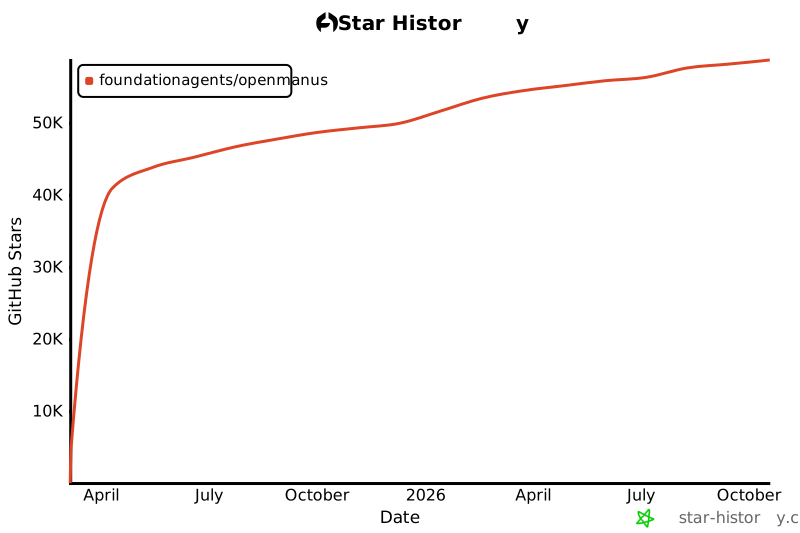](https://star-history.com/#FoundationAgents/OpenManus&Date)
## Sponsors
Thanks to [PPIO](https://ppinfra.com/user/register?invited_by=OCPKCN&utm_source=github_openmanus&utm_medium=github_readme&utm_campaign=link) for computing source support.
> PPIO: The most affordable and easily-integrated MaaS and GPU cloud solution.
## Acknowledgement
Thanks to [anthropic-computer-use](https://github.com/anthropics/anthropic-quickstarts/tree/main/computer-use-demo), [browser-use](https://github.com/browser-use/browser-use) and [crawl4ai](https://github.com/unclecode/crawl4ai) for providing basic support for this project!
Additionally, we are grateful to [AAAJ](https://github.com/metauto-ai/agent-as-a-judge), [MetaGPT](https://github.com/geekan/MetaGPT), [OpenHands](https://github.com/All-Hands-AI/OpenHands) and [SWE-agent](https://github.com/SWE-agent/SWE-agent).
We also thank stepfun(阶跃星辰) for supporting our Hugging Face demo space.
OpenManus is built by contributors from MetaGPT. Huge thanks to this agent community!
## Cite
```bibtex
@misc{openmanus2025,
author = {Xinbin Liang and Jinyu Xiang and Zhaoyang Yu and Jiayi Zhang and Sirui Hong and Sheng Fan and Xiao Tang and Bang Liu and Yuyu Luo and Chenglin Wu},
title = {OpenManus: An open-source framework for building general AI agents},
year = {2025},
publisher = {Zenodo},
doi = {10.5281/zenodo.15186407},
url = {https://doi.org/10.5281/zenodo.15186407},
}
```
================================================
FILE: README_ja.md
================================================
<p align="center">
<img src="assets/logo.jpg" width="200"/>
</p>
[English](README.md) | [中文](README_zh.md) | [한국어](README_ko.md) | 日本語
[](https://github.com/FoundationAgents/OpenManus/stargazers)
 
[](https://opensource.org/licenses/MIT)  
[](https://discord.gg/DYn29wFk9z)
[](https://huggingface.co/spaces/lyh-917/OpenManusDemo)
[](https://doi.org/10.5281/zenodo.15186407)
# 👋 OpenManus
Manusは素晴らしいですが、OpenManusは*招待コード*なしでどんなアイデアも実現できます!🛫
私たちのチームメンバー [@Xinbin Liang](https://github.com/mannaandpoem) と [@Jinyu Xiang](https://github.com/XiangJinyu)(主要開発者)、そして [@Zhaoyang Yu](https://github.com/MoshiQAQ)、[@Jiayi Zhang](https://github.com/didiforgithub)、[@Sirui Hong](https://github.com/stellaHSR) は [@MetaGPT](https://github.com/geekan/MetaGPT) から来ました。プロトタイプは3時間以内に立ち上げられ、継続的に開発を進めています!
これはシンプルな実装ですので、どんな提案、貢献、フィードバックも歓迎します!
OpenManusで自分だけのエージェントを楽しみましょう!
また、UIUCとOpenManusの研究者が共同開発した[OpenManus-RL](https://github.com/OpenManus/OpenManus-RL)をご紹介できることを嬉しく思います。これは強化学習(RL)ベース(GRPOなど)のLLMエージェントチューニング手法に特化したオープンソースプロジェクトです。
## プロジェクトデモ
<video src="https://private-user-images.githubusercontent.com/61239030/420168772-6dcfd0d2-9142-45d9-b74e-d10aa75073c6.mp4?jwt=eyJhbGciOiJIUzI1NiIsInR5cCI6IkpXVCJ9.eyJpc3MiOiJnaXRodWIuY29tIiwiYXVkIjoicmF3LmdpdGh1YnVzZXJjb250ZW50LmNvbSIsImtleSI6ImtleTUiLCJleHAiOjE3NDEzMTgwNTksIm5iZiI6MTc0MTMxNzc1OSwicGF0aCI6Ii82MTIzOTAzMC80MjAxNjg3NzItNmRjZmQwZDItOTE0Mi00NWQ5LWI3NGUtZDEwYWE3NTA3M2M2Lm1wND9YLUFtei1BbGdvcml0aG09QVdTNC1ITUFDLVNIQTI1NiZYLUFtei1DcmVkZW50aWFsPUFLSUFWQ09EWUxTQTUzUFFLNFpBJTJGMjAyNTAzMDclMkZ1cy1lYXN0LTElMkZzMyUyRmF3czRfcmVxdWVzdCZYLUFtei1EYXRlPTIwMjUwMzA3VDAzMjIzOVomWC1BbXotRXhwaXJlcz0zMDAmWC1BbXotU2lnbmF0dXJlPTdiZjFkNjlmYWNjMmEzOTliM2Y3M2VlYjgyNDRlZDJmOWE3NWZhZjE1MzhiZWY4YmQ3NjdkNTYwYTU5ZDA2MzYmWC1BbXotU2lnbmVkSGVhZGVycz1ob3N0In0.UuHQCgWYkh0OQq9qsUWqGsUbhG3i9jcZDAMeHjLt5T4" data-canonical-src="https://private-user-images.githubusercontent.com/61239030/420168772-6dcfd0d2-9142-45d9-b74e-d10aa75073c6.mp4?jwt=eyJhbGciOiJIUzI1NiIsInR5cCI6IkpXVCJ9.eyJpc3MiOiJnaXRodWIuY29tIiwiYXVkIjoicmF3LmdpdGh1YnVzZXJjb250ZW50LmNvbSIsImtleSI6ImtleTUiLCJleHAiOjE3NDEzMTgwNTksIm5iZiI6MTc0MTMxNzc1OSwicGF0aCI6Ii82MTIzOTAzMC80MjAxNjg3NzItNmRjZmQwZDItOTE0Mi00NWQ5LWI3NGUtZDEwYWE3NTA3M2M2Lm1wND9YLUFtei1BbGdvcml0aG09QVdTNC1ITUFDLVNIQTI1NiZYLUFtei1DcmVkZW50aWFsPUFLSUFWQ09EWUxTQTUzUFFLNFpBJTJGMjAyNTAzMDclMkZ1cy1lYXN0LTElMkZzMyUyRmF3czRfcmVxdWVzdCZYLUFtei1EYXRlPTIwMjUwMzA3VDAzMjIzOVomWC1BbXotRXhwaXJlcz0zMDAmWC1BbXotU2lnbmF0dXJlPTdiZjFkNjlmYWNjMmEzOTliM2Y3M2VlYjgyNDRlZDJmOWE3NWZhZjE1MzhiZWY4YmQ3NjdkNTYwYTU5ZDA2MzYmWC1BbXotU2lnbmVkSGVhZGVycz1ob3N0In0.UuHQCgWYkh0OQq9qsUWqGsUbhG3i9jcZDAMeHjLt5T4" controls="controls" muted="muted" class="d-block rounded-bottom-2 border-top width-fit" style="max-height:640px; min-height: 200px"></video>
## インストール方法
インストール方法は2つ提供しています。方法2(uvを使用)は、より高速なインストールと優れた依存関係管理のため推奨されています。
### 方法1:condaを使用
1. 新しいconda環境を作成します:
```bash
conda create -n open_manus python=3.12
conda activate open_manus
```
2. リポジトリをクローンします:
```bash
git clone https://github.com/FoundationAgents/OpenManus.git
cd OpenManus
```
3. 依存関係をインストールします:
```bash
pip install -r requirements.txt
```
### 方法2:uvを使用(推奨)
1. uv(高速なPythonパッケージインストーラーと管理機能)をインストールします:
```bash
curl -LsSf https://astral.sh/uv/install.sh | sh
```
2. リポジトリをクローンします:
```bash
git clone https://github.com/FoundationAgents/OpenManus.git
cd OpenManus
```
3. 新しい仮想環境を作成してアクティベートします:
```bash
uv venv --python 3.12
source .venv/bin/activate # Unix/macOSの場合
# Windowsの場合:
# .venv\Scripts\activate
```
4. 依存関係をインストールします:
```bash
uv pip install -r requirements.txt
```
### ブラウザ自動化ツール(オプション)
```bash
playwright install
```
## 設定
OpenManusを使用するには、LLM APIの設定が必要です。以下の手順に従って設定してください:
1. `config`ディレクトリに`config.toml`ファイルを作成します(サンプルからコピーできます):
```bash
cp config/config.example.toml config/config.toml
```
2. `config/config.toml`を編集してAPIキーを追加し、設定をカスタマイズします:
```toml
# グローバルLLM設定
[llm]
model = "gpt-4o"
base_url = "https://api.openai.com/v1"
api_key = "sk-..." # 実際のAPIキーに置き換えてください
max_tokens = 4096
temperature = 0.0
# 特定のLLMモデル用のオプション設定
[llm.vision]
model = "gpt-4o"
base_url = "https://api.openai.com/v1"
api_key = "sk-..." # 実際のAPIキーに置き換えてください
```
## クイックスタート
OpenManusを実行する一行コマンド:
```bash
python main.py
```
その後、ターミナルからプロンプトを入力してください!
MCP ツールバージョンを使用する場合は、以下を実行します:
```bash
python run_mcp.py
```
開発中のマルチエージェントバージョンを試すには、以下を実行します:
```bash
python run_flow.py
```
## カスタムマルチエージェントの追加
現在、一般的なOpenManusエージェントに加えて、データ分析とデータ可視化タスクに適したDataAnalysisエージェントが組み込まれています。このエージェントを`config.toml`の`run_flow`に追加することができます。
```toml
# run-flowのオプション設定
[runflow]
use_data_analysis_agent = true # デフォルトでは無効、trueに変更すると有効化されます
```
これに加えて、エージェントが正常に動作するために必要な依存関係をインストールする必要があります:[具体的なインストールガイド](app/tool/chart_visualization/README_ja.md##インストール)
## 貢献方法
我々は建設的な意見や有益な貢献を歓迎します!issueを作成するか、プルリクエストを提出してください。
または @mannaandpoem に📧メールでご連絡ください:mannaandpoem@gmail.com
**注意**: プルリクエストを送信する前に、pre-commitツールを使用して変更を確認してください。`pre-commit run --all-files`を実行してチェックを実行します。
## コミュニティグループ
Feishuのネットワーキンググループに参加して、他の開発者と経験を共有しましょう!
<div align="center" style="display: flex; gap: 20px;">
<img src="assets/community_group.jpg" alt="OpenManus 交流群" width="300" />
</div>
## スター履歴
[](https://star-history.com/#FoundationAgents/OpenManus&Date)
## 謝辞
このプロジェクトの基本的なサポートを提供してくれた[anthropic-computer-use](https://github.com/anthropics/anthropic-quickstarts/tree/main/computer-use-demo)
と[browser-use](https://github.com/browser-use/browser-use)に感謝します!
さらに、[AAAJ](https://github.com/metauto-ai/agent-as-a-judge)、[MetaGPT](https://github.com/geekan/MetaGPT)、[OpenHands](https://github.com/All-Hands-AI/OpenHands)、[SWE-agent](https://github.com/SWE-agent/SWE-agent)にも感謝します。
また、Hugging Face デモスペースをサポートしてくださった阶跃星辰 (stepfun)にも感謝いたします。
OpenManusはMetaGPTのコントリビューターによって構築されました。このエージェントコミュニティに大きな感謝を!
## 引用
```bibtex
@misc{openmanus2025,
author = {Xinbin Liang and Jinyu Xiang and Zhaoyang Yu and Jiayi Zhang and Sirui Hong and Sheng Fan and Xiao Tang},
title = {OpenManus: An open-source framework for building general AI agents},
year = {2025},
publisher = {Zenodo},
doi = {10.5281/zenodo.15186407},
url = {https://doi.org/10.5281/zenodo.15186407},
}
```
================================================
FILE: README_ko.md
================================================
<p align="center">
<img src="assets/logo.jpg" width="200"/>
</p>
[English](README.md) | [中文](README_zh.md) | 한국어 | [日本語](README_ja.md)
[](https://github.com/FoundationAgents/OpenManus/stargazers)
 
[](https://opensource.org/licenses/MIT)  
[](https://discord.gg/DYn29wFk9z)
[](https://huggingface.co/spaces/lyh-917/OpenManusDemo)
[](https://doi.org/10.5281/zenodo.15186407)
# 👋 OpenManus
Manus는 놀라운 도구지만, OpenManus는 *초대 코드* 없이도 모든 아이디어를 실현할 수 있습니다! 🛫
우리 팀의 멤버인 [@Xinbin Liang](https://github.com/mannaandpoem)와 [@Jinyu Xiang](https://github.com/XiangJinyu) (핵심 작성자), 그리고 [@Zhaoyang Yu](https://github.com/MoshiQAQ), [@Jiayi Zhang](https://github.com/didiforgithub), [@Sirui Hong](https://github.com/stellaHSR)이 함께 했습니다. 우리는 [@MetaGPT](https://github.com/geekan/MetaGPT)로부터 왔습니다. 프로토타입은 단 3시간 만에 출시되었으며, 계속해서 발전하고 있습니다!
이 프로젝트는 간단한 구현에서 시작되었으며, 여러분의 제안, 기여 및 피드백을 환영합니다!
OpenManus를 통해 여러분만의 에이전트를 즐겨보세요!
또한 [OpenManus-RL](https://github.com/OpenManus/OpenManus-RL)을 소개하게 되어 기쁩니다. OpenManus와 UIUC 연구자들이 공동 개발한 이 오픈소스 프로젝트는 LLM 에이전트에 대해 강화 학습(RL) 기반 (예: GRPO) 튜닝 방법을 제공합니다.
## 프로젝트 데모
<video src="https://private-user-images.githubusercontent.com/61239030/420168772-6dcfd0d2-9142-45d9-b74e-d10aa75073c6.mp4?jwt=eyJhbGciOiJIUzI1NiIsInR5cCI6IkpXVCJ9.eyJpc3MiOiJnaXRodWIuY29tIiwiYXVkIjoicmF3LmdpdGh1YnVzZXJjb250ZW50LmNvbSIsImtleSI6ImtleTUiLCJleHAiOjE3NDEzMTgwNTksIm5iZiI6MTc0MTMxNzc1OSwicGF0aCI6Ii82MTIzOTAzMC80MjAxNjg3NzItNmRjZmQwZDItOTE0Mi00NWQ5LWI3NGUtZDEwYWE3NTA3M2M2Lm1wND9YLUFtei1BbGdvcml0aG09QVdTNC1ITUFDLVNIQTI1NiZYLUFtei1DcmVkZW50aWFsPUFLSUFWQ09EWUxTQTUzUFFLNFpBJTJGMjAyNTAzMDclMkZ1cy1lYXN0LTElMkZzMyUyRmF3czRfcmVxdWVzdCZYLUFtei1EYXRlPTIwMjUwMzA3VDAzMjIzOVomWC1BbXotRXhwaXJlcz0zMDAmWC1BbXotU2lnbmF0dXJlPTdiZjFkNjlmYWNjMmEzOTliM2Y3M2VlYjgyNDRlZDJmOWE3NWZhZjE1MzhiZWY4YmQ3NjdkNTYwYTU5ZDA2MzYmWC1BbXotU2lnbmVkSGVhZGVycz1ob3N0In0.UuHQCgWYkh0OQq9qsUWqGsUbhG3i9jcZDAMeHjLt5T4" data-canonical-src="https://private-user-images.githubusercontent.com/61239030/420168772-6dcfd0d2-9142-45d9-b74e-d10aa75073c6.mp4?jwt=eyJhbGciOiJIUzI1NiIsInR5cCI6IkpXVCJ9.eyJpc3MiOiJnaXRodWIuY29tIiwiYXVkIjoicmF3LmdpdGh1YnVzZXJjb250ZW50LmNvbSIsImtleSI6ImtleTUiLCJleHAiOjE3NDEzMTgwNTksIm5iZiI6MTc0MTMxNzc1OSwicGF0aCI6Ii82MTIzOTAzMC80MjAxNjg3NzItNmRjZmQwZDItOTE0Mi00NWQ5LWI3NGUtZDEwYWE3NTA3M2M2Lm1wND9YLUFtei1BbGdvcml0aG09QVdTNC1ITUFDLVNIQTI1NiZYLUFtei1DcmVkZW50aWFsPUFLSUFWQ09EWUxTQTUzUFFLNFpBJTJGMjAyNTAzMDclMkZ1cy1lYXN0LTElMkZzMyUyRmF3czRfcmVxdWVzdCZYLUFtei1EYXRlPTIwMjUwMzA3VDAzMjIzOVomWC1BbXotRXhwaXJlcz0zMDAmWC1BbXotU2lnbmF0dXJlPTdiZjFkNjlmYWNjMmEzOTliM2Y3M2VlYjgyNDRlZDJmOWE3NWZhZjE1MzhiZWY4YmQ3NjdkNTYwYTU5ZDA2MzYmWC1BbXotU2lnbmVkSGVhZGVycz1ob3N0In0.UuHQCgWYkh0OQq9qsUWqGsUbhG3i9jcZDAMeHjLt5T4" controls="controls" muted="muted" class="d-block rounded-bottom-2 border-top width-fit" style="max-height:640px; min-height: 200px"></video>
## 설치 방법
두 가지 설치 방법을 제공합니다. **방법 2 (uv 사용)** 이 더 빠른 설치와 효율적인 종속성 관리를 위해 권장됩니다.
### 방법 1: conda 사용
1. 새로운 conda 환경을 생성합니다:
```bash
conda create -n open_manus python=3.12
conda activate open_manus
```
2. 저장소를 클론합니다:
```bash
git clone https://github.com/FoundationAgents/OpenManus.git
cd OpenManus
```
3. 종속성을 설치합니다:
```bash
pip install -r requirements.txt
```
### 방법 2: uv 사용 (권장)
1. uv를 설치합니다. (빠른 Python 패키지 설치 및 종속성 관리 도구):
```bash
curl -LsSf https://astral.sh/uv/install.sh | sh
```
2. 저장소를 클론합니다:
```bash
git clone https://github.com/FoundationAgents/OpenManus.git
cd OpenManus
```
3. 새로운 가상 환경을 생성하고 활성화합니다:
```bash
uv venv --python 3.12
source .venv/bin/activate # Unix/macOS의 경우
# Windows의 경우:
# .venv\Scripts\activate
```
4. 종속성을 설치합니다:
```bash
uv pip install -r requirements.txt
```
### 브라우저 자동화 도구 (선택사항)
```bash
playwright install
```
## 설정 방법
OpenManus를 사용하려면 사용하는 LLM API에 대한 설정이 필요합니다. 아래 단계를 따라 설정을 완료하세요:
1. `config` 디렉토리에 `config.toml` 파일을 생성하세요 (예제 파일을 복사하여 사용할 수 있습니다):
```bash
cp config/config.example.toml config/config.toml
```
2. `config/config.toml` 파일을 편집하여 API 키를 추가하고 설정을 커스터마이징하세요:
```toml
# 전역 LLM 설정
[llm]
model = "gpt-4o"
base_url = "https://api.openai.com/v1"
api_key = "sk-..." # 실제 API 키로 변경하세요
max_tokens = 4096
temperature = 0.0
# 특정 LLM 모델에 대한 선택적 설정
[llm.vision]
model = "gpt-4o"
base_url = "https://api.openai.com/v1"
api_key = "sk-..." # 실제 API 키로 변경하세요
```
## 빠른 시작
OpenManus를 실행하는 한 줄 명령어:
```bash
python main.py
```
이후 터미널에서 아이디어를 작성하세요!
MCP 도구 버전을 사용하려면 다음을 실행하세요:
```bash
python run_mcp.py
```
불안정한 멀티 에이전트 버전을 실행하려면 다음을 실행할 수 있습니다:
```bash
python run_flow.py
```
### 사용자 정의 다중 에이전트 추가
현재 일반 OpenManus 에이전트 외에도 데이터 분석 및 데이터 시각화 작업에 적합한 DataAnalysis 에이전트를 통합했습니다. 이 에이전트를 `config.toml`의 `run_flow`에 추가할 수 있습니다.
```toml
# run-flow에 대한 선택적 구성
[runflow]
use_data_analysis_agent = true # 기본적으로 비활성화되어 있으며, 활성화하려면 true로 변경
```
또한, 에이전트가 제대로 작동하도록 관련 종속성을 설치해야 합니다: [상세 설치 가이드](app/tool/chart_visualization/README.md##Installation)
## 기여 방법
모든 친절한 제안과 유용한 기여를 환영합니다! 이슈를 생성하거나 풀 리퀘스트를 제출해 주세요.
또는 📧 메일로 연락주세요. @mannaandpoem : mannaandpoem@gmail.com
**참고**: pull request를 제출하기 전에 pre-commit 도구를 사용하여 변경 사항을 확인하십시오. `pre-commit run --all-files`를 실행하여 검사를 실행합니다.
## 커뮤니티 그룹
Feishu 네트워킹 그룹에 참여하여 다른 개발자들과 경험을 공유하세요!
<div align="center" style="display: flex; gap: 20px;">
<img src="assets/community_group.jpg" alt="OpenManus 交流群" width="300" />
</div>
## Star History
[](https://star-history.com/#FoundationAgents/OpenManus&Date)
## 감사의 글
이 프로젝트에 기본적인 지원을 제공해 주신 [anthropic-computer-use](https://github.com/anthropics/anthropic-quickstarts/tree/main/computer-use-demo)와
[browser-use](https://github.com/browser-use/browser-use)에게 감사드립니다!
또한, [AAAJ](https://github.com/metauto-ai/agent-as-a-judge), [MetaGPT](https://github.com/geekan/MetaGPT), [OpenHands](https://github.com/All-Hands-AI/OpenHands), [SWE-agent](https://github.com/SWE-agent/SWE-agent)에 깊은 감사를 드립니다.
또한 Hugging Face 데모 공간을 지원해 주신 阶跃星辰 (stepfun)에게 감사드립니다.
OpenManus는 MetaGPT 기여자들에 의해 개발되었습니다. 이 에이전트 커뮤니티에 깊은 감사를 전합니다!
## 인용
```bibtex
@misc{openmanus2025,
author = {Xinbin Liang and Jinyu Xiang and Zhaoyang Yu and Jiayi Zhang and Sirui Hong and Sheng Fan and Xiao Tang},
title = {OpenManus: An open-source framework for building general AI agents},
year = {2025},
publisher = {Zenodo},
doi = {10.5281/zenodo.15186407},
url = {https://doi.org/10.5281/zenodo.15186407},
}
```
================================================
FILE: README_zh.md
================================================
<p align="center">
<img src="assets/logo.jpg" width="200"/>
</p>
[English](README.md) | 中文 | [한국어](README_ko.md) | [日本語](README_ja.md)
[](https://github.com/FoundationAgents/OpenManus/stargazers)
 
[](https://opensource.org/licenses/MIT)  
[](https://discord.gg/DYn29wFk9z)
[](https://huggingface.co/spaces/lyh-917/OpenManusDemo)
[](https://doi.org/10.5281/zenodo.15186407)
# 👋 OpenManus
Manus 非常棒,但 OpenManus 无需邀请码即可实现任何创意 🛫!
我们的团队成员 [@Xinbin Liang](https://github.com/mannaandpoem) 和 [@Jinyu Xiang](https://github.com/XiangJinyu)(核心作者),以及 [@Zhaoyang Yu](https://github.com/MoshiQAQ)、[@Jiayi Zhang](https://github.com/didiforgithub) 和 [@Sirui Hong](https://github.com/stellaHSR),来自 [@MetaGPT](https://github.com/geekan/MetaGPT)团队。我们在 3
小时内完成了开发并持续迭代中!
这是一个简洁的实现方案,欢迎任何建议、贡献和反馈!
用 OpenManus 开启你的智能体之旅吧!
我们也非常高兴地向大家介绍 [OpenManus-RL](https://github.com/OpenManus/OpenManus-RL),这是一个专注于基于强化学习(RL,例如 GRPO)的方法来优化大语言模型(LLM)智能体的开源项目,由来自UIUC 和 OpenManus 的研究人员合作开发。
## 项目演示
<video src="https://private-user-images.githubusercontent.com/61239030/420168772-6dcfd0d2-9142-45d9-b74e-d10aa75073c6.mp4?jwt=eyJhbGciOiJIUzI1NiIsInR5cCI6IkpXVCJ9.eyJpc3MiOiJnaXRodWIuY29tIiwiYXVkIjoicmF3LmdpdGh1YnVzZXJjb250ZW50LmNvbSIsImtleSI6ImtleTUiLCJleHAiOjE3NDEzMTgwNTksIm5iZiI6MTc0MTMxNzc1OSwicGF0aCI6Ii82MTIzOTAzMC80MjAxNjg3NzItNmRjZmQwZDItOTE0Mi00NWQ5LWI3NGUtZDEwYWE3NTA3M2M2Lm1wND9YLUFtei1BbGdvcml0aG09QVdTNC1ITUFDLVNIQTI1NiZYLUFtei1DcmVkZW50aWFsPUFLSUFWQ09EWUxTQTUzUFFLNFpBJTJGMjAyNTAzMDclMkZ1cy1lYXN0LTElMkZzMyUyRmF3czRfcmVxdWVzdCZYLUFtei1EYXRlPTIwMjUwMzA3VDAzMjIzOVomWC1BbXotRXhwaXJlcz0zMDAmWC1BbXotU2lnbmF0dXJlPTdiZjFkNjlmYWNjMmEzOTliM2Y3M2VlYjgyNDRlZDJmOWE3NWZhZjE1MzhiZWY4YmQ3NjdkNTYwYTU5ZDA2MzYmWC1BbXotU2lnbmVkSGVhZGVycz1ob3N0In0.UuHQCgWYkh0OQq9qsUWqGsUbhG3i9jcZDAMeHjLt5T4" data-canonical-src="https://private-user-images.githubusercontent.com/61239030/420168772-6dcfd0d2-9142-45d9-b74e-d10aa75073c6.mp4?jwt=eyJhbGciOiJIUzI1NiIsInR5cCI6IkpXVCJ9.eyJpc3MiOiJnaXRodWIuY29tIiwiYXVkIjoicmF3LmdpdGh1YnVzZXJjb250ZW50LmNvbSIsImtleSI6ImtleTUiLCJleHAiOjE3NDEzMTgwNTksIm5iZiI6MTc0MTMxNzc1OSwicGF0aCI6Ii82MTIzOTAzMC80MjAxNjg3NzItNmRjZmQwZDItOTE0Mi00NWQ5LWI3NGUtZDEwYWE3NTA3M2M2Lm1wND9YLUFtei1BbGdvcml0aG09QVdTNC1ITUFDLVNIQTI1NiZYLUFtei1DcmVkZW50aWFsPUFLSUFWQ09EWUxTQTUzUFFLNFpBJTJGMjAyNTAzMDclMkZ1cy1lYXN0LTElMkZzMyUyRmF3czRfcmVxdWVzdCZYLUFtei1EYXRlPTIwMjUwMzA3VDAzMjIzOVomWC1BbXotRXhwaXJlcz0zMDAmWC1BbXotU2lnbmF0dXJlPTdiZjFkNjlmYWNjMmEzOTliM2Y3M2VlYjgyNDRlZDJmOWE3NWZhZjE1MzhiZWY4YmQ3NjdkNTYwYTU5ZDA2MzYmWC1BbXotU2lnbmVkSGVhZGVycz1ob3N0In0.UuHQCgWYkh0OQq9qsUWqGsUbhG3i9jcZDAMeHjLt5T4" controls="controls" muted="muted" class="d-block rounded-bottom-2 border-top width-fit" style="max-height:640px; min-height: 200px"></video>
## 安装指南
我们提供两种安装方式。推荐使用方式二(uv),因为它能提供更快的安装速度和更好的依赖管理。
### 方式一:使用 conda
1. 创建新的 conda 环境:
```bash
conda create -n open_manus python=3.12
conda activate open_manus
```
2. 克隆仓库:
```bash
git clone https://github.com/FoundationAgents/OpenManus.git
cd OpenManus
```
3. 安装依赖:
```bash
pip install -r requirements.txt
```
### 方式二:使用 uv(推荐)
1. 安装 uv(一个快速的 Python 包管理器):
```bash
curl -LsSf https://astral.sh/uv/install.sh | sh
```
2. 克隆仓库:
```bash
git clone https://github.com/FoundationAgents/OpenManus.git
cd OpenManus
```
3. 创建并激活虚拟环境:
```bash
uv venv --python 3.12
source .venv/bin/activate # Unix/macOS 系统
# Windows 系统使用:
# .venv\Scripts\activate
```
4. 安装依赖:
```bash
uv pip install -r requirements.txt
```
### 浏览器自动化工具(可选)
```bash
playwright install
```
## 配置说明
OpenManus 需要配置使用的 LLM API,请按以下步骤设置:
1. 在 `config` 目录创建 `config.toml` 文件(可从示例复制):
```bash
cp config/config.example.toml config/config.toml
```
2. 编辑 `config/config.toml` 添加 API 密钥和自定义设置:
```toml
# 全局 LLM 配置
[llm]
model = "gpt-4o"
base_url = "https://api.openai.com/v1"
api_key = "sk-..." # 替换为真实 API 密钥
max_tokens = 4096
temperature = 0.0
# 可选特定 LLM 模型配置
[llm.vision]
model = "gpt-4o"
base_url = "https://api.openai.com/v1"
api_key = "sk-..." # 替换为真实 API 密钥
```
## 快速启动
一行命令运行 OpenManus:
```bash
python main.py
```
然后通过终端输入你的创意!
如需使用 MCP 工具版本,可运行:
```bash
python run_mcp.py
```
如需体验不稳定的多智能体版本,可运行:
```bash
python run_flow.py
```
## 添加自定义多智能体
目前除了通用的 OpenManus Agent, 我们还内置了DataAnalysis Agent,适用于数据分析和数据可视化任务,你可以在`config.toml`中将这个智能体加入到`run_flow`中
```toml
# run-flow可选配置
[runflow]
use_data_analysis_agent = true # 默认关闭,将其改为true则为激活
```
除此之外,你还需要安装相关的依赖来确保智能体正常运行:[具体安装指南](app/tool/chart_visualization/README_zh.md##安装)
## 贡献指南
我们欢迎任何友好的建议和有价值的贡献!可以直接创建 issue 或提交 pull request。
或通过 📧 邮件联系 @mannaandpoem:mannaandpoem@gmail.com
**注意**: 在提交 pull request 之前,请使用 pre-commit 工具检查您的更改。运行 `pre-commit run --all-files` 来执行检查。
## 交流群
加入我们的飞书交流群,与其他开发者分享经验!
<div align="center" style="display: flex; gap: 20px;">
<img src="assets/community_group.jpg" alt="OpenManus 交流群" width="300" />
</div>
## Star 数量
[](https://star-history.com/#FoundationAgents/OpenManus&Date)
## 赞助商
感谢[PPIO](https://ppinfra.com/user/register?invited_by=OCPKCN&utm_source=github_openmanus&utm_medium=github_readme&utm_campaign=link) 提供的算力支持。
> PPIO派欧云:一键调用高性价比的开源模型API和GPU容器
## 致谢
特别感谢 [anthropic-computer-use](https://github.com/anthropics/anthropic-quickstarts/tree/main/computer-use-demo)
和 [browser-use](https://github.com/browser-use/browser-use) 为本项目提供的基础支持!
此外,我们感谢 [AAAJ](https://github.com/metauto-ai/agent-as-a-judge),[MetaGPT](https://github.com/geekan/MetaGPT),[OpenHands](https://github.com/All-Hands-AI/OpenHands) 和 [SWE-agent](https://github.com/SWE-agent/SWE-agent).
我们也感谢阶跃星辰 (stepfun) 提供的 Hugging Face 演示空间支持。
OpenManus 由 MetaGPT 社区的贡献者共同构建,感谢这个充满活力的智能体开发者社区!
## 引用
```bibtex
@misc{openmanus2025,
author = {Xinbin Liang and Jinyu Xiang and Zhaoyang Yu and Jiayi Zhang and Sirui Hong and Sheng Fan and Xiao Tang},
title = {OpenManus: An open-source framework for building general AI agents},
year = {2025},
publisher = {Zenodo},
doi = {10.5281/zenodo.15186407},
url = {https://doi.org/10.5281/zenodo.15186407},
}
```
================================================
FILE: app/__init__.py
================================================
# Python version check: 3.11-3.13
import sys
if sys.version_info < (3, 11) or sys.version_info > (3, 13):
print(
"Warning: Unsupported Python version {ver}, please use 3.11-3.13".format(
ver=".".join(map(str, sys.version_info))
)
)
================================================
FILE: app/agent/__init__.py
================================================
from app.agent.base import BaseAgent
from app.agent.browser import BrowserAgent
from app.agent.mcp import MCPAgent
from app.agent.react import ReActAgent
from app.agent.swe import SWEAgent
from app.agent.toolcall import ToolCallAgent
__all__ = [
"BaseAgent",
"BrowserAgent",
"ReActAgent",
"SWEAgent",
"ToolCallAgent",
"MCPAgent",
]
================================================
FILE: app/agent/base.py
================================================
from abc import ABC, abstractmethod
from contextlib import asynccontextmanager
from typing import List, Optional
from pydantic import BaseModel, Field, model_validator
from app.llm import LLM
from app.logger import logger
from app.sandbox.client import SANDBOX_CLIENT
from app.schema import ROLE_TYPE, AgentState, Memory, Message
class BaseAgent(BaseModel, ABC):
"""Abstract base class for managing agent state and execution.
Provides foundational functionality for state transitions, memory management,
and a step-based execution loop. Subclasses must implement the `step` method.
"""
# Core attributes
name: str = Field(..., description="Unique name of the agent")
description: Optional[str] = Field(None, description="Optional agent description")
# Prompts
system_prompt: Optional[str] = Field(
None, description="System-level instruction prompt"
)
next_step_prompt: Optional[str] = Field(
None, description="Prompt for determining next action"
)
# Dependencies
llm: LLM = Field(default_factory=LLM, description="Language model instance")
memory: Memory = Field(default_factory=Memory, description="Agent's memory store")
state: AgentState = Field(
default=AgentState.IDLE, description="Current agent state"
)
# Execution control
max_steps: int = Field(default=10, description="Maximum steps before termination")
current_step: int = Field(default=0, description="Current step in execution")
duplicate_threshold: int = 2
class Config:
arbitrary_types_allowed = True
extra = "allow" # Allow extra fields for flexibility in subclasses
@model_validator(mode="after")
def initialize_agent(self) -> "BaseAgent":
"""Initialize agent with default settings if not provided."""
if self.llm is None or not isinstance(self.llm, LLM):
self.llm = LLM(config_name=self.name.lower())
if not isinstance(self.memory, Memory):
self.memory = Memory()
return self
@asynccontextmanager
async def state_context(self, new_state: AgentState):
"""Context manager for safe agent state transitions.
Args:
new_state: The state to transition to during the context.
Yields:
None: Allows execution within the new state.
Raises:
ValueError: If the new_state is invalid.
"""
if not isinstance(new_state, AgentState):
raise ValueError(f"Invalid state: {new_state}")
previous_state = self.state
self.state = new_state
try:
yield
except Exception as e:
self.state = AgentState.ERROR # Transition to ERROR on failure
raise e
finally:
self.state = previous_state # Revert to previous state
def update_memory(
self,
role: ROLE_TYPE, # type: ignore
content: str,
base64_image: Optional[str] = None,
**kwargs,
) -> None:
"""Add a message to the agent's memory.
Args:
role: The role of the message sender (user, system, assistant, tool).
content: The message content.
base64_image: Optional base64 encoded image.
**kwargs: Additional arguments (e.g., tool_call_id for tool messages).
Raises:
ValueError: If the role is unsupported.
"""
message_map = {
"user": Message.user_message,
"system": Message.system_message,
"assistant": Message.assistant_message,
"tool": lambda content, **kw: Message.tool_message(content, **kw),
}
if role not in message_map:
raise ValueError(f"Unsupported message role: {role}")
# Create message with appropriate parameters based on role
kwargs = {"base64_image": base64_image, **(kwargs if role == "tool" else {})}
self.memory.add_message(message_map[role](content, **kwargs))
async def run(self, request: Optional[str] = None) -> str:
"""Execute the agent's main loop asynchronously.
Args:
request: Optional initial user request to process.
Returns:
A string summarizing the execution results.
Raises:
RuntimeError: If the agent is not in IDLE state at start.
"""
if self.state != AgentState.IDLE:
raise RuntimeError(f"Cannot run agent from state: {self.state}")
if request:
self.update_memory("user", request)
results: List[str] = []
async with self.state_context(AgentState.RUNNING):
while (
self.current_step < self.max_steps and self.state != AgentState.FINISHED
):
self.current_step += 1
logger.info(f"Executing step {self.current_step}/{self.max_steps}")
step_result = await self.step()
# Check for stuck state
if self.is_stuck():
self.handle_stuck_state()
results.append(f"Step {self.current_step}: {step_result}")
if self.current_step >= self.max_steps:
self.current_step = 0
self.state = AgentState.IDLE
results.append(f"Terminated: Reached max steps ({self.max_steps})")
await SANDBOX_CLIENT.cleanup()
return "\n".join(results) if results else "No steps executed"
@abstractmethod
async def step(self) -> str:
"""Execute a single step in the agent's workflow.
Must be implemented by subclasses to define specific behavior.
"""
def handle_stuck_state(self):
"""Handle stuck state by adding a prompt to change strategy"""
stuck_prompt = "\
Observed duplicate responses. Consider new strategies and avoid repeating ineffective paths already attempted."
self.next_step_prompt = f"{stuck_prompt}\n{self.next_step_prompt}"
logger.warning(f"Agent detected stuck state. Added prompt: {stuck_prompt}")
def is_stuck(self) -> bool:
"""Check if the agent is stuck in a loop by detecting duplicate content"""
if len(self.memory.messages) < 2:
return False
last_message = self.memory.messages[-1]
if not last_message.content:
return False
# Count identical content occurrences
duplicate_count = sum(
1
for msg in reversed(self.memory.messages[:-1])
if msg.role == "assistant" and msg.content == last_message.content
)
return duplicate_count >= self.duplicate_threshold
@property
def messages(self) -> List[Message]:
"""Retrieve a list of messages from the agent's memory."""
return self.memory.messages
@messages.setter
def messages(self, value: List[Message]):
"""Set the list of messages in the agent's memory."""
self.memory.messages = value
================================================
FILE: app/agent/browser.py
================================================
import json
from typing import TYPE_CHECKING, Optional
from pydantic import Field, model_validator
from app.agent.toolcall import ToolCallAgent
from app.logger import logger
from app.prompt.browser import NEXT_STEP_PROMPT, SYSTEM_PROMPT
from app.schema import Message, ToolChoice
from app.tool import BrowserUseTool, Terminate, ToolCollection
from app.tool.sandbox.sb_browser_tool import SandboxBrowserTool
# Avoid circular import if BrowserAgent needs BrowserContextHelper
if TYPE_CHECKING:
from app.agent.base import BaseAgent # Or wherever memory is defined
class BrowserContextHelper:
def __init__(self, agent: "BaseAgent"):
self.agent = agent
self._current_base64_image: Optional[str] = None
async def get_browser_state(self) -> Optional[dict]:
browser_tool = self.agent.available_tools.get_tool(BrowserUseTool().name)
if not browser_tool:
browser_tool = self.agent.available_tools.get_tool(
SandboxBrowserTool().name
)
if not browser_tool or not hasattr(browser_tool, "get_current_state"):
logger.warning("BrowserUseTool not found or doesn't have get_current_state")
return None
try:
result = await browser_tool.get_current_state()
if result.error:
logger.debug(f"Browser state error: {result.error}")
return None
if hasattr(result, "base64_image") and result.base64_image:
self._current_base64_image = result.base64_image
else:
self._current_base64_image = None
return json.loads(result.output)
except Exception as e:
logger.debug(f"Failed to get browser state: {str(e)}")
return None
async def format_next_step_prompt(self) -> str:
"""Gets browser state and formats the browser prompt."""
browser_state = await self.get_browser_state()
url_info, tabs_info, content_above_info, content_below_info = "", "", "", ""
results_info = "" # Or get from agent if needed elsewhere
if browser_state and not browser_state.get("error"):
url_info = f"\n URL: {browser_state.get('url', 'N/A')}\n Title: {browser_state.get('title', 'N/A')}"
tabs = browser_state.get("tabs", [])
if tabs:
tabs_info = f"\n {len(tabs)} tab(s) available"
pixels_above = browser_state.get("pixels_above", 0)
pixels_below = browser_state.get("pixels_below", 0)
if pixels_above > 0:
content_above_info = f" ({pixels_above} pixels)"
if pixels_below > 0:
content_below_info = f" ({pixels_below} pixels)"
if self._current_base64_image:
image_message = Message.user_message(
content="Current browser screenshot:",
base64_image=self._current_base64_image,
)
self.agent.memory.add_message(image_message)
self._current_base64_image = None # Consume the image after adding
return NEXT_STEP_PROMPT.format(
url_placeholder=url_info,
tabs_placeholder=tabs_info,
content_above_placeholder=content_above_info,
content_below_placeholder=content_below_info,
results_placeholder=results_info,
)
async def cleanup_browser(self):
browser_tool = self.agent.available_tools.get_tool(BrowserUseTool().name)
if browser_tool and hasattr(browser_tool, "cleanup"):
await browser_tool.cleanup()
class BrowserAgent(ToolCallAgent):
"""
A browser agent that uses the browser_use library to control a browser.
This agent can navigate web pages, interact with elements, fill forms,
extract content, and perform other browser-based actions to accomplish tasks.
"""
name: str = "browser"
description: str = "A browser agent that can control a browser to accomplish tasks"
system_prompt: str = SYSTEM_PROMPT
next_step_prompt: str = NEXT_STEP_PROMPT
max_observe: int = 10000
max_steps: int = 20
# Configure the available tools
available_tools: ToolCollection = Field(
default_factory=lambda: ToolCollection(BrowserUseTool(), Terminate())
)
# Use Auto for tool choice to allow both tool usage and free-form responses
tool_choices: ToolChoice = ToolChoice.AUTO
special_tool_names: list[str] = Field(default_factory=lambda: [Terminate().name])
browser_context_helper: Optional[BrowserContextHelper] = None
@model_validator(mode="after")
def initialize_helper(self) -> "BrowserAgent":
self.browser_context_helper = BrowserContextHelper(self)
return self
async def think(self) -> bool:
"""Process current state and decide next actions using tools, with browser state info added"""
self.next_step_prompt = (
await self.browser_context_helper.format_next_step_prompt()
)
return await super().think()
async def cleanup(self):
"""Clean up browser agent resources by calling parent cleanup."""
await self.browser_context_helper.cleanup_browser()
================================================
FILE: app/agent/data_analysis.py
================================================
from pydantic import Field
from app.agent.toolcall import ToolCallAgent
from app.config import config
from app.prompt.visualization import NEXT_STEP_PROMPT, SYSTEM_PROMPT
from app.tool import Terminate, ToolCollection
from app.tool.chart_visualization.chart_prepare import VisualizationPrepare
from app.tool.chart_visualization.data_visualization import DataVisualization
from app.tool.chart_visualization.python_execute import NormalPythonExecute
class DataAnalysis(ToolCallAgent):
"""
A data analysis agent that uses planning to solve various data analysis tasks.
This agent extends ToolCallAgent with a comprehensive set of tools and capabilities,
including Data Analysis, Chart Visualization, Data Report.
"""
name: str = "Data_Analysis"
description: str = "An analytical agent that utilizes python and data visualization tools to solve diverse data analysis tasks"
system_prompt: str = SYSTEM_PROMPT.format(directory=config.workspace_root)
next_step_prompt: str = NEXT_STEP_PROMPT
max_observe: int = 15000
max_steps: int = 20
# Add general-purpose tools to the tool collection
available_tools: ToolCollection = Field(
default_factory=lambda: ToolCollection(
NormalPythonExecute(),
VisualizationPrepare(),
DataVisualization(),
Terminate(),
)
)
================================================
FILE: app/agent/manus.py
================================================
from typing import Dict, List, Optional
from pydantic import Field, model_validator
from app.agent.browser import BrowserContextHelper
from app.agent.toolcall import ToolCallAgent
from app.config import config
from app.logger import logger
from app.prompt.manus import NEXT_STEP_PROMPT, SYSTEM_PROMPT
from app.tool import Terminate, ToolCollection
from app.tool.ask_human import AskHuman
from app.tool.browser_use_tool import BrowserUseTool
from app.tool.mcp import MCPClients, MCPClientTool
from app.tool.python_execute import PythonExecute
from app.tool.str_replace_editor import StrReplaceEditor
class Manus(ToolCallAgent):
"""A versatile general-purpose agent with support for both local and MCP tools."""
name: str = "Manus"
description: str = "A versatile agent that can solve various tasks using multiple tools including MCP-based tools"
system_prompt: str = SYSTEM_PROMPT.format(directory=config.workspace_root)
next_step_prompt: str = NEXT_STEP_PROMPT
max_observe: int = 10000
max_steps: int = 20
# MCP clients for remote tool access
mcp_clients: MCPClients = Field(default_factory=MCPClients)
# Add general-purpose tools to the tool collection
available_tools: ToolCollection = Field(
default_factory=lambda: ToolCollection(
PythonExecute(),
BrowserUseTool(),
StrReplaceEditor(),
AskHuman(),
Terminate(),
)
)
special_tool_names: list[str] = Field(default_factory=lambda: [Terminate().name])
browser_context_helper: Optional[BrowserContextHelper] = None
# Track connected MCP servers
connected_servers: Dict[str, str] = Field(
default_factory=dict
) # server_id -> url/command
_initialized: bool = False
@model_validator(mode="after")
def initialize_helper(self) -> "Manus":
"""Initialize basic components synchronously."""
self.browser_context_helper = BrowserContextHelper(self)
return self
@classmethod
async def create(cls, **kwargs) -> "Manus":
"""Factory method to create and properly initialize a Manus instance."""
instance = cls(**kwargs)
await instance.initialize_mcp_servers()
instance._initialized = True
return instance
async def initialize_mcp_servers(self) -> None:
"""Initialize connections to configured MCP servers."""
for server_id, server_config in config.mcp_config.servers.items():
try:
if server_config.type == "sse":
if server_config.url:
await self.connect_mcp_server(server_config.url, server_id)
logger.info(
f"Connected to MCP server {server_id} at {server_config.url}"
)
elif server_config.type == "stdio":
if server_config.command:
await self.connect_mcp_server(
server_config.command,
server_id,
use_stdio=True,
stdio_args=server_config.args,
)
logger.info(
f"Connected to MCP server {server_id} using command {server_config.command}"
)
except Exception as e:
logger.error(f"Failed to connect to MCP server {server_id}: {e}")
async def connect_mcp_server(
self,
server_url: str,
server_id: str = "",
use_stdio: bool = False,
stdio_args: List[str] = None,
) -> None:
"""Connect to an MCP server and add its tools."""
if use_stdio:
await self.mcp_clients.connect_stdio(
server_url, stdio_args or [], server_id
)
self.connected_servers[server_id or server_url] = server_url
else:
await self.mcp_clients.connect_sse(server_url, server_id)
self.connected_servers[server_id or server_url] = server_url
# Update available tools with only the new tools from this server
new_tools = [
tool for tool in self.mcp_clients.tools if tool.server_id == server_id
]
self.available_tools.add_tools(*new_tools)
async def disconnect_mcp_server(self, server_id: str = "") -> None:
"""Disconnect from an MCP server and remove its tools."""
await self.mcp_clients.disconnect(server_id)
if server_id:
self.connected_servers.pop(server_id, None)
else:
self.connected_servers.clear()
# Rebuild available tools without the disconnected server's tools
base_tools = [
tool
for tool in self.available_tools.tools
if not isinstance(tool, MCPClientTool)
]
self.available_tools = ToolCollection(*base_tools)
self.available_tools.add_tools(*self.mcp_clients.tools)
async def cleanup(self):
"""Clean up Manus agent resources."""
if self.browser_context_helper:
await self.browser_context_helper.cleanup_browser()
# Disconnect from all MCP servers only if we were initialized
if self._initialized:
await self.disconnect_mcp_server()
self._initialized = False
async def think(self) -> bool:
"""Process current state and decide next actions with appropriate context."""
if not self._initialized:
await self.initialize_mcp_servers()
self._initialized = True
original_prompt = self.next_step_prompt
recent_messages = self.memory.messages[-3:] if self.memory.messages else []
browser_in_use = any(
tc.function.name == BrowserUseTool().name
for msg in recent_messages
if msg.tool_calls
for tc in msg.tool_calls
)
if browser_in_use:
self.next_step_prompt = (
await self.browser_context_helper.format_next_step_prompt()
)
result = await super().think()
# Restore original prompt
self.next_step_prompt = original_prompt
return result
================================================
FILE: app/agent/mcp.py
================================================
from typing import Any, Dict, List, Optional, Tuple
from pydantic import Field
from app.agent.toolcall import ToolCallAgent
from app.logger import logger
from app.prompt.mcp import MULTIMEDIA_RESPONSE_PROMPT, NEXT_STEP_PROMPT, SYSTEM_PROMPT
from app.schema import AgentState, Message
from app.tool.base import ToolResult
from app.tool.mcp import MCPClients
class MCPAgent(ToolCallAgent):
"""Agent for interacting with MCP (Model Context Protocol) servers.
This agent connects to an MCP server using either SSE or stdio transport
and makes the server's tools available through the agent's tool interface.
"""
name: str = "mcp_agent"
description: str = "An agent that connects to an MCP server and uses its tools."
system_prompt: str = SYSTEM_PROMPT
next_step_prompt: str = NEXT_STEP_PROMPT
# Initialize MCP tool collection
mcp_clients: MCPClients = Field(default_factory=MCPClients)
available_tools: MCPClients = None # Will be set in initialize()
max_steps: int = 20
connection_type: str = "stdio" # "stdio" or "sse"
# Track tool schemas to detect changes
tool_schemas: Dict[str, Dict[str, Any]] = Field(default_factory=dict)
_refresh_tools_interval: int = 5 # Refresh tools every N steps
# Special tool names that should trigger termination
special_tool_names: List[str] = Field(default_factory=lambda: ["terminate"])
async def initialize(
self,
connection_type: Optional[str] = None,
server_url: Optional[str] = None,
command: Optional[str] = None,
args: Optional[List[str]] = None,
) -> None:
"""Initialize the MCP connection.
Args:
connection_type: Type of connection to use ("stdio" or "sse")
server_url: URL of the MCP server (for SSE connection)
command: Command to run (for stdio connection)
args: Arguments for the command (for stdio connection)
"""
if connection_type:
self.connection_type = connection_type
# Connect to the MCP server based on connection type
if self.connection_type == "sse":
if not server_url:
raise ValueError("Server URL is required for SSE connection")
await self.mcp_clients.connect_sse(server_url=server_url)
elif self.connection_type == "stdio":
if not command:
raise ValueError("Command is required for stdio connection")
await self.mcp_clients.connect_stdio(command=command, args=args or [])
else:
raise ValueError(f"Unsupported connection type: {self.connection_type}")
# Set available_tools to our MCP instance
self.available_tools = self.mcp_clients
# Store initial tool schemas
await self._refresh_tools()
# Add system message about available tools
tool_names = list(self.mcp_clients.tool_map.keys())
tools_info = ", ".join(tool_names)
# Add system prompt and available tools information
self.memory.add_message(
Message.system_message(
f"{self.system_prompt}\n\nAvailable MCP tools: {tools_info}"
)
)
async def _refresh_tools(self) -> Tuple[List[str], List[str]]:
"""Refresh the list of available tools from the MCP server.
Returns:
A tuple of (added_tools, removed_tools)
"""
if not self.mcp_clients.sessions:
return [], []
# Get current tool schemas directly from the server
response = await self.mcp_clients.list_tools()
current_tools = {tool.name: tool.inputSchema for tool in response.tools}
# Determine added, removed, and changed tools
current_names = set(current_tools.keys())
previous_names = set(self.tool_schemas.keys())
added_tools = list(current_names - previous_names)
removed_tools = list(previous_names - current_names)
# Check for schema changes in existing tools
changed_tools = []
for name in current_names.intersection(previous_names):
if current_tools[name] != self.tool_schemas.get(name):
changed_tools.append(name)
# Update stored schemas
self.tool_schemas = current_tools
# Log and notify about changes
if added_tools:
logger.info(f"Added MCP tools: {added_tools}")
self.memory.add_message(
Message.system_message(f"New tools available: {', '.join(added_tools)}")
)
if removed_tools:
logger.info(f"Removed MCP tools: {removed_tools}")
self.memory.add_message(
Message.system_message(
f"Tools no longer available: {', '.join(removed_tools)}"
)
)
if changed_tools:
logger.info(f"Changed MCP tools: {changed_tools}")
return added_tools, removed_tools
async def think(self) -> bool:
"""Process current state and decide next action."""
# Check MCP session and tools availability
if not self.mcp_clients.sessions or not self.mcp_clients.tool_map:
logger.info("MCP service is no longer available, ending interaction")
self.state = AgentState.FINISHED
return False
# Refresh tools periodically
if self.current_step % self._refresh_tools_interval == 0:
await self._refresh_tools()
# All tools removed indicates shutdown
if not self.mcp_clients.tool_map:
logger.info("MCP service has shut down, ending interaction")
self.state = AgentState.FINISHED
return False
# Use the parent class's think method
return await super().think()
async def _handle_special_tool(self, name: str, result: Any, **kwargs) -> None:
"""Handle special tool execution and state changes"""
# First process with parent handler
await super()._handle_special_tool(name, result, **kwargs)
# Handle multimedia responses
if isinstance(result, ToolResult) and result.base64_image:
self.memory.add_message(
Message.system_message(
MULTIMEDIA_RESPONSE_PROMPT.format(tool_name=name)
)
)
def _should_finish_execution(self, name: str, **kwargs) -> bool:
"""Determine if tool execution should finish the agent"""
# Terminate if the tool name is 'terminate'
return name.lower() == "terminate"
async def cleanup(self) -> None:
"""Clean up MCP connection when done."""
if self.mcp_clients.sessions:
await self.mcp_clients.disconnect()
logger.info("MCP connection closed")
async def run(self, request: Optional[str] = None) -> str:
"""Run the agent with cleanup when done."""
try:
result = await super().run(request)
return result
finally:
# Ensure cleanup happens even if there's an error
await self.cleanup()
================================================
FILE: app/agent/react.py
================================================
from abc import ABC, abstractmethod
from typing import Optional
from pydantic import Field
from app.agent.base import BaseAgent
from app.llm import LLM
from app.schema import AgentState, Memory
class ReActAgent(BaseAgent, ABC):
name: str
description: Optional[str] = None
system_prompt: Optional[str] = None
next_step_prompt: Optional[str] = None
llm: Optional[LLM] = Field(default_factory=LLM)
memory: Memory = Field(default_factory=Memory)
state: AgentState = AgentState.IDLE
max_steps: int = 10
current_step: int = 0
@abstractmethod
async def think(self) -> bool:
"""Process current state and decide next action"""
@abstractmethod
async def act(self) -> str:
"""Execute decided actions"""
async def step(self) -> str:
"""Execute a single step: think and act."""
should_act = await self.think()
if not should_act:
return "Thinking complete - no action needed"
return await self.act()
================================================
FILE: app/agent/sandbox_agent.py
================================================
from typing import Dict, List, Optional
from pydantic import Field, model_validator
from app.agent.browser import BrowserContextHelper
from app.agent.toolcall import ToolCallAgent
from app.config import config
from app.daytona.sandbox import create_sandbox, delete_sandbox
from app.daytona.tool_base import SandboxToolsBase
from app.logger import logger
from app.prompt.manus import NEXT_STEP_PROMPT, SYSTEM_PROMPT
from app.tool import Terminate, ToolCollection
from app.tool.ask_human import AskHuman
from app.tool.mcp import MCPClients, MCPClientTool
from app.tool.sandbox.sb_browser_tool import SandboxBrowserTool
from app.tool.sandbox.sb_files_tool import SandboxFilesTool
from app.tool.sandbox.sb_shell_tool import SandboxShellTool
from app.tool.sandbox.sb_vision_tool import SandboxVisionTool
class SandboxManus(ToolCallAgent):
"""A versatile general-purpose agent with support for both local and MCP tools."""
name: str = "SandboxManus"
description: str = "A versatile agent that can solve various tasks using multiple sandbox-tools including MCP-based tools"
system_prompt: str = SYSTEM_PROMPT.format(directory=config.workspace_root)
next_step_prompt: str = NEXT_STEP_PROMPT
max_observe: int = 10000
max_steps: int = 20
# MCP clients for remote tool access
mcp_clients: MCPClients = Field(default_factory=MCPClients)
# Add general-purpose tools to the tool collection
available_tools: ToolCollection = Field(
default_factory=lambda: ToolCollection(
# PythonExecute(),
# BrowserUseTool(),
# StrReplaceEditor(),
AskHuman(),
Terminate(),
)
)
special_tool_names: list[str] = Field(default_factory=lambda: [Terminate().name])
browser_context_helper: Optional[BrowserContextHelper] = None
# Track connected MCP servers
connected_servers: Dict[str, str] = Field(
default_factory=dict
) # server_id -> url/command
_initialized: bool = False
sandbox_link: Optional[dict[str, dict[str, str]]] = Field(default_factory=dict)
@model_validator(mode="after")
def initialize_helper(self) -> "SandboxManus":
"""Initialize basic components synchronously."""
self.browser_context_helper = BrowserContextHelper(self)
return self
@classmethod
async def create(cls, **kwargs) -> "SandboxManus":
"""Factory method to create and properly initialize a Manus instance."""
instance = cls(**kwargs)
await instance.initialize_mcp_servers()
await instance.initialize_sandbox_tools()
instance._initialized = True
return instance
async def initialize_sandbox_tools(
self,
password: str = config.daytona.VNC_password,
) -> None:
try:
# 创建新沙箱
if password:
sandbox = create_sandbox(password=password)
self.sandbox = sandbox
else:
raise ValueError("password must be provided")
vnc_link = sandbox.get_preview_link(6080)
website_link = sandbox.get_preview_link(8080)
vnc_url = vnc_link.url if hasattr(vnc_link, "url") else str(vnc_link)
website_url = (
website_link.url if hasattr(website_link, "url") else str(website_link)
)
# Get the actual sandbox_id from the created sandbox
actual_sandbox_id = sandbox.id if hasattr(sandbox, "id") else "new_sandbox"
if not self.sandbox_link:
self.sandbox_link = {}
self.sandbox_link[actual_sandbox_id] = {
"vnc": vnc_url,
"website": website_url,
}
logger.info(f"VNC URL: {vnc_url}")
logger.info(f"Website URL: {website_url}")
SandboxToolsBase._urls_printed = True
sb_tools = [
SandboxBrowserTool(sandbox),
SandboxFilesTool(sandbox),
SandboxShellTool(sandbox),
SandboxVisionTool(sandbox),
]
self.available_tools.add_tools(*sb_tools)
except Exception as e:
logger.error(f"Error initializing sandbox tools: {e}")
raise
async def initialize_mcp_servers(self) -> None:
"""Initialize connections to configured MCP servers."""
for server_id, server_config in config.mcp_config.servers.items():
try:
if server_config.type == "sse":
if server_config.url:
await self.connect_mcp_server(server_config.url, server_id)
logger.info(
f"Connected to MCP server {server_id} at {server_config.url}"
)
elif server_config.type == "stdio":
if server_config.command:
await self.connect_mcp_server(
server_config.command,
server_id,
use_stdio=True,
stdio_args=server_config.args,
)
logger.info(
f"Connected to MCP server {server_id} using command {server_config.command}"
)
except Exception as e:
logger.error(f"Failed to connect to MCP server {server_id}: {e}")
async def connect_mcp_server(
self,
server_url: str,
server_id: str = "",
use_stdio: bool = False,
stdio_args: List[str] = None,
) -> None:
"""Connect to an MCP server and add its tools."""
if use_stdio:
await self.mcp_clients.connect_stdio(
server_url, stdio_args or [], server_id
)
self.connected_servers[server_id or server_url] = server_url
else:
await self.mcp_clients.connect_sse(server_url, server_id)
self.connected_servers[server_id or server_url] = server_url
# Update available tools with only the new tools from this server
new_tools = [
tool for tool in self.mcp_clients.tools if tool.server_id == server_id
]
self.available_tools.add_tools(*new_tools)
async def disconnect_mcp_server(self, server_id: str = "") -> None:
"""Disconnect from an MCP server and remove its tools."""
await self.mcp_clients.disconnect(server_id)
if server_id:
self.connected_servers.pop(server_id, None)
else:
self.connected_servers.clear()
# Rebuild available tools without the disconnected server's tools
base_tools = [
tool
for tool in self.available_tools.tools
if not isinstance(tool, MCPClientTool)
]
self.available_tools = ToolCollection(*base_tools)
self.available_tools.add_tools(*self.mcp_clients.tools)
async def delete_sandbox(self, sandbox_id: str) -> None:
"""Delete a sandbox by ID."""
try:
await delete_sandbox(sandbox_id)
logger.info(f"Sandbox {sandbox_id} deleted successfully")
if sandbox_id in self.sandbox_link:
del self.sandbox_link[sandbox_id]
except Exception as e:
logger.error(f"Error deleting sandbox {sandbox_id}: {e}")
raise e
async def cleanup(self):
"""Clean up Manus agent resources."""
if self.browser_context_helper:
await self.browser_context_helper.cleanup_browser()
# Disconnect from all MCP servers only if we were initialized
if self._initialized:
await self.disconnect_mcp_server()
await self.delete_sandbox(self.sandbox.id if self.sandbox else "unknown")
self._initialized = False
async def think(self) -> bool:
"""Process current state and decide next actions with appropriate context."""
if not self._initialized:
await self.initialize_mcp_servers()
self._initialized = True
original_prompt = self.next_step_prompt
recent_messages = self.memory.messages[-3:] if self.memory.messages else []
browser_in_use = any(
tc.function.name == SandboxBrowserTool().name
for msg in recent_messages
if msg.tool_calls
for tc in msg.tool_calls
)
if browser_in_use:
self.next_step_prompt = (
await self.browser_context_helper.format_next_step_prompt()
)
result = await super().think()
# Restore original prompt
self.next_step_prompt = original_prompt
return result
================================================
FILE: app/agent/swe.py
================================================
from typing import List
from pydantic import Field
from app.agent.toolcall import ToolCallAgent
from app.prompt.swe import SYSTEM_PROMPT
from app.tool import Bash, StrReplaceEditor, Terminate, ToolCollection
class SWEAgent(ToolCallAgent):
"""An agent that implements the SWEAgent paradigm for executing code and natural conversations."""
name: str = "swe"
description: str = "an autonomous AI programmer that interacts directly with the computer to solve tasks."
system_prompt: str = SYSTEM_PROMPT
next_step_prompt: str = ""
available_tools: ToolCollection = ToolCollection(
Bash(), StrReplaceEditor(), Terminate()
)
special_tool_names: List[str] = Field(default_factory=lambda: [Terminate().name])
max_steps: int = 20
================================================
FILE: app/agent/toolcall.py
================================================
import asyncio
import json
from typing import Any, List, Optional, Union
from pydantic import Field
from app.agent.react import ReActAgent
from app.exceptions import TokenLimitExceeded
from app.logger import logger
from app.prompt.toolcall import NEXT_STEP_PROMPT, SYSTEM_PROMPT
from app.schema import TOOL_CHOICE_TYPE, AgentState, Message, ToolCall, ToolChoice
from app.tool import CreateChatCompletion, Terminate, ToolCollection
TOOL_CALL_REQUIRED = "Tool calls required but none provided"
class ToolCallAgent(ReActAgent):
"""Base agent class for handling tool/function calls with enhanced abstraction"""
name: str = "toolcall"
description: str = "an agent that can execute tool calls."
system_prompt: str = SYSTEM_PROMPT
next_step_prompt: str = NEXT_STEP_PROMPT
available_tools: ToolCollection = ToolCollection(
CreateChatCompletion(), Terminate()
)
tool_choices: TOOL_CHOICE_TYPE = ToolChoice.AUTO # type: ignore
special_tool_names: List[str] = Field(default_factory=lambda: [Terminate().name])
tool_calls: List[ToolCall] = Field(default_factory=list)
_current_base64_image: Optional[str] = None
max_steps: int = 30
max_observe: Optional[Union[int, bool]] = None
async def think(self) -> bool:
"""Process current state and decide next actions using tools"""
if self.next_step_prompt:
user_msg = Message.user_message(self.next_step_prompt)
self.messages += [user_msg]
try:
# Get response with tool options
response = await self.llm.ask_tool(
messages=self.messages,
system_msgs=(
[Message.system_message(self.system_prompt)]
if self.system_prompt
else None
),
tools=self.available_tools.to_params(),
tool_choice=self.tool_choices,
)
except ValueError:
raise
except Exception as e:
# Check if this is a RetryError containing TokenLimitExceeded
if hasattr(e, "__cause__") and isinstance(e.__cause__, TokenLimitExceeded):
token_limit_error = e.__cause__
logger.error(
f"🚨 Token limit error (from RetryError): {token_limit_error}"
)
self.memory.add_message(
Message.assistant_message(
f"Maximum token limit reached, cannot continue execution: {str(token_limit_error)}"
)
)
self.state = AgentState.FINISHED
return False
raise
self.tool_calls = tool_calls = (
response.tool_calls if response and response.tool_calls else []
)
content = response.content if response and response.content else ""
# Log response info
logger.info(f"✨ {self.name}'s thoughts: {content}")
logger.info(
f"🛠️ {self.name} selected {len(tool_calls) if tool_calls else 0} tools to use"
)
if tool_calls:
logger.info(
f"🧰 Tools being prepared: {[call.function.name for call in tool_calls]}"
)
logger.info(f"🔧 Tool arguments: {tool_calls[0].function.arguments}")
try:
if response is None:
raise RuntimeError("No response received from the LLM")
# Handle different tool_choices modes
if self.tool_choices == ToolChoice.NONE:
if tool_calls:
logger.warning(
f"🤔 Hmm, {self.name} tried to use tools when they weren't available!"
)
if content:
self.memory.add_message(Message.assistant_message(content))
return True
return False
# Create and add assistant message
assistant_msg = (
Message.from_tool_calls(content=content, tool_calls=self.tool_calls)
if self.tool_calls
else Message.assistant_message(content)
)
self.memory.add_message(assistant_msg)
if self.tool_choices == ToolChoice.REQUIRED and not self.tool_calls:
return True # Will be handled in act()
# For 'auto' mode, continue with content if no commands but content exists
if self.tool_choices == ToolChoice.AUTO and not self.tool_calls:
return bool(content)
return bool(self.tool_calls)
except Exception as e:
logger.error(f"🚨 Oops! The {self.name}'s thinking process hit a snag: {e}")
self.memory.add_message(
Message.assistant_message(
f"Error encountered while processing: {str(e)}"
)
)
return False
async def act(self) -> str:
"""Execute tool calls and handle their results"""
if not self.tool_calls:
if self.tool_choices == ToolChoice.REQUIRED:
raise ValueError(TOOL_CALL_REQUIRED)
# Return last message content if no tool calls
return self.messages[-1].content or "No content or commands to execute"
results = []
for command in self.tool_calls:
# Reset base64_image for each tool call
self._current_base64_image = None
result = await self.execute_tool(command)
if self.max_observe:
result = result[: self.max_observe]
logger.info(
f"🎯 Tool '{command.function.name}' completed its mission! Result: {result}"
)
# Add tool response to memory
tool_msg = Message.tool_message(
content=result,
tool_call_id=command.id,
name=command.function.name,
base64_image=self._current_base64_image,
)
self.memory.add_message(tool_msg)
results.append(result)
return "\n\n".join(results)
async def execute_tool(self, command: ToolCall) -> str:
"""Execute a single tool call with robust error handling"""
if not command or not command.function or not command.function.name:
return "Error: Invalid command format"
name = command.function.name
if name not in self.available_tools.tool_map:
return f"Error: Unknown tool '{name}'"
try:
# Parse arguments
args = json.loads(command.function.arguments or "{}")
# Execute the tool
logger.info(f"🔧 Activating tool: '{name}'...")
result = await self.available_tools.execute(name=name, tool_input=args)
# Handle special tools
await self._handle_special_tool(name=name, result=result)
# Check if result is a ToolResult with base64_image
if hasattr(result, "base64_image") and result.base64_image:
# Store the base64_image for later use in tool_message
self._current_base64_image = result.base64_image
# Format result for display (standard case)
observation = (
f"Observed output of cmd `{name}` executed:\n{str(result)}"
if result
else f"Cmd `{name}` completed with no output"
)
return observation
except json.JSONDecodeError:
error_msg = f"Error parsing arguments for {name}: Invalid JSON format"
logger.error(
f"📝 Oops! The arguments for '{name}' don't make sense - invalid JSON, arguments:{command.function.arguments}"
)
return f"Error: {error_msg}"
except Exception as e:
error_msg = f"⚠️ Tool '{name}' encountered a problem: {str(e)}"
logger.exception(error_msg)
return f"Error: {error_msg}"
async def _handle_special_tool(self, name: str, result: Any, **kwargs):
"""Handle special tool execution and state changes"""
if not self._is_special_tool(name):
return
if self._should_finish_execution(name=name, result=result, **kwargs):
# Set agent state to finished
logger.info(f"🏁 Special tool '{name}' has completed the task!")
self.state = AgentState.FINISHED
@staticmethod
def _should_finish_execution(**kwargs) -> bool:
"""Determine if tool execution should finish the agent"""
return True
def _is_special_tool(self, name: str) -> bool:
"""Check if tool name is in special tools list"""
return name.lower() in [n.lower() for n in self.special_tool_names]
async def cleanup(self):
"""Clean up resources used by the agent's tools."""
logger.info(f"🧹 Cleaning up resources for agent '{self.name}'...")
for tool_name, tool_instance in self.available_tools.tool_map.items():
if hasattr(tool_instance, "cleanup") and asyncio.iscoroutinefunction(
tool_instance.cleanup
):
try:
logger.debug(f"🧼 Cleaning up tool: {tool_name}")
await tool_instance.cleanup()
except Exception as e:
logger.error(
f"🚨 Error cleaning up tool '{tool_name}': {e}", exc_info=True
)
logger.info(f"✨ Cleanup complete for agent '{self.name}'.")
async def run(self, request: Optional[str] = None) -> str:
"""Run the agent with cleanup when done."""
try:
return await super().run(request)
finally:
await self.cleanup()
================================================
FILE: app/bedrock.py
================================================
import json
import sys
import time
import uuid
from datetime import datetime
from typing import Dict, List, Literal, Optional
import boto3
# Global variables to track the current tool use ID across function calls
# Tmp solution
CURRENT_TOOLUSE_ID = None
# Class to handle OpenAI-style response formatting
class OpenAIResponse:
def __init__(self, data):
# Recursively convert nested dicts and lists to OpenAIResponse objects
for key, value in data.items():
if isinstance(value, dict):
value = OpenAIResponse(value)
elif isinstance(value, list):
value = [
OpenAIResponse(item) if isinstance(item, dict) else item
for item in value
]
setattr(self, key, value)
def model_dump(self, *args, **kwargs):
# Convert object to dict and add timestamp
data = self.__dict__
data["created_at"] = datetime.now().isoformat()
return data
# Main client class for interacting with Amazon Bedrock
class BedrockClient:
def __init__(self):
# Initialize Bedrock client, you need to configure AWS env first
try:
self.client = boto3.client("bedrock-runtime")
self.chat = Chat(self.client)
except Exception as e:
print(f"Error initializing Bedrock client: {e}")
sys.exit(1)
# Chat interface class
class Chat:
def __init__(self, client):
self.completions = ChatCompletions(client)
# Core class handling chat completions functionality
class ChatCompletions:
def __init__(self, client):
self.client = client
def _convert_openai_tools_to_bedrock_format(self, tools):
# Convert OpenAI function calling format to Bedrock tool format
bedrock_tools = []
for tool in tools:
if tool.get("type") == "function":
function = tool.get("function", {})
bedrock_tool = {
"toolSpec": {
"name": function.get("name", ""),
"description": function.get("description", ""),
"inputSchema": {
"json": {
"type": "object",
"properties": function.get("parameters", {}).get(
"properties", {}
),
"required": function.get("parameters", {}).get(
"required", []
),
}
},
}
}
bedrock_tools.append(bedrock_tool)
return bedrock_tools
def _convert_openai_messages_to_bedrock_format(self, messages):
# Convert OpenAI message format to Bedrock message format
bedrock_messages = []
system_prompt = []
for message in messages:
if message.get("role") == "system":
system_prompt = [{"text": message.get("content")}]
elif message.get("role") == "user":
bedrock_message = {
"role": message.get("role", "user"),
"content": [{"text": message.get("content")}],
}
bedrock_messages.append(bedrock_message)
elif message.get("role") == "assistant":
bedrock_message = {
"role": "assistant",
"content": [{"text": message.get("content")}],
}
openai_tool_calls = message.get("tool_calls", [])
if openai_tool_calls:
bedrock_tool_use = {
"toolUseId": openai_tool_calls[0]["id"],
"name": openai_tool_calls[0]["function"]["name"],
"input": json.loads(
openai_tool_calls[0]["function"]["arguments"]
),
}
bedrock_message["content"].append({"toolUse": bedrock_tool_use})
global CURRENT_TOOLUSE_ID
CURRENT_TOOLUSE_ID = openai_tool_calls[0]["id"]
bedrock_messages.append(bedrock_message)
elif message.get("role") == "tool":
bedrock_message = {
"role": "user",
"content": [
{
"toolResult": {
"toolUseId": CURRENT_TOOLUSE_ID,
"content": [{"text": message.get("content")}],
}
}
],
}
bedrock_messages.append(bedrock_message)
else:
raise ValueError(f"Invalid role: {message.get('role')}")
return system_prompt, bedrock_messages
def _convert_bedrock_response_to_openai_format(self, bedrock_response):
# Convert Bedrock response format to OpenAI format
content = ""
if bedrock_response.get("output", {}).get("message", {}).get("content"):
content_array = bedrock_response["output"]["message"]["content"]
content = "".join(item.get("text", "") for item in content_array)
if content == "":
content = "."
# Handle tool calls in response
openai_tool_calls = []
if bedrock_response.get("output", {}).get("message", {}).get("content"):
for content_item in bedrock_response["output"]["message"]["content"]:
if content_item.get("toolUse"):
bedrock_tool_use = content_item["toolUse"]
global CURRENT_TOOLUSE_ID
CURRENT_TOOLUSE_ID = bedrock_tool_use["toolUseId"]
openai_tool_call = {
"id": CURRENT_TOOLUSE_ID,
"type": "function",
"function": {
"name": bedrock_tool_use["name"],
"arguments": json.dumps(bedrock_tool_use["input"]),
},
}
openai_tool_calls.append(openai_tool_call)
# Construct final OpenAI format response
openai_format = {
"id": f"chatcmpl-{uuid.uuid4()}",
"created": int(time.time()),
"object": "chat.completion",
"system_fingerprint": None,
"choices": [
{
"finish_reason": bedrock_response.get("stopReason", "end_turn"),
"index": 0,
"message": {
"content": content,
"role": bedrock_response.get("output", {})
.get("message", {})
.get("role", "assistant"),
"tool_calls": openai_tool_calls
if openai_tool_calls != []
else None,
"function_call": None,
},
}
],
"usage": {
"completion_tokens": bedrock_response.get("usage", {}).get(
"outputTokens", 0
),
"prompt_tokens": bedrock_response.get("usage", {}).get(
"inputTokens", 0
),
"total_tokens": bedrock_response.get("usage", {}).get("totalTokens", 0),
},
}
return OpenAIResponse(openai_format)
async def _invoke_bedrock(
self,
model: str,
messages: List[Dict[str, str]],
max_tokens: int,
temperature: float,
tools: Optional[List[dict]] = None,
tool_choice: Literal["none", "auto", "required"] = "auto",
**kwargs,
) -> OpenAIResponse:
# Non-streaming invocation of Bedrock model
(
system_prompt,
bedrock_messages,
) = self._convert_openai_messages_to_bedrock_format(messages)
response = self.client.converse(
modelId=model,
system=system_prompt,
messages=bedrock_messages,
inferenceConfig={"temperature": temperature, "maxTokens": max_tokens},
toolConfig={"tools": tools} if tools else None,
)
openai_response = self._convert_bedrock_response_to_openai_format(response)
return openai_response
async def _invoke_bedrock_stream(
self,
model: str,
messages: List[Dict[str, str]],
max_tokens: int,
temperature: float,
tools: Optional[List[dict]] = None,
tool_choice: Literal["none", "auto", "required"] = "auto",
**kwargs,
) -> OpenAIResponse:
# Streaming invocation of Bedrock model
(
system_prompt,
bedrock_messages,
) = self._convert_openai_messages_to_bedrock_format(messages)
response = self.client.converse_stream(
modelId=model,
system=system_prompt,
messages=bedrock_messages,
inferenceConfig={"temperature": temperature, "maxTokens": max_tokens},
toolConfig={"tools": tools} if tools else None,
)
# Initialize response structure
bedrock_response = {
"output": {"message": {"role": "", "content": []}},
"stopReason": "",
"usage": {},
"metrics": {},
}
bedrock_response_text = ""
bedrock_response_tool_input = ""
# Process streaming response
stream = response.get("stream")
if stream:
for event in stream:
if event.get("messageStart", {}).get("role"):
bedrock_response["output"]["message"]["role"] = event[
"messageStart"
]["role"]
if event.get("contentBlockDelta", {}).get("delta", {}).get("text"):
bedrock_response_text += event["contentBlockDelta"]["delta"]["text"]
print(
event["contentBlockDelta"]["delta"]["text"], end="", flush=True
)
if event.get("contentBlockStop", {}).get("contentBlockIndex") == 0:
bedrock_response["output"]["message"]["content"].append(
{"text": bedrock_response_text}
)
if event.get("contentBlockStart", {}).get("start", {}).get("toolUse"):
bedrock_tool_use = event["contentBlockStart"]["start"]["toolUse"]
tool_use = {
"toolUseId": bedrock_tool_use["toolUseId"],
"name": bedrock_tool_use["name"],
}
bedrock_response["output"]["message"]["content"].append(
{"toolUse": tool_use}
)
global CURRENT_TOOLUSE_ID
CURRENT_TOOLUSE_ID = bedrock_tool_use["toolUseId"]
if event.get("contentBlockDelta", {}).get("delta", {}).get("toolUse"):
bedrock_response_tool_input += event["contentBlockDelta"]["delta"][
"toolUse"
]["input"]
print(
event["contentBlockDelta"]["delta"]["toolUse"]["input"],
end="",
flush=True,
)
if event.get("contentBlockStop", {}).get("contentBlockIndex") == 1:
bedrock_response["output"]["message"]["content"][1]["toolUse"][
"input"
] = json.loads(bedrock_response_tool_input)
print()
openai_response = self._convert_bedrock_response_to_openai_format(
bedrock_response
)
return openai_response
def create(
self,
model: str,
messages: List[Dict[str, str]],
max_tokens: int,
temperature: float,
stream: Optional[bool] = True,
tools: Optional[List[dict]] = None,
tool_choice: Literal["none", "auto", "required"] = "auto",
**kwargs,
) -> OpenAIResponse:
# Main entry point for chat completion
bedrock_tools = []
if tools is not None:
bedrock_tools = self._convert_openai_tools_to_bedrock_format(tools)
if stream:
return self._invoke_bedrock_stream(
model,
messages,
max_tokens,
temperature,
bedrock_tools,
tool_choice,
**kwargs,
)
else:
return self._invoke_bedrock(
model,
messages,
max_tokens,
temperature,
bedrock_tools,
tool_choice,
**kwargs,
)
================================================
FILE: app/config.py
================================================
import json
import threading
import tomllib
from pathlib import Path
from typing import Dict, List, Optional
from pydantic import BaseModel, Field
def get_project_root() -> Path:
"""Get the project root directory"""
return Path(__file__).resolve().parent.parent
PROJECT_ROOT = get_project_root()
WORKSPACE_ROOT = PROJECT_ROOT / "workspace"
class LLMSettings(BaseModel):
model: str = Field(..., description="Model name")
base_url: str = Field(..., description="API base URL")
api_key: str = Field(..., description="API key")
max_tokens: int = Field(4096, description="Maximum number of tokens per request")
max_input_tokens: Optional[int] = Field(
None,
description="Maximum input tokens to use across all requests (None for unlimited)",
)
temperature: float = Field(1.0, description="Sampling temperature")
api_type: str = Field(..., description="Azure, Openai, or Ollama")
api_version: str = Field(..., description="Azure Openai version if AzureOpenai")
class ProxySettings(BaseModel):
server: str = Field(None, description="Proxy server address")
username: Optional[str] = Field(None, description="Proxy username")
password: Optional[str] = Field(None, description="Proxy password")
class SearchSettings(BaseModel):
engine: str = Field(default="Google", description="Search engine the llm to use")
fallback_engines: List[str] = Field(
default_factory=lambda: ["DuckDuckGo", "Baidu", "Bing"],
description="Fallback search engines to try if the primary engine fails",
)
retry_delay: int = Field(
default=60,
description="Seconds to wait before retrying all engines again after they all fail",
)
max_retries: int = Field(
default=3,
description="Maximum number of times to retry all engines when all fail",
)
lang: str = Field(
default="en",
description="Language code for search results (e.g., en, zh, fr)",
)
country: str = Field(
default="us",
description="Country code for search results (e.g., us, cn, uk)",
)
class RunflowSettings(BaseModel):
use_data_analysis_agent: bool = Field(
default=False, description="Enable data analysis agent in run flow"
)
class BrowserSettings(BaseModel):
headless: bool = Field(False, description="Whether to run browser in headless mode")
disable_security: bool = Field(
True, description="Disable browser security features"
)
extra_chromium_args: List[str] = Field(
default_factory=list, description="Extra arguments to pass to the browser"
)
chrome_instance_path: Optional[str] = Field(
None, description="Path to a Chrome instance to use"
)
wss_url: Optional[str] = Field(
None, description="Connect to a browser instance via WebSocket"
)
cdp_url: Optional[str] = Field(
None, description="Connect to a browser instance via CDP"
)
proxy: Optional[ProxySettings] = Field(
None, description="Proxy settings for the browser"
)
max_content_length: int = Field(
2000, description="Maximum length for content retrieval operations"
)
class SandboxSettings(BaseModel):
"""Configuration for the execution sandbox"""
use_sandbox: bool = Field(False, description="Whether to use the sandbox")
image: str = Field("python:3.12-slim", description="Base image")
work_dir: str = Field("/workspace", description="Container working directory")
memory_limit: str = Field("512m", description="Memory limit")
cpu_limit: float = Field(1.0, description="CPU limit")
timeout: int = Field(300, description="Default command timeout (seconds)")
network_enabled: bool = Field(
False, description="Whether network access is allowed"
)
class DaytonaSettings(BaseModel):
daytona_api_key: str
daytona_server_url: Optional[str] = Field(
"https://app.daytona.io/api", description=""
)
daytona_target: Optional[str] = Field("us", description="enum ['eu', 'us']")
sandbox_image_name: Optional[str] = Field("whitezxj/sandbox:0.1.0", description="")
sandbox_entrypoint: Optional[str] = Field(
"/usr/bin/supervisord -n -c /etc/supervisor/conf.d/supervisord.conf",
description="",
)
# sandbox_id: Optional[str] = Field(
# None, description="ID of the daytona sandbox to use, if any"
# )
VNC_password: Optional[str] = Field(
"123456", description="VNC password for the vnc service in sandbox"
)
class MCPServerConfig(BaseModel):
"""Configuration for a single MCP server"""
type: str = Field(..., description="Server connection type (sse or stdio)")
url: Optional[str] = Field(None, description="Server URL for SSE connections")
command: Optional[str] = Field(None, description="Command for stdio connections")
args: List[str] = Field(
default_factory=list, description="Arguments for stdio command"
)
class MCPSettings(BaseModel):
"""Configuration for MCP (Model Context Protocol)"""
server_reference: str = Field(
"app.mcp.server", description="Module reference for the MCP server"
)
servers: Dict[str, MCPServerConfig] = Field(
default_factory=dict, description="MCP server configurations"
)
@classmethod
def load_server_config(cls) -> Dict[str, MCPServerConfig]:
"""Load MCP server configuration from JSON file"""
config_path = PROJECT_ROOT / "config" / "mcp.json"
try:
config_file = config_path if config_path.exists() else None
if not config_file:
return {}
with config_file.open() as f:
data = json.load(f)
servers = {}
for server_id, server_config in data.get("mcpServers", {}).items():
servers[server_id] = MCPServerConfig(
type=server_config["type"],
url=server_config.get("url"),
command=server_config.get("command"),
args=server_config.get("args", []),
)
return servers
except Exception as e:
raise ValueError(f"Failed to load MCP server config: {e}")
class AppConfig(BaseModel):
llm: Dict[str, LLMSettings]
sandbox: Optional[SandboxSettings] = Field(
None, description="Sandbox configuration"
)
browser_config: Optional[BrowserSettings] = Field(
None, description="Browser configuration"
)
search_config: Optional[SearchSettings] = Field(
None, description="Search configuration"
)
mcp_config: Optional[MCPSettings] = Field(None, description="MCP configuration")
run_flow_config: Optional[RunflowSettings] = Field(
None, description="Run flow configuration"
)
daytona_config: Optional[DaytonaSettings] = Field(
None, description="Daytona configuration"
)
class Config:
arbitrary_types_allowed = True
class Config:
_instance = None
_lock = threading.Lock()
_initialized = False
def __new__(cls):
if cls._instance is None:
with cls._lock:
if cls._instance is None:
cls._instance = super().__new__(cls)
return cls._instance
def __init__(self):
if not self._initialized:
with self._lock:
if not self._initialized:
self._config = None
self._load_initial_config()
self._initialized = True
@staticmethod
def _get_config_path() -> Path:
root = PROJECT_ROOT
config_path = root / "config" / "config.toml"
if config_path.exists():
return config_path
example_path = root / "config" / "config.example.toml"
if example_path.exists():
return example_path
raise FileNotFoundError("No configuration file found in config directory")
def _load_config(self) -> dict:
config_path = self._get_config_path()
with config_path.open("rb") as f:
return tomllib.load(f)
def _load_initial_config(self):
raw_config = self._load_config()
base_llm = raw_config.get("llm", {})
llm_overrides = {
k: v for k, v in raw_config.get("llm", {}).items() if isinstance(v, dict)
}
default_settings = {
"model": base_llm.get("model"),
"base_url": base_llm.get("base_url"),
"api_key": base_llm.get("api_key"),
"max_tokens": base_llm.get("max_tokens", 4096),
"max_input_tokens": base_llm.get("max_input_tokens"),
"temperature": base_llm.get("temperature", 1.0),
"api_type": base_llm.get("api_type", ""),
"api_version": base_llm.get("api_version", ""),
}
# handle browser config.
browser_config = raw_config.get("browser", {})
browser_settings = None
if browser_config:
# handle proxy settings.
proxy_config = browser_config.get("proxy", {})
proxy_settings = None
if proxy_config and proxy_config.get("server"):
proxy_settings = ProxySettings(
**{
k: v
for k, v in proxy_config.items()
if k in ["server", "username", "password"] and v
}
)
# filter valid browser config parameters.
valid_browser_params = {
k: v
for k, v in browser_config.items()
if k in BrowserSettings.__annotations__ and v is not None
}
# if there is proxy settings, add it to the parameters.
if proxy_settings:
valid_browser_params["proxy"] = proxy_settings
# only create BrowserSettings when there are valid parameters.
if valid_browser_params:
browser_settings = BrowserSettings(**valid_browser_params)
search_config = raw_config.get("search", {})
search_settings = None
if search_config:
search_settings = SearchSettings(**search_config)
sandbox_config = raw_config.get("sandbox", {})
if sandbox_config:
sandbox_settings = SandboxSettings(**sandbox_config)
else:
sandbox_settings = SandboxSettings()
daytona_config = raw_config.get("daytona", {})
if daytona_config:
daytona_settings = DaytonaSettings(**daytona_config)
else:
daytona_settings = DaytonaSettings()
mcp_config = raw_config.get("mcp", {})
mcp_settings = None
if mcp_config:
# Load server configurations from JSON
mcp_config["servers"] = MCPSettings.load_server_config()
mcp_settings = MCPSettings(**mcp_config)
else:
mcp_settings = MCPSettings(servers=MCPSettings.load_server_config())
run_flow_config = raw_config.get("runflow")
if run_flow_config:
run_flow_settings = RunflowSettings(**run_flow_config)
else:
run_flow_settings = RunflowSettings()
config_dict = {
"llm": {
"default": default_settings,
**{
name: {**default_settings, **override_config}
for name, override_config in llm_overrides.items()
},
},
"sandbox": sandbox_settings,
"browser_config": browser_settings,
"search_config": search_settings,
"mcp_config": mcp_settings,
"run_flow_config": run_flow_settings,
"daytona_config": daytona_settings,
}
self._config = AppConfig(**config_dict)
@property
def llm(self) -> Dict[str, LLMSettings]:
return self._config.llm
@property
def sandbox(self) -> SandboxSettings:
return self._config.sandbox
@property
def daytona(self) -> DaytonaSettings:
return self._config.daytona_config
@property
def browser_config(self) -> Optional[BrowserSettings]:
return self._config.browser_config
@property
def search_config(self) -> Optional[SearchSettings]:
return self._config.search_config
@property
def mcp_config(self) -> MCPSettings:
"""Get the MCP configuration"""
return self._config.mcp_config
@property
def run_flow_config(self) -> RunflowSettings:
"""Get the Run Flow configuration"""
return self._config.run_flow_config
@property
def workspace_root(self) -> Path:
"""Get the workspace root directory"""
return WORKSPACE_ROOT
@property
def root_path(self) -> Path:
"""Get the root path of the application"""
return PROJECT_ROOT
config = Config()
================================================
FILE: app/daytona/README.md
================================================
# Agent with Daytona sandbox
## Prerequisites
- conda activate 'Your OpenManus python env'
- pip install daytona==0.21.8 structlog==25.4.0
## Setup & Running
1. daytona config :
```bash
cd OpenManus
cp config/config.example-daytona.toml config/config.toml
```
2. get daytona apikey :
goto https://app.daytona.io/dashboard/keys and create your apikey
3. set your apikey in config.toml
```toml
# daytona config
[daytona]
daytona_api_key = ""
#daytona_server_url = "https://app.daytona.io/api"
#daytona_target = "us" #Daytona is currently available in the following regions:United States (us)、Europe (eu)
#sandbox_image_name = "whitezxj/sandbox:0.1.0" #If you don't use this default image,sandbox tools may be useless
#sandbox_entrypoint = "/usr/bin/supervisord -n -c /etc/supervisor/conf.d/supervisord.conf" #If you change this entrypoint,server in sandbox may be useless
#VNC_password = #The password you set to log in sandbox by VNC,it will be 123456 if you don't set
```
2. Run :
```bash
cd OpenManus
python sandbox_main.py
```
3. Send tasks to Agent
You can sent tasks to Agent by terminate,agent will use sandbox tools to handle your tasks.
4. See results
If agent use sb_browser_use tool, you can see the operations by VNC link, The VNC link will print in the termination,e.g.:https://6080-sandbox-123456.h7890.daytona.work.
If agent use sb_shell tool, you can see the results by terminate of sandbox in https://app.daytona.io/dashboard/sandboxes.
Agent can use sb_files tool to operate files to sandbox.
## Example
You can send task e.g.:"帮我在https://hk.trip.com/travel-guide/guidebook/nanjing-9696/?ishideheader=true&isHideNavBar=YES&disableFontScaling=1&catalogId=514634&locale=zh-HK查询相关信息上制定一份南京旅游攻略,并在工作区保存为index.html"
Then you can see the agent's browser action in VNC link(https://6080-sandbox-123456.h7890.proxy.daytona.work) and you can see the html made by agent in Website URL(https://8080-sandbox-123456.h7890.proxy.daytona.work).
## Learn More
- [Daytona Documentation](https://www.daytona.io/docs/)
================================================
FILE: app/daytona/sandbox.py
================================================
import time
from daytona import (
CreateSandboxFromImageParams,
Daytona,
DaytonaConfig,
Resources,
Sandbox,
SandboxState,
SessionExecuteRequest,
)
from app.config import config
from app.utils.logger import logger
# load_dotenv()
daytona_settings = config.daytona
logger.info("Initializing Daytona sandbox configuration")
daytona_config = DaytonaConfig(
api_key=daytona_settings.daytona_api_key,
server_url=daytona_settings.daytona_server_url,
target=daytona_settings.daytona_target,
)
if daytona_config.api_key:
logger.info("Daytona API key configured successfully")
else:
logger.warning("No Daytona API key found in environment variables")
if daytona_config.server_url:
logger.info(f"Daytona server URL set to: {daytona_config.server_url}")
else:
logger.warning("No Daytona server URL found in environment variables")
if daytona_config.target:
logger.info(f"Daytona target set to: {daytona_config.target}")
else:
logger.warning("No Daytona target found in environment variables")
daytona = Daytona(daytona_config)
logger.info("Daytona client initialized")
async def get_or_start_sandbox(sandbox_id: str):
"""Retrieve a sandbox by ID, check its state, and start it if needed."""
logger.info(f"Getting or starting sandbox with ID: {sandbox_id}")
try:
sandbox = daytona.get(sandbox_id)
# Check if sandbox needs to be started
if (
sandbox.state == SandboxState.ARCHIVED
or sandbox.state == SandboxState.STOPPED
):
logger.info(f"Sandbox is in {sandbox.state} state. Starting...")
try:
daytona.start(sandbox)
# Wait a moment for the sandbox to initialize
# sleep(5)
# Refresh sandbox state after starting
sandbox = daytona.get(sandbox_id)
# Start supervisord in a session when restarting
start_supervisord_session(sandbox)
except Exception as e:
logger.error(f"Error starting sandbox: {e}")
raise e
logger.info(f"Sandbox {sandbox_id} is ready")
return sandbox
except Exception as e:
logger.error(f"Error retrieving or starting sandbox: {str(e)}")
raise e
def start_supervisord_session(sandbox: Sandbox):
"""Start supervisord in a session."""
session_id = "supervisord-session"
try:
logger.info(f"Creating session {session_id} for supervisord")
sandbox.process.create_session(session_id)
# Execute supervisord command
sandbox.process.execute_session_command(
session_id,
SessionExecuteRequest(
command="exec /usr/bin/supervisord -n -c /etc/supervisor/conf.d/supervisord.conf",
var_async=True,
),
)
time.sleep(25) # Wait a bit to ensure supervisord starts properly
logger.info(f"Supervisord started in session {session_id}")
except Exception as e:
logger.error(f"Error starting supervisord session: {str(e)}")
raise e
def create_sandbox(password: str, project_id: str = None):
"""Create a new sandbox with all required services configured and running."""
logger.info("Creating new Daytona sandbox environment")
logger.info("Configuring sandbox with browser-use image and environment variables")
labels = None
if project_id:
logger.info(f"Using sandbox_id as label: {project_id}")
labels = {"id": project_id}
params = CreateSandboxFromImageParams(
image=daytona_settings.sandbox_image_name,
public=True,
labels=labels,
env_vars={
"CHROME_PERSISTENT_SESSION": "true",
"RESOLUTION": "1024x768x24",
"RESOLUTION_WIDTH": "1024",
"RESOLUTION_HEIGHT": "768",
"VNC_PASSWORD": password,
"ANONYMIZED_TELEMETRY": "false",
"CHROME_PATH": "",
"CHROME_USER_DATA": "",
"CHROME_DEBUGGING_PORT": "9222",
"CHROME_DEBUGGING_HOST": "localhost",
"CHROME_CDP": "",
},
resources=Resources(
cpu=2,
memory=4,
disk=5,
),
auto_stop_interval=15,
auto_archive_interval=24 * 60,
)
# Create the sandbox
sandbox = daytona.create(params)
logger.info(f"Sandbox created with ID: {sandbox.id}")
# Start supervisord in a session for new sandbox
start_supervisord_session(sandbox)
logger.info(f"Sandbox environment successfully initialized")
return sandbox
async def delete_sandbox(sandbox_id: str):
"""Delete a sandbox by its ID."""
logger.info(f"Deleting sandbox with ID: {sandbox_id}")
try:
# Get the sandbox
sandbox = daytona.get(sandbox_id)
# Delete the sandbox
daytona.delete(sandbox)
logger.info(f"Successfully deleted sandbox {sandbox_id}")
return True
except Exception as e:
logger.error(f"Error deleting sandbox {sandbox_id}: {str(e)}")
raise e
================================================
FILE: app/daytona/tool_base.py
================================================
from dataclasses import dataclass, field
from datetime import datetime
from typing import Any, ClassVar, Dict, Optional
from daytona import Daytona, DaytonaConfig, Sandbox, SandboxState
from pydantic import Field
from app.config import config
from app.daytona.sandbox import create_sandbox, start_supervisord_session
from app.tool.base import BaseTool
from app.utils.files_utils import clean_path
from app.utils.logger import logger
# load_dotenv()
daytona_settings = config.daytona
daytona_config = DaytonaConfig(
api_key=daytona_settings.daytona_api_key,
server_url=daytona_settings.daytona_server_url,
target=daytona_settings.daytona_target,
)
daytona = Daytona(daytona_config)
@dataclass
class ThreadMessage:
"""
Represents a message to be added to a thread.
"""
type: str
content: Dict[str, Any]
is_llm_message: bool = False
metadata: Optional[Dict[str, Any]] = None
timestamp: Optional[float] = field(
default_factory=lambda: datetime.now().timestamp()
)
def to_dict(self) -> Dict[str, Any]:
"""Convert the message to a dictionary for API calls"""
return {
"type": self.type,
"content": self.content,
"is_llm_message": self.is_llm_message,
"metadata": self.metadata or {},
"timestamp": self.timestamp,
}
class SandboxToolsBase(BaseTool):
"""Base class for all sandbox tools that provides project-based sandbox access."""
# Class variable to track if sandbox URLs have been printed
_urls_printed: ClassVar[bool] = False
# Required fields
project_id: Optional[str] = None
# thread_manager: Optional[ThreadManager] = None
# Private fields (not part of the model schema)
_sandbox: Optional[Sandbox] = None
_sandbox_id: Optional[str] = None
_sandbox_pass: Optional[str] = None
workspace_path: str = Field(default="/workspace", exclude=True)
_sessions: dict[str, str] = {}
class Config:
arbitrary_types_allowed = True # Allow non-pydantic types like ThreadManager
underscore_attrs_are_private = True
async def _ensure_sandbox(self) -> Sandbox:
"""Ensure we have a valid sandbox instance, retrieving it from the project if needed."""
if self._sandbox is None:
# Get or start the sandbox
try:
self._sandbox = create_sandbox(password=config.daytona.VNC_password)
# Log URLs if not already printed
if not SandboxToolsBase._urls_printed:
vnc_link = self._sandbox.get_preview_link(6080)
website_link = self._sandbox.get_preview_link(8080)
vnc_url = (
vnc_link.url if hasattr(vnc_link, "url") else str(vnc_link)
)
website_url = (
website_link.url
if hasattr(website_link, "url")
else str(website_link)
)
print("\033[95m***")
print(f"VNC URL: {vnc_url}")
print(f"Website URL: {website_url}")
print("***\033[0m")
SandboxToolsBase._urls_printed = True
except Exception as e:
logger.error(f"Error retrieving or starting sandbox: {str(e)}")
raise e
else:
if (
self._sandbox.state == SandboxState.ARCHIVED
or self._sandbox.state == SandboxState.STOPPED
):
logger.info(f"Sandbox is in {self._sandbox.state} state. Starting...")
try:
daytona.start(self._sandbox)
# Wait a moment for the sandbox to initialize
# sleep(5)
# Refresh sandbox state after starting
# Start supervisord in a session when restarting
start_supervisord_session(self._sandbox)
except Exception as e:
logger.error(f"Error starting sandbox: {e}")
raise e
return self._sandbox
@property
def sandbox(self) -> Sandbox:
"""Get the sandbox instance, ensuring it exists."""
if self._sandbox is None:
raise RuntimeError("Sandbox not initialized. Call _ensure_sandbox() first.")
return self._sandbox
@property
def sandbox_id(self) -> str:
"""Get the sandbox ID, ensuring it exists."""
if self._sandbox_id is None:
raise RuntimeError(
"Sandbox ID not initialized. Call _ensure_sandbox() first."
)
return self._sandbox_id
def clean_path(self, path: str) -> str:
"""Clean and normalize a path to be relative to /workspace."""
cleaned_path = clean_path(path, self.workspace_path)
logger.debug(f"Cleaned path: {path} -> {cleaned_path}")
return cleaned_path
================================================
FILE: app/exceptions.py
================================================
class ToolError(Exception):
"""Raised when a tool encounters an error."""
def __init__(self, message):
self.message = message
class OpenManusError(Exception):
"""Base exception for all OpenManus errors"""
class TokenLimitExceeded(OpenManusError):
"""Exception raised when the token limit is exceeded"""
================================================
FILE: app/flow/__init__.py
================================================
================================================
FILE: app/flow/base.py
================================================
from abc import ABC, abstractmethod
from typing import Dict, List, Optional, Union
from pydantic import BaseModel
from app.agent.base import BaseAgent
class BaseFlow(BaseModel, ABC):
"""Base class for execution flows supporting multiple agents"""
agents: Dict[str, BaseAgent]
tools: Optional[List] = None
primary_agent_key: Optional[str] = None
class Config:
arbitrary_types_allowed = True
def __init__(
self, agents: Union[BaseAgent, List[BaseAgent], Dict[str, BaseAgent]], **data
):
# Handle different ways of providing agents
if isinstance(agents, BaseAgent):
agents_dict = {"default": agents}
elif isinstance(agents, list):
agents_dict = {f"agent_{i}": agent for i, agent in enumerate(agents)}
else:
agents_dict = agents
# If primary agent not specified, use first agent
primary_key = data.get("primary_agent_key")
if not primary_key and agents_dict:
primary_key = next(iter(agents_dict))
data["primary_agent_key"] = primary_key
# Set the agents dictionary
data["agents"] = agents_dict
# Initialize using BaseModel's init
super().__init__(**data)
@property
def primary_agent(self) -> Optional[BaseAgent]:
"""Get the primary agent for the flow"""
return self.agents.get(self.primary_agent_key)
def get_agent(self, key: str) -> Optional[BaseAgent]:
"""Get a specific agent by key"""
return self.agents.get(key)
def add_agent(self, key: str, agent: BaseAgent) -> None:
"""Add a new agent to the flow"""
self.agents[key] = agent
@abstractmethod
async def execute(self, input_text: str) -> str:
"""Execute the flow with given input"""
================================================
FILE: app/flow/flow_factory.py
================================================
from enum import Enum
from typing import Dict, List, Union
from app.agent.base import BaseAgent
from app.flow.base import BaseFlow
from app.flow.planning import PlanningFlow
class FlowType(str, Enum):
PLANNING = "planning"
class FlowFactory:
"""Factory for creating different types of flows with support for multiple agents"""
@staticmethod
def create_flow(
flow_type: FlowType,
agents: Union[BaseAgent, List[BaseAgent], Dict[str, BaseAgent]],
**kwargs,
) -> BaseFlow:
flows = {
FlowType.PLANNING: PlanningFlow,
}
flow_class = flows.get(flow_type)
if not flow_class:
raise ValueError(f"Unknown flow type: {flow_type}")
return flow_class(agents, **kwargs)
================================================
FILE: app/flow/planning.py
================================================
import json
import time
from enum import Enum
from typing import Dict, List, Optional, Union
from pydantic import Field
from app.agent.base import BaseAgent
from app.flow.base import BaseFlow
from app.llm import LLM
from app.logger import logger
from app.schema import AgentState, Message, ToolChoice
from app.tool import PlanningTool
class PlanStepStatus(str, Enum):
"""Enum class defining possible statuses of a plan step"""
NOT_STARTED = "not_started"
IN_PROGRESS = "in_progress"
COMPLETED = "completed"
BLOCKED = "blocked"
@classmethod
def get_all_statuses(cls) -> list[str]:
"""Return a list of all possible step status values"""
return [status.value for status in cls]
@classmethod
def get_active_statuses(cls) -> list[str]:
"""Return a list of values representing active statuses (not started or in progress)"""
return [cls.NOT_STARTED.value, cls.IN_PROGRESS.value]
@classmethod
def get_status_marks(cls) -> Dict[str, str]:
"""Return a mapping of statuses to their marker symbols"""
return {
cls.COMPLETED.value: "[✓]",
cls.IN_PROGRESS.value: "[→]",
cls.BLOCKED.value: "[!]",
cls.NOT_STARTED.value: "[ ]",
}
class PlanningFlow(BaseFlow):
"""A flow that manages planning and execution of tasks using agents."""
llm: LLM = Field(default_factory=lambda: LLM())
planning_tool: PlanningTool = Field(default_factory=PlanningTool)
executor_keys: List[str] = Field(default_factory=list)
active_plan_id: str = Field(default_factory=lambda: f"plan_{int(time.time())}")
current_step_index: Optional[int] = None
def __init__(
self, agents: Union[BaseAgent, List[BaseAgent], Dict[str, BaseAgent]], **data
):
# Set executor keys before super().__init__
if "executors" in data:
data["executor_keys"] = data.pop("executors")
# Set plan ID if provided
if "plan_id" in data:
data["active_plan_id"] = data.pop("plan_id")
# Initialize the planning tool if not provided
if "planning_tool" not in data:
planning_tool = PlanningTool()
data["planning_tool"] = planning_tool
# Call parent's init with the processed data
super().__init__(agents, **data)
# Set executor_keys to all agent keys if not specified
if not self.executor_keys:
self.executor_keys = list(self.agents.keys())
def get_executor(self, step_type: Optional[str] = None) -> BaseAgent:
"""
Get an appropriate executor agent for the current step.
Can be extended to select agents based on step type/requirements.
"""
# If step type is provided and matches an agent key, use that agent
if step_type and step_type in self.agents:
return self.agents[step_type]
# Otherwise use the first available executor or fall back to primary agent
for key in self.executor_keys:
if key in self.agents:
return self.agents[key]
# Fallback to primary agent
return self.primary_agent
async def execute(self, input_text: str) -> str:
"""Execute the planning flow with agents."""
try:
if not self.primary_agent:
raise ValueError("No primary agent available")
# Create initial plan if input provided
if input_text:
await self._create_initial_plan(input_text)
# Verify plan was created successfully
if self.active_plan_id not in self.planning_tool.plans:
logger.error(
f"Plan creation failed. Plan ID {self.active_plan_id} not found in planning tool."
)
return f"Failed to create plan for: {input_text}"
result = ""
while True:
# Get current step to execute
self.current_step_index, step_info = await self._get_current_step_info()
# Exit if no more steps or plan completed
if self.current_step_index is None:
result += await self._finalize_plan()
break
# Execute current step with appropriate agent
step_type = step_info.get("type") if step_info else None
executor = self.get_executor(step_type)
step_result = await self._execute_step(executor, step_info)
result += step_result + "\n"
# Check if agent wants to terminate
if hasattr(executor, "state") and executor.state == AgentState.FINISHED:
break
return result
except Exception as e:
logger.error(f"Error in PlanningFlow: {str(e)}")
return f"Execution failed: {str(e)}"
async def _create_initial_plan(self, request: str) -> None:
"""Create an initial plan based on the request using the flow's LLM and PlanningTool."""
logger.info(f"Creating initial plan with ID: {self.active_plan_id}")
system_message_content = (
"You are a planning assistant. Create a concise, actionable plan with clear steps. "
"Focus on key milestones rather than detailed sub-steps. "
"Optimize for clarity and efficiency."
)
agents_description = []
for key in self.executor_keys:
if key in self.agents:
agents_description.append(
{
"name": key.upper(),
"description": self.agents[key].description,
}
)
if len(agents_description) > 1:
# Add description of agents to select
system_message_content += (
f"\nNow we have {agents_description} agents. "
f"The infomation of them are below: {json.dumps(agents_description)}\n"
"When creating steps in the planning tool, please specify the agent names using the format '[agent_name]'."
)
# Create a system message for plan creation
system_message = Message.system_message(system_message_content)
# Create a user message with the request
user_message = Message.user_message(
f"Create a reasonable plan with clear steps to accomplish the task: {request}"
)
# Call LLM with PlanningTool
response = await self.llm.ask_tool(
messages=[user_message],
system_msgs=[system_message],
tools=[self.planning_tool.to_param()],
tool_choice=ToolChoice.AUTO,
)
# Process tool calls if present
if response.tool_calls:
for tool_call in response.tool_calls:
if tool_call.function.name == "planning":
# Parse the arguments
args = tool_call.function.arguments
if isinstance(args, str):
try:
args = json.loads(args)
except json.JSONDecodeError:
logger.error(f"Failed to parse tool arguments: {args}")
continue
# Ensure plan_id is set correctly and execute the tool
args["plan_id"] = self.active_plan_id
# Execute the tool via ToolCollection instead of directly
result = await self.planning_tool.execute(**args)
logger.info(f"Plan creation result: {str(result)}")
return
# If execution reached here, create a default plan
logger.warning("Creating default plan")
# Create default plan using the ToolCollection
await self.planning_tool.execute(
**{
"command": "create",
"plan_id": self.active_plan_id,
"title": f"Plan for: {request[:50]}{'...' if len(request) > 50 else ''}",
"steps": ["Analyze request", "Execute task", "Verify results"],
}
)
async def _get_current_step_info(self) -> tuple[Optional[int], Optional[dict]]:
"""
Parse the current plan to identify the first non-completed step's index and info.
Returns (None, None) if no active step is found.
"""
if (
not self.active_plan_id
or self.active_plan_id not in self.planning_tool.plans
):
logger.error(f"Plan with ID {self.active_plan_id} not found")
return None, None
try:
# Direct access to plan data from planning tool storage
plan_data = self.planning_tool.plans[self.active_plan_id]
steps = plan_data.get("steps", [])
step_statuses = plan_data.get("step_statuses", [])
# Find first non-completed step
for i, step in enumerate(steps):
if i >= len(step_statuses):
status = PlanStepStatus.NOT_STARTED.value
else:
status = step_statuses[i]
if status in PlanStepStatus.get_active_statuses():
# Extract step type/category if available
step_info = {"text": step}
# Try to extract step type from the text (e.g., [SEARCH] or [CODE])
import re
type_match = re.search(r"\[([A-Z_]+)\]", step)
if type_match:
step_info["type"] = type_match.group(1).lower()
# Mark current step as in_progress
try:
await self.planning_tool.execute(
command="mark_step",
plan_id=self.active_plan_id,
step_index=i,
step_status=PlanStepStatus.IN_PROGRESS.value,
)
except Exception as e:
logger.warning(f"Error marking step as in_progress: {e}")
# Update step status directly if needed
if i < len(step_statuses):
step_statuses[i] = PlanStepStatus.IN_PROGRESS.value
else:
while len(step_statuses) < i:
step_statuses.append(PlanStepStatus.NOT_STARTED.value)
step_statuses.append(PlanStepStatus.IN_PROGRESS.value)
plan_data["step_statuses"] = step_statuses
return i, step_info
return None, None # No active step found
except Exception as e:
logger.warning(f"Error finding current step index: {e}")
return None, None
async def _execute_step(self, executor: BaseAgent, step_info: dict) -> str:
"""Execute the current step with the specified agent using agent.run()."""
# Prepare context for the agent with current plan status
plan_status = await self._get_plan_text()
step_text = step_info.get("text", f"Step {self.current_step_index}")
# Create a prompt for the agent to execute the current step
step_prompt = f"""
CURRENT PLAN STATUS:
{plan_status}
YOUR CURRENT TASK:
You are now working on step {self.current_step_index}: "{step_text}"
Please only execute this current step using the appropriate tools. When you're done, provide a summary of what you accomplished.
"""
# Use agent.run() to execute the step
try:
step_result = await executor.run(step_prompt)
# Mark the step as completed after successful execution
await self._mark_step_completed()
return step_result
except Exception as e:
logger.error(f"Error executing step {self.current_step_index}: {e}")
return f"Error executing step {self.current_step_index}: {str(e)}"
async def _mark_step_completed(self) -> None:
"""Mark the current step as completed."""
if self.current_step_index is None:
return
try:
# Mark the step as completed
await self.planning_tool.execute(
command="mark_step",
plan_id=self.active_plan_id,
step_index=self.current_step_index,
step_status=PlanStepStatus.COMPLETED.value,
)
logger.info(
f"Marked step {self.current_step_index} as completed in plan {self.active_plan_id}"
)
except Exception as e:
logger.warning(f"Failed to update plan status: {e}")
# Update step status directly in planning tool storage
if self.active_plan_id in self.planning_tool.plans:
plan_data = self.planning_tool.plans[self.active_plan_id]
step_statuses = plan_data.get("step_statuses", [])
# Ensure the step_statuses list is long enough
while len(step_statuses) <= self.current_step_index:
step_statuses.append(PlanStepStatus.NOT_STARTED.value)
# Update the status
step_statuses[self.current_step_index] = PlanStepStatus.COMPLETED.value
plan_data["step_statuses"] = step_statuses
async def _get_plan_text(self) -> str:
"""Get the current plan as formatted text."""
try:
result = await self.planning_tool.execute(
command="get", plan_id=self.active_plan_id
)
return result.output if hasattr(result, "output") else str(result)
except Exception as e:
logger.error(f"Error getting plan: {e}")
return self._generate_plan_text_from_storage()
def _generate_plan_text_from_storage(self) -> str:
"""Generate plan text directly from storage if the planning tool fails."""
try:
if self.active_plan_id not in self.planning_tool.plans:
return f"Error: Plan with ID {self.active_plan_id} not found"
plan_data = self.planning_tool.plans[self.active_plan_id]
title = plan_data.get("title", "Untitled Plan")
steps = plan_data.get("steps", [])
step_statuses = plan_data.get("step_statuses", [])
step_notes = plan_data.get("step_notes", [])
# Ensure step_statuses and step_notes match the number of steps
while len(step_statuses) < len(steps):
step_statuses.append(PlanStepStatus.NOT_STARTED.value)
while len(step_notes) < len(steps):
step_notes.append("")
# Count steps by status
status_counts = {status: 0 for status in PlanStepStatus.get_all_statuses()}
for status in step_statuses:
if status in status_counts:
status_counts[status] += 1
completed = status_counts[PlanStepStatus.COMPLETED.value]
total = len(steps)
progress = (completed / total) * 100 if total > 0 else 0
plan_text = f"Plan: {title} (ID: {self.active_plan_id})\n"
plan_text += "=" * len(plan_text) + "\n\n"
plan_text += (
f"Progress: {completed}/{total} steps completed ({progress:.1f}%)\n"
)
plan_text += f"Status: {status_counts[PlanStepStatus.COMPLETED.value]} completed, {status_counts[PlanStepStatus.IN_PROGRESS.value]} in progress, "
plan_text += f"{status_counts[PlanStepStatus.BLOCKED.value]} blocked, {status_counts[PlanStepStatus.NOT_STARTED.value]} not started\n\n"
plan_text += "Steps:\n"
status_marks = PlanStepStatus.get_status_marks()
for i, (step, status, notes) in enumerate(
zip(steps, step_statuses, step_notes)
):
# Use status marks to indicate step status
status_mark = status_marks.get(
status, status_marks[PlanStepStatus.NOT_STARTED.value]
)
plan_text += f"{i}. {status_mark} {step}\n"
if notes:
plan_text += f" Notes: {notes}\n"
return plan_text
except Exception as e:
logger.error(f"Error generating plan text from storage: {e}")
return f"Error: Unable to retrieve plan with ID {self.active_plan_id}"
async def _finalize_plan(self) -> str:
"""Finalize the plan and provide a summary using the flow's LLM directly."""
plan_text = await self._get_plan_text()
# Create a summary using the flow's LLM directly
try:
system_message = Message.system_message(
"You are a planning assistant. Your task is to summarize the completed plan."
)
user_message = Message.user_message(
f"The plan has been completed. Here is the final plan status:\n\n{plan_text}\n\nPlease provide a summary of what was accomplished and any final thoughts."
)
response = await self.llm.ask(
messages=[user_message], system_msgs=[system_message]
)
return f"Plan completed:\n\n{response}"
except Exception as e:
logger.error(f"Error finalizing plan with LLM: {e}")
# Fallback to using an agent for the summary
try:
agent = self.primary_agent
summary_prompt = f"""
The plan has been completed. Here is the final plan status:
{plan_text}
Please provide a summary of what was accomplished and any final thoughts.
"""
summary = await agent.run(summary_prompt)
return f"Plan completed:\n\n{summary}"
except Exception as e2:
logger.error(f"Error finalizing plan with agent: {e2}")
return "Plan completed. Error generating summary."
================================================
FILE: app/llm.py
================================================
import math
from typing import Dict, List, Optional, Union
import tiktoken
from openai import (
APIError,
AsyncAzureOpenAI,
AsyncOpenAI,
AuthenticationError,
OpenAIError,
RateLimitError,
)
from openai.types.chat import ChatCompletion, ChatCompletionMessage
from tenacity import (
retry,
retry_if_exception_type,
stop_after_attempt,
wait_random_exponential,
)
from app.bedrock import BedrockClient
from app.config import LLMSettings, config
from app.exceptions import TokenLimitExceeded
from app.logger import logger # Assuming a logger is set up in your app
from app.schema import (
ROLE_VALUES,
TOOL_CHOICE_TYPE,
TOOL_CHOICE_VALUES,
Message,
ToolChoice,
)
REASONING_MODELS = ["o1", "o3-mini"]
MULTIMODAL_MODELS = [
"gpt-4-vision-preview",
"gpt-4o",
"gpt-4o-mini",
"claude-3-opus-20240229",
"claude-3-sonnet-20240229",
"claude-3-haiku-20240307",
]
class TokenCounter:
# Token constants
BASE_MESSAGE_TOKENS = 4
FORMAT_TOKENS = 2
LOW_DETAIL_IMAGE_TOKENS = 85
HIGH_DETAIL_TILE_TOKENS = 170
# Image processing constants
MAX_SIZE = 2048
HIGH_DETAIL_TARGET_SHORT_SIDE = 768
TILE_SIZE = 512
def __init__(self, tokenizer):
self.tokenizer = tokenizer
def count_text(self, text: str) -> int:
"""Calculate tokens for a text string"""
return 0 if not text else len(self.tokenizer.encode(text))
def count_image(self, image_item: dict) -> int:
"""
Calculate tokens for an image based on detail level and dimensions
For "low" detail: fixed 85 tokens
For "high" detail:
1. Scale to fit in 2048x2048 square
2. Scale shortest side to 768px
3. Count 512px tiles (170 tokens each)
4. Add 85 tokens
"""
detail = image_item.get("detail", "medium")
# For low detail, always return fixed token count
if detail == "low":
return self.LOW_DETAIL_IMAGE_TOKENS
# For medium detail (default in OpenAI), use high detail calculation
# OpenAI doesn't specify a separate calculation for medium
# For high detail, calculate based on dimensions if available
if detail == "high" or detail == "medium":
# If dimensions are provided in the image_item
if "dimensions" in image_item:
width, height = image_item["dimensions"]
return self._calculate_high_detail_tokens(width, height)
return (
self._calculate_high_detail_tokens(1024, 1024) if detail == "high" else 1024
)
def _calculate_high_detail_tokens(self, width: int, height: int) -> int:
"""Calculate tokens for high detail images based on dimensions"""
# Step 1: Scale to fit in MAX_SIZE x MAX_SIZE square
if width > self.MAX_SIZE or height > self.MAX_SIZE:
scale = self.MAX_SIZE / max(width, height)
width = int(width * scale)
height = int(height * scale)
# Step 2: Scale so shortest side is HIGH_DETAIL_TARGET_SHORT_SIDE
scale = self.HIGH_DETAIL_TARGET_SHORT_SIDE / min(width, height)
scaled_width = int(width * scale)
scaled_height = int(height * scale)
# Step 3: Count number of 512px tiles
tiles_x = math.ceil(scaled_width / self.TILE_SIZE)
tiles_y = math.ceil(scaled_height / self.TILE_SIZE)
total_tiles = tiles_x * tiles_y
# Step 4: Calculate final token count
return (
total_tiles * self.HIGH_DETAIL_TILE_TOKENS
) + self.LOW_DETAIL_IMAGE_TOKENS
def count_content(self, content: Union[str, List[Union[str, dict]]]) -> int:
"""Calculate tokens for message content"""
if not content:
return 0
if isinstance(content, str):
return self.count_text(content)
token_count = 0
for item in content:
if isinstance(item, str):
token_count += self.count_text(item)
elif isinstance(item, dict):
if "text" in item:
token_count += self.count_text(item["text"])
elif "image_url" in item:
token_count += self.count_image(item)
return token_count
def count_tool_calls(self, tool_calls: List[dict]) -> int:
"""Calculate tokens for tool calls"""
token_count = 0
for tool_call in tool_calls:
if "function" in tool_call:
function = tool_call["function"]
token_count += self.count_text(function.get("name", ""))
token_count += self.count_text(function.get("arguments", ""))
return token_count
def count_message_tokens(self, messages: List[dict]) -> int:
"""Calculate the total number of tokens in a message list"""
total_tokens = self.FORMAT_TOKENS # Base format tokens
for message in messages:
tokens = self.BASE_MESSAGE_TOKENS # Base tokens per message
# Add role tokens
tokens += self.count_text(message.get("role", ""))
# Add content tokens
if "content" in message:
tokens += self.count_content(message["content"])
# Add tool calls tokens
if "tool_calls" in message:
tokens += self.count_tool_calls(message["tool_calls"])
# Add name and tool_call_id tokens
tokens += self.count_text(message.get("name", ""))
tokens += self.count_text(message.get("tool_call_id", ""))
total_tokens += tokens
return total_tokens
class LLM:
_instances: Dict[str, "LLM"] = {}
def __new__(
cls, config_name: str = "default", llm_config: Optional[LLMSettings] = None
):
if config_name not in cls._instances:
instance = super().__new__(cls)
instance.__init__(config_name, llm_config)
cls._instances[config_name] = instance
return cls._instances[config_name]
def __init__(
self, config_name: str = "default", llm_config: Optional[LLMSettings] = None
):
if not hasattr(self, "client"): # Only initialize if not already initialized
llm_config = llm_config or config.llm
llm_config = llm_config.get(config_name, llm_config["default"])
self.model = llm_config.model
self.max_tokens = llm_config.max_tokens
self.temperature = llm_config.temperature
self.api_type = llm_config.api_type
self.api_key = llm_config.api_key
self.api_version = llm_config.api_version
self.base_url = llm_config.base_url
# Add token counting related attributes
self.total_input_tokens = 0
self.total_completion_tokens = 0
self.max_input_tokens = (
llm_config.max_input_tokens
if hasattr(llm_config, "max_input_tokens")
else None
)
# Initialize tokenizer
try:
self.tokenizer = tiktoken.encoding_for_model(self.model)
except KeyError:
# If the model is not in tiktoken's presets, use cl100k_base as default
self.tokenizer = tiktoken.get_encoding("cl100k_base")
if self.api_type == "azure":
self.client = AsyncAzureOpenAI(
base_url=self.base_url,
api_key=self.api_key,
api_version=self.api_version,
)
elif self.api_type == "aws":
self.client = BedrockClient()
else:
self.client = AsyncOpenAI(api_key=self.api_key, base_url=self.base_url)
self.token_counter = TokenCounter(self.tokenizer)
def count_tokens(self, text: str) -> int:
"""Calculate the number of tokens in a text"""
if not text:
return 0
return len(self.tokenizer.encode(text))
def count_message_tokens(self, messages: List[dict]) -> int:
return self.token_counter.count_message_tokens(messages)
def update_token_count(self, input_tokens: int, completion_tokens: int = 0) -> None:
"""Update token counts"""
# Only track tokens if max_input_tokens is set
self.total_input_tokens += input_tokens
self.total_completion_tokens += completion_tokens
logger.info(
f"Token usage: Input={input_tokens}, Completion={completion_tokens}, "
f"Cumulative Input={self.total_input_tokens}, Cumulative Completion={self.total_completion_tokens}, "
f"Total={input_tokens + completion_tokens}, Cumulative Total={self.total_input_tokens + self.total_completion_tokens}"
)
def check_token_limit(self, input_tokens: int) -> bool:
"""Check if token limits are exceeded"""
if self.max_input_tokens is not None:
return (self.total_input_tokens + input_tokens) <= self.max_input_tokens
# If max_input_tokens is not set, always return True
return True
def get_limit_error_message(self, input_tokens: int) -> str:
"""Generate error message for token limit exceeded"""
if (
self.max_input_tokens is not None
and (self.total_input_tokens + input_tokens) > self.max_input_tokens
):
return f"Request may exceed input token limit (Current: {self.total_input_tokens}, Needed: {input_tokens}, Max: {self.max_input_tokens})"
return "Token limit exceeded"
@staticmethod
def format_messages(
messages: List[Union[dict, Message]], supports_images: bool = False
) -> List[dict]:
"""
Format messages for LLM by converting them to OpenAI message format.
Args:
messages: List of messages that can be either dict or Message objects
supports_images: Flag indicating if the target model supports image inputs
Returns:
List[dict]: List of formatted messages in OpenAI format
Raises:
ValueError: If messages are invalid or missing required fields
TypeError: If unsupported message types are provided
Examples:
>>> msgs = [
... Message.system_message("You are a helpful assistant"),
... {"role": "user", "content": "Hello"},
... Message.user_message("How are you?")
... ]
>>> formatted = LLM.format_messages(msgs)
"""
formatted_messages = []
for message in messages:
# Convert Message objects to dictionaries
if isinstance(message, Message):
message = message.to_dict()
if isinstance(message, dict):
# If message is a dict, ensure it has required fields
if "role" not in message:
raise ValueError("Message dict must contain 'role' field")
# Process base64 images if present and model supports images
if supports_images and message.get("base64_image"):
# Initialize or convert content to appropriate format
if not message.get("content"):
message["content"] = []
elif isinstance(message["content"], str):
message["content"] = [
{"type": "text", "text": message["content"]}
]
elif isinstance(message["content"], list):
# Convert string items to proper text objects
message["content"] = [
(
{"type": "text", "text": item}
if isinstance(item, str)
else item
)
for item in message["content"]
]
# Add the image to content
message["content"].append(
{
"type": "image_url",
"image_url": {
"url": f"data:image/jpeg;base64,{message['base64_image']}"
},
}
)
# Remove the base64_image field
del message["base64_image"]
# If model doesn't support images but message has base64_image, handle gracefully
elif not supports_images and message.get("base64_image"):
# Just remove the base64_image field and keep the text content
del message["base64_image"]
if "content" in message or "tool_calls" in message:
formatted_messages.append(message)
# else: do not include the message
else:
raise TypeError(f"Unsupported message type: {type(message)}")
# Validate all messages have required fields
for msg in formatted_messages:
if msg["role"] not in ROLE_VALUES:
raise ValueError(f"Invalid role: {msg['role']}")
return formatted_messages
@retry(
wait=wait_random_exponential(min=1, max=60),
stop=stop_after_attempt(6),
retry=retry_if_exception_type(
(OpenAIError, Exception, ValueError)
), # Don't retry TokenLimitExceeded
)
async def ask(
self,
messages: List[Union[dict, Message]],
system_msgs: Optional[List[Union[dict, Message]]] = None,
stream: bool = True,
temperature: Optional[float] = None,
) -> str:
"""
Send a prompt to the LLM and get the response.
Args:
messages: List of conversation messages
system_msgs: Optional system messages to prepend
stream (bool): Whether to stream the response
temperature (float): Sampling temperature for the response
Returns:
str: The generated response
Raises:
TokenLimitExceeded: If token limits are exceeded
ValueError: If messages are invalid or response is empty
OpenAIError: If API call fails after retries
Exception: For unexpected errors
"""
try:
# Check if the model supports images
supports_images = self.model in MULTIMODAL_MODELS
# Format system and user messages with image support check
if system_msgs:
system_msgs = self.format_messages(system_msgs, supports_images)
messages = system_msgs + self.format_messages(messages, supports_images)
else:
messages = self.format_messages(messages, supports_images)
# Calculate input token count
input_tokens = self.count_message_tokens(messages)
# Check if token limits are exceeded
if not self.check_token_limit(input_tokens):
error_message = self.get_limit_error_message(input_tokens)
# Raise a special exception that won't be retried
raise TokenLimitExceeded(error_message)
params = {
"model": self.model,
"messages": messages,
}
if self.model in REASONING_MODELS:
params["max_completion_tokens"] = self.max_tokens
else:
params["max_tokens"] = self.max_tokens
params["temperature"] = (
temperature if temperature is not None else self.temperature
)
if not stream:
# Non-streaming request
response = await self.client.chat.completions.create(
**params, stream=False
)
if not response.choices or not response.choices[0].message.content:
raise ValueError("Empty or invalid response from LLM")
# Update token counts
self.update_token_count(
response.usage.prompt_tokens, response.usage.completion_tokens
)
return response.choices[0].message.content
# Streaming request, For streaming, update estimated token count before making the request
self.update_token_count(input_tokens)
response = await self.client.chat.completions.create(**params, stream=True)
collected_messages = []
completion_text = ""
async for chunk in response:
chunk_message = chunk.choices[0].delta.content or ""
collected_messages.append(chunk_message)
completion_text += chunk_message
print(chunk_message, end="", flush=True)
print() # Newline after streaming
full_response = "".join(collected_messages).strip()
if not full_response:
raise ValueError("Empty response from streaming LLM")
# estimate completion tokens for streaming response
completion_tokens = self.count_tokens(completion_text)
logger.info(
f"Estimated completion tokens for streaming response: {completion_tokens}"
)
self.total_completion_tokens += completion_tokens
return full_response
except TokenLimitExceeded:
# Re-raise token limit errors without logging
raise
except ValueError:
logger.exception(f"Validation error")
raise
except OpenAIError as oe:
logger.exception(f"OpenAI API error")
if isinstance(oe, AuthenticationError):
logger.error("Authentication failed. Check API key.")
elif isinstance(oe, RateLimitError):
logger.error("Rate limit exceeded. Consider increasing retry attempts.")
elif isinstance(oe, APIError):
logger.error(f"API error: {oe}")
raise
except Exception:
logger.exception(f"Unexpected error in ask")
raise
@retry(
wait=wait_random_exponential(min=1, max=60),
stop=stop_after_attempt(6),
retry=retry_if_exception_type(
(OpenAIError, Exception, ValueError)
), # Don't retry TokenLimitExceeded
)
async def ask_with_images(
self,
messages: List[Union[dict, Message]],
images: List[Union[str, dict]],
system_msgs: Optional[List[Union[dict, Message]]] = None,
stream: bool = False,
temperature: Optional[float] = None,
) -> str:
"""
Send a prompt with images to the LLM and get the response.
Args:
messages: List of conversation messages
images: List of image URLs or image data dictionaries
system_msgs: Optional system messages to prepend
stream (bool): Whether to stream the response
temperature (float): Sampling temperature for the response
Returns:
str: The generated response
Raises:
TokenLimitExceeded: If token limits are exceeded
ValueError: If messages are invalid or response is empty
OpenAIError: If API call fails after retries
Exception: For unexpected errors
"""
try:
# For ask_with_images, we always set supports_images to True because
# this method should only be called with models that support images
if self.model not in MULTIMODAL_MODELS:
raise ValueError(
f"Model {self.model} does not support images. Use a model from {MULTIMODAL_MODELS}"
)
# Format messages with image support
formatted_messages = self.format_messages(messages, supports_images=True)
# Ensure the last message is from the user to attach images
if not formatted_messages or formatted_messages[-1]["role"] != "user":
raise ValueError(
"The last message must be from the user to attach images"
)
# Process the last user message to include images
last_message = formatted_messages[-1]
# Convert content to multimodal format if needed
content = last_message["content"]
multimodal_content = (
[{"type": "text", "text": content}]
if isinstance(content, str)
else content
if isinstance(content, list)
else []
)
# Add images to content
for image in images:
if isinstance(image, str):
multimodal_content.append(
{"type": "image_url", "image_url": {"url": image}}
)
elif isinstance(image, dict) and "url" in image:
multimodal_content.append({"type": "image_url", "image_url": image})
elif isinstance(image, dict) and "image_url" in image:
multimodal_content.append(image)
else:
raise ValueError(f"Unsupported image format: {image}")
# Update the message with multimodal content
last_message["content"] = multimodal_content
# Add system messages if provided
if system_msgs:
all_messages = (
self.format_messages(system_msgs, supports_images=True)
+ formatted_messages
)
else:
all_messages = formatted_messages
# Calculate tokens and check limits
input_tokens = self.count_message_tokens(all_messages)
if not self.check_token_limit(input_tokens):
raise TokenLimitExceeded(self.get_limit_error_message(input_tokens))
# Set up API parameters
params = {
"model": self.model,
"messages": all_messages,
"stream": stream,
}
# Add model-specific parameters
if self.model in REASONING_MODELS:
params["max_completion_tokens"] = self.max_tokens
else:
params["max_tokens"] = self.max_tokens
params["temperature"] = (
temperature if temperature is not None else self.temperature
)
# Handle non-streaming request
if not stream:
response = await self.client.chat.completions.create(**params)
if not response.choices or not response.choices[0].message.content:
raise ValueError("Empty or invalid response from LLM")
self.update_token_count(response.usage.prompt_tokens)
return response.choices[0].message.content
# Handle streaming request
self.update_token_count(input_tokens)
response = await self.client.chat.completions.create(**params)
collected_messages = []
async for chunk in response:
chunk_message = chunk.choices[0].delta.content or ""
collected_messages.append(chunk_message)
print(chunk_message, end="", flush=True)
print() # Newline after streaming
full_response = "".join(collected_messages).strip()
if not full_response:
raise ValueError("Empty response from streaming LLM")
return full_response
except TokenLimitExceeded:
raise
except ValueError as ve:
logger.error(f"Validation error in ask_with_images: {ve}")
raise
except OpenAIError as oe:
logger.error(f"OpenAI API error: {oe}")
if isinstance(oe, AuthenticationError):
logger.error("Authentication failed. Check API key.")
elif isinstance(oe, RateLimitError):
logger.error("Rate limit exceeded. Consider increasing retry attempts.")
elif isinstance(oe, APIError):
logger.error(f"API error: {oe}")
raise
except Exception as e:
logger.error(f"Unexpected error in ask_with_images: {e}")
raise
@retry(
wait=wait_random_exponential(min=1, max=60),
stop=stop_after_attempt(6),
retry=retry_if_exception_type(
(OpenAIError, Exception, ValueError)
), # Don't retry TokenLimitExceeded
)
async def ask_tool(
self,
messages: List[Union[dict, Message]],
system_msgs: Optional[List[Union[dict, Message]]] = None,
timeout: int = 300,
tools: Optional[List[dict]] = None,
tool_choice: TOOL_CHOICE_TYPE = ToolChoice.AUTO, # type: ignore
temperature: Optional[float] = None,
**kwargs,
) -> ChatCompletionMessage | None:
"""
Ask LLM using functions/tools and return the response.
Args:
messages: List of conversation messages
system_msgs: Optional system messages to prepend
timeout: Request timeout in seconds
tools: List of tools to use
tool_choice: Tool choice strategy
temperature: Sampling temperature for the response
**kwargs: Additional completion arguments
Returns:
ChatCompletionMessage: The model's response
Raises:
TokenLimitExceeded: If token limits are exceeded
ValueError: If tools, tool_choice, or messages are invalid
OpenAIError: If API call fails after retries
Exception: For unexpected errors
"""
try:
# Validate tool_choice
if tool_choice not in TOOL_CHOICE_VALUES:
raise ValueError(f"Invalid tool_choice: {tool_choice}")
# Check if the model supports images
supports_images = self.model in MULTIMODAL_MODELS
# Format messages
if system_msgs:
system_msgs = self.format_messages(system_msgs, supports_images)
messages = system_msgs + self.format_messages(messages, supports_images)
else:
messages = self.format_messages(messages, supports_images)
# Calculate input token count
input_tokens = self.count_message_tokens(messages)
# If there are tools, calculate token count for tool descriptions
tools_tokens = 0
if tools:
for tool in tools:
tools_tokens += self.count_tokens(str(tool))
input_tokens += tools_tokens
# Check if token limits are exceeded
if not self.check_token_limit(input_tokens):
error_message = self.get_limit_error_message(input_tokens)
# Raise a special exception that won't be retried
raise TokenLimitExceeded(error_message)
# Validate tools if provided
if tools:
for tool in tools:
if not isinstance(tool, dict) or "type" not in tool:
raise ValueError("Each tool must be a dict with 'type' field")
# Set up the completion request
params = {
"model": self.model,
"messages": messages,
"tools": tools,
"tool_choice": tool_choice,
"timeout": timeout,
**kwargs,
}
if self.model in REASONING_MODELS:
params["max_completion_tokens"] = self.max_tokens
else:
params["max_tokens"] = self.max_tokens
params["temperature"] = (
temperature if temperature is not None else self.temperature
)
params["stream"] = False # Always use non-streaming for tool requests
response: ChatCompletion = await self.client.chat.completions.create(
**params
)
# Check if response is valid
if not response.choices or not response.choices[0].message:
print(response)
# raise ValueError("Invalid or empty response from LLM")
return None
# Update token counts
self.update_token_count(
response.usage.prompt_tokens, response.usage.completion_tokens
)
return response.choices[0].message
except TokenLimitExceeded:
# Re-raise token limit errors without logging
raise
except ValueError as ve:
logger.error(f"Validation error in ask_tool: {ve}")
raise
except OpenAIError as oe:
logger.error(f"OpenAI API error: {oe}")
if isinstance(oe, AuthenticationError):
logger.error("Authentication failed. Check API key.")
elif isinstance(oe, RateLimitError):
logger.error("Rate limit exceeded. Consider increasing retry attempts.")
elif isinstance(oe, APIError):
logger.error(f"API error: {oe}")
raise
except Exception as e:
logger.error(f"Unexpected error in ask_tool: {e}")
raise
================================================
FILE: app/logger.py
================================================
import sys
from datetime import datetime
from loguru import logger as _logger
from app.config import PROJECT_ROOT
_print_level = "INFO"
def define_log_level(print_level="INFO", logfile_level="DEBUG", name: str = None):
"""Adjust the
gitextract_ee17qqds/
├── .gitattributes
├── .github/
│ ├── ISSUE_TEMPLATE/
│ │ ├── config.yml
│ │ ├── request_new_features.yaml
│ │ └── show_me_the_bug.yaml
│ ├── PULL_REQUEST_TEMPLATE.md
│ ├── dependabot.yml
│ └── workflows/
│ ├── build-package.yaml
│ ├── environment-corrupt-check.yaml
│ ├── pr-autodiff.yaml
│ ├── pre-commit.yaml
│ ├── stale.yaml
│ └── top-issues.yaml
├── .gitignore
├── .pre-commit-config.yaml
├── .vscode/
│ ├── extensions.json
│ └── settings.json
├── CODE_OF_CONDUCT.md
├── Dockerfile
├── LICENSE
├── README.md
├── README_ja.md
├── README_ko.md
├── README_zh.md
├── app/
│ ├── __init__.py
│ ├── agent/
│ │ ├── __init__.py
│ │ ├── base.py
│ │ ├── browser.py
│ │ ├── data_analysis.py
│ │ ├── manus.py
│ │ ├── mcp.py
│ │ ├── react.py
│ │ ├── sandbox_agent.py
│ │ ├── swe.py
│ │ └── toolcall.py
│ ├── bedrock.py
│ ├── config.py
│ ├── daytona/
│ │ ├── README.md
│ │ ├── sandbox.py
│ │ └── tool_base.py
│ ├── exceptions.py
│ ├── flow/
│ │ ├── __init__.py
│ │ ├── base.py
│ │ ├── flow_factory.py
│ │ └── planning.py
│ ├── llm.py
│ ├── logger.py
│ ├── mcp/
│ │ ├── __init__.py
│ │ └── server.py
│ ├── prompt/
│ │ ├── __init__.py
│ │ ├── browser.py
│ │ ├── manus.py
│ │ ├── mcp.py
│ │ ├── planning.py
│ │ ├── swe.py
│ │ ├── toolcall.py
│ │ └── visualization.py
│ ├── sandbox/
│ │ ├── __init__.py
│ │ ├── client.py
│ │ └── core/
│ │ ├── exceptions.py
│ │ ├── manager.py
│ │ ├── sandbox.py
│ │ └── terminal.py
│ ├── schema.py
│ ├── tool/
│ │ ├── __init__.py
│ │ ├── ask_human.py
│ │ ├── base.py
│ │ ├── bash.py
│ │ ├── browser_use_tool.py
│ │ ├── chart_visualization/
│ │ │ ├── README.md
│ │ │ ├── README_ja.md
│ │ │ ├── README_ko.md
│ │ │ ├── README_zh.md
│ │ │ ├── __init__.py
│ │ │ ├── chart_prepare.py
│ │ │ ├── data_visualization.py
│ │ │ ├── package.json
│ │ │ ├── python_execute.py
│ │ │ ├── src/
│ │ │ │ └── chartVisualize.ts
│ │ │ ├── test/
│ │ │ │ ├── chart_demo.py
│ │ │ │ └── report_demo.py
│ │ │ └── tsconfig.json
│ │ ├── computer_use_tool.py
│ │ ├── crawl4ai.py
│ │ ├── create_chat_completion.py
│ │ ├── file_operators.py
│ │ ├── mcp.py
│ │ ├── planning.py
│ │ ├── python_execute.py
│ │ ├── sandbox/
│ │ │ ├── sb_browser_tool.py
│ │ │ ├── sb_files_tool.py
│ │ │ ├── sb_shell_tool.py
│ │ │ └── sb_vision_tool.py
│ │ ├── search/
│ │ │ ├── __init__.py
│ │ │ ├── baidu_search.py
│ │ │ ├── base.py
│ │ │ ├── bing_search.py
│ │ │ ├── duckduckgo_search.py
│ │ │ └── google_search.py
│ │ ├── str_replace_editor.py
│ │ ├── terminate.py
│ │ ├── tool_collection.py
│ │ └── web_search.py
│ └── utils/
│ ├── __init__.py
│ ├── files_utils.py
│ └── logger.py
├── config/
│ ├── .gitignore
│ ├── config.example-daytona.toml
│ ├── config.example-model-anthropic.toml
│ ├── config.example-model-azure.toml
│ ├── config.example-model-google.toml
│ ├── config.example-model-jiekouai.toml
│ ├── config.example-model-ollama.toml
│ ├── config.example-model-ppio.toml
│ ├── config.example.toml
│ └── mcp.example.json
├── examples/
│ ├── benchmarks/
│ │ └── __init__.py
│ └── use_case/
│ ├── japan-travel-plan/
│ │ ├── japan_travel_guide_instructions.txt
│ │ ├── japan_travel_handbook.html
│ │ ├── japan_travel_handbook_mobile.html
│ │ └── japan_travel_handbook_print.html
│ └── readme.md
├── main.py
├── protocol/
│ └── a2a/
│ ├── __init__.py
│ └── app/
│ ├── README.md
│ ├── README_zh.md
│ ├── __init__.py
│ ├── agent.py
│ ├── agent_executor.py
│ └── main.py
├── requirements.txt
├── run_flow.py
├── run_mcp.py
├── run_mcp_server.py
├── sandbox_main.py
├── setup.py
└── tests/
└── sandbox/
├── test_client.py
├── test_docker_terminal.py
├── test_sandbox.py
└── test_sandbox_manager.py
SYMBOL INDEX (530 symbols across 68 files)

FILE: app/agent/base.py
  class BaseAgent (line 13) | class BaseAgent(BaseModel, ABC):
    class Config (line 45) | class Config:
    method initialize_agent (line 50) | def initialize_agent(self) -> "BaseAgent":
    method state_context (line 59) | async def state_context(self, new_state: AgentState):
    method update_memory (line 84) | def update_memory(
    method run (line 116) | async def run(self, request: Optional[str] = None) -> str:
    method step (line 157) | async def step(self) -> str:
    method handle_stuck_state (line 163) | def handle_stuck_state(self):
    method is_stuck (line 170) | def is_stuck(self) -> bool:
    method messages (line 189) | def messages(self) -> List[Message]:
    method messages (line 194) | def messages(self, value: List[Message]):

FILE: app/agent/browser.py
  class BrowserContextHelper (line 19) | class BrowserContextHelper:
    method __init__ (line 20) | def __init__(self, agent: "BaseAgent"):
    method get_browser_state (line 24) | async def get_browser_state(self) -> Optional[dict]:
    method format_next_step_prompt (line 47) | async def format_next_step_prompt(self) -> str:
    method cleanup_browser (line 81) | async def cleanup_browser(self):
  class BrowserAgent (line 87) | class BrowserAgent(ToolCallAgent):
    method initialize_helper (line 116) | def initialize_helper(self) -> "BrowserAgent":
    method think (line 120) | async def think(self) -> bool:
    method cleanup (line 127) | async def cleanup(self):

FILE: app/agent/data_analysis.py
  class DataAnalysis (line 12) | class DataAnalysis(ToolCallAgent):

FILE: app/agent/manus.py
  class Manus (line 18) | class Manus(ToolCallAgent):
    method initialize_helper (line 54) | def initialize_helper(self) -> "Manus":
    method create (line 60) | async def create(cls, **kwargs) -> "Manus":
    method initialize_mcp_servers (line 67) | async def initialize_mcp_servers(self) -> None:
    method connect_mcp_server (line 91) | async def connect_mcp_server(
    method disconnect_mcp_server (line 114) | async def disconnect_mcp_server(self, server_id: str = "") -> None:
    method cleanup (line 131) | async def cleanup(self):
    method think (line 140) | async def think(self) -> bool:

FILE: app/agent/mcp.py
  class MCPAgent (line 13) | class MCPAgent(ToolCallAgent):
    method initialize (line 40) | async def initialize(
    method _refresh_tools (line 87) | async def _refresh_tools(self) -> Tuple[List[str], List[str]]:
    method think (line 134) | async def think(self) -> bool:
    method _handle_special_tool (line 154) | async def _handle_special_tool(self, name: str, result: Any, **kwargs)...
    method _should_finish_execution (line 167) | def _should_finish_execution(self, name: str, **kwargs) -> bool:
    method cleanup (line 172) | async def cleanup(self) -> None:
    method run (line 178) | async def run(self, request: Optional[str] = None) -> str:

FILE: app/agent/react.py
  class ReActAgent (line 11) | class ReActAgent(BaseAgent, ABC):
    method think (line 26) | async def think(self) -> bool:
    method act (line 30) | async def act(self) -> str:
    method step (line 33) | async def step(self) -> str:

FILE: app/agent/sandbox_agent.py
  class SandboxManus (line 21) | class SandboxManus(ToolCallAgent):
    method initialize_helper (line 58) | def initialize_helper(self) -> "SandboxManus":
    method create (line 64) | async def create(cls, **kwargs) -> "SandboxManus":
    method initialize_sandbox_tools (line 72) | async def initialize_sandbox_tools(
    method initialize_mcp_servers (line 113) | async def initialize_mcp_servers(self) -> None:
    method connect_mcp_server (line 137) | async def connect_mcp_server(
    method disconnect_mcp_server (line 160) | async def disconnect_mcp_server(self, server_id: str = "") -> None:
    method delete_sandbox (line 177) | async def delete_sandbox(self, sandbox_id: str) -> None:
    method cleanup (line 188) | async def cleanup(self):
    method think (line 198) | async def think(self) -> bool:

FILE: app/agent/swe.py
  class SWEAgent (line 10) | class SWEAgent(ToolCallAgent):

FILE: app/agent/toolcall.py
  class ToolCallAgent (line 18) | class ToolCallAgent(ReActAgent):
    method think (line 39) | async def think(self) -> bool:
    method act (line 131) | async def act(self) -> str:
    method execute_tool (line 166) | async def execute_tool(self, command: ToolCall) -> str:
    method _handle_special_tool (line 210) | async def _handle_special_tool(self, name: str, result: Any, **kwargs):
    method _should_finish_execution (line 221) | def _should_finish_execution(**kwargs) -> bool:
    method _is_special_tool (line 225) | def _is_special_tool(self, name: str) -> bool:
    method cleanup (line 229) | async def cleanup(self):
    method run (line 245) | async def run(self, request: Optional[str] = None) -> str:

FILE: app/bedrock.py
  class OpenAIResponse (line 17) | class OpenAIResponse:
    method __init__ (line 18) | def __init__(self, data):
    method model_dump (line 30) | def model_dump(self, *args, **kwargs):
  class BedrockClient (line 38) | class BedrockClient:
    method __init__ (line 39) | def __init__(self):
  class Chat (line 50) | class Chat:
    method __init__ (line 51) | def __init__(self, client):
  class ChatCompletions (line 56) | class ChatCompletions:
    method __init__ (line 57) | def __init__(self, client):
    method _convert_openai_tools_to_bedrock_format (line 60) | def _convert_openai_tools_to_bedrock_format(self, tools):
    method _convert_openai_messages_to_bedrock_format (line 86) | def _convert_openai_messages_to_bedrock_format(self, messages):
    method _convert_bedrock_response_to_openai_format (line 134) | def _convert_bedrock_response_to_openai_format(self, bedrock_response):
    method _invoke_bedrock (line 195) | async def _invoke_bedrock(
    method _invoke_bedrock_stream (line 220) | async def _invoke_bedrock_stream(
    method create (line 300) | def create(

FILE: app/config.py
  function get_project_root (line 10) | def get_project_root() -> Path:
  class LLMSettings (line 19) | class LLMSettings(BaseModel):
  class ProxySettings (line 33) | class ProxySettings(BaseModel):
  class SearchSettings (line 39) | class SearchSettings(BaseModel):
  class RunflowSettings (line 63) | class RunflowSettings(BaseModel):
  class BrowserSettings (line 69) | class BrowserSettings(BaseModel):
  class SandboxSettings (line 94) | class SandboxSettings(BaseModel):
  class DaytonaSettings (line 108) | class DaytonaSettings(BaseModel):
  class MCPServerConfig (line 127) | class MCPServerConfig(BaseModel):
  class MCPSettings (line 138) | class MCPSettings(BaseModel):
    method load_server_config (line 149) | def load_server_config(cls) -> Dict[str, MCPServerConfig]:
  class AppConfig (line 174) | class AppConfig(BaseModel):
    class Config (line 193) | class Config:
  class Config (line 197) | class Config:
    method __new__ (line 202) | def __new__(cls):
    method __init__ (line 209) | def __init__(self):
    method _get_config_path (line 218) | def _get_config_path() -> Path:
    method _load_config (line 228) | def _load_config(self) -> dict:
    method _load_initial_config (line 233) | def _load_initial_config(self):
    method llm (line 332) | def llm(self) -> Dict[str, LLMSettings]:
    method sandbox (line 336) | def sandbox(self) -> SandboxSettings:
    method daytona (line 340) | def daytona(self) -> DaytonaSettings:
    method browser_config (line 344) | def browser_config(self) -> Optional[BrowserSettings]:
    method search_config (line 348) | def search_config(self) -> Optional[SearchSettings]:
    method mcp_config (line 352) | def mcp_config(self) -> MCPSettings:
    method run_flow_config (line 357) | def run_flow_config(self) -> RunflowSettings:
    method workspace_root (line 362) | def workspace_root(self) -> Path:
    method root_path (line 367) | def root_path(self) -> Path:

FILE: app/daytona/sandbox.py
  function get_or_start_sandbox (line 45) | async def get_or_start_sandbox(sandbox_id: str):
  function start_supervisord_session (line 80) | def start_supervisord_session(sandbox: Sandbox):
  function create_sandbox (line 102) | def create_sandbox(password: str, project_id: str = None):
  function delete_sandbox (line 150) | async def delete_sandbox(sandbox_id: str):

FILE: app/daytona/tool_base.py
  class ThreadMessage (line 26) | class ThreadMessage:
    method to_dict (line 39) | def to_dict(self) -> Dict[str, Any]:
  class SandboxToolsBase (line 50) | class SandboxToolsBase(BaseTool):
    class Config (line 67) | class Config:
    method _ensure_sandbox (line 71) | async def _ensure_sandbox(self) -> Sandbox:
    method sandbox (line 119) | def sandbox(self) -> Sandbox:
    method sandbox_id (line 126) | def sandbox_id(self) -> str:
    method clean_path (line 134) | def clean_path(self, path: str) -> str:

FILE: app/exceptions.py
  class ToolError (line 1) | class ToolError(Exception):
    method __init__ (line 4) | def __init__(self, message):
  class OpenManusError (line 8) | class OpenManusError(Exception):
  class TokenLimitExceeded (line 12) | class TokenLimitExceeded(OpenManusError):

FILE: app/flow/base.py
  class BaseFlow (line 9) | class BaseFlow(BaseModel, ABC):
    class Config (line 16) | class Config:
    method __init__ (line 19) | def __init__(
    method primary_agent (line 43) | def primary_agent(self) -> Optional[BaseAgent]:
    method get_agent (line 47) | def get_agent(self, key: str) -> Optional[BaseAgent]:
    method add_agent (line 51) | def add_agent(self, key: str, agent: BaseAgent) -> None:
    method execute (line 56) | async def execute(self, input_text: str) -> str:

FILE: app/flow/flow_factory.py
  class FlowType (line 9) | class FlowType(str, Enum):
  class FlowFactory (line 13) | class FlowFactory:
    method create_flow (line 17) | def create_flow(

FILE: app/flow/planning.py
  class PlanStepStatus (line 16) | class PlanStepStatus(str, Enum):
    method get_all_statuses (line 25) | def get_all_statuses(cls) -> list[str]:
    method get_active_statuses (line 30) | def get_active_statuses(cls) -> list[str]:
    method get_status_marks (line 35) | def get_status_marks(cls) -> Dict[str, str]:
  class PlanningFlow (line 45) | class PlanningFlow(BaseFlow):
    method __init__ (line 54) | def __init__(
    method get_executor (line 77) | def get_executor(self, step_type: Optional[str] = None) -> BaseAgent:
    method execute (line 94) | async def execute(self, input_text: str) -> str:
    method _create_initial_plan (line 136) | async def _create_initial_plan(self, request: str) -> None:
    method _get_current_step_info (line 213) | async def _get_current_step_info(self) -> tuple[Optional[int], Optiona...
    method _execute_step (line 277) | async def _execute_step(self, executor: BaseAgent, step_info: dict) ->...
    method _mark_step_completed (line 306) | async def _mark_step_completed(self) -> None:
    method _get_plan_text (line 337) | async def _get_plan_text(self) -> str:
    method _generate_plan_text_from_storage (line 348) | def _generate_plan_text_from_storage(self) -> str:
    method _finalize_plan (line 406) | async def _finalize_plan(self) -> str:

FILE: app/llm.py
  class TokenCounter (line 45) | class TokenCounter:
    method __init__ (line 57) | def __init__(self, tokenizer):
    method count_text (line 60) | def count_text(self, text: str) -> int:
    method count_image (line 64) | def count_image(self, image_item: dict) -> int:
    method _calculate_high_detail_tokens (line 95) | def _calculate_high_detail_tokens(self, width: int, height: int) -> int:
    method count_content (line 118) | def count_content(self, content: Union[str, List[Union[str, dict]]]) -...
    method count_tool_calls (line 137) | def count_tool_calls(self, tool_calls: List[dict]) -> int:
    method count_message_tokens (line 147) | def count_message_tokens(self, messages: List[dict]) -> int:
  class LLM (line 174) | class LLM:
    method __new__ (line 177) | def __new__(
    method __init__ (line 186) | def __init__(
    method count_tokens (line 229) | def count_tokens(self, text: str) -> int:
    method count_message_tokens (line 235) | def count_message_tokens(self, messages: List[dict]) -> int:
    method update_token_count (line 238) | def update_token_count(self, input_tokens: int, completion_tokens: int...
    method check_token_limit (line 249) | def check_token_limit(self, input_tokens: int) -> bool:
    method get_limit_error_message (line 256) | def get_limit_error_message(self, input_tokens: int) -> str:
    method format_messages (line 267) | def format_messages(
    method ask (line 361) | async def ask(
    method ask_with_images (line 488) | async def ask_with_images(
    method ask_tool (line 644) | async def ask_tool(

FILE: app/logger.py
  function define_log_level (line 12) | def define_log_level(print_level="INFO", logfile_level="DEBUG", name: st...

FILE: app/mcp/server.py
  class MCPServer (line 24) | class MCPServer:
    method __init__ (line 27) | def __init__(self, name: str = "openmanus"):
    method register_tool (line 37) | def register_tool(self, tool: BaseTool, method_name: Optional[str] = N...
    method _build_docstring (line 78) | def _build_docstring(self, tool_function: dict) -> str:
    method _build_signature (line 100) | def _build_signature(self, tool_function: dict) -> Signature:
    method cleanup (line 138) | async def cleanup(self) -> None:
    method register_all_tools (line 145) | def register_all_tools(self) -> None:
    method run (line 150) | def run(self, transport: str = "stdio") -> None:
  function parse_args (line 163) | def parse_args() -> argparse.Namespace:

FILE: app/sandbox/client.py
  class SandboxFileOperations (line 8) | class SandboxFileOperations(Protocol):
    method copy_from (line 11) | async def copy_from(self, container_path: str, local_path: str) -> None:
    method copy_to (line 20) | async def copy_to(self, local_path: str, container_path: str) -> None:
    method read_file (line 29) | async def read_file(self, path: str) -> str:
    method write_file (line 40) | async def write_file(self, path: str, content: str) -> None:
  class BaseSandboxClient (line 50) | class BaseSandboxClient(ABC):
    method create (line 54) | async def create(
    method run_command (line 62) | async def run_command(self, command: str, timeout: Optional[int] = Non...
    method copy_from (line 66) | async def copy_from(self, container_path: str, local_path: str) -> None:
    method copy_to (line 70) | async def copy_to(self, local_path: str, container_path: str) -> None:
    method read_file (line 74) | async def read_file(self, path: str) -> str:
    method write_file (line 78) | async def write_file(self, path: str, content: str) -> None:
    method cleanup (line 82) | async def cleanup(self) -> None:
  class LocalSandboxClient (line 86) | class LocalSandboxClient(BaseSandboxClient):
    method __init__ (line 89) | def __init__(self):
    method create (line 93) | async def create(
    method run_command (line 110) | async def run_command(self, command: str, timeout: Optional[int] = Non...
    method copy_from (line 127) | async def copy_from(self, container_path: str, local_path: str) -> None:
    method copy_to (line 141) | async def copy_to(self, local_path: str, container_path: str) -> None:
    method read_file (line 155) | async def read_file(self, path: str) -> str:
    method write_file (line 171) | async def write_file(self, path: str, content: str) -> None:
    method cleanup (line 185) | async def cleanup(self) -> None:
  function create_sandbox_client (line 192) | def create_sandbox_client() -> LocalSandboxClient:

FILE: app/sandbox/core/exceptions.py
  class SandboxError (line 8) | class SandboxError(Exception):
  class SandboxTimeoutError (line 12) | class SandboxTimeoutError(SandboxError):
  class SandboxResourceError (line 16) | class SandboxResourceError(SandboxError):

FILE: app/sandbox/core/manager.py
  class SandboxManager (line 14) | class SandboxManager:
    method __init__ (line 29) | def __init__(
    method ensure_image (line 65) | async def ensure_image(self, image: str) -> bool:
    method sandbox_operation (line 89) | async def sandbox_operation(self, sandbox_id: str):
    method create_sandbox (line 114) | async def create_sandbox(
    method get_sandbox (line 159) | async def get_sandbox(self, sandbox_id: str) -> DockerSandbox:
    method start_cleanup_task (line 174) | def start_cleanup_task(self) -> None:
    method _cleanup_idle_sandboxes (line 187) | async def _cleanup_idle_sandboxes(self) -> None:
    method cleanup (line 206) | async def cleanup(self) -> None:
    method _safe_delete_sandbox (line 244) | async def _safe_delete_sandbox(self, sandbox_id: str) -> None:
    method delete_sandbox (line 278) | async def delete_sandbox(self, sandbox_id: str) -> None:
    method __aenter__ (line 292) | async def __aenter__(self) -> "SandboxManager":
    method __aexit__ (line 296) | async def __aexit__(self, exc_type, exc_val, exc_tb) -> None:
    method get_stats (line 300) | def get_stats(self) -> Dict:

FILE: app/sandbox/core/sandbox.py
  class DockerSandbox (line 18) | class DockerSandbox:
    method __init__ (line 32) | def __init__(
    method create (line 49) | async def create(self) -> "DockerSandbox":
    method _prepare_volume_bindings (line 105) | def _prepare_volume_bindings(self) -> Dict[str, Dict[str, str]]:
    method _ensure_host_dir (line 124) | def _ensure_host_dir(path: str) -> str:
    method run_command (line 140) | async def run_command(self, cmd: str, timeout: Optional[int] = None) -...
    method read_file (line 166) | async def read_file(self, path: str) -> str:
    method write_file (line 198) | async def write_file(self, path: str, content: str) -> None:
    method _safe_resolve_path (line 232) | def _safe_resolve_path(self, path: str) -> str:
    method copy_from (line 255) | async def copy_from(self, src_path: str, dst_path: str) -> None:
    method copy_to (line 315) | async def copy_to(self, src_path: str, dst_path: str) -> None:
    method _create_tar_stream (line 378) | async def _create_tar_stream(name: str, content: bytes) -> io.BytesIO:
    method _read_from_tar (line 397) | async def _read_from_tar(tar_stream) -> bytes:
    method cleanup (line 425) | async def cleanup(self) -> None:
    method __aenter__ (line 456) | async def __aenter__(self) -> "DockerSandbox":
    method __aexit__ (line 460) | async def __aexit__(self, exc_type, exc_val, exc_tb) -> None:

FILE: app/sandbox/core/terminal.py
  class DockerSession (line 19) | class DockerSession:
    method __init__ (line 20) | def __init__(self, container_id: str) -> None:
    method create (line 31) | async def create(self, working_dir: str, env_vars: Dict[str, str]) -> ...
    method close (line 75) | async def close(self) -> None:
    method _read_until_prompt (line 117) | async def _read_until_prompt(self) -> str:
    method execute (line 139) | async def execute(self, command: str, timeout: Optional[int] = None) -...
    method _sanitize_command (line 218) | def _sanitize_command(self, command: str) -> str:
  class AsyncDockerizedTerminal (line 251) | class AsyncDockerizedTerminal:
    method __init__ (line 252) | def __init__(
    method init (line 278) | async def init(self) -> None:
    method _ensure_workdir (line 291) | async def _ensure_workdir(self) -> None:
    method _exec_simple (line 302) | async def _exec_simple(self, cmd: str) -> Tuple[int, str]:
    method run_command (line 316) | async def run_command(self, cmd: str, timeout: Optional[int] = None) -...
    method close (line 334) | async def close(self) -> None:
    method __aenter__ (line 339) | async def __aenter__(self) -> "AsyncDockerizedTerminal":
    method __aexit__ (line 344) | async def __aexit__(self, exc_type, exc_val, exc_tb) -> None:

FILE: app/schema.py
  class Role (line 7) | class Role(str, Enum):
  class ToolChoice (line 20) | class ToolChoice(str, Enum):
  class AgentState (line 32) | class AgentState(str, Enum):
  class Function (line 41) | class Function(BaseModel):
  class ToolCall (line 46) | class ToolCall(BaseModel):
  class Message (line 54) | class Message(BaseModel):
    method __add__ (line 64) | def __add__(self, other) -> List["Message"]:
    method __radd__ (line 75) | def __radd__(self, other) -> List["Message"]:
    method to_dict (line 84) | def to_dict(self) -> dict:
    method user_message (line 100) | def user_message(
    method system_message (line 107) | def system_message(cls, content: str) -> "Message":
    method assistant_message (line 112) | def assistant_message(
    method tool_message (line 119) | def tool_message(
    method from_tool_calls (line 132) | def from_tool_calls(
  class Memory (line 159) | class Memory(BaseModel):
    method add_message (line 163) | def add_message(self, message: Message) -> None:
    method add_messages (line 170) | def add_messages(self, messages: List[Message]) -> None:
    method clear (line 177) | def clear(self) -> None:
    method get_recent_messages (line 181) | def get_recent_messages(self, n: int) -> List[Message]:
    method to_dict_list (line 185) | def to_dict_list(self) -> List[dict]:

FILE: app/tool/ask_human.py
  class AskHuman (line 4) | class AskHuman(BaseTool):
    method execute (line 20) | async def execute(self, inquire: str) -> str:

FILE: app/tool/base.py
  class ToolResult (line 38) | class ToolResult(BaseModel):
    class Config (line 46) | class Config:
    method __bool__ (line 49) | def __bool__(self):
    method __add__ (line 52) | def __add__(self, other: "ToolResult"):
    method __str__ (line 69) | def __str__(self):
    method replace (line 72) | def replace(self, **kwargs):
  class BaseTool (line 78) | class BaseTool(ABC, BaseModel):
    class Config (line 99) | class Config:
    method __call__ (line 116) | async def __call__(self, **kwargs) -> Any:
    method execute (line 121) | async def execute(self, **kwargs) -> Any:
    method to_param (line 124) | def to_param(self) -> Dict:
    method success_response (line 147) | def success_response(self, data: Union[Dict[str, Any], str]) -> ToolRe...
    method fail_response (line 163) | def fail_response(self, msg: str) -> ToolResult:
  class CLIResult (line 176) | class CLIResult(ToolResult):
  class ToolFailure (line 180) | class ToolFailure(ToolResult):

FILE: app/tool/bash.py
  class _BashSession (line 16) | class _BashSession:
    method __init__ (line 27) | def __init__(self):
    method start (line 31) | async def start(self):
    method stop (line 47) | def stop(self):
    method run (line 55) | async def run(self, command: str):
  class Bash (line 116) | class Bash(BaseTool):
    method execute (line 134) | async def execute(

FILE: app/tool/browser_use_tool.py
  class BrowserUseTool (line 39) | class BrowserUseTool(BaseTool, Generic[Context]):
    method validate_parameters (line 136) | def validate_parameters(cls, v: dict, info: ValidationInfo) -> dict:
    method _ensure_browser_initialized (line 141) | async def _ensure_browser_initialized(self) -> BrowserContext:
    method execute (line 190) | async def execute(
    method get_current_state (line 479) | async def get_current_state(
    method cleanup (line 541) | async def cleanup(self):
    method __del__ (line 552) | def __del__(self):
    method create_with_context (line 563) | def create_with_context(cls, context: Context) -> "BrowserUseTool[Cont...

FILE: app/tool/chart_visualization/chart_prepare.py
  class VisualizationPrepare (line 4) | class VisualizationPrepare(NormalPythonExecute):

FILE: app/tool/chart_visualization/data_visualization.py
  class DataVisualization (line 15) | class DataVisualization(BaseTool):
    method initialize_llm (line 54) | def initialize_llm(self):
    method get_file_path (line 60) | def get_file_path(
    method success_output_template (line 82) | def success_output_template(self, result: list[dict[str, str]]) -> str:
    method data_visualization (line 94) | async def data_visualization(
    method add_insighs (line 148) | async def add_insighs(
    method execute (line 196) | async def execute(
    method invoke_vmind (line 217) | async def invoke_vmind(

FILE: app/tool/chart_visualization/python_execute.py
  class NormalPythonExecute (line 5) | class NormalPythonExecute(PythonExecute):
    method execute (line 35) | async def execute(self, code: str, code_type: str | None = None, timeo...

FILE: app/tool/chart_visualization/src/chartVisualize.ts
  type AlgorithmType (line 7) | enum AlgorithmType {
  function getHtmlVChart (line 58) | function getHtmlVChart(spec: any, width?: number, height?: number) {
  function getSavedPathName (line 100) | function getSavedPathName(
  function saveChartRes (line 148) | async function saveChartRes(options: {
  function generateChart (line 172) | async function generateChart(
  function updateChartWithInsight (line 288) | async function updateChartWithInsight(
  function executeVMind (line 324) | async function executeVMind() {

FILE: app/tool/chart_visualization/test/chart_demo.py
  function main (line 180) | async def main():

FILE: app/tool/chart_visualization/test/report_demo.py
  function main (line 9) | async def main():

FILE: app/tool/computer_use_tool.py
  class ComputerUseTool (line 102) | class ComputerUseTool(SandboxToolsBase):
    method __init__ (line 184) | def __init__(self, sandbox: Optional[Sandbox] = None, **data):
    method create_with_sandbox (line 195) | def create_with_sandbox(cls, sandbox: Sandbox) -> "ComputerUseTool":
    method _get_session (line 199) | async def _get_session(self) -> aiohttp.ClientSession:
    method _api_request (line 205) | async def _api_request(
    method execute (line 225) | async def execute(
    method cleanup (line 473) | async def cleanup(self):
    method __del__ (line 479) | def __del__(self):

FILE: app/tool/crawl4ai.py
  class Crawl4aiTool (line 16) | class Crawl4aiTool(BaseTool):
    method execute (line 65) | async def execute(
    method _is_valid_url (line 260) | def _is_valid_url(self, url: str) -> bool:

FILE: app/tool/create_chat_completion.py
  class CreateChatCompletion (line 8) | class CreateChatCompletion(BaseTool):
    method __init__ (line 26) | def __init__(self, response_type: Optional[Type] = str):
    method _build_parameters (line 32) | def _build_parameters(self) -> dict:
    method _create_type_schema (line 58) | def _create_type_schema(self, type_hint: Type) -> dict:
    method _get_type_info (line 110) | def _get_type_info(self, type_hint: Type) -> dict:
    method _create_union_schema (line 120) | def _create_union_schema(self, types: tuple) -> dict:
    method execute (line 130) | async def execute(self, required: list | None = None, **kwargs) -> Any:

FILE: app/tool/file_operators.py
  class FileOperator (line 16) | class FileOperator(Protocol):
    method read_file (line 19) | async def read_file(self, path: PathLike) -> str:
    method write_file (line 23) | async def write_file(self, path: PathLike, content: str) -> None:
    method is_directory (line 27) | async def is_directory(self, path: PathLike) -> bool:
    method exists (line 31) | async def exists(self, path: PathLike) -> bool:
    method run_command (line 35) | async def run_command(
  class LocalFileOperator (line 42) | class LocalFileOperator(FileOperator):
    method read_file (line 47) | async def read_file(self, path: PathLike) -> str:
    method write_file (line 54) | async def write_file(self, path: PathLike, content: str) -> None:
    method is_directory (line 61) | async def is_directory(self, path: PathLike) -> bool:
    method exists (line 65) | async def exists(self, path: PathLike) -> bool:
    method run_command (line 69) | async def run_command(
  class SandboxFileOperator (line 96) | class SandboxFileOperator(FileOperator):
    method __init__ (line 99) | def __init__(self):
    method _ensure_sandbox_initialized (line 102) | async def _ensure_sandbox_initialized(self):
    method read_file (line 107) | async def read_file(self, path: PathLike) -> str:
    method write_file (line 115) | async def write_file(self, path: PathLike, content: str) -> None:
    method is_directory (line 123) | async def is_directory(self, path: PathLike) -> bool:
    method exists (line 131) | async def exists(self, path: PathLike) -> bool:
    method run_command (line 139) | async def run_command(

FILE: app/tool/mcp.py
  class MCPClientTool (line 14) | class MCPClientTool(BaseTool):
    method execute (line 21) | async def execute(self, **kwargs) -> ToolResult:
  class MCPClients (line 37) | class MCPClients(ToolCollection):
    method __init__ (line 46) | def __init__(self):
    method connect_sse (line 50) | async def connect_sse(self, server_url: str, server_id: str = "") -> N...
    method connect_stdio (line 71) | async def connect_stdio(
    method _initialize_and_list_tools (line 97) | async def _initialize_and_list_tools(self, server_id: str) -> None:
    method _sanitize_tool_name (line 128) | def _sanitize_tool_name(self, name: str) -> str:
    method list_tools (line 147) | async def list_tools(self) -> ListToolsResult:
    method disconnect (line 155) | async def disconnect(self, server_id: str = "") -> None:

FILE: app/tool/planning.py
  class PlanningTool (line 14) | class PlanningTool(BaseTool):
    method execute (line 72) | async def execute(
    method _create_plan (line 120) | def _create_plan(
    method _update_plan (line 160) | def _update_plan(
    method _list_plans (line 209) | def _list_plans(self) -> ToolResult:
    method _get_plan (line 228) | def _get_plan(self, plan_id: Optional[str]) -> ToolResult:
    method _set_active_plan (line 244) | def _set_active_plan(self, plan_id: Optional[str]) -> ToolResult:
    method _mark_step (line 257) | def _mark_step(
    method _delete_plan (line 306) | def _delete_plan(self, plan_id: Optional[str]) -> ToolResult:
    method _format_plan (line 322) | def _format_plan(self, plan: Dict) -> str:

FILE: app/tool/python_execute.py
  class PythonExecute (line 9) | class PythonExecute(BaseTool):
    method _run_code (line 25) | def _run_code(self, code: str, result_dict: dict, safe_globals: dict) ...
    method execute (line 39) | async def execute(

FILE: app/tool/sandbox/sb_browser_tool.py
  class SandboxBrowserTool (line 36) | class SandboxBrowserTool(SandboxToolsBase):
    method __init__ (line 130) | def __init__(
    method _validate_base64_image (line 138) | def _validate_base64_image(
    method _execute_browser_action (line 195) | async def _execute_browser_action(
    method execute (line 278) | async def execute(
    method get_current_state (line 416) | async def get_current_state(
    method create_with_sandbox (line 448) | def create_with_sandbox(cls, sandbox: Sandbox) -> "SandboxBrowserTool":

FILE: app/tool/sandbox/sb_files_tool.py
  class SandboxFilesTool (line 28) | class SandboxFilesTool(SandboxToolsBase):
    method __init__ (line 78) | def __init__(
    method clean_path (line 86) | def clean_path(self, path: str) -> str:
    method _should_exclude_file (line 90) | def _should_exclude_file(self, rel_path: str) -> bool:
    method _file_exists (line 94) | def _file_exists(self, path: str) -> bool:
    method get_workspace_state (line 102) | async def get_workspace_state(self) -> dict:
    method execute (line 137) | async def execute(
    method _create_file (line 204) | async def _create_file(
    method _str_replace (line 250) | async def _str_replace(
    method _full_file_rewrite (line 297) | async def _full_file_rewrite(
    method _delete_file (line 337) | async def _delete_file(self, file_path: str) -> ToolResult:
    method cleanup (line 353) | async def cleanup(self):
    method create_with_context (line 357) | def create_with_context(cls, context: Context) -> "SandboxFilesTool[Co...

FILE: app/tool/sandbox/sb_shell_tool.py
  class SandboxShellTool (line 21) | class SandboxShellTool(SandboxToolsBase):
    method __init__ (line 84) | def __init__(
    method _ensure_session (line 92) | async def _ensure_session(self, session_name: str = "default") -> str:
    method _cleanup_session (line 104) | async def _cleanup_session(self, session_name: str):
    method _execute_raw_command (line 114) | async def _execute_raw_command(self, command: str) -> Dict[str, Any]:
    method _execute_command (line 138) | async def _execute_command(
    method _check_command_output (line 258) | async def _check_command_output(
    method _terminate_command (line 298) | async def _terminate_command(self, session_name: str) -> ToolResult:
    method _list_commands (line 322) | async def _list_commands(self) -> ToolResult:
    method execute (line 357) | async def execute(
    method cleanup (line 409) | async def cleanup(self):

FILE: app/tool/sandbox/sb_vision_tool.py
  class SandboxVisionTool (line 32) | class SandboxVisionTool(SandboxToolsBase):
    method __init__ (line 59) | def __init__(
    method compress_image (line 67) | def compress_image(self, image_bytes: bytes, mime_type: str, file_path...
    method execute (line 107) | async def execute(

FILE: app/tool/search/baidu_search.py
  class BaiduSearchEngine (line 8) | class BaiduSearchEngine(WebSearchEngine):
    method perform_search (line 9) | def perform_search(

FILE: app/tool/search/base.py
  class SearchItem (line 6) | class SearchItem(BaseModel):
    method __str__ (line 15) | def __str__(self) -> str:
  class WebSearchEngine (line 20) | class WebSearchEngine(BaseModel):
    method perform_search (line 25) | def perform_search(

FILE: app/tool/search/bing_search.py
  class BingSearchEngine (line 38) | class BingSearchEngine(WebSearchEngine):
    method __init__ (line 41) | def __init__(self, **data):
    method _search_sync (line 47) | def _search_sync(self, query: str, num_results: int = 10) -> List[Sear...
    method _parse_html (line 77) | def _parse_html(
    method perform_search (line 136) | def perform_search(

FILE: app/tool/search/duckduckgo_search.py
  class DuckDuckGoSearchEngine (line 8) | class DuckDuckGoSearchEngine(WebSearchEngine):
    method perform_search (line 9) | def perform_search(

FILE: app/tool/search/google_search.py
  class GoogleSearchEngine (line 8) | class GoogleSearchEngine(WebSearchEngine):
    method perform_search (line 9) | def perform_search(

FILE: app/tool/str_replace_editor.py
  function maybe_truncate (line 51) | def maybe_truncate(
  class StrReplaceEditor (line 60) | class StrReplaceEditor(BaseTool):
    method _get_operator (line 106) | def _get_operator(self) -> FileOperator:
    method execute (line 114) | async def execute(
    method validate_path (line 166) | async def validate_path(
    method view (line 196) | async def view(
    method _view_directory (line 219) | async def _view_directory(path: PathLike, operator: FileOperator) -> C...
    method _view_file (line 234) | async def _view_file(
    method str_replace (line 284) | async def str_replace(
    method insert (line 340) | async def insert(
    method undo_edit (line 394) | async def undo_edit(
    method _make_output (line 408) | def _make_output(

FILE: app/tool/terminate.py
  class Terminate (line 8) | class Terminate(BaseTool):
    method execute (line 23) | async def execute(self, status: str) -> str:

FILE: app/tool/tool_collection.py
  class ToolCollection (line 9) | class ToolCollection:
    class Config (line 12) | class Config:
    method __init__ (line 15) | def __init__(self, *tools: BaseTool):
    method __iter__ (line 19) | def __iter__(self):
    method to_params (line 22) | def to_params(self) -> List[Dict[str, Any]]:
    method execute (line 25) | async def execute(
    method execute_all (line 37) | async def execute_all(self) -> List[ToolResult]:
    method get_tool (line 48) | def get_tool(self, name: str) -> BaseTool:
    method add_tool (line 51) | def add_tool(self, tool: BaseTool):
    method add_tools (line 64) | def add_tools(self, *tools: BaseTool):

FILE: app/tool/web_search.py
  class SearchResult (line 22) | class SearchResult(BaseModel):
    method __str__ (line 38) | def __str__(self) -> str:
  class SearchMetadata (line 43) | class SearchMetadata(BaseModel):
  class SearchResponse (line 53) | class SearchResponse(ToolResult):
    method populate_output (line 65) | def populate_output(self) -> "SearchResponse":
  class WebContentFetcher (line 106) | class WebContentFetcher:
    method fetch_content (line 110) | async def fetch_content(url: str, timeout: int = 10) -> Optional[str]:
  class WebSearch (line 156) | class WebSearch(BaseTool):
    method execute (line 201) | async def execute(
    method _try_all_engines (line 290) | async def _try_all_engines(
    method _fetch_content_for_results (line 329) | async def _fetch_content_for_results(
    method _fetch_single_result_content (line 352) | async def _fetch_single_result_content(self, result: SearchResult) -> ...
    method _get_engine_order (line 360) | def _get_engine_order(self) -> List[str]:
    method _perform_search_with_engine (line 390) | async def _perform_search_with_engine(

FILE: app/utils/files_utils.py
  function should_exclude_file (line 36) | def should_exclude_file(rel_path: str) -> bool:
  function clean_path (line 63) | def clean_path(path: str, workspace_path: str = "/workspace") -> str:

FILE: main.py
  function main (line 8) | async def main():

FILE: protocol/a2a/app/agent.py
  class ResponseFormat (line 8) | class ResponseFormat(BaseModel):
  class A2AManus (line 15) | class A2AManus(Manus):
    method invoke (line 16) | async def invoke(self, query, sessionId) -> str:
    method stream (line 21) | async def stream(self, query: str) -> AsyncIterable[Dict[str, Any]]:
    method get_agent_response (line 25) | def get_agent_response(self, config, agent_response):

FILE: protocol/a2a/app/agent_executor.py
  class ManusExecutor (line 23) | class ManusExecutor(AgentExecutor):
    method __init__ (line 26) | def __init__(self, agent_factory: Callable[[], Awaitable[A2AManus]]):
    method execute (line 29) | async def execute(
    method _validate_request (line 66) | def _validate_request(self, context: RequestContext) -> bool:
    method cancel (line 69) | async def cancel(

FILE: protocol/a2a/app/main.py
  function main (line 27) | async def main(host: str = "localhost", port: int = 10000):
  function run_server (line 103) | def run_server(host: Optional[str] = "localhost", port: Optional[int] = ...

FILE: run_flow.py
  function run_flow (line 11) | async def run_flow():

FILE: run_mcp.py
  class MCPRunner (line 11) | class MCPRunner:
    method __init__ (line 14) | def __init__(self):
    method initialize (line 19) | async def initialize(
    method run_interactive (line 38) | async def run_interactive(self) -> None:
    method run_single_prompt (line 48) | async def run_single_prompt(self, prompt: str) -> None:
    method run_default (line 52) | async def run_default(self) -> None:
    method cleanup (line 63) | async def cleanup(self) -> None:
  function parse_args (line 69) | def parse_args() -> argparse.Namespace:
  function run_mcp (line 91) | async def run_mcp() -> None:

FILE: sandbox_main.py
  function main (line 8) | async def main():

FILE: tests/sandbox/test_client.py
  function local_client (line 13) | async def local_client() -> AsyncGenerator[LocalSandboxClient, None]:
  function temp_dir (line 23) | def temp_dir() -> Path:
  function test_sandbox_creation (line 30) | async def test_sandbox_creation(local_client: LocalSandboxClient):
  function test_local_command_execution (line 45) | async def test_local_command_execution(local_client: LocalSandboxClient):
  function test_local_file_operations (line 57) | async def test_local_file_operations(local_client: LocalSandboxClient, t...
  function test_local_volume_binding (line 81) | async def test_local_volume_binding(local_client: LocalSandboxClient, te...
  function test_local_error_handling (line 96) | async def test_local_error_handling(local_client: LocalSandboxClient):

FILE: tests/sandbox/test_docker_terminal.py
  function docker_client (line 11) | def docker_client():
  function docker_container (line 17) | async def docker_container(docker_client):
  function terminal (line 31) | async def terminal(docker_container):
  class TestAsyncDockerizedTerminal (line 44) | class TestAsyncDockerizedTerminal:
    method test_basic_command_execution (line 48) | async def test_basic_command_execution(self, terminal):
    method test_environment_variables (line 54) | async def test_environment_variables(self, terminal):
    method test_working_directory (line 60) | async def test_working_directory(self, terminal):
    method test_command_timeout (line 66) | async def test_command_timeout(self, docker_container):
    method test_multiple_commands (line 77) | async def test_multiple_commands(self, terminal):
    method test_session_cleanup (line 85) | async def test_session_cleanup(self, docker_container):
  function pytest_configure (line 97) | def pytest_configure(config):

FILE: tests/sandbox/test_sandbox.py
  function sandbox_config (line 8) | def sandbox_config():
  function sandbox (line 20) | async def sandbox(sandbox_config):
  function test_sandbox_working_directory (line 31) | async def test_sandbox_working_directory(sandbox):
  function test_sandbox_file_operations (line 38) | async def test_sandbox_file_operations(sandbox):
  function test_sandbox_python_execution (line 50) | async def test_sandbox_python_execution(sandbox):
  function test_sandbox_file_persistence (line 70) | async def test_sandbox_file_persistence(sandbox):
  function test_sandbox_python_environment (line 90) | async def test_sandbox_python_environment(sandbox):
  function test_sandbox_network_access (line 109) | async def test_sandbox_network_access(sandbox):
  function test_sandbox_cleanup (line 121) | async def test_sandbox_cleanup(sandbox_config):
  function test_sandbox_error_handling (line 141) | async def test_sandbox_error_handling():

FILE: tests/sandbox/test_sandbox_manager.py
  function manager (line 13) | async def manager() -> AsyncGenerator[SandboxManager, None]:
  function temp_file (line 27) | def temp_file():
  function test_create_sandbox (line 40) | async def test_create_sandbox(manager):
  function test_max_sandboxes_limit (line 54) | async def test_max_sandboxes_limit(manager):
  function test_get_nonexistent_sandbox (line 86) | async def test_get_nonexistent_sandbox(manager):
  function test_sandbox_cleanup (line 93) | async def test_sandbox_cleanup(manager):
  function test_idle_sandbox_cleanup (line 104) | async def test_idle_sandbox_cleanup(manager):
  function test_manager_cleanup (line 121) | async def test_manager_cleanup(manager):
Condensed preview — 139 files, each showing path, character count, and a content snippet. Download the .json file or copy for the full structured content (647K chars).
[
  {
    "path": ".gitattributes",
    "chars": 901,
    "preview": "# HTML code is incorrectly calculated into statistics, so ignore them\n*.html linguist-detectable=false\n# Auto detect tex"
  },
  {
    "path": ".github/ISSUE_TEMPLATE/config.yml",
    "chars": 246,
    "preview": "blank_issues_enabled: false\ncontact_links:\n  - name: \"Join the Community Group\"\n    about: Join the OpenManus community "
  },
  {
    "path": ".github/ISSUE_TEMPLATE/request_new_features.yaml",
    "chars": 683,
    "preview": "name: \"🤔 Request new features\"\ndescription: Suggest ideas or features you’d like to see implemented in OpenManus.\nlabels"
  },
  {
    "path": ".github/ISSUE_TEMPLATE/show_me_the_bug.yaml",
    "chars": 1313,
    "preview": "name: \"🪲 Show me the Bug\"\ndescription: Report a bug encountered while using OpenManus and seek assistance.\nlabels: bug\nb"
  },
  {
    "path": ".github/PULL_REQUEST_TEMPLATE.md",
    "chars": 464,
    "preview": "**Features**\n<!-- Describe the features or bug fixes in this PR. For bug fixes, link to the issue. -->\n\n- Feature 1\n- Fe"
  },
  {
    "path": ".github/dependabot.yml",
    "chars": 1345,
    "preview": "version: 2\nupdates:\n  - package-ecosystem: \"pip\"\n    directory: \"/\"\n    schedule:\n      interval: \"weekly\"\n    open-pull"
  },
  {
    "path": ".github/workflows/build-package.yaml",
    "chars": 909,
    "preview": "name: Build and upload Python package\n\non:\n  workflow_dispatch:\n  release:\n    types: [created, published]\n\njobs:\n  depl"
  },
  {
    "path": ".github/workflows/environment-corrupt-check.yaml",
    "chars": 882,
    "preview": "name: Environment Corruption Check\non:\n  push:\n    branches: [\"main\"]\n    paths:\n      - requirements.txt\n  pull_request"
  },
  {
    "path": ".github/workflows/pr-autodiff.yaml",
    "chars": 5288,
    "preview": "name: PR Diff Summarization\non:\n  # pull_request:\n  #   branches: [main]\n  #   types: [opened, ready_for_review, reopene"
  },
  {
    "path": ".github/workflows/pre-commit.yaml",
    "chars": 616,
    "preview": "name: Pre-commit checks\n\non:\n  pull_request:\n    branches:\n      - '**'\n  push:\n    branches:\n      - '**'\n\njobs:\n  pre-"
  },
  {
    "path": ".github/workflows/stale.yaml",
    "chars": 697,
    "preview": "name: Close inactive issues\n\non:\n  schedule:\n    - cron: \"5 0 * * *\"\n\njobs:\n  close-issues:\n    runs-on: ubuntu-latest\n "
  },
  {
    "path": ".github/workflows/top-issues.yaml",
    "chars": 797,
    "preview": "name: Top issues\non:\n  schedule:\n    - cron: '0 0/2 * * *'\n  workflow_dispatch:\njobs:\n  ShowAndLabelTopIssues:\n    permi"
  },
  {
    "path": ".gitignore",
    "chars": 3792,
    "preview": "### Project-specific ###\n# Logs\nlogs/\n\n# Data\ndata/\n\n# Workspace\nworkspace/\n\n### Python ###\n# Byte-compiled / optimized "
  },
  {
    "path": ".pre-commit-config.yaml",
    "chars": 908,
    "preview": "repos:\n  - repo: https://github.com/psf/black\n    rev: 23.1.0\n    hooks:\n      - id: black\n\n  - repo: https://github.com"
  },
  {
    "path": ".vscode/extensions.json",
    "chars": 142,
    "preview": "{\n\t\"recommendations\": [\n\t\t\"tamasfe.even-better-toml\",\n\t\t\"ms-python.black-formatter\",\n\t\t\"ms-python.isort\"\n\t],\n\t\"unwantedR"
  },
  {
    "path": ".vscode/settings.json",
    "chars": 651,
    "preview": "{\n    \"[python]\": {\n        \"editor.defaultFormatter\": \"ms-python.black-formatter\",\n        \"editor.codeActionsOnSave\": "
  },
  {
    "path": "CODE_OF_CONDUCT.md",
    "chars": 7483,
    "preview": "# Contributor Covenant Code of Conduct\n\n## Our Pledge\n\nWe as members, contributors, and leaders pledge to make participa"
  },
  {
    "path": "Dockerfile",
    "chars": 305,
    "preview": "FROM python:3.12-slim\n\nWORKDIR /app/OpenManus\n\nRUN apt-get update && apt-get install -y --no-install-recommends git curl"
  },
  {
    "path": "LICENSE",
    "chars": 1071,
    "preview": "MIT License\n\nCopyright (c) 2025 manna_and_poem\n\nPermission is hereby granted, free of charge, to any person obtaining a "
  },
  {
    "path": "README.md",
    "chars": 8203,
    "preview": "<p align=\"center\">\n  <img src=\"assets/logo.jpg\" width=\"200\"/>\n</p>\n\nEnglish | [中文](README_zh.md) | [한국어](README_ko.md) |"
  },
  {
    "path": "README_ja.md",
    "chars": 6643,
    "preview": "<p align=\"center\">\n  <img src=\"assets/logo.jpg\" width=\"200\"/>\n</p>\n\n[English](README.md) | [中文](README_zh.md) | [한국어](RE"
  },
  {
    "path": "README_ko.md",
    "chars": 6747,
    "preview": "<p align=\"center\">\n  <img src=\"assets/logo.jpg\" width=\"200\"/>\n</p>\n\n[English](README.md) | [中文](README_zh.md) | 한국어 | [日"
  },
  {
    "path": "README_zh.md",
    "chars": 6409,
    "preview": "<p align=\"center\">\n  <img src=\"assets/logo.jpg\" width=\"200\"/>\n</p>\n\n[English](README.md) | 中文 | [한국어](README_ko.md) | [日"
  },
  {
    "path": "app/__init__.py",
    "chars": 270,
    "preview": "# Python version check: 3.11-3.13\nimport sys\n\n\nif sys.version_info < (3, 11) or sys.version_info > (3, 13):\n    print(\n "
  },
  {
    "path": "app/agent/__init__.py",
    "chars": 358,
    "preview": "from app.agent.base import BaseAgent\nfrom app.agent.browser import BrowserAgent\nfrom app.agent.mcp import MCPAgent\nfrom "
  },
  {
    "path": "app/agent/base.py",
    "chars": 7026,
    "preview": "from abc import ABC, abstractmethod\nfrom contextlib import asynccontextmanager\nfrom typing import List, Optional\n\nfrom p"
  },
  {
    "path": "app/agent/browser.py",
    "chars": 5254,
    "preview": "import json\nfrom typing import TYPE_CHECKING, Optional\n\nfrom pydantic import Field, model_validator\n\nfrom app.agent.tool"
  },
  {
    "path": "app/agent/data_analysis.py",
    "chars": 1376,
    "preview": "from pydantic import Field\n\nfrom app.agent.toolcall import ToolCallAgent\nfrom app.config import config\nfrom app.prompt.v"
  },
  {
    "path": "app/agent/manus.py",
    "chars": 6263,
    "preview": "from typing import Dict, List, Optional\n\nfrom pydantic import Field, model_validator\n\nfrom app.agent.browser import Brow"
  },
  {
    "path": "app/agent/mcp.py",
    "chars": 7150,
    "preview": "from typing import Any, Dict, List, Optional, Tuple\n\nfrom pydantic import Field\n\nfrom app.agent.toolcall import ToolCall"
  },
  {
    "path": "app/agent/react.py",
    "chars": 1012,
    "preview": "from abc import ABC, abstractmethod\nfrom typing import Optional\n\nfrom pydantic import Field\n\nfrom app.agent.base import "
  },
  {
    "path": "app/agent/sandbox_agent.py",
    "chars": 8767,
    "preview": "from typing import Dict, List, Optional\n\nfrom pydantic import Field, model_validator\n\nfrom app.agent.browser import Brow"
  },
  {
    "path": "app/agent/swe.py",
    "chars": 771,
    "preview": "from typing import List\n\nfrom pydantic import Field\n\nfrom app.agent.toolcall import ToolCallAgent\nfrom app.prompt.swe im"
  },
  {
    "path": "app/agent/toolcall.py",
    "chars": 9791,
    "preview": "import asyncio\nimport json\nfrom typing import Any, List, Optional, Union\n\nfrom pydantic import Field\n\nfrom app.agent.rea"
  },
  {
    "path": "app/bedrock.py",
    "chars": 13106,
    "preview": "import json\nimport sys\nimport time\nimport uuid\nfrom datetime import datetime\nfrom typing import Dict, List, Literal, Opt"
  },
  {
    "path": "app/config.py",
    "chars": 13021,
    "preview": "import json\nimport threading\nimport tomllib\nfrom pathlib import Path\nfrom typing import Dict, List, Optional\n\nfrom pydan"
  },
  {
    "path": "app/daytona/README.md",
    "chars": 2197,
    "preview": "# Agent with Daytona sandbox\n\n\n\n\n## Prerequisites\n- conda activate 'Your OpenManus python env'\n- pip install daytona==0."
  },
  {
    "path": "app/daytona/sandbox.py",
    "chars": 5138,
    "preview": "import time\n\nfrom daytona import (\n    CreateSandboxFromImageParams,\n    Daytona,\n    DaytonaConfig,\n    Resources,\n    "
  },
  {
    "path": "app/daytona/tool_base.py",
    "chars": 5017,
    "preview": "from dataclasses import dataclass, field\nfrom datetime import datetime\nfrom typing import Any, ClassVar, Dict, Optional\n"
  },
  {
    "path": "app/exceptions.py",
    "chars": 332,
    "preview": "class ToolError(Exception):\n    \"\"\"Raised when a tool encounters an error.\"\"\"\n\n    def __init__(self, message):\n        "
  },
  {
    "path": "app/flow/__init__.py",
    "chars": 0,
    "preview": ""
  },
  {
    "path": "app/flow/base.py",
    "chars": 1820,
    "preview": "from abc import ABC, abstractmethod\nfrom typing import Dict, List, Optional, Union\n\nfrom pydantic import BaseModel\n\nfrom"
  },
  {
    "path": "app/flow/flow_factory.py",
    "chars": 771,
    "preview": "from enum import Enum\nfrom typing import Dict, List, Union\n\nfrom app.agent.base import BaseAgent\nfrom app.flow.base impo"
  },
  {
    "path": "app/flow/planning.py",
    "chars": 18257,
    "preview": "import json\nimport time\nfrom enum import Enum\nfrom typing import Dict, List, Optional, Union\n\nfrom pydantic import Field"
  },
  {
    "path": "app/llm.py",
    "chars": 29656,
    "preview": "import math\nfrom typing import Dict, List, Optional, Union\n\nimport tiktoken\nfrom openai import (\n    APIError,\n    Async"
  },
  {
    "path": "app/logger.py",
    "chars": 1074,
    "preview": "import sys\nfrom datetime import datetime\n\nfrom loguru import logger as _logger\n\nfrom app.config import PROJECT_ROOT\n\n\n_p"
  },
  {
    "path": "app/mcp/__init__.py",
    "chars": 0,
    "preview": ""
  },
  {
    "path": "app/mcp/server.py",
    "chars": 6682,
    "preview": "import logging\nimport sys\n\n\nlogging.basicConfig(level=logging.INFO, handlers=[logging.StreamHandler(sys.stderr)])\n\nimpor"
  },
  {
    "path": "app/prompt/__init__.py",
    "chars": 0,
    "preview": ""
  },
  {
    "path": "app/prompt/browser.py",
    "chars": 5454,
    "preview": "SYSTEM_PROMPT = \"\"\"\\\nYou are an AI agent designed to automate browser tasks. Your goal is to accomplish the ultimate tas"
  },
  {
    "path": "app/prompt/manus.py",
    "chars": 821,
    "preview": "SYSTEM_PROMPT = (\n    \"You are OpenManus, an all-capable AI assistant, aimed at solving any task presented by the user. "
  },
  {
    "path": "app/prompt/mcp.py",
    "chars": 2168,
    "preview": "\"\"\"Prompts for the MCP Agent.\"\"\"\n\nSYSTEM_PROMPT = \"\"\"You are an AI assistant with access to a Model Context Protocol (MC"
  },
  {
    "path": "app/prompt/planning.py",
    "chars": 1199,
    "preview": "PLANNING_SYSTEM_PROMPT = \"\"\"\nYou are an expert Planning Agent tasked with solving problems efficiently through structure"
  },
  {
    "path": "app/prompt/swe.py",
    "chars": 1591,
    "preview": "SYSTEM_PROMPT = \"\"\"SETTING: You are an autonomous programmer, and you're working directly in the command line with a spe"
  },
  {
    "path": "app/prompt/toolcall.py",
    "chars": 162,
    "preview": "SYSTEM_PROMPT = \"You are an agent that can execute tool calls\"\n\nNEXT_STEP_PROMPT = (\n    \"If you want to stop interactio"
  },
  {
    "path": "app/prompt/visualization.py",
    "chars": 668,
    "preview": "SYSTEM_PROMPT = \"\"\"You are an AI agent designed to data analysis / visualization task. You have various tools at your di"
  },
  {
    "path": "app/sandbox/__init__.py",
    "chars": 685,
    "preview": "\"\"\"\nDocker Sandbox Module\n\nProvides secure containerized execution environment with resource limits\nand isolation for ru"
  },
  {
    "path": "app/sandbox/client.py",
    "chars": 5647,
    "preview": "from abc import ABC, abstractmethod\nfrom typing import Dict, Optional, Protocol\n\nfrom app.config import SandboxSettings\n"
  },
  {
    "path": "app/sandbox/core/exceptions.py",
    "chars": 471,
    "preview": "\"\"\"Exception classes for the sandbox system.\n\nThis module defines custom exceptions used throughout the sandbox system t"
  },
  {
    "path": "app/sandbox/core/manager.py",
    "chars": 10581,
    "preview": "import asyncio\nimport uuid\nfrom contextlib import asynccontextmanager\nfrom typing import Dict, Optional, Set\n\nimport doc"
  },
  {
    "path": "app/sandbox/core/sandbox.py",
    "chars": 15839,
    "preview": "import asyncio\nimport io\nimport os\nimport tarfile\nimport tempfile\nimport uuid\nfrom typing import Dict, Optional\n\nimport "
  },
  {
    "path": "app/sandbox/core/terminal.py",
    "chars": 10943,
    "preview": "\"\"\"\nAsynchronous Docker Terminal\n\nThis module provides asynchronous terminal functionality for Docker containers,\nallowi"
  },
  {
    "path": "app/schema.py",
    "chars": 5667,
    "preview": "from enum import Enum\nfrom typing import Any, List, Literal, Optional, Union\n\nfrom pydantic import BaseModel, Field\n\n\ncl"
  },
  {
    "path": "app/tool/__init__.py",
    "chars": 676,
    "preview": "from app.tool.base import BaseTool\nfrom app.tool.bash import Bash\nfrom app.tool.browser_use_tool import BrowserUseTool\nf"
  },
  {
    "path": "app/tool/ask_human.py",
    "chars": 572,
    "preview": "from app.tool import BaseTool\n\n\nclass AskHuman(BaseTool):\n    \"\"\"Add a tool to ask human for help.\"\"\"\n\n    name: str = \""
  },
  {
    "path": "app/tool/base.py",
    "chars": 5752,
    "preview": "import json\nfrom abc import ABC, abstractmethod\nfrom typing import Any, Dict, Optional, Union\n\nfrom pydantic import Base"
  },
  {
    "path": "app/tool/bash.py",
    "chars": 5754,
    "preview": "import asyncio\nimport os\nfrom typing import Optional\n\nfrom app.exceptions import ToolError\nfrom app.tool.base import Bas"
  },
  {
    "path": "app/tool/browser_use_tool.py",
    "chars": 24691,
    "preview": "import asyncio\nimport base64\nimport json\nfrom typing import Generic, Optional, TypeVar\n\nfrom browser_use import Browser "
  },
  {
    "path": "app/tool/chart_visualization/README.md",
    "chars": 4503,
    "preview": "\n\n# Chart Visualization Tool\n\nThe chart visualization tool generates data processing code through Python and ultimately "
  },
  {
    "path": "app/tool/chart_visualization/README_ja.md",
    "chars": 2128,
    "preview": "# グラフ可視化ツール\n\nグラフ可視化ツールは、Pythonを使用してデータ処理コードを生成し、最終的に[@visactor/vmind](https://github.com/VisActor/VMind)を呼び出してグラフのspec結果"
  },
  {
    "path": "app/tool/chart_visualization/README_ko.md",
    "chars": 2581,
    "preview": "# 차트 시각화 도구\n\n차트 시각화 도구는 Python을 통해 데이터 처리 코드를 생성하고, 최종적으로 [@visactor/vmind](https://github.com/VisActor/VMind)를 호출하여 차트 "
  },
  {
    "path": "app/tool/chart_visualization/README_zh.md",
    "chars": 2503,
    "preview": "# 图表可视化工具\n\n图表可视化工具,通过python生成数据处理代码,最终调用[@visactor/vmind](https://github.com/VisActor/VMind)得到图表的spec结果,图表渲染使用[@visactor"
  },
  {
    "path": "app/tool/chart_visualization/__init__.py",
    "chars": 311,
    "preview": "from app.tool.chart_visualization.chart_prepare import VisualizationPrepare\nfrom app.tool.chart_visualization.data_visua"
  },
  {
    "path": "app/tool/chart_visualization/chart_prepare.py",
    "chars": 1803,
    "preview": "from app.tool.chart_visualization.python_execute import NormalPythonExecute\n\n\nclass VisualizationPrepare(NormalPythonExe"
  },
  {
    "path": "app/tool/chart_visualization/data_visualization.py",
    "chars": 9552,
    "preview": "import asyncio\nimport json\nimport os\nfrom typing import Any, Hashable\n\nimport pandas as pd\nfrom pydantic import Field, m"
  },
  {
    "path": "app/tool/chart_visualization/package.json",
    "chars": 477,
    "preview": "{\n  \"name\": \"chart_visualization\",\n  \"version\": \"1.0.0\",\n  \"main\": \"src/index.ts\",\n  \"devDependencies\": {\n    \"@types/no"
  },
  {
    "path": "app/tool/chart_visualization/python_execute.py",
    "chars": 1800,
    "preview": "from app.config import config\nfrom app.tool.python_execute import PythonExecute\n\n\nclass NormalPythonExecute(PythonExecut"
  },
  {
    "path": "app/tool/chart_visualization/src/chartVisualize.ts",
    "chars": 9862,
    "preview": "import path from \"path\";\nimport fs from \"fs\";\nimport puppeteer from \"puppeteer\";\nimport VMind, { ChartType, DataTable } "
  },
  {
    "path": "app/tool/chart_visualization/test/chart_demo.py",
    "chars": 4418,
    "preview": "import asyncio\n\nfrom app.agent.data_analysis import DataAnalysis\nfrom app.logger import logger\n\n\nprefix = \"Help me gener"
  },
  {
    "path": "app/tool/chart_visualization/test/report_demo.py",
    "chars": 718,
    "preview": "import asyncio\n\nfrom app.agent.data_analysis import DataAnalysis\n\n\n# from app.agent.manus import Manus\n\n\nasync def main("
  },
  {
    "path": "app/tool/chart_visualization/tsconfig.json",
    "chars": 12379,
    "preview": "{\n  \"include\": [\n    \"src/**/*.ts\",\n  ],\n  \"compilerOptions\": {\n    /* Visit https://aka.ms/tsconfig to read more about "
  },
  {
    "path": "app/tool/computer_use_tool.py",
    "chars": 17767,
    "preview": "import asyncio\nimport base64\nimport logging\nimport os\nimport time\nfrom typing import Dict, Literal, Optional\n\nimport aio"
  },
  {
    "path": "app/tool/crawl4ai.py",
    "chars": 10553,
    "preview": "\"\"\"\nCrawl4AI Web Crawler Tool for OpenManus\n\nThis tool integrates Crawl4AI, a high-performance web crawler designed for "
  },
  {
    "path": "app/tool/create_chat_completion.py",
    "chars": 5621,
    "preview": "from typing import Any, List, Optional, Type, Union, get_args, get_origin\n\nfrom pydantic import BaseModel, Field\n\nfrom a"
  },
  {
    "path": "app/tool/file_operators.py",
    "chars": 5618,
    "preview": "\"\"\"File operation interfaces and implementations for local and sandbox environments.\"\"\"\n\nimport asyncio\nfrom pathlib imp"
  },
  {
    "path": "app/tool/mcp.py",
    "chars": 7542,
    "preview": "from contextlib import AsyncExitStack\nfrom typing import Dict, List, Optional\n\nfrom mcp import ClientSession, StdioServe"
  },
  {
    "path": "app/tool/planning.py",
    "chars": 13617,
    "preview": "# tool/planning.py\nfrom typing import Dict, List, Literal, Optional\n\nfrom app.exceptions import ToolError\nfrom app.tool."
  },
  {
    "path": "app/tool/python_execute.py",
    "chars": 2497,
    "preview": "import multiprocessing\nimport sys\nfrom io import StringIO\nfrom typing import Dict\n\nfrom app.tool.base import BaseTool\n\n\n"
  },
  {
    "path": "app/tool/sandbox/sb_browser_tool.py",
    "chars": 19583,
    "preview": "import base64\nimport io\nimport json\nimport traceback\nfrom typing import Optional  # Add this import for Optional\n\nfrom P"
  },
  {
    "path": "app/tool/sandbox/sb_files_tool.py",
    "chars": 14832,
    "preview": "import asyncio\nfrom typing import Optional, TypeVar\n\nfrom pydantic import Field\n\nfrom app.daytona.tool_base import Sandb"
  },
  {
    "path": "app/tool/sandbox/sb_shell_tool.py",
    "chars": 16386,
    "preview": "import asyncio\nimport time\nfrom typing import Any, Dict, Optional, TypeVar\nfrom uuid import uuid4\n\nfrom app.daytona.tool"
  },
  {
    "path": "app/tool/sandbox/sb_vision_tool.py",
    "chars": 7248,
    "preview": "import base64\nimport mimetypes\nimport os\nfrom io import BytesIO\nfrom typing import Optional\n\nfrom PIL import Image\nfrom "
  },
  {
    "path": "app/tool/search/__init__.py",
    "chars": 439,
    "preview": "from app.tool.search.baidu_search import BaiduSearchEngine\nfrom app.tool.search.base import WebSearchEngine\nfrom app.too"
  },
  {
    "path": "app/tool/search/baidu_search.py",
    "chars": 1921,
    "preview": "from typing import List\n\nfrom baidusearch.baidusearch import search\n\nfrom app.tool.search.base import SearchItem, WebSea"
  },
  {
    "path": "app/tool/search/base.py",
    "chars": 1305,
    "preview": "from typing import List, Optional\n\nfrom pydantic import BaseModel, Field\n\n\nclass SearchItem(BaseModel):\n    \"\"\"Represent"
  },
  {
    "path": "app/tool/search/bing_search.py",
    "chars": 5313,
    "preview": "from typing import List, Optional, Tuple\n\nimport requests\nfrom bs4 import BeautifulSoup\n\nfrom app.logger import logger\nf"
  },
  {
    "path": "app/tool/search/duckduckgo_search.py",
    "chars": 1987,
    "preview": "from typing import List\n\nfrom duckduckgo_search import DDGS\n\nfrom app.tool.search.base import SearchItem, WebSearchEngin"
  },
  {
    "path": "app/tool/search/google_search.py",
    "chars": 987,
    "preview": "from typing import List\n\nfrom googlesearch import search\n\nfrom app.tool.search.base import SearchItem, WebSearchEngine\n\n"
  },
  {
    "path": "app/tool/str_replace_editor.py",
    "chars": 17148,
    "preview": "\"\"\"File and directory manipulation tool with sandbox support.\"\"\"\n\nfrom collections import defaultdict\nfrom pathlib impor"
  },
  {
    "path": "app/tool/terminate.py",
    "chars": 833,
    "preview": "from app.tool.base import BaseTool\n\n\n_TERMINATE_DESCRIPTION = \"\"\"Terminate the interaction when the request is met OR if"
  },
  {
    "path": "app/tool/tool_collection.py",
    "chars": 2241,
    "preview": "\"\"\"Collection classes for managing multiple tools.\"\"\"\nfrom typing import Any, Dict, List\n\nfrom app.exceptions import Too"
  },
  {
    "path": "app/tool/web_search.py",
    "chars": 14834,
    "preview": "import asyncio\nfrom typing import Any, Dict, List, Optional\n\nimport requests\nfrom bs4 import BeautifulSoup\nfrom pydantic"
  },
  {
    "path": "app/utils/__init__.py",
    "chars": 50,
    "preview": "# Utility functions and constants for agent tools\n"
  },
  {
    "path": "app/utils/files_utils.py",
    "chars": 1993,
    "preview": "import os\n\n\n# Files to exclude from operations\nEXCLUDED_FILES = {\n    \".DS_Store\",\n    \".gitignore\",\n    \"package-lock.j"
  },
  {
    "path": "app/utils/logger.py",
    "chars": 942,
    "preview": "import logging\nimport os\n\nimport structlog\n\n\nENV_MODE = os.getenv(\"ENV_MODE\", \"LOCAL\")\n\nrenderer = [structlog.processors"
  },
  {
    "path": "config/.gitignore",
    "chars": 89,
    "preview": "# prevent the local config file from being uploaded to the remote repository\nconfig.toml\n"
  },
  {
    "path": "config/config.example-daytona.toml",
    "chars": 4587,
    "preview": "# Global LLM configuration\n[llm]\nmodel = \"claude-3-7-sonnet-20250219\"       # The LLM model to use\nbase_url = \"https://a"
  },
  {
    "path": "config/config.example-model-anthropic.toml",
    "chars": 833,
    "preview": "# Global LLM configuration\n[llm]\nmodel = \"claude-3-7-sonnet-latest\"        # The LLM model to use\nbase_url = \"https://ap"
  },
  {
    "path": "config/config.example-model-azure.toml",
    "chars": 1202,
    "preview": "# Global LLM configuration\n[llm] #AZURE OPENAI:\napi_type= 'azure'\nmodel = \"gpt-4o-mini\"                                 "
  },
  {
    "path": "config/config.example-model-google.toml",
    "chars": 1119,
    "preview": " # Global LLM configuration\n[llm]\nmodel = \"gemini-2.0-flash\"                                              # The LLM mode"
  },
  {
    "path": "config/config.example-model-jiekouai.toml",
    "chars": 1077,
    "preview": "# Global LLM configuration\n[llm] #Jiekou.AI:\napi_type = 'jiekou'\nmodel = \"claude-sonnet-4-5-20250929\"                   "
  },
  {
    "path": "config/config.example-model-ollama.toml",
    "chars": 1081,
    "preview": "# Global LLM configuration\n[llm] #OLLAMA:\napi_type = 'ollama'\nmodel = \"llama3.2\"                                        "
  },
  {
    "path": "config/config.example-model-ppio.toml",
    "chars": 1073,
    "preview": "# Global LLM configuration\n[llm] #PPIO:\napi_type = 'ppio'\nmodel = \"deepseek/deepseek-v3-0324\"                           "
  },
  {
    "path": "config/config.example.toml",
    "chars": 4426,
    "preview": "# Global LLM configuration\n[llm]\nmodel = \"claude-3-7-sonnet-20250219\"       # The LLM model to use\nbase_url = \"https://a"
  },
  {
    "path": "config/mcp.example.json",
    "chars": 123,
    "preview": "{\n    \"mcpServers\": {\n      \"server1\": {\n        \"type\": \"sse\",\n        \"url\": \"http://localhost:8000/sse\"\n      }\n    }"
  },
  {
    "path": "examples/benchmarks/__init__.py",
    "chars": 70,
    "preview": "\"\"\"\nOpenManus benchmark system for standardized agent evaluation.\n\"\"\"\n"
  },
  {
    "path": "examples/use_case/japan-travel-plan/japan_travel_guide_instructions.txt",
    "chars": 1871,
    "preview": "JAPAN TRAVEL HANDBOOK - GUIDE TO VERSIONS\n\nLocation: D:/OpenManus/\n\n1. DETAILED DIGITAL VERSION\nFile: japan_travel_handb"
  },
  {
    "path": "examples/use_case/japan-travel-plan/japan_travel_handbook.html",
    "chars": 5940,
    "preview": "<!DOCTYPE html>\n<html lang=\"en\">\n<head>\n    <meta charset=\"UTF-8\">\n    <meta name=\"viewport\" content=\"width=device-width"
  },
  {
    "path": "examples/use_case/japan-travel-plan/japan_travel_handbook_mobile.html",
    "chars": 8138,
    "preview": "<!DOCTYPE html>\n<html lang=\"en\">\n<head>\n    <meta charset=\"UTF-8\">\n    <meta name=\"viewport\" content=\"width=device-width"
  },
  {
    "path": "examples/use_case/japan-travel-plan/japan_travel_handbook_print.html",
    "chars": 5782,
    "preview": "<!DOCTYPE html>\n<html lang=\"en\">\n<head>\n    <meta charset=\"UTF-8\">\n    <title>Japan Travel Handbook (Print Version) - Ap"
  },
  {
    "path": "examples/use_case/readme.md",
    "chars": 864,
    "preview": "# Examples\n\nWe put some examples in the `examples` directory. All the examples use the same prompt\nas [Manus](https://ma"
  },
  {
    "path": "main.py",
    "chars": 1087,
    "preview": "import argparse\nimport asyncio\n\nfrom app.agent.manus import Manus\nfrom app.logger import logger\n\n\nasync def main():\n    "
  },
  {
    "path": "protocol/a2a/__init__.py",
    "chars": 0,
    "preview": ""
  },
  {
    "path": "protocol/a2a/app/README.md",
    "chars": 7166,
    "preview": "# Manus Agent with A2A Protocol\n\nThis is an experimental integration of the A2A protocol (https://google.github.io/A2A/#"
  },
  {
    "path": "protocol/a2a/app/README_zh.md",
    "chars": 6967,
    "preview": "# Manus Agent with A2A Protocol\n\n这是一个将A2A协议(https://google.github.io/A2A/#/documentation)与OpenManus结合的一个尝试,当前仅支持非流式\n\n## "
  },
  {
    "path": "protocol/a2a/app/__init__.py",
    "chars": 0,
    "preview": ""
  },
  {
    "path": "protocol/a2a/app/agent.py",
    "chars": 1032,
    "preview": "from typing import Any, AsyncIterable, ClassVar, Dict, List, Literal\n\nfrom pydantic import BaseModel\n\nfrom app.agent.man"
  },
  {
    "path": "protocol/a2a/app/agent_executor.py",
    "chars": 2144,
    "preview": "import logging\nfrom typing import Awaitable, Callable\n\nfrom a2a.server.agent_execution import AgentExecutor, RequestCont"
  },
  {
    "path": "protocol/a2a/app/main.py",
    "chars": 4701,
    "preview": "import argparse\nimport asyncio\nimport logging\nfrom typing import Optional\n\nimport httpx\nfrom a2a.server.apps import A2AS"
  },
  {
    "path": "requirements.txt",
    "chars": 610,
    "preview": "pydantic~=2.10.6\nopenai~=1.66.3\ntenacity~=9.0.0\npyyaml~=6.0.2\nloguru~=0.7.3\nnumpy\ndatasets~=3.4.1\nfastapi~=0.115.11\ntikt"
  },
  {
    "path": "run_flow.py",
    "chars": 1576,
    "preview": "import asyncio\nimport time\n\nfrom app.agent.data_analysis import DataAnalysis\nfrom app.agent.manus import Manus\nfrom app."
  },
  {
    "path": "run_mcp.py",
    "chars": 3620,
    "preview": "#!/usr/bin/env python\nimport argparse\nimport asyncio\nimport sys\n\nfrom app.agent.mcp import MCPAgent\nfrom app.config impo"
  },
  {
    "path": "run_mcp_server.py",
    "chars": 342,
    "preview": "# coding: utf-8\n# A shortcut to launch OpenManus MCP server, where its introduction also solves other import issues.\nfro"
  },
  {
    "path": "sandbox_main.py",
    "chars": 1109,
    "preview": "import argparse\nimport asyncio\n\nfrom app.agent.sandbox_agent import SandboxManus\nfrom app.logger import logger\n\n\nasync d"
  },
  {
    "path": "setup.py",
    "chars": 1444,
    "preview": "from setuptools import find_packages, setup\n\n\nwith open(\"README.md\", \"r\", encoding=\"utf-8\") as fh:\n    long_description "
  },
  {
    "path": "tests/sandbox/test_client.py",
    "chars": 3494,
    "preview": "import tempfile\nfrom pathlib import Path\nfrom typing import AsyncGenerator\n\nimport pytest\nimport pytest_asyncio\n\nfrom ap"
  },
  {
    "path": "tests/sandbox/test_docker_terminal.py",
    "chars": 3344,
    "preview": "\"\"\"Tests for the AsyncDockerizedTerminal implementation.\"\"\"\n\nimport docker\nimport pytest\nimport pytest_asyncio\n\nfrom app"
  },
  {
    "path": "tests/sandbox/test_sandbox.py",
    "chars": 4477,
    "preview": "import pytest\nimport pytest_asyncio\n\nfrom app.sandbox.core.sandbox import DockerSandbox, SandboxSettings\n\n\n@pytest.fixtu"
  },
  {
    "path": "tests/sandbox/test_sandbox_manager.py",
    "chars": 4001,
    "preview": "import asyncio\nimport os\nimport tempfile\nfrom typing import AsyncGenerator\n\nimport pytest\nimport pytest_asyncio\n\nfrom ap"
  }
]
About this extraction
This page contains the full source code of the FoundationAgents/OpenManus GitHub repository, extracted and formatted as plain text for AI agents and large language models (LLMs). The extraction includes 139 files (596.3 KB), approximately 139.5k tokens, and a symbol index with 530 extracted functions, classes, methods, constants, and types. Use this with OpenClaw, Claude, ChatGPT, Cursor, Windsurf, or any other AI tool that accepts text input. You can copy the full output to your clipboard or download it as a .txt file.
Extracted by GitExtract — free GitHub repo to text converter for AI. Built by Nikandr Surkov.